PowerPoint slides to accompany the activity –
Ride the Rock Cycle: Will you become a mine?
with student handout
Rock Cycle and Mineral Deposits
The purposes of this activity (game) are to:
1. understand and visualize how rocks and minerals change,
and that the rock cycle is complex;
2. appreciate that plate tectonics explains many details of
the rock cycle;
3. gain insight into how rare the process of forming deposits
of economically valuable rocks and minerals can be.
4. learn a bit about probability and statistics.
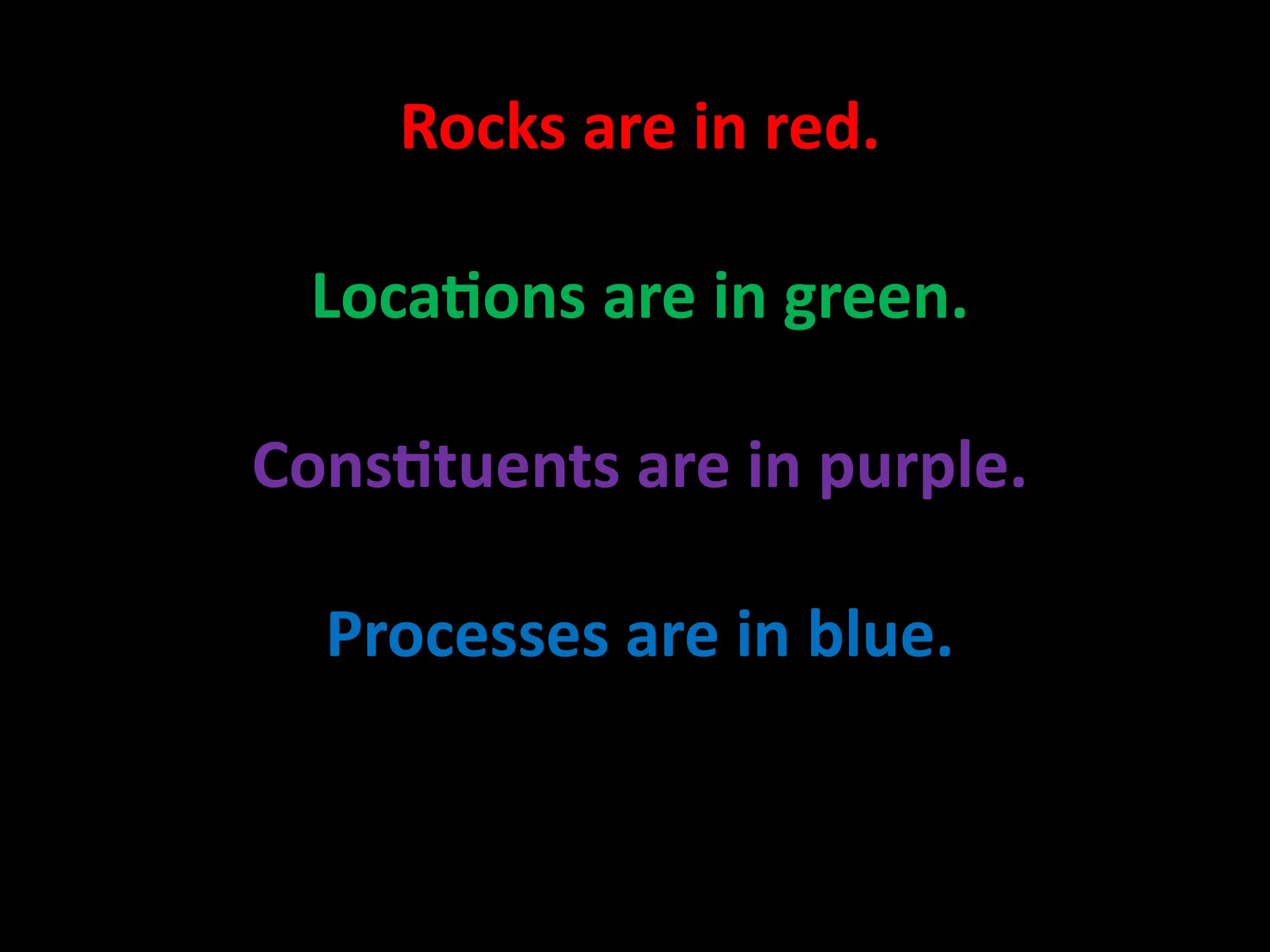
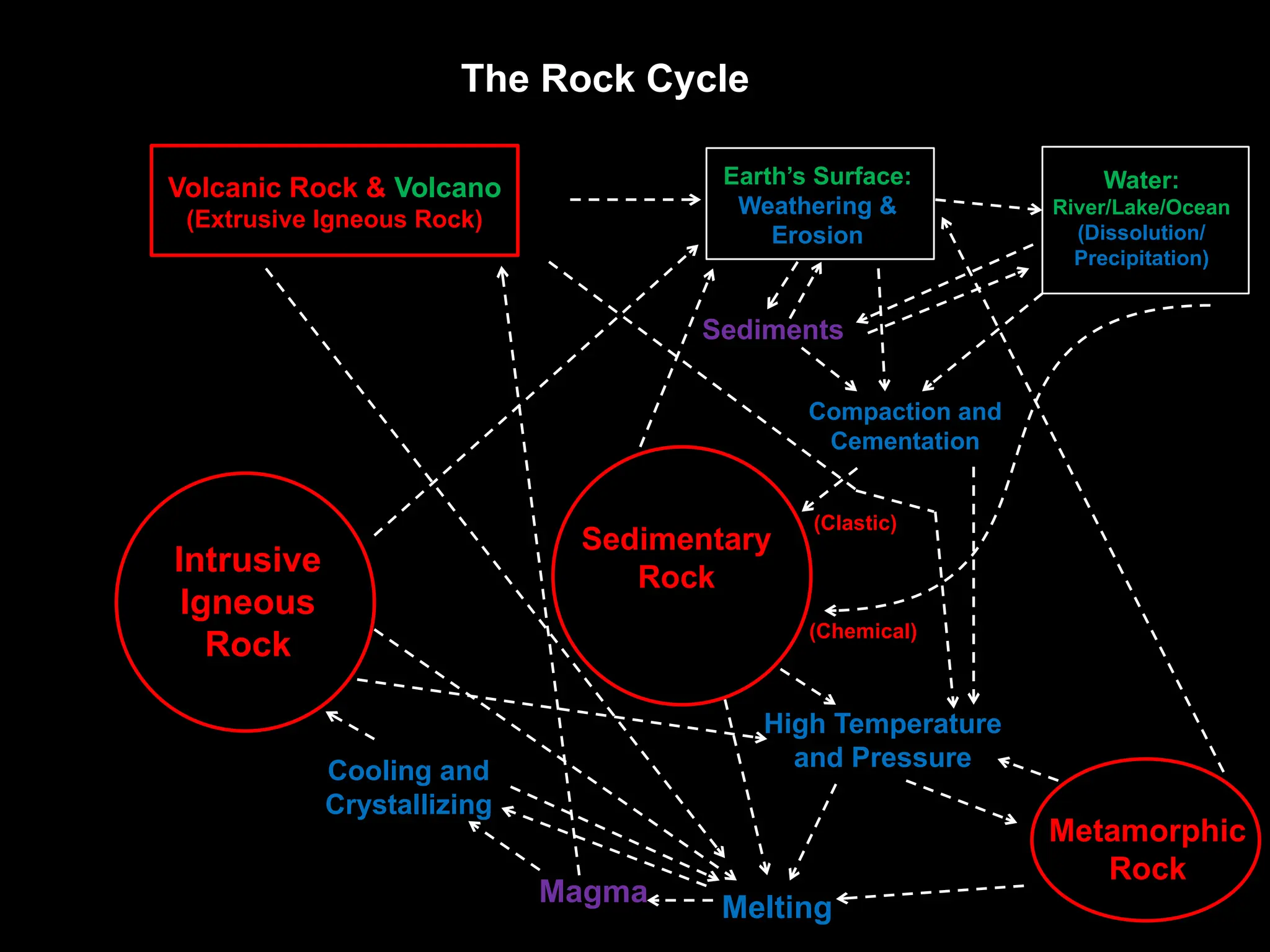
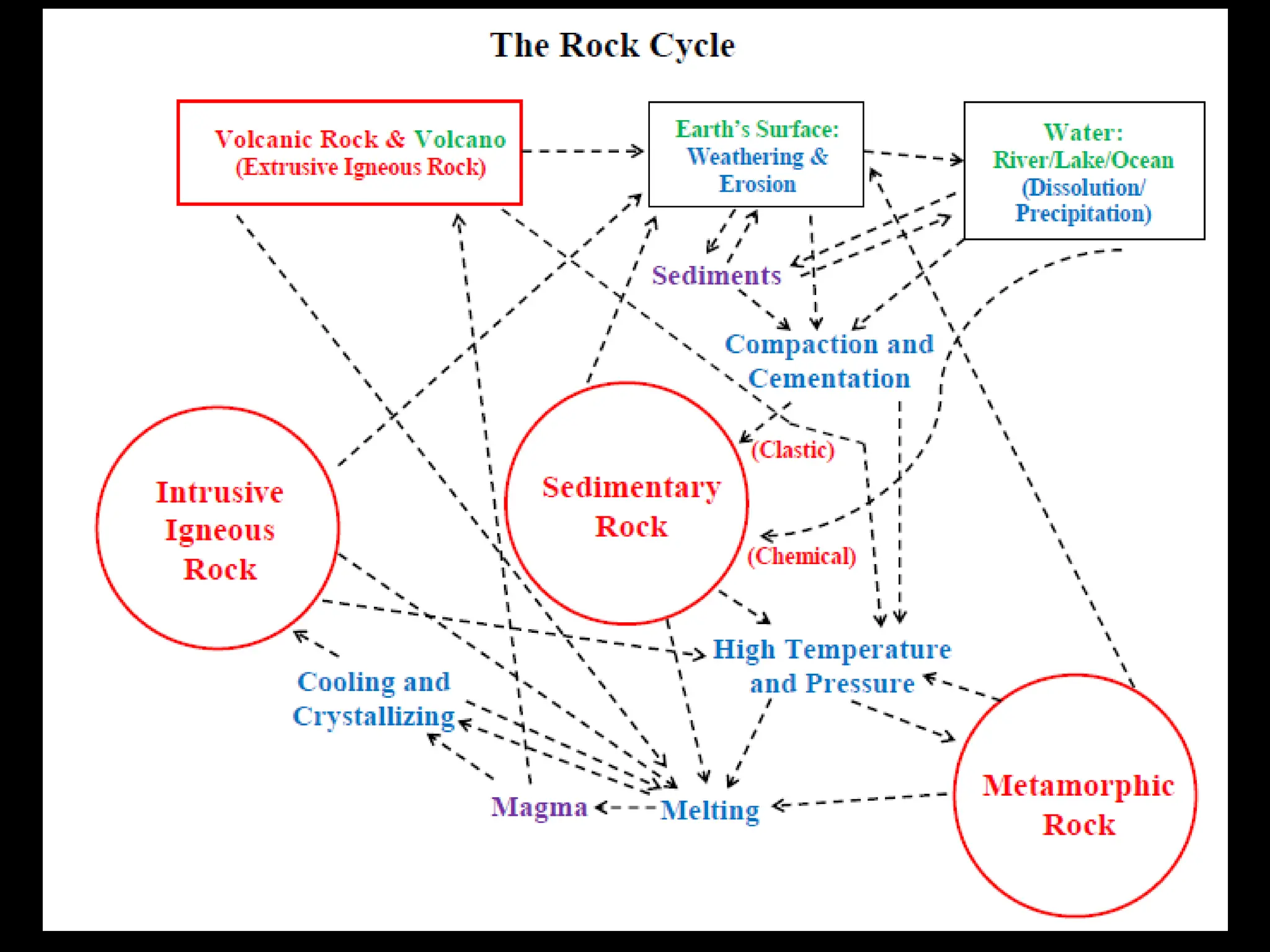
Rocks are in red.
Locations are in green.
Constituents are in purple.
Processes are in blue.
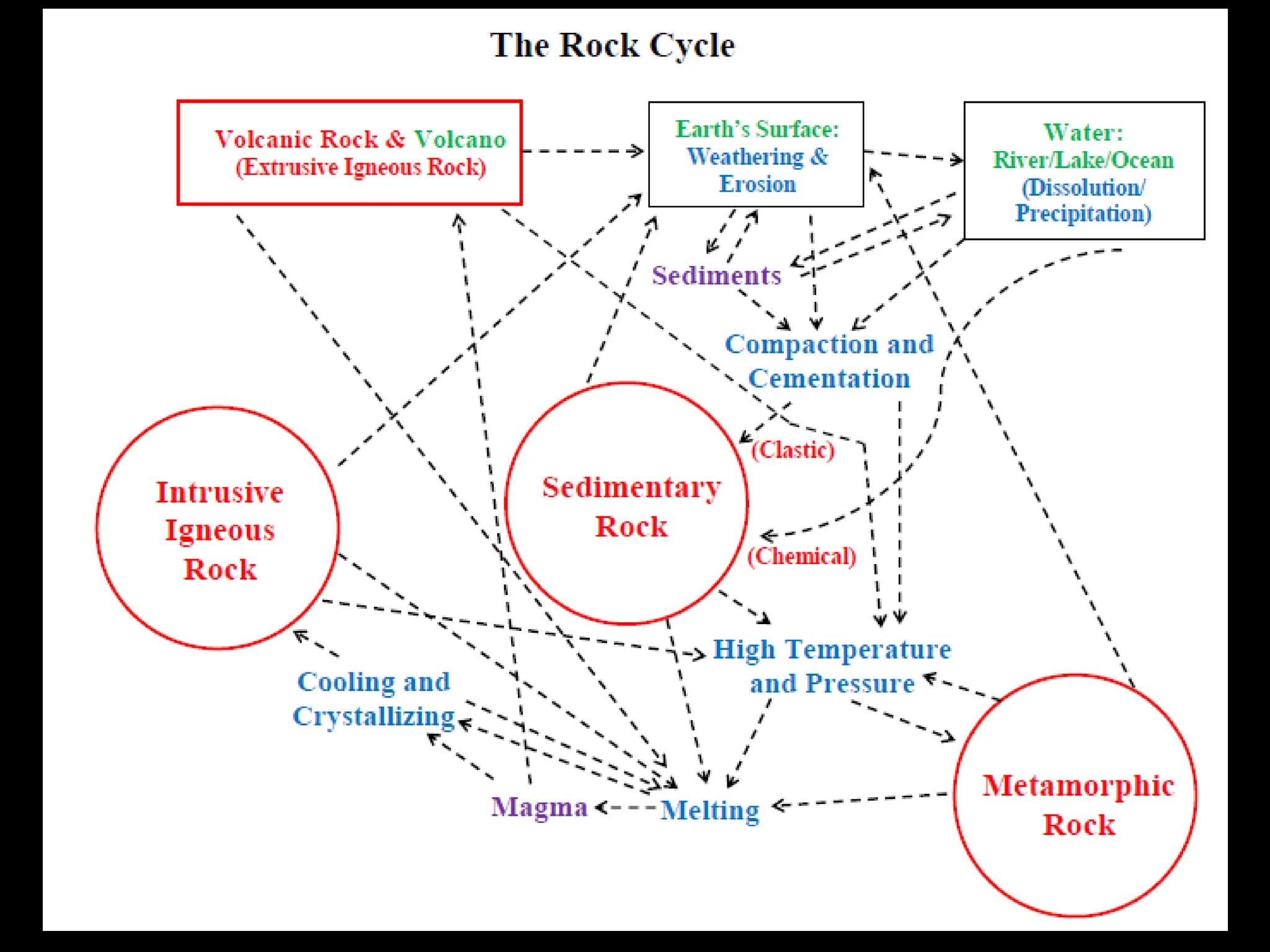
Melting
Magma
Cooling and
Crystallizing
Volcanic Rock & Volcano
(Extrusive Igneous Rock)
Earth’s Surface:
Weathering &
Erosion
Water:
River/Lake/Ocean
(Dissolution/
Precipitation)
High Temperature
and Pressure
Sediments
Compaction and
Cementation
(Chemical)
(Clastic)
Intrusive
Igneous
Rock
Sedimentary
Rock
Metamorphic
Rock
The Rock Cycle
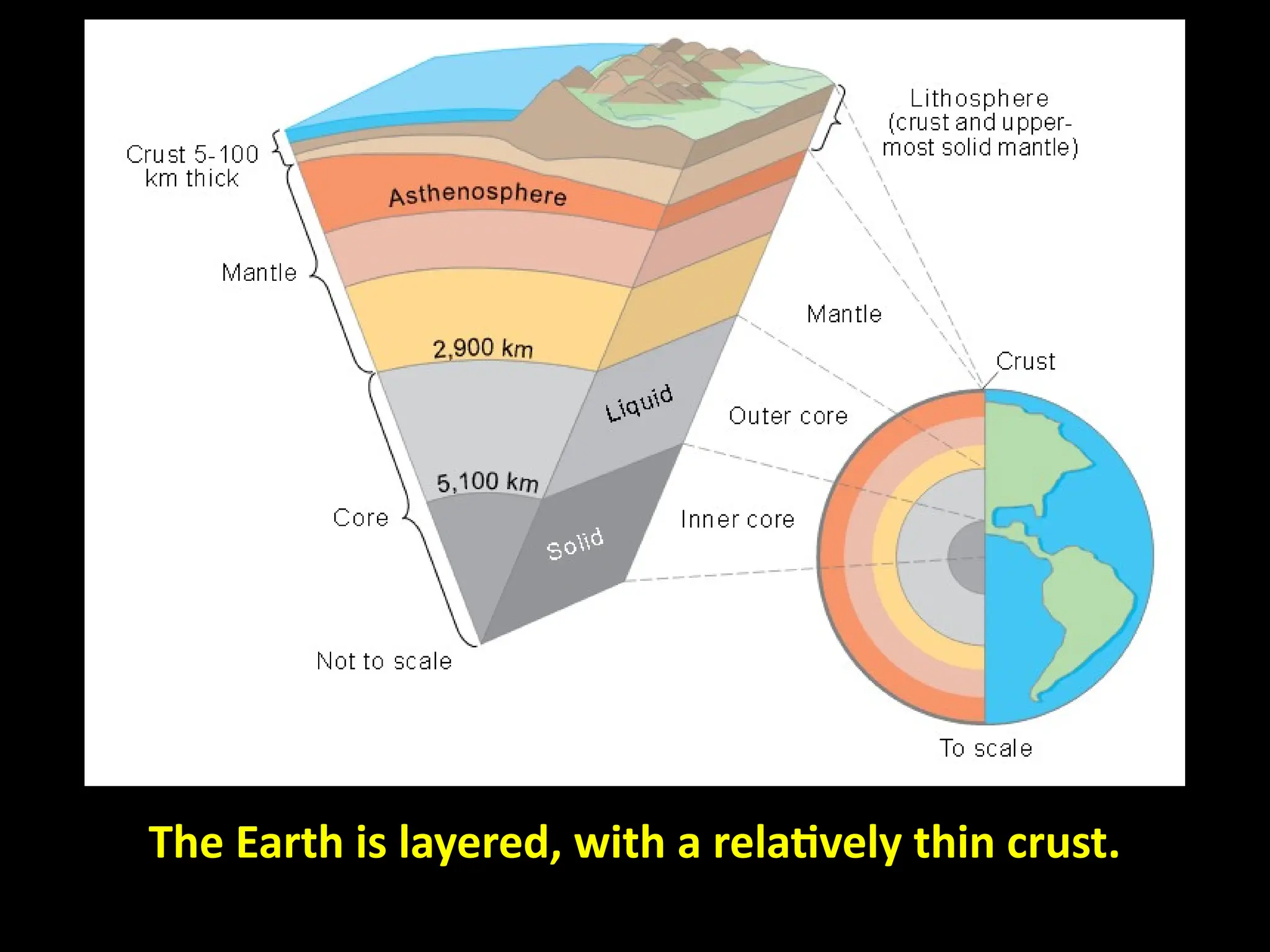
The Earth is layered, with a relatively thin crust.
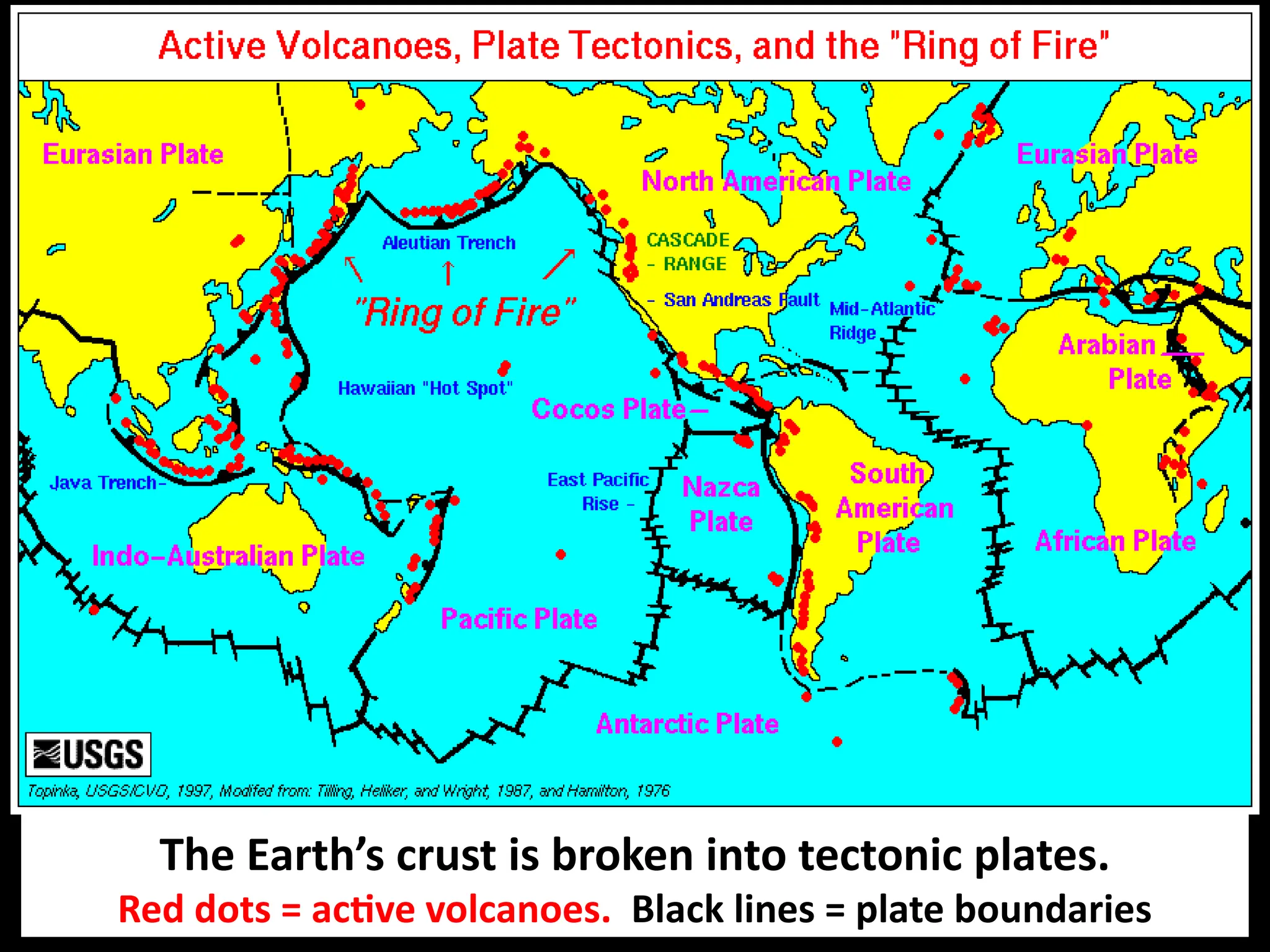
The Earth’s crust is broken into tectonic plates.
Red dots = active volcanoes. Black lines = plate boundaries
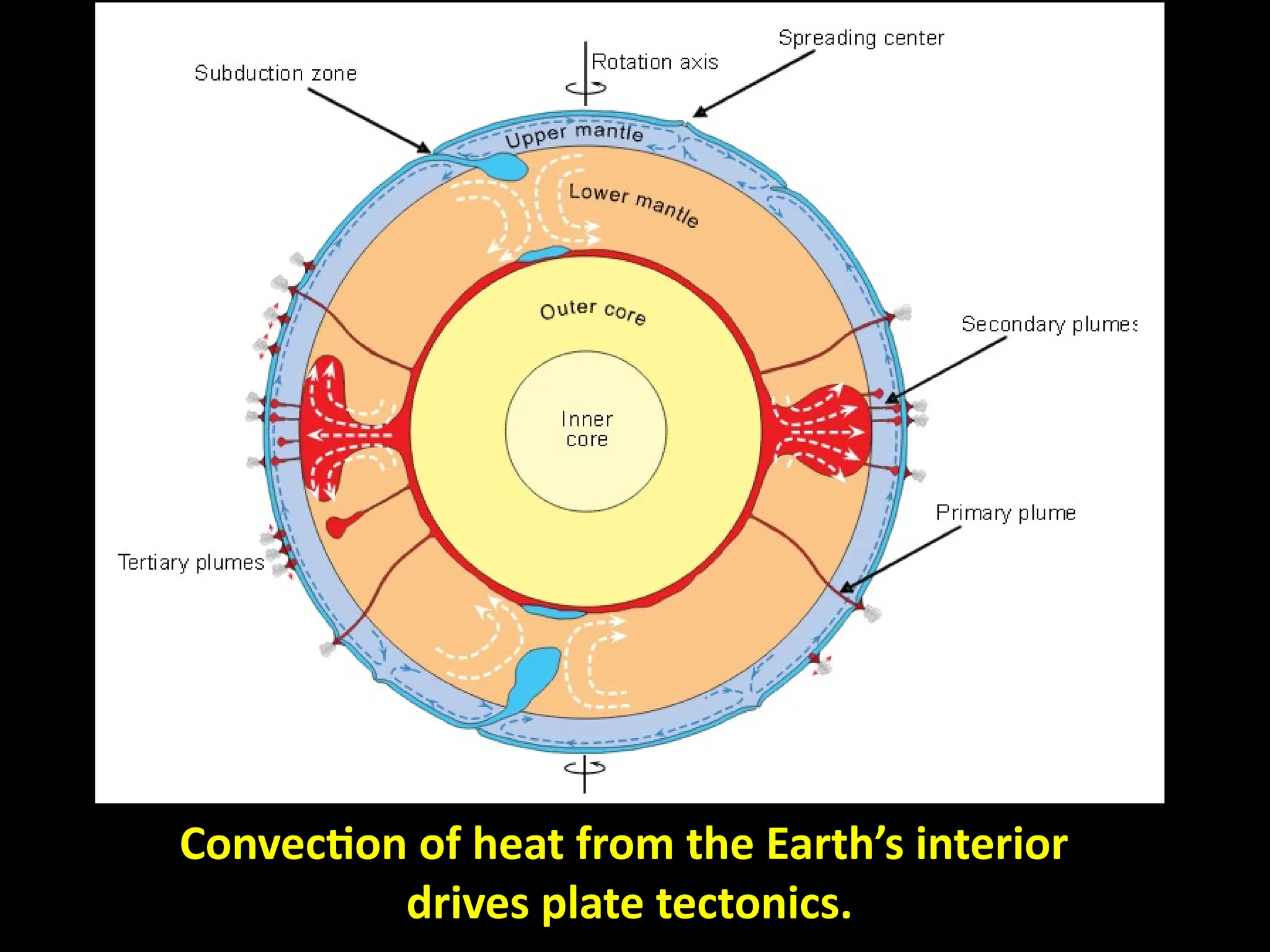
Convection of heat from the Earth’s interior
drives plate tectonics.
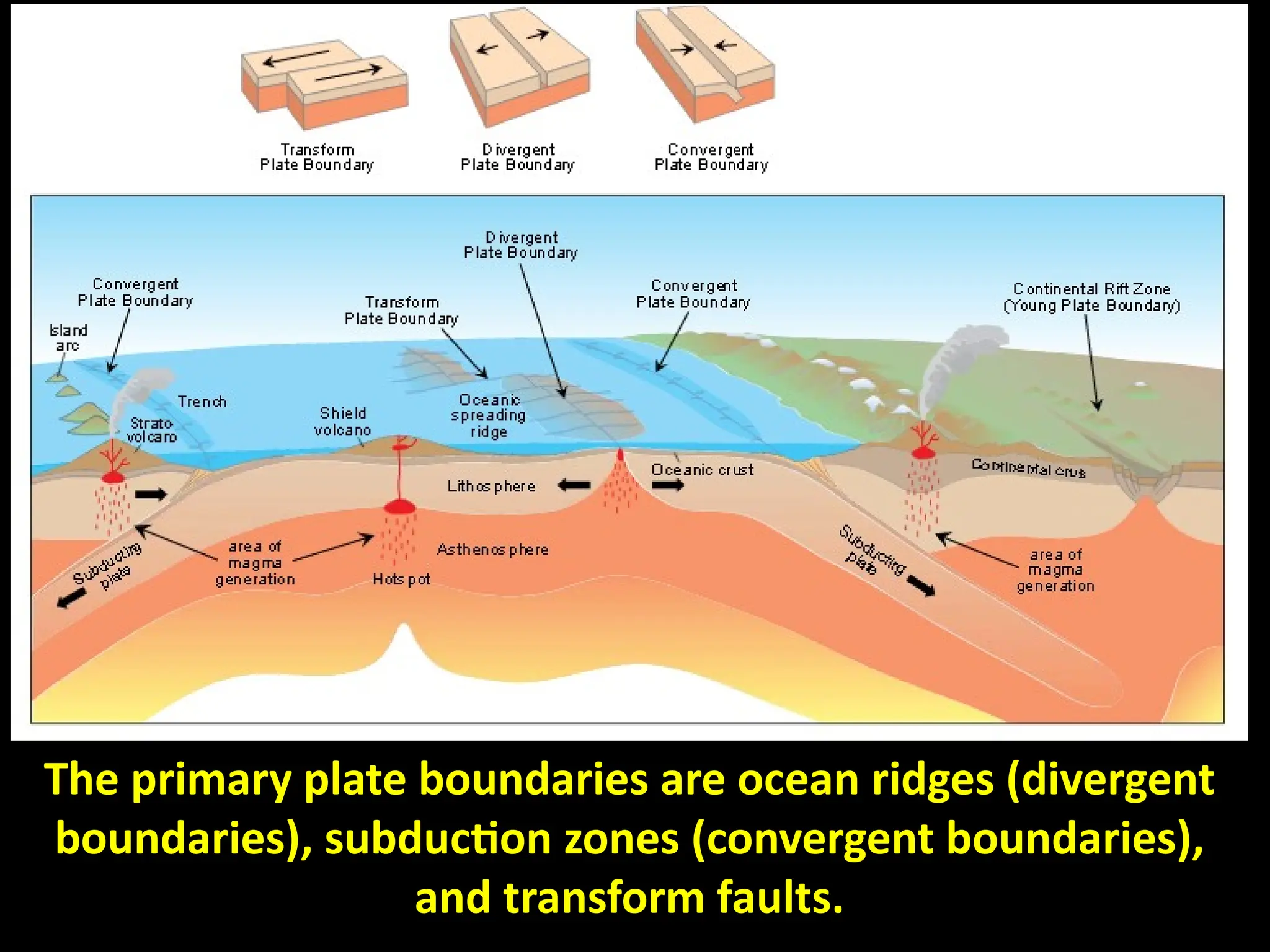
The primary plate boundaries are ocean ridges (divergent
boundaries), subduction zones (convergent boundaries),
and transform faults.
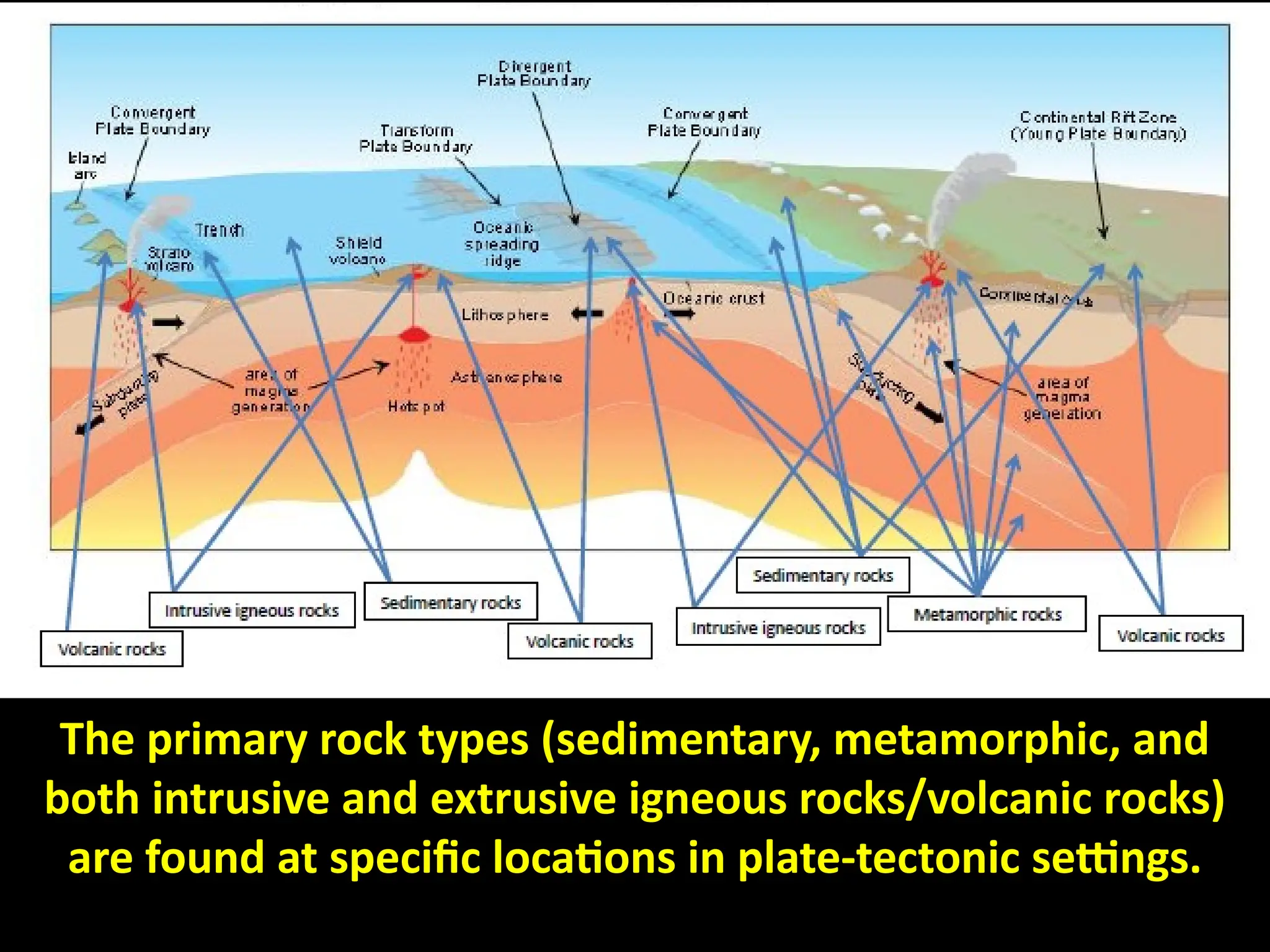
The primary rock types (sedimentary, metamorphic, and
both intrusive and extrusive igneous rocks/volcanic rocks)
are found at specific locations in plate-tectonic settings.
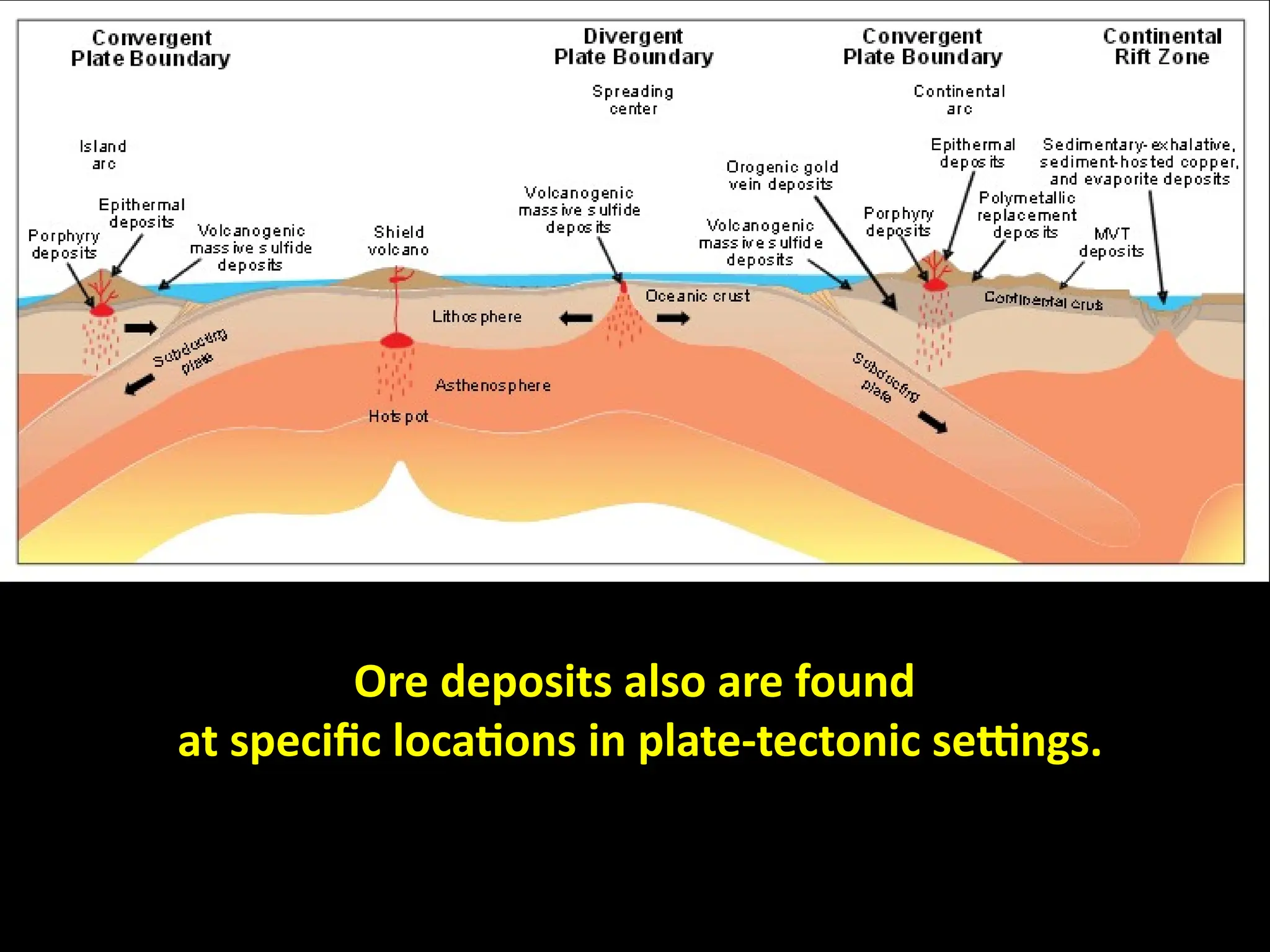
Ore deposits also are found
at specific locations in plate-tectonic settings.
Imagine yourself as an atom in an initial rock.
Start at either the Sedimentary Rock, Metamorphic Rock,
Intrusive Igneous Rock, or Extrusive Igneous/Volcanic Rock
station.
Roll dice to determine how long you stay in that rock, then
roll again to determine where you go next – either stay
where you are or move to another station. Fill out the Rock-
cycle data sheet after each roll of the dice.
Continue until you have been in three rocks (moved from the
initial rock to a second rock, then to a third rock). Fill out the
Rock-cycle data sheet after each roll of the dice.
After you have rolled the dice to determine you long you
were in the third rock, fill out the Geologic history sheet.
After you have rolled the dice to determine you long you
were in the third rock, fill out the Geologic history sheet.
Answer the questions in the Interpretations section of the
worksheet.
Next Generation Science Standards. The most applicable standards are:
High School - History of Earth HS-ESS2-1. Students who demonstrate understanding
can develop a model to illustrate how Earth’s internal and surface processes operate
at different spatial and temporal scales to form continental and ocean-floor features.
High School – Science and Engineering Practices – Analyzing and Interpreting Data.
Apply concepts of statistics and probability to scientific and engineering questions
and problems, using digital tools when feasible.
Middle School – Earth’s Systems MS-ESS3-1. Students who demonstrate
understanding can construct a scientific explanation based on evidence for how the
uneven distribution of Earth’s mineral, energy, and groundwater resources are the
result of past and current geoscience processes.
Middle School – Earth’s Systems MS-ESS2-1. Students who demonstrate
understanding can develop a model to describe the cycling of Earth’s materials and
the flow of energy that drives this process.
Disciplinary Core Ideas ESS2.A (Earth Materials and Systems), ESS2.B (Plate Tectonics
and Large-Scale Interactions), ESS2.C (The Roles of Water in Earth’s Surface
Processes), ESS3.A (Natural Resources).
Ride the Rock Cycle
Grades 6-12
This classroom activity is a dice game that helps students
understand how rocks change with geologic time and how
economic concentrations of minerals and rocks (ores) are
related to common rocks. Teams of students follow an atom in
an initial rock through its history. They collect and interpret
numerical data. They learn that the path the atom takes may
be complicated and that ore deposits are rare. Although the
only math skill that is required is addition, advanced students
learn to use probabilities to solve problems.

PowerPoint Slides for the ROCK CYCLE Activity 9September2016.pptx

  • 1.
    PowerPoint slides toaccompany the activity – Ride the Rock Cycle: Will you become a mine? with student handout Rock Cycle and Mineral Deposits
  • 2.
    The purposes ofthis activity (game) are to: 1. understand and visualize how rocks and minerals change, and that the rock cycle is complex; 2. appreciate that plate tectonics explains many details of the rock cycle; 3. gain insight into how rare the process of forming deposits of economically valuable rocks and minerals can be. 4. learn a bit about probability and statistics.
  • 4.
    Rocks are inred. Locations are in green. Constituents are in purple. Processes are in blue.
  • 5.
    Melting Magma Cooling and Crystallizing Volcanic Rock& Volcano (Extrusive Igneous Rock) Earth’s Surface: Weathering & Erosion Water: River/Lake/Ocean (Dissolution/ Precipitation) High Temperature and Pressure Sediments Compaction and Cementation (Chemical) (Clastic) Intrusive Igneous Rock Sedimentary Rock Metamorphic Rock The Rock Cycle
  • 6.
    The Earth islayered, with a relatively thin crust.
  • 7.
    The Earth’s crustis broken into tectonic plates. Red dots = active volcanoes. Black lines = plate boundaries
  • 8.
    Convection of heatfrom the Earth’s interior drives plate tectonics.
  • 9.
    The primary plateboundaries are ocean ridges (divergent boundaries), subduction zones (convergent boundaries), and transform faults.
  • 10.
    The primary rocktypes (sedimentary, metamorphic, and both intrusive and extrusive igneous rocks/volcanic rocks) are found at specific locations in plate-tectonic settings.
  • 11.
    Ore deposits alsoare found at specific locations in plate-tectonic settings.
  • 12.
    Imagine yourself asan atom in an initial rock. Start at either the Sedimentary Rock, Metamorphic Rock, Intrusive Igneous Rock, or Extrusive Igneous/Volcanic Rock station. Roll dice to determine how long you stay in that rock, then roll again to determine where you go next – either stay where you are or move to another station. Fill out the Rock- cycle data sheet after each roll of the dice. Continue until you have been in three rocks (moved from the initial rock to a second rock, then to a third rock). Fill out the Rock-cycle data sheet after each roll of the dice. After you have rolled the dice to determine you long you were in the third rock, fill out the Geologic history sheet.
  • 13.
    After you haverolled the dice to determine you long you were in the third rock, fill out the Geologic history sheet. Answer the questions in the Interpretations section of the worksheet.
  • 15.
    Next Generation ScienceStandards. The most applicable standards are: High School - History of Earth HS-ESS2-1. Students who demonstrate understanding can develop a model to illustrate how Earth’s internal and surface processes operate at different spatial and temporal scales to form continental and ocean-floor features. High School – Science and Engineering Practices – Analyzing and Interpreting Data. Apply concepts of statistics and probability to scientific and engineering questions and problems, using digital tools when feasible. Middle School – Earth’s Systems MS-ESS3-1. Students who demonstrate understanding can construct a scientific explanation based on evidence for how the uneven distribution of Earth’s mineral, energy, and groundwater resources are the result of past and current geoscience processes. Middle School – Earth’s Systems MS-ESS2-1. Students who demonstrate understanding can develop a model to describe the cycling of Earth’s materials and the flow of energy that drives this process. Disciplinary Core Ideas ESS2.A (Earth Materials and Systems), ESS2.B (Plate Tectonics and Large-Scale Interactions), ESS2.C (The Roles of Water in Earth’s Surface Processes), ESS3.A (Natural Resources).
  • 16.
    Ride the RockCycle Grades 6-12 This classroom activity is a dice game that helps students understand how rocks change with geologic time and how economic concentrations of minerals and rocks (ores) are related to common rocks. Teams of students follow an atom in an initial rock through its history. They collect and interpret numerical data. They learn that the path the atom takes may be complicated and that ore deposits are rare. Although the only math skill that is required is addition, advanced students learn to use probabilities to solve problems.