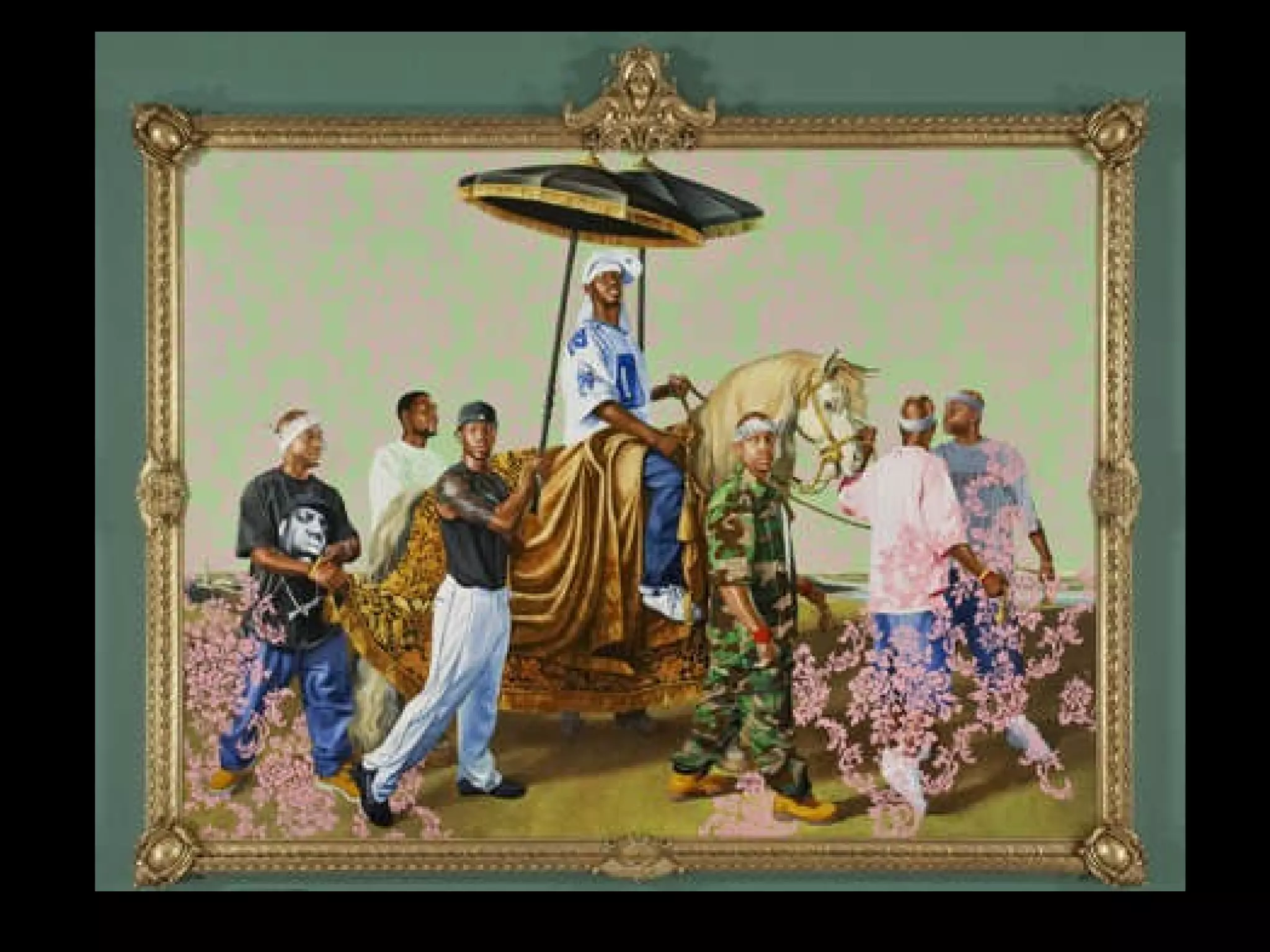
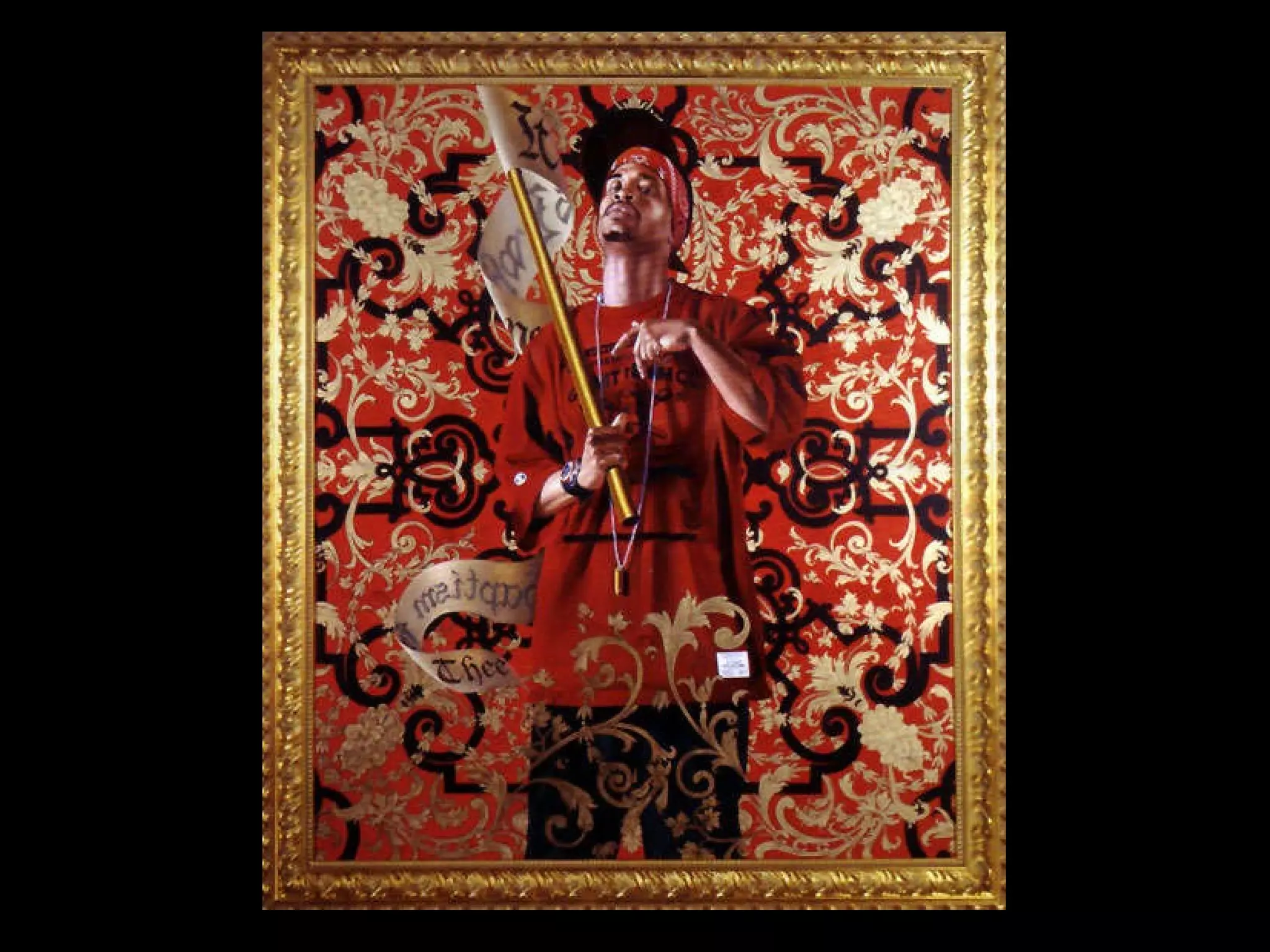
Kehinde Wiley Empowerment Through Portraiture
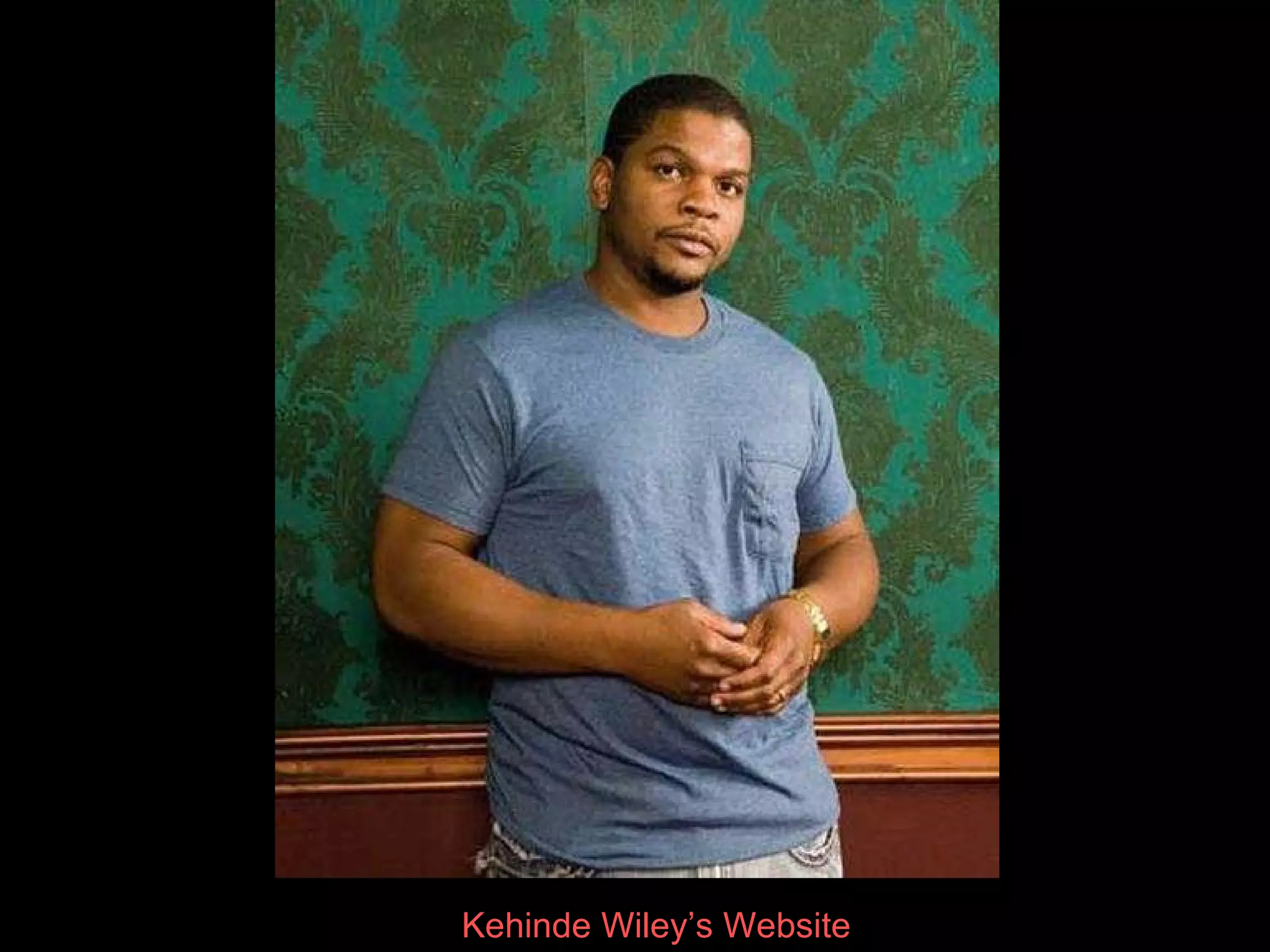
Kehinde Wiley’s Website
 
 
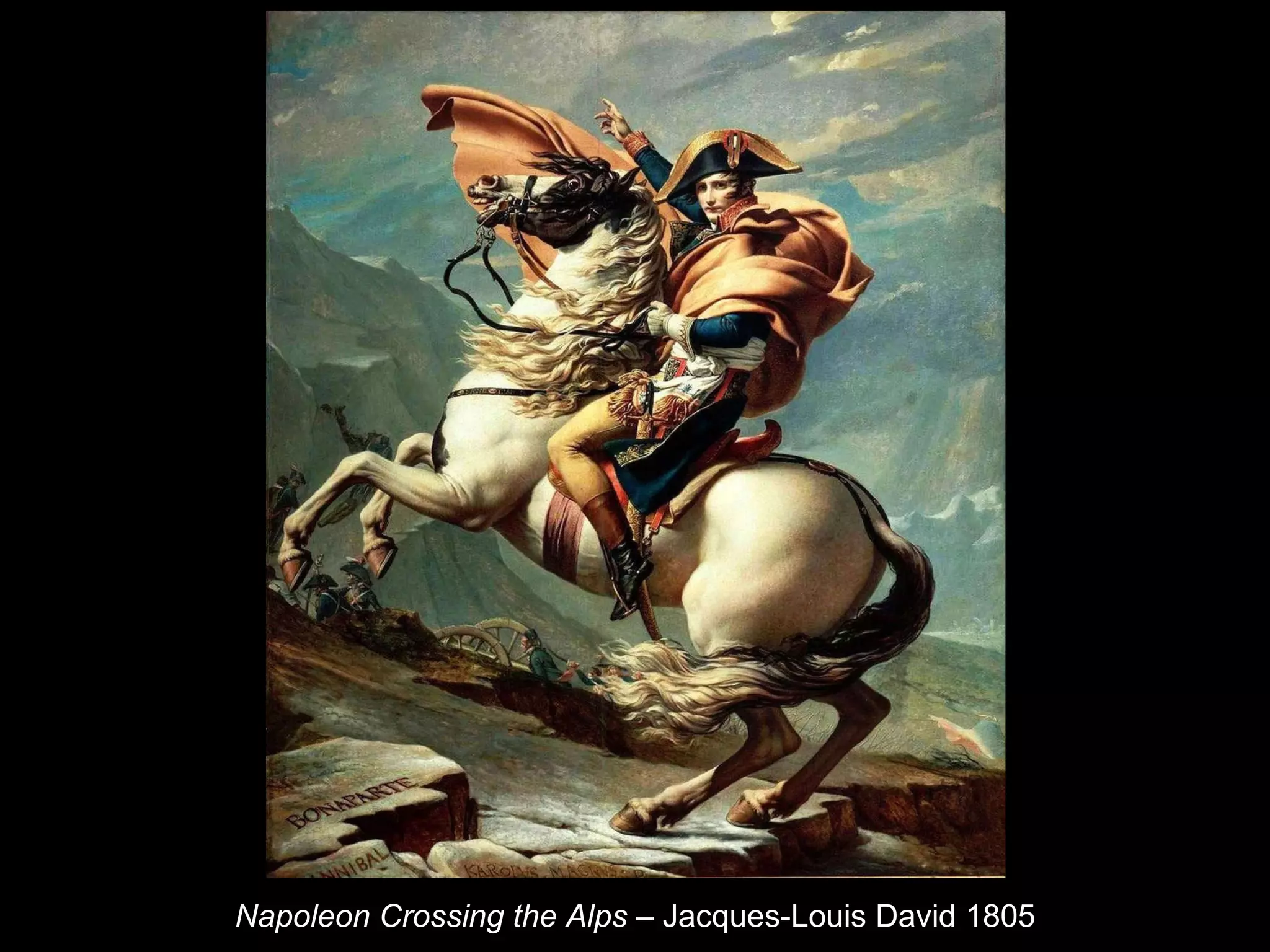
Napoleon Crossing the Alps  – Jacques-Louis David 1805
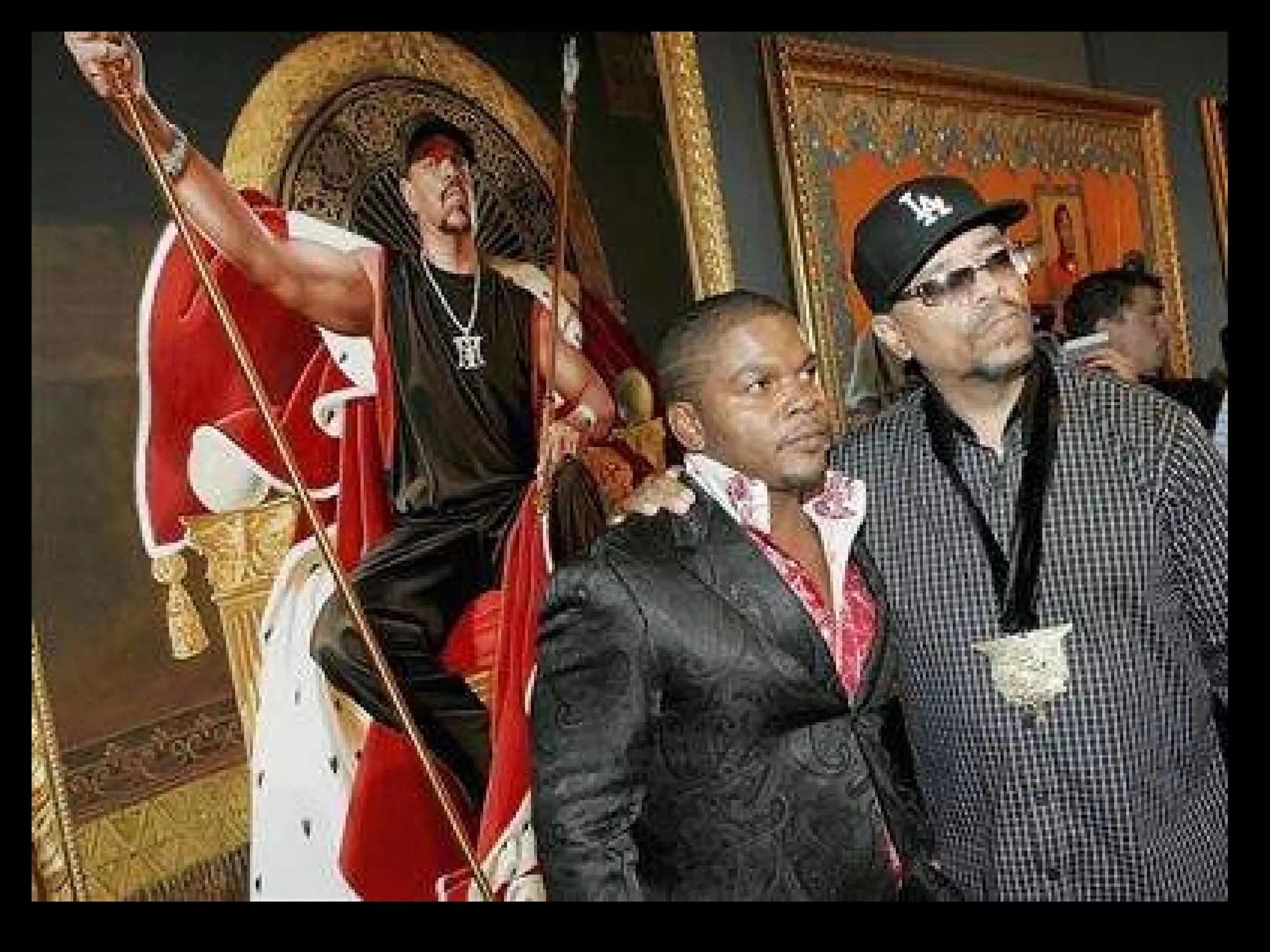
Ice-T  after  Napoleon on his Imperial Throne  by Ingres 1806
 
 
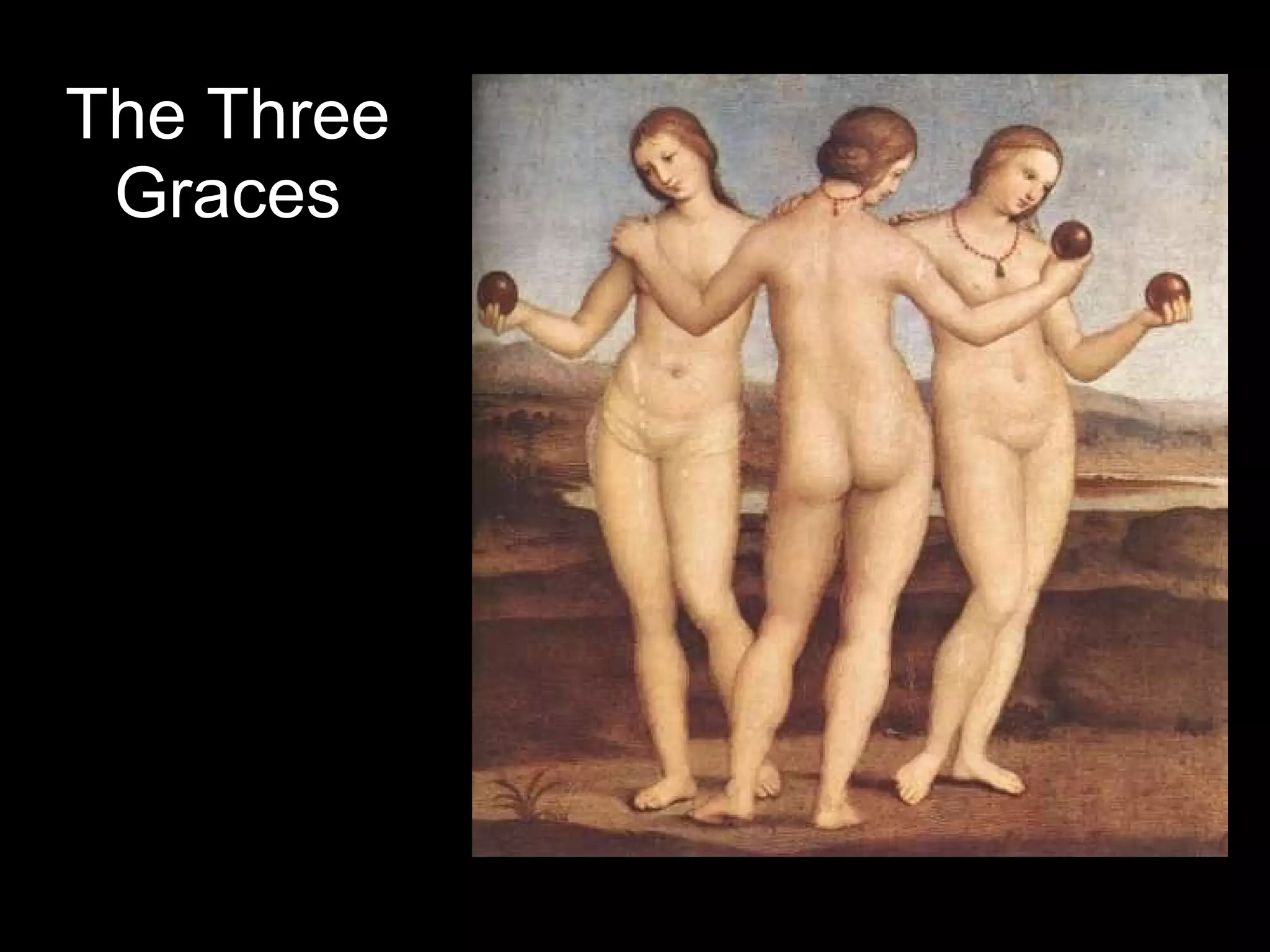
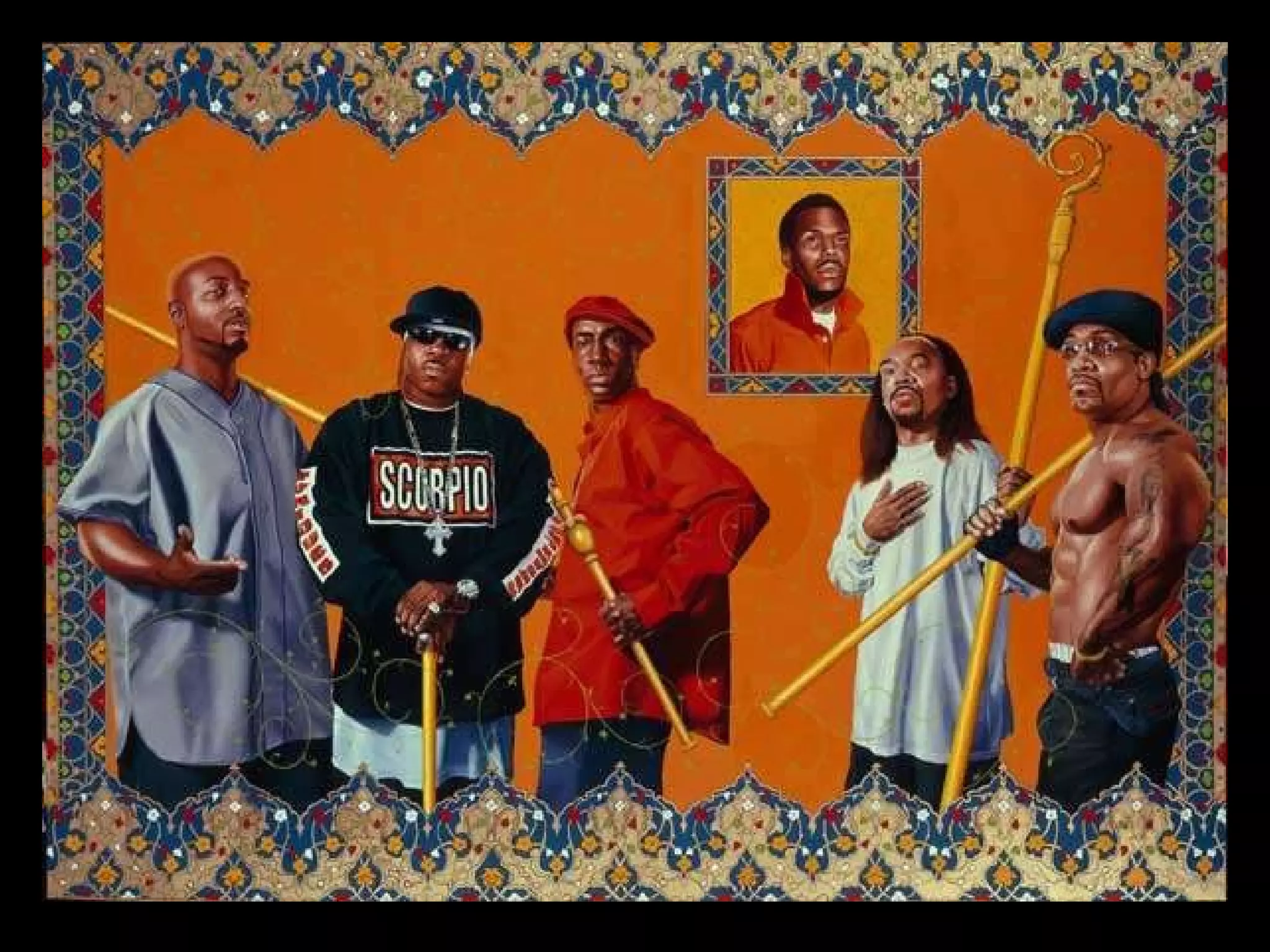
The Three Graces Greek mythology Daughters of Zeus Personification of charm and beauty Beauty, Mirth, Good Cheer Raphael - 1503


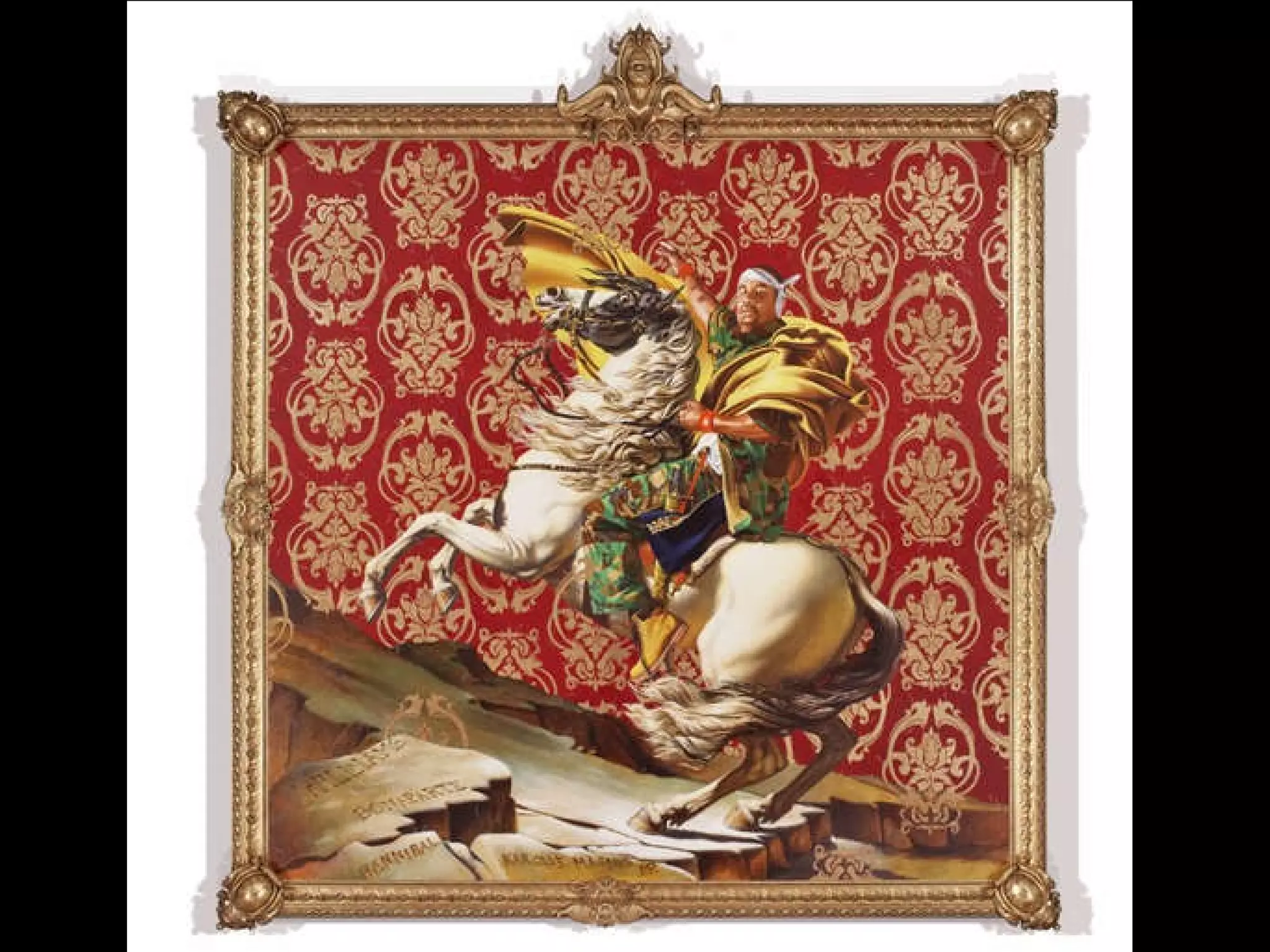
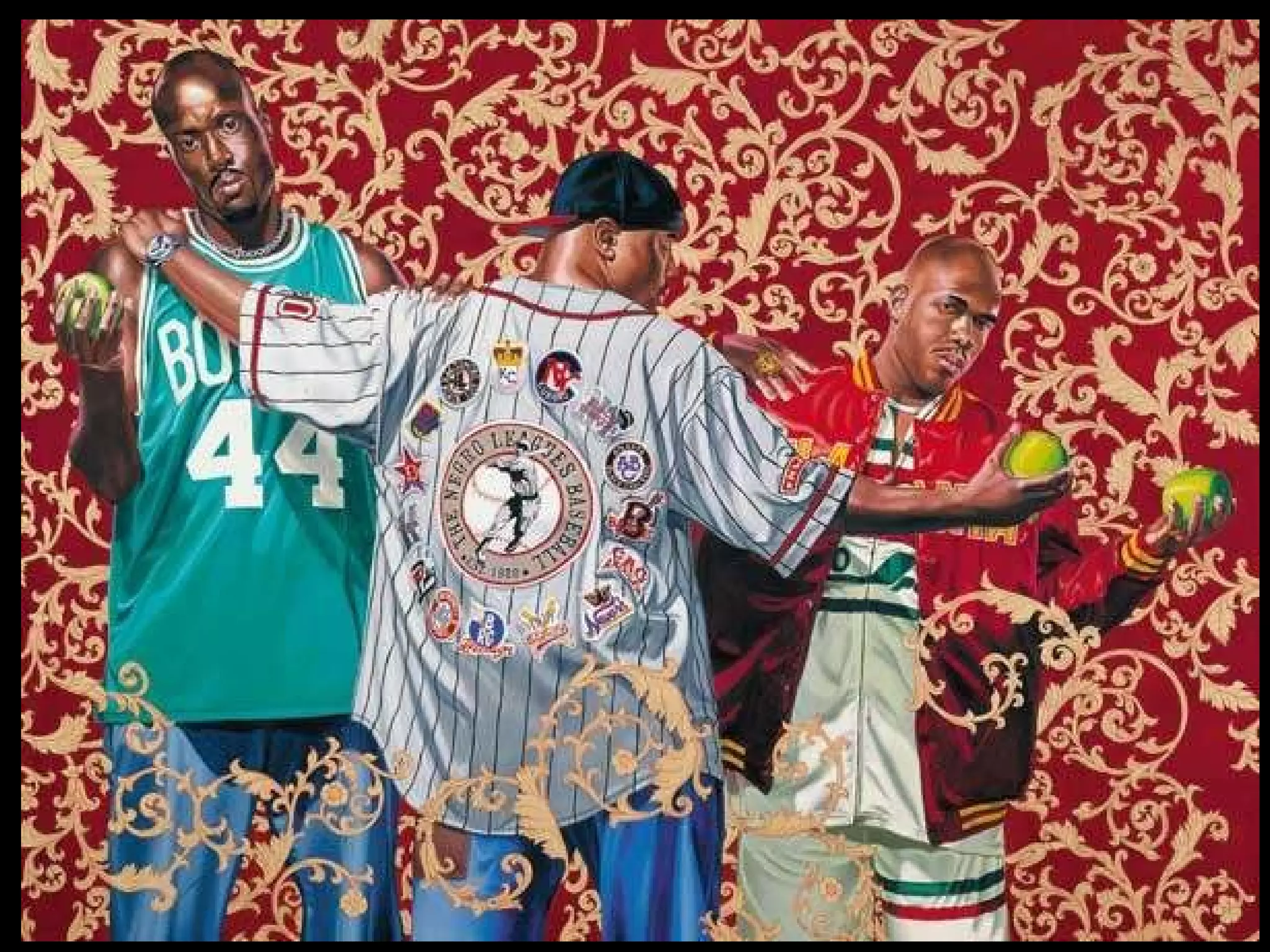
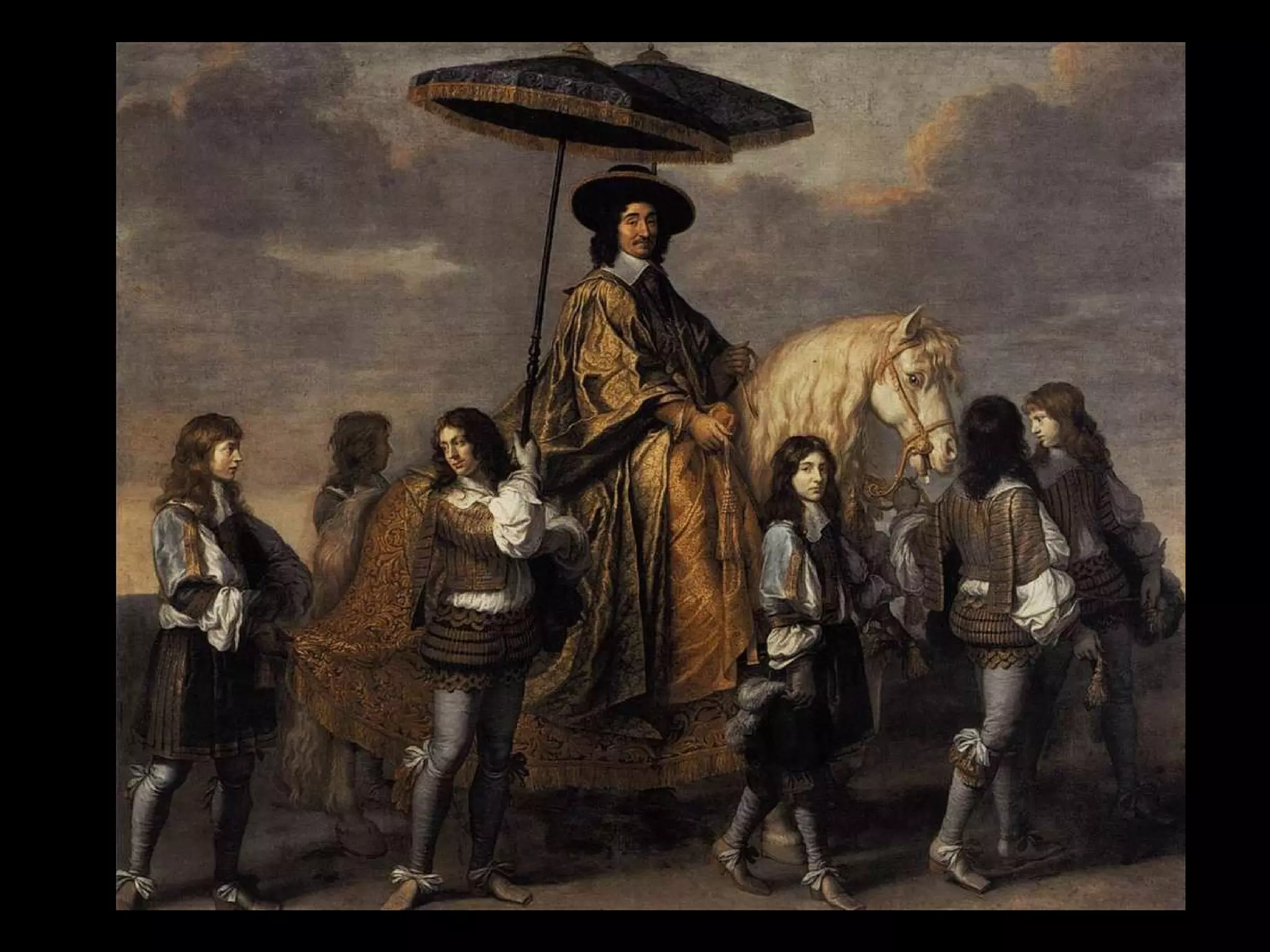
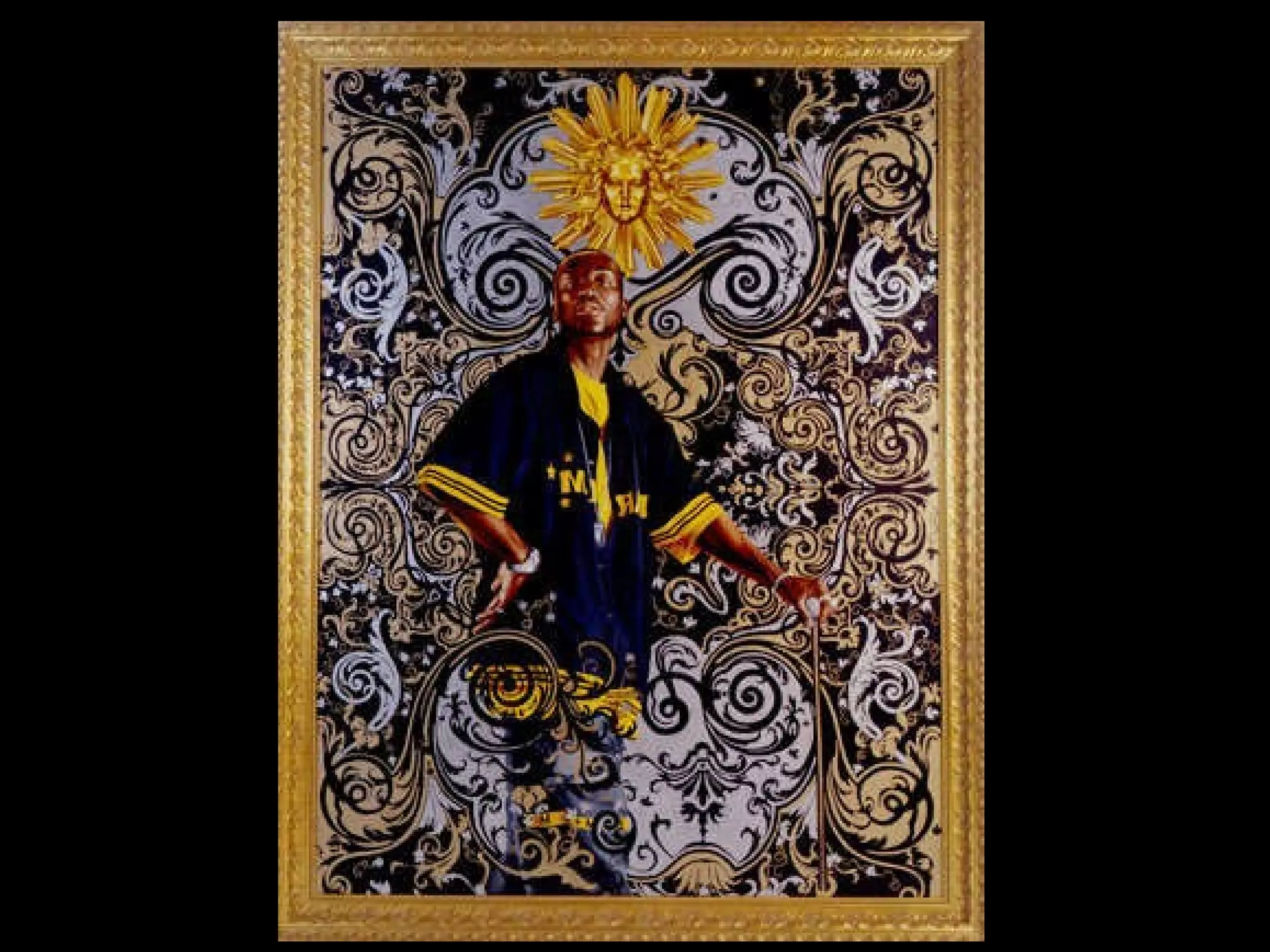
Kehinde Wiley – Power in Portraiture Historically, portraits have been used as a way of showing off a person’s wealth and power. In Europe, especially during the Renaissance, kings, princes, and aristocrats would hire artists to paint them in their finest clothing. The poses were often proud and heroic to emphasize their wealth and power. Kehinde Wiley’s portraits deal with issues of power by putting African American men in the poses of famous paintings.  Describe a time, or an event in your life, when you felt powerful. Describe a time, or an event when you felt powerless. Who are some people who have power in our society? What about their clothing or appearance shows their power?
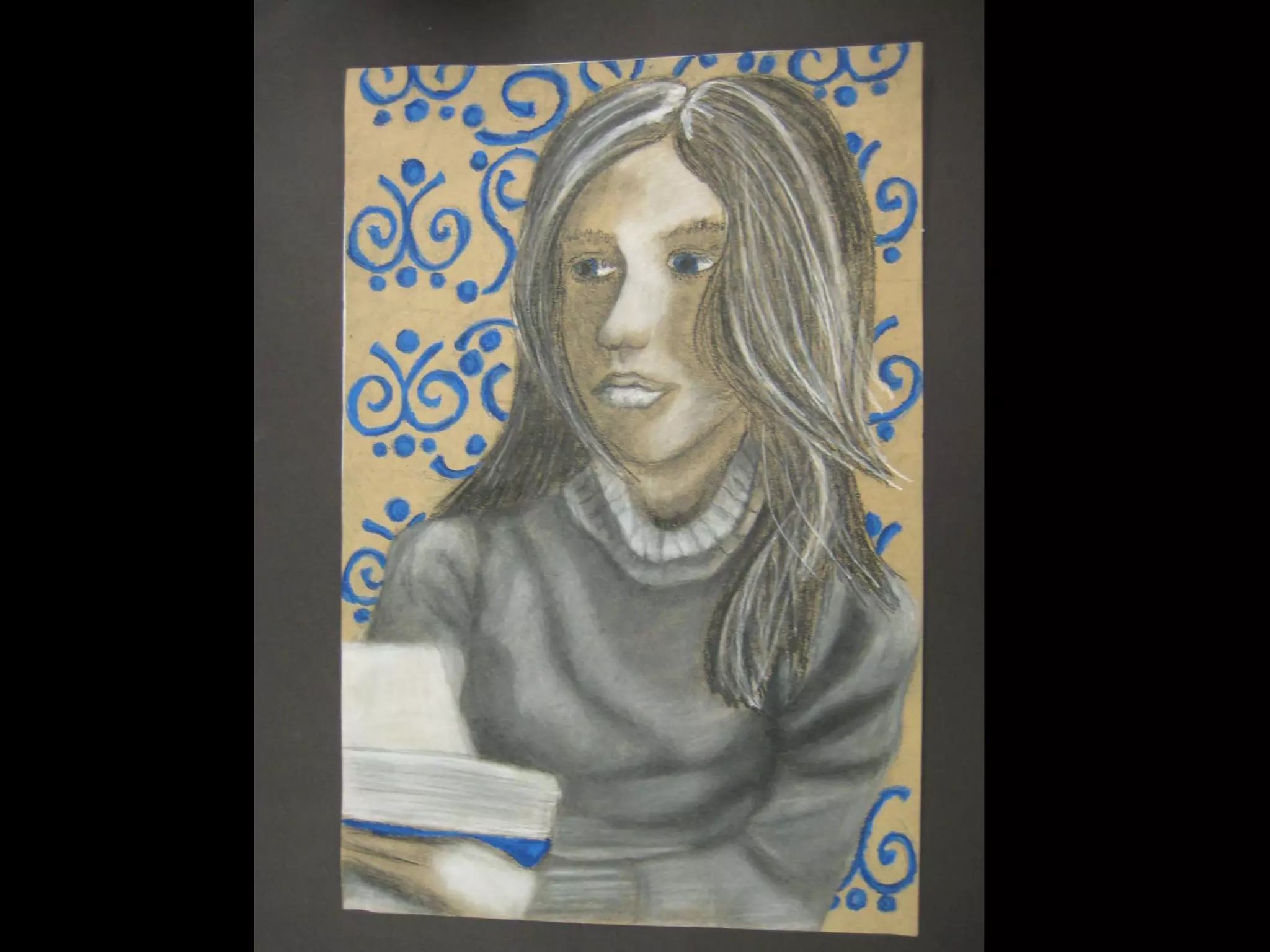
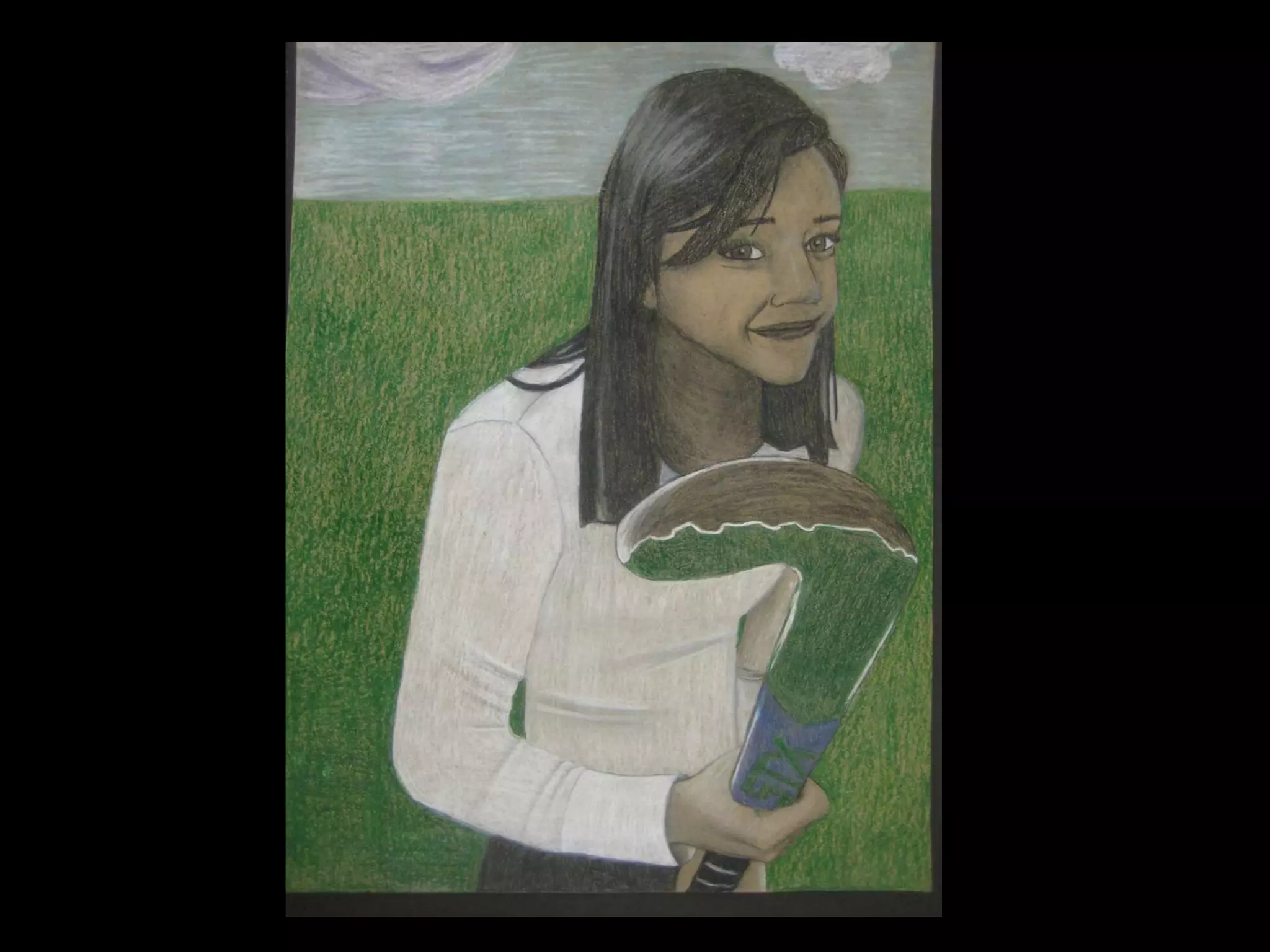
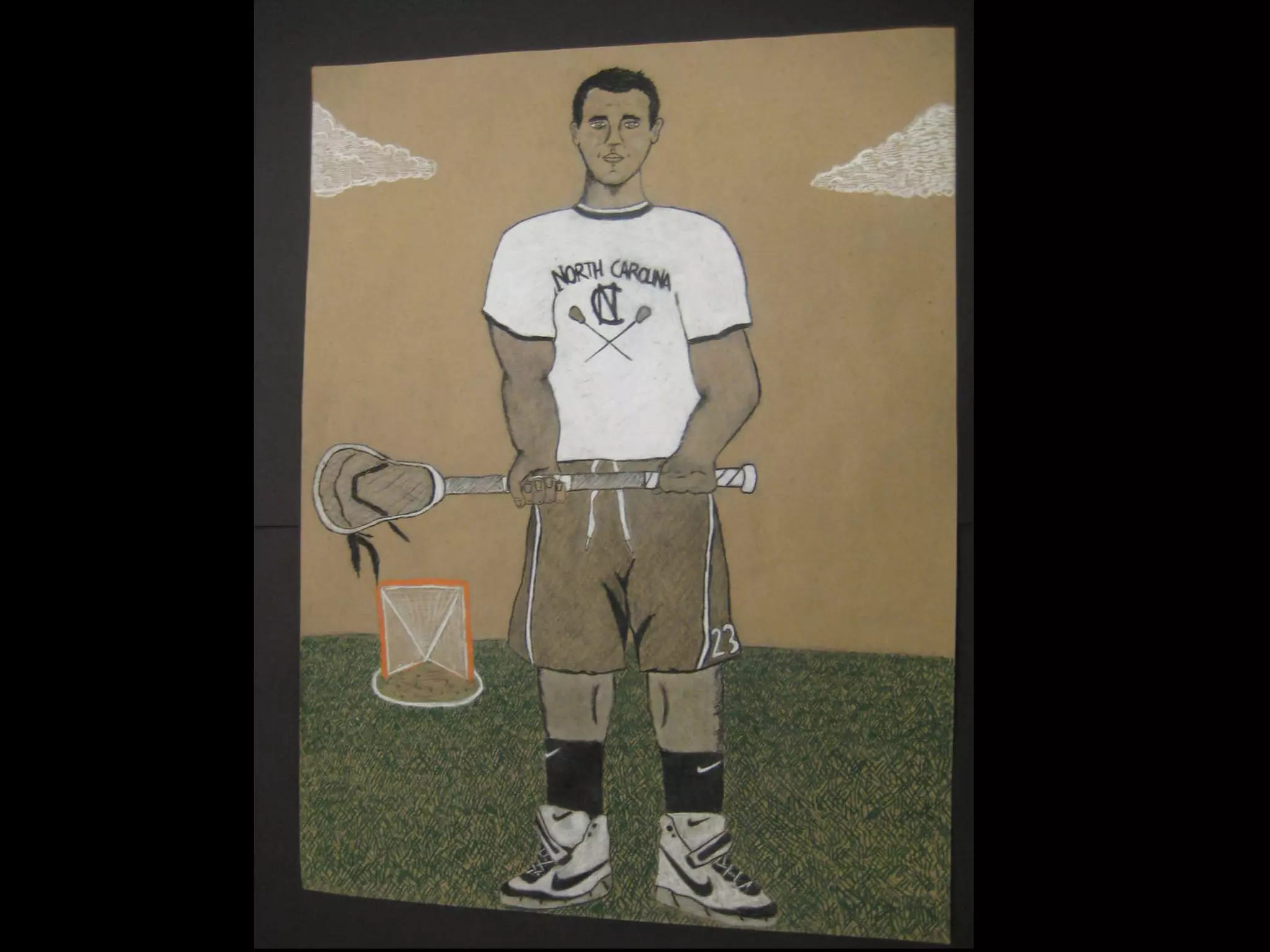
Kehinde Wiley – Power in Portraiture Imagine that your portrait is being painted to immortalize you for future generations.    What clothing would you wear?    What would this clothing say about you?   What pose would you be in and what would the pose signify?   What personal objects or “props” would you have with you? Why these objects?


Power In Portraiture

  • 1.
    Kehinde Wiley EmpowermentThrough Portraiture
  • 2.
  • 3.
  • 4.
  • 5.
    Napoleon Crossing theAlps – Jacques-Louis David 1805
  • 6.
    Ice-T after Napoleon on his Imperial Throne by Ingres 1806
  • 7.
  • 8.
  • 9.
    The Three GracesGreek mythology Daughters of Zeus Personification of charm and beauty Beauty, Mirth, Good Cheer Raphael - 1503
  • 10.
  • 11.
  • 12.
  • 13.
  • 14.
  • 15.
  • 16.
  • 17.
  • 18.
  • 19.
  • 20.
  • 21.
    Kehinde Wiley –Power in Portraiture Historically, portraits have been used as a way of showing off a person’s wealth and power. In Europe, especially during the Renaissance, kings, princes, and aristocrats would hire artists to paint them in their finest clothing. The poses were often proud and heroic to emphasize their wealth and power. Kehinde Wiley’s portraits deal with issues of power by putting African American men in the poses of famous paintings. Describe a time, or an event in your life, when you felt powerful. Describe a time, or an event when you felt powerless. Who are some people who have power in our society? What about their clothing or appearance shows their power?
  • 22.
    Kehinde Wiley –Power in Portraiture Imagine that your portrait is being painted to immortalize you for future generations.   What clothing would you wear?   What would this clothing say about you?   What pose would you be in and what would the pose signify?   What personal objects or “props” would you have with you? Why these objects?
  • 23.
  • 24.
  • 25.
  • 26.
  • 27.

Editor's Notes

  • #2 Kehinde Wiley – born 1978 (31 years old). Born in L.A. works in Harlem, NY Interested in “Master’s” paintings as a child Family owned a second hand “junk” shop where he saw a lot of interesting old objects MFA from Yale Paintings sell for $300,000 and are exhibited around the world
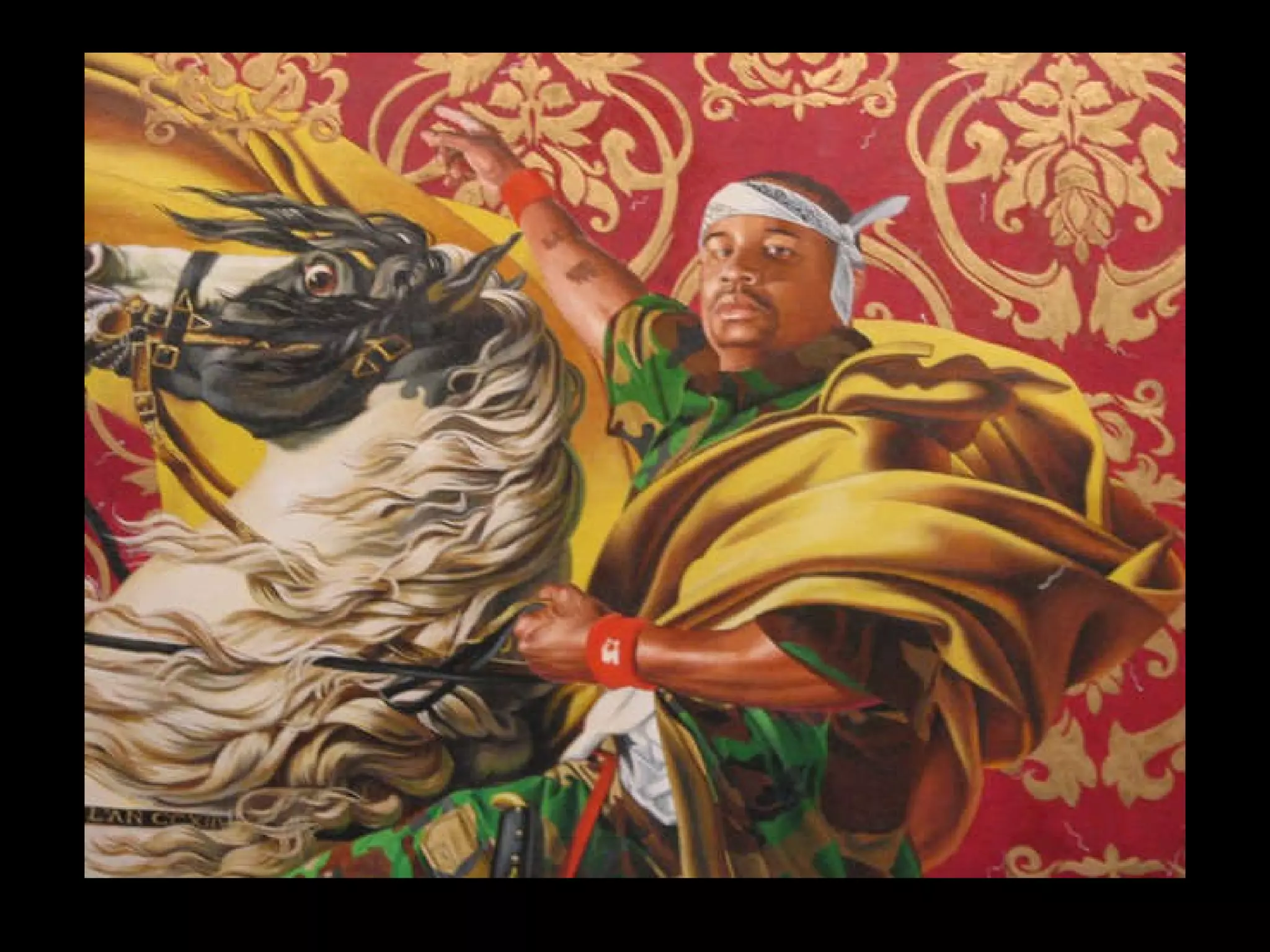
  • #4 What do you see here? Kehinde Wiley’s artist statement: "Painting is about the world that we live in. Black men live in the world. My choice is to include them. This is my way of saying yes to us." - Kehinde Wiley Historically, the role of portraiture has been not only to create a likeness but also to communicate ideas about the subject's status, wealth, and power. During the eighteenth century, for example, major patrons from the church and the aristocracy commissioned portraits in part to signify their importance in society. This portrait imitates the posture of the figure of Napoleon Bonaparte in Jacques Louis-David's painting "Bonaparte Crossing the Alps at Grand-Saint-Bernard." Wiley transforms the traditional equestrian portrait by substituting an anonymous young Black man dressed in contemporary clothing for the figure of Napoleon. The artist thereby confronts and critiques historical traditions that do not acknowledge Black cultural experience. Wiley presents a new brand of portraiture that redefines and affirms Black identity and simultaneously questions the history of Western painting. Text from the Brooklyn Museum label
  • #6 This is a painting of Napoleon be the famous Renaissance artist David. This painting was done during Napoleon’s lifetime, at a time when he was very powerful and campaign