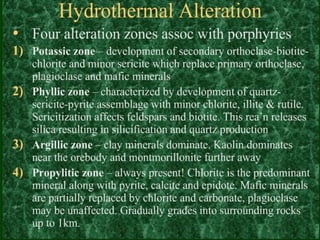
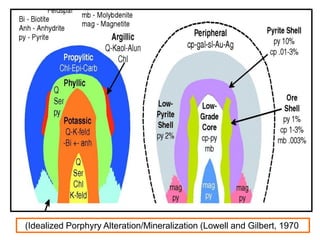
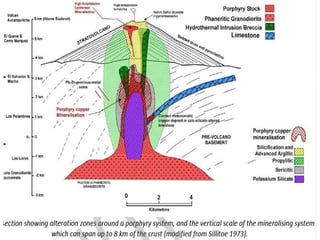
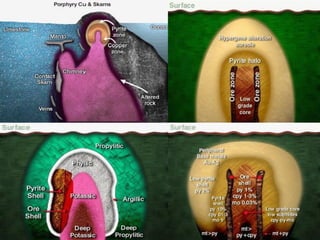
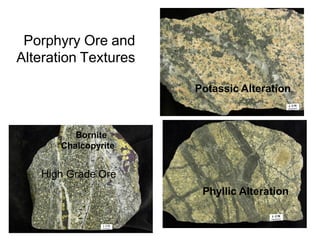
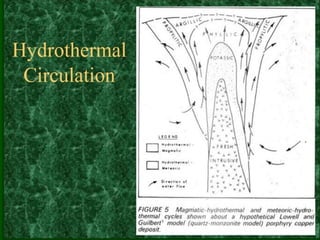
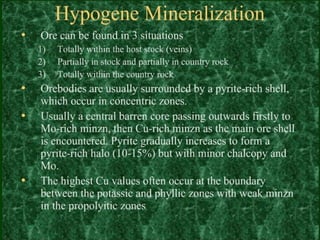
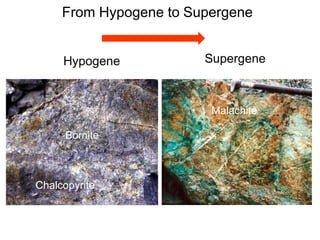
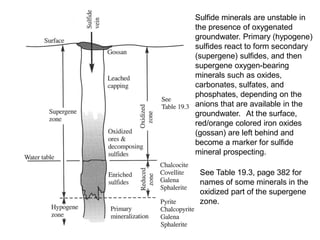
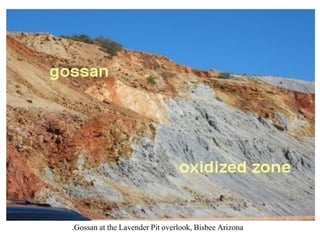
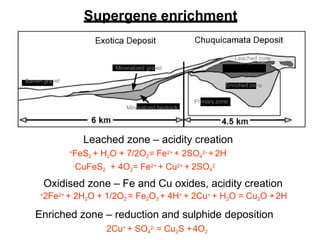
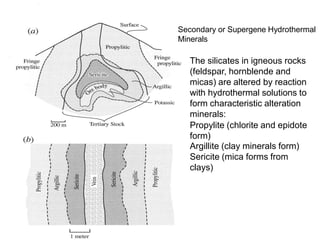
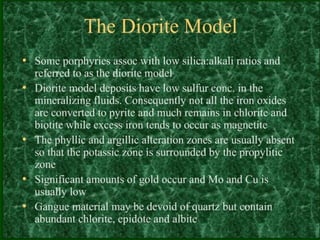
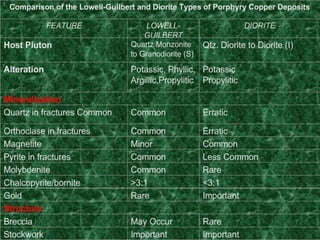
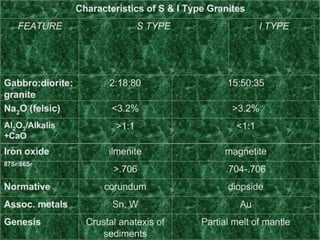
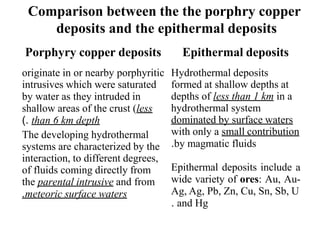
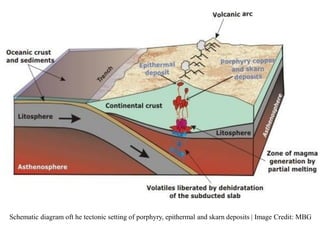
This document discusses porphyry copper deposits and the processes of hypogene and supergene mineralization. It describes how primary sulfide minerals react in the presence of oxygenated groundwater to form secondary sulfides and then supergene oxides, carbonates, sulfates, and phosphates. This leaves gossan, or iron oxide, at the surface as a marker for sulfide prospecting. The document also briefly discusses alteration minerals formed from the reaction of hydrothermal fluids with igneous rocks, and compares porphyry copper deposits, which form at depths under 6 km, to shallow epithermal deposits formed less than 1 km deep.