POLICY OBJECTIVES
FEIJOO ZAMBRANO KATHERINE ESTEFANÍA
LÓPEZ ROBALINO MICHELLE ESTEFANÍA
It is important that policy promote the coordination and success of programmes and
projects. The formulation of a “good policy for education” is a necessary step in
promoting the emergence and effective implementation of action plans,
programmes and projects.
• Education
sector policies
represent the
government’s
public
commitment to
the
future
orientation of
the sector.
• A clearly formulated policy can play an
important
• “operational” role as a reference for action. It
can help to guide decisions and future
• actions in educational development, including
the interventions of international and
• bilateral cooperation agencies, in a coherent
way
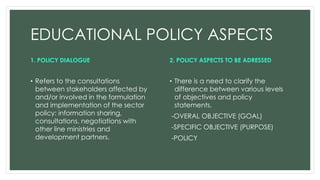
EDUCATIONAL POLICY ASPECTS
1. POLICY DIALOGUE
• Refers to the consultations
between stakeholders affected by
and/or involved in the formulation
and implementation of the sector
policy: information sharing,
consultations, negotiations with
other line ministries and
development partners.
2. POLICY ASPECTS TO BE ADRESSED
• There is a need to clarify the
difference between various levels
of objectives and policy
statements.
-OVERAL OBJECTIVE (GOAL)
-SPECIFIC OBJECTIVE (PURPOSE)
-POLICY
1.POLICY DIALOGUE
• POLICY DIALOGUE GO BY MANY NAMES:
“ROUNDTABLES” OR “ISSUE WORKSHOPS” OR
“WORKING GROUPS”
• POLICY DIALOGUE MAY BE DEFINED AS:
ORGANIZED DELIBERATION BETWEEN TWO OR
MORE ACTORS ON THE ALLOCATION OF
VALUES THAT IS LIKELY TO RESULT IN THE NEW
POLICES OR MODIFICATION OF EXISTING ONE.
• CAREFULLY CONSTRUCTED, DELIBERATIVE
MEETINGS THAT ADDRESS BOTH POLITICALLY
CONTROVERSIAL AND TECHNICALLY COMPLEX
ASPECTS OF A POLICY ISSUE OF CONCERN TO
A PARTICULAR POLITY OR SOCIETY.
A POLICY DIALOGUE IS NOT…
• A MASS MEETING
• AN EVENT CONTROLLED BY ONLY ONE
INTEREST GROUP
• AN EVENT DOMINATED BY FORMALITIES AND
PROTOCOLS
• A SEMINAR OR LECTURE
• AN EVENT FOR SHARING RESEARCH RESULTS
WITH THE GENERAL PUBLIC
• AN OCCASION TO PRESENT PRE-PREPARED
RESOLUTIONS OR DELIVER AN ULTIMATUM
• A SPUR OF THE MOMENT MEETING
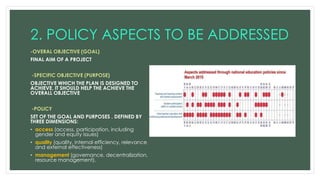
2. POLICY ASPECTS TO BE ADDRESSED
-OVERAL OBJECTIVE (GOAL)
FINAL AIM OF A PROJECT
-SPECIFIC OBJECTIVE (PURPOSE)
OBJECTIVE WHICH THE PLAN IS DESIGNED TO
ACHIEVE, IT SHOULD HELP THE ACHIEVE THE
OVERALL OBJECTIVE
-POLICY
SET OF THE GOAL AND PURPOSES . DEFINED BY
THREE DIMENSIONS:
• access (access, participation, including
gender and equity issues)
• quality (quality, internal efficiency, relevance
and external effectiveness)
• management (governance, decentralization,
resource management).
THE THREE DIMENSIONS ARE ADDRESSED:
These dimensions are addressed:
• either as a whole, by programme
component or by sub-sector
• with target indicators by time-range
(medium or long-term) and with a few
quantitative indicators.
• One cannot say that there is a perfect
way of writing policies or of listing
different policy aspects. An indicative
checklist is presented below as a way
of providing specification of some of
the fields requiring definition in an
educational policy and the
implementation strategies.
This list is not
exhaustive:
• Access to and participation in education
• Equity and the reduction of disparities between boys and girls, regional disparities,
rural/urban disparities and social disparities
• Quality and the relevance of education at different levels (basic education, general
secondary education, technical and professional education, higher education, adult
education, etc.)
• The place that the private sector and local groups occupy in the organization of
education
• Institutional aspects such as governance, management and planning, including the
decentralization, de-concentration and centralization balance
• partnership and communication between actors and partners, the level and form of
participation and communication;
• Cost control in recurrent and capital expenditure
• Policies and strategies to mobilize resources in connection with decentralization, the
development of the private sector and partnership development.
Formulation of
Policy Objectives
Through the LFAThe tecniques of the Logical Framework Approach to formulate education policy
objectives
Definitions and underlying
principles of Logframe
• Objectives at the top of the first column frame goal (or overall
objective) and purpose (or specific objective) statements and
can be roughly equated with the policy, whilst outputs and
actions indicate the way one want to achieve this policy
(implementation strategy and activities)
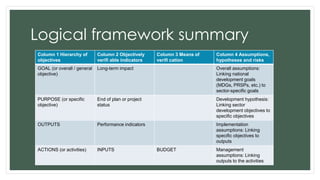
Column 1 Hierarchy of
objectives
Column 2 Objectively
verifi able indicators
Column 3 Means of
verifi cation
Column 4 Assumptions,
hypotheses and risks
GOAL (or overall / general
objective)
Long-term impact Overall assumptions:
Linking national
development goals
(MDGs, PRSPs, etc.) to
sector-specific goals
PURPOSE (or specific
objective)
End of plan or project
status
Development hypothesis:
Linking sector
development objectives to
specific objectives
OUTPUTS Performance indicators Implementation
assumptions: Linking
specific objectives to
outputs
ACTIONS (or activities) INPUTS BUDGET Management
assumptions: Linking
outputs to the activities
Logical framework summary
Analysis of objectives
• In the Logical Framework Approach, the analysis of objectives can be done by
means of an objective tree
• According to the Logical Framework
Approach, the definition of objectives is
intrinsically imbedded into the problem
analysis. The results of the stakeholder
analysis may have helped to identify
priority problems and not all of the
original problem statements may
therefore need to be translated into
objective statements.
Example of the linkages between
objective trees and Logframes
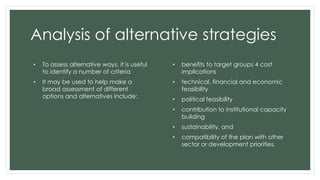
Analysis of alternative strategies
• To assess alternative ways, it is useful
to identify a number of criteria
• It may be used to help make a
broad assessment of different
options and alternatives include:
• benefits to target groups 4 cost
implications
• technical, financial and economic
feasibility
• political feasibility
• contribution to institutional capacity
building
• sustainability, and
• compatibility of the plan with other
sector or development priorities.

Policy objectives

  • 1.
    POLICY OBJECTIVES FEIJOO ZAMBRANOKATHERINE ESTEFANÍA LÓPEZ ROBALINO MICHELLE ESTEFANÍA
  • 2.
    It is importantthat policy promote the coordination and success of programmes and projects. The formulation of a “good policy for education” is a necessary step in promoting the emergence and effective implementation of action plans, programmes and projects. • Education sector policies represent the government’s public commitment to the future orientation of the sector. • A clearly formulated policy can play an important • “operational” role as a reference for action. It can help to guide decisions and future • actions in educational development, including the interventions of international and • bilateral cooperation agencies, in a coherent way
  • 3.
    EDUCATIONAL POLICY ASPECTS 1.POLICY DIALOGUE • Refers to the consultations between stakeholders affected by and/or involved in the formulation and implementation of the sector policy: information sharing, consultations, negotiations with other line ministries and development partners. 2. POLICY ASPECTS TO BE ADRESSED • There is a need to clarify the difference between various levels of objectives and policy statements. -OVERAL OBJECTIVE (GOAL) -SPECIFIC OBJECTIVE (PURPOSE) -POLICY
  • 4.
    1.POLICY DIALOGUE • POLICYDIALOGUE GO BY MANY NAMES: “ROUNDTABLES” OR “ISSUE WORKSHOPS” OR “WORKING GROUPS” • POLICY DIALOGUE MAY BE DEFINED AS: ORGANIZED DELIBERATION BETWEEN TWO OR MORE ACTORS ON THE ALLOCATION OF VALUES THAT IS LIKELY TO RESULT IN THE NEW POLICES OR MODIFICATION OF EXISTING ONE. • CAREFULLY CONSTRUCTED, DELIBERATIVE MEETINGS THAT ADDRESS BOTH POLITICALLY CONTROVERSIAL AND TECHNICALLY COMPLEX ASPECTS OF A POLICY ISSUE OF CONCERN TO A PARTICULAR POLITY OR SOCIETY.
  • 5.
    A POLICY DIALOGUEIS NOT… • A MASS MEETING • AN EVENT CONTROLLED BY ONLY ONE INTEREST GROUP • AN EVENT DOMINATED BY FORMALITIES AND PROTOCOLS • A SEMINAR OR LECTURE • AN EVENT FOR SHARING RESEARCH RESULTS WITH THE GENERAL PUBLIC • AN OCCASION TO PRESENT PRE-PREPARED RESOLUTIONS OR DELIVER AN ULTIMATUM • A SPUR OF THE MOMENT MEETING
  • 6.
    2. POLICY ASPECTSTO BE ADDRESSED -OVERAL OBJECTIVE (GOAL) FINAL AIM OF A PROJECT -SPECIFIC OBJECTIVE (PURPOSE) OBJECTIVE WHICH THE PLAN IS DESIGNED TO ACHIEVE, IT SHOULD HELP THE ACHIEVE THE OVERALL OBJECTIVE -POLICY SET OF THE GOAL AND PURPOSES . DEFINED BY THREE DIMENSIONS: • access (access, participation, including gender and equity issues) • quality (quality, internal efficiency, relevance and external effectiveness) • management (governance, decentralization, resource management).
  • 7.
    THE THREE DIMENSIONSARE ADDRESSED: These dimensions are addressed: • either as a whole, by programme component or by sub-sector • with target indicators by time-range (medium or long-term) and with a few quantitative indicators. • One cannot say that there is a perfect way of writing policies or of listing different policy aspects. An indicative checklist is presented below as a way of providing specification of some of the fields requiring definition in an educational policy and the implementation strategies.
  • 8.
    This list isnot exhaustive: • Access to and participation in education • Equity and the reduction of disparities between boys and girls, regional disparities, rural/urban disparities and social disparities • Quality and the relevance of education at different levels (basic education, general secondary education, technical and professional education, higher education, adult education, etc.) • The place that the private sector and local groups occupy in the organization of education • Institutional aspects such as governance, management and planning, including the decentralization, de-concentration and centralization balance • partnership and communication between actors and partners, the level and form of participation and communication; • Cost control in recurrent and capital expenditure • Policies and strategies to mobilize resources in connection with decentralization, the development of the private sector and partnership development.
  • 9.
    Formulation of Policy Objectives Throughthe LFAThe tecniques of the Logical Framework Approach to formulate education policy objectives
  • 10.
    Definitions and underlying principlesof Logframe • Objectives at the top of the first column frame goal (or overall objective) and purpose (or specific objective) statements and can be roughly equated with the policy, whilst outputs and actions indicate the way one want to achieve this policy (implementation strategy and activities)
  • 11.
    Column 1 Hierarchyof objectives Column 2 Objectively verifi able indicators Column 3 Means of verifi cation Column 4 Assumptions, hypotheses and risks GOAL (or overall / general objective) Long-term impact Overall assumptions: Linking national development goals (MDGs, PRSPs, etc.) to sector-specific goals PURPOSE (or specific objective) End of plan or project status Development hypothesis: Linking sector development objectives to specific objectives OUTPUTS Performance indicators Implementation assumptions: Linking specific objectives to outputs ACTIONS (or activities) INPUTS BUDGET Management assumptions: Linking outputs to the activities Logical framework summary
  • 12.
    Analysis of objectives •In the Logical Framework Approach, the analysis of objectives can be done by means of an objective tree
  • 13.
    • According tothe Logical Framework Approach, the definition of objectives is intrinsically imbedded into the problem analysis. The results of the stakeholder analysis may have helped to identify priority problems and not all of the original problem statements may therefore need to be translated into objective statements.
  • 14.
    Example of thelinkages between objective trees and Logframes
  • 15.
    Analysis of alternativestrategies • To assess alternative ways, it is useful to identify a number of criteria • It may be used to help make a broad assessment of different options and alternatives include: • benefits to target groups 4 cost implications • technical, financial and economic feasibility • political feasibility • contribution to institutional capacity building • sustainability, and • compatibility of the plan with other sector or development priorities.