When and Why use Fortinet Infrastructure
Wireless solution
Brian Andersen
Fortinet
2
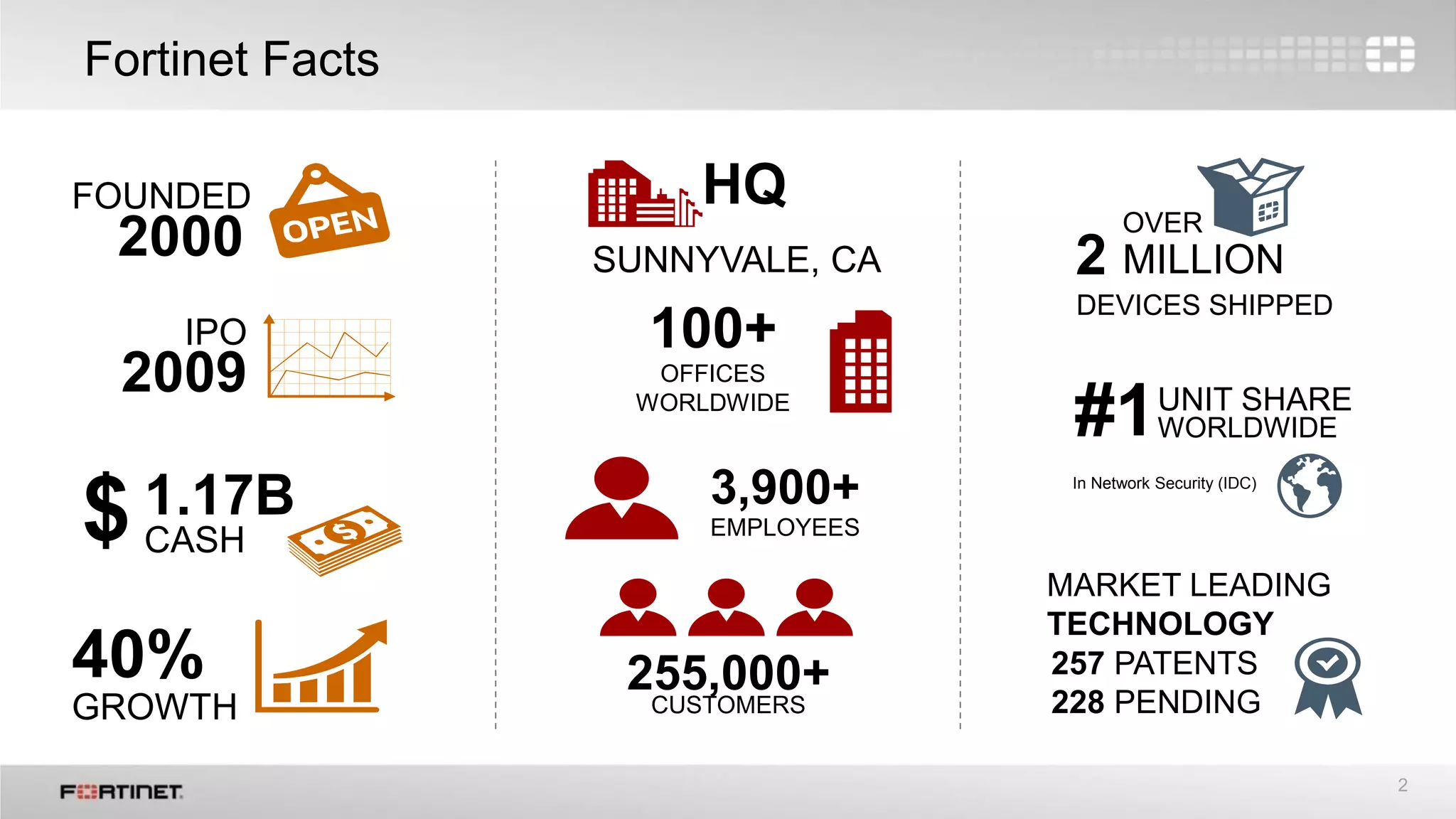
Fortinet Facts
#1UNIT SHARE
WORLDWIDE
In Network Security (IDC)
$1.17B
CASH
FOUNDED
2000 OVER
2 MILLION
DEVICES SHIPPED
40%
GROWTH
EMPLOYEES
3,900+
255,000+CUSTOMERS
MARKET LEADING
TECHNOLOGY
257 PATENTS
228 PENDING
100+
OFFICES
WORLDWIDE
SUNNYVALE, CA
HQ
IPO
2009
3
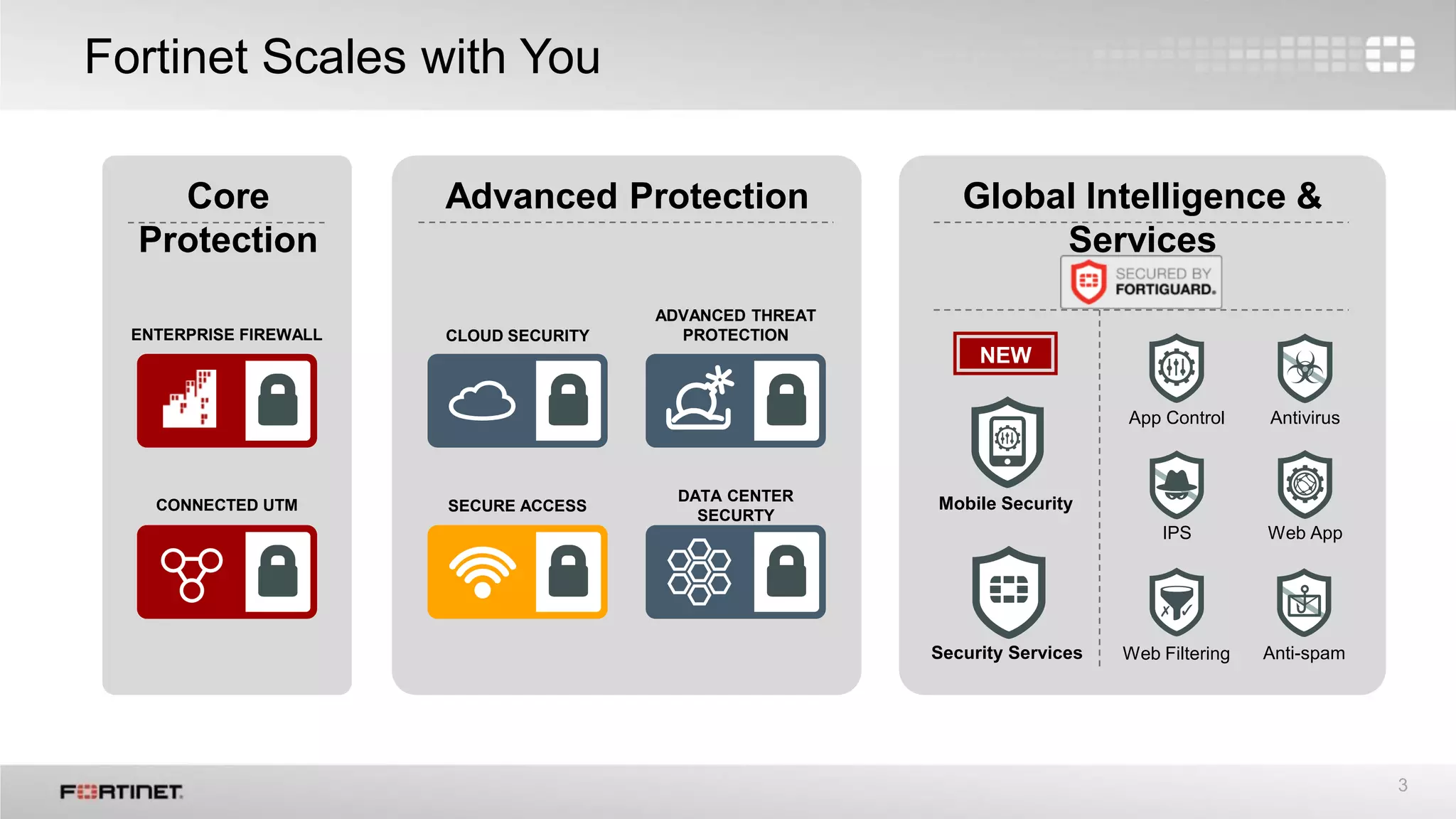
Fortinet Scales with You
Advanced Protection
CONNECTED UTM
ENTERPRISE FIREWALL
DATA CENTER
SECURTY
ADVANCED THREAT
PROTECTION
Global Intelligence &
Services
Mobile Security
NEW
App Control Antivirus
Anti-spam
IPS Web App
Web Filtering
Core
Protection
CLOUD SECURITY
SECURE ACCESS
Security Services
4
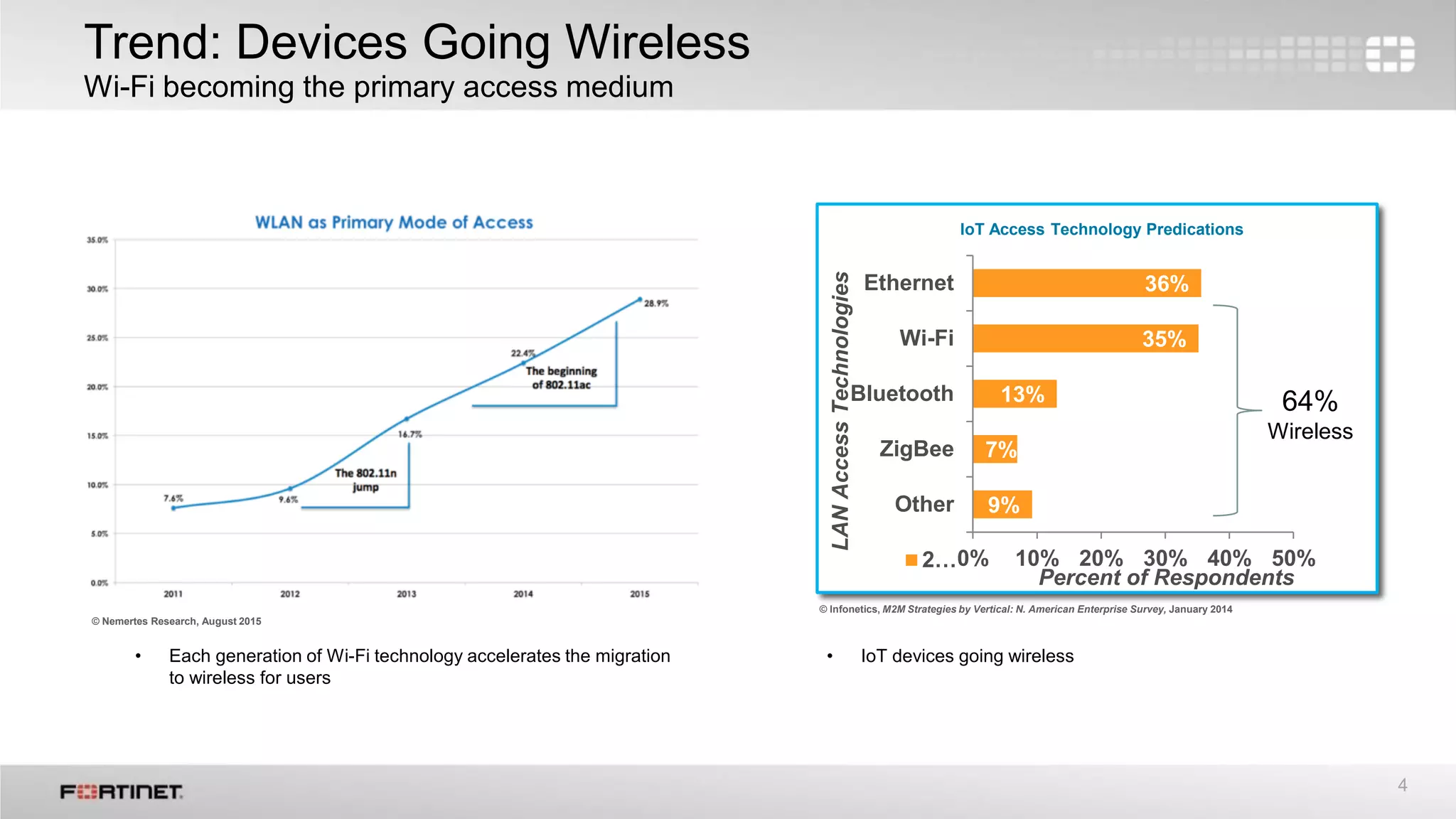
Trend: Devices Going Wireless
Wi-Fi becoming the primary access medium
© Nemertes Research, August 2015
9%
7%
13%
35%
36%
0% 10% 20% 30% 40% 50%
Other
ZigBee
Bluetooth
Wi-Fi
Ethernet
Percent of Respondents
LANAccessTechnologies
2…
• Each generation of Wi-Fi technology accelerates the migration
to wireless for users
IoT Access Technology Predications
© Infonetics, M2M Strategies by Vertical: N. American Enterprise Survey, January 2014
64%
Wireless
• IoT devices going wireless
5
Trend: Unified Network Operations
Management of networks and applications must be simplified
 Network Management: across wired,
wireless and security – single pane
 Control: switches, access points,
security appliances
 Performance: latency, roaming, speed
Network
Management
Application
Management
Device
Management
 Application Management: Application
visibility, application control
 Prioritization: for video, voice, and data
traffic. Prioritize application type:
enterprise vs streaming media
 SLAs / QoS: must be guaranteed for
mission critical applications
 Devices Management: to classify and
secure different device types. Device
fingerprinting
 Authentication: Identity management
and onboarding of devices. MDM, NAC.
 Presence: Asset tracking via tags.
Retail analytics - device tracking of
known and unknown users
6
Trend: Need for More Speed
Migration to 802.11ac continues
1st
Generation
1997-1998
2nd
Generation
1999-2001
3rd
Generation
2002-2006
4th
Generation
2007-2011
5th
Generation
Now
802.11
2 Mbps
802.11b
11 Mbps
802.11g/a
54 Mbps
802.11n
450 Mbps
802.11ac
Gigabit Mbps
Infonetics, Wireless LAN Equipment Quarterly Worldwide and Regional Market Share: 4Q14
Migration to 802.11acWi-Fi Standards Evolution
7
WiFi 5Ghz Channels
36
40
44
48
52
56
60
64
100
104
108
112
116
136
140
144
149
153
157
161
165
36
IEEE Channel #
20 MHz-
channels allowed
40 MHz-
Channel allowed
80 MHz channel allowed
120
124
128
132
36
40
44
48
38
46
52
56
60
64
54
62
100
104
108
112
116
136
120
124
128
132
102
110
118
126
134
52
100
116
140
149
153
157
161
165
151
159
36
160 MHz channel allowed
100
132
8
Signal Strength needed
Why Fortinet
Secure Access Architecture
10
Branch Office Campus
Data Center
Remote Office
Mobile
PoS
IoT
There’s more
ways in
More ways out
BORDERLESS ATTACK SURFACE
11
Authentication
Onboarding devices and users securely
 Flexible Authentication Options
» Scalable Authentication. Scales up to millions of users
» Authentication solutions for Infrastructure, Integrated and Cloud offerings
» Public and private authentication systems
 Key authentication capabilities
» Full featured login: Single-sign on, captive portal
» Integrates with RADIUS, LDAP, Certificate management
» Authentication across wireless, wired access network
 Third-party Integration
» Integrates with MDM, MAM, NAC vendors
» Payment gateway support
» Property Management System support
Why Fortinet Authentication?  Scale: Highly scalable authentication appliance portfolio: 400 – 1M users
 Secure: Standards-based secure two-factor authentication / Token support
 Ecosystem: Third party social login / Payment Gateways / PMS / MDM Partners
12
Complete Secure Access Offerings
Comprehensive deployment options
1 2 3
On Premise
Management
AP + Security
Cloud
Management
AP
Security
+
WLAN Mgt
AP
Security WLAN Mgt
Infrastructure Integrated Cloud
Cloud
On Premise
Management
Switch Switch Switch
Infrastructure Wireless
Mobile, Flexibility and Choice
14
• Unified wired-wireless visibility for
emergency management
• Unified wired-wireless packet capture
for troubleshooting
• Microsoft Lync solution troubleshooting
and management
Higher Education - University of Houston
Solution Benefits
• 41,000 Students
• 4,500+ Access Points
Overview
15
Example: The Gathering
Her kommer video fra TG
16
Infrastructure
Secure access solution that provides flexibility
Why Infrastructure?  Mobile: Fit for highly mobile and scalable deployments where low latency and roaming support matter
 Flexibility: Channel planning flexibility to shorten site survey and deployment times
 Choice: Able to separate access infrastructure purchase decision from security purchase
1
Security WLAN Management
Mobility / Roaming / Scale
• Supports highly mobile environments
• Lowest latencies for video and voice traffic
Channel Planning Flexibility
• Reduce site survey planning
• Reduce deployment times
Choice
• Security and access unbundled
• Ability to pick and choice best options
17
Deployment, Scalability and Flexibility
Multi-Channel
One channel to simplify deployment
and seamless roaming
Multiple channels to maximize
spectrum reuse and performance
Virtual Cell + Single Channel
36 36 36
36 36 36 36
36 36 36
Multiple channels to segment
application traffic and add capacity
Virtual Cell + Channel Layers
36 36 36
36 36 36 36
58 58 5844 44 44
44 44 44 44
42 42 42
149 149 149
149 149 149 149
149 149 149
18
Key elements in Fortinet Infrastructure WiFi
Network in control (virtual cell)
 Infrastructure in control of connection, not client
Roaming
 Close to “zero-handoff”, great for moving clients (voice, truck….)
Airtime fairness
 Clients getting a fair share of the network
Single channel, Channel layering and/or striping
 Efficient radio control, more capacity and or “own” wifi for certain clients / service
PLNOG16: When and Why use Fortinet Infrastructure Wireless solution, Brian Andersen

PLNOG16: When and Why use Fortinet Infrastructure Wireless solution, Brian Andersen

  • 1.
    When and Whyuse Fortinet Infrastructure Wireless solution Brian Andersen Fortinet
  • 2.
    2 Fortinet Facts #1UNIT SHARE WORLDWIDE InNetwork Security (IDC) $1.17B CASH FOUNDED 2000 OVER 2 MILLION DEVICES SHIPPED 40% GROWTH EMPLOYEES 3,900+ 255,000+CUSTOMERS MARKET LEADING TECHNOLOGY 257 PATENTS 228 PENDING 100+ OFFICES WORLDWIDE SUNNYVALE, CA HQ IPO 2009
  • 3.
    3 Fortinet Scales withYou Advanced Protection CONNECTED UTM ENTERPRISE FIREWALL DATA CENTER SECURTY ADVANCED THREAT PROTECTION Global Intelligence & Services Mobile Security NEW App Control Antivirus Anti-spam IPS Web App Web Filtering Core Protection CLOUD SECURITY SECURE ACCESS Security Services
  • 4.
    4 Trend: Devices GoingWireless Wi-Fi becoming the primary access medium © Nemertes Research, August 2015 9% 7% 13% 35% 36% 0% 10% 20% 30% 40% 50% Other ZigBee Bluetooth Wi-Fi Ethernet Percent of Respondents LANAccessTechnologies 2… • Each generation of Wi-Fi technology accelerates the migration to wireless for users IoT Access Technology Predications © Infonetics, M2M Strategies by Vertical: N. American Enterprise Survey, January 2014 64% Wireless • IoT devices going wireless
  • 5.
    5 Trend: Unified NetworkOperations Management of networks and applications must be simplified  Network Management: across wired, wireless and security – single pane  Control: switches, access points, security appliances  Performance: latency, roaming, speed Network Management Application Management Device Management  Application Management: Application visibility, application control  Prioritization: for video, voice, and data traffic. Prioritize application type: enterprise vs streaming media  SLAs / QoS: must be guaranteed for mission critical applications  Devices Management: to classify and secure different device types. Device fingerprinting  Authentication: Identity management and onboarding of devices. MDM, NAC.  Presence: Asset tracking via tags. Retail analytics - device tracking of known and unknown users
  • 6.
    6 Trend: Need forMore Speed Migration to 802.11ac continues 1st Generation 1997-1998 2nd Generation 1999-2001 3rd Generation 2002-2006 4th Generation 2007-2011 5th Generation Now 802.11 2 Mbps 802.11b 11 Mbps 802.11g/a 54 Mbps 802.11n 450 Mbps 802.11ac Gigabit Mbps Infonetics, Wireless LAN Equipment Quarterly Worldwide and Regional Market Share: 4Q14 Migration to 802.11acWi-Fi Standards Evolution
  • 7.
    7 WiFi 5Ghz Channels 36 40 44 48 52 56 60 64 100 104 108 112 116 136 140 144 149 153 157 161 165 36 IEEEChannel # 20 MHz- channels allowed 40 MHz- Channel allowed 80 MHz channel allowed 120 124 128 132 36 40 44 48 38 46 52 56 60 64 54 62 100 104 108 112 116 136 120 124 128 132 102 110 118 126 134 52 100 116 140 149 153 157 161 165 151 159 36 160 MHz channel allowed 100 132
  • 8.
  • 9.
  • 10.
    10 Branch Office Campus DataCenter Remote Office Mobile PoS IoT There’s more ways in More ways out BORDERLESS ATTACK SURFACE
  • 11.
    11 Authentication Onboarding devices andusers securely  Flexible Authentication Options » Scalable Authentication. Scales up to millions of users » Authentication solutions for Infrastructure, Integrated and Cloud offerings » Public and private authentication systems  Key authentication capabilities » Full featured login: Single-sign on, captive portal » Integrates with RADIUS, LDAP, Certificate management » Authentication across wireless, wired access network  Third-party Integration » Integrates with MDM, MAM, NAC vendors » Payment gateway support » Property Management System support Why Fortinet Authentication?  Scale: Highly scalable authentication appliance portfolio: 400 – 1M users  Secure: Standards-based secure two-factor authentication / Token support  Ecosystem: Third party social login / Payment Gateways / PMS / MDM Partners
  • 12.
    12 Complete Secure AccessOfferings Comprehensive deployment options 1 2 3 On Premise Management AP + Security Cloud Management AP Security + WLAN Mgt AP Security WLAN Mgt Infrastructure Integrated Cloud Cloud On Premise Management Switch Switch Switch
  • 13.
  • 14.
    14 • Unified wired-wirelessvisibility for emergency management • Unified wired-wireless packet capture for troubleshooting • Microsoft Lync solution troubleshooting and management Higher Education - University of Houston Solution Benefits • 41,000 Students • 4,500+ Access Points Overview
  • 15.
    15 Example: The Gathering Herkommer video fra TG
  • 16.
    16 Infrastructure Secure access solutionthat provides flexibility Why Infrastructure?  Mobile: Fit for highly mobile and scalable deployments where low latency and roaming support matter  Flexibility: Channel planning flexibility to shorten site survey and deployment times  Choice: Able to separate access infrastructure purchase decision from security purchase 1 Security WLAN Management Mobility / Roaming / Scale • Supports highly mobile environments • Lowest latencies for video and voice traffic Channel Planning Flexibility • Reduce site survey planning • Reduce deployment times Choice • Security and access unbundled • Ability to pick and choice best options
  • 17.
    17 Deployment, Scalability andFlexibility Multi-Channel One channel to simplify deployment and seamless roaming Multiple channels to maximize spectrum reuse and performance Virtual Cell + Single Channel 36 36 36 36 36 36 36 36 36 36 Multiple channels to segment application traffic and add capacity Virtual Cell + Channel Layers 36 36 36 36 36 36 36 58 58 5844 44 44 44 44 44 44 42 42 42 149 149 149 149 149 149 149 149 149 149
  • 18.
    18 Key elements inFortinet Infrastructure WiFi Network in control (virtual cell)  Infrastructure in control of connection, not client Roaming  Close to “zero-handoff”, great for moving clients (voice, truck….) Airtime fairness  Clients getting a fair share of the network Single channel, Channel layering and/or striping  Efficient radio control, more capacity and or “own” wifi for certain clients / service