Inflammation chronique dans
les maladies cardiovasculaires
liées à l’athérome :
Place de l’alimentation

Guy-André Pelouze MD MSc
Chirurgien des Hôpitaux
L’athérome une maladie chronique
non transmissible
• Maladie de rétention avec dépôt dans la paroi
    des artères
•   Polygénique multifactorielle
•   Inflammatoire et auto-immune
•   Les lipoprotéines de basse densité (LDL), les
    chylomicrons et les macrophages au cœur de
    la rétention et de la constitution de la plaque
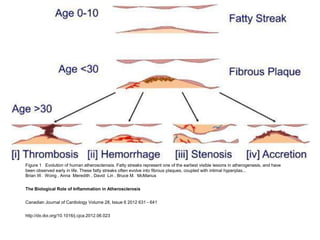
Figure 1 Evolution of human atherosclerosis. Fatty streaks represent one of the earliest visible lesions in atherogenesis, and have
been observed early in life. These fatty streaks often evolve into fibrous plaques, coupled with intimal hyperplas...
Brian W. Wong , Anna Meredith , David Lin , Bruce M. McManus


The Biological Role of Inflammation in Atherosclerosis


Canadian Journal of Cardiology Volume 28, Issue 6 2012 631 - 641


http://dx.doi.org/10.1016/j.cjca.2012.06.023
Figure 3 Progression of atherosclerosis and plaque formation. ( A ) The subendothelial retention of lipoproteins is an early initiating
factor in atherogenesis. ( B ) This initiating process results in monocyte chemotaxis in response to trapped l...


Brian W. Wong , Anna Meredith , David Lin , Bruce M. McManus


The Biological Role of Inflammation in Atherosclerosis


Canadian Journal of Cardiology Volume 28, Issue 6 2012 631 - 641


http://dx.doi.org/10.1016/j.cjca.2012.06.023
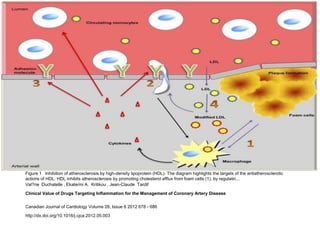
Figure 1 Inhibition of atherosclerosis by high-density lipoprotein (HDL). The diagram highlights the targets of the antiatherosclerotic
actions of HDL. HDL inhibits atherosclerosis by promoting cholesterol efflux from foam cells (1), by regulatin...
Val?rie Duchatelle , Ekaterini A. Kritikou , Jean-Claude Tardif

Clinical Value of Drugs Targeting Inflammation for the Management of Coronary Artery Disease


Canadian Journal of Cardiology Volume 28, Issue 6 2012 678 - 686

http://dx.doi.org/10.1016/j.cjca.2012.05.003
Figure 2 Inflammatory mediators in atherosclerosis. ( A ) Numerous inflammatory cell types play major roles in mediating the
inflammatory response which is part of atherosclerosis, including T-cells, monocytes, and neutrophils. Early insudation a...
 Brian W. Wong , Anna Meredith , David Lin , Bruce M. McManus


The Biological Role of Inflammation in Atherosclerosis


Canadian Journal of Cardiology Volume 28, Issue 6 2012 631 - 641


http://dx.doi.org/10.1016/j.cjca.2012.06.023
Athérome carotidien évolué
Inflammation chronique et
athérome
Marqueurs de l'inflammation chronique
  VS
  CRP ultrasensible
  Fibrinogène
Modèles cliniques d'inflammation chronique
 avec accélération de l'athérogénèse
  Diabète type 2
  Fumeur actif
  Polyarthrite rhumatoide
Preuves diagnostiques de
l'inflammation dans la plaque d'athérome
Figure 4 Working model by which an elevated C-reactive protein (CRP) concentration predicts the risk of an acute coronary
syndrome. First, CRP per se may have a direct impact on processes involved in the etiology of coronary heart disease. Second...


Jean-Pierre Despr?s


Abdominal Obesity and Cardiovascular Disease: Is Inflammation the Missing Link?


Canadian Journal of Cardiology Volume 28, Issue 6 2012 642 - 652


http://dx.doi.org/10.1016/j.cjca.2012.06.004
Fig. 1 The continuum of bioactive lipid pathways. Whether prostaglandins or resolvins bind lipid receptors in a therapeutic context,
or HETE molecules interact with receptors to push cancer toward metastasis, there is evidence to support nearly ...


Stephanie C. Tucker , Kenneth V. Honn


Emerging targets in lipid-based therapy


Biochemical Pharmacology Volume 85, Issue 5 2013 673 - 688


http://dx.doi.org/10.1016/j.bcp.2012.11.028
Figure 1 Simplified model showing the possible correlates ( A ) of insulin resistance often found among individuals with excess
visceral/ectopic fat. ( B ) Illustrates the notion that the syndrome X/insulin resistance syndrome concept was based o...
Jean-Pierre Despr?s


Abdominal Obesity and Cardiovascular Disease: Is Inflammation the Missing Link?


Canadian Journal of Cardiology Volume 28, Issue 6 2012 642 - 652


http://dx.doi.org/10.1016/j.cjca.2012.06.004
Figure 2 The ?building blocks? of global cardiometabolic risk. Cardiometabolic risk is the overall risk of cardiovascular disease
(CVD) resulting from the presence of the metabolic syndrome but also of traditional risk factors such as lipids (low...


Jean-Pierre Despr?s


Abdominal Obesity and Cardiovascular Disease: Is Inflammation the Missing Link?


Canadian Journal of Cardiology Volume 28, Issue 6 2012 642 - 652


http://dx.doi.org/10.1016/j.cjca.2012.06.004
Jean-Pierre Despr?s


Abdominal Obesity and Cardiovascular Disease: Is Inflammation the Missing Link?


Canadian Journal of Cardiology Volume 28, Issue 6 2012 642 - 652


http://dx.doi.org/10.1016/j.cjca.2012.06.004

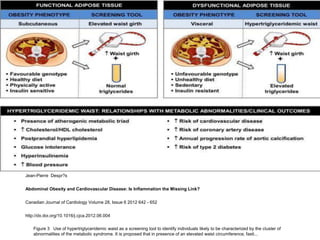
    Figure 3 Use of hypertriglyceridemic waist as a screening tool to identify individuals likely to be characterized by the cluster of
    abnormalities of the metabolic syndrome. It is proposed that in presence of an elevated waist circumference, fasti...
Figure 5 Simplified model to illustrate the concept that when facing a chronic energy surplus, inability of subcutaneous adipose
tissue to expand through hyperplasia may lead to hypertrophic and ?inflamed? adipose tissue. Resulting systemic infla...


Jean-Pierre Després


Abdominal Obesity and Cardiovascular Disease: Is Inflammation the Missing Link?


Canadian Journal of Cardiology Volume 28, Issue 6 2012 642 - 652


http://dx.doi.org/10.1016/j.cjca.2012.06.004
Quels sont les facteurs non
alimentaires pro-inflammatoires?
1. Tabac fumé actif ou passif ou fumée de
   cheminée
2. Sédentarité
3. Pollution environnementale par les particules
   fines: PM2.5 (particulate matter less than 2.5
   μm in diameter)
4. Gingivite, Foyers infectieux chroniques
   (dentaires, osseux ...)
5. Faible exposition solaire et faible Vit D
   circulante
Obésité et insuline
•    Le gras stocké est plus souvent un excès
     calorique qu’une ingestion de graisses
•    Le signal de stockage est amplifié par
     l’insuline
•    Les aliments insulino-sécréteurs sont pro-
     inflammatoires
•    Le rôle de la génétique est secondaire
     comme le démontre l’explosion du D2 et de
     l’obésité dans le monde industriel
Proinflammatory diet
1. High temperature cooking
2. Charred, charcoaled food on barbecue for
   instance
3. High insulinic foods (high GI and high GL)
4. Low raw/cooked ratio
5. High intake of refined and/or industrial foods
6. High W6/W3 ratio
7. High intake of W6 PUFA (Sunflower, corn,
   soy oils)
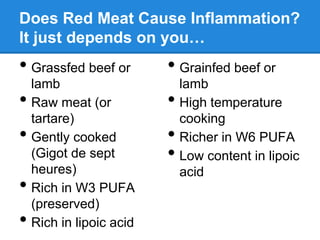
Does Red Meat Cause Inflammation?
It just depends on you…
• Grassfed beef or        • Grainfed beef or
    lamb                      lamb
•   Raw meat (or          •   High temperature
    tartare)                  cooking
•   Gently cooked         •   Richer in W6 PUFA
    (Gigot de sept        •   Low content in lipoic
    heures)                   acid
•   Rich in W3 PUFA
    (preserved)
•   Rich in lipoic acid
Résultats
•   Tartare de veau Rosée   •   Viande de bœuf aux
    des Pyrénées (viande        farines de céréales cuite
    d’estive)                   à haute température
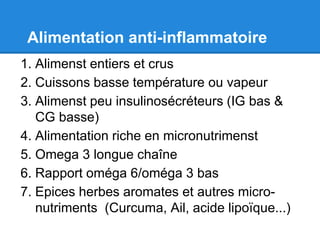
Alimentation anti-inflammatoire
1. Alimenst entiers et crus
2. Cuissons basse température ou vapeur
3. Alimenst peu insulinosécréteurs (IG bas &
   CG basse)
4. Alimentation riche en micronutrimenst
5. Omega 3 longue chaîne
6. Rapport oméga 6/oméga 3 bas
7. Epices herbes aromates et autres micro-
   nutriments (Curcuma, Ail, acide lipoïque...)
Epices et herbes
Boissons anti-inflammatoires
• Eaux
• Jus de légumes
• Thé vert
• Kéfir de fruit ou de lait cru (non pasteurisé)
• Vins
• Bières (Non filtrées et non pasteurisées)
Jus de légumes
•   Préparation du jus de légumes   •   Résultat
Alois Jungbauer , Svjetlana Medjakovic


Anti-inflammatory properties of culinary herbs and spices that ameliorate the effects of metabolic syndrome


Maturitas Volume 71, Issue 3 2012 227 - 239


http://dx.doi.org/10.1016/j.maturitas.2011.12.009

  Fig. 1 Schematic overview of how metabolic syndrome develops from adipose tissue <ce:cross-ref refid="bib0035"> [7]</ce:cross-
  ref> .
Alois Jungbauer , Svjetlana Medjakovic


Anti-inflammatory properties of culinary herbs and spices that ameliorate the effects of metabolic syndrome


Maturitas Volume 71, Issue 3 2012 227 - 239


http://dx.doi.org/10.1016/j.maturitas.2011.12.009

Fig. 2 Overview of the different classes of polyphenols, though some phenolic acids are not strictly polyphenols. Examples for the
different classes are given, being maitaresinol as lignan, gallic acid as phenolic acid, <ce:italic> trans</ce:ital...
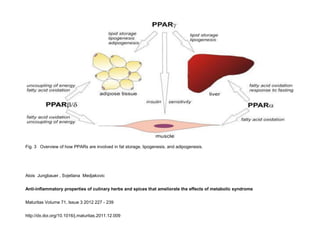
Fig. 3 Overview of how PPARs are involved in fat storage, lipogenesis, and adipogenesis.


Alois Jungbauer , Svjetlana Medjakovic


Anti-inflammatory properties of culinary herbs and spices that ameliorate the effects of metabolic syndrome


Maturitas Volume 71, Issue 3 2012 227 - 239


http://dx.doi.org/10.1016/j.maturitas.2011.12.009
Alois Jungbauer , Svjetlana Medjakovic


 Anti-inflammatory properties of culinary herbs and spices that ameliorate the effects of metabolic syndrome


 Maturitas Volume 71, Issue 3 2012 227 - 239


 http://dx.doi.org/10.1016/j.maturitas.2011.12.009

Fig. 4 Effects induced by PPAR ? that affect fat tissue remodelling or insulin resistance or sensitivity.
Dietary oats and modulation of atherogenic pathways


Molecular Nutrition & Food ResearchVolume 56, Issue 7, pages 1003-1013, 12 JUN 2012 DOI:
10.1002/mnfr.201100706http://onlinelibrary.wiley.com/doi/10.1002/mnfr.201100706/full#mnfr1736-
fig-0001
Conclusion

•   L'inflammation est une adaptation de survie aux
    agressions en particulier des micro-organismes
•   Malgré la disparition du péril infectieux nous restons très
    enclin à l'inflammation et tout particulierement chronique
•   En effet le mode de vie sédentaire et l'alimentation
    industrielle sont pro-inflammatoires
•   En prévention primaire ou secondaire un régime anti-
    inflammatoire est utile dans les maladies chroniques
•   Sous réserve d'une bonne compréhension les régimes
    crétois, japonais, paléo sont anti-inflammatoires
Mon blog préféré:
http://dysnutrition.blogspot.fr/


 Merci de votre attention

Régime anti-inflammatoire et athérome

  • 1.
    Inflammation chronique dans lesmaladies cardiovasculaires liées à l’athérome : Place de l’alimentation Guy-André Pelouze MD MSc Chirurgien des Hôpitaux
  • 2.
    L’athérome une maladiechronique non transmissible • Maladie de rétention avec dépôt dans la paroi des artères • Polygénique multifactorielle • Inflammatoire et auto-immune • Les lipoprotéines de basse densité (LDL), les chylomicrons et les macrophages au cœur de la rétention et de la constitution de la plaque
  • 3.
    Figure 1 Evolutionof human atherosclerosis. Fatty streaks represent one of the earliest visible lesions in atherogenesis, and have been observed early in life. These fatty streaks often evolve into fibrous plaques, coupled with intimal hyperplas... Brian W. Wong , Anna Meredith , David Lin , Bruce M. McManus The Biological Role of Inflammation in Atherosclerosis Canadian Journal of Cardiology Volume 28, Issue 6 2012 631 - 641 http://dx.doi.org/10.1016/j.cjca.2012.06.023
  • 4.
    Figure 3 Progressionof atherosclerosis and plaque formation. ( A ) The subendothelial retention of lipoproteins is an early initiating factor in atherogenesis. ( B ) This initiating process results in monocyte chemotaxis in response to trapped l... Brian W. Wong , Anna Meredith , David Lin , Bruce M. McManus The Biological Role of Inflammation in Atherosclerosis Canadian Journal of Cardiology Volume 28, Issue 6 2012 631 - 641 http://dx.doi.org/10.1016/j.cjca.2012.06.023
  • 5.
    Figure 1 Inhibitionof atherosclerosis by high-density lipoprotein (HDL). The diagram highlights the targets of the antiatherosclerotic actions of HDL. HDL inhibits atherosclerosis by promoting cholesterol efflux from foam cells (1), by regulatin... Val?rie Duchatelle , Ekaterini A. Kritikou , Jean-Claude Tardif Clinical Value of Drugs Targeting Inflammation for the Management of Coronary Artery Disease Canadian Journal of Cardiology Volume 28, Issue 6 2012 678 - 686 http://dx.doi.org/10.1016/j.cjca.2012.05.003
  • 6.
    Figure 2 Inflammatorymediators in atherosclerosis. ( A ) Numerous inflammatory cell types play major roles in mediating the inflammatory response which is part of atherosclerosis, including T-cells, monocytes, and neutrophils. Early insudation a... Brian W. Wong , Anna Meredith , David Lin , Bruce M. McManus The Biological Role of Inflammation in Atherosclerosis Canadian Journal of Cardiology Volume 28, Issue 6 2012 631 - 641 http://dx.doi.org/10.1016/j.cjca.2012.06.023
  • 7.
  • 8.
    Inflammation chronique et athérome Marqueursde l'inflammation chronique VS CRP ultrasensible Fibrinogène Modèles cliniques d'inflammation chronique avec accélération de l'athérogénèse Diabète type 2 Fumeur actif Polyarthrite rhumatoide
  • 9.
    Preuves diagnostiques de l'inflammationdans la plaque d'athérome
  • 11.
    Figure 4 Workingmodel by which an elevated C-reactive protein (CRP) concentration predicts the risk of an acute coronary syndrome. First, CRP per se may have a direct impact on processes involved in the etiology of coronary heart disease. Second... Jean-Pierre Despr?s Abdominal Obesity and Cardiovascular Disease: Is Inflammation the Missing Link? Canadian Journal of Cardiology Volume 28, Issue 6 2012 642 - 652 http://dx.doi.org/10.1016/j.cjca.2012.06.004
  • 12.
    Fig. 1 Thecontinuum of bioactive lipid pathways. Whether prostaglandins or resolvins bind lipid receptors in a therapeutic context, or HETE molecules interact with receptors to push cancer toward metastasis, there is evidence to support nearly ... Stephanie C. Tucker , Kenneth V. Honn Emerging targets in lipid-based therapy Biochemical Pharmacology Volume 85, Issue 5 2013 673 - 688 http://dx.doi.org/10.1016/j.bcp.2012.11.028
  • 13.
    Figure 1 Simplifiedmodel showing the possible correlates ( A ) of insulin resistance often found among individuals with excess visceral/ectopic fat. ( B ) Illustrates the notion that the syndrome X/insulin resistance syndrome concept was based o... Jean-Pierre Despr?s Abdominal Obesity and Cardiovascular Disease: Is Inflammation the Missing Link? Canadian Journal of Cardiology Volume 28, Issue 6 2012 642 - 652 http://dx.doi.org/10.1016/j.cjca.2012.06.004
  • 14.
    Figure 2 The?building blocks? of global cardiometabolic risk. Cardiometabolic risk is the overall risk of cardiovascular disease (CVD) resulting from the presence of the metabolic syndrome but also of traditional risk factors such as lipids (low... Jean-Pierre Despr?s Abdominal Obesity and Cardiovascular Disease: Is Inflammation the Missing Link? Canadian Journal of Cardiology Volume 28, Issue 6 2012 642 - 652 http://dx.doi.org/10.1016/j.cjca.2012.06.004
  • 15.
    Jean-Pierre Despr?s Abdominal Obesityand Cardiovascular Disease: Is Inflammation the Missing Link? Canadian Journal of Cardiology Volume 28, Issue 6 2012 642 - 652 http://dx.doi.org/10.1016/j.cjca.2012.06.004 Figure 3 Use of hypertriglyceridemic waist as a screening tool to identify individuals likely to be characterized by the cluster of abnormalities of the metabolic syndrome. It is proposed that in presence of an elevated waist circumference, fasti...
  • 16.
    Figure 5 Simplifiedmodel to illustrate the concept that when facing a chronic energy surplus, inability of subcutaneous adipose tissue to expand through hyperplasia may lead to hypertrophic and ?inflamed? adipose tissue. Resulting systemic infla... Jean-Pierre Després Abdominal Obesity and Cardiovascular Disease: Is Inflammation the Missing Link? Canadian Journal of Cardiology Volume 28, Issue 6 2012 642 - 652 http://dx.doi.org/10.1016/j.cjca.2012.06.004
  • 17.
    Quels sont lesfacteurs non alimentaires pro-inflammatoires? 1. Tabac fumé actif ou passif ou fumée de cheminée 2. Sédentarité 3. Pollution environnementale par les particules fines: PM2.5 (particulate matter less than 2.5 μm in diameter) 4. Gingivite, Foyers infectieux chroniques (dentaires, osseux ...) 5. Faible exposition solaire et faible Vit D circulante
  • 18.
    Obésité et insuline • Le gras stocké est plus souvent un excès calorique qu’une ingestion de graisses • Le signal de stockage est amplifié par l’insuline • Les aliments insulino-sécréteurs sont pro- inflammatoires • Le rôle de la génétique est secondaire comme le démontre l’explosion du D2 et de l’obésité dans le monde industriel
  • 19.
    Proinflammatory diet 1. Hightemperature cooking 2. Charred, charcoaled food on barbecue for instance 3. High insulinic foods (high GI and high GL) 4. Low raw/cooked ratio 5. High intake of refined and/or industrial foods 6. High W6/W3 ratio 7. High intake of W6 PUFA (Sunflower, corn, soy oils)
  • 20.
    Does Red MeatCause Inflammation? It just depends on you… • Grassfed beef or • Grainfed beef or lamb lamb • Raw meat (or • High temperature tartare) cooking • Gently cooked • Richer in W6 PUFA (Gigot de sept • Low content in lipoic heures) acid • Rich in W3 PUFA (preserved) • Rich in lipoic acid
  • 21.
    Résultats • Tartare de veau Rosée • Viande de bœuf aux des Pyrénées (viande farines de céréales cuite d’estive) à haute température
  • 22.
    Alimentation anti-inflammatoire 1. Alimenstentiers et crus 2. Cuissons basse température ou vapeur 3. Alimenst peu insulinosécréteurs (IG bas & CG basse) 4. Alimentation riche en micronutrimenst 5. Omega 3 longue chaîne 6. Rapport oméga 6/oméga 3 bas 7. Epices herbes aromates et autres micro- nutriments (Curcuma, Ail, acide lipoïque...)
  • 23.
  • 24.
    Boissons anti-inflammatoires • Eaux •Jus de légumes • Thé vert • Kéfir de fruit ou de lait cru (non pasteurisé) • Vins • Bières (Non filtrées et non pasteurisées)
  • 25.
    Jus de légumes • Préparation du jus de légumes • Résultat
  • 26.
    Alois Jungbauer ,Svjetlana Medjakovic Anti-inflammatory properties of culinary herbs and spices that ameliorate the effects of metabolic syndrome Maturitas Volume 71, Issue 3 2012 227 - 239 http://dx.doi.org/10.1016/j.maturitas.2011.12.009 Fig. 1 Schematic overview of how metabolic syndrome develops from adipose tissue <ce:cross-ref refid="bib0035"> [7]</ce:cross- ref> .
  • 27.
    Alois Jungbauer ,Svjetlana Medjakovic Anti-inflammatory properties of culinary herbs and spices that ameliorate the effects of metabolic syndrome Maturitas Volume 71, Issue 3 2012 227 - 239 http://dx.doi.org/10.1016/j.maturitas.2011.12.009 Fig. 2 Overview of the different classes of polyphenols, though some phenolic acids are not strictly polyphenols. Examples for the different classes are given, being maitaresinol as lignan, gallic acid as phenolic acid, <ce:italic> trans</ce:ital...
  • 28.
    Fig. 3 Overviewof how PPARs are involved in fat storage, lipogenesis, and adipogenesis. Alois Jungbauer , Svjetlana Medjakovic Anti-inflammatory properties of culinary herbs and spices that ameliorate the effects of metabolic syndrome Maturitas Volume 71, Issue 3 2012 227 - 239 http://dx.doi.org/10.1016/j.maturitas.2011.12.009
  • 29.
    Alois Jungbauer ,Svjetlana Medjakovic Anti-inflammatory properties of culinary herbs and spices that ameliorate the effects of metabolic syndrome Maturitas Volume 71, Issue 3 2012 227 - 239 http://dx.doi.org/10.1016/j.maturitas.2011.12.009 Fig. 4 Effects induced by PPAR ? that affect fat tissue remodelling or insulin resistance or sensitivity.
  • 30.
    Dietary oats andmodulation of atherogenic pathways Molecular Nutrition & Food ResearchVolume 56, Issue 7, pages 1003-1013, 12 JUN 2012 DOI: 10.1002/mnfr.201100706http://onlinelibrary.wiley.com/doi/10.1002/mnfr.201100706/full#mnfr1736- fig-0001
  • 31.
    Conclusion • L'inflammation est une adaptation de survie aux agressions en particulier des micro-organismes • Malgré la disparition du péril infectieux nous restons très enclin à l'inflammation et tout particulierement chronique • En effet le mode de vie sédentaire et l'alimentation industrielle sont pro-inflammatoires • En prévention primaire ou secondaire un régime anti- inflammatoire est utile dans les maladies chroniques • Sous réserve d'une bonne compréhension les régimes crétois, japonais, paléo sont anti-inflammatoires
  • 32.