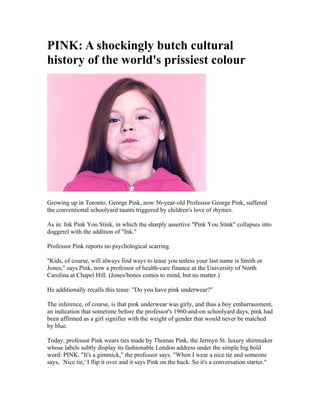


1. Pink was traditionally seen as a masculine color and was associated with being in one's prime health or accomplishment. However, in the early 20th century, pink became gendered as a feminine color for girls. 2. Today, pink is heavily marketed towards girls and women in a way that critics argue overly emphasizes traditional feminine and "prissy" roles. The organization Pinkstinks campaigns against this "culture of pink". 3. While pink is now strongly associated with girls, its origins and early uses did not connote domesticity or fragility. It may be time to reconsider pink's gendering and marketing solely towards girls.


