Topic 1
Topic 3
Topic 2
Topic 4
What is Privileged Identity Management (PIM)?
What is Privileged Access Management (PAM)?
PIM and PAM – How Do They Work?
Know the Differences Between PIM and PAM
What is Privileged Identity
Management (PIM)?
Privileged Identity Management (Pim) Helps
Organizations Manage And Protect Important User
Accounts That Have Special Access To Critical Systems.
Pim Makes Sure These Powerful Accounts Are Used
Securely. Privileged Identities Are The Details And
Credentials Of Accounts With Special Permissions. These
Accounts Can Access And Control Important Systems,
Sensitive Information, And Key Resources. Managing
These Identities Is Vital To Keep An Organization’s
Infrastructure Safe.
Pim Aims To Establish Rules For Managing Privileged
Accounts, Including Creation, Removal, Password
Management, Access Requests, And Session Monitoring,
To Reduce Risks Of Unauthorized Access And Insider
Threats.
What is Privileged Access
Management (PAM)?
Privileged Access Management (Pam) Is About Securing
And Managing Special User Accounts Within An
Organization. Pam Tools Help Protect These Accounts And
Make Sure Only Authorized People Can Use Them. The Main
Goal Of Pam Is To Keep Privileged Accounts Safe From
Unauthorized Use. This Includes Using Strong Security
Measures Like Multi-factor Authentication, Monitoring
Sessions, And Setting Access Control Policies. Pam Ensures
That Privileged Access Is Given Only When Needed And For A
Short Time.
Pim Aims To Establish Rules For Managing Privileged
Accounts, Including Creation, Removal, Password
Management, Access Requests, And Session Monitoring,
To Reduce Risks Of Unauthorized Access And Insider
Threats.
PIM
PIM (Privileged Identity Management): PIM
Focuses On The Entire Lifecycle Of Privileged
Identities. This Includes Tasks Such As The
Creation, Management, And Deletion Of
Privileged Accounts, As Well As Setting And
Adjusting Permissions. PIM Ensures That Users
Have The Appropriate Level Of Access Necessary
For Their Specific Roles And Responsibilities. It
Also Involves Regular Reviews And Audits Of
These Privileges To Ensure Compliance With
Security Policies And To Adjust Access As Roles
Or Organizational Needs Change.
PAM
PAM (Privileged Access Management): PAM Is
Designed To Control And Monitor Access To
Critical Systems And Sensitive Data. It Involves A
Range Of Tools And Processes For Managing And
Securing Privileged Access, Such As Session
Monitoring, Password Management, And Access
Request Approvals. PAM Ensures That Only
Authorized Users Can Access High-level
Resources And Helps To Prevent Unauthorized
Access, Thereby Reducing The Risks Of Security
Breaches, Insider Threats, And Misuse Of
Privileged Credentials. By Implementing PAM,
Organizations Can Enhance Their Overall
Security Posture And Protect Sensitive
Information From Potential Threats.
Know The Differences Between PIM And
PAM
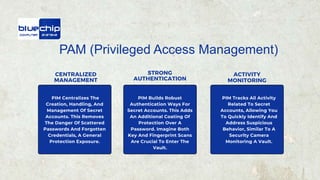
CENTRALIZED
MANAGEMENT
STRONG
AUTHENTICATION
ACTIVITY
MONITORING
PIM Centralizes The
Creation, Handling, And
Management Of Secret
Accounts. This Removes
The Danger Of Scattered
Passwords And Forgotten
Credentials, A General
Protection Exposure.
PIM Builds Robust
Authentication Ways For
Secret Accounts. This Adds
An Additional Coating Of
Protection Over A
Password. Imagine Both
Key And Fingerprint Scans
Are Crucial To Enter The
Vault.
PIM Tracks All Activity
Related To Secret
Accounts, Allowing You
To Quickly Identify And
Address Suspicious
Behavior, Similar To A
Security Camera
Monitoring A Vault.
PAM (Privileged Access Management)
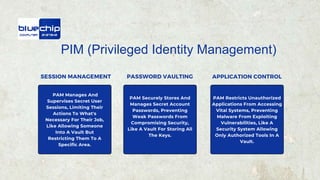
SESSION MANAGEMENT PASSWORD VAULTING APPLICATION CONTROL
PAM Manages And
Supervises Secret User
Sessions, Limiting Their
Actions To What's
Necessary For Their Job,
Like Allowing Someone
Into A Vault But
Restricting Them To A
Specific Area.
PAM Securely Stores And
Manages Secret Account
Passwords, Preventing
Weak Passwords From
Compromising Security,
Like A Vault For Storing All
The Keys.
PAM Restricts Unauthorized
Applications From Accessing
Vital Systems, Preventing
Malware From Exploiting
Vulnerabilities, Like A
Security System Allowing
Only Authorized Tools In A
Vault.
PIM (Privileged Identity Management)
18th St, Al Jahra Building, Office 703, Khalid Bin Al Waleed Road,
Near Hotel Royal Ascot, P.O Box: 233468, Dubai, UAE.
PIM And PAM Security Understanding the Difference.pptx

PIM And PAM Security Understanding the Difference.pptx

  • 2.
    Topic 1 Topic 3 Topic2 Topic 4 What is Privileged Identity Management (PIM)? What is Privileged Access Management (PAM)? PIM and PAM – How Do They Work? Know the Differences Between PIM and PAM
  • 3.
    What is PrivilegedIdentity Management (PIM)? Privileged Identity Management (Pim) Helps Organizations Manage And Protect Important User Accounts That Have Special Access To Critical Systems. Pim Makes Sure These Powerful Accounts Are Used Securely. Privileged Identities Are The Details And Credentials Of Accounts With Special Permissions. These Accounts Can Access And Control Important Systems, Sensitive Information, And Key Resources. Managing These Identities Is Vital To Keep An Organization’s Infrastructure Safe. Pim Aims To Establish Rules For Managing Privileged Accounts, Including Creation, Removal, Password Management, Access Requests, And Session Monitoring, To Reduce Risks Of Unauthorized Access And Insider Threats.
  • 4.
    What is PrivilegedAccess Management (PAM)? Privileged Access Management (Pam) Is About Securing And Managing Special User Accounts Within An Organization. Pam Tools Help Protect These Accounts And Make Sure Only Authorized People Can Use Them. The Main Goal Of Pam Is To Keep Privileged Accounts Safe From Unauthorized Use. This Includes Using Strong Security Measures Like Multi-factor Authentication, Monitoring Sessions, And Setting Access Control Policies. Pam Ensures That Privileged Access Is Given Only When Needed And For A Short Time. Pim Aims To Establish Rules For Managing Privileged Accounts, Including Creation, Removal, Password Management, Access Requests, And Session Monitoring, To Reduce Risks Of Unauthorized Access And Insider Threats.
  • 5.
    PIM PIM (Privileged IdentityManagement): PIM Focuses On The Entire Lifecycle Of Privileged Identities. This Includes Tasks Such As The Creation, Management, And Deletion Of Privileged Accounts, As Well As Setting And Adjusting Permissions. PIM Ensures That Users Have The Appropriate Level Of Access Necessary For Their Specific Roles And Responsibilities. It Also Involves Regular Reviews And Audits Of These Privileges To Ensure Compliance With Security Policies And To Adjust Access As Roles Or Organizational Needs Change.
  • 6.
    PAM PAM (Privileged AccessManagement): PAM Is Designed To Control And Monitor Access To Critical Systems And Sensitive Data. It Involves A Range Of Tools And Processes For Managing And Securing Privileged Access, Such As Session Monitoring, Password Management, And Access Request Approvals. PAM Ensures That Only Authorized Users Can Access High-level Resources And Helps To Prevent Unauthorized Access, Thereby Reducing The Risks Of Security Breaches, Insider Threats, And Misuse Of Privileged Credentials. By Implementing PAM, Organizations Can Enhance Their Overall Security Posture And Protect Sensitive Information From Potential Threats.
  • 7.
    Know The DifferencesBetween PIM And PAM
  • 8.
    CENTRALIZED MANAGEMENT STRONG AUTHENTICATION ACTIVITY MONITORING PIM Centralizes The Creation,Handling, And Management Of Secret Accounts. This Removes The Danger Of Scattered Passwords And Forgotten Credentials, A General Protection Exposure. PIM Builds Robust Authentication Ways For Secret Accounts. This Adds An Additional Coating Of Protection Over A Password. Imagine Both Key And Fingerprint Scans Are Crucial To Enter The Vault. PIM Tracks All Activity Related To Secret Accounts, Allowing You To Quickly Identify And Address Suspicious Behavior, Similar To A Security Camera Monitoring A Vault. PAM (Privileged Access Management)
  • 9.
    SESSION MANAGEMENT PASSWORDVAULTING APPLICATION CONTROL PAM Manages And Supervises Secret User Sessions, Limiting Their Actions To What's Necessary For Their Job, Like Allowing Someone Into A Vault But Restricting Them To A Specific Area. PAM Securely Stores And Manages Secret Account Passwords, Preventing Weak Passwords From Compromising Security, Like A Vault For Storing All The Keys. PAM Restricts Unauthorized Applications From Accessing Vital Systems, Preventing Malware From Exploiting Vulnerabilities, Like A Security System Allowing Only Authorized Tools In A Vault. PIM (Privileged Identity Management)
  • 10.
    18th St, AlJahra Building, Office 703, Khalid Bin Al Waleed Road, Near Hotel Royal Ascot, P.O Box: 233468, Dubai, UAE.