Download to read offline
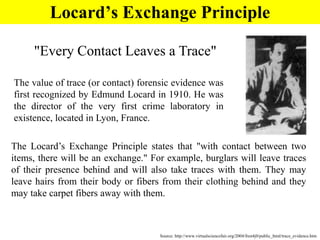
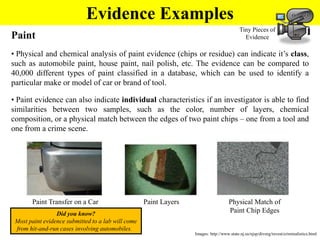
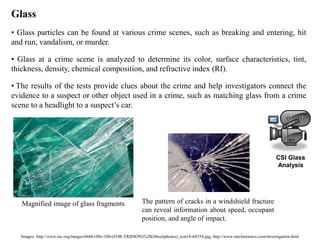
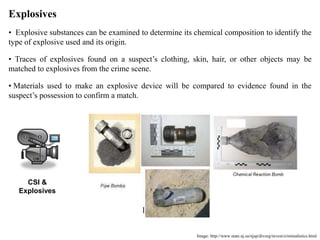
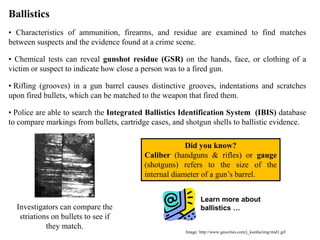
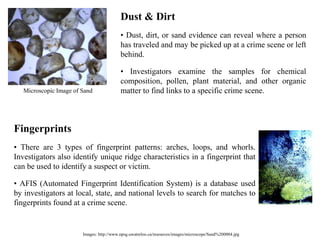
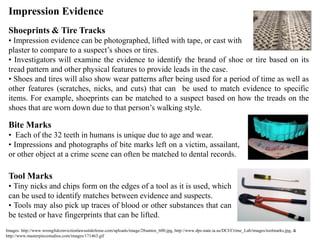
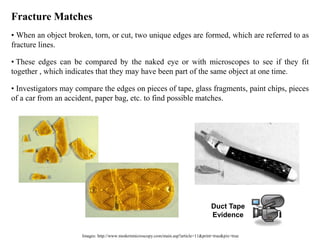
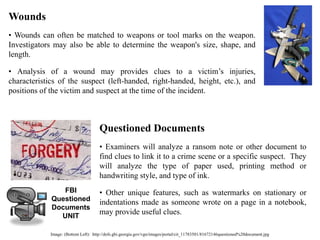
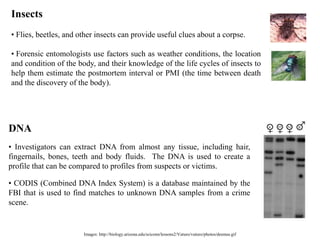
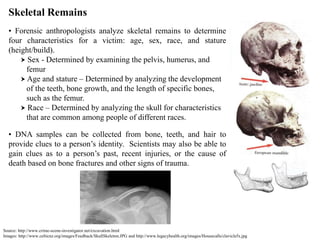
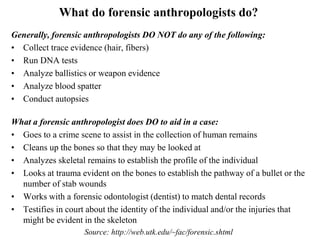
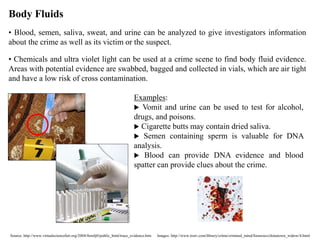
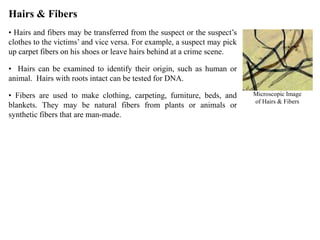

The document provides an overview of various types of forensic evidence that can be analyzed, including: 1) Paint, glass, explosives, ballistics, dust, fingerprints, impression evidence, wounds, DNA, insects, skeletal remains, and body fluids which can be examined for clues about the crime and links to suspects. 2) Specific analysis techniques are described for each type of evidence such as chemical analysis of paint samples, examination of tool marks on bullets, and estimation of time of death using insect life cycles. 3) Evidence databases like CODIS and IBIS are mentioned which allow investigators to search for matches between crime scene evidence and other samples.


![Polymer [ बहुलक ] Chemistry Notes PDF - Irfanullah Mehar - JJ Sir Chemistry.pdf](https://cdn.slidesharecdn.com/ss_thumbnails/polymerchemistrynotespdf-irfanullahmehar-jjsirchemistry-260210172118-3f9b37f7-thumbnail.jpg?width=640&height=640&fit=bounds)


