PHOTOSYNTHESIS
Christian Jay A. Mabitazan
introduction
Photosynthesis nourishes
almost the entire living world
directly or indirectly.
An organism acquires the
organic compounds it uses
for energy and carbon
skeletons by one of two
major modes: autotrophic
nutrition or heterotrophic
nutrition.
20XX presentation title 2
20XX presentation title 3
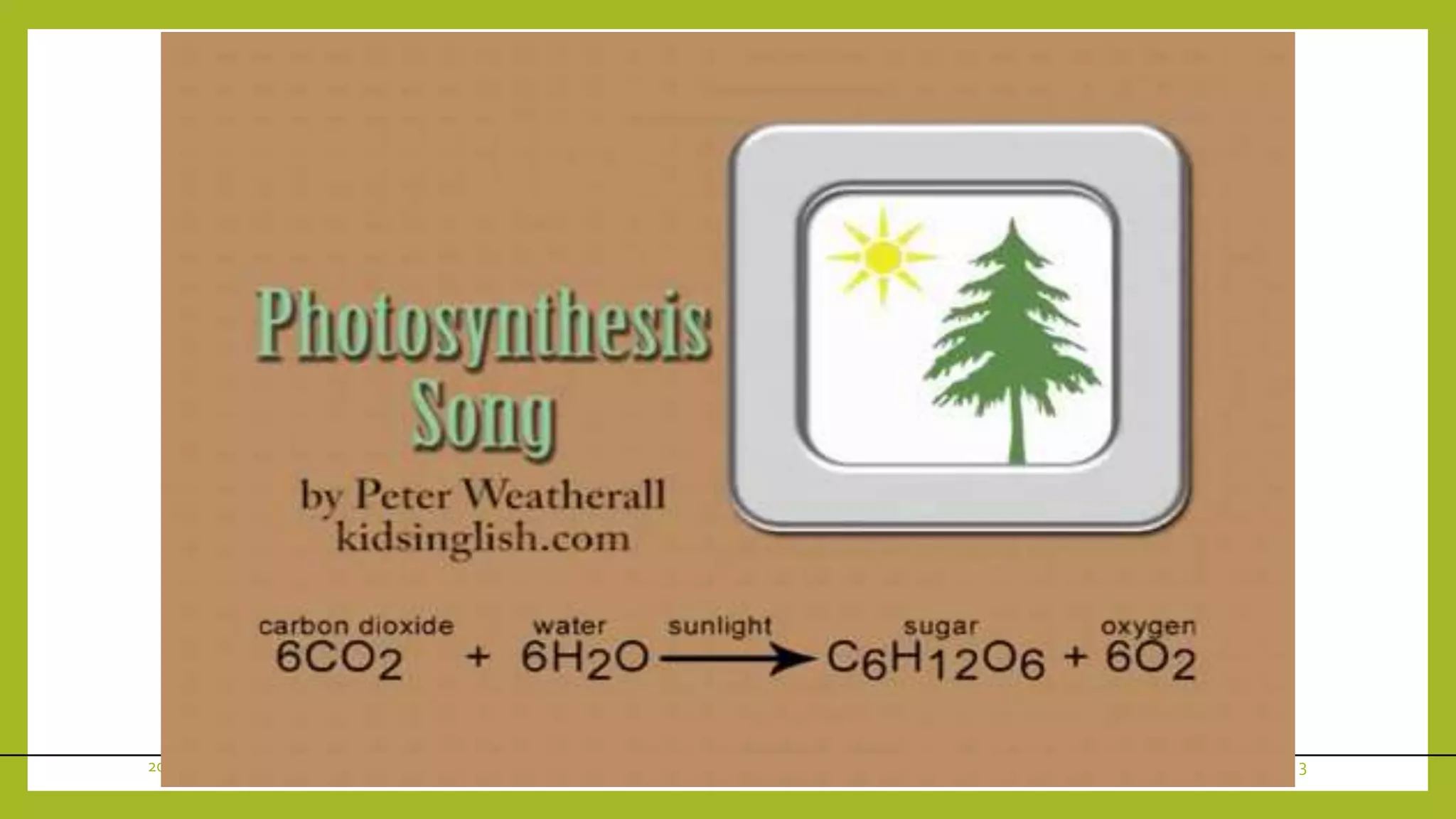
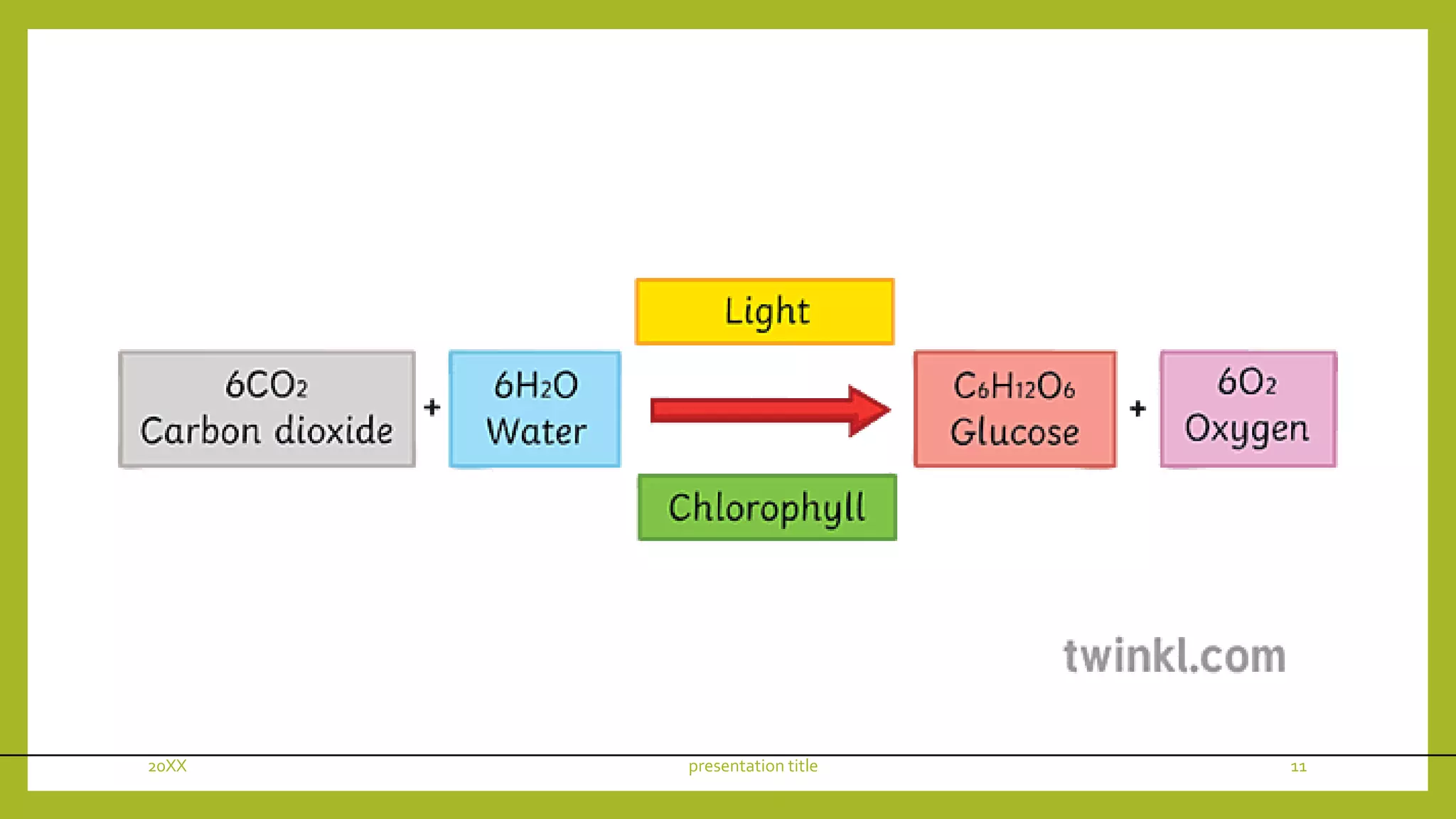
Photosynthesis
o The conversion process
that transforms the
energy of sunlight into
chemical energy stored
in sugars and other
organic molecules.
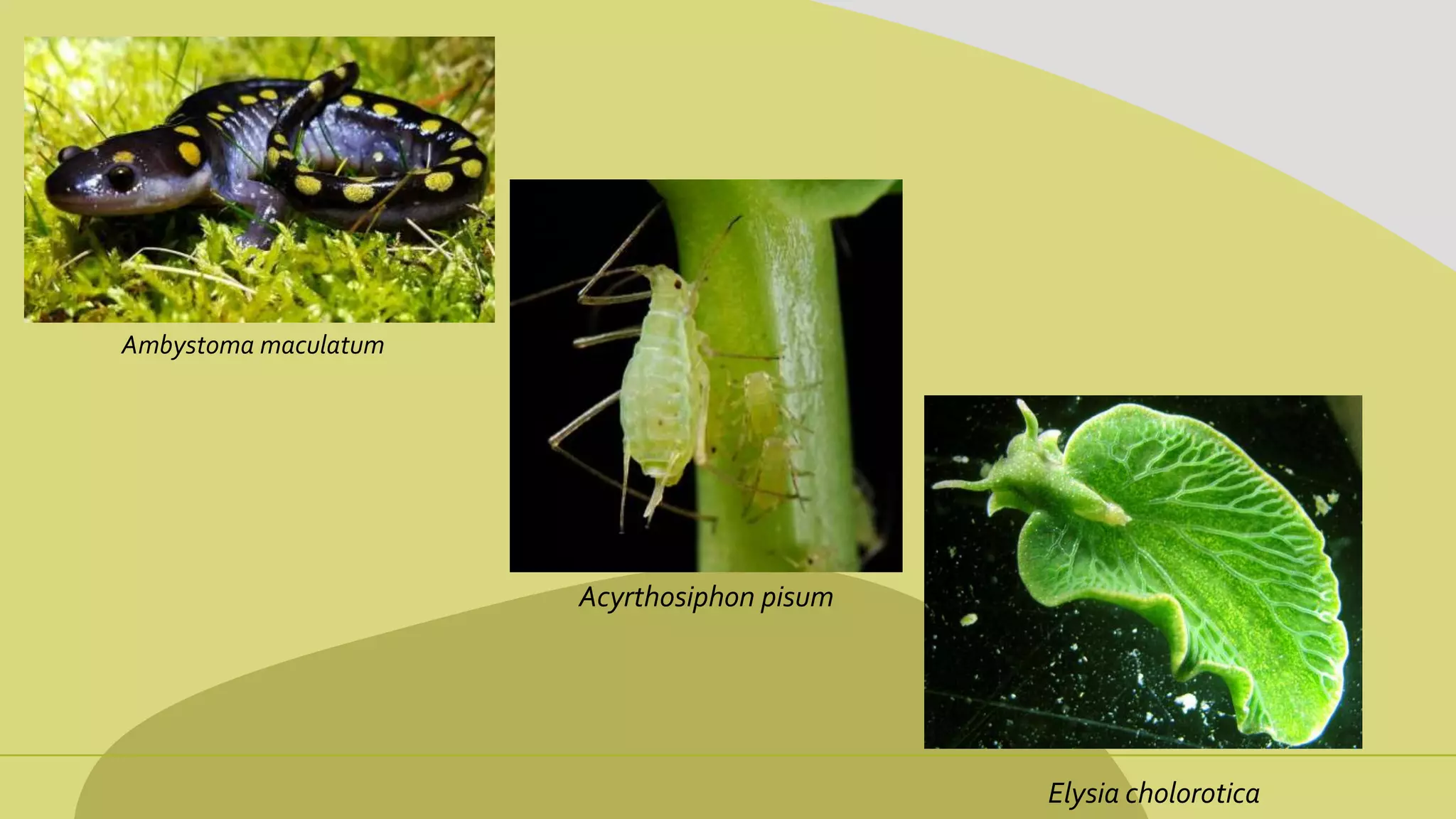
Elysia cholorotica
Acyrthosiphon pisum
Ambystoma maculatum
Where does it take
place?
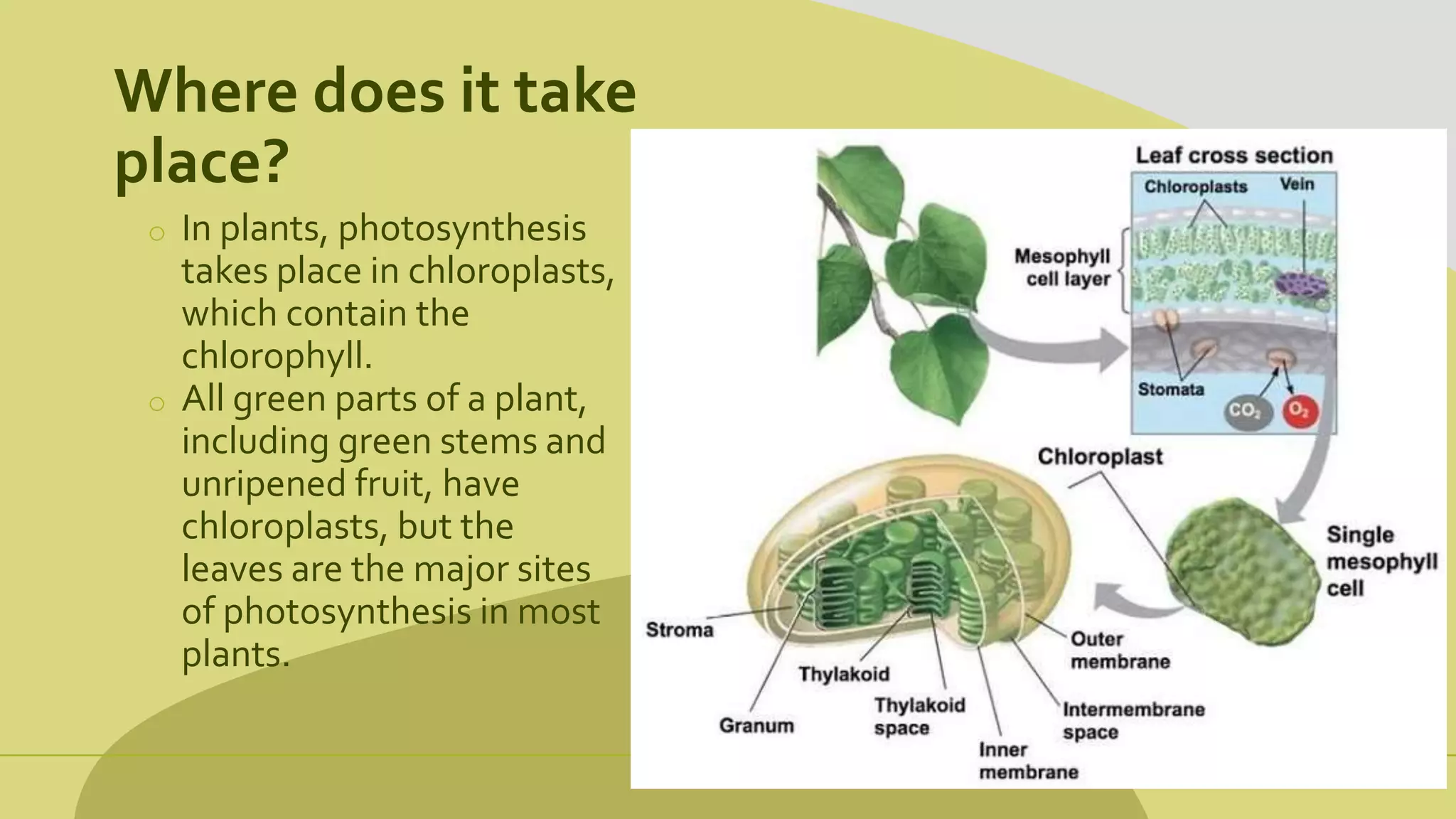
o In plants, photosynthesis
takes place in chloroplasts,
which contain the
chlorophyll.
o All green parts of a plant,
including green stems and
unripened fruit, have
chloroplasts, but the
leaves are the major sites
of photosynthesis in most
plants.
Chloroplasts
o A typical mesophyll cell
has about 30–40
chloroplasts.
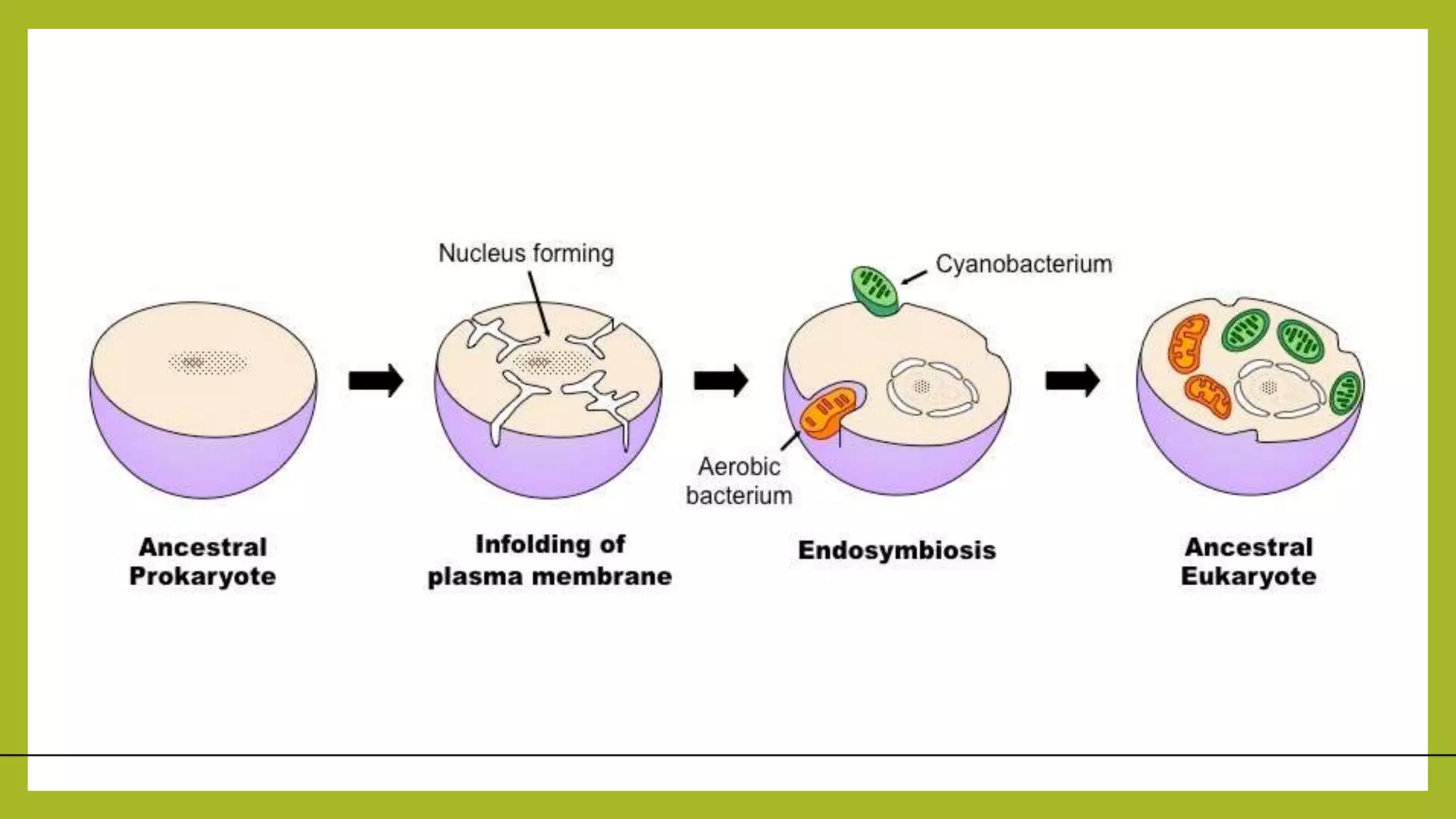
o According to what has
come to be known as the
endosymbiont theory,
the original chloroplast
was a photosynthetic
prokaryote that lived
inside an ancestor of
eukaryotic cells.
Chloroplasts
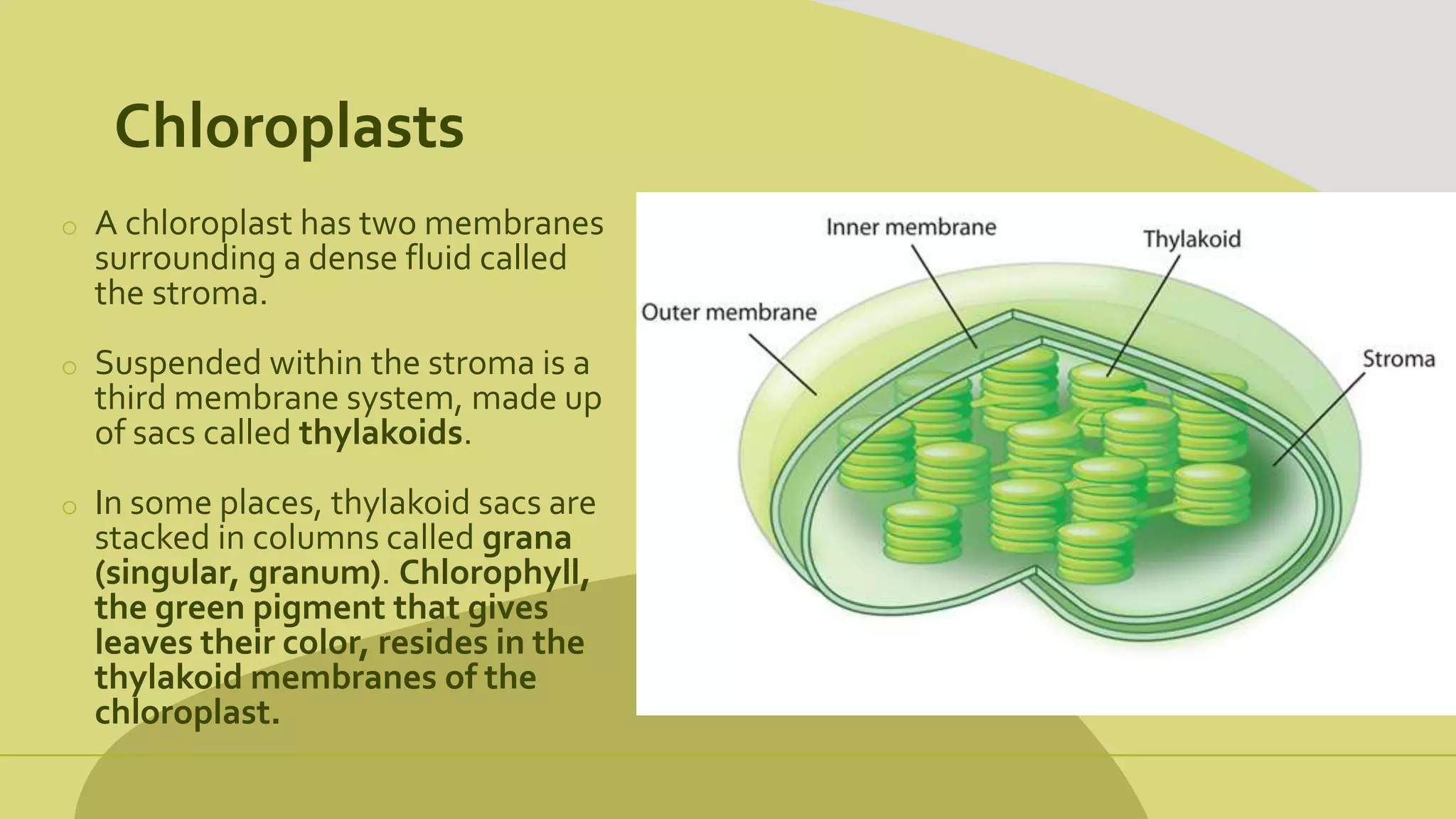
o A chloroplast has two membranes
surrounding a dense fluid called
the stroma.
o Suspended within the stroma is a
third membrane system, made up
of sacs called thylakoids.
o In some places, thylakoid sacs are
stacked in columns called grana
(singular, granum). Chlorophyll,
the green pigment that gives
leaves their color, resides in the
thylakoid membranes of the
chloroplast.
20XX 10
20XX presentation title 11
STAGES OF
PHOTOSYNTHESIS
• Light Reaction • Calvin Cycle (“Dark Reaction”)
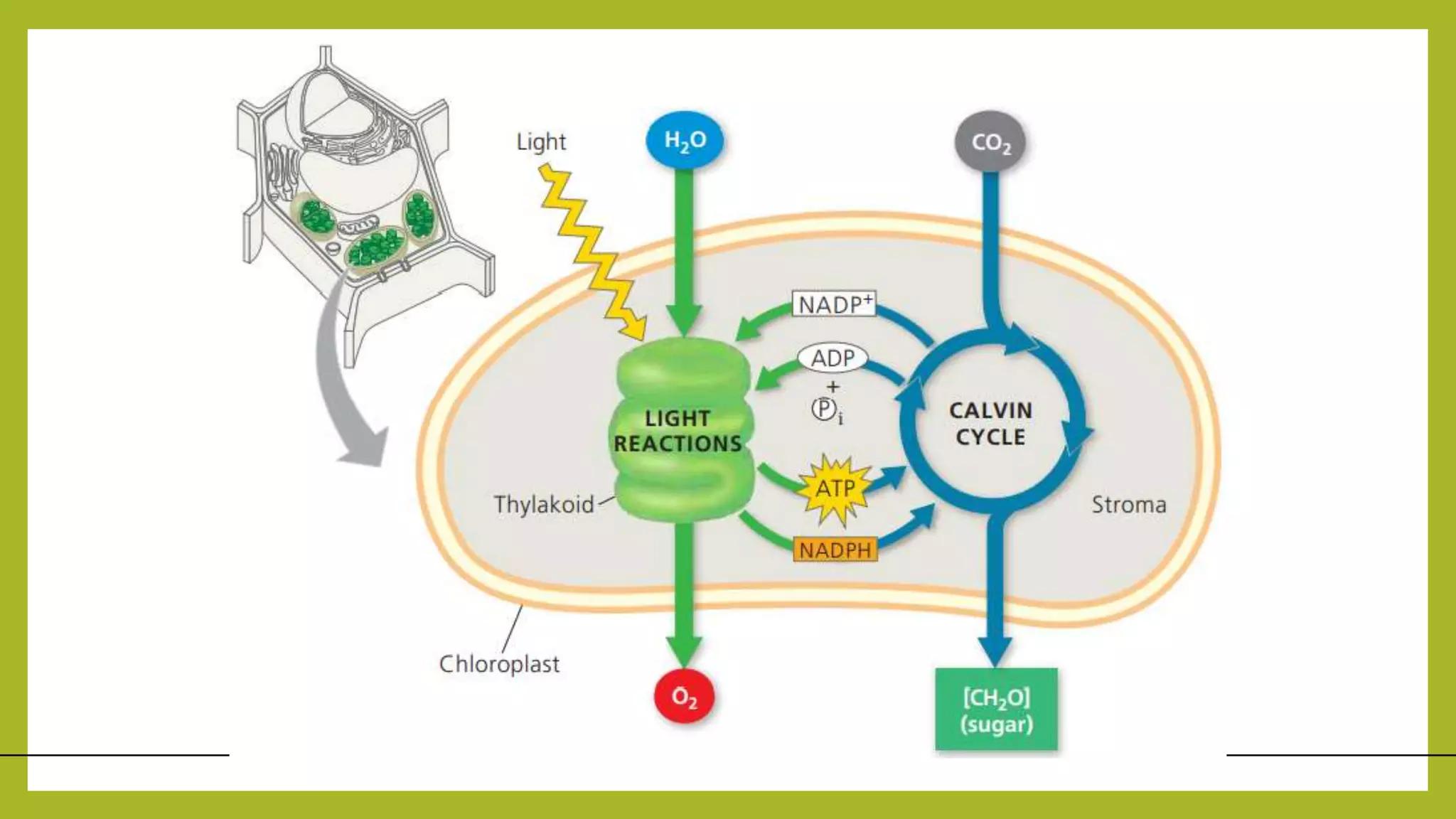
The step of photosynthesis that convert
solar energy to chemical energy. Water
is split, providing a source of electrons and
protons (hydrogen ions, H+) and giving off
O2 as a by-product.
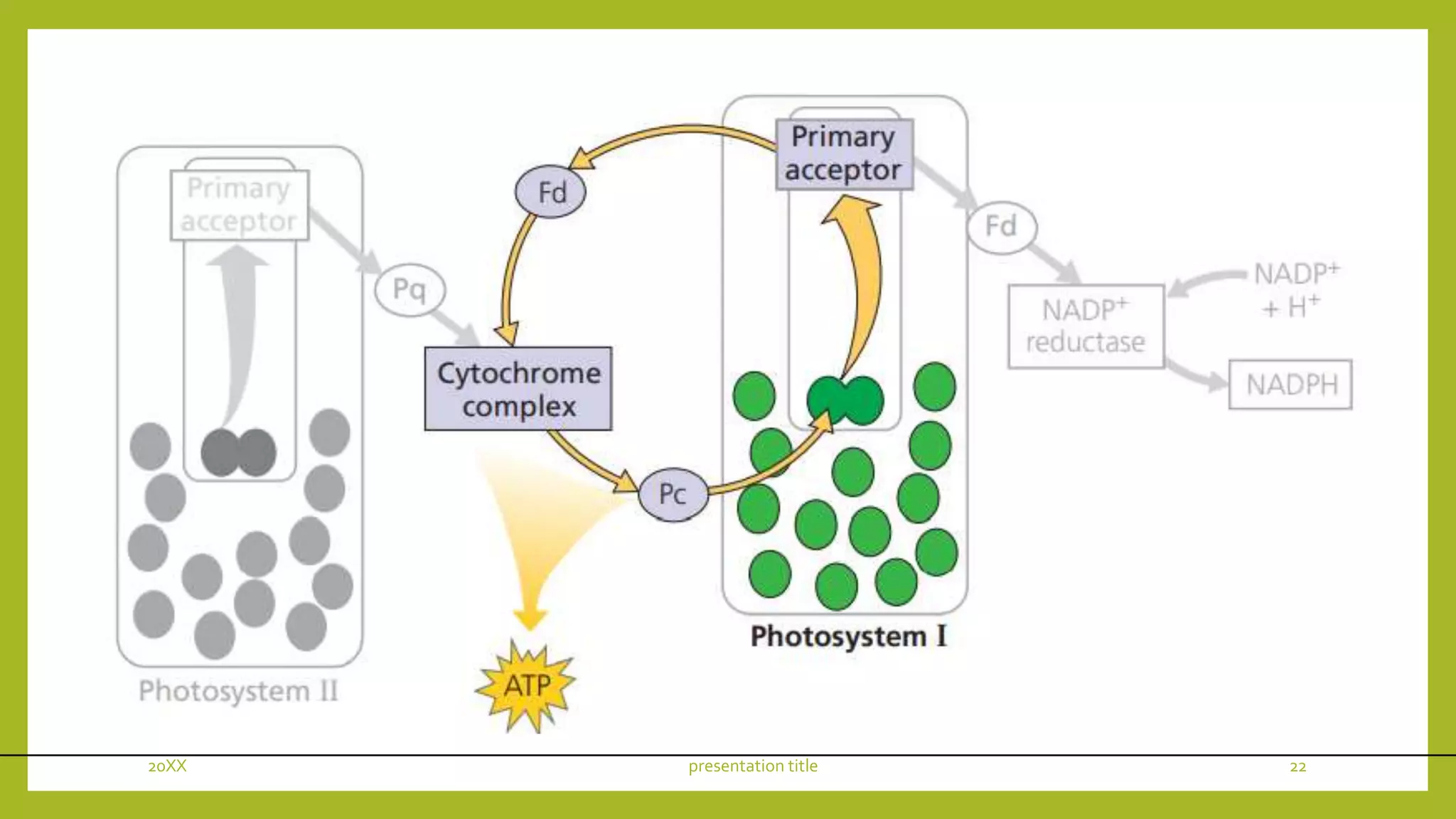
The light reactions use solar energy to
reduce NADP+ to NADPH by adding a
pair of electrons along with an H+. The
light reactions also generate ATP, using
chemiosmosis to power the addition of a
phosphate group to ADP, a process called
photophosphorylation.
Calvin cycle is also known as the C3 cycle
or the “dark reaction”. The Calvin cycle is
named for Melvin Calvin, who, along with
his colleagues James Bassham and
Andrew Benson, began to elucidate its
steps in the late 1940s.
It is the cycle of chemical reactions where
the carbon from the carbon cycle is fixed
into sugars.
Light Reactions
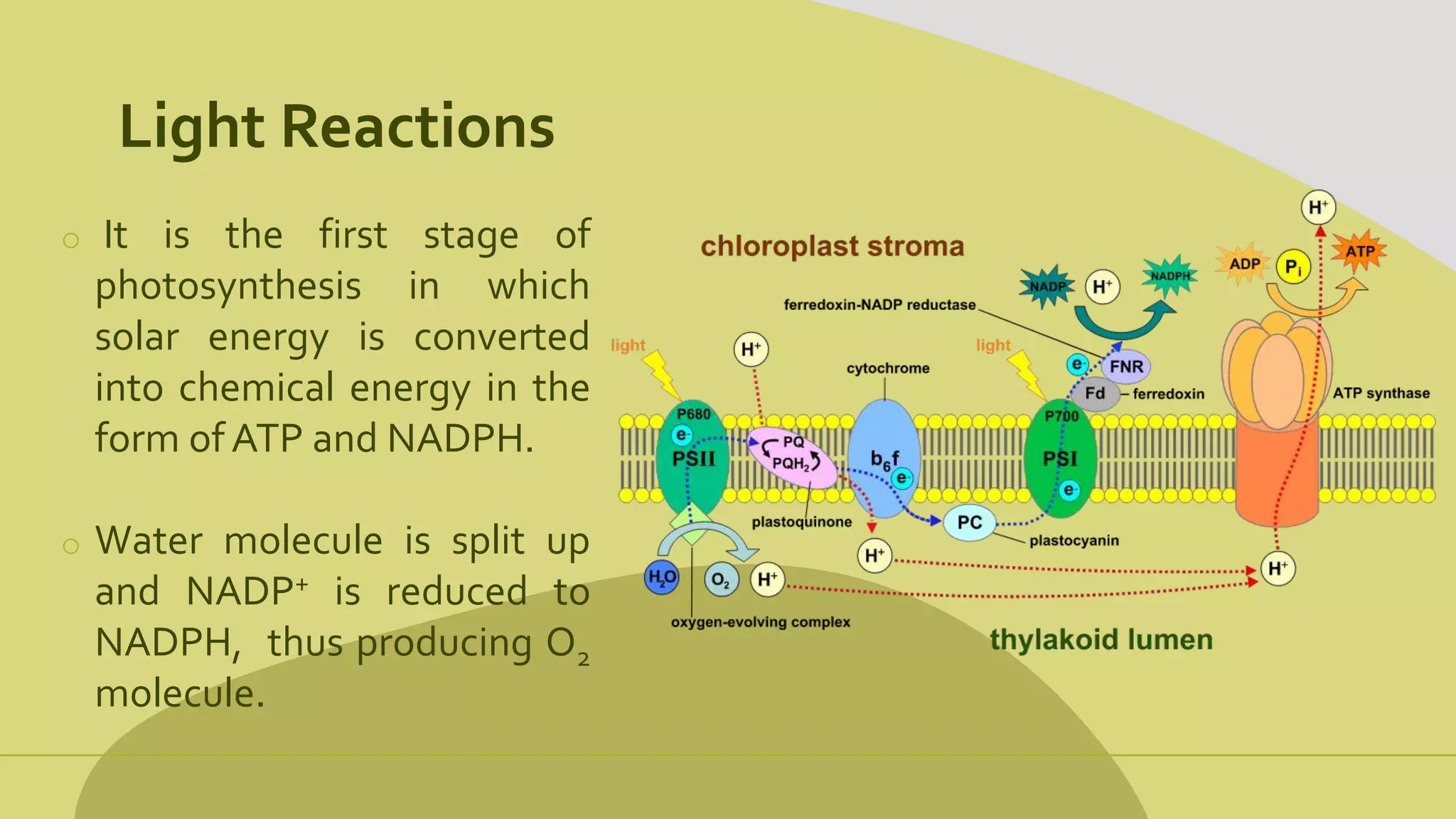
o It is the first stage of
photosynthesis in which
solar energy is converted
into chemical energy in the
form of ATP and NADPH.
o Water molecule is split up
and NADP+ is reduced to
NADPH, thus producing O2
molecule.
Chlorophyll
o Chlorophyll is a pigment that
gives plants their green color,
and it helps plants create
their own food through
photosynthesis.
o There are two known types of
chlorophyll: a and b.
20XX presentation title 16
20XX 17
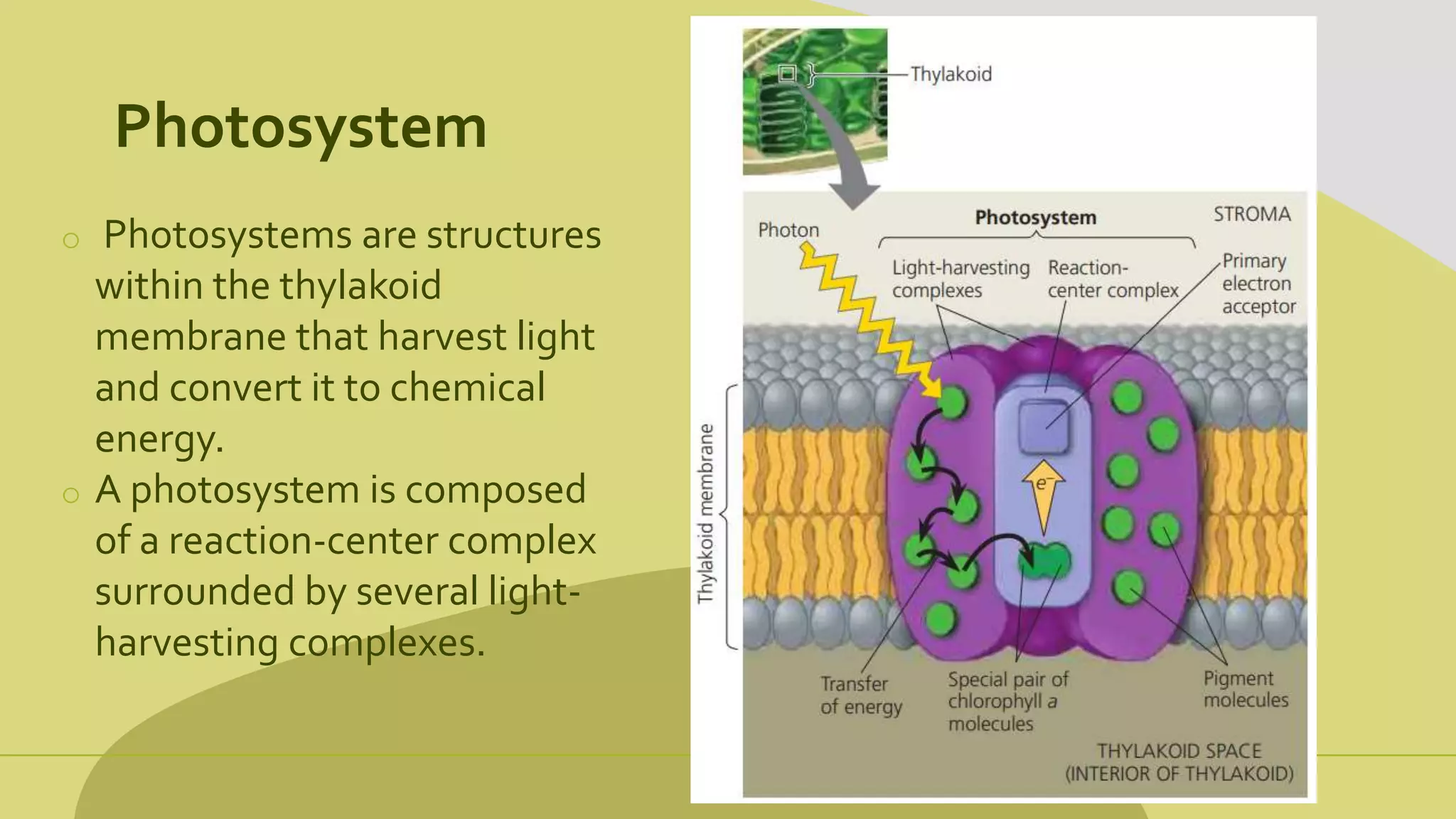
Photosystem
o Photosystems are structures
within the thylakoid
membrane that harvest light
and convert it to chemical
energy.
o A photosystem is composed
of a reaction-center complex
surrounded by several light-
harvesting complexes.
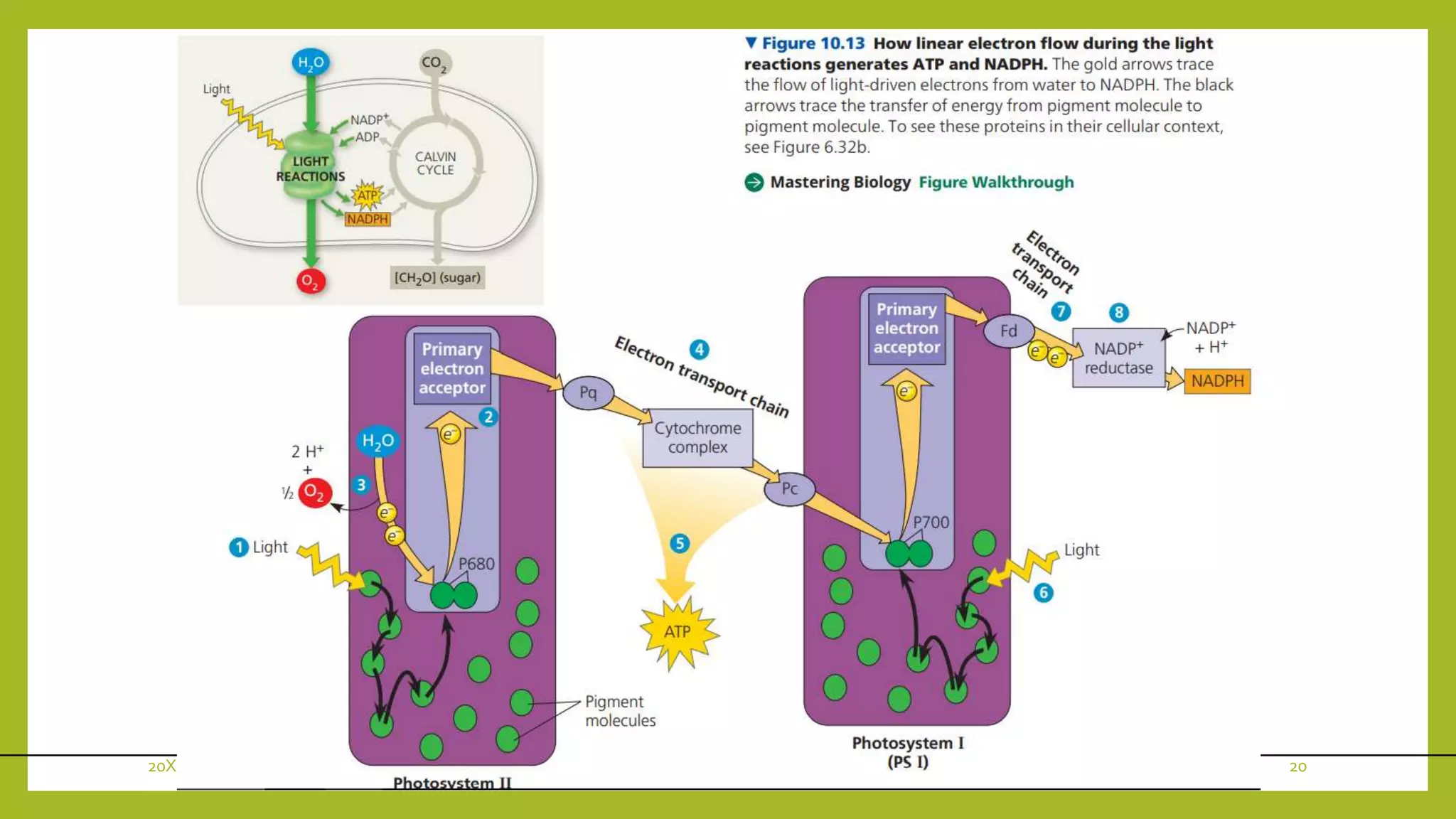
Photosystem
o The reaction-center chlorophyll
a of photosystem II is known
as P680 because this pigment is
best at absorbing light having a
wavelength of 680 nm (in the
red part of the spectrum).
o The chlorophyll a at the
reaction-center complex of
photosystem I is called P700
because it most effectively
absorbs light of wavelength 700
nm (in the far-red part of the
spectrum).
20XX presentation title 20
20XX presentation title 21
20XX presentation title 22
20XX presentation title
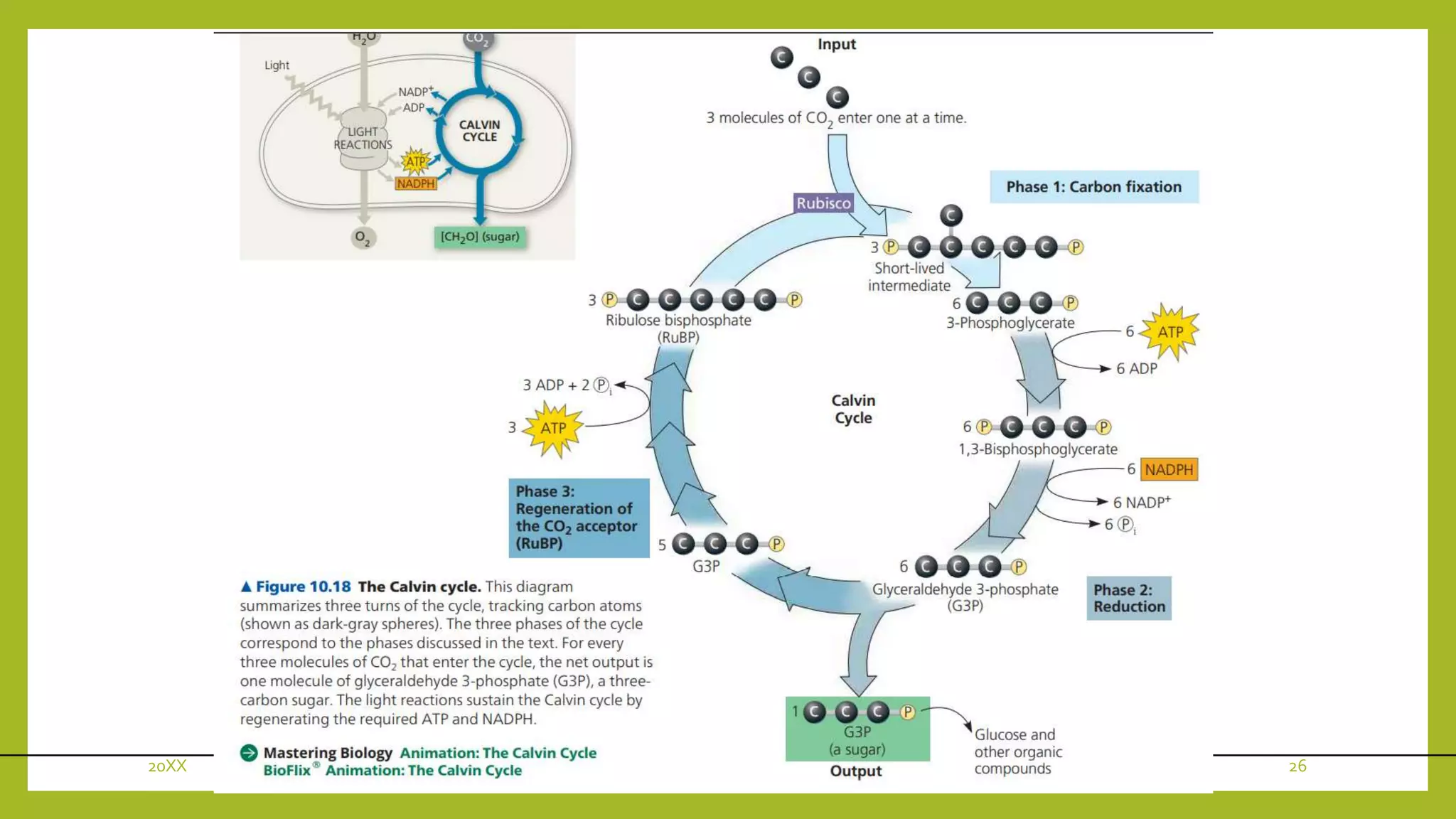
Calvin Cycle
o It is anabolic, building carbohydrates from smaller molecules and
consuming energy.
o Carbon enters the Calvin cycle in the form of CO2 and leaves in the form of
sugar. The cycle spends ATP as an energy source and consumes NADPH as
reducing power for adding high-energy electrons to make the sugar.
Stages of Calvin Cycle
o Carbon Fixation: A CO2 molecule combines with a five-carbon
acceptor molecule, ribulose-1,5-bisphosphate (RuBP). This step
makes a six-carbon compound that splits into two molecules of a
three-carbon compound, 3-phosphoglyceric acid (3-PGA). This
reaction is catalyzed by the enzyme RuBP carboxylase/oxygenase,
or rubisco.
o Reduction: ATP and NADPH are used to convert the 3-PGA
molecules into molecules of a three-carbon sugar, glyceraldehyde-3-
phosphate (G3P).
o Regeneration. Some G3P molecules go to make glucose, while
recycled to regenerate the RuBP acceptor.
20XX presentation title 26
Light reactions produce NADPH, ATP,
and oxygen that we breathe, while
Calvin Cycle processes carbon dioxide
to become glucose that makes up our
food and energy.
Photosynthesis is an intricate chemical
process which involves fairly simple
reactants, but gives out profound
products. It is a process not only vital to
plants, but to all of us.Without it,
possibility of life on Earth will be in
question.
summary
THANKYOU!
Christian JayA. Mabitazan
cjmabitazan9297@student.dmmmsu.edu.ph

PHOTOSYNTHESIS.pptx

  • 1.
  • 2.
    introduction Photosynthesis nourishes almost theentire living world directly or indirectly. An organism acquires the organic compounds it uses for energy and carbon skeletons by one of two major modes: autotrophic nutrition or heterotrophic nutrition. 20XX presentation title 2
  • 3.
  • 4.
    Photosynthesis o The conversionprocess that transforms the energy of sunlight into chemical energy stored in sugars and other organic molecules.
  • 5.
  • 6.
    Where does ittake place? o In plants, photosynthesis takes place in chloroplasts, which contain the chlorophyll. o All green parts of a plant, including green stems and unripened fruit, have chloroplasts, but the leaves are the major sites of photosynthesis in most plants.
  • 7.
    Chloroplasts o A typicalmesophyll cell has about 30–40 chloroplasts. o According to what has come to be known as the endosymbiont theory, the original chloroplast was a photosynthetic prokaryote that lived inside an ancestor of eukaryotic cells.
  • 9.
    Chloroplasts o A chloroplasthas two membranes surrounding a dense fluid called the stroma. o Suspended within the stroma is a third membrane system, made up of sacs called thylakoids. o In some places, thylakoid sacs are stacked in columns called grana (singular, granum). Chlorophyll, the green pigment that gives leaves their color, resides in the thylakoid membranes of the chloroplast.
  • 10.
  • 11.
  • 12.
    STAGES OF PHOTOSYNTHESIS • LightReaction • Calvin Cycle (“Dark Reaction”) The step of photosynthesis that convert solar energy to chemical energy. Water is split, providing a source of electrons and protons (hydrogen ions, H+) and giving off O2 as a by-product. The light reactions use solar energy to reduce NADP+ to NADPH by adding a pair of electrons along with an H+. The light reactions also generate ATP, using chemiosmosis to power the addition of a phosphate group to ADP, a process called photophosphorylation. Calvin cycle is also known as the C3 cycle or the “dark reaction”. The Calvin cycle is named for Melvin Calvin, who, along with his colleagues James Bassham and Andrew Benson, began to elucidate its steps in the late 1940s. It is the cycle of chemical reactions where the carbon from the carbon cycle is fixed into sugars.
  • 14.
    Light Reactions o Itis the first stage of photosynthesis in which solar energy is converted into chemical energy in the form of ATP and NADPH. o Water molecule is split up and NADP+ is reduced to NADPH, thus producing O2 molecule.
  • 15.
    Chlorophyll o Chlorophyll isa pigment that gives plants their green color, and it helps plants create their own food through photosynthesis. o There are two known types of chlorophyll: a and b.
  • 16.
  • 17.
  • 18.
    Photosystem o Photosystems arestructures within the thylakoid membrane that harvest light and convert it to chemical energy. o A photosystem is composed of a reaction-center complex surrounded by several light- harvesting complexes.
  • 19.
    Photosystem o The reaction-centerchlorophyll a of photosystem II is known as P680 because this pigment is best at absorbing light having a wavelength of 680 nm (in the red part of the spectrum). o The chlorophyll a at the reaction-center complex of photosystem I is called P700 because it most effectively absorbs light of wavelength 700 nm (in the far-red part of the spectrum).
  • 20.
  • 21.
  • 22.
  • 23.
  • 24.
    Calvin Cycle o Itis anabolic, building carbohydrates from smaller molecules and consuming energy. o Carbon enters the Calvin cycle in the form of CO2 and leaves in the form of sugar. The cycle spends ATP as an energy source and consumes NADPH as reducing power for adding high-energy electrons to make the sugar.
  • 25.
    Stages of CalvinCycle o Carbon Fixation: A CO2 molecule combines with a five-carbon acceptor molecule, ribulose-1,5-bisphosphate (RuBP). This step makes a six-carbon compound that splits into two molecules of a three-carbon compound, 3-phosphoglyceric acid (3-PGA). This reaction is catalyzed by the enzyme RuBP carboxylase/oxygenase, or rubisco. o Reduction: ATP and NADPH are used to convert the 3-PGA molecules into molecules of a three-carbon sugar, glyceraldehyde-3- phosphate (G3P). o Regeneration. Some G3P molecules go to make glucose, while recycled to regenerate the RuBP acceptor.
  • 26.
  • 27.
    Light reactions produceNADPH, ATP, and oxygen that we breathe, while Calvin Cycle processes carbon dioxide to become glucose that makes up our food and energy. Photosynthesis is an intricate chemical process which involves fairly simple reactants, but gives out profound products. It is a process not only vital to plants, but to all of us.Without it, possibility of life on Earth will be in question. summary
  • 28.