The Language of
Photojournalism
Presented by:
Rupert Roniel T. Laxamana III

Photojournalism
Photojournalism: Defined as a Medium of
Communication that uses a Universal Visual
Language to convey facts and information in an
honest visual report of what happened right in front
of the lens.
"So, what's the difference between
photography and photojournalism?“
"Verbs!"
Although photojournalists can take properly
exposed and well composed photographs all
day long, they hunt verbs. They hunt them,
shoot them and show them to their readers.
Then, they hunt more.
What is a
photojournalist?
Criteria for Good Pictures
Technical
Consideration
Composition
Consideration
Technical Consideration
Proper Focus
Adequate Exposure
Correct Development
Effective lighting and contrast
Effective Printing
Proper Reproduction
Composition Consideration
Balance
Eye Movement
Effective Contrast
Proportion
Grouping
Cropping
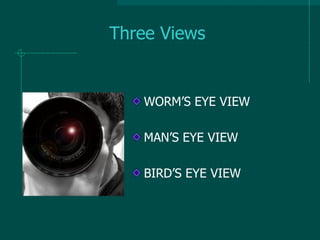
Three Views
WORM’S EYE VIEW
MAN’S EYE VIEW
BIRD’S EYE VIEW
THE COMPOSITION
Capture a Moment (Look for an expression or
gesture or quality of light that elevates an
image beyond the ordinary.)
Try Different Angles (Think about how would
you normally photograph a scene. Then shoot
it in an entirely different way.
Get closer (Many photojournalists make the
mistake of not getting close enough to their
subjects. There are many advantages.
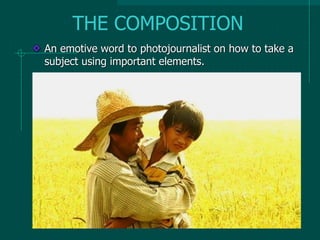
THE COMPOSITION
An emotive word to photojournalist on how to take a
subject using important elements.
LINE: Fundamental Element
Line: Fundamental Element
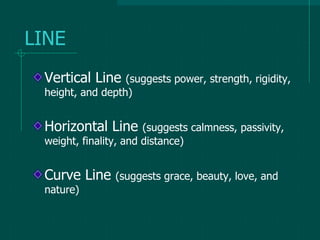
LINE
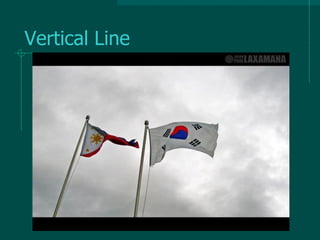
Vertical Line (suggests power, strength, rigidity,
height, and depth)
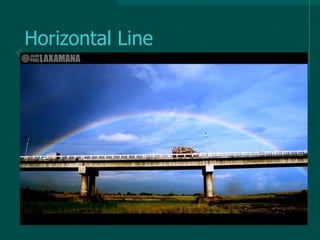
Horizontal Line (suggests calmness, passivity,
weight, finality, and distance)
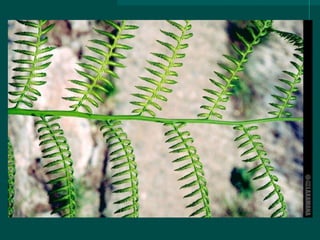
Curve Line (suggests grace, beauty, love, and
nature)
Vertical Line
Horizontal Line
Curve Line
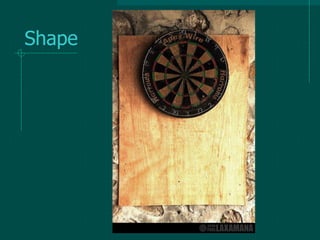
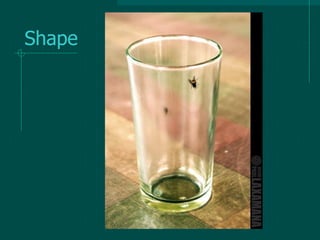
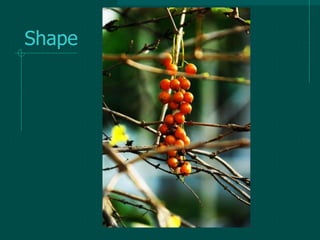
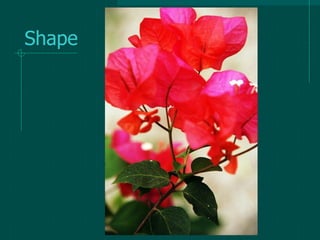
SHAPE
Circle, triangle, and rectangle are shapes that usually
represent three dimensional objects such as cylinder,
pyramid and sphere.
Shape
Shape
Shape
Shape
Shape
Shape
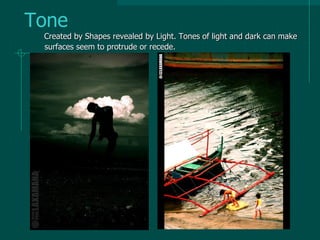
Tone
Created by Shapes revealed by Light. Tones of light and dark can make
surfaces seem to protrude or recede.
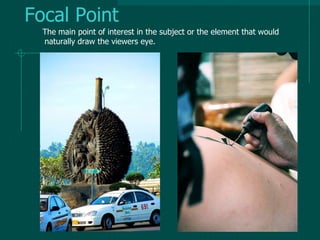
Focal Point
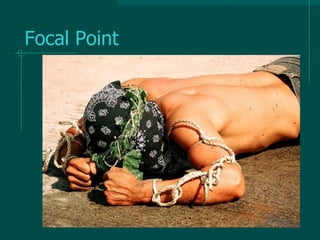
The main point of interest in the subject or the element that would
naturally draw the viewers eye.
Focal Point
Focal Point
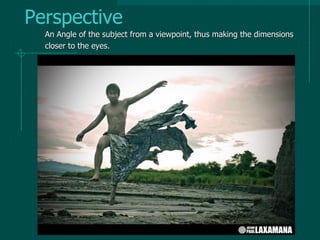
Perspective
An Angle of the subject from a viewpoint, thus making the dimensions
closer to the eyes.
Perspective
Perspective
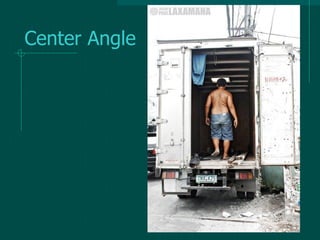
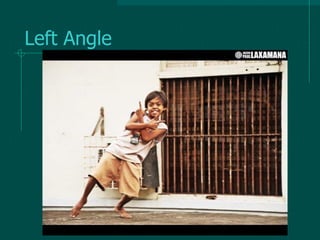
Angles
Center
Left
Right
(Plus the views)
Center Angle
Left Angle
Right Angle
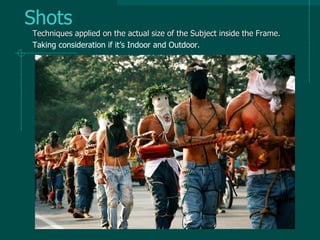
Shots
Techniques applied on the actual size of the Subject inside the Frame.
Taking consideration if it’s Indoor and Outdoor.
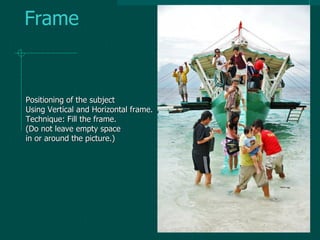
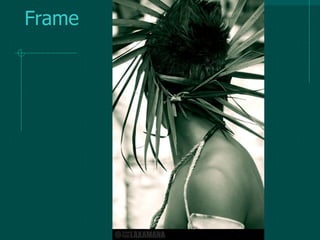
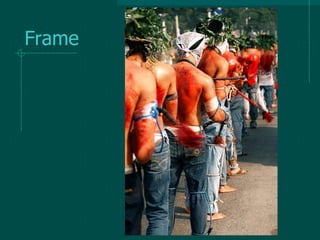
Frame
Positioning of the subject
Using Vertical and Horizontal frame.
Technique: Fill the frame.
(Do not leave empty space
in or around the picture.)
Frame
Frame
Close Up
Giving emphasis on the important
message in the subject.
Close Up
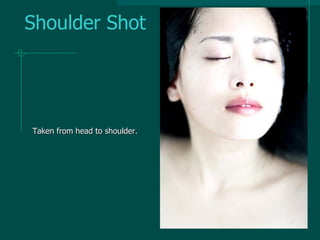
Shoulder Shot
Taken from head to shoulder.
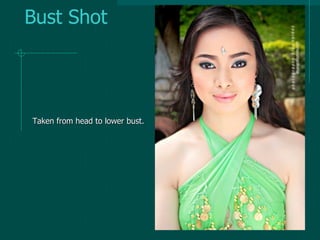
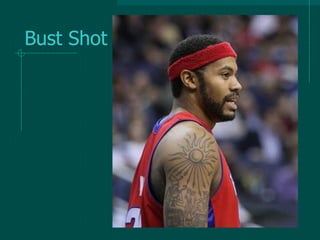
Bust Shot
Taken from head to lower bust.
Bust Shot
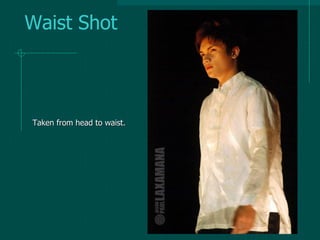
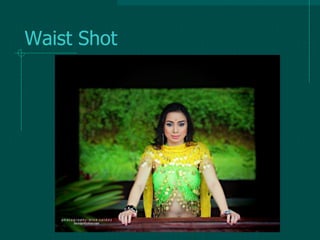
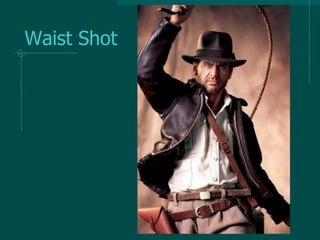
Waist Shot
Taken from head to waist.
Waist Shot
Waist Shot
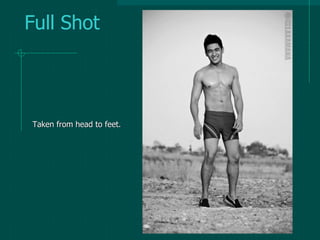
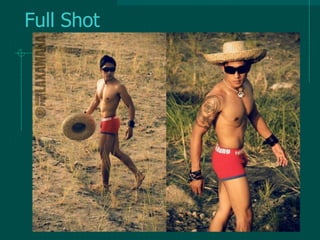
Full Shot
Taken from head to feet.
Full Shot
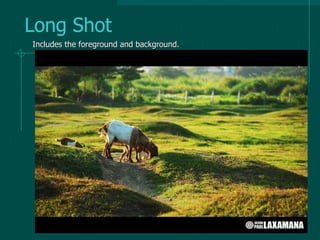
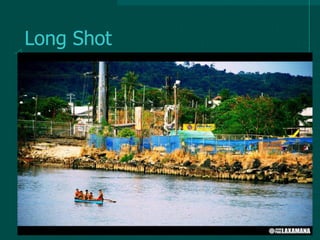
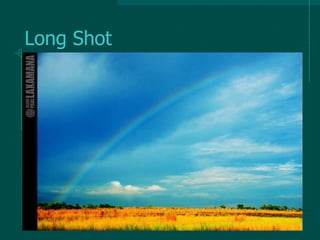
Long Shot
Includes the foreground and background.
Long Shot
Long Shot
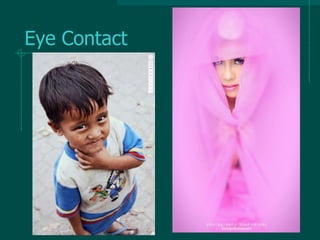
Eye Contact
In photos, it conveys involvement.
Eye Contact
Eye Contact
Eye Contact
Eye Contact
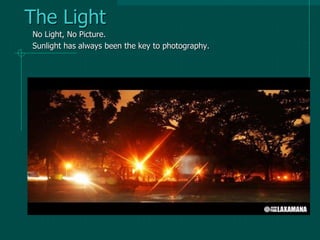
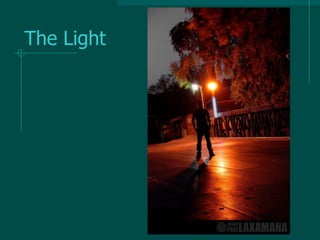
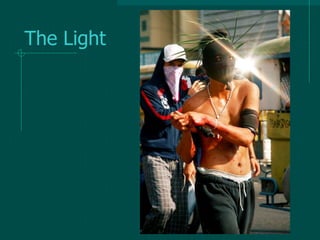
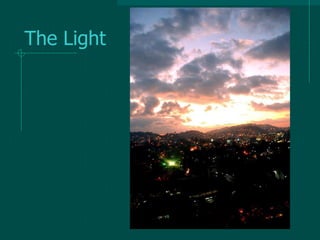
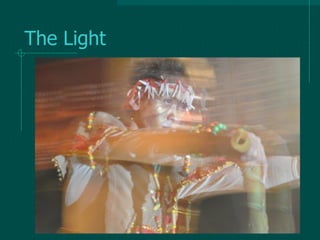
The Light
No Light, No Picture.
Sunlight has always been the key to photography.
The Light
The Light
The Light
The Light
Types of Lightings
NATURAL LIGHT
Light effected by the sunlight.
ARTIFICIAL LIGHT
Light effected by flashguns, flood lights, incandescent bulbs,
fluorescent bulbs, etc.
Cardinal Rule in
Photojournalism
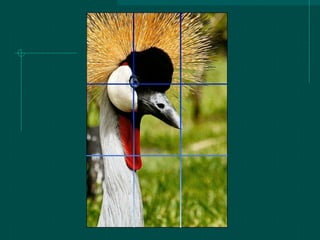
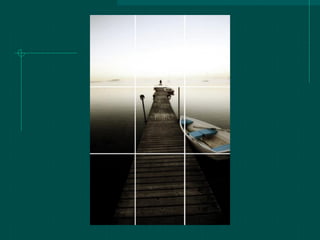
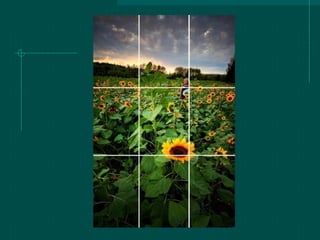
THE RULE OF THIRD
Relationship of
the Background or
Foreground to the
main subject.
Definition:
1. Basic Rules
(Go Against the Lights)
(Get Action)
(Get Closer)
2. Experiment Different Angles
3. No Man’s View
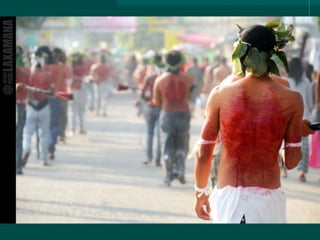
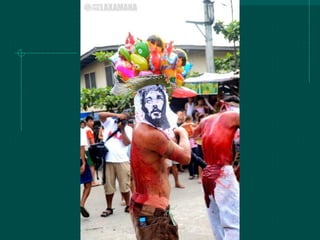
4. Put a FACE ALWAYS
KEY POINTS TO REMEMBER
5. Avoid Wastes
6. 90% of the Subject should
dominate the picture
7. Apply drama
8. Put “life” always in the
picture
9. One Subject Only (unless
instructed by the judge)
KEY POINTS TO REMEMBER
10. Use Framing
11. Capture a Unique Moment
12. Explore the Net
KEY POINTS TO REMEMBER
APPEAL OF PICTURES
(Human Interest Angles)
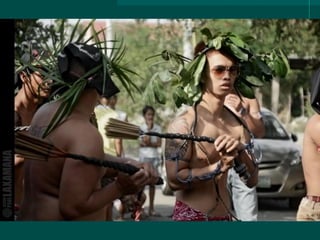
STRUGGLE
FEAR
SYMPATHY
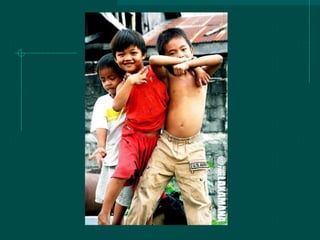
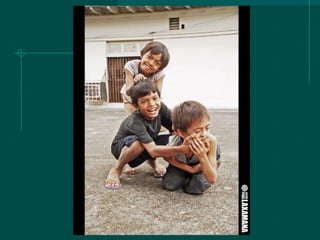
CHILDREN
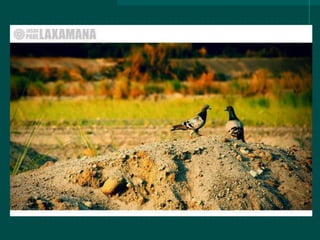
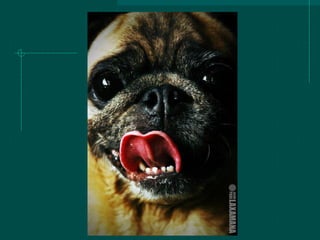
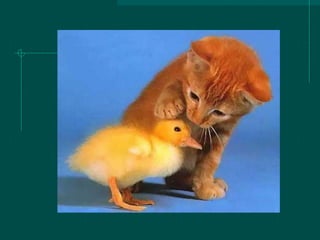
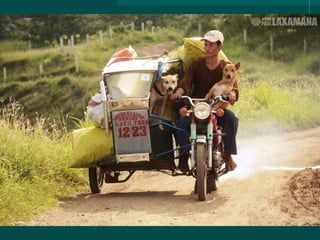
ANIMALS
BEAUTY
SEXY
PLAY
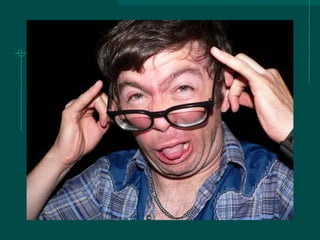
HUMOR
ODDITY
REFERENCES
The Varsitarian
National Geographic
Scholastic Journalism
“Thank you for Listening.”

Photojournalism.pdfmmmmmmmmmmmmmmmmmmmmm