General pharmacology
Associate professor of pharmacology chair
PhD, MD, Semenova Elena
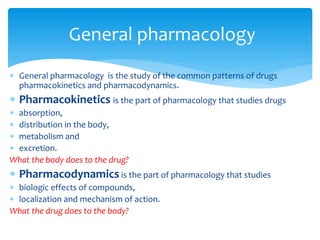
 General pharmacology is the study of the common patterns of drugs
pharmacokinetics and pharmacodynamics.
 Pharmacokinetics is the part of pharmacology that studies drugs
 absorption,
 distribution in the body,
 metabolism and
 excretion.
What the body does to the drug?
 Pharmacodynamics is the part of pharmacology that studies
 biologic effects of compounds,
 localization and mechanism of action.
What the drug does to the body?
General pharmacology
1. Factors that determine the concentration of
medicine in blood.
2. Comparative characteristics of administration
routes of drugs.
3. Mechanisms of absorption of medications.
4. Pathways of transformation (conversion) of
medications in the body.
5. Elimination of medications from the body.
EXAMINATION QUESTIONS
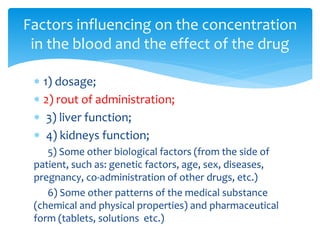
 1) dosage;
 2) rout of administration;
 3) liver function;
 4) kidneys function;
5) Some other biological factors (from the side of
patient, such as: genetic factors, age, sex, diseases,
pregnancy, co-administration of other drugs, etc.)
6) Some other patterns of the medical substance
(chemical and physical properties) and pharmaceutical
form (tablets, solutions etc.)
Factors influencing on the concentration
in the blood and the effect of the drug
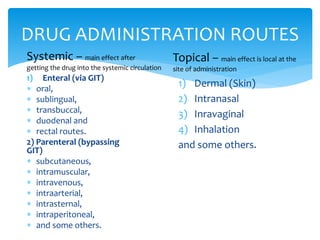
1) Enteral (via GIT)
 oral,
 sublingual,
 transbuccal,
 duodenal and
 rectal routes.
2) Parenteral (bypassing
GIT)
 subcutaneous,
 intramuscular,
 intravenous,
 intraarterial,
 intrasternal,
 intraperitoneal,
 and some others.
DRUG ADMINISTRATION ROUTES
Systemic – main effect after
getting the drug into the systemic circulation
Topical – main effect is local at the
site of administration
1) Dermal (Skin)
2) Intranasal
3) Inravaginal
4) Inhalation
and some others.
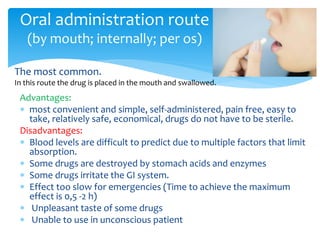
Advantages:
 most convenient and simple, self-administered, pain free, easy to
take, relatively safe, economical, drugs do not have to be sterile.
Disadvantages:
 Blood levels are difficult to predict due to multiple factors that limit
absorption.
 Some drugs are destroyed by stomach acids and enzymes
 Some drugs irritate the GI system.
 Effect too slow for emergencies (Time to achieve the maximum
effect is 0,5 -2 h)
 Unpleasant taste of some drugs
 Unable to use in unconscious patient
Oral administration route
(by mouth; internally; per os)
The most common.
In this route the drug is placed in the mouth and swallowed.
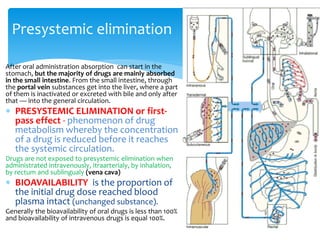
After oral administration absorption can start in the
stomach, but the majority of drugs are mainly absorbed
in the small intestine. From the small intestine, through
the portal vein substances get into the liver, where a part
of them is inactivated or excreted with bile and only after
that — into the general circulation.
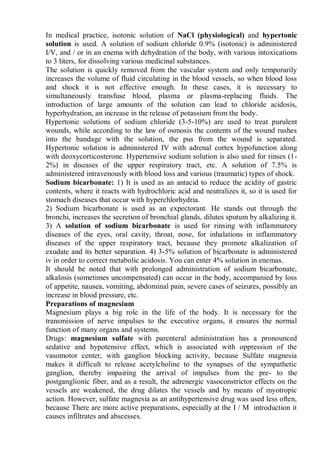
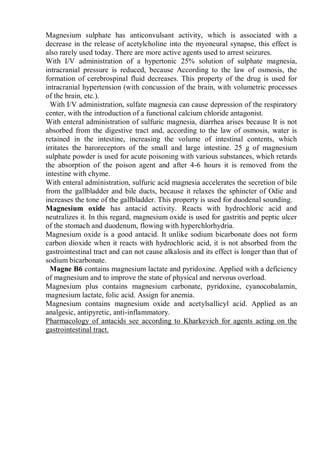
 PRESYSTEMIC ELIMINATION or first-
pass effect - phenomenon of drug
metabolism whereby the concentration
of a drug is reduced before it reaches
the systemic circulation.
Drugs are not exposed to presystemic elimination when
administrated intravenously, itraarterialy, by inhalation,
by rectum and sublingualy (vena cava)
 BIOAVAILABILITY is the proportion of
the initial drug dose reached blood
plasma intact (unchanged substance).
Generally the bioavailability of oral drugs is less than 100%
and bioavailability of intravenous drugs is equal 100%.
Presystemic elimination
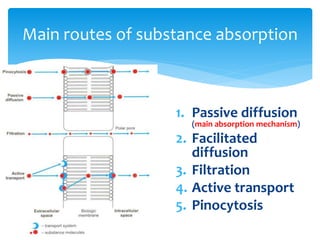
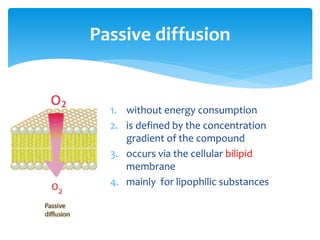
1. Passive diffusion
(main absorption mechanism)
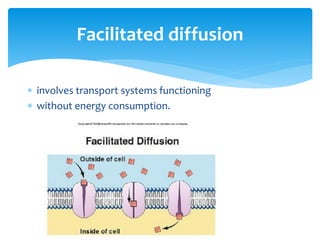
2. Facilitated
diffusion
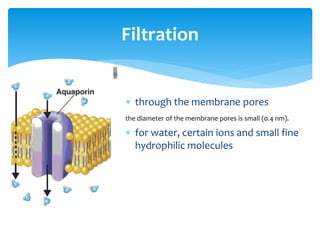
3. Filtration
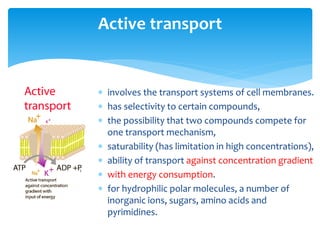
4. Active transport
5. Pinocytosis
Main routes of substance absorption
1. without energy consumption
2. is defined by the concentration
gradient of the compound
3. occurs via the cellular bilipid
membrane
4. mainly for lipophilic substances
Passive diffusion
 involves transport systems functioning
 without energy consumption.
Facilitated diffusion
 through the membrane pores
the diameter of the membrane pores is small (0.4 nm).
 for water, certain ions and small fine
hydrophilic molecules
Filtration
 involves the transport systems of cell membranes.
 has selectivity to certain compounds,
 the possibility that two compounds compete for
one transport mechanism,
 saturability (has limitation in high concentrations),
 ability of transport against concentration gradient
 with energy consumption.
 for hydrophilic polar molecules, a number of
inorganic ions, sugars, amino acids and
pyrimidines.
Active transport
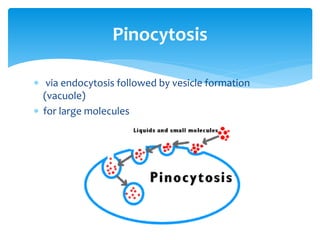
 via endocytosis followed by vesicle formation
(vacuole)
 for large molecules
Pinocytosis
dosage form is placed under the tongue
ADVANTAGES
 economical
 quick termination
 first-pass avoided
 drug absorption is quick
DISADVANTAGES
 unpalatable & bitter drugs
 irritation of oral mucosa
 large quantities not given
 few drugs are absorbed
SUBLINGUAL ROUTE
dosage form is inserted into the rectum.
ADVANTAGES
 used in children
 little or no first pass effect
 used in vomiting/unconscious
 higher concentrations rapidly achieved
DISADVANTAGES
 inconvenient
 irritation or inflammation of rectal mucosa can occur
Rectal route
Injection Routes
Advantages
 Very rapid absorption and onset of effect
Rate of absorption depends on blood flow to particular tissue site (I.A. > I.V. > I.P. > I.M. > S.C.).
 For emergency situations
 Used in vomiting/unconscious, other states, when oral rout can not be used
 High compliance (degree of conformity to the doctor`s prescriptions)
 First pass avoided
 High bioavailability
Disadvantages
 A rapid onset of action can be dangerous in overdosing occurs.
 Only for sterile drugs
 Sterile techniques of administration
 are necessary to avoid the risk of infection.
 Drugs insoluble in water or dissolved in oily liquids can not be given I.V. (e.g.
suspensions)
 Less convenient and painful
 Technical assistance required
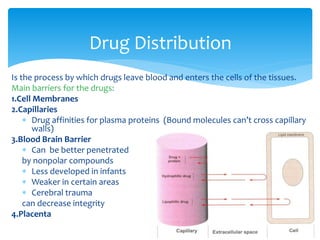
Drug Distribution
Is the process by which drugs leave blood and enters the cells of the tissues.
Main barriers for the drugs:
1.Cell Membranes
2.Capillaries
 Drug affinities for plasma proteins (Bound molecules can’t cross capillary
walls)
3.Blood Brain Barrier
 Can be better penetrated
by nonpolar compounds
 Less developed in infants
 Weaker in certain areas
 Cerebral trauma
can decrease integrity
4.Placenta
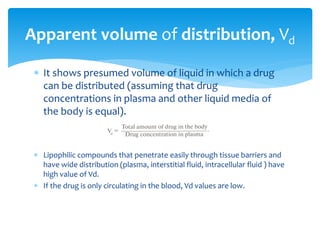
 It shows presumed volume of liquid in which a drug
can be distributed (assuming that drug
concentrations in plasma and other liquid media of
the body is equal).
 Lipophilic compounds that penetrate easily through tissue barriers and
have wide distribution (plasma, interstitial fluid, intracellular fluid ) have
high value of Vd.
 If the drug is only circulating in the blood, Vd values are low.
Apparent volume of distribution, Vd
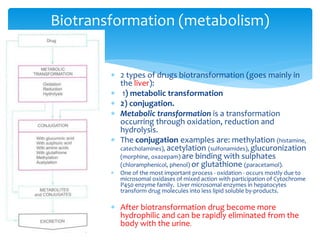
Biotransformation (metabolism)
 2 types of drugs biotransformation (goes mainly in
the liver):
 1) metabolic transformation
 2) conjugation.
 Metabolic transformation is a transformation
occurring through oxidation, reduction and
hydrolysis.
 The conjugation examples are: methylation (histamine,
catecholamines), acetylation (sulfonamides), glucuronization
(morphine, oxazepam) are binding with sulphates
(chloramphenicol, phenol) or glutathione (paracetamol).
 One of the most important process - oxidation - occurs mostly due to
microsomal oxidases of mixed action with participation of Cytochrome
P450 enzyme family. Liver microsomal enzymes in hepatocytes
transform drug molecules into less lipid soluble by-products.
 After biotransformation drug become more
hydrophilic and can be rapidly eliminated from the
body with the urine.
 Drug elimination is the removal of drugs from the body.
 All drugs are eventually eliminated from the body.
 They may be eliminated after being chemically altered or
intact.
 Therefor elimination may include not only excretion, but
also metabolism.
 High hydrophilic ionized compounds usually are eliminated
as intact form.
Elimination
Routes of Excretion
 Main Routes of Excretion
1. Renal Excretion (hydrophilic compounds; usually
without repeat reabsorption)
2. Biliary Excretion (lipophilic compounds; well
reabsorbed; hepatointestinal recirculation of drug that
prolong the action of drug)
 Minor Routes of Excretion
1. Exhaled air (Exhalation)
2. Salivary
3. Sweat
4. Milk
5. Tears
Elimination quantitative
characteristics
 Elimination Half-Life (t1/2) - time required for drug
blood levels to be reduced by 50%
 Approx. 6 half-lives to eliminate drug from body
Clearance (Cl) - indicates the rate of removal of a
substance from the blood. Used for determination of
maintenance dose.
Elimination coefficient (quota) is the proportion of
drug dose which inactivated and excreted
(eliminated) after 1 day.
General pharmacology
Associate professor of pharmacology chair
PhD, MD, Semenova Elena
Pharmacodynamics
Pharmacodynamics is the part of
pharmacology that studies biologic effects of
compounds, localization and mechanism of
action.
What the drug does to the body?
1. Types of medical effects.
2. Definition of spectrum of therapeutic action and
therapeutic index/margin.
3. Phenomena that occur at combined administration
of drugs (synergism, antagonism, types).
4. Antagonism between two drugs, types of
antagonism.
5. Phenomena that occur at repeated administration of
drugs.
EXAMINATION QUESTIONS
 1) receptors
 2) non-receptors (enzymes, ion
channels, gens etc.)
Main targets for drugs action:
Pharmacological effect is a result of interaction
between the drug and the body. Each drug acts
on to the specific targets in the body.
 Direct chemical interaction (Antacids, Laxatives)
 Enzymes (carbonic anhydrase inhibitors,
Monoamine oxidase inhibitors).
 Ion channels (Na-channel blockers (local
anesthetics), Ca-channel blockers).
 Chemical transmitters
 Carrier molecules (Transport process) (Probenecid)
 Incorporation into large molecules (Anticancer (5-
fluorouracil)
Non receptor mediated mechanisms
Receptors Is a special constituent of the cell that binds
with the drug and mediates its pharmacological actions.
Examples
 Adrenergic , cholinergic receptors
Where?
 Cell membrane.
 Cytoplasm
 Nucleus
Types of receptors
Type I - Ion Channel Linked receptors (Nicotinic receptors)
Type II - G -Protein Protein coupled receptors (Muscarinic receptors)
Type III - Kinase-Linked receptors (Insulin receptors)
Type IV - Receptors linked to gene transcription (Estrogen receptors)
Receptor-mediated actions
Mechanisms of drug action
Binding Forces between drug and receptor
➢Non Covalent bonds (reversible, weak) (Ionic bond,
Hydrogen bond, Van -Dar -Waal)
➢Covalent bonds (irreversible, STRONG!) Sharing of pairs
of electrons between two bonded atoms (C=C)
Affinity – Ability of a drug to combine with the receptor.
Efficacy (Intrinsic Activity) – Capacity of a drug to activate
receptor and produce action.
Drug –receptor interaction
 Agonist (mimetic) is a drug that combines with receptor and
produce a response ( has affinity and efficacy), the effect is the
same as effect of natural activator of receptor and drug imitate
this effect.
 Antagonist (blocker) is a drug that combines with a receptor
without producing responses. It blocks the action of the agonist
(Has affinity but no or zero efficacy).
Main types of agonists
 Full Agonist - A drug that combines with its specific receptor to
produce maximal effect . It Has both high affinity & full efficacy.
 Partial Agonist - A drug that combines with its specific receptor
to produce submaximal effect regardless of concentration (Full
receptor occupancy). It has high affinity & partial efficacy.
Drug –receptor interaction
 POTENCY Is a measure (in weight) of the amount of the drug
required to produce an action of the drug given magnitude (
a given magnitude (50% of the maximal response = ED50).
Is inversely proportional to ED 50
 The smaller is the EC50, the more potent is the drug.
 Efficacy is more important than potency.
 EFFICACY Is a Maximum effect of the drug.
Potency & Efficacy
Minimal therapeutic dose – the minimal dose of drug that
produces therapeutic effect.
Maximal therapeutic dose – the maximal dose of drug that
produces therapeutic effect without any toxic effects.
ED50 - median effective dose (average therapeutic dose)
that shows therapeutic effect in 50% of patients.
LD 50 - median lethal dose that required to produce death
in 50 % of patients (animals).
LD 100 - lethal dose that required to produce death in 100
% of patients.
Dose types
 Spectrum of pharmacological action is a list of all effects of medicine.
 Spectrum of therapeutic action is a list of therapeutic effects of medicine.
It may be narrow (less number of effects) or broad. This term is commonly used to
characterize the antibiotics.
THERAPEUTIC INDEX (TI) is the ratio between the dosage of a drug
that causes a lethal effect and the dosage that causes a therapeutic
effect.
TI= LD 50 /ED 50
THERAPEUTIC WINDOW (MARGIN) is the dosage range between the
average effective therapeutic dose and maximal therapeutic dose.
Large value a wide margin of safety. (Penicillin) Drugs with a large TI can be used
relatively safely and does not need close monitoring (highly safe)
Small value a narrow margin of safety. (warfarin) Drugs with a low TI should be used with
caution and needs a periodic monitoring (less safe)
Spectrum of therapeutic action and
therapeutic index/margin
 1. Therapeutic effects
 2. Side effects (caused by therapeutic dose) Unwanted but often
unavoidable, pharmacodynamic effects that occur at therapeutic doses.
 3. Toxic effects (caused by toxic dose)
 1.Local effects
 2.Systemic effects
 1. Direct (primary) effects
 2. Indirect (secondary) effects, including reflex effects
 1.Reversible
 2.Irreversible
 1.Selective
 2.Unselective
Types of medical effects
1) Pharmaceutical (outside the patient body)
2) Pharmacological (inside the patient body):
 Pharmacokinetical ( the changing in
pharmacokinetics of one of the drugs)
 Pharmacodynamical (the changing in
pharmacodynamics of one of the drugs)
Types of drug interactions
Phenomena that occur at combined administration of
drugs.
 When two drugs are given together or in quick
succession 3 things can happen:
1. Nothing (indifferent to each other)
2. Action of one drug is increased by the other
(synergism)
3. Action of one drug is decreased by the other
(antagonism)
Combined administration of drugs
1. Additive effect: the effect of two drugs are
in the same direction and simply add up.
Effect of drug A + B = effect of drug A and B
2. Supraadditive effect (potentiation): the
effect of combination is greater than the
individual effect of the components.
Effect of drug A + B > effect of drug A + effect
of drug B
Synergism
1. Physical: based on physical property of a drug.
 E.g. activated charcoal adsorbs alkaloids and prevents their
absorption (in alkaloid poisoning)
2. Chemical: based on chemical properties resulting in
an inactive product.
 E.g. chelating agents complex metals (used in heavy metal
poisoning)
 1. competitive
 2. noncompetitive
3. Physiological: based on pharmacological effects of
drugs (ex. One drug increases BP, another – decreases BP).
Antagonism,
types of antagonism
1. Sensibilisation – increased sensitivity of human organism to drug
2. Tolerance – is a gradual reduction in response to drug. Requirement
of higher dose to produce the same effect.
3. Dependence is the state of needing a certain drug in order to well
being (Psychological dependence ) and/or function normally (Physical
dependence)
4. Withdrawal syndrome (abstinence) is a set of symptoms occurring in
discontinuation of some types of medications
5. Tachyphylaxis is a rapidly decreasing response to a drug following its
initial administration.
6. Cumulation (drug accumulation) is accumulation of the drug
molecules (material cumulation) or drug effects (functional
cumulation) after repeated administration
7. Inhibition of production of own hormons (for hormonal drugs)
Phenomena that occur at repeated
administration of drugs
1. Etiotropic
2. Pathogenetic
3. Symptomatic
4. Replacement - therapy involving the supply of a
substance (such as a hormone or nutrient) lacking in or
lost from the body
Types of pharmacotherapy
 1) Exaggerated (forced) therapeutic effects (may
occur on average therapeutic dose)
 2) Toxic effects (associate with overdose)
 • Reactions which can be predicted from the known
pharmacology of the drug
 • Dose dependent,
 • Can be alleviated by a dose reduction
 E.g. Anticoagulants - Bleeding, Beta blockers -
Bradycardia, Nitrates – Headache.
Type A
1) Immunologic (allergic or hypersensitivity)
Drug allergy - Immunologically mediated reaction producing stereotype
symptoms, unrelated to the pharmacodynamic profile of the drug
 Generally occur even with much smaller doses
 Also called Drug hypersensitivity
 Sensibilisation – increased sensitivity of human organism to drug
 E.g. • Penicillin - Anaphylaxis, • Anticonvulsant - Hypersensitivity
2) Idiosyncratic
Idiosyncrasy - is a genetically determined abnormal reactivity to a chemical (with
very high sensitivity) Drug interacts with some unique feature of the individual, not found in
majority subjects, and produces the uncharacteristic reaction.
E.g. • Barbiturates - mental confusion in some individuals Quinine - Cramps, diarrhea,
asthma, vascular collapse in some individuals
 Cannot be predicted from the pharmacology of the drug
 Not dose dependent,
 Host dependent factors important in predisposition
Type B
 Reaction after prolonged use of drug.
 1) tolerance
 2) dependence
 3) withdrawal syndrome
 4) inhibition of production of own hormons
 Example: narcotic analgetics
Type C
 Occur after many years of treatment.
 Can be due to accumulation.
Teratogenicity • Capacity of a drug to cause foetal
abnormalities when administered to the pregnant
mother.
Mutagenecity and Carcinogenicity • Capacity of a drug
to cause genetic defects and cancer respectively.
Type D (Delayed) reactions
Lecture topic:
M-cholinomimetics,
Anticholinesterase drugs,
M-cholinoblockers
Agents affecting the nervous system
(neurotropic drugs) are devided into 3 groups:
1. Drugs affecting afferent innervation i.e.
(affecting afferent nerve endings)
2. Drags regulating the functions of the central
nervous system
3. Drugs affecting efferent innervation.
 Drugs affecting efferent innervation
Efferent innervation of the body occurs via autonomic
nerves (innervating visceral organs, blood vessels and
glands) and motor nerves of skeletal muscles.
Autonomic innervation is subdivided into cholinergic, or
parasympathetic (acetylcholine neurotransmitter) and
adrenergic, or sympathetic (norepinephrine
neurotransmitter), depending on the neurotransmitter that
is released in the neuroeffector synapses.
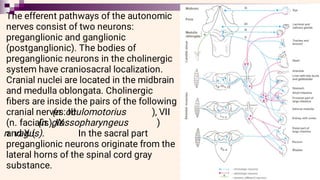
The efferent pathways of the autonomic
nerves consist of two neurons:
preganglionic and ganglionic
(postganglionic). The bodies of
preganglionic neurons in the cholinergic
system have craniosacral localization.
Cranial nuclei are located in the midbrain
and medulla oblongata. Cholinergic
fibers are inside the pairs of the following
cranial nerves: III
(n. oculomotorius ), VII
(n. facialis), IX
(n. glossopharyngeus )
and X (
n. vagus). In the sacral part
preganglionic neurons originate from the
lateral horns of the spinal cord gray
substance.
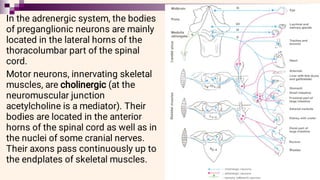
In the adrenergic system, the bodies
of preganglionic neurons are mainly
located in the lateral horns of the
thoracolumbar part of the spinal
cord.
Motor neurons, innervating skeletal
muscles, are cholinergic (at the
neuromuscular junction
acetylcholine is a mediator). Their
bodies are located in the anterior
horns of the spinal cord as well as in
the nuclei of some cranial nerves.
Their axons pass continuously up to
the endplates of skeletal muscles.
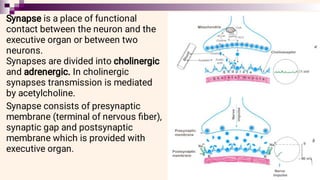
Synapse is a place of functional
contact between the neuron and the
executive organ or between two
neurons.
Synapses are divided into cholinergic
and adrenergic. In cholinergic
synapses transmission is mediated
by acetylcholine.
Synapse consists of presynaptic
membrane (terminal of nervous fiber),
synaptic gap and postsynaptic
membrane which is provided with
executive organ.
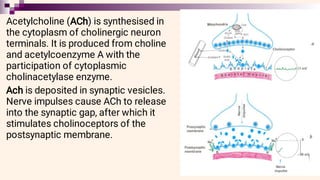
Acetylcholine (ACh) is synthesised in
the cytoplasm of cholinergic neuron
terminals. It is produced from choline
and acetylcoenzyme A with the
participation of cytoplasmic
cholinacetylase enzyme.
Ach is deposited in synaptic vesicles.
Nerve impulses cause ACh to release
into the synaptic gap, after which it
stimulates cholinoceptors of the
postsynaptic membrane.
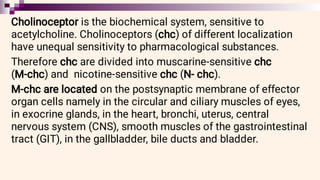
Cholinoceptor is the biochemical system, sensitive to
acetylcholine. Cholinoceptors (chc) of different localization
have unequal sensitivity to pharmacological substances.
Therefore chc are divided into muscarine-sensitive chc
(M-chc) and nicotine-sensitive chc (N- chc).
M-chc are located on the postsynaptic membrane of effector
organ cells namely in the circular and ciliary muscles of eyes,
in exocrine glands, in the heart, bronchi, uterus, central
nervous system (CNS), smooth muscles of the gastrointestinal
tract (GIT), in the gallbladder, bile ducts and bladder.
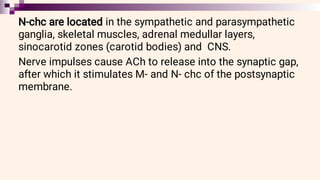
N-chc are located in the sympathetic and parasympathetic
ganglia, skeletal muscles, adrenal medullar layers,
sinocarotid zones (carotid bodies) and CNS.
Nerve impulses cause ACh to release into the synaptic gap,
after which it stimulates M- and N- chc of the postsynaptic
membrane.
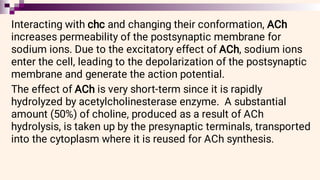
Interacting with chc and changing their conformation, ACh
increases permeability of the postsynaptic membrane for
sodium ions. Due to the excitatory effect of ACh, sodium ions
enter the cell, leading to the depolarization of the postsynaptic
membrane and generate the action potential.
The effect of ACh is very short-term since it is rapidly
hydrolyzed by acetylcholinesterase enzyme. A substantial
amount (50%) of choline, produced as a result of ACh
hydrolysis, is taken up by the presynaptic terminals, transported
into the cytoplasm where it is reused for ACh synthesis.
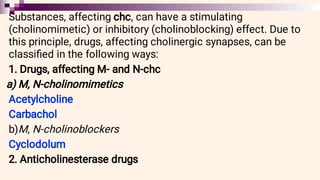
Substances, affecting chc, can have a stimulating
(cholinomimetic) or inhibitory (cholinoblocking) effect. Due to
this principle, drugs, affecting cholinergic synapses, can be
classified in the following ways:
1. Drugs, affecting M- and N-chc
a) M, N-cholinomimetics
Acetylcholine
Carbachol
b)M, N-cholinoblockers
Cyclodolum
2. Anticholinesterase drugs
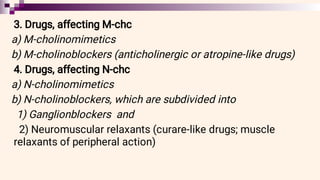
3. Drugs, affecting M-chc
a) M-cholinomimetics
b) M-cholinoblockers (anticholinergic or atropine-like drugs)
4. Drugs, affecting N-chc
a) N-cholinomimetics
b) N-cholinoblockers, which are subdivided into
1) Ganglionblockers and
2) Neuromuscular relaxants (curare-like drugs; muscle
relaxants of peripheral action)
M-cholinomimetics (M-chm) have a direct stimulatory
effect on M-chc like ACh.
Medicines: Pilocarpini hydrochliridum
Aceclidinum



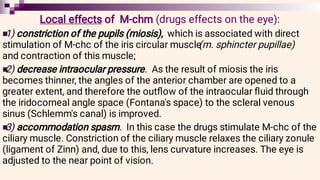
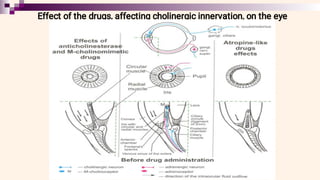
Local effects of M-chm (drugs effects on the eye):
1) constriction of the pupils (miosis), which is associated with direct
stimulation of M-chc of the iris circular muscle
(m. sphincter pupillae)
and contraction of this muscle;
2) decrease intraocular pressure. As the result of miosis the iris
becomes thinner, the angles of the anterior chamber are opened to a
greater extent, and therefore the outflow of the intraocular fluid through
the iridocorneal angle space (Fontana's space) to the scleral venous
sinus (Schlemm's canal) is improved.
3) accommodation spasm. In this case the drugs stimulate M-chc of the
ciliary muscle. Constriction of the ciliary muscle relaxes the ciliary zonule
(ligament of Zinn) and, due to this, lens curvature increases. The eye is
adjusted to the near point of vision.
Effect of the drugs, affecting cholinergic innervation, on the eye




General effects occur after medicines absorbtion into the blood:
1) increase tone of smooth muscles of the gastrointestinal tract,
bronchi, uterus, gallbladder, bile ducts and bladder. This effect is
associated with direct stimulation of M-chc of smooth muscles of these
organs, therefore the muscles contract.
2) increase in secretion of exocrine glands (of the bronchi, stomach,
intestine, salivary, lacrimal glands). This effect is associated with
stimulation of M-chc in exocrine glands.
3) heart negative effects: bradycardia, heart contractility decreases and
cardiac conduction becomes slower down. It is connected with
stimulation of M-chc in the heart and increase in cholinergic effects of
the vagus nerve on the heart.
4) arterial pressure decreases. Basically it is connected with heart negative
effects.
Indications for use
In clinical practice pilocarpine is administered locally in the
form of eye drops to treat glaucoma. It is not used for
systemic action because of toxicity.
Anticholinesterase drugs block acetylcholinesterase and, therefore,
prevent the hydrolysis of ACh. This leads to more notable and prolonged
action on the chc. The effect of anticholinesterase drugs is mediated by
ACh.
Based on the stability of interaction of anticholinesterase drugs with
acetylcholinesterase they can be subdivided into two groups:
1) Drugs of reversible action
Physostigmine
Neostigmine (Proserinum)
Galantamine
2) Drugs of irreversible action
Arminum (In clinical practice arminum is administered locally in the form
of eye drops to treat glaucoma only).







Preventing hydrolysis of ACh, anticholinesterase drugs intensify and prolong
its muscarinic and nicotinic effects.
M-cholinomimetic effects are the same as that M-chm:
1) cause constriction of the pupils (miosis), which is associated with
indirect stimulation of M-chc (by ACh) of the iris circular muscle and
contraction of this muscle;
2) decrease intraocular pressure .
3) accommodation spasm. In this case the drugs indirectly stimulate M-
chc of the ciliary muscle.
4) increase in secretion of exocrine glands.
5) increase of smooth muscles tone
6) heart negative effects
7)arterial pressure decreases. It is connected with heart negative effects.


N- cholinomimetic effects:
1) increase tone of skeletal muscles. These drugs
blocking acetylcholinesterase in the mioneural synapse
intensify and prolong the effect of ACh to N-chc of skeletal
muscles.
2) In low doses anticholinesterase drugs stimulate the
CNS.
•
•
•
•
•
•
•
•
Indications for use
M-cholinomimetic effects:
Glaucoma,
Atony of the intestine or the bladder,
Acute poisoning of M-cholinoblockers (as antagonists to M-
cholinoblockers)
N- cholinomimetic effects:
Myasthenia,
as antagonists to antidepolarizing neuromuscular relaxants,
Progressive dementia (Alzheimer’s disease),
Polyneuritis,
After poliomyelitis.
Anticholinesterase drug acute poisoning
Anticholinesterase drug poisoning is mainly associated
with the accumulation of high ACh concentrations in the
body, as well as with a direct activation of chc. Most often
poisoning occurs with the use of organophosphoris
anticholinesterases (phosphorus organic compounds),
since, due to their marked lipophility, organophosphates are
rapidly absorbed regardless of administration route
(including cutaneous application) and inhibit
acetylcholinesterase for in the long term. Acute poisoning
with organophosphates requires immediate medical
intervention.
First of all, organophosphates must be removed from the
sites of introduction. If it is the skin or mucous membranes,
they should be thoroughly washed with 3—5% solution of
sodium bicarbonate. If the drugs were taken orally, the
stomach is lavaged, adsorbing and laxative drugs are given,
high siphon enemas are administered. These activities are
performed many times until the elimination of any signs of
intoxication. If organophosphates has entered the blood, its
elimination with urine should be accelerated (by means of
the forced diuresis). Effective ways of clearing
organophosphates out of the blood include hemosorption,
hemodialysis and peritoneal dialysis.
The important component for the treatment of acute poisoning with
organophosphates is the administration of M-cholinoblockers as well
as so-called
cholinesterase reactivators ( dipiroxim and isonitrosinum).
C
holinesterase reactivators interact with organophosphates residuals
that are bound with acetylcholinesterase, releasing the enzyme and
restoring its physiologic activity.
In addition, symptomatic therapy should be carried out. It is necessary
to monitor the patient’s respiration. Organophosphates cause
hypersecretion of the glands, which is why sanation of the oral cavity
should be done and secretions from the trachea and bronchi have to
be removed. If necessary, assisted or artificial ventilation is used. In
case of psychomotor agitation chloropromazine, diazepam, sodium
oxybutyrate and other CNS depressants should be used.
M-cholinoblockers (M-chb) are drugs that block M-chc.
The principle of action of M-chb is that, while blocking
M-chc, they prevent their interaction with ACh. M-chb
reduce and eliminate activation of the cholinergic
(parasympathetic) nerves and decrease the effect of the
drugs that have M-cholinomimetic activity
Medicines: non-selective M-chb
Atropini sulfatis
Hyoscine (scopolamine)
Homatropine
Platyphilline
Metacinum
Ipratropium
Troventolum
selective M-chb: Pirenzepine (block mostly M-chc of the
stomach)



Local effects
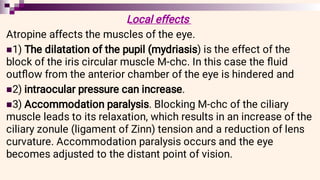
Atropine affects the muscles of the eye.
1) The dilatation of the pupil (mydriasis) is the effect of the
block of the iris circular muscle M-chc. In this case the fluid
outflow from the anterior chamber of the eye is hindered and
2) intraocular pressure can increase.
3) Accommodation paralysis. Blocking M-chc of the ciliary
muscle leads to its relaxation, which results in an increase of the
ciliary zonule (ligament of Zinn) tension and a reduction of lens
curvature. Accommodation paralysis occurs and the eye
becomes adjusted to the distant point of vision.



General effects
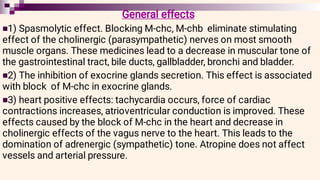
1) Spasmolytic effect. Blocking M-chc, M-chb eliminate stimulating
effect of the cholinergic (parasympathetic) nerves on most smooth
muscle organs. These medicines lead to a decrease in muscular tone of
the gastrointestinal tract, bile ducts, gallbladder, bronchi and bladder.
2) The inhibition of exocrine glands secretion. This effect is associated
with block of M-chc in exocrine glands.
3) heart positive effects: tachycardia occurs, force of cardiac
contractions increases, atrioventricular conduction is improved. These
effects caused by the block of M-chc in the heart and decrease in
cholinergic effects of the vagus nerve to the heart. This leads to the
domination of adrenergic (sympathetic) tone. Atropine does not affect
vessels and arterial pressure.
•
•
•
Indications for use
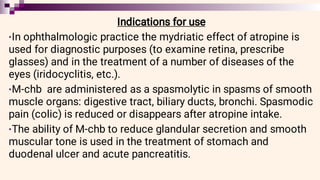
In ophthalmologic practice the mydriatic effect of atropine is
used for diagnostic purposes (to examine retina, prescribe
glasses) and in the treatment of a number of diseases of the
eyes (iridocyclitis, etc.).
M-chb are administered as a spasmolytic in spasms of smooth
muscle organs: digestive tract, biliary ducts, bronchi. Spasmodic
pain (colic) is reduced or disappears after atropine intake.
The ability of M-chb to reduce glandular secretion and smooth
muscular tone is used in the treatment of stomach and
duodenal ulcer and acute pancreatitis.
•
•
•
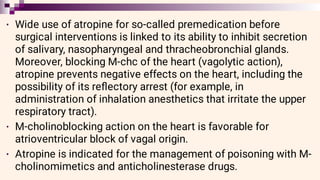
Wide use of atropine for so-called premedication before
surgical interventions is linked to its ability to inhibit secretion
of salivary, nasopharyngeal and thracheobronchial glands.
Moreover, blocking M-chc of the heart (vagolytic action),
atropine prevents negative effects on the heart, including the
possibility of its reflectory arrest (for example, in
administration of inhalation anesthetics that irritate the upper
respiratory tract).
M-cholinoblocking action on the heart is favorable for
atrioventricular block of vagal origin.
Atropine is indicated for the management of poisoning with M-
cholinomimetics and anticholinesterase drugs.
Side effects of M-chb
the dryness of the oral mucous membrane,
accommodation disorder and tachycardia. There may be an
increase in intraocular pressure (atropine is contraindicated
in glaucoma), obstipation (retention of stool) and urination
difficulty.
M-chb acute poisoning
Symptoms: dryness of the mucous membranes of the
mouth and nasopharynx is observed and leads to difficulty
with swallowing and speech. The skin becomes dry. Body
temperature rises. Pupils become dilated and photophobia
(fear of light) is typical. Motor and verbal agitation,
impairment of memory and orientation and sometimes
hallucinations are characteristic.
Atropine poisoning is more frequent in children. It occurs due to
the overdosage of the drug or as a result of eating the fruits of
plants, containing this alkaloid (for example belladonna).
Treatment consists of elimination of unabsorbed atropine from
the gastrointestinal tract (gastric lavage, tannin, activated
charcoal, saline laxatives), acceleration of the drug elimination
from the body (forced diuresis, hemosorption) and
administration of physiologic antagonists (for example,
anticholinesterase drugs). In marked excitation, diazepam is
administered. In the case of excessive tachycardia
administration of β-adrenoblockers is useful. The lowering of
body temperature is achieved by external cooling. If necessary,
artificial ventilation is performed.
Lecture topic:
DRUGS AFFECTING NICOTINIC
CHOLINOCEPTORS
N-cholinoceptors (N-chc) are located in the sympathetic
and parasympathetic ganglia, skeletal muscles, adrenal
medullar layers, sinocarotid zones (carotid bodies) and CNS.
DRUGS AFFECTING NICOTINIC CHOLINOCEPTORS are
divided into 2 groups:
1. N-CHOLINOMIMETICS (N-chm)
2. N-CHOLINOBLOCKERS (N-chb), which are subdivided
into 1) Ganglionblockers and
2) Neuromuscular relaxants (curare-like drugs;
muscle relaxants of peripheral action)
N-CHOLINOMIMETICS (N-chm) stimulate N-chc of carotid
bodies and cause reflex stimulation of the respiratory center
(analeptic effect) and the breathing becomes deeper and
more rapid. This effect depends on the functional state of the
respiratory center and appears at the decrease it’s tone. Also
analeptic effect depends on the reflex arc integrity.
Medicines:
Lobeline
Cytisine 0.15% solution is produced under the label
cytiton.
Both drugs are sometimes administered to stimulate
respiration (if reflex excitation of the respiratory center is
preserved).
Moreover, both drugs are used as basic components of a
number of drugs, used to aid ‘quitting’ smoking.
Ganglionblockers (Gb) block N-chc of the sympathetic and
parasympathetic ganglia, as well as N-chc of the adrenal
medulla. Agents having a such of mechanism action are
antidepolarizing medicines named.
Classification
Chemically Gb can be divided into the following groups:
1) Bis-quatemary ammonium compounds
Benzohexonium
Azamethonium (Pentaminum)
Trepirium (Hygronium), Trimethaphan (arphonade)
2) Tertiary amines
Pachycarpinum, Pempidine (Pirilenum)
Tertiary amines are well absorbed from the
gastrointestinal tract (GIT). Quaternary ammonium
salts are poorly absorbed from the GIT. Due to they
would be administered parenterally.
Tertiary amines, unlike quaternary ammonium salts,
pass through the blood-brain barrier well. This is the
cause of their negative effect on the CNS (tremor,
dysarthria and other symptoms).
Accordin to length of time action the Gb can be divided into
the following groups:
a) medicines, causing short-time effect (10-20 min)
Hygronium, Trimethaphan (arphonade)
b) medicines, causing middle-time effect (2–4 hours)
Benzohexonium
Azamethonium (Pentaminum)
c) medicines, causing long-time effect (8 h and more)
Pachycarpinum, Pempidine (Pirilenum)
Pharmacodynamics
As a result of the inhibition of the sympathetic ganglia
through block of N-chc, impulse is not transmitted from
preganglionic fiber to the postganglionic fiber and
adrenergic transmission is reduced to the vessels, blood
vessels are dilated (arterial and venous) and arterial (and
venous) pressure decreases (antihypertensive effect).
Besides Gb block N-chc of the adrenal medulla whereupon
epinephrine release decreases promoting vasodilatation.
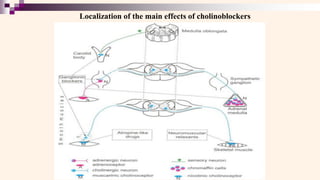
Localization of the main effects of cholinoblockers
Effects of Gb associated with block of
parasympathetic ganglia
◼ 1. The dilatation of the pupil (mydriasis) is the effect
of the block of the ganglion N-chc of the oculomotor
nerve and impulse is not transmitted from preganglionic
fiber to the postganglionic fiber, cholinergic transmission
is reduced to the iris sphincter muscle and it is relaxed.
As the result of mydriasis the iris becomes thicker. In
this case the fluid outflow from the anterior chamber of
the eye is hindered and
◼ 2) intraocular pressure increases
▪ 3) Accommodation paralysis is the effect of the block of
the ganglion N-chc of the oculomotor nerve, impulse is not
transmitted from preganglionic fiber to the postganglionic
fiber, cholinergic transmission is reduced to the ciliary
muscle and it is relaxed. Ligament of Zinn tension is
increased and the lens curvature is reduced.
◼ 4) As a result of the inhibition of the parasympathetic
ganglia through block of N-chc, impulse is not transmitted
from preganglionic fiber to the postganglionic fiber and
cholinergic transmission is reduced to the smooth muscles.
The decrease of muscular tone of the GIT, bile ducts,
gallbladder, bronchi and bladder is spasmolytic effect.
◼ 5) the inhibition of exocrine glands secretion
These effects including the affect the eye are atropine-
like effects.
◼ 6) the increasing uterine tone
◼ 7) Blocking effect of Gb on the autonomic (sympathetic
and parasympathetic) ganglia is the cause of the
inhibition of reflex effects on the visceral organs.
Indications for use
1. Gb are used mainly in hypertensive emergencies (for relief
of hypertensive crisis) and for the treatment of
2. pulmonary edema and brain edema at the high arterial
pressure.
3. Gb of short-term action are used for controlled
hypotension. They are administered intravenously dropwise. In
surgery controlled hypotension assists in performing operations
on the heart and vessels and improves blood supply to the
peripheral tissues.
In neurosurgery it is important that the hypotensive effect
of these drugs reduces the possibility of the development
of brain edema.
4. Spasmolytic effect may be used in theory for the
treatment of stomach and duodenal ulcers, in spasms of
bronchi, spasmodic pain (colic).
Side effects
1. The orthostatic collapse develops after an abrupt change
of the body’s position in space (for example, after transition
from horizontal to vertical position which is accompanied
by a marked and rapid decrease in the arterial pressure).
The excessive hypotension may lead to syncope. To
prevent orthostatic collapse, patients are recommended to
lie for 2 hours after drug administration.
2. Gb often inhibit GIT motility, and this can lead to
constipation (obstipation). Paralytic ileus can occur.
3. The dryness of the oral mucous membrane
4. Dysarthria (disorder of the articulate speech), dysphagia
(disorder of swallowing), and urinary retention.
5. The long term administration of Gb is usually followed by the
development of tolerance
Drugs blocking neuromuscular transmission
(neuromuscular relaxants (NmR)
The main effect of this drugs is the relaxation of skeletal
muscles. Most of NmR firstly block neuromuscular
synapses of the muscles of the face and neck, and then
limbs and lastly the trunk. Respiratory muscles are more
resistant to the drug action. The diaphragm is the last to
get paralyzed, and is associated with respiratory arrest.
NmR inhibit neuromuscular transmission on the level of
postsynaptic membrane, interacting with N-chc of the endplates.
Classification of NmR:.
1. Antidepolarizing drugs
Tubocurarine
Pancuronium
Pipecuronii bromidum
2. Depolarizing drugs
Suxamethonium (Dithylinum)
3. Mixed type of action drugs(depolarizing and antidepolarizing
properties can be combined): Dioxonium
According to the duration of the myoparalytic action
NmR can be subdivided into three groups:
short-term action (5-10 min) - suxamethonium,
medium-term action (20-30 min) - atracurium,
vecuronium,
long-term action (30-40 min and more) - tubocurarine,
pipercuronium, pancuronii bromidum
Antidepolarizing drugs block N-chc of skeletal muscles
and prevent depolarizing effects of acetylcholine.
Depolarizing drugs excite N-chc of skeletal muscles
and cause steady depolarization of the postsynaptic
membrane.
Mixed type of action drugs have depolarizing and
antidepolarizing properties.
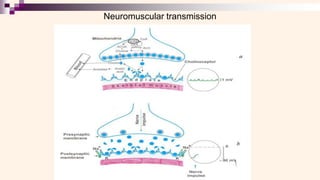
Neuromuscular transmission
Indications for use
NmR are widely used in anaesthesiology when performing
different surgical interventions. By causing relaxation of the
skeletal muscles, they significantly facilitate the
performance of most operations on the organs of the
thoracic and abdominal cavities, as well as on the upper
and lower limbs. They are administered in tracheal
intubation.
The choice of NmR antagonists is based on the mechanism of
action of these relaxants. Antagonists of the antidepolarizing
drugs are anticholinesterase drugs. The latter, blocking
acetylcholinesterase, increase the concentration of acetyl-
choline in the synaptic gap. This leads to the displacement of
NmR from the receptor sites and the restoration of neuromus-
cular transmission.
The action of the depolarizing drug suxamethonium can be
reversed by the administration of fresh citrated blood,
containing plasma cholinesterase, which hydrolyzes
suxamethonium.
DRUGS AFFECTING ADRENERGIC SYNAPSES:
ADRENOPOSITIVE MEDICATIONS
In the adrenergic synapses the transmission is
mediated by norepinephrine (NE).
The biosynthesis of NE from tyrosine occurs in the
adrenergic neurons with a number of enzymes being in-
volved.
Nerve impulses induce the release of NE into the
synaptic gap, followed by its interaction with the
adrenoceptors (ас) of the postsynaptic membrane.
Adrenoceptor is the biochemical system, sensitive to
NE.
Adrenoceptors (Ac) are divided into α- and β-ac.
α- ac are divided into α1- and α2 -ac.
β- ac are divided into β1-, β2 -and β3-ac.
α1- ac have postsynaptic localization and are located in the
vessels of the skin, mucous membranes, kidneys,
intestine and magistral vessels, sphincters and muscles of
the GIT and in splenic trabecules, in the iris radial muscle,
uterus, bladder, CNS.
α2 -ac are located presynaptically and beyond the
synapses. The physiologic role of the presynaptic a2-ac is
their involvement in the system of negative feedback,
controlling the release of NE. Stimulation of these
receptors by NE (or other drugs with a2-adrenomimetic
activity) inhibits NE release from the presynaptic
membrane in the synaptic gap, and vice versa block of
these receptors increases NE release from the
presynaptic membrane in the synaptic gap.
Among postsynaptic β-ac the
β1-ac are located in the heart,
β2-ac are located in the vessels of the heart, brain, liver,
lungs, skeletal muscles, and also in the bronchi, uterus,
muscles of the GIT,
β3-ac are located in the fatty tissue.
There are also presynaptic β-ac (β2-ac). They perform
positive reverse feedback, stimulating NE release.
Stimulation of α-ac leads to an increase in the
effectors function (except for the intestines, where
muscular tone subsides).
Stimulation of β-ac usually leads to a decrease in the
innervated organ function. However, stimulation of β-ac
of the heart is associated with an increase in the force and
rate of cardiac contractions, increases in automatism and
facilitation of atrioventricular conduction. Ac participate in
the control of carbohydrate and fat metabolism.
The action of NE on ac is short-term. It is mainly caused
by the swift uptake, up to 75—80%, of mediator present in
the synaptic gap by the terminals of the adrenergic fibres,
followed by its storage.
Catabolism of free NE is controlled by MAO and catechol
O-methyl- transferase enzyme.
Drugs that stimulate ac are called adrenomimetics (am),
while drugs that inhibit them are called adrenoblockers (ab).
Adrenopositive medications are drugs, which facilitate nerve
impulse pass in the synapse (am).
Classification of the adrenopositive medications
1. Adrenomimetics, stimulating α- and ß -ac
(α- and ß –adrenomimetics)
a) α,β-am of the direct action:
Epinephrine (Adrenalini hydrochloridum)
Norepinephrine
b) α,β-am of indirect action:
Tyramine
Ephedrine
2. Adrenomimetics, stimulating mostly α-ac
(α- adrenomimetics)
a) α1- am:
Phenylephrine (mezatonum)
b) α2- am:
Naphazoline (naphthizinum)
Xylometazoline (halazolinum)
3. Adrenomimetics, stimulating mostly β-ac
(β- adrenomimetics)
a) β1- am:
Dobutamine
b) β2- am:
Salbutamol
Fenoterol
Terbutaline
c) β1, β2- am
Isoprenaline (Isadrine)
α- and ß –am
Epinephrine (adrenalini hydrochloridum) has a direct
stimulating effect on α- and ß –ac.
ß-ac more sensitive to epinephrine than α- ac.
ß–adrenomimetics effects of epinephrine are
1. Stimulation of the heart. By stimulating the β-ac of the
heart, epinephrine increases the force and rate of cardiac
contractions and this in turn causes the stroke and minute
volume of the heart to increase. Atrioventricular conduction
is improved. At the same time the consumption of oxygen
by myocardium is increased.
2. Dilatation of the coronary, cerebral, hepatic,
pulmonary vessels and skeletal muscles vessels, which
is associated with the stimulation of β2-ac of these vessels.
It is manifested by a decrease of the diastolic pressure.
3. Bronchodilator effect. By stimulating β2-ac of the
bronchi, it relaxes their smooth muscles and eliminates
bronchospasm.
4. The tone of the uterus is reduced (because of the
stimulation of β2-ac)
5. The tone and motility of the GIT is reduced
6. Stimulation of the metabolism. It stimulates
glycogenolysis (hyperglycaemia occurs) and lipolysis
(increase of blood plasma concentration of free fatty acids).
α–adrenomimetics effects of epinephrine are
1. Pupils dilatation. Epinephrine dilates the pupils (due to
the α–ac stimulation of the radial muscle of the iris and its
contraction), and decreases intraocular pressure
(production of the intraocular fluid is decreased).
2.Arterial pressure increases due to the α–ac stimulation
of the magistral vessels, vessels of the kidneys and others.
Hypertensiv reaction usually induces reflex bradycardia
from the mechanoceptors of the blood vessels.
3. Contraction of the splenic capsule
4. Uterus tone increases
5. Sphincter tone increases, but the tone and motility of
the GIT reduce
Indications for use
1) It is effective as a bronchial spasmolytic for the
treatment of acute bronchial asthma attacks.
2) It is used for hypoglycaemic coma, caused by
antidiabetic drugs.
3) Epinephrine can be used to eliminate atrioventricular
block. In these cases it is used subcutaneously
4. Epinephrine is added to lokal anesthetic solutions.
Vasoconstriction at the site of epinephrine injection intensifies
local anesthesia and reduces resorptive and, possibly, the
toxic effect of anesthetics.
5. It is used in ophthalmology to dilate the pupil and in the
open-angle glaucoma.
6. Epinephrine is administered for anaphylactic shock
(intramuscularly or intravenously).
Side effects
1. Tachycardia
2. Cardiac rhythm disorders
3. Consumption of oxygen by myocardium is increased
and may be a pain in the heart.
Ephedrine is indirect α,β-am. Ephedrine increases NE
concentration in synaptic gap due to the intensification of its
release from nervous fibers.
Ephedrine effects are the same as that Epinephrine.
α- am stimulate α–ac of the blood vessels and
increase their tone.
Phenylephrine (mezatonum) stimulates α1–ac of the
blood vessels and increases arterial pressure. Hypertensiv
reaction induces reflex bradycardia from the mechanoceptors
of the blood vessels (due to nerve vagus).
Mezatonum dilates the pupils (due to the α1–ac
stimulation of the radial muscle of the iris and its contraction)
Indications for use
Phenylephrine is used
◼ as a pressor drug at the acute vascular weakness (failure)
(intravenously dropwise),
◼ to enhance the effect of local anesthetics,
◼ for the treatment of open-angle glaucoma
Naphthizinum and Xylometazoline (α2- am) have
vasoconstrictive effect.
They are used locally in acute rhinitis.
Isoprenaline (isadrine) stimulates ß1-, ß2- ac.
By stimulating ß1-ac of the heart, isadrine increases the force
and rate of cardiac contractions. At the same time systolic
pressure increases. Isadrine facilitates atrioventricular
conduction and increases heart automatism.
Moreover, the drug also activate ß2-ac of the vessels
(especially the skeletal muscle vessels). This leads to a
decrease in diastolic pressure.
It effectively decreases the tone of the bronchi, muscles of the
GIT, as well as other smooth muscles, that have ß2-ac.
Indications for use
Isadrine is used
◼ to relieve bronchial spasm,
◼ for the treatment of atrioventricular block (sublingual
administration).
Adverse effects include
tachycardia,
cardiac arrhythmias,
headache
β2- am (Salbutamol, Fenoterol and etc.) selectively stimulate
β2- ac of the effector organs.
They are used as broncholytic drugs, as well as to reduce
contractile activity of the myometrium.
Dobutamine is β1- am. Its main effect is a marked positive
inotropic action. It is administered as a cardiotonic drug.
DRUGS AFFECTING ADRENERGIC SYNAPSES:
ADRENONEGATIVE MEDICATIONS
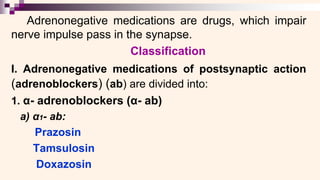
Adrenonegative medications are drugs, which impair
nerve impulse pass in the synapse.
Classification
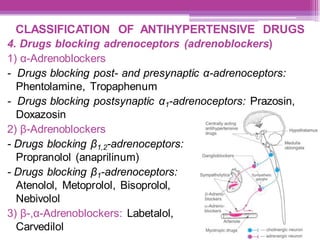
I. Adrenonegative medications of postsynaptic action
(adrenoblockers) (ab) are divided into:
1. α- adrenoblockers (α- ab)
a) α1- ab:
Prazosin
Tamsulosin
Doxazosin
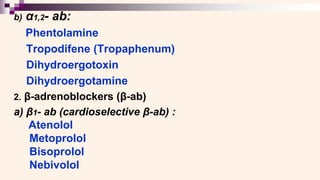
b) α1,2- ab:
Phentolamine
Tropodifene (Tropaphenum)
Dihydroergotoxin
Dihydroergotamine
2. β-adrenoblockers (β-ab)
a) β1- ab (cardioselective β-ab) :
Atenolol
Metoprolol
Bisoprolol
Nebivolol
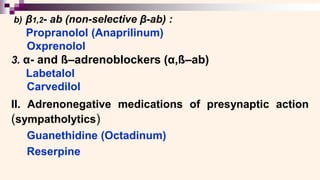
b) β1,2- ab (non-selective β-ab) :
Propranolol (Anaprilinum)
Oxprenolol
3. α- and ß–adrenoblockers (α,ß–ab)
Labetalol
Carvedilol
II. Adrenonegative medications of presynaptic action
(sympatholytics)
Guanethidine (Octadinum)
Reserpine
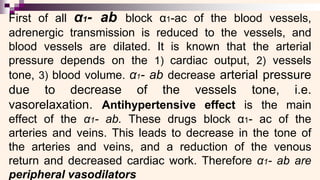
First of all α1- ab block α1-ac of the blood vessels,
adrenergic transmission is reduced to the vessels, and
blood vessels are dilated. It is known that the arterial
pressure depends on the 1) cardiac output, 2) vessels
tone, 3) blood volume. α1- ab decrease arterial pressure
due to decrease of the vessels tone, i.e.
vasorelaxation. Antihypertensive effect is the main
effect of the α1- ab. These drugs block α1- ac of the
arteries and veins. This leads to decrease in the tone of
the arteries and veins, and a reduction of the venous
return and decreased cardiac work. Therefore α1- ab are
peripheral vasodilators
Block of the α1-ac of smooth muscles of the prostate
gland, neck of the bladder and prostatic part of the urethra
causes a decrease of their tone. It leads to an increase in
urine flow rate and to a general improvement of its outflow
from the bladder in patients with benign hyperplasia of the
prostate gland (prostate gland adenoma).
Indications for use
1. Arterial hypertension
2. Heart failure (due to a decrease of the venous return
to the heart and to reduce its work).
3. Benign hyperplasia of the prostate gland (prostate
gland adenoma)
Side effects
1. General weakness
2. Tachycardia
3. Orthostatic collapse (due to disturb of reflex
regulation of vascular tone)
4. Diarrhea (the motility of the GIT is increased)
α1,2- ab decrease arterial pressure less than α1- ab
because these drugs block both post (α1)- and
presynaptic (α2)-ac. Block of presynaptic a2-ac impairs
physiologic autoregulation of the release of NE.
Negative feedback is disturbed and, consequently,
excessive release of NE ensues, leading to a
recovery of the adrenergic transmission. Marked
tachycardia is also the result of the increased NE
release.
Indications for use
The most important effect of α1,2-ab is the dilation of the
peripheral vessels. They are mainly used
◼ to treat various disorders of peripheral blood circulation
(endarteritis, Raynaud's disease, other), including shock
(hemorrhagic, cardiogenic), with spasm of arterioles.
◼ at the pheochromocytoma
Pheochromocytoma (tumor of the adrenal medulla) produces
large amounts of epinephrine, which leads to substantial
increase of the arterial pressure.
Side effects
1. Tachycardia
2. Dizziness
3. Motility of the GIT and secretion of the gastric glands
increase.
β-ab block β1- and β2-ac of the heart, vessels,
bronchi, gastrointestinal tract, etc. and decrease
adrenergic transmission to effectors.
Pharmacodynamics
β-ab block β1-ac of the heart, due to the myocardial
automatism, excitability, atrioventricular conduction,
heart rate and force of cardiac contractions are
reduced. The consumption of oxygen by
myocardium is decreased.
Main effects of β-ab
1. Antihypertensive effect is associated with block of
β1-ac of the heart and force of cardiac contractions is
reduced, due to which cardiac output is decreased.
General peripheral vascular resistance increases at first
(in response to a decrease of cardiac output), and then it
decreases (at the systematic use of β-ab). β-ab supress
presynaptic β2-ac (they eliminate their stimulating effect
on NE release), they also reduce renin release due to
β1-ac block of the juxtaglomerular cells of the kidneys
(renin promotes vasoconstriction).
2. Antianginal effect (they reduce the consumption
of oxygen by myocardium) is associated with the
blockade of cardiac β1-ac and the elimination of
adrenergic influences. It leads to reduction of cardiac
contraction rate and intensity. The cardiac workload
decreases, and this is followed by a decrease in
myocardial oxygen demand.
3. Antiarrythmic effect is associated with the
decrease of the excitability and automatism of
cardiac cells, suppress conduction of the
atrioventricular node.
β-ab are antagonists of epinephrine by its
hyperglycaemic and lipolytic action.
Indications for use
β-ab are used
◼ for the treatment of arterial hypertension,
◼ for the treatment of ischemic heart disease (IHD) (or
coronary heart disease (CHD),
◼ for the treatment of arrhythmias,
◼ for the treatment of tachycardia of various etiologies
Side effects
1.Bradycardia
2. Atrioventricular block
3. Decreased myocardial contractility and worsening of
pre-existing heart failure in patients with chronic heart failure
4. Increase in peripheral vessel tone (may be feeling of
coldness in the extremities)
5. Bronchospasm (especially in patients with bronchial asthma)
6. Weakness, inhibition of motor and mental reactions due to
the decrease of adrenergic background of CNS
7. Decreased libido and potency
There are compounds that mainly block β1-ac (cardioselective
medications). They have an insignificant effect on the β2-ac of
the bronchi, vessels and other effectors, therefore they have
less side effects.
α,ß–ab block β1-ac of the heart and eliminate of adrenergic
influences. It leads to decrease of cardiac output.
Also α,ß–ab block α1-ac of the blood vessels, adrenergic
transmission is reduced to the vessels, and blood vessels are
dilated. Therefore α,ß–ab decrease arterial pressure and are
used for the treatment of arterial hypertension.
Sympatholytics (SL) impair transmission on the level of
the adrenergic fibers ends, i.e. they act presynaptically.
Affecting the adrenergic fibers ends, these drugs reduce the
amount of NE, released in response to nerve impulses.
Mechanism of action of various sympatholytics is different.
Guanethidine prevents NE reuptake by the fibers ends, since it
itself undergoes neuronal uptake by the same transport
systems as NE. This leads to a significant inactivation of free
NE, present in the cytoplasm, by MAO.
Reserpine impairs the process of NE storage in the vesicles,
which leads to a reduction in its concentration in the
adrenergic fibers ends.
Main effect of the sympatholytics is antihypertensive
effect.
It occurs after long-term drugs administration is associated
with a reduction in cardiac output, as well as with a
decrease of peripheral vascular resistance.
Besides, sympatholytics cause myosis (due to α1-ac block
of the radial muscle of iris) and a decrease in intraocular
pressure (production of the intraocular fluid is decreased).
Indications for use
Arterial hypertension
Sometimes guanethidine is administered for glaucoma
Side effects
The inhibition of the adrenergic innervation leads to the
predominance of the cholinergic effects. It is manifested by
◼ bradycardia,
◼ an increase in the secretory and motor activity of the GIT
Moreover, may be
◼ orthostatic hypotension (can occur with guanethidine
administration)
◼ swelling of the mucous membrane of the nose
◼ drowsiness and general weakness, depressive conditions,
inhibition of motor and mental reactions due to the decrease
of adrenergic background of CNS
GENERAL ANESTHETICS
The drugs from this group are used for surgical anesthesia. This state is
characterized by the reversible inhibition of the CNS functions, including loss of
consciousness, inhibition of sensitivity (first of all pain sensitivity) and reflex
reactions and the reduction of skeletal muscle tone.
The main effects of general anesthetics are caused by the inhibition of the
interneuronal (synaptic) transmission in the CNS. The transmission of afferent
impulses, cortico- subcortical interrelations, functions of the diencephalon,
midbrain, spinal cord, etc. are impaired. The functional disintegration of the CNS,
associated with the impairment of the synaptic transmission, determines the
development of general anesthesia.
One of the possible manifestations of the interaction between general
anesthetics and the postsynaptic neuronal membrane is the change in permeability
of the ion channels, which impairs the depolarization process and, hence, the
interneuronal transmission.
Synapses of different levels of the CNS and of various morphofunctional
organizations have unequal sensitivity to general anesthetics. This explains the
presence of certain stages in their action.
There are the following stages:
 Stage I — analgesic effect;
 Stage II — excitatory stage;
 Stage III — surgical anesthesia;
◊ Plane 1 (III,) — surface anesthesia,
◊ Plane 2 (III2) — light anesthesia,
◊ Plane 3 (IIIj) — deep anesthesia,
◊ Plane 4 (III4) — extra-deep anesthesia;
 Stage IV — Awakening.
Classification
General anesthetics are subdivided into the following groups.
 I. Inhalation anesthetics
◊ Liquid volatile drugs
 Halothane (phthorothanum)
 Isoflurane
 Enflurane
 Diethyl ether
◊ Gaseous drugs
 Nitrous oxide
 II. Noninhalation (intravenous) anesthetics
 Propanidid
 Propofol
 Thiopental
 Hexobarbital (hexenal)
 Sodium hydroxybutyrate
 Ketamine
Drugs for intravenous anesthesia (noninhalation medications) can be
represented in groups according to the duration of their action:
 Short action (anesthesia duration is 15 min):
 Propanidid
 Propofol
 Ketamine
 Medium action (anesthesia duration is 20—30 min):
 Thiopental
 Hexobarbital (hexenal)
 Long term action (anesthesia duration is 60 min and more):
 Sodium hydroxybutyrate.
Anesthesia must start quickly and, if possible, without an excitatory stage.
It is important to have a good control over the depth of anesthesia in the
process of administration of anesthetics.
Margin of safety is an important characteristic of these drugs and is
determined as the difference between the concentration, in which the drug causes
anesthesia, and its minimal toxic concentration, in which inhibition of the vital
centers of the medulla oblongata occurs.
DRUGS FOR INHALATION ANESTHESIA
After inhalation the anesthetic diffuses from the lungs into the blood. The
drug absorption depends on its concentration in the inhaled air, the volume and
frequency of breathing, surface area and permeability of the alveoli, solubility of
the anesthetic in the blood and pulmonary blood circulation rate.
Drugs for inhalation anesthesia unlike noninhalation anesthetics cause well
controlled anesthesia, but noninhalation anesthetics cause anesthesia without an
excitatory stage. Therefore, noninhalation anesthetics are used for initial
anesthesia.
Some inhalation anesthetics increase the sensitive of myocardium to
catecholamines (except diethyl ether, nitrous oxide, isoflurane). This fact is a
prerequisite for the development of arrhythmias. Therefore, if the arterial pressure
is significantly decreased, mesatonum (α1-adrenomimetic) is used for the treatment
of acute vascular weakness but catecholamines do not administered.
β-adrenoblockers can used for decrease of cardiac sensitive to catecholamines
before general anesthetic administration.
With diethyl ether administration the anesthesia stages are distinctly
notable.
The analgesic stage is characterized by the inhibition of pain sensitivity. It
can be associated with the inhibition of the interneuronal transmission in the
afferent pathways and with the decrease of functional activity of the cortical
neurons. Consciousness is retained but orientation is impaired. Amnesia typically
develops.
A long stage of excitation (up to 10—20 min) is characteristic of diethyl
ether anesthesia. It complicates induction of the anesthesia substantially. The
excitatory stage is explained by the increase in the activity of the subcortical
structures (mainly of the midbrain). It is associated with the inhibition of the cortex
and switching off of the control mechanisms responsible for the lower centers.
Consciousness is lost. Motor and speech excitation is observed. The pupils are
dilated (diethyl ether stimulates epinephrine release from the adrenal medulla at the
stage of excitation; the epinephrine stimulates α1-ac of the iris radial muscle and it
contracts). As a rule, respiration becomes more frequent. Tachycardia is marked
(only at diethyl ether anesthesia). Arterial pressure fluctuates. Spinal reflexes are
increased.
In the surgical stage of anesthesia further inhibition of synaptic transmission
both in the brain and on the level of the spinal cord occurs. Consciousness is
switched off. Pain sensitivity is absent. Reflex activity is inhibited. Pupils are
constricted. At stage III, the pulse is slow (compared with stage II), arterial
pressure is stabilized and respiration becomes regular.
Awakening after the diethyl ether anesthesia, which is eliminated by the
lungs in an unchanged form, occurs gradually.
Side effects of general anesthetics (at different stages)
In the 1st
stage (analgesic stage) reflex bradycardia and reflex cardiac arrest,
reflex bradypnoe can occur. These side effects are associated with reflex increase
in a nerve vagus tone.
In the 2nd
stage (excitation stage) reflex bradycardia and reflex cardiac arrest,
cough, hypersecretion of bronchial and salivary glands, and when inhalation
anesthetic gets into the stomach with saliva — vomiting can occur. These side
effects are associated with reflex increase in a nerve vagus tone also.
For the prevention of these side effects in 1st
and 2nd
stages of anesthesia the
M-cholinoblockers are used, for example atropine sulfas, which blocks M-
cholinoceptors of the heart, bronchi, exocrine glands and decreases the influences
of nerve vagus to the effector organs.
In the 3rd
stage (surgical stage of anesthesia) the side effects have toxic
genesis i.e. are associated with overdose. The acute vascular weakness with arterial
hypotension, heart failure and cardiac arrest, cardiac arrhythmias can occur.
Respiration is gradually depressed. In this case the general anesthetics are
canceled. Mesatonum is used at the acute vascular weakness, cardiac glycosides
are used for the treatment of heart failure, antiarrhythmic drugs are administered in
arrhythmias.
Types of anesthesia
Initial anesthesia (by noninhalation medications), basic anesthesia (must be
well controlled, so inhalation drug is used), combined anesthesia (initial+ basic
anesthesia), mixed anesthesia (two inhalation drugs are used together), basis
anesthesia (at first the basis is created by sodium hydroxybutyrate, then basic
anesthetic is used), potentiated anesthesia (enhanced anesthesia by other
medications, which depress the CNS (hypnotics, narcotic analgesics etc.).
ETHYL ALCOHOL is a typical drug possessing a general (non- selective)
depressant effect on the CNS. Besides, it has a marked antiseptic action, if it is
used locally.
It has inhibitory CNS action that is proportionate to the increase of ethyl
alcohol concentration in the blood and in the brain. CNS inhibition has three main
stages: 1) excitatory stage; 2) anesthetic stage; 3) medullary depression stage.
The excitatory stage is the result of suppression of the inhibitory
mechanisms in the brain. Usually it is prominent and prolonged. Euphoria occurs,
mood is improved, and the individual becomes excessively communicative and
talkative. At the same time psychomotor reactions, the individual’s behavior, self-
control, adequate evaluation of the surrounding situation and working capacity are
impaired.
A further increase of the blood concentration of ethyl alcohol leads to
analgesia, drowsiness and subsequent impairment of consciousness. Next the
anesthetic stage sets in, but it is not long and soon progresses into the agonal stage.
Ethyl alcohol has a marked effect on the digestive system. It intensifies
secretory activity of the salivary and stomach glands. It has to be considered that
ethyl alcohol intensifies the secretion of hydrochloric acid. Above 20%
concentration, ethyl alcohol inhibits not only the secretion of hydrochloric acid but
also digestive activity of the gastric juice.
After long-term intake of ethyl alcohol, tolerance and drug dependence
(psychological and physical) develop.
Alcohol intake can lead to acute poisoning, the degree of which depends on
the ethyl alcohol concentration in the blood.
When treating alcoholic coma, the first task is to establish adequate
respiration. The oral cavity and the upper respiratory tract are cleansed. To reduce
the secretion of the salivary and bronchial glands atropine is injected. Inhaled
oxygen is used. If necessary, artificial ventilation of the lungs is performed. The
introduction of analeptics (caffeine, cordiamine and other) is advisable.
Symptomatic therapy of hemodynamic disorders is performed. The stomach should
be lavaged. Also, correction of the acid-base balance is necessary (sodium
hydrocarbonate is administered intravenously). If the patient’s condition is severe,
hemodialysis is carried out.
Chronic poisoning with ethyl alcohol (alcoholism) is characterized by
various symptoms. Cognition and higher cortical functions suffer the most. Mental
performance, attention and memory decrease. Mental disorders can occur. The
peripheral nervous system is also affected (polyneuritis can occur).
Serious disorders of visceral organs can occur. For example, alcoholism is
associated with chronic gastritis, hepatic cirrhosis.
The main task for the treatment of alcoholism is discontinuation of ethyl
alcohol intake and the building of a negative attitude to it.
One of the drugs, used in the treatment of alcoholism, is disulfiram
(antabuse, teturamum).
Disulfiram is administered in combination with small amounts of ethyl
alcohol. The mechanism of action of disulfiram is based on producing a delay in
ethyl alcohol oxidation on the level of acetaldehyde (it probably inhibits aldehyde
dehydrogenase). The accumulation of the latter in the body causes intoxication.
They are fear, pain in the heart, headache, hypotension, profuse sweating, nausea
and vomiting.
The course of disulfiram treatment builds up a negative reflex reaction to
ethyl alcohol in the patient.
DRUGS AFFECTING THE CNS
HYPNOTICS
ANTIEPILEPTIC DRUGS
ANTIPARKINSONIAN DRUGS
Associate professor of pharmacology chair
PhD, MD, Semenova Elena
 Sleep is a naturally recurring state of mind characterized by altered
consciousness, relatively inhibited sensory activity, inhibition of
nearly all voluntary muscles, and reduced interactions with
surroundings
 In contrast to coma and general anesthesia (narcosis) it is the state
from which a person can be easly aroused by sensory or other
stimuli.
 Sleep is an active process, in which the function of the hypnogenic
system is increased, and the function of the arousal system is
decreased.
 Hypnogenic system: A number of stuctures of the thalamus,
hypothalamus and caudal compartments of the descending
reticular formation.
 Arousal system: activating ascending reticular formation - posterial
part of the reticular formation (RAS - reticular activating system).
HYPNOTICS
physiology of sleep
Sleep structure
During the sleep there are several cycles of:
1) «slow» sleep (orthodox, non-REM-sleep) 80—75% of total
sleep time. «Slow» sleep is subdivided into 4 phases from
very deep to very light sleep.
2) «fast» sleep (paradoxical, REM- sleep - rapid eye
movements sleep or dreams REMembered) - 20—25% of
total sleep time.
HYPNOTICS
physiology of sleep
 is a sleep disorder where people have trouble sleeping.
Symptoms: trouble sleeping, daytime sleepiness, low energy,
irritability, depressed mood.
2 main types:
 Difficulty initiating sleep (children, young patients)
 Difficulty maintaining sleep characterized by frequent awakenings
or problems returning to sleep after awakenings (old patients)
Causes:
1. Stress
2. Deficit of physical activity in day time
3. Pain
4. Poor sleep hygiene
5. Use of psychoactive drugs (caffeine, amphetamines and others).
6. Withdrawal from alcohol, sedatives, opioids.
7. Different psychosomatic diseases etc.
Insomnia
1) Sleep hygiene
2) identification and treatment of medical conditions that may be
contributing to insomnia, such as depression, breathing problems, and
chronic pain and others
3) Hypnotics are used only if it is indeed necessary (we did not
identify the cause or can not cure it fast).
Sleep hygiene refers to actions that tend to improve and maintain
good sleep:
1. Get tired during the day
2. Get regular (Going to sleep and waking up at the same time
every day)
3. Restrict stimulants before bedtime (Avoidance of vigorous exercise
and any caffeinated drinks a few hours before going to sleep is
recommended, while exercise earlier in the day is beneficial. The bedroom
should be cool and dark, and the bed should only be used for sleep)
4. Clear your mind Scarlett O'Hara (Gone with the Wind): “I will not think on this
today I will think on it tomorrow”
Insomnia
Main principals of treatment
 Hypnotics facilitate falling asleep and provide necessary sleep duration
I. Hypnotic drugs — agonists of benzodiazepine receptors
1) Benzodiazepine derivatives
Nitrazepam, Lorazepam, Nozepam,Temazepam, Diazepam, Phenazepamum,
Flurazepam
2) Drugs of different chemical structure («nonbenzodiazepine» compounds)
Zolpidem, Zopiclone, Zoleplon
II. Hypnotic drugs — non-selective CNS depressants
1) Derivatives of barbituric acid (barbiturates)
Phenobarbitalum, Pentobarbital (ethaminal)
2) Aliphatic compounds
Chloral hydrate
III. Other drugs with hypnotic effect
1) blockers of histamine H1-receptors (diphenhydramine)
2) general anesthetics effective after oral administration (sodium hydroxybutyrate)
3) epiphysial hormone melatonin
HYPNOTICS
Classification
1. hypnotic (in medium doses)
2. sedative (In low doses) (therefor they can be used for the potentiation
of the analgesic, anesthetic, spasmolytic effects)
3. anesthetic (in high doses) (They are not used for general anesthesia
due to their narrow margin of safety and long-term action that make it
impossible to control the depth of the general anesthesia)
4. Phenobarbital is used also as antiepileptic drug
5. Benzodiazepine derivatives is used as anticonvulsant drugs not only for
treatment epilepsy.
HYPNOTICS
Effects
 All barbiturates are derivatives of barbituric acid.
 They are now mainly of historical interest because they have
been changed by more selective and safe compounds.
 Barbiturates are among the oldest psychiatric drugs and the
first of them, barbitone (Veronal), was introduced to
medicine in 1903.
 From then until the mid 1960s they were the most popular
antianxiety drugs and hypnotics used in psychiatry.
Barbiturates
History
Barbiturates
MECHANISMS OF ACTION
Main:
Barbiturates interact with the barbiturate site of
GABAA- B-B complex and increase GABA affinity to
GABAA-receptors in the RAS (reticular activating system).
This leads to a prolonged opening of the channels for
chloride ions, that causes hyperpolarization of cell
membrane and leads to generate inhibitory
postsynaptic potential. As result GABA inhibitory
action on the brain increases.
Barbiturates are also have GABA-mimetic action.
In the neuronal
membrane there is GABAA-
benzodiazepine-barbiturate
(GABA-B-B) receptor
complex which connected
with the chloride ions
channels.
 Only one drug from the group of barbiturates, that now,
but very rarely, is being used as hypnotic.
 It stimulates the activity of the liver microsomal enzymes
concerned with their metabolism. This phenomenon is
called 'enzyme induction'. It leads to:
1) the development of tolerance in that a greater drug dose is
required to produce the same plasma level (and clinical effect)
2) important drug interactions
 Repeated administration leads to cumulation.
Phenobarbital
1. Stress, hypertension - as sedatives in low doses (in combination
with other sedatives)
2. Insomnia – as hypnotics, for the short-term treatment of
insomnia, since they appear to lose their effectiveness for sleep
induction and sleep maintenance after 2 weeks.
3. Preanesthetics (premedication)
4. Long-term anticonvulsants for the treatment of generalized
tonic-clonic and cortical local seizures. And, in the emergency
control of certain acute convulsive episodes, e.g., those
associated with status epilepticus, eclampsia and toxic reactions
to strychnine or local anesthetics.
5. As enzyme inductor for the treatment of neonatal
jaundice or neonatal hyperbilirubinemia .
Phenobarbital
Indications for use
1. An after-effect, which can affect their professional activity due
with cumulation and long time of action (t1/2 – 72 h)
2. Drug interactions with other drugs and ethyl alcohol
3. Tolerance
4. Drug dependence
5. A disturbance of the ratio of sleep phases (a deficiency of the
«fast» sleep phase) – low quality of sleep.
6. «Rebound» syndrome (and in physical drug dependence —
withdrawal syndrome after rapid discontinuation of these drug) it
is accompanied by abundant dreams, nightmares and frequent awakenings.
7. Low specificity to hypnogenic system ( it also depresses activity in other
parts of the CNS, and this becomes dangerous when it affects the
cardiorespiratory and vasomotor centres).
8. Low TI (therapeutic index).
Phenobarbital
Problems
 The benzodiazepine era was well established by 1963.
Benzodiazepines differ from barbiturates:
1. less reduce the «fast» sleep phase - better quality of sleep
2. less an after-effect (especially short-acting)
3. less drug interactions
4. can reduce anxiety without significant impairment of
consciousness because they have selective effects in the limbic
system.
5. Higher value of TI – less dangerous.
6. Have specific antagonist – Flumazenil , that can be used for the
treatment of acute benzodiazepine poisoning.
Their basic action is to eliminate psychological anxiety. The resulting
sedation promotes the development of sleep.
BENZODIAZEPINE RECEPTOR
AGONISTS
 Similarly to barbiturates benzodiazepines due to the allosteric
interaction with their receptors, increase the affinity of
GABAto GABAa-receptors and intensify the inhibitory action of
GABA especially in the lymbyc system.
 Chloride ionophores open more frequently.
 Passage of chloride ions into the neurons is increased, leading
to an increase in the inhibitory postsynaptic potential.
Benzodiazepine
derivatives
Mechanism of action
1. Sedative
2. Anxiolytic
3. Hypnotic
This effects are mainly associated with their inhibitory effect on the limbic
system (hippocampus) and, to a lesser extent, on the reticular activating
systems and the cerebral cortex.
4. Muscle-relaxing action is provided by inhibition of the
polysynaptic spinal reflexes.
5. Anticonvulsant (antiepileptic) action
The mechanism of anticonvulsant (antiepileptic) action is the result of the
activation of the inhibitory processes of the brain, limiting the spread of the
pathologic impulses.
Benzodiazepine derivatives
Effects
 The longer effect of the drug - the higher the
possibility of after-effects that include day-time
sedation, slowing down of motor reactions and
memory impairments.
 Repeated administration leads to cumulation of the
drug; this directly depends on the duration of the
effect.
 «Rebound» phenomenon is more typical for short-
acting benzodiazepines. To avoid this complication
benzodiazepines should be gradually discontinued.
 tolerance and drug dependence
Benzodiazepine derivatives
Problems
 Zolpidem and zopiclone are the non-benzodiazepine
hypnotics that have the affinity to benzodiazepine receptors.
 The mechanism of action is similar to benzodiazepines.
 Zolpidem and zopiclone have a slight effect on the sleep
structure and therefore a «Rebound» phenomenon is slight
too.
 Long duration of treatment (more than 4 weeks) may lead to
the development of tolerance and drug dependence.
NON-BENZODIAZEPINE HYPNOTICS
 Antiepileptic drugs are administered to prevent or
decrease (in intensity and frequency) epileptic
seizures or their equivalents (loss or impairment of
consciousness, behavioral and autonomic disorders
and others).
The certain mechanism of action of the antiepileptic drugs is unknown.
Possible mechanism of action:
1) reduction in neuronal excitability in the epileptogenic
focus through different mechanisms
1) blocking the conduction of pathological impulse
ANTIEPILEPTIC DRUGS
Classification of antiepileptic drugs,
based on epilepsy forms they are used for:
I. Generalized forms of epilepsy
1) Grand mal seizures (tonic-clonic seizures)
Sodium valproate, Carbamazepine, Lamotrigine, Phenytoin,
Phenobarbital
2) Status epilepticus
Diazepam, Lorazepam, Clonazepam, Sodium phenobarbital, Sodium
phenytoin, General anesthetics
3) Petit mal seizures (absense epilepsia)
Ethosuximide, Sodium valproate, Clonazepam, Lamotrigine
3) Myoclonic epilepsy
Sodium valproate, Clonazepam, Lamotrigine
II. Focal (partial) forms of epilepsy
Carbamazepine, Sodium valproate, Phenytoin, Lamotrigine,
Phenobarbital, Clonazepam,Topiramate
Classification of antiepileptic drugs,
based on their mechanism of action
I. Sodium channel blockers
Phenytoin, Carbamazepine, Lamotrigine, Sodium valproate, Topiramate
II. Calcium channel blockers
Ethosuximide Trimethadione, Sodium valproate
III. Drugs activating GABA-ergic system
1. Drugs increasing affinity of GABA to GABAА-receptors
Benzodiazepines (diazepam, lorazepam, clonazepam), Phenobarbital,Topiramate
2. Drugs promoting GABA production and preventing its inactivation
Sodium valproate
3. Drugs preventing GABA inactivation
Vigabatrin
4. Drugs blocking neuronal and glial uptake of GABA
Tiagabine
IV. Drugs decreasing glutamatergic activity
1. Drugs reducing glutamate release from the presynaptic endings
Lamotrigine
2. Drugs blocking glutamate (AMPA) receptors
Topiramate
I. Drugs suppressing CNS and therefor suppressing
the generation of pathological impulse
1)General anesthetics
a)Inhalation anesthetics
Nitrous oxide
b)Non-inhalation anesthetics
Sodium oxybutyrate
2) Chloral hydrate administered rectally
3) Magnesium (Magnesium sulfate) IM
II.Central acting muscle relaxants
BENZODIAZEPINES: Diazepam, Lorazepam, Midazolam
III.Peripheral acting muscle relaxants
Dythyllin (only in the state of Artificial ventilation of lung)
Drugs for treatment of the
convulsive attack
I
II
III
 The main problem in Parkinson’s disease is the imbalance between dopaminergic system at the one side and
glutamatergic & cholinergic systems at the other side.
 In Parkinson’s disease in the substantia nigra neurons there is a decreased level of dopamine that is supposed to have
an inhibitory effect on the neostriatum.
 On this background the stimulating effects of glutamatergic & cholinergic neurons on motoneurons of the spinal
cord are prevailing.
 This leads to motor and mental functions disorder, including rigidity (significantly increased muscle tone), tremor
(continuous involuntary trembling) and hypokinesia (decreased movement).
D Ch Glu
D
Parkinson’s disease
Ch Glu
ANTIPARKINSONIAN DRUGS
Normal state
 For the restoring the dynamic balance between these systems we can
 1) to eliminate dopamine deficiency,
 2) to decrease the activity of glutamatergic & cholinergic systems.
According to this there are 3 groups of antiparkinsonian drugs:
I. Drugs activating dopaminergic effects
1) Dopamine precursors Levodopa
2) Drugs stimulating dopamine receptors (dopaminomimetics)
Bromocriptine
3) Monoamine oxidase В inhibitors Selegiline
II. Drugs inhibiting glutamatergic effects Amantadine
III. Drugs inhibiting cholinergic effects Trihexyphenidyl
ANTIPARKINSONIAN DRUGS
NARCOTIC (OPIOID)
ANALGESICS
Associate professor of pharmacology chair
PhD, MD, Semenova Elena
 Analgesics are drugs that selectively inhibit pain sensitivity.
 They do not affect consciousness and do not inhibit other types
of sensitivity.
I. Drugs of mainly central action
 1) Opioid (narcotic) analgesics
 2) Non-opioid analgesics
 paraaminophenol derivatives
 drugs from different pharmacological groups with
analgesic component of action
II. Drugs of mainly peripheral action
 Non-opioid (non-narcotic) analgesics (derivatives of salicylic
acid, pyrazolone, other)
ANALGESICS
Classification
Differences between opioid and non-opioid analgesics
NarcoticAnalgesics Non-NarcoticAnalgesics
1. Act centrally 1. Act peripherally
2. More potent analgesic effect, relieve or
reduce pain any etiology and localization
including severe pain
2. Less potent analgesic effect,
reduce mainly inflammatory pain
(toothache, headache, pain in
muscles, joints etc)
3. Euphoria, addiction, dependence, tolerance,
withdrawal syndrome
3. Not habit-forming
4. There are specific antagonists, which
attenuate the effect of overdose
4. There are not specific
antagonists
5. Schedule II/III controlled drugs 5. Not controlled drugs
6. Notable adverse effects: sedation,
respiratory depression, constipation
6. Notable adverse effects: gastric
irritation, bleeding problems,
renal toxicity
7. No anti-inflammatory effect
7. Anti-inflammatoryand anti-
pyretic effects (some groups)
 Pain is a distressing feeling often caused by intense or
damaging stimuli (after injuries to the skin, mucous membranes,
ligaments, muscles, joints and visceral organs) and can be due with:
Organic disorders (including neuropathic pain,
associated with direct injury of peripheral nerves)
Psychogenic disorders
 Pain can be the signal of disorders, but it also the important
symptom, which influence on the patient’s life quality and
should be treated.
Pain
Pain
Physiology
 Nociceptive system :
 1) «nociceptors» (on the endings of afferent fiber arborisation in the skin, muscles,
joint capsules, periosteum, visceralorgans, etc.); nociceptive stimuli can be
mechanical, thermal and chemical.
 2) afferent nerves –
 I. the posterior horn of the spinal cord - synapse - interneurons
– ascending afferent tracts –
3) higher CNS centers - reticular formation, thalamus, hypothalamus,
basal ganglia, limbic system and cerebral cortex leads to a perception and
assessment of pain followed by behavioural and autonomic reactions
 II. the anterior horn of the spinal cord to the motoneurons,
which is manifested by the motor reflex
 III. lateral horn neurons, leading to the activation of the adrenergic
(sympathetic)innervation.
ANTINOCICEPTIVE SYSTEM
 disrupts the transmission of nociceptive information.
Pain stimuli get to medulla gray matter located around the
cerebral aqueduct (periaqueductal grey matter-PAG) that leads to
activation antinociceptive system (endorphin-releasing neurons)
than goes through 2 ways:
1)descending - to the dorsal horn to disrupt the transmission of
nociceptive information from afferent fibers to interneurons
2)ascending – to the ascending reticular formation – thalamus –
hypothalamus – limbic system and cortex - it is inhibits vegetative
and emotional reactions.
The endorphins (endogenous opioids) may also produce a feeling
of euphoria (form of pleasure in which a person experiences
intense feelings of well-being, happiness, and excitement)
Type Endogenous
ligands
Effects
µ
(mu) Endomorphines
Analgesia, sedative effect, euphoria,
physical dependence, depression of
respiration, reduction of the GIT motility,
bradycardia, miosis
δ
(delta) Enkephalines
Analgesia, depression of respiration,
reduction of the GIT motility
κ
(kappa)
Dynorphins Analgesia, sedative effect, dysphoria,
miosis, slight reduction of the GIT motility,
physical dependence is possible
Types of opioid receptors
DRUGS AFFECTING OPIOID RECEPTORS
Classification
1. AGONISTS(activate all opioidreceptors)
Natural:
 Morphine, codein,omnopon,heroin
Semi-synthetic or synthetic:
 Trimeperidine (promedolum),Hydromorphone, Fentanyl,
Sufentanil
2. AGONISTS-ANTAGONISTS(producesan agonist effect at one receptor
and an antagonist effect at another) AND PARTIAL AGONISTS
 Pentazocine,Nalbuphine, Butorphanol,Tramadol,
Loperamid
 Buprenorphine (PARTIAL AGONIST - has affinity for binding but low efficacy)
3. ANTAGONISTS(block all opioidreceptors)used to treat opioid
overdose cases
 Naloxone
 Naltrexone
Morphine – Prototype Drug
 Morphine – one of the 20 opium alkaloids,
that has analgesic activity.
 Opium – extract of the poppy plant —
papaver somniferum.
According to the chemical structure, some
alkaloids are
 1. phenanthren derivatives (morphine,
codeine), mostly cause CNS suppression
(analgesia, antitussive action), others
 2. isoquinolinederivatives (papaverine,
other) have a spasmolytic action on the
smooth muscles.
Main central effects of morphine
Inhibitory effects
1. Inhibition of pain
2. Sedative and hypnotic
effects
3. Inhibition of the
respiratory center
4. Inhibition of cough
center
5. Slight inhibition of the
thermoregulation center
6. Decrease in
gonadotropichormones
secretion
Stimulating effects
1. Euphoria (It is an affective state and a
form of pleasure in which a person
experiencesintense feelingsofwell-being,
happiness, regardlessof objective reality)
2. Activation of the oculomotor centers
(miosis)
3. Stimulation of the vagal centers ( HR)
4. Increase in prolactin and antidiuretic
hormone production
5. Stimulation of receptors of the
trigger zone of the vomiting center
(only 15% of patients, 85 % - opposite
effect – Inhibition of vomiting)
Main peripheral effects of morphine
Inhibitory effects
1. Inhibition of GIT motility
2. Inhibition of secretion
of the gastric glands,
pancreas and intestine
3. Mild inhibition of the
vasomotor center and
with histamine release -
Orthostatic hypotension
can develop
Stimulating effects
Increase in the tone of
the:
1. GIT sphincters
2. intestinal muscles
3. Oddi’s sphincter (increase in
the pressure in the gallbladder/
ducts and pancreaticduct)
4. bronchial muscles
5. ureters’ and bladder
sphincters
Morphine
Mechanism of analgesic action
It is not absolutely clear. However, there isevidence that suggeststhat its
effect is the result of the combination of the following 2 components:
1) inhibition of neurotransmission of pain stimuli in
the central part of the afferent pathway (especially -
direct inhibitory effect on interneuronal transmission in the dorsal
horns of the spinal cord)
2) impairment of subjective emotional perception of
pain, pain assessment and reaction to it (by the
inhibition effect on the cortical neurons, on the activating
ascending reticular formation of the brainstem, as well as on
the limbic system and hypothalamus).
Indications for use
1. As Analgesics for treatment
 Severe acute pain, associated with injuries, surgeries (Postoperativeanalgesia),
myocardial infarctionand analgesiaduring labor
 Severe chronicpain related to cancer(fentanyl transdermal systems)
2. For neuroleptanalgesia (It is a method of general analgesia by combined
administration of antipsychoticdrugs (neuroleptics), for example, droperidol, and
active opioid analgesics (fentanyl group)).
3. As antitussive for treatment dry cough (codein)
4. Adjunctive treatment of acute pulmonary edema (to decrease the
sensitiveness of respiratory center to carboxide)
5. For premedication before surgical interventions (Preoperative
sedation, potentiationthe effect of local and general anesthetics, for adjunct to
anesthesia).
6. For the treatment of non-infection diarrhea (loperamide)
Adverse reactions
CNS: sedation,somnolence,euphoria, seizures (with large
doses),dizziness,nightmares (with long-actingoral forms),
hallucinations.
CV: hypotension, bradycardia,shock,cardiac arrest.
GI: nausea, vomiting, constipation,dry mouth, biliary tract
spasms,anorexia.
GU: urine retention.
Hematologic:thrombocytopenia.
Respiratory:respiratorydepression,apnea,respiratory
arrest.
Skin: pruritus,skin flushing
Other: DEPENDENCE, Tolerance, decreased libido.
Adverse reactions
Drug dependence is the main side effect of narcotic
analgesics, which can develop after only several injections(for heroin
– after 1 -3 injects) and it is seriously restrict using this group of
medicines (that’swhy narcotics are controlled drugs).
Psychologicaldependenceis mainly associated with the ability
of the opioid analgesics to cause euphoria.
Physical (Physiological) dependence occurs when the drug is
necessary for normal physiological functioning – this is
demonstrated by the withdrawal reactions, it is associated with the
inhibition of production of endogenous endorphins due with the
getting the same outsight (from narcotic drugs). In situation of
acute withdrawal deficit of the endorphin effects appears.
Withdrawal reactions (abstinence; “jonesing”; “Cold Turkey” ) are
usually the opposite of the physiological effects produced by the
drug.
Withdrawal Reactions
Acute Action
1. Analgesia
2. Respiratory Depression
3. Euphoria
4. Relaxation and sleep
5. Tranquilization
6. Decreased blood pressure
7. Constipation
8. Pupillary constriction
9. Hypothermia
10. Drying of secretions
11. Reduced sex drive
12. Flushed and warm skin
Withdrawal sign
1. Pain and irritability
2. Hyperventilation
3. Dysphoria and depression
4. Restlessness and insomnia
5. Fearfulness and hostility
6. Increased blood pressure
7. Diarrhea
8. Pupillary dilation
9. Hyperthermia
10. Lacrimation, runny nose
11. Spontaneous ejaculation
12. Chilliness and “gooseflesh”
Book: A Young Doctor’s Notebook.Morphine
Mikhail Bulgakov
Song: Cold Turkey lyrics (John Lennon)
Tolerance
 Tolerance is a decreased responsiveness to the
drug’s action.
 Tolerance to narcotic analgesics can be demonstrated by a decreased
effect from a constant dose of drug or by an increase in the minimum drug
dose required to produce a given level of effect
 That’s why abuse patients always increase the dose
of narcotics which often leads to overdose and
unfortunately to lethal outcome from it.
 Mortality from the narcoticoverdose: in USA (2015) – 50 000 per year.
 in Russia - 7 000 per year.
Overdose and treatment
OVERDOSE
Two main symptoms:
1. respiratorydepression(lethal outcome may occur), with
or without CNS depression,
2. miosis (pinpoint pupils).
Other symptoms:
 hypotension, bradycardia, shock, circulatory collapse, pulmonary
edema
 hypothermia,
 apnea, cardiopulmonary arrest,
 seizures.
SPECIFIC TREATMENT: administer a narcotic antagonist (naloxone)
SYMPTOMATIC AND SUPPORTIVE TREATMENT: continued respiratory
support, correction of fluid or electrolyte imbalance.
Contraindications and precautions
 Contraindicated or Used cautiously in geriatric or
pediatric patients (risk of respiratory center
paralyze) and acute abdominal conditions
(change the clinical symptoms wich important
for diagnostics) etc.
Other narcotic analgesics
Codeine (methylmorphine) and analogs (Oxycodone and methadone ) less
potent than morphine (including less abuse potential) and can be administered
orally. Codeine is usually used for the treatment ofdry cough.
Promedolis around half the potency of morphine as an analgesic, less inhibits
the respiratory center and less stimulates n. vagus, has spasmolytic activity, but
increase the tonus and contractibilityof uterus, is used during the labor.
Fentanyl -80 times the analgesicpotency of morphine; high efficacy for mu 1
receptors.
Fentanyl analogues
Alfentanil (Alfenta), an ultra-short acting (5-10 minutes) analgesic
Sufentanil (Sufenta), a potent analgesic (5 to 10 times more
potent than fentanyl) for use in heart surgery
Remifentanil (Ultiva), currently the shortest acting opioid
Carfentanil (Wildnil) is an analogue of fentanylwith an analgesic
potency 10 000 times that of morphine and is used in veterinary
practice to immobilize large animals such as elephants
Non-narcotic analgesics
 Non-narcotic (non-opioid) analgesics are medications used to
control pain and inflammation.
The most popular non-narcotic analgesics are non-steroidal anti-inflammatory
drugs (NSAIDs). Some authors use it as synonym. But it is important to note that
not all non-narcotic analgesics have clinically significant anti-inflammatoryeffect.
1. Non-opioid analgesics are interesting mainly because of the need
for effective analgesics that do not cause drug dependence.
2. This group mainly releases pain only due with inflammation.
3. This group does not influence on the emotional component of
pain.
Non-narcotic analgesics usually produces 3 main effects:
1. Anti-inflammatory
2. Analgesic
3. Antipyretic
Non-narcotic analgesics
 NONSTEROIDAL ANTI-INFLAMMATORY DRUGS (NSAIDs)
I • Non-selective inhibitors of cyclooxygenase-1 and -2 (COX-1 + COX-2)
◊ Derivatives of salicylic (ortho-oxybenzoic) acid
✓ Acetylsalicylic acid
Derivatives of anthranilic (ortho-aminobenzoic) acid
✓ Mefenamic acid, Flufenamic acid
Derivatives of indolacetic acid
✓ Indomethacin, Ketorolak (less anti-inflam. action)
Derivatives of phenylacetic acid
✓ Diclofenac
Derivatives of phenylpropionic acid
✓ Ibuprofen
Derivatives of naphthylpropionic acid
✓ Naproxen
Classification of non-narcotic analgesics
NONSTEROIDAL ANTI-INFLAMMATORY DRUGS (NSAIDs)
II Preferential COX-2 inhibitors
Oxicams
✓ Pyroxicam, Lornoxicam, Meloxicam
Derivatives of sulfonanilids
✓ Nimesulide
III •Selective inhibitors of cyclooxygenase-2 (COX-2)
Coxibs
✓ Celecoxib, Rofecoxib, Parecoxib, Etoricoxib
Classification of non-narcotic analgesics (cont.)
OTHER NON-NARCOTIC ANALGESICS
IV. Analgesic-antipyretic with poor anti-inflammatoryeffect
Paraaminophenol derivatives
✓ Acetaminophen (Paracetamol)
Derivatives of pyrazolone
✓ Metamezole (Analgin)
Classification of non-narcotic analgesics (cont.)
Inflammation - a universal response to the influence of various
damaging factors.
Goals are:
 • eliminate the initial cause of cell injury
 • Remove necrotic cells and tissue
 • Initiate the process of repair
Also a potentially harmful process:
 Components of inflammation that are capable of destroying
microbes can also injury bystander normal tissue
It usually follows with the pain (one of the 5 signs of inflammation:
tumor (swelling), calor (heat), dolor (pain), rubor (redness), functio
laesa (loss of function))
Physiology of inflammatory process
 1) In alteration phase pathogens stimulates arachidonic acid (a
component of the phospholipids of cell membranes) the
releasing from tissue by the activation of phospholipase A2.
Then from arachidonic acid the enzyme cyclooxygenase (COX)
produces prostaglandins, prostacyclin and thromboxanes.
 2) These substances cause the local vasodilation – increased
capillary permeability, transudation, local blood stasis and
thrombosis – it is exudation phase.
 3) last phase – proliferation, when macrophages and
fibroblasts are activated, it leads to tissue degeneration and
fibrosis).
Physiology of inflammatory process
COX exists in the tissue as constitutive isoform (COX-1) – housekeeping role (GI protection, hemostasis regulation)
At site of inflammation, cytokines stim the induction of the 2nd isoform (COX-2).
Inhibition of COX-2 is thought to be due to the anti-inflammatory actions of NSAIDs.
Inhibition of COX-1 is responsible for their GIT toxicity.
In theory, therefore, drugs that can inhibit COX-II but not COX-I promise to provide an analgesic and anti-inflammatory
effects with a reduction of the organ toxicities associated with COX-I.
1. Mechanism of anti-inflammatoryeffect
Inhibition of PG synthesis in the inflammatory tissue leads to
decreasing vasodilation, transudation and alleviates such
manifestations of inflammation as hyperemia, edema, pain. NSAIDs
-also inhibit expression/activity of adhesion molecules,growth factors like GM- CSF, IL-6,and
lymphocytetransformation factors-affected;stabiliseleucocytes lysosomalmembrane,and
antagonizes certain actions of kinkins; decreasehyaluronidase activity – enzyme increasing
tissue permeability.
2. Mechanism of antipyretic effect
It is lined to the suppression of PG (esp. Pg E1) synthesis leading
to a decrease in their pyrogenic effect on the thermoregulating
center in the hypothalamus. It appears only in the presence of
fever.
Mechanism of action
NSAIDs inhibit the PG synthesis by COX-2, which participates in the
inflammatory process, increases pain sensitivity and body tº.
3. Mechanism of analgesic effect
1) PGs cause hyperalgesia (increase pain sensitivity of
nociceptors). Suppression of PG synthesis leads to decreasing of
nociceptors sensitivity and increasing of pain threshold.
2) Elimination of edema – decreasing in pressure on nerve
endings.
3) Some of drugs (paracetamol) has central way of action –
blocking the pain stimuli transmission in CNS by the inhibition of
PG synthesis in CNS.
1. Acute or chronic non-severe pain mainly inflammatory genesis (Pain
due to inflammation and tissue injury Low back pain, Headache,
Migraine, Postoperative pain, Muscle stiffness and pain due to
Parkinson's disease, Renal colic)
2. Osteoarthritis or rheumatoid arthritis, inflammatory arthropathies
3. Pyrexia (fever)
4. They are also given to neonate infants whose ductus arteriosus is not
closed within 24 hours of birth
5. Aspirin is used for the thrombosis prophylaxis in cerebrovascular or
cardiovascular disease. Because aspirin, the only NSAID able to
irreversibly inhibit COX-1, and therefor inhibits of platelet aggregation
by inhibiting the production of thromboxane A2 – important
proaggregation factor.
6. Butadion is used also for the treatment of gout (a form of inflammatory
arthritis that develops in some people who have high levels of uric acid in the blood).
Indications for use
1. Gastrointestinal ADRs (Gastric ulceration/bleeding, Nausea/vomiting,
Dyspepsia, Diarrhea)
2. ADRs associated with altered renal function (salt (sodium) and fluid
retention, hypertension , rarely - interstitial nephritis, nephrotic syndrome, acute
renal failure, acute tubular necrosis)
3. Allergy/allergy-like hypersensitivity reactions (urticarial skin eruptions,
angioedema, and anaphylaxis) (due to PG inhibition)
4. Aspirin-induced asthma
5. Bleeding (gastric and non-gastric) (aspirin)
6. Photosensitivity
7. Prolongation of gestation and inhibition of labor (PGs are involved in the
initiation and progression of labor and delivery)
8. Hepatotoxicity with overdoses (paracetamol, nimesulide)
9. Increased of cardiovascular risk - risk of myocardial infarction and stroke
(especially Coxibs)
10. Negative influence on joint structure (excluding meloxicam,
nimesulide and Coxibs + neutral - diclofenac)
Adverse effects of NSAIDs
 PGs (generated via COX-1) in the gastric mucosa help to maintain
mucosal blood flow and barrier function:
1) inhibit stomach acid secretion,
2) stimulate mucus and HCO3
- secretion, vasodilation and therefore,
3) are cytoprotective for the gastric mucosa.
 Therefore, NSAIDs with COX-1 inhibitory activity will produce opposite
effects.
 NSAIDs reduce the ability of the stomach to protect itself from its acid
contents. This can potentially cause:
 erosion, ulceration, blood loss and ultimately perforation.
 Gastric protective agents (mainly proton pump inhibitors such as
omeprazole) are therefore often co-prescribed with NSAIDs with the
aim of reducing the associated adverse effects of these drugs on the
gastrointestinal system.
Gastrointestinal AE
 Renal PGs, are involved in mediating blood flow and also in
sodium and water reabsorption within the kidneys.
 NSAIDs tend to promote Na+ retention due to the inhibition of
the renal PGs synthesis and can therefore increase BP. Can
counteract effects of many anti-hypertensives (diuretics, ACE
inhibitors and AR antagonists).
 Inhibition by NSAIDs can lead to renal toxicity, particularly in
dehydrated patients. NSAIDs (including COX-II inhibitors) can
reduce renal blood flow, glomerular filtration rates and urine
production.
 In extreme cases, increased plasma volume can induce
congestive cardiac failure, with pulmonary edema and
breathlessness.
Renal AE
• Platelets: Inhibition of platelet COX-1-derived TxA2 with the net
effect of increasing bleeding time (inhibition of platelet
aggregation)
• Endothelial COX-2 derived PGI2 can inhibit platelet aggregation
(inhibition augments aggregation by TxA2).
Aspirin irreversibly inhibits platelet COX for all lifetime of the
platelet (~8 -11 days). Effect achieved at very low dose (75-125
mg).
• Basis of therapeutic efficacy in strokeand MI (reduces mortality
and prevents recurrentevents).
• Atherosclerosis: Inhibition of COX-2 can destabilize
atherosclerotic plaques (due to its anti-inflammatory actions)
and it is increased risk of stroke and MI.
Cardiovascular effects
1. Anti-inflammatoryaction
Indomethacin> Diclofenac> Piroxicam> Naproxen > Butadion>
Ibuprofen > Metamizole> Acetylsalicylic acid
2. Analgesic action
Ketorolak > Diclofenac > Indomethacin> Metamizole> Piroxicam >
Naproxen > Ibuprofen > Butadion> Paracetamol > Acetylsalicylic acid
3. Antipyretic action
Diclofenac> Piroxicam> Metamizole> Indomethacin> Naproxen >
Ibuprofen > Butadion> Acetylsalicylic acid
Therapeutic potency
of some non-narcotic analgesics
Salicylates
Prototype drug - aspirin
 Acetylsalicylic acid (aspirin) is the most common used medicine today. It is
presented on the pharm market during 120 years!
 It primarily inhibits the enzyme cyclooxygenase (COX-1).
 Therapeutic Uses:
 1) As antipyretic, analgesic (325 – 500 mg)
 2) Anti-inflammatory: rheumatic fever, rheumatoid arthritis. High dose needed (5-8
g/day). But many pts cannot tolerate these doses (GIT); so, proprionic acid derivatives,
ibuprofen, naproxen tried first.
 3) thrombosis prophylaxisof diseases due to platelet aggregation (CAD, post-op
DVT) (75-150 mg)
Advers effects:
1) Increasing risk of bleeding
2) Gastric AE- nausea, vomiting , Gastric mucosal damage, peptic ulceration
3) Reye's syndrome (acute noninflammatory hepatic encephalopathy and fatty
degenerative liver failure. Death occurs in 20-40% pts. About 90% of cases are
associated with aspirin use in children. Aspirin is not generally recommended in
children with fever because of that).
4) Aspirin triad (asthma, rhinitis, rash) is a type of NSAID-induced hypersensitivity
syndrome. 3
 Paracetamol(acetaminophen,panadol, tylenol,
efferalgan) is non-opioid analgesicsof central action.
Paracetamol is contained in a lot of combination drugs (coldrex,
solpadeine, panadeine, citramonum P, etc.) including those for the pediatric use.
 It inhibits PG synthesis in the CNSby the inhibition of COX-3.This
explains its antipyretic and analgesic properties. Acetaminophen has
less effecton COX-1 and COX-2in peripheral tissues,which explains
the absence of clinically relevant anti-inflammatory activity.
 Adverse Effects:
1. Hepatotoxicity
 Can occur after the ingestion of a single toxic dose(20-25g) or after
long term use of therapeutic doses.
 Children are at high risk for hepatotoxicity because they are often
given dosesthat are not age- and weight-appropriate.
 Chronic large dosesof alcohol can increase the risk for
hepatotoxicity.
2. Nephrotoxicity (It has been associated with long-term use).
Paracetamol
(paraaminophenol derivative)
 Metamizole (dipyrone, analgen) strong analgesic and antipyretic with
minimal anti-inflammatory effects. In very rarely cases it can cause
agranulocytosis which may lead to a fatal outcome. In some countries it
is not available now. In Russia it is popular over-the-counter analgesic.
 Ibuprofen (Nurofen®) The analgesic, antipyretic and antiinflammatory efficacy
is rated somewhat lower than high dose of aspirin. In lower doses (< 2.4
g/d) it has analgesic but not antiinflammatory efficacy. AEs are milder
and their incidence is lower than those for aspirin.
 Diclofenac is among the most extensively used NSAID; employed in
rheumatoid and osteoarthritis, toothache, dysmenorrhoea, post-
traumatic and postoperative inflammatory conditions etc. Gastric
ulceration and bleeding are less common.
 Ketorolac has potent analgesic and modest antiinflammatory activity. In
postoperative pain it has equalled the efficacy of morphine, but does not
interact with opioid receptors and is free of opioid AEs. It may also be
used for renal colic, migraine and pain due to bony metastasis.
Continuous use for more then 5 days is not recommended due to the
AEs.
 Selectively inhibit COX-II but not COX-I and provide an analgesic and anti-
inflammatory effects with a reduction of the organ toxicities associated with COX-I.
Have similar efficacies to that of the non-selective COX inhibitors, but the GIT side
effects are decreased by ~50%. But, no cardioprotection (because do not decrease
aggregation) and presence cardiotoxicity that is actually increased MI.
 Rofecoxib, Valdecoxib – have now been withdrawn over safety concerns (adverse
cardiovascular events).
 Celecoxib is approved for use in osteo- and rheumatoid arthritis. Though tolerability
of celecoxib is better than traditional NSAIDs, still abdominal pain, dyspepsia and
mild diarrhoea are the common side effects. Rashes, edema and a small rise in BP
have also been noted.
 Parecoxib is a prodrug of valdecoxib suitable for injection, and to be used in
postoperative or similar short-term pain, with efficacy similar to ketorolac.
 Etoricoxib is indicated for the treatment of osteo- and rheumatoid arthritis,
chronic low back pain, acute pain, and gout. It is as effective or even better than
other analgesics that are commonly used. AEs are similar to placebo in the studies.
Coxibs
Celecoxib, Parecoxib, Etoricoxib
 Baralgin: Metamizole +Pitophenon hydrochloride (myotropic
spasmolytic drug of papaverine) type+Fenpiverinum bromide
(antimuscarinic drug)
 Excedrin: ASA + paracetamol + caffeine
 Pentalginum-N®: (Codeinum + Coffeinum + Methamizolum
natrium + Naproxenum + Phenobarbitalum)
Some combined analgesics
 reduce the frequency or intensity of coughing
 Classification
I.Central antitussives (They inhibit cough center in the
medulla)
1) Narcotic antitussives
 Codeine, Ethylmorphine
2) Non-narcotic antitussives
 Glaucine, Oxeladin (tusuprex)
II.Peripheral antitussives (They ↓ afferent impulses of the
cough reflex)
Penoxdiazine (libexinum)
Antitussive drugs
PSYCHOTROPIC DRUGS
1. Sedatives
2. Anxiolytics (tranquilizers)
3. Antipsychotics (neuroleptic drugs)
 Drugs that influence the mental functioning.
 1) psycholeptics (The drugs that reduce arousal and therefore depress the
mental functions.)
 2) psychoanaleptics (Have the converse effect of increasing
arousal, stimulating intellectual activity and mental functions.)
 3) psychodysleptics (hallucinogens, psyphotomimetics,
psyphodelics – mescaline, cannabis etc) (these drugs produce
new and distorted arousal that is qualitativelydifferent from normal and
there influence largely negative, creating psychopathology, such as
psyphosys with hallucinations. Therefore this group very rarely is used in
medicine, only in experimental medicine to induce the experimental model
of psychopathology).
PSYCHOTROPIC DRUGS
Classification
 1) Sedatives (have a moderate calming action)
 2) Anxiolytics (tranquillizers) (which reduce agitation and anxiety)
 3) Antipsychotics (neuroleptics) (which reduce the symptoms of
psychosis)
 4) Hypnotics (whose principal action is to induce sleep)
PSYCHOLEPTICS
Classification
 is a substance that induces sedation by reducing irritability.
1) Bromide salts (bromides), (now this group of drugs has more historical
than practicalvalue)
2) Sedative plants: valerian, motherwort preparations and
others or their combinations.
3) Low doses phenobarbitalum (Corvalol, Valocardin) (now there
is the tendency to reduce the using of this medicine in sedative combinations
because of there side effects)
Mechanism of action: They influence on the inhibitory and
stimulatory processes in the brain cortex.
SEDATIVES
Classification
1) Sedative (moderate calming action)
2) Hypnotic
3) Prevent stress reaction, therefor have indirect
antiarrhythmic, hypotensive effects
4) Slight coronarolytic effect (induce dilatation of coronary arteries)
SEDATIVES
Effects
1. Treatment of:
 Neuroses
 Increased irritability
 Insomnia
2. As adjuvant treatment of
 Hypertension
 Angina pectoris
 Cardiac arrhythmia
 Gastric ulcers
3. As premedication prior to medical procedures.
SEDATIVES
Indications
1. Sleepiness
2. Bromides cumulate and can cause chronic poisoning —
bromism. (symptoms: generallethargy, apathy, memory disorder;
skin lesions (acne bromica); cough, rhinitis, conjunctivitisand diarrhoea
due to irritatingaction of bromideson the mucous membranes.
3. Decreasing of mental and physical efficiency. Impaired
concentration may adversely affect on the ability to drive.
4. Decreasing of libido (desire for sexual activity),decreasingof
sexual potency (but these effects are less than those induced by
anxiolyticsand antipsychotics).
5. But: no tolerance and dependence
SEDATIVES
Adverse effects
 The main effect of these drugs is the anxiolytic
(tranquilizing) one. It results in a decrease of internal
tension, elimination of nervousness, anxiety and fear.
 Synonyms:
 tranquilizers (From Latin tranquillium — tranquility,
peace),
 ataractics (from Greek ataraxia — coolness, peace of
mind),
 antiphobic drugs (for relieving fear).
ANXIOLYTICS (TRANQUILIZERS )
 Anxiolytics are divided into the following groups:
1. Agonists of benzodiazepine receptors (diazepam,
phenazepamum, etc.)
2. Agonists of serotonin receptors (buspiron, Gepirone,
Tandospirone)
3. Drugs of different action types (benactyzine, etc.).
Anxiolytics
Classification
1. Long-term action (t1/2 = 24—48 h)
 Phenazepamum (the most effective anxiolytics)
 Diazepam (sibazonum, seduxen, valium)
 Chlordiazepoxide (chlozepidum, elenium)
2. Medium-term action (t1/2 = 6—24 h)
 Nozepam (oxazepam, tazepam)
 Lorazepam
 Alprazolam
3. Short-term action (t1/2 <6 h)
 Midazolam (dormicum)
Classification of benzodiazepine
anxiolytics
1. anxiolytic,
2. sedative,
3. hypnotic,
4. muscle-relaxant,
5. anticonvulsive,
6. amnestic,
7. potentiation action of general anesthetics, alcohol,
hypnotics, narcotic and non-narcotic analgesics, antiepileptic,
antihypertensive drugs, local anesthetics etc.
Some benzodiazepines have minimal sedative-hypnoticaction, they are
called “day-timeanxiolytics” (medazepam- mezapamum)
Effects of benzodiazepine drugs
 1. lack of antipsychotic action
 2. do not affect the autonomic innervation
 3. do not induce extrapyramidal disorders
 4. During long-term therapy can develop drug
dependence (psychological and physical)
Differs anxiolytics from
antipsychotics
1. Dependence (psychological and physical)
(but less than those for the barbiturates), withdrawal
syndrome
2. Decreasing of libido (because the world is
seen in less bright colors), decreasing sexual
potency (especially benzodiazepines)
3. Day-time sleepiness (except mezapamum )
4. Decreasing of mental and physical
efficiency. Impaired concentration.
BENZODIAZEPINE DRUGS
Side effects
1. Reactive anxiety in healthy subjects (after stress such as criminal attack etc.)
2. Neuroses and neurosis-like conditions
3. Premedication before surgical interventions (for calming and
potentiation of general and local anesthetics, muscle relaxing dugs)
4. Insomnia (benzodiazepines:nitrazepam, temazepam, triazolam etc.)
5. Status epilepticus and seizers (IV – diazepam, phenazepamum)
6. Neurological disorders, associated with increased tone of the
skeletal muscles (but due the significant CNS depressant activity this group is rarely used)
7. For reducing withdrawal syndrome in case of physical dependence to
alcohol and opioids
8. To potentiate action non-narcotic analgesics (for headache, toothache etc.)
9. Ataralgesia special type of general anesthesia (in combination with opioid
analgesics and inhalation anesthetics)
10. Treatment of complicationswith a hallucinogen and stimulant overdoses
LSD, cocaine, or methamphetamine
BENZODIAZEPINE DRUGS
Indications for use
are a class of medication that have antipsychotic action.
Antipsychotic effect reduces the productive symptoms of psychoses:
 delusions - belief that is not true or false idea, that do not represent
the objective reality,
 hallucinations - perception in the absence of external stimuli, illusion
of the sense organs)
These drugs delay further progression of the psychiatric diseases
(principally in schizophrenia and bipolar disorder).
The term neuroleptics (because of development neuroleptic syndrome
as side effect) was used for older antipsychotic drugs, but is gradually
dropping from use.
ANTIPSYCHOTIC DRUGS
(NEUROLEPTIC DRUGS)
 The mechanism of antipsychotic action is not clear enough
 Possible mechanisms of action:
1. block of postsynaptic dopamine D2-receptors (and D4 for some
drugs) in the limbic system
2. blocking adrenoceptors in the ascending reticular formation
neurons that decreases the cortex activation
3. blockade of the serotonin receptors and M-cholinoceptors of the
brain (For some atypical antipsychotic drugs)
4. inhibition of energy metabolism in the brain
Both generations of medication tend to block receptors in the brain's
dopamine pathways, but atypical tend to act on serotonin receptors
as well.
ANTIPSYCHOTICS
Mechanism of action
A • «Typical» antipsychotic drugs
1. Phenothiazine derivatives
 Chlorpromazine (aminazine)
 Trifluoperazine (triftazinum)
 Fluphenazine (phthorphenazinum)
2. Thioxanthene derivatives
 Chlorprothixene
3. Butyrophenone derivatives
 Haloperidol, Droperidol
В •«Atypical» antipsychotic drugs (less typical side effects)
1. Benzamides
 Sulpiride (has a high affinity to serotonin-receptors)
2. Benzodiazepine derivatives
 Clozapine (azaleptinum) (has a high affinity to dopamine D4-receptors)
CLASSIFICATION OF ANTIPSYCHOTIC
DRUGS
1. Antipsychotic (due with the block of D2-and D4-receptors )
2. Sedative (more significant than those from sedativesand anxiolytic drugs) due
with blocking adrenoreceptors
3. Anxiolytic (more significant than those from anxiolytic drugs)
4. Hypnotic
5. Hypothermic due with the inhibition of the center of thermoregulation
6. Antiemetic due with the block of the dopamine receptors of the trigger
zone in vomiting center
7. Antihistaminic
8. Hypotensive
9. Reducing withdrawal syndrome from alcohol and opioids.
ANTIPSYCHOTIC DRUGS
Therapeutic effects
1. Extrapyramidal disorders (drug-induced parkinsonism) (due
with the block of D2-receptors)
2. Malignant neuroleptic syndrome (Phenothiazine idiosyncratic
reaction) Muscular rigidity appears, body temperature abruptly increases,
cardiovascular function is disturbed and consciousness is impaired, etc.
About 10—20% of such patients die.
3. Tardive dyskinesia (choreoathetoid contractions of the facial muscles,
the tongue, extremities)
4. Endocrinal disorders (Hyperprolactinaemia, Galactorrhoea ,
Gynaecomastia, Sexual dysfunction)
5. Atropine-like side effects (due to blocking M-cholinoceptors)
6. Orthostatic hypotension (due to blocking α-adrenoceptors)
7. Leukopenia and agranulocytosis
ANTIPSYCHOTIC DRUGS
Side effects
1. Psychosis ( associated with Schizophrenia, Bipolar
disorder and others)
2. Treatment for hypertensive crisis (aminazine,
droperidol)
3. As antiemetic
4. For reducing withdrawal syndrome in case of physical
dependence to alcohol and opioids
5. To potentiateaction of general anesthetics and
opioid analgesics
6. Neiroleptanalgesia special type of general anesthesia
(in combination with opioid analgesics)
ANTIPSYCHOTIC DRUGS
Indications for use
Lecture topic:
PSYCHOTROPIC DRUGS STIMULATING
PSYCHOEMOTIONAL SPHERE
PSYCHOTROPIC DRUGS STIMULATING PSYCHOEMOTIONAL
SPHERE are psychostimulants, antidepressants, general
tonic drugs.
Increase the functional activity of the CNS is common ability
of these drugs.
Psychostimulants are divided into the
1) psychomotor stimulants and
2) psychometabolic stimulants (nootropic drugs)
Psychomotor stimulants intensify mental and physical
efficiency (especially in fatigue), minimize sensation of
weakness and temporarily reduce sleep requirements.
According to their chemical structure, psychomotor stimulants
are classified into the following groups:
1. Phenylalkylamines
Amphetamine (phenaminum)
2. Piperidine derivatives
Pipradol (piridrolum), Meridilum
3. Sydnonimin derivatives
Mesocarb (sydnocarbum)
4. Methylxanthines
Caffeine
The stimulating mechanism of amphetamine is provided
by its ability to release norepinephrine and dopamine from
the presynaptic terminals. Released catecholamines
stimulate the corresponding receptors located in the CNS.
The psychostimulating effect of amphetamine is mainly
associated with its stimulating effect on the ascending
activating reticular formation of the brainstem.
Concentration of attention and short-term memory are
enhanced, but long-term memory is inhibited after
administration of amphetamine.
Stimulating effect of amphetamine is associated with high
consumption of the energy resources of the body, so it is
vital to plan some rest to restore energy, otherwise intellect
flaws can occur.
Amphetamine affects the peripheral innervation. It has a
stimulating effect on α- and β-ac. As a result arterial
pressure increases and tachycardia occurs.
Using amphetamine, tolerance and drug dependence
(psychological and physical) can develop. Nowadays,
amphetamine is used rarely (due to its ability to induce
drug dependence).
In modern practice mesocarb is used as a
psychostimulant. The psychostimulating effect of me-
socarb develops gradually and persists over a long period
of time. Euphoria and motor excitation are not observed.
Mesocarb does not affect the cardiovascular system. It is
used in the asthenia with lethargy and in narcolepsy.
Caffeine is alkaloid is contained in tea leaves as well as
in the beans of coffee, cacao. Caffeine has
psychostimulating and analeptic properties. Caffeine
increases mental and physical efficiency, its intake leads to
a temporary elimination of both fatigue and drowsiness.
Direct stimulatory effects of caffeine on the brain cortex
are especially prominent.
The effect on the higher nervous activity mostly depends
on the dose of caffeine and the type of higher nervous
activity. Low doses of caffeine have a predominantly
stimulating effect, and higher doses — an inhibitory one.
Caffeine has analeptic effect since it excites respiratory
and vasomotor centers. Moreover, caffeine stimulates the
vagus nerve centers.
Mechanism of psychostimulating effect of caffeine is
associated with 1) inhibition of brain phosphodiesterase and
2) blockade of adenosine receptors in the brain from
adenosine brake action. Therefore, stimulating effect
prevails.
The effect of caffeine on the cardiovascular system
takes an important place in its pharmacodynamics. It results
from peripheral and central effects. Thus, caffeine has a
direct stimulating effect on the myocardium. However, the
vagus nerve centers are excited at the same time, which is
why the final effect depends on the predominance of one or
the other effect. Changes in heart function are usually rare.
High doses of caffeine cause tachycardia (i.e. its peripheral
effect predominates) and, sometimes, arrhythmias.
The central and peripheral components of the effect of caffeine
are also seen in its effect on vascular tone. Caffeine stimulates
the vasomotor center and increases the tone of blood vessels
and at the same time its direct effect on the vascular smooth
muscle decreases the blood vessel tone.
The arterial pressure changes in even more complex fashion
since this depends on the cardiotropic and vascular effects of
caffeine. Usually, if the initial arterial pressure is normal,
caffeine does not change it or causes a very slight increase. If
the drug is administered for hypotension the arterial pressure
increases (becomes normal).
Caffeine intensifies the main metabolism. It increases
glycogenolysis, causing hyperglycaemia. It increases
lipolysis.
Glandular secretion in the stomach is increased under
the effect of caffeine.
Caffeine produces a slight increase in diuresis, which
is associated with the inhibition of the reabsorption of
sodium and water ions in the proximal and distal renal
tubules. Moreover, caffeine dilates the renal vessels and
increases filtration in the renal glomerules.
Caffeine is used
◼ for treatment of acute poisoning caused by drugs,
inhibiting the central nervous system,
◼ in fatigue, migraine and arterial hypotension.
The side effects of caffeine are
nausea, vomiting, sleeplessness, tachycardia and
cardiac arrhythmias.
Psychometabolic stimulants (nootropic drugs)
activate the higher integrative functions of the brain. The
main effect of nootropes is their ability to favourably affect
disorders of learning and memory after long-term therapy.
These drugs increase the concentration of attention and
improve short-term memory and long-term memory.
Nootropic drugs do not affect the higher nervous activity
of healthy humans.
Psychometabolic stimulants are divided into 2 groups:
1. GABA-derivatives
Piracetam (nootropil)
Gammalon (aminalonum)
Phenibutum
Picamilonum
Phenotropil
2. Other chemical structure medications
Pyritinol (pyriditolum) etc.
The favorable effect on the metabolic (energy) processes
of the brain underlies the mechanism of
psychostimulating action of nootropes in pathological
conditions: intensification of synthesis of the macroergic
phosphates, proteins, activation of a number of enzymes,
stabilization of the impaired membranes of the neurons,
improvement of the cerebral blood circulation. Nootropic
drugs also have antihypoxic activity.
Nootropes are used
◼ in organic (degenerative) lesions of the brain
(in hypoxia, cerebral injury, stroke, intoxication etc.),
◼ in developmental delay, dementia, Alzheimer’s
disease, etc.
Side effects
◼ sleeplessness
◼ dyspepsia (nausea, vomiting)
Comparative characteristic of psychomotor stimulants and
psychometabolic stimulants
Psychomotor stimulants Psychometabolic stimulants
Are used in functional disorders
of CNS
Are used in organic disorders of
CNS
Have biphasic effect: first
stimulating, but after reduce of
the brain energy resources the
inhibitory effect appears
Have single-phase effect, which
appears after latent period,
because these drugs stimulate the
high-energy compounds synthesis
Inhibit the long-term memory Stimulate the long-term memory
Increase the consumption of
oxygen by brain
Have antihypoxic effect
Psychomotor stimulants Psychometabolic stimulants
Can increase the arterial
pressure
Don’t affect the arterial pressure
Some drugs (amphetamine) can
cause drug dependence
Don’t cause drug dependence
Have analeptic effect Don’t have analeptic effect
Are functional antagonists of
drugs, inhibiting the central
nervous system
No
Antidepressants are drugs eliminating the melancholy and
administered for the treatment of depression.
Classification
I. Drugs blocking neuronal uptake of monoamines
1. Drugs possessing nonselective action, blocking
neuronal
uptake of serotonin and norepinephrine
Imipramine (imizinum)
Amitriptyline
2. Drugs possessing selective action
a) Blocking neuronal uptake of serotonin
Fluoxetine
Escitalopram
b) Blocking neuronal uptake of norepinephrine
Maprotiline
II. Monoamine oxidase inhibitors (MAO)
1. Non-selective action (MAO-A and MAO-B inhibitors)
Nialamide
2. Selective action (MAO-A inhibitors)
Moclobemide
III. Antidepressants different groups
Tianeptine
Agomelatinum
Antidepressant properties of drugs from the first group
(drugs possessing nonselective action, blocking
neuronal uptake of serotonin and norepinephrine) are
combined with marked sedative effect.
They also have peripheral M-cholinoblocking, α1-
adrenoblocking and antihistamine effects.
Side effects
◼ atropine-like effects: the dryness of the oral mucous
membrane, tachycardia, urinary retention etc.
◼ arterial hypotension
◼ marked sedative effect
Drugs with selective action, blocking neuronal uptake of
serotonin, don’t have sedative, M-cholinoblocking, α1-
adrenoblocking effects.
Antidepressant properties of monoamine oxidase
inhibitors are combined with marked psychostimulating
effect.
Side effects
◼ sleeplessness
◼ hepatotoxicity
◼ orthostatic collapse
ANTIDEPRESSANTS are drugs eliminating the melancholy and administered for
the treatment of depression.
Classification
I. Drugs blocking neuronal uptake of monoamines
1. Drugs possessing nonselective action, blocking neuronal
uptake of serotonin and norepinephrine
Imipramine (imizinum)
Amitriptyline
2. Drugs possessing selective action
a) Blocking neuronal uptake of serotonin
Fluoxetine
Escitalopram
b) Blocking neuronal uptake of norepinephrine
Maprotiline
II. Monoamine oxidase inhibitors (MAO)
1. Non-selective action (MAO-A and MAO-B inhibitors)
Nialamide
2. Selective action (MAO-A inhibitors)
Moclobemide
III. Antidepressants different groups
Tianeptine
Agomelatinum
Antidepressant properties of drugs from the first group (drugs possessing
nonselective action, blocking neuronal uptake of serotonin and norepinephrine) are
combined with marked sedative effect. They also have peripheral M-
cholinoblocking, α1-adrenoblocking and antihistamine effects.
Side effects
◼ atropine-like effects: the dryness of the oral mucous membrane, tachycardia,
urinary retention etc.
◼ arterial hypotension
◼ marked sedative effect
Drugs with selective action, blocking neuronal uptake of serotonin, don’t have
sedative, M-cholinoblocking, α1-adrenoblocking effects.
Antidepressant properties of monoamine oxidase inhibitors are combined
with marked psychostimulating effect.
Side effects
◼ sleeplessness
◼ hepatotoxicity
◼ orthostatic collapse
ANALEPTICS
Analeptics are the non-selective CNS stimulants, but mainly they stimulate
respiratory and vasomotor centers (that are the vital centers of the medulla
oblongata). This effect becomes most apparent when these centers are inhibited.
Analeptics either intensify the excitatory process, facilitating the inter-
neuronal (synaptic) transmission of nerve impulses, or depress the inhibitory
mechanisms.
Stimulation of the respiratory center by analeptics leads to acceleration of the
respiration and an increase in its amplitude. Stimulation of the vasomotor center
leads to the blood vessels tone increase and moderately low arterial pressure
becomes normal.
Analeptics are the functional antagonists of drugs which depress the CNS.
Classification of analeptics
1. Analeptics of direct action (drugs affecting the vital centers directly)
✓ Bemegride
✓ Caffeine
✓ Aethimizolum
2. Analeptics of reflex action (reflex respiratory stimulants)
✓ Cytiton
✓ Lobeline
The mechanism of their action is the activation of N-cholinoceptors of the
carotid body from where afferent impulses run to the medulla oblongata and increase
the activity of the respiration center.
3. Drugs of the mixed type of action
✓ Nikethamide (cordiaminum)
✓ Camphor
These drugs stimulate respiratory and vasomotor centers directly and reflex.
Indications for use
1) to promote the recovery of the psychomotor reactions in the postanesthetic
period (in this case the analeptic is introduced at the termination stage of the general
anesthesia);
2) analeptics are administered in mild poisoning with general anesthetics,
hypnotics (non-selective CNS depressants), ethyl alcohol etc. In severe poisonings
with general anesthetics or hypnotic drugs (non-selective CNS depressants),
analeptics are contraindicated;
3) in the respiratory distress syndrome in newborns;
4) in the arterial hypotension
Increasing the dose of analeptic drugs results in a generalization of the
excitatory processes accompanied by an increase in reflex excitability. In toxic doses
analeptics induce convulsiones and this is why they are sometimes called convulsive
poisons.
GENERAL TONIC DRUGS
This group includes drugs of natural origin that are used in folk medicine.
Besides the non-specific tonic action rendered on the CNS, these drugs stimulate
cardiovascular system and breathing, increase tolerance to physical and mental
stress, eliminate fatigue, increase physical and mental efficiency, stimulate the
immune system.
Medicines: tincture of ginseng root, eleutherococcus extract liquid,
tincture schisandra, rhodiola extract liquid, pantocrinum (liquid extract from
antlers sika deer).
Indications for use
1) asthenia;
2) reduced physical and mental efficiency;
3) increased drowsiness;
4) conditions after suffering debilitating diseases and infections;
5) decrease in potency;
6) arterial hypotension etc.
The tonic preparations are low-toxic. These drugs should not be used in the
afternoon to avoid the appearance of insomnia.
Drugs affecting afferent
innervation
 1. Drugs decreasing sensitivity of afferent nerve ending or
preventing their excitation
 1.1. Local anesthetics
 1.2. Astringents
 1.2. Coating drugs
 1.2. Adsorbents
 2. Drugs stimulating afferent nerve endings
 2.1. Drugs stimulating sensory nerve endings in mucous and skin
 2.2. Some emetic and expectorant drugs
 2.3. Some cholagogue drugs
 2.4. Some laxatives
Drugs affecting afferent innervation
 cause local sensory loss.
they eliminate:
1) painful sensation (this is why they are mainly used for local pain relief (anesthesia).
2) temperature and other types of sensation (With deepening anesthesia)
3) touch and pressure reception (being the last to go).
Local anesthetics have lesser activity when administrated at the
site of inflammation. It is due with the acidity increasing of the
medium in this site and therefore increasing ionization of
anesthetics molecules and decreasing its penetration into the
nerves.
LOCAL ANESTHETICS
 Is based on the blocking of
voltage-dependent sodium
channels.
 This inhibits membrane
depolarization, prevents both
the appearance and
conduction of the action
potential.
 Conduction of nerve impulse is
blocked.
LOCAL ANESTHETICS
Mechanism of action
1. General anesthesia — local anesthetic (A) do not use for it ;
2. Topical or surface anesthesia — A is applied to the surface of the
mucous membrane, wounds and ulcers, where it blocks sensory
nerve endings;
3. Infiltration anesthesia — skin and deeper tissues (in the area of the
incision) are gradually saturated with the A solution; A blocks nerve
fibers as well as sensory nerve endings;
4. Regional anesthesia (conduction block) — A is administered along
the nerve, blocking conduction of nerve impulse along the nervous
fibers and leading to the sensory loss in the area it innervates.
Regional anesthesia subtypes:
a) spinal anesthesia (A is administered subarachnoidally)
b) epidural (peridural) anesthesia (A is introduced into the space
above the dura mater of the spinal cord).
A affects the ventral and dorsal roots of the spinal cord.
Types of anesthesia
1. Drugs used for topical (surface) anesthesia
▪ Cocaine
▪ Tetracaine
▪ Benzocaine
▪ Bumecaine
2. Drugs mostly used for infiltration and regional anesthesia
 Procaine
 Bupivacaine
3. Drugs used for all types of anesthesia
 Lidocaine
 Trimecaine
LOCAL ANESTHETICS
Classification
1. ESTER GROUP (high risk of allergy!)
a) Benzoic acid esters: Benzocaine, Cocaine, Tetracaine
b) Para amino benzoic acid esters: Procaine
2. AMIDE GROUP
Bupivacaine,
Mepivacaine,
Articaine,
Bumecaine,
Lidocaine
LOCAL ANESTHETICS
Classification based on chemical structure
➢the first anesthetic used in medical practice,
alkaloid of Erythroxylon coca plant (growing in South
America). Russian pharmacologist. V.K. ANREP was the first to discover the local
anesthetic properties of cocaine and recommended its use in medical practice for
local pain relief (1880).
➢Cocaine use is limited by its high toxicity.
➢ Sometimes cocaine is used in ophthalmologic practice.
➢ When resorbed, cocaine has a predominantlystimulating
effect on the CNS and causes euphoria, anxietyand
psychomotor agitation, sometimes- hallucinations.
➢In chronic cocaine use , drug dependence is
developed (cocainism).
Cocaine
➢used for infiltration and regional anesthesia.
➢low toxicity.
➢can reduce the vessel tone, which is why epinephrine is added
into procaine solutions (Adrenoceptoragonistsintensify and prolong
anestheticaction of procaine and decrease its toxicity by constrictingblood
vessels and delaying procaine absorption).
➢has short-term antiarrhythmic action.
➢quickly hydrolyzed by plasma and tissues esterases.
Procaine (novocaine)
➢ is used for all anesthesia types (topical, infiltration, regional,
peridural, subarachnoid and other typesof anesthesia).
➢has to be used in combination with epinephrine (toxicityis
reduced and anesthesia duration is increased).
➢has antiarrhythmic action.
➢Lidocaine intoxication symptoms: drowsiness, visual
impairment, nausea, tremor and seizures. In severe cases
cardiovascular disorders and respiratory depression occur.
Lidocaine (xylocaine)
are anti-inflammatory drugs of local action.
Classification
1. Organic
 Tannin, Oak bark decoction
2.Inorganic
 Lead acetate , Zinc oxide, Alum, Basic bismuth nitrate, Zinc
sulphate , Copper sulphate , Silver nitrate
Mechanism of action: At the site of application these drugs cause thickening of
colloids (partial coagulation of proteins) in extracellular fluid, mucus, exudate.
The resultant film preventssensory nerve endingsfromirritation, and the
painful sensation subsides, inflammatory processesdecreases.
Indicationsfor use: treatmentof inflammatory processesof the mucous
membranes(including enteritis, colitis) and the skin.
Astringents
Coating drugs include:
 Starch mucilage,
 Mucilage from flax seeds, etc.
Mechanism of action: Coating drugs cover mucous membranes
and prevent irritation of sensory nerve endings.
Indications for use:
 Treatment of inflammatory processes of the GIT and skin.
 For prophylaxis with agents having irritant properties.
COATING DRUGS
 are fine inert powders with extensive adsorption surfaces that are
insoluble in water and do not irritate body tissues.
Adsorbents include:
 Activated charcoal
 Talc
Mechanism of action:
 When applied to the skin or mucous membranes they adsorb
chemical compounds on its surface and, thus, prevent irritation of
the sensory nerve endings. Moreover, by forming a thin covering
layer on the skin and mucous membranes, adsorbents protect
sensory nerve endings mechanically.
Indications for use:
 poisoning with chemical compounds,
 diarrhea (adsorb toxic agents),
 meteorism (adsorb hydrogen sulphide).
ADSORBENTS
IRRITANTS - Drugs that selectively stimulate sensory nerve
endings of the skin and do not affect the surrounding tissues:
• Mustard paper
• Menthol
• Refined terpentine oil
• Ammonia solution
Irritants are administered for 2 main purposes:
 1) to suppress pain sensation in the area of the organ or tissue
affected, which is a so-called couter-irritant action (for
treatment neuralgia, myalgia, joint pain)
 2) to improve trophism of visceral organ (tissue) involved in
the pathologic process (for treatment respiratory disorders).
DRUGS STIMULATING SENSORY NERVE ENDINGS
Vomiting is a multireflex act that involves many
groups of muscles and occurs when the vomiting
center (VC) is activated by different stimulants
(unpleasant sight, smell or taste sensations).
VC is connected with a special chemoreceptor
(trigger) zone on the floor of the fourth ventricle.
The stimulation of this zone results in the
excitation of the VC.
EMETIC DRUGS
 1. Agents that stimulate dopamine
receptors of trigger zone (Apomorphine).
 2. Drugs that cause reflex stimulation of
the vomiting center (the preparationes of
Thermopsis and Ipecacuanha, Copper
sulphate and Zinc sulphate),
they produce only peripheral irritation
of the mucous membrane of the
stomach. There are do not use as emetic
drugs, but use as expectorantsin lower
doses.
EMETIC DRUGS
The main direction of the effect of
some emetic drugs.
Drugs, which is indicated to facilitate the expectorationof mucus produced by
the bronchial glands.
1) reflex acting drugs
 ipecacuanha
 thermopsis
 althea root,
 polygala root,
 glycirhiza root
2) directly acting drugs. that can dilute the secretions (mucolytics)
 Acetylcysteine
 Carbocysteine
 Ambroxol(ambrobene)
 bromhexine
 enzymes(Crystaltripsine, crystal chemotripsine, deoxyribonuclease (а-DNAase)
 Sodium hydrocarbonate
EXPECTORANTS
1) Reflex acting drugs: alkaloids contained in these preparations (in
thermopsis also saponines) cause irritation of the stomach receptors.
This is followed by a reflex increase in the bronchial glands’ secretion,
increased activity of the ciliary epithelium and intensified contraction of
the bronchial muscles. Sputum becomes more abundant, less viscous
and expectorates more easily with cough. In high doses can cause
reflex vomiting.
2) Directly acting drugs: Mucolytic action of Acetylcysteine and
carbocysteine is explained by the presence of free sulfhydryl groups in
the molecules which are able to tear disulphide bonds of proteoglycans
causing depolymerisation that lead to decrease the viscosity of the
sputum. Sputum dilution and an increase in its volume facilitate the
process of expectoration.
Ambroxol and bromhexine also stimulate production of surfactant in
the alveolar cells.
EXPECTORANTS
Mechanism of action
 a medicine that loosens the bowel contentsand encouragesevacuation.
1.Drugs, stimulating bowel chemoceptors:
 A. Plant-based drugs
 1) Drugs containing antraglycosides (CortexFrangulae, Folia Sennae, Senade)
 2) Plant oils (Castor oil)
 B. Synthetic drugs (Phenolphthalein, Bisacodyl, Oxyphenisatine)
2.Drugs, stimulating bowel mechanoreceptors (drugsthat are not
absorbed and increase volume of intestinalcontent):
 A. Saline laxatives (Magnesium sulphate, Sodium sulphate)
 B. Syntheticdrugs (polyethylene glycol [macrogol4000 (forlax)]
 C. Plant-based drugs (cellulose from fruits and vegetables)
3. Faecal softeners:
A. chemicallyinert liquid oils (Vaseline oil)
B. synthetic disaccharides(Lactulose, Sorbitol).
C. glycerin suppositories
LAXATIVES
1. Hepatoprotective drugs
2. Cholagogue drugs
3. Cholelithiatic drugs
HEPATOPROTECTIVE DRUGS
 increase the resistance of the liver to the damaging factors, promote the
restoration of its function and increase detoxifying properties.
 Legalon, Ademethionine (heptral), Lipoic acid, Essenciale , LIV-52 etc.
Mechanism of action:
 1) normalization of the metabolic processes in hepatic cells,
 2) an increase in microsomal enzyme activity
 3) restoration of cell membrane function.
Indications for use:
 1) acute and chronic hepatitis,
 2) dystrophy and cirrhosis of the liver,
 3) toxic damage of the liver including that associated with alcoholism.
HEPATOTROPIC DRUGS
I. The drugs that stimulatethe formationof bile
(choleretics or choleecretics).
 Bile preparationes
Cholenzymum, Allocholum
 The preparationes of plant origin
Cholosasum
 Synthetic drugs
Osalmide (oxafenamidum)
II. The drugs that stimulatebile excretion(cholagogue or
cholikinetics)
 Cycvalon, nicodinum
 Plant oils
CHOLAGOGUE DRUGS
Drugs that induce gallstone (small) dissolution in the
gallbladder.
This is a quality of natural bile acids, such as:
 henodeoxicholic (chenodiol, chenofalk) and
 ursodeoxicholic (ursodiol, ursofalk).
These agents lead to a reduction of cholesterol concentration in
the bile and help to dissolve or prevent the growth of the
gallstones.
CHOLELITHIATIC DRUGS
CARDIOTONIC AGENTS
CARDIAC GLYCOSIDES
Associate professor of pharmacology chair
PhD, MD Shmyreva Natalia
Chronic heart failure
• Chronic heart failure (CHF) is a syndrome associated
with different cardiovascular diseases (coronary heart
disease, arterial hypertension, various damage of the
myocardium and heart valves, cardiac arrhythmias, etc.)
and characterized by systolic and/or diastolic myocardial
dysfunction and stable activation of adrenergic and renin-
angiotensine systems leading to systemic and local
circulation disorders.
• The ability of the heart to function as a pump to support a
physiological circulation is decreased.
• Symptoms of chronic heart failure are dyspnea, edema,
increased heart rate and fatigue.
Chronic heart failure
• The fundamental principle of pharmacotherapy of CHF is
increasing the effectiveness of the work of the heart not so
much by a direct cardiostimulating effect as by decreasing the
excessive workload of the myocardium and the creation of
optimal conditions for its work.
• This can be achieved by improving myocardial circulation and
metabolism, decreasing pre- and post-load, normalization of
cardiac rhythm, reducing circulating blood volume, etc.
• At present CHF is treated with the inhibitors of angiotensin-
converting enzyme, blockers of angiotensin receptors, β-
adrenoblockers, diuretics, aldosterone antagonists, cardiac
glycosides, etc. In acute decompensation of CHF «non-
glycoside» cardiotonics and vasodilators-NO donors can be
added for a short period of time .
• In acute heart failure «non-glycoside» cardiotonics,
vasodilators-NO donors and diuretics are used for a short
period of time for parenteral administration.
CARDIOTONIC AGENTS
Cardiotonic agents are the agents that stimulate cardiac activity. They
are often subdivided into:
1. Cardiac glycosides (CG). 2. Agents of «non-glycoside» structure.
According to the mechanism of their action, cardiotonic agents can be
divided into the following groups.
I. Agents increasing intracellular content of Ca ions
1. Na+, K+-ATPase inhibitors - Cardiac glycosides
✓Digoxin, Lanatosid С (celanidum)
✓Strophanthin (K and G), Corglyconum
✓Digitoxin
2. Agents increasing cAMP content
❖ Agents increasing cAMP content by activating adenylyl cyclase -
Agents stimulating β1-adrenoceptors:
✓Dopamine, Dobutamine
❖Agents increasing cAMP content by inhibiting phosphodiesterase III
✓Amrinone, Milrinone
II. Agents increasing the sensitivity of myofibrils to Ca ions
✓Levosimendan
CARDIAC GLYCOSIDES
• Cardiac glycosides (CG) are agents of plant origin
that are able to produce marked cardiotonic effect.
• CG include non-saccharine part (aglycone or
genin) and sugars (glycone).
• The basis of aglycone is a steroid structure.
Cardiotonic effect is the property of aglycone.
• The glycone part can be represented by different
sugars. The saccharine part determines the
solubility of glycosides and their fixation in the
tissues. Glycone can also affect the activity and
toxicity of the compound.
CARDIAC GLYCOSIDES
Preparations of cardiac glycosides
that are used in medical practice,
are derived from the following
plants:
• Digitalis purpurea — digitoxin;
• Digitalis lanata — digoxin, lanatoside С (celanide,
isolanide);
• Strophanthus gratus — strophantin G (ouabain);
• Strophanthus Kombe — strophanthin K;
• Convallaria — corglycon;
• Adonis vernalis — adonis herbal preparations.
The main cardiotropic effects of cardiac
glycosides
• positive inotropic effect
• negative chronotropic effect
• negative dromotropic effect
• positive bathmotropic effect
Positive inotropic action of CG
• The main pharmacotherapeutic effect of CG is an
increase in systole (cardiotonic, positive inotropic
action) due to their direct effect on the myocardium.
Systolic contraction becomes more intensive and rapid.
• The ECG shows the shortening of the QT interval;
decreasing of ST segment below the isoelectric line;
diminution and flattening or inversion of the T-wave of
the ventricular complex.
• In heart failure CG noticeably increase stroke and the
minute volume of the heart. It is important that cardiac
output increases without notable increase in oxygen
consumption (per unit of work).
Mechanism of positive inotropic action of CG
The mechanism of cardiotonic action of
CG is connected with their inhibitory
effect on Na+, K+-ATPase in the
cardiomyocyte membrane. As a result
of this the K+ content inside the
cardiomyocytes decreases, while the
Na+ content increases. This limits
transmembrane Na+/Ca2+-exchange
and makes Ca2+ outflow less intensive.
As a result of this the Ca2+ content in
the sarcoplasm and in the
sarcoplasmic reticulum increases
causing a cardiotonic effect. Ca2+
interact with the troponine complex and
eliminate its suppressive effect on the
proteins of the contractile myocardium.
Actin interacts with myosin and this
interaction manifests in rapid and
intensive myocardial contraction.
Negative chronotropic effect of CG
• It is important that cardiac work increases together with a
decrease in heart rate (negative chronotropic effect,
decrease of normal automatism) and a lengthening of the
diastola. This creates the most economical regimen of
cardiac work: intensive systolic contractions are followed
by sufficient periods of «rest» (diastole) that is beneficial
for restoring the energetic resources of the myocardium.
The decrease in heart rate is connected with the cardio-
cardiac reflex. Under the influence of CG the endings of
the cardiac sensory nerves and mechanoceptors of the
synoaortal zone are stimulated (as a result of the
increased blood pressure) and the vagal system causes
reflex bradycardia.
• The ECG shows the increase in the PP interval
Negative dromotropic effect of CG
• Another effect of the cardiac glycosides is a
reduction in the conduction velocity (negative
dromotropic effect). This occurs due to an
increase in vagal tone. The refractory period of the
atrioventricular node increases.
• The PQ interval becomes longer.
• In toxic doses cardiac glycosides may cause
atrioventricular block.
Positive bathmotropic effect
• CG increase myocardial excitability (positive bathmotropic
effect). It manifests in a decrease in the myocardial
excitation threshold in response to incoming stimuli.
• CG can cause pathological automatism in the myocardium
due to increasing Na+ and Ca2 content and decreasing K+
content . This leads to the development of ectopic
excitation foci, which generate impulses that are
independent of sinus node working. Different types of
arrhythmia (extrasystoles, paroxysmal tachycardia,
fibrillation, etc.) occur.
• Thus increase myocardial excitability and pathological
automatism are connected with a direct effect of the
cardiac glycosides on the myocardium.
Effects of CG in chronic heart failure
• In CHF the main effect of CG on circulation is a
reduction in the venous blood congestion. Venous
pressure decreases and edema gradually disappears.
Arterial pressure either does not change at all or
increases (if it was low before). Blood supply and
tissue oxygenation of visceral organs improve.
• The beneficial effect of CG on circulation leads to a
normalization of kidney function and, therefore, to an
increase in diuresis.
• An increase in diuresis helps remove excessive fluid
from the body. A reduction in the circulating blood
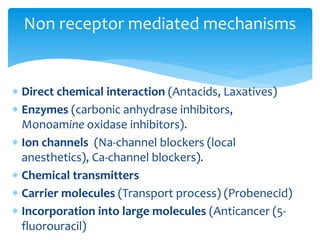
volume results in a decrease in the cardiac workload,
decrease or disappearance of tissue edema.
Effects of CG in chronic heart failure
Parameters, functions
Cardiovascular changes
in CHF Effects of CG in CHF
Systole Weakened
Intensified and
shortened
Diastole Shortened Lengthened
Heart sizes Enlarged Normalized (reduced)
Stroke volume Reduced Increased
Minute volume (cardiac
output) Reduced Increased
Heart rate Increased Decreased
Cardiac impulse
Effects of CG in chronic heart failure
Parameters, functions
Cardiovascular changes
in CHF Effects of CG in CHF
Venous blood pressure Increased Normalized (decreases)
Arterial blood pressure Sometimes decreased Normalized (increases)
Blood supply to the
heart
Insufficient Normalized (improves)
Circulating blood
volume
Increased Normalized (decreases)
Extracellular fluid in the
tissues
Edema Disappearance of
edema
Diuresis Decreased (oliguria) Normalized (increases)
Functions of other
viseral organs (liver,
Abnormal Normalized
Classification of CG
•Polar CG: Strophantin, Corglycon
more hydrophilic, are absorbed very poorly, are used only
intravenously, have maximal speed of onset of cardiotropic effect,
minimal duration of cardiotonic effect (T1/2=8h) and ability to
cumulate, minimal vagal effects
•Relatively polar CG: Digoxin, Celanide
are used orally or intravenously (T1/2=34-36h), take an
intermidiate position
•Non-polar CG: Digitoxin
more lipophilic, are used only orally, are well absorbed,
have minimal speed of onset of cardiotropic effect, maximal
duration of cardiotonic effect (T1/2=160h) and ability to cumulate,
maximal vagal effects
According to the speed of onset of cardiotropic effect:
strophanthin = convallatoxin > lanatoside С >digoxin >digitoxin
According to the duration of the effect and the ability to cumulate:
digitoxin >digoxin >celanide >strophanthin > convallatoxin
Pharmacokinetics of CG
• The liver is the main place for the metabolism of
cardiac glycosides.
• Cardiac glycosides and products of their
metabolism are generally excreted by the kidneys .
In kidney pathology the duration of the effect of CG
is increased.
• Digitoxin is mainly excreted in the form of
metabolites and conjugates. Digoxin is not
extensively metabolized. Strophanthin is excreted
unchanged.
Indications for use of CG
• Chronic heart failure especially when assotiated with
permanent atrial fibrillation (mostly digoxin). Acute
decompensation of CHF.
• Cardiac arrhythmias (atrial fibrillation, paroxysmal
supraventricular tachycardia). In these types of
arrhythmia the effectiveness of glycosides is linked to
an increase in vagal tone and suppression of impulse
conduction through the cardiac conducting system.
Contraindications for the use of of CG
• Incomplete A-V block
• Marked bradycardia
• Acute infectious myocarditis
• Hypokaliemia
Cardiac glycosides intoxication
• Overdose of cardiac glycosides leads to the development of
toxic effects. This happens more frequently with digitalis agents
that have a higher propensity to cumulate.
• Intoxication manifests as cardiac and extracardiac
disturbances.
• Cardiac complications include different types of arrhythmia
(extrasystoles, paroxysmal tachycardia, fibrillation, etc.) and
partial or complete A-V block. Ventricular fibrillation is the most
common cause of death associated with intoxication.
• Extracardiac disturbances: vision disturbances (including colour
vision disturbance), fatigue, muscle weakness, dyspepsia
(nausea, vomiting and diarrhea), some mental disorders
(agitation, hallucinations), headache and skin rash.
• Nausea and vomiting associated with the administration of
digitalis agents are mainly explained by the stimulation of the
trigger zone of the vomiting center and partly with irritating
influence on the gastrointestinal mucous membrane.
Treatment of cardiac glycosides intoxication
• The offending drug is stopped or the dose is reduced,
physiologic antagonists are also used. Taking into consideration
the fact that cardiac glycosides cause a decrease in potassium
ions in cardiomyocytes, potassium agents (potassium chloride,
potassium normin and others) are used. They are administered
orally or intravenously in amounts that are required to keep
normal potassium serum levels. Potassium agents are used in
order to prevent cardiac toxicity of glycosides, especially
cardiac rhythm disorders. Magnesium agents (magnesium
orotate), “Panangin” (it contains potassium asparaginate and
magnesium asparaginate) and “Asparkam” (that have similar
composition to panangin) are administered for the same
purpose.
• Arrhythmias are treated with antiarrhythmic drugs.
• In A-V block atropine is used in order to eliminate the influence
of the vagus nerve.
• In cases of intoxication with cardiac glycosides monoclonal
antibodies can also be administered. Thus, digoxin immune
Fab (digibind) is one of the digoxin antidotes.
Cardiotonic agents of «non-glycoside» structure
❖Agents increasing cAMP content by activating adenylyl cyclase -
Agents stimulating β1-adrenoceptors:
✓Dopamine, Dobutamine
The cardiotonic effect of these agents occurs due to the stimulation of
cardiac ß1-adrenoceptors. This effect activates adenylyl cyclase
leading to an increase in cAMP content in cardiomyocytes and a
corresponding increase in Ca2+ concentration. As a result of this,
cardiac contractions become stronger
They are administered as an intravenous infusion.
They are used for a brief stimulation of the heart in acute
decompensation of CHF and acute heart failure.
They can cause tachycardia, arrhythmia, hypertension, increase in
oxygen consumption by the myocardium and other adverse effects.
Differences from CG: can cause tachycardia and more increase in
oxygen consumption by the myocardium and, if used continuously,
can reduce life expectancy.
Cardiotonic agents of «non-glycoside» structure
❖Agents increasing cAMP content by inhibiting
phosphodiesterase III
✓Amrinone, Milrinone
They increase cAMP content by inhibiting
phosphodiesterase III; therefore they block the process of
cAMP inactivation. The accumulation of cAMP increases
calcium concentration that manifests as a positive
inotropic effect.
They are used only for a short period of time (intravenously)
in case of acute cardiac decompensation.
They may cause mild hypotension and cardiac arrhythmias.
Differences from CG: if used continuously, can reduce life
expectancy.
Cardiotonic agents of «non-glycoside» structure
Agents increasing the sensitivity of myofibrils to Ca ions -
calcium sensitizers
✓Levosimendan
It sensitizes cardiac myofibrils to calcium ions by binding
with troponine C. This leads to an increase in the intensity
of cardiac contractions without increased myocardial
oxygen consumption. Besides, it causes dilatation of
coronary and other vessels. This is generally associated
with the activation of KATP-channels of vascular smooth
muscles.
It is administered intravenously via an infusion for the
treatment of acute cardiac failure.
The agent is well tolerated.
In general, it compares favourably with other non-glycoside
cardiotonics in its beneficial effect on CHF and the long-
term outlook of the disease.
Antiarrhythmic drugs are the drugs used for the treatment
and prophylaxis of cardiac arrhythmias.
ch A lL
The causes of cardiac arrhythmias:
myocardial ischemia, cardiac development defects, electrolyte
and acid-base disorders, intoxication by chemicals, cardiac
innervation disturbances, endocrine and infectious diseases,
etc.
Types of cardiac arrhythmias
“*Sinus bradycardia and tachycardia
“*Supraventricular (SV) arrhythmias:
5V-extrasystoles, SV-paroxysmal tachycardias, atrial fibrillation
“* Ventricular (V) arrhythmias:
V-extrasystoles, V-paroxysmal tachycardias, — ventricular
fibrillation
«* Atrioventricular (AV) block
Ca
» Sinus node
NL ann THE CONDUCTING SYSTEM OF THE HEART
=" ACTION POTENTIAL PHASES
¢ Phase 4 - in sinus node - slow
SHE oem (=spontaneous) diastolic
AR depolarization — caused by slow inward
Wk ~ Ca?* current and |, inward Na* current
—
= characterizes normal automatism
-Phase 4 — in muscle cells
Pon ped naan of atria and ventricles -
- in pathology -
spontaneous diastolic
depolarization — caused by
slow inward Nat current -
cence eeeeeneeeeeeeeneeeeeneee eneeeneeneen Tp..characterizes pathologic
automatism
MDP
~
Ca
> Sinus node
TL sm THE CONDUCTING SYSTEM OF THE HEART
ACTION POTENTIAL PHASES
oo « Phase 0_- fast depolarization:
— in sinus node and AV-node - caused by
inward Ca?2* current — characterizes
conduction in cardiac conduction
system
— in muscle cells of atria
0 and ventricles:
Nat .
— caused by fast inward
cai Nat current — characterizes
Cat+| [Nat tp conduction in atria and
ventricles
MDP
v
TP
MDP
ACTION POTENTIAL PHASES
¢ Phases 1-3 - repolarization phases -
caused by outward K* current
Effective refractory
period (ERP)
is characterized by a
minimal interval at which a
second stimulus results in
propagated action
potential
v
MECHANISMS OF ARRHYTHMIA PRODUCTION
eNormal automatism changes
In this case sinus bradycardia and tachycardia develop
-Pathologic automatism
In this case SV- and V-arrhythmias (extrasystoles, paroxysmal
tachycardias, atrial and ventricular fibrillation)
can develop
-«Re-entry mechanism» a
(circus movements) -
caused by unidirectional
conduction block
Orthodromal stimuli
y conduction block
Purkinje fiber
Functional block
, zone
<= Slowed
conduction
Ventricular
myofibril
Unidirectional block
(SV- an d V-a rrh yth mM ias (development of arrhythmia)
Norm
Ortho- and antidromal stimuli d
conduction block
(extrasystoles, paroxysmal
tachycardias, atrial and
ventricular fibrillation) r 5
can develop) Bidirectional block Facilitated conduction
(effect of quinidine) (effect of isoprenaline)
a
CLASSIFICATION OF ANTIARRHYTHMIC DRUGS
Drugs used in tachyarrhythmias and extrasystoles
eClass | — Drugs blocking sodium channels (membrane
stabilizing drugs):
Subclass lA — Quinidine, Disopyramide, Procainamide
Subclass IB — Lidocaine, Phenytoin (Diphenine)
Subclass IC — Propaphenone, Ethacizine, Flecainide, Encainide
eClass Il — Drugs suppressing adrenergic effects on the heart (8-
Adrenoblockers): Propranolol, Atenolol, Metoprolol, Bisoprolol
eClass IIl —Drugs blocking potassium channels (drugs
prolonging the duration of repolarization and the duration of the
action potential): Amiodarone, Bretylium (Ornid), Sotalol,
Dronedarone, Ibutilide
eClass IV — drugs blocking L-type calcium channels: Verapamil,
Diltiazem
CLASSIFICATION OF ANTIARRHYTHMIC DRUGS
Drugs used in tachyarrhythmias and extrasystoles
(continuation)
¢ Other drugs possessing antiarrhythmic activity
- Drugs blocking sodium channels of sinoatrial node (= drugs
blocking |, inward Na* current = bradycardic drugs): lvabradine
- Magnesium and potassium agents
- Cardiac glycosides
- Adenosine
Drugs used in bradyarrhythmias and conduction disorders
¢ Drugs that intensify adrenergic effects (-Adrenomimetics):
lsoprenaline
¢ Drugs suppressing cholinergic effects (M-cholinoblockers):
Atropine
Class | — Drugs blocking sodium channels
(membrane stabilizing drugs):
Subclass IA
Mechanism of action:
¢ block Nat* and K* channels, slightly block Ca* channels >
decrease pathologic automatism; slow down intraatrial and
intraventricular conduction; prolong repolarization and increase
ERP; can decrease normal automatism and AV-conduction;
decrease myocardial contractility
¢ block M-cholinoceptors of the heart (can increase normal
automatism and AV-conduction) and a-Adrenoceptors of the
vessels (slightly decrease peripheral resistance > slightly
decrease blood pressure)
e ECG: slight extension of PQ, QRS and QT intervals
||
Subclass IA
Indications for use:
e SV- and V-arrhythmias (extrasystoles, paroxysmal
tachycardias, atrial and ventricular fibrillation)
Side effects:
¢ Sinoatrial (SA) and AV-blocks
e Interventricular blocks
e Arrhythmogenic (proarrhythmic) effect
Decrease of myocardial contractility
Arterial hypotension
Diarrhoea, nausea and vomiting
Ringing in the ears, headache and visual problems
Dryness of the oral and eye mucosa, disorder of
accommodation and urinary retention
Class | — Drugs blocking sodium channels
(membrane stabilizing drugs):
Subclass IB
Mechanism of action:
¢ block slow Nat channels, slightly increase outward K* current
> decrease pathologic automatism; don’t affect intraatrial and
intraventricular conduction; slightly accelerate repolarization
¢ don't affect normal automatism, AV-conduction, myocardial
contractility and blood pressure
e ECG: shortening of the QTintervals
||
Subclass IB
Indications for use:
e ventricular arrhythmias (extrasystoles and tachycardia
occurring in myocardial infarction, open heart surgery and in
postoperative period, caused by an overdose of cardiac
glycosides)
Side effects (cause significantly less than Subclass IA):
¢ Neurologic side effects
¢ Cardiovascular side effects
e Gastrointestinal side effects
Class | — Drugs blocking sodium channels
(membrane stabilizing drugs):
Subclass IC
Mechanism of action:
¢ block Na* channels, slightly block Ca2* channels > decrease
pathologic automatism; significantly suppress intraatrial and
intraventricular conduction; slightly prolong repolarization and
ERP; decrease normal automatism and AV-conduction;
decrease myocardial contractility
¢ Don’t affect K* channels, M-cholinoceptors and a-
adrenoceptors
e ECG: extension of PQ and QRS intervals
||
Subclass IC
Indications for use:
e SV- and V-arrhythmias (extrasystoles, paroxysmal
tachycardias, atrial and ventricular fibrillation)
Side effects:
¢ Sinoatrial (SA) and AV-blocks
Interventricular blocks
Marked arrhythmogenic (proarrhythmic) effect
Decrease of myocardial contractility
Arterial hypotension
Nausea and vomiting
e Ringing in the ears, headache and visual problems
Contraindications for use:
e marked conduction disorder, heart failure and cardiogenic
shock
Class Il —8&-Adrenoblockers
Mechanism of action:
¢ Block {81-adrenoceptors that eliminates the effect of
adrenergic innervation on the heart > decrease
normal automatism (reduce heart rate) and AV-
conduction, increase ERP in AV-node; decrease
myocardial contractility
e ECG: extension of PQ interval
Class Il —8&-Adrenoblockers
Indications for use:
¢ Sinus tachycardia
e SV- and V-arrhythmias (extrasystoles, paroxysmal
tachycardias, atrial fibrillation) in coronary heart disease
and chronic heart failure (for Metoprolol, Bisoprolol,
Carvedilol and Nebivolol)
¢ SV-paroxysmal tachycardias
e Tachysystolic atrial fibrillation (for reducing ventricular rate
during high atrial rate by suppressing AV-conduction)
Class IIl —Drugs blocking potassium channels
Mechanism of action:
e block K* channels > prolong repolarization and increase
ERP
¢ Amiodarone can also slightly block Na* and Ca?*
channels, &-, a-Adrenoceptors > decreases pathologic
and normal automatism (reduce heart rate) and AV-,
intraatrial and intraventricular conduction; decreases
myocardial contractility, slightly decreases blood pressure
e ECG: extension of PQ and QT intervals
Indications for use of Amiodarone:
e SV- and V-arrhythmias (extrasystoles, paroxysmal
tachycardias, atrial and ventricular fibrillation)
Class IIl —Drugs blocking potassium channels
Side effects of Amiodarone:
e Excessive bradycardia
Sinoatrial (SA) and AV-blocks
Interventricular blocks
Arrhythmogenic (proarrhythmic) effect (not very notable)
Decrease of myocardial contractility
¢ Arterial hypotension
¢ Extracardial side effects: dyspepsia, nausea and vomiting;
reversible sedimentation of the drug in the cornea, skin
pigmentation (grayish blue color), photodermatitis, thyroid
dysfunction, lung fibrosis and neurological disturbances
(paraesthesias, tremor, etc)
Class IV — drugs blocking L-type calcium channels
Mechanism of action:
¢ block Ca?* channels of L-type > decrease normal
automatism (reduce heart rate), significantly decrease AV-
conduction, increase ERP in AV node; decrease
myocardial contractility, decrease blood pressure and
dilate the coronary vessels
e ECG: extension of PQ interval
Indications for use:
¢ Sinus tachycardia
¢ SV-paroxysmal tachycardias
e Tachysystolic atrial fibrillation (for reducing ventricular rate
during high atrial rate by suppressing AV-conduction)
Class IV — drugs blocking L-type calcium channels
Side effects:
e Excessive bradycardia
¢ Sinoatrial (SA) and AV-blocks
¢ Decrease of myocardial contractility (heart failure
aggravation)
° Arterial hypotension
¢ Constipation, nausea and vomiting
e Headache and dizziness
Other drugs possessing antiarrhythmic activity in
tachyarrhythmias and extrasystoles
¢ Drugs blocking sodium channels of sinoatrial node (= drugs
blocking |, inward Na* current = bradycardic drugs): lvabradine:
- decreases normal automatism (reduce heart rate); can be used
in sinus tachycardia
¢ Magnesium and potassium agents
Potassium chloride, magnesium sulphate, magnesium chloride,
magnesium orotate and magnesium asparaginate, combined
drugs “Asparkam’, “Panangin’:
- reduce heart rate, decrease automatism, conduction and
excitability; decrease myocardial contractility; effective in
hypokalaemia and hypomagnesaemia (in cardiac glycosides’
overdosage, during the use of some diuretics)
Other drugs possessing antiarrhythmic activity
in tachyarrhythmias and extrasystoles
«Cardiac glycosides
- decrease AV-conduction, can be used in SV-
paroxysmal tachycardias, tachysystolic atrial fibrillation
(for reducing ventricular rate during high atrial rate)
eAdenosine
- interacts with adenosine receptors > suppresses
atrioventricular conduction; can be used in SV-
paroxysmal tachycardias
Drugs used in bradyarrhythmias and conduction
disorders
¢Drugs that intensify adrenergic effects
({8-adrenomimetics): /soprenaline
- stimulate 81-adrenoceptors of the heart > increase
normal automatism (increase heart rate) and AV-
conduction; may be effective in sinus bradycardia and AV-
block
¢-Drugs suppressing cholinergic effects
(M-cholinoblockers): Atropine
- block M-cholinoceptors of the heart > increase normal
automatism (increase heart rate) and AV-conduction; may
be effective in sinus bradycardia and AV-block
DRUGS USED FOR THE TREATMENT OF
ISCHEMIC HEART DISEASE
ANTIANGINAL DRUGS
Associate professor of pharmacology chair
PhD, MD Shmyreva Natalia
Normal coronary artery
ISCHEMIC HEART DISEASE
Atherosclerosis (1 H D)
e—= ° [HD - pathologic condition
Atherosclerosis associated with coronary
with blood clot . 4
insufficiency
e IHD includes angina pectoris
and myocardial infarction
e Angina -retrosternal heavy or gripping sensation with
radiation to the left arm or neck that is provoked by
exertion and eased with rest or nitrates
e Angina occurs when there is an imbalance between the
oxygen demand by the heart and blood supply (supply of
oxygen)
¢ The main cause of it is coronary atherosclerosis
Antianginal drugs are the drugs used for the
relief and/or prevention of angina _ pectoris
attacks
The two main. principles of action § of
antianginal drugs:
1.decrease in cardiac workload _ (thereby
reducing its oxygen demand)
2. increase in blood supply to the heart
1.A decrease in cardiac workload and a reduction in its
oxygen demand can be achieved in the following ways:
e a decrease in venous pressure (VP) that leads to a reduction in
venous return to the heart = a decrease in cardiac preload
e a decrease in arterial pressure (AP) = a decrease in cardiac
afterload
¢ reduction of myocardial wall tension
¢ decrease in heart rate
¢ decrease in myocardial contractility
2.An increase in blood supply to the heart (increase in
coronary circulation) can be achieved in the following ways:
¢ direct dilation of coronary vessels
¢ reflex elimination of coronary spasm
e decrease in diastolic pressure in the heart > decrease in
extravasal compression of subendocardial coronary vessels
CLASSIFICATION OF ANTIANGINAL DRUGS
1. Drugs decreasing myocardial oxygen demand and
improving coronary circulation:
1) Organic nitrates: Nitroglycerine, Isosorbide dinitrate,
Isosorbide mononitrate
2) Drugs blocking calcium channels of L-type:
e Phenylalkylamines: Verapamil
e Dihydropyridines: Nifedipine, Phelodipine, Amlodipine
¢ Benzothiazepines: Diltiazem
3) Potassium channel activators Nicorandil
2. Drugs decreasing myocardial oxygen demand:
1) 8 —Adrenoblockers:
° Non-selective: Propranolol
¢ Selective: Atenolol, Metoprolol, Bisoprolol, Nebivolol
2) Bradycardic drugs: lvabradine
3) Selective inhibitors of the late current of sodium ions:
Ranolazine
CLASSIFICATION OF ANTIANGINAL DRUGS
3. Drugs increasing oxygen supply to the myocardium:
1) Myotropic drugs dilating coronary vessels: Dipyridamole
2) Reflex inhibitors of the coronary spasm: Validol
4. Cardioprotective drugs: Trimetazidine
Pharmacotherapy of angina pectoris is rather complex. Other
drugs can also be used for the treatment of angina:
¢ Drugs preventing thrombosis (antiaggregants and
anticoagulants)
¢ Drugs used for the treatment of hyperlipoproteinaemia
(statins)
¢ Inhibitors of angiotensin-converting enzyme
ORGANIC NITRATES
MECHANISM OF ACTION
¢ Antianginal effect of nitrates is mainly associated with their
extracardiac activity
¢ Nitrates act like an endothelial relaxing factor (NO) in vascular
smooth muscles: nitrates release nitric oxide (NO) > activation
of cytosolic guanylyl cyclase > decrease in cytosolic Ca2* ion
content that leads to vascular smooth muscle relaxation
¢ According to the degree of vascular sensitivity to nitrates the
vessels can be arranged in the following order:
veins >arteries >arterioles and capillary sphincters
¢ Thus nitrates mainly dilate peripheral veins, decrease VP and,
therefore, reduce venous return to the heart and, as a result,
decrease cardiac preload. They can also dilate arteries,
decrease AP and, as a result, decrease cardiac afterload
¢ This leads to reducing cardiac workload and oxygen demand
ORGANIC NITRATES
MECHANISM OF ACTION
e Nitrates also improves the blood supply of the ischemic
myocardial area. This happens due to several effects:
|.decrease in diastolic pressure in the heart > decrease
in extravasal compression of subendocardial coronary
vessels
2.direct dilation of major coronary vessels
3.block of central reflex links, which cause constriction of
the coronary vessels
NITROGLYCERINE
Dilation of
the peripheral veins
Decrease of venous
return to the heart
Decrease in Decrease in ««— Decrease of blood volume —t Decreasein Dilationof Suppression of
peripheral left ventricular and final diastolic diastolic major the central links
vascular stroke volume pressure in the left ventricle ventricular coronary of the coronary
resistance; walltension —_ arteries constricting
arterial dilatation | reflexes
Reduction in heart size |
arterial blood
pressure improvement
of coronary
— 3 Decrease in cardiac work circulation
Decrease in
resistance to —————
blood flow
Decrease in ee a
myocardial : .
waican daar to the ischaemic
myocardial area
t ¥
ANTIANGINAL EFFECT
DRUG FORMS (DF) OF NITROGLYCERINE
e Sublingual: tablets, capsules (Nitrocor), aerosol
(Nitrospray) - effect begins in 1—3 min and lasts for up to
30 min - for eliminating angina pectoris attacks
e Intravenous: solution - for eliminating severe angina
pectoris attack (it is also used in myocardial infarction and
acute heart failure)
e Peroral: DF of prolonged action (Susiac forte, Nitrong
forte) — effect lasts for about 4-6 h - for preventing angina
pectoris attacks
e Buccal: polymeric laminas for applying to the gum
(Trinitrolong) - effect begins in 2—3 min and lasts for
several hours - for eliminating and preventing angina
pectoris attacks
¢ Transdermal: plasters (Nifro-Dur) — effect lasts for several
hours (8-12 h) - for preventing angina pectoris attacks
DRUG FORMS (DF) OF ISOSORBIDE DINITRATE
¢ Sublingual: tablets (/so Mack), aerosol (/soket-spray) -
effect begins in 2—4 min and lasts for up to 2 h - for
eliminating and preventing angina pectoris attacks
e Intravenous: solution - for eliminating severe angina
pectoris attack (it is also used in myocardial infarction and
acute heart failure)
e Peroral: tablets (Nifrosorbid) — effect lasts for about 4-6 h,
tablets of prolonged action (/soket retard) — effect lasts for
about 7-8 h - for preventing angina pectoris attacks
e Buccal: polymeric laminas for applying to the gum
(Dinitrosorbilong) — effect lasts for several hours — for
preventing angina pectoris attacks
¢ Transdermal: plasters (Nisopercuten) — effect lasts for 8-
12 h - for preventing angina pectoris attacks
DRUG FORMS (DF) OF ISOSORBIDE MONONITRATE
e Intravenous: solution - for eliminating severe angina
pectoris attack (it is also used in myocardial infarction)
e Peroral: tablets (Monocinique) — effect lasts for about 7-8
h, tablets of prolonged action (Monocinigue retard) — effect
lasts for about 20 h - for preventing angina pectoris
attacks
SIDE EFFECTS OF NITRATES :
e headache and dizziness
° reflex tachycardia (compensatory reaction associated with
a decrease in AP)
° excessive decrease in AP and even collapse
¢ tolerance to nitrates (develops only if they are used
continuously for a long time)
CALCIUM CHANNELS BLOCKERS
Mechanism of antianginal action:
e Calcium channel blockers block potential-dependent slow
calcium channels of L-type > decrease entry of
extracellular Ca?* into different muscle cells:
- of conducting system of the heart > suppression of
conduction in AV-node and automatism of SA-node
(antiarrhythmic effect) > decrease in heart rate >
decrease in cardiac oxygen demand
¢ of myocardium ~> decrease in myocardial contractility >
decrease in cardiac oxygen demand
¢ of peripheral arteries > decrease in peripheral
resistance > decrease in AP (hypotensive effect) >
decrease in cardiac afterload > decrease in cardiac
oxygen demand
¢ of coronary arteries > dilation of the coronary arteries >
improvement of the blood supply to the heart
Calcium channel blockers
The suppression of calcium ions
, influx inside the cells
Heart
Conducting system aoe
Airiovelitriouler Sincatnad node | The decrease in
node the cardiac
| | tenn | me
Decrease in v
Suppression of | automatism Decrease
conduction: | in —
decrease in
automatism; Decrease in oe
increase in the | heart rate —j> Decrease in
period | Caren never
, 7 Y
Antiarrhythmic effect Antianginal effect Hypotensive
effect
CALCIUM CHANNELS BLOCKERS
They are used for preventing angina pectoris attacks
According to their duration of action, they may be
divided into 3 groups:
¢ Drugs with short-term effect: 6-8 h (drugs are dosed 3-
4 times a day):
- Nifedipine
- Diltiazem
- Verapamil
¢ Drugs with medium duration of effect: 8-18 h (drugs
are dosed twice a day):
- Phelodipine
e Drugs with long-term effect: >24 h (drugs are dosed
once a day):
- Amlodipine
CALCIUM CHANNELS BLOCKERS
e Phenylalkylamines (Verapamil): more affect the heart >
have such side effects as excessive bradycardia, SA- and
AV-blocks, decrease in myocardial contractility (heart
failure aggravation)
e Dihydropyridines (Nifedipine, Phelodipine, Amlodipine):
more affect the peripheral arteries > have such side
effects as arterial hypotension, reflex tachycardia,
headache and edema (Nifedipine can cause abrupt
decrease in AP. marked reflex tachycardia and “coronary
steal syndrome” > increase in myocardial oxygen demand
and decrease in coronary circulation > that is why it is
almost not used in IHD in real clinical practice)
e Benzothiazepines (Diltiazem): occupy an intermediate
position
¢ Other side effects: constipation, nausea and vomiting
POTASSIUM CHANNEL ACTIVATORS
MECHANISM OF ANTIANGINAL ACTION:
Nicorandil opens K* channels in vascular smooth muscle
cells regulated by intracellular ATP > efflux of K* leads to
hyperpolarization > intracellular Ca** content reduces >
smooth muscle tone decreases >
1) dilation of peripheral arteries > decrease in AP >
decrease in cardiac afterload > decrease in cardiac
oxygen demand
2) dilation of coronary arteries > improvement of the blood
supply to the heart
It is used for eliminating and preventing angina pectoris
attacks
SIDE EFFECTS:
arterial hypotension, reflex tachycardia, headache,
arrhythmogenic effect, edema, dyspepsia
8 —Adrenoblockers
MECHANISM OF ANTIANGINAL ACTION:
block {81-adrenoceptors that eliminates the effect of
adrenergic innervation on the heart > decrease normal
automatism (reduce heart rate) and AV-conduction
(antiarrhythmic effect), decrease myocardial contractility
> decrease cardiac workload > decrease cardiac
oxygen demand
Coronary circulation doesn’t improve and may even
become worse
They are used for preventing angina pectoris attacks,
selective 8 —Adrenoblockers are preferable in IHD
SIDE EFFECTS:
excessive bradycardia, SA- and AV-blocks, decrease in
myocardial contractility (heart failure aggravation),
peripheral vasoconstriction, bronchospasm, weakness,
decreased libido and potency
BRADYCARDIC DRUGS
MECHANISM OF ANTIANGINAL ACTION:
lvabradine blocks |, inward Na* current in SA-node
> decreases normal automatism > reduces heart
rate (antiarrhythmic effect) > decrease in cardiac
oxygen demand
It doesn't affect coronary and peripheral arteries,
myocardial contractility and conduction
It is used for preventing angina pectoris attacks
SIDE EFFECTS:
° excessive bradycardia, headache and dizziness,
reversible visual problems
SELECTIVE INHIBITORS OF THE LATE CURRENT
OF SODIUM IONS (Ranolazine)
MECHANISM OF ANTIANGINAL ACTION:
¢ Ranolazine inhibits the late current of sodium ions in
myocardial cells that leads to decrease in excess of
intracellular calcium ions. It promotes relaxation of the
myocardium and decrease in diastolic ventricular wall
tension. This leads to reducing myocardial oxygen
demand
¢ It is used for preventing angina pectoris attacks
SIDE EFFECTS:
e headache and dizziness
° constipation, nausea and vomiting
e asthenia
DRUGS INCREASING OXYGEN SUPPLY TO THE MYOCARDIUM
1) Myotropic drugs dilating coronary vessels: Dipyridamole
liechanism of action: suppresses adenosine reuptake by
myocardium > myocardium accumulates increased
concentration of adenosine, which possessing a marked
coronary dilating effect
Side effects: headache, arterial hypotension, dyspepsia,
“coronary steal syndrome” (decrease in blood and oxygen
supply of the ischemic zone due to dilation of arterioles in
the normal part of the myocardium)
lt is not used in IHD in real clinical practice because of
“coronary steal syndrome”
2) Reflex inhibitors of the coronary spasm: Validol
Mechanism of antianginal action: causes reflex
improvement of coronary circulation by irritating oral mucous
membranes
It is almost not used in IHD in real clinical practice because
of low antianginal activity
CARDIOPROTECTIVE DRUGS
MECHANISM OF ANTIANGINAL ACTION:
Trimetazidine prevents a decrease in AIP content in
cardiomyocytes in the zone of ischemia and
normalizes their energy balance > it normalizes ion
channel function
It doesn't affect general hemodynamics
It is used for preventing angina pectoris attacks
It is well-tolerated and almost doesn’t cause side
effects
DRUGS USED FOR THE TREATMENT OF CEREBRAL BLOOD CIRCULATION
DISORDERS
Pharmacological regulation of cerebral blood circulation is one of the most significant medical
problems. This is determined by the fact that acute and chronic disorders of cerebral blood supply
are the main cause of mortality and morbidity of the population.
The pathology of cerebral blood circulation may be associated with functional and organic
disorders (vascular spasm, embolism, thrombosis, vascular atherosclerosis and hemorrhages).
The most significant cerebrovascular pathologies are ischemic disorders of the brain including
ischemic stroke.
In most cases ischemic strokes are caused by atherosclerotic damage of the vessels, especially
stenosis of the carotid and spinal arteries. In such cases stroke can be prevented by antiaggregants
(acetylsalicylic acid, ticlopidin, clopidogrel).
Ischemic stroke can be caused by emboli and blood clots occluding the branches of the cerebral
vessels. Anticoagulants of direct and indirect action are usually used to prevent the initial embolism
and its recurrence (heparin, low molecular weight heparin agents, warfarin, acenocoumarol and
phenindione).
Transient disorders of cerebral blood circulation may be associated with cerebral vascular
spasm. In this case the prophylaxis can also be performed with antiaggregants and anticoagulants.
However both groups of drugs are contraindicated in patients with hemorrhages or at risk for their
development. It is also reasonable to use drugs that decrease the tone of cerebral vessels.
Disorders of cerebral blood circulation can be caused by subarachnoid or intracerebral
hemorrhages. The main causes of hemorrhagic strokes are arterial hypertension, aneurisms (especially
microaneurisms) and angiomas. One of the ways to treat such patients is to remove surgically the
hematoma (if it is possible).
If ischemia is marked and remains unchanged, then necrosis of the cerebral tissue develops.
Apart from the severe cerebral disorders associated with ischemia, chronic insufficiency of
cerebral blood supply may occur. This disorder affects negatively memory, intellectual and psychic
activity, behavioral and motor reactions. These unfavorable manifestations increase slowly and are
usually linked with age and associated pathological processes (vascular atherosclerosis, arterial
hypertension, metabolic disorder and so on).
One of the fundamental principals of prophylaxis and therapy of cerebral blood supply
insufficiency is the dilation of the cerebral vessels. However, usually vasodilating agents cause
systemic hypotension that decreases the blood supply to the brain, and the final result is likely to be
unfavorable. This is why it is necessary to use the drugs that have a selective effect on the cerebral
vessels and that do not affect systemic hemodynamics.
Drugs improving cerebral blood circulation in brain ischemia may be divided into the
following groups.
I. Drugs affecting aggregation and coagulation.
 Antiaggregants
Acetylsalicylic acid, Ticlopidin, Clopidogrel
 Anticoagulants
Heparin, Low molecular weight heparins, Warfarin
II. Drugs increasing cerebral blood circulation
 L-type calcium channels blockers
Nimodipine, Cinnarisine, Flunarisine
 Drugs of different chemical groups
Vinpocetine (kavinton), Nicergolin, Xantinol nicotinate, Gammalon, Picamilonum, Pentoxifyllin,
Papaverine
Nimodipine, cinnarisine (stugeron), flunarisine (sibelium) are blockers of the L-type calcium
channels that mostly affects cerebral blood circulation. These drugs decrease the tone of cerebral
arterioles and increase brain tissue oxygenation. Nimodipine is used for the treatment of acute brain
ischemia, subarachnoid hemorrhage and chronic brain ischemia. It improves brain function in elderly
people. Cinnarisine (stugeron) and flunarisine (sibelium) are used for the treatment of cerebral
vasospasm, atherosclerosis, vestibular disturbances, in post-stroke period and after craniocerebral
traumas.
Vinpocetine (kavinton) produces a spasmolytic effect. It mostly dilates the cerebral vessels. It
normalizes metabolic processes in the cerebral tissues. The drug decreases platelet aggregation and
pathologically increases blood viscosity, and this eventually leads to the improvement of
microcirculation. It is used for the treatment of nervous system disorders occurring in the post-stroke
period, chronic insufficiency of cerebral circulation, eye tissue ischemia, decreased hearing caused by
vascular or toxic disorders, disturbed memory and dizziness.
Nicergoline (sermion) possesses α-adrenoblocking and spasmolytic activity. It dilates cerebral
and peripheral vessels. This drug is used for the treatment of disorders of cerebral circulation,
migraine, disturbances of peripheral hemodynamics and ischemia of the optic nerve.
Derivatives of nicotinic acid (xantinol nicotinate (complamin)) are also used for the treatment
of cerebral ischemia. It is characterized by a marked myotropic vasodilating effect on all peripheral
and cerebral vessels. Combined drugs containing nicotinic acid and other spasmolytics are also used in
the clinic; for example, nicoverin (nicotinic acid + papaverine), nicospan (nicotinic acid + no-spa).
Some drugs that belong to the group of GABA and its derivatives (gammalon. picamilon)
produce positive effects on cerebral circulation. Gammalon (aminalonum) is GABA, picamilon
includes the structures of GABA and nicotinic acid. Both drugs produce a normalizing effect on the
cerebral circulation and metabolic processes in the cerebral tissues. Picamilon dilates the vessels of the
brain.
Pentoxifylline (agapurine, trental) produces a moderate vasodilating effect, decreases platelet
aggregation, increases the elasticity of the erythrocyte surface and improves microcirculation. Its
vasodilating effect is likely to be associated with the block of the adenosine receptors. Moreover this
drug inhibits phosphodiesterase and increases cAMP content in the platelets. Pentoxifylline is also
used for the treatment of peripheral circulation problems, diabetic angiopathy and disordered blood
supply to the eyes.
Another direction in the pharmacotherapy of cerebral ischemia is linked to the development of
neuroprotective drugs that increase the resistance of neurons to hypoxia.
The agents that suppress metabolism and increase the resistance of cerebral tissue to hypoxia
include Sodium oxibutyrate. Many drugs of the GABA group have a positive effect on the metabolic
processes in the nervous system (gammalon, picamilonum). They also improve cerebral circulation.
L-type calcium channels blockers, such as nimodipine, cinnarisine and flunarisine, block voltage-
dependent calcium channels and decrease the influx of excessive calcium ions into the neurons, and
this can provide a neuroprotective effect. Besides, they dilate cerebral vessels and help to normalize
the metabolism by improving nervous system oxygenation.
Therefore the majority of the currently used drugs, that are effective for the treatment of
cerebral ischemia, combine both neuroprotective and vasodilating effects.
Migraine has a special place in the group of cerebrovascular diseases. This widespread
pathological state is associated with disfunctions of vasomotor regulation. It occurs more frequently in
women. Migraine manifests as transient attacks of unilateral pulsatile headache, which is often
followed by nausea, vomiting, vision and hearing disorders, photophobia, paraesthesia, weakness of
the skeletal muscles and many other symptoms. The attacks can repeat many years. The duration of
one attack takes 4—72 h.
The mechanism of the development of migraine is still unknown. It is suspected that it is
caused by genetic factors, neurogenic and vascular dysfunction and plasma transudation into
perivascular tissues. Nevertheless the importance of the serotoninergic system in migraine
pathogenesis has been generally acknowledged.
The main idea of the development of serotoninergic drugs effective for the treatment of
migraine consists in making drugs that selectively bind to only those serotonin receptor subtypes that
are of primary importance for migraine pathogenesis. Currently, 5-HT1D- and 5-HT1B-receptors are
considered to be of main importance. The first agonist of these receptors was sumatriptan, a highly
effective drug used to inhibit severe attacks of migraine.
Drugs that are used in migraine therapy are subdivided into two groups.
I. Drugs used to inhibit severe migraine attacks
 Ergot alkaloids and derivatives
Ergotamine, Dihydroergotamine (dihydergot)
 Indole derivatives
Sumatriptan (imigran)
 Non-opioid analgesics
Acetaminophen (paracetamolum), Acetylsalicylic acid, Naproxen, Indomethacin, Ibuprofen
 Antiemetic drugs (auxiliary drugs)
Metoclopramide
II. Drugs used in prophylaxis of migraine attacks
 β-Adrenoblockers
Propranolol, Atenolol, Metoprolol
 Tricyclic compounds
Pizotiphen (sandomigran)
 Lysergic acid derivatives
Methysergide (lyseril)
 Non-steroidal anti-inflammatory drugs
Naproxen
 Tricyclic antidepressants
Amitriptyline
 Antiepileptic drugs
Carbamazepine, Clonazepam
The prophylaxis and treatment of migraine requires the proper selection of the most effective
drugs in each individual case.
DRUGS WITH VENOTONING AND VENOPROTECTIVE EFFECT
Venotoning effect - the ability of the drugs to increase the tone of venous smooth muscles.
Venoprotective effect includes the ability of the drugs to reduce (prevent) venous damage, to
decrease permeability of the venules, to prevent the development of edema, inflammation,
microcirculation disorder and the subsequent damage of surrounding tissues.
Chronic venous insufficiency of the lower extremities is a very common venous pathology.
Varicose veins occur in 10—40% of the population of developed countries.
The mechanism of venous insufficiency of the lower extremities consists of a decrease in the
contractility of the smooth muscles of the venous wall, pathological venous dilatation (stretching) and
insufficiency of venous valves. This leads to the appearance of venous stasis and an increase in venous
pressure. Leukocytes and endothelial cells become activated.
Venous hypertension and leukocyte damage to the veins and surrounding tissues lead to a
marked microcirculation disorder. It results in edema, tissue inflammation and destruction leading to
the formation of the trophic skin ulcers.
The following drugs are used for the treatment of chronic venous insufficiency of the lower
extremities:
A. Drugs that have venotonic and venoprotective effect
1) Drugs of plant origin
Bioflavonoids (detralex (diosmin+gesperidin), diovenor (diosmin)), compounds made from
horse-chestnut (escin, reparil, eskuzan, esflazin, venoplant), grape seed extract (endotelon)
2) Synthetic drugs
Tribenoside (glyvenol)
B. Drugs that have a venoprotective effect
1) Drugs of plant origin
Rutin and its derivatives (rutin (rutoside), troxerutin (troxevasin)), drugs made of Gingko
biloba leaves (extract of Gingko biloba tree leaves (bilobil, ginkio, memoplant))
2) Synthetic drugs
Calcium dobesilate (doxium)
ANTIHYPERTENSIVE DRUGS
(HYPOTENSIVE DRUGS)
Associate professor of pharmacology chair
PhD, MD Shmyreva Natalia
ARTERIAL HYPERTENSION (AH)
• AH is a persistent chronic increase in arterial blood
pressure (AP) ≥ 140/90 mm Hg
• AH is present in 20–30% of the adult population.
• There are 2 forms of AH:
1. Essential hypertension (80–90%). Its cause is unknown. It
has a multifactorial etiology: genetic factors, fetal factors,
environmental factors (obesity, alcohol intake, sodium
intake, stress), humoral mechanisms, insulin resistance,
etc.
2. Secondary hypertension. It has a specific and potentially
treatable cause: endocrine diseases, renal diseases,
aortic coarctation, using some drugs (NSAIDs, oral
contraceptives, steroids, etc.)
TARGET ORGAN DAMAGE IN AH
• AH damages the following target
organs: vessels (arteries and
arterioles), heart, brain, kidneys
and eyes
• AH is a major cause of
premature vascular disease
leading to cerebrovascular
events (strokes), ischemic heart
disease and peripheral vascular
disease
Vasoconstrictors Vasodilators
•Epinephrine, Norepinephrine
•Angiotensin II
•Vasopressin (antidiuretic
hormone)
•Thromboxane, Endothelin
•Acetylcholine
•Bradykinin
•Histamine
•Nitric oxide (NO; ERF)
•Prostacyclin (PGI2), Prostaglandins E2
• Antihypertensive drugs are the drugs decreasing arterial
blood pressure (AP). They are mostly used for the
treatment of AH.
• The level of AP depends on 3 factors:
1) cardiac output (cardiac work)
2) peripheral vessel tone (peripheral vascular resistance)
3) circulating blood volume
• All of this is under neurohumoral control
• Vascular tone is regulated by the sympathetic (adrenergic)
nervous system and a great number of vasoactive
substances produced by the organism:
CLASSIFICATION OF ANTIHYPERTENSIVE DRUGS
I. Drugs reducing the stimulating effect of adrenergic
innervation on the cardiovascular system (neurotropic
drugs)
1. Drugs decreasing the tone of the vasomotor centers:
Clonidine (clofelinum), Guanfacine , Methyldopa ,
Moxonidine, Rilmenidine
2. Drugs blocking autonomic ganglia
(ganglioblockers): Pentaminum,
Hygronium
3. Drugs suppressing adrenergic
neurons at the level of the
presynaptic endings
(sympatholytics): Reserpine
CLASSIFICATION OF ANTIHYPERTENSIVE DRUGS
4. Drugs blocking adrenoceptors (adrenoblockers)
1) α-Adrenoblockers
- Drugs blocking post- and presynaptic α-adrenoceptors:
Phentolamine, Tropaphenum
- Drugs blocking postsynaptic α1-adrenoceptors: Prazosin,
Doxazosin
2) β-Adrenoblockers
- Drugs blocking β1,2-adrenoceptors:
Propranolol (anaprilinum)
- Drugs blocking β1-adrenoceptors:
Atenolol, Metoprolol, Bisoprolol,
Nebivolol
3) β-,α-Adrenoblockers: Labetalol,
Carvedilol
CLASSIFICATION OF ANTIHYPERTENSIVE DRUGS
II. Drugs affecting systemic humoral regulation of AP -
Drugs affecting renin-angiotensin system (RAS)
1. Inhibitors of angiotensin-converting enzyme
(angiotensin II synthesis inhibitors): Captopril,
Enalapril, Perindopril, Phosinopril, Lisinopril
2. Angiotensin receptors (AT1) blockers: Losartan,
Valsartan, Telmisartan, Olmesartan
3. Direct inhibitors of renin: Aliskiren
CLASSIFICATION OF ANTIHYPERTENSIVE DRUGS
III. Drugs of myotropic action (myotropic drugs)
1. Drugs affecting ion channels:
1) Calcium channels blockers:
- Dihydropyridines: Nifedipine, Phelodipine, Isradipine,
Amlodipine, Lercanidipine
- Non-dihydropyridines: Verapamil, Diltiazem
2) Potassium channels activators: Minoxidil, Diazoxide
2. Nitric oxide donors (NO): Sodium nitroprusside
3.Other drugs: Apressin, Dibazolum, Magnesium sulphate
IV. Drugs affecting water and electrolyte balance
(diuretics):
Hydrochlorothiazide, Indapamide, Furosemide,Torasemide
•Anxiolytics and sedatives are sometimes used to treat AH (especially initial
stages). Usually such drugs are prescribed to the patients with a labile mood.
DRUGS DECREASING THE TONE OF THE VASOMOTOR CENTERS
which leads to reduction in the sympathetic innervation of
the heart and vessels
2) and at the same time increase in the vagal tone →
decrease in both cardiac work (bradycardia can occur) and
general peripheral vascular resistance → decrease in AP
MECHANISM OF ACTION
Stimulation of α2- adreno-
ceptors and imidazoline I1-
receptors of the solitary tract
nucleus neurons of the
medulla oblongata →
1) suppression of the
vasomotor center neurons,
DRUGS DECREASING THE TONE OF THE VASOMOTOR CENTERS
• Clofelinum has a lot of side effects: sedative and
hypnotic effects, increase in appetite, decrease in
secretory activity of the salivary glands (mouth dryness)
and stomach glands, constipation, retention of sodium
ions and water in the body, impotence, «rebound»
syndrome («rebound» hypertensive crisis, sleeplessness,
etc.). That is why it is not used for the long-term treatment
of AH, it is used only for relief of hypertensive crises (HC)
orally and parenterally.
• Moxonidine and rilmenidine are predominant agonists
of imidazoline I1-receptors. They don’t cause sedative and
hypnotic effects, retention of sodium ions and water in the
body, impotence, «rebound» syndrome. They are used for
the long-term treatment of AH.
GANGLIOBLOCKERS
MECHANISM OF ACTION
•Inhibition of the sympathetic ganglia → dilatation of
blood vessels → decrease in peripheral vascular
resistance → decrease in AP
• Side effects: orthostatic hypotension, atropine-like
effects (decrease in the intestinal tone associated with
constipation, reduction in bladder muscle tone, mydriasis,
accommodation disorder, dryness of the oral mucosa),
tolerance.
•Nowadays they are not used for the long-term treatment
of AH because of their side effects. They can be used
only for relief of HC. Also they can be used for treatment
of pulmonary and brain edema, for controlled hypotension
during surgical procedures.
SYMPATHOLYTICS
MECHANISM OF ACTION
•Reduction in norepinephrine (NE) concentration in the
adrenergic fibers ends in the heart and vessels →
decrease in cardiac work and peripheral vascular
resistance → decrease in AP
• Side effects: orthostatic hypotension, bradycardia,
increase in the secretory and motor activity of the GIT,
sedative effect (drowsiness, inhibition of motor and
mental reactions)
•Nowadays they are almost not used in AH in real
clinical practice because of their side effects
α–Adrenoblockers
MECHANISM OF ACTION of α1-adrenoblockers:
Block of postsynaptic α1-adrenoceptors in the vessels →
decrease in peripheral vascular resistance → decrease in AP
SIDE EFFECTS:
orthostatic hypotension, tachycardia, headache, sleepiness,
dizziness, water retention
They are used for the long-term treatment of AH and benign
hyperplasia of the prostate gland
MECHANISM OF ACTION of α1,2-adrenoblockers:
Block of postsynaptic α1-adrenoceptors in the vessels →
decrease in peripheral vascular resistance → decrease in AP.
Also they block presynaptic α2-adrenoceptors → disturb
negative feedback → excessive release of NE → more marked
tachycardia, less notable decrease in AP
They are used for the treatment of increased AP in
pheochromocytoma, also can be used for treating various
disorders of peripheral blood circulation (endarteritis, etc.)
β –Adrenoblockers
MECHANISM OF ANTIHYPERTENSIVE ACTION:
Block ß1-adrenoceptors that eliminates the effect of
adrenergic innervation on the heart → decrease cardiac
contraction rate and intensity → decrease cardiac output
→ decrease AP (> decrease systolic AP)
Later, if they are used systemically, they decrease also
peripheral vascular resistance (decrease dyastolic AP).
Mechanism of it:
1) β-Adrenoblockers block β1-adrenoreceptors of
juxtaglomerular apparatus of kidneys → reduce renin
production;
2) they suppress presynaptic β2-adrenoceptors →
decrease NE release;
3) suppress the central links of sympathetic NS;
4) decrease prostaglandin level in the blood.
They are used for the long-term treatment of AH and also
of ischemic heart disease and chronic heart failure.
β –Adrenoblockers
SIDE EFFECTS:
excessive bradycardia, SA- and AV-blocks, decrease in
myocardial contractility (heart failure aggravation),
peripheral vasoconstriction, bronchospasm, weakness,
decreased libido and potency
β-,α-Adrenoblockers
β-,α-adrenoblockers differ from the β-adrenoblockers:
they have additional α1-adrenoblocking effect → more
notable reduce the peripheral vascular resistance →
more significant decrease dyastolic AP
The significance of renin-angiotensin
system for the AP regulation
•Proteolytic enzyme renin occurs
in juxtaglomerular cells of the
kidneys, it provides the conversion
of angiotensinogen into
angiotensin I (both agents are
inactive). Subsequently,
vasoactive angiotensin II is
produced from angiotensin I
•Angiotensin II is one of the most
active endogenous vasopressor
agents, it also stimulates the
release of mineralocorticoid
aldosterone from the adrenal
cortex
Inhibitors of angiotensin-converting enzyme
(ACE inhibitors)
MECHANISM OF ANTIHYPERTENSIVE ACTION:
• ACE inhibitors cause reduction of angiotensin II
formation. It leads to:
1) less significant activation of the vascular
angiotensin receptors → decrease in resistant
vessels tone → decrease in peripheral vascular
resistance → decrease in AP
2) less significant activation of the angiotensin
receptors of the adrenal cortex → reduction of the
release of mineralocorticoid aldosterone → lower
sodium retention and a reduction in extracellular
fluid volume → slight decrease in circulating blood
volume
• All these combined effects cause a decrease in AP
Inhibitors of angiotensin-converting enzyme
(ACE inhibitors)
MECHANISM OF ANTIHYPERTENSIVE ACTION:
• By inhibiting ACE they also slow down the inactivation of
bradykinin which causes release of prostacyclin,
prostaglandin E2 and other substances that produce a
vasodilating effect → decrease in AP. This effect is of less
significance than the inhibition of angiotensin II synthesis.
• They are used for the long-term treatment of AH and also
of ischemic heart disease and chronic heart failure.
• Usually these drugs are well tolerated.
SIDE EFFECTS: allergic reactions (skin eruption, fever),
taste disorder, angioneurotic edema, tachycardia, dry
cough, leukopaenia and proteinuria
Angiotensin receptors (AT1) blockers
MECHANISM OF ANTIHYPERTENSIVE ACTION:
• The formation of angiotensin II is regulated not only by ACE,
but also by other enzymes (himase and some other
enzymes). Therefore, the complete deactivation of the RAS
can be achieved by the use of angiotensin receptors (AT1)
blockers
• They competitively block angiotensin receptors of AT1 type
→ eliminate all effects of angiotensin II (vasopressor effect,
increase in aldosterone production, etc.) → decrease
peripheral vascular resistance, decrease the release of
aldosterone and slightly decrease circulating blood volume
→ decrease AP
Direct inhibitor of renin (Aliskiren)
Produces direct inhibitory effects on renin, decreasing its
activity
CALCIUM CHANNELS BLOCKERS
Mechanism of antihypertensive action:
• Calcium channel blockers block potential-dependent
slow calcium channels of L-type → decrease entry of
extracellular Ca2+ into different muscle cells:
- of myocardium and conducting system of the
heart → decrease cardiac contraction rate and
intensity → decrease cardiac output → decrease in
AP
- of peripheral arteries → decrease peripheral
resistance → decrease in AP
• They are used for the long-term treatment of AH and
also of ischemic heart disease
CALCIUM CHANNELS BLOCKERS
SIDE EFFECTS
• Non-dihydropyridines: excessive bradycardia, SA-
and AV-blocks, decrease in myocardial contractility
(heart failure aggravation)
• Dihydropyridines: arterial hypotension, reflex
tachycardia, headache and edema (Nifedipine can
cause abrupt decrease in AP, marked reflex
tachycardia and “coronary steal syndrome” →
increase in myocardial oxygen demand and
decrease in coronary circulation → that is why it is
almost not used in IHD in real clinical practice)
• Other side effects: constipation, nausea and
vomiting
POTASSIUM CHANNEL ACTIVATORS
MECHANISM OF ANTIHYPERTENSIVE ACTION:
They open K+ channels in vascular smooth muscle cells
regulated by intracellular ATP → efflux of K+ leads to
hyperpolarization → intracellular Ca2+ content reduces →
smooth muscle tone decreases → dilation of peripheral
arteries → decrease in peripheral resistance → decrease in
AP
SIDE EFFECTS:
arterial hypotension, reflex tachycardia, headache,
arrhythmogenic effect, edema, dyspepsia
Ingerior vena cava - = Abdominal aorta
Suprarenal artery: a ne
gaa.
Ae AZ Renal
Adrenal gland 44 y artery
eX -

Renal capsule
Renal column
se
= Calyx
=.
oa
Renal vein ay
Hilum af . 3} — Papilla
4 Medulla
"t y  Cortex
'
“ww
DIURETICS
Associate professor of pharmacology chair
PhD, MD Shmyreva Natalia
URINE FORMATION
Urine formation includes 3 processes:
¢ glomerular filtration
e tubular reabsorption
e« tubular secretion
FILTRATION
eUrine formation begins with filtration of blood plasma through
membranes of a capillary glomerulus and its capsule. Almost
all components of plasma pass through the pores in these
membranes excepting high relative molecular weight
proteins, substances bound to these proteins, and lipids.
Filtration depends on hydrostatic arterial pressure in renal
capillaries, oncotic pressure of plasma and the number of
functioning glomeruli.
The daily volume of
glomerular filtrate in a
normal adult is about 170 L
of which only 1.5 Lis
—_’ | excreted as urine, the rest Is
reabsorbed.
REABSORPTION AND SECRETION
e Reabsorption and_ secretion occurs’ throughout © all
segments of the nephron: proximal tubules, Henle’s loop,
distal tubules and collecting tubules and ducts.
e About 70-80% of filtrate is reabsorbed in the proximal
tubules: sodium (Na*), chlorine (CI), potassium (K*),
bicarbonate ions (HCO,;), water, amino acides and
glucose. As a result the intratubular fluid remains
isoosmotic (compared to plasma and interstitial fluid).
¢ In the descending limb of Henle’s loop only wafer freely
diffuses from the tubules. Intratubular fluid becomes
The thick segment of the
ascending limb of Henle’s
loop: reabsorption of CI,
Na*, K*, CA* and Mg".
eThis part of nephron has low water permeability. Therefore,
the intratubular fluid first becomes isoosmotic and then
hypotonic.
¢ The distal convoluted tubules: reabsorption of Na* and
Cr but not water takes place there making intratubular fluid
more hypotonic. Secretion of KX and H* also takes place
there.
The collecting tubules: aldosterone-dependent
reabsorbtion of Na* and secretion of K*, aldosterone-
independent reabsorption of Na* and secretion of K* and H’,
vasopressin-dependent reabsorbtion of water Urine
pa i tamll., LL, fn Fr PF pyrrar fr rr lew rartAnrnin
THE PROCESS OF URINE
“FORMATION IS CARRIED OUT
UNDER NEUROHUMORAL
CONTROL
Aldosterone (hormone of the adrenal cortex) stimulates
reabsorbtion of Na* and secretion of K* in the collecting
tubules (and in the late distal tubules)
*Antidiuretic hormone of the posterior lobe of hypophysis
(ADH, vasopressin) stimulates water reabsorption in the
collecting tubules (and in the late distal tubules)
°Atrial natriuretic factor (it is produced in the special cells of
the cardiac atria) induces significant increasing diuresis.
Parathyroid hormone controls reabsorption of CA* in the
distal tubules.
°-Prostaglandines increase renal blood flow and therefore
increase filtration, and also enhance water excretion and
decrease NaCl reabsorption.
DIURETICS - are the drugs that increase diuresis.
They are used mostly for excreting excess water from the
body and eliminating edemas of different origin, also for
lowering blood pressure and accelerating the elimination of
poisons from the body in case of chemical poisoning.
CLASSIFICATION OF DIURETICS
|. Saluretics:
1.Thiazides and thiazide-like diuretics - act mainly in the
proximal part of the distal convoluted tubules
- Thiazides: Hydrochlorothiazide, Cyclothiazide
- Thiazide-like diuretics: Clopamide, Chlorthalidone
Indapamide
2. Loop diuretics - act in the thick ascending limb of
Henle’s loop: Furosemide, Torasemide, Ethacrynic acid
3. Inhibitors of carbonic anhydrase - act in the proximal
convoluted tubules: Acetazolamide
||. Potassium- sparing diuretics - act in the terminal part
of the distal convoluted tubules and in the collecting
tubules:
1. Inhibitors of renal epithelial Na* channels:
Triamterene, Amiloride
2. Aldosterone antagonists: Spironolactone, Eplerenone
lI! Osmotic diuretics - act in the most of the segments of
the renal tubules (proximal tubules, descending limb of
Henle’s loop, collecting tubules/ducts): Mannitol
THIAZIDES AND THIAZIDE-LIKE DIURETICS
MECHANISM OF ACTION: inhibit Na*/CI transport system >
suppress reabsorption of Na* and Cl mostly in the early part
of the distal tubules > increase the excretion of Na* and CI:
also increase K* secretion and
Mg* excretion > increase the
rate of urine flow
edelay renal excretion of Ca*
ereduce uric acid secretion
ehave also a hypotensive effect
THIAZIDES AND THIAZIDE-LIKE DIURETICS
INDICATIONS FOR USE
e Edema associated with chronic heart failure
(CHF), hepatic cirrhosis, and renal diseaseas
(nephrotic syndrome, chronic renal failure and
acute glomerulonephritis)
¢ Arterial hypertension
e Glaucoma
e Hypercalcuria
¢ Diabetes insipidus (since they decrease urinary
volume, the mechanism is still obscure)
Indapamide is used only as antihypertensive drug in Arterial
hypertension
LOOP DIURETICS
MECHANISM OF ACTION: inhibit Na*/K*/2CI transport
system > suppress reabsorption of Na* and CI mostly in
the thick ascending limb of Henle’s loop = increase the
excretion of Na* and Cr; also
increase K*, Mg* and Cat
~ excretion; increase renal blood
flow > significantly increase the
rate of urine flow
ereduce uric acid secretion
ehave also a hypotensive effect
eCompared with furosemide,
Torasemide has a longer duration
of action
LOOP DIURETICS
INDICATIONS FOR USE
e Edema associated with CHF, hepatic cirrhosis, and
renal diseaseas (nephrotic syndrome, chronic renal
failure and acute glomerulonephritis)
¢ Arterial hypertension, hypertensive crisis
e Pulmonary edema
¢ Brain edema
¢ Hypercalcaemia
¢ For forced diuresis in acute poisoning by chemical
substances
INHIBITORS OF CARBONIC ANHYDRASE
MECHANISM OF ACTION: inhibit carbonic anhydrase in the
proximal tubule > suppress reabsorption of Na*t and HCO3 -
there > increase urinary Na* and HCO3- excretion; also
c : increase K* excretion > metabolic
acidosis, slightly increase the rate
- Of urine flow
Hydrochlorothiazide Triamterene
INHIBITORS OF CARBONIC ANHYDRASE
INDICATIONS FOR USE
e Glaucoma
° Epilepsy
¢ For correcting a metabolic alkalosis, especially an
alkalosis caused by diuretics
POTASSIUM-SPARING DIURETICS:
INHIBITORS OF RENAL EPITHELIAL NA* CHANNELS
MECHANISM OF ACTION: inhibit renal epithelial Na*
channels in the collecting tubules and in the late distal
mhes > suppress reabsorption of Na* and
Cl there > increase the excretion
of Na* and CI > slightly increase
the rate of urine flow
eretain potassium and magnesium
in the body
INDICATIONS FOR USE
They are usually administered in a
combination with the K* depleting
drugs (for instance, thiazides and
loop diuretics)
POTASSIUM-SPARING DIURETICS:
ALDOSTERONE ANTAGONISTS
Aldosterone stimulates reabsorbtion of Na* and secretion of
K* in the collecting tubules and in the late distal tubules
MECHANISM OF ACTION of
aldosterone antagonists: block
~ Intracellular aldosterone receptors
> suppress reabsorption of Nat
and Cl- there > increase the
excretion of Na* and Cl and
relative amounts of water > slightly
increase the rate of urine flow
eDecrease secretion of Kt >
increase serum K* concentration
eAlso spares magnesium
POTASSIUM-SPARING DIURETICS:
ALDOSTERONE ANTAGONISTS
INDICATIONS FOR USE
eEdema that resulted from aldosterone
overproduction:
- Primary hyperaldosteronism (adrenal adenomas or
bilateral adrenal hyperplasia)
- Refractory edema associated with secondary
aldosteronism (cardiac failure, hepatic cirrhosis,
nephrotic syndrome, and severe ascites).
They are usually administered together with other
diuretics especially with those which cause
hypokalaemia
OSMOTIC DIURETICS
e MECHANISM OF ACTION: when osmotic diuretics reach
renal tubular lumen, they cause a rise of osmotic pressure
mostly |in the proximal tubules (but also in descending limb
of Henle’s loop, collecting
tubules/ducts) > the reabsorption
of water is considerably
diminished, as is, to some extent,
sodium reabsorption > increase in
the rate of urine flow
INDICATIONS FOR USE
eAs diuretics and dehydrating
agents in the treatment of cerebral
edema
eacute chemical poisoning
SIDE EFFECTS OF DIURETICS
¢ Electrolyte disorders:
ypokalaemia and hypomagnesemia
Hyponatremia (mosily loop diuretics)
Fypocalcaemia
ypercalcaemia (thiazides and thiazide-like diuretics)
Hyperkalaemia (potassium-sparing diuretics)
e Hypochloraemic and hypokalemic metabolic alkalosis
¢ Metabolic acidosis (inhibitors of carbonic anhydrase)
e Metabolic disorders:
Hyperuricaemia (thiazides, thiazide-like and loop diuretics)
Hyperglycaemia (thiazides, thiazide-like and loop diuretics)
Dislipidemia
SIDE EFFECTS OF DIURETICS
¢ Arterial hypotension (thiazides, thiazide-like and loop
diuretics)
¢ Gynecomastia, hirsutism, deepening of the voice and
menstrual irregularities (spironolactone)
e Impotence, decreased libido
¢« Nausea, vomiting, diarrhoea
¢ Fatigue
¢ Ototoxicity - decreased hearing (loop diuretics)
e Headache, dizziness
e Renal lesions
DRUGS AFFECTING MYOMETRIUM
The contractile activity and tone of myometrium are regulated by neurohumoral
mechanisms. Activation of M-cholinoceptors and α-adrenoceptors stimulates the
myometrium, whereas stimulation of β2-adrenoceptors suppresses it. Moreover,
contractile activity of the myometrium is significantly stimulated by female sex
hormones, such as estrogens, oxytocin (which is a hormone of the posterior lobe of the
pituitary) and prostaglandins. Also, some endogenous substances suppress the
contractile activity of the myometrium (such as progesterone and, perhaps,
prostacyclin).
The agents affecting the contractility and tone of the uterus are subdivided into
the following groups.
I. Drugs predominantly affecting the contractile activity of myometrium
1. Agents increasing the contractile activity of the myometrium (myometrial
stimulants)
Hormones and drugs of the posterior lobe of the pituitary
 Oxytocin, Deaminooxytocin, Pituitrinum
Prostaglandin drugs
 Dinoprost (prostaglandin F2a), Dinoproston (prostaglandin E2 )
2. Agents decreasing the contractile activity of the myometrium (tocolytic
drugs; myometrial relaxants)
Predominantly stimulating β2-adrenoceptors
 Fenoterol, Salbutamol
Drugs used for general anesthesia
 Sodium hydroxybutyrate
Other agents
 Magnesium sulphate
II. Drugs predominantly increasing the tone of the myometrium
Agents of plant origin (alkaloids and ergot preparations)
 Ergometrine, Ergotamine, Ergot extract, Ergotalum
Synthetic drugs
 Cotarninum
III. Drugs decreasing the tone of the cervix
 Atropine, Dinoprost, Dinoproston
Agents increasing the contractile activity of the myometrium
Oxytocin is a hormone of the posterior lobe of the pituitary. It is produced
synthetically. This agent causes an increase in myometrial regular coordinated
contractions. The pregnant uterus is more sensitive to oxytocin than the non-pregnant
one. The sensitivity of the uterus to the oxytocin increases as the pregnancy advances,
reaching its maximum during labor and for several days afterwards. Affected by
oxytocin, the amplitude and rate of myometrial contractions increase. At the same time
the tone of the myometrium also increases, especially if oxytocin is used in high doses.
Oxytocin can also contribute to milk secretion (due to the increased release of the
lactogenic hormone prolactin of the anterior lobe of the pituitary) and milk let-down.
Usually oxytocin is indicated in order to induce and stimulate labor. Besides, it is
used for the treatment of hemorrhage and atonia of the uterus during the puerperium
(period after labor). Oxytocin is administered intravenously together with glucose
solution. The doses are measured in activity units (AU).
Deaminooxytocin (demoxytocin, sandopart) is a synthetic analogue of oxytocin.
It possesses more activity than oxytocin. The tablets are taken transbuccally or
sublingually. It is used to accelerate involution of the uterus and stimulate lactation.
Prostaglandins are of great interest. Dinoprost (prostaglandin F2α, enzaprost F)
and dinoprostone (prostaglandin E2 enzaprost E) possess a marked stimulating effect
on the myometrium. They produce rhythmic contractions and increase the tone of the
pregnant and nonpregnant uterus and dilate the cervix.
Dinoprost and dinoprostone are used to perform medical abortions (the agents
can be used intravenously, intramuscularly, intravaginally, intracervically, extra- and
intraamnially), and sometimes these drugs are used to accelerate labor (in this case the
agents are administered intravenously or orally).
Prostaglandins, as labor stimulating agents, differ from oxytocin because they
decrease the tone of the cervix, do not cause jaundice in newborns and do not cause
water retention in the organism. However, the use of prostaglandins can cause an
excessive stimulation of the contractile activity of the myometrium that can disturb
blood supply to the uterus and placenta. This is complicated by the fact that
prostaglandins act longer than oxytocin. This is why, considering all these properties,
oxytocin is the main drug used to stimulate labor.
The agents, which are used in labor, also include drugs that decrease the tone of
the cervix (atropine group). A cervical dilatation is produced also by prostaglandins.
Drugs that decrease the contractile activity of the myometrium
(tocolytic drugs)
β2-adrenomimetics, such as fenoterol (partusisten) and salbutamol, are indicated
to delay or prevent premature labor. These drugs are highly effective. But their effect is
not limited to the myometrium. Both drugs cause slight tachycardia in mother and fetus,
as well as hyperglycaemia in the fetus.
Sometimes, certain general anaesthetic drugs are used to decrease severe labor
pain, for example, sodium hydroxybutyrate.
The contractile activity of the myometrium can also be decreased by the
parenteral administration of magnesium sulphate.
Gestagens are often administered to prevent preterm labor and maintain the
pregnancy (for example, oxiprogesterone), as they can suppress the excitation of the
myometrium.
Drugs predominantly increasing the tone of the myometrium
These drugs are primarily used to stop uterine hemorrhage. The mechanism of
their action consists of the stable increase of the myometrium tone and mechanical
compression of the small vessels.
Ergot alkaloids (ergometrine, methylergometrine, ergotamine), its galenics
(extract of ergot) and new galenic preparations (ergotal) increase the tone of the
myometrium, as well as the tone of smooth muscles of the visceral organs and vessels.
Continuous oral or parenteral use of large doses of ergot alkaloids can cause vascular
spasm and damage to the endothelium. Vascular spasm is associated with the presence
of α-adrenomimetic properties and, perhaps, with the direct myotropic effect of these
alkaloids.
These drugs are used to stop uterine bleeding. Besides, they are prescribed in
order to accelerate the involution of the uterus in the postnatal period.
Ergot alkaloids should not be used to accelerate labor, because they do not
intensify physiological rhythmic contractions of the myometrium; instead they rapid
increase the tone of the myometrium and can be the cause of fetal asphyxia.
Acute intoxication with ergot drugs may include the symptoms of motor
excitation, convulsions, nausea, vomiting, diarrhea, epigastric pain, tachycardia and
sensory problems. Long-term administration of these drugs can lead to chronic
intoxication (ergotism).
Synthetic drugs used to increase the tone of the myometrium include cotarninum
(stipticine). This agent is used for the treatment of uterine bleeding. It is administered
orally and parenterally.
DRUGS ACTING ON THE BLOOD
Means stimulating erythropoiesis
Apply with anemia. Anemia - a pathological condition characterized by a decrease in
hemoglobin and red blood cells per unit volume of blood, leading to the development of
oxygen starvation of tissues. There are different classifications of anemia. The most
convenient is the classification of a color indicator, depending on which of anemia are
divided into hypochromic (iron deficiency) and hyperchromic (associated with a
deficiency of vitamin B12 and folic acid).
Means, used for hypochromic anemia
The role of iron to the body. It is necessary for hematopoiesis, for the synthesis of
hemoglobin, myoglobin and several tissue enzymes that catalyze the process of cellular
respiration. In the body of an adult is 2-5 grams. iron, in the body of the child 60-70 mg /
kg. A comparison of these figures imply that the loss of up to 1/3 of the total number of
normal blood hemoglobin content can be restored by physiological iron reserves. Iron
absorption occurs only in the intestine in ionized form. Molecular iron becomes ionized
under the influence of hydrochloric acid is better absorbed ferrous iron (ferrous) than
trivalent (ferric). Ascorbic acid reduces ferric iron to ferrous. there apoferritin protein in
the intestinal mucosa, which binds iron, turning into ferritin, in the form of iron which is
absorbed into the blood.
The blood has a protein transferrin, which removes iron from ferritin, becoming
ferrotransferin, in the form which it is brought to the tissues, where the newly released.
The bone marrow is involved in hemoglobin synthesis. At the depot there apoferitin
protein, which removes iron from turning into ferrotransferina and ferritin, and in which
a stored here. iron absorption depends on its amount in the gastrointestinal tract and
therefore, although the daily iron requirement of women 10-15 mg and 5 mg for men, it
is prescribed to 3-5g per day, and iron absorption depends on the amount at the depot,
there is less than iron, so it is absorbed more intensively, because the depot is a free
apoferritin therefore have mechanisms that regulate iron absorption.
At discrepancy of iron entering the body and its needs of developing iron deficiency.
Causes of iron deficiency:
I. Exogenous reason, alimentary reason, when little iron in the diet, in this regard, young
children common iron deficiency anemia, as in their food little meat, which contains a
lot of iron.
II. Endogenous reason. 1. Violation of iron absorption from the gastrointestinal tract. a)
diseases of the stomach with hypochlorhydria; b) gastric resection, gastrectomy; c)
chronic diarrhea. 2. Violation of iron transport to the tissues due to the deficiency of
transferrin that is in violation of its synthesis in the liver or kidney disease, when
transferrin due to increased permeability of the kidney bserera excreted in the urine. 3.
An increase in iron requirements. a) pregnancy, lactation; b) long-term breastfeeding,
since breast milk little iron, early childhood and puberty; c) massive acute or chronic,
even minor bleeding; g) the current long-term inflammatory disease, since iron is
absorbed by the reticuloendothelial cells of the inflammatory focus. And other reasons.
In all cases, the deficit is disturbed hemoglobin synthesis and developing hypochromic
anemia, in which the color index - the degree of saturation of hemoglobin in a red blood
cell is reduced to 0.8 and 0.6 below. Lack of saturation of red blood cells leads to delay
their maturation and release into the bloodstream. When hypochromic anemia drugs
used iron oral and parenteral.
Preparations of iron, used inside:. Iron, ferrous lactate (rarely), iron, ferrous sulfate,
gemostimulin, ferrokal, ferropleks, ferro-gradument, gemofer syrup aloe with iron,
ferramid etc. With a large iron deficiency and in violation of his absorption of iron
preparations are used parenterally: ferbitol, Ferrum Lek, ferkoven for injection. Trace
Elements:. Copper, nickel, chromium, cobalt, zinc, manganese, etc. stimulates
hemoglobin synthesis, it is desirable that these trace elements included in the iron. Since
ferric worse absorbed less active irritate the gastro-intestinal tract, so it prescribe
divalent iron together with ascorbic acid. In parenteral administration, the dose of
trivalent iron is reduced by 5-10 times in comparison with oral and divalent - 30-50
times. In patients with moderate anemia, the iron effect appears after 6-8-10 weeks and
in severe - in 3-4 months. Besides hypochromic anemia iron supplements prescribed and
malnutrition in children, as iron is a part of enzymes that stimulate protein synthesis in
severe infectious diseases, particularly those caused by gram-negative bacterials, since it
is consumed in the neutralization of toxins.
Side effects of iron preparations - constipation because they bind hydrogen sulfide,
which is a natural intestinal mucosa irritant, however, formed with the iron sulfide
deposited on the intestinal mucosa and protects it from irritants, promote intestinal
peristalsis. Iron sulfide stain stool black. iron preparations can cause darkening of the
teeth due to the formation of iron sulfide. It is desirable that the iron is not in contact
with the teeth. Therefore, after the application of iron preparations should be carefully
rinse your mouth, liquid preparations should be taken through a straw, or in capsules or
coated tablets.
Iron - vascular poison, when overdose occurs the expansion of small arterioles and
venules, increased permeability. Therefore the intravenous administration may be
redness of the face, trunk, flow to the head, thorax. In more severe cases, dilates blood
vessels of the internal organs, including the liver, kidneys, increasing their blood supply,
so that there is pain, right upper quadrant, in the chest. To eliminate these pain
administered narcotic analgesics and M-holinoblokatory. In acute poisoning by iron
preparations administered intravenously deferoksalin its chemical antagonist or
tetatsin calcium.
With prolonged use of iron can be hemosiderosis - diffuse deposition of iron in the liver,
kidney, spleen. When hypochromic anemia is used together with iron supplementation
and koamid containing cobalt. In recent years, it has been applied recombinant human
erythropoietin synthesized in the liver and kidney and stimulates proliferation and
differentiation of red blood cells.
It is released under the name of erythropoietin alpha and is used for anemia associated
with chronic renal failure, rheumatoid arthritis, cancer, AIDS, anemia in premature
babies. Normal hematopoiesis after 8-12 weeks. If iron deficiency is injected with iron
preparations.
For the treatment of anemia hyperchromic used B12 (cyanocobalamin) and B9 (folic
acid). They are necessary for normal hematopoiesis by stimulating the formation of
nucleic acids erythroblast nuclei that promotes division and maturation of red blood
cells. Consequently, B12 and folic acid is converted megaloblastic hematopoiesis in
normblastic phase. These vitamins are partially synthesized intestinal microflora, but
completely the need for them in this way is not satisfied, and they must come from
outside.
Vitamin B12, being external factor Castle, in the gastro-intestinal tract, coupled with
the intrinsic factor of Castle, which is formed in the mucosa fundus of the stomach
and ensures the absorption of vitamin in the small intestine, preventing it from breaking.
Antianemic activity has only vitamin B12 and not vitamin B complex with intrinsic
factor Castle.
At discrepancy between income and expenditure of vitamins developing their deficit.
Causes of vitamin B12 deficiency
1. Atrofiya mucosa fundus of the stomach and a violation of the synthesis of intrinsic
factor Castle, without which B12 is absorbed can not.
In this case it violated the synthesis of nucleic acids nuclei of erythroblasts, due to the
difficulties of their division, and the red blood cells do not mature. In peripheral blood
appear immature erythrocytes megalocytes very saturated hemoglobin, even more
young megaloblasts with the kernel. Colour index increased to 1.3-1.5. Hyperchromia
arises from the fact that gemoglobinizatsiya erythrocytes is more rapid than the mature
core. Total hemoglobin content is reduced because It reduces the number of red blood
cells. This megaloblastic phase of hematopoiesis is not transferred to the normal phase,
developing pernicious anemia Addison-Birmer. In addition to changes in the blood in
this disease occur degenerative changes in the lateral columns of the spinal cord
(funicular mielosis).
2. Resection of the stomach and gastrectomy
3. Infestations of broad tapeworm
4. Pregnancy 4-5 month, because at this time the fetal blood type-creation of the fetus
becomes normoblastic, and the need for the fruit for vitamin increases.
5. Improper disposal of vitamin B12 bone marrow (ahreziya), although blood
concentrations of vitamin high (ahreziya - do not use with blood transfusions, and the
patient in 1-2 years die) and other reasons..
When assigning cyanocobalamin which is dosed in micrograms, and folic acid, which is
influenced by ascorbic acid in the liver is converted into tetrahydrofolic acid, recovering
nucleic acid synthesis erythroblast nuclei erythrocytes begin to ripen, immature
erythrocytes disappear from the peripheral blood. Megaloblastic hematopoiesis phase
goes into normoblastic phase. Color display is reduced because the synthesis of
hemoglobin at this stage behind the maturation of erythroblasts nucleus. And if in the
course of treatment it falls below the norm, along with vitamin preparations prescribed
iron supplements, since in this case there is a deficiency. Duration of assignment
cyanocobalamin, and folic acid together with the ascorbic acid is dependent on the
cause of anemia. In anemia Addison-Birmera, gastric resection and gastrectomy these
drugs are prescribed for life, with infestations of broad tapeworm is not produce
deworming, etc.
The biological role of cyanocobalamin is much wider, so it is used not only in
hematology, but also in other diseases, but more on that later.
Means stimulating leucopoiesis applied in leukopenia, agranulocytosis, that is, with a
decrease in the blood of granular white blood cells (basophils, eosinophils, neutrophils),
mainly neutrophils. The development of agranulocytosis associated with the violation of
the synthesis of nucleic acids. The causes of oppression leucopoiesis are:
1. Chronic poisoning by benzene and tetraetilensvintsom.
2. metastasis of tumor cells in bone marrow.
3. Poisoning overwintered cereals, are amazed by the fungus, containing toxic
substances.
4. autoimmune reaction, which developed in the blood-forming organs
5. Exposure to X-rays and ionizing radiation
6. Some drugs: non-narcotic analgesics, pyrazolone derivatives, sulfonamides,
antithyroid and antineoplastic agents, and others.
When oppression leykopoez decreases the body's resistance to infection. As leykopoez
stimulants used Methyluracilum and Pentoksilum. These drugs stimulate leucopoiesis
in connection with the activation of the synthesis of nucleic acids and are therefore in
general except leykopoez stimulate regenerative processes, accelerating the healing of
wounds, having anabolic activity and accelerate the production of antibodies,
phagocytic activity of leukocytes, have anti-inflammatory effect, as reduce the activity
of proteolytic enzymes.
Recently, genetically engineered for parenteral administration prepared new stimulators
leykopoez molgramostim and filgrastim which stimulate proliferation, differentiation
and function of granulocytes and monocytes and macrophages, forming one of the
protection systems of the body against bacteria, fungi, parasites and tumor lesions.
Drugs affecting blood clotting.
By means of stimulating blood clotting resorptive actions include: the preparation
of vitamin K - menadione, which stimulates the formation of prothrombin in the liver
and other blood coagulation factors. Its effect is 12-18 hours after administration.
Vikasol used for bleeding associated with a deficiency of prothrombin and
prokonvertina. Sometimes its effect is manifested with normal prothrombin in the blood.
They also include chloride and calcium gluconate.
To stop capillary bleeding and bleeding from parenchymatous organs only locally used
Thrombin, when administered into a vein, and muscles may be common fatal
thrombosis. Locally applied as hemostatic sponge (Taxocomb).
Anticoagulants - agents that suppress blood clotting. There are direct and indirect
anticoagulants. Direct anticoagulants act directly on the coagulation factors are in the
blood. These include heparin and heparinoid - hirudin, which is in the medicinal leech
saliva and hydrocitrate sodium. Heparin - a natural component of blood anticoagulation
system. It is produced by mast cells. For medical purposes, it is obtained from the lungs
of cattle.
Heparin - mucopolysaccharide, it interacts with the positively charged proteins that
promote blood clotting. Heparin - universal anticoagulant. It suppresses all phases of
blood coagulation: inhibits the formation of thromboplastin, thrombin and links already
formed thrombin, inhibits the formation of fibrin. Heparin is administered only
parenterally, its main path intravenous administration, while its effect is immediately
after injection and lasts an average of 4 hours when administered intramuscularly effect
lasts for 6 hours. He destroyed heparinase. Effective as heparin in the body (in vivo) and
in vitro (in vitro).
Heparin is used for the prevention and treatment of thromboembolic diseases and their
complications (cerebrovascular thrombosis, pulmonary embolism, myocardial infarction,
etc.) for the prevention of blood clotting in the extracorporeal circulation, hemodialysis
equipment, as well as in laboratory research. Heparin is also used and some
autoimmune diseases (glomerulonephritis, hemolytic anemia, and others.). Heparin is
dosed in units and inserted under the control of blood clotting time, making sure that the
clotting time was 2-2.5 times higher than the original.
Low molecular weight heparins, fraxiparine, enoxaparin, and others. The mechanism
of action involves a violation of the transition of prothrombin to thrombin. These tools
compare favorably with heparin:
1. They are in addition to possess anticoagulant activity expressed antiplatelet and
fibrinolytic activity, so they not only prevent the formation of blood clots and deep
venous thrombi lysed.
2. They are less bound to proteins, so their bioavailability is higher than that of heparin.
3. They are longer than heparin subcutaneously administered 1-2 times per day.
When overdose of heparin and low molecular weight heparins appear bleeding.
Antagonist these chemical agents is protamine sulfate, which has a positive charge, so
that it interacts with the negatively charged heparin and inactivates them.
Indirect anticoagulants, in contrast to direct: 1. Inhibits the clotting only in the body, in
vitro do not work. 2. Their effect occurs immediately, since they do not block the
coagulation factors are in blood and is more durable. 3. Do not inactivated in the gastro-
intestinal tissue, so they are introduced into. 4. The cumulated. Their mechanism of
action is related to the fact that they compete with vitamin K in the liver and disrupt the
synthesis of prothrombin and proconvertin al., Blood clotting factors, for which it
requires the formation.
These tools include neodikumarin, acenocoumarol (sinkumar) fepromaron, fenilin,
warfarin. These tools differ in the latent period, duration of action and the degree of
accumulation. Indirect anticoagulants, as well as straight, used for the prevention and
treatment of thrombosis and embolism. The purpose of these funds is carried out under
the control of the prothrombin index, which is held at the level of 50-40% and a urine
test for the presence of red blood cells there.
With the rapid abolition of anticoagulants compensatory increases blood clotting, ie
there is a withdrawal. Therefore, these funds shall be progressively reduced, with the
abolition of its heparin dose is reduced without increasing the interval between doses,
and the abolition of indirect anticoagulants gradually reduce the dose and increase the
interval between doses. Typically, in order to rapidly reduce blood clotting heparin
administered first, and then switching to the indirect anticoagulants. Given that are
indirect anticoagulants latency, heparin is administered with indirect anticoagulants
during their latent period.
With an overdose of anticoagulants administered their functional antagonist vikasol and
calcium chloride.
Anticoagulants are contraindicated during pregnancy, gemoturin, gastric ulcer and
duodenal ulcer, ulcerative colitis, renal stone disease with a tendency to hematuria,
malignant diseases, and others.
Rivaroxaban (Xarelto) - a highly selective direct factor Xa inhibitor, has high oral
bioavailability. Activation of factor X to form factor Xa by the inner and outer
coagulation pathway plays a central role in the coagulation cascade.
Pradaxa (Dabigatran etexilate) is a small molecule, non-pharmacological activity of
the active form dabigatran predecessor. After oral administration of dabigatran etexilate
is rapidly absorbed in the gastrointestinal tract (GIT) and by hydrolysis catalysed by
esterases, in the liver and is converted into plasma dabigatran. Dabigatran is a potent
competitive reversible direct thrombin inhibitor and the main active substance in the
blood plasma.
Since thrombin (a serine protease) in the coagulation process converts fibrinogen to
fibrin, thrombin inhibition activity prevents the formation of thrombus. Dabigatran has
an inhibiting effect on the free thrombin, thrombin bound to fibrin clot, and thrombin-
induced platelet aggregation
Drugs stimulating fibrinolysis. (Thrombolytic agents)
The most widely used hemolytic streptococcus streptokinase produced which stimulates
plasminogen transition fibrinolysin in both thrombus and blood plasma. Created drug
Streptokinase, Streptodekase prolonged action, the effect of which lasts 48-72 hours.
Urokinase previously obtained from the urine or culture human embryonic kidney cells
are currently produced by genetic engineering. She and streptokinase activates
plasminogen in transition fibronolizin. Fibrinolytic agents used in acute thrombosis,
especially they are effective in the first three days and up to five, venous thrombi lysed
better than the arterial, especially good lyse clots with more fibrinolizin.
Fibrinolytic agents may cause bleeding, which is the cause of systemic activation of
fibrinolysis. Therefore, they are administered under the control of blood fibrinolytic
activity, as well as its content of fibrinogen and plasminogen. Recently, genetically
inzhenirii received tissue plasminogen activator Alteplase. This drug causes the
formation of mainly a fibrinolysin thrombus.
By means depressing fibrinolysis (antitromboliticheskie agents) include aminocaproic
acid, tranexamic acid, being more active and operates more continuously than
aminocaproic, ambenom. They inhibit the transition of plasminogen in fibrinolizin.
This includes contrycal which inhibits fibrinolizine and other proteolytic fer-cops
(trypsin, chymotrypsin). Fibrinolysis inhibitors used in bleeding associated with
increased fibrinolysis in overdose ray tools, as well as from injuries, surgery, liver
cirrhosis, and others.
Antiplatelet agents (Antiaggregants drugs)
The classification of drugs
I. Inhibition of the activity of thromboxane system.
1. Reduction of thromboxane synthesis
a) cyclooxygenase inhibitors (acetylsalicylic acid)
b) inhibitors of thromboxane (dazoksiben)
2. Substances mixed action (ridogrel)
II. Increased activity of prostacyclin system
1. Means stimulating prostacyclin receptors (epoprostenol)
III. Means, which suppress the binding of fibrinogen to platelet glycoprotein
retseptarami (GP IIb / IIIa)
1. Antoganisty glycoprotein receptors (abciximab, tirofiban)
2. Funds purine blocking platelet receptors and preventing the stimulatory effect on their
ADP (ticlopidine, clopidogrel)
IV. Preparations of various types of action (dipyridamole, anturan, ticlopidine).
Acetylsalicylic acid (aspirin) - violates the synthesis of thromboxane and prostacyclin
by cyclooxygenase blockade. However platelet cyclooxygenase more sensitive to
aspirin, thromboxane synthesis is disrupted so to a greater extent than prostacyclin. This
difference is particularly evident when using the drug in small doses (50-150 mg). As a
result prevails antiplatelet effect which lasts for several days. Preparations: Thrombo
ASS, Aspirin Cardio, Kardiask, Cardiomagnyle.
Dizoksiben selectively blocks the thromboxane and disrupts the formation of
thromboxane only. However, the drug proved to be little effective, so it is used in
conjunction with acetylsalicylic acid.
A more promising means of a mixed action, ie, receptor blockers, thromboxane
inhibitors, and thromboxane ridoggel. However, they require a more thorough
examination.
Ticlopidine. Clopidogrel. It inhibits phospholipase C, leading to a reversible inhibition
caused by adenosine, the binding of fibrinogen to platelets and thus inhibits platelet
aggregation. After intake of rapidly absorbed.
Dipyridamole (Curantylum) is known as a vasodilator, but at the same time and it has
antiplatelet activity is related to the blockade of phosphodiesterase, and hence an
increase of cAMP in platelets. In addition, it potentiates the action of adenosine, which
inhibits platelet aggregation and expands blood vessels. Dipyridamole is used with
indirect anticoagulants or acetylsalicylic acid.
DRUGS AFFECTING HEMOPOIESIS
Drugs affecting hemopoiesis can be subdivided into the following groups:
I. Drugs affecting erythropoiesis
A. Drugs stimulating erythropoiesis
1) Drugs used for the treatment of hypochromic anemia (Iron deficiency anemia)
e Iron agents:
v Ferrous sulfate
Y Ferrum Lek
v Fercovenum
e Recombinant erythropoietin agents:
Y Epoietin alpha
Y Epoietin beta
2) Drugs used for the treatment of hyperchromic anemia
Y Cyanocobalamine
Y Folic acid
B. Drugs suppressing erythropoiesis
e Antitumor medicines
II. Drugs affecting leukopoiesis
A. Drugs stimulating leukopoiesis
Y Sodium nucleinate
Y Pentoxylum
Y Molgramostim
Y Filgrastim
B. Drugs suppressing leukopoiesis
e Antitumor medicines
Drugs affecting erythropoiesis
The main agents that are used to stimulate erythropoiesis in hypochromic
anemia are preparations of iron. The basic mechanism of development of
hypochromic anemia is the insufficient production of hemoglobin by bone marrow
erythroblasts, which is caused by an iron deficiency.
The human organism contains 2-5 gram of iron. The major part of this is
contained in hemoglobin. The rest of the iron is stored in tissue depots (in the bone
marrow, liver and spleen). Iron is also a part of myoglobin and some enzymes.
Only ionized iron can be absorbed from the gastrointestinal tract, divalent
iron is absorbed best of all. Therefore, iron absorption occurs faster in the presence
of hydrochloric acid (it converts elemental iron into an ionized form) and ascorbic
acid [it converts ferric iron (Fe? ) into ferrous iron). Absorption takes place mostly
in the small intestine.
Iron agents are used for the treatment of iron-deficient hypochromic anemia
(for example, due to chronic bleeding, abnormal iron absorption and in pregnancy),
Usually ferrous sulphate medicines (for oral administration) such as
«Ferroplex», ferro-gradumet, Fenules and others are prescribed as a treatment.
They stimulate hemoglobin synthesis.
If iron absorption from the gastrointestinal tract is abnormal and in severe
anemia presence, then parenteral iron preparations have to be used, for example,
fercovenum, ferrum Lek (for intramuscular injection and intravenous
administration) and others.
Side effects of iron preparations:
1) This drug is taken with care to avoid any contact with the oral cavity (for
example, it is used in the form of capsules or tablets with a proper coating). Such
necessity is determined by the fact, that the interaction of iron with hydrogen
sulfide (it develops in dental caries and other oral diseases) produces iron sulfide,
which paints the teeth black.
2) Iron preparations can cause constipation. This is caused by the binding of
intestinal hydrogen sulfide, which is a physiological stimulant of intestinal
motility.
3) In the event of fercoven overdose the following can occur: face and neck
skin hyperaemia, pain in the lower back and a feeling of pressure in the chest.
These effects can be eliminated by the use of analgesics and atropine.
In the last few years the spectrum of treatments for anemia has been
enhanced by the appearance of human recombinant erythropoietin, which is a
growth factor regulating erythropoiesis. It stimulates proliferation and
differentiation of the red cells. The drugs are manufactured under the names of
epoietin alpha and epoietin beta. These preparations are used for the treatment of
anemia associated with chronic renal insufficiency, rheumatoid arthritis, malignant
tumors etc.
Hyperchromic anemia is treated with cyanocobalamine and folic acid; both
agents take part in the synthesis of nucleic acids.
Cyanocobalamine (vitamin By) is prescribed for the treatment of
hyperchromic anemia. In cyanocobalamine deficiency erythropoiesis takes the
megaloblastic route; erythroblast —> hyperchromic megablast —» megalocyte.
The development of hyperchromic anemia is associated with abnormal
cyanocobalamine absorption, caused by the deficiency of the Castle intrinsic factor
(a glycoprotein by its chemical structure). In normal conditions it is secreted by the
mucous membrane of the stomach and enables cyanocobalamine absorption in the
small intestine. In hyperchromic malignant anemia cyanocobalamine normalizes
blood counts and also cures or relieves neurological disorders and mucous
membrane lesions of the tongue. The achlorhydria of the gastric juice remains
unchanged.
Folic acid is combined with cyanocobalamine for the treatment of
hyperchromic anemia.
The drugs that suppress erythropoiesis are used in polycythemia
(erythremia).
Drugs stimulating leukopoiesis are used for the treatment of
leucopenia and agranulocytosis. Methyluracyl, Sodium nucleinate and
Pentoxylum are effective only for mild forms of leukopenia.
Recombinant granulocyte-macrophage colony-stimulating factor (drug is
called molgramostim) and granulocyte colony-stimulating factor (filgrastim)
are used in more severe leucopenia (in leukopoiesis suppression associated with
neoplastic chemotherapy, in myelodysplastic syndrome, aplastic anemia,
leukopenia caused by various infections, in bone marrow transplantation). These
drugs stimulate proliferation and differentiation of granulocyte precursors and the
activity of mature granulocytes (neutrophiles). They are administered
intravenously.
DRUGS AFFECTING PLATELET AGGREGATION, BLOOD
COAGULATION AND FIBRINOLYSIS
DRUGS DECREASING PLATELET AGGREGATION
(ANTIAGGREGANTS)
Platelet aggregation is significantly regulated by the thromboxane-
prostacyclin system. Both substances are formed from cyclic endoperoxides, which
are the products of arachidonic acid conversion, and affect thromboxane and
prostacyclin receptors, correspondingly. Thromboxane A, increases platelet
aggregation and causes a marked vasoconstriction. It is synthesized in the platelets.
The mechanism of its effect on platelet aggregation is associated with the
stimulation of the thromboxane receptors.
Other platelet aggregation stimulators include vascular wall collagen,
thrombin, ADP, serotonin, prostaglandin E, and catecholamines.
Prostacyclin has the opposite effect. It prevents platelet aggregation and
causes vasodilation. Prostacyclin is mostly synthesized by the vascular
endothelium. Its main effect is the stimulation of prostacyclin receptors
Classification of antiaggregants
I+ Suppression of thromboxane activity
1. Drugs that decrease thromboxane synthesis
® Cyclooxygenase inhibitors
Y Acetylsalicylic acid
® Thromboxane synthetase inhibitors
Y Dasoxyben
2. Drugs that block thromboxane receptors
3. Drugs of mixed action (thromboxane synthase inhibitors + thromboxane
receptors blockers)
Y Ridogrel
II + Increase in activity of prostacycline system
Drugs that stimulate prostacyclin receptors
Y Epoprostenol
III + Drugs that suppress the binding of fibrinogen to platelet glycoprotein
receptors (GP 11b/ Ilia)
1. Antagonists of glycoprotein receptors
Y Abciximab
Y Tirofiban
2. Drugs that block platelet purine receptors and prevent their
stimulation by ADP (therefore glycoprotein receptors are not activated)
Y Ticlopidine
Y Clopidogrel
IV + Drugs of different types of action
Y Dipyridamole
v Anturan
These drugs are used for thromboembolism and thrombus formation prevention
(for prophylaxis of thrombosis).
DRUGS AFFECTING BLOOD COAGULATION are divided into 2 groups:
1. Drugs decreasing blood coagulation (anticoagulants)
2. Drugs increasing blood coagulation (coagulants)
ANTICOAGULANTS can be divided into two groups.
I. Direct anticoagulants (agents affecting coagulation factors in the blood)
Y Heparin
Y Fraxiparin
Y Enoxaparin
II. Indirect anticoagulants (agents that suppress the synthesis of coagulation
factors in the liver, e.g. prothrombine and others)
Y Warfarin
Y Acenocumarol (Sinkumar)
Y Phenindione (Phenilin)
The group of direct anticoagulants includes heparin, a_ natural
anticoagulating agent produced in the organism by mast cells. In blood plasma
heparin inhibits the process of protrombin conversion into thrombin. Besides,
thrombin is inhibited. Since heparin is a direct anticoagulant, it works not only in
vivo, but also in vitro. Heparin is effective for parenteral administration.
Heparin doses are measured in units of activity — U (1 mg = 130 U). The
efficacy of the drug is assessed by the degree of anticoagulant effect (clotting test
are measured).
There is a new group of anticoagulants — low molecular heparins — such as
fraxi parin (nandroparin calcium) and other. They possess marked antiaggregant
and anticoagulant activity. Unlike heparin, low molecular weight heparins do not
inhibit thrombin. Since these drugs hardly bind to plasma proteins their
bioavailability is higher than that of heparin. These agents are slowly excreted
from the organism. Their effect is more continuous than the effect of heparin.
These agents are administered subcutaneously 1—2 times a day.
The antagonist of heparin is protamine sulphate (it is derived from fish
sperm). It is a base that carries a positive charge. Protamine sulphate inactivates
heparin, leading to the formation of an insoluble complex.
Indirect anticoagulants suppress vitamin K—dependent prothrombin
synthesis in the liver as well as the synthesis of proconvertin and some other
factors (concentration of these factors in the blood decreases). Unlike heparin,
indirectly acting anticoagulants are effective only in vivo; they do not affect blood
coagulation in vitro. A great advantage of this anticoagulant group is their activity
after oral administration . All drugs are characterized by a significant latent period
and a gradually developing effect. Maximum decrease in blood coagulation
develops after 1—2 days. All these drugs can accumulate in the organism. The
effectiveness of indirect anticoagulants can be monitored by the prothrombin time.
Urine analysis also has to be monitored because hematuria is one of the signs of
drug overdose.
Vitamin K; (phytomenadione) is an antagonist of indirect anticoagulants.
Anticoagulants are used for the prophylaxis of thrombosis and embolism (in
thrombophlebitis, thromboembolism, myocardial infarction, angina pectoris and
rheumatic mitral valve disease). If a rapid decrease in blood coagulation is needed,
heparins are administered. Indirect anticoagulants are used for long-term treatment.
DRUGS THAT INCREASE BLOOD COAGULATION
are used to stop bleeding locally or after resorption. Thrombin (natural
thrombin preparation) and hemostatic sponges are used to stop local bleeding.
The drugs that produce a systemic effect include vitamins K3, K3; and
vicasol, a synthetic vitamin K3. These vitamins are essential for prothrombin and
other blood coagulation factors synthesis in the liver. These drugs are used for the
treatment of hypoprothrombinaemia.
Fibrinolytic drugs are able to dissolve the thrombi that have already
formed. The mechanism of this effect is the activation of fibrinolytic system. These
drugs are usually used to dissolve thrombi in the coronary vessels in patients with
myocardial infarction, pulmonary embolism, deep venous thrombosis and acute
thrombosis of the arteries of various localizations.
One of the most widely used fibrinolytics is a drug of protein structure called
streptokinase (streptase, streptoliase). Streptokinase itself does not possess
proteolytic activity. It firstly interacts with plasminogen. Then this complex gains
proteolytic activity and stimulates the conversion of plasminogen (profibrinolysin)
into plasmin (fibrinolysin) both in the thrombus and in the plasma. Plasmin is a
proteolytic enzyme that dissolves fibrin. Therefore, streptokinase is a fibrinolytics
of indirect action. Streptokinase is effective for recently formed thrombosis
(approximately up to 3 days). The earlier the treatment is started the better the
effect. Dosage of streptokinase is measured in units of activity (UA). It is usually
administered by intravenous infusion. Adverse effects include bleeding,
hypotension, pyrogenic and allergic reactions.
A new type of fibrinolytic is a plasminogen tissue activator. The drug which
is called alteplase (actilase) is obtained by genetic engineering. Its activity is
mostly directed at plasminogen bound to thrombus fibrin and, therefore, plasmin
formation and its effect are generally limited to the area of the thrombus. The drug
causes circulating plasminogen activation to a lesser extent than streptokinase and
urokinase.
ANTIFIBRINOLITIC DRUGS
In certain conditions the activity of the fibrinolytic system increases
significantly and this can cause bleeding. This can be seen after injuries, surgical
procedures, in hepatic cirrhosis, fibrinolytic agents’ overdose and in uterine
bleeding. In such cases the use of antifibrinolytic drugs may be necessary. The
most widely used synthetic drug is aminocaproic acid (epsilon-aminocaproic
acid). It stops the conversion of plasminogen into plasmin (this is likely to be due
to the suppression of this process activator) and it also produces a direct
suppressing effect on plasmin. It can be administered orally or intravenously.
Antifibrinolytic activity is also characteristic for tranexamic acid
(cyclocapron).
Pharmacology hormonal drugs
Hormones - biologically active substances produced by
endocrine glands-governmental and secreted directly into the
bloodstream (and special groups of cells in various tissues).
When failure of the endocrine glands is usually prescribed
hormonal drugs - so-called replacement therapy. Hormonal
preparations obtained synthetically and from animal organs
and urine.
classification
The chemical structure of hormones related to the following
groups:
1) substances of protein and peptide structure - hypothalamic
hormones, pituitary, parathyroid and pancreas, calcitonin;
2) amino acid derivatives - thyroid hormone drugs;
3) steroid compounds - drugs hormones of the adrenal cortex
and gonads.
Hypothalamic factors, controlling pituitary hormones release, and their
preparations
Stimulating pituitary hormones release
(releasing factors)1
Inhibiting the
pituitary
hormones
release
(inhibitory
factors)
Hormonal drugs and
their synthetic
analogues
Factor, stimulating corticotropin release
(corticoliberin)
Factor, stimulating thyrotropin release
(thyroliberin)
Rifathyroin (+)
Factor, stimulating gonadotropic hormones
release — follicle-stimulating and
luteinizing hormones (gonadorelin)
Gonadorelin (+/—)2
Leuprolide (+/—)2
Nafarelin (+/—)2
1. Hormone biosynthesis apparently changes.
2. Depending on the dynamics of blood concentrations it can have stimulating
or inhibiting effect Note. Plus — stimulatory effect, minus — inhibitory effect.
Factor, stimulating somatotropin
release (somatoliberin)
Factor,
inhibiting
somatotropin
release
(somatostatin)
Somatostatin
(—) Octreotid
(—)
Sermoreline
(+)
Factor, stimulating prolactin release
(prolactoliberin)
Factor,
inhibiting
prolactin
release
(prolactostatin)
Factor, stimulating melanocyte-
stimulating hormones’ release
(melanoliberin)
Factor,
inhibiting
melanocyte-
stimulating
hormones’
release
(melanostatin)
Pituitary
lobe
Hormone
Pituitary hormones’ preparations and their
substitutes
Adrenocorticotropic hormone Corticotropin
(ACTH; corticotropin) Cosyntropin
Somatotropic hormone Growth hormone (somatotropin)
(growth hormone; somatotropin) Somatrem
Thyrotropic hormone (thyrotropin) Thyrotropin
Anterior Lactotropic hormone
(prolactin, lactotropin, mammotropin)
Lactin
Gonadotropic hormones:
Follicle-stimulating hormone (follitropin) Menopausal gonadotropin (menotropins)
Luteinizing hormone (lutropin) Chorionic gonadotropin (prolan)
Oxytocin Oxytocin
Vasopressin
Desmopressin
Posterior Vasopressin Lypressin
(antidiuretic hormone) Felypressin
Pituitrinum
Adiurecrinum
Hormones of the anterior and posterior pituitary lobes, their preparations and sub-
stitutes
The synthesis and release of
hormones of the hypothalamus
and anterior pituitary, are
governed by the principle of
feedback. This is manifested in
the fact that the activity of
pituitary and hypothalamic
centers depends on the
concentration of circulating
hormones. Reduced hormone
levels in the blood stimulates
the hypothalamic - pituitary
system, and is accompanied by
an increase inhibitory effect.
example
ACTH preparations are occasionally administered for diagnostic
purposes or after long-term glucocorticoid therapy. In such
cases the aim of ACTH administration is to stimulate adrenal
cells to recover endogenous corticosteroid production, which is
suppressed by exogenous glucocorticoids.
Growth hormone (somatotropin or STH ). It is a protein that
contains 191 aminoacids.
The main indications - nanism, is administered parenterally.
Synthesized analogue - somatrem (includes an additional
methionine). From the isolated and synthesized by the
hypothalamus hormone, depressing the release of pituitary
growth hormone – somatostatin (octreotid or sandostatin).
Octreotid (sandostatin), a synthetic analogue of somatostatin, is
also available. It is an octopeptide. It has a much longer effect,
compared with somatostatin, t1/2 ~100 min. It is used for the
treatment of acromegaly.
Octreotid
(sandostatin),
a synthetic
analogue of
somatostatin,
is also
available. It is
an
octopeptide. It
has a much
longer effect,
compared with
somatostatin,
t1/2 ~100 min.
It is used for
the treatment
of acromegaly
TSH
It is used in combination
with drugs of thyroid
hormones in the thyroid
gland insufficiency, and
also for the differential
diagnosis of myxedema,
determine whether
myxedema associated
with a primary lesion of
the thyroid or pituitary
insufficiency.
Follicle-stimulating hormone (FSH) stimulates the development
of follicles in the ovaries and estrogen synthesis, and in the
testes - the development of the seminiferous tubules and
spermatogenesis. Drugs: Menopausal gonadotropin (pergonal,
menotropins)
Apply with underdevelopment follicles, estrogen deficiency
hypogonadism of hypothalamic-pituitary origin in men.
Luteinizing hormone (LH) - promotes ovulation and ovarian follicle transform
into corpus luteum and stimulates the production and release of
progesterone and estrogen. In the testes, it stimulates the development of
interstitial Leydig cells and their production of testosterone. Chorionic
gonadotropin (prolan, choriogonin), produced by the placenta, is used as a
drug. It is obtained from the urine of pregnant women. The drug has a
luteinizing effect. Its activity is defined using biologic standardization and
measured in action units. The drug is administered to females for the
treatment of menstrual disorders and certain types of infertility; and to males
— for the treatment of hypogenitalism, sexual infantilism, and for
cryptorchidism.
Lactotropic hormone stimulates the development of the
mammary glands and lactation.
Hormone, stimulating gonadotropic hormones release
(luteinizing and follicle-stimulating) — gonadorelin — is
derived from the hypothalamus. Other agonists (leuprolide,
gistrelin, nafarelin, other) have also been synthesized and
act like gonadorelin.
The posterior pituitary lobe hormones
Oxytocin - a natural regulator of labor. The uterus is
particularly sensitive to a hormone in the last period of
pregnancy and for a few days after birth. The drug oxytocin is
used for induction of labor and stops postpartum hemorrhage.
Vasopressin - antidiuretic hormone (ADH), increases the
permeability of the final portion of the distal tubules and
collecting ducts to water. When hormone deficiency develops
diabetes insipidus, when the amount of urine increases
dramatically. His drug is desmopressin, which is used in this
disease.
Preparations of thyroid hormones.
It produces L- thyroxine (L- tetraiodtironin) and L-
triiodothyronine. In their synthesis participates iodine which is
absorbed from the blood by the thyroid gland. Iodides interact
with tyrosine and form precursors of hormones and
monotirozin diiodotyrosine that hormonal activity does not
possess.
Thyroid hormones stimulate the basal metabolic rate, reducing
the weight and increasing the oxygen consumption of the
tissues. They reduce cholesterol, enhance the effects of
adrenaline, causing tachycardia. Thyroid hormones stimulate
the growth and development of the organism. If their deficiency
develops in childhood cretinism, myxedema in adults.
Thyroxine and triiodothyronine are
deposited in the follicles of the
thyroid gland in the composition of
the protein thyroglobulin. Thyroid
function is stimulated by thyroid-
stimulating hormone (TSH) of the
anterior pituitary. Thyroxine is a
prohormone, as it turns into cells
triiodothyronine, which interacts
with specific receptors in cell
nuclei.
Preparations of these hormones are L-thyroxine and
Triiodothyronine sodium hydrochloride, Levothyroxine,
Liothyronine, Liotrix the main indication of which is
hypothyroidism. When they overdose appear irritability,
tachycardia, sweating, weight loss, etc.
Substitution therapy in hypothyroidism
Antithyroid drugs.
Apply with hyperthyroidism. These include drugs: 1) depressing
the principle of negative feedback synthesis of TSH in the
anterior pituitary, and include iodine, diiodotyrosine; 2) violates
the synthesis of thyroid hormones – Mercazolilum and
Propylthiouracil; 3) suppress the absorption of iodine by the
thyroid gland Potassium perchlorate; 4) destroying cells follicular
thyroid - Radioactive iodine. The main drug of them is
Mercazolilum (methimazole).
Side effects: leukopenia, and agranulocytosis. Possible
"goitrogenic" effect. It is associated with increased production
of pituitary TSH (reaction to reduce the concentrations of
thyroid hormones circulating in the blood). To prevent the
goitrogenic effect of iodine used.
The mechanism of
action of antithyroid
agents
Calcitonin is produced in the thyroid gland special cells. The
secretion of calcitonin depends on the content of calcium ions in
the blood. Calcitonin is involved in the regulation of calcium
metabolism. Its main effect - inhibition of bone decalcification
process. The consequence is a decrease in% Ca + + in the
blood. But the absorption of Ca + from the intestines and
excretion by the kidneys almost no effect.
Preparations for the treatment of diabetes mellitus
classification
1. Preparations replacement therapy: insulin preparations.
2. Medications that promote the release of endogenous insulin.
3. Formulations facilitate entry of glucose into the tissue and
enhance glycolysis: biguanides.
4. Drugs that inhibit the absorption of glucose in the small
intestine (tori inhibitor alpha-glucosidase) acarbose.
Preparations pancreatic hormones.
The β-cells of the islets of Langerhans is synthesized insulin,
which has a pronounced hypoglycemic effect. α-cells produce
glucagon, causing hyperglycemia.
The pathogenesis of diabetes
Formulations of insulin from the pancreas of pigs or cows. But
now the main insulin on the market pharmaceutical products
genetically engineered human insulin.
Insulin interacts with specific receptors on the cell surface,
composed of two subunits, α- β-linked with disulfide bridges.
The resulting complex of the insulin receptor by endocytosis
enters into cells, where insulin exerts its effect.
the mechanism of action of insulin
The mechanism of action of insulin
Insulin activates glucose transport through the cell membrane
and its utilization by peripheral tissues (muscles, adipose
tissue). Growing glikogenogenez (activates the enzyme
glycogen synthase). In the liver and skeletal muscle decreases
glycogenolysis. Inhibits amino acids to glucose conversion,
stimulates protein synthesis. It facilitates penetration of
triglycerides in adipose tissue.
The use of insulin in diabetes mellitus leads to a decrease in
blood sugar levels and accumulation of glycogen in tissues. The
consequence of the normalization of carbohydrate metabolism
is to normalize the protein and fat metabolism (in blood and
urine are no longer determined by the ketone bodies - acetone,
acetoacetic acid).
Implementation of insulin effect
Insulin preparations differ in the duration.
a) short-acting insulin preparations start after 30 minutes, the
mechanical action of 1.5-2 hours, the total duration of 4-6 hours.
b) a long-acting insulin preparations
- medium duration: 1.5-2 hours after the start, peak after 3-12
hours; the total duration of 8-12 hours;
- a long-acting: the beginning 4-8 hours; peak after 8-18; total
duration
Insulin preparations
Short-acting insulin preparations are used for subcutaneous,
intramuscular and intravenous administration. They have a rapid
and relatively short hypoglycemic effect. The long-acting insulins
administered subcutaneously and intramuscularly only. In
diabetic coma and prolonged hyperglycemic conditions do not
apply.
a) Short-action type:
homorap (genetically engineered insulin)
homorap - penfil a syringe pen;
aktropid HM - genetically engineered
Humulin R (genetically engineered).
b) The medium duration of action: Humulin Lente
c) Long-acting: insulin - ultralente-suspension of
crystalline bovine insulin; iletin ultralente-suspension of
human insulin; Humulin ultralong.
homorap - penfil syringe pen
I. Derivatives solfourea
1.generation: bucarban, carbutamide, chlorpropamide.
2. generation: tolbutamide, chlorpropamide, glibenclamide,
glipizide, gliklozide.
II. Biguanide derivatives: metformin, buformin.
Medications that promote the release of endogenous insulin.
Formulations facilitate entry of glucose into the tissue and
enhance glycolysis
For diabetes Type 2
ATP-dependent
K + channel
block beta-cells
of the
Langerhans
islets
↓
Membrane
depolarization of
β-cells
↓
Opening of
voltage-gated
Ca2 + channels
β-cells
↓
The entry of Ca2
+ into the β-cells
↓
The release of
insulin
mechanism of
action derivatives
solfourea
mechanism of action biguanide derivatives
Contribute to the absorption of glucose by muscles.
Gluconeogenesis in the liver, these drugs inhibit. Delaying the
absorption of carbohydrates in the intestine. Aligned negative
nitrogen balance (anabolic effect). When obese patients with
body mass is reduced (inhibited adipogenesis).
effects of oral hypoglycemic agents
Dosing hypoglycemic agents for change in the blood sugar and
urine. For each patient dose should be adjusted individually, in
which the drug at regular application provides a sustained
reduction in blood glucose levels to the desired level. Assigning
resources to be combined with a rational diet restricted in
carbohydrates. The main complication - hypoglycemia.
Dosing rules
Steroids
The adrenal cortex produces large amounts of steroids, which
can be classified according to cause an effect:
1. Glucocorticoids (GCS)- have a marked effect on metabolic
processes.
2. mineralocorticoid - have mostly sodium absorbtion activity.
3. Sex hormones (estrogens and androgens).
BG secretion depends on ACTH concentration fluctuations
(produced in the anterior lobe of the pituitary gland) and
reaches a maximum in the early morning hours (example).
The primary GCS is cortisol.
pharmacodynamics
1. Enhance catabolic processes, resulting in a decrease in
plasma protein (mostly globulins), reduced muscle weakness,
osteoporosis, skin atrophy.
2. Difficult to amino acid incorporation into newly synthesized
proteins. Protein synthesis in liver contrast is increased
(increased formation of liver enzymes, erythropoietin), the
formation of pulmonary surfactant increases.
3. Stimulate hepatic gluconeogenesis (formation of protein
carbohydrate metabolism products), reduce the permeability of
cell membranes to glucose, which leads to the development of
hyperglycemia, glycosuria, until the development of steroid
diabetes.
4. By increasing insulin secretion stimulated lipogenesis -
improved synthesis of higher fatty acids and triglycerides.
5. Causes a delay of sodium and water by increasing their
reabsorption in the distal renal tubules, increased excretion of
potassium.
EFFECTS
GCS exert powerful anti-inflammatory effect (suppress all 3
phases of inflammation). Oppression alteration is primarily due
to the stabilization of lysosomal membranes.
Mechanism of anti-inflammatory effects: 1) inhibition of the
enzyme phospholipase A 2, and the synthesis of arachidonic
acid, prostaglandins and leukotrienes; 2) stabilization of mast
cell membranes (reduces the release of histamine, serotonin
and other mediators of inflammation); 3) decrease in the
synthesis of inflammatory mediators leads to normalization of
capillary permeability, inhibition of migration of neutrophils and
macrophages in the focus of inflammation and reduction of
their phagocytic activity.
anti-inflammatory effect GCS
Immunosuppressive (anti-allergic) effects caused by inhibition
of the development and function of lymphoid cells, which leads to
involution limfidnoy tissues (thymus, spleen, lymph nodes)
lymphopenia with the development. GCS reduce the activity of
the components of the complement system, and disrupt the
interaction with mast cells, macrophages, as block selection of
bioactive substances. Inhibits the antigen-antibody reaction,
violates the synthesis of antibodies.
Shock resistance effect. GCS enhance receptor sensitivity to
catecholamines, increase the pressor effect of angiotensin II,
reduces the vascular permeability to cause sodium and water
retention.
Antiproliferative effect. Inhibition of proliferation associated
with the catabolic effect, decrease the concentration of
inflammatory mediators, lowering education macroergs inhibited
the formation of fibroblasts and collagen synthesis.
Immunosuppressive (anti-allergic) effect GCS
antiproliferative effect of glucocorticoids
Antitoxic effect. Corticosteroids increase the body's
resistance to the damaging effects of exogenous and
endogenous toxic agents
Preparations GCS and indications for use.
Preparations natural hormones: hydrocortisone acetate,
cortisone acetate.
- are mainly used, per os for replacement therapy
- intravenously at shocks and status asthmaticus
- locally in lesions of the skin and eyes (hydrocortisone
ointment)
Synthetic they are used more frequently than natural, because
they have a higher affinity for the glucocorticoid receptor,
inactivated slowly and cause less severe violations of water-salt
metabolism.
Prednisolone (tablet, injection, ointment),
methylprednisolone, 2) dexamethasone (tablet, injection,
aerosol inhalation, 3) betamethasone; 4) triamcinolone. Due
to the presence in their structure a fluorine atom, exhibit
virtually no mineralocorticoid activity. Especially effective in
swelling of the brain (since it does not retain the liquid).
Strongly inhibit the function of the adrenal cortex, so do not be
appointed for a longer period
In dermatology and applied ointment with corticosteroids.
Sinaflan, Flutsinar, Lokoid, Dermoveyt (Clometasone),
Celestoderm (Betametasone) and others.
Assign only when you can not do without them. Acute
conditions.
1. Acute adrenal insufficiency
2. The shock of various origins
3. Allergic reaction (especially anaphylactic shock)
4. Pulmonary edema, toxic origin of the brain
5. Acute toxic pneumonia
6. Acute laryngitis with laringospazm
7. Hyperthermia
8. Burn disease (especially esophageal burns to prevent
scarring restrictions)
9. Severe infections, infectious and allergic diseases (acute
myocarditis, pericarditis, and others.)
10. Acute pancreatitis. Acute leukemia
11. In chronic diseases: asthma, glomerulonephritis, rheumatic
fever, rheumatoid arthritis, systemic lupus erythematosus,
hematological malignancies, hepatitis, skin diseases, organ
transplantation.
Contraindications
1.Pregnancy.
2. Hypertension.
3. Diabetes.
4. Peptic ulcer and 12 duodenal ulcer
5. Acute suppurative processes, abscesses
6. Severe mental disorders
Note. Only in emergency indications.
Side effects GCS:
1. Gastrointestinal tract. Degenerative changes in the GI
mucosa: erosion, ulcers
2. Endocrine System:
- Steroid diabetes
- Growth retardation
- Delayed puberty
- Disruption of the menstrual cycle
3. Cardiovascular System
- hypertension
- swelling
4. Central nervous system
- Sleep disturbances, increased excitability
- psychosis
5. The immune system - immune suppression, worsening of
chronic diseases.
6. Musculoskeletal System
- Osteoporosis, pathological fractures
- myopathy
7. Skin
- Skin atrophy, striae, acne
8. From eyes
- glaucoma
- cataracts
- proptosis
9. Violation of metabolism: Cushing's disease
HORMONES (continuation)
The adrenal cortex produces steroids. Usually corticosteroids are subdivided
(hydrocortizone, corticosterone),
3 groups: glucocorticoids
(small
into
11-deoxicorticosterone), sex Norimanes
mineralocorticoids (aldosterone,
amounts).
Glucocorticoids have marked effects on the metabolism.
1. Changes on the part of the protein metabolism: catabolic action (enh:
protein breakdown, especially it concerns muscular, bone, lymphoid tissues and
skin) and antianabolic action (prevent the amino acids incorpor: ion (inclusion)
ba
}
vi lucocorticoids
into newly synthesized proteins, inhibit protein synthesis); but z
have anabolic action in the liver (they stimulate synthesis and activity oos
enzymes which participate in detoxification processes):
2. Carbohydrate metabolism: cause hyperglycemia due to gluconeogene esis
intensification (the synthesis of glucose from non-hexose substrates, stichds amine
acids and glycerol from triglyceride breakdown) and permeability reauction Of ce
membranes to glucose (inhibition of glucose uptake in muscle and ughpuse Lssoc
3. They directly stimulate fat breakdown in adipose tissue: (ie fats
released by lipolysis are used for production of energy in tissues |
the released glycerol provide another substrate for gluconeogenesis.
increase of insulin secretion in response to hyperglycemia
stimulation is observed (especially in the areas of the face, neck and shoulders)
4. Water-salt metabolism: glucocorticoids have mingralocoriicoid acuvin -
they retain sodium in the body and increase the secretion of potassium.
Main therapeutic effeets of glucocorticoids
1. Anti-shock effect is associated with 1) membranes stebilicavon and
increasing the integrity of the blood vessels wall with doesousine their
permeability, 2) optimization of catecholamines effects to tre oa loauscular
system due to increase of adrenoceptors sensitivity to the Cassa wunk LES 1
promotes to vasoconstriction and positive inotropic elec, 3) cahsncuag peoesos
activity of the angiotensin IH, 4) increasing of the circulating blood volume duc go ‘
sodium ions and water retention in the body, ‘Thus the elect uppers as an arterial
pressure Increase, |
2. Anti-inflammatory effect is associated with 2) leon ot
phospholipase Az enzyme resulting in decreased syithesis of autehidaaie aed
prostaglandins, leukotrienes, 2) inhibition of hyaluconidase cacyn e. stabilization
of mast cells and basophils membranes and a reduction of Uie uutlaitiettory
mediators release (such as histamine, serotonin and others) fon. these cells
AICUNNICA WIV Cums
3) decrease of blood vessels permeability and edema, 4) inhibition of neutrophils
and macrophages migration in the inflammatory locus, 5) suppress fibroblasts
proliferation heir activity (they inhibit collagen syntiesis).
3. Anti-allergic effect is associated with y) stabilization of mast cells and
ase from
basophils membranes and a reduction of the inflamntory mediators rel
these cells (histamine and others), 2) inhibition of the antigen-antibody reaction.
4, Immunosuppressive effeet is associated with |) inhibition of 1- and L-
lymphocytes’ activity, 2) lower production and activity ofa number of interleukins
and complement system components, 3) inhibition of the antigen-antibody reaction
and antibodies synthesis.
5. Antipyretie effect is associated with 1) decrease of the blood-brain
barrier permeability to the endogenous pyrogens, 2) decrease of the prostaglandin
concentration and their pyrogenic effect into the thermoregulatory center of the
hypothalamus.
6. Antitoxic effect is associated with 1) decrease of the Ussues permeno iy
to the toxic agents, 2) stimulation of the synthesis and activity of some liver
enzymes which participate in detoxification processes.
Glucocorticoids preparations
a) natural medicines: — /ydrocortisone acetate,
hydrocortisone hemisuccinate
b) synthetic medicines: prednisolone, methylprednisolorie, dexcuncl
as
triamcinolone, betamethasone
for local application (in dermatology) sinajlan etc.,
for inhalations beclometasone dipropionate, fIUNCUSONE POPs
Indications for use
1. Acute and chronic adrenal failure;
. Shock of various origin (anaphylactic, aumatic, cardiogenic ete.).
WN
3. Allergy reactions when the other medicines groups ineliestie (es rscias
angioedema (Quincke’s edema), anaphylactic shock),
4. Toxic conditions, for example toxic¢ pneumonia, lorie pulmonary sogita anc
toxic brain edema.
5. Acute laryngitis with laryngospasm.
6. Bronchial asthma and asthmatic status,
7. Burn disease (especially in esophageal burns lo prevent esophascas suis
cicatrical narrowing of the esophagus),
8. Acute pancreatitis, hepatilis,
9, Autoimmune diseases (psoriasis, collayenoses, including rheumatism,
rheumatoid arthritis, systemic lupus erythematosus ely.)
Scanned with CamS
oe eA
10. Transplantation of organs and tissues,
11. Acute and chronic lymphoblastic leukemia etc.
Side effects
. Ulcerations of the mucous membrane of the gastrointestinal tract.
. Steroid diabetes,
3. Cushing’s syndrome includes round face, [
storage on the face, neck, shoulders, edemas, weight gain, arterial hypertension,
4. CNS complications: sleep disorders
5. Arterial hypertension, edemas,
6. Immunosuppression,
7. Osteoporosis and pathological bone fractures.
8. Steroid myopathy,
9. Skin atrophy,
9, Glaucoma, cataracts.
10. Rebound-syndrome appears as an acute adrenal insufficiency. That i:
idually. And the daily dose is distributed according to biological
daily dose is preseribed in the
Now
at redistribution with predominant its
, uritability, psychosis ete,
are canceled gre
rhythm of their production (two-thirds of the
morning, one-third in the afternoon (at lunch).
2
ICUMNICU WILK GUND
FEMALE SEX HORMONES AND THEIR DRUGS
Ovarian follicles produce estrogens and the corpus luteum gestagens. ‘The
main follicular hormone is estradiol that is produced in the process of ovarian cell
development. Estrogens are required for the development of the reproductive
organs and secondary sexual characteristics. Proliferation of the endometrium in
the first half of the menstrual cycle also occur under their effect,
After the maturation of the ovum, the lollicle releases it, and ovulation
occurs. The corpus luteum forms on the place of the follicle. The main
hormone produced by the corpus luteum is progesterone. Gestapens contrib-
ute to the further transformation of the uterine mucous membrane in the
second, half of the menstrual cycle (secretory phase). After fertlivzadon oF
the ovum they contribute to the formation of the decidual membrane anc
placenta. Thus, the conditions for intrauterine development of the fetus are
created. If the ovum does not become fertilized, the corpus luteum
undergoes involution and menstruation begins. Menstruation represents
rejection and expulsion of the uterine mucous membrane.
Estrogens of the steroid structure such as estrone (folliculin) (ootuines
from the urine of pregnant women or pregnant animals) and estradiol are
used in clinical practice. The latter is used in the form of esters —- beuzvoate.
dipropionate and valerate. Estradiol dipropionate is more active than estrone
and acts for a much longer period.
A semisynthetic drug called ethinylestradiole.
effective after oral administration, since the ethynyl group prevents it
ethinylestradiol!
from
inactivation in the liver.
Synthetic drugs. One of them is a synestrolum. It is similar to estrone
in its activity. The drug is administered orally or intramuscularly.
indications for use
1. For the replacement therapy in ovaries insufficiency (in Mensirua. cyece
disorder, after postcastration disorders etc.).
2. To suppress lactation in the postpartum period.
In breast cancer in females over 60 years old to reduce the formation of
gonadotropic hormones, which stimulate the growth of the breast tumor
(according to negative feedback principle).
4. In complex therapy of patients with prostate cancer lo reduce tie synthesis ot
androgens, which stimulate the growth of the prostate giand tuner,
For labor stimulation as they increase the ulerus sensitiv ily lo Le Xie
6. As contraceptives together with gestagens,
Side effects
An
1) uterine bleeding;
2) increase blood coagulation and can therefore cause thromooss
3) nausea, vomiting;
4) In mails estrogens cause feminization (development of female secondary
sexual characteristics in males), reduce libido (sexual desire) aad sexu
WOOLEN,
potency.
7.
a |
ICUNNICA WIKI GUND
ESTROGENS ANTAGONISTS (ANTIESTROGENS)
Antagonists of estrogens are clomiphene citrate
famoxifen citrate
Clomiphene citrate is the medicine of central action. It blocks estrogen
receptors of the hypothalamus and pituitary and causes false estrogen deliciency,
In response to it according to negative feedback principle the hypothalamic-
Pituitary system is activated resulting to increased production and release of
gonadorelin and luteinizing and lollicle-stimulating hormones. [t leads to an
increase in the size and function of the ovaries.
Clomiphene citrate js administered to treat female infertility and ovaries
underdevelopment.
Tamoxifen citrate blocks estrogen receptors of the mammary glands and is
used to treat estrogen-dependent breast cancer (in young women belore 60 years
old).
Gestagens and their medicines
The main hormone is progesterone. It affects the endometrium, preparing it
for the implantation of the ovum (proliferation phase turns into a secretory one). It
Suppresses the excitability of the myometrium, prevents ovulation and contributes
to the growth of the glandular tissue of the mammary glands.
After fertilization of the ovum gestagens contribute to the formation of the
decidual membrane and placenta,
Medicines: Progesterone,
Hydroxyprogesterone caproate,
Ethisterone (pregninum)
Indications for use
1. For the treatment of corpus luteum dysfunction to prevent miscarriage (in
the first half of pregnancy).
2. Menstrual cycle disorder,
3. As contraceptive drugs tgether with estrogens
Gestagen antagonists (Antigestagen drugs)
The progestogen antagonist is mifepristone, which blocks geslagen receptors ot!
the uterus, reducing the effect of geslagens. The drug is used to induce abortion for
medical indications. ‘To induce an abortion for medical indications, milypeistone is
often administered in combination with prostaglandins. This is done because
mifepristone increases the sensilivily of the myometiuar to prostautandas
Antigestagens can also be used for menstrual disorders,
Contraceptives for oral use
This group of drugs is used for birth control. a
The most acceptable drups that have high efficacy and relatively anild side
effects are the following:
‘ combined estrogen-gestagen druvs:
° drugs that contain microdoses of yestavens,
AICUNNICA WIV Can>
There are monophase drugs, in which oestrogen and gestagen doses are
permanent (microgynon, femoden, diane-35, jeanine, logest, novynette, other),
as well as two- and threephase drugs. In the last two cases, a patient receives
different tablets during the menstrual cycle, with varying. oestrogen and gestagen
level. This allows optimal dosing of hormones that provide Muctuations of their
blood concentration during a menstrual period. ‘wo-phase drugs include anteovin,
three- phase — triquilar, trisiston, triregol, etc.
The mechanism of action of the drugs is associated with the inhibition ot
ovulation. It occurs as a result of inhibition of the production of pituitary follicle-
stimulating and luteinizing hormones and hypothalamic factor that stimulates their
biosynthesis and release. It has an cflect on the ovaries inducing a condition
similar to menopause. The endometrium changes, preventing the implantation of
the ovum (premature regression in the proliferation phase, ete.). Cervical mucus
content is also changed, which results in a decrease in the activity ol
spermatozoids.
Side effects
Increase in blood coagulation (risk of venous thrombos.s
thromboembolism), hepatotoxicity, headache, dizziness, change in Libido, nausea
vomiting, weight gain, etc.
MALE SEX HORMONES (ANDROGENS) THEIR DRUGS
AND ANTIANDROGENS
Androgens (testosterone) is formed in the interstitial Leydig eels Cn
testicles). Most of the testosterone is converted into many organs (lor e e, in
the prostate gland) into dihydrotestosterone that has the highest
androgen receptors. Under the effect of testosterone the genita, organs ane
secondary sex characteristics develop and spermatogenesis is controlice
Testosterone also has a marked effect on protein metabolism, promoting prote..
synthesis (anabolic action).
Preparations: testosterone propionate, testenate, methyltestosterone.
Indications for use:
|. Insufficiency of the male sex glands (sexual underdevelopment, impotence anc
other disorders).
2. Breast cancer in women under 60 years old to reduce the content ol osivo
the body of women by the principle of negative feedback,
Side elects
1) the retention of sodium and water in the body;
2) women have a muscular eflect, ete,
ANDROGEN ANTAGONISTS (AN ELVNDROGL NS}
Classification
1, Androgen receptor blockers
VY Cyproterone
VY Flutamide
2. Sa-Reductase inhibitors that suppress testosterone — conversion [0
dihydrotestosterone
AICUNNICA WIV CunhS
Y Finasteride
Cyproterone is a progesterone derivative, i.c. a steroid. By blocking the
testosterone (dihydrotestosteronc)-sensitive androgen receptors, in the peripheral
«target» tissues, the drug suppresses spermatogenesis. By blocking the androgen
receptors in the CNS, it reduces sexual desire and can cause impotence. Besides
antiandrogen action, cyproterone has some gestagen activily, Which suppresses
gonadotropic hormones’ production and, hence, production of androgens by the
male sex organs.
Cyproterone is administered for the treatment of severe hirsutism in females,
acne, benign prostatic hyperplasia and in hypersexuality in males.
Flutamide is administered for the treatment of prostate cancer,
Finasteride is one of the Sa-reductase inhibitors. ‘his enzyme promotes
testosterone conversion to dihydrotestosterone, which constantly takes place in a
number of tissues (for example, in the prostate gland). There is evidence that in
benign prostatic hyperplasia dihydrotestosterone levels in the prostate increase.
Interaction of the latter with the androgen receptors in the prostate gland clearly
stimulates the production of growth factors that contribute to prostate hypertrophy.
Being a competitive inhibitor of Sa-reductase that is localized on the nucle.
membrane, finasteride lowers the intracellular level of dihydrotestosterone in the
prostate gland as well as its concentration in the plasma, The main use of the drug
is for the treatment of benign hyperplasia of the prostate gland. The drug decreases
the size of the gland and in about 1/3 of the patients it improves urination.
Anabolic steroids
As it has already been noted, androgens intensity protein synthesis, i.e.
possess anabolic activity. It manifests as an increase in the mass of the skeleta!
muscles, a number of parenchymal organs and bony tissue. The total body
also increases. Elimination of nitrogen, phosphorus and calcium {rom the body is
delayed. Androgen activity limits the use of the anabolic effect of the male sex
hormones preparations. That is why synthetic drugs with predominant anabol
properties and less marked androgen activity have been created. Phese ae stero.
compounds. Based on the main biologic action and the structures,
po
. vf Ones! taal /,
compounds, they have been called anabolie steroids. Phirveelin act
Anabolic steroids activate protein synthesis. Aficr their adiministeat
appetite becomes improved and body mass increases. Bone caleitigution is
accelerated in osteoporosis, ‘These drugs have a fivorable efleer on the
regeneration processes.
Anabolic steroids are used for the treatment of cacherta. asthenia,
osteoporosis, after long-term administration of wlicocorticoils, ailee vacuo
therapy and to stimulate regeneration processes (for example, atler bone bacuires|
These drugs can cause adverse elects that are associated with thew
hormonal activity. Masculinization effects in females is usually slight Nausea,
edema, excessive storage of calcium in the bone tissue and, sometimes, liver
failure can be observed.
a — PICUNTINICA WILK CUE
Preparations of hormones of female gonads
Ovaries synthesize estrogens and gestagens. Estrogens are formed in follicles, the
main hormone of which is estradiol, and it in the liver turns into estrone and estriol.
When the eggcells ripens, the follicle breaks, that is, ovulation. At the site of the
bursted follicle, a yellow body is formed that produces progesterone.
To estrogen drugs are estradiol dipropionate and estradiol benzoate, ethinyl
estradiol, synestrol, diethylstilbestrol, and others.
They are used:
1. with insufficient function of the ovaries with a substitute aim.
2. to suppress lactation.
3. In breast cancer, a woman over 60 years of age, in order to reduce the formation
of gonadotropic hormones, which stimulate the growth of the breast tumor by the
principle of negative feedback.
4. In prostate cancer, to reduce the synthesis of adrogens, which stimulate the
growth of the tumor of the gland.
5. for the stimulation of labor, as they increase the sensitivity of the uterus to
oxytocin.
6. They are part of contraceptive drugs.
Of the side effects can cause: 1) uterine bleeding; 2) increase blood coagulability;
3) nausea, vomiting; 4) in men feminization (development of secondary female
sexual characteristics), decreased libido, sexual potency and other side effects.
Antagonists of estrogens is clomiphene citrate, which in small doses with a small
amount of estrogens in the blood blocks estrogen receptors in the hypothalamus, in
response to what there is formed gonadorelin, which in turn promotes the synthesis
of gonadotropic hormones in the anterior pituitary. And they increase the ovaries,
stimulate ovulation, which is used for infertility.
With a high content of estrogens in the blood, the drug blocks estrogen receptors,
reducing the effect of estrogens. Anti-estrogen drugs also include tamoxifen
citrate and toremifene, which block estrogen receptors in the mammary glands
and therefore they are used in estrogen-dependent cancers of these glands.
Progestogen preparations include progesterone, oxyprogesterone capronate,
pregnil, etc.
They are used:
1. With insufficient function of the yellow body, that is, with habitual miscarriages
(in the first half of pregnancy;
2. With ovarian dysfunction (menstrual cycle disorder);
3. Are part of contraceptive means.
The progestogen antagonist is mifepristone, which blocks the progestative
receptors in the uterus, reducing the effect of gestagens. The drug is used to induce
abortion until 42 days of pregnancy and the earlier it is used after the onset of
pregnancy, the higher the effectiveness of the drug. Antigestagens can also be used
for menstrual disorders.
Preparations of hormones of male gonads.
Androgens (testosterone) is formed in the interstitial cells of Leydig (in
testicles). Most of the testosterone is converted into many organs into
dihydrotestosterone. It promotes the development of sexual organs, secondary
sexual characteristics, including control of spermatogenesis. Promotes the
synthesis of protein, increases the reabsorption of water, calcium ions, sodium, etc.
Testosterone production is stimulated by the luteinizing hormone of the anterior
lobe of the pituitary gland.
Preparations: testosterone propionate, testane and methyltestosterone.
Indications for use:
1. Insufficiency of the male sex glands (sexual underdevelopment, impotence and
other disorders).
2. Breast cancer in women under 60 years of age in order to reduce the content of
estrogens in the body of women by the principle of negative feedback, which
stimulate tumor growth.
3. Violation of the menstrual cycle, etc.
Androgenic drugs can cause: 1) the retention of sodium and water in the body; 2)
women have a muscular effect, etc.
Anti-androgenic drugs include cyproterone acetate, flutamide, which block
androgenic recipients, and the 5α-reductase inhibitor, inhibiting the conversion of
testosterone to dihydrotestosterone - finasteride.
Cyprotron, blocking androgen receptors in peripheral target tissues, suppresses
spermatogenesis, which, after discontinuation of the drug, is restored after 4
months. By blocking the receptors in the central nervous system, it reduces sexual
intercourse and can cause impotence, disrupts the production of androgens. The
drug is used for: 1) severe gersudizme in women; 2) hyperplasia of the prostate; 3)
hypersexuality in men.
Fenasteride is used for prostatic hypertrophy, as it blocks the transition of
testosterone to dihydrotestosterone, which causes hyperplasia of the gland.
Anabolic steroid.
Given that androgens have anabolic activity, that is, they stimulate protein
synthesis, based on their structure, drugs have been created whose anabolic activity
is more pronounced than androgenic.
This is anabolic steroids. These drugs, increasing the synthesis of protein, lead to
an increase in the mass of skeletal muscles, a number of parenchymal organs and
bone tissue. They retain in the body nitrogen, phosphorus and calcium. Long-
acting drugs include phenobolin, which lasts 7-15 days, and retabolil 3 weeks.
They are administered intramuscularly. Short-acting drugs include
methandrostenolone, which is injected into the tablets 1-2 times a day. There are
other drugs.
By promoting protein synthesis, they improve appetite, stimulate regenerative
processes, in case of osteoporosis accelerate the calcification of bones.
Anabolic steroids are used when:
1. prolonged use of glucocorticoids;
2. Osteoporosis;
3. for stimulation of regenerative processes;
4. cachexia, etc.
Side effects: 1) in women can cause a muscular effect; 2) excessive calcium
deposition in the bones; 3) edema, etc.
They are contraindicated in pregnancy, lactation, prostate cancer, etc.
Medicines that affect immune processes.
Antiallergic drugs. Pathologically increased immune responses to the antigen,
which cause damage to the tissues of the sensitized organism, are called allergic
reactions (hypersensitivity reactions).
Hypersensitivity reactions are divided into:
1. Immediate reactions that appear after several minutes or hours after repeated
contact with the antigen.
2. Delayed type, manifested in 2-3 days or more.
Reactions of the immediate type are caused by the interaction of antigens with
antitamels, which leads to tissue damage. In the development of these reactions, a
large role is played by histamine, which is secreted from mast cells and basophils,
bradykinin, serotonin, prostaglandins, and others.
Immediate-type reactions include allergic bronchospasm, rhinitis, conjunctivitis,
urticaria, anaphylactic shock, serum sickness, the phenomenon of Arthus, and
others.
Slower-type reactions are associated with cellular immunity. The mediators of
these reactions are cytokines. These include tuberculin reaction, contact dermatitis,
transplant rejection reaction, and some autoimmune lesions.
For allergies of immediate type, apply:
1. Means that prevent the release of histamine and other biologically active
substances from sensitized mast cells and basophils, including glucocorticoids,
kramolinum sodii, ketotifenum, substances with adrenomimetic activity
(adrenaline hydrochloride, etc.), euphyllinum.
2. Drugs that block histamine receptors (antihistamines H1-receptor blockers:
dimedrolum, diprazinum, tavegilum, etc.).
3. Remedies that eliminate common symptoms of allergic reactions (drop in blood
pressure, bronchospasm, etc.):
A) adrenomimetics (epinephrinum hydrochloridum, etc.);
B) bronchodilators of myotropic action (eufillinum, etc.).
4. Means that reduce tissue damage (steroidal anti-inflammatory drugs).
For allergies of delayed type, the following agents are used:
1. Inhibitory immunogenesis (mainly cellular immunity), which include
glucocorticoids, cytotoxic agents, i.e. Antineoplastic (cyclophosphamide,
mercaptopurine, etc.), and others.
2. Reducing the damage to tissues, which include steroid and non-steroidal anti-
inflammatory drugs, as this process develops foci of aseptic inflammation.
Antihistamines block receptors that are sensitive to histamine. Depending on the
unequal sensitivity of these receptors to various drugs, they are divided into H1 -
and H2 - receptors.
When the H1 receptors of the bronchial tubes, intestine and uterus are excited, their
tone increases. Stimulation of H2 receptors of parietal cells of the gastric mucosa
causes an increase in its secretory activity. Activation of H1 and H2 receptor
vessels leads to a decrease in their tone, increased permeability and lower blood
pressure.
Antihistamines are divided into H1 receptor blockers and H2 receptor blockers. H1
- receptor blockers eliminate the effect of histamine on the bronchi, intestines,
uterus and vessels. These drugs do not affect the ability of histamine to stimulate
the secretion of the glands of the stomach. To blockers of H1 receptors are:
dimedrolum, suprastinum, diprazinum, fenkarolum, diazolinum, tavegilum
and new drugs terfenadinum, loratadinum, etc.
Dimedrol, suprastin and diprazine depress the central nervous system, causing
sedative and hypnotic effects, thereby potentiating the effects of drugs for
anesthesia, hypnotics, analgesics, local anesthetics, etc. Tavegil, fenkarol,
terfenadine and loratadine have an unexpressed sedative effect, and diazolin does
not affect at all Central nervous system (see the comparative characteristics of
funds in the table for Kharkevich).
Most drugs have a different degree of local anesthetic effect. Dimedrol has
ganglion-blocking activity, and in this connection it can lower arterial pressure. A
number of agents showed M - holinoblocked and weak spasmolytic activity. The
duration of the effect of the preparations is different: for dimedrol, suprastin,
diprazine and fenkarol 4-6 hours, Tavegil 8-12 h, terfenadine 12-24 h, loratadine
24 h, diazoline up to 2 days and more.
Indication. 1) mainly with various allergic skin and mucous membrane lesions,
they are not very effective in bronchial asthma, anaphylactic shock (in the latter
case, the drug of choice is adrnenaline hydrochloride); 2) sometimes with
insomnia, for example, diphenhydramine; 3) for premedication before surgical
interventions; 4) to potentiate the effects of analgesics, etc.
Side effects. Some drugs can cause dry mouth in connection with M -
cholinoblocking activity; Dimedrol, diprazine and suprastin - sedative effect and
drowsiness (they can not be used by persons with a profession requiring great
attention and quick reactions); Terfenadine - sometimes arrhythmias of the heart.
Basically, these drugs are well tolerated.
In addition to H1 receptor blockers, there are means that block both H1 and
serotonin receptors simultaneously, thereby weakening the effects not only of
histamine but also of serotonin, which is one of the biologically active substances
causing allergic reactions of immediate type. Such substances include: bikarfen,
dimebon and others.
Blockers of H2 receptors: ranitidinum, cimetidinum, famotidinum,
nizatidinum, eliminate the effect of histamine on the H2 receptors of the gastric
mucosa, thereby reducing the secretion of hydrochloric acid, to a lesser extent -
pepsinogen, and the volume of gastric juice decreases.
Apply blockers H2 - receptors for peptic ulcer of duodenum and stomach, peptic
(reflux), esophagitis, erosive gastritis, duodenitis.
Taking into account the importance of Hylocobacter pylori in the development of
peptic ulcer disease, ranitidine, bismuth citrate with a high bacteriocidal activity
against Hylocobacter pylori was created. The drug has a pronounced therapeutic
effectiveness in the treatment of peptic ulcer of the stomach and duodenum.
Immunostimulating agents (immunomodulating)
The agents stimulating (normalizing) immune reactions are used in the complex
therapy of immunodeficiency states, chronic infections, malignant tumors.
In medical practice, a number of thymus preparations are used: thymalinum,
tactivinum, and others.
Timalin from the thymus of cattle. It regulates the number of T and B
lymphocytes, stimulates the response of cellular immunity and phagocytosis. It
enhances regeneration and hematopoiesis when they are oppressed.
Tactivine from the thymus of cattle. Normalizes the number and function of T-
lymphocytes, stimulates the production of cytokinins, restores the suppressed
function of T-killers. In general, it increases the intensity of cellular immunity.
Both drugs are used 1) in immunodeficient conditions (with chronic purulent and
inflammatory processes, after radiation therapy and chemotherapy in cancer
patients, etc.); 2) for the prevention of infectious complications in the suppression
of immunity and hematopoiesis in the post-traumatic and postoperative periods,
etc.
In addition, tactivin is used for 1) lymphoproliferative diseases
(lymphogranulomatosis, lymphocytic leukemia); 2) multiple sclerosis; 3) psoriasis;
4) recurrent ophthalmoherpes and other immunodeficiency states with predominant
damage to the T-system of immunity.
Interferons belonging to the cytokine group have antiviral, immunostimulating and
antiproliferative effects. The preparations of natural interferon obtained from
donor blood include interferon, interlock, and recombinant interferons
(reaferonum, etc.). They are used for viral infections (influenza, hepatitis), as well
as for certain tumor diseases (with myeloma, B-cell lymphoma).
As immunostimulants use interferonogens (poludanum, prodigiosanum), which
increase the production of endogenous interferons.
Synthetic immunostimulants include levamisolum (decaris), it also has
antihelminthic activity. Levamisole stimulates macrophages and T-lymphocytes.
The production of antibodies does not change, i.e. It normalizes cellular immunity.
Levamisol is used for 1) immunodeficiency states; 2) some chronic infections; 3)
rheumatoid arthritis; 4) with tumors, etc ..
Levamisol can cause neutropy, agranulocytosis, allergic reactions, neurologic
disorders (agitation, headache, dizziness), dyspepsia.
There are other immunostimulating agents.
VITAMINS
Vitamins participate in metabolism by functioning as coenzymes or their
components.
Most vitamins are not synthesized in the human body. Usually diet serves as
their source. The only two vitamins that are produced in body tissues are vitamin
D3 (in skin exposed to ultraviolet rays) and nicotinamide (from tryptophan). A
number of vitamins (vitamin К and others) are produced by microorganisms in the
large intestine. Under certain conditions varying severity of vitamin deficiency
(hypovitaminosis, avitaminosis) may develop. The most common cause of the defi-
ciency of vitamins is their low content in the diet. Besides, some pathological
processes in the gastrointestinal tract may lead to failure of vitamin absorption. In
some cases hypovitaminosis can develop as the result of an increased metabolic
need for vitamins (for example, pregnancy, thyrotoxicosis, fever).
It is possible to compensate for vitamin deficiency by prescribing a diet with
an adequate content of vegetables, fruit and products of animal origin. This is,
undoubtedly, the most convenient and easy way to eliminate hypovitaminosis.
However, in this case it is hard to determine the vitamin dose. Besides, the use of
food vitamins is ineffective if vitamin absorption is impaired.
Vitamins produced by the pharmaceutical industry play an important role in
hypo- and avitaminosis therapy. They are convenient in many respects. First of all,
their production does not depend on the season. It is possible to dose vitamin
preparations exactly. If oral administration does not result in the necessary effect,
the vitamin preparations may also be used parenterally. However, the possibility of
hypervitami- nosis — poisoning with vitamin preparations (especially with fat-
soluble ones) — should be considered.
Vitamin preparations are divided into two groups1
(Table 21.1 and 21.2):
• water-soluble vitamins;
• fat-soluble vitamins.
21.1. WATER-SOLUBLE VITAMINS
A lot of vitamins including vitamin В complex, vitamin С and others belong
to this group (see Table 21.1).
Thiamine (vitamin B1) is found in large amounts in bran, rice, legumes,
yeast and other products of plant and animal origin.
Table 21.1. Water-soluble vitamins
Sign The name and synonyms
Coenzymes which contain
these vitamins
Approxi
mate
daily
requirem
ent for
adults,
mg
Drug
B1
Thiamine (antineuritic
vitamin, aneurine)
Thiamine
pyrophosphate
1.2 Thiamine bromide
Thiamine chloride
B2
Riboflavin (growth stimulator)Flavin
mononucleotide (FMN),
flavin adenine
dinucleotide (FAD)
1.3 Riboflavin
pp
Nicotinic acid, nicotinamide
(niacin, anti-pellagra vitamin,
vitamin B3)
Nicotinamide adenine
dinucleotide (NAD),
nicotinamide adenine
dinucleotide phosphate
(NADP)
16.0 Nicotinic acid
Nicotinamide
B5
Pantothenic acid Coenzyme A 5.0 Calcium
pantothenate
B6
Pyridoxine (adermine) Pyridoxalphosphate 1.6 Pyridoxine hydrochloride
B12
Cyanocobalamin
(anti-anaemic vitamin)
Coenzyme B12
Methylcobalamin
0.001-
0.002
Cyanocobalamin
Bc
Folic acid (folacyne,
pteroylglutamic acid,
antianemic vitamin)
T etrahydrofolate 0.4 Folic acid Calcium folinate
C
Ascorbic acid (anti- scorvy
vitamin)
* 60-100 Ascorbic acid
P
Bioflavonoids 30-50 Rutin
Quercetine
* It is the component of the oxidation-reduction (redox) system.
1
Apart from vitamins, so called vitamin-like compounds are sometimes defined. Choline,
lipoic acid, orotic acid, pangamic acid, inositol, para-aminobenzoic acid, carnitine and vitamin U
are all included in this group.
Having been absorbed from the gut, thiamine is phosphorilated and
transformed into thiamine pyrophosphate (see Fig. 21.1). In this form it functions
as a coenzyme for carboxylases which participate in oxidative decarboxylation of
keto acids such as pyruvate and a-ketoglutarate. Also, it is a coenzyme for
transketolase which is involved in the pentosophosphate pathway of glucose
degradation. In thiamine deficiency carbohydrate metabolism becomes
dramatically impaired and later so do the other types of metabolism. Accumulation
of pyruvate and lactate in the blood and tissues is observed.
B,-hypovitaminosis leads to the development of polyneuritis, muscular
weakness, and sensory impairment. In advanced cases of this vitamin deficiency
(the condition known as beriberi) paresis and paralysis may occur. The function of
the cardiovascular system is also affected. Heart failure is not infrequent and can
be accompanied by tachycardia, heart chamber dilation and edema. Dyspeptic
manifestations can also occur.
Biological availability of thiamine salts given parenterally (intramuscularly)
is rather high. Their absorption from the gastrointestinal tract is limited. It should
be considered that thiamine can be destroyed by an increased alkalinity of the
medium. Certain amounts of thiamine are stored in the body tissues. Thiamine and
the products of its transformation are excreted by the kidneys.
Thiamine is used in the treatment of B1 deficiency, neuritis, neuralgia,
paresis and radiculitis. It is also used to treat gastrointestinal pathology, a number
of skin diseases as well as cardiovascular diseases. Thiamine bromide and
thiamine chloride1
are available (for oral and parenteral administration) for use in
clinical practice.
Usually toxic effects do not occur. Sometimes allergic reactions are
observed.
Riboflavin2
(vitamin B2). The following foods are particularly rich in
riboflavin: liver, kidneys, eggs, dairy products, yeast and cereals.
Having been absorbed from the gut, riboflavin is phosphorilated with the
participation of ATP and converted into the following coenzyme forms (see Fig.
21.1): FMN and FAD. Both coenzymes take part in oxidation-reduction reactions
as the components of dehydrogenases and oxidases. The group of enzymes which
contain riboflavin is usually called flavin enzymes.
Patients with riboflavin deficiency develop angular stomatitis (cheilosis)
with appearance of cracks on the lips and in the corners of the mouth. Glossitis
may also occur (tongue papillae are flattened, the tongue becomes purple-violet in
colour), skin around the nose and external parts of the ears is also affected.
Vascular keratitis (dilatation of conjunctival vessels around cornea) is typical for
Bj deficiency. Photophobia and excessive tearing can occur. Sometimes night-time
vision disturbance (hemeralopia, nyctalopia) is observed. Riboflavin deficiency is
frequently followed by anemia.
Riboflavin is absorbed well from the gastrointestinal tract. Considerable
amounts of it are accumulated in the tissues. It is excreted by the kidneys.
Therapeutic application of riboflavin is aimed at treating B, deficiency. It is
also used for the treatment of keratitis, conjunctivitis, and iritis, in case of some
skin and infectious diseases and radiation sickness. It is prescribed for both oral
and topical use. Riboflavin mononucleotide is used parenterally.
Riboflavin therapy does not lead to toxic effects.
Nicotinic acid and nicotinamide are referred to as vitamin PP1
. There are
some data showing that in the human body nicotinic acid is converted into
nicotinic acid amide. The latter participates in formation of two important
coenzymes (see Fig. 21.2): NAD (co-dehydrase I) and NADP (co-dehydrase II).
Serving as acceptors of hydrogen (protons) and electrons at a certain stage of
respiration, these coenzymes together with dehydrogenases take part in oxidation.
In t he body nicotinamide is partially synthesized from tryptophan. In case of
vitamin PP deficiency pellagra1
occurs. Its main symptoms are diarrhoea,
dermatitis (inflammation of open regions of the skin) and acquired dementia2
.
Besides, glossitis (inflammation of the tongue), gastritis and other symptoms are
observed.
Apart from vitamin function nicotinic acid also possesses marked but short-
term vasodilating effect, which is manifested by hyperemic flush of the face,
dizziness, decrease in blood pressure, tachycardia and other symptoms.
Nicotinamide does not possess such properties. Nicotinic acid also influences lipid
metabolism reducing the level of cholesterol and free fatty acids in the blood (see
Chapter 22).
Nicotinamide and nicotinic acid are absorbed well from the gastrointestinal
1
Pellagra preventing (PP).
2
Latin: de — out, mens — mind.
tract. The unchanged compounds and the products of their metabolism are excreted
by the kidneys.
Nicotinic acid and nicotinamide are used both orally and parenterally for the
treatment of pellagra, liver diseases, gastritis with diminished gastric acid secretion
and skin diseases. Nicotinic acid is sometimes administered in case of vasospasm,
and it is also employed as a lipid-lowering agent.
Both compounds have low toxicity. Nicotinic acid may cause vascular
reactions to its vasodilating effect. Prolonged therapy with large dosages of
nicotinic acid may result in development of fatty degeneration of the liver. To
prevent this complication it is advisable to use methionine (amino acid promoting
elimination of fat surplus from the liver).
Three compounds are customarily called vitamin B6. They are pyridoxine
(pyri- doxol), pyridoxal and pyridoxamine (see Fig. 21.3). The whole group is
usually called after the first substance — pyridoxine.
Substances with B6-vitamin activity are contained in large amount is yeast,
cereals, legumes, bananas, meat, fish, liver, kidneys.
Pyridoxal phosphate is the main coenzyme product of the conversion of
pyridoxine, pyridoxal and pyridoxamine. Besides, pyridoxamine phosphate may be
formed. Pyridoxal phosphate plays an important role in the great variety of
metabolic transformations of amino acids including transamination, desamination,
decarboxylation, as well as in the metabolism of tryptophan, sulphur-containing
amino acids, hydroxyami- noacids and others.
Vitamin B6 deficiency is rare in adults. It may occur in children; in such
cases cramps and dermatitis are observed. It should be taken into account that
prolonged anti-tuberculosis therapy with the drugs of hydrazide of isonicotinic acid
group (isoniazid, etc), which suppress pyridoxal phosphate synthesis, may cause
vitamin B6 deficiency. Peripheral neuritis, which may occur in such cases, is cured
by pyridoxine.
Vitamin B6 deficiency induced in volunteers by the special diet is
accompanied by development of seborrheic dermatitis of the face, glossitis,
stomatitis and cramps. These symptoms are relieved by the treatment with
pyridoxine.
Pyridoxine is absorbed well from the gastrointestinal tract. It undergoes
chemical transformation in the body. Its metabolites are excreted by the kidneys.
Pyridoxine hydrochloride is used in clinical practice in the treatment of vitamin
B6 deficiency caused by the use of isonicotinic acid hydrazides, antibiotics and in
case of physical overstrain and pregnancy toxicosis. It is also used in the treatment
of parkinsonism, neuritis, radiculitis, radiation sickness, mild and moderately
severe forms of hepatitis and in a number of skin diseases.
It is given both orally and parenterally. It is well tolerated, but sometimes
allergic reactions may occur.
Pyridoxal phosphate, which is a coenzyme form of pyridoxine, has the same
indications as pyridoxine.
Folic acid3
(pteroylglutamic acid) consists of three structural elements:
pteridine derivative, para-aminobenzoic acid and L-glutamate4
. A large amount of
folic acid is found in fresh vegetables (salad, spinach, tomatoes and carrots), liver,
kidneys, eggs, cheese and other products. It is synthesized by gut microflora.
In the liver folic acid is converted into the active coenzyme form — 5,6,7,8-
tetrahy- drofolic acid (see Fig. 21.3). The latter functions as an acceptor and a
carrier of monocar- bonic groups (formyl5
, methyl, hydroxymethyl, methylene).
Tetrahydrofolic acid directly participates in synthesis of purines, and
indirectly — in the synthesis of pyrimidines and transformation of a number of
amino acids, histidine metabolism and metionine synthesis, i.e. in the metabolism
of nucleic acids and proteins.
Folic acid deficiency leads to macrocytic anemia. Leukopenia,
agranulocytosis, platelet deficiency may occur. Gastrointestinal tract is affected
(glossitis, stomatitis, ulcerative gastritis and enteritis may develop).
Folic acid is absorbed from the small intestine. It is bound to the plasma
proteins and is stored in the liver in large amounts. Considerable concentration of
this substance is found in cerebrospinal fluid. Folic acid metabolism products are
excreted by the kidneys.
Folic acid is used for the treatment of macrocytic anemia (see Chapter 18),
megaloblastic anemia in children and pregnant women, tropical sprue, etc. Folic
acid is taken orally.
When vitamin B12 is mentioned, it usually means cyanocobalamin (see Fig.
21.4). But the vitamin-B,2 activity is characteristic of a number of other analogues
and derivatives of cyanocobalamin including those of plant origin. Thus the term
«vitamin B12» defines a group of substances. Vitamin B12is found in large amounts
in cow’s liver and kidneys. In nature it is synthesized only by microorganisms.
Industry uses the same production pathway as nature to obtain vitamin B12
Synthesis of this vitamin by microorganisms in the large intestine is of little value
because its absorption takes place mainly in the small intestine.
The main function of vitamin B12 active forms (coenzyme B|2' and
methylcobala- min6
) is the transfer of methyl groups (the process of
transmethylation) and hydrogen. It is via this function that vitamin B12 influences
proteins’ and nucleic acid metabolism (through participation in synthesis of
methionine, acetate, and desoxyribonu- cleotides). Vitamin B12 is essential for
hemopoiesis, epithelial cell formation, nervous system functioning (participates in
myelin formation) and growth and regeneration processes.
In cyanocobalamin deficiency (which can be caused by gastric and intestinal
3
Latin: folium -- leaf. «Folic acid» was primarily obtained from spinach leaves.
4
Compounds related to folic acid and containing pteroic acid structure have a common name «folates».
5
5-formyl-5.6.7.8—tetrahydrofolic acid is known as folinic acid (cytrovorum factor). It is one of the active
forms of folic acid.
6
Methylcobalamin has methyl group instead of cyan one.
pathology leading to failure of cyanocobalamin1
absorption) megaloblastic anemia
(pernicious or malignant anemia; Addison-Birmer anemia) develops.
The gastrointestinal tract is also affected (the tongue becomes bright red,
smooth, highly sensitive to chemical irritants; atrophy of gastric mucosa and
achylia occur). The nervous system is affected as well (paraesthesia, aches, gait
disturbances occur).
Cyanocobalamin is absorbed in the small intestine. This occurs after its
interaction with intrinsic factor in the stomach. The intrinsic factor is a
glycopeptide essential for absorption of cyanocobalamin. If for some reason the
intrinsic factor is absent (for instance, as a result of stomach resection),
cyanocobalamin should be given parenterally. In plasma cyanocobalamin is bound
to proteins. It is stored in the liver in large amounts and is excreted mostly by
gastrointestinal glands (especially with the bile) and also by the kidneys.
Cyanocobalamin is well tolerated. Sometimes it causes an increase in blood
coagulation. If excessive numbers of erythrocytes and leukocytes are found, the
dose of this vitamin should be reduced.
Ascorbic acid (vitamin C) is of great biological importance. It is found in
large amounts in vegetables, fruit, berries, rosehips, pine needles and blackcurrant
leaves and berries. Ascorbic acid can be destroyed by heat, oxidation,
ascorbatoxidase (the enzyme found in plants) and heavy metals (especially
copper). It is not synthesized in the human body.
The main effects of ascorbic acid are connected with its participation in
oxidation-reduction reactions. They are based on the oxidation of ascorbic acid
into dehydroascorbic acid. This process is reversible and accompanied by
hydrogen atoms transfer.
Ascorbic acid takes part in the production of intracellular matrix of
connective tissue (including mucopolysaccharides — hyaluronic acid, chondroitin
sulphate) and collagen synthesis. Lack of these substances leads to the fragility of
blood vessels and a delay in tissue regeneration. Ascorbic acid is required for the
synthesis of corticosteroids, tyrosine metabolism, the conversion of folic acid to its
active form (tetrahydrofolic acid) and activation of a number of enzymes.
Deficiency of ascorbic acid leads to the development of hypovitaminosis and
in advanced cases to avitaminosis, scurvy (scorbutus). Symptoms of scurvy include
fatigue, dryness of the skin (xeroderma), hemorrhagic rash (usually perifollicular),
gingivitis accompanied by bleeding, loosening and loss of teeth, intramuscular
hemorrhages, limb pain and visceral organ pathology (hemorrhagic enterocolitis,
pleuritis, hypotension, liver and heart problems, etc). Immune system impairment
leads to a decrease in resistance to infections.
Ascorbic acid is absorbed in the small intestine. It is partially accumulated in
tissues with a large amount being deposited in the adrenal glands. It is excreted in
urine mainly as the products of its metabolism (oxalates) but also in the unchanged
form.
Ascorbic acid is used for the prevention and treatment of ascorbic acid
deficiency, in cases of bleeding, infections, intoxication with chemical substances,
atherosclerosis, radiation sickness, slow regenerative processes and excessive
strain or workload. This vitamin is used both orally and parenterally.
Ascorbic acid is well tolerated in therapeutic doses and it does not cause any
side effects. Prolonged use of large doses of the drug may damage pancreatic islets
and, indirectly, the kidneys (through excessive corticosteroid production). The
latter leads to an increase in arterial blood pressure.
The term Vitamin P includes a number of substances referred to as
bioflavonoids1
(chemical derivatives of flavone). They are found in citrus fruit,
rosehips, ashberry, green tea leaves and other products.
The main effect of vitamin P is to decrease capillary permeability and
fragility. Together with ascorbic acid it participates in oxidation-reduction
reactions. In vitamin P insufficiency a decrease in capillary resistance occurs. It
can be reversed by administration of preparations with vitamin P activity. Some
examples of such preparations are: rutin (3-rutinoside quercetin obtained from
buckwheat), quercetin, vitamin P obtained from tea leaves (contains catechines)
and other plants.
Preparations with vitamin P activity are used in the treatment of pathological
conditions associated with increased permeability of blood vessels (hemorrhagic
diathesis, capillary toxicosis). They are administered orally. It is advisable to
combine vitamin P with ascorbic acid.
Vitamin U is another vitamin-like water soluble substance. It is
methylmethio- ninesulfonium chloride. The sources of vitamin U are fresh
tomatoes, cabbage, asparagus and celery.
Vitamin U has an anti ulcer effect7
which is likely to be related to it being
the donor of methyl groups. It is used to treat gastric ulcer, duodenal ulcer, gastritis
and ulcerative colitis.
21.2. FAT SOLUBLE VITAMINS
This group comprises vitamins A, D, E and К (see Table 21.2).
Vitamin A is used to denote a number of structurally related compounds
such as retinol (vitamin A-alcohol, vitamin A1 axerophthol), dehydroretinol
(vitamin A2), retinal (retinen, vitamin A aldehyde), retinoic acid (vitamin A-acid),
their esters and stereoisomers. Vitamin A is found (in the form of palmitate ester)
in products of animal origin such as fish liver oil (from cod, halibut, and sea
perch), liver, butter and different dairy products.
Different plants and some animal products contain pro-vitamins A—
carotenes8
(a-, β-, and y-isomers). In the body they are converted into vitamin A.
The most common and the most active isomer is β-carotene. Enzymatic
degradation (hydrolysis) of one molecule of β-carotene leads to the formation of
two molecules of vitamin A. Parsley, carrots, sorrel, spinach, sea buckthorn berry,
rowan, rosehips and apricot are a great source of vitamin A.
7
Latin: ulcus — ulcer
8
Latin: carota — carrot (product from which these pigments were primarily obtained).
Table 21.2. Fat-soluble vitamins
Designation
in letters
The name and synonyms
Approximate
daily requirement
for adults
Drug
A
Retinol (axerophthol, antixerophthalmic vitamin) 0.8—1.0 mg
(4000-5000 I.U.)
Retinol acetate
(palmitate)
D2
Ergocalciferol (antirachitic vitamin) ~10 μg (400
I.U.)*
Ergocalciferol
D3
Cholecalciferol (antirachitic vitamin) « Cholecalciferol
E
Tocoferol (anti-sterile vitamin) 15 mg Tocoferol
acetate
K1
Phytomenadione (phylloquinone, phytonadione,
anti-hemorrhagic vitamin)
40—80 pg Phytomenadione
(vitamin Kj)
К2
Menaquinone (anti-hemorrhagic- vitamin,
phamoquinone)
* 10 pg of ergocalciferol corresponds to 4001.U. Vitamins D2 and D3 have a similar effect on the
human body. I.V. — international unit.
The target of the effect of vitamin A on metabolism is unclear. Seemingly, it
plays an important role in the oxidation-reduction processes (due to the great
number of unsaturated links). There are some data indicative of vitamin A
participation in the synthesis of mucopolysaccharides, proteins and lipids.
Vitamin A plays an essential role in photoreception. This is confirmed by the
fact that vitamin A deficiency leads to the disturbance of dark adaptation, or so-
called nyctalopia (the condition also known as night blindness, hemeralopia). This
condition is caused by the dysfunction of the retinal cells sensitive to low intensity
light (rods). They contain photo-sensitive pigment, rhodopsin, which consists of
retinal (aldehyde form of vitamin A) bound with the protein, opsin. When exposed
to light, this complex breaks down inducing neuronal impulse generation. At first,
a number of intermediate products are formed. The process of degradation finishes
with the release of retinal and opsin. Then, with the assistance of dehydrogenase,
retinal is converted into vitamin A. In the dark rhodopsin is extensively re-
synthesized from vitamin A, and this improves visual acuity in low lighting. The
main stages of rhodopsin transformation are depicted in a simplified form in the
Fig. 21.6.
An increase in resistance to infections is likely to result from a stimulating
effect of vitamin A on the immune system. The latter may also have a favorable
effect in neoplasm prevention.
Apart from hemeralopia, mucosal and skin damage are also typical of
vitamin A deficiency. The transformation of various types of epithelium into the
stratified squamous one underlies this damage. Extensive keratinization, skin
dryness, papular eruption and desquamation are observed. The eye mucosa is also
affected. Secretory activity of the salivary glands is diminished. Corneal dryness
(xerophthalmia9
) can occur and in severe cases may lead to corneal softening and
9 Greek: xeros — dry, ophthalmos — eye.
necrosis (keratomalacia10
) and even complete blindness. Besides, upper
respiratory, gastro-intestinal and genito-urinary pathology sometimes occur.
Fig. 21.6. The main stages of rhodopsin transformation.
In vitamin A deficiency, damage to skin and mucosal barriers facilitates an
invasion of the body by microorganisms and a development of inflammatory
processes. Wound healing, granulation and epithelization slow down. Avitaminosis
A may lead to hypochromic anemia.
Vitamin A is absorbed mainly in the small intestine. Bile acids are essential
for its dispersion and absorption. Therefore, insufficiency in bile production may
lead to hypovitaminosis A. In such cases it is necessary to give vitamin A
parenterally. Having been absorbed, vitamin A gets into the liver through the
lymphatic vessels. In the liver it is stored in large amounts in the form of retinyl
palmitate11
. After being released into the blood, retinol is bound with the proteins
that transport it to the tissues. In the body vitamin A undergoes complete chemical
transformation. The resultant metabolites and conjugates are excreted by the
kidneys and the gut.
Food carotenes are converted into vitamin A in the mucosal layer of the
intestine. This process makes them biologically active.
Vitamin A and carotenes are used for the treatment and prevention of vita-
min A deficiency, certain diseases of the skin (e.g., impairment of keratini- zation),
cornea and retina, burns, frostbites, infectious diseases and some gastrointestinal
disorders. Vitamin A is administered orally, intravenously and topically. It is dosed
in milligrams (mg) and international units (IU). One mg of vitamin A equals 3300
IU (1 IU = 0.3 pg). Commercially available compounds with vitamin A activity
are: retinol acetate, retinol palmitate, vitamin A concentrate, fish oil
preparations, sea buckthorn berry oil (contains carotene, carotenoids and other
compounds).
Prolonged therapy with large doses of vitamin A may lead to the
development of acute or chronic hypervitaminosis12
. Headache, drowsiness,
nausea, vomiting, photophobia and seizures are noted in acute cases. In chronic
hypervitaminosis A skin dryness and pigmentation, hair loss, nail fragility, bone
10 Greek: kerns — com, malacia — softening.
11 From the moment it gets into the gut until its storage in the liver, vitamin A undergoes a number of hydrolyzis cycles (reesterification).
12 Alimentary hypervitaminosis can occur (for example, due to eating liver of a polar bear, whale or seal which contains a large amount of
vitamin A).
and joint aches are observed. Hyperostosis13
(especially in children), liver and
spleen enlargement, dyspepsia and headache may also occur. Treatment of
hypervitaminosis is to stop the administration of vitamin A.
Ergocalciferol (vitamin D2) and cholecalciferol (vitamin D3) belong to
vitamin D group.
A large amount of vitamin D is contained in liver oil of tunny, cod, and
halibut. Cow milk and egg yolks possess mild vitamin D activity. Vitamin D2 and
D3 have their natural pro-vitamins. For vitamin D2 it is ergosterol, that belongs to
sterines of plant origin. For vitamin D3 it is 7-dehydrocholesterol, which is found
in a number of animal tissues including skin. Pro-vitamins transform into the
corresponding vitamins via photoisomerization. In particular, under the influence
of ultraviolet rays 7-dehydrocholesterol is converted into vitamin D3 in the skin.
The vitamins of D group are pro-hormones, and their active metabolites are
hormones.
The most active cholecalciferol metabolite is calcitriol (rocaltrol); according
to its properties, it belongs to the class of hormones.
Fig. 21.8. Cholecalciferol metabolism in the human body.
It interacts with specific intracellular receptors' and regulates calcium
metabolism in many tissues. Calcifediol is a main circulating metabolite of
cholecalciferol.
Alphacalcidol is a synthetic analog of cholecalciferol. It is converted to
calcitriol in the liver.
Calcipotriol (psorcutan) is a synthetic analogue of calcitriol.
Ergocalciferol which is derived from ergosterol in plants passes through the
same stages of metabolism in the body as cholecalciferol does.
The compounds of vitamin D group provide a uniform effect on metabolism,
mainly on the metabolism of calcium (Ca2+
) and phosphate (HP04
2
). One of the
important effects of vitamin D (including all active compounds in this group) is to
enhance permeability of the intestinal epithelium to calcium and phosphates and
thus maintain their essential concentrations in the blood. Besides, vitamin D
regulates mineralization of the bone tissue. Vitamin D deficiency leads to the
development of rickets, osteomalacia and osteoporosis. Also vitamin D controls
mobilization of calcium from the bones which is necessary for the creation of the
optimal conditions for their normal growth.
The ability of vitamin D to increase phosphate reabsorption in the renal
13 Diffuse thickening of bones.
tubules is important for maintaining phosphate concentration in the body. Calcium
and phosphate metabolism is regulated not only by vitamin D but also by
parathyroid hormone and thy- rocalcitonin (see Chapter 20; 20.2; fig. 20.8).
Apart from their effect on calcium metabolism, cholecalciferol and its
metabolites are known to suppress proliferation of skin keratinocytes and activate
their differentiation.
In children vitamin D deficiency leads to the development of rickets
(calcification of the bones is impaired, the spine and the chest may be deformed,
lower limbs are often curved, eruption of teeth is delayed, muscular hypotonia
occurs, general development of the child is delayed). In adults vitamin D
insufficiency may result in osteomalacia14
and osteoporosis.
Vitamin D is absorbed in the small intestine. It gets into the liver and general
circulation with the lymphatic flow. In blood plasma, vitamin D is bound to a-
globulin which transports it to different organs. Vitamin D is stored in bones, fatty
tissue, the liver, the mucous membrane of the small intestine and in some other
tissues. Vitamin D and its metabolic products are excreted mainly by the gut and,
to a lesser extent, by the kidneys.
It should be remembered that a vitamin D overdose may lead to acute or
chronic poisoning (hypervitaminosis D). This is characterized by the pathological
demineralization of bones and the appearance of calcium deposits in the kidneys,
blood vessels, heart, lungs and intestines. This is accompanied by functional
disturbances of the corresponding visceral organs and may lead to death (for
example, in case of renal failure associated with uraemia). CNS is also
significantly affected. Clinical manifestations are variable, ranging from flaccidity
and drowsiness to anxiety and convulsions. Treatment of hypervitaminosis D
includes cessation of vitamin D and administration of corticosteroids, vitamin E,
preparations of magnesium and potassium, as well as ascorbic acid, retinol and
thiamine.
Ergocalciferol, calcitriol, alphacalcidol, cholecalciferol15
and calcifediol are
used in clinical practice. Cod liver oil also possesses vitamin D activity. These
preparations are indicated mostly for the treatment and prevention of rickets.
Besides, they are used to treat a number of bone diseases (osteodystrophy), in
surgery to accelerate callus formation; they are also used for the treatment of
parathyroid insufficiency and lupus erythematosus. Calcipotriol (psorcutan) is
used topically in the form of ointment for the treatment of psoriasis. Special
attention should be drawn to the use of active vitamin D3 metabolites in the
treatment of osteoporosis, which is a very common disease. This condition is
manifested by enhanced bone fragility which increases the risk of fractures. The
causes of osteoporosis vary significantly. There may be endocrine and genetic
factors, low content of calcium salts in the diet, vitamin D deficiency,
hypodynamia (sedentary life style), etc. Incidence of osteoporosis in older people
(mainly in women) is especially high, which is usually connected with impaired
14
Some data prove the existence of the membranous receptors for calcitriol (D-hormone) as well.
15
Vigantol is the manufactured pharmaceutical formulation.
sex hormone production.
The term vitamin E (tocoferol16
) is used to denote a number of chemical
compounds which belong to the tocoferol group and have similar biological
properties.
Seven tocoferols, their isomers and synthetic derivatives are known, а-, /3-,
and y- tocoferols, of which a-tocoferol is the most active agent, are found in food
products.
Natural a-tocoferol has D-configuration, while the synthetic one is the
racemate (DL-a-tocoferol).
Vitamin E is contained in almost all food products. Especially large amounts
of vitamin E are found in vegetable oils.
The role of vitamin E in metabolism is still uncertain. Vitamin E is thought
to take part in the regulation of the oxidation processes. One of its main functions
is so called antioxidative action (antioxidant). It is supposed to inhibit oxidation of
unsaturated fatty acids, preventing formation of peroxides which contribute to the
development of atherosclerosis by inhibiting prostacycline synthase. Also, vitamin
E is likely to influence tissue respiration. Approximately half of the dietary amount
of vitamin E is absorbed from the gastrointestinal tract. Being a fat soluble vitamin,
it requires the presence of bile acids for its absorption. At first vitamin E gets into
the lymph, then it enters the general circulation. It is deposited in the hypophysis,
testes, adrenal glands and other organs. Vitamin E and its metabolites are excreted
by the liver and the kidneys.
Clinical manifestations of vitamin E deficiency in people have not been
accurately determined. Some male animals with vitamin E deficiency develop
testicular abnormalities which may lead to their complete sterility, while females
may develop resorption of foetus and placenta resulting in spontaneous abortion.
Also, animals can develop an apparent dystrophy of skeletal muscles and
myocardium. Impairment of the thyroid gland, liver and CNS is also possible.
In medical practice vitamin E (oil solution of tocoferol acetate, vitamin E
concentrate) is used in cases of spontaneous abortion, muscular dystrophy, angina
pectoris, damage to the peripheral blood vessels, rheumatic arthritis and
menopause. The signs of vitamin E hypervitaminosis are not known.
Fat soluble vitamins also include vitamin К group which possesses anti-
hemorrhagic properties (it increases blood clotting). Natural vitamin K,
(phytomenadione) and less active vitamin K2 (menaquinon) belong to this group
of vitamines. Synthetic water soluble agents menadiol sodium phospate and
vicasolum have similar mode of action. They are derivatives of synthetic vitamin
K3 (menadione).
A large amount of vitamin К is found in plants (spinach, cabbage, pumpkin
and others). Of products of animal origin, it is the liver that is a remarkable source
of vitamin K. This vitamin is also extensively synthesized by microorganisms in
the large intestine.
In the liver vitamin К provides a stimulating effect on the synthesis of
16
Greek: tocos — posterity, phero — carry.
prothrombine, proconvertine, and a number of other blood coagulation factors. It
also promotes synthesis of ATP, creatine phosphate, and a number of enzymes.
In vitamin К deficiency the blood content of protrombine and other
coagulation factors decreases. Body tissues develop a tendency to bleed with the
possible development of hemorrhagic diathesis.
Vitamin К hypovitaminosis occurs mostly in cases of the failure of its
absorption (due to hepatic and intestinal disturbances).
Absorption of vitamin К takes place in the small intestine. The absorption of
fat soluble preparations of vitamin К requires participation of bile acids. From the
gastrointestinal tract they get into the lymph and further on into the blood.
Water soluble agents with vitamin К group (for example, vicasolum) are
absorbed directly into the general circulation. In the body vitamin К is metabolized
completely. Its metabolites are excreted with the bile and urine.
Preparations of vitamin К complex are used as hemostatics in case of
bleeding and hemorrhagic diathesis which result from hypoprothrombinaemia.
They are administered to treat hemorrhagic disease in infants, hepatitis, liver
cirrhosis, chronic diarrhoea, gastric and duodenal ulcers. They are also used in
preoperative and postoperative care (according to the particular indications) and to
treat uterine bleeding. The onset of action occurs a few hours after their intake.
Phytomenadione (vitamin K1) may be used as an antagonist of anticoagulants
with indirect action, such as warfarin, phe- nidione, and so on (see Chapter 19;
19.1). The drug is given both orally and parenterally. Vitamin K3 derivatives
menadiol and vicasolum are ineffective in this case.
Anti-atherosclerotic drugs (lipid-lowering drugs)
One of the main factors in the development of atherosclerosis is atherogenic
dyslipoproteinemia.
For the prevention and treatment of this disease, antiatherosclerotic (lipid-lowering
agents) are used, the main effect of which is to reduce the elevated plasma levels of
atherogenic lipoproteins and hanging the content of anti-atherogenic lipoproteins.
Atherogenic lipoproteins include low-density lipoproteins - LDL, containing
mostly cholesterol and, to a lesser extent, triglycerides; Lipoproteins of
intermediate density - FFP, where cholesterol and triglycerides are contained in
equal amounts; Very low density lipoproteins - VLDL including mainly
endogenous triglycerides. Anti-atherogenic lipoproteins include high-density
lipoproteins (HDL) containing a significant portion of cholesterol esters with
unsaturated fatty acids (linoleic, arachidonic), as well as phospholipids and a
specific protein. HDL are formed mainly in the liver, but also in the intestines as a
result of catabolism of VLDL. Contribute to the release of cholesterol from tissues
and blood.
Classification of lipid-lowering drugs:
I. Lipid-lowering (antihyperlipoproteinic) drugs
1. Cholesterol lowering agents
A) Inhibiting the synthesis of cholesterol in the liver, which received the general
name of statins. Lovastatin, mevastatin, pravastatin, fluvastatin, simvastatin
B) Remedies that increase the release of bile acids and cholesterol from the body
(bile acid sequestrants). Cholestyramine, colestipol. To substances that promote
excretion and catabolism of cholesterol include polyunsaturated fatty acids
(linoleic, linolenic and arachidonic). They increase the cholesterol content in bile
and feces. In addition, the intensity of catabolism of cholesterol in the liver
increases. In medical practice apply linetol and arachidene.
C) Antioxidants. Tocopherol acetate, ascorbic acid, probucol, mexidolum,
rutinum. The main principle of their action is the inhibition of free radical
oxidation of lipids by molecular oxygen. But these are the least effective drugs.
2. Means that lower the blood levels of mainly triglycerides. Clofibrate,
gemfibrozil, bezafibrate, fenofibrate.
3. Means that lower the amount of cholesterol and triglycerides in the blood. Acid
is nicotinic.
II. Endotheliotropic drugs (angioprotectors). Parmidine (prodectin).
Angioprotectors reduce permeability of the endothelium for atherogenic
lipoproteins.
It should be emphasized that in the treatment of hyperlipoproteinemia, the use of
drugs with different mechanisms of action (statins + cholestyramine, gemfibrozil +
cholestyramine, nicotinic acid + colestipol, nicotinic acid + statins + sequestrants
of bile acids) gives the most pronounced effect. Treatment of lipid metabolism
disorders begins with a diet, and if it is ineffective, then lipid-lowering drugs are
used against the background of the continuation of the diet. The choice of diet and
lipid-lowering drug depends on the type of hyperlipidemia identified.
PHARMACOLOGY OF ENZYMED DRUGS
There are enzyme preparations:
1) proteolytic action (trypsin, chymotrypsin, chymopsin, etc.)
2) fibrinolytic action (urokinase, streptokinase, etc.)
3) preparations depolymerizing RNA and DNA (ribonuclease, deoxyribo-
nuclease).
4) preparations depolymerizing hyaluronic acid (lidase, ronidase), etc.
I. Enzyme preparations used for purulent necrotic processes, which include trypsin
crystalline, chymotrypsin crystal, chymopsin. These drugs break peptide bonds
in the protein molecule, which is accompanied by the cleavage of necrotic tissues
and fibrinous formations, liquefaction of the viscous secretion, pus and sputum.
Trypsin is formed in the duodenum from the proenzyme of the pancreatic gland of
trypsinogen under the influence of enterokinase and trypsin itself. It is used as an
expectorant for diseases of the respiratory tract and lungs; Purulent pleurisy,
thrombophlebitis, osteomyelitis, sinusitis and other inflammatory diseases; With
burns and bedsores.
The drug is administered intramuscularly, intrapleural, inhalation, topical form of
dressings, etc. Sometimes it is used with the help of electrophoresis, injected from
the negative pole.
Chymotrypsin is also formed in the small intestine from the chymot-ripsinogen
proenzyme. The indications are the same as for trypsin crystalline. In addition,
chimotripsin crystal is used for intracapsular extraction of the catachlorite.
Hymopsin contains trypsin and chymotrypsin. Chymopsin is less purified, this is
only used locally (on purulent wound surfaces and for inhalation, it can not be
injected).
For the treatment of purulent-necrotic processes, a preparation of proteolytic action
terrylitin is also used. Apply similar chemoksinu locally.
Ribonuclease digests RNA, which is accompanied by liquefaction of pus, mucus,
sputum, and has an anti-inflammatory effect. Ribonuclease delays the
multiplication of a number of RNA-containing viruses. The main indications for
use as in trypsin. In addition, the drug is used to treat tick-borne encephalitis, with
viral meningitis.
Deoxyribonuclease also liquefies pus. The drug delays the development of DNA-
containing viruses: herpes, adenoviruses, etc. Applied with herpetic keratitis and
other adenoviral diseases of the eyes locally; Inflammation of the upper respiratory
tract adenovirus nature; As an expectorant for inflammatory diseases of the upper
respiratory tract and lungs in the form of an aerosol.
Collagenase has a proteolytic effect, mainly affecting collagen fibers, contributing
to the melting of the strings and necrotic tissues. Applied for the treatment of
burns, frostbites, for the purification of trophic ulcers from purulent-necrotic raids.
Assign topically.
With purulent necrotic processes, other enzyme preparations are used.
II. Enzyme preparations that stimulate fibrinolysis.
They activate the physiological system of fibrinolysis, since they transfer the
fibrinolysin into fibrinolysin, which dissolves fresh blood clots (up to 5 days).
These include streptokinase, its prolonged drug streptodedesa, urokinase, etc.
These drugs are used for acute coronary thrombosis, pulmonary embolism, deep
vein thrombosis and acute thrombosis in arteries of different locations. When an
overdose of these drugs, bleeding occurs. Therefore, they are administered under
the control of fibrnolitic activity of blood, as well as the content of fibrinogen and
fibrinolysin in it.
III. Enzyme preparations that improve digestion. These include:
Natural gastric juice is obtained in healthy dogs through a stomach fistula with
imaginary feeding by the method of I.P. Pavlov.
Pepsidil is obtained from the stomach mucosa of pigs.
Abomin is derived from the gastric mucosa of calves and lambs of milky age.
Contains the amount of proteolytic enzymes.
All listed enzyme preparations are used with a substitution goal before meals or
during meals with hypo- and anacid gastritis, dyspepsia.
Pancreatin and Mezim contains trypsin, which breaks down proteins and
amylase, which breaks down starch. Applied with Achilles, hypo- and anacid
gastritis, chronic pancreatitis with insufficient pancreatic function, chronic
enterocolitis.
Orazum - contains a complex of amylolytic and proteolytic enzymes. Applied
with acid-free and hypoacid gastritis, chronic hepatocholecystitis, gastric ulcer
with low acidity, chronic pancreatitis with impaired excretory function and other
gastrointestinal diseases.
Penzinorm forte contains extract of the mucous membrane of the stomach of
bovine animals, bile extract, pancreatin, amino acids. Applied with insufficient
secretory and digesting capacity of the stomach and intestines, insufficient function
of the pancreas, hepatitis, cholecystitis, after operations on the stomach, pancreas
and liver, etc.
Festal contains the main components of the pancreas and bile. The main
indications for use are the same as for the pansinorm. Produced in the same way.
Applied with food or immediately after eating 1-2-3 tablets.
IV. Different enzyme preparations.
Lydase contains hyaluronidase, which depolymerizes the hyaluronic acid slice,
which is a cementing substance of connective tissue, thereby increasing the
permeability of tissues and facilitating the movement of fluids in interstitial spaces.
Lydase is administered subcutaneously, intramuscularly and inhaled in vials
containing 64 UE of sterile powder, the contents dissolved in 1 ml of isotonic NaCl
solution or in 1 ml of 0.5% novocaine solution, for inhalations - in 5 ml of isotonic
NaCl solution .
The main indications for the use of lidase are joint contractures, scars after burns
and surgery, ankylosing spondylitis, etc. Lydase is injected near the lesion site
under the skin or under the scar. The therapeutic effect is manifested by the
softening of the scars, the appearance of mobility in the joints, the reduction of
contractures, resorption of hematomas. The effect is more pronounced in the initial
stages of the process.
In rheumatoid arthritis, lidase is administered by electrophoresis. In ophthalmic
practice is administered under the skin of the temple, with retinopathy under the
conjunctiva, retrobulbarno with hemorrhages in the vitreous. With fresh blood loss,
lydase is not used. Lydase is also used to accelerate the absorption of drugs
administered subcutaneously or intramuscularly. The drug is well tolerated,
sometimes lidase can cause an allergic reaction. Contraindicated in malignant
neoplasms.
PHARMACOLOGY OF ANTIFERRIMENTAL PREPARATIONS
They are classified into:
1. inhibitors of proteolysis
2. inhibitors of fibrinolysis
Proteolysis inhibitors include pantripine, ingitryl, contrecal (trasilol), gordox.
They all contain aprotinin peptide and inhibit the activity of trypsin,
chymotrypsin, kallikrein and other proteases.
These drugs are used in acute pancreatitis, pancreatic necrosis, when activated
proenzymes of the pancreas (trypsinogen, chymotrypsinogen) are not in the small
intestine, as is normal, but in the gland itself cause self-digestion of the gland, the
appearance of interstitial hemorrhages, edema and other changes.
They are also used for recurrences of chronic pancreatitis, for the prevention of
pancreatitis in stomach and bile duct operations if there is a risk of injury to the
pancreas.
Fibrinolysis inhibitors include: aminocaproic acid, tranexamic acid, ambene
(pamba). These agents block the activators of the profibrinolysin, thereby
disrupting the formation of fibrinolysin and partially inhibiting the action of
fibrinolysin. All this leads to inhibition of fibrinolysis, i.e. To the preservation of a
blood clot.
These drugs are used for bleeding associated with increased fibrinolysis, which can
be after surgery on the lungs, prostate and thyroid gland, with premature
detachment of the normally located placenta, with a prolonged retention in the
uterus of the dead fetus and with an overdose of funds stimulating fibrinolysis.
To the means, oppressing fibrinolysis, the contraic also applies, since It inhibits not
only trypsin, chymotrypsin, kallikrein, but also fibrinolysin.
PREPARATIONS OF CALCIUM, POTASSIUM, SODIUM AND MAGNESIUM
Calcium preparations
Calcium plays an important role in the life of the body. It is necessary for the
transmission of nerve impulses to skeletal, smooth muscles, the heart, i.e. Connects
the process of excitation with contraction. This is due to the fact that it interacts
with troponin and eliminates its inhibitory effect on the combination of actin with
myosin. Consequently, in the presence of calcium, actomyosin is formed, which is
the essence of contraction.
Calcium stimulates blood clotting, promoting the transition of prothrombin to
thrombin. It is also necessary for the normal operation of other organs and systems.
The exchange of calcium is regulated by parathyroid hormone, calcitonin and
vitamin D. With calcium deficiency in the blood, which develops primarily in the
hypothyroidism of the parathyroid glands, there is a convulsive syndrome (tetany).
Preparations: calcium chloride, calcium gluconate and calcium lactate.
Indications for use:
1) With a substitute aim: a) in tetany; B) with increased release of calcium from the
body, which can be with prolonged immobilization of patients.
2) For allergic diseases. The mechanism of action of calcium preparations is not
clear here.
3) As a means of reducing vascular permeability: a) with hemorrhagic vasculitis;
B) in exudative processes (pneumonia, bronchitis, endometritis, etc.), i.e. As an
anti-inflammatory.
4) With bleeding (nasal, uterine, etc.), although there is no theoretical justification
for the hemostatic effect from the outside, calcium is introduced, because Its
content in the blood plasma exceeds the amount needed to convert prothrombin to
thrombin.
5) Calcium preparations are used in case of an overdose of magnesium sulphate
and other indications.
Most of the drugs used calcium chloride, the form of which is an ampoule of 10 ml
of 10% solution. It is administered only I / V. With the I/M m and subcutaneously
to the introduction of necrosis.
Preparations of potassium
Potassium is the main intracellular ion, as the main extracellular ion is sodium. The
interaction of these ions is important in maintaining the isotonicity of cells.
Potassium is necessary for the transmission of nerve impulses to the executive
organs.
The exchange of potassium is regulated by the mineralocorticoid aldosterone,
which reabsorbs sodium in exchange for potassium in the distal tubules and the
initial part of the nephron collection tubes. Potassium deficiency can occur with the
use of cardiac glycosides and diuretics (saluretics), which produce potassium,
mineralocorticoids and long-term use of glucocorticoids in connection with their
mineralocorticoid activity. Deficiency of potassium in the myocardium develops
with dystrophic processes in it. With a deficiency of potassium, tachycardia first
appears, followed by an ectopic rhythm.
Drugs: potassium chloride, panangin (aspartame), which consists of potassium
aspartate and magnesium aspartate.
Potassium preparations are used:
1) together with cardiac glycosides for the prevention of intoxication by them and
during intoxication of this group of drugs;
2) together with diuretics (saluretic) for the prevention of hypokalemia;
3) with long-term use of glucocorticoids of natural origin, t. They have more
expressed mineralocorticoid activity;
4) with cardiac arrhythmias caused by hypocaligism (with cardiac glycosides
intoxication, with paroxysms of atrial fibrillation, newly emerging ventricular
extrasystole).
In case of rhythm disturbances in combination with atrioventricular blockade, no
potassium preparations are injected (they themselves cause blockade);
5) in coronary insufficiency (there is evidence that potassium preparations reduce
hypoxic disturbances of myocardial metabolism associated with worsening
coronary circulation).
Potassium chloride is administered orally 1 g 4-5-7 times a day after meals,
chewing and squeezing the pills with kissel, tk. May be ulceration of the
gastrointestinal tract. More often potassium chloride is injected / drip. In this case,
a 4% ampoule solution of 50 ml is dissolved 10 times or 2.5 g of the powder is
dissolved in 500 ml of isotonic NaCl solution or 5% glucose solution. When you
are administering potassium I / V, you have to be very careful. An increase in the
concentration of potassium in the blood 4 times leads to cardiac arrest. The early
sign of an overdose is paresthesia.
With complete atrioventricular blockade, potassium preparations are
contraindicated.
At present, more often enter the dragee panangin (asparks), intravenous drip
(solution) 1-2 ampoules are dissolved in 250-500 ml isotonic solution of NaCl or
5% glucose solution.
Preparations of sodium
Sodium chloride is contained in the blood (concentration of about 0.9%) and in
body fluids. Its content largely ensures the constancy of the osmotic pressure of the
blood. Sodium promotes the transfer of nerve impulses to the executive organs.
The exchange of sodium is regulated by the mineralocorticoid aldosterone, which
promotes the reabsorption of sodium in exchange for potassium in the terminal part
of the distal tubules and in the initial part of the nephron collecting tubes. The
causes of sodium deficiency can be: work in a hot shop, where sodium is then
released, prolonged diarrhea, indomitable vomiting, extensive burns, with severe
exudation, hypofunction of the adrenal cortex, i.e. Aldosterone deficiency. With a
deficiency of sodium chloride, blood condenses, spasms of smooth muscles,
convulsive contractions of skeletal muscles, impaired function of the nervous
system and blood circulation may appear.
In medical practice, isotonic solution of NaCl (physiological) and hypertonic
solution is used. A solution of sodium chloride 0.9% (isotonic) is administered
I/V, and / or in an enema with dehydration of the body, with various intoxications
to 3 liters, for dissolving various medicinal substances.
The solution is quickly removed from the vascular system and only temporarily
increases the volume of fluid circulating in the blood vessels, so when blood loss
and shock it is not effective enough. In these cases, it is necessary to
simultaneously transfuse blood, plasma or plasma-replacing fluids. The
introduction of large amounts of the solution can lead to chloride acidosis,
hyperhydration, an increase in the release of potassium from the body.
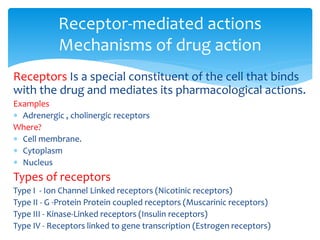
Hypertonic solutions of sodium chloride (3-5-10%) are used to treat purulent
wounds, while according to the law of osmosis the contents of the wound rushes
into the bandage with the solution, the pus from the wound is separated.
Hypertonic solution is administered IV with adrenal cortex hypofunction along
with deoxycorticosterone. Hypertensive sodium solution is also used for rinses (1-
2%) in diseases of the upper respiratory tract, etc. A solution of 7.5% is
administered intravenously with blood loss and various (traumatic) types of shock.
Sodium bicarbonate: 1) It is used as an antacid to reduce the acidity of gastric
contents, where it reacts with hydrochloric acid and neutralizes it, so it is used for
stomach diseases that occur with hyperchlorhydria.
2) Sodium bicarbonate is used as an expectorant. He stands out through the
bronchi, increases the secretion of bronchial glands, dilutes sputum by alkalizing it.
3) A solution of sodium bicarbonate is used for rinsing with inflammatory
diseases of the eyes, oral cavity, throat, nose, for inhalations in inflammatory
diseases of the upper respiratory tract, because they promote alkalization of
exudate and its better separation. 4) 3-5% solution of bicarbonate is administered
iv in order to correct metabolic acidosis. You can enter 4% solution in enemas.
It should be noted that with prolonged administration of sodium bicarbonate,
alkalosis (sometimes uncompensated) can occur in the body, accompanied by loss
of appetite, nausea, vomiting, abdominal pain, severe cases of seizures, possibly an
increase in blood pressure, etc.
Preparations of magnesium
Magnesium plays a big role in the life of the body. It is necessary for the
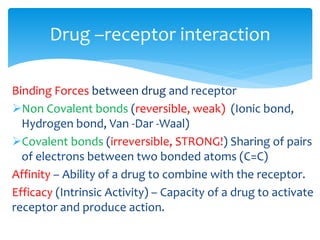
transmission of nerve impulses to the executive organs, it ensures the normal
function of many organs and systems.
Drugs: magnesium sulfate with parenteral administration has a pronounced
sedative and hypotensive effect, which is associated with oppression of the
vasomotor center, with ganglion blocking activity, because Sulfate magnesia
makes it difficult to release acetylcholine to the synapses of the sympathetic
ganglion, thereby impairing the arrival of impulses from the pre- to the
postganglionic fiber, and as a result, the adrenergic vasoconstrictor effects on the
vessels are weakened, the drug dilates the vessels and by means of myotropic
action. However, sulfate magnesia as an antihypertensive drug was used less often,
because There are more active preparations, especially at the I / M introduction it
causes infiltrates and abscesses.
Magnesium sulphate has anticonvulsant activity, which is associated with a
decrease in the release of acetylcholine into the myoneural synapse, this effect is
also rarely used today. There are more active agents used to arrest seizures.
With I/V administration of a hypertonic 25% solution of sulphate magnesia,
intracranial pressure is reduced, because According to the law of osmosis, the
formation of cerebrospinal fluid decreases. This property of the drug is used for
intracranial hypertension (with concussion of the brain, with volumetric processes
of the brain, etc.).
With I/V administration, sulfate magnesia can cause depression of the respiratory
center, with the introduction of a functional calcium chloride antagonist.
With enteral administration of sulfuric magnesia, diarrhea arises because It is not
absorbed from the digestive tract and, according to the law of osmosis, water is
retained in the intestine, increasing the volume of intestinal contents, which
irritates the baroreceptors of the small and large intestine. 25 g of magnesium
sulphate powder is used for acute poisoning with various substances, which retards
the absorption of the poison agent and after 4-6 hours it is removed from the
intestine with chyme.
With enteral administration, sulfuric acid magnesia accelerates the secretion of bile
from the gallbladder and bile ducts, because it relaxes the sphincter of Odie and
increases the tone of the gallbladder. This property is used for duodenal sounding.
Magnesium oxide has antacid activity. Reacts with hydrochloric acid and
neutralizes it. In this regard, magnesium oxide is used for gastritis and peptic ulcer
of the stomach and duodenum, flowing with hyperchlorhydria.
Magnesium oxide is a good antacid. It unlike sodium bicarbonate does not form
carbon dioxide when it reacts with hydrochloric acid, it is not absorbed from the
gastrointestinal tract and can not cause alkalosis and its effect is longer than that of
sodium bicarbonate.
Magne B6 contains magnesium lactate and pyridoxine. Applied with a deficiency
of magnesium and to improve the state of physical and nervous overload.
Magnesium plus contains magnesium carbonate, pyridoxine, cyanocobalamin,
magnesium lactate, folic acid. Assign for anemia.
Magnesium contains magnesium oxide and acetylsallicyl acid. Applied as an
analgesic, antipyretic, anti-inflammatory.
Pharmacology of antacids see according to Kharkevich for agents acting on the
gastrointestinal tract.
ANTIBACTERIAL DRUGS
Associate professor of pharmacology chair
PhD, MD Shmyreva Natalia
ANTIMICROBIAL DRUGS
• Antimicrobial drugs are the drugs providing harmful
or destructive effect on such microorganisms (m/o) as
bacteria, viruses, fungi and protozoa
• They are subdivided into 2 groups:
1. Antimicrobial drugs with nonselective action (they
are more toxic, they destroy the majority of m/o):
1) Antiseptics (they are usually applied to the surface of
skin, mucous membranes)
2) Disinfectants (they are used for the disinfection of
medical instruments, equipment, rooms, dishes,
patients’ excrements)
ANTIMICROBIAL DRUGS
2. Antimicrobial drugs with selective action (so-
called chemotherapeutic drugs, they are less toxic,
can be used systemically, affect specific m/o; they
are used for the treatment and prevention of
infections and for the treatment of infection carriers):
1) Antibacterial chemotherapeutic drugs
2) Antiviral drugs
3) Antifungal drugs
4) Antiprotozoal drugs
ANTIBACTERIAL DRUGS (ABD)
• Antibacterial drugs are the drugs providing harmful or
destructive effect on bacteria
• Two main features characterize them:
- the selectivity of their action against certain kinds of
bacteria, i.e. they have a specific spectrum of
antibacterial action
- relatively low toxicity for people and animals
• They are used systemically (orally and parenterally) and
locally (they are applied to the mucous membrane or
skin, in this case their absorption ought to be minimal for
the most pronounced antimicrobial effect and low risk of
adverse reactions)
• ABD are subdivided into antibiotics and synthetic
antibacterial preparations
• Antibiotics are chemical compounds of biological
origin produced by fungi and certain kinds of
bacteria, which provide a selective harmful or
destructive effect on bacteria and some other m/o
• The derivatives of natural antibiotics and their
synthetic analogues also belong to this group of
preparations
• Antibiosis - the ability of certain m/o (fungi,
bacteria) to provide harmful or destructive effect on
other m/o
CLASSIFICATION OF ABD
Antibiotics Synthetic ABD
1. β-lactam antibiotics
1.1. Penicillins
1.2. Cephalosporins
1.3. Carbapenems
1.4. Monobactams
2. Macrolides and asalydes
3. Tetracyclines
4. Aminoglycosides
5. Polymyxins
6. Lyncosamides
7. Rifamycins
8. Glycopeptides
11. Antibiotics of other groupes
- Chloramphenicol - Fusafungine
- Fusidic acid - Mupirocin
1. Sulfonamides
2. Quinolones
2.1. Non-fluorinated
quinolones
2.2. Fluoroquinolones
3. 8-oxyquinolines
4. Nitrofurans
5. Nitroimidazoles
6. Quinoxalines
7. Oxazoladinones
• Antibiotics affect m/o by preventing cell division
(bacteriostatic effect) or by causing their lysis (bactericidal
effect)
• Mechanisms of antimicrobial action of antibiotics:
1. inhibition of the synthesis of the bacterial cell wall (this is the
mode of action of β-lactam antibiotics, glycopeptides) –
bactericidal effect
2. impairment of permeability of the cytoplasmic membrane
(polymyxins, aminoglycosides, glycopeptides) – bactericidal
effect
3. impairment of intracellular protein synthesis (tetracyclines,
chloramphenicol, macrolides and asalydes, aminoglycosides,
lyncosamides, glycopeptides, fusidic acid) – bacteriostatic
effect
4. inhibition of RNA synthesis (rifampicin) – bacteriostatic effect
Mechanisms of antimicrobial action of some
antibiotics
Classification of antibiotics according the
spectrum of antimicrobial action
1. Antibiotics influencing mainly gram-positive (gr+)
bacteria (biosynthetic penicillins, antistaphylococcal
penicillins, lyncosamides, glycopeptides, fusidic acid)
2. Antibiotics influencing mainly gram-negative (gr-)
bacteria (polymyxins, monobactams)
3. Antibiotics with broad spectrum of action
(aminopenicillins, carboxypeniccilins, ureidopenicillins,
cephalosporins, carbapenems, aminoglycosides,
macrolides and asalydes, tetracyclines,
chloramphenicol, rifamycins) - they are active against
both gram-positive and gram-negative bacteria as well
as against some other agents of infections
Problems occurring in the application of ABD
1. In a course of therapy m/o may develop resistance to the
antibiotics used. This occurs most readily during the use of
aminoglycosides, macrolides and rifampicin. Resistance
develops comparatively slowly during the use of
penicillins, tetracyclines and chloramphenicol; it rarely
occurs with polymyxin. Cross-resistance may also develop
and affect not only the agent that has been used, but also
other antibiotics resembling it by their chemical structure
• To reduce the risk of resistance it is necessary:
- to use correct doses and regimen of antibiotic therapy
- to use rational antibiotic combinations
- to create new improved antibiotics
Problems occurring in the application of ABD
2. Antibiotic therapy is frequently accompanied by
allergic reactions of both immediate and delayed
types (urticaria, angioneurotic edema, anaphylactic
shock, contact dermatitis, etc). Most often allergy is
caused by β-lactam antibiotics. Cross-allergy may
also develop
• To reduce the risk of allergy it is necessary:
- to clarify the allergological anamnesis
- in some cases to carry out allergological tests
Problems occurring in the application of ABD
3. Antibiotics may be responsible for adverse reactions of
non-allergic origin:
- direct irritating action: gastrointestinal dyspepsia (nausea,
vomiting and diarrhoea), tenderness at the point of
intramuscular injection, development of phlebitis and
thrombophlebitis in the case of an intravenous infusion
- damage to the liver, the kidneys, hematopoiesis, hearing,
vestibular apparatus, etc
• To reduce the risk of adverse reactions it is necessary:
- to use correct doses and regimen of antibiotic therapy
- to consider the lesions of organs of excretion
Problems occurring in the application of ABD
4. The development of dysbiosis (superinfection) which
results from partial suppression of saprophyte flora, for
instance, of the gastrointestinal tract. Suppression of the
resident flora may promote multiplication of other m/o —
those that are not sensitive to a particular antibiotic (yeast-
like fungi, Clostridium difficile, proteus, Pseudomonas
aeruginosa, staphylococci). Most commonly superinfection
develops after broad-spectrum antibiotic therapy
To prevent and treat dysbiosis probiotics can be used
(bifidumbacterin, lactobacterin and other)
PRINCIPLE DEMANDS FOR NEW ANTIBIOTICS
• high antimicrobial activity
• prominent selectivity of action
• the required antimicrobial spectrum
• bactericidal effect
• capability of penetrating through biological
membranes (including blood-brain barrier)
• effectiveness in different biological media
• slow development of resistance
• minimal toxicity and a wide therapeutic window
PRINCIPLES OF ANTIBACTERIAL THERAPY
• Precise diagnosis (bacterial infection)
• Identification of causative agent of the disease (if it’s
possible) and evaluation of its sensitivity to the ABD that
can potentially be used - it’s especially actual for treating
prolonged, recurrent and chronic diseases
• Use of the optimal antibiotic taking into account its activity
against the probable or identified pathogen (if the
causative agent is unknown, it is rational to use ABD with
the broadest spectrum of activity)
• It is necessary that the treatment be started as soon as
possible (at the onset of the disease the number of m/o is
low, and they extensively grow and reproduce, at this
stage they are especially susceptible to the action of ABD)
PRINCIPLES OF ANTIBACTERIAL THERAPY
• Dose and rhythm (periodicity) of administration of ABD
have to be sufficient to implement bacteriostatic or
bactericidal concentrations in biological fluids and tissues;
selection of a rational route of administration of ABD is
also especially important
• If it is necessary, combined use of ABD with different
mechanisms of action (it should be well justified since a
wrong combination of ABD may lead to their antagonism
and also to a summation of their toxic effects). A combined
use of ABD is especially advisable in case of chronic
infections to prevent development of bacterial resistance
to ABD
PRINCIPLES OF ANTIBACTERIAL THERAPY
• Optimal duration of a treatment course is of great
importance. It should be considered that clinical
improvement (decrease in temperature, etc) is not a
reason for discontinuation of ABD. If a proper course
of treatment has not been completed, a recurrence of
the disease may be expected
• To prevent and treat dysbiosis probiotics can be used
(bifidumbacterin, lactobacterin and other)
PREVENTIVE USE OF ABD
• 1) for the prevention of diseases to people who were in
contact with patients with plague, rickettsiosis,
tuberculosis, scarlet fever, syphilis, etc
• 2) for the prevention of rheumatic attacks (bicillins)
• 3) for the prevention of acute glomerulonephritis after
streptococcal tonsillopharyngitis
• 4) in diagnostic and therapeutic endoscopy of the urinary
tract
• 5) in open fractures of bones
• 6) in extensive burns
• 7) in operations on obviously infected areas (dentistry,
ENT organs, lungs, digestive tract)
• 8) in operations on the heart, blood vessels, brain, etc.
β-LACTAM ANTIBIOTICS
• β-lactams - antibiotics that have a β-lactam ring in
their structure (penicillins, cephalosporins,
carbapenems, monobactams)
• Mechanism of antibacterial action is connected with
the impairment of synthesis of cell wall. β-lactams
block peptide linkage formation via transpeptidase
enzyme inhibition. They only influence dividing cells
• Type of antibacterial effect: bactericidal
β-LACTAM ANTIBIOTICS
• To overcome resistance of some m/o to β-lactams
(which occurs due to the ability of some strains to
produce β-lactamases) some specific β-lactamase
inhibitors have been synthesized (clavulanic acid,
sulbactam, tazobactam)
• They irreversibly inhibit certain β-lactamases and
prevent the destruction of β-lactams
• β-Lactamase inhibitors are included in complex
preparations (β-lactam antibiotic + β-lactamase
inhibitor)
PENICILLINS
CLASSIFICATION
1. Biosynthetic penicillins
• For parenteral use (they are destroyed in gastric acid
medium)
1) Short-term action
Benzylpenicillinum-natrium
Benzylpenicillinum-kalium
2) Long-term action
Procaine-benzylpenicillin
Benzylpenicillin-benzathine (bicillinum 1)
Benzicilline-5 (bicillinum 5)
• For oral use (acid-stable)
Phenoxymethylpenicillin
PENICILLINS
2. Semisynthetic penicillins
1) Resistant to penicillinase (antistaphylococcal penicillins)
Oxacillin
2) With broad spectrum of action (aminopenicillins)
Ampicillin Amoxicillin
3) With broad spectrum of action including Pseudomonas
aeruginosa (antipseudomonal penicillins)
a) Carboxypenicillins
Carbenicillin Ticarcillin Carfecillin
b) Ureidopenicillins
Piperacillin Azlocillin Mezlocillin
BIOSYNTHETIC PENICILLINS
They mainly affect gr+ bacteria
Spectrum of action:
• gr+ cocci: non penicillinase-producing staphylococci,
streptococci, pneumococci, enterococci
• gr+ bacilli: diphtheria bacillus (corinebacteria), anthrax
bacillus, clostridia (causative agents of gas gangrene
and tetanus)
• gr- cocci: meningococci, gonococci
• spirochetes (including Spirochete pallidum) and some
pathogenic fungi (for example, actinomyces)
BIOSYNTHETIC PENICILLINS
Pharmacokinetics
• Route and periodicity of administration
Benzylpenicillinum-natrium: i/v, i/m - 6 times a day (t/d),
also in different cavities
Benzylpenicillinum-kalium: i/m - 6 t/d
Procaine-benzylpenicillin: i/m - 2 t/d
Bicillinum 1: i/m - once every 7 -14 days
Bicillinum 5: i/m - once a month
Phenoxymethylpenicillin: p/o - 3 t/d
• Bioavailability of Phenoxymethylpenicillin – 30-60%
• Tissue penetration is good, but biosynthetic penicillins
do not penetrate through the blood-brain barrier
• Excretion - by the kidneys
BIOSYNTHETIC PENICILLINS
Indications for administration
• Streptococcal infections (tonsillopharyngitis, scarlet
fever, erysipelas, endocarditis, prevention of
rheumatism)
• Meningitis
• Syphilis
• Gas gangrene
• Actinomycosis
ANTISTAPHYLOCOCCAL PENICILLINS
Spectrum of action:
is similar to that of benzylpenicillin, but activity is less, and
also they are active against benzylpenicillin-resistant
strains of staphylococci (penicillinase-producing strains)
Pharmacokinetics
• Route and periodicity of administration
i/v, i/m, p/o – 4-6 t/d
• Bioavailability – 30-50%
• Excretion - mainly by the liver
Indications for administration
• Staphylococcal infections (infections of skin, soft tissues,
bones and joints, endocarditis)
AMINOPENICILLINS
Spectrum of action is broad:
• gr+ m/o (influence is similar to that of benzylpenicillin)
And also they additionally affect:
• gr- m/o: salmonellas, schigellas, some strains of
proteus, Escherichia coli, Klebsiella pneumoniae,
Hemophilus influenzae
Complex preparations:
• with oxacillin: ampicillin + oxacillin (ampiox)
• with β-lactamase inhibitors: amoxicillin + clavulanic acid
(augmentin), amoxicillin + sulbactam, ampicillin +
sulbactam (sultamicillin)
AMINOPENICILLINS
Pharmacokinetics
• Route and periodicity of administration
Ampicillin: i/v, i/m, p/o – 4 t/d
Amoxicillin: p/o – 3 t/d
Amoxicillin + clavulanic acid: i/v, p/o – 3 t/d
• Bioavailability
Ampicillin – 40%
Amoxicillin – 70-80%
• Tissue penetration is good, they penetrate through the
blood-brain barrier more readily than benzylpenicillin
• Excretion - by the kidneys
AMINOPENICILLINS
Indications for administration
• Infectious diseases of the respiratory, urinary and
gastrointestinal tracts
•Meningitis
•Endocarditis
Complex preparations with β-lactamase inhibitors can be
also used in:
•surgical infections
•infections of skin, soft tissues, bones and joints
ANTIPSEUDOMONAL PENICILLINS
Carboxypenicillins
Spectrum of action:
is similar to that of aminopenicillins, but activity is less, and
also they are active against Pseudomonas aeruginosa and
all kinds of proteus. There is also complex preparation:
ticarcillin + clavulanic acid (timentin)
Pharmacokinetics
• Route and periodicity of administration
i/v, i/m, p/o – 4 t/d
• Bioavailability of Carfecillin – 40%
• Tissue penetration is good, but they do not freely
penetrate through the blood-brain barrier
• Excretion - by the kidneys
Ureidopenicillins
Spectrum of action:
is similar to that of carboxypenicillins, but they are more
effective against Pseudomonas aeruginosa and Klebsiella.
There is also complex preparation: piperacillin +
tazobactam (tazocin)
Pharmacokinetics
• Route and periodicity of administration: i/v, i/m – 3 t/d
• Tissue penetration is similar to that of carboxypenicillins
• Excretion - by the kidneys and the liver
Indications for administration of antipseudomonal
penicillins
• Hospital infections caused by Pseudomonas aeruginosa,
proteus (pyelonephritis, pneumonia, septicemia, peritonitis,
infections of skin, soft tissues, bones and joints, etc)
ADVERSE EFFECTS (AE) OF PENICILLINS
• The toxicity of penicillins is low, and their therapeutic
window - wide
1.Allergic Reactions - the most common AE related to
penicillin therapy: urticaria, angioneurotic edema,
anaphylactic shock, contact dermatitis, etc.
The treatment of allergic reactions consists of cessation
of penicillin and the administration of glucocorticoids
and antihistamines. In case of anaphylactic shock
epinephrine is also infused intravenously
ADVERSE EFFECTS (AE) OF PENICILLINS
2.Neurotoxicity (especially intravenous use of excessively
high doses of benzilpenicillin)
3.Dysbiosis
4.Local reactions - irritating effect of penicillins: glossitis,
stomatitis, nausea, vomiting, diarrhea (in orall use);
pain, infiltration and aseptic muscle necrosis (in
intramuscular use); phlebitis or thrombophlebitis (in
intravenous use)
5.Hepatotoxicity
6.Nephrotoxicity
7.Hematologic reactions
CEPHALOSPORINS
CLASSIFICATION
Generation
I
Generation
II
Generation
III
Generation
IV
Generation
V
for parenteral (intravenous, intramuscular) use
Cefazolin
Cephalothin
Cefuroxime
Cefamandol
Cefotaxime
Ceftriaxone
Cefoperazone
Ceftazidime
Cefoperazone/
sulbactam
Cefepime
Cefpirome
Ceftobiprol
Ceftaroline
for oral use
Cephalexin
Cefadroxil
Cefuroxime
Cefaclor
Cefixime
Ceftibuten
SPECTRUM OF ACTION OF CEPHALOSPORINS
• Spectrum of antimicrobial action is broad. They are active
against benzylpenicillin-resistant staphylococci
(penicillinase-producing strains), but they aren’t active
against enterococci
• Generation I: they are especially effective against gr+
cocci and much less effective against gr- m/o:
- gr+ cocci: penicillinase-producing staphylococci,
streptococci, pneumococci
- gr- m/o: Neisseria, salmonellas, schigellas, Proteus
mirabilis, Escherichia coli, Klebsiella pneumoniae,
Hemophilus influenzae
• Generation II: they have the same spectrum of activity as
Generation I, but they are more effective against gr- m/o
SPECTRUM OF ACTION OF CEPHALOSPORINS
• Generation III: they have broader spectrum of activity than
Generation II and they are more effective against gr- m/o
- Cefotaxime and Ceftriaxone are highly effective against
staphylococci, streptococci and pneumococci, but they are
almost ineffective against Pseudomonas aeruginosa
- Cefoperazone and Ceftazidime are highly effective against
Pseudomonas aeruginosa, but they are much less effective
against gr+ cocci
• Generation IV: they have broader spectrum of activity than
Generation III (including Enterobacter and Acinetobacter) and
they are highly effective against both gr- m/o and gr+ m/o
• Generation V: they have broad spectrum of action and they
have activity against highly resistant Staphylococcus aureus
PHARMACOKINETICS OF CEPHALOSPORINS
• Periodicity of administration
Generation I: 2-4 t/d
Generation II: 3 t/d
Generation III: 1-3 t/d
Generation IV: 2 t/d
Generation V: 1-2 t/d
• Bioavailability of oral cephalosporins – 50-90%
• Tissue penetration is good, Generation III better
penetrates through the blood-brain barrier
• Excretion - by the kidneys, Generation III is excreted
both by the kidneys and the liver
INDICATIONS FOR ADMINISTRATION OF
CEPHALOSPORINS
• Infections of ENT organs
• Pneumonia
• Urinary tract infections
• Infections of the skin, soft tissues
• Gonorrhea (Generation III: Cefotaxime and Ceftriaxone)
• Meningitis (Generation III: Cefotaxime and Ceftriaxone)
• Infections of the bones and joints (Generations III-IV)
• Intraabdominal infections (Generations III-IV)
• Infections of the pelvic organs (Generations III-IV)
• Sepsis (Generations III-IV)
• Infections caused by Pseudomonas aeruginosa
(Generations III-IV: Cefoperazone, Ceftazidime, Cefepime)
• Infections caused by highly resistant Staphylococcus aureus
(Generation V)
ADVERSE EFFECTS (AE) OF CEPHALOSPORINS
1.Allergic reactions (sometimes cross sensitization with
penicillins)
2.Local reactions (topical irritation): dyspepsia (in orall use);
pain and infiltration (in intramuscular use); phlebitis or
thrombophlebitis (in intravenous use)
3.Nephrotoxicity (Generation I)
4.Hepatotoxicity
5.Neurotoxicity (especially intravenous use of excessively
high doses)
6.Hematologic reactions (mild leukopenia,
hypoprothrombinaemia)
7.Dysbiosis, superinfection
CARBAPENEMS
CLASSIFICATION
I. Carbapenems, that are not effective against
Pseudomonas aeruginosa and Acinetobacter:
Ertapenem
II.Carbapenems, that are effective against Pseudomonas
aeruginosa and Acinetobacter: Imipenem, Meropenem,
Doripenem
SPECTRUM OF ACTION
Carbapenems have ultra broad spectrum of activity
including aerobic and anaerobic bacteria
They are resistant to β-lactamases
CARBAPENEMS
PHARMACOKINETICS
• Route and periodicity of administration
Ertapenem : i/v, i/m – 1 t/d
Imipenem : i/v 4 t/d, i/m 2 t/d
Meropenem : i/v 3 t/d, i/m 2-3 t/d
Doripenem: i/v 3 t/d
• Tissue penetration is good, they penetrate freely through
tissue barriers including the blood-brain barrier
• Biotransformation: Imipenem is destroyed by
dehydropeptidase-1 in the renal proximal tubules. That is
why it is used in combination with cylastatin
(dehydropeptidase-1 inhibitor). One such combined
preparation is tienam.
• Excretion - by the kidneys
CARBAPENEMS
INDICATIONS FOR ADMINISTRATION
Severe infections of different localization:
• Pneumonia
• Infections of the skin, soft tissues, bones and joints
• Urinary tract infections
• Intraabdominal infections (peritonitis)
• Infections of the pelvic organs
• Meningitis
• Sepsis
ADVERSE EFFECTS (AE) OF CARBAPENEMS
1.Local irritation
2.Allergic reactions (sometimes cross allergy with penicillins)
3.Nephrotoxicity, neurotoxicity(Imipenem)
4.Dysbiosis, superinfection
5.Dyspepsia: nausea, vomiting
MACROLIDES AND AZALIDES
CLASSIFICATION
Generation I: Erythromycin
Generation II: Roxithromycin, Clarythromycin, Josamycin
Generation III: Azithromycin (it is azalide)
• Mechanism of antibacterial action: inhibition of
protein synthesis in bacterial ribosomes. It is linked to a
suppression of peptide translocaze enzyme
• Type of antibacterial effect: bacteriostatic, but they
can affect some sensitive m/o bactericidally
SPECTRUM OF ACTION OF MACROLIDES AND AZALIDES
• Spectrum of antimicrobial action is broad. Secondary
resistance occurs very readily
• They are especially active against gr+ cocci (penicillinase-
producing staphylococci, streptococci, pneumococci),
diphtheria bacillus (corinebacteria), obligate intracellular
microorganisms (chlamydia, mycoplasma, ureoplasma) –
bactericidal effect
• The spectrum of activity also includes gr- m/o (neisseria,
hemophilus), anaerobes (clostridia), rickettsia, legionella,
causative agents of amoebic dysentery and some other -
bacteriostatic effect
• Generations II-III are additionally effective against some
gr- m/o. Clarythromycin and Josamycin are active
against Helicobacter pylori, Azithromycin is more active
against Hemophilus influenzae
PHARMACOKINETICS OF MACROLIDES AND AZALIDES
• Route and periodicity of administration
Erythromycin: p/o, i/v – 4 t/d
Roxithromycin, Josamycin: p/o – 2-3 t/d
Clarythromycin: p/o, i/v – 2 t/d
Azithromycin: p/o, i/v – 1 t/d
• Bioavailability – 30-70 %, in the acid medium of the
stomach they can be partially destroyed, so there are acid-
fast capsules or tablets with a special enteric coating, which
allows drugs to release only in the small intestine
• Tissue penetration is very good, they readily penetrate
into different tissues including placenta, accumulate in
phagocytes in high concentrations, but don’t penetrate
through the blood-brain barrier
• Excretion - by the liver
INDICATIONS FOR ADMINISTRATION OF
MACROLIDES AND AZALIDES
• Different infections in case of allergy to β-lactam
antibiotics: infections of ENT organs, pneumonia,
infections of the skin, soft tissues, bones and joints,
urinary tract, GIT
• Infections caused by intracellular m/o (chlamydia,
mycoplasma, ureoplasma): atypical pneumonia,
urogenital infections, sexually transmitted infections,
severe acne
• Diphtheria
• Infections caused by Helicobacter pylori (Clarythromycin,
Josamycin)
ADVERSE EFFECTS (AE) OF MACROLIDES AND
AZALIDES
They are low toxicity antibiotics and rarely cause side
effects
1.Dyspepsia
2.Hepatotoxicity
3.Neurotoxicity (hearing disorder – especially in
intravenous use of high doses)
4.Local reactions: phlebitis or thrombophlebitis (in
intravenous use)
5.Dysbiosis, superinfection
6.Allergic reactions
TETRACYCLINES
CLASSIFICATION
Biosynthetic: Oxytetracycline, Tetracycline
Semisynthetic : Doxicycline, Methacycline,
Minocycline
• Mechanism of antibacterial action: inhibition of
protein synthesis in bacterial ribosomes. Besides,
tetracyclines bind to metals (Mg2+, Ca2+) forming
chelate compounds and inhibit enzyme systems
• Type of antibacterial effect: bacteriostatic
SPECTRUM OF ACTION OF TETRACYCLINES
• Spectrum of antimicrobial action is broad, but now there is
a problem of gradually developing resistance to
tetracyclines
• They are active against gr+ cocci (streptococci,
pneumococci) and gr- m/o (neisseria, hemophilus,
Helicobacter pylori, salmonellas, schigellas, escherichias,
klebsiellas), spirochetes, anaerobes, intracellular
microorganisms (chlamydia, mycoplasma), rickettsia,
causative agents of the most dangerous infections (plague,
tularemia, brucellosis, cholera) and some protozoa
(causative agent of amebic dysentery)
• They are not active against staphylococci, corinebacteria,
proteus, Pseudomonas aeruginosa
PHARMACOKINETICS OF TETRACYCLINES
• Route and periodicity of administration
Oxytetracycline: p/o – 4 t/d
Tetracycline: i/m, p/o – 4 t/d
Doxicycline: i/v, p/o – 1-2 t/d
• Bioavailability
Oxytetracycline, Tetracycline ≈ 50%, they form chelate
compounds with ions of calcium, iron and aluminium,
which are not absorbed, therefore, their absorption is
impaired when they are taken together with food
Doxicycline ≈ 100%
• Tissue penetration is good, they penetrate into different
tissues including placenta, can accumulate in the bones,
can penetrate inside cells, much less penetrate through the
blood-brain barrier
• Excretion - by the kidneys and liver, Doxycycline - mainly
(up to 90%) with bile
INDICATIONS FOR ADMINISTRATION OF
TETRACYCLINES
Tetracyclines are used systemically not very often now
• Infections caused by intracellular m/o (chlamydia,
mycoplasma): atypical pneumonia, urogenital infections,
sexually transmitted infections, severe acne
• Infections caused by Helicobacter pylori (Tetracycline)
• Respiratory infections (bronchitis, pneumonia)
• Rickettsiosis (typhus), syphilis, relapsing fever,
leptospyrosis, amoebic dysentery
• Eye infections (especially in trachoma) - in the form of
ointment
• The most dangerous infections (plague, tularemia,
brucellosis, cholera)
ADVERSE EFFECTS (AE) OF TETRACYCLINES
Tetracyclines are very toxic
1.Local reactions (irritation): dyspepsia, glossitis, stomatitis
(in orall use); pain and infiltration (in intramuscular use);
phlebitis or thrombophlebitis (in intravenous use)
2.Hepatotoxicity (mainly oxytetracycline)
3.Depression of bone growth, pigmentation and impairment
of the teeth in case of use in young children and women in
late pregnancy (they form chelate complex with calcium salts)
4.Hematotoxicity (leukopenia, anemia)
5.Photodermatitis
6.Antianabolic and catabolic action (hypotrophy)
7.Dysbiosis, superinfection (candidamycosis, staphylococcal
and pseudomonal infections, pseudomembranous colitis)
8.Allergic reactions
CHLORAMPHENICOL
DRUGS
Chloramphenicol (levomycetine)
Chloramphenicol succinate (levomycetine succinate,
chlorocid C)
• Mechanism of antibacterial action: inhibition of
protein synthesis in bacterial ribosomes.
• Type of antibacterial effect: bacteriostatic
SPECTRUM OF ACTION OF CHLORAMPHENICOL
• Spectrum of antimicrobial action is broad
• It is active against gr+ m/o (streptococci, pneumococci,
corinebacteria) and gr- m/o (neisseria, hemophilus,
salmonellas, schigellas, escherichias), spirochetes,
anaerobes, intracellular microorganisms (chlamydia,
mycoplasma), rickettsia, actinomyces, causative agents of
the most dangerous infections (plague, tularemia,
brucellosis)
• They are not active against staphylococci, proteus,
Pseudomonas aeruginosa and protozoa
PHARMACOKINETICS OF CHLORAMPHENICOL
• Route and periodicity of administration
Chloramphenicol: p/o 4 t/d
Chloramphenicol succinate: i/v 4 t/d
• Bioavailability ≥ 90%
• Tissue penetration is good, they penetrate into different
tissues including placenta, through the blood-brain
barrier, can penetrate inside cells
• Elimination: biotransformation - in the liver, excretion -
by the kidneys
INDICATIONS FOR ADMINISTRATION OF
CHLORAMPHENICOL
Chloramphenicol is used systemically not often now
because of its toxicity
• Meningitis
• Typhoid fever, salmonellosis, dysentery
• Rickettsiosis (typhus)
• The most dangerous infections (plague, tularemia,
brucellosis)
• Intraabdominal infections
• Infections of the pelvic organs
• Eye infections (locally)
ADVERSE EFFECTS (AE) OF CHLORAMPHENICOL
Chloramphenicol is very toxic
1.Hematotoxicity (significant suppression of hemopoiesis
followed by reticulocytopenia, granulocytopenia and aplastic
anemia that may be fatal; therapy requires regular blood count
monitoring; intervention should be short-term)
2.Irritation of the mucous membranes (nausea, diarrhea,
anorectal syndrome)
3.Psychomotor disorders, myocardial suppression, dermatitis
4. Severe intoxication accompanied by cardiovascular collapse
in neonates and infants < 1 month old (results from the slow
excretion by the kidneys and a liver enzyme insufficiency)
5.Dysbiosis, superinfection (candidamycosis, staphylococcal
and pseudomonal infections, infections caused by proteus)
6.Allergic reactions
AMINOGLYCOSIDES
CLASSIFICATION
Generation I: Streptomycin, Neomycin, Kanamycin,
Monomycin
Generation II: Gentamicin
Generation III: Amikacin, Tobramycin, Sisomicin
Generation IV: Isepamicin
• Mechanism of antibacterial action: inhibition of
protein synthesis in bacterial ribosomes and impairment
of permeability of the cytoplasmic membrane
• Type of antibacterial effect: bactericidal
SPECTRUM OF ACTION OF AMINOGLYCOSIDES
• Spectrum of antimicrobial action is broad. Secondary
resistance occurs readily
• They are active against gr+ cocci (penicillinase-producing
staphylococci), gr- m/o (salmonellas, schigellas, proteus,
escherichias, klebsiellas, Hemophilus influenzae)
• Besides, Streptomycin is additionally active against M.
tuberculosis, the causative agents of plague, tularemia and
brucellosis; Kanamycin - against M. tuberculosis;
Monomycin - against protozoa (causative agents of
amebic dysentery, leishmaniasis and trichomoniasis);
Gentamicin - against causative agents of tularemia and
enterococci; Amikacin – against atypical micobacterias;
Isepamicin - against Citrobacter and Acinetobacter
• Generations II-IV are additionally effective against
Pseudomonas aeruginosa
PHARMACOKINETICS OF AMINOGLYCOSIDES
• Route and periodicity of administration
Generation I-III: i/m, i/v, – 2-3 t/d
Isepamicin: i/m, i/v – 1 t/d
Also aminoglycosides can be used p/o and locally
• Bioavailability – 1-5 % (very poorly absorbed from GIT)
• Tissue penetration: distributed mainly extracellularly,
penetrate into the peritoneal and pleural cavities and
placenta, does not pass through the blood- brain barrier
• Excretion - by the kidneys in an unchanged form
INDICATIONS FOR ADMINISTRATION OF
AMINOGLYCOSIDES
• Intraabdominal infections
• Infections of the pelvic organs
• Infections of the urinary tract
• Infections of the respiratory system (hospital pneumonia)
• Infectious endocarditis
• Sepsis of unknown etiology
• The most dangerous infections (plague, tularemia,
brucellosis, tuberculosis)
• Eye infections, infected wounds, skin infections(locally)
• Preoperative prevention before a gastrointestinal
operations
ADVERSE EFFECTS (AE) OF AMINOGLYCOSIDES
They are high toxicity antibiotics
1.Ototoxic and vestibulotoxic effects (auditory
disturbances and vestibular dysfunction - damage of the
sensory cells of the VIIIth cranial nerve)
2.Inhibitory influence on neuromuscular synapses (this
may result in respiratory depression)
3.Local reactions: pain and infiltration (in intramuscular
use); phlebitis or thrombophlebitis (in intravenous use)
4.Dysbiosis, superinfection
5.Allergic reactions
SYNTHETIC ANTIBACTERIAL DRUGS
SULFONAMIDES
Classification of sulfonamide preparations:
I Preparations used for their systemic action (readily absorbed from the GIT)
1) With a medium-term action (4-6 h)
✓ Sulfadimidine (sulfadimezinum)
✓ Sulfaethidole (ethazolum)
✓ Sulfadiazin (sulfazinum)
✓ Sulfacarbamide (urosulfanum)
2) With a long-term action (12-24 h)
✓ Sulfamethoxypyridazine (sulfapyridazinum)
✓ Sulfadimethoxine
3) With a very long-term action (≥7 days)
✓ Sulfalene
II • Preparations acting in the intestinal lumen (poorly absorbed from the GIT)
✓ Phthalylsulfathiazole (phthalazolum)
III • Preparations for topical use
✓ Sulfacetamide sodium (sulfacylum natrium)
✓ Silver sulfadiazine (sulfarginum)
IV Combined preparations (sulfonamide + trimethoprim)
✓ sulfametoxazole + trimethoprim (co-trimoxazole, bactrim, biseptol, septrin)
✓ sulfametrol + trimethorpim (lidaprim)
✓ sulfamonomethoxine + trimethoprim (sulfatonum)
✓ sulfadimidine + trimethoprim (poteseptil)
The mechanism of antimicrobial action of sulfonamides is connected with their competitive
antagonism with para-aminobenzoic acid. The latter is included in the structure of dihydrofolic acid,
which is synthesized by many microorganisms (m/o). Owing to chemical similarity to para-
aminobenzoic acid, sulfonamides prevent its inclusion into the dihydrofolic acid. Impairment of
dihydrofolic acid synthesis leads to a decrease in conversion of dihydrofolic acid into tetrahydrofolic
acid, which is essential for the synthesis of purine and pyrimidine bases →nucleic acid synthesis is
inhibited → the suppression of growth and reproduction of m/o (bacteriostatic effect). This does not
take place in human tissues since these tissues utilize the preformed dihydrofolic acid (cannot
synthetiaze it). Trimethoprim blocks the conversion of dihydrofolic acid into the tetrahydrofolic one. A
combination of sulfonamides with trimethoprim inhibits two different stages of biosynthesis of nucleic
acid precursors and increases antimicrobial activity (the effect becomes bactericidal).
A spectrum of action is rather broad:
• bacteria - gr+ and gr- cocci (streptococci, pneumococci, meningococci and gonococci),
Escherichia coli, causative agents of bacilary dysentery (schigellas), klebsiellas, yersinias, Vibrio
cholerae, haemophilus, causative agents of gas gangrene (clostridia), causative agents of anthrax,
diphtheria
• chlamydias - causative agents of trachoma, ornitosis, lymphogranulema venereum
• actinomyces (nocardias)
• protozoa - causative agents of toxoplasmosis, plasmodium malaria, pneumocystis.
Currently many strains of bacteria are resistant to sulfonamides. Combinations of
sulfonamides with trimethoprim are more effective.
Pharmacokinetics of preparations used for their systemic action
Sulfonamides are readily and completely absorbed from the gastrointestinal tract. The drugs are
distributed throughout all tissues of the body: they penetrate through the blood-brain barrier and
placenta, are accumulated in the serous cavities of the body. Sulfonamide conversion in the body is
acetylation, which takes place in the liver. Some acetylated derivatives are less soluble than the initial
sulfonamides, and may cause a formation of crystals in urine (crystalluria). Mainly the kidneys via
filtration excrete sulfonamides and their metabolites.
Periodicity of administration: the drugs with medium-term action - 4-6 t/d, with long-term
action – 1-2 t/d, with a very long-term action – once a week, phthalazolum- 4-6 t/d.
Indications for administration of sulfonamides
Preparations used for their systemic action: nocardiosis, toxoplasmosis, malaria, prevention of
plague.
Preparations acting in the intestinal lumen: intestinal infections (bacillary dysentery, enterocolitis,
colitis).
Preparations for topical use: treatment and prevention of eye infections, burns, bedsores, trophic
ulcers.
Combined preparations (sulfonamide + trimethoprim): intestinal infections (bacillary dysentery,
enterocolitis, colitis), urinary tract infections (pyelohephritis, pyelitis, cystitis), staphylococcal
infections, pneumocystis pneumonia, nocardiosis, toxoplasmosis, malaria.
Adverse effects (the systemic action of sulfonamides causes a lot of adverse effects):
hemopoiesis impairment (hemolytic anemia, thrombocytopenia, methemoglobinemia), gastrointestinal
distress (nausea, vomiting), headache, weakness, CNS disorders, cristalluria, allergic reactions.
QUINOLONE DERIVATIVES
Classification
Generation I (non-fluorinated quinolones): Nalidixic acid (nevigramon, negram), Pipemidic
acid (palin, pimidel)
Generation II (fluoroquinolones): Ciprofloxacin, Norfloxacin, Perfloxacin, Lomefloxacin,
Ofloxacin
Generation III (respiratory fluoroquinolones): Levofloxacin
Generation IV (respiratory fluoroquinolones): Moxifloxacin
Non-fluorinated quinolones (Nalidixic acid and Pipemidic acid)
Spectrum of antimicrobial activity includes gr- bacteria: E. coli, proteus, klebsiellas,
schigellas and salmonellas.
The mechanism of antimicrobial action is due to DNA synthesis inhibition. Type of effect –
bacteriostatic, but in high concentration - bactericidal effect.
Pharmacokinetics: they are readily absorbed from the gastrointestinal tract. Excretion - by the
kidneys.
Indications for administration: urinary tract infections.
Adverse effects: gastrointestinal distress, allergic reactions, photodermatosis, transient visual
problems (loss of visual acuity, photophobia), headache.
Fluoroquinolones
Fluoroquinolones are highly active antibacterial drugs with a broad spectrum of action.
Generation II exhibit a bactericidal effect against gr- bacteria (gonococci, E.coli, schigella,
salmonella, Klebsiella pneumoniae, Enterobacter, Hemophilus influenzae, Pseudomonas aeruginosa),
they are less effective against gr+ bacteria. Generations III-IV are characterized additionally by high
bactericidal activity against gr+ bacteria (streptococci, pneumococci, staphylococci, listeria,
corinebacteria), chlamydia, mycoplasma, ureaplasma and anaerobic microorganisms.
The mechanism of antibacterial action of fluoroquinolones is associated with the inhibition
of bacterial enzymes - topoisomerases II (DNA-gyrase) and IV; this impairs DNA replication and,
hence, RNA formation. All this interferes with bacterial growth and division.
Pharmacokinetics: fluoroquinolones are readily absorbed from the GIT. They penetrate into
most tissues. Excretion - by the kidneys and the liver.
Indications for administration: urinary tract-, respiratory and gastrointestinal infections,
infections of skin, soft tissues, bones and joints, gonorrhea, meningitis, intraabdominal infections,
infections of the pelvic organs, sepsis
Adverse effects: gastrointestinal distress, allergic reactions, headache, dizziness, insomnia,
photosensitivity, arthralgia, superinfection (in general, they are usually well tolerated).
DERIVATIVES OF 8-OXYQUINOLINE
Drugs: Nitroxoline, Chlorquinaldol
Derivatives of 8-oxyquinoline have a broad spectrum of antibacterial action. Nitroxoline (5-
nitrox) is more effective against gr- m/o, besides, it affects certain fungi (yeast, etc). Chlorquinaldol is
more effective against gr- m/o, besides, it affects certain fungi and protozoa.
The mechanism of antimicrobial action: they can form inactive complexes with metals that is
why they inhibit some bacterial enzyme systems. Type of effect – bacteriostatic (Nitroxolin),
bactericidal (Chlorquinaldol).
Pharmacokinetics
Nitroxolin is readily absorbed from the GIT. It is excreted in the unchanged form with urine in
which the drug accumulates in bacteriostatic concentrations.
Chlorquinaldol is not absorbed from the GIT.
Indications for administration:
- Nitroxolin is used for the treatment of urinary tract infections (it is given orally).
- Chlorquinaldol is used for the treatment of gastrointestinal infections, amebic dysentery,
dysbiosis (it is given orally).
Adverse effects: gastrointestinal distress, neurotoxicity (peripheral polyneuritis), allergic
reactions, nitroxolin colours the urine bright yellow.
NITROFURAN DERIVATIVES
Drugs: Furazolidone, Nitrofurantion (Furadonin), Furazidin (Furagin), Nitrofural
(Furacilinum).
The mechanism of antimicrobial action: they can form complexes with bacterial nucleic acids
and inhibit them, besides, they impair permeability of the cytoplasmic membrane. Type of effect –
bacteriostatic, but in high concentration - bactericidal effect.
Spectrum of antimicrobial activity is broad: gr- m/o (enterobacteria, meningococci,
gonococci), gr+ m/o (streptococci, pneumococci, staphylococci), fungi (candida) and protozoa
(trichomonas, giardia). They may be effective against the m/o, which are resistant to antibiotics and
sulfonamides.
Pharmacokinetics
• They are readily absorbed from the GIT (excepting Furacilinum), bioavailability – 50%
(Furazolidone - 30%), are excreted in the unchanged form with urine in which the drugs accumulates
in bacteriostatic and bactericidal concentrations.
Indications for administration:
- Furazolidone is used for the treatment of intestinal infections (bacillary dysentery,
paratyphoid fever, toxicoinfections), trichomoniasis and giardiasis (it is given orally, intravaginally
and intrarectally).
- Nitrofurantion (Furadonin) and Furazidin (Furagin) are used for the treatment of
urinary tract infections (they are given orally, can also be applied topically).
- Nitrofural (Furacilinum) is applied mainly as antiseptic for external use.
Adverse effects: gastrointestinal distress (may impair appetite, cause nausea and vomiting),
neurotoxicity (headache, dizziness), pneumonitis, allergic reactions.
QUINOXALINE DERIVATIVES
Drugs: Quinoxidin and Dioxidin.
Spectrum of antimicrobial activity is broad: gr- m/o (enterobacteria, Proteus vulgaris,
Pseudomonas aeruginosa, meningococci, gonococci), gr+ m/o (streptococci, pneumococci,
staphylococci), including pathogenic anaerobes fungi (candida) and protozoa (trichomonas, giardia).
They may be effective against m/o, which are resistant to other antimicrobial preparations. Type of
effect –bactericidal.
Pharmacokinetics
Quinoxidin is given orally, its bioavailability is good; Dioxidin is used i/v and in different
cavities. They are excreted in the unchanged form with urine.
Indications for administration: severe pyoinflammatory processes (pneumonia, infections of
the skin, soft tissues, bones and joints, urinary tract infections, intraabdominal infections (peritonitis),
meningitis).
Quinoxidin and dioxidin are rather toxic. Adverse reactions: gastrointestinal distress (nausea,
vomiting), neurotoxicity (headache, dizziness, muscular cramps), lesion of adrenal cortex, chill,
allergic reactions, etc.
ANTISEPTICS AND DISINFECTANTS
Antiseptics are usually applied to the surface of covering tissues (skin, mucous membranes).
They are used in the treatment of infected wounds, microbial lesions of the skin and mucous
membranes. Certain antiseptics are used to affect the microorganisms localized in GIT and in the
excretory urinary system. Depending on the concentration, they provide bacteriostatic or bactericidal
effects.
Disinfectants are used for the disinfection of medical instruments, equipment, premises, dishes,
patients’ excrements, linen, etc. They are applied at bactericidal concentrations and aimed at the
prevention of the spread of infection.
Antiseptics and disinfectants have a broad spectrum of activity against bacteria, viruses,
protozoa and fungi and high activity.
Antiseptics should meet the following important requirements: an absence of local negative (for
example, irritating) effect on tissues, minimal absorption from the site of application, low toxicity and
allergenicity.
Disinfectants should not damage the materials that are being treated (change the colour, lead to
metal corrosion, etc). The absence of an offensive odour is desirable.
The mechanisms of action of different antiseptics and disinfectants vary; they may include
protein denaturation, impairment of plasma membrane permeability and inhibition of the enzymes
which are required for the vital activity of microbes.
Classification
• Detergents
✓ Cerigelum
• Derivatives of nitrofuran
✓ Nitrofural
• Group of phenol and its derivatives
✓ Phenol, Resorcin, Birch tar
• Dyes
✓ Brilliant green, Methyline blue, Ethacridine
• Halogens
✓ Chlorhexidine, Chloramine В, Iodine
• Salts of metals
✓ Mercuri dichloride, Mercuri oxide, Silver nitrate, Copper sulfate, Zinc oxide, Zinc
sulfate
• Oxidizing agents
✓ Hydrogen peroxide, Potassium permanganate
• Aldehydes and alcohols
✓ Formaldehyde, Ethanol
• Acids and bases
✓ Boric acid, Ammonium solution
Indications for administration
Detergents or cationic soaps possess cleaning and antiseptic properties. They affect a lot of
bacteria and fungi. They are used for surgical scrubbing, sterilization of surgical instruments and
equipment. Their routinely used concentrations do not cause an irritating effect on tissues.
Derivatives of nitrofuran are applied mainly for topical treatment of wounds, skin and mucous
membranes and for the lavage of serous and joint cavities. Sensitization and dermatitis may sometimes
occur.
The group of phenol and its derivatives. Phenol is used in the disinfection of instruments and
house-hold articles. It should be considered that toxic phenol possessing high lipophility is readily
absorbed from the skin and mucous membranes.Resorcinum and birch tar are weaker than phenol in
their antiseptic activity. At low concentrations they possess keratoplastic properties, at high doses have
irritating and keratolytic effects. They are used in some skin diseases (eczema, seborrhoea, etc).
Dyes. Gram-positive cocci are especially sensitive to dyes. Brilliant green is a highly effective
antiseptic; it is applied topically mainly in the case of purulent lesions of the skin (pyodermas).
Methylene blue (methylthionium chloride) is weaker than brilliant green in its activity. It is used
topically as an antiseptic and intravenously in case of cyanide poisoning. Its efficacy in the last case is
explained by the fact that methylene blue (at high doses) converts hemoglobin to methemoglobin
which binds to cyanides forming non-toxic cyanmethemoglobin. Ethacridine (rivanol) is yellow in
colour; it is applied topically and for the lavage of infected cavities (pleura, peritoneum), bladder and
uterus.
Halogen-containing antiseptics are represented by preparations of chlorine and iodine.
Chloramine В has antiseptic and deodorizing properties, it is used for the disinfection of patients’
excrements (in the case of typhoid fever, cholera, tuberculosis, etc), household articles, nonmetallic
instruments, as well as the treatment of hands and infected wound surfaces. Chlorhexidine provides
antibacterial and fungicidal effects; it is used for scrubbing, for the treatment of areas of the body
undergoing surgery, wounds and the bladder as well as for the sterilization of instruments. Its
application for scrubbing may lead to skin dryness and dermatitis. Pantocidum is used for the
disinfection of water. Alcoholic solution of iodine is commonly applied as an antiseptic, it is
characterized by irritating action. One elementary iodine-containing preparation is Lugole’s solution,
it is applied to mucous membranes of the pharynx and larynx in case of inflammatory processes.
Salts of metals. The mechanism of antimicrobial action of the low concentrations of salts of
metals is the blockade of sulfhydril groups of microbial enzymes. When high concentrations are used,
it is possible to get various local effects: astringent effect, irritation and cauterization (necrosis).
The following mercury salt preparations are used as antiseptics:
a) highly water-soluble mercury dichloride HgCl2;
b) insoluble in water mercury amidochloride - HgNH2Cl and yellow mercury oxide - HgO.
Mercury dichloride possesses high antimicrobial activity, it is used to treat the skin of the
hands, dishware, rooms, etc. It is very toxic. Yellow mercury oxide is used mainly in infectious
lesions of the eyes (conjunctivitis, keratitis). Mercury amidochloride is usually administered for skin
diseases such as pyodermas.
Acute mercury poisoning results from accidental or intentional intake of mercury dichloride. Its
clinical manifestations are abdominal pain, vomiting, diarrhoea, as well as disorders of the CNS
(excitation followed by depression) and cardiovascular system (acute heart failure, collapse). Two to
four days later the symptoms of the necrotic changes of the kidneys and alimentary tract (stomatitis,
ulcerous colitis) appear. For chronic mercury poisoning (so called mercurialism) the mucous
membrane of the oral cavity is affected (stomatitis) as well as the CNS, hematopoiesis, etc. The most
common cause of chronic poisoning is professional contact with mercury preparations.
Silver nitrate (argenti nitras; AgN03), protargolum (silver proteinate) and collargolum
(colloid silver) are the most commonly used preparations of silver. They provide antimicrobial,
astringent and antiinflammatory effects. They are used in ophthalmology (in case of conjunctivitis), for
the treatment of wounds, irrigation of the urethra and the bladder.
Copper sulphate (CuS04-5H20) and zinc sulphate (ZnS04) are also used as antiseptics and
astringents in ophthalmology, for irrigation of the urethra and the bladder.
Oxidizing agents. They provide antiseptic and deodorizing effects. The principle action of both
preparations is the oxygen release. When applied to the tissues in the presence of proteins, hydrogen
peroxide is broken down by catalases, followed by the release of molecular oxygen. Its oxidative and,
therefore, antimicrobial activity of molecular oxygen is insignificant. Mechanical cleaning of wounds,
ulcers and cavities due to formation of oxygen bubbles and foam is of great value. Potassium
permanganate liberates atomic oxygen in the presence of organic substances. Antiseptic action of
atomic oxygen is more demonstrative than that of molecular oxygen.. At high concentrations
potassium permanganate has an irritating and cauterizing effect. It is used for rinsing, syringing and
the irrigation of wounds, treatment of burned surfaces, stomach lavage in case of poisoning with
morphine, phosphorus, etc.
Aldehyde and alcohol group. Formaldehyde solution has marked antimicrobial and
deodorizing properties. It is used as a disinfectant and for the treatment of skin in cases of excessive
perspiration. It has a significant irritating effect. Ethanol possesses marked antimicrobial properties. It
is used for the disinfection of instruments and the scrubbing and treatment of the operative field. 70%
ethanol is more advisable for use in skin infections than 95% ethanol due to its deeper penetration into
the skin.
Acids and bases. Solution of boric acid (H3B03) is sused for the cleaning of mucous
membranes and the irrigation of oral cavities.Ammonia solution (liquid ammonia; NH4OH) is used
for surgical scrubbing.
TITUBERCULOSIS DRUGS
———EEE
he tuberculosis is an infectious disease, that is caused
by mycobacterium tuberculosis (M. tuberc.).
Treatment of tuberculosis is complex, but the
chemotherapy takes the main place in one.
Chemotherapy of tuberculosis is etiotropic therapy with
the use of optimal combination of antituberculosis drugs,
aimed to destruction the population of M. tuberc. or
suppressing its reproduction.
Antituberculosis drugs are used for: 1) conservative
treatment; 2) preparing of patients for surgical operation; 3)
prevention the disease in people who were in contact with
——E——a
eatures of tuberculosis chemotherapy
Tuberculosis is the most difficult of all bacterial infections to
cure. Chemotherapy must be administered systematically
and very long time (12-18 months or longer). It is
associated with several factors
mmycolic acids, which are essential components of
mycobacterial cell walls, protect M. tuberculosis from
drugs action.
asubstantial proportion of mycobacterium are
intracellular, residing within macrophages, and
inaccessible to drugs that penetrate poorly.
0
Features of tuberculosis chemotherapy
= lolerance (resistance) of M. tuberculosis to drugs
occurs rapidly
ul he regeneration processes and immune protection
are suppressed in the body
——aa
rinciples of tuberculosis chemotherapy
1.Combination of 2-3 drugs (at the beginning of therapy —
combination of 4" drugs) with different mechanism of action
to delay the development of resistance and increase of
therapy efficacy.
2.The sooner treatment is started, the more effective it Is.
Therefore, drug therapy should be started before the
bacteriologic findings are received and_= evaluated.
(Sensitivity of the causative agent in a particular individual to
certain preparations may only become clear after a few
weeks).
3.Continuity and adequate duration of treatment.
tio
lassification of antituberculosis drugs
according to their activity and toxicity
1.First-line drugs: isoniazid, rifampicin, ethambutol,
streptomycini sulfate
2.Second-line drugs: kanamycini sulfate, cycloserine,
ethionamide, pyrazinamide, thioacetazone,
aminosalicylate sodium
The first-line drugs are more active and less toxic than second-
line drugs.
second-line drugs are used in inefficiency of first-line drugs or
in the presence of contraindications to them.
ET atic
lassification of antituberculosis drugs
according to their efficacy
1. The high efficacy drugs: lsoniazid, Rifampicin
2. Medium efficacy drugs: Ethambutol, Ethionamide,
Streptomycini sulfate, Kanamycini sulfate,
Pyrazinamide, Cycloserine
3. Moderate efficacy drugs: Aminosalicylate sodium,
Thioacetazone
0 SS _
Pharmacology of antibiotics
1. Streptomycini sulfate is aminoglycosides antibiotic.
It has a broad spectrum of antimicrobial action: M.
tuberculosis, the causative agents of tularemia, plague,
Escherichia coli, schigellas, salmonellas, certain strains of
proteus, diphtheria bacillus, bacillus anthrax, cocci
The resistance to this antibiotic develops quickly.
Mechanism of action: it disorders protein synthesis.
Type of action is bactericidal. In the focus of the
tuberculosis process type of action is bacteriostatic because
of difficulty of antibiotic penetration.
0 eS
The pharmacokinetics: it is absorbed poorly from the GIT.
It doesn’t pass through the blood brain barrier and
eliminated through the kidneys.
Indications for use
1.The treatment of different forms tuberculosis, if M. tuberc.
are sensitive to the streptomycin. The dose and rhythm of
administration: 1,0 1 time a day i/m
2.Infections of non-tuberculous etiology (in resistant to
other drugs)
2. Kanamycini sulfate is aminoglycosides antibiotic.
It has a broad spectrum of antimicrobial action, but it
doesn't affect to causative agents of tularemia and
plague unlike streptomycin.
Mechanism and type of action are the same as in
streptomycin.
Indications for use
1.The treatment of different forms tuberculosis, if M.
tuberc. are sensitive to the kanamycin. The dose and
rhythm of administration: 1,0 1 time a day i/m.
2.Infections of non-tuberculous etiology (as a reserve
antibiotic).
0
Side effects of streptomycin and kanamycin
1.Ototoxicity — auditory and vestibular disorders up to
irreversible deafness.
2.Nephrotoxicity
3.Muscle relaxation
4.Neurotoxiciy (headache, dizziness)
5. Superinfection
6.Allergy
5. Rifampicin is semisynthetic antibiotic of the rifamycin
group.
It has a broad spectrum of antimicrobial action: M.
tuberculosis, M. leprae, gram-positive bacteria (bacillus
diphtheria, cocci and others). At high concentrations they are
effective against gram-negative microorganisms (E. coli,
capsulated bacteria, certain strains of Pseudomonas aerugi-
nosa, schigellas and salmonellas, proteus).
M. tuberc. rapidly develops a resistance to this drug.
Mechanism of action: it suppresses of RNA synthesis.
Type of action is bactericidal. In the focus of the
tuberculosis orocess — Is bacteriostatic.
The pharmacokinetics: rifampicin is absorbed well from
the GIT. It readily penetrates through tissue barriers,
including the blood-brain barrier. The drug is excreted
with bile and partially with urine; bronchial and lacrimal
glands also eliminate it.
Indications for use
1.The treatment of different forms tuberculosis, if M.
tuberc. are sensitive to the rifampicin. The dose and
rhythm of administration: 0,45-0,6 1 time a day per os
(orally).
2Infections of non-tuberculous etiology (as a reserve
antibiotic).
2.
Side effects of rifampicin
1.Liver and pancreas function disturbance
2.Leucopenia and thrombocytopenia
3. Teratogenecity
4. Superinfection
5 Allergy
0 eS
Synthetic antituberculosis drugs
The main agent in the group of hydrazides of isonicotinic
acid (HINA) is isoniazid. It is highly potent against M.
tuberculosis and Micobacterium leprae. Other
microorganisms are not sensitive to isoniazid.
Mechanism of action is associated with
1)inhibitory influence on the synthesis of mycolic acids of the
mycobacterial cell wall,
2)inhibition of nucleic acid synthesis,
3)inhibition of the formation of pyridoxal phosphate that is
growth factor for M. tuberc.
||
Micobacterial resistance to isoniazid develops slowly.
Type of action is bactericidal (and bacteriostatic).
The pharmacokinetics: isoniazid is absorbed well from the
GIT. It readily penetrates through tissue barriers, including the
blood-brain barrier. It is eliminated through the kidneys.
Indications for use
1.The treatment of different forms tuberculosis. The dose and
rhythm of administration: 5-15 mg/kg per day in 1-3 intakes
orally after meal. (l/m and i/v routs of administration are used
in severe cases).
2.For prevention of tuberculosis isoniazid is used in 5-10
mg/kg per day in 1-2 intakes orally
0
Side effects
1.Neurotoxicity: CNS disorders — headache, dizziness,
insomnia, convulsions, mental abnormalities;
peripheral nervous system disorders -—_ neuritis,
including optic neuritis. These side effects can be
associated with inhibition of the formation of pyridoxal
phosphate in macroorganism.
2.Nausea and vomiting.
3.Hepatotoxicity.
4 Allergy
0
Aminosalicylate sodium (from moderate efficacy drugs
group) provides a bacteriostatic effect on M. tuberc.
The mechanism of action is due to its concurrent interaction
with para-animobenzoic acid essential for the growth and
division of MV. tuberc.
Side effects
1.Dyspeptic disorders
2.Hepatotoxicity.
3.Allergy
4.Antithyreiod action and goiter
ANTIFUNGAL DRUGS
Pathogenic and opportunistic fungi are responsible for a number of widespread
diseases (mycoses).
Classification of antifungal drugs
I. Drugs used for the treatment of diseases caused by pathogenic fungi
1. In systemic mycoses (coccidiomycosis, histoplasmosis, cryptococcosis, blastomycosis)
 Amphotericin В, mycogeptinum
 Myconazole, ketoconazole, itraconazole, fluconazole
2. In epidermomycoses (dermatomycoses)
 Griseofulvin, terbinafin (lamisill), itraconazole, nitrofungin, alcoholic solution of
iodine, clotrimazole
II. Drugs used for the treatment of diseases caused by opportunistic fungi (for
example, candidiasis)
 Amphotericin В, Myconazole, ketoconazole, fluconazole, Nystatin, clotrimazole
Amphotericin В is a polyene antibiotic. It provides a fungistatic effect, which
results from the impairment of both the permeability of the fungal cell membrane and its
transport function. The drug is poorly absorbed from the gastrointestinal tract; therefore,
it is administered by intravenous infusion. It is excreted from the body by the kidneys.
Amphotericin В possesses high toxicity. Amphotericin В therapy may be
accompanied by manifestations of gastrointestinal distress, hypotension, nephrotoxic
effects, fever, hypokaliaemia, neurotoxic disorders, thrombophlebitis and various allergic
reactions. Amphotericin В should only be given to patients under hospital supervision.
Fluconazol, itraconazol, ketokonazol are the synthetic compounds (derivatives
of azole). They have broad spectrum of antifungal activity and provide a fungistatic effect.
Mechanism of action is associated with ergosterin and triglycerides synthesis disorder of
cell wall fungi.
Fluconazole is readily absorbed when given orally. It penetrates through the blood-
brain barrier. Itraconazol, ketokonazol pass through the blood-brain barrier poorly.
The most frequent adverse reactions include dyspeptic disorders, suppression of
hepatic function, skin rashes, etc.
Griseofulvin is antifungal antibiotic. The fungistatic action of griseofulvin is
associated with suppression of the synthesis of nuclear acids. It does not influence
Candida, actinomycetas. Griseofulvin is accumulated in large amounts in the cells that
produce keratin. This leads to the formation of keratoid layer of the skin and also the hair
and nails become resistant to dermatomycetas.
Terbinafin is an effective synthetic preparation. It inhibits the synthesis of
ergosterol required for the formation of fungal cell walls. It provides a fungicidal effect.
Terbinafin is used mainly in the treatment of onichomycosis (nail lesions). It is also
effective in other dermatomycoses.
ANTIVIRAL DRUGS are used for the treatment of viral infections.
These medicines may affect the different stages of the interaction between a virus
and a cell. There are substances known to suppress the following processes:
1. attachment to or penetration into the host cell (enfurvirtide, γ-globulin);
2. uncoating (deproteinization) of the viral genome (amantadine, rimantadine);
3. synthesis of «early» viral enzymes (guanidine);
4. synthesis of nucleic acids (zidovudine, acyclovir, vidara- bine, idoxuridine and
other nucleoside analogues);
5. synthesis of «late» viral proteins (saquinavir);
• assembly of viral coat proteins and viral nucleic acid into new virus particles
(metisazone).
Depending on the clinical application antiviral drugs can be divided in to follows
groups:
1) antiretroviral drugs:
a) inhibitors of reverse transcriptase – Zidovudine, Stavudine, etc.
b) inhibitors of HIV-proteases – Saquinavir, Ritonavir, etc.
Antiretroviral drugs are used for the treatment of acquired immunodeficiency syndrome
(AIDS). AIDS is caused by retrovirus — a human immunodeficiency virus (HIV).
2) antiherpetic agents: Acyclovir (zovirax), Valacyclovir (Valtrex), Famcyclovir ,
idoxuridine etc.
In the infected cells acyclovir exhibits a direct suppressing effect on viral DNA-
polymerase, which leads to the inhibition of viral DNA replication. Acyclovir prevents
the formation of new elements of rash and reduces the probability of cutaneous
dissemination and visceral complications. It speeds up the formation of crusts.
The preparations are indicated to treat Herpes simplex infections, involving the
eyes, genitals and other parts of the body and to treat shingles (Varicella zoster).
3) Antiviral drugs that are effective in the treatment of influenza may fall into the
following groups.
 Inhibitors of viral protein М2 – Rimantadine, Amantadine
 Inhibitors of viral enzyme neuraminidase – Oseltamivir, Sanamivir
 Interferon preparations – Viferon etc.
 Interferon inducers – Arbidolum , Tiliron, Cycloferon etc.
Membrane protein М2, functions as an ion channel and has only been found in type
A influenza viruses. Inhibitors of this protein impair the process of virus «uncoating» and
interfere with the release of the viral genome in the cell. This results in suppression of
virus replication. Viral resistance to drugs of this group develops relatively rapidly.
Substances inhibiting viral enzyme neuraminidase. This enzyme is a glycoprotein
formed on the surface of influenza viruses A and B. This enzyme helps the virus reach
«target» cells in the respiratory tract. Specific inhibitors of neuraminidase (competitive,
reversible effect) impede the spread of the virus from the infected cells. This leads to an
impairment of viral replication.
Arbidolum is used for prophylaxis and the treatment of influenza caused by influ-
enza A and В viruses, as well as in the treatment of acute respiratory viral infections.
According to current data, apart from its moderate antiviral efficacy, arbidolum exhibits
interferonogenic activity. Besides, it stimulates both cellular and humoral immunity.
Tiloron induces endogenous interferon production. It increases the production of
interferon by T-cells. It also has an immunostimulating and direct antiviral effect.
It is available for the treatment of influenza and other acute respiratory viral
infections; hepatitis A and B; viral infections of the CNS, herpes and cytomegaloviral
infections.
Interferons are used for the prevention and treatment of viral infections. They
increase the resistance of the cells to viral intervention. They have a broad spectrum of
antiviral activity.
Interferons bind to specific receptors on the cell surface. The mechanism of their
antiviral action is likely due to the fact that they induce the formation of a number of
enzymes by macroorganism cell ribosomes; these enzymes inhibit mRNA and its
translation into viral protein. This leads to the blocking of viral replication.
There are three main types of interferons: a (leukocytic; IFN-a), (3 (fibroblastic;
IFN-P) and у (immune interferon produced mainly by T-lymphocytes; IFN-y). Nowadays
all three types of human interferons have been obtained by means of genetic engineering.
Preparations of a-interferons (intron-A, roferon-A, Viferon, other) are used as antiviral
agents. Some efficacy of interferons has been noted in the treatment of herpetic keratitis,
herpetic skin and genitals lesions, acute viral respiratory infections, shingles, viral
hepatitis В and С and AIDS. Interferons are applied topically or given parenterally
(intravenously, intramuscularly, and subcutaneously).
ANTIPROTOZOAL DRUGS
A significant number of antiprotozoal drugs have been suggested for the treatment
of diseases caused by pathogenic protozoa. The main preparations of this group of chemo-
therapeutic agents are listed in the following classification.
1. Drugs used for treatment and prophylaxis of malaria
Chloroquine (chingaminum)
Primaquine
Pyrimethamine (chloridinum)
Quinine etc.
2. Drugs used for the treatment of amebiasis
Metronidazole
Chloroquine (chingaminum)
Emetine
Tetracyclines
Chiniofone
3. Drugs used for the treatment of lambliosis (giardiasis)
Metronidazole
Furazolidone
4. Drugs used for the treatment of trichomoniasis
Metronidazole
Trichomonacid
Tinidazole
Furazolidone
5. Drugs used for the treatment of toxoplasmosis
Pyrimethamine (chloridinum)
Sulfadimidine (sulfadimezinum)
6. Drugs used for the treatment of balantidiasis
Tetracyclines
Monomycinum
Chiniofone
7. Drugs used for the treatment of leishmaniasis
Solusurminum
Metronidazole
8. Drugs used for the treatment of trypanosomiasis
Suramin
Primaquine etc.
DRUGS USED FOR THE TREATMENT AND PROPHYLAXIS OF
MALARIA
Malaria remains one of the most common diseases in many countries with a hot
climate.
The infecting organisms of malaria are plasmodia. Three-day malaria is caused by
Plasmodium vivax and P. ovale, tropical malaria — by P. falciparum, four-day malaria
— by P. malariae. The most common causative species of malaria are P. vivax and P.
falciparum. The malarial parasite has two cycles of development. An asexual cycle
(shizogonia) occurs in the human body, and a sexual cycle (sporogonia), which takes
place in a mosquito.
With the bite of an infected mosquito, sporozoites are injected into the human body
and quickly penetrate into hepatic cells. There they undergo a cycle of development (so
called preerythrocytic forms of plasmodium) and then they multiply transforming into
tissue merozoites. Reaching the blood stream, merozoites enter erythrocytes where the
development of erythrocytic forms takes places. During the maturation of a schizont in
them the schizont undergoes multiple divisions (merulation). The resultant erythrocytic
merozoites are released into the blood and then penetrate back into the red cells, repeating
the cycle of shizogonia. Erythrocyte destruction and merozoite release are manifested by
an attack of fever.
Some erythrocytic merozoites differentiate into male and female forms of the
parasite called gametocytes. Fertilisation can only occur in the mosquito’s body. The
sexual cycle is completed by formation of sporozoites, which enter the human blood via
the mosquito’s bite through its saliva and begin the new asexual cycle of malarial parasite
development.
Antimalarial drugs differ from each other by their tropism towards certain forms of
plasmodium development in the human body; hence, they may be classified as follows:
I. Gametotropic drugs (that influence sexual forms):
Pyrimethamine (chloridinum), Primaquine, Proguanil.
These drugs are used for the social chemoprophylaxis of malaria (collective
epidemic prophylaxis) that is aimed the prevention of the transmission of the infection by
a sick person. In this case sporozoites are not formed in the mosquito.
II. Shizotropic drugs (that influence asexual forms):
1) hematoshizotropic drugs (that influence erythrocytic schizonts):
Chloroquine (chingaminum), Pyrimethamine (chloridinum), Quinine, Proguanil
etc.
These drugs are used to cure the acute attacks of malaria.
2) hystoshizotropic drugs (that influence tissue schizonts):
a) affecting preerythrocytic (primary tissue) forms:
Chloroquine (chingaminum), Pyrimethamine (chloridinum), Proguanil.
These drugs are used for individual chemoprophylaxis of malaria that is aimed at
the prevention of the development of malaria in healthy individuals during the time of
their residency in an area which has a high risk for malaria.
b) affecting paraerythrocytic (secondary tissue) forms:
Primaquine.
It is used for prevention of disease recurrence.
ANTIHELMINTHIC DRUGS
According to the main localization in the human body, intestinal and extraintestinal
helminthiasis are distinguished. Their infecting parasites may be roundworms
(nematodes), flatworms that include tapeworms (cestodes) and flukes (trematodes).
According to mechanism of action the antihelminhic drugs are divided into the
following groups:
1. Cellular poisons – tetrachloroethylene.
2. Drugs disordering the function of neuro-muscular system in roundworms
(antinematodose drugs) – Piperazine adipinate, pyrantel pamoate, mebendazole,
levamisol (decaris) etc.
3. Drugs paralyzing the neuro-muscular system of flatworms and destructive their
cover tissues – Niclosamide
or do not destruct the cover tissues of helminths – Praziquantel.
4. Drugs affecting mainly the energy processes of helminths – mebendazole,
levamisol etc.
Since each antihelmintic drug is active only against definite helminths, the
causative parasit should be identified before treatment is started.
DRUGS USED FOR THE TREATMENT OF INTESTINAL HELMINTHIASIS
The main drugs used to treat intestinal nematodosis — ascariasis — are
mebendazole, pyrantel pamoate, levamisol.
Mebendazole shows a suppressive action against most nematodes (it is especially
effective against trichocephalosis, ascariasis and enterobiosis).
Piperazine adipinate is used for the treatment of ascariasis and enterobiasis. It has
a paralysing influence on nematodes.
Niclosamide inhibits oxidative phosphorylation in cestodes and paralyses them.
Besides, it decreases the resistance of them to proteolytic digestive enzymes, which
destroy cestodes. Therefore, it is not advisable that the preparation be used in taeniasis,
which is caused by Taenia solium because it may lead to the development of
cycticercosis (When digested, Taenia solium segments release embryos of the
worms(oncospheras). The embryos penetrate through the intestinal wall and with the blood
flow reach different tissues and organs where cysticercs develop. The latter is one of the
larval stages of Taenia solium.)
DRUGS USED FOR THE TREATMENT OF EXTRAINTESTINAL HELMINTHIASIS
Albendazole and mebendazole can be used for the treatment of cestodoses of
extraintestinal localization. They show a beneficial effect for the treatment of
echinococcosis.
ANTITUMOR (ANTINEOPLASTIC OR ANTIBLASTOMIC) DRUGS
Antineoplastic or antiblastomic drugs are drugs inhibiting the proliferation of
tumor cells or cause their death (cytotoxic effect). These drugs are used for the treatment
of malignant neoplasms (tumors).
Unfortunately, antineoplastic drugs that are currently available are not effective
enough. As a rule, they are capable of inducing temporary remissions rather than inducing
a complete recovery. Only a few neoplastic diseases (for example, choriocarcinoma of
the uterus, acute lympholeukaemia in children, Hodkin’s disease, chronic
myeloleykemia, testicular carcinoma) may be cured completely by means of drug
therapy.
Disadvantages of antitumor agents and problems in carrying out antitumor
chemotherapy
1. Antineoplastic drugs have a low selectivity towards malignant cells. Usually, the
application of cytotoxic agents is accompanied by severe adverse and toxic effects, with
the actively proliferating tissues (bone marrow, intestinal mucous membrane) being
particularly affected.
2. Reversibility of antitumor effect and recurrence of a malignant tumor. At the
antitumor chemotherapy sensitive cells die, but resistant cells survive. Besides, due to the
mutagenic action of these drugs and the instability of the tumor cells genome the resistant
clones appear.
3. The development of a resistance of the neoplastic cells to the drugs. This process
can be to a certain degree delayed via the concurrent use of the drugs with different
mechanisms of action.
Side effects of antitumor drugs
1. Local side effects:
• inflammatory infiltrates and necrosis of subcutaneous tissue;
• phlebitis and thrombophlebitis;
• aseptic serosites (for example, pleurisy);
2. Systemic side effects:
• hematotoxicity (the suppression of bone marrow hematopoiesis and
leucopenia, erythrocytopenia, thrombocytopenia can occur);
• Dispepsia: nausea, vomiting, diarrhea can occur;
• mucous membranes lesions (stomatitis, esophagitis, etc.);
• alopecia (hair loss);
• immunosuppression. This side effect can be used as a main effect in the
treatment of autoimmune diseases;
• gonadotoxicity and reproductive function disorder;
• hepatotoxicity;
• neurotoxicity;
• cardiotoxicity is most characterized for antitumor antibiotics. Heart failure
occurs;
• nephrotoxicity (renal function disorder) is most characterized for platinum
preparations;
• mutagenesity;
• teratogenesity;
• cancerogenesity etc. (Acute leukemia occurs in most cases).
Principles of antitumor chemotherapy
1. It is necessary to precise the clinical diagnosis.
2. Morphological identification of the malignant tumor.
3. Use of the optimal drug taking into account its activity against a specific tumor. At the
same time take into account contraindications to their use:
- Acute inflammatory and infectious diseases;
- Marked the liver and kidneys functions disorders;
- Marked hematopoiesis suppression;
- Cachexia.
4. Dose and rhythm of administration of antitumor drug have to be sufficient to
implement of effective antineoplastic therapy.
5. Combined use of antitumor drugs with different mechanism of action to delay the
development of resistance and increase of therapy efficacy.
6. The treatment is carried out under the blood count control.
7. Prevention and treatment of adverse and toxic effects of antitumor drugs. They may
cause leukopenia, thrombocytopenia and anemia. Depending on the severity of the
complications, the doses have to be reduced and in some cases the drug should be
withdrawn. But it is accompanied by therapeutic efficacy reduce. A granulocytic-
macrophageal and granulocytic colony-stimulating factors (filgrastim, molgramostim)
and erythropoietin have been introduced into clinical medicine in order to stimulate
hemopoiesis. Some antibiotics are administered to lower the risk of the development
of infections, which may occur due to the suppression of immunity. Antagonists of
serotonin 5-HT3-receptors (ondansetron, tropi- setron) and blockers of the dopamine
D2-receptors (metoclopramide, perphenazine, other) are used as antiemetic drugs.
Hepatoprotective drugs (essentiale, ademethionine) are used in case of hepatotoxicity
occur. Cardioxan is used for reduce of cardiotoxicity that is associated with antitumor
antibiotics administer.
Classification of antiblastomic drugs
I. Alkylating agents
1. Chloroethylamines: Sarcolysin, Dopanum, Cyclophosphamide (cyclophosphanum)
2. Ethylenimines: Thiophosphamidum
3. Derivative of alkylsulfonic acid : Myelosanum
4. Derivatives of nitrosourea: Lomustine, Carmustine
5. Triazenes: Dacarbazine, Procarbazine
6. Platinum containing agents: Cysplatin, Carboplatin
II. Antimetabolites
1. Antagonists of folic acid: Methotrexate
2. Antagonists of purine: Mercaptopurine
3. Antagonists of pyrimidine: Fluorouracil (phthoruracilum), Tegafur (phthorafurum),
Capecitabine (xeloda)
III. Antibiotics: Doxorubicin, Dactinomycin, Carubicin
IV. Plant derivatives: Vinblastine, Vincristine, Paclitaxel, Etoposide etc.
V. Enzyme agent: L-asparaginase
VI. Tyrosin kinase inhibitors: Imatinib (glivec), Gefitinib
VII. Monoclonal antibodies: Trastuzumab (herceptin), Rituximab (mabtera),
Bevacizumab (avastin)
VIII. Cytokines (Interferons: Interferon-alfa)
IX. Hormones and their antagonists (estrogens, androgens and their antagonists)
Using chloroethylamines as an example it is shown that in biological fluids they
release a chlorine ion. This is accompanied by the formation of an electrophilic carbonium
ion that transforms into ethylenimmonium. The last through the formation of a function-
ally active carbonium ion interacts with the nucleophilic structures of the DNA. This leads
to a suppression of vital activity of the cells. Their ability to replicate is impaired, resulting
in their death.
Most of the chloroethylamines are used mainly for the treatment of hematologic
malignancies.
Cyclophosphamide in itself does not have a cytotoxic action. The drug is activated
by metabolism in the liver where its active metabolites (phosphamide and acrolein) have
been formed. The metabolites provide an antiblastomic effect. The drug induces more or
less prolonged remissions in hematologic malignancies. Besides, it is available for the
treatment of ovarian carcinoma, breast cancer and small cell carcinoma of the lung.
Antimetabolites
Preparations of this group are antagonists of natural metabolites. According to the
chemical structure, antimetabolites bear a resemblance to natural metabolites but they are
not identical to them. Therefore, they impair nucleic acid synthesis. This affects
negatively the cell cycle of the dividing tumor cells and leads to their death.
Antagonists of folic acid and purine are used predominantly in hematologic
malignancies. Antagonists of pyrimidine are used predominantly for the treatment of solid
tumors. For example, Fluorouracil (phthoruracilum) is used for the treatment of cancer of
the stomach, pancreas, colon and breast.
Antitumor antibiotics are used for the treatment both hematologic malignancies
and solid tumors. Mechanism of their action is associated with DNA damage.
Plant derivatives possess significant antimitotic activity and are used in
hemoblastoses as well as solid tumors.
Monoclonal antibodies.
Trastuzumab (herceptin) is related to monoclonal antibody preparations. Its anti-
genes are HER-2-receptors of malignant breast cancer cells. Hyperexpression of these
receptors, which is detected in 20—30% of patients, leads to cell proliferation and
malignisation. Antiblastomic activity of trastuzumab is linked to HER-2-receptor
blockade resulting in cytotoxic effect.
Trastuzumab is useful for the treatment of breast cancer with metastases accompa-
nied by hyperexpression of HER-2-receptors.
The action of rituximab (mabtera), which also belongs to the group of monoclonal
antibodies, is directed at another “target”. It interacts with CD20 antigen, which is
localized on the membranes of В-cells of non-Hodgkin’s lymphomas; this determines its
clinical application.
Bevacizumab (avastin) is a monoclonal antibody that inhibits the action of the
vascular endothelial growth factor. By preventing the formation of new blood vessels
(angiogenesis) in a tumor and thus taking away its supply of oxygen and other nutrients,
bevacizumab causes the tumor to grow more slowly.
The drug is used in combination with other antiblastomic agents to treat colorectal
cancer.
Side effects of monoclonal antibodies
▪ damage to the kidneys,
▪ fever,
▪ nausea, vomiting,
▪ skin rash,
▪ arterial hypertension or hypotension,
▪ lymphopenia etc.
Imatinib is a tyrosine kinase inhibitor.It is used in chronic myelocytic leukemia.

pharma lectures.pdfMBBS 3rd year course (all topics)

  • 1.
    General pharmacology Associate professorof pharmacology chair PhD, MD, Semenova Elena
  • 2.
     General pharmacologyis the study of the common patterns of drugs pharmacokinetics and pharmacodynamics.  Pharmacokinetics is the part of pharmacology that studies drugs  absorption,  distribution in the body,  metabolism and  excretion. What the body does to the drug?  Pharmacodynamics is the part of pharmacology that studies  biologic effects of compounds,  localization and mechanism of action. What the drug does to the body? General pharmacology
  • 3.
    1. Factors thatdetermine the concentration of medicine in blood. 2. Comparative characteristics of administration routes of drugs. 3. Mechanisms of absorption of medications. 4. Pathways of transformation (conversion) of medications in the body. 5. Elimination of medications from the body. EXAMINATION QUESTIONS
  • 4.
     1) dosage; 2) rout of administration;  3) liver function;  4) kidneys function; 5) Some other biological factors (from the side of patient, such as: genetic factors, age, sex, diseases, pregnancy, co-administration of other drugs, etc.) 6) Some other patterns of the medical substance (chemical and physical properties) and pharmaceutical form (tablets, solutions etc.) Factors influencing on the concentration in the blood and the effect of the drug
  • 5.
    1) Enteral (viaGIT)  oral,  sublingual,  transbuccal,  duodenal and  rectal routes. 2) Parenteral (bypassing GIT)  subcutaneous,  intramuscular,  intravenous,  intraarterial,  intrasternal,  intraperitoneal,  and some others. DRUG ADMINISTRATION ROUTES Systemic – main effect after getting the drug into the systemic circulation Topical – main effect is local at the site of administration 1) Dermal (Skin) 2) Intranasal 3) Inravaginal 4) Inhalation and some others.
  • 6.
    Advantages:  most convenientand simple, self-administered, pain free, easy to take, relatively safe, economical, drugs do not have to be sterile. Disadvantages:  Blood levels are difficult to predict due to multiple factors that limit absorption.  Some drugs are destroyed by stomach acids and enzymes  Some drugs irritate the GI system.  Effect too slow for emergencies (Time to achieve the maximum effect is 0,5 -2 h)  Unpleasant taste of some drugs  Unable to use in unconscious patient Oral administration route (by mouth; internally; per os) The most common. In this route the drug is placed in the mouth and swallowed.
  • 7.
    After oral administrationabsorption can start in the stomach, but the majority of drugs are mainly absorbed in the small intestine. From the small intestine, through the portal vein substances get into the liver, where a part of them is inactivated or excreted with bile and only after that — into the general circulation.  PRESYSTEMIC ELIMINATION or first- pass effect - phenomenon of drug metabolism whereby the concentration of a drug is reduced before it reaches the systemic circulation. Drugs are not exposed to presystemic elimination when administrated intravenously, itraarterialy, by inhalation, by rectum and sublingualy (vena cava)  BIOAVAILABILITY is the proportion of the initial drug dose reached blood plasma intact (unchanged substance). Generally the bioavailability of oral drugs is less than 100% and bioavailability of intravenous drugs is equal 100%. Presystemic elimination
  • 8.
    1. Passive diffusion (mainabsorption mechanism) 2. Facilitated diffusion 3. Filtration 4. Active transport 5. Pinocytosis Main routes of substance absorption
  • 9.
    1. without energyconsumption 2. is defined by the concentration gradient of the compound 3. occurs via the cellular bilipid membrane 4. mainly for lipophilic substances Passive diffusion
  • 10.
     involves transportsystems functioning  without energy consumption. Facilitated diffusion
  • 11.
     through themembrane pores the diameter of the membrane pores is small (0.4 nm).  for water, certain ions and small fine hydrophilic molecules Filtration
  • 12.
     involves thetransport systems of cell membranes.  has selectivity to certain compounds,  the possibility that two compounds compete for one transport mechanism,  saturability (has limitation in high concentrations),  ability of transport against concentration gradient  with energy consumption.  for hydrophilic polar molecules, a number of inorganic ions, sugars, amino acids and pyrimidines. Active transport
  • 13.
     via endocytosisfollowed by vesicle formation (vacuole)  for large molecules Pinocytosis
  • 14.
    dosage form isplaced under the tongue ADVANTAGES  economical  quick termination  first-pass avoided  drug absorption is quick DISADVANTAGES  unpalatable & bitter drugs  irritation of oral mucosa  large quantities not given  few drugs are absorbed SUBLINGUAL ROUTE
  • 15.
    dosage form isinserted into the rectum. ADVANTAGES  used in children  little or no first pass effect  used in vomiting/unconscious  higher concentrations rapidly achieved DISADVANTAGES  inconvenient  irritation or inflammation of rectal mucosa can occur Rectal route
  • 16.
    Injection Routes Advantages  Veryrapid absorption and onset of effect Rate of absorption depends on blood flow to particular tissue site (I.A. > I.V. > I.P. > I.M. > S.C.).  For emergency situations  Used in vomiting/unconscious, other states, when oral rout can not be used  High compliance (degree of conformity to the doctor`s prescriptions)  First pass avoided  High bioavailability Disadvantages  A rapid onset of action can be dangerous in overdosing occurs.  Only for sterile drugs  Sterile techniques of administration  are necessary to avoid the risk of infection.  Drugs insoluble in water or dissolved in oily liquids can not be given I.V. (e.g. suspensions)  Less convenient and painful  Technical assistance required
  • 17.
    Drug Distribution Is theprocess by which drugs leave blood and enters the cells of the tissues. Main barriers for the drugs: 1.Cell Membranes 2.Capillaries  Drug affinities for plasma proteins (Bound molecules can’t cross capillary walls) 3.Blood Brain Barrier  Can be better penetrated by nonpolar compounds  Less developed in infants  Weaker in certain areas  Cerebral trauma can decrease integrity 4.Placenta
  • 18.
     It showspresumed volume of liquid in which a drug can be distributed (assuming that drug concentrations in plasma and other liquid media of the body is equal).  Lipophilic compounds that penetrate easily through tissue barriers and have wide distribution (plasma, interstitial fluid, intracellular fluid ) have high value of Vd.  If the drug is only circulating in the blood, Vd values are low. Apparent volume of distribution, Vd
  • 19.
    Biotransformation (metabolism)  2types of drugs biotransformation (goes mainly in the liver):  1) metabolic transformation  2) conjugation.  Metabolic transformation is a transformation occurring through oxidation, reduction and hydrolysis.  The conjugation examples are: methylation (histamine, catecholamines), acetylation (sulfonamides), glucuronization (morphine, oxazepam) are binding with sulphates (chloramphenicol, phenol) or glutathione (paracetamol).  One of the most important process - oxidation - occurs mostly due to microsomal oxidases of mixed action with participation of Cytochrome P450 enzyme family. Liver microsomal enzymes in hepatocytes transform drug molecules into less lipid soluble by-products.  After biotransformation drug become more hydrophilic and can be rapidly eliminated from the body with the urine.
  • 20.
     Drug eliminationis the removal of drugs from the body.  All drugs are eventually eliminated from the body.  They may be eliminated after being chemically altered or intact.  Therefor elimination may include not only excretion, but also metabolism.  High hydrophilic ionized compounds usually are eliminated as intact form. Elimination
  • 21.
    Routes of Excretion Main Routes of Excretion 1. Renal Excretion (hydrophilic compounds; usually without repeat reabsorption) 2. Biliary Excretion (lipophilic compounds; well reabsorbed; hepatointestinal recirculation of drug that prolong the action of drug)  Minor Routes of Excretion 1. Exhaled air (Exhalation) 2. Salivary 3. Sweat 4. Milk 5. Tears
  • 22.
    Elimination quantitative characteristics  EliminationHalf-Life (t1/2) - time required for drug blood levels to be reduced by 50%  Approx. 6 half-lives to eliminate drug from body Clearance (Cl) - indicates the rate of removal of a substance from the blood. Used for determination of maintenance dose. Elimination coefficient (quota) is the proportion of drug dose which inactivated and excreted (eliminated) after 1 day.
  • 23.
    General pharmacology Associate professorof pharmacology chair PhD, MD, Semenova Elena
  • 24.
    Pharmacodynamics Pharmacodynamics is thepart of pharmacology that studies biologic effects of compounds, localization and mechanism of action. What the drug does to the body?
  • 25.
    1. Types ofmedical effects. 2. Definition of spectrum of therapeutic action and therapeutic index/margin. 3. Phenomena that occur at combined administration of drugs (synergism, antagonism, types). 4. Antagonism between two drugs, types of antagonism. 5. Phenomena that occur at repeated administration of drugs. EXAMINATION QUESTIONS
  • 26.
     1) receptors 2) non-receptors (enzymes, ion channels, gens etc.) Main targets for drugs action: Pharmacological effect is a result of interaction between the drug and the body. Each drug acts on to the specific targets in the body.
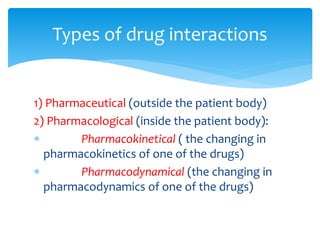
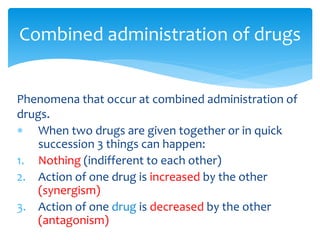
  • 27.
     Direct chemicalinteraction (Antacids, Laxatives)  Enzymes (carbonic anhydrase inhibitors, Monoamine oxidase inhibitors).  Ion channels (Na-channel blockers (local anesthetics), Ca-channel blockers).  Chemical transmitters  Carrier molecules (Transport process) (Probenecid)  Incorporation into large molecules (Anticancer (5- fluorouracil) Non receptor mediated mechanisms
  • 28.
    Receptors Is aspecial constituent of the cell that binds with the drug and mediates its pharmacological actions. Examples  Adrenergic , cholinergic receptors Where?  Cell membrane.  Cytoplasm  Nucleus Types of receptors Type I - Ion Channel Linked receptors (Nicotinic receptors) Type II - G -Protein Protein coupled receptors (Muscarinic receptors) Type III - Kinase-Linked receptors (Insulin receptors) Type IV - Receptors linked to gene transcription (Estrogen receptors) Receptor-mediated actions Mechanisms of drug action
  • 29.
    Binding Forces betweendrug and receptor ➢Non Covalent bonds (reversible, weak) (Ionic bond, Hydrogen bond, Van -Dar -Waal) ➢Covalent bonds (irreversible, STRONG!) Sharing of pairs of electrons between two bonded atoms (C=C) Affinity – Ability of a drug to combine with the receptor. Efficacy (Intrinsic Activity) – Capacity of a drug to activate receptor and produce action. Drug –receptor interaction
  • 30.
     Agonist (mimetic)is a drug that combines with receptor and produce a response ( has affinity and efficacy), the effect is the same as effect of natural activator of receptor and drug imitate this effect.  Antagonist (blocker) is a drug that combines with a receptor without producing responses. It blocks the action of the agonist (Has affinity but no or zero efficacy). Main types of agonists  Full Agonist - A drug that combines with its specific receptor to produce maximal effect . It Has both high affinity & full efficacy.  Partial Agonist - A drug that combines with its specific receptor to produce submaximal effect regardless of concentration (Full receptor occupancy). It has high affinity & partial efficacy. Drug –receptor interaction
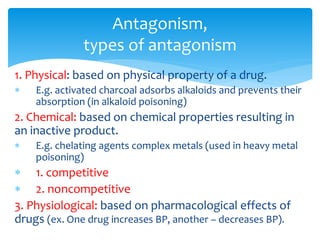
  • 31.
     POTENCY Isa measure (in weight) of the amount of the drug required to produce an action of the drug given magnitude ( a given magnitude (50% of the maximal response = ED50). Is inversely proportional to ED 50  The smaller is the EC50, the more potent is the drug.  Efficacy is more important than potency.  EFFICACY Is a Maximum effect of the drug. Potency & Efficacy
  • 32.
    Minimal therapeutic dose– the minimal dose of drug that produces therapeutic effect. Maximal therapeutic dose – the maximal dose of drug that produces therapeutic effect without any toxic effects. ED50 - median effective dose (average therapeutic dose) that shows therapeutic effect in 50% of patients. LD 50 - median lethal dose that required to produce death in 50 % of patients (animals). LD 100 - lethal dose that required to produce death in 100 % of patients. Dose types
  • 33.
     Spectrum ofpharmacological action is a list of all effects of medicine.  Spectrum of therapeutic action is a list of therapeutic effects of medicine. It may be narrow (less number of effects) or broad. This term is commonly used to characterize the antibiotics. THERAPEUTIC INDEX (TI) is the ratio between the dosage of a drug that causes a lethal effect and the dosage that causes a therapeutic effect. TI= LD 50 /ED 50 THERAPEUTIC WINDOW (MARGIN) is the dosage range between the average effective therapeutic dose and maximal therapeutic dose. Large value a wide margin of safety. (Penicillin) Drugs with a large TI can be used relatively safely and does not need close monitoring (highly safe) Small value a narrow margin of safety. (warfarin) Drugs with a low TI should be used with caution and needs a periodic monitoring (less safe) Spectrum of therapeutic action and therapeutic index/margin
  • 34.
     1. Therapeuticeffects  2. Side effects (caused by therapeutic dose) Unwanted but often unavoidable, pharmacodynamic effects that occur at therapeutic doses.  3. Toxic effects (caused by toxic dose)  1.Local effects  2.Systemic effects  1. Direct (primary) effects  2. Indirect (secondary) effects, including reflex effects  1.Reversible  2.Irreversible  1.Selective  2.Unselective Types of medical effects
  • 35.
    1) Pharmaceutical (outsidethe patient body) 2) Pharmacological (inside the patient body):  Pharmacokinetical ( the changing in pharmacokinetics of one of the drugs)  Pharmacodynamical (the changing in pharmacodynamics of one of the drugs) Types of drug interactions
  • 36.
    Phenomena that occurat combined administration of drugs.  When two drugs are given together or in quick succession 3 things can happen: 1. Nothing (indifferent to each other) 2. Action of one drug is increased by the other (synergism) 3. Action of one drug is decreased by the other (antagonism) Combined administration of drugs
  • 37.
    1. Additive effect:the effect of two drugs are in the same direction and simply add up. Effect of drug A + B = effect of drug A and B 2. Supraadditive effect (potentiation): the effect of combination is greater than the individual effect of the components. Effect of drug A + B > effect of drug A + effect of drug B Synergism
  • 38.
    1. Physical: basedon physical property of a drug.  E.g. activated charcoal adsorbs alkaloids and prevents their absorption (in alkaloid poisoning) 2. Chemical: based on chemical properties resulting in an inactive product.  E.g. chelating agents complex metals (used in heavy metal poisoning)  1. competitive  2. noncompetitive 3. Physiological: based on pharmacological effects of drugs (ex. One drug increases BP, another – decreases BP). Antagonism, types of antagonism
  • 39.
    1. Sensibilisation –increased sensitivity of human organism to drug 2. Tolerance – is a gradual reduction in response to drug. Requirement of higher dose to produce the same effect. 3. Dependence is the state of needing a certain drug in order to well being (Psychological dependence ) and/or function normally (Physical dependence) 4. Withdrawal syndrome (abstinence) is a set of symptoms occurring in discontinuation of some types of medications 5. Tachyphylaxis is a rapidly decreasing response to a drug following its initial administration. 6. Cumulation (drug accumulation) is accumulation of the drug molecules (material cumulation) or drug effects (functional cumulation) after repeated administration 7. Inhibition of production of own hormons (for hormonal drugs) Phenomena that occur at repeated administration of drugs
  • 40.
    1. Etiotropic 2. Pathogenetic 3.Symptomatic 4. Replacement - therapy involving the supply of a substance (such as a hormone or nutrient) lacking in or lost from the body Types of pharmacotherapy
  • 42.
     1) Exaggerated(forced) therapeutic effects (may occur on average therapeutic dose)  2) Toxic effects (associate with overdose)  • Reactions which can be predicted from the known pharmacology of the drug  • Dose dependent,  • Can be alleviated by a dose reduction  E.g. Anticoagulants - Bleeding, Beta blockers - Bradycardia, Nitrates – Headache. Type A
  • 43.
    1) Immunologic (allergicor hypersensitivity) Drug allergy - Immunologically mediated reaction producing stereotype symptoms, unrelated to the pharmacodynamic profile of the drug  Generally occur even with much smaller doses  Also called Drug hypersensitivity  Sensibilisation – increased sensitivity of human organism to drug  E.g. • Penicillin - Anaphylaxis, • Anticonvulsant - Hypersensitivity 2) Idiosyncratic Idiosyncrasy - is a genetically determined abnormal reactivity to a chemical (with very high sensitivity) Drug interacts with some unique feature of the individual, not found in majority subjects, and produces the uncharacteristic reaction. E.g. • Barbiturates - mental confusion in some individuals Quinine - Cramps, diarrhea, asthma, vascular collapse in some individuals  Cannot be predicted from the pharmacology of the drug  Not dose dependent,  Host dependent factors important in predisposition Type B
  • 44.
     Reaction afterprolonged use of drug.  1) tolerance  2) dependence  3) withdrawal syndrome  4) inhibition of production of own hormons  Example: narcotic analgetics Type C
  • 45.
     Occur aftermany years of treatment.  Can be due to accumulation. Teratogenicity • Capacity of a drug to cause foetal abnormalities when administered to the pregnant mother. Mutagenecity and Carcinogenicity • Capacity of a drug to cause genetic defects and cancer respectively. Type D (Delayed) reactions
  • 46.
  • 47.
    Agents affecting thenervous system (neurotropic drugs) are devided into 3 groups: 1. Drugs affecting afferent innervation i.e. (affecting afferent nerve endings) 2. Drags regulating the functions of the central nervous system 3. Drugs affecting efferent innervation.
  • 48.
     Drugs affectingefferent innervation Efferent innervation of the body occurs via autonomic nerves (innervating visceral organs, blood vessels and glands) and motor nerves of skeletal muscles. Autonomic innervation is subdivided into cholinergic, or parasympathetic (acetylcholine neurotransmitter) and adrenergic, or sympathetic (norepinephrine neurotransmitter), depending on the neurotransmitter that is released in the neuroeffector synapses.
  • 49.
    The efferent pathwaysof the autonomic nerves consist of two neurons: preganglionic and ganglionic (postganglionic). The bodies of preganglionic neurons in the cholinergic system have craniosacral localization. Cranial nuclei are located in the midbrain and medulla oblongata. Cholinergic fibers are inside the pairs of the following cranial nerves: III (n. oculomotorius ), VII (n. facialis), IX (n. glossopharyngeus ) and X ( n. vagus). In the sacral part preganglionic neurons originate from the lateral horns of the spinal cord gray substance.
  • 50.
    In the adrenergicsystem, the bodies of preganglionic neurons are mainly located in the lateral horns of the thoracolumbar part of the spinal cord. Motor neurons, innervating skeletal muscles, are cholinergic (at the neuromuscular junction acetylcholine is a mediator). Their bodies are located in the anterior horns of the spinal cord as well as in the nuclei of some cranial nerves. Their axons pass continuously up to the endplates of skeletal muscles.
  • 51.
    Synapse is aplace of functional contact between the neuron and the executive organ or between two neurons. Synapses are divided into cholinergic and adrenergic. In cholinergic synapses transmission is mediated by acetylcholine. Synapse consists of presynaptic membrane (terminal of nervous fiber), synaptic gap and postsynaptic membrane which is provided with executive organ.
  • 52.
    Acetylcholine (ACh) issynthesised in the cytoplasm of cholinergic neuron terminals. It is produced from choline and acetylcoenzyme A with the participation of cytoplasmic cholinacetylase enzyme. Ach is deposited in synaptic vesicles. Nerve impulses cause ACh to release into the synaptic gap, after which it stimulates cholinoceptors of the postsynaptic membrane.
  • 53.
    Cholinoceptor is thebiochemical system, sensitive to acetylcholine. Cholinoceptors (chc) of different localization have unequal sensitivity to pharmacological substances. Therefore chc are divided into muscarine-sensitive chc (M-chc) and nicotine-sensitive chc (N- chc). M-chc are located on the postsynaptic membrane of effector organ cells namely in the circular and ciliary muscles of eyes, in exocrine glands, in the heart, bronchi, uterus, central nervous system (CNS), smooth muscles of the gastrointestinal tract (GIT), in the gallbladder, bile ducts and bladder.
  • 54.
    N-chc are locatedin the sympathetic and parasympathetic ganglia, skeletal muscles, adrenal medullar layers, sinocarotid zones (carotid bodies) and CNS. Nerve impulses cause ACh to release into the synaptic gap, after which it stimulates M- and N- chc of the postsynaptic membrane.
  • 55.
    Interacting with chcand changing their conformation, ACh increases permeability of the postsynaptic membrane for sodium ions. Due to the excitatory effect of ACh, sodium ions enter the cell, leading to the depolarization of the postsynaptic membrane and generate the action potential. The effect of ACh is very short-term since it is rapidly hydrolyzed by acetylcholinesterase enzyme. A substantial amount (50%) of choline, produced as a result of ACh hydrolysis, is taken up by the presynaptic terminals, transported into the cytoplasm where it is reused for ACh synthesis.
  • 56.
    Substances, affecting chc,can have a stimulating (cholinomimetic) or inhibitory (cholinoblocking) effect. Due to this principle, drugs, affecting cholinergic synapses, can be classified in the following ways: 1. Drugs, affecting M- and N-chc a) M, N-cholinomimetics Acetylcholine Carbachol b)M, N-cholinoblockers Cyclodolum 2. Anticholinesterase drugs
  • 57.
    3. Drugs, affectingM-chc a) M-cholinomimetics b) M-cholinoblockers (anticholinergic or atropine-like drugs) 4. Drugs, affecting N-chc a) N-cholinomimetics b) N-cholinoblockers, which are subdivided into 1) Ganglionblockers and 2) Neuromuscular relaxants (curare-like drugs; muscle relaxants of peripheral action)
  • 58.
    M-cholinomimetics (M-chm) havea direct stimulatory effect on M-chc like ACh. Medicines: Pilocarpini hydrochliridum Aceclidinum
  • 59.
       Local effects ofM-chm (drugs effects on the eye): 1) constriction of the pupils (miosis), which is associated with direct stimulation of M-chc of the iris circular muscle (m. sphincter pupillae) and contraction of this muscle; 2) decrease intraocular pressure. As the result of miosis the iris becomes thinner, the angles of the anterior chamber are opened to a greater extent, and therefore the outflow of the intraocular fluid through the iridocorneal angle space (Fontana's space) to the scleral venous sinus (Schlemm's canal) is improved. 3) accommodation spasm. In this case the drugs stimulate M-chc of the ciliary muscle. Constriction of the ciliary muscle relaxes the ciliary zonule (ligament of Zinn) and, due to this, lens curvature increases. The eye is adjusted to the near point of vision.
  • 60.
    Effect of thedrugs, affecting cholinergic innervation, on the eye
  • 61.
        General effects occurafter medicines absorbtion into the blood: 1) increase tone of smooth muscles of the gastrointestinal tract, bronchi, uterus, gallbladder, bile ducts and bladder. This effect is associated with direct stimulation of M-chc of smooth muscles of these organs, therefore the muscles contract. 2) increase in secretion of exocrine glands (of the bronchi, stomach, intestine, salivary, lacrimal glands). This effect is associated with stimulation of M-chc in exocrine glands. 3) heart negative effects: bradycardia, heart contractility decreases and cardiac conduction becomes slower down. It is connected with stimulation of M-chc in the heart and increase in cholinergic effects of the vagus nerve on the heart. 4) arterial pressure decreases. Basically it is connected with heart negative effects.
  • 62.
    Indications for use Inclinical practice pilocarpine is administered locally in the form of eye drops to treat glaucoma. It is not used for systemic action because of toxicity.
  • 63.
    Anticholinesterase drugs blockacetylcholinesterase and, therefore, prevent the hydrolysis of ACh. This leads to more notable and prolonged action on the chc. The effect of anticholinesterase drugs is mediated by ACh. Based on the stability of interaction of anticholinesterase drugs with acetylcholinesterase they can be subdivided into two groups: 1) Drugs of reversible action Physostigmine Neostigmine (Proserinum) Galantamine 2) Drugs of irreversible action Arminum (In clinical practice arminum is administered locally in the form of eye drops to treat glaucoma only).
  • 64.
           Preventing hydrolysis ofACh, anticholinesterase drugs intensify and prolong its muscarinic and nicotinic effects. M-cholinomimetic effects are the same as that M-chm: 1) cause constriction of the pupils (miosis), which is associated with indirect stimulation of M-chc (by ACh) of the iris circular muscle and contraction of this muscle; 2) decrease intraocular pressure . 3) accommodation spasm. In this case the drugs indirectly stimulate M- chc of the ciliary muscle. 4) increase in secretion of exocrine glands. 5) increase of smooth muscles tone 6) heart negative effects 7)arterial pressure decreases. It is connected with heart negative effects.
  • 65.
      N- cholinomimetic effects: 1)increase tone of skeletal muscles. These drugs blocking acetylcholinesterase in the mioneural synapse intensify and prolong the effect of ACh to N-chc of skeletal muscles. 2) In low doses anticholinesterase drugs stimulate the CNS.
  • 66.
    • • • • • • • • Indications for use M-cholinomimeticeffects: Glaucoma, Atony of the intestine or the bladder, Acute poisoning of M-cholinoblockers (as antagonists to M- cholinoblockers) N- cholinomimetic effects: Myasthenia, as antagonists to antidepolarizing neuromuscular relaxants, Progressive dementia (Alzheimer’s disease), Polyneuritis, After poliomyelitis.
  • 67.
    Anticholinesterase drug acutepoisoning Anticholinesterase drug poisoning is mainly associated with the accumulation of high ACh concentrations in the body, as well as with a direct activation of chc. Most often poisoning occurs with the use of organophosphoris anticholinesterases (phosphorus organic compounds), since, due to their marked lipophility, organophosphates are rapidly absorbed regardless of administration route (including cutaneous application) and inhibit acetylcholinesterase for in the long term. Acute poisoning with organophosphates requires immediate medical intervention.
  • 68.
    First of all,organophosphates must be removed from the sites of introduction. If it is the skin or mucous membranes, they should be thoroughly washed with 3—5% solution of sodium bicarbonate. If the drugs were taken orally, the stomach is lavaged, adsorbing and laxative drugs are given, high siphon enemas are administered. These activities are performed many times until the elimination of any signs of intoxication. If organophosphates has entered the blood, its elimination with urine should be accelerated (by means of the forced diuresis). Effective ways of clearing organophosphates out of the blood include hemosorption, hemodialysis and peritoneal dialysis.
  • 69.
    The important componentfor the treatment of acute poisoning with organophosphates is the administration of M-cholinoblockers as well as so-called cholinesterase reactivators ( dipiroxim and isonitrosinum). C holinesterase reactivators interact with organophosphates residuals that are bound with acetylcholinesterase, releasing the enzyme and restoring its physiologic activity. In addition, symptomatic therapy should be carried out. It is necessary to monitor the patient’s respiration. Organophosphates cause hypersecretion of the glands, which is why sanation of the oral cavity should be done and secretions from the trachea and bronchi have to be removed. If necessary, assisted or artificial ventilation is used. In case of psychomotor agitation chloropromazine, diazepam, sodium oxybutyrate and other CNS depressants should be used.
  • 70.
    M-cholinoblockers (M-chb) aredrugs that block M-chc. The principle of action of M-chb is that, while blocking M-chc, they prevent their interaction with ACh. M-chb reduce and eliminate activation of the cholinergic (parasympathetic) nerves and decrease the effect of the drugs that have M-cholinomimetic activity
  • 71.
    Medicines: non-selective M-chb Atropinisulfatis Hyoscine (scopolamine) Homatropine Platyphilline Metacinum Ipratropium Troventolum selective M-chb: Pirenzepine (block mostly M-chc of the stomach)
  • 72.
       Local effects Atropine affectsthe muscles of the eye. 1) The dilatation of the pupil (mydriasis) is the effect of the block of the iris circular muscle M-chc. In this case the fluid outflow from the anterior chamber of the eye is hindered and 2) intraocular pressure can increase. 3) Accommodation paralysis. Blocking M-chc of the ciliary muscle leads to its relaxation, which results in an increase of the ciliary zonule (ligament of Zinn) tension and a reduction of lens curvature. Accommodation paralysis occurs and the eye becomes adjusted to the distant point of vision.
  • 73.
       General effects 1) Spasmolyticeffect. Blocking M-chc, M-chb eliminate stimulating effect of the cholinergic (parasympathetic) nerves on most smooth muscle organs. These medicines lead to a decrease in muscular tone of the gastrointestinal tract, bile ducts, gallbladder, bronchi and bladder. 2) The inhibition of exocrine glands secretion. This effect is associated with block of M-chc in exocrine glands. 3) heart positive effects: tachycardia occurs, force of cardiac contractions increases, atrioventricular conduction is improved. These effects caused by the block of M-chc in the heart and decrease in cholinergic effects of the vagus nerve to the heart. This leads to the domination of adrenergic (sympathetic) tone. Atropine does not affect vessels and arterial pressure.
  • 74.
    • • • Indications for use Inophthalmologic practice the mydriatic effect of atropine is used for diagnostic purposes (to examine retina, prescribe glasses) and in the treatment of a number of diseases of the eyes (iridocyclitis, etc.). M-chb are administered as a spasmolytic in spasms of smooth muscle organs: digestive tract, biliary ducts, bronchi. Spasmodic pain (colic) is reduced or disappears after atropine intake. The ability of M-chb to reduce glandular secretion and smooth muscular tone is used in the treatment of stomach and duodenal ulcer and acute pancreatitis.
  • 75.
    • • • Wide use ofatropine for so-called premedication before surgical interventions is linked to its ability to inhibit secretion of salivary, nasopharyngeal and thracheobronchial glands. Moreover, blocking M-chc of the heart (vagolytic action), atropine prevents negative effects on the heart, including the possibility of its reflectory arrest (for example, in administration of inhalation anesthetics that irritate the upper respiratory tract). M-cholinoblocking action on the heart is favorable for atrioventricular block of vagal origin. Atropine is indicated for the management of poisoning with M- cholinomimetics and anticholinesterase drugs.
  • 76.
    Side effects ofM-chb the dryness of the oral mucous membrane, accommodation disorder and tachycardia. There may be an increase in intraocular pressure (atropine is contraindicated in glaucoma), obstipation (retention of stool) and urination difficulty.
  • 77.
    M-chb acute poisoning Symptoms:dryness of the mucous membranes of the mouth and nasopharynx is observed and leads to difficulty with swallowing and speech. The skin becomes dry. Body temperature rises. Pupils become dilated and photophobia (fear of light) is typical. Motor and verbal agitation, impairment of memory and orientation and sometimes hallucinations are characteristic.
  • 78.
    Atropine poisoning ismore frequent in children. It occurs due to the overdosage of the drug or as a result of eating the fruits of plants, containing this alkaloid (for example belladonna). Treatment consists of elimination of unabsorbed atropine from the gastrointestinal tract (gastric lavage, tannin, activated charcoal, saline laxatives), acceleration of the drug elimination from the body (forced diuresis, hemosorption) and administration of physiologic antagonists (for example, anticholinesterase drugs). In marked excitation, diazepam is administered. In the case of excessive tachycardia administration of β-adrenoblockers is useful. The lowering of body temperature is achieved by external cooling. If necessary, artificial ventilation is performed.
  • 79.
    Lecture topic: DRUGS AFFECTINGNICOTINIC CHOLINOCEPTORS
  • 80.
    N-cholinoceptors (N-chc) arelocated in the sympathetic and parasympathetic ganglia, skeletal muscles, adrenal medullar layers, sinocarotid zones (carotid bodies) and CNS. DRUGS AFFECTING NICOTINIC CHOLINOCEPTORS are divided into 2 groups: 1. N-CHOLINOMIMETICS (N-chm) 2. N-CHOLINOBLOCKERS (N-chb), which are subdivided into 1) Ganglionblockers and 2) Neuromuscular relaxants (curare-like drugs; muscle relaxants of peripheral action)
  • 81.
    N-CHOLINOMIMETICS (N-chm) stimulateN-chc of carotid bodies and cause reflex stimulation of the respiratory center (analeptic effect) and the breathing becomes deeper and more rapid. This effect depends on the functional state of the respiratory center and appears at the decrease it’s tone. Also analeptic effect depends on the reflex arc integrity. Medicines: Lobeline Cytisine 0.15% solution is produced under the label cytiton.
  • 82.
    Both drugs aresometimes administered to stimulate respiration (if reflex excitation of the respiratory center is preserved). Moreover, both drugs are used as basic components of a number of drugs, used to aid ‘quitting’ smoking.
  • 83.
    Ganglionblockers (Gb) blockN-chc of the sympathetic and parasympathetic ganglia, as well as N-chc of the adrenal medulla. Agents having a such of mechanism action are antidepolarizing medicines named. Classification Chemically Gb can be divided into the following groups: 1) Bis-quatemary ammonium compounds Benzohexonium Azamethonium (Pentaminum) Trepirium (Hygronium), Trimethaphan (arphonade) 2) Tertiary amines Pachycarpinum, Pempidine (Pirilenum)
  • 84.
    Tertiary amines arewell absorbed from the gastrointestinal tract (GIT). Quaternary ammonium salts are poorly absorbed from the GIT. Due to they would be administered parenterally. Tertiary amines, unlike quaternary ammonium salts, pass through the blood-brain barrier well. This is the cause of their negative effect on the CNS (tremor, dysarthria and other symptoms).
  • 85.
    Accordin to lengthof time action the Gb can be divided into the following groups: a) medicines, causing short-time effect (10-20 min) Hygronium, Trimethaphan (arphonade) b) medicines, causing middle-time effect (2–4 hours) Benzohexonium Azamethonium (Pentaminum) c) medicines, causing long-time effect (8 h and more) Pachycarpinum, Pempidine (Pirilenum)
  • 86.
    Pharmacodynamics As a resultof the inhibition of the sympathetic ganglia through block of N-chc, impulse is not transmitted from preganglionic fiber to the postganglionic fiber and adrenergic transmission is reduced to the vessels, blood vessels are dilated (arterial and venous) and arterial (and venous) pressure decreases (antihypertensive effect). Besides Gb block N-chc of the adrenal medulla whereupon epinephrine release decreases promoting vasodilatation.
  • 87.
    Localization of themain effects of cholinoblockers
  • 88.
    Effects of Gbassociated with block of parasympathetic ganglia ◼ 1. The dilatation of the pupil (mydriasis) is the effect of the block of the ganglion N-chc of the oculomotor nerve and impulse is not transmitted from preganglionic fiber to the postganglionic fiber, cholinergic transmission is reduced to the iris sphincter muscle and it is relaxed. As the result of mydriasis the iris becomes thicker. In this case the fluid outflow from the anterior chamber of the eye is hindered and ◼ 2) intraocular pressure increases
  • 89.
    ▪ 3) Accommodationparalysis is the effect of the block of the ganglion N-chc of the oculomotor nerve, impulse is not transmitted from preganglionic fiber to the postganglionic fiber, cholinergic transmission is reduced to the ciliary muscle and it is relaxed. Ligament of Zinn tension is increased and the lens curvature is reduced. ◼ 4) As a result of the inhibition of the parasympathetic ganglia through block of N-chc, impulse is not transmitted from preganglionic fiber to the postganglionic fiber and cholinergic transmission is reduced to the smooth muscles. The decrease of muscular tone of the GIT, bile ducts, gallbladder, bronchi and bladder is spasmolytic effect.
  • 90.
    ◼ 5) theinhibition of exocrine glands secretion These effects including the affect the eye are atropine- like effects. ◼ 6) the increasing uterine tone ◼ 7) Blocking effect of Gb on the autonomic (sympathetic and parasympathetic) ganglia is the cause of the inhibition of reflex effects on the visceral organs.
  • 91.
    Indications for use 1.Gb are used mainly in hypertensive emergencies (for relief of hypertensive crisis) and for the treatment of 2. pulmonary edema and brain edema at the high arterial pressure. 3. Gb of short-term action are used for controlled hypotension. They are administered intravenously dropwise. In surgery controlled hypotension assists in performing operations on the heart and vessels and improves blood supply to the peripheral tissues.
  • 92.
    In neurosurgery itis important that the hypotensive effect of these drugs reduces the possibility of the development of brain edema. 4. Spasmolytic effect may be used in theory for the treatment of stomach and duodenal ulcers, in spasms of bronchi, spasmodic pain (colic).
  • 93.
    Side effects 1. Theorthostatic collapse develops after an abrupt change of the body’s position in space (for example, after transition from horizontal to vertical position which is accompanied by a marked and rapid decrease in the arterial pressure). The excessive hypotension may lead to syncope. To prevent orthostatic collapse, patients are recommended to lie for 2 hours after drug administration. 2. Gb often inhibit GIT motility, and this can lead to constipation (obstipation). Paralytic ileus can occur.
  • 94.
    3. The drynessof the oral mucous membrane 4. Dysarthria (disorder of the articulate speech), dysphagia (disorder of swallowing), and urinary retention. 5. The long term administration of Gb is usually followed by the development of tolerance
  • 95.
    Drugs blocking neuromusculartransmission (neuromuscular relaxants (NmR) The main effect of this drugs is the relaxation of skeletal muscles. Most of NmR firstly block neuromuscular synapses of the muscles of the face and neck, and then limbs and lastly the trunk. Respiratory muscles are more resistant to the drug action. The diaphragm is the last to get paralyzed, and is associated with respiratory arrest.
  • 96.
    NmR inhibit neuromusculartransmission on the level of postsynaptic membrane, interacting with N-chc of the endplates. Classification of NmR:. 1. Antidepolarizing drugs Tubocurarine Pancuronium Pipecuronii bromidum 2. Depolarizing drugs Suxamethonium (Dithylinum) 3. Mixed type of action drugs(depolarizing and antidepolarizing properties can be combined): Dioxonium
  • 97.
    According to theduration of the myoparalytic action NmR can be subdivided into three groups: short-term action (5-10 min) - suxamethonium, medium-term action (20-30 min) - atracurium, vecuronium, long-term action (30-40 min and more) - tubocurarine, pipercuronium, pancuronii bromidum
  • 98.
    Antidepolarizing drugs blockN-chc of skeletal muscles and prevent depolarizing effects of acetylcholine. Depolarizing drugs excite N-chc of skeletal muscles and cause steady depolarization of the postsynaptic membrane. Mixed type of action drugs have depolarizing and antidepolarizing properties.
  • 99.
  • 100.
    Indications for use NmRare widely used in anaesthesiology when performing different surgical interventions. By causing relaxation of the skeletal muscles, they significantly facilitate the performance of most operations on the organs of the thoracic and abdominal cavities, as well as on the upper and lower limbs. They are administered in tracheal intubation.
  • 101.
    The choice ofNmR antagonists is based on the mechanism of action of these relaxants. Antagonists of the antidepolarizing drugs are anticholinesterase drugs. The latter, blocking acetylcholinesterase, increase the concentration of acetyl- choline in the synaptic gap. This leads to the displacement of NmR from the receptor sites and the restoration of neuromus- cular transmission. The action of the depolarizing drug suxamethonium can be reversed by the administration of fresh citrated blood, containing plasma cholinesterase, which hydrolyzes suxamethonium.
  • 102.
    DRUGS AFFECTING ADRENERGICSYNAPSES: ADRENOPOSITIVE MEDICATIONS
  • 103.
    In the adrenergicsynapses the transmission is mediated by norepinephrine (NE). The biosynthesis of NE from tyrosine occurs in the adrenergic neurons with a number of enzymes being in- volved. Nerve impulses induce the release of NE into the synaptic gap, followed by its interaction with the adrenoceptors (ас) of the postsynaptic membrane. Adrenoceptor is the biochemical system, sensitive to NE.
  • 104.
    Adrenoceptors (Ac) aredivided into α- and β-ac. α- ac are divided into α1- and α2 -ac. β- ac are divided into β1-, β2 -and β3-ac. α1- ac have postsynaptic localization and are located in the vessels of the skin, mucous membranes, kidneys, intestine and magistral vessels, sphincters and muscles of the GIT and in splenic trabecules, in the iris radial muscle, uterus, bladder, CNS.
  • 105.
    α2 -ac arelocated presynaptically and beyond the synapses. The physiologic role of the presynaptic a2-ac is their involvement in the system of negative feedback, controlling the release of NE. Stimulation of these receptors by NE (or other drugs with a2-adrenomimetic activity) inhibits NE release from the presynaptic membrane in the synaptic gap, and vice versa block of these receptors increases NE release from the presynaptic membrane in the synaptic gap.
  • 106.
    Among postsynaptic β-acthe β1-ac are located in the heart, β2-ac are located in the vessels of the heart, brain, liver, lungs, skeletal muscles, and also in the bronchi, uterus, muscles of the GIT, β3-ac are located in the fatty tissue. There are also presynaptic β-ac (β2-ac). They perform positive reverse feedback, stimulating NE release.
  • 107.
    Stimulation of α-acleads to an increase in the effectors function (except for the intestines, where muscular tone subsides). Stimulation of β-ac usually leads to a decrease in the innervated organ function. However, stimulation of β-ac of the heart is associated with an increase in the force and rate of cardiac contractions, increases in automatism and facilitation of atrioventricular conduction. Ac participate in the control of carbohydrate and fat metabolism.
  • 108.
    The action ofNE on ac is short-term. It is mainly caused by the swift uptake, up to 75—80%, of mediator present in the synaptic gap by the terminals of the adrenergic fibres, followed by its storage. Catabolism of free NE is controlled by MAO and catechol O-methyl- transferase enzyme.
  • 109.
    Drugs that stimulateac are called adrenomimetics (am), while drugs that inhibit them are called adrenoblockers (ab). Adrenopositive medications are drugs, which facilitate nerve impulse pass in the synapse (am). Classification of the adrenopositive medications 1. Adrenomimetics, stimulating α- and ß -ac (α- and ß –adrenomimetics) a) α,β-am of the direct action: Epinephrine (Adrenalini hydrochloridum) Norepinephrine
  • 110.
    b) α,β-am ofindirect action: Tyramine Ephedrine 2. Adrenomimetics, stimulating mostly α-ac (α- adrenomimetics) a) α1- am: Phenylephrine (mezatonum) b) α2- am: Naphazoline (naphthizinum) Xylometazoline (halazolinum)
  • 111.
    3. Adrenomimetics, stimulatingmostly β-ac (β- adrenomimetics) a) β1- am: Dobutamine b) β2- am: Salbutamol Fenoterol Terbutaline c) β1, β2- am Isoprenaline (Isadrine)
  • 112.
    α- and ß–am Epinephrine (adrenalini hydrochloridum) has a direct stimulating effect on α- and ß –ac. ß-ac more sensitive to epinephrine than α- ac. ß–adrenomimetics effects of epinephrine are 1. Stimulation of the heart. By stimulating the β-ac of the heart, epinephrine increases the force and rate of cardiac contractions and this in turn causes the stroke and minute volume of the heart to increase. Atrioventricular conduction is improved. At the same time the consumption of oxygen by myocardium is increased.
  • 113.
    2. Dilatation ofthe coronary, cerebral, hepatic, pulmonary vessels and skeletal muscles vessels, which is associated with the stimulation of β2-ac of these vessels. It is manifested by a decrease of the diastolic pressure. 3. Bronchodilator effect. By stimulating β2-ac of the bronchi, it relaxes their smooth muscles and eliminates bronchospasm. 4. The tone of the uterus is reduced (because of the stimulation of β2-ac) 5. The tone and motility of the GIT is reduced
  • 114.
    6. Stimulation ofthe metabolism. It stimulates glycogenolysis (hyperglycaemia occurs) and lipolysis (increase of blood plasma concentration of free fatty acids). α–adrenomimetics effects of epinephrine are 1. Pupils dilatation. Epinephrine dilates the pupils (due to the α–ac stimulation of the radial muscle of the iris and its contraction), and decreases intraocular pressure (production of the intraocular fluid is decreased). 2.Arterial pressure increases due to the α–ac stimulation of the magistral vessels, vessels of the kidneys and others. Hypertensiv reaction usually induces reflex bradycardia from the mechanoceptors of the blood vessels.
  • 115.
    3. Contraction ofthe splenic capsule 4. Uterus tone increases 5. Sphincter tone increases, but the tone and motility of the GIT reduce Indications for use 1) It is effective as a bronchial spasmolytic for the treatment of acute bronchial asthma attacks. 2) It is used for hypoglycaemic coma, caused by antidiabetic drugs. 3) Epinephrine can be used to eliminate atrioventricular block. In these cases it is used subcutaneously
  • 116.
    4. Epinephrine isadded to lokal anesthetic solutions. Vasoconstriction at the site of epinephrine injection intensifies local anesthesia and reduces resorptive and, possibly, the toxic effect of anesthetics. 5. It is used in ophthalmology to dilate the pupil and in the open-angle glaucoma. 6. Epinephrine is administered for anaphylactic shock (intramuscularly or intravenously).
  • 117.
    Side effects 1. Tachycardia 2.Cardiac rhythm disorders 3. Consumption of oxygen by myocardium is increased and may be a pain in the heart.
  • 118.
    Ephedrine is indirectα,β-am. Ephedrine increases NE concentration in synaptic gap due to the intensification of its release from nervous fibers. Ephedrine effects are the same as that Epinephrine. α- am stimulate α–ac of the blood vessels and increase their tone. Phenylephrine (mezatonum) stimulates α1–ac of the blood vessels and increases arterial pressure. Hypertensiv reaction induces reflex bradycardia from the mechanoceptors of the blood vessels (due to nerve vagus). Mezatonum dilates the pupils (due to the α1–ac stimulation of the radial muscle of the iris and its contraction)
  • 119.
    Indications for use Phenylephrineis used ◼ as a pressor drug at the acute vascular weakness (failure) (intravenously dropwise), ◼ to enhance the effect of local anesthetics, ◼ for the treatment of open-angle glaucoma Naphthizinum and Xylometazoline (α2- am) have vasoconstrictive effect. They are used locally in acute rhinitis.
  • 120.
    Isoprenaline (isadrine) stimulatesß1-, ß2- ac. By stimulating ß1-ac of the heart, isadrine increases the force and rate of cardiac contractions. At the same time systolic pressure increases. Isadrine facilitates atrioventricular conduction and increases heart automatism. Moreover, the drug also activate ß2-ac of the vessels (especially the skeletal muscle vessels). This leads to a decrease in diastolic pressure. It effectively decreases the tone of the bronchi, muscles of the GIT, as well as other smooth muscles, that have ß2-ac.
  • 121.
    Indications for use Isadrineis used ◼ to relieve bronchial spasm, ◼ for the treatment of atrioventricular block (sublingual administration). Adverse effects include tachycardia, cardiac arrhythmias, headache
  • 122.
    β2- am (Salbutamol,Fenoterol and etc.) selectively stimulate β2- ac of the effector organs. They are used as broncholytic drugs, as well as to reduce contractile activity of the myometrium. Dobutamine is β1- am. Its main effect is a marked positive inotropic action. It is administered as a cardiotonic drug.
  • 123.
    DRUGS AFFECTING ADRENERGICSYNAPSES: ADRENONEGATIVE MEDICATIONS
  • 124.
    Adrenonegative medications aredrugs, which impair nerve impulse pass in the synapse. Classification I. Adrenonegative medications of postsynaptic action (adrenoblockers) (ab) are divided into: 1. α- adrenoblockers (α- ab) a) α1- ab: Prazosin Tamsulosin Doxazosin
  • 125.
    b) α1,2- ab: Phentolamine Tropodifene(Tropaphenum) Dihydroergotoxin Dihydroergotamine 2. β-adrenoblockers (β-ab) a) β1- ab (cardioselective β-ab) : Atenolol Metoprolol Bisoprolol Nebivolol
  • 126.
    b) β1,2- ab(non-selective β-ab) : Propranolol (Anaprilinum) Oxprenolol 3. α- and ß–adrenoblockers (α,ß–ab) Labetalol Carvedilol II. Adrenonegative medications of presynaptic action (sympatholytics) Guanethidine (Octadinum) Reserpine
  • 127.
    First of allα1- ab block α1-ac of the blood vessels, adrenergic transmission is reduced to the vessels, and blood vessels are dilated. It is known that the arterial pressure depends on the 1) cardiac output, 2) vessels tone, 3) blood volume. α1- ab decrease arterial pressure due to decrease of the vessels tone, i.e. vasorelaxation. Antihypertensive effect is the main effect of the α1- ab. These drugs block α1- ac of the arteries and veins. This leads to decrease in the tone of the arteries and veins, and a reduction of the venous return and decreased cardiac work. Therefore α1- ab are peripheral vasodilators
  • 128.
    Block of theα1-ac of smooth muscles of the prostate gland, neck of the bladder and prostatic part of the urethra causes a decrease of their tone. It leads to an increase in urine flow rate and to a general improvement of its outflow from the bladder in patients with benign hyperplasia of the prostate gland (prostate gland adenoma).
  • 129.
    Indications for use 1.Arterial hypertension 2. Heart failure (due to a decrease of the venous return to the heart and to reduce its work). 3. Benign hyperplasia of the prostate gland (prostate gland adenoma)
  • 130.
    Side effects 1. Generalweakness 2. Tachycardia 3. Orthostatic collapse (due to disturb of reflex regulation of vascular tone) 4. Diarrhea (the motility of the GIT is increased)
  • 131.
    α1,2- ab decreasearterial pressure less than α1- ab because these drugs block both post (α1)- and presynaptic (α2)-ac. Block of presynaptic a2-ac impairs physiologic autoregulation of the release of NE. Negative feedback is disturbed and, consequently, excessive release of NE ensues, leading to a recovery of the adrenergic transmission. Marked tachycardia is also the result of the increased NE release.
  • 132.
    Indications for use Themost important effect of α1,2-ab is the dilation of the peripheral vessels. They are mainly used ◼ to treat various disorders of peripheral blood circulation (endarteritis, Raynaud's disease, other), including shock (hemorrhagic, cardiogenic), with spasm of arterioles. ◼ at the pheochromocytoma Pheochromocytoma (tumor of the adrenal medulla) produces large amounts of epinephrine, which leads to substantial increase of the arterial pressure.
  • 133.
    Side effects 1. Tachycardia 2.Dizziness 3. Motility of the GIT and secretion of the gastric glands increase.
  • 134.
    β-ab block β1-and β2-ac of the heart, vessels, bronchi, gastrointestinal tract, etc. and decrease adrenergic transmission to effectors. Pharmacodynamics β-ab block β1-ac of the heart, due to the myocardial automatism, excitability, atrioventricular conduction, heart rate and force of cardiac contractions are reduced. The consumption of oxygen by myocardium is decreased.
  • 135.
    Main effects ofβ-ab 1. Antihypertensive effect is associated with block of β1-ac of the heart and force of cardiac contractions is reduced, due to which cardiac output is decreased. General peripheral vascular resistance increases at first (in response to a decrease of cardiac output), and then it decreases (at the systematic use of β-ab). β-ab supress presynaptic β2-ac (they eliminate their stimulating effect on NE release), they also reduce renin release due to β1-ac block of the juxtaglomerular cells of the kidneys (renin promotes vasoconstriction).
  • 136.
    2. Antianginal effect(they reduce the consumption of oxygen by myocardium) is associated with the blockade of cardiac β1-ac and the elimination of adrenergic influences. It leads to reduction of cardiac contraction rate and intensity. The cardiac workload decreases, and this is followed by a decrease in myocardial oxygen demand.
  • 137.
    3. Antiarrythmic effectis associated with the decrease of the excitability and automatism of cardiac cells, suppress conduction of the atrioventricular node. β-ab are antagonists of epinephrine by its hyperglycaemic and lipolytic action.
  • 138.
    Indications for use β-abare used ◼ for the treatment of arterial hypertension, ◼ for the treatment of ischemic heart disease (IHD) (or coronary heart disease (CHD), ◼ for the treatment of arrhythmias, ◼ for the treatment of tachycardia of various etiologies
  • 139.
    Side effects 1.Bradycardia 2. Atrioventricularblock 3. Decreased myocardial contractility and worsening of pre-existing heart failure in patients with chronic heart failure 4. Increase in peripheral vessel tone (may be feeling of coldness in the extremities) 5. Bronchospasm (especially in patients with bronchial asthma) 6. Weakness, inhibition of motor and mental reactions due to the decrease of adrenergic background of CNS 7. Decreased libido and potency
  • 140.
    There are compoundsthat mainly block β1-ac (cardioselective medications). They have an insignificant effect on the β2-ac of the bronchi, vessels and other effectors, therefore they have less side effects. α,ß–ab block β1-ac of the heart and eliminate of adrenergic influences. It leads to decrease of cardiac output. Also α,ß–ab block α1-ac of the blood vessels, adrenergic transmission is reduced to the vessels, and blood vessels are dilated. Therefore α,ß–ab decrease arterial pressure and are used for the treatment of arterial hypertension.
  • 141.
    Sympatholytics (SL) impairtransmission on the level of the adrenergic fibers ends, i.e. they act presynaptically. Affecting the adrenergic fibers ends, these drugs reduce the amount of NE, released in response to nerve impulses. Mechanism of action of various sympatholytics is different. Guanethidine prevents NE reuptake by the fibers ends, since it itself undergoes neuronal uptake by the same transport systems as NE. This leads to a significant inactivation of free NE, present in the cytoplasm, by MAO. Reserpine impairs the process of NE storage in the vesicles, which leads to a reduction in its concentration in the adrenergic fibers ends.
  • 142.
    Main effect ofthe sympatholytics is antihypertensive effect. It occurs after long-term drugs administration is associated with a reduction in cardiac output, as well as with a decrease of peripheral vascular resistance. Besides, sympatholytics cause myosis (due to α1-ac block of the radial muscle of iris) and a decrease in intraocular pressure (production of the intraocular fluid is decreased). Indications for use Arterial hypertension Sometimes guanethidine is administered for glaucoma
  • 143.
    Side effects The inhibitionof the adrenergic innervation leads to the predominance of the cholinergic effects. It is manifested by ◼ bradycardia, ◼ an increase in the secretory and motor activity of the GIT Moreover, may be ◼ orthostatic hypotension (can occur with guanethidine administration) ◼ swelling of the mucous membrane of the nose ◼ drowsiness and general weakness, depressive conditions, inhibition of motor and mental reactions due to the decrease of adrenergic background of CNS
  • 144.
    GENERAL ANESTHETICS The drugsfrom this group are used for surgical anesthesia. This state is characterized by the reversible inhibition of the CNS functions, including loss of consciousness, inhibition of sensitivity (first of all pain sensitivity) and reflex reactions and the reduction of skeletal muscle tone. The main effects of general anesthetics are caused by the inhibition of the interneuronal (synaptic) transmission in the CNS. The transmission of afferent impulses, cortico- subcortical interrelations, functions of the diencephalon, midbrain, spinal cord, etc. are impaired. The functional disintegration of the CNS, associated with the impairment of the synaptic transmission, determines the development of general anesthesia. One of the possible manifestations of the interaction between general anesthetics and the postsynaptic neuronal membrane is the change in permeability of the ion channels, which impairs the depolarization process and, hence, the interneuronal transmission. Synapses of different levels of the CNS and of various morphofunctional organizations have unequal sensitivity to general anesthetics. This explains the presence of certain stages in their action. There are the following stages:  Stage I — analgesic effect;  Stage II — excitatory stage;  Stage III — surgical anesthesia; ◊ Plane 1 (III,) — surface anesthesia, ◊ Plane 2 (III2) — light anesthesia, ◊ Plane 3 (IIIj) — deep anesthesia, ◊ Plane 4 (III4) — extra-deep anesthesia;  Stage IV — Awakening. Classification General anesthetics are subdivided into the following groups.  I. Inhalation anesthetics ◊ Liquid volatile drugs  Halothane (phthorothanum)  Isoflurane  Enflurane  Diethyl ether ◊ Gaseous drugs  Nitrous oxide  II. Noninhalation (intravenous) anesthetics  Propanidid  Propofol  Thiopental  Hexobarbital (hexenal)
  • 145.
     Sodium hydroxybutyrate Ketamine Drugs for intravenous anesthesia (noninhalation medications) can be represented in groups according to the duration of their action:  Short action (anesthesia duration is 15 min):  Propanidid  Propofol  Ketamine  Medium action (anesthesia duration is 20—30 min):  Thiopental  Hexobarbital (hexenal)  Long term action (anesthesia duration is 60 min and more):  Sodium hydroxybutyrate. Anesthesia must start quickly and, if possible, without an excitatory stage. It is important to have a good control over the depth of anesthesia in the process of administration of anesthetics. Margin of safety is an important characteristic of these drugs and is determined as the difference between the concentration, in which the drug causes anesthesia, and its minimal toxic concentration, in which inhibition of the vital centers of the medulla oblongata occurs. DRUGS FOR INHALATION ANESTHESIA After inhalation the anesthetic diffuses from the lungs into the blood. The drug absorption depends on its concentration in the inhaled air, the volume and frequency of breathing, surface area and permeability of the alveoli, solubility of the anesthetic in the blood and pulmonary blood circulation rate. Drugs for inhalation anesthesia unlike noninhalation anesthetics cause well controlled anesthesia, but noninhalation anesthetics cause anesthesia without an excitatory stage. Therefore, noninhalation anesthetics are used for initial anesthesia. Some inhalation anesthetics increase the sensitive of myocardium to catecholamines (except diethyl ether, nitrous oxide, isoflurane). This fact is a prerequisite for the development of arrhythmias. Therefore, if the arterial pressure is significantly decreased, mesatonum (α1-adrenomimetic) is used for the treatment of acute vascular weakness but catecholamines do not administered. β-adrenoblockers can used for decrease of cardiac sensitive to catecholamines before general anesthetic administration. With diethyl ether administration the anesthesia stages are distinctly notable. The analgesic stage is characterized by the inhibition of pain sensitivity. It can be associated with the inhibition of the interneuronal transmission in the afferent pathways and with the decrease of functional activity of the cortical
  • 146.
    neurons. Consciousness isretained but orientation is impaired. Amnesia typically develops. A long stage of excitation (up to 10—20 min) is characteristic of diethyl ether anesthesia. It complicates induction of the anesthesia substantially. The excitatory stage is explained by the increase in the activity of the subcortical structures (mainly of the midbrain). It is associated with the inhibition of the cortex and switching off of the control mechanisms responsible for the lower centers. Consciousness is lost. Motor and speech excitation is observed. The pupils are dilated (diethyl ether stimulates epinephrine release from the adrenal medulla at the stage of excitation; the epinephrine stimulates α1-ac of the iris radial muscle and it contracts). As a rule, respiration becomes more frequent. Tachycardia is marked (only at diethyl ether anesthesia). Arterial pressure fluctuates. Spinal reflexes are increased. In the surgical stage of anesthesia further inhibition of synaptic transmission both in the brain and on the level of the spinal cord occurs. Consciousness is switched off. Pain sensitivity is absent. Reflex activity is inhibited. Pupils are constricted. At stage III, the pulse is slow (compared with stage II), arterial pressure is stabilized and respiration becomes regular. Awakening after the diethyl ether anesthesia, which is eliminated by the lungs in an unchanged form, occurs gradually. Side effects of general anesthetics (at different stages) In the 1st stage (analgesic stage) reflex bradycardia and reflex cardiac arrest, reflex bradypnoe can occur. These side effects are associated with reflex increase in a nerve vagus tone. In the 2nd stage (excitation stage) reflex bradycardia and reflex cardiac arrest, cough, hypersecretion of bronchial and salivary glands, and when inhalation anesthetic gets into the stomach with saliva — vomiting can occur. These side effects are associated with reflex increase in a nerve vagus tone also. For the prevention of these side effects in 1st and 2nd stages of anesthesia the M-cholinoblockers are used, for example atropine sulfas, which blocks M- cholinoceptors of the heart, bronchi, exocrine glands and decreases the influences of nerve vagus to the effector organs. In the 3rd stage (surgical stage of anesthesia) the side effects have toxic genesis i.e. are associated with overdose. The acute vascular weakness with arterial hypotension, heart failure and cardiac arrest, cardiac arrhythmias can occur. Respiration is gradually depressed. In this case the general anesthetics are canceled. Mesatonum is used at the acute vascular weakness, cardiac glycosides are used for the treatment of heart failure, antiarrhythmic drugs are administered in arrhythmias.
  • 147.
    Types of anesthesia Initialanesthesia (by noninhalation medications), basic anesthesia (must be well controlled, so inhalation drug is used), combined anesthesia (initial+ basic anesthesia), mixed anesthesia (two inhalation drugs are used together), basis anesthesia (at first the basis is created by sodium hydroxybutyrate, then basic anesthetic is used), potentiated anesthesia (enhanced anesthesia by other medications, which depress the CNS (hypnotics, narcotic analgesics etc.). ETHYL ALCOHOL is a typical drug possessing a general (non- selective) depressant effect on the CNS. Besides, it has a marked antiseptic action, if it is used locally. It has inhibitory CNS action that is proportionate to the increase of ethyl alcohol concentration in the blood and in the brain. CNS inhibition has three main stages: 1) excitatory stage; 2) anesthetic stage; 3) medullary depression stage. The excitatory stage is the result of suppression of the inhibitory mechanisms in the brain. Usually it is prominent and prolonged. Euphoria occurs, mood is improved, and the individual becomes excessively communicative and talkative. At the same time psychomotor reactions, the individual’s behavior, self- control, adequate evaluation of the surrounding situation and working capacity are impaired. A further increase of the blood concentration of ethyl alcohol leads to analgesia, drowsiness and subsequent impairment of consciousness. Next the anesthetic stage sets in, but it is not long and soon progresses into the agonal stage. Ethyl alcohol has a marked effect on the digestive system. It intensifies secretory activity of the salivary and stomach glands. It has to be considered that ethyl alcohol intensifies the secretion of hydrochloric acid. Above 20% concentration, ethyl alcohol inhibits not only the secretion of hydrochloric acid but also digestive activity of the gastric juice. After long-term intake of ethyl alcohol, tolerance and drug dependence (psychological and physical) develop. Alcohol intake can lead to acute poisoning, the degree of which depends on the ethyl alcohol concentration in the blood. When treating alcoholic coma, the first task is to establish adequate respiration. The oral cavity and the upper respiratory tract are cleansed. To reduce the secretion of the salivary and bronchial glands atropine is injected. Inhaled oxygen is used. If necessary, artificial ventilation of the lungs is performed. The introduction of analeptics (caffeine, cordiamine and other) is advisable. Symptomatic therapy of hemodynamic disorders is performed. The stomach should
  • 148.
    be lavaged. Also,correction of the acid-base balance is necessary (sodium hydrocarbonate is administered intravenously). If the patient’s condition is severe, hemodialysis is carried out. Chronic poisoning with ethyl alcohol (alcoholism) is characterized by various symptoms. Cognition and higher cortical functions suffer the most. Mental performance, attention and memory decrease. Mental disorders can occur. The peripheral nervous system is also affected (polyneuritis can occur). Serious disorders of visceral organs can occur. For example, alcoholism is associated with chronic gastritis, hepatic cirrhosis. The main task for the treatment of alcoholism is discontinuation of ethyl alcohol intake and the building of a negative attitude to it. One of the drugs, used in the treatment of alcoholism, is disulfiram (antabuse, teturamum). Disulfiram is administered in combination with small amounts of ethyl alcohol. The mechanism of action of disulfiram is based on producing a delay in ethyl alcohol oxidation on the level of acetaldehyde (it probably inhibits aldehyde dehydrogenase). The accumulation of the latter in the body causes intoxication. They are fear, pain in the heart, headache, hypotension, profuse sweating, nausea and vomiting. The course of disulfiram treatment builds up a negative reflex reaction to ethyl alcohol in the patient.
  • 149.
    DRUGS AFFECTING THECNS HYPNOTICS ANTIEPILEPTIC DRUGS ANTIPARKINSONIAN DRUGS Associate professor of pharmacology chair PhD, MD, Semenova Elena
  • 150.
     Sleep isa naturally recurring state of mind characterized by altered consciousness, relatively inhibited sensory activity, inhibition of nearly all voluntary muscles, and reduced interactions with surroundings  In contrast to coma and general anesthesia (narcosis) it is the state from which a person can be easly aroused by sensory or other stimuli.  Sleep is an active process, in which the function of the hypnogenic system is increased, and the function of the arousal system is decreased.  Hypnogenic system: A number of stuctures of the thalamus, hypothalamus and caudal compartments of the descending reticular formation.  Arousal system: activating ascending reticular formation - posterial part of the reticular formation (RAS - reticular activating system). HYPNOTICS physiology of sleep
  • 151.
    Sleep structure During thesleep there are several cycles of: 1) «slow» sleep (orthodox, non-REM-sleep) 80—75% of total sleep time. «Slow» sleep is subdivided into 4 phases from very deep to very light sleep. 2) «fast» sleep (paradoxical, REM- sleep - rapid eye movements sleep or dreams REMembered) - 20—25% of total sleep time. HYPNOTICS physiology of sleep
  • 152.
     is asleep disorder where people have trouble sleeping. Symptoms: trouble sleeping, daytime sleepiness, low energy, irritability, depressed mood. 2 main types:  Difficulty initiating sleep (children, young patients)  Difficulty maintaining sleep characterized by frequent awakenings or problems returning to sleep after awakenings (old patients) Causes: 1. Stress 2. Deficit of physical activity in day time 3. Pain 4. Poor sleep hygiene 5. Use of psychoactive drugs (caffeine, amphetamines and others). 6. Withdrawal from alcohol, sedatives, opioids. 7. Different psychosomatic diseases etc. Insomnia
  • 153.
    1) Sleep hygiene 2)identification and treatment of medical conditions that may be contributing to insomnia, such as depression, breathing problems, and chronic pain and others 3) Hypnotics are used only if it is indeed necessary (we did not identify the cause or can not cure it fast). Sleep hygiene refers to actions that tend to improve and maintain good sleep: 1. Get tired during the day 2. Get regular (Going to sleep and waking up at the same time every day) 3. Restrict stimulants before bedtime (Avoidance of vigorous exercise and any caffeinated drinks a few hours before going to sleep is recommended, while exercise earlier in the day is beneficial. The bedroom should be cool and dark, and the bed should only be used for sleep) 4. Clear your mind Scarlett O'Hara (Gone with the Wind): “I will not think on this today I will think on it tomorrow” Insomnia Main principals of treatment
  • 154.
     Hypnotics facilitatefalling asleep and provide necessary sleep duration I. Hypnotic drugs — agonists of benzodiazepine receptors 1) Benzodiazepine derivatives Nitrazepam, Lorazepam, Nozepam,Temazepam, Diazepam, Phenazepamum, Flurazepam 2) Drugs of different chemical structure («nonbenzodiazepine» compounds) Zolpidem, Zopiclone, Zoleplon II. Hypnotic drugs — non-selective CNS depressants 1) Derivatives of barbituric acid (barbiturates) Phenobarbitalum, Pentobarbital (ethaminal) 2) Aliphatic compounds Chloral hydrate III. Other drugs with hypnotic effect 1) blockers of histamine H1-receptors (diphenhydramine) 2) general anesthetics effective after oral administration (sodium hydroxybutyrate) 3) epiphysial hormone melatonin HYPNOTICS Classification
  • 155.
    1. hypnotic (inmedium doses) 2. sedative (In low doses) (therefor they can be used for the potentiation of the analgesic, anesthetic, spasmolytic effects) 3. anesthetic (in high doses) (They are not used for general anesthesia due to their narrow margin of safety and long-term action that make it impossible to control the depth of the general anesthesia) 4. Phenobarbital is used also as antiepileptic drug 5. Benzodiazepine derivatives is used as anticonvulsant drugs not only for treatment epilepsy. HYPNOTICS Effects
  • 156.
     All barbituratesare derivatives of barbituric acid.  They are now mainly of historical interest because they have been changed by more selective and safe compounds.  Barbiturates are among the oldest psychiatric drugs and the first of them, barbitone (Veronal), was introduced to medicine in 1903.  From then until the mid 1960s they were the most popular antianxiety drugs and hypnotics used in psychiatry. Barbiturates History
  • 157.
    Barbiturates MECHANISMS OF ACTION Main: Barbituratesinteract with the barbiturate site of GABAA- B-B complex and increase GABA affinity to GABAA-receptors in the RAS (reticular activating system). This leads to a prolonged opening of the channels for chloride ions, that causes hyperpolarization of cell membrane and leads to generate inhibitory postsynaptic potential. As result GABA inhibitory action on the brain increases. Barbiturates are also have GABA-mimetic action. In the neuronal membrane there is GABAA- benzodiazepine-barbiturate (GABA-B-B) receptor complex which connected with the chloride ions channels.
  • 158.
     Only onedrug from the group of barbiturates, that now, but very rarely, is being used as hypnotic.  It stimulates the activity of the liver microsomal enzymes concerned with their metabolism. This phenomenon is called 'enzyme induction'. It leads to: 1) the development of tolerance in that a greater drug dose is required to produce the same plasma level (and clinical effect) 2) important drug interactions  Repeated administration leads to cumulation. Phenobarbital
  • 159.
    1. Stress, hypertension- as sedatives in low doses (in combination with other sedatives) 2. Insomnia – as hypnotics, for the short-term treatment of insomnia, since they appear to lose their effectiveness for sleep induction and sleep maintenance after 2 weeks. 3. Preanesthetics (premedication) 4. Long-term anticonvulsants for the treatment of generalized tonic-clonic and cortical local seizures. And, in the emergency control of certain acute convulsive episodes, e.g., those associated with status epilepticus, eclampsia and toxic reactions to strychnine or local anesthetics. 5. As enzyme inductor for the treatment of neonatal jaundice or neonatal hyperbilirubinemia . Phenobarbital Indications for use
  • 160.
    1. An after-effect,which can affect their professional activity due with cumulation and long time of action (t1/2 – 72 h) 2. Drug interactions with other drugs and ethyl alcohol 3. Tolerance 4. Drug dependence 5. A disturbance of the ratio of sleep phases (a deficiency of the «fast» sleep phase) – low quality of sleep. 6. «Rebound» syndrome (and in physical drug dependence — withdrawal syndrome after rapid discontinuation of these drug) it is accompanied by abundant dreams, nightmares and frequent awakenings. 7. Low specificity to hypnogenic system ( it also depresses activity in other parts of the CNS, and this becomes dangerous when it affects the cardiorespiratory and vasomotor centres). 8. Low TI (therapeutic index). Phenobarbital Problems
  • 161.
     The benzodiazepineera was well established by 1963. Benzodiazepines differ from barbiturates: 1. less reduce the «fast» sleep phase - better quality of sleep 2. less an after-effect (especially short-acting) 3. less drug interactions 4. can reduce anxiety without significant impairment of consciousness because they have selective effects in the limbic system. 5. Higher value of TI – less dangerous. 6. Have specific antagonist – Flumazenil , that can be used for the treatment of acute benzodiazepine poisoning. Their basic action is to eliminate psychological anxiety. The resulting sedation promotes the development of sleep. BENZODIAZEPINE RECEPTOR AGONISTS
  • 162.
     Similarly tobarbiturates benzodiazepines due to the allosteric interaction with their receptors, increase the affinity of GABAto GABAa-receptors and intensify the inhibitory action of GABA especially in the lymbyc system.  Chloride ionophores open more frequently.  Passage of chloride ions into the neurons is increased, leading to an increase in the inhibitory postsynaptic potential. Benzodiazepine derivatives Mechanism of action
  • 163.
    1. Sedative 2. Anxiolytic 3.Hypnotic This effects are mainly associated with their inhibitory effect on the limbic system (hippocampus) and, to a lesser extent, on the reticular activating systems and the cerebral cortex. 4. Muscle-relaxing action is provided by inhibition of the polysynaptic spinal reflexes. 5. Anticonvulsant (antiepileptic) action The mechanism of anticonvulsant (antiepileptic) action is the result of the activation of the inhibitory processes of the brain, limiting the spread of the pathologic impulses. Benzodiazepine derivatives Effects
  • 164.
     The longereffect of the drug - the higher the possibility of after-effects that include day-time sedation, slowing down of motor reactions and memory impairments.  Repeated administration leads to cumulation of the drug; this directly depends on the duration of the effect.  «Rebound» phenomenon is more typical for short- acting benzodiazepines. To avoid this complication benzodiazepines should be gradually discontinued.  tolerance and drug dependence Benzodiazepine derivatives Problems
  • 165.
     Zolpidem andzopiclone are the non-benzodiazepine hypnotics that have the affinity to benzodiazepine receptors.  The mechanism of action is similar to benzodiazepines.  Zolpidem and zopiclone have a slight effect on the sleep structure and therefore a «Rebound» phenomenon is slight too.  Long duration of treatment (more than 4 weeks) may lead to the development of tolerance and drug dependence. NON-BENZODIAZEPINE HYPNOTICS
  • 166.
     Antiepileptic drugsare administered to prevent or decrease (in intensity and frequency) epileptic seizures or their equivalents (loss or impairment of consciousness, behavioral and autonomic disorders and others). The certain mechanism of action of the antiepileptic drugs is unknown. Possible mechanism of action: 1) reduction in neuronal excitability in the epileptogenic focus through different mechanisms 1) blocking the conduction of pathological impulse ANTIEPILEPTIC DRUGS
  • 167.
    Classification of antiepilepticdrugs, based on epilepsy forms they are used for: I. Generalized forms of epilepsy 1) Grand mal seizures (tonic-clonic seizures) Sodium valproate, Carbamazepine, Lamotrigine, Phenytoin, Phenobarbital 2) Status epilepticus Diazepam, Lorazepam, Clonazepam, Sodium phenobarbital, Sodium phenytoin, General anesthetics 3) Petit mal seizures (absense epilepsia) Ethosuximide, Sodium valproate, Clonazepam, Lamotrigine 3) Myoclonic epilepsy Sodium valproate, Clonazepam, Lamotrigine II. Focal (partial) forms of epilepsy Carbamazepine, Sodium valproate, Phenytoin, Lamotrigine, Phenobarbital, Clonazepam,Topiramate
  • 168.
    Classification of antiepilepticdrugs, based on their mechanism of action I. Sodium channel blockers Phenytoin, Carbamazepine, Lamotrigine, Sodium valproate, Topiramate II. Calcium channel blockers Ethosuximide Trimethadione, Sodium valproate III. Drugs activating GABA-ergic system 1. Drugs increasing affinity of GABA to GABAА-receptors Benzodiazepines (diazepam, lorazepam, clonazepam), Phenobarbital,Topiramate 2. Drugs promoting GABA production and preventing its inactivation Sodium valproate 3. Drugs preventing GABA inactivation Vigabatrin 4. Drugs blocking neuronal and glial uptake of GABA Tiagabine IV. Drugs decreasing glutamatergic activity 1. Drugs reducing glutamate release from the presynaptic endings Lamotrigine 2. Drugs blocking glutamate (AMPA) receptors Topiramate
  • 169.
    I. Drugs suppressingCNS and therefor suppressing the generation of pathological impulse 1)General anesthetics a)Inhalation anesthetics Nitrous oxide b)Non-inhalation anesthetics Sodium oxybutyrate 2) Chloral hydrate administered rectally 3) Magnesium (Magnesium sulfate) IM II.Central acting muscle relaxants BENZODIAZEPINES: Diazepam, Lorazepam, Midazolam III.Peripheral acting muscle relaxants Dythyllin (only in the state of Artificial ventilation of lung) Drugs for treatment of the convulsive attack I II III
  • 170.
     The mainproblem in Parkinson’s disease is the imbalance between dopaminergic system at the one side and glutamatergic & cholinergic systems at the other side.  In Parkinson’s disease in the substantia nigra neurons there is a decreased level of dopamine that is supposed to have an inhibitory effect on the neostriatum.  On this background the stimulating effects of glutamatergic & cholinergic neurons on motoneurons of the spinal cord are prevailing.  This leads to motor and mental functions disorder, including rigidity (significantly increased muscle tone), tremor (continuous involuntary trembling) and hypokinesia (decreased movement). D Ch Glu D Parkinson’s disease Ch Glu ANTIPARKINSONIAN DRUGS Normal state
  • 171.
     For therestoring the dynamic balance between these systems we can  1) to eliminate dopamine deficiency,  2) to decrease the activity of glutamatergic & cholinergic systems. According to this there are 3 groups of antiparkinsonian drugs: I. Drugs activating dopaminergic effects 1) Dopamine precursors Levodopa 2) Drugs stimulating dopamine receptors (dopaminomimetics) Bromocriptine 3) Monoamine oxidase В inhibitors Selegiline II. Drugs inhibiting glutamatergic effects Amantadine III. Drugs inhibiting cholinergic effects Trihexyphenidyl ANTIPARKINSONIAN DRUGS
  • 172.
    NARCOTIC (OPIOID) ANALGESICS Associate professorof pharmacology chair PhD, MD, Semenova Elena
  • 173.
     Analgesics aredrugs that selectively inhibit pain sensitivity.  They do not affect consciousness and do not inhibit other types of sensitivity. I. Drugs of mainly central action  1) Opioid (narcotic) analgesics  2) Non-opioid analgesics  paraaminophenol derivatives  drugs from different pharmacological groups with analgesic component of action II. Drugs of mainly peripheral action  Non-opioid (non-narcotic) analgesics (derivatives of salicylic acid, pyrazolone, other) ANALGESICS Classification
  • 174.
    Differences between opioidand non-opioid analgesics NarcoticAnalgesics Non-NarcoticAnalgesics 1. Act centrally 1. Act peripherally 2. More potent analgesic effect, relieve or reduce pain any etiology and localization including severe pain 2. Less potent analgesic effect, reduce mainly inflammatory pain (toothache, headache, pain in muscles, joints etc) 3. Euphoria, addiction, dependence, tolerance, withdrawal syndrome 3. Not habit-forming 4. There are specific antagonists, which attenuate the effect of overdose 4. There are not specific antagonists 5. Schedule II/III controlled drugs 5. Not controlled drugs 6. Notable adverse effects: sedation, respiratory depression, constipation 6. Notable adverse effects: gastric irritation, bleeding problems, renal toxicity 7. No anti-inflammatory effect 7. Anti-inflammatoryand anti- pyretic effects (some groups)
  • 175.
     Pain isa distressing feeling often caused by intense or damaging stimuli (after injuries to the skin, mucous membranes, ligaments, muscles, joints and visceral organs) and can be due with: Organic disorders (including neuropathic pain, associated with direct injury of peripheral nerves) Psychogenic disorders  Pain can be the signal of disorders, but it also the important symptom, which influence on the patient’s life quality and should be treated. Pain
  • 176.
    Pain Physiology  Nociceptive system:  1) «nociceptors» (on the endings of afferent fiber arborisation in the skin, muscles, joint capsules, periosteum, visceralorgans, etc.); nociceptive stimuli can be mechanical, thermal and chemical.  2) afferent nerves –  I. the posterior horn of the spinal cord - synapse - interneurons – ascending afferent tracts – 3) higher CNS centers - reticular formation, thalamus, hypothalamus, basal ganglia, limbic system and cerebral cortex leads to a perception and assessment of pain followed by behavioural and autonomic reactions  II. the anterior horn of the spinal cord to the motoneurons, which is manifested by the motor reflex  III. lateral horn neurons, leading to the activation of the adrenergic (sympathetic)innervation.
  • 177.
    ANTINOCICEPTIVE SYSTEM  disruptsthe transmission of nociceptive information. Pain stimuli get to medulla gray matter located around the cerebral aqueduct (periaqueductal grey matter-PAG) that leads to activation antinociceptive system (endorphin-releasing neurons) than goes through 2 ways: 1)descending - to the dorsal horn to disrupt the transmission of nociceptive information from afferent fibers to interneurons 2)ascending – to the ascending reticular formation – thalamus – hypothalamus – limbic system and cortex - it is inhibits vegetative and emotional reactions. The endorphins (endogenous opioids) may also produce a feeling of euphoria (form of pleasure in which a person experiences intense feelings of well-being, happiness, and excitement)
  • 178.
    Type Endogenous ligands Effects µ (mu) Endomorphines Analgesia,sedative effect, euphoria, physical dependence, depression of respiration, reduction of the GIT motility, bradycardia, miosis δ (delta) Enkephalines Analgesia, depression of respiration, reduction of the GIT motility κ (kappa) Dynorphins Analgesia, sedative effect, dysphoria, miosis, slight reduction of the GIT motility, physical dependence is possible Types of opioid receptors
  • 179.
    DRUGS AFFECTING OPIOIDRECEPTORS Classification 1. AGONISTS(activate all opioidreceptors) Natural:  Morphine, codein,omnopon,heroin Semi-synthetic or synthetic:  Trimeperidine (promedolum),Hydromorphone, Fentanyl, Sufentanil 2. AGONISTS-ANTAGONISTS(producesan agonist effect at one receptor and an antagonist effect at another) AND PARTIAL AGONISTS  Pentazocine,Nalbuphine, Butorphanol,Tramadol, Loperamid  Buprenorphine (PARTIAL AGONIST - has affinity for binding but low efficacy) 3. ANTAGONISTS(block all opioidreceptors)used to treat opioid overdose cases  Naloxone  Naltrexone
  • 180.
    Morphine – PrototypeDrug  Morphine – one of the 20 opium alkaloids, that has analgesic activity.  Opium – extract of the poppy plant — papaver somniferum. According to the chemical structure, some alkaloids are  1. phenanthren derivatives (morphine, codeine), mostly cause CNS suppression (analgesia, antitussive action), others  2. isoquinolinederivatives (papaverine, other) have a spasmolytic action on the smooth muscles.
  • 181.
    Main central effectsof morphine Inhibitory effects 1. Inhibition of pain 2. Sedative and hypnotic effects 3. Inhibition of the respiratory center 4. Inhibition of cough center 5. Slight inhibition of the thermoregulation center 6. Decrease in gonadotropichormones secretion Stimulating effects 1. Euphoria (It is an affective state and a form of pleasure in which a person experiencesintense feelingsofwell-being, happiness, regardlessof objective reality) 2. Activation of the oculomotor centers (miosis) 3. Stimulation of the vagal centers ( HR) 4. Increase in prolactin and antidiuretic hormone production 5. Stimulation of receptors of the trigger zone of the vomiting center (only 15% of patients, 85 % - opposite effect – Inhibition of vomiting)
  • 182.
    Main peripheral effectsof morphine Inhibitory effects 1. Inhibition of GIT motility 2. Inhibition of secretion of the gastric glands, pancreas and intestine 3. Mild inhibition of the vasomotor center and with histamine release - Orthostatic hypotension can develop Stimulating effects Increase in the tone of the: 1. GIT sphincters 2. intestinal muscles 3. Oddi’s sphincter (increase in the pressure in the gallbladder/ ducts and pancreaticduct) 4. bronchial muscles 5. ureters’ and bladder sphincters
  • 183.
    Morphine Mechanism of analgesicaction It is not absolutely clear. However, there isevidence that suggeststhat its effect is the result of the combination of the following 2 components: 1) inhibition of neurotransmission of pain stimuli in the central part of the afferent pathway (especially - direct inhibitory effect on interneuronal transmission in the dorsal horns of the spinal cord) 2) impairment of subjective emotional perception of pain, pain assessment and reaction to it (by the inhibition effect on the cortical neurons, on the activating ascending reticular formation of the brainstem, as well as on the limbic system and hypothalamus).
  • 184.
    Indications for use 1.As Analgesics for treatment  Severe acute pain, associated with injuries, surgeries (Postoperativeanalgesia), myocardial infarctionand analgesiaduring labor  Severe chronicpain related to cancer(fentanyl transdermal systems) 2. For neuroleptanalgesia (It is a method of general analgesia by combined administration of antipsychoticdrugs (neuroleptics), for example, droperidol, and active opioid analgesics (fentanyl group)). 3. As antitussive for treatment dry cough (codein) 4. Adjunctive treatment of acute pulmonary edema (to decrease the sensitiveness of respiratory center to carboxide) 5. For premedication before surgical interventions (Preoperative sedation, potentiationthe effect of local and general anesthetics, for adjunct to anesthesia). 6. For the treatment of non-infection diarrhea (loperamide)
  • 185.
    Adverse reactions CNS: sedation,somnolence,euphoria,seizures (with large doses),dizziness,nightmares (with long-actingoral forms), hallucinations. CV: hypotension, bradycardia,shock,cardiac arrest. GI: nausea, vomiting, constipation,dry mouth, biliary tract spasms,anorexia. GU: urine retention. Hematologic:thrombocytopenia. Respiratory:respiratorydepression,apnea,respiratory arrest. Skin: pruritus,skin flushing Other: DEPENDENCE, Tolerance, decreased libido.
  • 186.
    Adverse reactions Drug dependenceis the main side effect of narcotic analgesics, which can develop after only several injections(for heroin – after 1 -3 injects) and it is seriously restrict using this group of medicines (that’swhy narcotics are controlled drugs). Psychologicaldependenceis mainly associated with the ability of the opioid analgesics to cause euphoria. Physical (Physiological) dependence occurs when the drug is necessary for normal physiological functioning – this is demonstrated by the withdrawal reactions, it is associated with the inhibition of production of endogenous endorphins due with the getting the same outsight (from narcotic drugs). In situation of acute withdrawal deficit of the endorphin effects appears. Withdrawal reactions (abstinence; “jonesing”; “Cold Turkey” ) are usually the opposite of the physiological effects produced by the drug.
  • 187.
    Withdrawal Reactions Acute Action 1.Analgesia 2. Respiratory Depression 3. Euphoria 4. Relaxation and sleep 5. Tranquilization 6. Decreased blood pressure 7. Constipation 8. Pupillary constriction 9. Hypothermia 10. Drying of secretions 11. Reduced sex drive 12. Flushed and warm skin Withdrawal sign 1. Pain and irritability 2. Hyperventilation 3. Dysphoria and depression 4. Restlessness and insomnia 5. Fearfulness and hostility 6. Increased blood pressure 7. Diarrhea 8. Pupillary dilation 9. Hyperthermia 10. Lacrimation, runny nose 11. Spontaneous ejaculation 12. Chilliness and “gooseflesh” Book: A Young Doctor’s Notebook.Morphine Mikhail Bulgakov Song: Cold Turkey lyrics (John Lennon)
  • 188.
    Tolerance  Tolerance isa decreased responsiveness to the drug’s action.  Tolerance to narcotic analgesics can be demonstrated by a decreased effect from a constant dose of drug or by an increase in the minimum drug dose required to produce a given level of effect  That’s why abuse patients always increase the dose of narcotics which often leads to overdose and unfortunately to lethal outcome from it.  Mortality from the narcoticoverdose: in USA (2015) – 50 000 per year.  in Russia - 7 000 per year.
  • 189.
    Overdose and treatment OVERDOSE Twomain symptoms: 1. respiratorydepression(lethal outcome may occur), with or without CNS depression, 2. miosis (pinpoint pupils). Other symptoms:  hypotension, bradycardia, shock, circulatory collapse, pulmonary edema  hypothermia,  apnea, cardiopulmonary arrest,  seizures. SPECIFIC TREATMENT: administer a narcotic antagonist (naloxone) SYMPTOMATIC AND SUPPORTIVE TREATMENT: continued respiratory support, correction of fluid or electrolyte imbalance.
  • 190.
    Contraindications and precautions Contraindicated or Used cautiously in geriatric or pediatric patients (risk of respiratory center paralyze) and acute abdominal conditions (change the clinical symptoms wich important for diagnostics) etc.
  • 191.
    Other narcotic analgesics Codeine(methylmorphine) and analogs (Oxycodone and methadone ) less potent than morphine (including less abuse potential) and can be administered orally. Codeine is usually used for the treatment ofdry cough. Promedolis around half the potency of morphine as an analgesic, less inhibits the respiratory center and less stimulates n. vagus, has spasmolytic activity, but increase the tonus and contractibilityof uterus, is used during the labor. Fentanyl -80 times the analgesicpotency of morphine; high efficacy for mu 1 receptors. Fentanyl analogues Alfentanil (Alfenta), an ultra-short acting (5-10 minutes) analgesic Sufentanil (Sufenta), a potent analgesic (5 to 10 times more potent than fentanyl) for use in heart surgery Remifentanil (Ultiva), currently the shortest acting opioid Carfentanil (Wildnil) is an analogue of fentanylwith an analgesic potency 10 000 times that of morphine and is used in veterinary practice to immobilize large animals such as elephants
  • 192.
  • 193.
     Non-narcotic (non-opioid)analgesics are medications used to control pain and inflammation. The most popular non-narcotic analgesics are non-steroidal anti-inflammatory drugs (NSAIDs). Some authors use it as synonym. But it is important to note that not all non-narcotic analgesics have clinically significant anti-inflammatoryeffect. 1. Non-opioid analgesics are interesting mainly because of the need for effective analgesics that do not cause drug dependence. 2. This group mainly releases pain only due with inflammation. 3. This group does not influence on the emotional component of pain. Non-narcotic analgesics usually produces 3 main effects: 1. Anti-inflammatory 2. Analgesic 3. Antipyretic Non-narcotic analgesics
  • 194.
     NONSTEROIDAL ANTI-INFLAMMATORYDRUGS (NSAIDs) I • Non-selective inhibitors of cyclooxygenase-1 and -2 (COX-1 + COX-2) ◊ Derivatives of salicylic (ortho-oxybenzoic) acid ✓ Acetylsalicylic acid Derivatives of anthranilic (ortho-aminobenzoic) acid ✓ Mefenamic acid, Flufenamic acid Derivatives of indolacetic acid ✓ Indomethacin, Ketorolak (less anti-inflam. action) Derivatives of phenylacetic acid ✓ Diclofenac Derivatives of phenylpropionic acid ✓ Ibuprofen Derivatives of naphthylpropionic acid ✓ Naproxen Classification of non-narcotic analgesics
  • 195.
    NONSTEROIDAL ANTI-INFLAMMATORY DRUGS(NSAIDs) II Preferential COX-2 inhibitors Oxicams ✓ Pyroxicam, Lornoxicam, Meloxicam Derivatives of sulfonanilids ✓ Nimesulide III •Selective inhibitors of cyclooxygenase-2 (COX-2) Coxibs ✓ Celecoxib, Rofecoxib, Parecoxib, Etoricoxib Classification of non-narcotic analgesics (cont.)
  • 196.
    OTHER NON-NARCOTIC ANALGESICS IV.Analgesic-antipyretic with poor anti-inflammatoryeffect Paraaminophenol derivatives ✓ Acetaminophen (Paracetamol) Derivatives of pyrazolone ✓ Metamezole (Analgin) Classification of non-narcotic analgesics (cont.)
  • 197.
    Inflammation - auniversal response to the influence of various damaging factors. Goals are:  • eliminate the initial cause of cell injury  • Remove necrotic cells and tissue  • Initiate the process of repair Also a potentially harmful process:  Components of inflammation that are capable of destroying microbes can also injury bystander normal tissue It usually follows with the pain (one of the 5 signs of inflammation: tumor (swelling), calor (heat), dolor (pain), rubor (redness), functio laesa (loss of function)) Physiology of inflammatory process
  • 198.
     1) Inalteration phase pathogens stimulates arachidonic acid (a component of the phospholipids of cell membranes) the releasing from tissue by the activation of phospholipase A2. Then from arachidonic acid the enzyme cyclooxygenase (COX) produces prostaglandins, prostacyclin and thromboxanes.  2) These substances cause the local vasodilation – increased capillary permeability, transudation, local blood stasis and thrombosis – it is exudation phase.  3) last phase – proliferation, when macrophages and fibroblasts are activated, it leads to tissue degeneration and fibrosis). Physiology of inflammatory process
  • 199.
    COX exists inthe tissue as constitutive isoform (COX-1) – housekeeping role (GI protection, hemostasis regulation) At site of inflammation, cytokines stim the induction of the 2nd isoform (COX-2). Inhibition of COX-2 is thought to be due to the anti-inflammatory actions of NSAIDs. Inhibition of COX-1 is responsible for their GIT toxicity. In theory, therefore, drugs that can inhibit COX-II but not COX-I promise to provide an analgesic and anti-inflammatory effects with a reduction of the organ toxicities associated with COX-I.
  • 200.
    1. Mechanism ofanti-inflammatoryeffect Inhibition of PG synthesis in the inflammatory tissue leads to decreasing vasodilation, transudation and alleviates such manifestations of inflammation as hyperemia, edema, pain. NSAIDs -also inhibit expression/activity of adhesion molecules,growth factors like GM- CSF, IL-6,and lymphocytetransformation factors-affected;stabiliseleucocytes lysosomalmembrane,and antagonizes certain actions of kinkins; decreasehyaluronidase activity – enzyme increasing tissue permeability. 2. Mechanism of antipyretic effect It is lined to the suppression of PG (esp. Pg E1) synthesis leading to a decrease in their pyrogenic effect on the thermoregulating center in the hypothalamus. It appears only in the presence of fever. Mechanism of action NSAIDs inhibit the PG synthesis by COX-2, which participates in the inflammatory process, increases pain sensitivity and body tº.
  • 201.
    3. Mechanism ofanalgesic effect 1) PGs cause hyperalgesia (increase pain sensitivity of nociceptors). Suppression of PG synthesis leads to decreasing of nociceptors sensitivity and increasing of pain threshold. 2) Elimination of edema – decreasing in pressure on nerve endings. 3) Some of drugs (paracetamol) has central way of action – blocking the pain stimuli transmission in CNS by the inhibition of PG synthesis in CNS.
  • 202.
    1. Acute orchronic non-severe pain mainly inflammatory genesis (Pain due to inflammation and tissue injury Low back pain, Headache, Migraine, Postoperative pain, Muscle stiffness and pain due to Parkinson's disease, Renal colic) 2. Osteoarthritis or rheumatoid arthritis, inflammatory arthropathies 3. Pyrexia (fever) 4. They are also given to neonate infants whose ductus arteriosus is not closed within 24 hours of birth 5. Aspirin is used for the thrombosis prophylaxis in cerebrovascular or cardiovascular disease. Because aspirin, the only NSAID able to irreversibly inhibit COX-1, and therefor inhibits of platelet aggregation by inhibiting the production of thromboxane A2 – important proaggregation factor. 6. Butadion is used also for the treatment of gout (a form of inflammatory arthritis that develops in some people who have high levels of uric acid in the blood). Indications for use
  • 203.
    1. Gastrointestinal ADRs(Gastric ulceration/bleeding, Nausea/vomiting, Dyspepsia, Diarrhea) 2. ADRs associated with altered renal function (salt (sodium) and fluid retention, hypertension , rarely - interstitial nephritis, nephrotic syndrome, acute renal failure, acute tubular necrosis) 3. Allergy/allergy-like hypersensitivity reactions (urticarial skin eruptions, angioedema, and anaphylaxis) (due to PG inhibition) 4. Aspirin-induced asthma 5. Bleeding (gastric and non-gastric) (aspirin) 6. Photosensitivity 7. Prolongation of gestation and inhibition of labor (PGs are involved in the initiation and progression of labor and delivery) 8. Hepatotoxicity with overdoses (paracetamol, nimesulide) 9. Increased of cardiovascular risk - risk of myocardial infarction and stroke (especially Coxibs) 10. Negative influence on joint structure (excluding meloxicam, nimesulide and Coxibs + neutral - diclofenac) Adverse effects of NSAIDs
  • 204.
     PGs (generatedvia COX-1) in the gastric mucosa help to maintain mucosal blood flow and barrier function: 1) inhibit stomach acid secretion, 2) stimulate mucus and HCO3 - secretion, vasodilation and therefore, 3) are cytoprotective for the gastric mucosa.  Therefore, NSAIDs with COX-1 inhibitory activity will produce opposite effects.  NSAIDs reduce the ability of the stomach to protect itself from its acid contents. This can potentially cause:  erosion, ulceration, blood loss and ultimately perforation.  Gastric protective agents (mainly proton pump inhibitors such as omeprazole) are therefore often co-prescribed with NSAIDs with the aim of reducing the associated adverse effects of these drugs on the gastrointestinal system. Gastrointestinal AE
  • 205.
     Renal PGs,are involved in mediating blood flow and also in sodium and water reabsorption within the kidneys.  NSAIDs tend to promote Na+ retention due to the inhibition of the renal PGs synthesis and can therefore increase BP. Can counteract effects of many anti-hypertensives (diuretics, ACE inhibitors and AR antagonists).  Inhibition by NSAIDs can lead to renal toxicity, particularly in dehydrated patients. NSAIDs (including COX-II inhibitors) can reduce renal blood flow, glomerular filtration rates and urine production.  In extreme cases, increased plasma volume can induce congestive cardiac failure, with pulmonary edema and breathlessness. Renal AE
  • 206.
    • Platelets: Inhibitionof platelet COX-1-derived TxA2 with the net effect of increasing bleeding time (inhibition of platelet aggregation) • Endothelial COX-2 derived PGI2 can inhibit platelet aggregation (inhibition augments aggregation by TxA2). Aspirin irreversibly inhibits platelet COX for all lifetime of the platelet (~8 -11 days). Effect achieved at very low dose (75-125 mg). • Basis of therapeutic efficacy in strokeand MI (reduces mortality and prevents recurrentevents). • Atherosclerosis: Inhibition of COX-2 can destabilize atherosclerotic plaques (due to its anti-inflammatory actions) and it is increased risk of stroke and MI. Cardiovascular effects
  • 207.
    1. Anti-inflammatoryaction Indomethacin> Diclofenac>Piroxicam> Naproxen > Butadion> Ibuprofen > Metamizole> Acetylsalicylic acid 2. Analgesic action Ketorolak > Diclofenac > Indomethacin> Metamizole> Piroxicam > Naproxen > Ibuprofen > Butadion> Paracetamol > Acetylsalicylic acid 3. Antipyretic action Diclofenac> Piroxicam> Metamizole> Indomethacin> Naproxen > Ibuprofen > Butadion> Acetylsalicylic acid Therapeutic potency of some non-narcotic analgesics
  • 208.
    Salicylates Prototype drug -aspirin  Acetylsalicylic acid (aspirin) is the most common used medicine today. It is presented on the pharm market during 120 years!  It primarily inhibits the enzyme cyclooxygenase (COX-1).  Therapeutic Uses:  1) As antipyretic, analgesic (325 – 500 mg)  2) Anti-inflammatory: rheumatic fever, rheumatoid arthritis. High dose needed (5-8 g/day). But many pts cannot tolerate these doses (GIT); so, proprionic acid derivatives, ibuprofen, naproxen tried first.  3) thrombosis prophylaxisof diseases due to platelet aggregation (CAD, post-op DVT) (75-150 mg) Advers effects: 1) Increasing risk of bleeding 2) Gastric AE- nausea, vomiting , Gastric mucosal damage, peptic ulceration 3) Reye's syndrome (acute noninflammatory hepatic encephalopathy and fatty degenerative liver failure. Death occurs in 20-40% pts. About 90% of cases are associated with aspirin use in children. Aspirin is not generally recommended in children with fever because of that). 4) Aspirin triad (asthma, rhinitis, rash) is a type of NSAID-induced hypersensitivity syndrome. 3
  • 209.
     Paracetamol(acetaminophen,panadol, tylenol, efferalgan)is non-opioid analgesicsof central action. Paracetamol is contained in a lot of combination drugs (coldrex, solpadeine, panadeine, citramonum P, etc.) including those for the pediatric use.  It inhibits PG synthesis in the CNSby the inhibition of COX-3.This explains its antipyretic and analgesic properties. Acetaminophen has less effecton COX-1 and COX-2in peripheral tissues,which explains the absence of clinically relevant anti-inflammatory activity.  Adverse Effects: 1. Hepatotoxicity  Can occur after the ingestion of a single toxic dose(20-25g) or after long term use of therapeutic doses.  Children are at high risk for hepatotoxicity because they are often given dosesthat are not age- and weight-appropriate.  Chronic large dosesof alcohol can increase the risk for hepatotoxicity. 2. Nephrotoxicity (It has been associated with long-term use). Paracetamol (paraaminophenol derivative)
  • 210.
     Metamizole (dipyrone,analgen) strong analgesic and antipyretic with minimal anti-inflammatory effects. In very rarely cases it can cause agranulocytosis which may lead to a fatal outcome. In some countries it is not available now. In Russia it is popular over-the-counter analgesic.  Ibuprofen (Nurofen®) The analgesic, antipyretic and antiinflammatory efficacy is rated somewhat lower than high dose of aspirin. In lower doses (< 2.4 g/d) it has analgesic but not antiinflammatory efficacy. AEs are milder and their incidence is lower than those for aspirin.  Diclofenac is among the most extensively used NSAID; employed in rheumatoid and osteoarthritis, toothache, dysmenorrhoea, post- traumatic and postoperative inflammatory conditions etc. Gastric ulceration and bleeding are less common.  Ketorolac has potent analgesic and modest antiinflammatory activity. In postoperative pain it has equalled the efficacy of morphine, but does not interact with opioid receptors and is free of opioid AEs. It may also be used for renal colic, migraine and pain due to bony metastasis. Continuous use for more then 5 days is not recommended due to the AEs.
  • 211.
     Selectively inhibitCOX-II but not COX-I and provide an analgesic and anti- inflammatory effects with a reduction of the organ toxicities associated with COX-I. Have similar efficacies to that of the non-selective COX inhibitors, but the GIT side effects are decreased by ~50%. But, no cardioprotection (because do not decrease aggregation) and presence cardiotoxicity that is actually increased MI.  Rofecoxib, Valdecoxib – have now been withdrawn over safety concerns (adverse cardiovascular events).  Celecoxib is approved for use in osteo- and rheumatoid arthritis. Though tolerability of celecoxib is better than traditional NSAIDs, still abdominal pain, dyspepsia and mild diarrhoea are the common side effects. Rashes, edema and a small rise in BP have also been noted.  Parecoxib is a prodrug of valdecoxib suitable for injection, and to be used in postoperative or similar short-term pain, with efficacy similar to ketorolac.  Etoricoxib is indicated for the treatment of osteo- and rheumatoid arthritis, chronic low back pain, acute pain, and gout. It is as effective or even better than other analgesics that are commonly used. AEs are similar to placebo in the studies. Coxibs Celecoxib, Parecoxib, Etoricoxib
  • 212.
     Baralgin: Metamizole+Pitophenon hydrochloride (myotropic spasmolytic drug of papaverine) type+Fenpiverinum bromide (antimuscarinic drug)  Excedrin: ASA + paracetamol + caffeine  Pentalginum-N®: (Codeinum + Coffeinum + Methamizolum natrium + Naproxenum + Phenobarbitalum) Some combined analgesics
  • 213.
     reduce thefrequency or intensity of coughing  Classification I.Central antitussives (They inhibit cough center in the medulla) 1) Narcotic antitussives  Codeine, Ethylmorphine 2) Non-narcotic antitussives  Glaucine, Oxeladin (tusuprex) II.Peripheral antitussives (They ↓ afferent impulses of the cough reflex) Penoxdiazine (libexinum) Antitussive drugs
  • 214.
    PSYCHOTROPIC DRUGS 1. Sedatives 2.Anxiolytics (tranquilizers) 3. Antipsychotics (neuroleptic drugs)
  • 215.
     Drugs thatinfluence the mental functioning.  1) psycholeptics (The drugs that reduce arousal and therefore depress the mental functions.)  2) psychoanaleptics (Have the converse effect of increasing arousal, stimulating intellectual activity and mental functions.)  3) psychodysleptics (hallucinogens, psyphotomimetics, psyphodelics – mescaline, cannabis etc) (these drugs produce new and distorted arousal that is qualitativelydifferent from normal and there influence largely negative, creating psychopathology, such as psyphosys with hallucinations. Therefore this group very rarely is used in medicine, only in experimental medicine to induce the experimental model of psychopathology). PSYCHOTROPIC DRUGS Classification
  • 216.
     1) Sedatives(have a moderate calming action)  2) Anxiolytics (tranquillizers) (which reduce agitation and anxiety)  3) Antipsychotics (neuroleptics) (which reduce the symptoms of psychosis)  4) Hypnotics (whose principal action is to induce sleep) PSYCHOLEPTICS Classification
  • 217.
     is asubstance that induces sedation by reducing irritability. 1) Bromide salts (bromides), (now this group of drugs has more historical than practicalvalue) 2) Sedative plants: valerian, motherwort preparations and others or their combinations. 3) Low doses phenobarbitalum (Corvalol, Valocardin) (now there is the tendency to reduce the using of this medicine in sedative combinations because of there side effects) Mechanism of action: They influence on the inhibitory and stimulatory processes in the brain cortex. SEDATIVES Classification
  • 218.
    1) Sedative (moderatecalming action) 2) Hypnotic 3) Prevent stress reaction, therefor have indirect antiarrhythmic, hypotensive effects 4) Slight coronarolytic effect (induce dilatation of coronary arteries) SEDATIVES Effects
  • 219.
    1. Treatment of: Neuroses  Increased irritability  Insomnia 2. As adjuvant treatment of  Hypertension  Angina pectoris  Cardiac arrhythmia  Gastric ulcers 3. As premedication prior to medical procedures. SEDATIVES Indications
  • 220.
    1. Sleepiness 2. Bromidescumulate and can cause chronic poisoning — bromism. (symptoms: generallethargy, apathy, memory disorder; skin lesions (acne bromica); cough, rhinitis, conjunctivitisand diarrhoea due to irritatingaction of bromideson the mucous membranes. 3. Decreasing of mental and physical efficiency. Impaired concentration may adversely affect on the ability to drive. 4. Decreasing of libido (desire for sexual activity),decreasingof sexual potency (but these effects are less than those induced by anxiolyticsand antipsychotics). 5. But: no tolerance and dependence SEDATIVES Adverse effects
  • 221.
     The maineffect of these drugs is the anxiolytic (tranquilizing) one. It results in a decrease of internal tension, elimination of nervousness, anxiety and fear.  Synonyms:  tranquilizers (From Latin tranquillium — tranquility, peace),  ataractics (from Greek ataraxia — coolness, peace of mind),  antiphobic drugs (for relieving fear). ANXIOLYTICS (TRANQUILIZERS )
  • 222.
     Anxiolytics aredivided into the following groups: 1. Agonists of benzodiazepine receptors (diazepam, phenazepamum, etc.) 2. Agonists of serotonin receptors (buspiron, Gepirone, Tandospirone) 3. Drugs of different action types (benactyzine, etc.). Anxiolytics Classification
  • 223.
    1. Long-term action(t1/2 = 24—48 h)  Phenazepamum (the most effective anxiolytics)  Diazepam (sibazonum, seduxen, valium)  Chlordiazepoxide (chlozepidum, elenium) 2. Medium-term action (t1/2 = 6—24 h)  Nozepam (oxazepam, tazepam)  Lorazepam  Alprazolam 3. Short-term action (t1/2 <6 h)  Midazolam (dormicum) Classification of benzodiazepine anxiolytics
  • 224.
    1. anxiolytic, 2. sedative, 3.hypnotic, 4. muscle-relaxant, 5. anticonvulsive, 6. amnestic, 7. potentiation action of general anesthetics, alcohol, hypnotics, narcotic and non-narcotic analgesics, antiepileptic, antihypertensive drugs, local anesthetics etc. Some benzodiazepines have minimal sedative-hypnoticaction, they are called “day-timeanxiolytics” (medazepam- mezapamum) Effects of benzodiazepine drugs
  • 225.
     1. lackof antipsychotic action  2. do not affect the autonomic innervation  3. do not induce extrapyramidal disorders  4. During long-term therapy can develop drug dependence (psychological and physical) Differs anxiolytics from antipsychotics
  • 226.
    1. Dependence (psychologicaland physical) (but less than those for the barbiturates), withdrawal syndrome 2. Decreasing of libido (because the world is seen in less bright colors), decreasing sexual potency (especially benzodiazepines) 3. Day-time sleepiness (except mezapamum ) 4. Decreasing of mental and physical efficiency. Impaired concentration. BENZODIAZEPINE DRUGS Side effects
  • 227.
    1. Reactive anxietyin healthy subjects (after stress such as criminal attack etc.) 2. Neuroses and neurosis-like conditions 3. Premedication before surgical interventions (for calming and potentiation of general and local anesthetics, muscle relaxing dugs) 4. Insomnia (benzodiazepines:nitrazepam, temazepam, triazolam etc.) 5. Status epilepticus and seizers (IV – diazepam, phenazepamum) 6. Neurological disorders, associated with increased tone of the skeletal muscles (but due the significant CNS depressant activity this group is rarely used) 7. For reducing withdrawal syndrome in case of physical dependence to alcohol and opioids 8. To potentiate action non-narcotic analgesics (for headache, toothache etc.) 9. Ataralgesia special type of general anesthesia (in combination with opioid analgesics and inhalation anesthetics) 10. Treatment of complicationswith a hallucinogen and stimulant overdoses LSD, cocaine, or methamphetamine BENZODIAZEPINE DRUGS Indications for use
  • 228.
    are a classof medication that have antipsychotic action. Antipsychotic effect reduces the productive symptoms of psychoses:  delusions - belief that is not true or false idea, that do not represent the objective reality,  hallucinations - perception in the absence of external stimuli, illusion of the sense organs) These drugs delay further progression of the psychiatric diseases (principally in schizophrenia and bipolar disorder). The term neuroleptics (because of development neuroleptic syndrome as side effect) was used for older antipsychotic drugs, but is gradually dropping from use. ANTIPSYCHOTIC DRUGS (NEUROLEPTIC DRUGS)
  • 229.
     The mechanismof antipsychotic action is not clear enough  Possible mechanisms of action: 1. block of postsynaptic dopamine D2-receptors (and D4 for some drugs) in the limbic system 2. blocking adrenoceptors in the ascending reticular formation neurons that decreases the cortex activation 3. blockade of the serotonin receptors and M-cholinoceptors of the brain (For some atypical antipsychotic drugs) 4. inhibition of energy metabolism in the brain Both generations of medication tend to block receptors in the brain's dopamine pathways, but atypical tend to act on serotonin receptors as well. ANTIPSYCHOTICS Mechanism of action
  • 230.
    A • «Typical»antipsychotic drugs 1. Phenothiazine derivatives  Chlorpromazine (aminazine)  Trifluoperazine (triftazinum)  Fluphenazine (phthorphenazinum) 2. Thioxanthene derivatives  Chlorprothixene 3. Butyrophenone derivatives  Haloperidol, Droperidol В •«Atypical» antipsychotic drugs (less typical side effects) 1. Benzamides  Sulpiride (has a high affinity to serotonin-receptors) 2. Benzodiazepine derivatives  Clozapine (azaleptinum) (has a high affinity to dopamine D4-receptors) CLASSIFICATION OF ANTIPSYCHOTIC DRUGS
  • 231.
    1. Antipsychotic (duewith the block of D2-and D4-receptors ) 2. Sedative (more significant than those from sedativesand anxiolytic drugs) due with blocking adrenoreceptors 3. Anxiolytic (more significant than those from anxiolytic drugs) 4. Hypnotic 5. Hypothermic due with the inhibition of the center of thermoregulation 6. Antiemetic due with the block of the dopamine receptors of the trigger zone in vomiting center 7. Antihistaminic 8. Hypotensive 9. Reducing withdrawal syndrome from alcohol and opioids. ANTIPSYCHOTIC DRUGS Therapeutic effects
  • 232.
    1. Extrapyramidal disorders(drug-induced parkinsonism) (due with the block of D2-receptors) 2. Malignant neuroleptic syndrome (Phenothiazine idiosyncratic reaction) Muscular rigidity appears, body temperature abruptly increases, cardiovascular function is disturbed and consciousness is impaired, etc. About 10—20% of such patients die. 3. Tardive dyskinesia (choreoathetoid contractions of the facial muscles, the tongue, extremities) 4. Endocrinal disorders (Hyperprolactinaemia, Galactorrhoea , Gynaecomastia, Sexual dysfunction) 5. Atropine-like side effects (due to blocking M-cholinoceptors) 6. Orthostatic hypotension (due to blocking α-adrenoceptors) 7. Leukopenia and agranulocytosis ANTIPSYCHOTIC DRUGS Side effects
  • 233.
    1. Psychosis (associated with Schizophrenia, Bipolar disorder and others) 2. Treatment for hypertensive crisis (aminazine, droperidol) 3. As antiemetic 4. For reducing withdrawal syndrome in case of physical dependence to alcohol and opioids 5. To potentiateaction of general anesthetics and opioid analgesics 6. Neiroleptanalgesia special type of general anesthesia (in combination with opioid analgesics) ANTIPSYCHOTIC DRUGS Indications for use
  • 234.
    Lecture topic: PSYCHOTROPIC DRUGSSTIMULATING PSYCHOEMOTIONAL SPHERE
  • 235.
    PSYCHOTROPIC DRUGS STIMULATINGPSYCHOEMOTIONAL SPHERE are psychostimulants, antidepressants, general tonic drugs. Increase the functional activity of the CNS is common ability of these drugs. Psychostimulants are divided into the 1) psychomotor stimulants and 2) psychometabolic stimulants (nootropic drugs) Psychomotor stimulants intensify mental and physical efficiency (especially in fatigue), minimize sensation of weakness and temporarily reduce sleep requirements.
  • 236.
    According to theirchemical structure, psychomotor stimulants are classified into the following groups: 1. Phenylalkylamines Amphetamine (phenaminum) 2. Piperidine derivatives Pipradol (piridrolum), Meridilum 3. Sydnonimin derivatives Mesocarb (sydnocarbum) 4. Methylxanthines Caffeine
  • 237.
    The stimulating mechanismof amphetamine is provided by its ability to release norepinephrine and dopamine from the presynaptic terminals. Released catecholamines stimulate the corresponding receptors located in the CNS. The psychostimulating effect of amphetamine is mainly associated with its stimulating effect on the ascending activating reticular formation of the brainstem. Concentration of attention and short-term memory are enhanced, but long-term memory is inhibited after administration of amphetamine.
  • 238.
    Stimulating effect ofamphetamine is associated with high consumption of the energy resources of the body, so it is vital to plan some rest to restore energy, otherwise intellect flaws can occur. Amphetamine affects the peripheral innervation. It has a stimulating effect on α- and β-ac. As a result arterial pressure increases and tachycardia occurs. Using amphetamine, tolerance and drug dependence (psychological and physical) can develop. Nowadays, amphetamine is used rarely (due to its ability to induce drug dependence).
  • 239.
    In modern practicemesocarb is used as a psychostimulant. The psychostimulating effect of me- socarb develops gradually and persists over a long period of time. Euphoria and motor excitation are not observed. Mesocarb does not affect the cardiovascular system. It is used in the asthenia with lethargy and in narcolepsy. Caffeine is alkaloid is contained in tea leaves as well as in the beans of coffee, cacao. Caffeine has psychostimulating and analeptic properties. Caffeine increases mental and physical efficiency, its intake leads to a temporary elimination of both fatigue and drowsiness.
  • 240.
    Direct stimulatory effectsof caffeine on the brain cortex are especially prominent. The effect on the higher nervous activity mostly depends on the dose of caffeine and the type of higher nervous activity. Low doses of caffeine have a predominantly stimulating effect, and higher doses — an inhibitory one. Caffeine has analeptic effect since it excites respiratory and vasomotor centers. Moreover, caffeine stimulates the vagus nerve centers.
  • 241.
    Mechanism of psychostimulatingeffect of caffeine is associated with 1) inhibition of brain phosphodiesterase and 2) blockade of adenosine receptors in the brain from adenosine brake action. Therefore, stimulating effect prevails. The effect of caffeine on the cardiovascular system takes an important place in its pharmacodynamics. It results from peripheral and central effects. Thus, caffeine has a direct stimulating effect on the myocardium. However, the vagus nerve centers are excited at the same time, which is why the final effect depends on the predominance of one or the other effect. Changes in heart function are usually rare.
  • 242.
    High doses ofcaffeine cause tachycardia (i.e. its peripheral effect predominates) and, sometimes, arrhythmias. The central and peripheral components of the effect of caffeine are also seen in its effect on vascular tone. Caffeine stimulates the vasomotor center and increases the tone of blood vessels and at the same time its direct effect on the vascular smooth muscle decreases the blood vessel tone. The arterial pressure changes in even more complex fashion since this depends on the cardiotropic and vascular effects of caffeine. Usually, if the initial arterial pressure is normal, caffeine does not change it or causes a very slight increase. If the drug is administered for hypotension the arterial pressure increases (becomes normal).
  • 243.
    Caffeine intensifies themain metabolism. It increases glycogenolysis, causing hyperglycaemia. It increases lipolysis. Glandular secretion in the stomach is increased under the effect of caffeine. Caffeine produces a slight increase in diuresis, which is associated with the inhibition of the reabsorption of sodium and water ions in the proximal and distal renal tubules. Moreover, caffeine dilates the renal vessels and increases filtration in the renal glomerules.
  • 244.
    Caffeine is used ◼for treatment of acute poisoning caused by drugs, inhibiting the central nervous system, ◼ in fatigue, migraine and arterial hypotension. The side effects of caffeine are nausea, vomiting, sleeplessness, tachycardia and cardiac arrhythmias.
  • 245.
    Psychometabolic stimulants (nootropicdrugs) activate the higher integrative functions of the brain. The main effect of nootropes is their ability to favourably affect disorders of learning and memory after long-term therapy. These drugs increase the concentration of attention and improve short-term memory and long-term memory. Nootropic drugs do not affect the higher nervous activity of healthy humans.
  • 246.
    Psychometabolic stimulants aredivided into 2 groups: 1. GABA-derivatives Piracetam (nootropil) Gammalon (aminalonum) Phenibutum Picamilonum Phenotropil 2. Other chemical structure medications Pyritinol (pyriditolum) etc.
  • 247.
    The favorable effecton the metabolic (energy) processes of the brain underlies the mechanism of psychostimulating action of nootropes in pathological conditions: intensification of synthesis of the macroergic phosphates, proteins, activation of a number of enzymes, stabilization of the impaired membranes of the neurons, improvement of the cerebral blood circulation. Nootropic drugs also have antihypoxic activity.
  • 248.
    Nootropes are used ◼in organic (degenerative) lesions of the brain (in hypoxia, cerebral injury, stroke, intoxication etc.), ◼ in developmental delay, dementia, Alzheimer’s disease, etc. Side effects ◼ sleeplessness ◼ dyspepsia (nausea, vomiting)
  • 249.
    Comparative characteristic ofpsychomotor stimulants and psychometabolic stimulants Psychomotor stimulants Psychometabolic stimulants Are used in functional disorders of CNS Are used in organic disorders of CNS Have biphasic effect: first stimulating, but after reduce of the brain energy resources the inhibitory effect appears Have single-phase effect, which appears after latent period, because these drugs stimulate the high-energy compounds synthesis Inhibit the long-term memory Stimulate the long-term memory Increase the consumption of oxygen by brain Have antihypoxic effect
  • 250.
    Psychomotor stimulants Psychometabolicstimulants Can increase the arterial pressure Don’t affect the arterial pressure Some drugs (amphetamine) can cause drug dependence Don’t cause drug dependence Have analeptic effect Don’t have analeptic effect Are functional antagonists of drugs, inhibiting the central nervous system No
  • 251.
    Antidepressants are drugseliminating the melancholy and administered for the treatment of depression. Classification I. Drugs blocking neuronal uptake of monoamines 1. Drugs possessing nonselective action, blocking neuronal uptake of serotonin and norepinephrine Imipramine (imizinum) Amitriptyline
  • 252.
    2. Drugs possessingselective action a) Blocking neuronal uptake of serotonin Fluoxetine Escitalopram b) Blocking neuronal uptake of norepinephrine Maprotiline
  • 253.
    II. Monoamine oxidaseinhibitors (MAO) 1. Non-selective action (MAO-A and MAO-B inhibitors) Nialamide 2. Selective action (MAO-A inhibitors) Moclobemide III. Antidepressants different groups Tianeptine Agomelatinum
  • 254.
    Antidepressant properties ofdrugs from the first group (drugs possessing nonselective action, blocking neuronal uptake of serotonin and norepinephrine) are combined with marked sedative effect. They also have peripheral M-cholinoblocking, α1- adrenoblocking and antihistamine effects. Side effects ◼ atropine-like effects: the dryness of the oral mucous membrane, tachycardia, urinary retention etc. ◼ arterial hypotension ◼ marked sedative effect
  • 255.
    Drugs with selectiveaction, blocking neuronal uptake of serotonin, don’t have sedative, M-cholinoblocking, α1- adrenoblocking effects. Antidepressant properties of monoamine oxidase inhibitors are combined with marked psychostimulating effect. Side effects ◼ sleeplessness ◼ hepatotoxicity ◼ orthostatic collapse
  • 256.
    ANTIDEPRESSANTS are drugseliminating the melancholy and administered for the treatment of depression. Classification I. Drugs blocking neuronal uptake of monoamines 1. Drugs possessing nonselective action, blocking neuronal uptake of serotonin and norepinephrine Imipramine (imizinum) Amitriptyline 2. Drugs possessing selective action a) Blocking neuronal uptake of serotonin Fluoxetine Escitalopram b) Blocking neuronal uptake of norepinephrine Maprotiline II. Monoamine oxidase inhibitors (MAO) 1. Non-selective action (MAO-A and MAO-B inhibitors) Nialamide 2. Selective action (MAO-A inhibitors) Moclobemide III. Antidepressants different groups Tianeptine Agomelatinum Antidepressant properties of drugs from the first group (drugs possessing nonselective action, blocking neuronal uptake of serotonin and norepinephrine) are combined with marked sedative effect. They also have peripheral M- cholinoblocking, α1-adrenoblocking and antihistamine effects. Side effects ◼ atropine-like effects: the dryness of the oral mucous membrane, tachycardia, urinary retention etc. ◼ arterial hypotension ◼ marked sedative effect Drugs with selective action, blocking neuronal uptake of serotonin, don’t have sedative, M-cholinoblocking, α1-adrenoblocking effects. Antidepressant properties of monoamine oxidase inhibitors are combined with marked psychostimulating effect. Side effects ◼ sleeplessness ◼ hepatotoxicity ◼ orthostatic collapse
  • 257.
    ANALEPTICS Analeptics are thenon-selective CNS stimulants, but mainly they stimulate respiratory and vasomotor centers (that are the vital centers of the medulla oblongata). This effect becomes most apparent when these centers are inhibited. Analeptics either intensify the excitatory process, facilitating the inter- neuronal (synaptic) transmission of nerve impulses, or depress the inhibitory mechanisms. Stimulation of the respiratory center by analeptics leads to acceleration of the respiration and an increase in its amplitude. Stimulation of the vasomotor center leads to the blood vessels tone increase and moderately low arterial pressure becomes normal. Analeptics are the functional antagonists of drugs which depress the CNS. Classification of analeptics 1. Analeptics of direct action (drugs affecting the vital centers directly) ✓ Bemegride ✓ Caffeine ✓ Aethimizolum 2. Analeptics of reflex action (reflex respiratory stimulants) ✓ Cytiton ✓ Lobeline The mechanism of their action is the activation of N-cholinoceptors of the carotid body from where afferent impulses run to the medulla oblongata and increase the activity of the respiration center. 3. Drugs of the mixed type of action ✓ Nikethamide (cordiaminum) ✓ Camphor These drugs stimulate respiratory and vasomotor centers directly and reflex. Indications for use 1) to promote the recovery of the psychomotor reactions in the postanesthetic period (in this case the analeptic is introduced at the termination stage of the general anesthesia); 2) analeptics are administered in mild poisoning with general anesthetics, hypnotics (non-selective CNS depressants), ethyl alcohol etc. In severe poisonings with general anesthetics or hypnotic drugs (non-selective CNS depressants), analeptics are contraindicated; 3) in the respiratory distress syndrome in newborns; 4) in the arterial hypotension Increasing the dose of analeptic drugs results in a generalization of the excitatory processes accompanied by an increase in reflex excitability. In toxic doses analeptics induce convulsiones and this is why they are sometimes called convulsive poisons.
  • 258.
    GENERAL TONIC DRUGS Thisgroup includes drugs of natural origin that are used in folk medicine. Besides the non-specific tonic action rendered on the CNS, these drugs stimulate cardiovascular system and breathing, increase tolerance to physical and mental stress, eliminate fatigue, increase physical and mental efficiency, stimulate the immune system. Medicines: tincture of ginseng root, eleutherococcus extract liquid, tincture schisandra, rhodiola extract liquid, pantocrinum (liquid extract from antlers sika deer). Indications for use 1) asthenia; 2) reduced physical and mental efficiency; 3) increased drowsiness; 4) conditions after suffering debilitating diseases and infections; 5) decrease in potency; 6) arterial hypotension etc. The tonic preparations are low-toxic. These drugs should not be used in the afternoon to avoid the appearance of insomnia.
  • 259.
  • 260.
     1. Drugsdecreasing sensitivity of afferent nerve ending or preventing their excitation  1.1. Local anesthetics  1.2. Astringents  1.2. Coating drugs  1.2. Adsorbents  2. Drugs stimulating afferent nerve endings  2.1. Drugs stimulating sensory nerve endings in mucous and skin  2.2. Some emetic and expectorant drugs  2.3. Some cholagogue drugs  2.4. Some laxatives Drugs affecting afferent innervation
  • 261.
     cause localsensory loss. they eliminate: 1) painful sensation (this is why they are mainly used for local pain relief (anesthesia). 2) temperature and other types of sensation (With deepening anesthesia) 3) touch and pressure reception (being the last to go). Local anesthetics have lesser activity when administrated at the site of inflammation. It is due with the acidity increasing of the medium in this site and therefore increasing ionization of anesthetics molecules and decreasing its penetration into the nerves. LOCAL ANESTHETICS
  • 262.
     Is basedon the blocking of voltage-dependent sodium channels.  This inhibits membrane depolarization, prevents both the appearance and conduction of the action potential.  Conduction of nerve impulse is blocked. LOCAL ANESTHETICS Mechanism of action
  • 263.
    1. General anesthesia— local anesthetic (A) do not use for it ; 2. Topical or surface anesthesia — A is applied to the surface of the mucous membrane, wounds and ulcers, where it blocks sensory nerve endings; 3. Infiltration anesthesia — skin and deeper tissues (in the area of the incision) are gradually saturated with the A solution; A blocks nerve fibers as well as sensory nerve endings; 4. Regional anesthesia (conduction block) — A is administered along the nerve, blocking conduction of nerve impulse along the nervous fibers and leading to the sensory loss in the area it innervates. Regional anesthesia subtypes: a) spinal anesthesia (A is administered subarachnoidally) b) epidural (peridural) anesthesia (A is introduced into the space above the dura mater of the spinal cord). A affects the ventral and dorsal roots of the spinal cord. Types of anesthesia
  • 264.
    1. Drugs usedfor topical (surface) anesthesia ▪ Cocaine ▪ Tetracaine ▪ Benzocaine ▪ Bumecaine 2. Drugs mostly used for infiltration and regional anesthesia  Procaine  Bupivacaine 3. Drugs used for all types of anesthesia  Lidocaine  Trimecaine LOCAL ANESTHETICS Classification
  • 265.
    1. ESTER GROUP(high risk of allergy!) a) Benzoic acid esters: Benzocaine, Cocaine, Tetracaine b) Para amino benzoic acid esters: Procaine 2. AMIDE GROUP Bupivacaine, Mepivacaine, Articaine, Bumecaine, Lidocaine LOCAL ANESTHETICS Classification based on chemical structure
  • 266.
    ➢the first anestheticused in medical practice, alkaloid of Erythroxylon coca plant (growing in South America). Russian pharmacologist. V.K. ANREP was the first to discover the local anesthetic properties of cocaine and recommended its use in medical practice for local pain relief (1880). ➢Cocaine use is limited by its high toxicity. ➢ Sometimes cocaine is used in ophthalmologic practice. ➢ When resorbed, cocaine has a predominantlystimulating effect on the CNS and causes euphoria, anxietyand psychomotor agitation, sometimes- hallucinations. ➢In chronic cocaine use , drug dependence is developed (cocainism). Cocaine
  • 267.
    ➢used for infiltrationand regional anesthesia. ➢low toxicity. ➢can reduce the vessel tone, which is why epinephrine is added into procaine solutions (Adrenoceptoragonistsintensify and prolong anestheticaction of procaine and decrease its toxicity by constrictingblood vessels and delaying procaine absorption). ➢has short-term antiarrhythmic action. ➢quickly hydrolyzed by plasma and tissues esterases. Procaine (novocaine)
  • 268.
    ➢ is usedfor all anesthesia types (topical, infiltration, regional, peridural, subarachnoid and other typesof anesthesia). ➢has to be used in combination with epinephrine (toxicityis reduced and anesthesia duration is increased). ➢has antiarrhythmic action. ➢Lidocaine intoxication symptoms: drowsiness, visual impairment, nausea, tremor and seizures. In severe cases cardiovascular disorders and respiratory depression occur. Lidocaine (xylocaine)
  • 269.
    are anti-inflammatory drugsof local action. Classification 1. Organic  Tannin, Oak bark decoction 2.Inorganic  Lead acetate , Zinc oxide, Alum, Basic bismuth nitrate, Zinc sulphate , Copper sulphate , Silver nitrate Mechanism of action: At the site of application these drugs cause thickening of colloids (partial coagulation of proteins) in extracellular fluid, mucus, exudate. The resultant film preventssensory nerve endingsfromirritation, and the painful sensation subsides, inflammatory processesdecreases. Indicationsfor use: treatmentof inflammatory processesof the mucous membranes(including enteritis, colitis) and the skin. Astringents
  • 270.
    Coating drugs include: Starch mucilage,  Mucilage from flax seeds, etc. Mechanism of action: Coating drugs cover mucous membranes and prevent irritation of sensory nerve endings. Indications for use:  Treatment of inflammatory processes of the GIT and skin.  For prophylaxis with agents having irritant properties. COATING DRUGS
  • 271.
     are fineinert powders with extensive adsorption surfaces that are insoluble in water and do not irritate body tissues. Adsorbents include:  Activated charcoal  Talc Mechanism of action:  When applied to the skin or mucous membranes they adsorb chemical compounds on its surface and, thus, prevent irritation of the sensory nerve endings. Moreover, by forming a thin covering layer on the skin and mucous membranes, adsorbents protect sensory nerve endings mechanically. Indications for use:  poisoning with chemical compounds,  diarrhea (adsorb toxic agents),  meteorism (adsorb hydrogen sulphide). ADSORBENTS
  • 272.
    IRRITANTS - Drugsthat selectively stimulate sensory nerve endings of the skin and do not affect the surrounding tissues: • Mustard paper • Menthol • Refined terpentine oil • Ammonia solution Irritants are administered for 2 main purposes:  1) to suppress pain sensation in the area of the organ or tissue affected, which is a so-called couter-irritant action (for treatment neuralgia, myalgia, joint pain)  2) to improve trophism of visceral organ (tissue) involved in the pathologic process (for treatment respiratory disorders). DRUGS STIMULATING SENSORY NERVE ENDINGS
  • 273.
    Vomiting is amultireflex act that involves many groups of muscles and occurs when the vomiting center (VC) is activated by different stimulants (unpleasant sight, smell or taste sensations). VC is connected with a special chemoreceptor (trigger) zone on the floor of the fourth ventricle. The stimulation of this zone results in the excitation of the VC. EMETIC DRUGS  1. Agents that stimulate dopamine receptors of trigger zone (Apomorphine).  2. Drugs that cause reflex stimulation of the vomiting center (the preparationes of Thermopsis and Ipecacuanha, Copper sulphate and Zinc sulphate), they produce only peripheral irritation of the mucous membrane of the stomach. There are do not use as emetic drugs, but use as expectorantsin lower doses. EMETIC DRUGS The main direction of the effect of some emetic drugs.
  • 274.
    Drugs, which isindicated to facilitate the expectorationof mucus produced by the bronchial glands. 1) reflex acting drugs  ipecacuanha  thermopsis  althea root,  polygala root,  glycirhiza root 2) directly acting drugs. that can dilute the secretions (mucolytics)  Acetylcysteine  Carbocysteine  Ambroxol(ambrobene)  bromhexine  enzymes(Crystaltripsine, crystal chemotripsine, deoxyribonuclease (а-DNAase)  Sodium hydrocarbonate EXPECTORANTS
  • 275.
    1) Reflex actingdrugs: alkaloids contained in these preparations (in thermopsis also saponines) cause irritation of the stomach receptors. This is followed by a reflex increase in the bronchial glands’ secretion, increased activity of the ciliary epithelium and intensified contraction of the bronchial muscles. Sputum becomes more abundant, less viscous and expectorates more easily with cough. In high doses can cause reflex vomiting. 2) Directly acting drugs: Mucolytic action of Acetylcysteine and carbocysteine is explained by the presence of free sulfhydryl groups in the molecules which are able to tear disulphide bonds of proteoglycans causing depolymerisation that lead to decrease the viscosity of the sputum. Sputum dilution and an increase in its volume facilitate the process of expectoration. Ambroxol and bromhexine also stimulate production of surfactant in the alveolar cells. EXPECTORANTS Mechanism of action
  • 276.
     a medicinethat loosens the bowel contentsand encouragesevacuation. 1.Drugs, stimulating bowel chemoceptors:  A. Plant-based drugs  1) Drugs containing antraglycosides (CortexFrangulae, Folia Sennae, Senade)  2) Plant oils (Castor oil)  B. Synthetic drugs (Phenolphthalein, Bisacodyl, Oxyphenisatine) 2.Drugs, stimulating bowel mechanoreceptors (drugsthat are not absorbed and increase volume of intestinalcontent):  A. Saline laxatives (Magnesium sulphate, Sodium sulphate)  B. Syntheticdrugs (polyethylene glycol [macrogol4000 (forlax)]  C. Plant-based drugs (cellulose from fruits and vegetables) 3. Faecal softeners: A. chemicallyinert liquid oils (Vaseline oil) B. synthetic disaccharides(Lactulose, Sorbitol). C. glycerin suppositories LAXATIVES
  • 277.
    1. Hepatoprotective drugs 2.Cholagogue drugs 3. Cholelithiatic drugs HEPATOPROTECTIVE DRUGS  increase the resistance of the liver to the damaging factors, promote the restoration of its function and increase detoxifying properties.  Legalon, Ademethionine (heptral), Lipoic acid, Essenciale , LIV-52 etc. Mechanism of action:  1) normalization of the metabolic processes in hepatic cells,  2) an increase in microsomal enzyme activity  3) restoration of cell membrane function. Indications for use:  1) acute and chronic hepatitis,  2) dystrophy and cirrhosis of the liver,  3) toxic damage of the liver including that associated with alcoholism. HEPATOTROPIC DRUGS
  • 278.
    I. The drugsthat stimulatethe formationof bile (choleretics or choleecretics).  Bile preparationes Cholenzymum, Allocholum  The preparationes of plant origin Cholosasum  Synthetic drugs Osalmide (oxafenamidum) II. The drugs that stimulatebile excretion(cholagogue or cholikinetics)  Cycvalon, nicodinum  Plant oils CHOLAGOGUE DRUGS
  • 279.
    Drugs that inducegallstone (small) dissolution in the gallbladder. This is a quality of natural bile acids, such as:  henodeoxicholic (chenodiol, chenofalk) and  ursodeoxicholic (ursodiol, ursofalk). These agents lead to a reduction of cholesterol concentration in the bile and help to dissolve or prevent the growth of the gallstones. CHOLELITHIATIC DRUGS
  • 280.
    CARDIOTONIC AGENTS CARDIAC GLYCOSIDES Associateprofessor of pharmacology chair PhD, MD Shmyreva Natalia
  • 281.
    Chronic heart failure •Chronic heart failure (CHF) is a syndrome associated with different cardiovascular diseases (coronary heart disease, arterial hypertension, various damage of the myocardium and heart valves, cardiac arrhythmias, etc.) and characterized by systolic and/or diastolic myocardial dysfunction and stable activation of adrenergic and renin- angiotensine systems leading to systemic and local circulation disorders. • The ability of the heart to function as a pump to support a physiological circulation is decreased. • Symptoms of chronic heart failure are dyspnea, edema, increased heart rate and fatigue.
  • 282.
    Chronic heart failure •The fundamental principle of pharmacotherapy of CHF is increasing the effectiveness of the work of the heart not so much by a direct cardiostimulating effect as by decreasing the excessive workload of the myocardium and the creation of optimal conditions for its work. • This can be achieved by improving myocardial circulation and metabolism, decreasing pre- and post-load, normalization of cardiac rhythm, reducing circulating blood volume, etc. • At present CHF is treated with the inhibitors of angiotensin- converting enzyme, blockers of angiotensin receptors, β- adrenoblockers, diuretics, aldosterone antagonists, cardiac glycosides, etc. In acute decompensation of CHF «non- glycoside» cardiotonics and vasodilators-NO donors can be added for a short period of time . • In acute heart failure «non-glycoside» cardiotonics, vasodilators-NO donors and diuretics are used for a short period of time for parenteral administration.
  • 283.
    CARDIOTONIC AGENTS Cardiotonic agentsare the agents that stimulate cardiac activity. They are often subdivided into: 1. Cardiac glycosides (CG). 2. Agents of «non-glycoside» structure. According to the mechanism of their action, cardiotonic agents can be divided into the following groups. I. Agents increasing intracellular content of Ca ions 1. Na+, K+-ATPase inhibitors - Cardiac glycosides ✓Digoxin, Lanatosid С (celanidum) ✓Strophanthin (K and G), Corglyconum ✓Digitoxin 2. Agents increasing cAMP content ❖ Agents increasing cAMP content by activating adenylyl cyclase - Agents stimulating β1-adrenoceptors: ✓Dopamine, Dobutamine ❖Agents increasing cAMP content by inhibiting phosphodiesterase III ✓Amrinone, Milrinone II. Agents increasing the sensitivity of myofibrils to Ca ions ✓Levosimendan
  • 284.
    CARDIAC GLYCOSIDES • Cardiacglycosides (CG) are agents of plant origin that are able to produce marked cardiotonic effect. • CG include non-saccharine part (aglycone or genin) and sugars (glycone). • The basis of aglycone is a steroid structure. Cardiotonic effect is the property of aglycone. • The glycone part can be represented by different sugars. The saccharine part determines the solubility of glycosides and their fixation in the tissues. Glycone can also affect the activity and toxicity of the compound.
  • 285.
    CARDIAC GLYCOSIDES Preparations ofcardiac glycosides that are used in medical practice, are derived from the following plants: • Digitalis purpurea — digitoxin; • Digitalis lanata — digoxin, lanatoside С (celanide, isolanide); • Strophanthus gratus — strophantin G (ouabain); • Strophanthus Kombe — strophanthin K; • Convallaria — corglycon; • Adonis vernalis — adonis herbal preparations.
  • 286.
    The main cardiotropiceffects of cardiac glycosides • positive inotropic effect • negative chronotropic effect • negative dromotropic effect • positive bathmotropic effect
  • 287.
    Positive inotropic actionof CG • The main pharmacotherapeutic effect of CG is an increase in systole (cardiotonic, positive inotropic action) due to their direct effect on the myocardium. Systolic contraction becomes more intensive and rapid. • The ECG shows the shortening of the QT interval; decreasing of ST segment below the isoelectric line; diminution and flattening or inversion of the T-wave of the ventricular complex. • In heart failure CG noticeably increase stroke and the minute volume of the heart. It is important that cardiac output increases without notable increase in oxygen consumption (per unit of work).
  • 288.
    Mechanism of positiveinotropic action of CG The mechanism of cardiotonic action of CG is connected with their inhibitory effect on Na+, K+-ATPase in the cardiomyocyte membrane. As a result of this the K+ content inside the cardiomyocytes decreases, while the Na+ content increases. This limits transmembrane Na+/Ca2+-exchange and makes Ca2+ outflow less intensive. As a result of this the Ca2+ content in the sarcoplasm and in the sarcoplasmic reticulum increases causing a cardiotonic effect. Ca2+ interact with the troponine complex and eliminate its suppressive effect on the proteins of the contractile myocardium. Actin interacts with myosin and this interaction manifests in rapid and intensive myocardial contraction.
  • 289.
    Negative chronotropic effectof CG • It is important that cardiac work increases together with a decrease in heart rate (negative chronotropic effect, decrease of normal automatism) and a lengthening of the diastola. This creates the most economical regimen of cardiac work: intensive systolic contractions are followed by sufficient periods of «rest» (diastole) that is beneficial for restoring the energetic resources of the myocardium. The decrease in heart rate is connected with the cardio- cardiac reflex. Under the influence of CG the endings of the cardiac sensory nerves and mechanoceptors of the synoaortal zone are stimulated (as a result of the increased blood pressure) and the vagal system causes reflex bradycardia. • The ECG shows the increase in the PP interval
  • 290.
    Negative dromotropic effectof CG • Another effect of the cardiac glycosides is a reduction in the conduction velocity (negative dromotropic effect). This occurs due to an increase in vagal tone. The refractory period of the atrioventricular node increases. • The PQ interval becomes longer. • In toxic doses cardiac glycosides may cause atrioventricular block.
  • 291.
    Positive bathmotropic effect •CG increase myocardial excitability (positive bathmotropic effect). It manifests in a decrease in the myocardial excitation threshold in response to incoming stimuli. • CG can cause pathological automatism in the myocardium due to increasing Na+ and Ca2 content and decreasing K+ content . This leads to the development of ectopic excitation foci, which generate impulses that are independent of sinus node working. Different types of arrhythmia (extrasystoles, paroxysmal tachycardia, fibrillation, etc.) occur. • Thus increase myocardial excitability and pathological automatism are connected with a direct effect of the cardiac glycosides on the myocardium.
  • 292.
    Effects of CGin chronic heart failure • In CHF the main effect of CG on circulation is a reduction in the venous blood congestion. Venous pressure decreases and edema gradually disappears. Arterial pressure either does not change at all or increases (if it was low before). Blood supply and tissue oxygenation of visceral organs improve. • The beneficial effect of CG on circulation leads to a normalization of kidney function and, therefore, to an increase in diuresis. • An increase in diuresis helps remove excessive fluid from the body. A reduction in the circulating blood volume results in a decrease in the cardiac workload, decrease or disappearance of tissue edema.
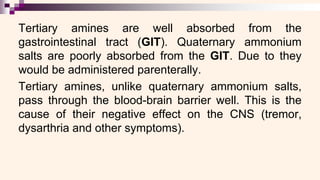
  • 293.
    Effects of CGin chronic heart failure Parameters, functions Cardiovascular changes in CHF Effects of CG in CHF Systole Weakened Intensified and shortened Diastole Shortened Lengthened Heart sizes Enlarged Normalized (reduced) Stroke volume Reduced Increased Minute volume (cardiac output) Reduced Increased Heart rate Increased Decreased Cardiac impulse
  • 294.
    Effects of CGin chronic heart failure Parameters, functions Cardiovascular changes in CHF Effects of CG in CHF Venous blood pressure Increased Normalized (decreases) Arterial blood pressure Sometimes decreased Normalized (increases) Blood supply to the heart Insufficient Normalized (improves) Circulating blood volume Increased Normalized (decreases) Extracellular fluid in the tissues Edema Disappearance of edema Diuresis Decreased (oliguria) Normalized (increases) Functions of other viseral organs (liver, Abnormal Normalized
  • 295.
    Classification of CG •PolarCG: Strophantin, Corglycon more hydrophilic, are absorbed very poorly, are used only intravenously, have maximal speed of onset of cardiotropic effect, minimal duration of cardiotonic effect (T1/2=8h) and ability to cumulate, minimal vagal effects •Relatively polar CG: Digoxin, Celanide are used orally or intravenously (T1/2=34-36h), take an intermidiate position •Non-polar CG: Digitoxin more lipophilic, are used only orally, are well absorbed, have minimal speed of onset of cardiotropic effect, maximal duration of cardiotonic effect (T1/2=160h) and ability to cumulate, maximal vagal effects According to the speed of onset of cardiotropic effect: strophanthin = convallatoxin > lanatoside С >digoxin >digitoxin According to the duration of the effect and the ability to cumulate: digitoxin >digoxin >celanide >strophanthin > convallatoxin
  • 296.
    Pharmacokinetics of CG •The liver is the main place for the metabolism of cardiac glycosides. • Cardiac glycosides and products of their metabolism are generally excreted by the kidneys . In kidney pathology the duration of the effect of CG is increased. • Digitoxin is mainly excreted in the form of metabolites and conjugates. Digoxin is not extensively metabolized. Strophanthin is excreted unchanged.
  • 297.
    Indications for useof CG • Chronic heart failure especially when assotiated with permanent atrial fibrillation (mostly digoxin). Acute decompensation of CHF. • Cardiac arrhythmias (atrial fibrillation, paroxysmal supraventricular tachycardia). In these types of arrhythmia the effectiveness of glycosides is linked to an increase in vagal tone and suppression of impulse conduction through the cardiac conducting system.
  • 298.
    Contraindications for theuse of of CG • Incomplete A-V block • Marked bradycardia • Acute infectious myocarditis • Hypokaliemia
  • 299.
    Cardiac glycosides intoxication •Overdose of cardiac glycosides leads to the development of toxic effects. This happens more frequently with digitalis agents that have a higher propensity to cumulate. • Intoxication manifests as cardiac and extracardiac disturbances. • Cardiac complications include different types of arrhythmia (extrasystoles, paroxysmal tachycardia, fibrillation, etc.) and partial or complete A-V block. Ventricular fibrillation is the most common cause of death associated with intoxication. • Extracardiac disturbances: vision disturbances (including colour vision disturbance), fatigue, muscle weakness, dyspepsia (nausea, vomiting and diarrhea), some mental disorders (agitation, hallucinations), headache and skin rash. • Nausea and vomiting associated with the administration of digitalis agents are mainly explained by the stimulation of the trigger zone of the vomiting center and partly with irritating influence on the gastrointestinal mucous membrane.
  • 300.
    Treatment of cardiacglycosides intoxication • The offending drug is stopped or the dose is reduced, physiologic antagonists are also used. Taking into consideration the fact that cardiac glycosides cause a decrease in potassium ions in cardiomyocytes, potassium agents (potassium chloride, potassium normin and others) are used. They are administered orally or intravenously in amounts that are required to keep normal potassium serum levels. Potassium agents are used in order to prevent cardiac toxicity of glycosides, especially cardiac rhythm disorders. Magnesium agents (magnesium orotate), “Panangin” (it contains potassium asparaginate and magnesium asparaginate) and “Asparkam” (that have similar composition to panangin) are administered for the same purpose. • Arrhythmias are treated with antiarrhythmic drugs. • In A-V block atropine is used in order to eliminate the influence of the vagus nerve. • In cases of intoxication with cardiac glycosides monoclonal antibodies can also be administered. Thus, digoxin immune Fab (digibind) is one of the digoxin antidotes.
  • 301.
    Cardiotonic agents of«non-glycoside» structure ❖Agents increasing cAMP content by activating adenylyl cyclase - Agents stimulating β1-adrenoceptors: ✓Dopamine, Dobutamine The cardiotonic effect of these agents occurs due to the stimulation of cardiac ß1-adrenoceptors. This effect activates adenylyl cyclase leading to an increase in cAMP content in cardiomyocytes and a corresponding increase in Ca2+ concentration. As a result of this, cardiac contractions become stronger They are administered as an intravenous infusion. They are used for a brief stimulation of the heart in acute decompensation of CHF and acute heart failure. They can cause tachycardia, arrhythmia, hypertension, increase in oxygen consumption by the myocardium and other adverse effects. Differences from CG: can cause tachycardia and more increase in oxygen consumption by the myocardium and, if used continuously, can reduce life expectancy.
  • 302.
    Cardiotonic agents of«non-glycoside» structure ❖Agents increasing cAMP content by inhibiting phosphodiesterase III ✓Amrinone, Milrinone They increase cAMP content by inhibiting phosphodiesterase III; therefore they block the process of cAMP inactivation. The accumulation of cAMP increases calcium concentration that manifests as a positive inotropic effect. They are used only for a short period of time (intravenously) in case of acute cardiac decompensation. They may cause mild hypotension and cardiac arrhythmias. Differences from CG: if used continuously, can reduce life expectancy.
  • 303.
    Cardiotonic agents of«non-glycoside» structure Agents increasing the sensitivity of myofibrils to Ca ions - calcium sensitizers ✓Levosimendan It sensitizes cardiac myofibrils to calcium ions by binding with troponine C. This leads to an increase in the intensity of cardiac contractions without increased myocardial oxygen consumption. Besides, it causes dilatation of coronary and other vessels. This is generally associated with the activation of KATP-channels of vascular smooth muscles. It is administered intravenously via an infusion for the treatment of acute cardiac failure. The agent is well tolerated. In general, it compares favourably with other non-glycoside cardiotonics in its beneficial effect on CHF and the long- term outlook of the disease.
  • 305.
    Antiarrhythmic drugs arethe drugs used for the treatment and prophylaxis of cardiac arrhythmias. ch A lL The causes of cardiac arrhythmias: myocardial ischemia, cardiac development defects, electrolyte and acid-base disorders, intoxication by chemicals, cardiac innervation disturbances, endocrine and infectious diseases, etc. Types of cardiac arrhythmias “*Sinus bradycardia and tachycardia “*Supraventricular (SV) arrhythmias: 5V-extrasystoles, SV-paroxysmal tachycardias, atrial fibrillation “* Ventricular (V) arrhythmias: V-extrasystoles, V-paroxysmal tachycardias, — ventricular fibrillation «* Atrioventricular (AV) block
  • 306.
    Ca » Sinus node NLann THE CONDUCTING SYSTEM OF THE HEART =" ACTION POTENTIAL PHASES ¢ Phase 4 - in sinus node - slow SHE oem (=spontaneous) diastolic AR depolarization — caused by slow inward Wk ~ Ca?* current and |, inward Na* current — = characterizes normal automatism -Phase 4 — in muscle cells Pon ped naan of atria and ventricles - - in pathology - spontaneous diastolic depolarization — caused by slow inward Nat current - cence eeeeeneeeeeeeeneeeeeneee eneeeneeneen Tp..characterizes pathologic automatism MDP ~
  • 307.
    Ca > Sinus node TLsm THE CONDUCTING SYSTEM OF THE HEART ACTION POTENTIAL PHASES oo « Phase 0_- fast depolarization: — in sinus node and AV-node - caused by inward Ca?2* current — characterizes conduction in cardiac conduction system — in muscle cells of atria 0 and ventricles: Nat . — caused by fast inward cai Nat current — characterizes Cat+| [Nat tp conduction in atria and ventricles MDP v
  • 308.
    TP MDP ACTION POTENTIAL PHASES ¢Phases 1-3 - repolarization phases - caused by outward K* current Effective refractory period (ERP) is characterized by a minimal interval at which a second stimulus results in propagated action potential v
  • 309.
    MECHANISMS OF ARRHYTHMIAPRODUCTION eNormal automatism changes In this case sinus bradycardia and tachycardia develop -Pathologic automatism In this case SV- and V-arrhythmias (extrasystoles, paroxysmal tachycardias, atrial and ventricular fibrillation) can develop -«Re-entry mechanism» a (circus movements) - caused by unidirectional conduction block Orthodromal stimuli y conduction block Purkinje fiber Functional block , zone <= Slowed conduction Ventricular myofibril Unidirectional block (SV- an d V-a rrh yth mM ias (development of arrhythmia) Norm Ortho- and antidromal stimuli d conduction block (extrasystoles, paroxysmal tachycardias, atrial and ventricular fibrillation) r 5 can develop) Bidirectional block Facilitated conduction (effect of quinidine) (effect of isoprenaline) a
  • 310.
    CLASSIFICATION OF ANTIARRHYTHMICDRUGS Drugs used in tachyarrhythmias and extrasystoles eClass | — Drugs blocking sodium channels (membrane stabilizing drugs): Subclass lA — Quinidine, Disopyramide, Procainamide Subclass IB — Lidocaine, Phenytoin (Diphenine) Subclass IC — Propaphenone, Ethacizine, Flecainide, Encainide eClass Il — Drugs suppressing adrenergic effects on the heart (8- Adrenoblockers): Propranolol, Atenolol, Metoprolol, Bisoprolol eClass IIl —Drugs blocking potassium channels (drugs prolonging the duration of repolarization and the duration of the action potential): Amiodarone, Bretylium (Ornid), Sotalol, Dronedarone, Ibutilide eClass IV — drugs blocking L-type calcium channels: Verapamil, Diltiazem
  • 311.
    CLASSIFICATION OF ANTIARRHYTHMICDRUGS Drugs used in tachyarrhythmias and extrasystoles (continuation) ¢ Other drugs possessing antiarrhythmic activity - Drugs blocking sodium channels of sinoatrial node (= drugs blocking |, inward Na* current = bradycardic drugs): lvabradine - Magnesium and potassium agents - Cardiac glycosides - Adenosine Drugs used in bradyarrhythmias and conduction disorders ¢ Drugs that intensify adrenergic effects (-Adrenomimetics): lsoprenaline ¢ Drugs suppressing cholinergic effects (M-cholinoblockers): Atropine
  • 312.
    Class | —Drugs blocking sodium channels (membrane stabilizing drugs): Subclass IA Mechanism of action: ¢ block Nat* and K* channels, slightly block Ca* channels > decrease pathologic automatism; slow down intraatrial and intraventricular conduction; prolong repolarization and increase ERP; can decrease normal automatism and AV-conduction; decrease myocardial contractility ¢ block M-cholinoceptors of the heart (can increase normal automatism and AV-conduction) and a-Adrenoceptors of the vessels (slightly decrease peripheral resistance > slightly decrease blood pressure) e ECG: slight extension of PQ, QRS and QT intervals
  • 313.
    || Subclass IA Indications foruse: e SV- and V-arrhythmias (extrasystoles, paroxysmal tachycardias, atrial and ventricular fibrillation) Side effects: ¢ Sinoatrial (SA) and AV-blocks e Interventricular blocks e Arrhythmogenic (proarrhythmic) effect Decrease of myocardial contractility Arterial hypotension Diarrhoea, nausea and vomiting Ringing in the ears, headache and visual problems Dryness of the oral and eye mucosa, disorder of accommodation and urinary retention
  • 314.
    Class | —Drugs blocking sodium channels (membrane stabilizing drugs): Subclass IB Mechanism of action: ¢ block slow Nat channels, slightly increase outward K* current > decrease pathologic automatism; don’t affect intraatrial and intraventricular conduction; slightly accelerate repolarization ¢ don't affect normal automatism, AV-conduction, myocardial contractility and blood pressure e ECG: shortening of the QTintervals
  • 315.
    || Subclass IB Indications foruse: e ventricular arrhythmias (extrasystoles and tachycardia occurring in myocardial infarction, open heart surgery and in postoperative period, caused by an overdose of cardiac glycosides) Side effects (cause significantly less than Subclass IA): ¢ Neurologic side effects ¢ Cardiovascular side effects e Gastrointestinal side effects
  • 316.
    Class | —Drugs blocking sodium channels (membrane stabilizing drugs): Subclass IC Mechanism of action: ¢ block Na* channels, slightly block Ca2* channels > decrease pathologic automatism; significantly suppress intraatrial and intraventricular conduction; slightly prolong repolarization and ERP; decrease normal automatism and AV-conduction; decrease myocardial contractility ¢ Don’t affect K* channels, M-cholinoceptors and a- adrenoceptors e ECG: extension of PQ and QRS intervals
  • 317.
    || Subclass IC Indications foruse: e SV- and V-arrhythmias (extrasystoles, paroxysmal tachycardias, atrial and ventricular fibrillation) Side effects: ¢ Sinoatrial (SA) and AV-blocks Interventricular blocks Marked arrhythmogenic (proarrhythmic) effect Decrease of myocardial contractility Arterial hypotension Nausea and vomiting e Ringing in the ears, headache and visual problems Contraindications for use: e marked conduction disorder, heart failure and cardiogenic shock
  • 318.
    Class Il —8&-Adrenoblockers Mechanismof action: ¢ Block {81-adrenoceptors that eliminates the effect of adrenergic innervation on the heart > decrease normal automatism (reduce heart rate) and AV- conduction, increase ERP in AV-node; decrease myocardial contractility e ECG: extension of PQ interval
  • 319.
    Class Il —8&-Adrenoblockers Indicationsfor use: ¢ Sinus tachycardia e SV- and V-arrhythmias (extrasystoles, paroxysmal tachycardias, atrial fibrillation) in coronary heart disease and chronic heart failure (for Metoprolol, Bisoprolol, Carvedilol and Nebivolol) ¢ SV-paroxysmal tachycardias e Tachysystolic atrial fibrillation (for reducing ventricular rate during high atrial rate by suppressing AV-conduction)
  • 320.
    Class IIl —Drugsblocking potassium channels Mechanism of action: e block K* channels > prolong repolarization and increase ERP ¢ Amiodarone can also slightly block Na* and Ca?* channels, &-, a-Adrenoceptors > decreases pathologic and normal automatism (reduce heart rate) and AV-, intraatrial and intraventricular conduction; decreases myocardial contractility, slightly decreases blood pressure e ECG: extension of PQ and QT intervals Indications for use of Amiodarone: e SV- and V-arrhythmias (extrasystoles, paroxysmal tachycardias, atrial and ventricular fibrillation)
  • 321.
    Class IIl —Drugsblocking potassium channels Side effects of Amiodarone: e Excessive bradycardia Sinoatrial (SA) and AV-blocks Interventricular blocks Arrhythmogenic (proarrhythmic) effect (not very notable) Decrease of myocardial contractility ¢ Arterial hypotension ¢ Extracardial side effects: dyspepsia, nausea and vomiting; reversible sedimentation of the drug in the cornea, skin pigmentation (grayish blue color), photodermatitis, thyroid dysfunction, lung fibrosis and neurological disturbances (paraesthesias, tremor, etc)
  • 322.
    Class IV —drugs blocking L-type calcium channels Mechanism of action: ¢ block Ca?* channels of L-type > decrease normal automatism (reduce heart rate), significantly decrease AV- conduction, increase ERP in AV node; decrease myocardial contractility, decrease blood pressure and dilate the coronary vessels e ECG: extension of PQ interval Indications for use: ¢ Sinus tachycardia ¢ SV-paroxysmal tachycardias e Tachysystolic atrial fibrillation (for reducing ventricular rate during high atrial rate by suppressing AV-conduction)
  • 323.
    Class IV —drugs blocking L-type calcium channels Side effects: e Excessive bradycardia ¢ Sinoatrial (SA) and AV-blocks ¢ Decrease of myocardial contractility (heart failure aggravation) ° Arterial hypotension ¢ Constipation, nausea and vomiting e Headache and dizziness
  • 324.
    Other drugs possessingantiarrhythmic activity in tachyarrhythmias and extrasystoles ¢ Drugs blocking sodium channels of sinoatrial node (= drugs blocking |, inward Na* current = bradycardic drugs): lvabradine: - decreases normal automatism (reduce heart rate); can be used in sinus tachycardia ¢ Magnesium and potassium agents Potassium chloride, magnesium sulphate, magnesium chloride, magnesium orotate and magnesium asparaginate, combined drugs “Asparkam’, “Panangin’: - reduce heart rate, decrease automatism, conduction and excitability; decrease myocardial contractility; effective in hypokalaemia and hypomagnesaemia (in cardiac glycosides’ overdosage, during the use of some diuretics)
  • 325.
    Other drugs possessingantiarrhythmic activity in tachyarrhythmias and extrasystoles «Cardiac glycosides - decrease AV-conduction, can be used in SV- paroxysmal tachycardias, tachysystolic atrial fibrillation (for reducing ventricular rate during high atrial rate) eAdenosine - interacts with adenosine receptors > suppresses atrioventricular conduction; can be used in SV- paroxysmal tachycardias
  • 326.
    Drugs used inbradyarrhythmias and conduction disorders ¢Drugs that intensify adrenergic effects ({8-adrenomimetics): /soprenaline - stimulate 81-adrenoceptors of the heart > increase normal automatism (increase heart rate) and AV- conduction; may be effective in sinus bradycardia and AV- block ¢-Drugs suppressing cholinergic effects (M-cholinoblockers): Atropine - block M-cholinoceptors of the heart > increase normal automatism (increase heart rate) and AV-conduction; may be effective in sinus bradycardia and AV-block
  • 327.
    DRUGS USED FORTHE TREATMENT OF ISCHEMIC HEART DISEASE ANTIANGINAL DRUGS Associate professor of pharmacology chair PhD, MD Shmyreva Natalia
  • 328.
    Normal coronary artery ISCHEMICHEART DISEASE Atherosclerosis (1 H D) e—= ° [HD - pathologic condition Atherosclerosis associated with coronary with blood clot . 4 insufficiency e IHD includes angina pectoris and myocardial infarction e Angina -retrosternal heavy or gripping sensation with radiation to the left arm or neck that is provoked by exertion and eased with rest or nitrates e Angina occurs when there is an imbalance between the oxygen demand by the heart and blood supply (supply of oxygen) ¢ The main cause of it is coronary atherosclerosis
  • 329.
    Antianginal drugs arethe drugs used for the relief and/or prevention of angina _ pectoris attacks The two main. principles of action § of antianginal drugs: 1.decrease in cardiac workload _ (thereby reducing its oxygen demand) 2. increase in blood supply to the heart
  • 330.
    1.A decrease incardiac workload and a reduction in its oxygen demand can be achieved in the following ways: e a decrease in venous pressure (VP) that leads to a reduction in venous return to the heart = a decrease in cardiac preload e a decrease in arterial pressure (AP) = a decrease in cardiac afterload ¢ reduction of myocardial wall tension ¢ decrease in heart rate ¢ decrease in myocardial contractility 2.An increase in blood supply to the heart (increase in coronary circulation) can be achieved in the following ways: ¢ direct dilation of coronary vessels ¢ reflex elimination of coronary spasm e decrease in diastolic pressure in the heart > decrease in extravasal compression of subendocardial coronary vessels
  • 331.
    CLASSIFICATION OF ANTIANGINALDRUGS 1. Drugs decreasing myocardial oxygen demand and improving coronary circulation: 1) Organic nitrates: Nitroglycerine, Isosorbide dinitrate, Isosorbide mononitrate 2) Drugs blocking calcium channels of L-type: e Phenylalkylamines: Verapamil e Dihydropyridines: Nifedipine, Phelodipine, Amlodipine ¢ Benzothiazepines: Diltiazem 3) Potassium channel activators Nicorandil 2. Drugs decreasing myocardial oxygen demand: 1) 8 —Adrenoblockers: ° Non-selective: Propranolol ¢ Selective: Atenolol, Metoprolol, Bisoprolol, Nebivolol 2) Bradycardic drugs: lvabradine 3) Selective inhibitors of the late current of sodium ions: Ranolazine
  • 332.
    CLASSIFICATION OF ANTIANGINALDRUGS 3. Drugs increasing oxygen supply to the myocardium: 1) Myotropic drugs dilating coronary vessels: Dipyridamole 2) Reflex inhibitors of the coronary spasm: Validol 4. Cardioprotective drugs: Trimetazidine Pharmacotherapy of angina pectoris is rather complex. Other drugs can also be used for the treatment of angina: ¢ Drugs preventing thrombosis (antiaggregants and anticoagulants) ¢ Drugs used for the treatment of hyperlipoproteinaemia (statins) ¢ Inhibitors of angiotensin-converting enzyme
  • 333.
    ORGANIC NITRATES MECHANISM OFACTION ¢ Antianginal effect of nitrates is mainly associated with their extracardiac activity ¢ Nitrates act like an endothelial relaxing factor (NO) in vascular smooth muscles: nitrates release nitric oxide (NO) > activation of cytosolic guanylyl cyclase > decrease in cytosolic Ca2* ion content that leads to vascular smooth muscle relaxation ¢ According to the degree of vascular sensitivity to nitrates the vessels can be arranged in the following order: veins >arteries >arterioles and capillary sphincters ¢ Thus nitrates mainly dilate peripheral veins, decrease VP and, therefore, reduce venous return to the heart and, as a result, decrease cardiac preload. They can also dilate arteries, decrease AP and, as a result, decrease cardiac afterload ¢ This leads to reducing cardiac workload and oxygen demand
  • 334.
    ORGANIC NITRATES MECHANISM OFACTION e Nitrates also improves the blood supply of the ischemic myocardial area. This happens due to several effects: |.decrease in diastolic pressure in the heart > decrease in extravasal compression of subendocardial coronary vessels 2.direct dilation of major coronary vessels 3.block of central reflex links, which cause constriction of the coronary vessels
  • 335.
    NITROGLYCERINE Dilation of the peripheralveins Decrease of venous return to the heart Decrease in Decrease in ««— Decrease of blood volume —t Decreasein Dilationof Suppression of peripheral left ventricular and final diastolic diastolic major the central links vascular stroke volume pressure in the left ventricle ventricular coronary of the coronary resistance; walltension —_ arteries constricting arterial dilatation | reflexes Reduction in heart size | arterial blood pressure improvement of coronary — 3 Decrease in cardiac work circulation Decrease in resistance to ————— blood flow Decrease in ee a myocardial : . waican daar to the ischaemic myocardial area t ¥ ANTIANGINAL EFFECT
  • 336.
    DRUG FORMS (DF)OF NITROGLYCERINE e Sublingual: tablets, capsules (Nitrocor), aerosol (Nitrospray) - effect begins in 1—3 min and lasts for up to 30 min - for eliminating angina pectoris attacks e Intravenous: solution - for eliminating severe angina pectoris attack (it is also used in myocardial infarction and acute heart failure) e Peroral: DF of prolonged action (Susiac forte, Nitrong forte) — effect lasts for about 4-6 h - for preventing angina pectoris attacks e Buccal: polymeric laminas for applying to the gum (Trinitrolong) - effect begins in 2—3 min and lasts for several hours - for eliminating and preventing angina pectoris attacks ¢ Transdermal: plasters (Nifro-Dur) — effect lasts for several hours (8-12 h) - for preventing angina pectoris attacks
  • 337.
    DRUG FORMS (DF)OF ISOSORBIDE DINITRATE ¢ Sublingual: tablets (/so Mack), aerosol (/soket-spray) - effect begins in 2—4 min and lasts for up to 2 h - for eliminating and preventing angina pectoris attacks e Intravenous: solution - for eliminating severe angina pectoris attack (it is also used in myocardial infarction and acute heart failure) e Peroral: tablets (Nifrosorbid) — effect lasts for about 4-6 h, tablets of prolonged action (/soket retard) — effect lasts for about 7-8 h - for preventing angina pectoris attacks e Buccal: polymeric laminas for applying to the gum (Dinitrosorbilong) — effect lasts for several hours — for preventing angina pectoris attacks ¢ Transdermal: plasters (Nisopercuten) — effect lasts for 8- 12 h - for preventing angina pectoris attacks
  • 338.
    DRUG FORMS (DF)OF ISOSORBIDE MONONITRATE e Intravenous: solution - for eliminating severe angina pectoris attack (it is also used in myocardial infarction) e Peroral: tablets (Monocinique) — effect lasts for about 7-8 h, tablets of prolonged action (Monocinigue retard) — effect lasts for about 20 h - for preventing angina pectoris attacks SIDE EFFECTS OF NITRATES : e headache and dizziness ° reflex tachycardia (compensatory reaction associated with a decrease in AP) ° excessive decrease in AP and even collapse ¢ tolerance to nitrates (develops only if they are used continuously for a long time)
  • 339.
    CALCIUM CHANNELS BLOCKERS Mechanismof antianginal action: e Calcium channel blockers block potential-dependent slow calcium channels of L-type > decrease entry of extracellular Ca?* into different muscle cells: - of conducting system of the heart > suppression of conduction in AV-node and automatism of SA-node (antiarrhythmic effect) > decrease in heart rate > decrease in cardiac oxygen demand ¢ of myocardium ~> decrease in myocardial contractility > decrease in cardiac oxygen demand ¢ of peripheral arteries > decrease in peripheral resistance > decrease in AP (hypotensive effect) > decrease in cardiac afterload > decrease in cardiac oxygen demand ¢ of coronary arteries > dilation of the coronary arteries > improvement of the blood supply to the heart
  • 340.
    Calcium channel blockers Thesuppression of calcium ions , influx inside the cells Heart Conducting system aoe Airiovelitriouler Sincatnad node | The decrease in node the cardiac | | tenn | me Decrease in v Suppression of | automatism Decrease conduction: | in — decrease in automatism; Decrease in oe increase in the | heart rate —j> Decrease in period | Caren never , 7 Y Antiarrhythmic effect Antianginal effect Hypotensive effect
  • 341.
    CALCIUM CHANNELS BLOCKERS Theyare used for preventing angina pectoris attacks According to their duration of action, they may be divided into 3 groups: ¢ Drugs with short-term effect: 6-8 h (drugs are dosed 3- 4 times a day): - Nifedipine - Diltiazem - Verapamil ¢ Drugs with medium duration of effect: 8-18 h (drugs are dosed twice a day): - Phelodipine e Drugs with long-term effect: >24 h (drugs are dosed once a day): - Amlodipine
  • 342.
    CALCIUM CHANNELS BLOCKERS ePhenylalkylamines (Verapamil): more affect the heart > have such side effects as excessive bradycardia, SA- and AV-blocks, decrease in myocardial contractility (heart failure aggravation) e Dihydropyridines (Nifedipine, Phelodipine, Amlodipine): more affect the peripheral arteries > have such side effects as arterial hypotension, reflex tachycardia, headache and edema (Nifedipine can cause abrupt decrease in AP. marked reflex tachycardia and “coronary steal syndrome” > increase in myocardial oxygen demand and decrease in coronary circulation > that is why it is almost not used in IHD in real clinical practice) e Benzothiazepines (Diltiazem): occupy an intermediate position ¢ Other side effects: constipation, nausea and vomiting
  • 343.
    POTASSIUM CHANNEL ACTIVATORS MECHANISMOF ANTIANGINAL ACTION: Nicorandil opens K* channels in vascular smooth muscle cells regulated by intracellular ATP > efflux of K* leads to hyperpolarization > intracellular Ca** content reduces > smooth muscle tone decreases > 1) dilation of peripheral arteries > decrease in AP > decrease in cardiac afterload > decrease in cardiac oxygen demand 2) dilation of coronary arteries > improvement of the blood supply to the heart It is used for eliminating and preventing angina pectoris attacks SIDE EFFECTS: arterial hypotension, reflex tachycardia, headache, arrhythmogenic effect, edema, dyspepsia
  • 344.
    8 —Adrenoblockers MECHANISM OFANTIANGINAL ACTION: block {81-adrenoceptors that eliminates the effect of adrenergic innervation on the heart > decrease normal automatism (reduce heart rate) and AV-conduction (antiarrhythmic effect), decrease myocardial contractility > decrease cardiac workload > decrease cardiac oxygen demand Coronary circulation doesn’t improve and may even become worse They are used for preventing angina pectoris attacks, selective 8 —Adrenoblockers are preferable in IHD SIDE EFFECTS: excessive bradycardia, SA- and AV-blocks, decrease in myocardial contractility (heart failure aggravation), peripheral vasoconstriction, bronchospasm, weakness, decreased libido and potency
  • 345.
    BRADYCARDIC DRUGS MECHANISM OFANTIANGINAL ACTION: lvabradine blocks |, inward Na* current in SA-node > decreases normal automatism > reduces heart rate (antiarrhythmic effect) > decrease in cardiac oxygen demand It doesn't affect coronary and peripheral arteries, myocardial contractility and conduction It is used for preventing angina pectoris attacks SIDE EFFECTS: ° excessive bradycardia, headache and dizziness, reversible visual problems
  • 346.
    SELECTIVE INHIBITORS OFTHE LATE CURRENT OF SODIUM IONS (Ranolazine) MECHANISM OF ANTIANGINAL ACTION: ¢ Ranolazine inhibits the late current of sodium ions in myocardial cells that leads to decrease in excess of intracellular calcium ions. It promotes relaxation of the myocardium and decrease in diastolic ventricular wall tension. This leads to reducing myocardial oxygen demand ¢ It is used for preventing angina pectoris attacks SIDE EFFECTS: e headache and dizziness ° constipation, nausea and vomiting e asthenia
  • 347.
    DRUGS INCREASING OXYGENSUPPLY TO THE MYOCARDIUM 1) Myotropic drugs dilating coronary vessels: Dipyridamole liechanism of action: suppresses adenosine reuptake by myocardium > myocardium accumulates increased concentration of adenosine, which possessing a marked coronary dilating effect Side effects: headache, arterial hypotension, dyspepsia, “coronary steal syndrome” (decrease in blood and oxygen supply of the ischemic zone due to dilation of arterioles in the normal part of the myocardium) lt is not used in IHD in real clinical practice because of “coronary steal syndrome” 2) Reflex inhibitors of the coronary spasm: Validol Mechanism of antianginal action: causes reflex improvement of coronary circulation by irritating oral mucous membranes It is almost not used in IHD in real clinical practice because of low antianginal activity
  • 348.
    CARDIOPROTECTIVE DRUGS MECHANISM OFANTIANGINAL ACTION: Trimetazidine prevents a decrease in AIP content in cardiomyocytes in the zone of ischemia and normalizes their energy balance > it normalizes ion channel function It doesn't affect general hemodynamics It is used for preventing angina pectoris attacks It is well-tolerated and almost doesn’t cause side effects
  • 349.
    DRUGS USED FORTHE TREATMENT OF CEREBRAL BLOOD CIRCULATION DISORDERS Pharmacological regulation of cerebral blood circulation is one of the most significant medical problems. This is determined by the fact that acute and chronic disorders of cerebral blood supply are the main cause of mortality and morbidity of the population. The pathology of cerebral blood circulation may be associated with functional and organic disorders (vascular spasm, embolism, thrombosis, vascular atherosclerosis and hemorrhages). The most significant cerebrovascular pathologies are ischemic disorders of the brain including ischemic stroke. In most cases ischemic strokes are caused by atherosclerotic damage of the vessels, especially stenosis of the carotid and spinal arteries. In such cases stroke can be prevented by antiaggregants (acetylsalicylic acid, ticlopidin, clopidogrel). Ischemic stroke can be caused by emboli and blood clots occluding the branches of the cerebral vessels. Anticoagulants of direct and indirect action are usually used to prevent the initial embolism and its recurrence (heparin, low molecular weight heparin agents, warfarin, acenocoumarol and phenindione). Transient disorders of cerebral blood circulation may be associated with cerebral vascular spasm. In this case the prophylaxis can also be performed with antiaggregants and anticoagulants. However both groups of drugs are contraindicated in patients with hemorrhages or at risk for their development. It is also reasonable to use drugs that decrease the tone of cerebral vessels. Disorders of cerebral blood circulation can be caused by subarachnoid or intracerebral hemorrhages. The main causes of hemorrhagic strokes are arterial hypertension, aneurisms (especially microaneurisms) and angiomas. One of the ways to treat such patients is to remove surgically the hematoma (if it is possible). If ischemia is marked and remains unchanged, then necrosis of the cerebral tissue develops. Apart from the severe cerebral disorders associated with ischemia, chronic insufficiency of cerebral blood supply may occur. This disorder affects negatively memory, intellectual and psychic activity, behavioral and motor reactions. These unfavorable manifestations increase slowly and are usually linked with age and associated pathological processes (vascular atherosclerosis, arterial hypertension, metabolic disorder and so on). One of the fundamental principals of prophylaxis and therapy of cerebral blood supply insufficiency is the dilation of the cerebral vessels. However, usually vasodilating agents cause systemic hypotension that decreases the blood supply to the brain, and the final result is likely to be unfavorable. This is why it is necessary to use the drugs that have a selective effect on the cerebral vessels and that do not affect systemic hemodynamics. Drugs improving cerebral blood circulation in brain ischemia may be divided into the following groups. I. Drugs affecting aggregation and coagulation.  Antiaggregants Acetylsalicylic acid, Ticlopidin, Clopidogrel  Anticoagulants Heparin, Low molecular weight heparins, Warfarin II. Drugs increasing cerebral blood circulation  L-type calcium channels blockers Nimodipine, Cinnarisine, Flunarisine  Drugs of different chemical groups Vinpocetine (kavinton), Nicergolin, Xantinol nicotinate, Gammalon, Picamilonum, Pentoxifyllin, Papaverine Nimodipine, cinnarisine (stugeron), flunarisine (sibelium) are blockers of the L-type calcium channels that mostly affects cerebral blood circulation. These drugs decrease the tone of cerebral arterioles and increase brain tissue oxygenation. Nimodipine is used for the treatment of acute brain ischemia, subarachnoid hemorrhage and chronic brain ischemia. It improves brain function in elderly people. Cinnarisine (stugeron) and flunarisine (sibelium) are used for the treatment of cerebral vasospasm, atherosclerosis, vestibular disturbances, in post-stroke period and after craniocerebral traumas. Vinpocetine (kavinton) produces a spasmolytic effect. It mostly dilates the cerebral vessels. It normalizes metabolic processes in the cerebral tissues. The drug decreases platelet aggregation and pathologically increases blood viscosity, and this eventually leads to the improvement of
  • 350.
    microcirculation. It isused for the treatment of nervous system disorders occurring in the post-stroke period, chronic insufficiency of cerebral circulation, eye tissue ischemia, decreased hearing caused by vascular or toxic disorders, disturbed memory and dizziness. Nicergoline (sermion) possesses α-adrenoblocking and spasmolytic activity. It dilates cerebral and peripheral vessels. This drug is used for the treatment of disorders of cerebral circulation, migraine, disturbances of peripheral hemodynamics and ischemia of the optic nerve. Derivatives of nicotinic acid (xantinol nicotinate (complamin)) are also used for the treatment of cerebral ischemia. It is characterized by a marked myotropic vasodilating effect on all peripheral and cerebral vessels. Combined drugs containing nicotinic acid and other spasmolytics are also used in the clinic; for example, nicoverin (nicotinic acid + papaverine), nicospan (nicotinic acid + no-spa). Some drugs that belong to the group of GABA and its derivatives (gammalon. picamilon) produce positive effects on cerebral circulation. Gammalon (aminalonum) is GABA, picamilon includes the structures of GABA and nicotinic acid. Both drugs produce a normalizing effect on the cerebral circulation and metabolic processes in the cerebral tissues. Picamilon dilates the vessels of the brain. Pentoxifylline (agapurine, trental) produces a moderate vasodilating effect, decreases platelet aggregation, increases the elasticity of the erythrocyte surface and improves microcirculation. Its vasodilating effect is likely to be associated with the block of the adenosine receptors. Moreover this drug inhibits phosphodiesterase and increases cAMP content in the platelets. Pentoxifylline is also used for the treatment of peripheral circulation problems, diabetic angiopathy and disordered blood supply to the eyes. Another direction in the pharmacotherapy of cerebral ischemia is linked to the development of neuroprotective drugs that increase the resistance of neurons to hypoxia. The agents that suppress metabolism and increase the resistance of cerebral tissue to hypoxia include Sodium oxibutyrate. Many drugs of the GABA group have a positive effect on the metabolic processes in the nervous system (gammalon, picamilonum). They also improve cerebral circulation. L-type calcium channels blockers, such as nimodipine, cinnarisine and flunarisine, block voltage- dependent calcium channels and decrease the influx of excessive calcium ions into the neurons, and this can provide a neuroprotective effect. Besides, they dilate cerebral vessels and help to normalize the metabolism by improving nervous system oxygenation. Therefore the majority of the currently used drugs, that are effective for the treatment of cerebral ischemia, combine both neuroprotective and vasodilating effects. Migraine has a special place in the group of cerebrovascular diseases. This widespread pathological state is associated with disfunctions of vasomotor regulation. It occurs more frequently in women. Migraine manifests as transient attacks of unilateral pulsatile headache, which is often followed by nausea, vomiting, vision and hearing disorders, photophobia, paraesthesia, weakness of the skeletal muscles and many other symptoms. The attacks can repeat many years. The duration of one attack takes 4—72 h. The mechanism of the development of migraine is still unknown. It is suspected that it is caused by genetic factors, neurogenic and vascular dysfunction and plasma transudation into perivascular tissues. Nevertheless the importance of the serotoninergic system in migraine pathogenesis has been generally acknowledged. The main idea of the development of serotoninergic drugs effective for the treatment of migraine consists in making drugs that selectively bind to only those serotonin receptor subtypes that are of primary importance for migraine pathogenesis. Currently, 5-HT1D- and 5-HT1B-receptors are considered to be of main importance. The first agonist of these receptors was sumatriptan, a highly effective drug used to inhibit severe attacks of migraine. Drugs that are used in migraine therapy are subdivided into two groups. I. Drugs used to inhibit severe migraine attacks  Ergot alkaloids and derivatives Ergotamine, Dihydroergotamine (dihydergot)  Indole derivatives Sumatriptan (imigran)  Non-opioid analgesics Acetaminophen (paracetamolum), Acetylsalicylic acid, Naproxen, Indomethacin, Ibuprofen  Antiemetic drugs (auxiliary drugs) Metoclopramide
  • 351.
    II. Drugs usedin prophylaxis of migraine attacks  β-Adrenoblockers Propranolol, Atenolol, Metoprolol  Tricyclic compounds Pizotiphen (sandomigran)  Lysergic acid derivatives Methysergide (lyseril)  Non-steroidal anti-inflammatory drugs Naproxen  Tricyclic antidepressants Amitriptyline  Antiepileptic drugs Carbamazepine, Clonazepam The prophylaxis and treatment of migraine requires the proper selection of the most effective drugs in each individual case. DRUGS WITH VENOTONING AND VENOPROTECTIVE EFFECT Venotoning effect - the ability of the drugs to increase the tone of venous smooth muscles. Venoprotective effect includes the ability of the drugs to reduce (prevent) venous damage, to decrease permeability of the venules, to prevent the development of edema, inflammation, microcirculation disorder and the subsequent damage of surrounding tissues. Chronic venous insufficiency of the lower extremities is a very common venous pathology. Varicose veins occur in 10—40% of the population of developed countries. The mechanism of venous insufficiency of the lower extremities consists of a decrease in the contractility of the smooth muscles of the venous wall, pathological venous dilatation (stretching) and insufficiency of venous valves. This leads to the appearance of venous stasis and an increase in venous pressure. Leukocytes and endothelial cells become activated. Venous hypertension and leukocyte damage to the veins and surrounding tissues lead to a marked microcirculation disorder. It results in edema, tissue inflammation and destruction leading to the formation of the trophic skin ulcers. The following drugs are used for the treatment of chronic venous insufficiency of the lower extremities: A. Drugs that have venotonic and venoprotective effect 1) Drugs of plant origin Bioflavonoids (detralex (diosmin+gesperidin), diovenor (diosmin)), compounds made from horse-chestnut (escin, reparil, eskuzan, esflazin, venoplant), grape seed extract (endotelon) 2) Synthetic drugs Tribenoside (glyvenol) B. Drugs that have a venoprotective effect 1) Drugs of plant origin Rutin and its derivatives (rutin (rutoside), troxerutin (troxevasin)), drugs made of Gingko biloba leaves (extract of Gingko biloba tree leaves (bilobil, ginkio, memoplant)) 2) Synthetic drugs Calcium dobesilate (doxium)
  • 352.
    ANTIHYPERTENSIVE DRUGS (HYPOTENSIVE DRUGS) Associateprofessor of pharmacology chair PhD, MD Shmyreva Natalia
  • 353.
    ARTERIAL HYPERTENSION (AH) •AH is a persistent chronic increase in arterial blood pressure (AP) ≥ 140/90 mm Hg • AH is present in 20–30% of the adult population. • There are 2 forms of AH: 1. Essential hypertension (80–90%). Its cause is unknown. It has a multifactorial etiology: genetic factors, fetal factors, environmental factors (obesity, alcohol intake, sodium intake, stress), humoral mechanisms, insulin resistance, etc. 2. Secondary hypertension. It has a specific and potentially treatable cause: endocrine diseases, renal diseases, aortic coarctation, using some drugs (NSAIDs, oral contraceptives, steroids, etc.)
  • 354.
    TARGET ORGAN DAMAGEIN AH • AH damages the following target organs: vessels (arteries and arterioles), heart, brain, kidneys and eyes • AH is a major cause of premature vascular disease leading to cerebrovascular events (strokes), ischemic heart disease and peripheral vascular disease
  • 355.
    Vasoconstrictors Vasodilators •Epinephrine, Norepinephrine •AngiotensinII •Vasopressin (antidiuretic hormone) •Thromboxane, Endothelin •Acetylcholine •Bradykinin •Histamine •Nitric oxide (NO; ERF) •Prostacyclin (PGI2), Prostaglandins E2 • Antihypertensive drugs are the drugs decreasing arterial blood pressure (AP). They are mostly used for the treatment of AH. • The level of AP depends on 3 factors: 1) cardiac output (cardiac work) 2) peripheral vessel tone (peripheral vascular resistance) 3) circulating blood volume • All of this is under neurohumoral control • Vascular tone is regulated by the sympathetic (adrenergic) nervous system and a great number of vasoactive substances produced by the organism:
  • 356.
    CLASSIFICATION OF ANTIHYPERTENSIVEDRUGS I. Drugs reducing the stimulating effect of adrenergic innervation on the cardiovascular system (neurotropic drugs) 1. Drugs decreasing the tone of the vasomotor centers: Clonidine (clofelinum), Guanfacine , Methyldopa , Moxonidine, Rilmenidine 2. Drugs blocking autonomic ganglia (ganglioblockers): Pentaminum, Hygronium 3. Drugs suppressing adrenergic neurons at the level of the presynaptic endings (sympatholytics): Reserpine
  • 357.
    CLASSIFICATION OF ANTIHYPERTENSIVEDRUGS 4. Drugs blocking adrenoceptors (adrenoblockers) 1) α-Adrenoblockers - Drugs blocking post- and presynaptic α-adrenoceptors: Phentolamine, Tropaphenum - Drugs blocking postsynaptic α1-adrenoceptors: Prazosin, Doxazosin 2) β-Adrenoblockers - Drugs blocking β1,2-adrenoceptors: Propranolol (anaprilinum) - Drugs blocking β1-adrenoceptors: Atenolol, Metoprolol, Bisoprolol, Nebivolol 3) β-,α-Adrenoblockers: Labetalol, Carvedilol
  • 358.
    CLASSIFICATION OF ANTIHYPERTENSIVEDRUGS II. Drugs affecting systemic humoral regulation of AP - Drugs affecting renin-angiotensin system (RAS) 1. Inhibitors of angiotensin-converting enzyme (angiotensin II synthesis inhibitors): Captopril, Enalapril, Perindopril, Phosinopril, Lisinopril 2. Angiotensin receptors (AT1) blockers: Losartan, Valsartan, Telmisartan, Olmesartan 3. Direct inhibitors of renin: Aliskiren
  • 359.
    CLASSIFICATION OF ANTIHYPERTENSIVEDRUGS III. Drugs of myotropic action (myotropic drugs) 1. Drugs affecting ion channels: 1) Calcium channels blockers: - Dihydropyridines: Nifedipine, Phelodipine, Isradipine, Amlodipine, Lercanidipine - Non-dihydropyridines: Verapamil, Diltiazem 2) Potassium channels activators: Minoxidil, Diazoxide 2. Nitric oxide donors (NO): Sodium nitroprusside 3.Other drugs: Apressin, Dibazolum, Magnesium sulphate IV. Drugs affecting water and electrolyte balance (diuretics): Hydrochlorothiazide, Indapamide, Furosemide,Torasemide •Anxiolytics and sedatives are sometimes used to treat AH (especially initial stages). Usually such drugs are prescribed to the patients with a labile mood.
  • 360.
    DRUGS DECREASING THETONE OF THE VASOMOTOR CENTERS which leads to reduction in the sympathetic innervation of the heart and vessels 2) and at the same time increase in the vagal tone → decrease in both cardiac work (bradycardia can occur) and general peripheral vascular resistance → decrease in AP MECHANISM OF ACTION Stimulation of α2- adreno- ceptors and imidazoline I1- receptors of the solitary tract nucleus neurons of the medulla oblongata → 1) suppression of the vasomotor center neurons,
  • 361.
    DRUGS DECREASING THETONE OF THE VASOMOTOR CENTERS • Clofelinum has a lot of side effects: sedative and hypnotic effects, increase in appetite, decrease in secretory activity of the salivary glands (mouth dryness) and stomach glands, constipation, retention of sodium ions and water in the body, impotence, «rebound» syndrome («rebound» hypertensive crisis, sleeplessness, etc.). That is why it is not used for the long-term treatment of AH, it is used only for relief of hypertensive crises (HC) orally and parenterally. • Moxonidine and rilmenidine are predominant agonists of imidazoline I1-receptors. They don’t cause sedative and hypnotic effects, retention of sodium ions and water in the body, impotence, «rebound» syndrome. They are used for the long-term treatment of AH.
  • 362.
    GANGLIOBLOCKERS MECHANISM OF ACTION •Inhibitionof the sympathetic ganglia → dilatation of blood vessels → decrease in peripheral vascular resistance → decrease in AP • Side effects: orthostatic hypotension, atropine-like effects (decrease in the intestinal tone associated with constipation, reduction in bladder muscle tone, mydriasis, accommodation disorder, dryness of the oral mucosa), tolerance. •Nowadays they are not used for the long-term treatment of AH because of their side effects. They can be used only for relief of HC. Also they can be used for treatment of pulmonary and brain edema, for controlled hypotension during surgical procedures.
  • 363.
    SYMPATHOLYTICS MECHANISM OF ACTION •Reductionin norepinephrine (NE) concentration in the adrenergic fibers ends in the heart and vessels → decrease in cardiac work and peripheral vascular resistance → decrease in AP • Side effects: orthostatic hypotension, bradycardia, increase in the secretory and motor activity of the GIT, sedative effect (drowsiness, inhibition of motor and mental reactions) •Nowadays they are almost not used in AH in real clinical practice because of their side effects
  • 364.
    α–Adrenoblockers MECHANISM OF ACTIONof α1-adrenoblockers: Block of postsynaptic α1-adrenoceptors in the vessels → decrease in peripheral vascular resistance → decrease in AP SIDE EFFECTS: orthostatic hypotension, tachycardia, headache, sleepiness, dizziness, water retention They are used for the long-term treatment of AH and benign hyperplasia of the prostate gland MECHANISM OF ACTION of α1,2-adrenoblockers: Block of postsynaptic α1-adrenoceptors in the vessels → decrease in peripheral vascular resistance → decrease in AP. Also they block presynaptic α2-adrenoceptors → disturb negative feedback → excessive release of NE → more marked tachycardia, less notable decrease in AP They are used for the treatment of increased AP in pheochromocytoma, also can be used for treating various disorders of peripheral blood circulation (endarteritis, etc.)
  • 365.
    β –Adrenoblockers MECHANISM OFANTIHYPERTENSIVE ACTION: Block ß1-adrenoceptors that eliminates the effect of adrenergic innervation on the heart → decrease cardiac contraction rate and intensity → decrease cardiac output → decrease AP (> decrease systolic AP) Later, if they are used systemically, they decrease also peripheral vascular resistance (decrease dyastolic AP). Mechanism of it: 1) β-Adrenoblockers block β1-adrenoreceptors of juxtaglomerular apparatus of kidneys → reduce renin production; 2) they suppress presynaptic β2-adrenoceptors → decrease NE release; 3) suppress the central links of sympathetic NS; 4) decrease prostaglandin level in the blood. They are used for the long-term treatment of AH and also of ischemic heart disease and chronic heart failure.
  • 366.
    β –Adrenoblockers SIDE EFFECTS: excessivebradycardia, SA- and AV-blocks, decrease in myocardial contractility (heart failure aggravation), peripheral vasoconstriction, bronchospasm, weakness, decreased libido and potency β-,α-Adrenoblockers β-,α-adrenoblockers differ from the β-adrenoblockers: they have additional α1-adrenoblocking effect → more notable reduce the peripheral vascular resistance → more significant decrease dyastolic AP
  • 367.
    The significance ofrenin-angiotensin system for the AP regulation •Proteolytic enzyme renin occurs in juxtaglomerular cells of the kidneys, it provides the conversion of angiotensinogen into angiotensin I (both agents are inactive). Subsequently, vasoactive angiotensin II is produced from angiotensin I •Angiotensin II is one of the most active endogenous vasopressor agents, it also stimulates the release of mineralocorticoid aldosterone from the adrenal cortex
  • 368.
    Inhibitors of angiotensin-convertingenzyme (ACE inhibitors) MECHANISM OF ANTIHYPERTENSIVE ACTION: • ACE inhibitors cause reduction of angiotensin II formation. It leads to: 1) less significant activation of the vascular angiotensin receptors → decrease in resistant vessels tone → decrease in peripheral vascular resistance → decrease in AP 2) less significant activation of the angiotensin receptors of the adrenal cortex → reduction of the release of mineralocorticoid aldosterone → lower sodium retention and a reduction in extracellular fluid volume → slight decrease in circulating blood volume • All these combined effects cause a decrease in AP
  • 369.
    Inhibitors of angiotensin-convertingenzyme (ACE inhibitors) MECHANISM OF ANTIHYPERTENSIVE ACTION: • By inhibiting ACE they also slow down the inactivation of bradykinin which causes release of prostacyclin, prostaglandin E2 and other substances that produce a vasodilating effect → decrease in AP. This effect is of less significance than the inhibition of angiotensin II synthesis. • They are used for the long-term treatment of AH and also of ischemic heart disease and chronic heart failure. • Usually these drugs are well tolerated. SIDE EFFECTS: allergic reactions (skin eruption, fever), taste disorder, angioneurotic edema, tachycardia, dry cough, leukopaenia and proteinuria
  • 370.
    Angiotensin receptors (AT1)blockers MECHANISM OF ANTIHYPERTENSIVE ACTION: • The formation of angiotensin II is regulated not only by ACE, but also by other enzymes (himase and some other enzymes). Therefore, the complete deactivation of the RAS can be achieved by the use of angiotensin receptors (AT1) blockers • They competitively block angiotensin receptors of AT1 type → eliminate all effects of angiotensin II (vasopressor effect, increase in aldosterone production, etc.) → decrease peripheral vascular resistance, decrease the release of aldosterone and slightly decrease circulating blood volume → decrease AP Direct inhibitor of renin (Aliskiren) Produces direct inhibitory effects on renin, decreasing its activity
  • 371.
    CALCIUM CHANNELS BLOCKERS Mechanismof antihypertensive action: • Calcium channel blockers block potential-dependent slow calcium channels of L-type → decrease entry of extracellular Ca2+ into different muscle cells: - of myocardium and conducting system of the heart → decrease cardiac contraction rate and intensity → decrease cardiac output → decrease in AP - of peripheral arteries → decrease peripheral resistance → decrease in AP • They are used for the long-term treatment of AH and also of ischemic heart disease
  • 372.
    CALCIUM CHANNELS BLOCKERS SIDEEFFECTS • Non-dihydropyridines: excessive bradycardia, SA- and AV-blocks, decrease in myocardial contractility (heart failure aggravation) • Dihydropyridines: arterial hypotension, reflex tachycardia, headache and edema (Nifedipine can cause abrupt decrease in AP, marked reflex tachycardia and “coronary steal syndrome” → increase in myocardial oxygen demand and decrease in coronary circulation → that is why it is almost not used in IHD in real clinical practice) • Other side effects: constipation, nausea and vomiting
  • 373.
    POTASSIUM CHANNEL ACTIVATORS MECHANISMOF ANTIHYPERTENSIVE ACTION: They open K+ channels in vascular smooth muscle cells regulated by intracellular ATP → efflux of K+ leads to hyperpolarization → intracellular Ca2+ content reduces → smooth muscle tone decreases → dilation of peripheral arteries → decrease in peripheral resistance → decrease in AP SIDE EFFECTS: arterial hypotension, reflex tachycardia, headache, arrhythmogenic effect, edema, dyspepsia
  • 374.
    Ingerior vena cava- = Abdominal aorta Suprarenal artery: a ne gaa. Ae AZ Renal Adrenal gland 44 y artery eX - Renal capsule Renal column se = Calyx =. oa Renal vein ay Hilum af . 3} — Papilla 4 Medulla "t y Cortex ' “ww DIURETICS Associate professor of pharmacology chair PhD, MD Shmyreva Natalia
  • 375.
    URINE FORMATION Urine formationincludes 3 processes: ¢ glomerular filtration e tubular reabsorption e« tubular secretion FILTRATION eUrine formation begins with filtration of blood plasma through membranes of a capillary glomerulus and its capsule. Almost all components of plasma pass through the pores in these membranes excepting high relative molecular weight proteins, substances bound to these proteins, and lipids. Filtration depends on hydrostatic arterial pressure in renal capillaries, oncotic pressure of plasma and the number of functioning glomeruli.
  • 376.
    The daily volumeof glomerular filtrate in a normal adult is about 170 L of which only 1.5 Lis —_’ | excreted as urine, the rest Is reabsorbed. REABSORPTION AND SECRETION e Reabsorption and_ secretion occurs’ throughout © all segments of the nephron: proximal tubules, Henle’s loop, distal tubules and collecting tubules and ducts. e About 70-80% of filtrate is reabsorbed in the proximal tubules: sodium (Na*), chlorine (CI), potassium (K*), bicarbonate ions (HCO,;), water, amino acides and glucose. As a result the intratubular fluid remains isoosmotic (compared to plasma and interstitial fluid). ¢ In the descending limb of Henle’s loop only wafer freely diffuses from the tubules. Intratubular fluid becomes
  • 377.
    The thick segmentof the ascending limb of Henle’s loop: reabsorption of CI, Na*, K*, CA* and Mg". eThis part of nephron has low water permeability. Therefore, the intratubular fluid first becomes isoosmotic and then hypotonic. ¢ The distal convoluted tubules: reabsorption of Na* and Cr but not water takes place there making intratubular fluid more hypotonic. Secretion of KX and H* also takes place there. The collecting tubules: aldosterone-dependent reabsorbtion of Na* and secretion of K*, aldosterone- independent reabsorption of Na* and secretion of K* and H’, vasopressin-dependent reabsorbtion of water Urine pa i tamll., LL, fn Fr PF pyrrar fr rr lew rartAnrnin
  • 378.
    THE PROCESS OFURINE “FORMATION IS CARRIED OUT UNDER NEUROHUMORAL CONTROL Aldosterone (hormone of the adrenal cortex) stimulates reabsorbtion of Na* and secretion of K* in the collecting tubules (and in the late distal tubules) *Antidiuretic hormone of the posterior lobe of hypophysis (ADH, vasopressin) stimulates water reabsorption in the collecting tubules (and in the late distal tubules) °Atrial natriuretic factor (it is produced in the special cells of the cardiac atria) induces significant increasing diuresis. Parathyroid hormone controls reabsorption of CA* in the distal tubules. °-Prostaglandines increase renal blood flow and therefore increase filtration, and also enhance water excretion and decrease NaCl reabsorption.
  • 379.
    DIURETICS - arethe drugs that increase diuresis. They are used mostly for excreting excess water from the body and eliminating edemas of different origin, also for lowering blood pressure and accelerating the elimination of poisons from the body in case of chemical poisoning. CLASSIFICATION OF DIURETICS |. Saluretics: 1.Thiazides and thiazide-like diuretics - act mainly in the proximal part of the distal convoluted tubules - Thiazides: Hydrochlorothiazide, Cyclothiazide - Thiazide-like diuretics: Clopamide, Chlorthalidone Indapamide
  • 380.
    2. Loop diuretics- act in the thick ascending limb of Henle’s loop: Furosemide, Torasemide, Ethacrynic acid 3. Inhibitors of carbonic anhydrase - act in the proximal convoluted tubules: Acetazolamide ||. Potassium- sparing diuretics - act in the terminal part of the distal convoluted tubules and in the collecting tubules: 1. Inhibitors of renal epithelial Na* channels: Triamterene, Amiloride 2. Aldosterone antagonists: Spironolactone, Eplerenone lI! Osmotic diuretics - act in the most of the segments of the renal tubules (proximal tubules, descending limb of Henle’s loop, collecting tubules/ducts): Mannitol
  • 381.
    THIAZIDES AND THIAZIDE-LIKEDIURETICS MECHANISM OF ACTION: inhibit Na*/CI transport system > suppress reabsorption of Na* and Cl mostly in the early part of the distal tubules > increase the excretion of Na* and CI: also increase K* secretion and Mg* excretion > increase the rate of urine flow edelay renal excretion of Ca* ereduce uric acid secretion ehave also a hypotensive effect
  • 382.
    THIAZIDES AND THIAZIDE-LIKEDIURETICS INDICATIONS FOR USE e Edema associated with chronic heart failure (CHF), hepatic cirrhosis, and renal diseaseas (nephrotic syndrome, chronic renal failure and acute glomerulonephritis) ¢ Arterial hypertension e Glaucoma e Hypercalcuria ¢ Diabetes insipidus (since they decrease urinary volume, the mechanism is still obscure) Indapamide is used only as antihypertensive drug in Arterial hypertension
  • 383.
    LOOP DIURETICS MECHANISM OFACTION: inhibit Na*/K*/2CI transport system > suppress reabsorption of Na* and CI mostly in the thick ascending limb of Henle’s loop = increase the excretion of Na* and Cr; also increase K*, Mg* and Cat ~ excretion; increase renal blood flow > significantly increase the rate of urine flow ereduce uric acid secretion ehave also a hypotensive effect eCompared with furosemide, Torasemide has a longer duration of action
  • 384.
    LOOP DIURETICS INDICATIONS FORUSE e Edema associated with CHF, hepatic cirrhosis, and renal diseaseas (nephrotic syndrome, chronic renal failure and acute glomerulonephritis) ¢ Arterial hypertension, hypertensive crisis e Pulmonary edema ¢ Brain edema ¢ Hypercalcaemia ¢ For forced diuresis in acute poisoning by chemical substances
  • 385.
    INHIBITORS OF CARBONICANHYDRASE MECHANISM OF ACTION: inhibit carbonic anhydrase in the proximal tubule > suppress reabsorption of Na*t and HCO3 - there > increase urinary Na* and HCO3- excretion; also c : increase K* excretion > metabolic acidosis, slightly increase the rate - Of urine flow Hydrochlorothiazide Triamterene
  • 386.
    INHIBITORS OF CARBONICANHYDRASE INDICATIONS FOR USE e Glaucoma ° Epilepsy ¢ For correcting a metabolic alkalosis, especially an alkalosis caused by diuretics
  • 387.
    POTASSIUM-SPARING DIURETICS: INHIBITORS OFRENAL EPITHELIAL NA* CHANNELS MECHANISM OF ACTION: inhibit renal epithelial Na* channels in the collecting tubules and in the late distal mhes > suppress reabsorption of Na* and Cl there > increase the excretion of Na* and CI > slightly increase the rate of urine flow eretain potassium and magnesium in the body INDICATIONS FOR USE They are usually administered in a combination with the K* depleting drugs (for instance, thiazides and loop diuretics)
  • 388.
    POTASSIUM-SPARING DIURETICS: ALDOSTERONE ANTAGONISTS Aldosteronestimulates reabsorbtion of Na* and secretion of K* in the collecting tubules and in the late distal tubules MECHANISM OF ACTION of aldosterone antagonists: block ~ Intracellular aldosterone receptors > suppress reabsorption of Nat and Cl- there > increase the excretion of Na* and Cl and relative amounts of water > slightly increase the rate of urine flow eDecrease secretion of Kt > increase serum K* concentration eAlso spares magnesium
  • 389.
    POTASSIUM-SPARING DIURETICS: ALDOSTERONE ANTAGONISTS INDICATIONSFOR USE eEdema that resulted from aldosterone overproduction: - Primary hyperaldosteronism (adrenal adenomas or bilateral adrenal hyperplasia) - Refractory edema associated with secondary aldosteronism (cardiac failure, hepatic cirrhosis, nephrotic syndrome, and severe ascites). They are usually administered together with other diuretics especially with those which cause hypokalaemia
  • 390.
    OSMOTIC DIURETICS e MECHANISMOF ACTION: when osmotic diuretics reach renal tubular lumen, they cause a rise of osmotic pressure mostly |in the proximal tubules (but also in descending limb of Henle’s loop, collecting tubules/ducts) > the reabsorption of water is considerably diminished, as is, to some extent, sodium reabsorption > increase in the rate of urine flow INDICATIONS FOR USE eAs diuretics and dehydrating agents in the treatment of cerebral edema eacute chemical poisoning
  • 391.
    SIDE EFFECTS OFDIURETICS ¢ Electrolyte disorders: ypokalaemia and hypomagnesemia Hyponatremia (mosily loop diuretics) Fypocalcaemia ypercalcaemia (thiazides and thiazide-like diuretics) Hyperkalaemia (potassium-sparing diuretics) e Hypochloraemic and hypokalemic metabolic alkalosis ¢ Metabolic acidosis (inhibitors of carbonic anhydrase) e Metabolic disorders: Hyperuricaemia (thiazides, thiazide-like and loop diuretics) Hyperglycaemia (thiazides, thiazide-like and loop diuretics) Dislipidemia
  • 392.
    SIDE EFFECTS OFDIURETICS ¢ Arterial hypotension (thiazides, thiazide-like and loop diuretics) ¢ Gynecomastia, hirsutism, deepening of the voice and menstrual irregularities (spironolactone) e Impotence, decreased libido ¢« Nausea, vomiting, diarrhoea ¢ Fatigue ¢ Ototoxicity - decreased hearing (loop diuretics) e Headache, dizziness e Renal lesions
  • 393.
    DRUGS AFFECTING MYOMETRIUM Thecontractile activity and tone of myometrium are regulated by neurohumoral mechanisms. Activation of M-cholinoceptors and α-adrenoceptors stimulates the myometrium, whereas stimulation of β2-adrenoceptors suppresses it. Moreover, contractile activity of the myometrium is significantly stimulated by female sex hormones, such as estrogens, oxytocin (which is a hormone of the posterior lobe of the pituitary) and prostaglandins. Also, some endogenous substances suppress the contractile activity of the myometrium (such as progesterone and, perhaps, prostacyclin). The agents affecting the contractility and tone of the uterus are subdivided into the following groups. I. Drugs predominantly affecting the contractile activity of myometrium 1. Agents increasing the contractile activity of the myometrium (myometrial stimulants) Hormones and drugs of the posterior lobe of the pituitary  Oxytocin, Deaminooxytocin, Pituitrinum Prostaglandin drugs  Dinoprost (prostaglandin F2a), Dinoproston (prostaglandin E2 ) 2. Agents decreasing the contractile activity of the myometrium (tocolytic drugs; myometrial relaxants) Predominantly stimulating β2-adrenoceptors  Fenoterol, Salbutamol Drugs used for general anesthesia  Sodium hydroxybutyrate Other agents  Magnesium sulphate II. Drugs predominantly increasing the tone of the myometrium Agents of plant origin (alkaloids and ergot preparations)  Ergometrine, Ergotamine, Ergot extract, Ergotalum Synthetic drugs  Cotarninum III. Drugs decreasing the tone of the cervix  Atropine, Dinoprost, Dinoproston Agents increasing the contractile activity of the myometrium Oxytocin is a hormone of the posterior lobe of the pituitary. It is produced synthetically. This agent causes an increase in myometrial regular coordinated contractions. The pregnant uterus is more sensitive to oxytocin than the non-pregnant one. The sensitivity of the uterus to the oxytocin increases as the pregnancy advances, reaching its maximum during labor and for several days afterwards. Affected by oxytocin, the amplitude and rate of myometrial contractions increase. At the same time the tone of the myometrium also increases, especially if oxytocin is used in high doses.
  • 394.
    Oxytocin can alsocontribute to milk secretion (due to the increased release of the lactogenic hormone prolactin of the anterior lobe of the pituitary) and milk let-down. Usually oxytocin is indicated in order to induce and stimulate labor. Besides, it is used for the treatment of hemorrhage and atonia of the uterus during the puerperium (period after labor). Oxytocin is administered intravenously together with glucose solution. The doses are measured in activity units (AU). Deaminooxytocin (demoxytocin, sandopart) is a synthetic analogue of oxytocin. It possesses more activity than oxytocin. The tablets are taken transbuccally or sublingually. It is used to accelerate involution of the uterus and stimulate lactation. Prostaglandins are of great interest. Dinoprost (prostaglandin F2α, enzaprost F) and dinoprostone (prostaglandin E2 enzaprost E) possess a marked stimulating effect on the myometrium. They produce rhythmic contractions and increase the tone of the pregnant and nonpregnant uterus and dilate the cervix. Dinoprost and dinoprostone are used to perform medical abortions (the agents can be used intravenously, intramuscularly, intravaginally, intracervically, extra- and intraamnially), and sometimes these drugs are used to accelerate labor (in this case the agents are administered intravenously or orally). Prostaglandins, as labor stimulating agents, differ from oxytocin because they decrease the tone of the cervix, do not cause jaundice in newborns and do not cause water retention in the organism. However, the use of prostaglandins can cause an excessive stimulation of the contractile activity of the myometrium that can disturb blood supply to the uterus and placenta. This is complicated by the fact that prostaglandins act longer than oxytocin. This is why, considering all these properties, oxytocin is the main drug used to stimulate labor. The agents, which are used in labor, also include drugs that decrease the tone of the cervix (atropine group). A cervical dilatation is produced also by prostaglandins. Drugs that decrease the contractile activity of the myometrium (tocolytic drugs) β2-adrenomimetics, such as fenoterol (partusisten) and salbutamol, are indicated to delay or prevent premature labor. These drugs are highly effective. But their effect is not limited to the myometrium. Both drugs cause slight tachycardia in mother and fetus, as well as hyperglycaemia in the fetus. Sometimes, certain general anaesthetic drugs are used to decrease severe labor pain, for example, sodium hydroxybutyrate. The contractile activity of the myometrium can also be decreased by the parenteral administration of magnesium sulphate. Gestagens are often administered to prevent preterm labor and maintain the pregnancy (for example, oxiprogesterone), as they can suppress the excitation of the myometrium. Drugs predominantly increasing the tone of the myometrium These drugs are primarily used to stop uterine hemorrhage. The mechanism of their action consists of the stable increase of the myometrium tone and mechanical compression of the small vessels.
  • 395.
    Ergot alkaloids (ergometrine,methylergometrine, ergotamine), its galenics (extract of ergot) and new galenic preparations (ergotal) increase the tone of the myometrium, as well as the tone of smooth muscles of the visceral organs and vessels. Continuous oral or parenteral use of large doses of ergot alkaloids can cause vascular spasm and damage to the endothelium. Vascular spasm is associated with the presence of α-adrenomimetic properties and, perhaps, with the direct myotropic effect of these alkaloids. These drugs are used to stop uterine bleeding. Besides, they are prescribed in order to accelerate the involution of the uterus in the postnatal period. Ergot alkaloids should not be used to accelerate labor, because they do not intensify physiological rhythmic contractions of the myometrium; instead they rapid increase the tone of the myometrium and can be the cause of fetal asphyxia. Acute intoxication with ergot drugs may include the symptoms of motor excitation, convulsions, nausea, vomiting, diarrhea, epigastric pain, tachycardia and sensory problems. Long-term administration of these drugs can lead to chronic intoxication (ergotism). Synthetic drugs used to increase the tone of the myometrium include cotarninum (stipticine). This agent is used for the treatment of uterine bleeding. It is administered orally and parenterally.
  • 396.
    DRUGS ACTING ONTHE BLOOD Means stimulating erythropoiesis Apply with anemia. Anemia - a pathological condition characterized by a decrease in hemoglobin and red blood cells per unit volume of blood, leading to the development of oxygen starvation of tissues. There are different classifications of anemia. The most convenient is the classification of a color indicator, depending on which of anemia are divided into hypochromic (iron deficiency) and hyperchromic (associated with a deficiency of vitamin B12 and folic acid). Means, used for hypochromic anemia The role of iron to the body. It is necessary for hematopoiesis, for the synthesis of hemoglobin, myoglobin and several tissue enzymes that catalyze the process of cellular respiration. In the body of an adult is 2-5 grams. iron, in the body of the child 60-70 mg / kg. A comparison of these figures imply that the loss of up to 1/3 of the total number of normal blood hemoglobin content can be restored by physiological iron reserves. Iron absorption occurs only in the intestine in ionized form. Molecular iron becomes ionized under the influence of hydrochloric acid is better absorbed ferrous iron (ferrous) than trivalent (ferric). Ascorbic acid reduces ferric iron to ferrous. there apoferritin protein in the intestinal mucosa, which binds iron, turning into ferritin, in the form of iron which is absorbed into the blood. The blood has a protein transferrin, which removes iron from ferritin, becoming ferrotransferin, in the form which it is brought to the tissues, where the newly released. The bone marrow is involved in hemoglobin synthesis. At the depot there apoferitin protein, which removes iron from turning into ferrotransferina and ferritin, and in which a stored here. iron absorption depends on its amount in the gastrointestinal tract and therefore, although the daily iron requirement of women 10-15 mg and 5 mg for men, it is prescribed to 3-5g per day, and iron absorption depends on the amount at the depot, there is less than iron, so it is absorbed more intensively, because the depot is a free apoferritin therefore have mechanisms that regulate iron absorption. At discrepancy of iron entering the body and its needs of developing iron deficiency. Causes of iron deficiency: I. Exogenous reason, alimentary reason, when little iron in the diet, in this regard, young children common iron deficiency anemia, as in their food little meat, which contains a lot of iron. II. Endogenous reason. 1. Violation of iron absorption from the gastrointestinal tract. a) diseases of the stomach with hypochlorhydria; b) gastric resection, gastrectomy; c) chronic diarrhea. 2. Violation of iron transport to the tissues due to the deficiency of transferrin that is in violation of its synthesis in the liver or kidney disease, when transferrin due to increased permeability of the kidney bserera excreted in the urine. 3. An increase in iron requirements. a) pregnancy, lactation; b) long-term breastfeeding, since breast milk little iron, early childhood and puberty; c) massive acute or chronic, even minor bleeding; g) the current long-term inflammatory disease, since iron is absorbed by the reticuloendothelial cells of the inflammatory focus. And other reasons.
  • 397.
    In all cases,the deficit is disturbed hemoglobin synthesis and developing hypochromic anemia, in which the color index - the degree of saturation of hemoglobin in a red blood cell is reduced to 0.8 and 0.6 below. Lack of saturation of red blood cells leads to delay their maturation and release into the bloodstream. When hypochromic anemia drugs used iron oral and parenteral. Preparations of iron, used inside:. Iron, ferrous lactate (rarely), iron, ferrous sulfate, gemostimulin, ferrokal, ferropleks, ferro-gradument, gemofer syrup aloe with iron, ferramid etc. With a large iron deficiency and in violation of his absorption of iron preparations are used parenterally: ferbitol, Ferrum Lek, ferkoven for injection. Trace Elements:. Copper, nickel, chromium, cobalt, zinc, manganese, etc. stimulates hemoglobin synthesis, it is desirable that these trace elements included in the iron. Since ferric worse absorbed less active irritate the gastro-intestinal tract, so it prescribe divalent iron together with ascorbic acid. In parenteral administration, the dose of trivalent iron is reduced by 5-10 times in comparison with oral and divalent - 30-50 times. In patients with moderate anemia, the iron effect appears after 6-8-10 weeks and in severe - in 3-4 months. Besides hypochromic anemia iron supplements prescribed and malnutrition in children, as iron is a part of enzymes that stimulate protein synthesis in severe infectious diseases, particularly those caused by gram-negative bacterials, since it is consumed in the neutralization of toxins. Side effects of iron preparations - constipation because they bind hydrogen sulfide, which is a natural intestinal mucosa irritant, however, formed with the iron sulfide deposited on the intestinal mucosa and protects it from irritants, promote intestinal peristalsis. Iron sulfide stain stool black. iron preparations can cause darkening of the teeth due to the formation of iron sulfide. It is desirable that the iron is not in contact with the teeth. Therefore, after the application of iron preparations should be carefully rinse your mouth, liquid preparations should be taken through a straw, or in capsules or coated tablets. Iron - vascular poison, when overdose occurs the expansion of small arterioles and venules, increased permeability. Therefore the intravenous administration may be redness of the face, trunk, flow to the head, thorax. In more severe cases, dilates blood vessels of the internal organs, including the liver, kidneys, increasing their blood supply, so that there is pain, right upper quadrant, in the chest. To eliminate these pain administered narcotic analgesics and M-holinoblokatory. In acute poisoning by iron preparations administered intravenously deferoksalin its chemical antagonist or tetatsin calcium. With prolonged use of iron can be hemosiderosis - diffuse deposition of iron in the liver, kidney, spleen. When hypochromic anemia is used together with iron supplementation and koamid containing cobalt. In recent years, it has been applied recombinant human erythropoietin synthesized in the liver and kidney and stimulates proliferation and differentiation of red blood cells. It is released under the name of erythropoietin alpha and is used for anemia associated with chronic renal failure, rheumatoid arthritis, cancer, AIDS, anemia in premature babies. Normal hematopoiesis after 8-12 weeks. If iron deficiency is injected with iron preparations.
  • 398.
    For the treatmentof anemia hyperchromic used B12 (cyanocobalamin) and B9 (folic acid). They are necessary for normal hematopoiesis by stimulating the formation of nucleic acids erythroblast nuclei that promotes division and maturation of red blood cells. Consequently, B12 and folic acid is converted megaloblastic hematopoiesis in normblastic phase. These vitamins are partially synthesized intestinal microflora, but completely the need for them in this way is not satisfied, and they must come from outside. Vitamin B12, being external factor Castle, in the gastro-intestinal tract, coupled with the intrinsic factor of Castle, which is formed in the mucosa fundus of the stomach and ensures the absorption of vitamin in the small intestine, preventing it from breaking. Antianemic activity has only vitamin B12 and not vitamin B complex with intrinsic factor Castle. At discrepancy between income and expenditure of vitamins developing their deficit. Causes of vitamin B12 deficiency 1. Atrofiya mucosa fundus of the stomach and a violation of the synthesis of intrinsic factor Castle, without which B12 is absorbed can not. In this case it violated the synthesis of nucleic acids nuclei of erythroblasts, due to the difficulties of their division, and the red blood cells do not mature. In peripheral blood appear immature erythrocytes megalocytes very saturated hemoglobin, even more young megaloblasts with the kernel. Colour index increased to 1.3-1.5. Hyperchromia arises from the fact that gemoglobinizatsiya erythrocytes is more rapid than the mature core. Total hemoglobin content is reduced because It reduces the number of red blood cells. This megaloblastic phase of hematopoiesis is not transferred to the normal phase, developing pernicious anemia Addison-Birmer. In addition to changes in the blood in this disease occur degenerative changes in the lateral columns of the spinal cord (funicular mielosis). 2. Resection of the stomach and gastrectomy 3. Infestations of broad tapeworm 4. Pregnancy 4-5 month, because at this time the fetal blood type-creation of the fetus becomes normoblastic, and the need for the fruit for vitamin increases. 5. Improper disposal of vitamin B12 bone marrow (ahreziya), although blood concentrations of vitamin high (ahreziya - do not use with blood transfusions, and the patient in 1-2 years die) and other reasons.. When assigning cyanocobalamin which is dosed in micrograms, and folic acid, which is influenced by ascorbic acid in the liver is converted into tetrahydrofolic acid, recovering nucleic acid synthesis erythroblast nuclei erythrocytes begin to ripen, immature erythrocytes disappear from the peripheral blood. Megaloblastic hematopoiesis phase goes into normoblastic phase. Color display is reduced because the synthesis of hemoglobin at this stage behind the maturation of erythroblasts nucleus. And if in the course of treatment it falls below the norm, along with vitamin preparations prescribed iron supplements, since in this case there is a deficiency. Duration of assignment cyanocobalamin, and folic acid together with the ascorbic acid is dependent on the cause of anemia. In anemia Addison-Birmera, gastric resection and gastrectomy these drugs are prescribed for life, with infestations of broad tapeworm is not produce deworming, etc.
  • 399.
    The biological roleof cyanocobalamin is much wider, so it is used not only in hematology, but also in other diseases, but more on that later. Means stimulating leucopoiesis applied in leukopenia, agranulocytosis, that is, with a decrease in the blood of granular white blood cells (basophils, eosinophils, neutrophils), mainly neutrophils. The development of agranulocytosis associated with the violation of the synthesis of nucleic acids. The causes of oppression leucopoiesis are: 1. Chronic poisoning by benzene and tetraetilensvintsom. 2. metastasis of tumor cells in bone marrow. 3. Poisoning overwintered cereals, are amazed by the fungus, containing toxic substances. 4. autoimmune reaction, which developed in the blood-forming organs 5. Exposure to X-rays and ionizing radiation 6. Some drugs: non-narcotic analgesics, pyrazolone derivatives, sulfonamides, antithyroid and antineoplastic agents, and others. When oppression leykopoez decreases the body's resistance to infection. As leykopoez stimulants used Methyluracilum and Pentoksilum. These drugs stimulate leucopoiesis in connection with the activation of the synthesis of nucleic acids and are therefore in general except leykopoez stimulate regenerative processes, accelerating the healing of wounds, having anabolic activity and accelerate the production of antibodies, phagocytic activity of leukocytes, have anti-inflammatory effect, as reduce the activity of proteolytic enzymes. Recently, genetically engineered for parenteral administration prepared new stimulators leykopoez molgramostim and filgrastim which stimulate proliferation, differentiation and function of granulocytes and monocytes and macrophages, forming one of the protection systems of the body against bacteria, fungi, parasites and tumor lesions. Drugs affecting blood clotting. By means of stimulating blood clotting resorptive actions include: the preparation of vitamin K - menadione, which stimulates the formation of prothrombin in the liver and other blood coagulation factors. Its effect is 12-18 hours after administration. Vikasol used for bleeding associated with a deficiency of prothrombin and prokonvertina. Sometimes its effect is manifested with normal prothrombin in the blood. They also include chloride and calcium gluconate. To stop capillary bleeding and bleeding from parenchymatous organs only locally used Thrombin, when administered into a vein, and muscles may be common fatal thrombosis. Locally applied as hemostatic sponge (Taxocomb). Anticoagulants - agents that suppress blood clotting. There are direct and indirect anticoagulants. Direct anticoagulants act directly on the coagulation factors are in the blood. These include heparin and heparinoid - hirudin, which is in the medicinal leech saliva and hydrocitrate sodium. Heparin - a natural component of blood anticoagulation system. It is produced by mast cells. For medical purposes, it is obtained from the lungs of cattle.
  • 400.
    Heparin - mucopolysaccharide,it interacts with the positively charged proteins that promote blood clotting. Heparin - universal anticoagulant. It suppresses all phases of blood coagulation: inhibits the formation of thromboplastin, thrombin and links already formed thrombin, inhibits the formation of fibrin. Heparin is administered only parenterally, its main path intravenous administration, while its effect is immediately after injection and lasts an average of 4 hours when administered intramuscularly effect lasts for 6 hours. He destroyed heparinase. Effective as heparin in the body (in vivo) and in vitro (in vitro). Heparin is used for the prevention and treatment of thromboembolic diseases and their complications (cerebrovascular thrombosis, pulmonary embolism, myocardial infarction, etc.) for the prevention of blood clotting in the extracorporeal circulation, hemodialysis equipment, as well as in laboratory research. Heparin is also used and some autoimmune diseases (glomerulonephritis, hemolytic anemia, and others.). Heparin is dosed in units and inserted under the control of blood clotting time, making sure that the clotting time was 2-2.5 times higher than the original. Low molecular weight heparins, fraxiparine, enoxaparin, and others. The mechanism of action involves a violation of the transition of prothrombin to thrombin. These tools compare favorably with heparin: 1. They are in addition to possess anticoagulant activity expressed antiplatelet and fibrinolytic activity, so they not only prevent the formation of blood clots and deep venous thrombi lysed. 2. They are less bound to proteins, so their bioavailability is higher than that of heparin. 3. They are longer than heparin subcutaneously administered 1-2 times per day. When overdose of heparin and low molecular weight heparins appear bleeding. Antagonist these chemical agents is protamine sulfate, which has a positive charge, so that it interacts with the negatively charged heparin and inactivates them. Indirect anticoagulants, in contrast to direct: 1. Inhibits the clotting only in the body, in vitro do not work. 2. Their effect occurs immediately, since they do not block the coagulation factors are in blood and is more durable. 3. Do not inactivated in the gastro- intestinal tissue, so they are introduced into. 4. The cumulated. Their mechanism of action is related to the fact that they compete with vitamin K in the liver and disrupt the synthesis of prothrombin and proconvertin al., Blood clotting factors, for which it requires the formation. These tools include neodikumarin, acenocoumarol (sinkumar) fepromaron, fenilin, warfarin. These tools differ in the latent period, duration of action and the degree of accumulation. Indirect anticoagulants, as well as straight, used for the prevention and treatment of thrombosis and embolism. The purpose of these funds is carried out under the control of the prothrombin index, which is held at the level of 50-40% and a urine test for the presence of red blood cells there. With the rapid abolition of anticoagulants compensatory increases blood clotting, ie there is a withdrawal. Therefore, these funds shall be progressively reduced, with the abolition of its heparin dose is reduced without increasing the interval between doses, and the abolition of indirect anticoagulants gradually reduce the dose and increase the interval between doses. Typically, in order to rapidly reduce blood clotting heparin administered first, and then switching to the indirect anticoagulants. Given that are
  • 401.
    indirect anticoagulants latency,heparin is administered with indirect anticoagulants during their latent period. With an overdose of anticoagulants administered their functional antagonist vikasol and calcium chloride. Anticoagulants are contraindicated during pregnancy, gemoturin, gastric ulcer and duodenal ulcer, ulcerative colitis, renal stone disease with a tendency to hematuria, malignant diseases, and others. Rivaroxaban (Xarelto) - a highly selective direct factor Xa inhibitor, has high oral bioavailability. Activation of factor X to form factor Xa by the inner and outer coagulation pathway plays a central role in the coagulation cascade. Pradaxa (Dabigatran etexilate) is a small molecule, non-pharmacological activity of the active form dabigatran predecessor. After oral administration of dabigatran etexilate is rapidly absorbed in the gastrointestinal tract (GIT) and by hydrolysis catalysed by esterases, in the liver and is converted into plasma dabigatran. Dabigatran is a potent competitive reversible direct thrombin inhibitor and the main active substance in the blood plasma. Since thrombin (a serine protease) in the coagulation process converts fibrinogen to fibrin, thrombin inhibition activity prevents the formation of thrombus. Dabigatran has an inhibiting effect on the free thrombin, thrombin bound to fibrin clot, and thrombin- induced platelet aggregation Drugs stimulating fibrinolysis. (Thrombolytic agents) The most widely used hemolytic streptococcus streptokinase produced which stimulates plasminogen transition fibrinolysin in both thrombus and blood plasma. Created drug Streptokinase, Streptodekase prolonged action, the effect of which lasts 48-72 hours. Urokinase previously obtained from the urine or culture human embryonic kidney cells are currently produced by genetic engineering. She and streptokinase activates plasminogen in transition fibronolizin. Fibrinolytic agents used in acute thrombosis, especially they are effective in the first three days and up to five, venous thrombi lysed better than the arterial, especially good lyse clots with more fibrinolizin. Fibrinolytic agents may cause bleeding, which is the cause of systemic activation of fibrinolysis. Therefore, they are administered under the control of blood fibrinolytic activity, as well as its content of fibrinogen and plasminogen. Recently, genetically inzhenirii received tissue plasminogen activator Alteplase. This drug causes the formation of mainly a fibrinolysin thrombus. By means depressing fibrinolysis (antitromboliticheskie agents) include aminocaproic acid, tranexamic acid, being more active and operates more continuously than aminocaproic, ambenom. They inhibit the transition of plasminogen in fibrinolizin. This includes contrycal which inhibits fibrinolizine and other proteolytic fer-cops (trypsin, chymotrypsin). Fibrinolysis inhibitors used in bleeding associated with increased fibrinolysis in overdose ray tools, as well as from injuries, surgery, liver cirrhosis, and others. Antiplatelet agents (Antiaggregants drugs)
  • 402.
    The classification ofdrugs I. Inhibition of the activity of thromboxane system. 1. Reduction of thromboxane synthesis a) cyclooxygenase inhibitors (acetylsalicylic acid) b) inhibitors of thromboxane (dazoksiben) 2. Substances mixed action (ridogrel) II. Increased activity of prostacyclin system 1. Means stimulating prostacyclin receptors (epoprostenol) III. Means, which suppress the binding of fibrinogen to platelet glycoprotein retseptarami (GP IIb / IIIa) 1. Antoganisty glycoprotein receptors (abciximab, tirofiban) 2. Funds purine blocking platelet receptors and preventing the stimulatory effect on their ADP (ticlopidine, clopidogrel) IV. Preparations of various types of action (dipyridamole, anturan, ticlopidine). Acetylsalicylic acid (aspirin) - violates the synthesis of thromboxane and prostacyclin by cyclooxygenase blockade. However platelet cyclooxygenase more sensitive to aspirin, thromboxane synthesis is disrupted so to a greater extent than prostacyclin. This difference is particularly evident when using the drug in small doses (50-150 mg). As a result prevails antiplatelet effect which lasts for several days. Preparations: Thrombo ASS, Aspirin Cardio, Kardiask, Cardiomagnyle. Dizoksiben selectively blocks the thromboxane and disrupts the formation of thromboxane only. However, the drug proved to be little effective, so it is used in conjunction with acetylsalicylic acid. A more promising means of a mixed action, ie, receptor blockers, thromboxane inhibitors, and thromboxane ridoggel. However, they require a more thorough examination. Ticlopidine. Clopidogrel. It inhibits phospholipase C, leading to a reversible inhibition caused by adenosine, the binding of fibrinogen to platelets and thus inhibits platelet aggregation. After intake of rapidly absorbed. Dipyridamole (Curantylum) is known as a vasodilator, but at the same time and it has antiplatelet activity is related to the blockade of phosphodiesterase, and hence an increase of cAMP in platelets. In addition, it potentiates the action of adenosine, which inhibits platelet aggregation and expands blood vessels. Dipyridamole is used with indirect anticoagulants or acetylsalicylic acid.
  • 403.
    DRUGS AFFECTING HEMOPOIESIS Drugsaffecting hemopoiesis can be subdivided into the following groups: I. Drugs affecting erythropoiesis A. Drugs stimulating erythropoiesis 1) Drugs used for the treatment of hypochromic anemia (Iron deficiency anemia) e Iron agents: v Ferrous sulfate Y Ferrum Lek v Fercovenum e Recombinant erythropoietin agents: Y Epoietin alpha Y Epoietin beta 2) Drugs used for the treatment of hyperchromic anemia Y Cyanocobalamine Y Folic acid B. Drugs suppressing erythropoiesis e Antitumor medicines II. Drugs affecting leukopoiesis A. Drugs stimulating leukopoiesis Y Sodium nucleinate Y Pentoxylum Y Molgramostim Y Filgrastim B. Drugs suppressing leukopoiesis e Antitumor medicines Drugs affecting erythropoiesis The main agents that are used to stimulate erythropoiesis in hypochromic anemia are preparations of iron. The basic mechanism of development of hypochromic anemia is the insufficient production of hemoglobin by bone marrow erythroblasts, which is caused by an iron deficiency. The human organism contains 2-5 gram of iron. The major part of this is contained in hemoglobin. The rest of the iron is stored in tissue depots (in the bone marrow, liver and spleen). Iron is also a part of myoglobin and some enzymes. Only ionized iron can be absorbed from the gastrointestinal tract, divalent iron is absorbed best of all. Therefore, iron absorption occurs faster in the presence of hydrochloric acid (it converts elemental iron into an ionized form) and ascorbic acid [it converts ferric iron (Fe? ) into ferrous iron). Absorption takes place mostly in the small intestine. Iron agents are used for the treatment of iron-deficient hypochromic anemia (for example, due to chronic bleeding, abnormal iron absorption and in pregnancy),
  • 404.
    Usually ferrous sulphatemedicines (for oral administration) such as «Ferroplex», ferro-gradumet, Fenules and others are prescribed as a treatment. They stimulate hemoglobin synthesis. If iron absorption from the gastrointestinal tract is abnormal and in severe anemia presence, then parenteral iron preparations have to be used, for example, fercovenum, ferrum Lek (for intramuscular injection and intravenous administration) and others. Side effects of iron preparations: 1) This drug is taken with care to avoid any contact with the oral cavity (for example, it is used in the form of capsules or tablets with a proper coating). Such necessity is determined by the fact, that the interaction of iron with hydrogen sulfide (it develops in dental caries and other oral diseases) produces iron sulfide, which paints the teeth black. 2) Iron preparations can cause constipation. This is caused by the binding of intestinal hydrogen sulfide, which is a physiological stimulant of intestinal motility. 3) In the event of fercoven overdose the following can occur: face and neck skin hyperaemia, pain in the lower back and a feeling of pressure in the chest. These effects can be eliminated by the use of analgesics and atropine. In the last few years the spectrum of treatments for anemia has been enhanced by the appearance of human recombinant erythropoietin, which is a growth factor regulating erythropoiesis. It stimulates proliferation and differentiation of the red cells. The drugs are manufactured under the names of epoietin alpha and epoietin beta. These preparations are used for the treatment of anemia associated with chronic renal insufficiency, rheumatoid arthritis, malignant tumors etc. Hyperchromic anemia is treated with cyanocobalamine and folic acid; both agents take part in the synthesis of nucleic acids. Cyanocobalamine (vitamin By) is prescribed for the treatment of hyperchromic anemia. In cyanocobalamine deficiency erythropoiesis takes the megaloblastic route; erythroblast —> hyperchromic megablast —» megalocyte. The development of hyperchromic anemia is associated with abnormal cyanocobalamine absorption, caused by the deficiency of the Castle intrinsic factor (a glycoprotein by its chemical structure). In normal conditions it is secreted by the mucous membrane of the stomach and enables cyanocobalamine absorption in the small intestine. In hyperchromic malignant anemia cyanocobalamine normalizes blood counts and also cures or relieves neurological disorders and mucous
  • 405.
    membrane lesions ofthe tongue. The achlorhydria of the gastric juice remains unchanged. Folic acid is combined with cyanocobalamine for the treatment of hyperchromic anemia. The drugs that suppress erythropoiesis are used in polycythemia (erythremia). Drugs stimulating leukopoiesis are used for the treatment of leucopenia and agranulocytosis. Methyluracyl, Sodium nucleinate and Pentoxylum are effective only for mild forms of leukopenia. Recombinant granulocyte-macrophage colony-stimulating factor (drug is called molgramostim) and granulocyte colony-stimulating factor (filgrastim) are used in more severe leucopenia (in leukopoiesis suppression associated with neoplastic chemotherapy, in myelodysplastic syndrome, aplastic anemia, leukopenia caused by various infections, in bone marrow transplantation). These drugs stimulate proliferation and differentiation of granulocyte precursors and the activity of mature granulocytes (neutrophiles). They are administered intravenously. DRUGS AFFECTING PLATELET AGGREGATION, BLOOD COAGULATION AND FIBRINOLYSIS DRUGS DECREASING PLATELET AGGREGATION (ANTIAGGREGANTS) Platelet aggregation is significantly regulated by the thromboxane- prostacyclin system. Both substances are formed from cyclic endoperoxides, which are the products of arachidonic acid conversion, and affect thromboxane and prostacyclin receptors, correspondingly. Thromboxane A, increases platelet aggregation and causes a marked vasoconstriction. It is synthesized in the platelets. The mechanism of its effect on platelet aggregation is associated with the stimulation of the thromboxane receptors. Other platelet aggregation stimulators include vascular wall collagen, thrombin, ADP, serotonin, prostaglandin E, and catecholamines. Prostacyclin has the opposite effect. It prevents platelet aggregation and causes vasodilation. Prostacyclin is mostly synthesized by the vascular endothelium. Its main effect is the stimulation of prostacyclin receptors Classification of antiaggregants I+ Suppression of thromboxane activity 1. Drugs that decrease thromboxane synthesis ® Cyclooxygenase inhibitors Y Acetylsalicylic acid ® Thromboxane synthetase inhibitors
  • 406.
    Y Dasoxyben 2. Drugsthat block thromboxane receptors 3. Drugs of mixed action (thromboxane synthase inhibitors + thromboxane receptors blockers) Y Ridogrel II + Increase in activity of prostacycline system Drugs that stimulate prostacyclin receptors Y Epoprostenol III + Drugs that suppress the binding of fibrinogen to platelet glycoprotein receptors (GP 11b/ Ilia) 1. Antagonists of glycoprotein receptors Y Abciximab Y Tirofiban 2. Drugs that block platelet purine receptors and prevent their stimulation by ADP (therefore glycoprotein receptors are not activated) Y Ticlopidine Y Clopidogrel IV + Drugs of different types of action Y Dipyridamole v Anturan These drugs are used for thromboembolism and thrombus formation prevention (for prophylaxis of thrombosis). DRUGS AFFECTING BLOOD COAGULATION are divided into 2 groups: 1. Drugs decreasing blood coagulation (anticoagulants) 2. Drugs increasing blood coagulation (coagulants) ANTICOAGULANTS can be divided into two groups. I. Direct anticoagulants (agents affecting coagulation factors in the blood) Y Heparin Y Fraxiparin Y Enoxaparin II. Indirect anticoagulants (agents that suppress the synthesis of coagulation factors in the liver, e.g. prothrombine and others) Y Warfarin Y Acenocumarol (Sinkumar) Y Phenindione (Phenilin) The group of direct anticoagulants includes heparin, a_ natural anticoagulating agent produced in the organism by mast cells. In blood plasma heparin inhibits the process of protrombin conversion into thrombin. Besides,
  • 407.
    thrombin is inhibited.Since heparin is a direct anticoagulant, it works not only in vivo, but also in vitro. Heparin is effective for parenteral administration. Heparin doses are measured in units of activity — U (1 mg = 130 U). The efficacy of the drug is assessed by the degree of anticoagulant effect (clotting test are measured). There is a new group of anticoagulants — low molecular heparins — such as fraxi parin (nandroparin calcium) and other. They possess marked antiaggregant and anticoagulant activity. Unlike heparin, low molecular weight heparins do not inhibit thrombin. Since these drugs hardly bind to plasma proteins their bioavailability is higher than that of heparin. These agents are slowly excreted from the organism. Their effect is more continuous than the effect of heparin. These agents are administered subcutaneously 1—2 times a day. The antagonist of heparin is protamine sulphate (it is derived from fish sperm). It is a base that carries a positive charge. Protamine sulphate inactivates heparin, leading to the formation of an insoluble complex. Indirect anticoagulants suppress vitamin K—dependent prothrombin synthesis in the liver as well as the synthesis of proconvertin and some other factors (concentration of these factors in the blood decreases). Unlike heparin, indirectly acting anticoagulants are effective only in vivo; they do not affect blood coagulation in vitro. A great advantage of this anticoagulant group is their activity after oral administration . All drugs are characterized by a significant latent period and a gradually developing effect. Maximum decrease in blood coagulation develops after 1—2 days. All these drugs can accumulate in the organism. The effectiveness of indirect anticoagulants can be monitored by the prothrombin time. Urine analysis also has to be monitored because hematuria is one of the signs of drug overdose. Vitamin K; (phytomenadione) is an antagonist of indirect anticoagulants. Anticoagulants are used for the prophylaxis of thrombosis and embolism (in thrombophlebitis, thromboembolism, myocardial infarction, angina pectoris and rheumatic mitral valve disease). If a rapid decrease in blood coagulation is needed, heparins are administered. Indirect anticoagulants are used for long-term treatment. DRUGS THAT INCREASE BLOOD COAGULATION are used to stop bleeding locally or after resorption. Thrombin (natural thrombin preparation) and hemostatic sponges are used to stop local bleeding. The drugs that produce a systemic effect include vitamins K3, K3; and vicasol, a synthetic vitamin K3. These vitamins are essential for prothrombin and other blood coagulation factors synthesis in the liver. These drugs are used for the treatment of hypoprothrombinaemia.
  • 408.
    Fibrinolytic drugs areable to dissolve the thrombi that have already formed. The mechanism of this effect is the activation of fibrinolytic system. These drugs are usually used to dissolve thrombi in the coronary vessels in patients with myocardial infarction, pulmonary embolism, deep venous thrombosis and acute thrombosis of the arteries of various localizations. One of the most widely used fibrinolytics is a drug of protein structure called streptokinase (streptase, streptoliase). Streptokinase itself does not possess proteolytic activity. It firstly interacts with plasminogen. Then this complex gains proteolytic activity and stimulates the conversion of plasminogen (profibrinolysin) into plasmin (fibrinolysin) both in the thrombus and in the plasma. Plasmin is a proteolytic enzyme that dissolves fibrin. Therefore, streptokinase is a fibrinolytics of indirect action. Streptokinase is effective for recently formed thrombosis (approximately up to 3 days). The earlier the treatment is started the better the effect. Dosage of streptokinase is measured in units of activity (UA). It is usually administered by intravenous infusion. Adverse effects include bleeding, hypotension, pyrogenic and allergic reactions. A new type of fibrinolytic is a plasminogen tissue activator. The drug which is called alteplase (actilase) is obtained by genetic engineering. Its activity is mostly directed at plasminogen bound to thrombus fibrin and, therefore, plasmin formation and its effect are generally limited to the area of the thrombus. The drug causes circulating plasminogen activation to a lesser extent than streptokinase and urokinase. ANTIFIBRINOLITIC DRUGS In certain conditions the activity of the fibrinolytic system increases significantly and this can cause bleeding. This can be seen after injuries, surgical procedures, in hepatic cirrhosis, fibrinolytic agents’ overdose and in uterine bleeding. In such cases the use of antifibrinolytic drugs may be necessary. The most widely used synthetic drug is aminocaproic acid (epsilon-aminocaproic acid). It stops the conversion of plasminogen into plasmin (this is likely to be due to the suppression of this process activator) and it also produces a direct suppressing effect on plasmin. It can be administered orally or intravenously. Antifibrinolytic activity is also characteristic for tranexamic acid (cyclocapron).
  • 409.
  • 410.
    Hormones - biologicallyactive substances produced by endocrine glands-governmental and secreted directly into the bloodstream (and special groups of cells in various tissues). When failure of the endocrine glands is usually prescribed hormonal drugs - so-called replacement therapy. Hormonal preparations obtained synthetically and from animal organs and urine. classification The chemical structure of hormones related to the following groups: 1) substances of protein and peptide structure - hypothalamic hormones, pituitary, parathyroid and pancreas, calcitonin; 2) amino acid derivatives - thyroid hormone drugs; 3) steroid compounds - drugs hormones of the adrenal cortex and gonads.
  • 412.
    Hypothalamic factors, controllingpituitary hormones release, and their preparations Stimulating pituitary hormones release (releasing factors)1 Inhibiting the pituitary hormones release (inhibitory factors) Hormonal drugs and their synthetic analogues Factor, stimulating corticotropin release (corticoliberin) Factor, stimulating thyrotropin release (thyroliberin) Rifathyroin (+) Factor, stimulating gonadotropic hormones release — follicle-stimulating and luteinizing hormones (gonadorelin) Gonadorelin (+/—)2 Leuprolide (+/—)2 Nafarelin (+/—)2 1. Hormone biosynthesis apparently changes. 2. Depending on the dynamics of blood concentrations it can have stimulating or inhibiting effect Note. Plus — stimulatory effect, minus — inhibitory effect.
  • 413.
    Factor, stimulating somatotropin release(somatoliberin) Factor, inhibiting somatotropin release (somatostatin) Somatostatin (—) Octreotid (—) Sermoreline (+) Factor, stimulating prolactin release (prolactoliberin) Factor, inhibiting prolactin release (prolactostatin) Factor, stimulating melanocyte- stimulating hormones’ release (melanoliberin) Factor, inhibiting melanocyte- stimulating hormones’ release (melanostatin)
  • 414.
    Pituitary lobe Hormone Pituitary hormones’ preparationsand their substitutes Adrenocorticotropic hormone Corticotropin (ACTH; corticotropin) Cosyntropin Somatotropic hormone Growth hormone (somatotropin) (growth hormone; somatotropin) Somatrem Thyrotropic hormone (thyrotropin) Thyrotropin Anterior Lactotropic hormone (prolactin, lactotropin, mammotropin) Lactin Gonadotropic hormones: Follicle-stimulating hormone (follitropin) Menopausal gonadotropin (menotropins) Luteinizing hormone (lutropin) Chorionic gonadotropin (prolan) Oxytocin Oxytocin Vasopressin Desmopressin Posterior Vasopressin Lypressin (antidiuretic hormone) Felypressin Pituitrinum Adiurecrinum Hormones of the anterior and posterior pituitary lobes, their preparations and sub- stitutes
  • 415.
    The synthesis andrelease of hormones of the hypothalamus and anterior pituitary, are governed by the principle of feedback. This is manifested in the fact that the activity of pituitary and hypothalamic centers depends on the concentration of circulating hormones. Reduced hormone levels in the blood stimulates the hypothalamic - pituitary system, and is accompanied by an increase inhibitory effect. example
  • 416.
    ACTH preparations areoccasionally administered for diagnostic purposes or after long-term glucocorticoid therapy. In such cases the aim of ACTH administration is to stimulate adrenal cells to recover endogenous corticosteroid production, which is suppressed by exogenous glucocorticoids. Growth hormone (somatotropin or STH ). It is a protein that contains 191 aminoacids. The main indications - nanism, is administered parenterally. Synthesized analogue - somatrem (includes an additional methionine). From the isolated and synthesized by the hypothalamus hormone, depressing the release of pituitary growth hormone – somatostatin (octreotid or sandostatin). Octreotid (sandostatin), a synthetic analogue of somatostatin, is also available. It is an octopeptide. It has a much longer effect, compared with somatostatin, t1/2 ~100 min. It is used for the treatment of acromegaly.
  • 417.
    Octreotid (sandostatin), a synthetic analogue of somatostatin, isalso available. It is an octopeptide. It has a much longer effect, compared with somatostatin, t1/2 ~100 min. It is used for the treatment of acromegaly
  • 418.
    TSH It is usedin combination with drugs of thyroid hormones in the thyroid gland insufficiency, and also for the differential diagnosis of myxedema, determine whether myxedema associated with a primary lesion of the thyroid or pituitary insufficiency.
  • 419.
    Follicle-stimulating hormone (FSH)stimulates the development of follicles in the ovaries and estrogen synthesis, and in the testes - the development of the seminiferous tubules and spermatogenesis. Drugs: Menopausal gonadotropin (pergonal, menotropins) Apply with underdevelopment follicles, estrogen deficiency hypogonadism of hypothalamic-pituitary origin in men. Luteinizing hormone (LH) - promotes ovulation and ovarian follicle transform into corpus luteum and stimulates the production and release of progesterone and estrogen. In the testes, it stimulates the development of interstitial Leydig cells and their production of testosterone. Chorionic gonadotropin (prolan, choriogonin), produced by the placenta, is used as a drug. It is obtained from the urine of pregnant women. The drug has a luteinizing effect. Its activity is defined using biologic standardization and measured in action units. The drug is administered to females for the treatment of menstrual disorders and certain types of infertility; and to males — for the treatment of hypogenitalism, sexual infantilism, and for cryptorchidism.
  • 421.
    Lactotropic hormone stimulatesthe development of the mammary glands and lactation. Hormone, stimulating gonadotropic hormones release (luteinizing and follicle-stimulating) — gonadorelin — is derived from the hypothalamus. Other agonists (leuprolide, gistrelin, nafarelin, other) have also been synthesized and act like gonadorelin.
  • 422.
    The posterior pituitarylobe hormones Oxytocin - a natural regulator of labor. The uterus is particularly sensitive to a hormone in the last period of pregnancy and for a few days after birth. The drug oxytocin is used for induction of labor and stops postpartum hemorrhage. Vasopressin - antidiuretic hormone (ADH), increases the permeability of the final portion of the distal tubules and collecting ducts to water. When hormone deficiency develops diabetes insipidus, when the amount of urine increases dramatically. His drug is desmopressin, which is used in this disease.
  • 424.
    Preparations of thyroidhormones. It produces L- thyroxine (L- tetraiodtironin) and L- triiodothyronine. In their synthesis participates iodine which is absorbed from the blood by the thyroid gland. Iodides interact with tyrosine and form precursors of hormones and monotirozin diiodotyrosine that hormonal activity does not possess. Thyroid hormones stimulate the basal metabolic rate, reducing the weight and increasing the oxygen consumption of the tissues. They reduce cholesterol, enhance the effects of adrenaline, causing tachycardia. Thyroid hormones stimulate the growth and development of the organism. If their deficiency develops in childhood cretinism, myxedema in adults.
  • 425.
    Thyroxine and triiodothyronineare deposited in the follicles of the thyroid gland in the composition of the protein thyroglobulin. Thyroid function is stimulated by thyroid- stimulating hormone (TSH) of the anterior pituitary. Thyroxine is a prohormone, as it turns into cells triiodothyronine, which interacts with specific receptors in cell nuclei.
  • 426.
    Preparations of thesehormones are L-thyroxine and Triiodothyronine sodium hydrochloride, Levothyroxine, Liothyronine, Liotrix the main indication of which is hypothyroidism. When they overdose appear irritability, tachycardia, sweating, weight loss, etc.
  • 427.
  • 428.
    Antithyroid drugs. Apply withhyperthyroidism. These include drugs: 1) depressing the principle of negative feedback synthesis of TSH in the anterior pituitary, and include iodine, diiodotyrosine; 2) violates the synthesis of thyroid hormones – Mercazolilum and Propylthiouracil; 3) suppress the absorption of iodine by the thyroid gland Potassium perchlorate; 4) destroying cells follicular thyroid - Radioactive iodine. The main drug of them is Mercazolilum (methimazole). Side effects: leukopenia, and agranulocytosis. Possible "goitrogenic" effect. It is associated with increased production of pituitary TSH (reaction to reduce the concentrations of thyroid hormones circulating in the blood). To prevent the goitrogenic effect of iodine used.
  • 429.
    The mechanism of actionof antithyroid agents
  • 430.
    Calcitonin is producedin the thyroid gland special cells. The secretion of calcitonin depends on the content of calcium ions in the blood. Calcitonin is involved in the regulation of calcium metabolism. Its main effect - inhibition of bone decalcification process. The consequence is a decrease in% Ca + + in the blood. But the absorption of Ca + from the intestines and excretion by the kidneys almost no effect.
  • 432.
    Preparations for thetreatment of diabetes mellitus classification 1. Preparations replacement therapy: insulin preparations. 2. Medications that promote the release of endogenous insulin. 3. Formulations facilitate entry of glucose into the tissue and enhance glycolysis: biguanides. 4. Drugs that inhibit the absorption of glucose in the small intestine (tori inhibitor alpha-glucosidase) acarbose. Preparations pancreatic hormones. The β-cells of the islets of Langerhans is synthesized insulin, which has a pronounced hypoglycemic effect. α-cells produce glucagon, causing hyperglycemia.
  • 434.
  • 436.
    Formulations of insulinfrom the pancreas of pigs or cows. But now the main insulin on the market pharmaceutical products genetically engineered human insulin. Insulin interacts with specific receptors on the cell surface, composed of two subunits, α- β-linked with disulfide bridges. The resulting complex of the insulin receptor by endocytosis enters into cells, where insulin exerts its effect. the mechanism of action of insulin
  • 437.
    The mechanism ofaction of insulin
  • 438.
    Insulin activates glucosetransport through the cell membrane and its utilization by peripheral tissues (muscles, adipose tissue). Growing glikogenogenez (activates the enzyme glycogen synthase). In the liver and skeletal muscle decreases glycogenolysis. Inhibits amino acids to glucose conversion, stimulates protein synthesis. It facilitates penetration of triglycerides in adipose tissue. The use of insulin in diabetes mellitus leads to a decrease in blood sugar levels and accumulation of glycogen in tissues. The consequence of the normalization of carbohydrate metabolism is to normalize the protein and fat metabolism (in blood and urine are no longer determined by the ketone bodies - acetone, acetoacetic acid).
  • 439.
  • 440.
    Insulin preparations differin the duration. a) short-acting insulin preparations start after 30 minutes, the mechanical action of 1.5-2 hours, the total duration of 4-6 hours. b) a long-acting insulin preparations - medium duration: 1.5-2 hours after the start, peak after 3-12 hours; the total duration of 8-12 hours; - a long-acting: the beginning 4-8 hours; peak after 8-18; total duration
  • 441.
    Insulin preparations Short-acting insulinpreparations are used for subcutaneous, intramuscular and intravenous administration. They have a rapid and relatively short hypoglycemic effect. The long-acting insulins administered subcutaneously and intramuscularly only. In diabetic coma and prolonged hyperglycemic conditions do not apply. a) Short-action type: homorap (genetically engineered insulin) homorap - penfil a syringe pen; aktropid HM - genetically engineered Humulin R (genetically engineered). b) The medium duration of action: Humulin Lente c) Long-acting: insulin - ultralente-suspension of crystalline bovine insulin; iletin ultralente-suspension of human insulin; Humulin ultralong.
  • 442.
    homorap - penfilsyringe pen
  • 443.
    I. Derivatives solfourea 1.generation:bucarban, carbutamide, chlorpropamide. 2. generation: tolbutamide, chlorpropamide, glibenclamide, glipizide, gliklozide. II. Biguanide derivatives: metformin, buformin. Medications that promote the release of endogenous insulin. Formulations facilitate entry of glucose into the tissue and enhance glycolysis For diabetes Type 2
  • 444.
    ATP-dependent K + channel blockbeta-cells of the Langerhans islets ↓ Membrane depolarization of β-cells ↓ Opening of voltage-gated Ca2 + channels β-cells ↓ The entry of Ca2 + into the β-cells ↓ The release of insulin mechanism of action derivatives solfourea
  • 445.
    mechanism of actionbiguanide derivatives
  • 446.
    Contribute to theabsorption of glucose by muscles. Gluconeogenesis in the liver, these drugs inhibit. Delaying the absorption of carbohydrates in the intestine. Aligned negative nitrogen balance (anabolic effect). When obese patients with body mass is reduced (inhibited adipogenesis). effects of oral hypoglycemic agents Dosing hypoglycemic agents for change in the blood sugar and urine. For each patient dose should be adjusted individually, in which the drug at regular application provides a sustained reduction in blood glucose levels to the desired level. Assigning resources to be combined with a rational diet restricted in carbohydrates. The main complication - hypoglycemia. Dosing rules
  • 447.
  • 448.
    The adrenal cortexproduces large amounts of steroids, which can be classified according to cause an effect: 1. Glucocorticoids (GCS)- have a marked effect on metabolic processes. 2. mineralocorticoid - have mostly sodium absorbtion activity. 3. Sex hormones (estrogens and androgens). BG secretion depends on ACTH concentration fluctuations (produced in the anterior lobe of the pituitary gland) and reaches a maximum in the early morning hours (example). The primary GCS is cortisol.
  • 449.
    pharmacodynamics 1. Enhance catabolicprocesses, resulting in a decrease in plasma protein (mostly globulins), reduced muscle weakness, osteoporosis, skin atrophy. 2. Difficult to amino acid incorporation into newly synthesized proteins. Protein synthesis in liver contrast is increased (increased formation of liver enzymes, erythropoietin), the formation of pulmonary surfactant increases. 3. Stimulate hepatic gluconeogenesis (formation of protein carbohydrate metabolism products), reduce the permeability of cell membranes to glucose, which leads to the development of hyperglycemia, glycosuria, until the development of steroid diabetes. 4. By increasing insulin secretion stimulated lipogenesis - improved synthesis of higher fatty acids and triglycerides.
  • 450.
    5. Causes adelay of sodium and water by increasing their reabsorption in the distal renal tubules, increased excretion of potassium. EFFECTS GCS exert powerful anti-inflammatory effect (suppress all 3 phases of inflammation). Oppression alteration is primarily due to the stabilization of lysosomal membranes. Mechanism of anti-inflammatory effects: 1) inhibition of the enzyme phospholipase A 2, and the synthesis of arachidonic acid, prostaglandins and leukotrienes; 2) stabilization of mast cell membranes (reduces the release of histamine, serotonin and other mediators of inflammation); 3) decrease in the synthesis of inflammatory mediators leads to normalization of capillary permeability, inhibition of migration of neutrophils and macrophages in the focus of inflammation and reduction of their phagocytic activity.
  • 451.
  • 452.
    Immunosuppressive (anti-allergic) effectscaused by inhibition of the development and function of lymphoid cells, which leads to involution limfidnoy tissues (thymus, spleen, lymph nodes) lymphopenia with the development. GCS reduce the activity of the components of the complement system, and disrupt the interaction with mast cells, macrophages, as block selection of bioactive substances. Inhibits the antigen-antibody reaction, violates the synthesis of antibodies. Shock resistance effect. GCS enhance receptor sensitivity to catecholamines, increase the pressor effect of angiotensin II, reduces the vascular permeability to cause sodium and water retention. Antiproliferative effect. Inhibition of proliferation associated with the catabolic effect, decrease the concentration of inflammatory mediators, lowering education macroergs inhibited the formation of fibroblasts and collagen synthesis.
  • 453.
  • 454.
  • 455.
    Antitoxic effect. Corticosteroidsincrease the body's resistance to the damaging effects of exogenous and endogenous toxic agents Preparations GCS and indications for use. Preparations natural hormones: hydrocortisone acetate, cortisone acetate. - are mainly used, per os for replacement therapy - intravenously at shocks and status asthmaticus - locally in lesions of the skin and eyes (hydrocortisone ointment)
  • 456.
    Synthetic they areused more frequently than natural, because they have a higher affinity for the glucocorticoid receptor, inactivated slowly and cause less severe violations of water-salt metabolism. Prednisolone (tablet, injection, ointment), methylprednisolone, 2) dexamethasone (tablet, injection, aerosol inhalation, 3) betamethasone; 4) triamcinolone. Due to the presence in their structure a fluorine atom, exhibit virtually no mineralocorticoid activity. Especially effective in swelling of the brain (since it does not retain the liquid). Strongly inhibit the function of the adrenal cortex, so do not be appointed for a longer period In dermatology and applied ointment with corticosteroids. Sinaflan, Flutsinar, Lokoid, Dermoveyt (Clometasone), Celestoderm (Betametasone) and others.
  • 458.
    Assign only whenyou can not do without them. Acute conditions. 1. Acute adrenal insufficiency 2. The shock of various origins 3. Allergic reaction (especially anaphylactic shock) 4. Pulmonary edema, toxic origin of the brain 5. Acute toxic pneumonia 6. Acute laryngitis with laringospazm 7. Hyperthermia 8. Burn disease (especially esophageal burns to prevent scarring restrictions) 9. Severe infections, infectious and allergic diseases (acute myocarditis, pericarditis, and others.) 10. Acute pancreatitis. Acute leukemia 11. In chronic diseases: asthma, glomerulonephritis, rheumatic fever, rheumatoid arthritis, systemic lupus erythematosus, hematological malignancies, hepatitis, skin diseases, organ transplantation.
  • 459.
    Contraindications 1.Pregnancy. 2. Hypertension. 3. Diabetes. 4.Peptic ulcer and 12 duodenal ulcer 5. Acute suppurative processes, abscesses 6. Severe mental disorders Note. Only in emergency indications.
  • 460.
    Side effects GCS: 1.Gastrointestinal tract. Degenerative changes in the GI mucosa: erosion, ulcers 2. Endocrine System: - Steroid diabetes - Growth retardation - Delayed puberty - Disruption of the menstrual cycle 3. Cardiovascular System - hypertension - swelling 4. Central nervous system - Sleep disturbances, increased excitability - psychosis 5. The immune system - immune suppression, worsening of chronic diseases.
  • 461.
    6. Musculoskeletal System -Osteoporosis, pathological fractures - myopathy 7. Skin - Skin atrophy, striae, acne 8. From eyes - glaucoma - cataracts - proptosis 9. Violation of metabolism: Cushing's disease
  • 462.
    HORMONES (continuation) The adrenalcortex produces steroids. Usually corticosteroids are subdivided (hydrocortizone, corticosterone), 3 groups: glucocorticoids (small into 11-deoxicorticosterone), sex Norimanes mineralocorticoids (aldosterone, amounts). Glucocorticoids have marked effects on the metabolism. 1. Changes on the part of the protein metabolism: catabolic action (enh: protein breakdown, especially it concerns muscular, bone, lymphoid tissues and skin) and antianabolic action (prevent the amino acids incorpor: ion (inclusion) ba } vi lucocorticoids into newly synthesized proteins, inhibit protein synthesis); but z have anabolic action in the liver (they stimulate synthesis and activity oos enzymes which participate in detoxification processes): 2. Carbohydrate metabolism: cause hyperglycemia due to gluconeogene esis intensification (the synthesis of glucose from non-hexose substrates, stichds amine acids and glycerol from triglyceride breakdown) and permeability reauction Of ce membranes to glucose (inhibition of glucose uptake in muscle and ughpuse Lssoc 3. They directly stimulate fat breakdown in adipose tissue: (ie fats released by lipolysis are used for production of energy in tissues | the released glycerol provide another substrate for gluconeogenesis. increase of insulin secretion in response to hyperglycemia stimulation is observed (especially in the areas of the face, neck and shoulders) 4. Water-salt metabolism: glucocorticoids have mingralocoriicoid acuvin - they retain sodium in the body and increase the secretion of potassium. Main therapeutic effeets of glucocorticoids 1. Anti-shock effect is associated with 1) membranes stebilicavon and increasing the integrity of the blood vessels wall with doesousine their permeability, 2) optimization of catecholamines effects to tre oa loauscular system due to increase of adrenoceptors sensitivity to the Cassa wunk LES 1 promotes to vasoconstriction and positive inotropic elec, 3) cahsncuag peoesos activity of the angiotensin IH, 4) increasing of the circulating blood volume duc go ‘ sodium ions and water retention in the body, ‘Thus the elect uppers as an arterial pressure Increase, | 2. Anti-inflammatory effect is associated with 2) leon ot phospholipase Az enzyme resulting in decreased syithesis of autehidaaie aed prostaglandins, leukotrienes, 2) inhibition of hyaluconidase cacyn e. stabilization of mast cells and basophils membranes and a reduction of Uie uutlaitiettory mediators release (such as histamine, serotonin and others) fon. these cells AICUNNICA WIV Cums
  • 463.
    3) decrease ofblood vessels permeability and edema, 4) inhibition of neutrophils and macrophages migration in the inflammatory locus, 5) suppress fibroblasts proliferation heir activity (they inhibit collagen syntiesis). 3. Anti-allergic effect is associated with y) stabilization of mast cells and ase from basophils membranes and a reduction of the inflamntory mediators rel these cells (histamine and others), 2) inhibition of the antigen-antibody reaction. 4, Immunosuppressive effeet is associated with |) inhibition of 1- and L- lymphocytes’ activity, 2) lower production and activity ofa number of interleukins and complement system components, 3) inhibition of the antigen-antibody reaction and antibodies synthesis. 5. Antipyretie effect is associated with 1) decrease of the blood-brain barrier permeability to the endogenous pyrogens, 2) decrease of the prostaglandin concentration and their pyrogenic effect into the thermoregulatory center of the hypothalamus. 6. Antitoxic effect is associated with 1) decrease of the Ussues permeno iy to the toxic agents, 2) stimulation of the synthesis and activity of some liver enzymes which participate in detoxification processes. Glucocorticoids preparations a) natural medicines: — /ydrocortisone acetate, hydrocortisone hemisuccinate b) synthetic medicines: prednisolone, methylprednisolorie, dexcuncl as triamcinolone, betamethasone for local application (in dermatology) sinajlan etc., for inhalations beclometasone dipropionate, fIUNCUSONE POPs Indications for use 1. Acute and chronic adrenal failure; . Shock of various origin (anaphylactic, aumatic, cardiogenic ete.). WN 3. Allergy reactions when the other medicines groups ineliestie (es rscias angioedema (Quincke’s edema), anaphylactic shock), 4. Toxic conditions, for example toxic¢ pneumonia, lorie pulmonary sogita anc toxic brain edema. 5. Acute laryngitis with laryngospasm. 6. Bronchial asthma and asthmatic status, 7. Burn disease (especially in esophageal burns lo prevent esophascas suis cicatrical narrowing of the esophagus), 8. Acute pancreatitis, hepatilis, 9, Autoimmune diseases (psoriasis, collayenoses, including rheumatism, rheumatoid arthritis, systemic lupus erythematosus ely.) Scanned with CamS
  • 464.
    oe eA 10. Transplantationof organs and tissues, 11. Acute and chronic lymphoblastic leukemia etc. Side effects . Ulcerations of the mucous membrane of the gastrointestinal tract. . Steroid diabetes, 3. Cushing’s syndrome includes round face, [ storage on the face, neck, shoulders, edemas, weight gain, arterial hypertension, 4. CNS complications: sleep disorders 5. Arterial hypertension, edemas, 6. Immunosuppression, 7. Osteoporosis and pathological bone fractures. 8. Steroid myopathy, 9. Skin atrophy, 9, Glaucoma, cataracts. 10. Rebound-syndrome appears as an acute adrenal insufficiency. That i: idually. And the daily dose is distributed according to biological daily dose is preseribed in the Now at redistribution with predominant its , uritability, psychosis ete, are canceled gre rhythm of their production (two-thirds of the morning, one-third in the afternoon (at lunch). 2 ICUMNICU WILK GUND
  • 465.
    FEMALE SEX HORMONESAND THEIR DRUGS Ovarian follicles produce estrogens and the corpus luteum gestagens. ‘The main follicular hormone is estradiol that is produced in the process of ovarian cell development. Estrogens are required for the development of the reproductive organs and secondary sexual characteristics. Proliferation of the endometrium in the first half of the menstrual cycle also occur under their effect, After the maturation of the ovum, the lollicle releases it, and ovulation occurs. The corpus luteum forms on the place of the follicle. The main hormone produced by the corpus luteum is progesterone. Gestapens contrib- ute to the further transformation of the uterine mucous membrane in the second, half of the menstrual cycle (secretory phase). After fertlivzadon oF the ovum they contribute to the formation of the decidual membrane anc placenta. Thus, the conditions for intrauterine development of the fetus are created. If the ovum does not become fertilized, the corpus luteum undergoes involution and menstruation begins. Menstruation represents rejection and expulsion of the uterine mucous membrane. Estrogens of the steroid structure such as estrone (folliculin) (ootuines from the urine of pregnant women or pregnant animals) and estradiol are used in clinical practice. The latter is used in the form of esters —- beuzvoate. dipropionate and valerate. Estradiol dipropionate is more active than estrone and acts for a much longer period. A semisynthetic drug called ethinylestradiole. effective after oral administration, since the ethynyl group prevents it ethinylestradiol! from inactivation in the liver. Synthetic drugs. One of them is a synestrolum. It is similar to estrone in its activity. The drug is administered orally or intramuscularly. indications for use 1. For the replacement therapy in ovaries insufficiency (in Mensirua. cyece disorder, after postcastration disorders etc.). 2. To suppress lactation in the postpartum period. In breast cancer in females over 60 years old to reduce the formation of gonadotropic hormones, which stimulate the growth of the breast tumor (according to negative feedback principle). 4. In complex therapy of patients with prostate cancer lo reduce tie synthesis ot androgens, which stimulate the growth of the prostate giand tuner, For labor stimulation as they increase the ulerus sensitiv ily lo Le Xie 6. As contraceptives together with gestagens, Side effects An 1) uterine bleeding; 2) increase blood coagulation and can therefore cause thromooss 3) nausea, vomiting; 4) In mails estrogens cause feminization (development of female secondary sexual characteristics in males), reduce libido (sexual desire) aad sexu WOOLEN, potency. 7. a | ICUNNICA WIKI GUND
  • 466.
    ESTROGENS ANTAGONISTS (ANTIESTROGENS) Antagonistsof estrogens are clomiphene citrate famoxifen citrate Clomiphene citrate is the medicine of central action. It blocks estrogen receptors of the hypothalamus and pituitary and causes false estrogen deliciency, In response to it according to negative feedback principle the hypothalamic- Pituitary system is activated resulting to increased production and release of gonadorelin and luteinizing and lollicle-stimulating hormones. [t leads to an increase in the size and function of the ovaries. Clomiphene citrate js administered to treat female infertility and ovaries underdevelopment. Tamoxifen citrate blocks estrogen receptors of the mammary glands and is used to treat estrogen-dependent breast cancer (in young women belore 60 years old). Gestagens and their medicines The main hormone is progesterone. It affects the endometrium, preparing it for the implantation of the ovum (proliferation phase turns into a secretory one). It Suppresses the excitability of the myometrium, prevents ovulation and contributes to the growth of the glandular tissue of the mammary glands. After fertilization of the ovum gestagens contribute to the formation of the decidual membrane and placenta, Medicines: Progesterone, Hydroxyprogesterone caproate, Ethisterone (pregninum) Indications for use 1. For the treatment of corpus luteum dysfunction to prevent miscarriage (in the first half of pregnancy). 2. Menstrual cycle disorder, 3. As contraceptive drugs tgether with estrogens Gestagen antagonists (Antigestagen drugs) The progestogen antagonist is mifepristone, which blocks geslagen receptors ot! the uterus, reducing the effect of geslagens. The drug is used to induce abortion for medical indications. ‘To induce an abortion for medical indications, milypeistone is often administered in combination with prostaglandins. This is done because mifepristone increases the sensilivily of the myometiuar to prostautandas Antigestagens can also be used for menstrual disorders, Contraceptives for oral use This group of drugs is used for birth control. a The most acceptable drups that have high efficacy and relatively anild side effects are the following: ‘ combined estrogen-gestagen druvs: ° drugs that contain microdoses of yestavens, AICUNNICA WIV Can>
  • 467.
    There are monophasedrugs, in which oestrogen and gestagen doses are permanent (microgynon, femoden, diane-35, jeanine, logest, novynette, other), as well as two- and threephase drugs. In the last two cases, a patient receives different tablets during the menstrual cycle, with varying. oestrogen and gestagen level. This allows optimal dosing of hormones that provide Muctuations of their blood concentration during a menstrual period. ‘wo-phase drugs include anteovin, three- phase — triquilar, trisiston, triregol, etc. The mechanism of action of the drugs is associated with the inhibition ot ovulation. It occurs as a result of inhibition of the production of pituitary follicle- stimulating and luteinizing hormones and hypothalamic factor that stimulates their biosynthesis and release. It has an cflect on the ovaries inducing a condition similar to menopause. The endometrium changes, preventing the implantation of the ovum (premature regression in the proliferation phase, ete.). Cervical mucus content is also changed, which results in a decrease in the activity ol spermatozoids. Side effects Increase in blood coagulation (risk of venous thrombos.s thromboembolism), hepatotoxicity, headache, dizziness, change in Libido, nausea vomiting, weight gain, etc. MALE SEX HORMONES (ANDROGENS) THEIR DRUGS AND ANTIANDROGENS Androgens (testosterone) is formed in the interstitial Leydig eels Cn testicles). Most of the testosterone is converted into many organs (lor e e, in the prostate gland) into dihydrotestosterone that has the highest androgen receptors. Under the effect of testosterone the genita, organs ane secondary sex characteristics develop and spermatogenesis is controlice Testosterone also has a marked effect on protein metabolism, promoting prote.. synthesis (anabolic action). Preparations: testosterone propionate, testenate, methyltestosterone. Indications for use: |. Insufficiency of the male sex glands (sexual underdevelopment, impotence anc other disorders). 2. Breast cancer in women under 60 years old to reduce the content ol osivo the body of women by the principle of negative feedback, Side elects 1) the retention of sodium and water in the body; 2) women have a muscular eflect, ete, ANDROGEN ANTAGONISTS (AN ELVNDROGL NS} Classification 1, Androgen receptor blockers VY Cyproterone VY Flutamide 2. Sa-Reductase inhibitors that suppress testosterone — conversion [0 dihydrotestosterone AICUNNICA WIV CunhS
  • 468.
    Y Finasteride Cyproterone isa progesterone derivative, i.c. a steroid. By blocking the testosterone (dihydrotestosteronc)-sensitive androgen receptors, in the peripheral «target» tissues, the drug suppresses spermatogenesis. By blocking the androgen receptors in the CNS, it reduces sexual desire and can cause impotence. Besides antiandrogen action, cyproterone has some gestagen activily, Which suppresses gonadotropic hormones’ production and, hence, production of androgens by the male sex organs. Cyproterone is administered for the treatment of severe hirsutism in females, acne, benign prostatic hyperplasia and in hypersexuality in males. Flutamide is administered for the treatment of prostate cancer, Finasteride is one of the Sa-reductase inhibitors. ‘his enzyme promotes testosterone conversion to dihydrotestosterone, which constantly takes place in a number of tissues (for example, in the prostate gland). There is evidence that in benign prostatic hyperplasia dihydrotestosterone levels in the prostate increase. Interaction of the latter with the androgen receptors in the prostate gland clearly stimulates the production of growth factors that contribute to prostate hypertrophy. Being a competitive inhibitor of Sa-reductase that is localized on the nucle. membrane, finasteride lowers the intracellular level of dihydrotestosterone in the prostate gland as well as its concentration in the plasma, The main use of the drug is for the treatment of benign hyperplasia of the prostate gland. The drug decreases the size of the gland and in about 1/3 of the patients it improves urination. Anabolic steroids As it has already been noted, androgens intensity protein synthesis, i.e. possess anabolic activity. It manifests as an increase in the mass of the skeleta! muscles, a number of parenchymal organs and bony tissue. The total body also increases. Elimination of nitrogen, phosphorus and calcium {rom the body is delayed. Androgen activity limits the use of the anabolic effect of the male sex hormones preparations. That is why synthetic drugs with predominant anabol properties and less marked androgen activity have been created. Phese ae stero. compounds. Based on the main biologic action and the structures, po . vf Ones! taal /, compounds, they have been called anabolie steroids. Phirveelin act Anabolic steroids activate protein synthesis. Aficr their adiministeat appetite becomes improved and body mass increases. Bone caleitigution is accelerated in osteoporosis, ‘These drugs have a fivorable efleer on the regeneration processes. Anabolic steroids are used for the treatment of cacherta. asthenia, osteoporosis, after long-term administration of wlicocorticoils, ailee vacuo therapy and to stimulate regeneration processes (for example, atler bone bacuires| These drugs can cause adverse elects that are associated with thew hormonal activity. Masculinization effects in females is usually slight Nausea, edema, excessive storage of calcium in the bone tissue and, sometimes, liver failure can be observed. a — PICUNTINICA WILK CUE
  • 469.
    Preparations of hormonesof female gonads Ovaries synthesize estrogens and gestagens. Estrogens are formed in follicles, the main hormone of which is estradiol, and it in the liver turns into estrone and estriol. When the eggcells ripens, the follicle breaks, that is, ovulation. At the site of the bursted follicle, a yellow body is formed that produces progesterone. To estrogen drugs are estradiol dipropionate and estradiol benzoate, ethinyl estradiol, synestrol, diethylstilbestrol, and others. They are used: 1. with insufficient function of the ovaries with a substitute aim. 2. to suppress lactation. 3. In breast cancer, a woman over 60 years of age, in order to reduce the formation of gonadotropic hormones, which stimulate the growth of the breast tumor by the principle of negative feedback. 4. In prostate cancer, to reduce the synthesis of adrogens, which stimulate the growth of the tumor of the gland. 5. for the stimulation of labor, as they increase the sensitivity of the uterus to oxytocin. 6. They are part of contraceptive drugs. Of the side effects can cause: 1) uterine bleeding; 2) increase blood coagulability; 3) nausea, vomiting; 4) in men feminization (development of secondary female sexual characteristics), decreased libido, sexual potency and other side effects. Antagonists of estrogens is clomiphene citrate, which in small doses with a small amount of estrogens in the blood blocks estrogen receptors in the hypothalamus, in response to what there is formed gonadorelin, which in turn promotes the synthesis of gonadotropic hormones in the anterior pituitary. And they increase the ovaries, stimulate ovulation, which is used for infertility. With a high content of estrogens in the blood, the drug blocks estrogen receptors, reducing the effect of estrogens. Anti-estrogen drugs also include tamoxifen citrate and toremifene, which block estrogen receptors in the mammary glands and therefore they are used in estrogen-dependent cancers of these glands. Progestogen preparations include progesterone, oxyprogesterone capronate, pregnil, etc. They are used: 1. With insufficient function of the yellow body, that is, with habitual miscarriages (in the first half of pregnancy; 2. With ovarian dysfunction (menstrual cycle disorder); 3. Are part of contraceptive means. The progestogen antagonist is mifepristone, which blocks the progestative receptors in the uterus, reducing the effect of gestagens. The drug is used to induce abortion until 42 days of pregnancy and the earlier it is used after the onset of pregnancy, the higher the effectiveness of the drug. Antigestagens can also be used for menstrual disorders. Preparations of hormones of male gonads.
  • 470.
    Androgens (testosterone) isformed in the interstitial cells of Leydig (in testicles). Most of the testosterone is converted into many organs into dihydrotestosterone. It promotes the development of sexual organs, secondary sexual characteristics, including control of spermatogenesis. Promotes the synthesis of protein, increases the reabsorption of water, calcium ions, sodium, etc. Testosterone production is stimulated by the luteinizing hormone of the anterior lobe of the pituitary gland. Preparations: testosterone propionate, testane and methyltestosterone. Indications for use: 1. Insufficiency of the male sex glands (sexual underdevelopment, impotence and other disorders). 2. Breast cancer in women under 60 years of age in order to reduce the content of estrogens in the body of women by the principle of negative feedback, which stimulate tumor growth. 3. Violation of the menstrual cycle, etc. Androgenic drugs can cause: 1) the retention of sodium and water in the body; 2) women have a muscular effect, etc. Anti-androgenic drugs include cyproterone acetate, flutamide, which block androgenic recipients, and the 5α-reductase inhibitor, inhibiting the conversion of testosterone to dihydrotestosterone - finasteride. Cyprotron, blocking androgen receptors in peripheral target tissues, suppresses spermatogenesis, which, after discontinuation of the drug, is restored after 4 months. By blocking the receptors in the central nervous system, it reduces sexual intercourse and can cause impotence, disrupts the production of androgens. The drug is used for: 1) severe gersudizme in women; 2) hyperplasia of the prostate; 3) hypersexuality in men. Fenasteride is used for prostatic hypertrophy, as it blocks the transition of testosterone to dihydrotestosterone, which causes hyperplasia of the gland. Anabolic steroid. Given that androgens have anabolic activity, that is, they stimulate protein synthesis, based on their structure, drugs have been created whose anabolic activity is more pronounced than androgenic. This is anabolic steroids. These drugs, increasing the synthesis of protein, lead to an increase in the mass of skeletal muscles, a number of parenchymal organs and bone tissue. They retain in the body nitrogen, phosphorus and calcium. Long- acting drugs include phenobolin, which lasts 7-15 days, and retabolil 3 weeks. They are administered intramuscularly. Short-acting drugs include methandrostenolone, which is injected into the tablets 1-2 times a day. There are other drugs. By promoting protein synthesis, they improve appetite, stimulate regenerative processes, in case of osteoporosis accelerate the calcification of bones. Anabolic steroids are used when:
  • 471.
    1. prolonged useof glucocorticoids; 2. Osteoporosis; 3. for stimulation of regenerative processes; 4. cachexia, etc. Side effects: 1) in women can cause a muscular effect; 2) excessive calcium deposition in the bones; 3) edema, etc. They are contraindicated in pregnancy, lactation, prostate cancer, etc.
  • 472.
    Medicines that affectimmune processes. Antiallergic drugs. Pathologically increased immune responses to the antigen, which cause damage to the tissues of the sensitized organism, are called allergic reactions (hypersensitivity reactions). Hypersensitivity reactions are divided into: 1. Immediate reactions that appear after several minutes or hours after repeated contact with the antigen. 2. Delayed type, manifested in 2-3 days or more. Reactions of the immediate type are caused by the interaction of antigens with antitamels, which leads to tissue damage. In the development of these reactions, a large role is played by histamine, which is secreted from mast cells and basophils, bradykinin, serotonin, prostaglandins, and others. Immediate-type reactions include allergic bronchospasm, rhinitis, conjunctivitis, urticaria, anaphylactic shock, serum sickness, the phenomenon of Arthus, and others. Slower-type reactions are associated with cellular immunity. The mediators of these reactions are cytokines. These include tuberculin reaction, contact dermatitis, transplant rejection reaction, and some autoimmune lesions. For allergies of immediate type, apply: 1. Means that prevent the release of histamine and other biologically active substances from sensitized mast cells and basophils, including glucocorticoids, kramolinum sodii, ketotifenum, substances with adrenomimetic activity (adrenaline hydrochloride, etc.), euphyllinum. 2. Drugs that block histamine receptors (antihistamines H1-receptor blockers: dimedrolum, diprazinum, tavegilum, etc.). 3. Remedies that eliminate common symptoms of allergic reactions (drop in blood pressure, bronchospasm, etc.): A) adrenomimetics (epinephrinum hydrochloridum, etc.); B) bronchodilators of myotropic action (eufillinum, etc.). 4. Means that reduce tissue damage (steroidal anti-inflammatory drugs). For allergies of delayed type, the following agents are used: 1. Inhibitory immunogenesis (mainly cellular immunity), which include glucocorticoids, cytotoxic agents, i.e. Antineoplastic (cyclophosphamide, mercaptopurine, etc.), and others. 2. Reducing the damage to tissues, which include steroid and non-steroidal anti- inflammatory drugs, as this process develops foci of aseptic inflammation. Antihistamines block receptors that are sensitive to histamine. Depending on the unequal sensitivity of these receptors to various drugs, they are divided into H1 - and H2 - receptors. When the H1 receptors of the bronchial tubes, intestine and uterus are excited, their tone increases. Stimulation of H2 receptors of parietal cells of the gastric mucosa causes an increase in its secretory activity. Activation of H1 and H2 receptor vessels leads to a decrease in their tone, increased permeability and lower blood pressure.
  • 473.
    Antihistamines are dividedinto H1 receptor blockers and H2 receptor blockers. H1 - receptor blockers eliminate the effect of histamine on the bronchi, intestines, uterus and vessels. These drugs do not affect the ability of histamine to stimulate the secretion of the glands of the stomach. To blockers of H1 receptors are: dimedrolum, suprastinum, diprazinum, fenkarolum, diazolinum, tavegilum and new drugs terfenadinum, loratadinum, etc. Dimedrol, suprastin and diprazine depress the central nervous system, causing sedative and hypnotic effects, thereby potentiating the effects of drugs for anesthesia, hypnotics, analgesics, local anesthetics, etc. Tavegil, fenkarol, terfenadine and loratadine have an unexpressed sedative effect, and diazolin does not affect at all Central nervous system (see the comparative characteristics of funds in the table for Kharkevich). Most drugs have a different degree of local anesthetic effect. Dimedrol has ganglion-blocking activity, and in this connection it can lower arterial pressure. A number of agents showed M - holinoblocked and weak spasmolytic activity. The duration of the effect of the preparations is different: for dimedrol, suprastin, diprazine and fenkarol 4-6 hours, Tavegil 8-12 h, terfenadine 12-24 h, loratadine 24 h, diazoline up to 2 days and more. Indication. 1) mainly with various allergic skin and mucous membrane lesions, they are not very effective in bronchial asthma, anaphylactic shock (in the latter case, the drug of choice is adrnenaline hydrochloride); 2) sometimes with insomnia, for example, diphenhydramine; 3) for premedication before surgical interventions; 4) to potentiate the effects of analgesics, etc. Side effects. Some drugs can cause dry mouth in connection with M - cholinoblocking activity; Dimedrol, diprazine and suprastin - sedative effect and drowsiness (they can not be used by persons with a profession requiring great attention and quick reactions); Terfenadine - sometimes arrhythmias of the heart. Basically, these drugs are well tolerated. In addition to H1 receptor blockers, there are means that block both H1 and serotonin receptors simultaneously, thereby weakening the effects not only of histamine but also of serotonin, which is one of the biologically active substances causing allergic reactions of immediate type. Such substances include: bikarfen, dimebon and others. Blockers of H2 receptors: ranitidinum, cimetidinum, famotidinum, nizatidinum, eliminate the effect of histamine on the H2 receptors of the gastric mucosa, thereby reducing the secretion of hydrochloric acid, to a lesser extent - pepsinogen, and the volume of gastric juice decreases. Apply blockers H2 - receptors for peptic ulcer of duodenum and stomach, peptic (reflux), esophagitis, erosive gastritis, duodenitis. Taking into account the importance of Hylocobacter pylori in the development of peptic ulcer disease, ranitidine, bismuth citrate with a high bacteriocidal activity against Hylocobacter pylori was created. The drug has a pronounced therapeutic effectiveness in the treatment of peptic ulcer of the stomach and duodenum. Immunostimulating agents (immunomodulating)
  • 474.
    The agents stimulating(normalizing) immune reactions are used in the complex therapy of immunodeficiency states, chronic infections, malignant tumors. In medical practice, a number of thymus preparations are used: thymalinum, tactivinum, and others. Timalin from the thymus of cattle. It regulates the number of T and B lymphocytes, stimulates the response of cellular immunity and phagocytosis. It enhances regeneration and hematopoiesis when they are oppressed. Tactivine from the thymus of cattle. Normalizes the number and function of T- lymphocytes, stimulates the production of cytokinins, restores the suppressed function of T-killers. In general, it increases the intensity of cellular immunity. Both drugs are used 1) in immunodeficient conditions (with chronic purulent and inflammatory processes, after radiation therapy and chemotherapy in cancer patients, etc.); 2) for the prevention of infectious complications in the suppression of immunity and hematopoiesis in the post-traumatic and postoperative periods, etc. In addition, tactivin is used for 1) lymphoproliferative diseases (lymphogranulomatosis, lymphocytic leukemia); 2) multiple sclerosis; 3) psoriasis; 4) recurrent ophthalmoherpes and other immunodeficiency states with predominant damage to the T-system of immunity. Interferons belonging to the cytokine group have antiviral, immunostimulating and antiproliferative effects. The preparations of natural interferon obtained from donor blood include interferon, interlock, and recombinant interferons (reaferonum, etc.). They are used for viral infections (influenza, hepatitis), as well as for certain tumor diseases (with myeloma, B-cell lymphoma). As immunostimulants use interferonogens (poludanum, prodigiosanum), which increase the production of endogenous interferons. Synthetic immunostimulants include levamisolum (decaris), it also has antihelminthic activity. Levamisole stimulates macrophages and T-lymphocytes. The production of antibodies does not change, i.e. It normalizes cellular immunity. Levamisol is used for 1) immunodeficiency states; 2) some chronic infections; 3) rheumatoid arthritis; 4) with tumors, etc .. Levamisol can cause neutropy, agranulocytosis, allergic reactions, neurologic disorders (agitation, headache, dizziness), dyspepsia. There are other immunostimulating agents.
  • 475.
    VITAMINS Vitamins participate inmetabolism by functioning as coenzymes or their components. Most vitamins are not synthesized in the human body. Usually diet serves as their source. The only two vitamins that are produced in body tissues are vitamin D3 (in skin exposed to ultraviolet rays) and nicotinamide (from tryptophan). A number of vitamins (vitamin К and others) are produced by microorganisms in the large intestine. Under certain conditions varying severity of vitamin deficiency (hypovitaminosis, avitaminosis) may develop. The most common cause of the defi- ciency of vitamins is their low content in the diet. Besides, some pathological processes in the gastrointestinal tract may lead to failure of vitamin absorption. In some cases hypovitaminosis can develop as the result of an increased metabolic need for vitamins (for example, pregnancy, thyrotoxicosis, fever). It is possible to compensate for vitamin deficiency by prescribing a diet with an adequate content of vegetables, fruit and products of animal origin. This is, undoubtedly, the most convenient and easy way to eliminate hypovitaminosis. However, in this case it is hard to determine the vitamin dose. Besides, the use of food vitamins is ineffective if vitamin absorption is impaired. Vitamins produced by the pharmaceutical industry play an important role in hypo- and avitaminosis therapy. They are convenient in many respects. First of all, their production does not depend on the season. It is possible to dose vitamin preparations exactly. If oral administration does not result in the necessary effect, the vitamin preparations may also be used parenterally. However, the possibility of hypervitami- nosis — poisoning with vitamin preparations (especially with fat- soluble ones) — should be considered. Vitamin preparations are divided into two groups1 (Table 21.1 and 21.2): • water-soluble vitamins; • fat-soluble vitamins. 21.1. WATER-SOLUBLE VITAMINS A lot of vitamins including vitamin В complex, vitamin С and others belong to this group (see Table 21.1). Thiamine (vitamin B1) is found in large amounts in bran, rice, legumes, yeast and other products of plant and animal origin. Table 21.1. Water-soluble vitamins Sign The name and synonyms Coenzymes which contain these vitamins Approxi mate daily requirem ent for adults, mg Drug B1 Thiamine (antineuritic vitamin, aneurine) Thiamine pyrophosphate 1.2 Thiamine bromide Thiamine chloride B2 Riboflavin (growth stimulator)Flavin mononucleotide (FMN), flavin adenine dinucleotide (FAD) 1.3 Riboflavin
  • 476.
    pp Nicotinic acid, nicotinamide (niacin,anti-pellagra vitamin, vitamin B3) Nicotinamide adenine dinucleotide (NAD), nicotinamide adenine dinucleotide phosphate (NADP) 16.0 Nicotinic acid Nicotinamide B5 Pantothenic acid Coenzyme A 5.0 Calcium pantothenate B6 Pyridoxine (adermine) Pyridoxalphosphate 1.6 Pyridoxine hydrochloride B12 Cyanocobalamin (anti-anaemic vitamin) Coenzyme B12 Methylcobalamin 0.001- 0.002 Cyanocobalamin Bc Folic acid (folacyne, pteroylglutamic acid, antianemic vitamin) T etrahydrofolate 0.4 Folic acid Calcium folinate C Ascorbic acid (anti- scorvy vitamin) * 60-100 Ascorbic acid P Bioflavonoids 30-50 Rutin Quercetine * It is the component of the oxidation-reduction (redox) system. 1 Apart from vitamins, so called vitamin-like compounds are sometimes defined. Choline, lipoic acid, orotic acid, pangamic acid, inositol, para-aminobenzoic acid, carnitine and vitamin U are all included in this group. Having been absorbed from the gut, thiamine is phosphorilated and transformed into thiamine pyrophosphate (see Fig. 21.1). In this form it functions as a coenzyme for carboxylases which participate in oxidative decarboxylation of keto acids such as pyruvate and a-ketoglutarate. Also, it is a coenzyme for transketolase which is involved in the pentosophosphate pathway of glucose degradation. In thiamine deficiency carbohydrate metabolism becomes dramatically impaired and later so do the other types of metabolism. Accumulation of pyruvate and lactate in the blood and tissues is observed. B,-hypovitaminosis leads to the development of polyneuritis, muscular weakness, and sensory impairment. In advanced cases of this vitamin deficiency (the condition known as beriberi) paresis and paralysis may occur. The function of the cardiovascular system is also affected. Heart failure is not infrequent and can be accompanied by tachycardia, heart chamber dilation and edema. Dyspeptic manifestations can also occur. Biological availability of thiamine salts given parenterally (intramuscularly) is rather high. Their absorption from the gastrointestinal tract is limited. It should be considered that thiamine can be destroyed by an increased alkalinity of the medium. Certain amounts of thiamine are stored in the body tissues. Thiamine and the products of its transformation are excreted by the kidneys. Thiamine is used in the treatment of B1 deficiency, neuritis, neuralgia, paresis and radiculitis. It is also used to treat gastrointestinal pathology, a number of skin diseases as well as cardiovascular diseases. Thiamine bromide and thiamine chloride1 are available (for oral and parenteral administration) for use in clinical practice.
  • 477.
    Usually toxic effectsdo not occur. Sometimes allergic reactions are observed. Riboflavin2 (vitamin B2). The following foods are particularly rich in riboflavin: liver, kidneys, eggs, dairy products, yeast and cereals. Having been absorbed from the gut, riboflavin is phosphorilated with the participation of ATP and converted into the following coenzyme forms (see Fig. 21.1): FMN and FAD. Both coenzymes take part in oxidation-reduction reactions as the components of dehydrogenases and oxidases. The group of enzymes which contain riboflavin is usually called flavin enzymes. Patients with riboflavin deficiency develop angular stomatitis (cheilosis) with appearance of cracks on the lips and in the corners of the mouth. Glossitis may also occur (tongue papillae are flattened, the tongue becomes purple-violet in colour), skin around the nose and external parts of the ears is also affected. Vascular keratitis (dilatation of conjunctival vessels around cornea) is typical for Bj deficiency. Photophobia and excessive tearing can occur. Sometimes night-time vision disturbance (hemeralopia, nyctalopia) is observed. Riboflavin deficiency is frequently followed by anemia. Riboflavin is absorbed well from the gastrointestinal tract. Considerable amounts of it are accumulated in the tissues. It is excreted by the kidneys. Therapeutic application of riboflavin is aimed at treating B, deficiency. It is also used for the treatment of keratitis, conjunctivitis, and iritis, in case of some skin and infectious diseases and radiation sickness. It is prescribed for both oral and topical use. Riboflavin mononucleotide is used parenterally. Riboflavin therapy does not lead to toxic effects. Nicotinic acid and nicotinamide are referred to as vitamin PP1 . There are some data showing that in the human body nicotinic acid is converted into nicotinic acid amide. The latter participates in formation of two important coenzymes (see Fig. 21.2): NAD (co-dehydrase I) and NADP (co-dehydrase II). Serving as acceptors of hydrogen (protons) and electrons at a certain stage of respiration, these coenzymes together with dehydrogenases take part in oxidation. In t he body nicotinamide is partially synthesized from tryptophan. In case of vitamin PP deficiency pellagra1 occurs. Its main symptoms are diarrhoea, dermatitis (inflammation of open regions of the skin) and acquired dementia2 . Besides, glossitis (inflammation of the tongue), gastritis and other symptoms are observed. Apart from vitamin function nicotinic acid also possesses marked but short- term vasodilating effect, which is manifested by hyperemic flush of the face, dizziness, decrease in blood pressure, tachycardia and other symptoms. Nicotinamide does not possess such properties. Nicotinic acid also influences lipid metabolism reducing the level of cholesterol and free fatty acids in the blood (see Chapter 22). Nicotinamide and nicotinic acid are absorbed well from the gastrointestinal 1 Pellagra preventing (PP). 2 Latin: de — out, mens — mind.
  • 478.
    tract. The unchangedcompounds and the products of their metabolism are excreted by the kidneys. Nicotinic acid and nicotinamide are used both orally and parenterally for the treatment of pellagra, liver diseases, gastritis with diminished gastric acid secretion and skin diseases. Nicotinic acid is sometimes administered in case of vasospasm, and it is also employed as a lipid-lowering agent. Both compounds have low toxicity. Nicotinic acid may cause vascular reactions to its vasodilating effect. Prolonged therapy with large dosages of nicotinic acid may result in development of fatty degeneration of the liver. To prevent this complication it is advisable to use methionine (amino acid promoting elimination of fat surplus from the liver). Three compounds are customarily called vitamin B6. They are pyridoxine (pyri- doxol), pyridoxal and pyridoxamine (see Fig. 21.3). The whole group is usually called after the first substance — pyridoxine. Substances with B6-vitamin activity are contained in large amount is yeast, cereals, legumes, bananas, meat, fish, liver, kidneys. Pyridoxal phosphate is the main coenzyme product of the conversion of pyridoxine, pyridoxal and pyridoxamine. Besides, pyridoxamine phosphate may be formed. Pyridoxal phosphate plays an important role in the great variety of metabolic transformations of amino acids including transamination, desamination, decarboxylation, as well as in the metabolism of tryptophan, sulphur-containing amino acids, hydroxyami- noacids and others. Vitamin B6 deficiency is rare in adults. It may occur in children; in such cases cramps and dermatitis are observed. It should be taken into account that prolonged anti-tuberculosis therapy with the drugs of hydrazide of isonicotinic acid group (isoniazid, etc), which suppress pyridoxal phosphate synthesis, may cause vitamin B6 deficiency. Peripheral neuritis, which may occur in such cases, is cured by pyridoxine. Vitamin B6 deficiency induced in volunteers by the special diet is accompanied by development of seborrheic dermatitis of the face, glossitis, stomatitis and cramps. These symptoms are relieved by the treatment with pyridoxine. Pyridoxine is absorbed well from the gastrointestinal tract. It undergoes chemical transformation in the body. Its metabolites are excreted by the kidneys. Pyridoxine hydrochloride is used in clinical practice in the treatment of vitamin B6 deficiency caused by the use of isonicotinic acid hydrazides, antibiotics and in case of physical overstrain and pregnancy toxicosis. It is also used in the treatment of parkinsonism, neuritis, radiculitis, radiation sickness, mild and moderately severe forms of hepatitis and in a number of skin diseases. It is given both orally and parenterally. It is well tolerated, but sometimes allergic reactions may occur. Pyridoxal phosphate, which is a coenzyme form of pyridoxine, has the same indications as pyridoxine.
  • 479.
    Folic acid3 (pteroylglutamic acid)consists of three structural elements: pteridine derivative, para-aminobenzoic acid and L-glutamate4 . A large amount of folic acid is found in fresh vegetables (salad, spinach, tomatoes and carrots), liver, kidneys, eggs, cheese and other products. It is synthesized by gut microflora. In the liver folic acid is converted into the active coenzyme form — 5,6,7,8- tetrahy- drofolic acid (see Fig. 21.3). The latter functions as an acceptor and a carrier of monocar- bonic groups (formyl5 , methyl, hydroxymethyl, methylene). Tetrahydrofolic acid directly participates in synthesis of purines, and indirectly — in the synthesis of pyrimidines and transformation of a number of amino acids, histidine metabolism and metionine synthesis, i.e. in the metabolism of nucleic acids and proteins. Folic acid deficiency leads to macrocytic anemia. Leukopenia, agranulocytosis, platelet deficiency may occur. Gastrointestinal tract is affected (glossitis, stomatitis, ulcerative gastritis and enteritis may develop). Folic acid is absorbed from the small intestine. It is bound to the plasma proteins and is stored in the liver in large amounts. Considerable concentration of this substance is found in cerebrospinal fluid. Folic acid metabolism products are excreted by the kidneys. Folic acid is used for the treatment of macrocytic anemia (see Chapter 18), megaloblastic anemia in children and pregnant women, tropical sprue, etc. Folic acid is taken orally. When vitamin B12 is mentioned, it usually means cyanocobalamin (see Fig. 21.4). But the vitamin-B,2 activity is characteristic of a number of other analogues and derivatives of cyanocobalamin including those of plant origin. Thus the term «vitamin B12» defines a group of substances. Vitamin B12is found in large amounts in cow’s liver and kidneys. In nature it is synthesized only by microorganisms. Industry uses the same production pathway as nature to obtain vitamin B12 Synthesis of this vitamin by microorganisms in the large intestine is of little value because its absorption takes place mainly in the small intestine. The main function of vitamin B12 active forms (coenzyme B|2' and methylcobala- min6 ) is the transfer of methyl groups (the process of transmethylation) and hydrogen. It is via this function that vitamin B12 influences proteins’ and nucleic acid metabolism (through participation in synthesis of methionine, acetate, and desoxyribonu- cleotides). Vitamin B12 is essential for hemopoiesis, epithelial cell formation, nervous system functioning (participates in myelin formation) and growth and regeneration processes. In cyanocobalamin deficiency (which can be caused by gastric and intestinal 3 Latin: folium -- leaf. «Folic acid» was primarily obtained from spinach leaves. 4 Compounds related to folic acid and containing pteroic acid structure have a common name «folates». 5 5-formyl-5.6.7.8—tetrahydrofolic acid is known as folinic acid (cytrovorum factor). It is one of the active forms of folic acid. 6 Methylcobalamin has methyl group instead of cyan one.
  • 480.
    pathology leading tofailure of cyanocobalamin1 absorption) megaloblastic anemia (pernicious or malignant anemia; Addison-Birmer anemia) develops. The gastrointestinal tract is also affected (the tongue becomes bright red, smooth, highly sensitive to chemical irritants; atrophy of gastric mucosa and achylia occur). The nervous system is affected as well (paraesthesia, aches, gait disturbances occur). Cyanocobalamin is absorbed in the small intestine. This occurs after its interaction with intrinsic factor in the stomach. The intrinsic factor is a glycopeptide essential for absorption of cyanocobalamin. If for some reason the intrinsic factor is absent (for instance, as a result of stomach resection), cyanocobalamin should be given parenterally. In plasma cyanocobalamin is bound to proteins. It is stored in the liver in large amounts and is excreted mostly by gastrointestinal glands (especially with the bile) and also by the kidneys. Cyanocobalamin is well tolerated. Sometimes it causes an increase in blood coagulation. If excessive numbers of erythrocytes and leukocytes are found, the dose of this vitamin should be reduced. Ascorbic acid (vitamin C) is of great biological importance. It is found in large amounts in vegetables, fruit, berries, rosehips, pine needles and blackcurrant leaves and berries. Ascorbic acid can be destroyed by heat, oxidation, ascorbatoxidase (the enzyme found in plants) and heavy metals (especially copper). It is not synthesized in the human body. The main effects of ascorbic acid are connected with its participation in oxidation-reduction reactions. They are based on the oxidation of ascorbic acid into dehydroascorbic acid. This process is reversible and accompanied by hydrogen atoms transfer. Ascorbic acid takes part in the production of intracellular matrix of connective tissue (including mucopolysaccharides — hyaluronic acid, chondroitin sulphate) and collagen synthesis. Lack of these substances leads to the fragility of blood vessels and a delay in tissue regeneration. Ascorbic acid is required for the synthesis of corticosteroids, tyrosine metabolism, the conversion of folic acid to its active form (tetrahydrofolic acid) and activation of a number of enzymes. Deficiency of ascorbic acid leads to the development of hypovitaminosis and in advanced cases to avitaminosis, scurvy (scorbutus). Symptoms of scurvy include fatigue, dryness of the skin (xeroderma), hemorrhagic rash (usually perifollicular), gingivitis accompanied by bleeding, loosening and loss of teeth, intramuscular hemorrhages, limb pain and visceral organ pathology (hemorrhagic enterocolitis, pleuritis, hypotension, liver and heart problems, etc). Immune system impairment leads to a decrease in resistance to infections. Ascorbic acid is absorbed in the small intestine. It is partially accumulated in tissues with a large amount being deposited in the adrenal glands. It is excreted in urine mainly as the products of its metabolism (oxalates) but also in the unchanged form. Ascorbic acid is used for the prevention and treatment of ascorbic acid deficiency, in cases of bleeding, infections, intoxication with chemical substances,
  • 481.
    atherosclerosis, radiation sickness,slow regenerative processes and excessive strain or workload. This vitamin is used both orally and parenterally. Ascorbic acid is well tolerated in therapeutic doses and it does not cause any side effects. Prolonged use of large doses of the drug may damage pancreatic islets and, indirectly, the kidneys (through excessive corticosteroid production). The latter leads to an increase in arterial blood pressure. The term Vitamin P includes a number of substances referred to as bioflavonoids1 (chemical derivatives of flavone). They are found in citrus fruit, rosehips, ashberry, green tea leaves and other products. The main effect of vitamin P is to decrease capillary permeability and fragility. Together with ascorbic acid it participates in oxidation-reduction reactions. In vitamin P insufficiency a decrease in capillary resistance occurs. It can be reversed by administration of preparations with vitamin P activity. Some examples of such preparations are: rutin (3-rutinoside quercetin obtained from buckwheat), quercetin, vitamin P obtained from tea leaves (contains catechines) and other plants. Preparations with vitamin P activity are used in the treatment of pathological conditions associated with increased permeability of blood vessels (hemorrhagic diathesis, capillary toxicosis). They are administered orally. It is advisable to combine vitamin P with ascorbic acid. Vitamin U is another vitamin-like water soluble substance. It is methylmethio- ninesulfonium chloride. The sources of vitamin U are fresh tomatoes, cabbage, asparagus and celery. Vitamin U has an anti ulcer effect7 which is likely to be related to it being the donor of methyl groups. It is used to treat gastric ulcer, duodenal ulcer, gastritis and ulcerative colitis. 21.2. FAT SOLUBLE VITAMINS This group comprises vitamins A, D, E and К (see Table 21.2). Vitamin A is used to denote a number of structurally related compounds such as retinol (vitamin A-alcohol, vitamin A1 axerophthol), dehydroretinol (vitamin A2), retinal (retinen, vitamin A aldehyde), retinoic acid (vitamin A-acid), their esters and stereoisomers. Vitamin A is found (in the form of palmitate ester) in products of animal origin such as fish liver oil (from cod, halibut, and sea perch), liver, butter and different dairy products. Different plants and some animal products contain pro-vitamins A— carotenes8 (a-, β-, and y-isomers). In the body they are converted into vitamin A. The most common and the most active isomer is β-carotene. Enzymatic degradation (hydrolysis) of one molecule of β-carotene leads to the formation of two molecules of vitamin A. Parsley, carrots, sorrel, spinach, sea buckthorn berry, rowan, rosehips and apricot are a great source of vitamin A. 7 Latin: ulcus — ulcer 8 Latin: carota — carrot (product from which these pigments were primarily obtained).
  • 482.
    Table 21.2. Fat-solublevitamins Designation in letters The name and synonyms Approximate daily requirement for adults Drug A Retinol (axerophthol, antixerophthalmic vitamin) 0.8—1.0 mg (4000-5000 I.U.) Retinol acetate (palmitate) D2 Ergocalciferol (antirachitic vitamin) ~10 μg (400 I.U.)* Ergocalciferol D3 Cholecalciferol (antirachitic vitamin) « Cholecalciferol E Tocoferol (anti-sterile vitamin) 15 mg Tocoferol acetate K1 Phytomenadione (phylloquinone, phytonadione, anti-hemorrhagic vitamin) 40—80 pg Phytomenadione (vitamin Kj) К2 Menaquinone (anti-hemorrhagic- vitamin, phamoquinone) * 10 pg of ergocalciferol corresponds to 4001.U. Vitamins D2 and D3 have a similar effect on the human body. I.V. — international unit. The target of the effect of vitamin A on metabolism is unclear. Seemingly, it plays an important role in the oxidation-reduction processes (due to the great number of unsaturated links). There are some data indicative of vitamin A participation in the synthesis of mucopolysaccharides, proteins and lipids. Vitamin A plays an essential role in photoreception. This is confirmed by the fact that vitamin A deficiency leads to the disturbance of dark adaptation, or so- called nyctalopia (the condition also known as night blindness, hemeralopia). This condition is caused by the dysfunction of the retinal cells sensitive to low intensity light (rods). They contain photo-sensitive pigment, rhodopsin, which consists of retinal (aldehyde form of vitamin A) bound with the protein, opsin. When exposed to light, this complex breaks down inducing neuronal impulse generation. At first, a number of intermediate products are formed. The process of degradation finishes with the release of retinal and opsin. Then, with the assistance of dehydrogenase, retinal is converted into vitamin A. In the dark rhodopsin is extensively re- synthesized from vitamin A, and this improves visual acuity in low lighting. The main stages of rhodopsin transformation are depicted in a simplified form in the Fig. 21.6. An increase in resistance to infections is likely to result from a stimulating effect of vitamin A on the immune system. The latter may also have a favorable effect in neoplasm prevention. Apart from hemeralopia, mucosal and skin damage are also typical of vitamin A deficiency. The transformation of various types of epithelium into the stratified squamous one underlies this damage. Extensive keratinization, skin dryness, papular eruption and desquamation are observed. The eye mucosa is also affected. Secretory activity of the salivary glands is diminished. Corneal dryness (xerophthalmia9 ) can occur and in severe cases may lead to corneal softening and 9 Greek: xeros — dry, ophthalmos — eye.
  • 483.
    necrosis (keratomalacia10 ) andeven complete blindness. Besides, upper respiratory, gastro-intestinal and genito-urinary pathology sometimes occur. Fig. 21.6. The main stages of rhodopsin transformation. In vitamin A deficiency, damage to skin and mucosal barriers facilitates an invasion of the body by microorganisms and a development of inflammatory processes. Wound healing, granulation and epithelization slow down. Avitaminosis A may lead to hypochromic anemia. Vitamin A is absorbed mainly in the small intestine. Bile acids are essential for its dispersion and absorption. Therefore, insufficiency in bile production may lead to hypovitaminosis A. In such cases it is necessary to give vitamin A parenterally. Having been absorbed, vitamin A gets into the liver through the lymphatic vessels. In the liver it is stored in large amounts in the form of retinyl palmitate11 . After being released into the blood, retinol is bound with the proteins that transport it to the tissues. In the body vitamin A undergoes complete chemical transformation. The resultant metabolites and conjugates are excreted by the kidneys and the gut. Food carotenes are converted into vitamin A in the mucosal layer of the intestine. This process makes them biologically active. Vitamin A and carotenes are used for the treatment and prevention of vita- min A deficiency, certain diseases of the skin (e.g., impairment of keratini- zation), cornea and retina, burns, frostbites, infectious diseases and some gastrointestinal disorders. Vitamin A is administered orally, intravenously and topically. It is dosed in milligrams (mg) and international units (IU). One mg of vitamin A equals 3300 IU (1 IU = 0.3 pg). Commercially available compounds with vitamin A activity are: retinol acetate, retinol palmitate, vitamin A concentrate, fish oil preparations, sea buckthorn berry oil (contains carotene, carotenoids and other compounds). Prolonged therapy with large doses of vitamin A may lead to the development of acute or chronic hypervitaminosis12 . Headache, drowsiness, nausea, vomiting, photophobia and seizures are noted in acute cases. In chronic hypervitaminosis A skin dryness and pigmentation, hair loss, nail fragility, bone 10 Greek: kerns — com, malacia — softening. 11 From the moment it gets into the gut until its storage in the liver, vitamin A undergoes a number of hydrolyzis cycles (reesterification). 12 Alimentary hypervitaminosis can occur (for example, due to eating liver of a polar bear, whale or seal which contains a large amount of vitamin A).
  • 484.
    and joint achesare observed. Hyperostosis13 (especially in children), liver and spleen enlargement, dyspepsia and headache may also occur. Treatment of hypervitaminosis is to stop the administration of vitamin A. Ergocalciferol (vitamin D2) and cholecalciferol (vitamin D3) belong to vitamin D group. A large amount of vitamin D is contained in liver oil of tunny, cod, and halibut. Cow milk and egg yolks possess mild vitamin D activity. Vitamin D2 and D3 have their natural pro-vitamins. For vitamin D2 it is ergosterol, that belongs to sterines of plant origin. For vitamin D3 it is 7-dehydrocholesterol, which is found in a number of animal tissues including skin. Pro-vitamins transform into the corresponding vitamins via photoisomerization. In particular, under the influence of ultraviolet rays 7-dehydrocholesterol is converted into vitamin D3 in the skin. The vitamins of D group are pro-hormones, and their active metabolites are hormones. The most active cholecalciferol metabolite is calcitriol (rocaltrol); according to its properties, it belongs to the class of hormones. Fig. 21.8. Cholecalciferol metabolism in the human body. It interacts with specific intracellular receptors' and regulates calcium metabolism in many tissues. Calcifediol is a main circulating metabolite of cholecalciferol. Alphacalcidol is a synthetic analog of cholecalciferol. It is converted to calcitriol in the liver. Calcipotriol (psorcutan) is a synthetic analogue of calcitriol. Ergocalciferol which is derived from ergosterol in plants passes through the same stages of metabolism in the body as cholecalciferol does. The compounds of vitamin D group provide a uniform effect on metabolism, mainly on the metabolism of calcium (Ca2+ ) and phosphate (HP04 2 ). One of the important effects of vitamin D (including all active compounds in this group) is to enhance permeability of the intestinal epithelium to calcium and phosphates and thus maintain their essential concentrations in the blood. Besides, vitamin D regulates mineralization of the bone tissue. Vitamin D deficiency leads to the development of rickets, osteomalacia and osteoporosis. Also vitamin D controls mobilization of calcium from the bones which is necessary for the creation of the optimal conditions for their normal growth. The ability of vitamin D to increase phosphate reabsorption in the renal 13 Diffuse thickening of bones.
  • 485.
    tubules is importantfor maintaining phosphate concentration in the body. Calcium and phosphate metabolism is regulated not only by vitamin D but also by parathyroid hormone and thy- rocalcitonin (see Chapter 20; 20.2; fig. 20.8). Apart from their effect on calcium metabolism, cholecalciferol and its metabolites are known to suppress proliferation of skin keratinocytes and activate their differentiation. In children vitamin D deficiency leads to the development of rickets (calcification of the bones is impaired, the spine and the chest may be deformed, lower limbs are often curved, eruption of teeth is delayed, muscular hypotonia occurs, general development of the child is delayed). In adults vitamin D insufficiency may result in osteomalacia14 and osteoporosis. Vitamin D is absorbed in the small intestine. It gets into the liver and general circulation with the lymphatic flow. In blood plasma, vitamin D is bound to a- globulin which transports it to different organs. Vitamin D is stored in bones, fatty tissue, the liver, the mucous membrane of the small intestine and in some other tissues. Vitamin D and its metabolic products are excreted mainly by the gut and, to a lesser extent, by the kidneys. It should be remembered that a vitamin D overdose may lead to acute or chronic poisoning (hypervitaminosis D). This is characterized by the pathological demineralization of bones and the appearance of calcium deposits in the kidneys, blood vessels, heart, lungs and intestines. This is accompanied by functional disturbances of the corresponding visceral organs and may lead to death (for example, in case of renal failure associated with uraemia). CNS is also significantly affected. Clinical manifestations are variable, ranging from flaccidity and drowsiness to anxiety and convulsions. Treatment of hypervitaminosis D includes cessation of vitamin D and administration of corticosteroids, vitamin E, preparations of magnesium and potassium, as well as ascorbic acid, retinol and thiamine. Ergocalciferol, calcitriol, alphacalcidol, cholecalciferol15 and calcifediol are used in clinical practice. Cod liver oil also possesses vitamin D activity. These preparations are indicated mostly for the treatment and prevention of rickets. Besides, they are used to treat a number of bone diseases (osteodystrophy), in surgery to accelerate callus formation; they are also used for the treatment of parathyroid insufficiency and lupus erythematosus. Calcipotriol (psorcutan) is used topically in the form of ointment for the treatment of psoriasis. Special attention should be drawn to the use of active vitamin D3 metabolites in the treatment of osteoporosis, which is a very common disease. This condition is manifested by enhanced bone fragility which increases the risk of fractures. The causes of osteoporosis vary significantly. There may be endocrine and genetic factors, low content of calcium salts in the diet, vitamin D deficiency, hypodynamia (sedentary life style), etc. Incidence of osteoporosis in older people (mainly in women) is especially high, which is usually connected with impaired 14 Some data prove the existence of the membranous receptors for calcitriol (D-hormone) as well. 15 Vigantol is the manufactured pharmaceutical formulation.
  • 486.
    sex hormone production. Theterm vitamin E (tocoferol16 ) is used to denote a number of chemical compounds which belong to the tocoferol group and have similar biological properties. Seven tocoferols, their isomers and synthetic derivatives are known, а-, /3-, and y- tocoferols, of which a-tocoferol is the most active agent, are found in food products. Natural a-tocoferol has D-configuration, while the synthetic one is the racemate (DL-a-tocoferol). Vitamin E is contained in almost all food products. Especially large amounts of vitamin E are found in vegetable oils. The role of vitamin E in metabolism is still uncertain. Vitamin E is thought to take part in the regulation of the oxidation processes. One of its main functions is so called antioxidative action (antioxidant). It is supposed to inhibit oxidation of unsaturated fatty acids, preventing formation of peroxides which contribute to the development of atherosclerosis by inhibiting prostacycline synthase. Also, vitamin E is likely to influence tissue respiration. Approximately half of the dietary amount of vitamin E is absorbed from the gastrointestinal tract. Being a fat soluble vitamin, it requires the presence of bile acids for its absorption. At first vitamin E gets into the lymph, then it enters the general circulation. It is deposited in the hypophysis, testes, adrenal glands and other organs. Vitamin E and its metabolites are excreted by the liver and the kidneys. Clinical manifestations of vitamin E deficiency in people have not been accurately determined. Some male animals with vitamin E deficiency develop testicular abnormalities which may lead to their complete sterility, while females may develop resorption of foetus and placenta resulting in spontaneous abortion. Also, animals can develop an apparent dystrophy of skeletal muscles and myocardium. Impairment of the thyroid gland, liver and CNS is also possible. In medical practice vitamin E (oil solution of tocoferol acetate, vitamin E concentrate) is used in cases of spontaneous abortion, muscular dystrophy, angina pectoris, damage to the peripheral blood vessels, rheumatic arthritis and menopause. The signs of vitamin E hypervitaminosis are not known. Fat soluble vitamins also include vitamin К group which possesses anti- hemorrhagic properties (it increases blood clotting). Natural vitamin K, (phytomenadione) and less active vitamin K2 (menaquinon) belong to this group of vitamines. Synthetic water soluble agents menadiol sodium phospate and vicasolum have similar mode of action. They are derivatives of synthetic vitamin K3 (menadione). A large amount of vitamin К is found in plants (spinach, cabbage, pumpkin and others). Of products of animal origin, it is the liver that is a remarkable source of vitamin K. This vitamin is also extensively synthesized by microorganisms in the large intestine. In the liver vitamin К provides a stimulating effect on the synthesis of 16 Greek: tocos — posterity, phero — carry.
  • 487.
    prothrombine, proconvertine, anda number of other blood coagulation factors. It also promotes synthesis of ATP, creatine phosphate, and a number of enzymes. In vitamin К deficiency the blood content of protrombine and other coagulation factors decreases. Body tissues develop a tendency to bleed with the possible development of hemorrhagic diathesis. Vitamin К hypovitaminosis occurs mostly in cases of the failure of its absorption (due to hepatic and intestinal disturbances). Absorption of vitamin К takes place in the small intestine. The absorption of fat soluble preparations of vitamin К requires participation of bile acids. From the gastrointestinal tract they get into the lymph and further on into the blood. Water soluble agents with vitamin К group (for example, vicasolum) are absorbed directly into the general circulation. In the body vitamin К is metabolized completely. Its metabolites are excreted with the bile and urine. Preparations of vitamin К complex are used as hemostatics in case of bleeding and hemorrhagic diathesis which result from hypoprothrombinaemia. They are administered to treat hemorrhagic disease in infants, hepatitis, liver cirrhosis, chronic diarrhoea, gastric and duodenal ulcers. They are also used in preoperative and postoperative care (according to the particular indications) and to treat uterine bleeding. The onset of action occurs a few hours after their intake. Phytomenadione (vitamin K1) may be used as an antagonist of anticoagulants with indirect action, such as warfarin, phe- nidione, and so on (see Chapter 19; 19.1). The drug is given both orally and parenterally. Vitamin K3 derivatives menadiol and vicasolum are ineffective in this case.
  • 488.
    Anti-atherosclerotic drugs (lipid-loweringdrugs) One of the main factors in the development of atherosclerosis is atherogenic dyslipoproteinemia. For the prevention and treatment of this disease, antiatherosclerotic (lipid-lowering agents) are used, the main effect of which is to reduce the elevated plasma levels of atherogenic lipoproteins and hanging the content of anti-atherogenic lipoproteins. Atherogenic lipoproteins include low-density lipoproteins - LDL, containing mostly cholesterol and, to a lesser extent, triglycerides; Lipoproteins of intermediate density - FFP, where cholesterol and triglycerides are contained in equal amounts; Very low density lipoproteins - VLDL including mainly endogenous triglycerides. Anti-atherogenic lipoproteins include high-density lipoproteins (HDL) containing a significant portion of cholesterol esters with unsaturated fatty acids (linoleic, arachidonic), as well as phospholipids and a specific protein. HDL are formed mainly in the liver, but also in the intestines as a result of catabolism of VLDL. Contribute to the release of cholesterol from tissues and blood. Classification of lipid-lowering drugs: I. Lipid-lowering (antihyperlipoproteinic) drugs 1. Cholesterol lowering agents A) Inhibiting the synthesis of cholesterol in the liver, which received the general name of statins. Lovastatin, mevastatin, pravastatin, fluvastatin, simvastatin B) Remedies that increase the release of bile acids and cholesterol from the body (bile acid sequestrants). Cholestyramine, colestipol. To substances that promote excretion and catabolism of cholesterol include polyunsaturated fatty acids (linoleic, linolenic and arachidonic). They increase the cholesterol content in bile and feces. In addition, the intensity of catabolism of cholesterol in the liver increases. In medical practice apply linetol and arachidene. C) Antioxidants. Tocopherol acetate, ascorbic acid, probucol, mexidolum, rutinum. The main principle of their action is the inhibition of free radical oxidation of lipids by molecular oxygen. But these are the least effective drugs. 2. Means that lower the blood levels of mainly triglycerides. Clofibrate, gemfibrozil, bezafibrate, fenofibrate. 3. Means that lower the amount of cholesterol and triglycerides in the blood. Acid is nicotinic. II. Endotheliotropic drugs (angioprotectors). Parmidine (prodectin). Angioprotectors reduce permeability of the endothelium for atherogenic lipoproteins. It should be emphasized that in the treatment of hyperlipoproteinemia, the use of drugs with different mechanisms of action (statins + cholestyramine, gemfibrozil + cholestyramine, nicotinic acid + colestipol, nicotinic acid + statins + sequestrants of bile acids) gives the most pronounced effect. Treatment of lipid metabolism disorders begins with a diet, and if it is ineffective, then lipid-lowering drugs are used against the background of the continuation of the diet. The choice of diet and lipid-lowering drug depends on the type of hyperlipidemia identified.
  • 489.
    PHARMACOLOGY OF ENZYMEDDRUGS There are enzyme preparations: 1) proteolytic action (trypsin, chymotrypsin, chymopsin, etc.) 2) fibrinolytic action (urokinase, streptokinase, etc.) 3) preparations depolymerizing RNA and DNA (ribonuclease, deoxyribo- nuclease). 4) preparations depolymerizing hyaluronic acid (lidase, ronidase), etc. I. Enzyme preparations used for purulent necrotic processes, which include trypsin crystalline, chymotrypsin crystal, chymopsin. These drugs break peptide bonds in the protein molecule, which is accompanied by the cleavage of necrotic tissues and fibrinous formations, liquefaction of the viscous secretion, pus and sputum. Trypsin is formed in the duodenum from the proenzyme of the pancreatic gland of trypsinogen under the influence of enterokinase and trypsin itself. It is used as an expectorant for diseases of the respiratory tract and lungs; Purulent pleurisy, thrombophlebitis, osteomyelitis, sinusitis and other inflammatory diseases; With burns and bedsores. The drug is administered intramuscularly, intrapleural, inhalation, topical form of dressings, etc. Sometimes it is used with the help of electrophoresis, injected from the negative pole. Chymotrypsin is also formed in the small intestine from the chymot-ripsinogen proenzyme. The indications are the same as for trypsin crystalline. In addition, chimotripsin crystal is used for intracapsular extraction of the catachlorite. Hymopsin contains trypsin and chymotrypsin. Chymopsin is less purified, this is only used locally (on purulent wound surfaces and for inhalation, it can not be injected). For the treatment of purulent-necrotic processes, a preparation of proteolytic action terrylitin is also used. Apply similar chemoksinu locally. Ribonuclease digests RNA, which is accompanied by liquefaction of pus, mucus, sputum, and has an anti-inflammatory effect. Ribonuclease delays the multiplication of a number of RNA-containing viruses. The main indications for use as in trypsin. In addition, the drug is used to treat tick-borne encephalitis, with viral meningitis. Deoxyribonuclease also liquefies pus. The drug delays the development of DNA- containing viruses: herpes, adenoviruses, etc. Applied with herpetic keratitis and other adenoviral diseases of the eyes locally; Inflammation of the upper respiratory tract adenovirus nature; As an expectorant for inflammatory diseases of the upper respiratory tract and lungs in the form of an aerosol. Collagenase has a proteolytic effect, mainly affecting collagen fibers, contributing to the melting of the strings and necrotic tissues. Applied for the treatment of burns, frostbites, for the purification of trophic ulcers from purulent-necrotic raids. Assign topically. With purulent necrotic processes, other enzyme preparations are used. II. Enzyme preparations that stimulate fibrinolysis.
  • 490.
    They activate thephysiological system of fibrinolysis, since they transfer the fibrinolysin into fibrinolysin, which dissolves fresh blood clots (up to 5 days). These include streptokinase, its prolonged drug streptodedesa, urokinase, etc. These drugs are used for acute coronary thrombosis, pulmonary embolism, deep vein thrombosis and acute thrombosis in arteries of different locations. When an overdose of these drugs, bleeding occurs. Therefore, they are administered under the control of fibrnolitic activity of blood, as well as the content of fibrinogen and fibrinolysin in it. III. Enzyme preparations that improve digestion. These include: Natural gastric juice is obtained in healthy dogs through a stomach fistula with imaginary feeding by the method of I.P. Pavlov. Pepsidil is obtained from the stomach mucosa of pigs. Abomin is derived from the gastric mucosa of calves and lambs of milky age. Contains the amount of proteolytic enzymes. All listed enzyme preparations are used with a substitution goal before meals or during meals with hypo- and anacid gastritis, dyspepsia. Pancreatin and Mezim contains trypsin, which breaks down proteins and amylase, which breaks down starch. Applied with Achilles, hypo- and anacid gastritis, chronic pancreatitis with insufficient pancreatic function, chronic enterocolitis. Orazum - contains a complex of amylolytic and proteolytic enzymes. Applied with acid-free and hypoacid gastritis, chronic hepatocholecystitis, gastric ulcer with low acidity, chronic pancreatitis with impaired excretory function and other gastrointestinal diseases. Penzinorm forte contains extract of the mucous membrane of the stomach of bovine animals, bile extract, pancreatin, amino acids. Applied with insufficient secretory and digesting capacity of the stomach and intestines, insufficient function of the pancreas, hepatitis, cholecystitis, after operations on the stomach, pancreas and liver, etc. Festal contains the main components of the pancreas and bile. The main indications for use are the same as for the pansinorm. Produced in the same way. Applied with food or immediately after eating 1-2-3 tablets. IV. Different enzyme preparations. Lydase contains hyaluronidase, which depolymerizes the hyaluronic acid slice, which is a cementing substance of connective tissue, thereby increasing the permeability of tissues and facilitating the movement of fluids in interstitial spaces. Lydase is administered subcutaneously, intramuscularly and inhaled in vials containing 64 UE of sterile powder, the contents dissolved in 1 ml of isotonic NaCl solution or in 1 ml of 0.5% novocaine solution, for inhalations - in 5 ml of isotonic NaCl solution . The main indications for the use of lidase are joint contractures, scars after burns and surgery, ankylosing spondylitis, etc. Lydase is injected near the lesion site under the skin or under the scar. The therapeutic effect is manifested by the softening of the scars, the appearance of mobility in the joints, the reduction of
  • 491.
    contractures, resorption ofhematomas. The effect is more pronounced in the initial stages of the process. In rheumatoid arthritis, lidase is administered by electrophoresis. In ophthalmic practice is administered under the skin of the temple, with retinopathy under the conjunctiva, retrobulbarno with hemorrhages in the vitreous. With fresh blood loss, lydase is not used. Lydase is also used to accelerate the absorption of drugs administered subcutaneously or intramuscularly. The drug is well tolerated, sometimes lidase can cause an allergic reaction. Contraindicated in malignant neoplasms. PHARMACOLOGY OF ANTIFERRIMENTAL PREPARATIONS They are classified into: 1. inhibitors of proteolysis 2. inhibitors of fibrinolysis Proteolysis inhibitors include pantripine, ingitryl, contrecal (trasilol), gordox. They all contain aprotinin peptide and inhibit the activity of trypsin, chymotrypsin, kallikrein and other proteases. These drugs are used in acute pancreatitis, pancreatic necrosis, when activated proenzymes of the pancreas (trypsinogen, chymotrypsinogen) are not in the small intestine, as is normal, but in the gland itself cause self-digestion of the gland, the appearance of interstitial hemorrhages, edema and other changes. They are also used for recurrences of chronic pancreatitis, for the prevention of pancreatitis in stomach and bile duct operations if there is a risk of injury to the pancreas. Fibrinolysis inhibitors include: aminocaproic acid, tranexamic acid, ambene (pamba). These agents block the activators of the profibrinolysin, thereby disrupting the formation of fibrinolysin and partially inhibiting the action of fibrinolysin. All this leads to inhibition of fibrinolysis, i.e. To the preservation of a blood clot. These drugs are used for bleeding associated with increased fibrinolysis, which can be after surgery on the lungs, prostate and thyroid gland, with premature detachment of the normally located placenta, with a prolonged retention in the uterus of the dead fetus and with an overdose of funds stimulating fibrinolysis. To the means, oppressing fibrinolysis, the contraic also applies, since It inhibits not only trypsin, chymotrypsin, kallikrein, but also fibrinolysin.
  • 492.
    PREPARATIONS OF CALCIUM,POTASSIUM, SODIUM AND MAGNESIUM Calcium preparations Calcium plays an important role in the life of the body. It is necessary for the transmission of nerve impulses to skeletal, smooth muscles, the heart, i.e. Connects the process of excitation with contraction. This is due to the fact that it interacts with troponin and eliminates its inhibitory effect on the combination of actin with myosin. Consequently, in the presence of calcium, actomyosin is formed, which is the essence of contraction. Calcium stimulates blood clotting, promoting the transition of prothrombin to thrombin. It is also necessary for the normal operation of other organs and systems. The exchange of calcium is regulated by parathyroid hormone, calcitonin and vitamin D. With calcium deficiency in the blood, which develops primarily in the hypothyroidism of the parathyroid glands, there is a convulsive syndrome (tetany). Preparations: calcium chloride, calcium gluconate and calcium lactate. Indications for use: 1) With a substitute aim: a) in tetany; B) with increased release of calcium from the body, which can be with prolonged immobilization of patients. 2) For allergic diseases. The mechanism of action of calcium preparations is not clear here. 3) As a means of reducing vascular permeability: a) with hemorrhagic vasculitis; B) in exudative processes (pneumonia, bronchitis, endometritis, etc.), i.e. As an anti-inflammatory. 4) With bleeding (nasal, uterine, etc.), although there is no theoretical justification for the hemostatic effect from the outside, calcium is introduced, because Its content in the blood plasma exceeds the amount needed to convert prothrombin to thrombin. 5) Calcium preparations are used in case of an overdose of magnesium sulphate and other indications. Most of the drugs used calcium chloride, the form of which is an ampoule of 10 ml of 10% solution. It is administered only I / V. With the I/M m and subcutaneously to the introduction of necrosis. Preparations of potassium Potassium is the main intracellular ion, as the main extracellular ion is sodium. The interaction of these ions is important in maintaining the isotonicity of cells. Potassium is necessary for the transmission of nerve impulses to the executive organs. The exchange of potassium is regulated by the mineralocorticoid aldosterone, which reabsorbs sodium in exchange for potassium in the distal tubules and the initial part of the nephron collection tubes. Potassium deficiency can occur with the use of cardiac glycosides and diuretics (saluretics), which produce potassium, mineralocorticoids and long-term use of glucocorticoids in connection with their mineralocorticoid activity. Deficiency of potassium in the myocardium develops
  • 493.
    with dystrophic processesin it. With a deficiency of potassium, tachycardia first appears, followed by an ectopic rhythm. Drugs: potassium chloride, panangin (aspartame), which consists of potassium aspartate and magnesium aspartate. Potassium preparations are used: 1) together with cardiac glycosides for the prevention of intoxication by them and during intoxication of this group of drugs; 2) together with diuretics (saluretic) for the prevention of hypokalemia; 3) with long-term use of glucocorticoids of natural origin, t. They have more expressed mineralocorticoid activity; 4) with cardiac arrhythmias caused by hypocaligism (with cardiac glycosides intoxication, with paroxysms of atrial fibrillation, newly emerging ventricular extrasystole). In case of rhythm disturbances in combination with atrioventricular blockade, no potassium preparations are injected (they themselves cause blockade); 5) in coronary insufficiency (there is evidence that potassium preparations reduce hypoxic disturbances of myocardial metabolism associated with worsening coronary circulation). Potassium chloride is administered orally 1 g 4-5-7 times a day after meals, chewing and squeezing the pills with kissel, tk. May be ulceration of the gastrointestinal tract. More often potassium chloride is injected / drip. In this case, a 4% ampoule solution of 50 ml is dissolved 10 times or 2.5 g of the powder is dissolved in 500 ml of isotonic NaCl solution or 5% glucose solution. When you are administering potassium I / V, you have to be very careful. An increase in the concentration of potassium in the blood 4 times leads to cardiac arrest. The early sign of an overdose is paresthesia. With complete atrioventricular blockade, potassium preparations are contraindicated. At present, more often enter the dragee panangin (asparks), intravenous drip (solution) 1-2 ampoules are dissolved in 250-500 ml isotonic solution of NaCl or 5% glucose solution. Preparations of sodium Sodium chloride is contained in the blood (concentration of about 0.9%) and in body fluids. Its content largely ensures the constancy of the osmotic pressure of the blood. Sodium promotes the transfer of nerve impulses to the executive organs. The exchange of sodium is regulated by the mineralocorticoid aldosterone, which promotes the reabsorption of sodium in exchange for potassium in the terminal part of the distal tubules and in the initial part of the nephron collecting tubes. The causes of sodium deficiency can be: work in a hot shop, where sodium is then released, prolonged diarrhea, indomitable vomiting, extensive burns, with severe exudation, hypofunction of the adrenal cortex, i.e. Aldosterone deficiency. With a deficiency of sodium chloride, blood condenses, spasms of smooth muscles, convulsive contractions of skeletal muscles, impaired function of the nervous system and blood circulation may appear.
  • 494.
    In medical practice,isotonic solution of NaCl (physiological) and hypertonic solution is used. A solution of sodium chloride 0.9% (isotonic) is administered I/V, and / or in an enema with dehydration of the body, with various intoxications to 3 liters, for dissolving various medicinal substances. The solution is quickly removed from the vascular system and only temporarily increases the volume of fluid circulating in the blood vessels, so when blood loss and shock it is not effective enough. In these cases, it is necessary to simultaneously transfuse blood, plasma or plasma-replacing fluids. The introduction of large amounts of the solution can lead to chloride acidosis, hyperhydration, an increase in the release of potassium from the body. Hypertonic solutions of sodium chloride (3-5-10%) are used to treat purulent wounds, while according to the law of osmosis the contents of the wound rushes into the bandage with the solution, the pus from the wound is separated. Hypertonic solution is administered IV with adrenal cortex hypofunction along with deoxycorticosterone. Hypertensive sodium solution is also used for rinses (1- 2%) in diseases of the upper respiratory tract, etc. A solution of 7.5% is administered intravenously with blood loss and various (traumatic) types of shock. Sodium bicarbonate: 1) It is used as an antacid to reduce the acidity of gastric contents, where it reacts with hydrochloric acid and neutralizes it, so it is used for stomach diseases that occur with hyperchlorhydria. 2) Sodium bicarbonate is used as an expectorant. He stands out through the bronchi, increases the secretion of bronchial glands, dilutes sputum by alkalizing it. 3) A solution of sodium bicarbonate is used for rinsing with inflammatory diseases of the eyes, oral cavity, throat, nose, for inhalations in inflammatory diseases of the upper respiratory tract, because they promote alkalization of exudate and its better separation. 4) 3-5% solution of bicarbonate is administered iv in order to correct metabolic acidosis. You can enter 4% solution in enemas. It should be noted that with prolonged administration of sodium bicarbonate, alkalosis (sometimes uncompensated) can occur in the body, accompanied by loss of appetite, nausea, vomiting, abdominal pain, severe cases of seizures, possibly an increase in blood pressure, etc. Preparations of magnesium Magnesium plays a big role in the life of the body. It is necessary for the transmission of nerve impulses to the executive organs, it ensures the normal function of many organs and systems. Drugs: magnesium sulfate with parenteral administration has a pronounced sedative and hypotensive effect, which is associated with oppression of the vasomotor center, with ganglion blocking activity, because Sulfate magnesia makes it difficult to release acetylcholine to the synapses of the sympathetic ganglion, thereby impairing the arrival of impulses from the pre- to the postganglionic fiber, and as a result, the adrenergic vasoconstrictor effects on the vessels are weakened, the drug dilates the vessels and by means of myotropic action. However, sulfate magnesia as an antihypertensive drug was used less often, because There are more active preparations, especially at the I / M introduction it causes infiltrates and abscesses.
  • 495.
    Magnesium sulphate hasanticonvulsant activity, which is associated with a decrease in the release of acetylcholine into the myoneural synapse, this effect is also rarely used today. There are more active agents used to arrest seizures. With I/V administration of a hypertonic 25% solution of sulphate magnesia, intracranial pressure is reduced, because According to the law of osmosis, the formation of cerebrospinal fluid decreases. This property of the drug is used for intracranial hypertension (with concussion of the brain, with volumetric processes of the brain, etc.). With I/V administration, sulfate magnesia can cause depression of the respiratory center, with the introduction of a functional calcium chloride antagonist. With enteral administration of sulfuric magnesia, diarrhea arises because It is not absorbed from the digestive tract and, according to the law of osmosis, water is retained in the intestine, increasing the volume of intestinal contents, which irritates the baroreceptors of the small and large intestine. 25 g of magnesium sulphate powder is used for acute poisoning with various substances, which retards the absorption of the poison agent and after 4-6 hours it is removed from the intestine with chyme. With enteral administration, sulfuric acid magnesia accelerates the secretion of bile from the gallbladder and bile ducts, because it relaxes the sphincter of Odie and increases the tone of the gallbladder. This property is used for duodenal sounding. Magnesium oxide has antacid activity. Reacts with hydrochloric acid and neutralizes it. In this regard, magnesium oxide is used for gastritis and peptic ulcer of the stomach and duodenum, flowing with hyperchlorhydria. Magnesium oxide is a good antacid. It unlike sodium bicarbonate does not form carbon dioxide when it reacts with hydrochloric acid, it is not absorbed from the gastrointestinal tract and can not cause alkalosis and its effect is longer than that of sodium bicarbonate. Magne B6 contains magnesium lactate and pyridoxine. Applied with a deficiency of magnesium and to improve the state of physical and nervous overload. Magnesium plus contains magnesium carbonate, pyridoxine, cyanocobalamin, magnesium lactate, folic acid. Assign for anemia. Magnesium contains magnesium oxide and acetylsallicyl acid. Applied as an analgesic, antipyretic, anti-inflammatory. Pharmacology of antacids see according to Kharkevich for agents acting on the gastrointestinal tract.
  • 496.
    ANTIBACTERIAL DRUGS Associate professorof pharmacology chair PhD, MD Shmyreva Natalia
  • 497.
    ANTIMICROBIAL DRUGS • Antimicrobialdrugs are the drugs providing harmful or destructive effect on such microorganisms (m/o) as bacteria, viruses, fungi and protozoa • They are subdivided into 2 groups: 1. Antimicrobial drugs with nonselective action (they are more toxic, they destroy the majority of m/o): 1) Antiseptics (they are usually applied to the surface of skin, mucous membranes) 2) Disinfectants (they are used for the disinfection of medical instruments, equipment, rooms, dishes, patients’ excrements)
  • 498.
    ANTIMICROBIAL DRUGS 2. Antimicrobialdrugs with selective action (so- called chemotherapeutic drugs, they are less toxic, can be used systemically, affect specific m/o; they are used for the treatment and prevention of infections and for the treatment of infection carriers): 1) Antibacterial chemotherapeutic drugs 2) Antiviral drugs 3) Antifungal drugs 4) Antiprotozoal drugs
  • 499.
    ANTIBACTERIAL DRUGS (ABD) •Antibacterial drugs are the drugs providing harmful or destructive effect on bacteria • Two main features characterize them: - the selectivity of their action against certain kinds of bacteria, i.e. they have a specific spectrum of antibacterial action - relatively low toxicity for people and animals • They are used systemically (orally and parenterally) and locally (they are applied to the mucous membrane or skin, in this case their absorption ought to be minimal for the most pronounced antimicrobial effect and low risk of adverse reactions)
  • 500.
    • ABD aresubdivided into antibiotics and synthetic antibacterial preparations • Antibiotics are chemical compounds of biological origin produced by fungi and certain kinds of bacteria, which provide a selective harmful or destructive effect on bacteria and some other m/o • The derivatives of natural antibiotics and their synthetic analogues also belong to this group of preparations • Antibiosis - the ability of certain m/o (fungi, bacteria) to provide harmful or destructive effect on other m/o
  • 501.
    CLASSIFICATION OF ABD AntibioticsSynthetic ABD 1. β-lactam antibiotics 1.1. Penicillins 1.2. Cephalosporins 1.3. Carbapenems 1.4. Monobactams 2. Macrolides and asalydes 3. Tetracyclines 4. Aminoglycosides 5. Polymyxins 6. Lyncosamides 7. Rifamycins 8. Glycopeptides 11. Antibiotics of other groupes - Chloramphenicol - Fusafungine - Fusidic acid - Mupirocin 1. Sulfonamides 2. Quinolones 2.1. Non-fluorinated quinolones 2.2. Fluoroquinolones 3. 8-oxyquinolines 4. Nitrofurans 5. Nitroimidazoles 6. Quinoxalines 7. Oxazoladinones
  • 502.
    • Antibiotics affectm/o by preventing cell division (bacteriostatic effect) or by causing their lysis (bactericidal effect) • Mechanisms of antimicrobial action of antibiotics: 1. inhibition of the synthesis of the bacterial cell wall (this is the mode of action of β-lactam antibiotics, glycopeptides) – bactericidal effect 2. impairment of permeability of the cytoplasmic membrane (polymyxins, aminoglycosides, glycopeptides) – bactericidal effect 3. impairment of intracellular protein synthesis (tetracyclines, chloramphenicol, macrolides and asalydes, aminoglycosides, lyncosamides, glycopeptides, fusidic acid) – bacteriostatic effect 4. inhibition of RNA synthesis (rifampicin) – bacteriostatic effect
  • 503.
    Mechanisms of antimicrobialaction of some antibiotics
  • 504.
    Classification of antibioticsaccording the spectrum of antimicrobial action 1. Antibiotics influencing mainly gram-positive (gr+) bacteria (biosynthetic penicillins, antistaphylococcal penicillins, lyncosamides, glycopeptides, fusidic acid) 2. Antibiotics influencing mainly gram-negative (gr-) bacteria (polymyxins, monobactams) 3. Antibiotics with broad spectrum of action (aminopenicillins, carboxypeniccilins, ureidopenicillins, cephalosporins, carbapenems, aminoglycosides, macrolides and asalydes, tetracyclines, chloramphenicol, rifamycins) - they are active against both gram-positive and gram-negative bacteria as well as against some other agents of infections
  • 505.
    Problems occurring inthe application of ABD 1. In a course of therapy m/o may develop resistance to the antibiotics used. This occurs most readily during the use of aminoglycosides, macrolides and rifampicin. Resistance develops comparatively slowly during the use of penicillins, tetracyclines and chloramphenicol; it rarely occurs with polymyxin. Cross-resistance may also develop and affect not only the agent that has been used, but also other antibiotics resembling it by their chemical structure • To reduce the risk of resistance it is necessary: - to use correct doses and regimen of antibiotic therapy - to use rational antibiotic combinations - to create new improved antibiotics
  • 506.
    Problems occurring inthe application of ABD 2. Antibiotic therapy is frequently accompanied by allergic reactions of both immediate and delayed types (urticaria, angioneurotic edema, anaphylactic shock, contact dermatitis, etc). Most often allergy is caused by β-lactam antibiotics. Cross-allergy may also develop • To reduce the risk of allergy it is necessary: - to clarify the allergological anamnesis - in some cases to carry out allergological tests
  • 507.
    Problems occurring inthe application of ABD 3. Antibiotics may be responsible for adverse reactions of non-allergic origin: - direct irritating action: gastrointestinal dyspepsia (nausea, vomiting and diarrhoea), tenderness at the point of intramuscular injection, development of phlebitis and thrombophlebitis in the case of an intravenous infusion - damage to the liver, the kidneys, hematopoiesis, hearing, vestibular apparatus, etc • To reduce the risk of adverse reactions it is necessary: - to use correct doses and regimen of antibiotic therapy - to consider the lesions of organs of excretion
  • 508.
    Problems occurring inthe application of ABD 4. The development of dysbiosis (superinfection) which results from partial suppression of saprophyte flora, for instance, of the gastrointestinal tract. Suppression of the resident flora may promote multiplication of other m/o — those that are not sensitive to a particular antibiotic (yeast- like fungi, Clostridium difficile, proteus, Pseudomonas aeruginosa, staphylococci). Most commonly superinfection develops after broad-spectrum antibiotic therapy To prevent and treat dysbiosis probiotics can be used (bifidumbacterin, lactobacterin and other)
  • 509.
    PRINCIPLE DEMANDS FORNEW ANTIBIOTICS • high antimicrobial activity • prominent selectivity of action • the required antimicrobial spectrum • bactericidal effect • capability of penetrating through biological membranes (including blood-brain barrier) • effectiveness in different biological media • slow development of resistance • minimal toxicity and a wide therapeutic window
  • 510.
    PRINCIPLES OF ANTIBACTERIALTHERAPY • Precise diagnosis (bacterial infection) • Identification of causative agent of the disease (if it’s possible) and evaluation of its sensitivity to the ABD that can potentially be used - it’s especially actual for treating prolonged, recurrent and chronic diseases • Use of the optimal antibiotic taking into account its activity against the probable or identified pathogen (if the causative agent is unknown, it is rational to use ABD with the broadest spectrum of activity) • It is necessary that the treatment be started as soon as possible (at the onset of the disease the number of m/o is low, and they extensively grow and reproduce, at this stage they are especially susceptible to the action of ABD)
  • 511.
    PRINCIPLES OF ANTIBACTERIALTHERAPY • Dose and rhythm (periodicity) of administration of ABD have to be sufficient to implement bacteriostatic or bactericidal concentrations in biological fluids and tissues; selection of a rational route of administration of ABD is also especially important • If it is necessary, combined use of ABD with different mechanisms of action (it should be well justified since a wrong combination of ABD may lead to their antagonism and also to a summation of their toxic effects). A combined use of ABD is especially advisable in case of chronic infections to prevent development of bacterial resistance to ABD
  • 512.
    PRINCIPLES OF ANTIBACTERIALTHERAPY • Optimal duration of a treatment course is of great importance. It should be considered that clinical improvement (decrease in temperature, etc) is not a reason for discontinuation of ABD. If a proper course of treatment has not been completed, a recurrence of the disease may be expected • To prevent and treat dysbiosis probiotics can be used (bifidumbacterin, lactobacterin and other)
  • 513.
    PREVENTIVE USE OFABD • 1) for the prevention of diseases to people who were in contact with patients with plague, rickettsiosis, tuberculosis, scarlet fever, syphilis, etc • 2) for the prevention of rheumatic attacks (bicillins) • 3) for the prevention of acute glomerulonephritis after streptococcal tonsillopharyngitis • 4) in diagnostic and therapeutic endoscopy of the urinary tract • 5) in open fractures of bones • 6) in extensive burns • 7) in operations on obviously infected areas (dentistry, ENT organs, lungs, digestive tract) • 8) in operations on the heart, blood vessels, brain, etc.
  • 514.
    β-LACTAM ANTIBIOTICS • β-lactams- antibiotics that have a β-lactam ring in their structure (penicillins, cephalosporins, carbapenems, monobactams) • Mechanism of antibacterial action is connected with the impairment of synthesis of cell wall. β-lactams block peptide linkage formation via transpeptidase enzyme inhibition. They only influence dividing cells • Type of antibacterial effect: bactericidal
  • 515.
    β-LACTAM ANTIBIOTICS • Toovercome resistance of some m/o to β-lactams (which occurs due to the ability of some strains to produce β-lactamases) some specific β-lactamase inhibitors have been synthesized (clavulanic acid, sulbactam, tazobactam) • They irreversibly inhibit certain β-lactamases and prevent the destruction of β-lactams • β-Lactamase inhibitors are included in complex preparations (β-lactam antibiotic + β-lactamase inhibitor)
  • 516.
    PENICILLINS CLASSIFICATION 1. Biosynthetic penicillins •For parenteral use (they are destroyed in gastric acid medium) 1) Short-term action Benzylpenicillinum-natrium Benzylpenicillinum-kalium 2) Long-term action Procaine-benzylpenicillin Benzylpenicillin-benzathine (bicillinum 1) Benzicilline-5 (bicillinum 5) • For oral use (acid-stable) Phenoxymethylpenicillin
  • 517.
    PENICILLINS 2. Semisynthetic penicillins 1)Resistant to penicillinase (antistaphylococcal penicillins) Oxacillin 2) With broad spectrum of action (aminopenicillins) Ampicillin Amoxicillin 3) With broad spectrum of action including Pseudomonas aeruginosa (antipseudomonal penicillins) a) Carboxypenicillins Carbenicillin Ticarcillin Carfecillin b) Ureidopenicillins Piperacillin Azlocillin Mezlocillin
  • 518.
    BIOSYNTHETIC PENICILLINS They mainlyaffect gr+ bacteria Spectrum of action: • gr+ cocci: non penicillinase-producing staphylococci, streptococci, pneumococci, enterococci • gr+ bacilli: diphtheria bacillus (corinebacteria), anthrax bacillus, clostridia (causative agents of gas gangrene and tetanus) • gr- cocci: meningococci, gonococci • spirochetes (including Spirochete pallidum) and some pathogenic fungi (for example, actinomyces)
  • 519.
    BIOSYNTHETIC PENICILLINS Pharmacokinetics • Routeand periodicity of administration Benzylpenicillinum-natrium: i/v, i/m - 6 times a day (t/d), also in different cavities Benzylpenicillinum-kalium: i/m - 6 t/d Procaine-benzylpenicillin: i/m - 2 t/d Bicillinum 1: i/m - once every 7 -14 days Bicillinum 5: i/m - once a month Phenoxymethylpenicillin: p/o - 3 t/d • Bioavailability of Phenoxymethylpenicillin – 30-60% • Tissue penetration is good, but biosynthetic penicillins do not penetrate through the blood-brain barrier • Excretion - by the kidneys
  • 520.
    BIOSYNTHETIC PENICILLINS Indications foradministration • Streptococcal infections (tonsillopharyngitis, scarlet fever, erysipelas, endocarditis, prevention of rheumatism) • Meningitis • Syphilis • Gas gangrene • Actinomycosis
  • 521.
    ANTISTAPHYLOCOCCAL PENICILLINS Spectrum ofaction: is similar to that of benzylpenicillin, but activity is less, and also they are active against benzylpenicillin-resistant strains of staphylococci (penicillinase-producing strains) Pharmacokinetics • Route and periodicity of administration i/v, i/m, p/o – 4-6 t/d • Bioavailability – 30-50% • Excretion - mainly by the liver Indications for administration • Staphylococcal infections (infections of skin, soft tissues, bones and joints, endocarditis)
  • 522.
    AMINOPENICILLINS Spectrum of actionis broad: • gr+ m/o (influence is similar to that of benzylpenicillin) And also they additionally affect: • gr- m/o: salmonellas, schigellas, some strains of proteus, Escherichia coli, Klebsiella pneumoniae, Hemophilus influenzae Complex preparations: • with oxacillin: ampicillin + oxacillin (ampiox) • with β-lactamase inhibitors: amoxicillin + clavulanic acid (augmentin), amoxicillin + sulbactam, ampicillin + sulbactam (sultamicillin)
  • 523.
    AMINOPENICILLINS Pharmacokinetics • Route andperiodicity of administration Ampicillin: i/v, i/m, p/o – 4 t/d Amoxicillin: p/o – 3 t/d Amoxicillin + clavulanic acid: i/v, p/o – 3 t/d • Bioavailability Ampicillin – 40% Amoxicillin – 70-80% • Tissue penetration is good, they penetrate through the blood-brain barrier more readily than benzylpenicillin • Excretion - by the kidneys
  • 524.
    AMINOPENICILLINS Indications for administration •Infectious diseases of the respiratory, urinary and gastrointestinal tracts •Meningitis •Endocarditis Complex preparations with β-lactamase inhibitors can be also used in: •surgical infections •infections of skin, soft tissues, bones and joints
  • 525.
    ANTIPSEUDOMONAL PENICILLINS Carboxypenicillins Spectrum ofaction: is similar to that of aminopenicillins, but activity is less, and also they are active against Pseudomonas aeruginosa and all kinds of proteus. There is also complex preparation: ticarcillin + clavulanic acid (timentin) Pharmacokinetics • Route and periodicity of administration i/v, i/m, p/o – 4 t/d • Bioavailability of Carfecillin – 40% • Tissue penetration is good, but they do not freely penetrate through the blood-brain barrier • Excretion - by the kidneys
  • 526.
    Ureidopenicillins Spectrum of action: issimilar to that of carboxypenicillins, but they are more effective against Pseudomonas aeruginosa and Klebsiella. There is also complex preparation: piperacillin + tazobactam (tazocin) Pharmacokinetics • Route and periodicity of administration: i/v, i/m – 3 t/d • Tissue penetration is similar to that of carboxypenicillins • Excretion - by the kidneys and the liver Indications for administration of antipseudomonal penicillins • Hospital infections caused by Pseudomonas aeruginosa, proteus (pyelonephritis, pneumonia, septicemia, peritonitis, infections of skin, soft tissues, bones and joints, etc)
  • 527.
    ADVERSE EFFECTS (AE)OF PENICILLINS • The toxicity of penicillins is low, and their therapeutic window - wide 1.Allergic Reactions - the most common AE related to penicillin therapy: urticaria, angioneurotic edema, anaphylactic shock, contact dermatitis, etc. The treatment of allergic reactions consists of cessation of penicillin and the administration of glucocorticoids and antihistamines. In case of anaphylactic shock epinephrine is also infused intravenously
  • 528.
    ADVERSE EFFECTS (AE)OF PENICILLINS 2.Neurotoxicity (especially intravenous use of excessively high doses of benzilpenicillin) 3.Dysbiosis 4.Local reactions - irritating effect of penicillins: glossitis, stomatitis, nausea, vomiting, diarrhea (in orall use); pain, infiltration and aseptic muscle necrosis (in intramuscular use); phlebitis or thrombophlebitis (in intravenous use) 5.Hepatotoxicity 6.Nephrotoxicity 7.Hematologic reactions
  • 529.
    CEPHALOSPORINS CLASSIFICATION Generation I Generation II Generation III Generation IV Generation V for parenteral (intravenous,intramuscular) use Cefazolin Cephalothin Cefuroxime Cefamandol Cefotaxime Ceftriaxone Cefoperazone Ceftazidime Cefoperazone/ sulbactam Cefepime Cefpirome Ceftobiprol Ceftaroline for oral use Cephalexin Cefadroxil Cefuroxime Cefaclor Cefixime Ceftibuten
  • 530.
    SPECTRUM OF ACTIONOF CEPHALOSPORINS • Spectrum of antimicrobial action is broad. They are active against benzylpenicillin-resistant staphylococci (penicillinase-producing strains), but they aren’t active against enterococci • Generation I: they are especially effective against gr+ cocci and much less effective against gr- m/o: - gr+ cocci: penicillinase-producing staphylococci, streptococci, pneumococci - gr- m/o: Neisseria, salmonellas, schigellas, Proteus mirabilis, Escherichia coli, Klebsiella pneumoniae, Hemophilus influenzae • Generation II: they have the same spectrum of activity as Generation I, but they are more effective against gr- m/o
  • 531.
    SPECTRUM OF ACTIONOF CEPHALOSPORINS • Generation III: they have broader spectrum of activity than Generation II and they are more effective against gr- m/o - Cefotaxime and Ceftriaxone are highly effective against staphylococci, streptococci and pneumococci, but they are almost ineffective against Pseudomonas aeruginosa - Cefoperazone and Ceftazidime are highly effective against Pseudomonas aeruginosa, but they are much less effective against gr+ cocci • Generation IV: they have broader spectrum of activity than Generation III (including Enterobacter and Acinetobacter) and they are highly effective against both gr- m/o and gr+ m/o • Generation V: they have broad spectrum of action and they have activity against highly resistant Staphylococcus aureus
  • 532.
    PHARMACOKINETICS OF CEPHALOSPORINS •Periodicity of administration Generation I: 2-4 t/d Generation II: 3 t/d Generation III: 1-3 t/d Generation IV: 2 t/d Generation V: 1-2 t/d • Bioavailability of oral cephalosporins – 50-90% • Tissue penetration is good, Generation III better penetrates through the blood-brain barrier • Excretion - by the kidneys, Generation III is excreted both by the kidneys and the liver
  • 533.
    INDICATIONS FOR ADMINISTRATIONOF CEPHALOSPORINS • Infections of ENT organs • Pneumonia • Urinary tract infections • Infections of the skin, soft tissues • Gonorrhea (Generation III: Cefotaxime and Ceftriaxone) • Meningitis (Generation III: Cefotaxime and Ceftriaxone) • Infections of the bones and joints (Generations III-IV) • Intraabdominal infections (Generations III-IV) • Infections of the pelvic organs (Generations III-IV) • Sepsis (Generations III-IV) • Infections caused by Pseudomonas aeruginosa (Generations III-IV: Cefoperazone, Ceftazidime, Cefepime) • Infections caused by highly resistant Staphylococcus aureus (Generation V)
  • 534.
    ADVERSE EFFECTS (AE)OF CEPHALOSPORINS 1.Allergic reactions (sometimes cross sensitization with penicillins) 2.Local reactions (topical irritation): dyspepsia (in orall use); pain and infiltration (in intramuscular use); phlebitis or thrombophlebitis (in intravenous use) 3.Nephrotoxicity (Generation I) 4.Hepatotoxicity 5.Neurotoxicity (especially intravenous use of excessively high doses) 6.Hematologic reactions (mild leukopenia, hypoprothrombinaemia) 7.Dysbiosis, superinfection
  • 535.
    CARBAPENEMS CLASSIFICATION I. Carbapenems, thatare not effective against Pseudomonas aeruginosa and Acinetobacter: Ertapenem II.Carbapenems, that are effective against Pseudomonas aeruginosa and Acinetobacter: Imipenem, Meropenem, Doripenem SPECTRUM OF ACTION Carbapenems have ultra broad spectrum of activity including aerobic and anaerobic bacteria They are resistant to β-lactamases
  • 536.
    CARBAPENEMS PHARMACOKINETICS • Route andperiodicity of administration Ertapenem : i/v, i/m – 1 t/d Imipenem : i/v 4 t/d, i/m 2 t/d Meropenem : i/v 3 t/d, i/m 2-3 t/d Doripenem: i/v 3 t/d • Tissue penetration is good, they penetrate freely through tissue barriers including the blood-brain barrier • Biotransformation: Imipenem is destroyed by dehydropeptidase-1 in the renal proximal tubules. That is why it is used in combination with cylastatin (dehydropeptidase-1 inhibitor). One such combined preparation is tienam. • Excretion - by the kidneys
  • 537.
    CARBAPENEMS INDICATIONS FOR ADMINISTRATION Severeinfections of different localization: • Pneumonia • Infections of the skin, soft tissues, bones and joints • Urinary tract infections • Intraabdominal infections (peritonitis) • Infections of the pelvic organs • Meningitis • Sepsis ADVERSE EFFECTS (AE) OF CARBAPENEMS 1.Local irritation 2.Allergic reactions (sometimes cross allergy with penicillins) 3.Nephrotoxicity, neurotoxicity(Imipenem) 4.Dysbiosis, superinfection 5.Dyspepsia: nausea, vomiting
  • 538.
    MACROLIDES AND AZALIDES CLASSIFICATION GenerationI: Erythromycin Generation II: Roxithromycin, Clarythromycin, Josamycin Generation III: Azithromycin (it is azalide) • Mechanism of antibacterial action: inhibition of protein synthesis in bacterial ribosomes. It is linked to a suppression of peptide translocaze enzyme • Type of antibacterial effect: bacteriostatic, but they can affect some sensitive m/o bactericidally
  • 539.
    SPECTRUM OF ACTIONOF MACROLIDES AND AZALIDES • Spectrum of antimicrobial action is broad. Secondary resistance occurs very readily • They are especially active against gr+ cocci (penicillinase- producing staphylococci, streptococci, pneumococci), diphtheria bacillus (corinebacteria), obligate intracellular microorganisms (chlamydia, mycoplasma, ureoplasma) – bactericidal effect • The spectrum of activity also includes gr- m/o (neisseria, hemophilus), anaerobes (clostridia), rickettsia, legionella, causative agents of amoebic dysentery and some other - bacteriostatic effect • Generations II-III are additionally effective against some gr- m/o. Clarythromycin and Josamycin are active against Helicobacter pylori, Azithromycin is more active against Hemophilus influenzae
  • 540.
    PHARMACOKINETICS OF MACROLIDESAND AZALIDES • Route and periodicity of administration Erythromycin: p/o, i/v – 4 t/d Roxithromycin, Josamycin: p/o – 2-3 t/d Clarythromycin: p/o, i/v – 2 t/d Azithromycin: p/o, i/v – 1 t/d • Bioavailability – 30-70 %, in the acid medium of the stomach they can be partially destroyed, so there are acid- fast capsules or tablets with a special enteric coating, which allows drugs to release only in the small intestine • Tissue penetration is very good, they readily penetrate into different tissues including placenta, accumulate in phagocytes in high concentrations, but don’t penetrate through the blood-brain barrier • Excretion - by the liver
  • 541.
    INDICATIONS FOR ADMINISTRATIONOF MACROLIDES AND AZALIDES • Different infections in case of allergy to β-lactam antibiotics: infections of ENT organs, pneumonia, infections of the skin, soft tissues, bones and joints, urinary tract, GIT • Infections caused by intracellular m/o (chlamydia, mycoplasma, ureoplasma): atypical pneumonia, urogenital infections, sexually transmitted infections, severe acne • Diphtheria • Infections caused by Helicobacter pylori (Clarythromycin, Josamycin)
  • 542.
    ADVERSE EFFECTS (AE)OF MACROLIDES AND AZALIDES They are low toxicity antibiotics and rarely cause side effects 1.Dyspepsia 2.Hepatotoxicity 3.Neurotoxicity (hearing disorder – especially in intravenous use of high doses) 4.Local reactions: phlebitis or thrombophlebitis (in intravenous use) 5.Dysbiosis, superinfection 6.Allergic reactions
  • 543.
    TETRACYCLINES CLASSIFICATION Biosynthetic: Oxytetracycline, Tetracycline Semisynthetic: Doxicycline, Methacycline, Minocycline • Mechanism of antibacterial action: inhibition of protein synthesis in bacterial ribosomes. Besides, tetracyclines bind to metals (Mg2+, Ca2+) forming chelate compounds and inhibit enzyme systems • Type of antibacterial effect: bacteriostatic
  • 544.
    SPECTRUM OF ACTIONOF TETRACYCLINES • Spectrum of antimicrobial action is broad, but now there is a problem of gradually developing resistance to tetracyclines • They are active against gr+ cocci (streptococci, pneumococci) and gr- m/o (neisseria, hemophilus, Helicobacter pylori, salmonellas, schigellas, escherichias, klebsiellas), spirochetes, anaerobes, intracellular microorganisms (chlamydia, mycoplasma), rickettsia, causative agents of the most dangerous infections (plague, tularemia, brucellosis, cholera) and some protozoa (causative agent of amebic dysentery) • They are not active against staphylococci, corinebacteria, proteus, Pseudomonas aeruginosa
  • 545.
    PHARMACOKINETICS OF TETRACYCLINES •Route and periodicity of administration Oxytetracycline: p/o – 4 t/d Tetracycline: i/m, p/o – 4 t/d Doxicycline: i/v, p/o – 1-2 t/d • Bioavailability Oxytetracycline, Tetracycline ≈ 50%, they form chelate compounds with ions of calcium, iron and aluminium, which are not absorbed, therefore, their absorption is impaired when they are taken together with food Doxicycline ≈ 100% • Tissue penetration is good, they penetrate into different tissues including placenta, can accumulate in the bones, can penetrate inside cells, much less penetrate through the blood-brain barrier • Excretion - by the kidneys and liver, Doxycycline - mainly (up to 90%) with bile
  • 546.
    INDICATIONS FOR ADMINISTRATIONOF TETRACYCLINES Tetracyclines are used systemically not very often now • Infections caused by intracellular m/o (chlamydia, mycoplasma): atypical pneumonia, urogenital infections, sexually transmitted infections, severe acne • Infections caused by Helicobacter pylori (Tetracycline) • Respiratory infections (bronchitis, pneumonia) • Rickettsiosis (typhus), syphilis, relapsing fever, leptospyrosis, amoebic dysentery • Eye infections (especially in trachoma) - in the form of ointment • The most dangerous infections (plague, tularemia, brucellosis, cholera)
  • 547.
    ADVERSE EFFECTS (AE)OF TETRACYCLINES Tetracyclines are very toxic 1.Local reactions (irritation): dyspepsia, glossitis, stomatitis (in orall use); pain and infiltration (in intramuscular use); phlebitis or thrombophlebitis (in intravenous use) 2.Hepatotoxicity (mainly oxytetracycline) 3.Depression of bone growth, pigmentation and impairment of the teeth in case of use in young children and women in late pregnancy (they form chelate complex with calcium salts) 4.Hematotoxicity (leukopenia, anemia) 5.Photodermatitis 6.Antianabolic and catabolic action (hypotrophy) 7.Dysbiosis, superinfection (candidamycosis, staphylococcal and pseudomonal infections, pseudomembranous colitis) 8.Allergic reactions
  • 548.
    CHLORAMPHENICOL DRUGS Chloramphenicol (levomycetine) Chloramphenicol succinate(levomycetine succinate, chlorocid C) • Mechanism of antibacterial action: inhibition of protein synthesis in bacterial ribosomes. • Type of antibacterial effect: bacteriostatic
  • 549.
    SPECTRUM OF ACTIONOF CHLORAMPHENICOL • Spectrum of antimicrobial action is broad • It is active against gr+ m/o (streptococci, pneumococci, corinebacteria) and gr- m/o (neisseria, hemophilus, salmonellas, schigellas, escherichias), spirochetes, anaerobes, intracellular microorganisms (chlamydia, mycoplasma), rickettsia, actinomyces, causative agents of the most dangerous infections (plague, tularemia, brucellosis) • They are not active against staphylococci, proteus, Pseudomonas aeruginosa and protozoa
  • 550.
    PHARMACOKINETICS OF CHLORAMPHENICOL •Route and periodicity of administration Chloramphenicol: p/o 4 t/d Chloramphenicol succinate: i/v 4 t/d • Bioavailability ≥ 90% • Tissue penetration is good, they penetrate into different tissues including placenta, through the blood-brain barrier, can penetrate inside cells • Elimination: biotransformation - in the liver, excretion - by the kidneys
  • 551.
    INDICATIONS FOR ADMINISTRATIONOF CHLORAMPHENICOL Chloramphenicol is used systemically not often now because of its toxicity • Meningitis • Typhoid fever, salmonellosis, dysentery • Rickettsiosis (typhus) • The most dangerous infections (plague, tularemia, brucellosis) • Intraabdominal infections • Infections of the pelvic organs • Eye infections (locally)
  • 552.
    ADVERSE EFFECTS (AE)OF CHLORAMPHENICOL Chloramphenicol is very toxic 1.Hematotoxicity (significant suppression of hemopoiesis followed by reticulocytopenia, granulocytopenia and aplastic anemia that may be fatal; therapy requires regular blood count monitoring; intervention should be short-term) 2.Irritation of the mucous membranes (nausea, diarrhea, anorectal syndrome) 3.Psychomotor disorders, myocardial suppression, dermatitis 4. Severe intoxication accompanied by cardiovascular collapse in neonates and infants < 1 month old (results from the slow excretion by the kidneys and a liver enzyme insufficiency) 5.Dysbiosis, superinfection (candidamycosis, staphylococcal and pseudomonal infections, infections caused by proteus) 6.Allergic reactions
  • 553.
    AMINOGLYCOSIDES CLASSIFICATION Generation I: Streptomycin,Neomycin, Kanamycin, Monomycin Generation II: Gentamicin Generation III: Amikacin, Tobramycin, Sisomicin Generation IV: Isepamicin • Mechanism of antibacterial action: inhibition of protein synthesis in bacterial ribosomes and impairment of permeability of the cytoplasmic membrane • Type of antibacterial effect: bactericidal
  • 554.
    SPECTRUM OF ACTIONOF AMINOGLYCOSIDES • Spectrum of antimicrobial action is broad. Secondary resistance occurs readily • They are active against gr+ cocci (penicillinase-producing staphylococci), gr- m/o (salmonellas, schigellas, proteus, escherichias, klebsiellas, Hemophilus influenzae) • Besides, Streptomycin is additionally active against M. tuberculosis, the causative agents of plague, tularemia and brucellosis; Kanamycin - against M. tuberculosis; Monomycin - against protozoa (causative agents of amebic dysentery, leishmaniasis and trichomoniasis); Gentamicin - against causative agents of tularemia and enterococci; Amikacin – against atypical micobacterias; Isepamicin - against Citrobacter and Acinetobacter • Generations II-IV are additionally effective against Pseudomonas aeruginosa
  • 555.
    PHARMACOKINETICS OF AMINOGLYCOSIDES •Route and periodicity of administration Generation I-III: i/m, i/v, – 2-3 t/d Isepamicin: i/m, i/v – 1 t/d Also aminoglycosides can be used p/o and locally • Bioavailability – 1-5 % (very poorly absorbed from GIT) • Tissue penetration: distributed mainly extracellularly, penetrate into the peritoneal and pleural cavities and placenta, does not pass through the blood- brain barrier • Excretion - by the kidneys in an unchanged form
  • 556.
    INDICATIONS FOR ADMINISTRATIONOF AMINOGLYCOSIDES • Intraabdominal infections • Infections of the pelvic organs • Infections of the urinary tract • Infections of the respiratory system (hospital pneumonia) • Infectious endocarditis • Sepsis of unknown etiology • The most dangerous infections (plague, tularemia, brucellosis, tuberculosis) • Eye infections, infected wounds, skin infections(locally) • Preoperative prevention before a gastrointestinal operations
  • 557.
    ADVERSE EFFECTS (AE)OF AMINOGLYCOSIDES They are high toxicity antibiotics 1.Ototoxic and vestibulotoxic effects (auditory disturbances and vestibular dysfunction - damage of the sensory cells of the VIIIth cranial nerve) 2.Inhibitory influence on neuromuscular synapses (this may result in respiratory depression) 3.Local reactions: pain and infiltration (in intramuscular use); phlebitis or thrombophlebitis (in intravenous use) 4.Dysbiosis, superinfection 5.Allergic reactions
  • 558.
    SYNTHETIC ANTIBACTERIAL DRUGS SULFONAMIDES Classificationof sulfonamide preparations: I Preparations used for their systemic action (readily absorbed from the GIT) 1) With a medium-term action (4-6 h) ✓ Sulfadimidine (sulfadimezinum) ✓ Sulfaethidole (ethazolum) ✓ Sulfadiazin (sulfazinum) ✓ Sulfacarbamide (urosulfanum) 2) With a long-term action (12-24 h) ✓ Sulfamethoxypyridazine (sulfapyridazinum) ✓ Sulfadimethoxine 3) With a very long-term action (≥7 days) ✓ Sulfalene II • Preparations acting in the intestinal lumen (poorly absorbed from the GIT) ✓ Phthalylsulfathiazole (phthalazolum) III • Preparations for topical use ✓ Sulfacetamide sodium (sulfacylum natrium) ✓ Silver sulfadiazine (sulfarginum) IV Combined preparations (sulfonamide + trimethoprim) ✓ sulfametoxazole + trimethoprim (co-trimoxazole, bactrim, biseptol, septrin) ✓ sulfametrol + trimethorpim (lidaprim) ✓ sulfamonomethoxine + trimethoprim (sulfatonum) ✓ sulfadimidine + trimethoprim (poteseptil) The mechanism of antimicrobial action of sulfonamides is connected with their competitive antagonism with para-aminobenzoic acid. The latter is included in the structure of dihydrofolic acid, which is synthesized by many microorganisms (m/o). Owing to chemical similarity to para- aminobenzoic acid, sulfonamides prevent its inclusion into the dihydrofolic acid. Impairment of dihydrofolic acid synthesis leads to a decrease in conversion of dihydrofolic acid into tetrahydrofolic acid, which is essential for the synthesis of purine and pyrimidine bases →nucleic acid synthesis is inhibited → the suppression of growth and reproduction of m/o (bacteriostatic effect). This does not take place in human tissues since these tissues utilize the preformed dihydrofolic acid (cannot synthetiaze it). Trimethoprim blocks the conversion of dihydrofolic acid into the tetrahydrofolic one. A combination of sulfonamides with trimethoprim inhibits two different stages of biosynthesis of nucleic acid precursors and increases antimicrobial activity (the effect becomes bactericidal). A spectrum of action is rather broad: • bacteria - gr+ and gr- cocci (streptococci, pneumococci, meningococci and gonococci), Escherichia coli, causative agents of bacilary dysentery (schigellas), klebsiellas, yersinias, Vibrio cholerae, haemophilus, causative agents of gas gangrene (clostridia), causative agents of anthrax, diphtheria • chlamydias - causative agents of trachoma, ornitosis, lymphogranulema venereum • actinomyces (nocardias) • protozoa - causative agents of toxoplasmosis, plasmodium malaria, pneumocystis. Currently many strains of bacteria are resistant to sulfonamides. Combinations of sulfonamides with trimethoprim are more effective. Pharmacokinetics of preparations used for their systemic action Sulfonamides are readily and completely absorbed from the gastrointestinal tract. The drugs are distributed throughout all tissues of the body: they penetrate through the blood-brain barrier and placenta, are accumulated in the serous cavities of the body. Sulfonamide conversion in the body is acetylation, which takes place in the liver. Some acetylated derivatives are less soluble than the initial sulfonamides, and may cause a formation of crystals in urine (crystalluria). Mainly the kidneys via filtration excrete sulfonamides and their metabolites. Periodicity of administration: the drugs with medium-term action - 4-6 t/d, with long-term action – 1-2 t/d, with a very long-term action – once a week, phthalazolum- 4-6 t/d. Indications for administration of sulfonamides
  • 559.
    Preparations used fortheir systemic action: nocardiosis, toxoplasmosis, malaria, prevention of plague. Preparations acting in the intestinal lumen: intestinal infections (bacillary dysentery, enterocolitis, colitis). Preparations for topical use: treatment and prevention of eye infections, burns, bedsores, trophic ulcers. Combined preparations (sulfonamide + trimethoprim): intestinal infections (bacillary dysentery, enterocolitis, colitis), urinary tract infections (pyelohephritis, pyelitis, cystitis), staphylococcal infections, pneumocystis pneumonia, nocardiosis, toxoplasmosis, malaria. Adverse effects (the systemic action of sulfonamides causes a lot of adverse effects): hemopoiesis impairment (hemolytic anemia, thrombocytopenia, methemoglobinemia), gastrointestinal distress (nausea, vomiting), headache, weakness, CNS disorders, cristalluria, allergic reactions. QUINOLONE DERIVATIVES Classification Generation I (non-fluorinated quinolones): Nalidixic acid (nevigramon, negram), Pipemidic acid (palin, pimidel) Generation II (fluoroquinolones): Ciprofloxacin, Norfloxacin, Perfloxacin, Lomefloxacin, Ofloxacin Generation III (respiratory fluoroquinolones): Levofloxacin Generation IV (respiratory fluoroquinolones): Moxifloxacin Non-fluorinated quinolones (Nalidixic acid and Pipemidic acid) Spectrum of antimicrobial activity includes gr- bacteria: E. coli, proteus, klebsiellas, schigellas and salmonellas. The mechanism of antimicrobial action is due to DNA synthesis inhibition. Type of effect – bacteriostatic, but in high concentration - bactericidal effect. Pharmacokinetics: they are readily absorbed from the gastrointestinal tract. Excretion - by the kidneys. Indications for administration: urinary tract infections. Adverse effects: gastrointestinal distress, allergic reactions, photodermatosis, transient visual problems (loss of visual acuity, photophobia), headache. Fluoroquinolones Fluoroquinolones are highly active antibacterial drugs with a broad spectrum of action. Generation II exhibit a bactericidal effect against gr- bacteria (gonococci, E.coli, schigella, salmonella, Klebsiella pneumoniae, Enterobacter, Hemophilus influenzae, Pseudomonas aeruginosa), they are less effective against gr+ bacteria. Generations III-IV are characterized additionally by high bactericidal activity against gr+ bacteria (streptococci, pneumococci, staphylococci, listeria, corinebacteria), chlamydia, mycoplasma, ureaplasma and anaerobic microorganisms. The mechanism of antibacterial action of fluoroquinolones is associated with the inhibition of bacterial enzymes - topoisomerases II (DNA-gyrase) and IV; this impairs DNA replication and, hence, RNA formation. All this interferes with bacterial growth and division. Pharmacokinetics: fluoroquinolones are readily absorbed from the GIT. They penetrate into most tissues. Excretion - by the kidneys and the liver. Indications for administration: urinary tract-, respiratory and gastrointestinal infections, infections of skin, soft tissues, bones and joints, gonorrhea, meningitis, intraabdominal infections, infections of the pelvic organs, sepsis Adverse effects: gastrointestinal distress, allergic reactions, headache, dizziness, insomnia, photosensitivity, arthralgia, superinfection (in general, they are usually well tolerated). DERIVATIVES OF 8-OXYQUINOLINE Drugs: Nitroxoline, Chlorquinaldol Derivatives of 8-oxyquinoline have a broad spectrum of antibacterial action. Nitroxoline (5- nitrox) is more effective against gr- m/o, besides, it affects certain fungi (yeast, etc). Chlorquinaldol is more effective against gr- m/o, besides, it affects certain fungi and protozoa.
  • 560.
    The mechanism ofantimicrobial action: they can form inactive complexes with metals that is why they inhibit some bacterial enzyme systems. Type of effect – bacteriostatic (Nitroxolin), bactericidal (Chlorquinaldol). Pharmacokinetics Nitroxolin is readily absorbed from the GIT. It is excreted in the unchanged form with urine in which the drug accumulates in bacteriostatic concentrations. Chlorquinaldol is not absorbed from the GIT. Indications for administration: - Nitroxolin is used for the treatment of urinary tract infections (it is given orally). - Chlorquinaldol is used for the treatment of gastrointestinal infections, amebic dysentery, dysbiosis (it is given orally). Adverse effects: gastrointestinal distress, neurotoxicity (peripheral polyneuritis), allergic reactions, nitroxolin colours the urine bright yellow. NITROFURAN DERIVATIVES Drugs: Furazolidone, Nitrofurantion (Furadonin), Furazidin (Furagin), Nitrofural (Furacilinum). The mechanism of antimicrobial action: they can form complexes with bacterial nucleic acids and inhibit them, besides, they impair permeability of the cytoplasmic membrane. Type of effect – bacteriostatic, but in high concentration - bactericidal effect. Spectrum of antimicrobial activity is broad: gr- m/o (enterobacteria, meningococci, gonococci), gr+ m/o (streptococci, pneumococci, staphylococci), fungi (candida) and protozoa (trichomonas, giardia). They may be effective against the m/o, which are resistant to antibiotics and sulfonamides. Pharmacokinetics • They are readily absorbed from the GIT (excepting Furacilinum), bioavailability – 50% (Furazolidone - 30%), are excreted in the unchanged form with urine in which the drugs accumulates in bacteriostatic and bactericidal concentrations. Indications for administration: - Furazolidone is used for the treatment of intestinal infections (bacillary dysentery, paratyphoid fever, toxicoinfections), trichomoniasis and giardiasis (it is given orally, intravaginally and intrarectally). - Nitrofurantion (Furadonin) and Furazidin (Furagin) are used for the treatment of urinary tract infections (they are given orally, can also be applied topically). - Nitrofural (Furacilinum) is applied mainly as antiseptic for external use. Adverse effects: gastrointestinal distress (may impair appetite, cause nausea and vomiting), neurotoxicity (headache, dizziness), pneumonitis, allergic reactions. QUINOXALINE DERIVATIVES Drugs: Quinoxidin and Dioxidin. Spectrum of antimicrobial activity is broad: gr- m/o (enterobacteria, Proteus vulgaris, Pseudomonas aeruginosa, meningococci, gonococci), gr+ m/o (streptococci, pneumococci, staphylococci), including pathogenic anaerobes fungi (candida) and protozoa (trichomonas, giardia). They may be effective against m/o, which are resistant to other antimicrobial preparations. Type of effect –bactericidal. Pharmacokinetics Quinoxidin is given orally, its bioavailability is good; Dioxidin is used i/v and in different cavities. They are excreted in the unchanged form with urine. Indications for administration: severe pyoinflammatory processes (pneumonia, infections of the skin, soft tissues, bones and joints, urinary tract infections, intraabdominal infections (peritonitis), meningitis). Quinoxidin and dioxidin are rather toxic. Adverse reactions: gastrointestinal distress (nausea, vomiting), neurotoxicity (headache, dizziness, muscular cramps), lesion of adrenal cortex, chill, allergic reactions, etc.
  • 561.
    ANTISEPTICS AND DISINFECTANTS Antisepticsare usually applied to the surface of covering tissues (skin, mucous membranes). They are used in the treatment of infected wounds, microbial lesions of the skin and mucous membranes. Certain antiseptics are used to affect the microorganisms localized in GIT and in the excretory urinary system. Depending on the concentration, they provide bacteriostatic or bactericidal effects. Disinfectants are used for the disinfection of medical instruments, equipment, premises, dishes, patients’ excrements, linen, etc. They are applied at bactericidal concentrations and aimed at the prevention of the spread of infection. Antiseptics and disinfectants have a broad spectrum of activity against bacteria, viruses, protozoa and fungi and high activity. Antiseptics should meet the following important requirements: an absence of local negative (for example, irritating) effect on tissues, minimal absorption from the site of application, low toxicity and allergenicity. Disinfectants should not damage the materials that are being treated (change the colour, lead to metal corrosion, etc). The absence of an offensive odour is desirable. The mechanisms of action of different antiseptics and disinfectants vary; they may include protein denaturation, impairment of plasma membrane permeability and inhibition of the enzymes which are required for the vital activity of microbes. Classification • Detergents ✓ Cerigelum • Derivatives of nitrofuran ✓ Nitrofural • Group of phenol and its derivatives ✓ Phenol, Resorcin, Birch tar • Dyes ✓ Brilliant green, Methyline blue, Ethacridine • Halogens ✓ Chlorhexidine, Chloramine В, Iodine • Salts of metals ✓ Mercuri dichloride, Mercuri oxide, Silver nitrate, Copper sulfate, Zinc oxide, Zinc sulfate • Oxidizing agents ✓ Hydrogen peroxide, Potassium permanganate • Aldehydes and alcohols ✓ Formaldehyde, Ethanol • Acids and bases ✓ Boric acid, Ammonium solution Indications for administration Detergents or cationic soaps possess cleaning and antiseptic properties. They affect a lot of bacteria and fungi. They are used for surgical scrubbing, sterilization of surgical instruments and equipment. Their routinely used concentrations do not cause an irritating effect on tissues. Derivatives of nitrofuran are applied mainly for topical treatment of wounds, skin and mucous membranes and for the lavage of serous and joint cavities. Sensitization and dermatitis may sometimes occur. The group of phenol and its derivatives. Phenol is used in the disinfection of instruments and house-hold articles. It should be considered that toxic phenol possessing high lipophility is readily absorbed from the skin and mucous membranes.Resorcinum and birch tar are weaker than phenol in their antiseptic activity. At low concentrations they possess keratoplastic properties, at high doses have irritating and keratolytic effects. They are used in some skin diseases (eczema, seborrhoea, etc). Dyes. Gram-positive cocci are especially sensitive to dyes. Brilliant green is a highly effective antiseptic; it is applied topically mainly in the case of purulent lesions of the skin (pyodermas). Methylene blue (methylthionium chloride) is weaker than brilliant green in its activity. It is used topically as an antiseptic and intravenously in case of cyanide poisoning. Its efficacy in the last case is
  • 562.
    explained by thefact that methylene blue (at high doses) converts hemoglobin to methemoglobin which binds to cyanides forming non-toxic cyanmethemoglobin. Ethacridine (rivanol) is yellow in colour; it is applied topically and for the lavage of infected cavities (pleura, peritoneum), bladder and uterus. Halogen-containing antiseptics are represented by preparations of chlorine and iodine. Chloramine В has antiseptic and deodorizing properties, it is used for the disinfection of patients’ excrements (in the case of typhoid fever, cholera, tuberculosis, etc), household articles, nonmetallic instruments, as well as the treatment of hands and infected wound surfaces. Chlorhexidine provides antibacterial and fungicidal effects; it is used for scrubbing, for the treatment of areas of the body undergoing surgery, wounds and the bladder as well as for the sterilization of instruments. Its application for scrubbing may lead to skin dryness and dermatitis. Pantocidum is used for the disinfection of water. Alcoholic solution of iodine is commonly applied as an antiseptic, it is characterized by irritating action. One elementary iodine-containing preparation is Lugole’s solution, it is applied to mucous membranes of the pharynx and larynx in case of inflammatory processes. Salts of metals. The mechanism of antimicrobial action of the low concentrations of salts of metals is the blockade of sulfhydril groups of microbial enzymes. When high concentrations are used, it is possible to get various local effects: astringent effect, irritation and cauterization (necrosis). The following mercury salt preparations are used as antiseptics: a) highly water-soluble mercury dichloride HgCl2; b) insoluble in water mercury amidochloride - HgNH2Cl and yellow mercury oxide - HgO. Mercury dichloride possesses high antimicrobial activity, it is used to treat the skin of the hands, dishware, rooms, etc. It is very toxic. Yellow mercury oxide is used mainly in infectious lesions of the eyes (conjunctivitis, keratitis). Mercury amidochloride is usually administered for skin diseases such as pyodermas. Acute mercury poisoning results from accidental or intentional intake of mercury dichloride. Its clinical manifestations are abdominal pain, vomiting, diarrhoea, as well as disorders of the CNS (excitation followed by depression) and cardiovascular system (acute heart failure, collapse). Two to four days later the symptoms of the necrotic changes of the kidneys and alimentary tract (stomatitis, ulcerous colitis) appear. For chronic mercury poisoning (so called mercurialism) the mucous membrane of the oral cavity is affected (stomatitis) as well as the CNS, hematopoiesis, etc. The most common cause of chronic poisoning is professional contact with mercury preparations. Silver nitrate (argenti nitras; AgN03), protargolum (silver proteinate) and collargolum (colloid silver) are the most commonly used preparations of silver. They provide antimicrobial, astringent and antiinflammatory effects. They are used in ophthalmology (in case of conjunctivitis), for the treatment of wounds, irrigation of the urethra and the bladder. Copper sulphate (CuS04-5H20) and zinc sulphate (ZnS04) are also used as antiseptics and astringents in ophthalmology, for irrigation of the urethra and the bladder. Oxidizing agents. They provide antiseptic and deodorizing effects. The principle action of both preparations is the oxygen release. When applied to the tissues in the presence of proteins, hydrogen peroxide is broken down by catalases, followed by the release of molecular oxygen. Its oxidative and, therefore, antimicrobial activity of molecular oxygen is insignificant. Mechanical cleaning of wounds, ulcers and cavities due to formation of oxygen bubbles and foam is of great value. Potassium permanganate liberates atomic oxygen in the presence of organic substances. Antiseptic action of atomic oxygen is more demonstrative than that of molecular oxygen.. At high concentrations potassium permanganate has an irritating and cauterizing effect. It is used for rinsing, syringing and the irrigation of wounds, treatment of burned surfaces, stomach lavage in case of poisoning with morphine, phosphorus, etc. Aldehyde and alcohol group. Formaldehyde solution has marked antimicrobial and deodorizing properties. It is used as a disinfectant and for the treatment of skin in cases of excessive perspiration. It has a significant irritating effect. Ethanol possesses marked antimicrobial properties. It is used for the disinfection of instruments and the scrubbing and treatment of the operative field. 70% ethanol is more advisable for use in skin infections than 95% ethanol due to its deeper penetration into the skin. Acids and bases. Solution of boric acid (H3B03) is sused for the cleaning of mucous membranes and the irrigation of oral cavities.Ammonia solution (liquid ammonia; NH4OH) is used for surgical scrubbing.
  • 563.
  • 564.
    ———EEE he tuberculosis isan infectious disease, that is caused by mycobacterium tuberculosis (M. tuberc.). Treatment of tuberculosis is complex, but the chemotherapy takes the main place in one. Chemotherapy of tuberculosis is etiotropic therapy with the use of optimal combination of antituberculosis drugs, aimed to destruction the population of M. tuberc. or suppressing its reproduction. Antituberculosis drugs are used for: 1) conservative treatment; 2) preparing of patients for surgical operation; 3) prevention the disease in people who were in contact with
  • 565.
    ——E——a eatures of tuberculosischemotherapy Tuberculosis is the most difficult of all bacterial infections to cure. Chemotherapy must be administered systematically and very long time (12-18 months or longer). It is associated with several factors mmycolic acids, which are essential components of mycobacterial cell walls, protect M. tuberculosis from drugs action. asubstantial proportion of mycobacterium are intracellular, residing within macrophages, and inaccessible to drugs that penetrate poorly.
  • 566.
    0 Features of tuberculosischemotherapy = lolerance (resistance) of M. tuberculosis to drugs occurs rapidly ul he regeneration processes and immune protection are suppressed in the body
  • 567.
    ——aa rinciples of tuberculosischemotherapy 1.Combination of 2-3 drugs (at the beginning of therapy — combination of 4" drugs) with different mechanism of action to delay the development of resistance and increase of therapy efficacy. 2.The sooner treatment is started, the more effective it Is. Therefore, drug therapy should be started before the bacteriologic findings are received and_= evaluated. (Sensitivity of the causative agent in a particular individual to certain preparations may only become clear after a few weeks). 3.Continuity and adequate duration of treatment.
  • 568.
    tio lassification of antituberculosisdrugs according to their activity and toxicity 1.First-line drugs: isoniazid, rifampicin, ethambutol, streptomycini sulfate 2.Second-line drugs: kanamycini sulfate, cycloserine, ethionamide, pyrazinamide, thioacetazone, aminosalicylate sodium The first-line drugs are more active and less toxic than second- line drugs. second-line drugs are used in inefficiency of first-line drugs or in the presence of contraindications to them.
  • 569.
    ET atic lassification ofantituberculosis drugs according to their efficacy 1. The high efficacy drugs: lsoniazid, Rifampicin 2. Medium efficacy drugs: Ethambutol, Ethionamide, Streptomycini sulfate, Kanamycini sulfate, Pyrazinamide, Cycloserine 3. Moderate efficacy drugs: Aminosalicylate sodium, Thioacetazone
  • 570.
    0 SS _ Pharmacologyof antibiotics 1. Streptomycini sulfate is aminoglycosides antibiotic. It has a broad spectrum of antimicrobial action: M. tuberculosis, the causative agents of tularemia, plague, Escherichia coli, schigellas, salmonellas, certain strains of proteus, diphtheria bacillus, bacillus anthrax, cocci The resistance to this antibiotic develops quickly. Mechanism of action: it disorders protein synthesis. Type of action is bactericidal. In the focus of the tuberculosis process type of action is bacteriostatic because of difficulty of antibiotic penetration.
  • 571.
    0 eS The pharmacokinetics:it is absorbed poorly from the GIT. It doesn’t pass through the blood brain barrier and eliminated through the kidneys. Indications for use 1.The treatment of different forms tuberculosis, if M. tuberc. are sensitive to the streptomycin. The dose and rhythm of administration: 1,0 1 time a day i/m 2.Infections of non-tuberculous etiology (in resistant to other drugs)
  • 572.
    2. Kanamycini sulfateis aminoglycosides antibiotic. It has a broad spectrum of antimicrobial action, but it doesn't affect to causative agents of tularemia and plague unlike streptomycin. Mechanism and type of action are the same as in streptomycin. Indications for use 1.The treatment of different forms tuberculosis, if M. tuberc. are sensitive to the kanamycin. The dose and rhythm of administration: 1,0 1 time a day i/m. 2.Infections of non-tuberculous etiology (as a reserve antibiotic).
  • 573.
    0 Side effects ofstreptomycin and kanamycin 1.Ototoxicity — auditory and vestibular disorders up to irreversible deafness. 2.Nephrotoxicity 3.Muscle relaxation 4.Neurotoxiciy (headache, dizziness) 5. Superinfection 6.Allergy
  • 574.
    5. Rifampicin issemisynthetic antibiotic of the rifamycin group. It has a broad spectrum of antimicrobial action: M. tuberculosis, M. leprae, gram-positive bacteria (bacillus diphtheria, cocci and others). At high concentrations they are effective against gram-negative microorganisms (E. coli, capsulated bacteria, certain strains of Pseudomonas aerugi- nosa, schigellas and salmonellas, proteus). M. tuberc. rapidly develops a resistance to this drug. Mechanism of action: it suppresses of RNA synthesis. Type of action is bactericidal. In the focus of the tuberculosis orocess — Is bacteriostatic.
  • 575.
    The pharmacokinetics: rifampicinis absorbed well from the GIT. It readily penetrates through tissue barriers, including the blood-brain barrier. The drug is excreted with bile and partially with urine; bronchial and lacrimal glands also eliminate it. Indications for use 1.The treatment of different forms tuberculosis, if M. tuberc. are sensitive to the rifampicin. The dose and rhythm of administration: 0,45-0,6 1 time a day per os (orally). 2Infections of non-tuberculous etiology (as a reserve antibiotic).
  • 576.
    2. Side effects ofrifampicin 1.Liver and pancreas function disturbance 2.Leucopenia and thrombocytopenia 3. Teratogenecity 4. Superinfection 5 Allergy
  • 577.
    0 eS Synthetic antituberculosisdrugs The main agent in the group of hydrazides of isonicotinic acid (HINA) is isoniazid. It is highly potent against M. tuberculosis and Micobacterium leprae. Other microorganisms are not sensitive to isoniazid. Mechanism of action is associated with 1)inhibitory influence on the synthesis of mycolic acids of the mycobacterial cell wall, 2)inhibition of nucleic acid synthesis, 3)inhibition of the formation of pyridoxal phosphate that is growth factor for M. tuberc.
  • 578.
    || Micobacterial resistance toisoniazid develops slowly. Type of action is bactericidal (and bacteriostatic). The pharmacokinetics: isoniazid is absorbed well from the GIT. It readily penetrates through tissue barriers, including the blood-brain barrier. It is eliminated through the kidneys. Indications for use 1.The treatment of different forms tuberculosis. The dose and rhythm of administration: 5-15 mg/kg per day in 1-3 intakes orally after meal. (l/m and i/v routs of administration are used in severe cases). 2.For prevention of tuberculosis isoniazid is used in 5-10 mg/kg per day in 1-2 intakes orally
  • 579.
    0 Side effects 1.Neurotoxicity: CNSdisorders — headache, dizziness, insomnia, convulsions, mental abnormalities; peripheral nervous system disorders -—_ neuritis, including optic neuritis. These side effects can be associated with inhibition of the formation of pyridoxal phosphate in macroorganism. 2.Nausea and vomiting. 3.Hepatotoxicity. 4 Allergy
  • 580.
    0 Aminosalicylate sodium (frommoderate efficacy drugs group) provides a bacteriostatic effect on M. tuberc. The mechanism of action is due to its concurrent interaction with para-animobenzoic acid essential for the growth and division of MV. tuberc. Side effects 1.Dyspeptic disorders 2.Hepatotoxicity. 3.Allergy 4.Antithyreiod action and goiter
  • 581.
    ANTIFUNGAL DRUGS Pathogenic andopportunistic fungi are responsible for a number of widespread diseases (mycoses). Classification of antifungal drugs I. Drugs used for the treatment of diseases caused by pathogenic fungi 1. In systemic mycoses (coccidiomycosis, histoplasmosis, cryptococcosis, blastomycosis)  Amphotericin В, mycogeptinum  Myconazole, ketoconazole, itraconazole, fluconazole 2. In epidermomycoses (dermatomycoses)  Griseofulvin, terbinafin (lamisill), itraconazole, nitrofungin, alcoholic solution of iodine, clotrimazole II. Drugs used for the treatment of diseases caused by opportunistic fungi (for example, candidiasis)  Amphotericin В, Myconazole, ketoconazole, fluconazole, Nystatin, clotrimazole Amphotericin В is a polyene antibiotic. It provides a fungistatic effect, which results from the impairment of both the permeability of the fungal cell membrane and its transport function. The drug is poorly absorbed from the gastrointestinal tract; therefore, it is administered by intravenous infusion. It is excreted from the body by the kidneys. Amphotericin В possesses high toxicity. Amphotericin В therapy may be accompanied by manifestations of gastrointestinal distress, hypotension, nephrotoxic effects, fever, hypokaliaemia, neurotoxic disorders, thrombophlebitis and various allergic reactions. Amphotericin В should only be given to patients under hospital supervision. Fluconazol, itraconazol, ketokonazol are the synthetic compounds (derivatives of azole). They have broad spectrum of antifungal activity and provide a fungistatic effect. Mechanism of action is associated with ergosterin and triglycerides synthesis disorder of cell wall fungi. Fluconazole is readily absorbed when given orally. It penetrates through the blood- brain barrier. Itraconazol, ketokonazol pass through the blood-brain barrier poorly. The most frequent adverse reactions include dyspeptic disorders, suppression of hepatic function, skin rashes, etc. Griseofulvin is antifungal antibiotic. The fungistatic action of griseofulvin is associated with suppression of the synthesis of nuclear acids. It does not influence Candida, actinomycetas. Griseofulvin is accumulated in large amounts in the cells that produce keratin. This leads to the formation of keratoid layer of the skin and also the hair and nails become resistant to dermatomycetas. Terbinafin is an effective synthetic preparation. It inhibits the synthesis of ergosterol required for the formation of fungal cell walls. It provides a fungicidal effect.
  • 582.
    Terbinafin is usedmainly in the treatment of onichomycosis (nail lesions). It is also effective in other dermatomycoses. ANTIVIRAL DRUGS are used for the treatment of viral infections. These medicines may affect the different stages of the interaction between a virus and a cell. There are substances known to suppress the following processes: 1. attachment to or penetration into the host cell (enfurvirtide, γ-globulin); 2. uncoating (deproteinization) of the viral genome (amantadine, rimantadine); 3. synthesis of «early» viral enzymes (guanidine); 4. synthesis of nucleic acids (zidovudine, acyclovir, vidara- bine, idoxuridine and other nucleoside analogues); 5. synthesis of «late» viral proteins (saquinavir); • assembly of viral coat proteins and viral nucleic acid into new virus particles (metisazone). Depending on the clinical application antiviral drugs can be divided in to follows groups: 1) antiretroviral drugs: a) inhibitors of reverse transcriptase – Zidovudine, Stavudine, etc. b) inhibitors of HIV-proteases – Saquinavir, Ritonavir, etc. Antiretroviral drugs are used for the treatment of acquired immunodeficiency syndrome (AIDS). AIDS is caused by retrovirus — a human immunodeficiency virus (HIV). 2) antiherpetic agents: Acyclovir (zovirax), Valacyclovir (Valtrex), Famcyclovir , idoxuridine etc. In the infected cells acyclovir exhibits a direct suppressing effect on viral DNA- polymerase, which leads to the inhibition of viral DNA replication. Acyclovir prevents the formation of new elements of rash and reduces the probability of cutaneous dissemination and visceral complications. It speeds up the formation of crusts. The preparations are indicated to treat Herpes simplex infections, involving the eyes, genitals and other parts of the body and to treat shingles (Varicella zoster). 3) Antiviral drugs that are effective in the treatment of influenza may fall into the following groups.  Inhibitors of viral protein М2 – Rimantadine, Amantadine  Inhibitors of viral enzyme neuraminidase – Oseltamivir, Sanamivir  Interferon preparations – Viferon etc.  Interferon inducers – Arbidolum , Tiliron, Cycloferon etc. Membrane protein М2, functions as an ion channel and has only been found in type A influenza viruses. Inhibitors of this protein impair the process of virus «uncoating» and interfere with the release of the viral genome in the cell. This results in suppression of virus replication. Viral resistance to drugs of this group develops relatively rapidly.
  • 583.
    Substances inhibiting viralenzyme neuraminidase. This enzyme is a glycoprotein formed on the surface of influenza viruses A and B. This enzyme helps the virus reach «target» cells in the respiratory tract. Specific inhibitors of neuraminidase (competitive, reversible effect) impede the spread of the virus from the infected cells. This leads to an impairment of viral replication. Arbidolum is used for prophylaxis and the treatment of influenza caused by influ- enza A and В viruses, as well as in the treatment of acute respiratory viral infections. According to current data, apart from its moderate antiviral efficacy, arbidolum exhibits interferonogenic activity. Besides, it stimulates both cellular and humoral immunity. Tiloron induces endogenous interferon production. It increases the production of interferon by T-cells. It also has an immunostimulating and direct antiviral effect. It is available for the treatment of influenza and other acute respiratory viral infections; hepatitis A and B; viral infections of the CNS, herpes and cytomegaloviral infections. Interferons are used for the prevention and treatment of viral infections. They increase the resistance of the cells to viral intervention. They have a broad spectrum of antiviral activity. Interferons bind to specific receptors on the cell surface. The mechanism of their antiviral action is likely due to the fact that they induce the formation of a number of enzymes by macroorganism cell ribosomes; these enzymes inhibit mRNA and its translation into viral protein. This leads to the blocking of viral replication. There are three main types of interferons: a (leukocytic; IFN-a), (3 (fibroblastic; IFN-P) and у (immune interferon produced mainly by T-lymphocytes; IFN-y). Nowadays all three types of human interferons have been obtained by means of genetic engineering. Preparations of a-interferons (intron-A, roferon-A, Viferon, other) are used as antiviral agents. Some efficacy of interferons has been noted in the treatment of herpetic keratitis, herpetic skin and genitals lesions, acute viral respiratory infections, shingles, viral hepatitis В and С and AIDS. Interferons are applied topically or given parenterally (intravenously, intramuscularly, and subcutaneously). ANTIPROTOZOAL DRUGS A significant number of antiprotozoal drugs have been suggested for the treatment of diseases caused by pathogenic protozoa. The main preparations of this group of chemo- therapeutic agents are listed in the following classification. 1. Drugs used for treatment and prophylaxis of malaria Chloroquine (chingaminum) Primaquine Pyrimethamine (chloridinum) Quinine etc.
  • 584.
    2. Drugs usedfor the treatment of amebiasis Metronidazole Chloroquine (chingaminum) Emetine Tetracyclines Chiniofone 3. Drugs used for the treatment of lambliosis (giardiasis) Metronidazole Furazolidone 4. Drugs used for the treatment of trichomoniasis Metronidazole Trichomonacid Tinidazole Furazolidone 5. Drugs used for the treatment of toxoplasmosis Pyrimethamine (chloridinum) Sulfadimidine (sulfadimezinum) 6. Drugs used for the treatment of balantidiasis Tetracyclines Monomycinum Chiniofone 7. Drugs used for the treatment of leishmaniasis Solusurminum Metronidazole 8. Drugs used for the treatment of trypanosomiasis Suramin Primaquine etc. DRUGS USED FOR THE TREATMENT AND PROPHYLAXIS OF MALARIA Malaria remains one of the most common diseases in many countries with a hot climate. The infecting organisms of malaria are plasmodia. Three-day malaria is caused by Plasmodium vivax and P. ovale, tropical malaria — by P. falciparum, four-day malaria — by P. malariae. The most common causative species of malaria are P. vivax and P. falciparum. The malarial parasite has two cycles of development. An asexual cycle (shizogonia) occurs in the human body, and a sexual cycle (sporogonia), which takes place in a mosquito. With the bite of an infected mosquito, sporozoites are injected into the human body and quickly penetrate into hepatic cells. There they undergo a cycle of development (so called preerythrocytic forms of plasmodium) and then they multiply transforming into tissue merozoites. Reaching the blood stream, merozoites enter erythrocytes where the
  • 585.
    development of erythrocyticforms takes places. During the maturation of a schizont in them the schizont undergoes multiple divisions (merulation). The resultant erythrocytic merozoites are released into the blood and then penetrate back into the red cells, repeating the cycle of shizogonia. Erythrocyte destruction and merozoite release are manifested by an attack of fever. Some erythrocytic merozoites differentiate into male and female forms of the parasite called gametocytes. Fertilisation can only occur in the mosquito’s body. The sexual cycle is completed by formation of sporozoites, which enter the human blood via the mosquito’s bite through its saliva and begin the new asexual cycle of malarial parasite development. Antimalarial drugs differ from each other by their tropism towards certain forms of plasmodium development in the human body; hence, they may be classified as follows: I. Gametotropic drugs (that influence sexual forms): Pyrimethamine (chloridinum), Primaquine, Proguanil. These drugs are used for the social chemoprophylaxis of malaria (collective epidemic prophylaxis) that is aimed the prevention of the transmission of the infection by a sick person. In this case sporozoites are not formed in the mosquito. II. Shizotropic drugs (that influence asexual forms): 1) hematoshizotropic drugs (that influence erythrocytic schizonts): Chloroquine (chingaminum), Pyrimethamine (chloridinum), Quinine, Proguanil etc. These drugs are used to cure the acute attacks of malaria. 2) hystoshizotropic drugs (that influence tissue schizonts): a) affecting preerythrocytic (primary tissue) forms: Chloroquine (chingaminum), Pyrimethamine (chloridinum), Proguanil. These drugs are used for individual chemoprophylaxis of malaria that is aimed at the prevention of the development of malaria in healthy individuals during the time of their residency in an area which has a high risk for malaria. b) affecting paraerythrocytic (secondary tissue) forms: Primaquine. It is used for prevention of disease recurrence. ANTIHELMINTHIC DRUGS According to the main localization in the human body, intestinal and extraintestinal helminthiasis are distinguished. Their infecting parasites may be roundworms (nematodes), flatworms that include tapeworms (cestodes) and flukes (trematodes). According to mechanism of action the antihelminhic drugs are divided into the following groups: 1. Cellular poisons – tetrachloroethylene.
  • 586.
    2. Drugs disorderingthe function of neuro-muscular system in roundworms (antinematodose drugs) – Piperazine adipinate, pyrantel pamoate, mebendazole, levamisol (decaris) etc. 3. Drugs paralyzing the neuro-muscular system of flatworms and destructive their cover tissues – Niclosamide or do not destruct the cover tissues of helminths – Praziquantel. 4. Drugs affecting mainly the energy processes of helminths – mebendazole, levamisol etc. Since each antihelmintic drug is active only against definite helminths, the causative parasit should be identified before treatment is started. DRUGS USED FOR THE TREATMENT OF INTESTINAL HELMINTHIASIS The main drugs used to treat intestinal nematodosis — ascariasis — are mebendazole, pyrantel pamoate, levamisol. Mebendazole shows a suppressive action against most nematodes (it is especially effective against trichocephalosis, ascariasis and enterobiosis). Piperazine adipinate is used for the treatment of ascariasis and enterobiasis. It has a paralysing influence on nematodes. Niclosamide inhibits oxidative phosphorylation in cestodes and paralyses them. Besides, it decreases the resistance of them to proteolytic digestive enzymes, which destroy cestodes. Therefore, it is not advisable that the preparation be used in taeniasis, which is caused by Taenia solium because it may lead to the development of cycticercosis (When digested, Taenia solium segments release embryos of the worms(oncospheras). The embryos penetrate through the intestinal wall and with the blood flow reach different tissues and organs where cysticercs develop. The latter is one of the larval stages of Taenia solium.) DRUGS USED FOR THE TREATMENT OF EXTRAINTESTINAL HELMINTHIASIS Albendazole and mebendazole can be used for the treatment of cestodoses of extraintestinal localization. They show a beneficial effect for the treatment of echinococcosis.
  • 587.
    ANTITUMOR (ANTINEOPLASTIC ORANTIBLASTOMIC) DRUGS Antineoplastic or antiblastomic drugs are drugs inhibiting the proliferation of tumor cells or cause their death (cytotoxic effect). These drugs are used for the treatment of malignant neoplasms (tumors). Unfortunately, antineoplastic drugs that are currently available are not effective enough. As a rule, they are capable of inducing temporary remissions rather than inducing a complete recovery. Only a few neoplastic diseases (for example, choriocarcinoma of the uterus, acute lympholeukaemia in children, Hodkin’s disease, chronic myeloleykemia, testicular carcinoma) may be cured completely by means of drug therapy. Disadvantages of antitumor agents and problems in carrying out antitumor chemotherapy 1. Antineoplastic drugs have a low selectivity towards malignant cells. Usually, the application of cytotoxic agents is accompanied by severe adverse and toxic effects, with the actively proliferating tissues (bone marrow, intestinal mucous membrane) being particularly affected. 2. Reversibility of antitumor effect and recurrence of a malignant tumor. At the antitumor chemotherapy sensitive cells die, but resistant cells survive. Besides, due to the mutagenic action of these drugs and the instability of the tumor cells genome the resistant clones appear. 3. The development of a resistance of the neoplastic cells to the drugs. This process can be to a certain degree delayed via the concurrent use of the drugs with different mechanisms of action. Side effects of antitumor drugs 1. Local side effects: • inflammatory infiltrates and necrosis of subcutaneous tissue; • phlebitis and thrombophlebitis; • aseptic serosites (for example, pleurisy); 2. Systemic side effects: • hematotoxicity (the suppression of bone marrow hematopoiesis and leucopenia, erythrocytopenia, thrombocytopenia can occur); • Dispepsia: nausea, vomiting, diarrhea can occur; • mucous membranes lesions (stomatitis, esophagitis, etc.); • alopecia (hair loss); • immunosuppression. This side effect can be used as a main effect in the treatment of autoimmune diseases; • gonadotoxicity and reproductive function disorder;
  • 588.
    • hepatotoxicity; • neurotoxicity; •cardiotoxicity is most characterized for antitumor antibiotics. Heart failure occurs; • nephrotoxicity (renal function disorder) is most characterized for platinum preparations; • mutagenesity; • teratogenesity; • cancerogenesity etc. (Acute leukemia occurs in most cases). Principles of antitumor chemotherapy 1. It is necessary to precise the clinical diagnosis. 2. Morphological identification of the malignant tumor. 3. Use of the optimal drug taking into account its activity against a specific tumor. At the same time take into account contraindications to their use: - Acute inflammatory and infectious diseases; - Marked the liver and kidneys functions disorders; - Marked hematopoiesis suppression; - Cachexia. 4. Dose and rhythm of administration of antitumor drug have to be sufficient to implement of effective antineoplastic therapy. 5. Combined use of antitumor drugs with different mechanism of action to delay the development of resistance and increase of therapy efficacy. 6. The treatment is carried out under the blood count control. 7. Prevention and treatment of adverse and toxic effects of antitumor drugs. They may cause leukopenia, thrombocytopenia and anemia. Depending on the severity of the complications, the doses have to be reduced and in some cases the drug should be withdrawn. But it is accompanied by therapeutic efficacy reduce. A granulocytic- macrophageal and granulocytic colony-stimulating factors (filgrastim, molgramostim) and erythropoietin have been introduced into clinical medicine in order to stimulate hemopoiesis. Some antibiotics are administered to lower the risk of the development of infections, which may occur due to the suppression of immunity. Antagonists of serotonin 5-HT3-receptors (ondansetron, tropi- setron) and blockers of the dopamine D2-receptors (metoclopramide, perphenazine, other) are used as antiemetic drugs. Hepatoprotective drugs (essentiale, ademethionine) are used in case of hepatotoxicity occur. Cardioxan is used for reduce of cardiotoxicity that is associated with antitumor antibiotics administer.
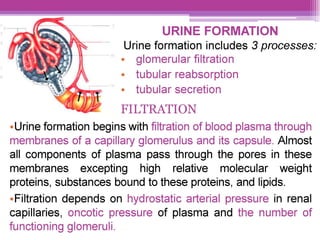
  • 589.
    Classification of antiblastomicdrugs I. Alkylating agents 1. Chloroethylamines: Sarcolysin, Dopanum, Cyclophosphamide (cyclophosphanum) 2. Ethylenimines: Thiophosphamidum 3. Derivative of alkylsulfonic acid : Myelosanum 4. Derivatives of nitrosourea: Lomustine, Carmustine 5. Triazenes: Dacarbazine, Procarbazine 6. Platinum containing agents: Cysplatin, Carboplatin II. Antimetabolites 1. Antagonists of folic acid: Methotrexate 2. Antagonists of purine: Mercaptopurine 3. Antagonists of pyrimidine: Fluorouracil (phthoruracilum), Tegafur (phthorafurum), Capecitabine (xeloda) III. Antibiotics: Doxorubicin, Dactinomycin, Carubicin IV. Plant derivatives: Vinblastine, Vincristine, Paclitaxel, Etoposide etc. V. Enzyme agent: L-asparaginase VI. Tyrosin kinase inhibitors: Imatinib (glivec), Gefitinib VII. Monoclonal antibodies: Trastuzumab (herceptin), Rituximab (mabtera), Bevacizumab (avastin) VIII. Cytokines (Interferons: Interferon-alfa) IX. Hormones and their antagonists (estrogens, androgens and their antagonists) Using chloroethylamines as an example it is shown that in biological fluids they release a chlorine ion. This is accompanied by the formation of an electrophilic carbonium ion that transforms into ethylenimmonium. The last through the formation of a function- ally active carbonium ion interacts with the nucleophilic structures of the DNA. This leads to a suppression of vital activity of the cells. Their ability to replicate is impaired, resulting in their death. Most of the chloroethylamines are used mainly for the treatment of hematologic malignancies. Cyclophosphamide in itself does not have a cytotoxic action. The drug is activated by metabolism in the liver where its active metabolites (phosphamide and acrolein) have been formed. The metabolites provide an antiblastomic effect. The drug induces more or less prolonged remissions in hematologic malignancies. Besides, it is available for the treatment of ovarian carcinoma, breast cancer and small cell carcinoma of the lung. Antimetabolites Preparations of this group are antagonists of natural metabolites. According to the chemical structure, antimetabolites bear a resemblance to natural metabolites but they are
  • 590.
    not identical tothem. Therefore, they impair nucleic acid synthesis. This affects negatively the cell cycle of the dividing tumor cells and leads to their death. Antagonists of folic acid and purine are used predominantly in hematologic malignancies. Antagonists of pyrimidine are used predominantly for the treatment of solid tumors. For example, Fluorouracil (phthoruracilum) is used for the treatment of cancer of the stomach, pancreas, colon and breast. Antitumor antibiotics are used for the treatment both hematologic malignancies and solid tumors. Mechanism of their action is associated with DNA damage. Plant derivatives possess significant antimitotic activity and are used in hemoblastoses as well as solid tumors. Monoclonal antibodies. Trastuzumab (herceptin) is related to monoclonal antibody preparations. Its anti- genes are HER-2-receptors of malignant breast cancer cells. Hyperexpression of these receptors, which is detected in 20—30% of patients, leads to cell proliferation and malignisation. Antiblastomic activity of trastuzumab is linked to HER-2-receptor blockade resulting in cytotoxic effect. Trastuzumab is useful for the treatment of breast cancer with metastases accompa- nied by hyperexpression of HER-2-receptors. The action of rituximab (mabtera), which also belongs to the group of monoclonal antibodies, is directed at another “target”. It interacts with CD20 antigen, which is localized on the membranes of В-cells of non-Hodgkin’s lymphomas; this determines its clinical application. Bevacizumab (avastin) is a monoclonal antibody that inhibits the action of the vascular endothelial growth factor. By preventing the formation of new blood vessels (angiogenesis) in a tumor and thus taking away its supply of oxygen and other nutrients, bevacizumab causes the tumor to grow more slowly. The drug is used in combination with other antiblastomic agents to treat colorectal cancer. Side effects of monoclonal antibodies ▪ damage to the kidneys, ▪ fever, ▪ nausea, vomiting, ▪ skin rash, ▪ arterial hypertension or hypotension, ▪ lymphopenia etc. Imatinib is a tyrosine kinase inhibitor.It is used in chronic myelocytic leukemia.