MURTAZA KAMAL
DEPARTMENT OF FETAL, PEDIATRIC AND STRUCTURAL
CARDIOLOGY
ASTER RAMESH HOSPITALS, VIJAYAWADA, INDIA
PERCUTANEOUS DEVICE CLOSURE OF
RESIDUAL (POST-DEVICE CLOSURE)
AORTO- PULMONARY WINDOW
DEVICE ON DEVICE
1
TEXT
BACKGROUND
▸Conotruncal anomaly, abnormal communication between aorta- PA
▸Rare, 0.1-0.2% of all CHDs
▸Surgery in the initial days: Mostly large, excellent results
▸Transcatheter closure: Technical complexity of APW closure: Small,
midway, away from coronary artery origin and aortic valve (10%)
2
TEXT
CLINICAL PROFILE
▸2y 8m, boy
▸Diagnosed to have an aortopulmonary window (4.5 mm) with PAH
and dilated left heart at 2 months of age in view of the inability to gain
weight (3.5kg) and heart failure symptoms
▸Planned for device closure
3
TEXT 4
TEXT
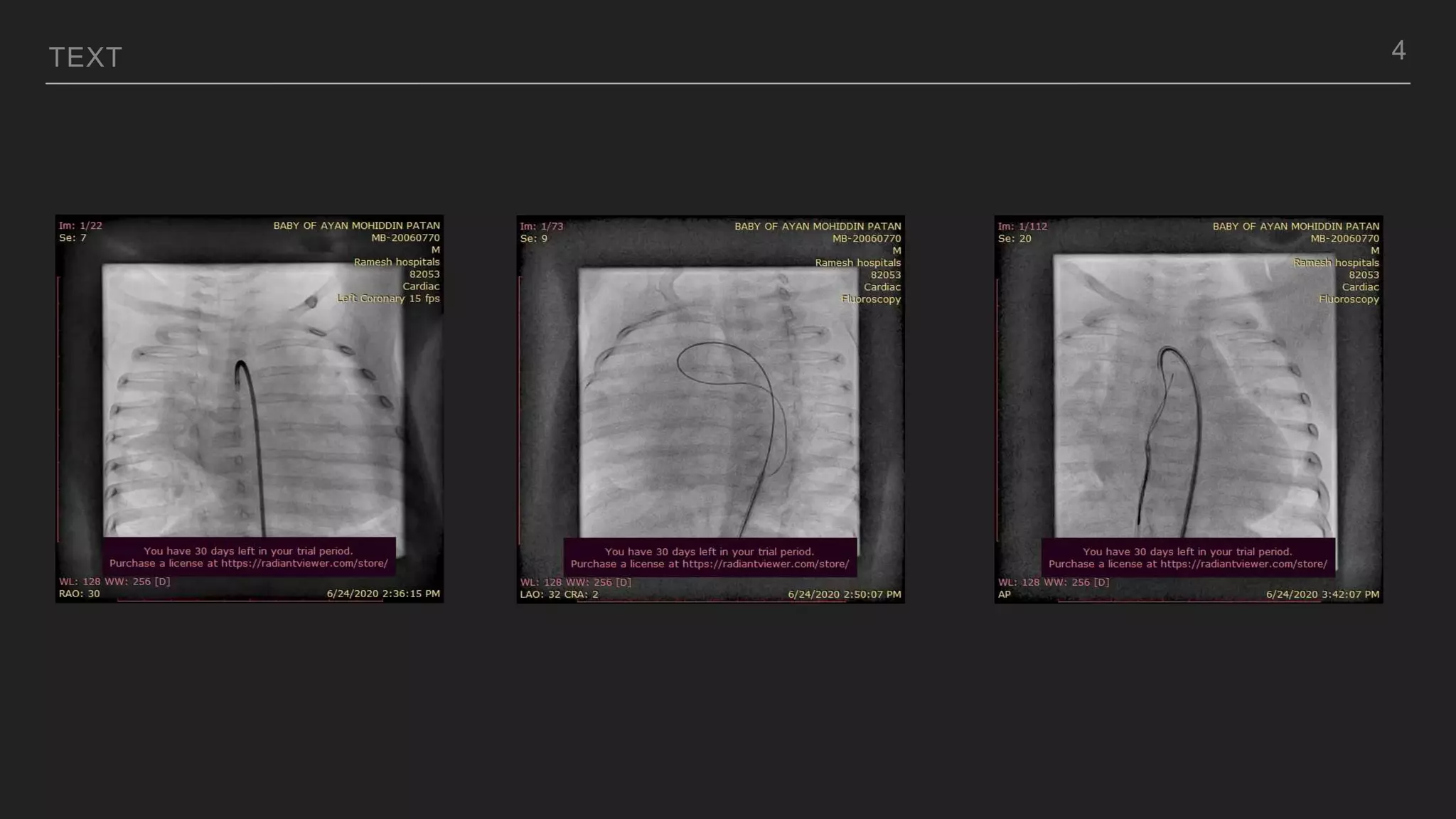
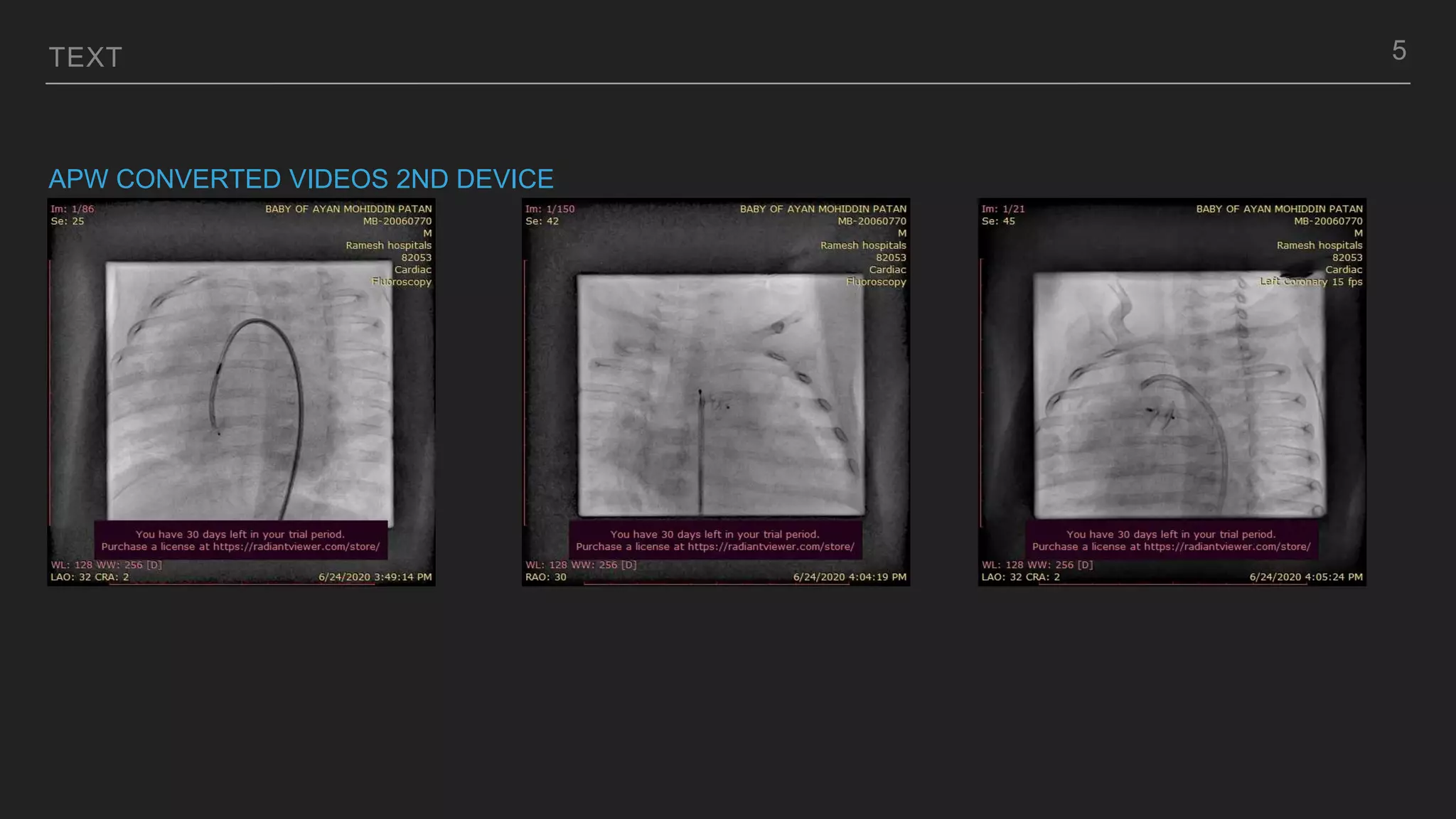
APW CONVERTED VIDEOS 2ND DEVICE
5
TEXT
▸Successfully occluded with ADO-II 6 X4
▸Small residual flow across
▸No AR, No supravalvular stenosis
▸Discharged on D3rd of procedure
6
TEXT
FURTHER COURSE
▸Further course: Gaining weight
▸O/E: Continuous murmur in the left precordium
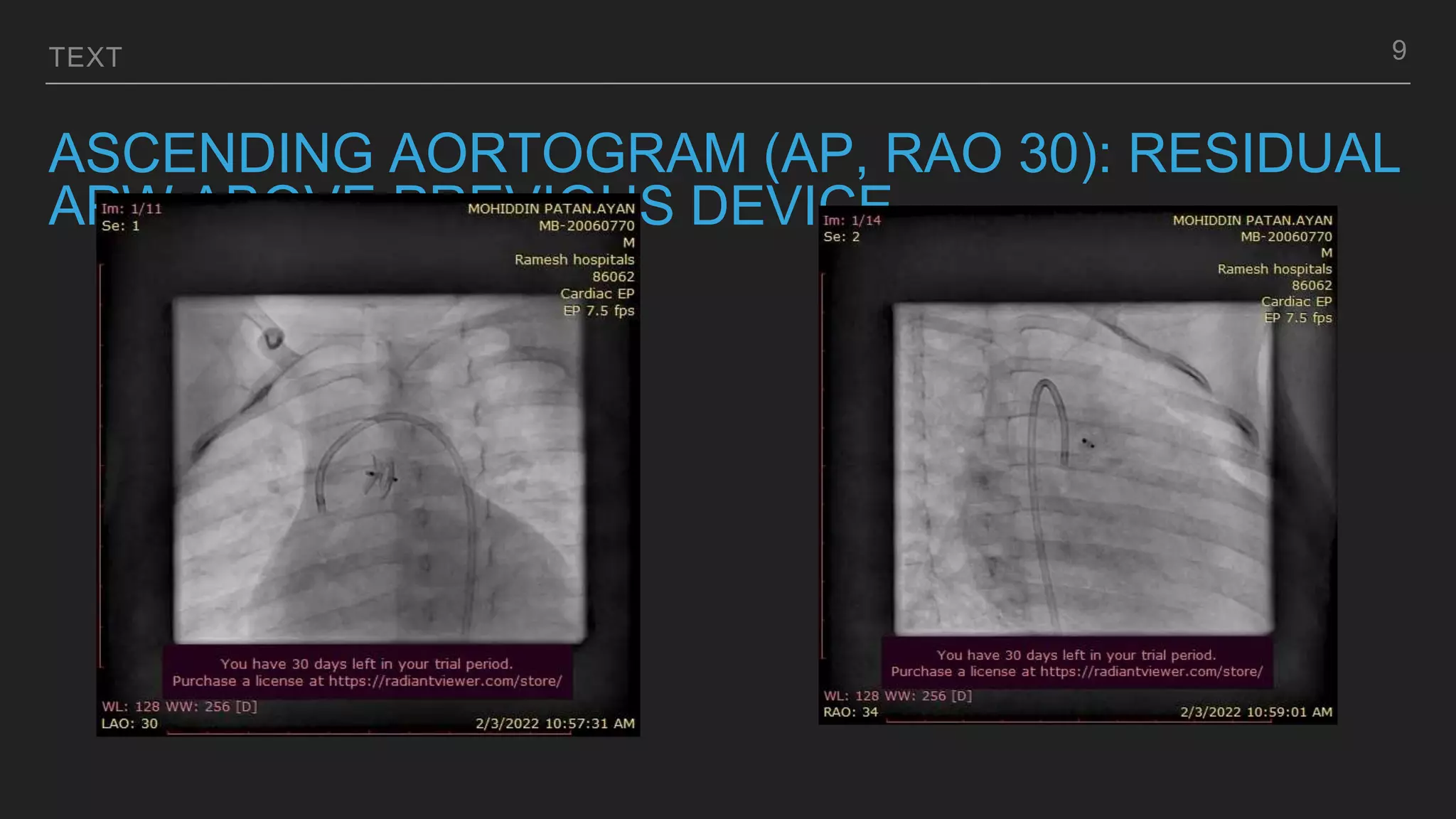
▸2D ECHO: Residual APW 4 mm, the previous device in situ, dilated
left heart, flow reversal in descending aorta
7
TEXT
THE PROCEDURE
▸Planned for closure: Significant shunt
▸IV sedation, RFA/ RFV access
8
TEXT
ASCENDING AORTOGRAM (AP, RAO 30): RESIDUAL
APW ABOVE PREVIOUS DEVICE
9
TEXT
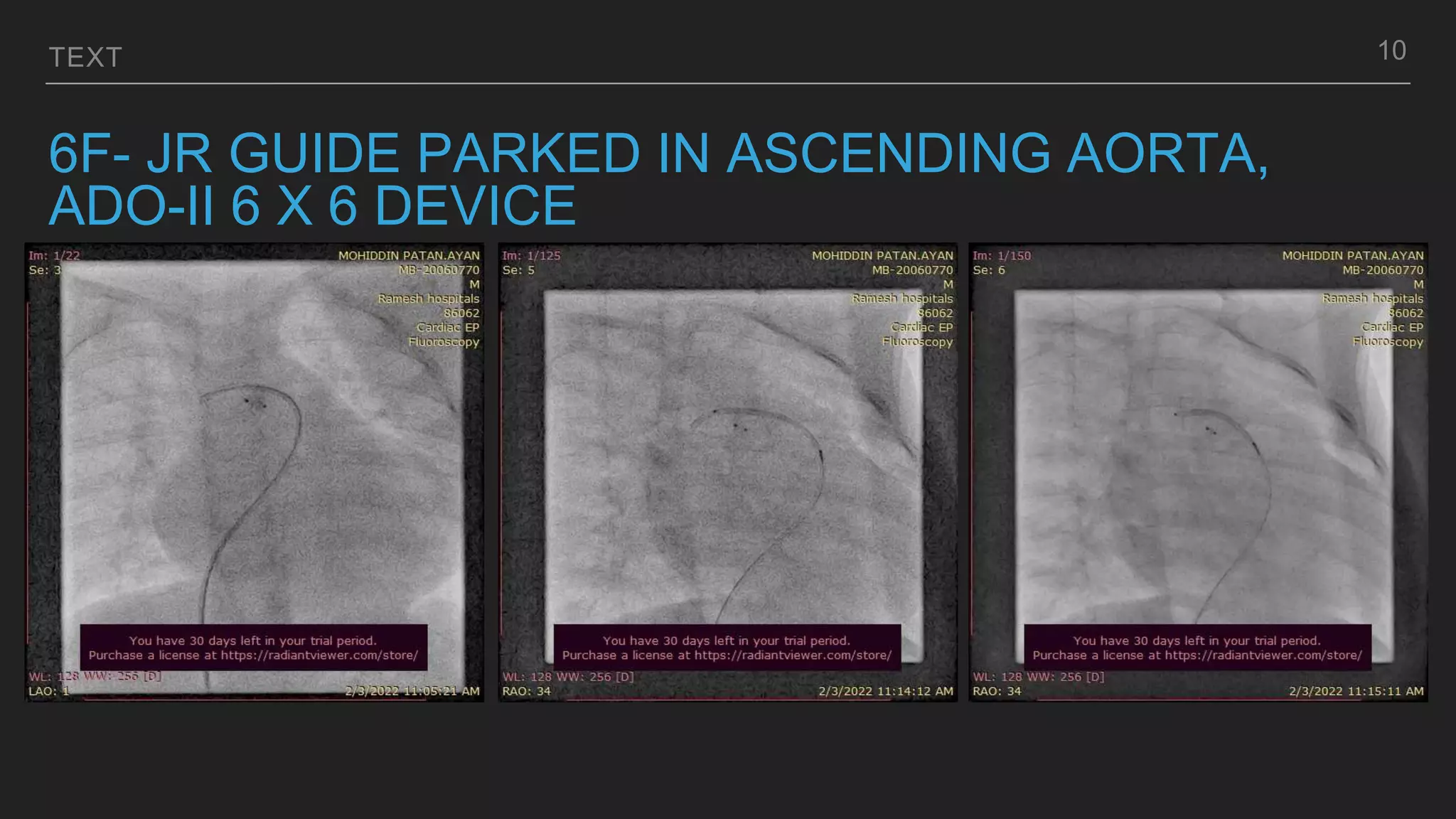
6F- JR GUIDE PARKED IN ASCENDING AORTA,
ADO-II 6 X 6 DEVICE
10
TEXT
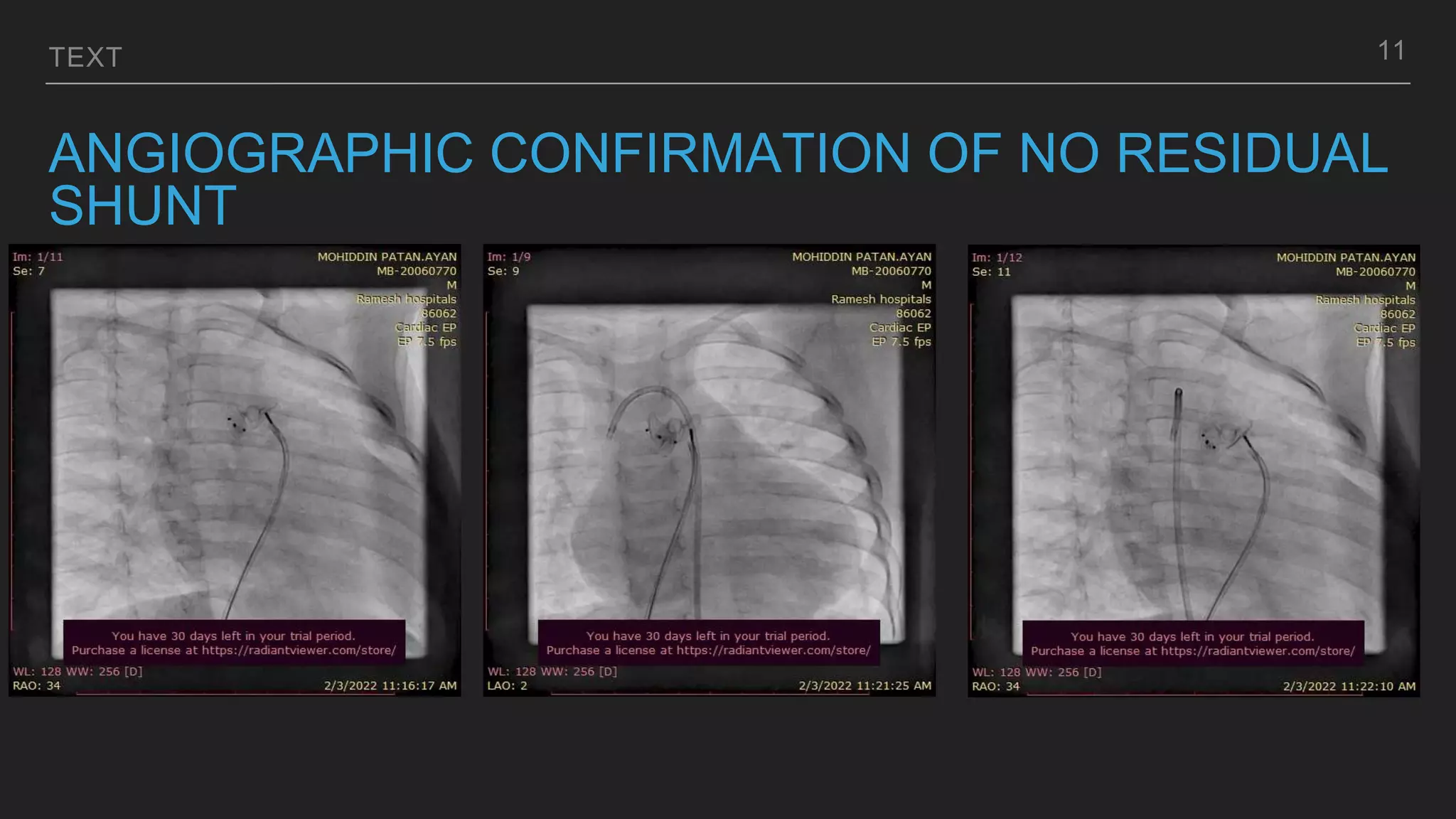
ANGIOGRAPHIC CONFIRMATION OF NO RESIDUAL
SHUNT
11
TEXT
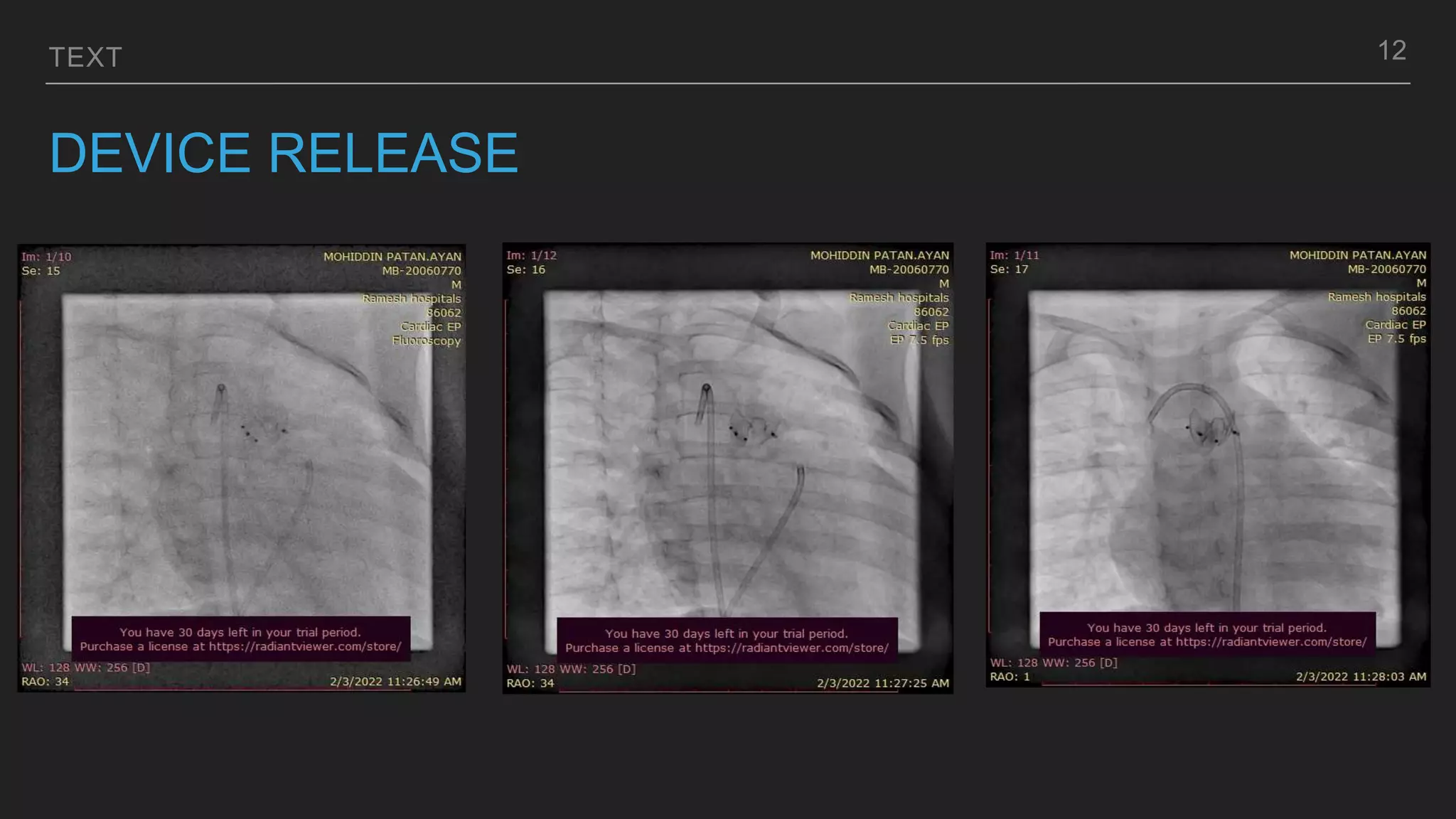
DEVICE RELEASE
12
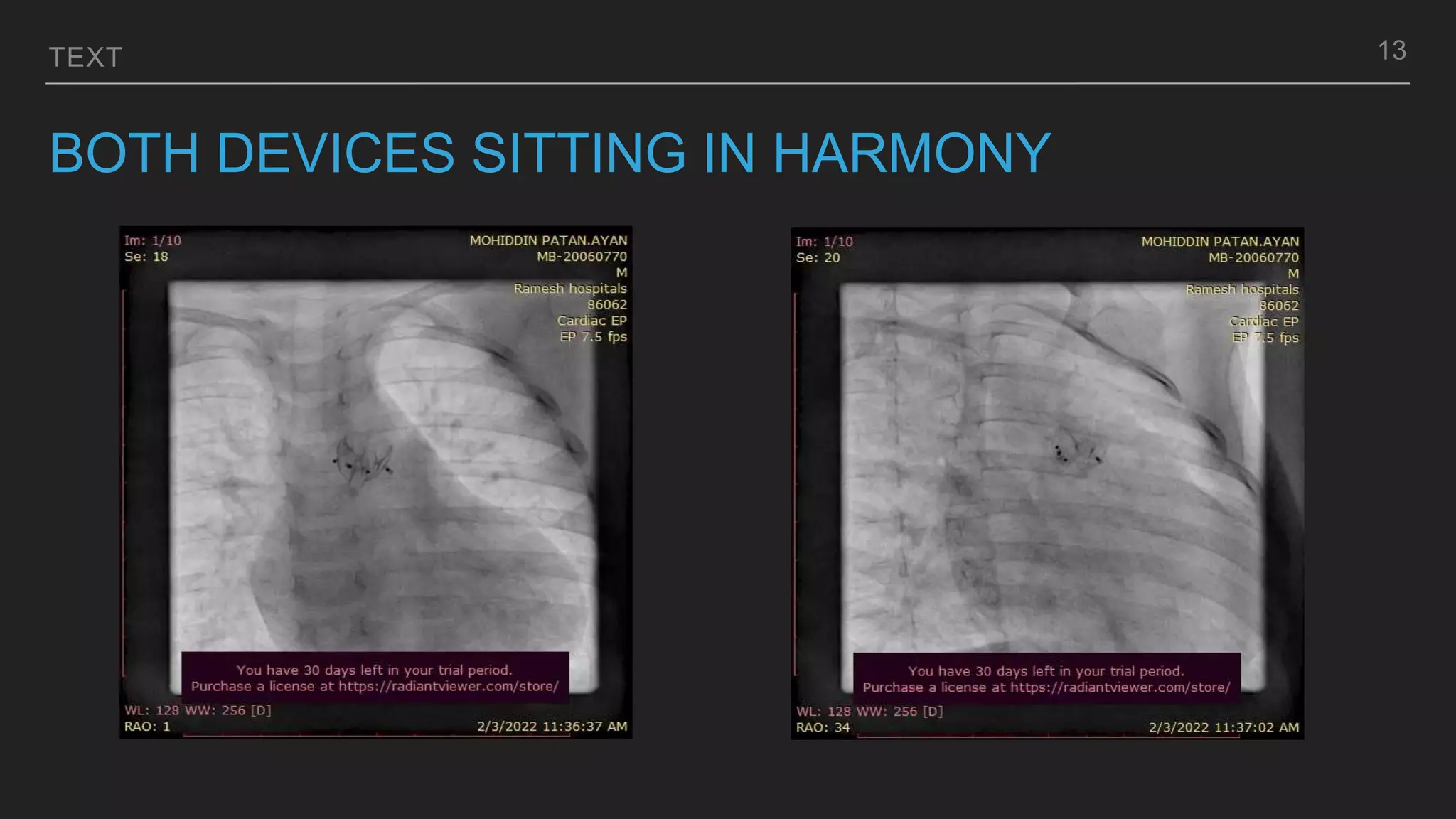
TEXT
BOTH DEVICES SITTING IN HARMONY
13
TEXT
FURTHER COURSE
▸ Discharged next day
▸ Good weight gain, devices in harmony
14
TEXT
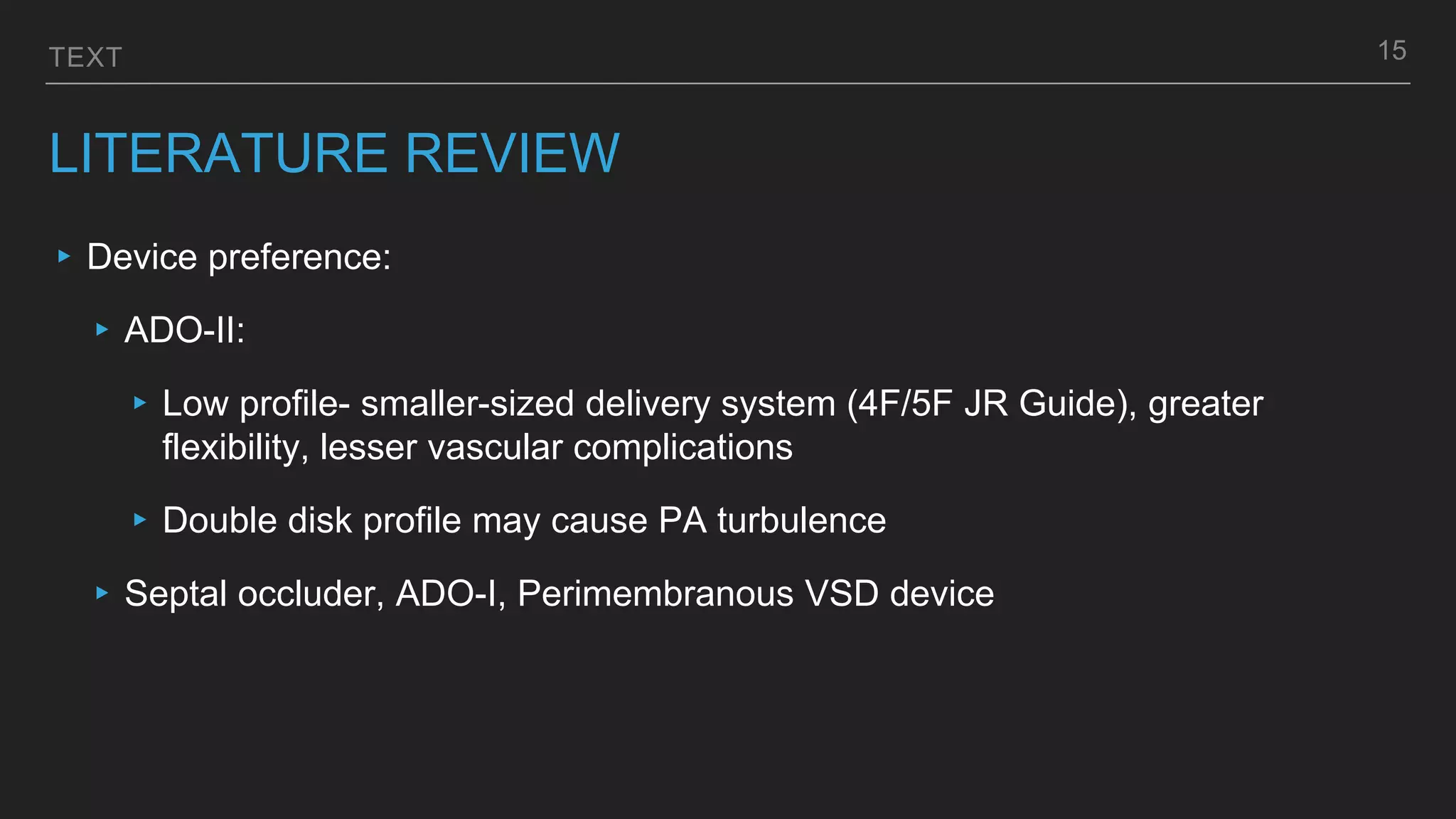
LITERATURE REVIEW
▸ Device preference:
▸ ADO-II:
▸ Low profile- smaller-sized delivery system (4F/5F JR Guide), greater
flexibility, lesser vascular complications
▸ Double disk profile may cause PA turbulence
▸ Septal occluder, ADO-I, Perimembranous VSD device
15
TEXT
TAKE HOME MESSAGE
‣ Transcatheter closure of APW: Feasible choice in specific anatomic
subsets
‣ Several occluder devices are designed to achieve an effective closure
according to the anatomy of the defect
‣ ADO-II: Low profile and a lesser risk of vascular complications
‣ Residuals can be safely occluded by transcutaneous devices
16
THANK YOU…
17

PERCUTANEOUS DEVICE CLOSURE OF AORTO- PULMONARY WINDOW (RESIDUAL)