
CASE STUDY
Submitted By :- Bhupesh Bindal
PRN :- 12030141087
Class :- MBA-IT(B)
Brief Introduction
• PepsiCo Inc . is an American multinational corporation
headquartered in Purchase, New York, United States,
with interests in the manufacturing, marketing and
distribution of grain-based snack foods, beverages, and
other products
• Traded as : NYSE PEP S&P 500 Component
• Key people : Indra Nooyi (Chairman & CEO)
• Founders : Donald Kendall, Herman Lay
• Industry : Foods, Beverages
• Founded : North Carolina, U.S. (1965)
History
• The recipe for Pepsi, the soft drink, was first developed in
the 1880s by a New Bern, North Carolina pharmacist and
industrialist, Caleb Bradham, who named it "Pepsi-Cola" in
1898.
• As the cola developed in popularity, he created the PepsiCola Company in 1902 and registered a patent for his recipe
in 1903.
• PepsiCo was formed in 1965 with the merger of the PepsiCola Company and Frito-Lay, Inc. PepsiCo has since
expanded from its namesake product Pepsi to a broader
range of food and beverage brands, the largest of which
include an acquisition of Tropicana in 1998 and a merger
with Quaker Oats in 2001—which added
the Gatorade brand to its portfolio.
Mission and Vision
• Their mission is to be the world's premier consumer
products company focused on convenient foods and
beverages, to produce financial rewards to investors as
we provide opportunities for growth and enrichment
to our employees, our business partners and the
communities in which we operate.
• Vision is to put into action through programs and a
focus on environmental stewardship, activities to
benefit society, and a commitment to build
shareholder value by making PepsiCo a truly
sustainable company.
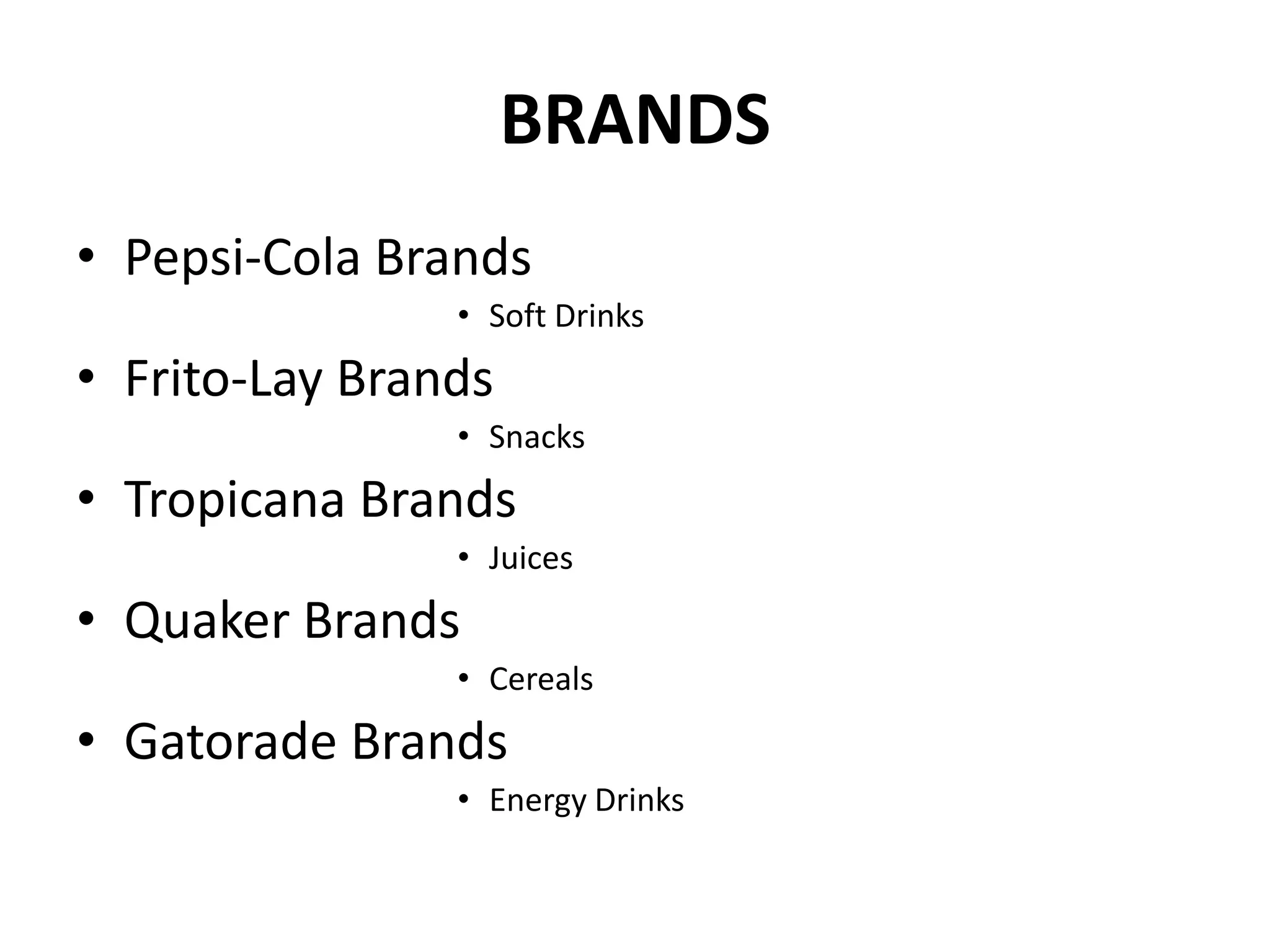
BRANDS
• Pepsi-Cola Brands
• Soft Drinks

• Frito-Lay Brands
• Snacks

• Tropicana Brands
• Juices

• Quaker Brands
• Cereals

• Gatorade Brands
• Energy Drinks
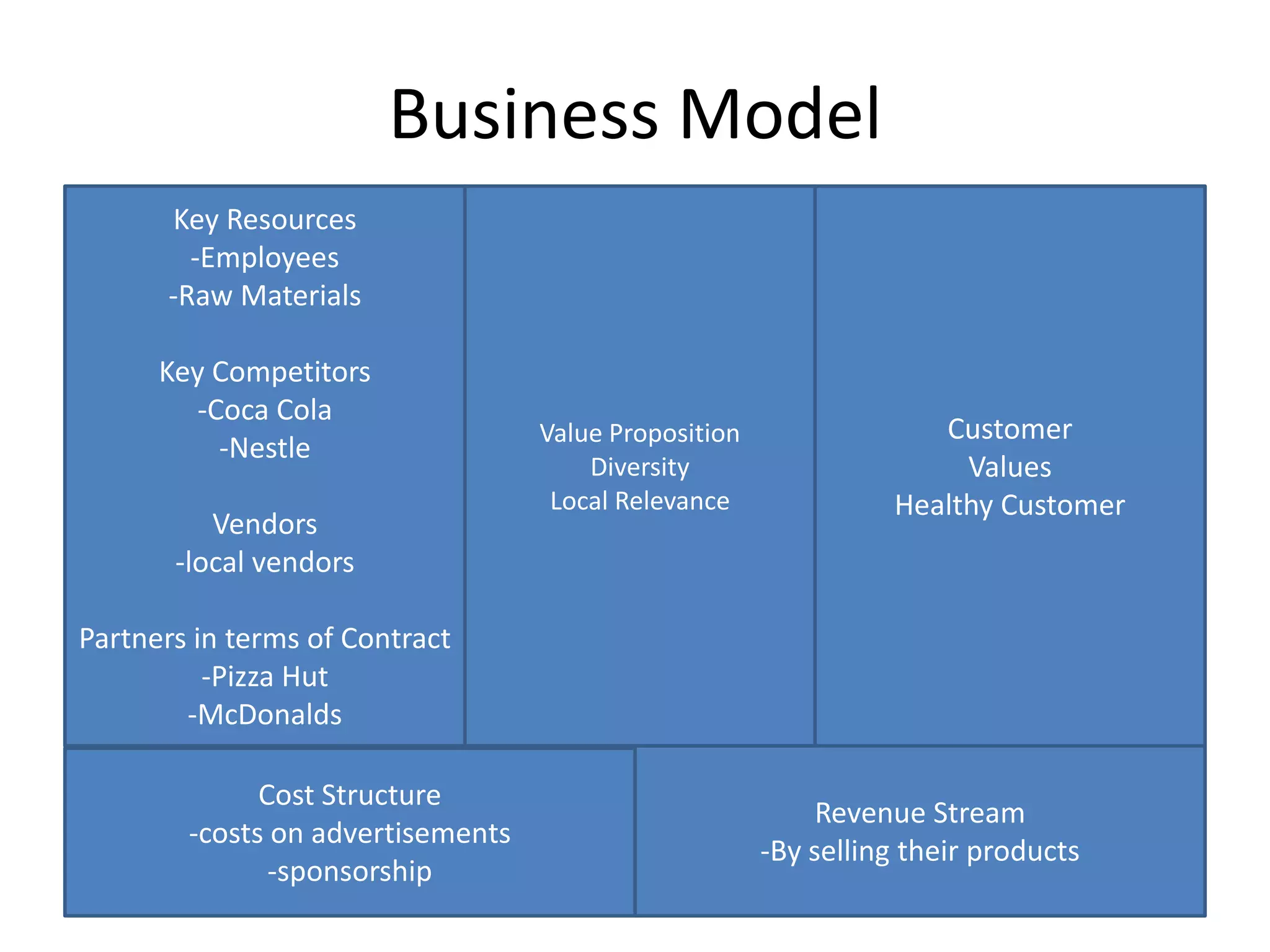
Business Model
Key Resources
-Employees
-Raw Materials

Key Competitors
-Coca Cola
-Nestle
Vendors
-local vendors

Value Proposition
Diversity
Local Relevance

Customer
Values
Healthy Customer

Partners in terms of Contract
-Pizza Hut
-McDonalds
Cost Structure
-costs on advertisements
-sponsorship

Revenue Stream
-By selling their products
Value Proposition
•
•
•
•
•

Distributing global brands while ensuring local relevance
Strengthening advantaged local supply chain and go-to-market capabilities
Encouraging people to live balanced and healthy lives
Win with diversity and Inclusion.
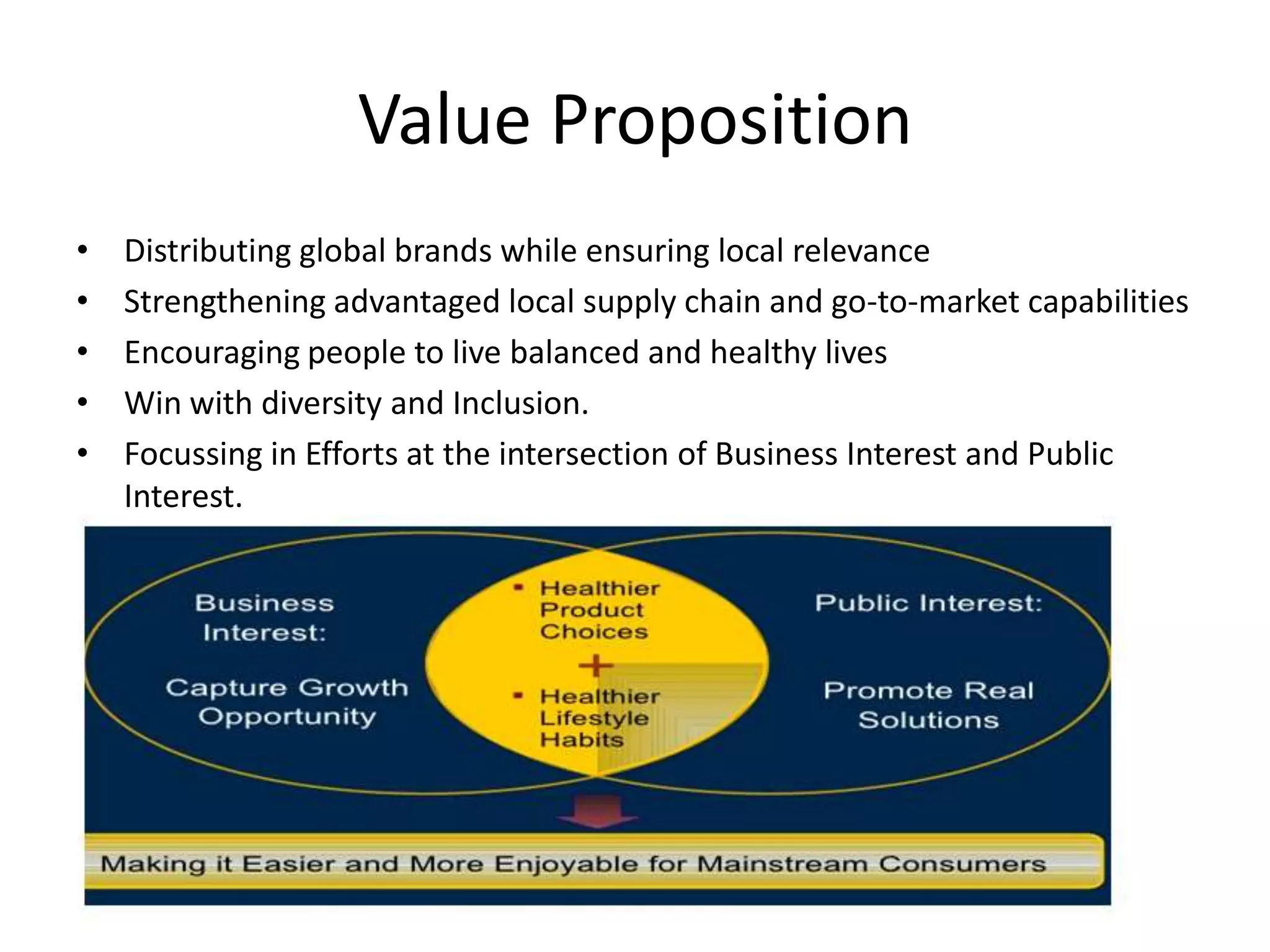
Focussing in Efforts at the intersection of Business Interest and Public
Interest.
Strategies
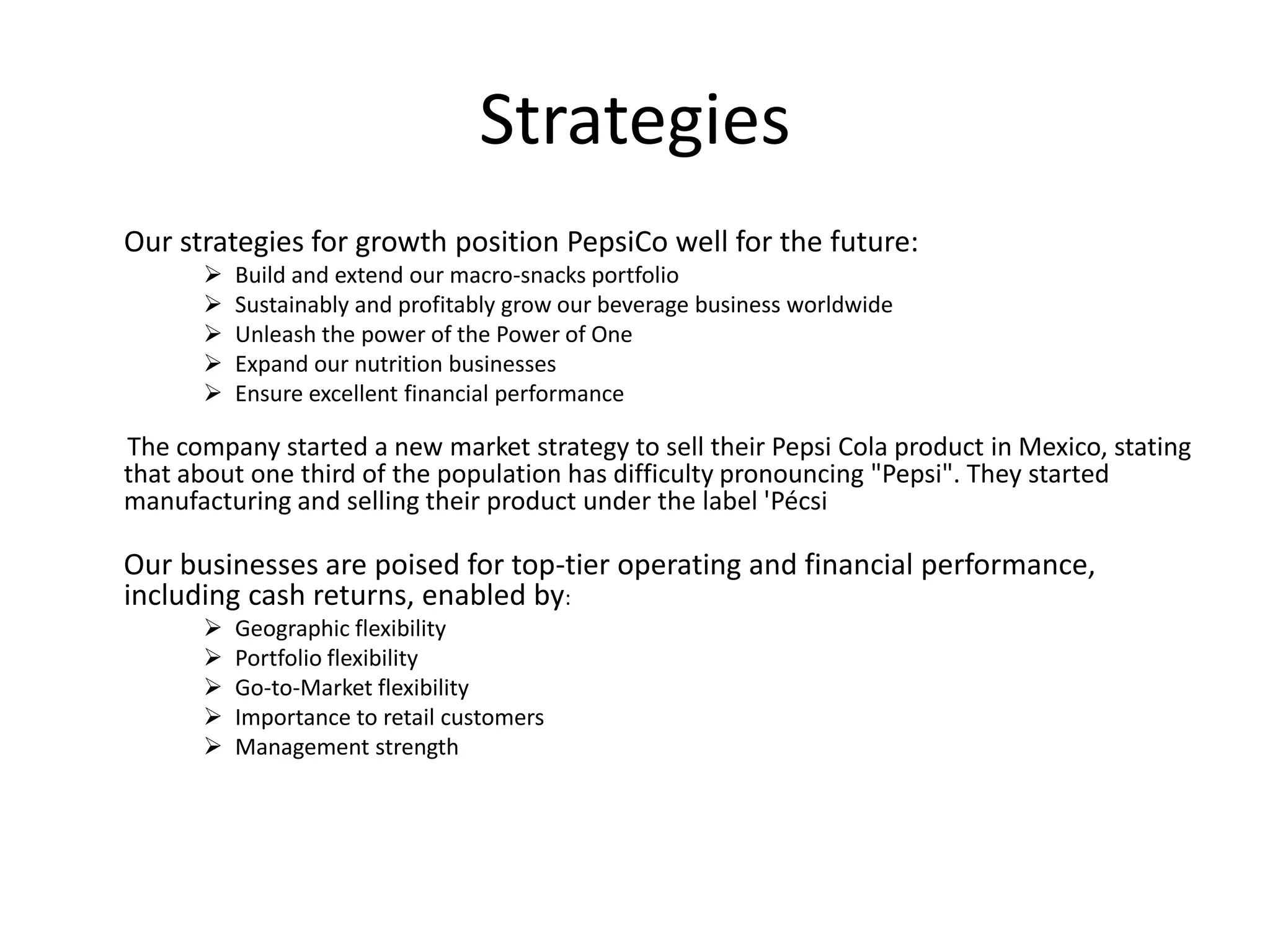
Our strategies for growth position PepsiCo well for the future:






Build and extend our macro-snacks portfolio
Sustainably and profitably grow our beverage business worldwide
Unleash the power of the Power of One
Expand our nutrition businesses
Ensure excellent financial performance

The company started a new market strategy to sell their Pepsi Cola product in Mexico, stating
that about one third of the population has difficulty pronouncing "Pepsi". They started
manufacturing and selling their product under the label 'Pécsi

Our businesses are poised for top-tier operating and financial performance,
including cash returns, enabled by:






Geographic flexibility
Portfolio flexibility
Go-to-Market flexibility
Importance to retail customers
Management strength
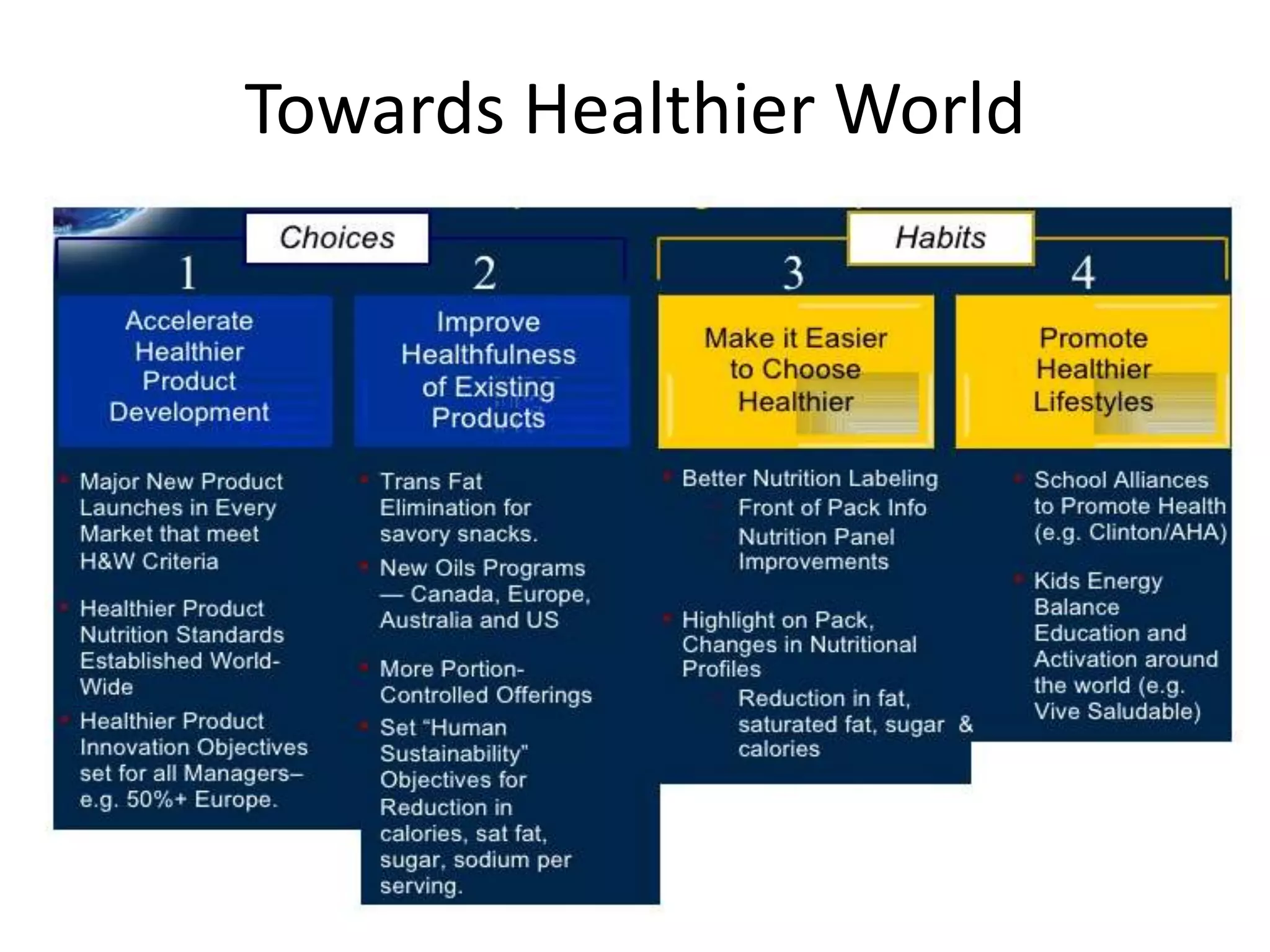
Towards Healthier World
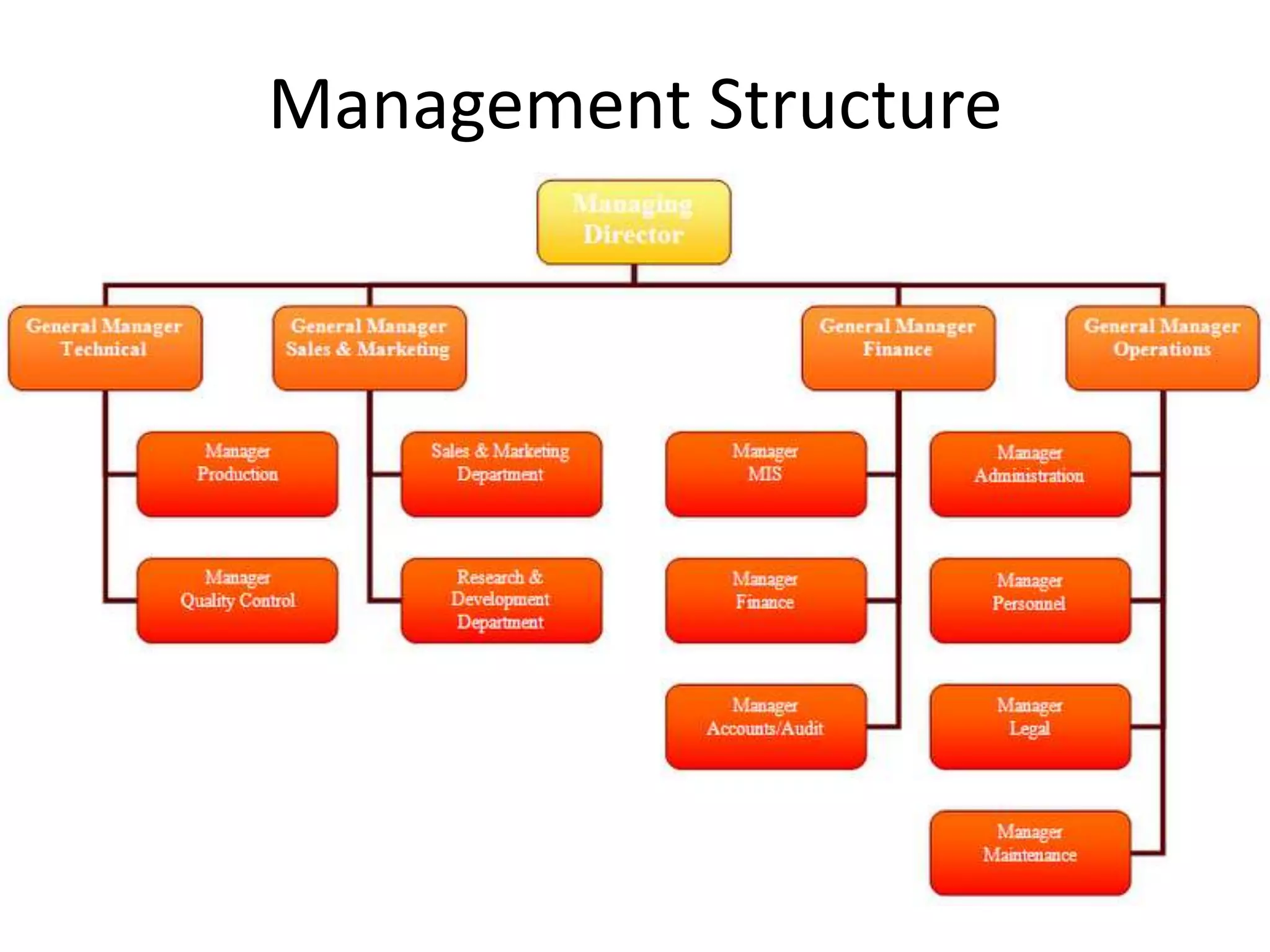
Management Structure
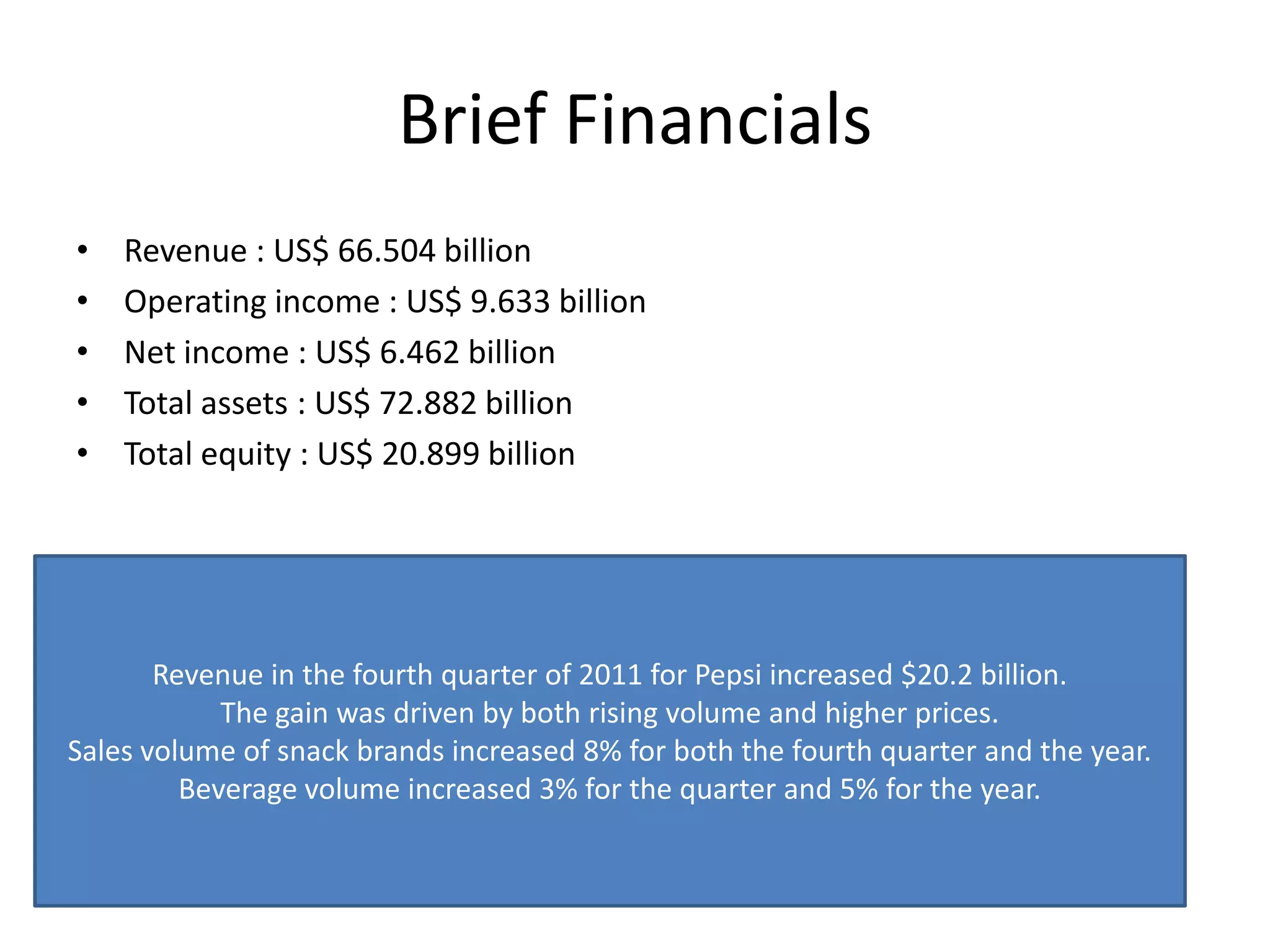
Brief Financials
•
•
•
•
•

Revenue : US$ 66.504 billion
Operating income : US$ 9.633 billion
Net income : US$ 6.462 billion
Total assets : US$ 72.882 billion
Total equity : US$ 20.899 billion

Revenue in the fourth quarter of 2011 for Pepsi increased $20.2 billion.
The gain was driven by both rising volume and higher prices.
Sales volume of snack brands increased 8% for both the fourth quarter and the year.
Beverage volume increased 3% for the quarter and 5% for the year.
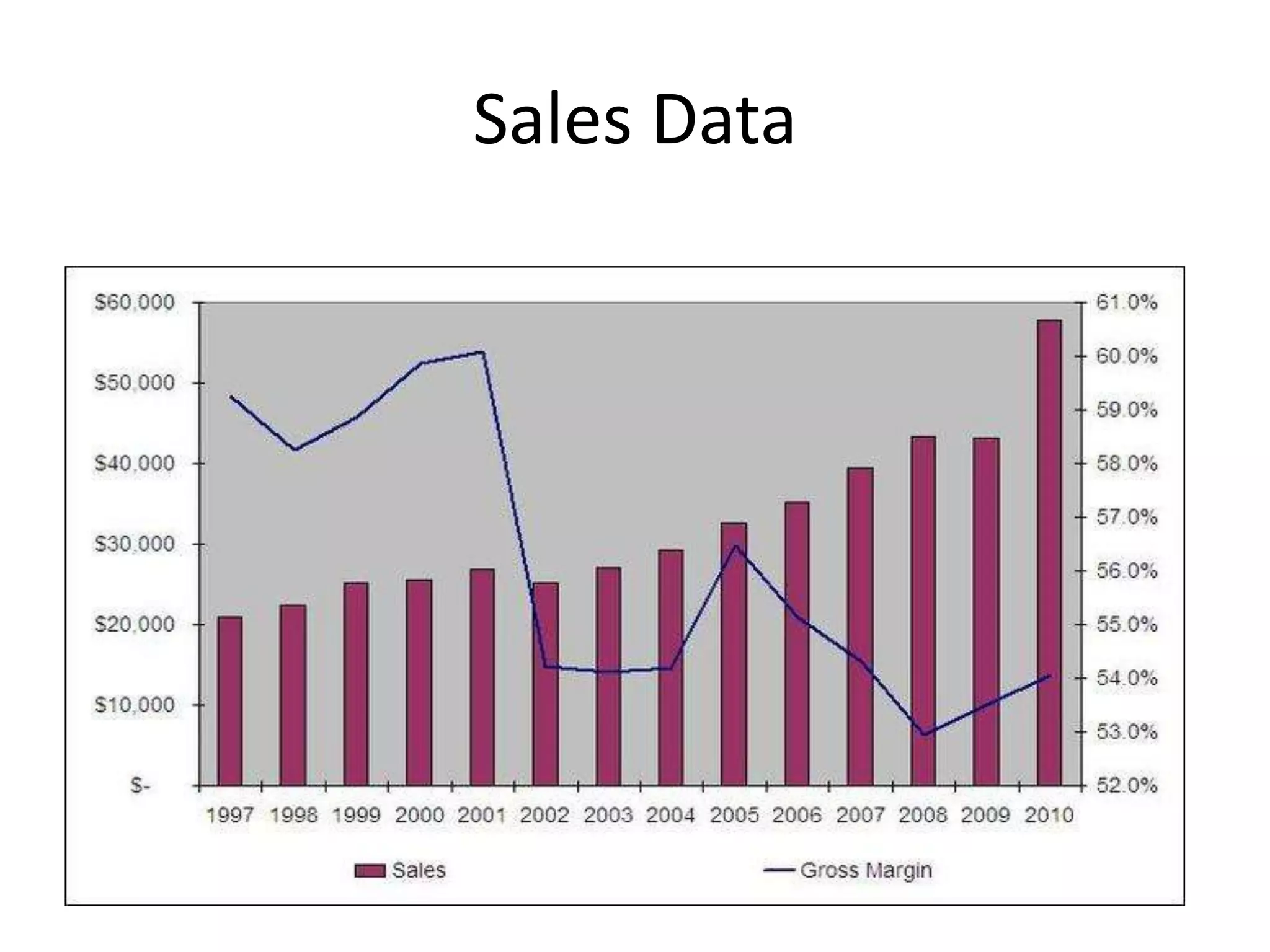
Sales Data
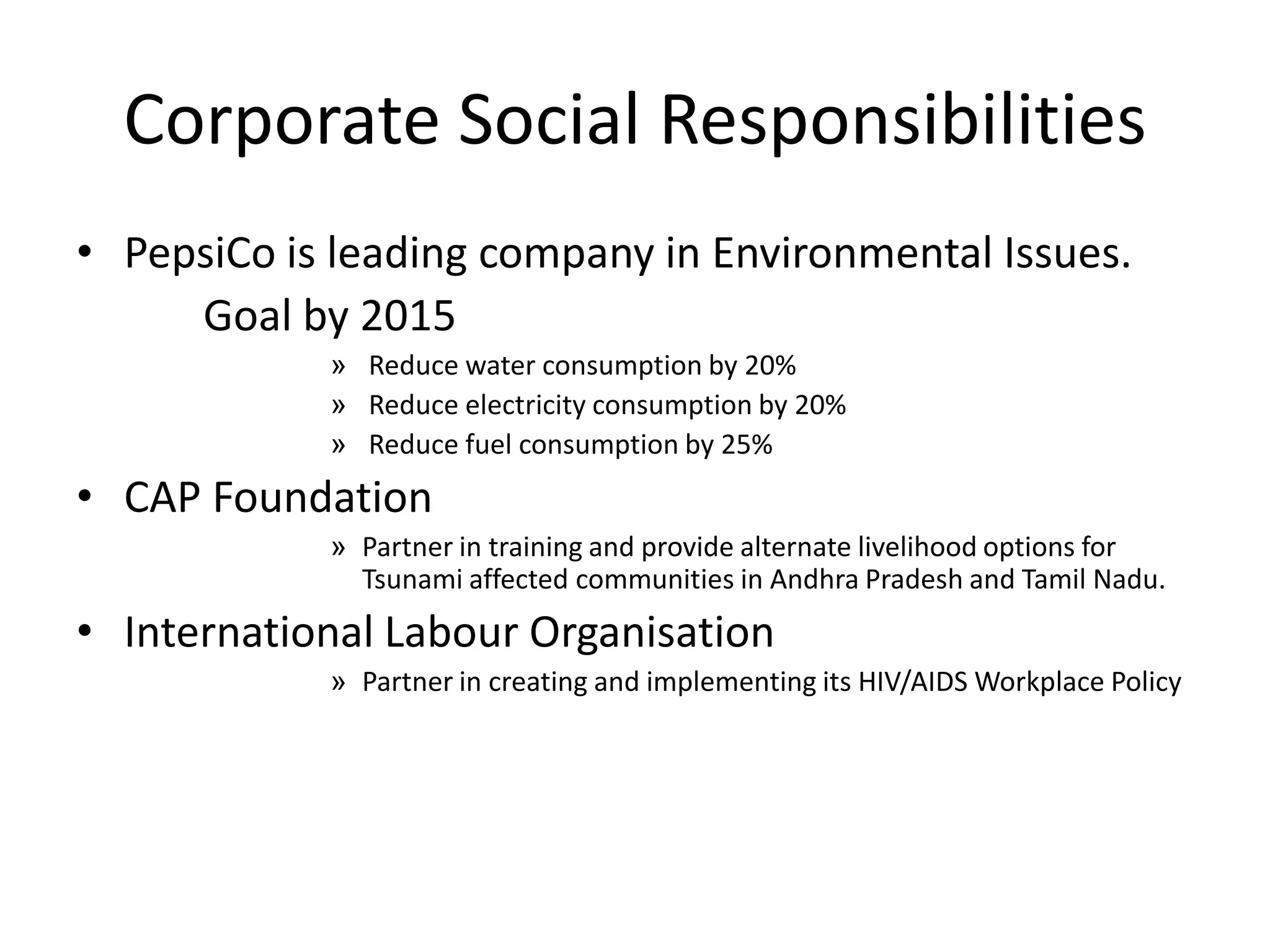
Corporate Social Responsibilities
• PepsiCo is leading company in Environmental Issues.
Goal by 2015
» Reduce water consumption by 20%
» Reduce electricity consumption by 20%
» Reduce fuel consumption by 25%

• CAP Foundation
» Partner in training and provide alternate livelihood options for
Tsunami affected communities in Andhra Pradesh and Tamil Nadu.

• International Labour Organisation
» Partner in creating and implementing its HIV/AIDS Workplace Policy
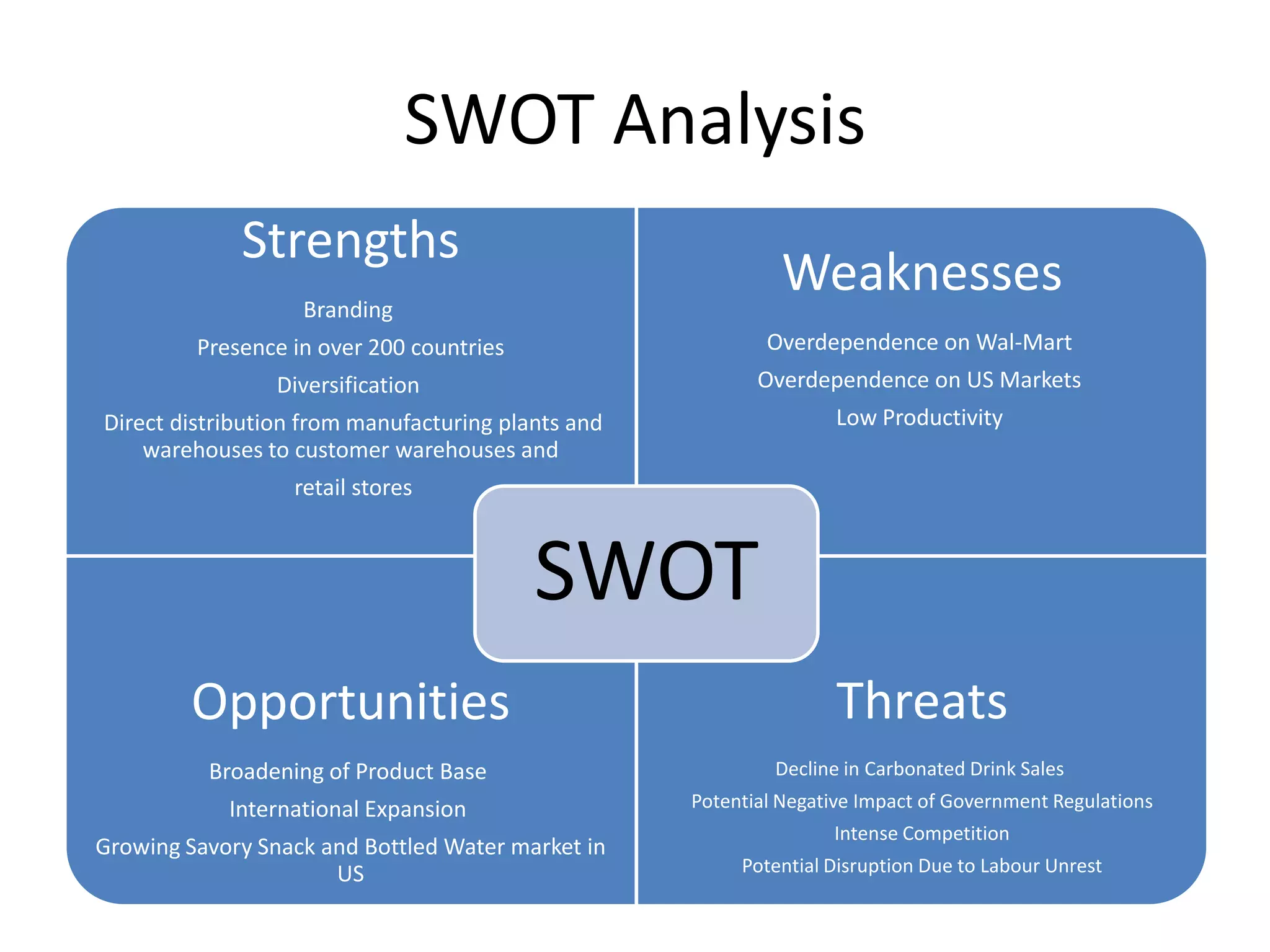
SWOT Analysis
Strengths

Weaknesses

Branding
Presence in over 200 countries

Overdependence on Wal-Mart

Diversification

Overdependence on US Markets

Direct distribution from manufacturing plants and
warehouses to customer warehouses and

Low Productivity

retail stores

SWOT
Opportunities

Threats

Broadening of Product Base

Decline in Carbonated Drink Sales

International Expansion

Potential Negative Impact of Government Regulations

Growing Savory Snack and Bottled Water market in
US

Intense Competition
Potential Disruption Due to Labour Unrest
Pepsi co bhupesh

Pepsi co bhupesh

  • 1.
    CASE STUDY Submitted By:- Bhupesh Bindal PRN :- 12030141087 Class :- MBA-IT(B)
  • 2.
    Brief Introduction • PepsiCoInc . is an American multinational corporation headquartered in Purchase, New York, United States, with interests in the manufacturing, marketing and distribution of grain-based snack foods, beverages, and other products • Traded as : NYSE PEP S&P 500 Component • Key people : Indra Nooyi (Chairman & CEO) • Founders : Donald Kendall, Herman Lay • Industry : Foods, Beverages • Founded : North Carolina, U.S. (1965)
  • 3.
    History • The recipefor Pepsi, the soft drink, was first developed in the 1880s by a New Bern, North Carolina pharmacist and industrialist, Caleb Bradham, who named it "Pepsi-Cola" in 1898. • As the cola developed in popularity, he created the PepsiCola Company in 1902 and registered a patent for his recipe in 1903. • PepsiCo was formed in 1965 with the merger of the PepsiCola Company and Frito-Lay, Inc. PepsiCo has since expanded from its namesake product Pepsi to a broader range of food and beverage brands, the largest of which include an acquisition of Tropicana in 1998 and a merger with Quaker Oats in 2001—which added the Gatorade brand to its portfolio.
  • 4.
    Mission and Vision •Their mission is to be the world's premier consumer products company focused on convenient foods and beverages, to produce financial rewards to investors as we provide opportunities for growth and enrichment to our employees, our business partners and the communities in which we operate. • Vision is to put into action through programs and a focus on environmental stewardship, activities to benefit society, and a commitment to build shareholder value by making PepsiCo a truly sustainable company.
  • 5.
    BRANDS • Pepsi-Cola Brands •Soft Drinks • Frito-Lay Brands • Snacks • Tropicana Brands • Juices • Quaker Brands • Cereals • Gatorade Brands • Energy Drinks
  • 6.
    Business Model Key Resources -Employees -RawMaterials Key Competitors -Coca Cola -Nestle Vendors -local vendors Value Proposition Diversity Local Relevance Customer Values Healthy Customer Partners in terms of Contract -Pizza Hut -McDonalds Cost Structure -costs on advertisements -sponsorship Revenue Stream -By selling their products
  • 7.
    Value Proposition • • • • • Distributing globalbrands while ensuring local relevance Strengthening advantaged local supply chain and go-to-market capabilities Encouraging people to live balanced and healthy lives Win with diversity and Inclusion. Focussing in Efforts at the intersection of Business Interest and Public Interest.
  • 8.
    Strategies Our strategies forgrowth position PepsiCo well for the future:      Build and extend our macro-snacks portfolio Sustainably and profitably grow our beverage business worldwide Unleash the power of the Power of One Expand our nutrition businesses Ensure excellent financial performance The company started a new market strategy to sell their Pepsi Cola product in Mexico, stating that about one third of the population has difficulty pronouncing "Pepsi". They started manufacturing and selling their product under the label 'Pécsi Our businesses are poised for top-tier operating and financial performance, including cash returns, enabled by:      Geographic flexibility Portfolio flexibility Go-to-Market flexibility Importance to retail customers Management strength
  • 9.
  • 10.
  • 11.
    Brief Financials • • • • • Revenue :US$ 66.504 billion Operating income : US$ 9.633 billion Net income : US$ 6.462 billion Total assets : US$ 72.882 billion Total equity : US$ 20.899 billion Revenue in the fourth quarter of 2011 for Pepsi increased $20.2 billion. The gain was driven by both rising volume and higher prices. Sales volume of snack brands increased 8% for both the fourth quarter and the year. Beverage volume increased 3% for the quarter and 5% for the year.
  • 12.
  • 13.
    Corporate Social Responsibilities •PepsiCo is leading company in Environmental Issues. Goal by 2015 » Reduce water consumption by 20% » Reduce electricity consumption by 20% » Reduce fuel consumption by 25% • CAP Foundation » Partner in training and provide alternate livelihood options for Tsunami affected communities in Andhra Pradesh and Tamil Nadu. • International Labour Organisation » Partner in creating and implementing its HIV/AIDS Workplace Policy
  • 14.
    SWOT Analysis Strengths Weaknesses Branding Presence inover 200 countries Overdependence on Wal-Mart Diversification Overdependence on US Markets Direct distribution from manufacturing plants and warehouses to customer warehouses and Low Productivity retail stores SWOT Opportunities Threats Broadening of Product Base Decline in Carbonated Drink Sales International Expansion Potential Negative Impact of Government Regulations Growing Savory Snack and Bottled Water market in US Intense Competition Potential Disruption Due to Labour Unrest