PEDIATRIC MEDICATION
ADMINISTRATION
TECHNIQUES
Properly administering medications to children requires specialized knowledge and
techniques to ensure the safety and well-being of young patients. From
understanding appropriate dosages and routes of administration to navigating the
unique challenges presented by pediatric care, this guide/presentation will provide a
comprehensive overview of the essential principles and best practices for
administering medications to children effectively and responsibly.
PEDIATRIC MEDICATION ADMINISTRATION
(The Pediatric Out- Patient Department aims to serve all clients from 0 to below 19 years of age.)
IMPORTANCE OF PROPER MEDICATION DOSING
FOR CHILDREN
UNIQUE PHYSIOLOGY
Children's bodies differ significantly from adults, with varying rates of growth,
metabolism, and organ development. Accurate dosing must account for these
differences to avoid potentially dangerous under- or over- medication.
MEDICATION SENSITIVITY
Children can be more sensitive to certain medications, requiring lower doses or
more careful monitoring. Improper dosing can lead to adverse reactions,
toxicity, or ineffective treatment.
LIFELONG
CONSEQUENCES
Medication errors in pediatric care
can have serious, long-lasting
consequences on a child's health
and development. Proper dosing is
crucial to ensure the safe and
effective administration of
medications to young patients.
Medication Storage
COMMON
CHALLENGES
IN PEDIATRIC
MEDICATION
ADMINISTRA
TION
Dosage Calculations
Determining the appropriate medication dose for a child
based on weight, age, and other factors requires careful
calculation to avoid errors.
Medication Formulations
Children may require specialized liquid, chewable, or
dissolvable medication formulations, which can be more
complex to administer accurately.
Patient Compliance
Convincing children to take their medications can be a
significant challenge, requiring creativity and patience
from healthcare providers.
Ensuring proper storage and handling of pediatric
medications, such as temperature control and child-
resistant packaging, is crucial to maintain safety and
efficacy.
TECHNIQUES FOR ORAL
MEDICATION ADMINISTRATION
Use an appropriate dosing device,
such as an oral syringe or medication
cup, to accurately measure and
administer liquid medications.
Instruct the child to
swallow the medication directly or mix
it with a small amount of food or drink.
LIQUID MEDICATIONS SOLID DOSAGE FORMS
For tablets or capsules, consider
crushing or opening the
medication and mixing it with a
small amount of food or liquid to
make it easier for the child to
swallow. Ensure the entire dose
is consumed.
MEDICATION ADHERENCE
Engage the child in the process,
offering choices, using positive
reinforcement, and making the
experience as pleasant as possible.
Establish a routine to encourage
consistent medication
adherence.
STRATEGIES FOR TOPICAL AND
TRANSDERMAL MEDICATION APPLICATION
Topical Medications
When applying creams, ointments, or gels to
the skin, ensure the medication is spread
evenly over the affected area. Instruct the
child on the importance of not rubbing or
touching the treated area to avoid inadvertent
ingestion or transfer to other body parts.
Transdermal Patches
For transdermal patches, carefully select an
appropriate application site, such as the upper
arm or upper back, and assist the child in
properly applying and securing the patch.
Regularly monitor the application site for any
skin irritation or adverse reactions.
Medication Storage
Store topical and transdermal medications
safely, out of reach of children, and in
accordance with the manufacturer's
instructions to maintain their effectiveness and
safety.
Caregiver Involvement
Engage parents or caregivers in the application
process and provide clear instructions on proper
techniques and frequency to ensure consistent
and effective medication
administration.
CONSIDERATIONS FOR INTRAVENOUS
AND INTRAMUSCULAR INJECTIONS
IV medications require
specialized training and
careful monitoring to
ensure proper infusion
rates and to prevent
complications, such as
infiltration or
extravasation. Pediatric
patients may require
smaller gauge needles
and tailored infusion
sets.
Intravenous (IV)
Administration
IM injections, such as
vaccines, should be
given in appropriate
muscle groups,
considering the child's
age and size. Proper
injection technique, site
selection, and use of
appropriate needle
length are crucial to
minimize pain and
ensure medication is
delivered effectively.
Intramuscular
(IM) Injections
Strict adherence to
infection control
protocols, including
proper hand hygiene,
aseptic technique, and
appropriate disposal of
sharps, is essential
when administering
injectable medications
to pediatric patients.
Infection Control
Considering the child's
age and developmental
stage, healthcare
providers should
employ age-appropriate
distraction techniques,
topical anesthetics, and
gentle restraint
methods to minimize
pain and anxiety during
invasive procedures.
Patient Comfort
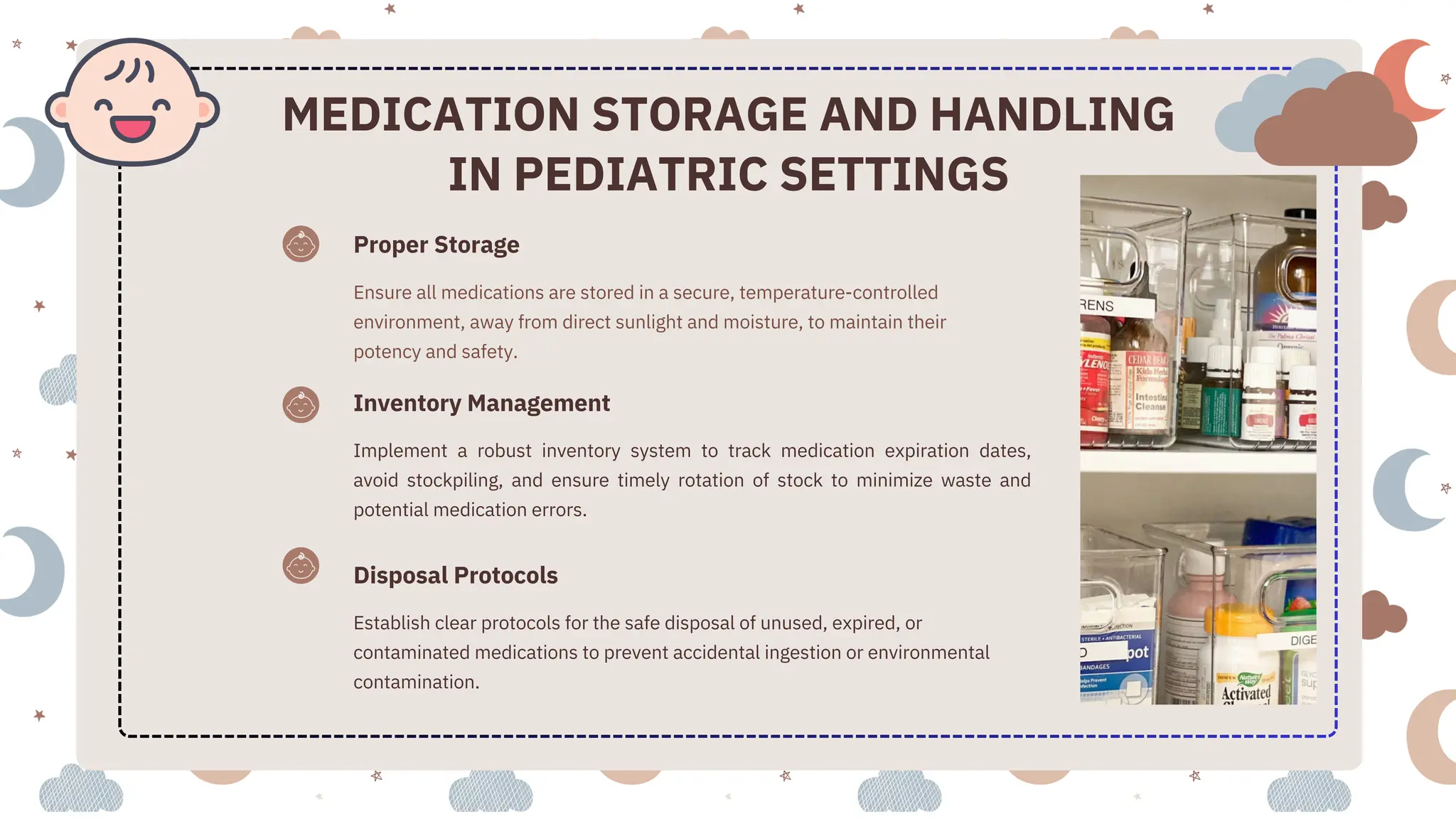
MEDICATION STORAGE AND HANDLING
IN PEDIATRIC SETTINGS
Ensure all medications are stored in a secure, temperature-controlled
environment, away from direct sunlight and moisture, to maintain their
potency and safety.
Proper Storage
Inventory Management
Implement a robust inventory system to track medication expiration dates,
avoid stockpiling, and ensure timely rotation of stock to minimize waste and
potential medication errors.
Disposal Protocols
Establish clear protocols for the safe disposal of unused, expired, or
contaminated medications to prevent accidental ingestion or environmental
contamination.
Provide ongoing training and updates for healthcare providers on
the latest guidelines, techniques, and safety protocols for
pediatric medication administration.
Ensure clear and concise labeling of all pediatric
medications, including dosage, administration
instructions, and warning labels.
Foster interdisciplinary collaboration among
pharmacists, nurses, and physicians to ensure
consistent, comprehensive, and evidence-based
medication practices.
Encourage a culture of reporting medication
errors or adverse events, and use this feedback
to continuously improve safety protocols and
training programs.
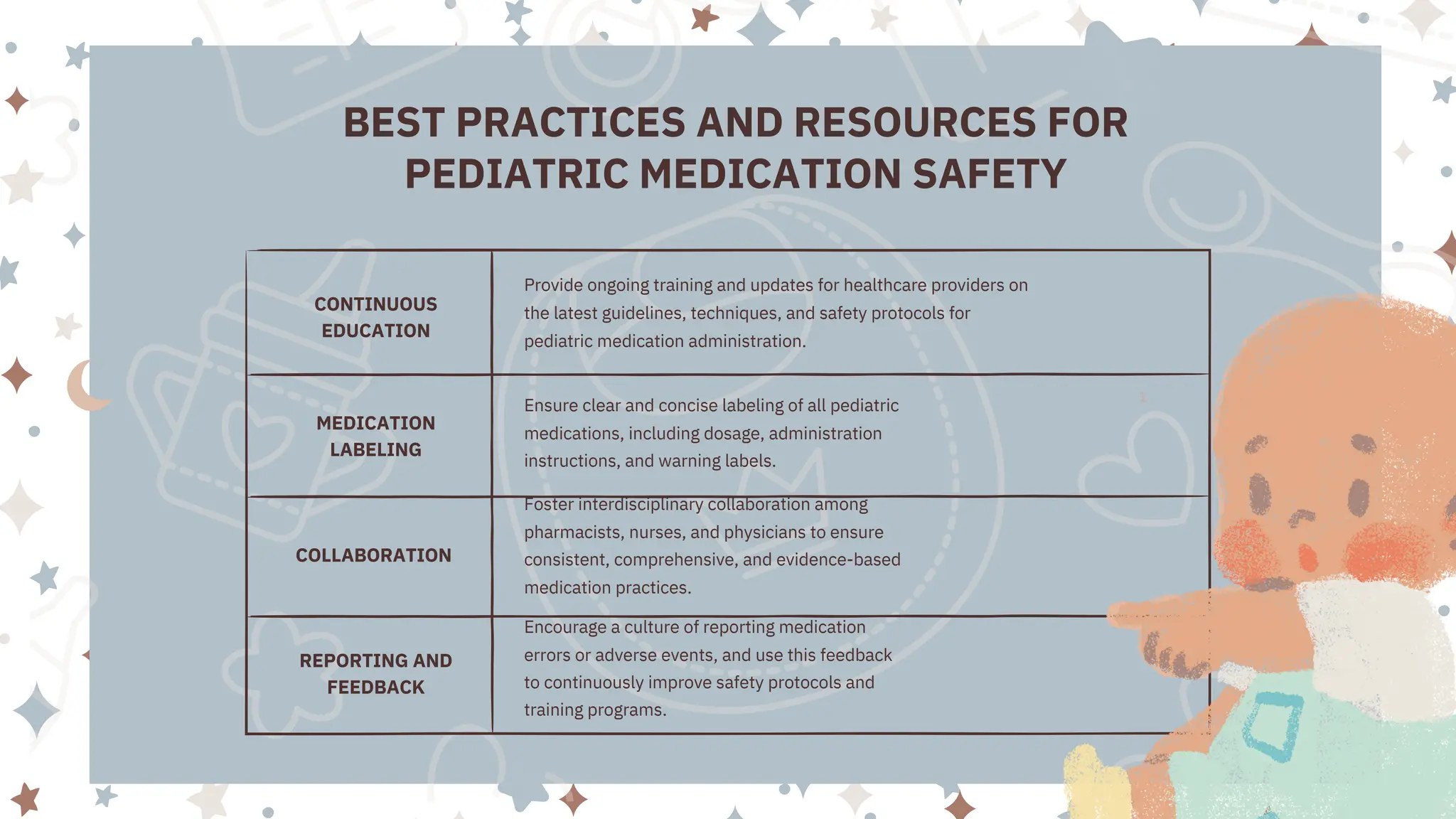
BEST PRACTICES AND RESOURCES FOR
PEDIATRIC MEDICATION SAFETY
CONTINUOUS
EDUCATION
MEDICATION
LABELING
COLLABORATION
REPORTING AND
FEEDBACK

PEDIATRICMEDICATIONADMINISTRATIONTECHNIQUES.pdf

  • 1.
  • 2.
    Properly administering medicationsto children requires specialized knowledge and techniques to ensure the safety and well-being of young patients. From understanding appropriate dosages and routes of administration to navigating the unique challenges presented by pediatric care, this guide/presentation will provide a comprehensive overview of the essential principles and best practices for administering medications to children effectively and responsibly. PEDIATRIC MEDICATION ADMINISTRATION (The Pediatric Out- Patient Department aims to serve all clients from 0 to below 19 years of age.)
  • 3.
    IMPORTANCE OF PROPERMEDICATION DOSING FOR CHILDREN UNIQUE PHYSIOLOGY Children's bodies differ significantly from adults, with varying rates of growth, metabolism, and organ development. Accurate dosing must account for these differences to avoid potentially dangerous under- or over- medication. MEDICATION SENSITIVITY Children can be more sensitive to certain medications, requiring lower doses or more careful monitoring. Improper dosing can lead to adverse reactions, toxicity, or ineffective treatment. LIFELONG CONSEQUENCES Medication errors in pediatric care can have serious, long-lasting consequences on a child's health and development. Proper dosing is crucial to ensure the safe and effective administration of medications to young patients.
  • 4.
    Medication Storage COMMON CHALLENGES IN PEDIATRIC MEDICATION ADMINISTRA TION DosageCalculations Determining the appropriate medication dose for a child based on weight, age, and other factors requires careful calculation to avoid errors. Medication Formulations Children may require specialized liquid, chewable, or dissolvable medication formulations, which can be more complex to administer accurately. Patient Compliance Convincing children to take their medications can be a significant challenge, requiring creativity and patience from healthcare providers. Ensuring proper storage and handling of pediatric medications, such as temperature control and child- resistant packaging, is crucial to maintain safety and efficacy.
  • 5.
    TECHNIQUES FOR ORAL MEDICATIONADMINISTRATION Use an appropriate dosing device, such as an oral syringe or medication cup, to accurately measure and administer liquid medications. Instruct the child to swallow the medication directly or mix it with a small amount of food or drink. LIQUID MEDICATIONS SOLID DOSAGE FORMS For tablets or capsules, consider crushing or opening the medication and mixing it with a small amount of food or liquid to make it easier for the child to swallow. Ensure the entire dose is consumed. MEDICATION ADHERENCE Engage the child in the process, offering choices, using positive reinforcement, and making the experience as pleasant as possible. Establish a routine to encourage consistent medication adherence.
  • 9.
    STRATEGIES FOR TOPICALAND TRANSDERMAL MEDICATION APPLICATION Topical Medications When applying creams, ointments, or gels to the skin, ensure the medication is spread evenly over the affected area. Instruct the child on the importance of not rubbing or touching the treated area to avoid inadvertent ingestion or transfer to other body parts. Transdermal Patches For transdermal patches, carefully select an appropriate application site, such as the upper arm or upper back, and assist the child in properly applying and securing the patch. Regularly monitor the application site for any skin irritation or adverse reactions. Medication Storage Store topical and transdermal medications safely, out of reach of children, and in accordance with the manufacturer's instructions to maintain their effectiveness and safety. Caregiver Involvement Engage parents or caregivers in the application process and provide clear instructions on proper techniques and frequency to ensure consistent and effective medication administration.
  • 10.
    CONSIDERATIONS FOR INTRAVENOUS ANDINTRAMUSCULAR INJECTIONS IV medications require specialized training and careful monitoring to ensure proper infusion rates and to prevent complications, such as infiltration or extravasation. Pediatric patients may require smaller gauge needles and tailored infusion sets. Intravenous (IV) Administration IM injections, such as vaccines, should be given in appropriate muscle groups, considering the child's age and size. Proper injection technique, site selection, and use of appropriate needle length are crucial to minimize pain and ensure medication is delivered effectively. Intramuscular (IM) Injections Strict adherence to infection control protocols, including proper hand hygiene, aseptic technique, and appropriate disposal of sharps, is essential when administering injectable medications to pediatric patients. Infection Control Considering the child's age and developmental stage, healthcare providers should employ age-appropriate distraction techniques, topical anesthetics, and gentle restraint methods to minimize pain and anxiety during invasive procedures. Patient Comfort
  • 11.
    MEDICATION STORAGE ANDHANDLING IN PEDIATRIC SETTINGS Ensure all medications are stored in a secure, temperature-controlled environment, away from direct sunlight and moisture, to maintain their potency and safety. Proper Storage Inventory Management Implement a robust inventory system to track medication expiration dates, avoid stockpiling, and ensure timely rotation of stock to minimize waste and potential medication errors. Disposal Protocols Establish clear protocols for the safe disposal of unused, expired, or contaminated medications to prevent accidental ingestion or environmental contamination.
  • 12.
    Provide ongoing trainingand updates for healthcare providers on the latest guidelines, techniques, and safety protocols for pediatric medication administration. Ensure clear and concise labeling of all pediatric medications, including dosage, administration instructions, and warning labels. Foster interdisciplinary collaboration among pharmacists, nurses, and physicians to ensure consistent, comprehensive, and evidence-based medication practices. Encourage a culture of reporting medication errors or adverse events, and use this feedback to continuously improve safety protocols and training programs. BEST PRACTICES AND RESOURCES FOR PEDIATRIC MEDICATION SAFETY CONTINUOUS EDUCATION MEDICATION LABELING COLLABORATION REPORTING AND FEEDBACK