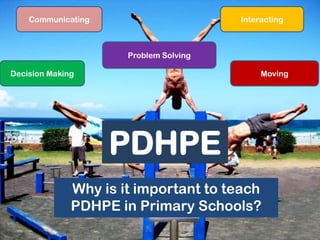
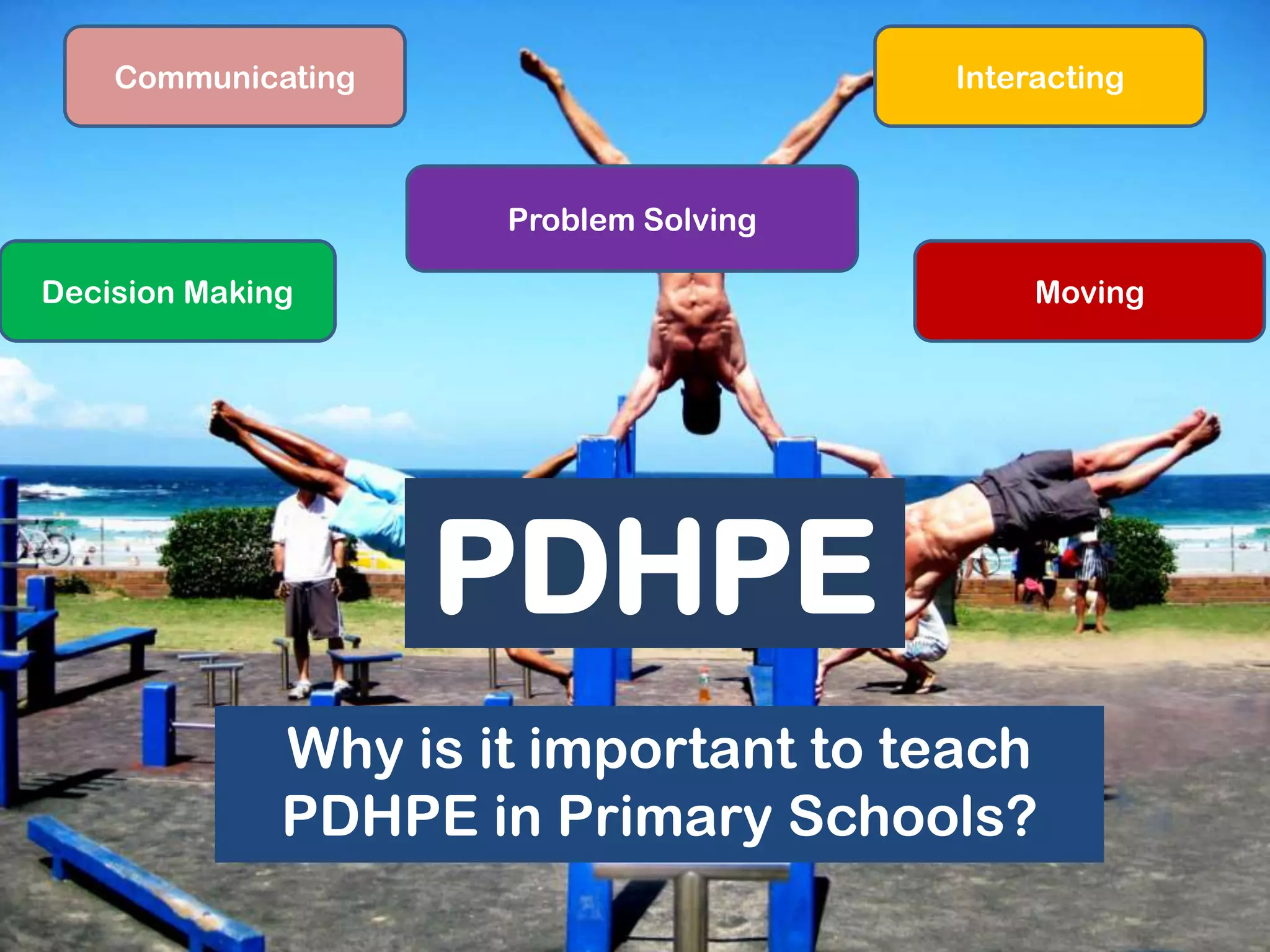
CommunicatingInteracting Problem SolvingDecision MakingMovingPDHPEWhy is it important to teach PDHPE in Primary Schools?
What does PDHPE aim to achieve?PDHPE covers all aspects of an individual’s wellbeing. Their social health, mental health, physical  health and spiritual health.PDHPE adapts children's knowledge, skills and values to live healthy and fulfilling lives to play a responsible and productive role in society.
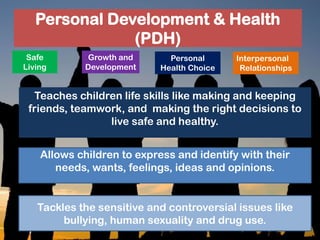
Personal Development & Health (PDH)Growth and DevelopmentSafe LivingPersonal Health ChoiceInterpersonal RelationshipsTeaches children life skills like making and keeping friends, teamwork, and  making theright decisions to live safe and healthy.Allows children to express and identify with their needs, wants, feelings, ideas and opinions.Tackles the sensitive and controversial issues like bullying, human sexuality and drug use.
Physical Education (PE)Games and SportsActive LifestyleGymnasticsDanceAllows children to master non-locomotive skills such as twisting, turning and stretching and locomotive skills such as running, jumping and forward roll.Helps children explore different styles and skills in dance and gymnastics including time and rhythm, balancing and relationships.Develops a range of games and sports skills such as kicking, teamwork and throwing.
But most importantly of all...PDHPE is FUN!Children get the opportunity to get out of their seats and express their own individualities and creativities.
ReferencesBoard of Studies NSW. (2006). Personal Development, Health and Physical Education K-6 Syllabus. Board of Studies: Sydney, NSW.

Pdhpe presentation

  • 1.
    CommunicatingInteracting Problem SolvingDecisionMakingMovingPDHPEWhy is it important to teach PDHPE in Primary Schools?
  • 2.
    What does PDHPEaim to achieve?PDHPE covers all aspects of an individual’s wellbeing. Their social health, mental health, physical health and spiritual health.PDHPE adapts children's knowledge, skills and values to live healthy and fulfilling lives to play a responsible and productive role in society.
  • 3.
    Personal Development &Health (PDH)Growth and DevelopmentSafe LivingPersonal Health ChoiceInterpersonal RelationshipsTeaches children life skills like making and keeping friends, teamwork, and making theright decisions to live safe and healthy.Allows children to express and identify with their needs, wants, feelings, ideas and opinions.Tackles the sensitive and controversial issues like bullying, human sexuality and drug use.
  • 4.
    Physical Education (PE)Gamesand SportsActive LifestyleGymnasticsDanceAllows children to master non-locomotive skills such as twisting, turning and stretching and locomotive skills such as running, jumping and forward roll.Helps children explore different styles and skills in dance and gymnastics including time and rhythm, balancing and relationships.Develops a range of games and sports skills such as kicking, teamwork and throwing.
  • 5.
    But most importantlyof all...PDHPE is FUN!Children get the opportunity to get out of their seats and express their own individualities and creativities.
  • 6.
    ReferencesBoard of StudiesNSW. (2006). Personal Development, Health and Physical Education K-6 Syllabus. Board of Studies: Sydney, NSW.

Editor's Notes