


E
                                     IV
                              IT IAT

                E!LESHIP
                           IN

         MSCIP
     COE DI
 ELRACTIC 3
WHE P , 201
 T          7
       R IL
     AP
Introducing…


      Dawn Trautman
      LutheranLifeCoach.com
I   VE
                                                                           I   AT
                                                                       T
                                                                I   NI
                                                            P
                                                     S   HI
                                                 E
                                          I   PL
                                      C
                               D   IS
                           E                         To foster faithful, thoughtful and intentional leaders
                    T   IC
                C                                    in congregations who follow Jesus in their daily lives.
         P   RA
T   HE
7 WEBINARS
  1. “Faith Formation in a Missional Age”
  2. “If Necessary, Use Words”
  3. “Theories of Culture”
  4. “Working Together in Solidarity”
  5. “Inculturating the Gospel”
  6. “Dog Eating Chicken”
  7. “Going Public”
Going Public!


      Jeremy Myers | Augsburg College
The Problem
3 Key Weaknesses in Church’s Approach to Discipleship
RELATIONSHIPS - Our young people are not connected
relationally to enough people in the church to stay
engaged in the church.

VOCATION - Our congregations do not help young
people understand or practice living out God’s call in
their daily lives.

WISDOM - Our congregations spend more time passing
on “information” rather than wisdom, which is the
ability to use information wisely.
                 You Lost Me, David Kinnaman (2012)
The Privatization of
Religion
Faith formation in a
missional age will be public
. . .
   Intergenerational faith communities
   discern and proclaim Christ’s
   presence and activity
   and their proper response
   in the public square for the common
   good.
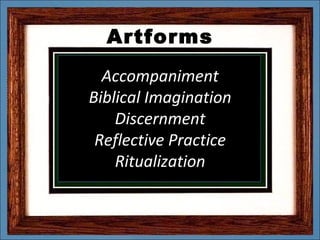
Artforms
  Accompaniment
Biblical Imagination
    Discernment
 Reflective Practice
    Ritualization
Accompaniment
Biblical Imagination
Discernment
Reflective Practice
                      4. Action for Transformation
                            New Experience


     3. Discernment


     2. Interpretation


            1. Experience
Ritualization
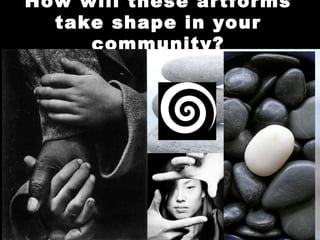
How will these artforms
  take shape in your
     community?
Thoughts…Questions…
Reflections…


      Jeremy Myers                Dawn Trautman
 Please type your questions or comments into the question box
 on your screen. We’ll try to get to as many of them as we can.
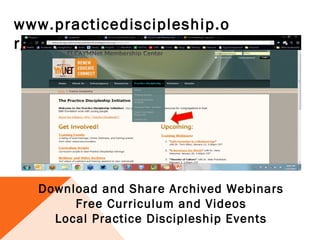
www.practicediscipleship.o
rg


  Download and Share Archived Webinars
       Free Curriculum and Videos
    Local Practice Discipleship Events
The Mobile
Network of education events
 • Streaming videos
 • Interactive Prayer Wall
 • News and Events
 • Local Network Finder  
 • Now the Entire Bible
 • Discover Our Mission, Vision, History,
   Leadership Teams and More
 • Ministries
 • Contact Info 
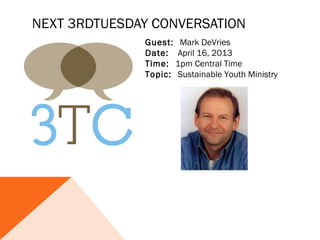
NEXT 3RDTUESDAY CONVERSATION
              Guest: Mark DeVries
              Date: April 16, 2013
              Time: 1pm Central Time
              Topic: Sustainable Youth Ministry
K   S!
  AN 013
TH IL 7, 2
    R
  AP

PD2 - Going Public; Dr. Jeremy Myers

  • 1.
    E IV IT IAT E!LESHIP IN MSCIP COE DI ELRACTIC 3 WHE P , 201 T 7 R IL AP
  • 2.
    Introducing… Dawn Trautman LutheranLifeCoach.com
  • 3.
    I VE I AT T I NI P S HI E I PL C D IS E To foster faithful, thoughtful and intentional leaders T IC C in congregations who follow Jesus in their daily lives. P RA T HE
  • 4.
    7 WEBINARS 1. “Faith Formation in a Missional Age” 2. “If Necessary, Use Words” 3. “Theories of Culture” 4. “Working Together in Solidarity” 5. “Inculturating the Gospel” 6. “Dog Eating Chicken” 7. “Going Public”
  • 5.
    Going Public! Jeremy Myers | Augsburg College
  • 6.
    The Problem 3 KeyWeaknesses in Church’s Approach to Discipleship RELATIONSHIPS - Our young people are not connected relationally to enough people in the church to stay engaged in the church. VOCATION - Our congregations do not help young people understand or practice living out God’s call in their daily lives. WISDOM - Our congregations spend more time passing on “information” rather than wisdom, which is the ability to use information wisely. You Lost Me, David Kinnaman (2012)
  • 7.
  • 8.
    Faith formation ina missional age will be public . . . Intergenerational faith communities discern and proclaim Christ’s presence and activity and their proper response in the public square for the common good.
  • 9.
    Artforms Accompaniment BiblicalImagination Discernment Reflective Practice Ritualization
  • 10.
  • 11.
  • 12.
  • 13.
    Reflective Practice 4. Action for Transformation New Experience 3. Discernment 2. Interpretation 1. Experience
  • 14.
  • 15.
    How will theseartforms take shape in your community?
  • 16.
    Thoughts…Questions… Reflections… Jeremy Myers Dawn Trautman Please type your questions or comments into the question box on your screen. We’ll try to get to as many of them as we can.
  • 17.
    www.practicediscipleship.o rg Downloadand Share Archived Webinars Free Curriculum and Videos Local Practice Discipleship Events
  • 18.
    The Mobile Network ofeducation events • Streaming videos • Interactive Prayer Wall • News and Events • Local Network Finder   • Now the Entire Bible • Discover Our Mission, Vision, History, Leadership Teams and More • Ministries • Contact Info 
  • 19.
    NEXT 3RDTUESDAY CONVERSATION Guest: Mark DeVries Date: April 16, 2013 Time: 1pm Central Time Topic: Sustainable Youth Ministry
  • 20.
    K S! AN 013 TH IL 7, 2 R AP

Editor's Notes

  • #6 The whole idea behind “Going Public” involves local congregations finding creative ways to discern and proclaim Christ’s work in their communities. A congregation that is “Going Public” will see this process of discerning and proclaiming Christ’s work in the public square as the primary way in which faith is formed. (change slide)
  • #7 Lets briefly look at the problem we face - Young people becoming less and less committed to institutional religion. David Kinnaman works for the Barna Group, an organization committed to researching the intersection of faith and culture. In his recent book, You Lost Me, he illustrates the reasons why young adults leave the church. He identifies 3 key weakness in the church’s approach to discipleship with young people. click to reveal 1. RELATIONSHIPS (read from the slide). click to reveal 2. VOCATION (read from slide) click to reveal 3. WISDOM (read from slide) We have to find a way to approach faith formation that takes these three critiques seriously. (change slide)
  • #8 I think Kinnaman findings are the results of decades of faith formation and discipleship practices based on the false assumption that faith is primarily private. Ever since the scientific revolution of the enlightenment, faith has become more and more relegated to the private sphere of life. As a church, we’ve bought into this myth. We raised generations of young people to believe this myth and we formed them in a faith that works in private, but doesn’t hold up in the public square. (change slide)
  • #9 In order to address the concerns pointed out by Kinnaman and to counter this myth of private faith, we must think about faith formation as a public act. Faith formation in a missional age will be public as intergenerational faith communities discern and proclaim Christ’s presence and activity and their proper response in the public square for the common good A faith community that is doing this will be forming faith in new and vibrant ways that address young peoples’ desires and the world’s needs. (change slide)
  • #10 There are certain artforms these faith communities will engage in in order to move their process of faith formation in the public square. By artform I mean . . . So, now lets take a quick look at each of these artforms (click to reveal each artform as they are briefly mentioned – will just list them here without any commentary). (change slide)
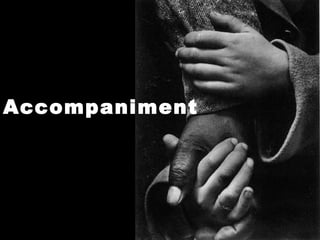
  • #11 Accompaniment happens as a congregation intentionally engages its context or community in order to better know and better serve its community. Accompaniment happens as we intentionally take on the posture and spirit of “listener” before “speaker”. If we truly want to proclaim good news to our neighbors, then we must first take the time to hear and understand their bad news. Accompaniment is this process. By engaging in accompaniment with our youth we are teaching them how to love their neighbors and how to seek Christ in the neighbor. Lets pause here and take a moment to imagine 2 or 3 different ways we might practice the art of accompaniment in our communities with our youth? If you are watching this with others, then feel free to discuss it as a group. If you are alone, then please take this time to start listing some ideas. (stay on this slide for about 1 minute and until I cue the switch).
  • #12 The art of Biblical Imagination happens as congregations begin to interpret their lived experiences through the lens of the biblical narrative. We don’t just learn bible stories. We learn how to USE the biblical narrative. Its story of redemption and hope begins to shape the way we interpret what we hear as we listen to and accompany our neighbor. By practicing the art of Biblical Imagination with our youth, we teach them how to interpret scripture through life and how to interpret life through scripture. They will learn that God’s word is alive and active and still full of meaning today. Again, lets take 1 minute to discuss or list ways we can be more active with the art of biblical imagination in our communities. (stay on this slide for about 1 minute and until I cue the switch).
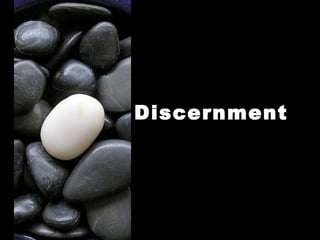
  • #13 Discernment is the communal art of seeking to understand God’s call or invitation in any particular situation. It happens as God’s people answer the questions, “Where is God in this situation?” AND “What is God calling us to do or be?”. The artforms of accompaniment and biblical imagination naturally lead to these questions and, therefore to the artform of discernment. When we engage our young people in the practice of discerning Christ’s presence and our call out in the public square we are teaching them how to do the same in their daily lives. They will learn to see God at work in their daily lives and they will learn how to respond to God’s work. How might you begin to practice discernment with your congregation? (stay on this slide for about 1 minute and until I cue the switch).
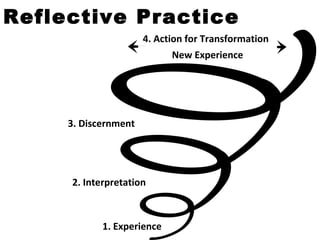
  • #14 The artform of Reflective Practice pulls together all three of the previously mentioned artforms. It is the process of learning from our experiences. You can see how the spiral of reflection moves upward from experience to action. It involves the listening the comes from accompaniment and the interpretation that comes from a Biblical Imagination. We live life as a community of faith in the public square seeking to interpret and understand our life experiences and seeking to respond to those experiences faithfully. By practicing this artform, we are teaching our young people “discipleship on the fly”. We are teaching them how to understand life and live life as people of faith. Out of our collective and individual experiences, we seek to notice God’s revelation and we seek to respond to that revelation both collectively and individually – but never privately. Always publically. This, in turn, creates a new experience that calls for new interpretation and so on and so forth. (change slide)
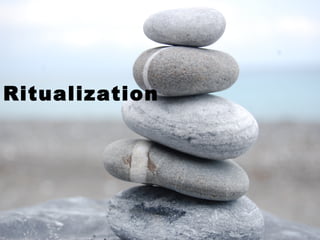
  • #15 Lastly, we practice the artform of ritualization. As Joshua and the Israelites crossed the Jordan into the promised land, God commanded them to pick up one stone from the river for each tribe of Israel. They piled these stones on the banks of the Jordan so when their children were playing by the river they would ask their parents about the stones and then their parents would tell them the stories of God’s promises. Where are these piles of stones in your communities? The artform of ritualization is the process of marking times and places that are sacred or holy for our communities. For example, a congregation across the street from an elementary school builds a memorial for a student who was hit by a car and killed. A congregation and a local theater company partner in a public reenactment and processional of Los Posadas. A congregation carries a cross around its neighborhood on Good Friday praying for resurrection at significant locations in the neighborhood. By marking time and place as holy we are teaching our young people that God is still at work in our world today. We teach them how to worship. (change slide)
  • #16 So, these artforms feed one another and work together in a cyclical way. As we engage in these artforms with our youth we will be engaged in a new form of faith formation or discipleship. We will be teaching them how to look for Christ at work in their world and discerning how to participate with Christ in Christ’s work. We will only be able to teach them how to do this if we engage in it with them. It is a process that must happen beyond the church, out in the public square and for the common good. So your work now is to begin imagining how these artforms might take shape in your context. I hope this made some sense in this format and I hope it has stimulated some creative thinking. What are your thoughts and questions about this?