Pathophysiologic Origin
of Brachial Plexus Injury
By :- Meet Soni
● Author :- Grace J. Johnson, MD
● Co- Author :- Stacie Denning, MS
Steven L. Clark, MD
Christiana Davidson, MD
● Received Date:- March 15, 2020
● Published Date:- May 21, 2020
● Published On :- WK Health Journal, Vol.136,No.4
● Objective :-
- To analyze the origins and consequences of cases of
brachial plexus injuries and their relationship to shoulder
dystocia
● Methodology :-
● Retrospective Cohort Study
● Within institution, Identified all women with shoulder
dystocia & all neonates with brachial plexus injury
● Collected all medical data of the mother & neonates from
medical records
● All cases of brachial plexus injury were then stratified in
two ways :
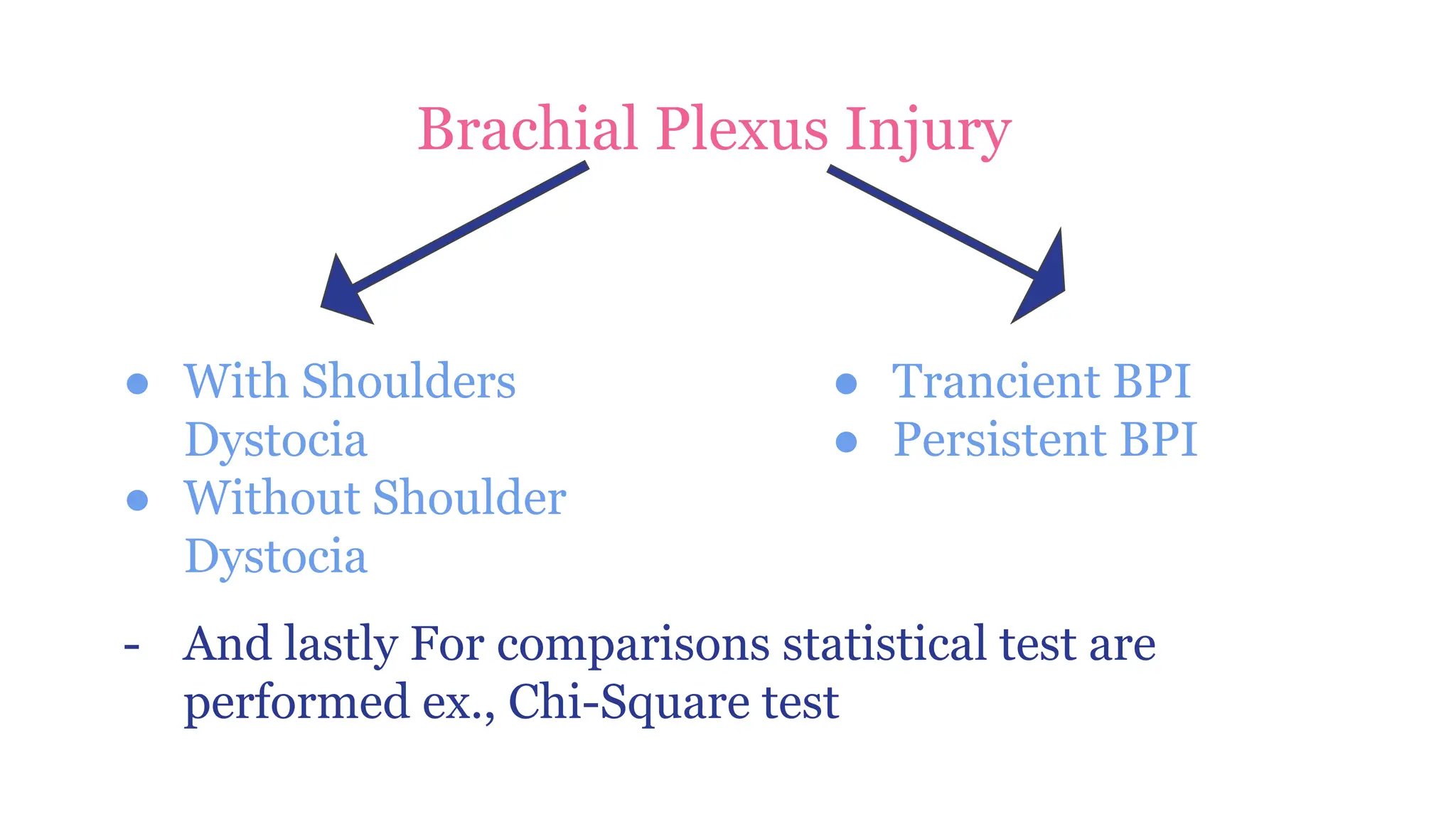
Brachial Plexus Injury
● With Shoulders
Dystocia
● Without Shoulder
Dystocia
● Trancient BPI
● Persistent BPI
- And lastly For comparisons statistical test are
performed ex., Chi-Square test
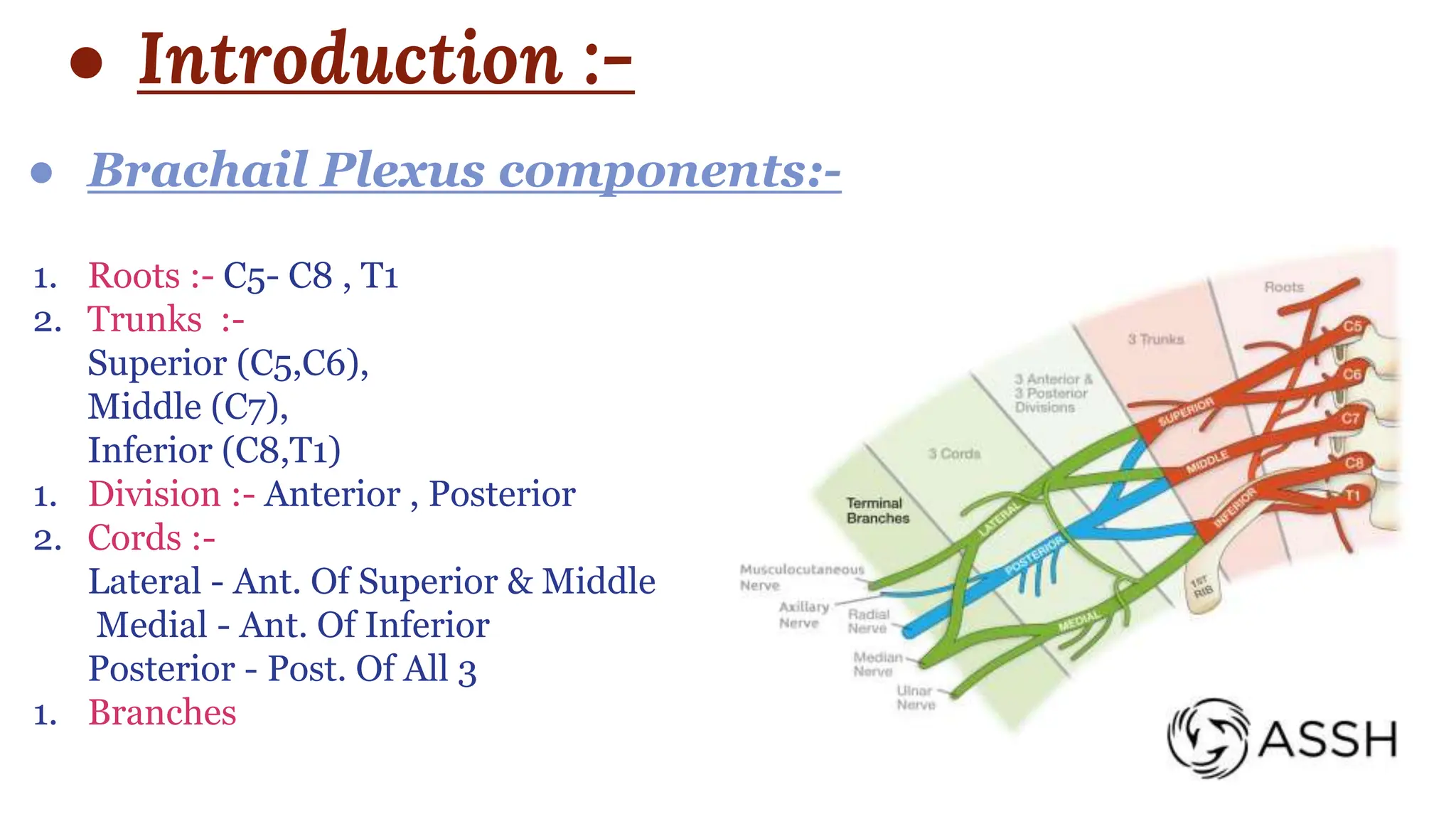
● Introduction :-
1. Roots :- C5- C8 , T1
2. Trunks :-
Superior (C5,C6),
Middle (C7),
Inferior (C8,T1)
1. Division :- Anterior , Posterior
2. Cords :-
Lateral - Ant. Of Superior & Middle
Medial - Ant. Of Inferior
Posterior - Post. Of All 3
1. Branches
Brachial Plexus Injury
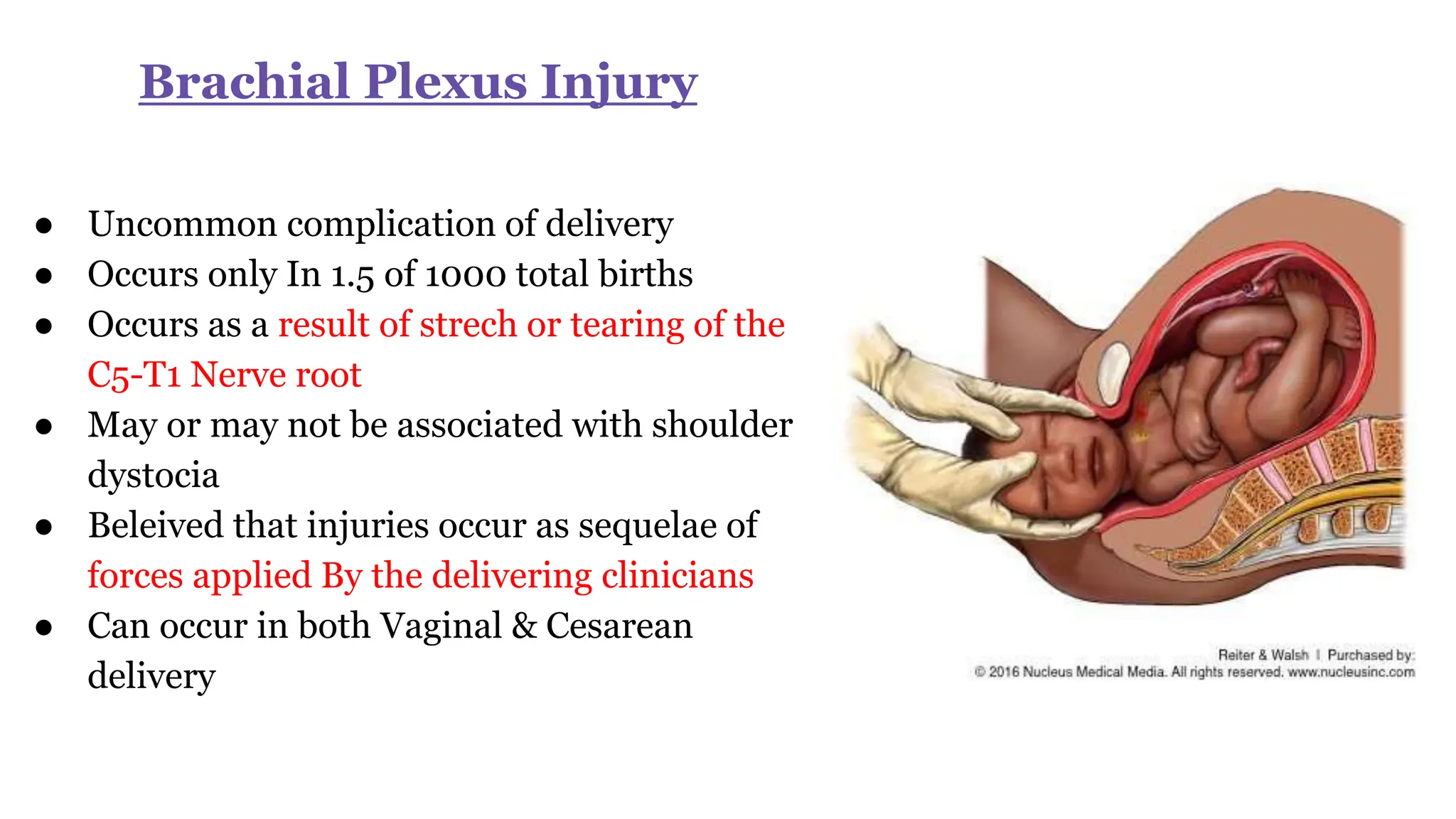
● Uncommon complication of delivery
● Occurs only In 1.5 of 1000 total births
● Occurs as a result of strech or tearing of the
C5-T1 Nerve root
● May or may not be associated with shoulder
dystocia
● Beleived that injuries occur as sequelae of
forces applied By the delivering clinicians
● Can occur in both Vaginal & Cesarean
delivery
Shoulder Dystocia
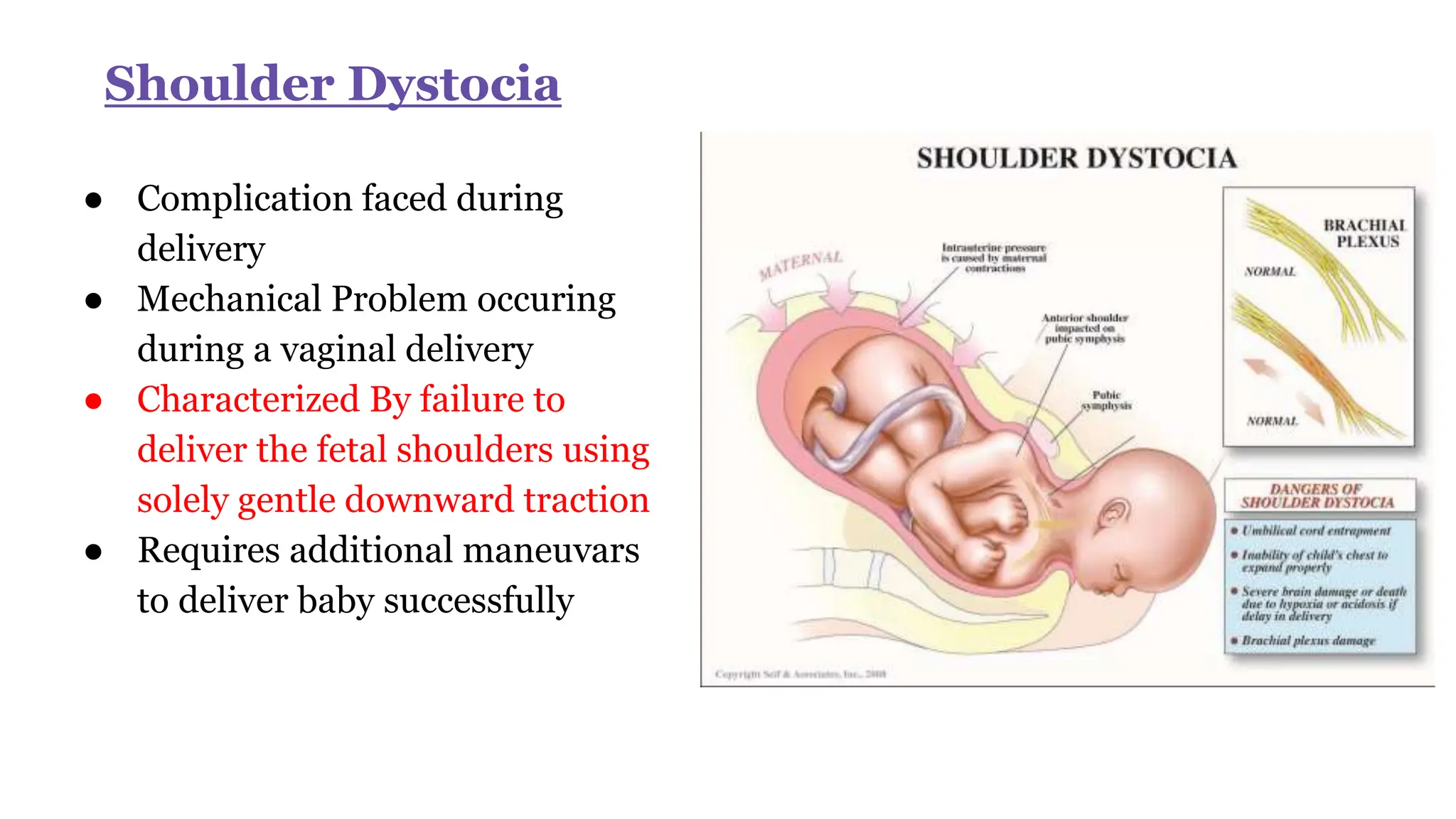
● Complication faced during
delivery
● Mechanical Problem occuring
during a vaginal delivery
● Characterized By failure to
deliver the fetal shoulders using
solely gentle downward traction
● Requires additional maneuvars
to deliver baby successfully
● Management of Shoulder Dystocia
● Initial Maneuveres :-
1) McRoberts Maneuver
2) Suprapubic Presure
● Additional Maneuvers :-
1. Posterior Arm Release
2. Woods Maneuver
3. Episiotomy
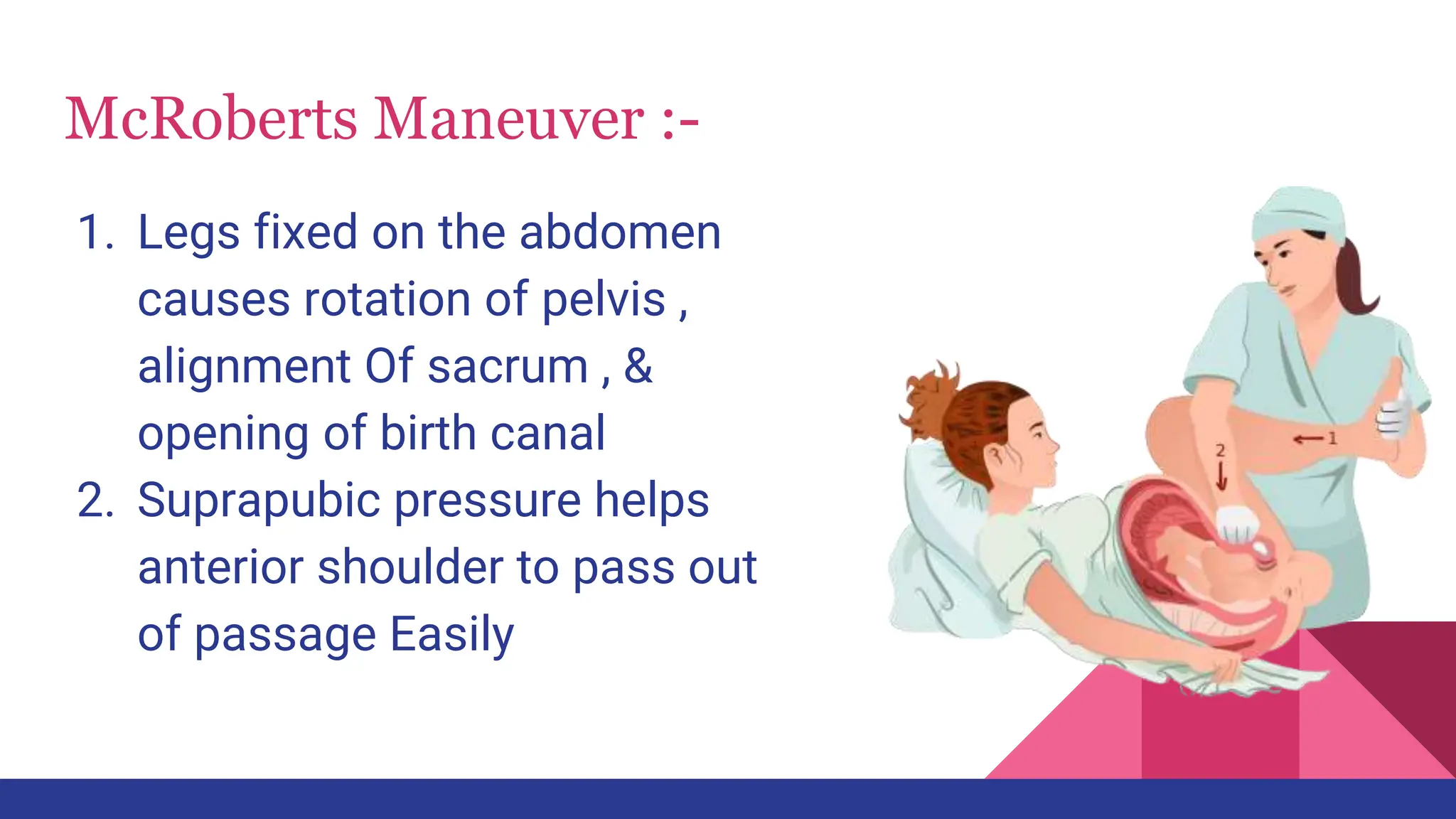
McRoberts Maneuver :-
1. Legs fixed on the abdomen
causes rotation of pelvis ,
alignment Of sacrum , &
opening of birth canal
2. Suprapubic pressure helps
anterior shoulder to pass out
of passage Easily
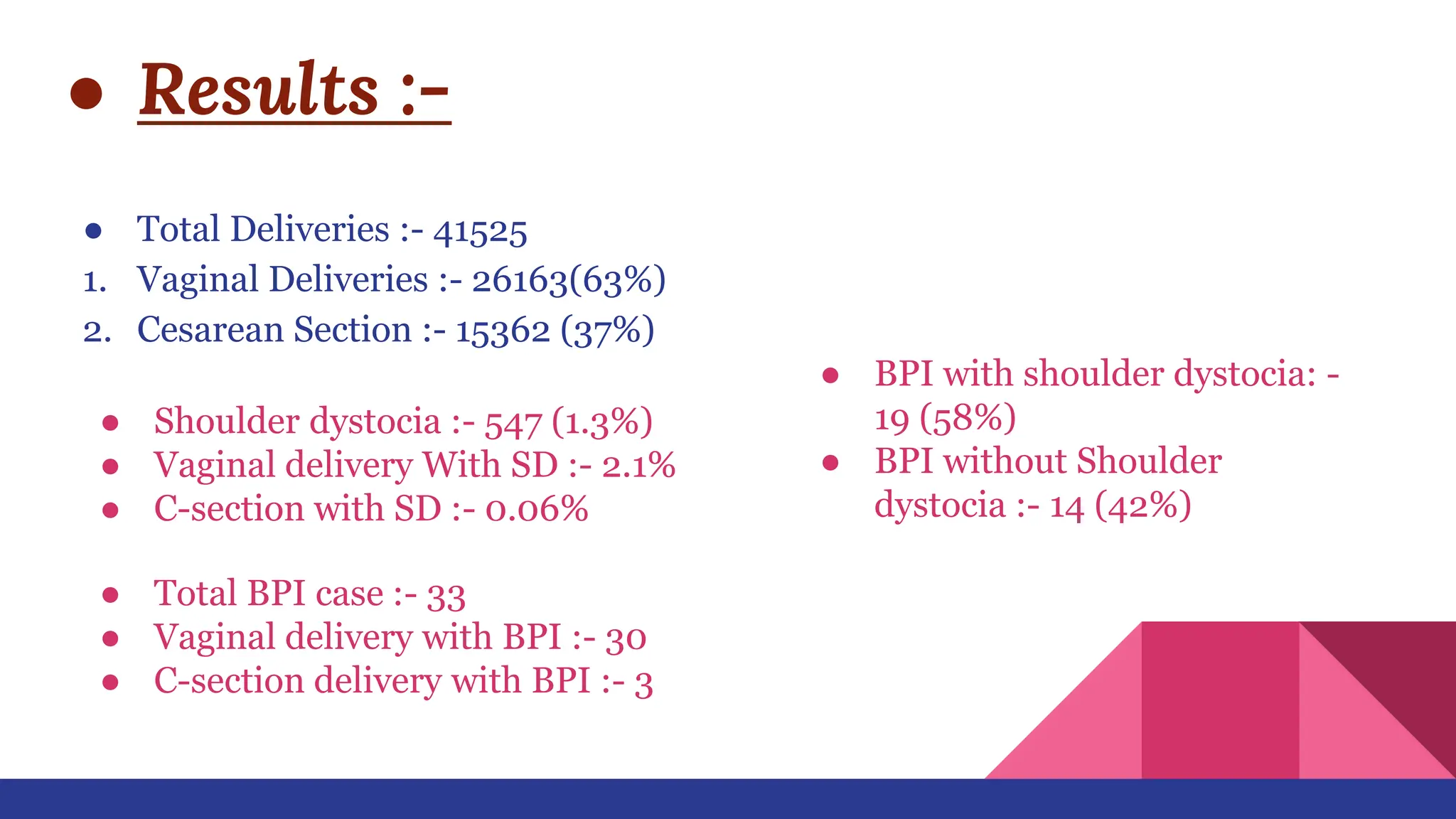
● Results :-
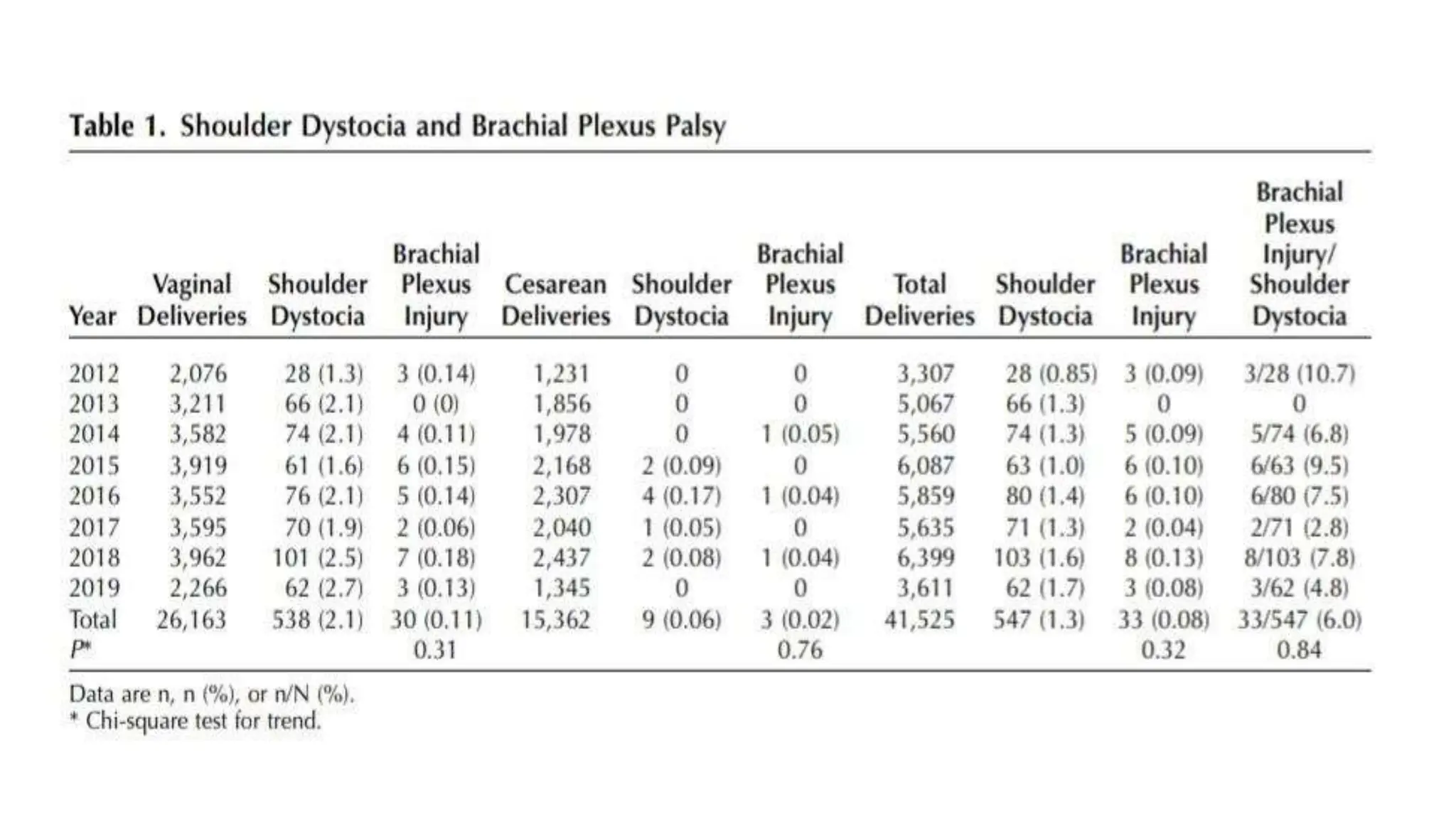
● Total Deliveries :- 41525
1. Vaginal Deliveries :- 26163(63%)
2. Cesarean Section :- 15362 (37%)
● Shoulder dystocia :- 547 (1.3%)
● Vaginal delivery With SD :- 2.1%
● C-section with SD :- 0.06%
● Total BPI case :- 33
● Vaginal delivery with BPI :- 30
● C-section delivery with BPI :- 3
● BPI with shoulder dystocia: -
19 (58%)
● BPI without Shoulder
dystocia :- 14 (42%)
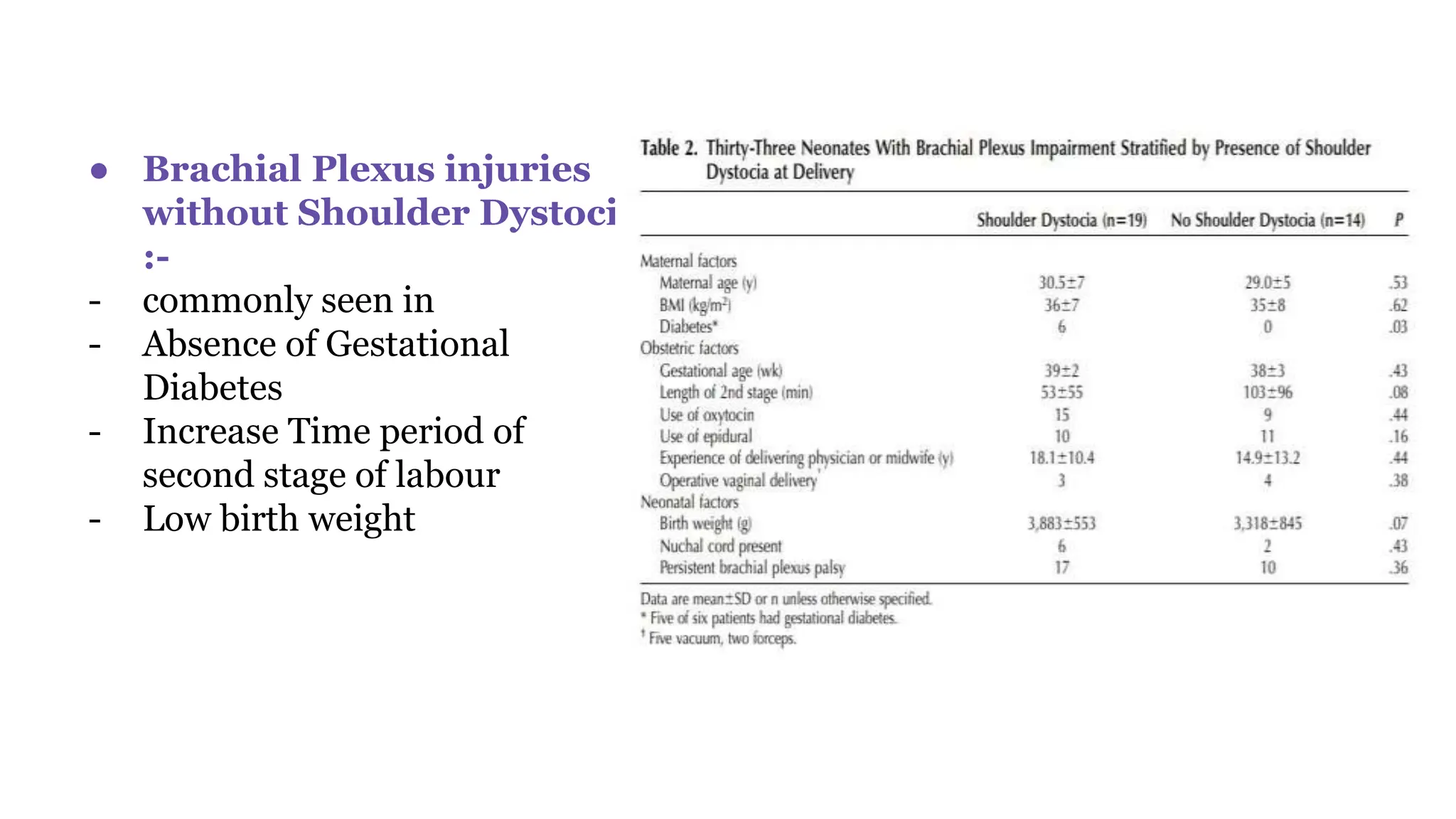
● Brachial Plexus injuries
without Shoulder Dystocia
:-
- commonly seen in
- Absence of Gestational
Diabetes
- Increase Time period of
second stage of labour
- Low birth weight
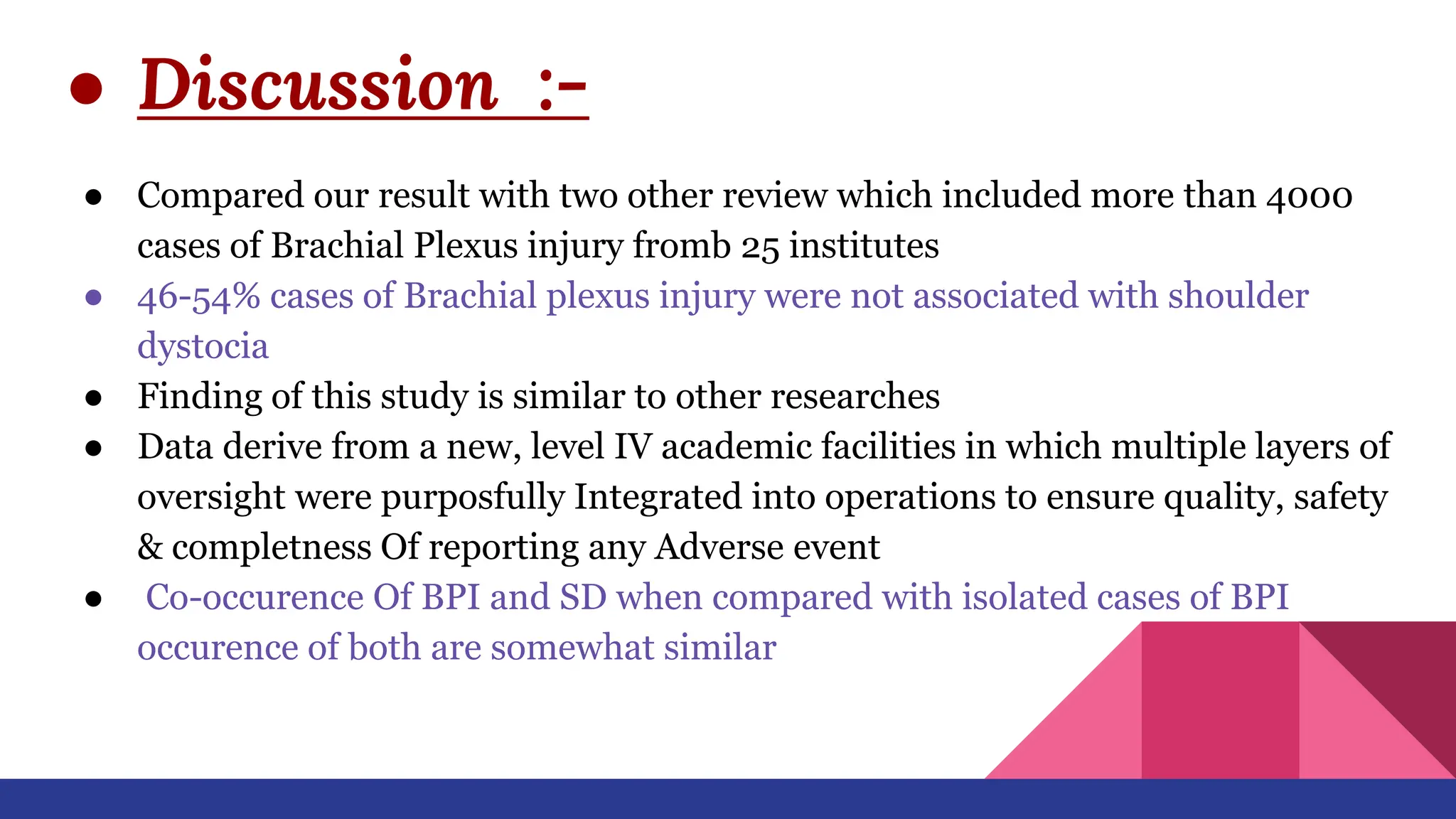
● Discussion :-
● Compared our result with two other review which included more than 4000
cases of Brachial Plexus injury fromb 25 institutes
● 46-54% cases of Brachial plexus injury were not associated with shoulder
dystocia
● Finding of this study is similar to other researches
● Data derive from a new, level IV academic facilities in which multiple layers of
oversight were purposfully Integrated into operations to ensure quality, safety
& completness Of reporting any Adverse event
● Co-occurence Of BPI and SD when compared with isolated cases of BPI
occurence of both are somewhat similar
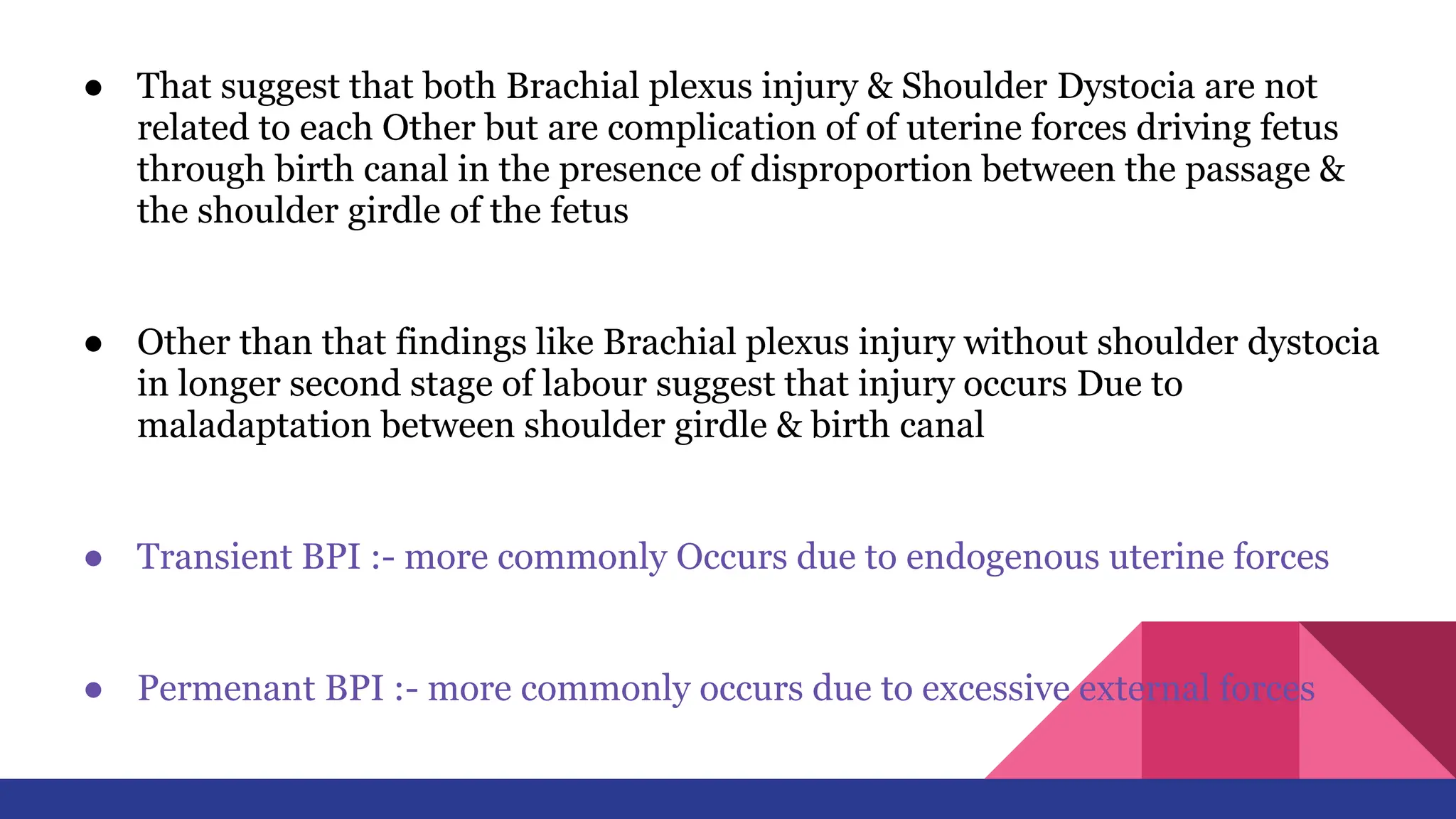
● That suggest that both Brachial plexus injury & Shoulder Dystocia are not
related to each Other but are complication of of uterine forces driving fetus
through birth canal in the presence of disproportion between the passage &
the shoulder girdle of the fetus
● Other than that findings like Brachial plexus injury without shoulder dystocia
in longer second stage of labour suggest that injury occurs Due to
maladaptation between shoulder girdle & birth canal
● Transient BPI :- more commonly Occurs due to endogenous uterine forces
● Permenant BPI :- more commonly occurs due to excessive external forces
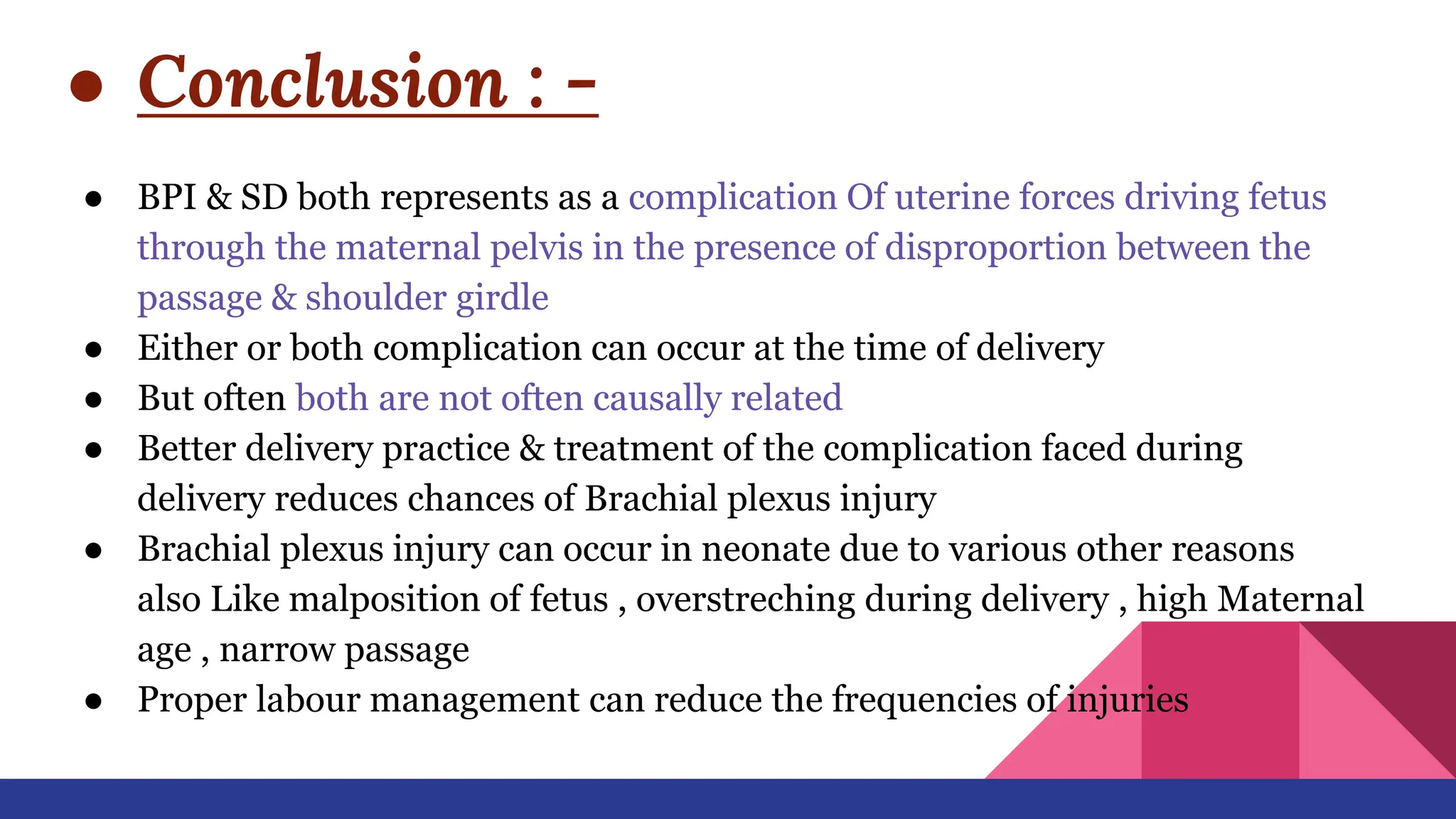
● Conclusion : -
● BPI & SD both represents as a complication Of uterine forces driving fetus
through the maternal pelvis in the presence of disproportion between the
passage & shoulder girdle
● Either or both complication can occur at the time of delivery
● But often both are not often causally related
● Better delivery practice & treatment of the complication faced during
delivery reduces chances of Brachial plexus injury
● Brachial plexus injury can occur in neonate due to various other reasons
also Like malposition of fetus , overstreching during delivery , high Maternal
age , narrow passage
● Proper labour management can reduce the frequencies of injuries
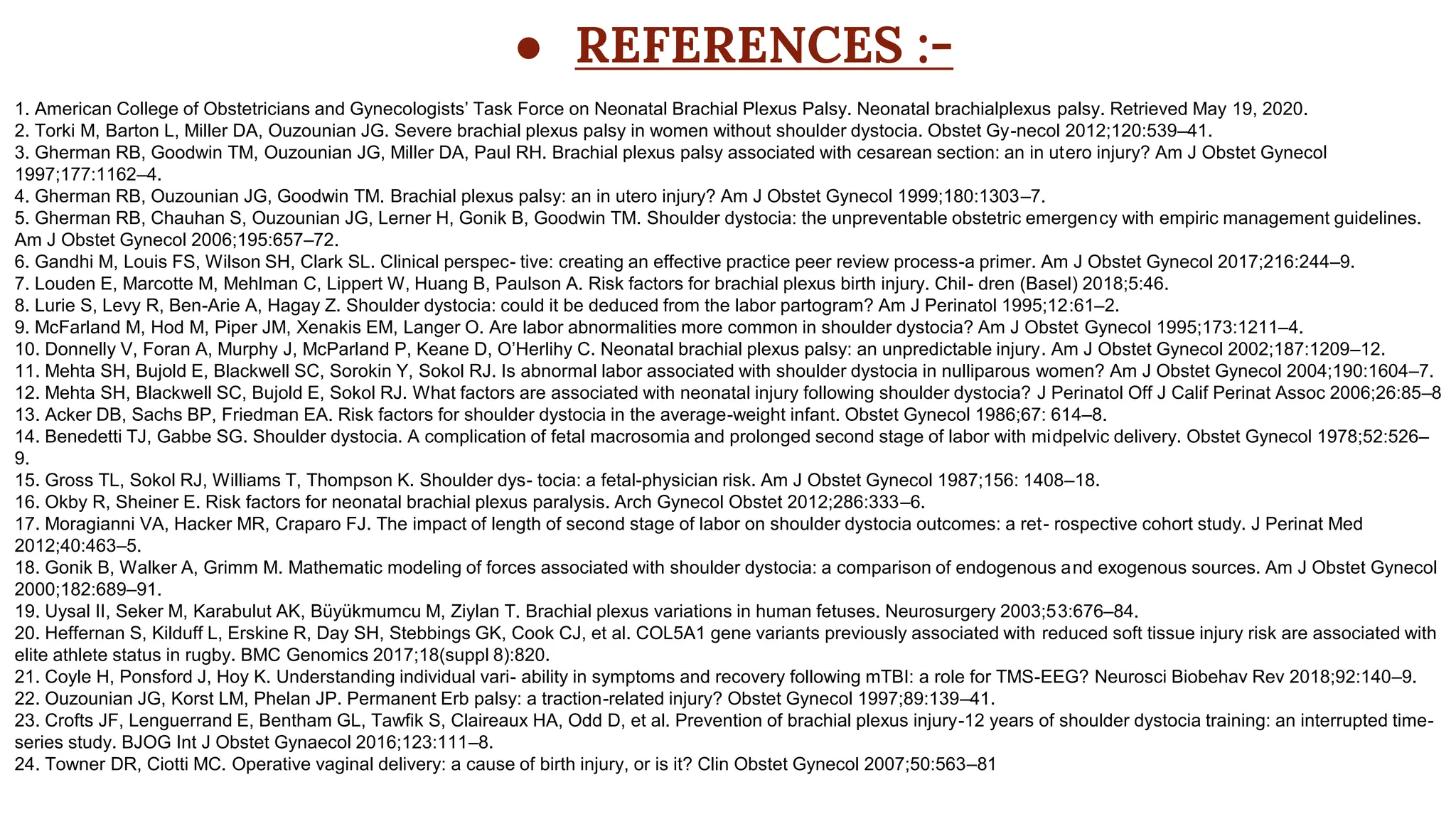
● REFERENCES :-
1. American College of Obstetricians and Gynecologists’ Task Force on Neonatal Brachial Plexus Palsy. Neonatal brachialplexus palsy. Retrieved May 19, 2020.
2. Torki M, Barton L, Miller DA, Ouzounian JG. Severe brachial plexus palsy in women without shoulder dystocia. Obstet Gy-necol 2012;120:539–41.
3. Gherman RB, Goodwin TM, Ouzounian JG, Miller DA, Paul RH. Brachial plexus palsy associated with cesarean section: an in utero injury? Am J Obstet Gynecol
1997;177:1162–4.
4. Gherman RB, Ouzounian JG, Goodwin TM. Brachial plexus palsy: an in utero injury? Am J Obstet Gynecol 1999;180:1303–7.
5. Gherman RB, Chauhan S, Ouzounian JG, Lerner H, Gonik B, Goodwin TM. Shoulder dystocia: the unpreventable obstetric emergency with empiric management guidelines.
Am J Obstet Gynecol 2006;195:657–72.
6. Gandhi M, Louis FS, Wilson SH, Clark SL. Clinical perspec- tive: creating an effective practice peer review process-a primer. Am J Obstet Gynecol 2017;216:244–9.
7. Louden E, Marcotte M, Mehlman C, Lippert W, Huang B, Paulson A. Risk factors for brachial plexus birth injury. Chil- dren (Basel) 2018;5:46.
8. Lurie S, Levy R, Ben-Arie A, Hagay Z. Shoulder dystocia: could it be deduced from the labor partogram? Am J Perinatol 1995;12:61–2.
9. McFarland M, Hod M, Piper JM, Xenakis EM, Langer O. Are labor abnormalities more common in shoulder dystocia? Am J Obstet Gynecol 1995;173:1211–4.
10. Donnelly V, Foran A, Murphy J, McParland P, Keane D, O’Herlihy C. Neonatal brachial plexus palsy: an unpredictable injury. Am J Obstet Gynecol 2002;187:1209–12.
11. Mehta SH, Bujold E, Blackwell SC, Sorokin Y, Sokol RJ. Is abnormal labor associated with shoulder dystocia in nulliparous women? Am J Obstet Gynecol 2004;190:1604–7.
12. Mehta SH, Blackwell SC, Bujold E, Sokol RJ. What factors are associated with neonatal injury following shoulder dystocia? J Perinatol Off J Calif Perinat Assoc 2006;26:85–8
13. Acker DB, Sachs BP, Friedman EA. Risk factors for shoulder dystocia in the average-weight infant. Obstet Gynecol 1986;67: 614–8.
14. Benedetti TJ, Gabbe SG. Shoulder dystocia. A complication of fetal macrosomia and prolonged second stage of labor with midpelvic delivery. Obstet Gynecol 1978;52:526–
9.
15. Gross TL, Sokol RJ, Williams T, Thompson K. Shoulder dys- tocia: a fetal-physician risk. Am J Obstet Gynecol 1987;156: 1408–18.
16. Okby R, Sheiner E. Risk factors for neonatal brachial plexus paralysis. Arch Gynecol Obstet 2012;286:333–6.
17. Moragianni VA, Hacker MR, Craparo FJ. The impact of length of second stage of labor on shoulder dystocia outcomes: a ret- rospective cohort study. J Perinat Med
2012;40:463–5.
18. Gonik B, Walker A, Grimm M. Mathematic modeling of forces associated with shoulder dystocia: a comparison of endogenous and exogenous sources. Am J Obstet Gynecol
2000;182:689–91.
19. Uysal II, Seker M, Karabulut AK, Büyükmumcu M, Ziylan T. Brachial plexus variations in human fetuses. Neurosurgery 2003;53:676–84.
20. Heffernan S, Kilduff L, Erskine R, Day SH, Stebbings GK, Cook CJ, et al. COL5A1 gene variants previously associated with reduced soft tissue injury risk are associated with
elite athlete status in rugby. BMC Genomics 2017;18(suppl 8):820.
21. Coyle H, Ponsford J, Hoy K. Understanding individual vari- ability in symptoms and recovery following mTBI: a role for TMS-EEG? Neurosci Biobehav Rev 2018;92:140–9.
22. Ouzounian JG, Korst LM, Phelan JP. Permanent Erb palsy: a traction-related injury? Obstet Gynecol 1997;89:139–41.
23. Crofts JF, Lenguerrand E, Bentham GL, Tawfik S, Claireaux HA, Odd D, et al. Prevention of brachial plexus injury-12 years of shoulder dystocia training: an interrupted time-
series study. BJOG Int J Obstet Gynaecol 2016;123:111–8.
24. Towner DR, Ciotti MC. Operative vaginal delivery: a cause of birth injury, or is it? Clin Obstet Gynecol 2007;50:563–81
Thank you

Pathophysiologic Origin of Brachial Plexus Injury-1.pptx

  • 1.
    Pathophysiologic Origin of BrachialPlexus Injury By :- Meet Soni
  • 2.
    ● Author :-Grace J. Johnson, MD ● Co- Author :- Stacie Denning, MS Steven L. Clark, MD Christiana Davidson, MD ● Received Date:- March 15, 2020 ● Published Date:- May 21, 2020 ● Published On :- WK Health Journal, Vol.136,No.4
  • 3.
    ● Objective :- -To analyze the origins and consequences of cases of brachial plexus injuries and their relationship to shoulder dystocia
  • 4.
    ● Methodology :- ●Retrospective Cohort Study ● Within institution, Identified all women with shoulder dystocia & all neonates with brachial plexus injury ● Collected all medical data of the mother & neonates from medical records ● All cases of brachial plexus injury were then stratified in two ways :
  • 5.
    Brachial Plexus Injury ●With Shoulders Dystocia ● Without Shoulder Dystocia ● Trancient BPI ● Persistent BPI - And lastly For comparisons statistical test are performed ex., Chi-Square test
  • 6.
    ● Introduction :- 1.Roots :- C5- C8 , T1 2. Trunks :- Superior (C5,C6), Middle (C7), Inferior (C8,T1) 1. Division :- Anterior , Posterior 2. Cords :- Lateral - Ant. Of Superior & Middle Medial - Ant. Of Inferior Posterior - Post. Of All 3 1. Branches
  • 7.
    Brachial Plexus Injury ●Uncommon complication of delivery ● Occurs only In 1.5 of 1000 total births ● Occurs as a result of strech or tearing of the C5-T1 Nerve root ● May or may not be associated with shoulder dystocia ● Beleived that injuries occur as sequelae of forces applied By the delivering clinicians ● Can occur in both Vaginal & Cesarean delivery
  • 8.
    Shoulder Dystocia ● Complicationfaced during delivery ● Mechanical Problem occuring during a vaginal delivery ● Characterized By failure to deliver the fetal shoulders using solely gentle downward traction ● Requires additional maneuvars to deliver baby successfully
  • 9.
    ● Management ofShoulder Dystocia ● Initial Maneuveres :- 1) McRoberts Maneuver 2) Suprapubic Presure ● Additional Maneuvers :- 1. Posterior Arm Release 2. Woods Maneuver 3. Episiotomy
  • 10.
    McRoberts Maneuver :- 1.Legs fixed on the abdomen causes rotation of pelvis , alignment Of sacrum , & opening of birth canal 2. Suprapubic pressure helps anterior shoulder to pass out of passage Easily
  • 11.
    ● Results :- ●Total Deliveries :- 41525 1. Vaginal Deliveries :- 26163(63%) 2. Cesarean Section :- 15362 (37%) ● Shoulder dystocia :- 547 (1.3%) ● Vaginal delivery With SD :- 2.1% ● C-section with SD :- 0.06% ● Total BPI case :- 33 ● Vaginal delivery with BPI :- 30 ● C-section delivery with BPI :- 3 ● BPI with shoulder dystocia: - 19 (58%) ● BPI without Shoulder dystocia :- 14 (42%)
  • 13.
    ● Brachial Plexusinjuries without Shoulder Dystocia :- - commonly seen in - Absence of Gestational Diabetes - Increase Time period of second stage of labour - Low birth weight
  • 14.
    ● Discussion :- ●Compared our result with two other review which included more than 4000 cases of Brachial Plexus injury fromb 25 institutes ● 46-54% cases of Brachial plexus injury were not associated with shoulder dystocia ● Finding of this study is similar to other researches ● Data derive from a new, level IV academic facilities in which multiple layers of oversight were purposfully Integrated into operations to ensure quality, safety & completness Of reporting any Adverse event ● Co-occurence Of BPI and SD when compared with isolated cases of BPI occurence of both are somewhat similar
  • 15.
    ● That suggestthat both Brachial plexus injury & Shoulder Dystocia are not related to each Other but are complication of of uterine forces driving fetus through birth canal in the presence of disproportion between the passage & the shoulder girdle of the fetus ● Other than that findings like Brachial plexus injury without shoulder dystocia in longer second stage of labour suggest that injury occurs Due to maladaptation between shoulder girdle & birth canal ● Transient BPI :- more commonly Occurs due to endogenous uterine forces ● Permenant BPI :- more commonly occurs due to excessive external forces
  • 16.
    ● Conclusion :- ● BPI & SD both represents as a complication Of uterine forces driving fetus through the maternal pelvis in the presence of disproportion between the passage & shoulder girdle ● Either or both complication can occur at the time of delivery ● But often both are not often causally related ● Better delivery practice & treatment of the complication faced during delivery reduces chances of Brachial plexus injury ● Brachial plexus injury can occur in neonate due to various other reasons also Like malposition of fetus , overstreching during delivery , high Maternal age , narrow passage ● Proper labour management can reduce the frequencies of injuries
  • 17.
    ● REFERENCES :- 1.American College of Obstetricians and Gynecologists’ Task Force on Neonatal Brachial Plexus Palsy. Neonatal brachialplexus palsy. Retrieved May 19, 2020. 2. Torki M, Barton L, Miller DA, Ouzounian JG. Severe brachial plexus palsy in women without shoulder dystocia. Obstet Gy-necol 2012;120:539–41. 3. Gherman RB, Goodwin TM, Ouzounian JG, Miller DA, Paul RH. Brachial plexus palsy associated with cesarean section: an in utero injury? Am J Obstet Gynecol 1997;177:1162–4. 4. Gherman RB, Ouzounian JG, Goodwin TM. Brachial plexus palsy: an in utero injury? Am J Obstet Gynecol 1999;180:1303–7. 5. Gherman RB, Chauhan S, Ouzounian JG, Lerner H, Gonik B, Goodwin TM. Shoulder dystocia: the unpreventable obstetric emergency with empiric management guidelines. Am J Obstet Gynecol 2006;195:657–72. 6. Gandhi M, Louis FS, Wilson SH, Clark SL. Clinical perspec- tive: creating an effective practice peer review process-a primer. Am J Obstet Gynecol 2017;216:244–9. 7. Louden E, Marcotte M, Mehlman C, Lippert W, Huang B, Paulson A. Risk factors for brachial plexus birth injury. Chil- dren (Basel) 2018;5:46. 8. Lurie S, Levy R, Ben-Arie A, Hagay Z. Shoulder dystocia: could it be deduced from the labor partogram? Am J Perinatol 1995;12:61–2. 9. McFarland M, Hod M, Piper JM, Xenakis EM, Langer O. Are labor abnormalities more common in shoulder dystocia? Am J Obstet Gynecol 1995;173:1211–4. 10. Donnelly V, Foran A, Murphy J, McParland P, Keane D, O’Herlihy C. Neonatal brachial plexus palsy: an unpredictable injury. Am J Obstet Gynecol 2002;187:1209–12. 11. Mehta SH, Bujold E, Blackwell SC, Sorokin Y, Sokol RJ. Is abnormal labor associated with shoulder dystocia in nulliparous women? Am J Obstet Gynecol 2004;190:1604–7. 12. Mehta SH, Blackwell SC, Bujold E, Sokol RJ. What factors are associated with neonatal injury following shoulder dystocia? J Perinatol Off J Calif Perinat Assoc 2006;26:85–8 13. Acker DB, Sachs BP, Friedman EA. Risk factors for shoulder dystocia in the average-weight infant. Obstet Gynecol 1986;67: 614–8. 14. Benedetti TJ, Gabbe SG. Shoulder dystocia. A complication of fetal macrosomia and prolonged second stage of labor with midpelvic delivery. Obstet Gynecol 1978;52:526– 9. 15. Gross TL, Sokol RJ, Williams T, Thompson K. Shoulder dys- tocia: a fetal-physician risk. Am J Obstet Gynecol 1987;156: 1408–18. 16. Okby R, Sheiner E. Risk factors for neonatal brachial plexus paralysis. Arch Gynecol Obstet 2012;286:333–6. 17. Moragianni VA, Hacker MR, Craparo FJ. The impact of length of second stage of labor on shoulder dystocia outcomes: a ret- rospective cohort study. J Perinat Med 2012;40:463–5. 18. Gonik B, Walker A, Grimm M. Mathematic modeling of forces associated with shoulder dystocia: a comparison of endogenous and exogenous sources. Am J Obstet Gynecol 2000;182:689–91. 19. Uysal II, Seker M, Karabulut AK, Büyükmumcu M, Ziylan T. Brachial plexus variations in human fetuses. Neurosurgery 2003;53:676–84. 20. Heffernan S, Kilduff L, Erskine R, Day SH, Stebbings GK, Cook CJ, et al. COL5A1 gene variants previously associated with reduced soft tissue injury risk are associated with elite athlete status in rugby. BMC Genomics 2017;18(suppl 8):820. 21. Coyle H, Ponsford J, Hoy K. Understanding individual vari- ability in symptoms and recovery following mTBI: a role for TMS-EEG? Neurosci Biobehav Rev 2018;92:140–9. 22. Ouzounian JG, Korst LM, Phelan JP. Permanent Erb palsy: a traction-related injury? Obstet Gynecol 1997;89:139–41. 23. Crofts JF, Lenguerrand E, Bentham GL, Tawfik S, Claireaux HA, Odd D, et al. Prevention of brachial plexus injury-12 years of shoulder dystocia training: an interrupted time- series study. BJOG Int J Obstet Gynaecol 2016;123:111–8. 24. Towner DR, Ciotti MC. Operative vaginal delivery: a cause of birth injury, or is it? Clin Obstet Gynecol 2007;50:563–81
  • 18.