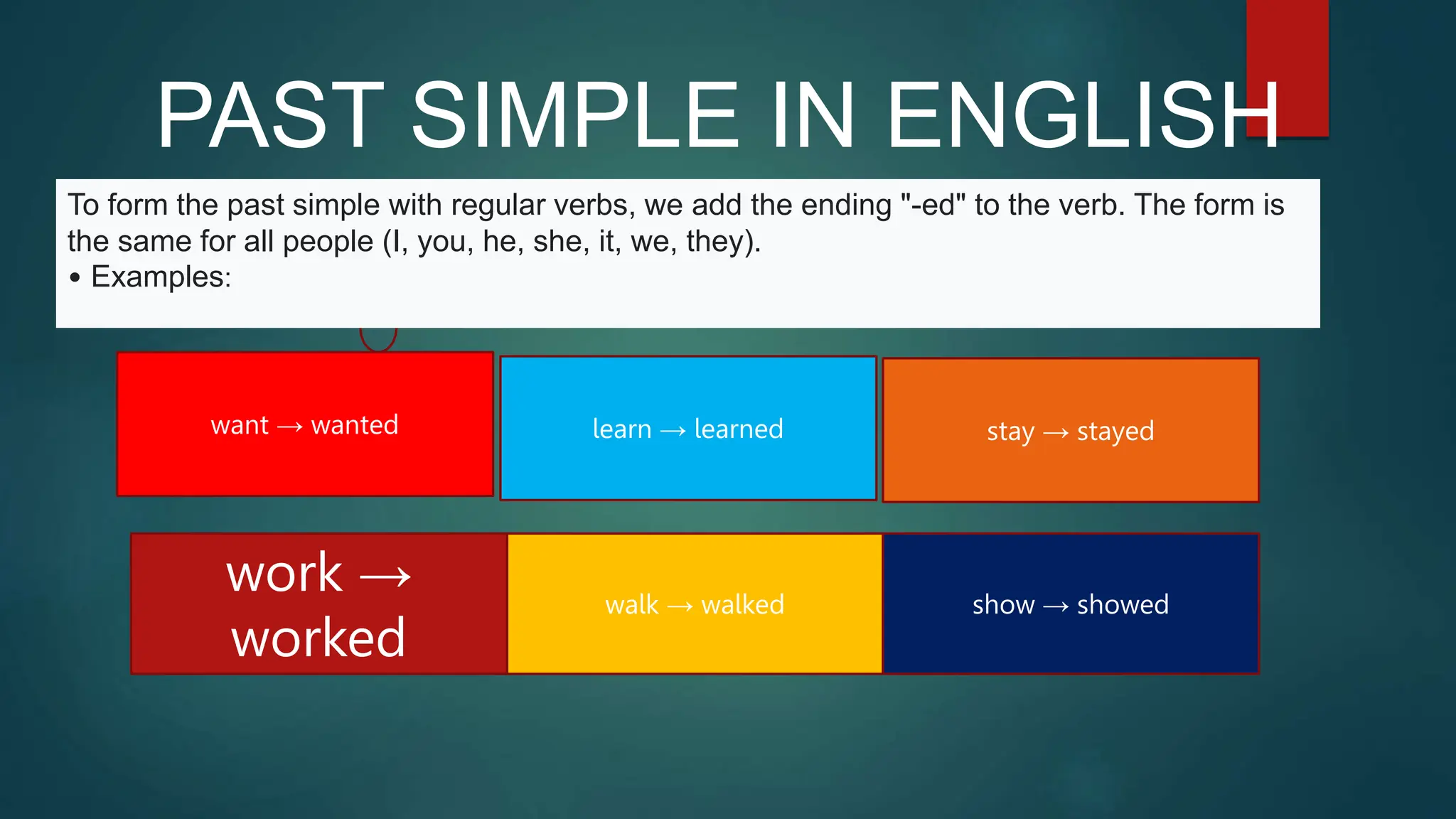
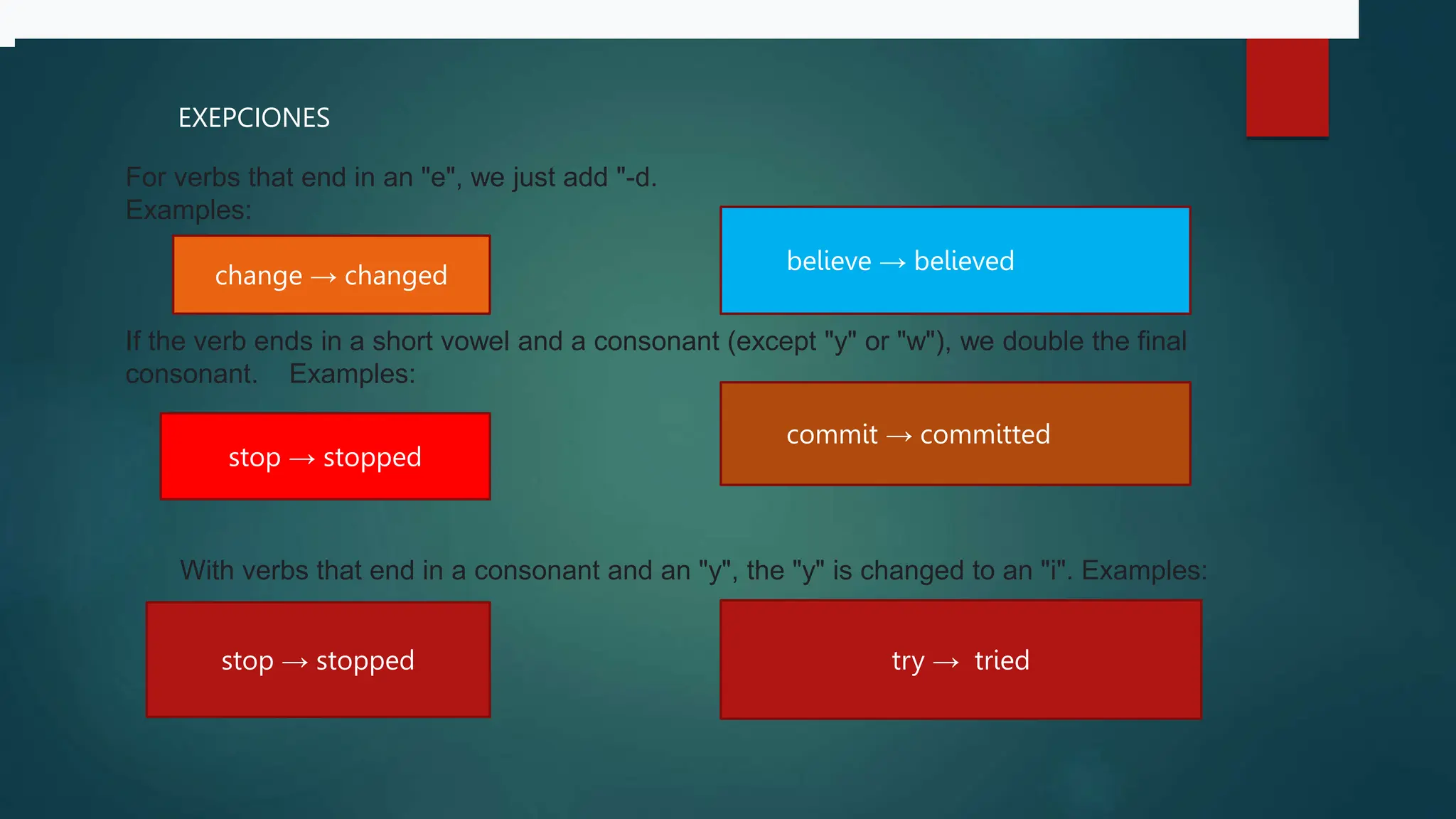
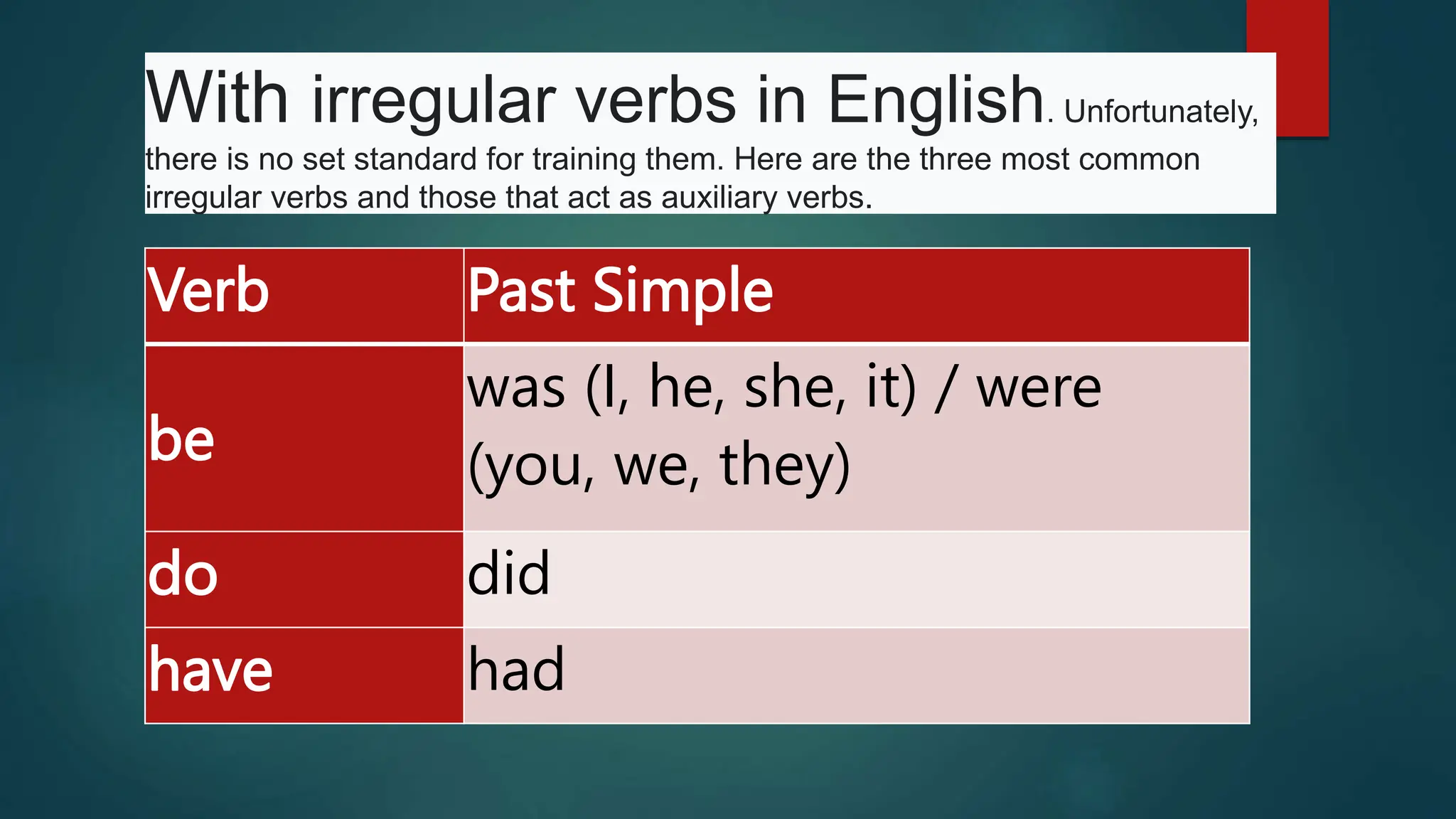
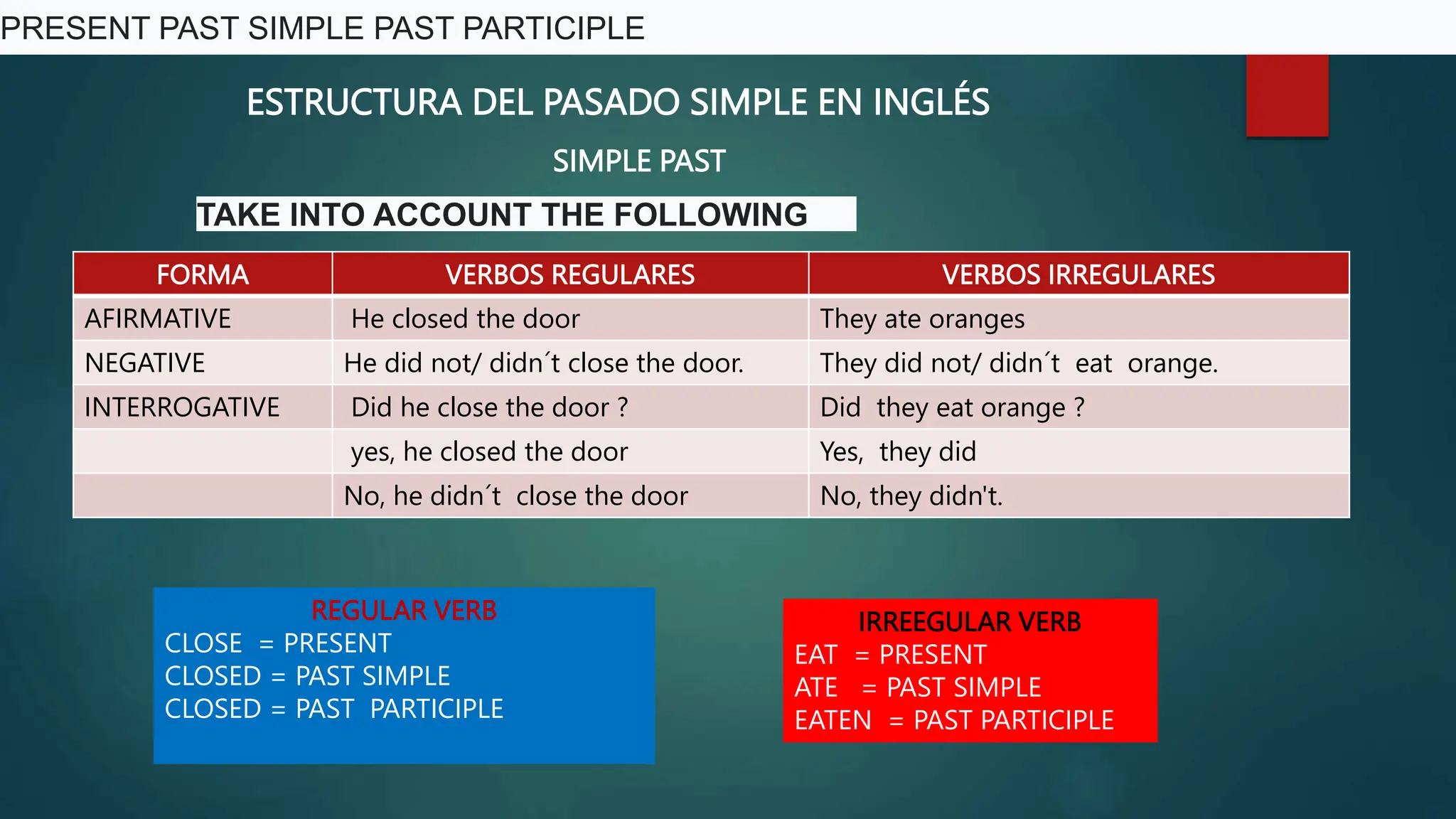
This document summarizes how to form the past simple tense in English. It discusses how regular verbs are formed by adding "-ed" to the base verb. Exceptions are mentioned for verbs ending in "e" which only add "d", and those ending in consonant-vowel-consonant which double the final consonant. Irregular verbs are also covered, noting there is no standard formation and providing examples of common irregular verbs like "be", "do", and "have". The structure of affirmative, negative and interrogative sentences is outlined for both regular and irregular verbs in the past simple tense.


![PoksksjsjsjskksbejsksjwbbsusjwbsusjsvsksksbAST SIMPLE[1].pptx](https://cdn.slidesharecdn.com/ss_thumbnails/pastsimple1-231222175009-48abfeb2-thumbnail.jpg?width=640&height=640&fit=bounds)


