The particulate nature of matter
States of matter
Substances can exist as solids, liquids or gases.
1. Solids
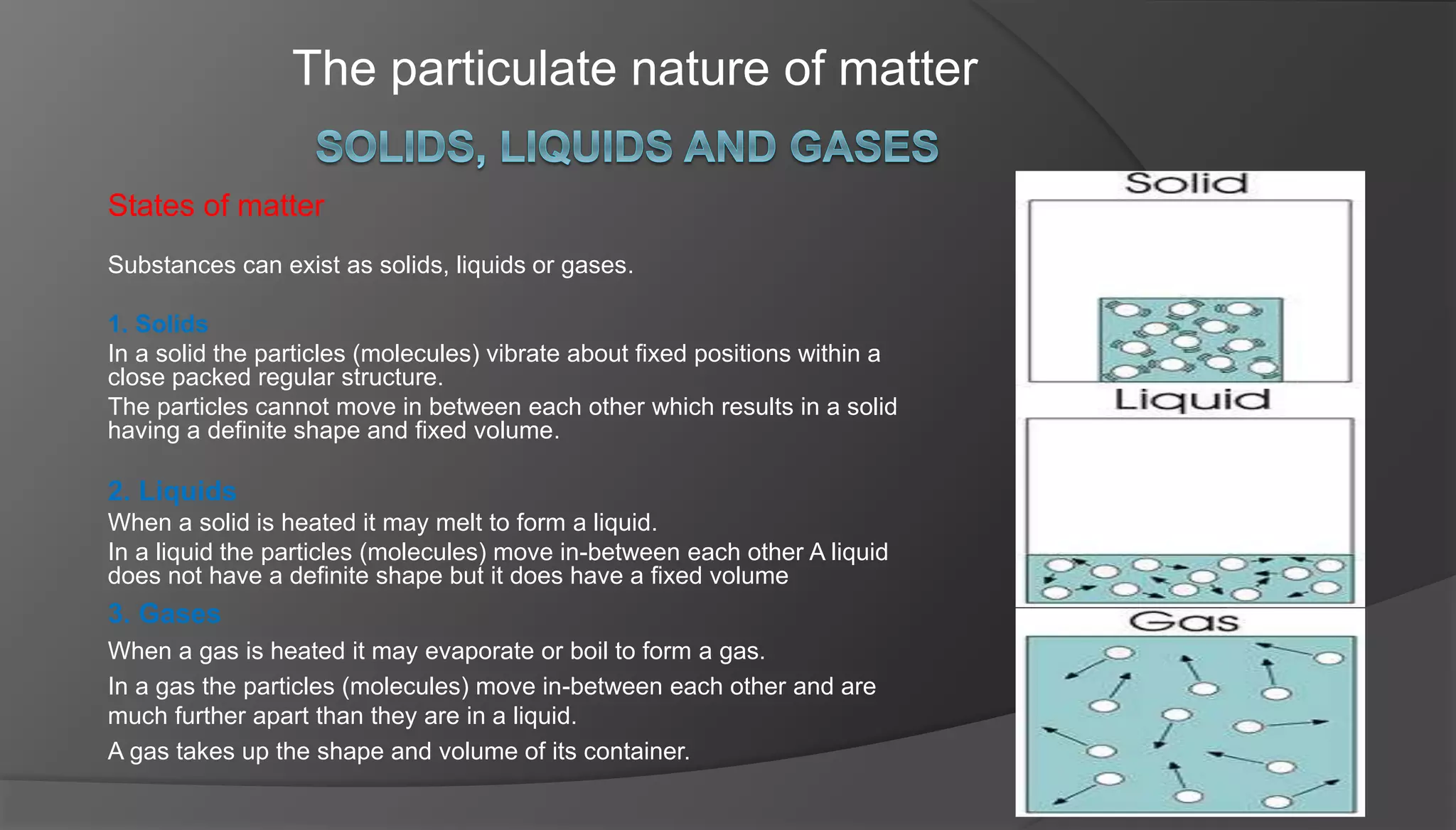
In a solid the particles (molecules) vibrate about fixed positions within a
close packed regular structure.
The particles cannot move in between each other which results in a solid
having a definite shape and fixed volume.
2. Liquids
When a solid is heated it may melt to form a liquid.
In a liquid the particles (molecules) move in-between each other A liquid
does not have a definite shape but it does have a fixed volume
3. Gases
When a gas is heated it may evaporate or boil to form a gas.
In a gas the particles (molecules) move in-between each other and are
much further apart than they are in a liquid.
A gas takes up the shape and volume of its container.
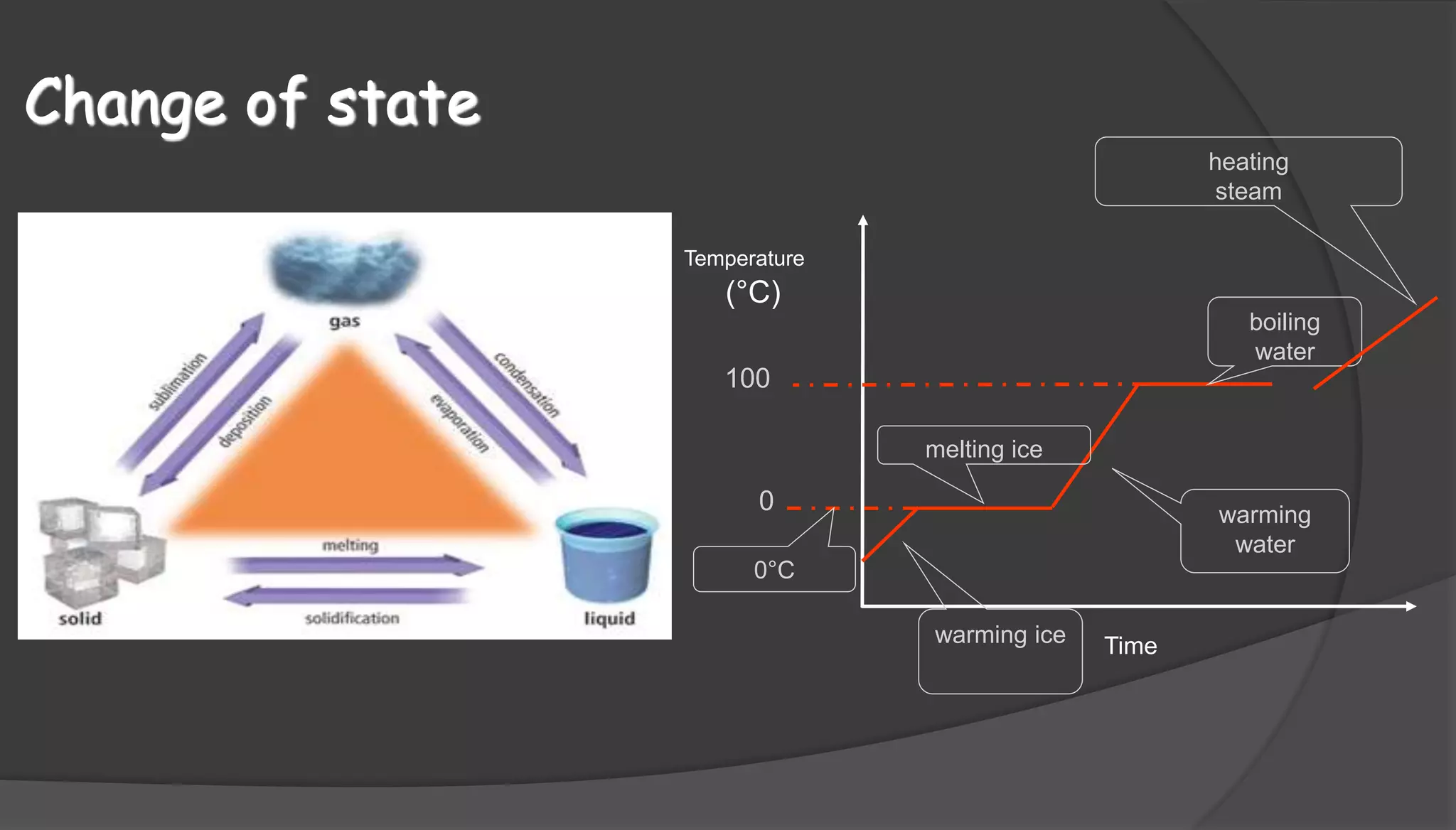
Change of state
Temperature
(°C)
Time
0
100
warming ice
melting ice
0°C
warming
water
boiling
water
heating
steam

PARTICULATE NATURE OF MATTER.pptx

  • 1.
    The particulate natureof matter States of matter Substances can exist as solids, liquids or gases. 1. Solids In a solid the particles (molecules) vibrate about fixed positions within a close packed regular structure. The particles cannot move in between each other which results in a solid having a definite shape and fixed volume. 2. Liquids When a solid is heated it may melt to form a liquid. In a liquid the particles (molecules) move in-between each other A liquid does not have a definite shape but it does have a fixed volume 3. Gases When a gas is heated it may evaporate or boil to form a gas. In a gas the particles (molecules) move in-between each other and are much further apart than they are in a liquid. A gas takes up the shape and volume of its container.
  • 2.
    Change of state Temperature (°C) Time 0 100 warmingice melting ice 0°C warming water boiling water heating steam