How to create a “Culture” of Execution and
Sustainable Employee Performance!
Part 2
Part 2: Why it’s “Critical to Develop
and Train your leaders and employees”
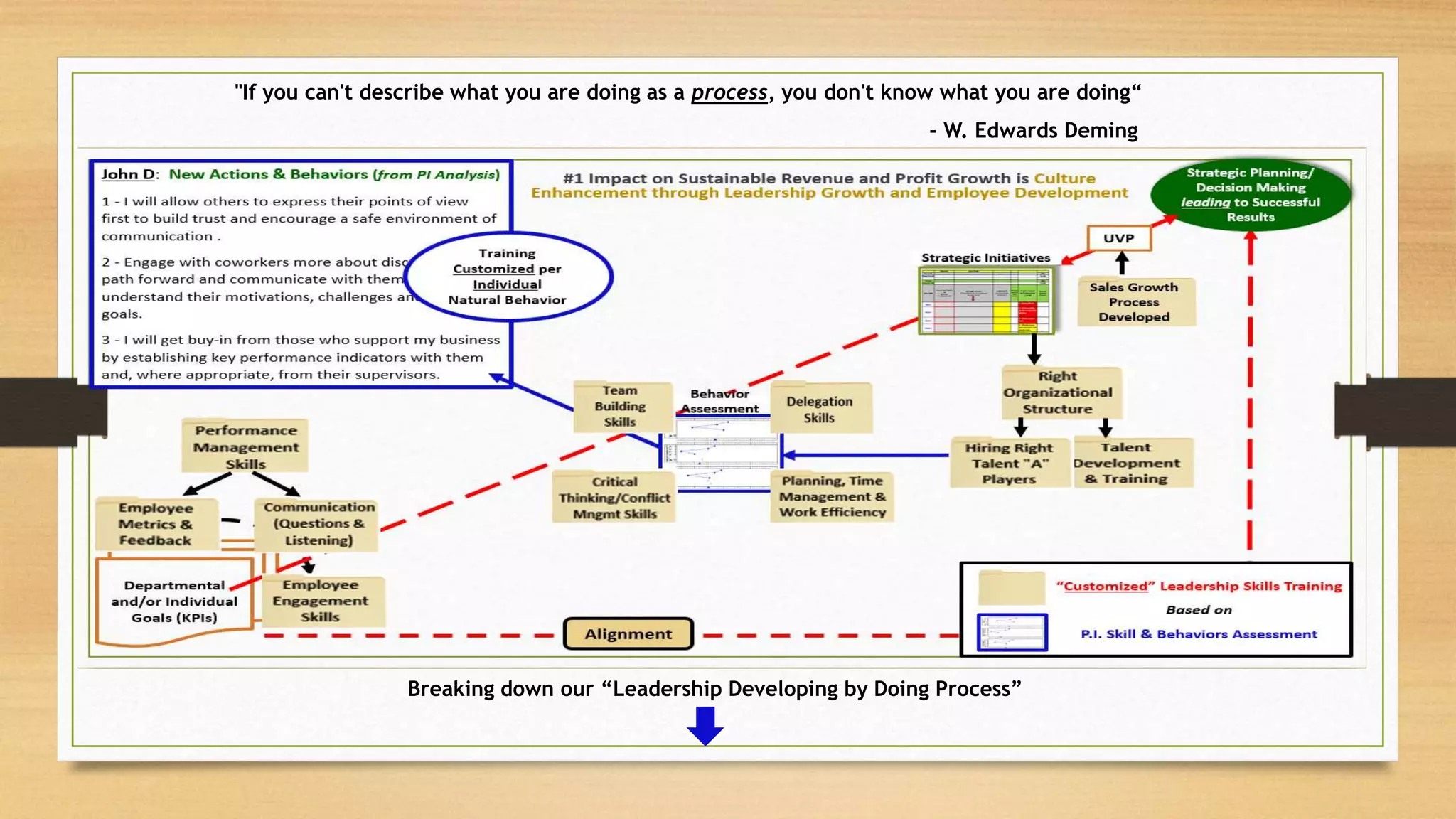
Breaking down our “Leadership Developing by Doing Process”
"If you can't describe what you are doing as a process, you don't know what you are doing“
- W. Edwards Deming
Leadership Development and Training
consistently enhances company in profits
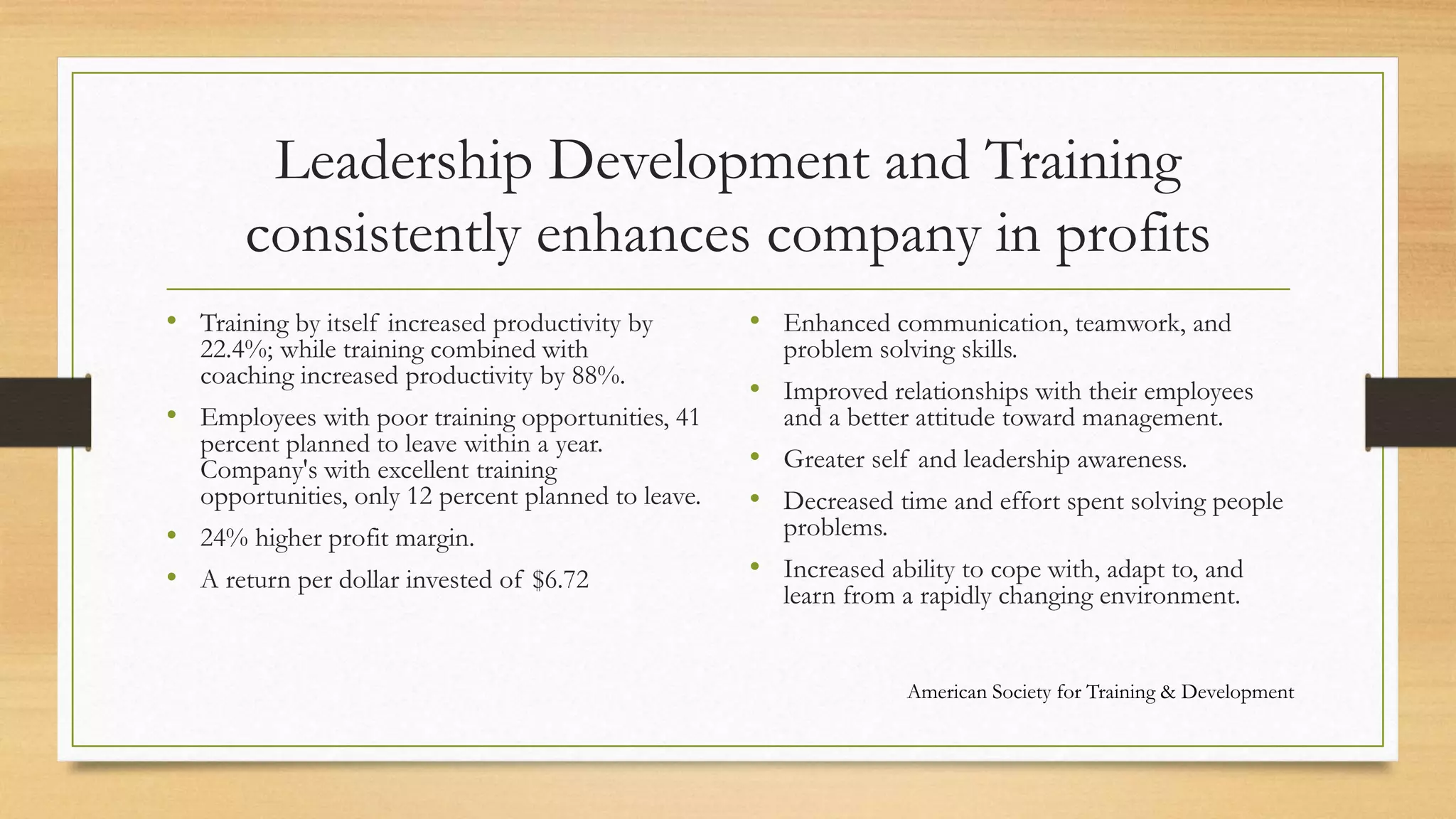
• Training by itself increased productivity by
22.4%; while training combined with
coaching increased productivity by 88%.
• Employees with poor training opportunities, 41
percent planned to leave within a year.
Company's with excellent training
opportunities, only 12 percent planned to leave.
• 24% higher profit margin.
• A return per dollar invested of $6.72
• Enhanced communication, teamwork, and
problem solving skills.
• Improved relationships with their employees
and a better attitude toward management.
• Greater self and leadership awareness.
• Decreased time and effort spent solving people
problems.
• Increased ability to cope with, adapt to, and
learn from a rapidly changing environment.
American Society for Training & Development
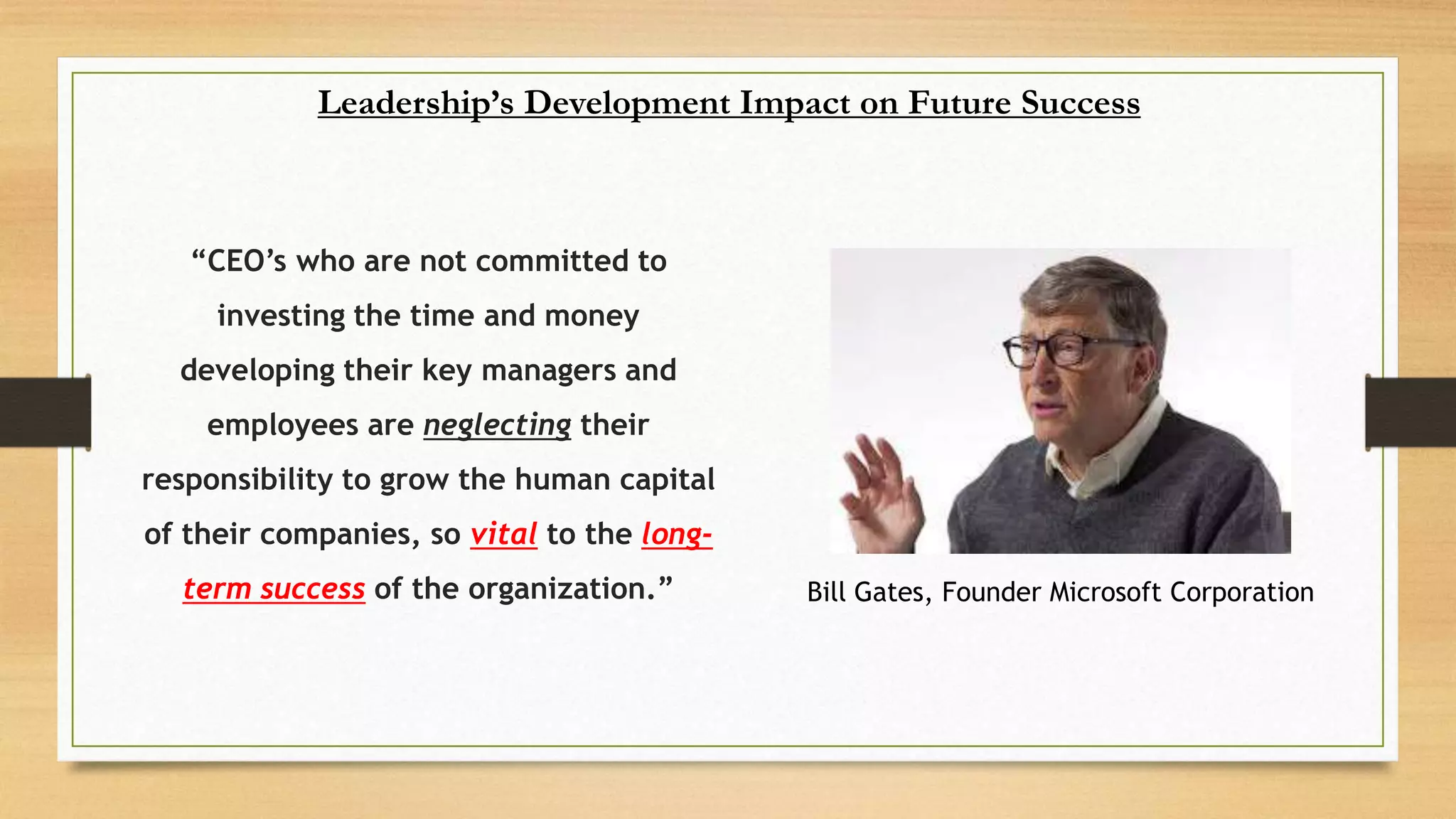
“CEO’s who are not committed to
investing the time and money
developing their key managers and
employees are neglecting their
responsibility to grow the human capital
of their companies, so vital to the long-
term success of the organization.”
Leadership’s Development Impact on Future Success
Bill Gates, Founder Microsoft Corporation
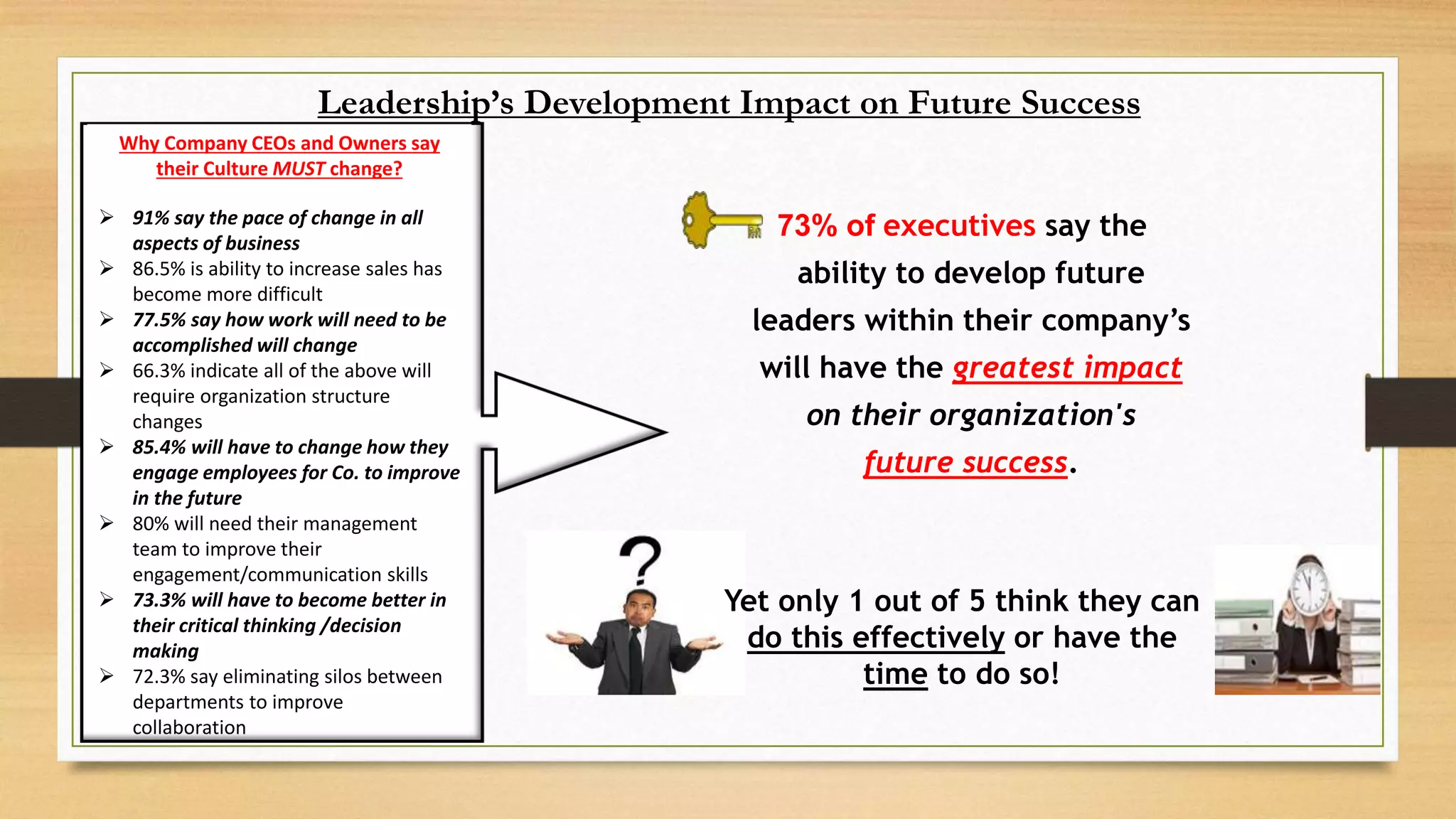
Why Company CEOs and Owners say
their Culture MUST change?
 91% say the pace of change in all
aspects of business
 86.5% is ability to increase sales has
become more difficult
 77.5% say how work will need to be
accomplished will change
 66.3% indicate all of the above will
require organization structure
changes
 85.4% will have to change how they
engage employees for Co. to improve
in the future
 80% will need their management
team to improve their
engagement/communication skills
 73.3% will have to become better in
their critical thinking /decision
making
 72.3% say eliminating silos between
departments to improve
collaboration
73% of executives say the
ability to develop future
leaders within their company’s
will have the greatest impact
on their organization's
future success.
Yet only 1 out of 5 think they can
do this effectively or have the
time to do so!
Leadership’s Development Impact on Future Success
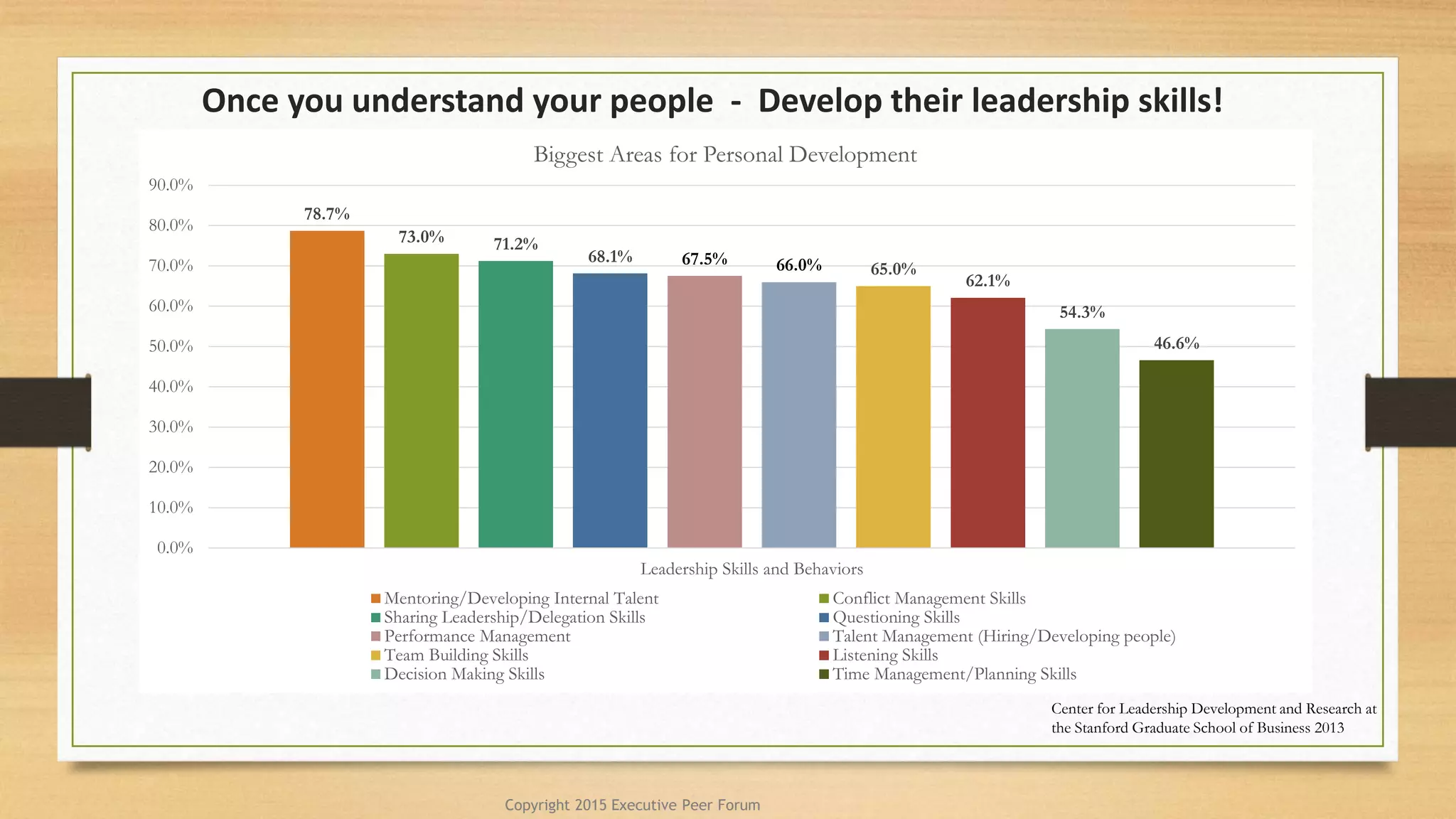
78.7%
73.0% 71.2%
68.1% 67.5% 66.0% 65.0%
62.1%
54.3%
46.6%
0.0%
10.0%
20.0%
30.0%
40.0%
50.0%
60.0%
70.0%
80.0%
90.0%
Leadership Skills and Behaviors
Biggest Areas for Personal Development
Mentoring/Developing Internal Talent Conflict Management Skills
Sharing Leadership/Delegation Skills Questioning Skills
Performance Management Talent Management (Hiring/Developing people)
Team Building Skills Listening Skills
Decision Making Skills Time Management/Planning Skills
Once you understand your people - Develop their leadership skills!
Copyright 2015 Executive Peer Forum
Center for Leadership Development and Research at
the Stanford Graduate School of Business 2013
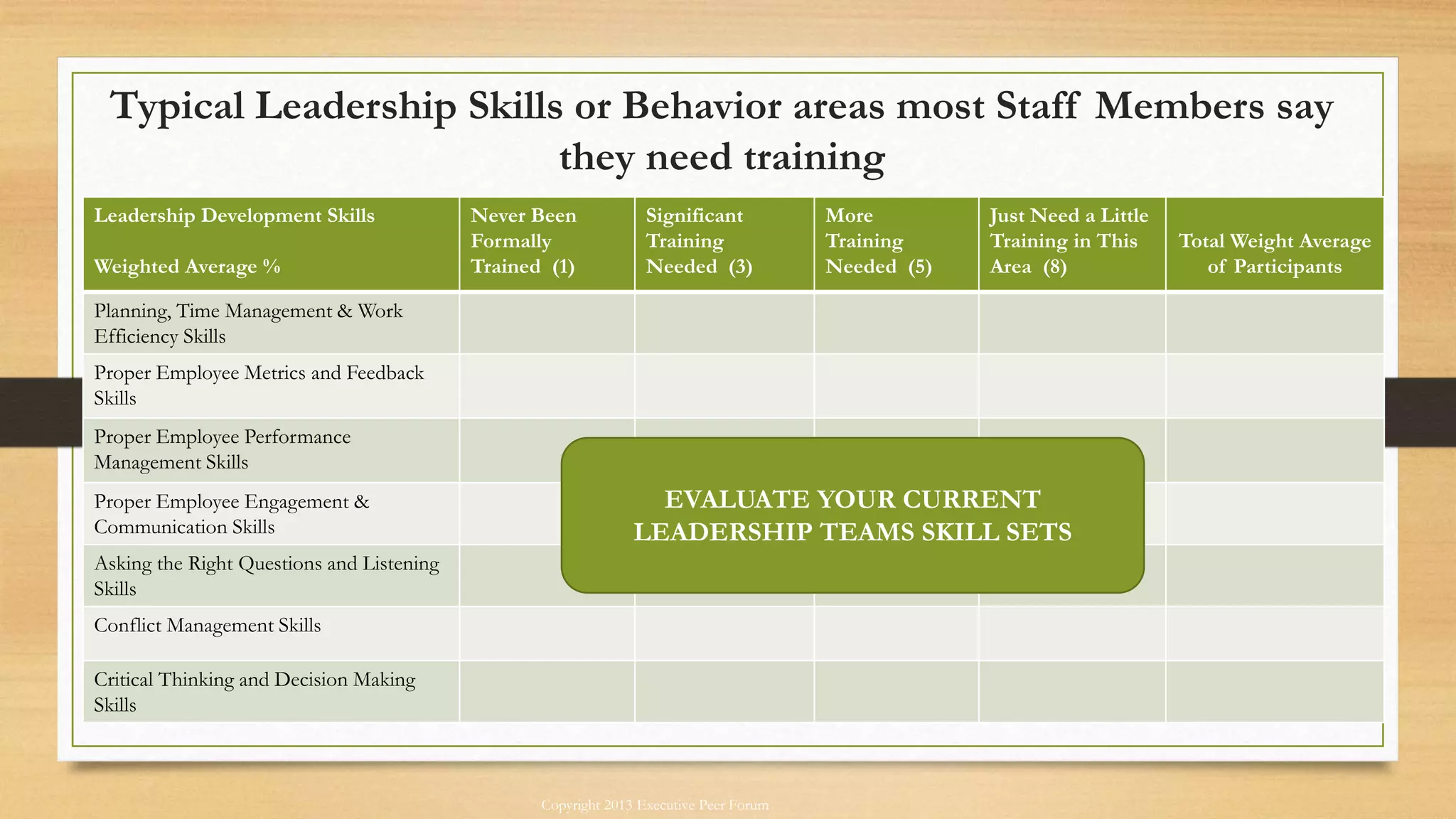
Typical Leadership Skills or Behavior areas most Staff Members say
they need training
Copyright 2013 Executive Peer Forum
Leadership Development Skills
Weighted Average %
Never Been
Formally
Trained (1)
Significant
Training
Needed (3)
More
Training
Needed (5)
Just Need a Little
Training in This
Area (8)
Total Weight Average
of Participants
Planning, Time Management & Work
Efficiency Skills
Proper Employee Metrics and Feedback
Skills
Proper Employee Performance
Management Skills
Proper Employee Engagement &
Communication Skills
Asking the Right Questions and Listening
Skills
Conflict Management Skills
Critical Thinking and Decision Making
Skills
EVALUATE YOUR CURRENT
LEADERSHIP TEAMS SKILL SETS
Copyright 2013 Executive Peer Forum
Leadership Development Skills
Weighted Average %
Never Been
Formally
Trained (1)
Significant
Training
Needed (3)
More
Training
Needed (5)
Just Need a Little
Training in This
Area (8)
Total Weight
Average of
Participants
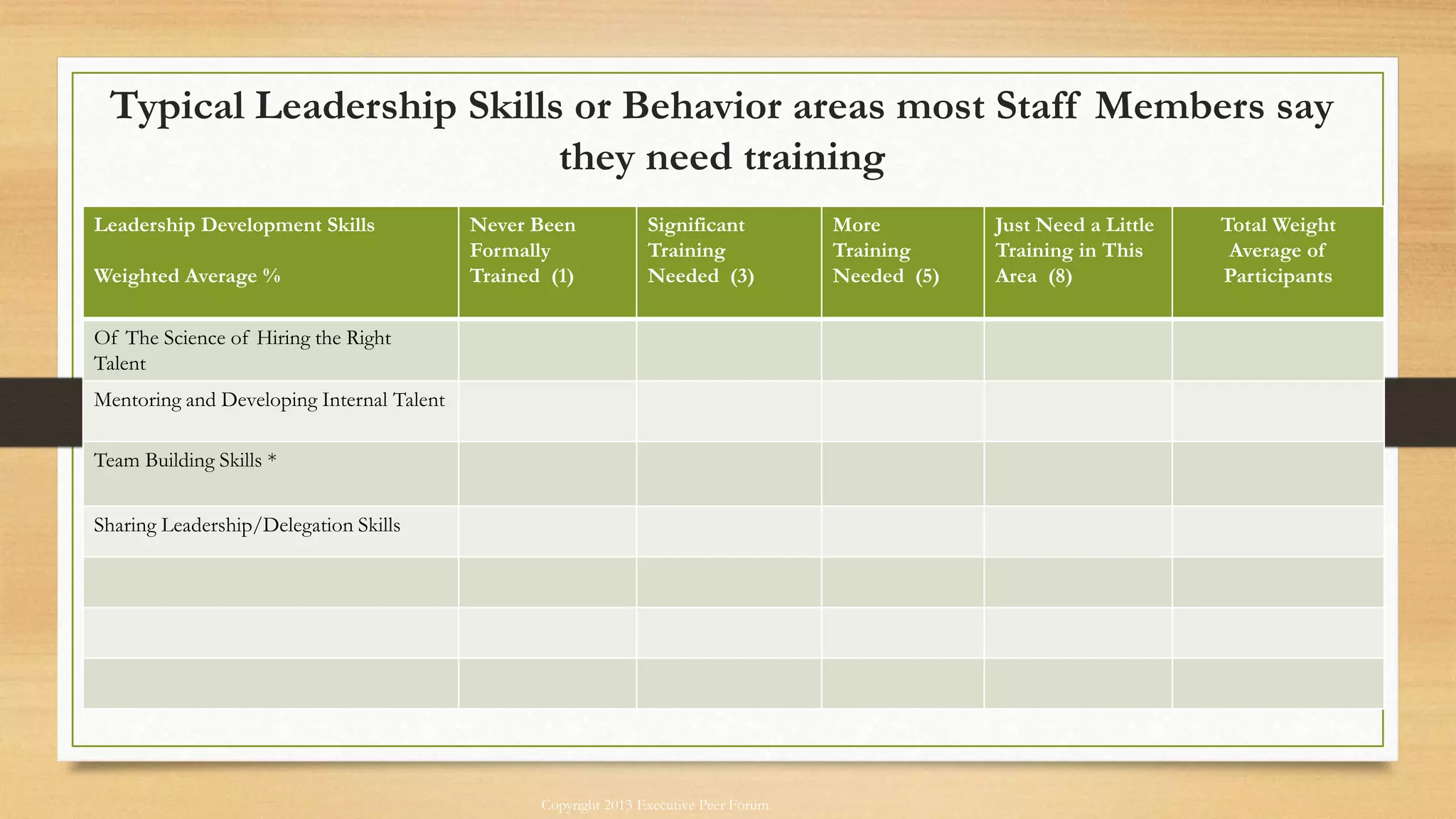
Of The Science of Hiring the Right
Talent
Mentoring and Developing Internal Talent
Team Building Skills *
Sharing Leadership/Delegation Skills
Typical Leadership Skills or Behavior areas most Staff Members say
they need training
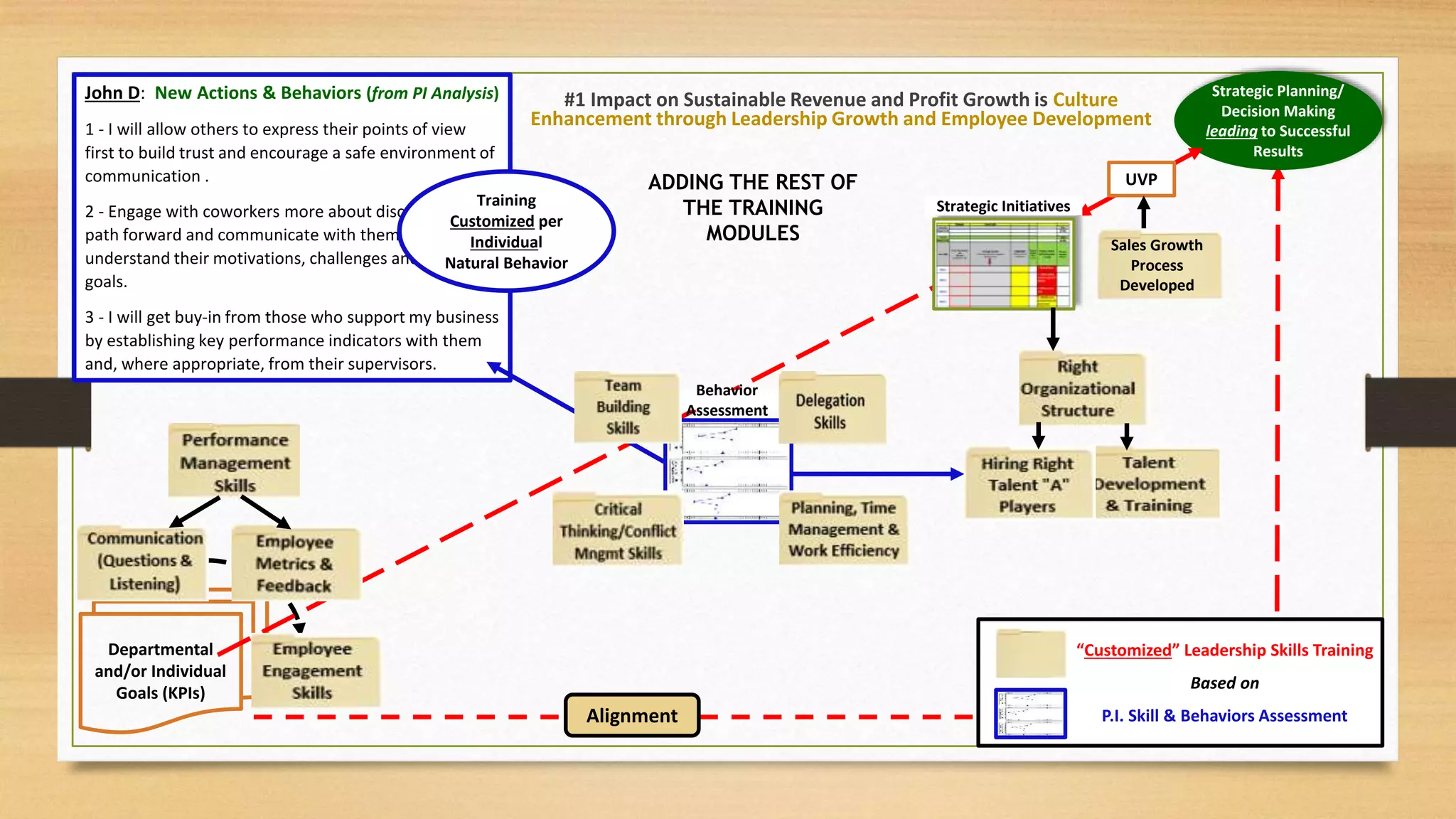
Departmental
and/or Individual
Goals (KPIs)
John D: New Actions & Behaviors (from PI Analysis)
1 - I will allow others to express their points of view
first to build trust and encourage a safe environment of
communication .
2 - Engage with coworkers more about discussing our
path forward and communicate with them to
understand their motivations, challenges and personal
goals.
3 - I will get buy-in from those who support my business
by establishing key performance indicators with them
and, where appropriate, from their supervisors.
Alignment
Strategic Planning/
Decision Making
leading to Successful
Results
Strategic Initiatives
UVP
Sales Growth
Process
Developed
#1 Impact on Sustainable Revenue and Profit Growth is Culture
Enhancement through Leadership Growth and Employee Development
Behavior
Assessment
Training
Customized per
Individual
Natural Behavior
“Customized” Leadership Skills Training
Based on
P.I. Skill & Behaviors Assessment
ADDING THE REST OF
THE TRAINING
MODULES
How to create a “Culture” of Execution and
Sustainable Employee Performance!
Call 717-586-8191 or email
mike@exbleadership.com to
learn how to get a free CEO
or CEO and Leadership
Team assessment!

Part 2 Creating a "Culture" of Execution and Sustainability of Employee Performance!

  • 1.
    How to createa “Culture” of Execution and Sustainable Employee Performance! Part 2
  • 2.
    Part 2: Whyit’s “Critical to Develop and Train your leaders and employees”
  • 3.
    Breaking down our“Leadership Developing by Doing Process” "If you can't describe what you are doing as a process, you don't know what you are doing“ - W. Edwards Deming
  • 4.
    Leadership Development andTraining consistently enhances company in profits • Training by itself increased productivity by 22.4%; while training combined with coaching increased productivity by 88%. • Employees with poor training opportunities, 41 percent planned to leave within a year. Company's with excellent training opportunities, only 12 percent planned to leave. • 24% higher profit margin. • A return per dollar invested of $6.72 • Enhanced communication, teamwork, and problem solving skills. • Improved relationships with their employees and a better attitude toward management. • Greater self and leadership awareness. • Decreased time and effort spent solving people problems. • Increased ability to cope with, adapt to, and learn from a rapidly changing environment. American Society for Training & Development
  • 5.
    “CEO’s who arenot committed to investing the time and money developing their key managers and employees are neglecting their responsibility to grow the human capital of their companies, so vital to the long- term success of the organization.” Leadership’s Development Impact on Future Success Bill Gates, Founder Microsoft Corporation
  • 6.
    Why Company CEOsand Owners say their Culture MUST change?  91% say the pace of change in all aspects of business  86.5% is ability to increase sales has become more difficult  77.5% say how work will need to be accomplished will change  66.3% indicate all of the above will require organization structure changes  85.4% will have to change how they engage employees for Co. to improve in the future  80% will need their management team to improve their engagement/communication skills  73.3% will have to become better in their critical thinking /decision making  72.3% say eliminating silos between departments to improve collaboration 73% of executives say the ability to develop future leaders within their company’s will have the greatest impact on their organization's future success. Yet only 1 out of 5 think they can do this effectively or have the time to do so! Leadership’s Development Impact on Future Success
  • 7.
    78.7% 73.0% 71.2% 68.1% 67.5%66.0% 65.0% 62.1% 54.3% 46.6% 0.0% 10.0% 20.0% 30.0% 40.0% 50.0% 60.0% 70.0% 80.0% 90.0% Leadership Skills and Behaviors Biggest Areas for Personal Development Mentoring/Developing Internal Talent Conflict Management Skills Sharing Leadership/Delegation Skills Questioning Skills Performance Management Talent Management (Hiring/Developing people) Team Building Skills Listening Skills Decision Making Skills Time Management/Planning Skills Once you understand your people - Develop their leadership skills! Copyright 2015 Executive Peer Forum Center for Leadership Development and Research at the Stanford Graduate School of Business 2013
  • 8.
    Typical Leadership Skillsor Behavior areas most Staff Members say they need training Copyright 2013 Executive Peer Forum Leadership Development Skills Weighted Average % Never Been Formally Trained (1) Significant Training Needed (3) More Training Needed (5) Just Need a Little Training in This Area (8) Total Weight Average of Participants Planning, Time Management & Work Efficiency Skills Proper Employee Metrics and Feedback Skills Proper Employee Performance Management Skills Proper Employee Engagement & Communication Skills Asking the Right Questions and Listening Skills Conflict Management Skills Critical Thinking and Decision Making Skills EVALUATE YOUR CURRENT LEADERSHIP TEAMS SKILL SETS
  • 9.
    Copyright 2013 ExecutivePeer Forum Leadership Development Skills Weighted Average % Never Been Formally Trained (1) Significant Training Needed (3) More Training Needed (5) Just Need a Little Training in This Area (8) Total Weight Average of Participants Of The Science of Hiring the Right Talent Mentoring and Developing Internal Talent Team Building Skills * Sharing Leadership/Delegation Skills Typical Leadership Skills or Behavior areas most Staff Members say they need training
  • 10.
    Departmental and/or Individual Goals (KPIs) JohnD: New Actions & Behaviors (from PI Analysis) 1 - I will allow others to express their points of view first to build trust and encourage a safe environment of communication . 2 - Engage with coworkers more about discussing our path forward and communicate with them to understand their motivations, challenges and personal goals. 3 - I will get buy-in from those who support my business by establishing key performance indicators with them and, where appropriate, from their supervisors. Alignment Strategic Planning/ Decision Making leading to Successful Results Strategic Initiatives UVP Sales Growth Process Developed #1 Impact on Sustainable Revenue and Profit Growth is Culture Enhancement through Leadership Growth and Employee Development Behavior Assessment Training Customized per Individual Natural Behavior “Customized” Leadership Skills Training Based on P.I. Skill & Behaviors Assessment ADDING THE REST OF THE TRAINING MODULES
  • 11.
    How to createa “Culture” of Execution and Sustainable Employee Performance! Call 717-586-8191 or email mike@exbleadership.com to learn how to get a free CEO or CEO and Leadership Team assessment!