ENGLISHFOR ACADEMIC PURPOSES
Prepared By- Urvi Dave
Course- M.A.
Semester- 3
Enrolment Number- 14101009
Email Id- dave.urvi71@gmail.com
Batch Year- 2014-16
Paper No- 12 A
Paper Name- English Language Teaching-1
Submitted To- Smt. S B Gardi
Department Of English
Maharaja Krishnakumarsinhji Bhavnagar University
English for Academic Purposes
Branch of applied linguistic
and research into effective
teaching.
Method of analysis of the
academic language need to
student.
Analysis of the linguistic and
discourse structure of academic
texts.
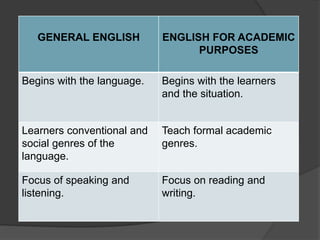
GENERAL ENGLISH ENGLISH FOR ACADEMIC
PURPOSES
Begins with the language. Begins with the learners
and the situation.
Learners conventional and
social genres of the
language.
Teach formal academic
genres.
Focus of speaking and
listening.
Focus on reading and
writing.
Language Level
Register- lexical and grammatical/ structural
features.
Discourse- the effect of communicative context; the
relationship between the text/ discourse and its
speakers, writers/ hearers/ readers.
Genre- how language is used in a particular setting,
such as research papers, dissertations, formal
lecturers.
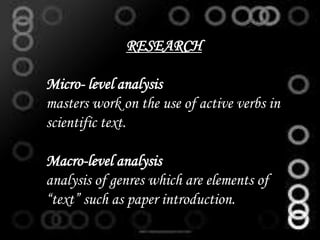
RESEARCH
Micro- level analysis
masters work on the use of active verbs in
scientific text.
Macro-level analysis
analysis of genres which are elements of
“text” such as paper introduction.
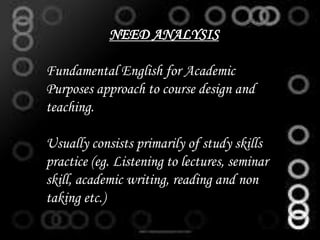
NEED ANALYSIS
Fundamental English for Academic
Purposes approach to course design and
teaching.
Usually consists primarily of study skills
practice (eg. Listening to lectures, seminar
skill, academic writing, reading and non
taking etc.)
BACKGROUND
Term formed in 1972
British Organisation SELMOUS (Special
English Language Materials for Overseas
University Students).
Strevens subscribed a move away from an
emphasis on the literature and culture of English
speakers and towards teaching for practical
command of the language.
According to Strevens, courses can be specific in
four ways in discussing EAP and ESP-
1) By restricting the language taught to only
those skills which are required for the learner’s
immediate purposes.
2) By selecting from the whole language only
those items of vocabulary, grammar patterns,
linguistic functions etc which are required for
the learner’s immediate purposes.
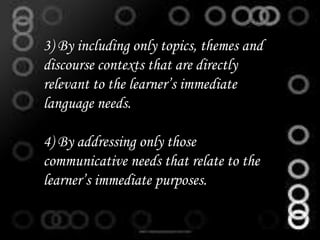
3) By including only topics, themes and
discourse contexts that are directly
relevant to the learner’s immediate
language needs.
4) By addressing only those
communicative needs that relate to the
learner’s immediate purposes.
PRACTICE
English for Academic Purposes
courses focus on the language skills
separately; the ‘rules’ and strategies
of academic skills are not like those
of the general language skills.
CONCLUSION
English for Academic Purposes is
complex and potentially problematic
than most English language teachers
recognise at the beginning of their
EAP teaching.
P 12-151028093807-lva1-app6891

P 12-151028093807-lva1-app6891

  • 1.
    ENGLISHFOR ACADEMIC PURPOSES PreparedBy- Urvi Dave Course- M.A. Semester- 3 Enrolment Number- 14101009 Email Id- dave.urvi71@gmail.com Batch Year- 2014-16 Paper No- 12 A Paper Name- English Language Teaching-1 Submitted To- Smt. S B Gardi Department Of English Maharaja Krishnakumarsinhji Bhavnagar University
  • 2.
    English for AcademicPurposes Branch of applied linguistic and research into effective teaching. Method of analysis of the academic language need to student. Analysis of the linguistic and discourse structure of academic texts.
  • 3.
    GENERAL ENGLISH ENGLISHFOR ACADEMIC PURPOSES Begins with the language. Begins with the learners and the situation. Learners conventional and social genres of the language. Teach formal academic genres. Focus of speaking and listening. Focus on reading and writing.
  • 4.
    Language Level Register- lexicaland grammatical/ structural features. Discourse- the effect of communicative context; the relationship between the text/ discourse and its speakers, writers/ hearers/ readers. Genre- how language is used in a particular setting, such as research papers, dissertations, formal lecturers.
  • 5.
    RESEARCH Micro- level analysis masterswork on the use of active verbs in scientific text. Macro-level analysis analysis of genres which are elements of “text” such as paper introduction.
  • 6.
    NEED ANALYSIS Fundamental Englishfor Academic Purposes approach to course design and teaching. Usually consists primarily of study skills practice (eg. Listening to lectures, seminar skill, academic writing, reading and non taking etc.)
  • 7.
    BACKGROUND Term formed in1972 British Organisation SELMOUS (Special English Language Materials for Overseas University Students). Strevens subscribed a move away from an emphasis on the literature and culture of English speakers and towards teaching for practical command of the language.
  • 8.
    According to Strevens,courses can be specific in four ways in discussing EAP and ESP- 1) By restricting the language taught to only those skills which are required for the learner’s immediate purposes. 2) By selecting from the whole language only those items of vocabulary, grammar patterns, linguistic functions etc which are required for the learner’s immediate purposes.
  • 9.
    3) By includingonly topics, themes and discourse contexts that are directly relevant to the learner’s immediate language needs. 4) By addressing only those communicative needs that relate to the learner’s immediate purposes.
  • 10.
    PRACTICE English for AcademicPurposes courses focus on the language skills separately; the ‘rules’ and strategies of academic skills are not like those of the general language skills.
  • 11.
    CONCLUSION English for AcademicPurposes is complex and potentially problematic than most English language teachers recognise at the beginning of their EAP teaching.