Overview of the Collaboration Maturity Index (CMI24)
Contents
Introduction to ‘The Collaboration Maturity Index (CMI24)’ .................................................................2
What is Collaboration?........................................................................................................................2
Why consider Collaboration?..............................................................................................................2
What are some of the challenges with Collaboration? ......................................................................3
What are the important Collaboration Capabilities that must be acquired and/or built?.................4
Collaboration Maturity Dynamic Capabilities & their Construct Capabilities ........................................4
Interpersonal.......................................................................................................................................4
Trust ................................................................................................................................................4
Sharing of Aims ...............................................................................................................................4
Collective Responsibility .................................................................................................................4
Confidence in Competence of Others.............................................................................................4
Conflict Resolution..........................................................................................................................5
Culture.............................................................................................................................................5
Working...............................................................................................................................................5
Autonomy .......................................................................................................................................5
Feedback.........................................................................................................................................5
Goals ...............................................................................................................................................5
Technology......................................................................................................................................5
Integration ..........................................................................................................................................5
Boundaries ......................................................................................................................................6
Business Processes..........................................................................................................................6
Communications .............................................................................................................................6
Communities...................................................................................................................................6
Management Involvement..............................................................................................................6
Self-Organization.............................................................................................................................6
Customer.............................................................................................................................................6
Connectivity ....................................................................................................................................6
Customer Intimacy..........................................................................................................................6
Customer Satisfaction.....................................................................................................................6
Results.............................................................................................................................................7
Partners...............................................................................................................................................7
Partner Relationships......................................................................................................................7
Product Fit.......................................................................................................................................7
Protocols .........................................................................................................................................7
Overview of the Collaboration Maturity Index (CMI24)
Strategic Fit .....................................................................................................................................7
Workspace ......................................................................................................................................7
How strong is Collaboration Potential in our Organization/Team? (Assessment).................................8
How ready are we for Building & Maintaining Collaborative Partnerships?......................................8
Collaboration Maturity Assessment. ..................................................................................................8
Sensor Assessment; ........................................................................................................................8
Triage Assessment; .........................................................................................................................8
Diagnostic Assessment;...................................................................................................................8
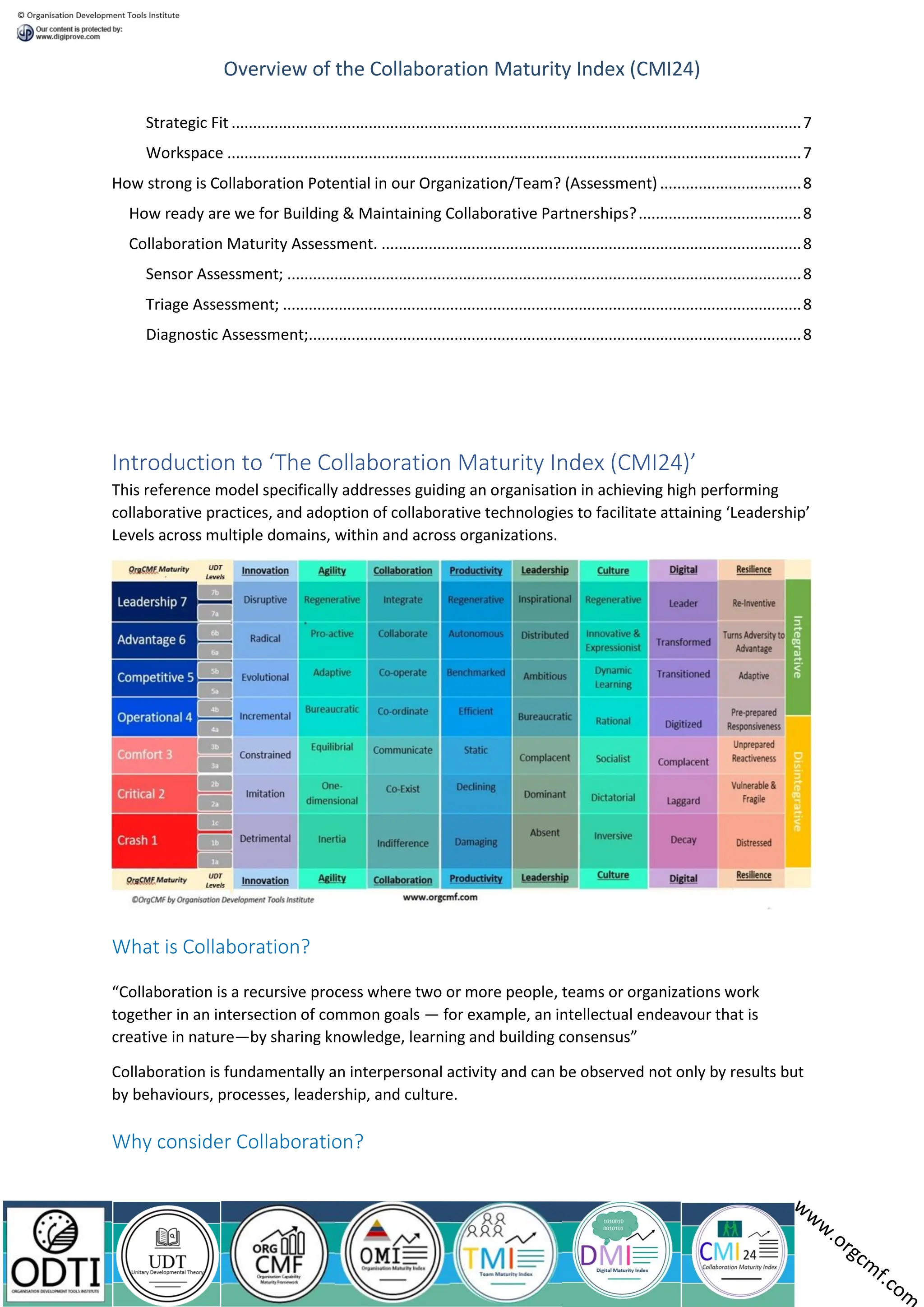
Introduction to ‘The Collaboration Maturity Index (CMI24)’
This reference model specifically addresses guiding an organisation in achieving high performing
collaborative practices, and adoption of collaborative technologies to facilitate attaining ‘Leadership’
Levels across multiple domains, within and across organizations.
What is Collaboration?
“Collaboration is a recursive process where two or more people, teams or organizations work
together in an intersection of common goals — for example, an intellectual endeavour that is
creative in nature—by sharing knowledge, learning and building consensus”
Collaboration is fundamentally an interpersonal activity and can be observed not only by results but
by behaviours, processes, leadership, and culture.
Why consider Collaboration?
Overview of the Collaboration Maturity Index (CMI24)
There are many known and accepted benefits of Collaboration. However fundamentally
organisations adopt and promote a Collaboration culture to improve their performance and
stakeholder satisfaction. They do this by enhancing the communications, teamwork, and stakeholder
engagement in the strategic and day to day business of the organisation at an organic level.
Management provides leadership, example, support and tools to staff that empower staff to take
ownership of their outputs and those of the teams through Collaboration, rather than through
command and control, rules, policies, and more formal structured practices.
“Organisation is Collaboration - Business is predominantly carried out by organisations, and an
organisation is essentially an arrangement of people working together for a common goal. In other
words, Collaboration is the essence of any organisation, and organisations exist to better organise
Collaboration” Ref. 2009 “Collaboration in the Cloud” by Sogeti & Microsoft.
Effective Collaboration can be enabled by software tools and: -
• Speeds up Responsiveness (Finding and Sharing Knowledge & Information)
• Facilitating Innovation (Ideation, Building, Sharing and Testing)
• Enhancing Learning (Access to Knowledge, Skills, Coaches & Mentors)
• Growing the competence mass of the organization and/or eco-system (Organic
Development)
• Increasing the capacity and speed of organizational intelligence
• Improving Involvement and Sharing Responsibility
• Can release talent (Removing barriers to participation and engagement)
What are some of the challenges with Collaboration?
Some of the top challenges experienced by organisations are as follows:
• Organisations fail to recognise that Collaboration is about human behaviours in the system.
New software applications alone will not change inherent behaviours.
• Assumptions are made that Individuals/Teams/Organizations are sufficiently aligned that
they will successfully partner and collaborate.
• Organisations fail to prepare an adequate business case and then track the business benefits
for their Collaboration program.
• Managers fail to recognise and facilitate the fundamental changes in how an organisation
works because of releasing talent through Collaboration.
• Business Processes & Protocols (e.g. Frameworks, Standards, Certifications) are not aligned
and/or at a sufficient maturity level that collaborative practices can emerge or thrive.
• Choosing the right technology and deployment at the right time requires business,
organisation development and technology skills to be embedded in the selection process.
• Organisations Manage Collaboration Technology adoption as IT projects rather than
Organization Development projects.
Overview of the Collaboration Maturity Index (CMI24)
• Interventions not aligned with Organisation Maturity.
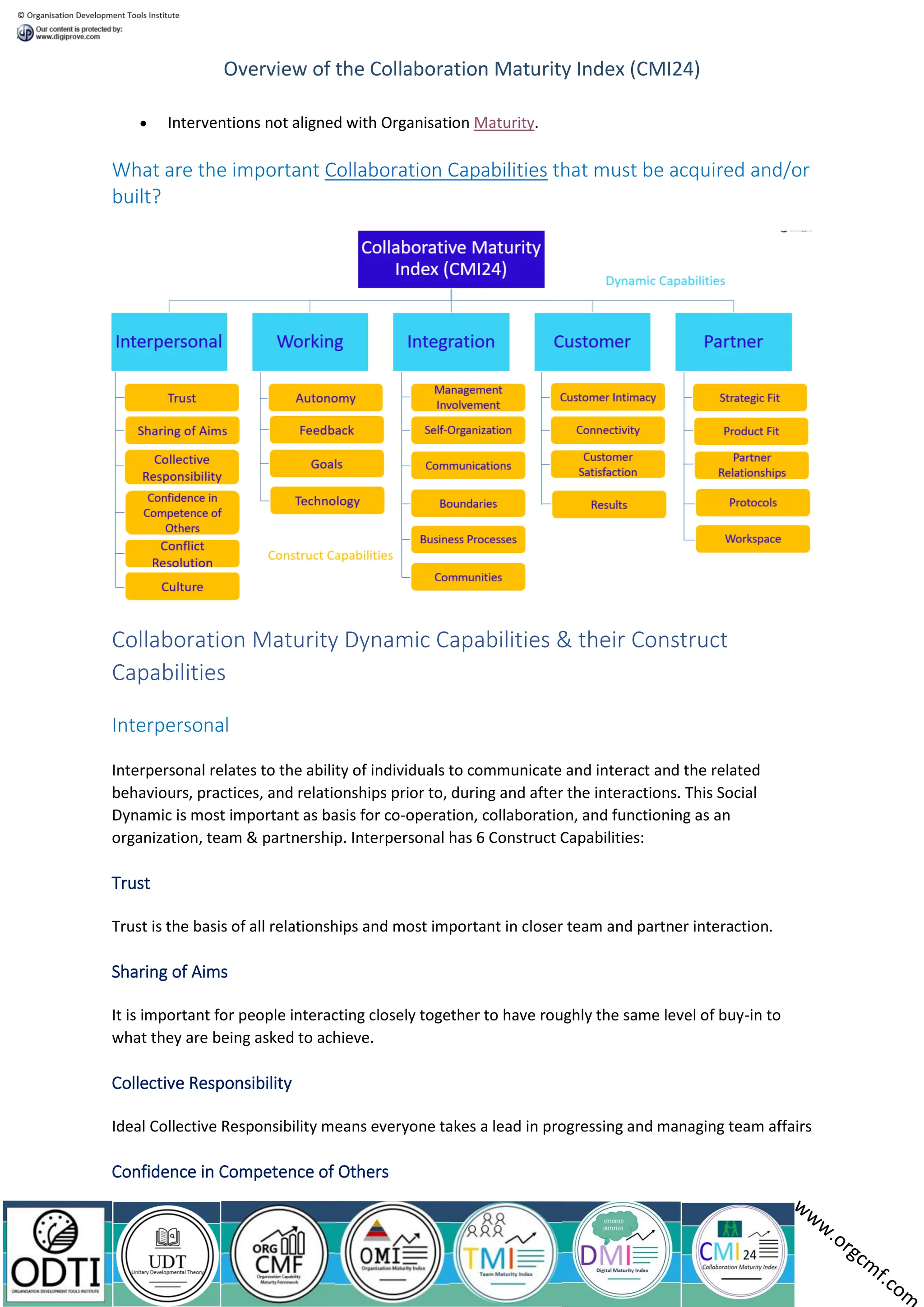
What are the important Collaboration Capabilities that must be acquired and/or
built?
Collaboration Maturity Dynamic Capabilities & their Construct
Capabilities
Interpersonal
Interpersonal relates to the ability of individuals to communicate and interact and the related
behaviours, practices, and relationships prior to, during and after the interactions. This Social
Dynamic is most important as basis for co-operation, collaboration, and functioning as an
organization, team & partnership. Interpersonal has 6 Construct Capabilities:
Trust
Trust is the basis of all relationships and most important in closer team and partner interaction.
Sharing of Aims
It is important for people interacting closely together to have roughly the same level of buy-in to
what they are being asked to achieve.
Collective Responsibility
Ideal Collective Responsibility means everyone takes a lead in progressing and managing team affairs
Confidence in Competence of Others
Overview of the Collaboration Maturity Index (CMI24)
Everyone should have confidence in the abilities of others to perform to their best for the
Organization, Team, and/or Partnership
Conflict Resolution
Conflict Resolution is considered to be a core competence in the area of managing trouble around
competing interests that arises in relationships and projects. It is therefore a critical capability in
Partnerships
Culture
Culture is the collective equivalent of mindset and determines how the collective behave in
recognised patterns
Working
The activities that require mental or physical effort to deliver a result/output carried out by
individuals and teams within and across organizations. Work includes the activities or tasks carried
out by people or by machines and technology controlled by people. Work relates to what the people
actually do. Working has 4 Construct Capabilities:
Autonomy
Distributed Autonomy to people, teams and collaborative initiatives is an important characteristic
and level of flexibility that needs to be facilitated to as high a Level as possible among a workforce to
optimize engagement in a Collaborative Partnership
Feedback
Feedback refers to how people receive and react to appreciation and advice in relation to
themselves and their work
Goals
Goals are essential for an Organization & Teams to give direction and extend performance
Technology
Existing & Emerging Technologies can facilitate Collaboration within and across organizations that
leads to high performance outcomes. ERP, Collaboration & Social Platforms and point solutions
Integration
Integration reflects the alignment of, and ability to, combine and collaborate by different individuals,
team, and organizations. The depth of this combination will reflect the level of collaboration and
power of any combination (Partnership)where the whole is greater than the sum of the parts.
Interpersonal has 6 Construct Capabilities:
Overview of the Collaboration Maturity Index (CMI24)
Boundaries
Boundaries are recognised as division lines within systems that limit communication,
responsiveness, and growth
Business Processes
The details and sequence of each activity involved in the creation and delivery of the organisations
Product or Service (Inputs, Outputs, Controls)
Communications
The standard of communications within teams and with the broader organization and marketplace is
an important predictor of performance for Collaborative Partnerships
Communities
Communities are collaborative structures in which staff engage with sources of knowledge and
insight from both within and outside the organization, including academics, customer forums, etc.
Ideally, these connections guide strategy
Management Involvement
The degree of support from the levels of management for their teams is always important for the
success of any Organization or Partnership.
Self-Organization
Collaboration is more effective as the Partner organizations become more organized by the people
more directly involved in planning & executing the Partnership Aims.
Customer
The individuals and groups/organisations who influence, buy, use, or are impacted the organisations
product and services. Customer has 4 Construct Capabilities:
Connectivity
The level of connections for any individual or team is influenced by the organisation policy, Process
& Culture. Higher connectivity usually indicates higher Team and Organizational effectiveness.
Customer Intimacy
The greater the effective knowledge and awareness of customer situation (internal & external),
needs, problems, etc., the greater the strategic value of the relationship towards product/service
value going forward.
Customer Satisfaction
Overview of the Collaboration Maturity Index (CMI24)
Customer Satisfaction is ultimately the key measure of sustainable effectiveness of an organization
or a Team
Results
Ultimately the Customer determines how successful an organization is, and to some greater or lesser
extent its partners. So, results achieved through customers impact an organization's results and the
organization's standing in the sector and beyond
Partners
The 3rd party organizations who provide products, services and/or capabilities that complement our
business and strengthen our value and value proposition. Partners has 5 Construct Capabilities
Partner Relationships
Generating an organization that has immediate appeal to potential partners in terms of the kinds of
relationships that will develop between them is a critical success factor in the partnering
marketplace
Product Fit
The quality of partner that your organization is appealing to, will be determined greatly by the
capacity of your Product/Service to fit with theirs in an offering, or contributing to an offering to
existing or potential customers.
Protocols
Standards, Policy, Procedures, Frameworks, and related certifications are important assets that
facilitate effective collaborative partnership. These can be proprietary, Open, Regulatory, Industry,
Technology etc.
Strategic Fit
Strategic Fit is a multi-dimensional requirement that potential Partners will examine. The more
advanced your organization operates in terms of features, functions, quality, reliability, competence,
resourcing, customer satisfaction, profitability, innovation, etc., the greater will be your appeal to
more advanced Partners and ultimately the more important Customers for such Partnerships
Workspace
Workspace Capability (Including Digital Workspace) refers to all elements, resources, infrastructure,
and processes of work that might be shared in a Collaborative Partnership
Overview of the Collaboration Maturity Index (CMI24)
How strong is Collaboration Potential in our Organization/Team?
(Assessment)
How ready are we for Building & Maintaining Collaborative Partnerships?
The answer to both questions can only be discovered through a scientifically based Assessment and
Analysis of findings. The Organization Capability Maturity Framework OrgCMF™ and all its Reference
Models including ‘The Collaborative Maturity Index (CMI24)’ are underpinned by Unitary
Developmental Theory the most recently published deep peer reviewed theory on ‘How Human
Systems Function & Develop’ applicable to Individuals, Teams, Organizations & Economies.
Each Reference Model, its individual Dynamic Capabilities, and their Construct Capabilities (The
Elements) have comprehensive roadmaps for Development and definition of the Sates they can
habituate (get stuck at). Based on a normative Maturity Scale and a set of rules we can easily Assess
the habituated functioning states for all the elements and receive calibrated action guidance which
assures sustainable traction for the recommended improvement actions.
We know from the research that effective Partnerships can only operate at Maturity Level 4 or
above on the 7-level normative maturity scale and truly ‘Collaborative Partnerships’ only emerge at
Level 5 and above on the 7-level scale.
Collaboration Maturity Assessment.
There are three Levels/Types of Assessment that can occur in any Assessment.
Sensor Assessment;
1. this is a single question and the highest Model Level for collaboration and it can be used to
signal, call to action, or take the temperature in a team or organization. It has limited
diagnostic value
Triage Assessment;
2. this is a single question for each of the 5 CMI24 Dynamic Capabilities that is often called
Executive Assessment or Health Check. It can be used to identify priority areas for
improvement and guide the assigned owner in their actions.
Diagnostic Assessment;
3. This is a single question for each of the 25 CMI24 Construct Capabilities to guide teams and
staff at all levels on the specific change and improvement actions based on the root causes
of overall Collaboration functioning.
To Select, Configure or use these assessments organizations or teams can choose external
independent 3rd
party assessment or self-assessment.
The OrgCMF™ Assessment Builder and Assessment Platform provides the tool to engage all relevant
stakeholders in the assessment program
Overview of the Collaboration Maturity Index (CMI24)

Overview of the Collaboration Maturity Index CMI24

  • 1.
    Overview of theCollaboration Maturity Index (CMI24) Contents Introduction to ‘The Collaboration Maturity Index (CMI24)’ .................................................................2 What is Collaboration?........................................................................................................................2 Why consider Collaboration?..............................................................................................................2 What are some of the challenges with Collaboration? ......................................................................3 What are the important Collaboration Capabilities that must be acquired and/or built?.................4 Collaboration Maturity Dynamic Capabilities & their Construct Capabilities ........................................4 Interpersonal.......................................................................................................................................4 Trust ................................................................................................................................................4 Sharing of Aims ...............................................................................................................................4 Collective Responsibility .................................................................................................................4 Confidence in Competence of Others.............................................................................................4 Conflict Resolution..........................................................................................................................5 Culture.............................................................................................................................................5 Working...............................................................................................................................................5 Autonomy .......................................................................................................................................5 Feedback.........................................................................................................................................5 Goals ...............................................................................................................................................5 Technology......................................................................................................................................5 Integration ..........................................................................................................................................5 Boundaries ......................................................................................................................................6 Business Processes..........................................................................................................................6 Communications .............................................................................................................................6 Communities...................................................................................................................................6 Management Involvement..............................................................................................................6 Self-Organization.............................................................................................................................6 Customer.............................................................................................................................................6 Connectivity ....................................................................................................................................6 Customer Intimacy..........................................................................................................................6 Customer Satisfaction.....................................................................................................................6 Results.............................................................................................................................................7 Partners...............................................................................................................................................7 Partner Relationships......................................................................................................................7 Product Fit.......................................................................................................................................7 Protocols .........................................................................................................................................7
  • 2.
    Overview of theCollaboration Maturity Index (CMI24) Strategic Fit .....................................................................................................................................7 Workspace ......................................................................................................................................7 How strong is Collaboration Potential in our Organization/Team? (Assessment).................................8 How ready are we for Building & Maintaining Collaborative Partnerships?......................................8 Collaboration Maturity Assessment. ..................................................................................................8 Sensor Assessment; ........................................................................................................................8 Triage Assessment; .........................................................................................................................8 Diagnostic Assessment;...................................................................................................................8 Introduction to ‘The Collaboration Maturity Index (CMI24)’ This reference model specifically addresses guiding an organisation in achieving high performing collaborative practices, and adoption of collaborative technologies to facilitate attaining ‘Leadership’ Levels across multiple domains, within and across organizations. What is Collaboration? “Collaboration is a recursive process where two or more people, teams or organizations work together in an intersection of common goals — for example, an intellectual endeavour that is creative in nature—by sharing knowledge, learning and building consensus” Collaboration is fundamentally an interpersonal activity and can be observed not only by results but by behaviours, processes, leadership, and culture. Why consider Collaboration?
  • 3.
    Overview of theCollaboration Maturity Index (CMI24) There are many known and accepted benefits of Collaboration. However fundamentally organisations adopt and promote a Collaboration culture to improve their performance and stakeholder satisfaction. They do this by enhancing the communications, teamwork, and stakeholder engagement in the strategic and day to day business of the organisation at an organic level. Management provides leadership, example, support and tools to staff that empower staff to take ownership of their outputs and those of the teams through Collaboration, rather than through command and control, rules, policies, and more formal structured practices. “Organisation is Collaboration - Business is predominantly carried out by organisations, and an organisation is essentially an arrangement of people working together for a common goal. In other words, Collaboration is the essence of any organisation, and organisations exist to better organise Collaboration” Ref. 2009 “Collaboration in the Cloud” by Sogeti & Microsoft. Effective Collaboration can be enabled by software tools and: - • Speeds up Responsiveness (Finding and Sharing Knowledge & Information) • Facilitating Innovation (Ideation, Building, Sharing and Testing) • Enhancing Learning (Access to Knowledge, Skills, Coaches & Mentors) • Growing the competence mass of the organization and/or eco-system (Organic Development) • Increasing the capacity and speed of organizational intelligence • Improving Involvement and Sharing Responsibility • Can release talent (Removing barriers to participation and engagement) What are some of the challenges with Collaboration? Some of the top challenges experienced by organisations are as follows: • Organisations fail to recognise that Collaboration is about human behaviours in the system. New software applications alone will not change inherent behaviours. • Assumptions are made that Individuals/Teams/Organizations are sufficiently aligned that they will successfully partner and collaborate. • Organisations fail to prepare an adequate business case and then track the business benefits for their Collaboration program. • Managers fail to recognise and facilitate the fundamental changes in how an organisation works because of releasing talent through Collaboration. • Business Processes & Protocols (e.g. Frameworks, Standards, Certifications) are not aligned and/or at a sufficient maturity level that collaborative practices can emerge or thrive. • Choosing the right technology and deployment at the right time requires business, organisation development and technology skills to be embedded in the selection process. • Organisations Manage Collaboration Technology adoption as IT projects rather than Organization Development projects.
  • 4.
    Overview of theCollaboration Maturity Index (CMI24) • Interventions not aligned with Organisation Maturity. What are the important Collaboration Capabilities that must be acquired and/or built? Collaboration Maturity Dynamic Capabilities & their Construct Capabilities Interpersonal Interpersonal relates to the ability of individuals to communicate and interact and the related behaviours, practices, and relationships prior to, during and after the interactions. This Social Dynamic is most important as basis for co-operation, collaboration, and functioning as an organization, team & partnership. Interpersonal has 6 Construct Capabilities: Trust Trust is the basis of all relationships and most important in closer team and partner interaction. Sharing of Aims It is important for people interacting closely together to have roughly the same level of buy-in to what they are being asked to achieve. Collective Responsibility Ideal Collective Responsibility means everyone takes a lead in progressing and managing team affairs Confidence in Competence of Others
  • 5.
    Overview of theCollaboration Maturity Index (CMI24) Everyone should have confidence in the abilities of others to perform to their best for the Organization, Team, and/or Partnership Conflict Resolution Conflict Resolution is considered to be a core competence in the area of managing trouble around competing interests that arises in relationships and projects. It is therefore a critical capability in Partnerships Culture Culture is the collective equivalent of mindset and determines how the collective behave in recognised patterns Working The activities that require mental or physical effort to deliver a result/output carried out by individuals and teams within and across organizations. Work includes the activities or tasks carried out by people or by machines and technology controlled by people. Work relates to what the people actually do. Working has 4 Construct Capabilities: Autonomy Distributed Autonomy to people, teams and collaborative initiatives is an important characteristic and level of flexibility that needs to be facilitated to as high a Level as possible among a workforce to optimize engagement in a Collaborative Partnership Feedback Feedback refers to how people receive and react to appreciation and advice in relation to themselves and their work Goals Goals are essential for an Organization & Teams to give direction and extend performance Technology Existing & Emerging Technologies can facilitate Collaboration within and across organizations that leads to high performance outcomes. ERP, Collaboration & Social Platforms and point solutions Integration Integration reflects the alignment of, and ability to, combine and collaborate by different individuals, team, and organizations. The depth of this combination will reflect the level of collaboration and power of any combination (Partnership)where the whole is greater than the sum of the parts. Interpersonal has 6 Construct Capabilities:
  • 6.
    Overview of theCollaboration Maturity Index (CMI24) Boundaries Boundaries are recognised as division lines within systems that limit communication, responsiveness, and growth Business Processes The details and sequence of each activity involved in the creation and delivery of the organisations Product or Service (Inputs, Outputs, Controls) Communications The standard of communications within teams and with the broader organization and marketplace is an important predictor of performance for Collaborative Partnerships Communities Communities are collaborative structures in which staff engage with sources of knowledge and insight from both within and outside the organization, including academics, customer forums, etc. Ideally, these connections guide strategy Management Involvement The degree of support from the levels of management for their teams is always important for the success of any Organization or Partnership. Self-Organization Collaboration is more effective as the Partner organizations become more organized by the people more directly involved in planning & executing the Partnership Aims. Customer The individuals and groups/organisations who influence, buy, use, or are impacted the organisations product and services. Customer has 4 Construct Capabilities: Connectivity The level of connections for any individual or team is influenced by the organisation policy, Process & Culture. Higher connectivity usually indicates higher Team and Organizational effectiveness. Customer Intimacy The greater the effective knowledge and awareness of customer situation (internal & external), needs, problems, etc., the greater the strategic value of the relationship towards product/service value going forward. Customer Satisfaction
  • 7.
    Overview of theCollaboration Maturity Index (CMI24) Customer Satisfaction is ultimately the key measure of sustainable effectiveness of an organization or a Team Results Ultimately the Customer determines how successful an organization is, and to some greater or lesser extent its partners. So, results achieved through customers impact an organization's results and the organization's standing in the sector and beyond Partners The 3rd party organizations who provide products, services and/or capabilities that complement our business and strengthen our value and value proposition. Partners has 5 Construct Capabilities Partner Relationships Generating an organization that has immediate appeal to potential partners in terms of the kinds of relationships that will develop between them is a critical success factor in the partnering marketplace Product Fit The quality of partner that your organization is appealing to, will be determined greatly by the capacity of your Product/Service to fit with theirs in an offering, or contributing to an offering to existing or potential customers. Protocols Standards, Policy, Procedures, Frameworks, and related certifications are important assets that facilitate effective collaborative partnership. These can be proprietary, Open, Regulatory, Industry, Technology etc. Strategic Fit Strategic Fit is a multi-dimensional requirement that potential Partners will examine. The more advanced your organization operates in terms of features, functions, quality, reliability, competence, resourcing, customer satisfaction, profitability, innovation, etc., the greater will be your appeal to more advanced Partners and ultimately the more important Customers for such Partnerships Workspace Workspace Capability (Including Digital Workspace) refers to all elements, resources, infrastructure, and processes of work that might be shared in a Collaborative Partnership
  • 8.
    Overview of theCollaboration Maturity Index (CMI24) How strong is Collaboration Potential in our Organization/Team? (Assessment) How ready are we for Building & Maintaining Collaborative Partnerships? The answer to both questions can only be discovered through a scientifically based Assessment and Analysis of findings. The Organization Capability Maturity Framework OrgCMF™ and all its Reference Models including ‘The Collaborative Maturity Index (CMI24)’ are underpinned by Unitary Developmental Theory the most recently published deep peer reviewed theory on ‘How Human Systems Function & Develop’ applicable to Individuals, Teams, Organizations & Economies. Each Reference Model, its individual Dynamic Capabilities, and their Construct Capabilities (The Elements) have comprehensive roadmaps for Development and definition of the Sates they can habituate (get stuck at). Based on a normative Maturity Scale and a set of rules we can easily Assess the habituated functioning states for all the elements and receive calibrated action guidance which assures sustainable traction for the recommended improvement actions. We know from the research that effective Partnerships can only operate at Maturity Level 4 or above on the 7-level normative maturity scale and truly ‘Collaborative Partnerships’ only emerge at Level 5 and above on the 7-level scale. Collaboration Maturity Assessment. There are three Levels/Types of Assessment that can occur in any Assessment. Sensor Assessment; 1. this is a single question and the highest Model Level for collaboration and it can be used to signal, call to action, or take the temperature in a team or organization. It has limited diagnostic value Triage Assessment; 2. this is a single question for each of the 5 CMI24 Dynamic Capabilities that is often called Executive Assessment or Health Check. It can be used to identify priority areas for improvement and guide the assigned owner in their actions. Diagnostic Assessment; 3. This is a single question for each of the 25 CMI24 Construct Capabilities to guide teams and staff at all levels on the specific change and improvement actions based on the root causes of overall Collaboration functioning. To Select, Configure or use these assessments organizations or teams can choose external independent 3rd party assessment or self-assessment. The OrgCMF™ Assessment Builder and Assessment Platform provides the tool to engage all relevant stakeholders in the assessment program
  • 9.
    Overview of theCollaboration Maturity Index (CMI24)