Our Pasts 3Part 2 History Class 8 Various
download
https://ebookbell.com/product/our-pasts-3-part-2-history-
class-8-various-42885158
Explore and download more ebooks at ebookbell.com
2.
Here are somerecommended products that we believe you will be
interested in. You can click the link to download.
Our Pasts 3 Part 1 History Class 8 Various
https://ebookbell.com/product/our-pasts-3-part-1-history-
class-8-various-42885156
Our Pasts I Various
https://ebookbell.com/product/our-pasts-i-various-34395072
Our Pasts Ii Various
https://ebookbell.com/product/our-pasts-ii-various-34395074
Our Pasts Iii Various
https://ebookbell.com/product/our-pasts-iii-various-34395076
3.
Our Pastsi TextbookIn History For Clases Vi Asiatic Various
https://ebookbell.com/product/our-pastsi-textbook-in-history-for-
clases-vi-asiatic-various-42885424
Social Science Our Pasts Ii National Council Of Education
https://ebookbell.com/product/social-science-our-pasts-ii-national-
council-of-education-42885154
Mending Our Past Mina Cole
https://ebookbell.com/product/mending-our-past-mina-cole-48634120
Managing Our Past Into The Future Archaeological Heritage Management
In The Dutch Caribbean 1st Edition Corinne L Hofman Jay B Haviser
https://ebookbell.com/product/managing-our-past-into-the-future-
archaeological-heritage-management-in-the-dutch-caribbean-1st-edition-
corinne-l-hofman-jay-b-haviser-51983082
Framing Our Past Constructing Canadian Womens History In The Twentieth
Century Lorna R Mclean Kate Orourke Sharon Anne Cook
https://ebookbell.com/product/framing-our-past-constructing-canadian-
womens-history-in-the-twentieth-century-lorna-r-mclean-kate-orourke-
sharon-anne-cook-52541876
6.
vii
Contents
Foreword iii
7. Weavers,Iron Smelters and Factory Owners 79
8. Civilising the “Native”, Educating the Nation 95
9. Women, Caste and Reform 108
10. The Changing World of Visual Arts 123
11. The Making of the National Movement: 1870s--1947 141
12. India After Independence 160
7.
79
Weavers, Iron Smeltersand
Factory Owners
7
Fig. 1 – Trading ships on the port of Surat in the seventeenth century
Surat in Gujarat on the west coast of India was one of the most important ports of
the Indian Ocean trade. Dutch and English trading ships began using the port from the
early seventeenth century. Its importance declined in the eighteenth century.
This chapter tells the story of the crafts and industries of India during
British rule by focusing on two industries, namely, textiles and
iron and steel. Both these industries were crucial for the industrial
revolution in the modern world. Mechanised production of cotton
textiles made Britain the foremost industrial nation in the nineteenth
century. And when its iron and steel industry started growing from
the 1850s, Britain came to be known as the “workshop of the world”.
The industrialisation of Britain had a close connection with the
conquest and colonisation of India. You have seen (Chapter 2) how
the English East India Company’s interest in trade led to occupation
of territory, and how the pattern of trade changed over the decades.
In the late eighteenth century the Company was buying goods in India
and exporting them to England and Europe, making profit through
this sale. With the growth of industrial production, British
industrialists began to see India as a vast market for their industrial
products, and over time manufactured goods from Britain began
flooding India. How did this affect Indian crafts and industries?
This is the question we will explore in this chapter.
8.
OUR PASTS –III
80
Fig. 2 – Patola weave,
mid-nineteenth century
Patola was woven in Surat,
Ahmedabad and Patan. Highly
valued in Indonesia, it became
part of the local weaving
tradition there.
Indian Textiles and the World Market
Let us first look at textile production.
Around 1750, before the
British conquered Bengal, India
was by far the world’s largest
producer of cotton textiles. Indian
textiles had long been renowned
both for their fine quality and
exquisite craftsmanship. They
were extensively traded in
Southeast Asia (Java, Sumatra
and Penang) and West and
Central Asia. From the sixteenth
century European trading
companies began buying Indian
textiles for sale in Europe.
Memories of this flourishing
trade and the craftsmanship of
Indian weavers is preserved in
many words still current in
English and other languages. It
is interesting to trace the origin of such words, and see
what they tell us.
Words tell us histories
European traders first encountered fine cotton cloth
from India carried by Arab merchants in Mosul in
present-day Iraq. So they began referring to all finely
woven textiles as “muslin” – a word that acquired wide
currency. When the Portuguese first came to India in
search of spices they landed in Calicut on the Kerala
coast in south-west India. The cotton textiles which
they took back to Europe, along with the spices, came
to be called “calico” (derived from Calicut), and
subsequently calico became the general name for all
cotton textiles.
There are many other words which point to the
popularity of Indian textiles in Western markets. In
Fig. 3 you can see a page of an order book that the
English East India Company sent to its representatives
in Calcutta in 1730.
The order that year was for 5,89,000 pieces of cloth.
Browsing through the order book you would have seen
a list of 98 varieties of cotton and silk cloths. These
were known by their common name in the European
trade as piece goods – usually woven cloth pieces that
were 20 yards long and 1 yard wide.
9.
81
WEAVERS, IRON SMELTERSAND FACTORY OWNERS
Fig. 3 – A page from an order
book of the East India Company,
1730
Notice how each item in the
order book was carefully priced
in London. These orders had to
be placed two years in advance
because this was the time
required to send orders to India,
get the specific cloths woven and
shipped to Britain. Once the cloth
pieces arrived in London they
were put up for auction and sold.
Now look at the names of the different varieties of
cloth in the book. Amongst the pieces ordered in bulk
were printed cotton cloths called chintz, cossaes (or
khassa) and bandanna. Do you know where the English
term chintz comes from? It is derived from the Hindi
word chhint, a cloth with small and colourful flowery
designs. From the 1680s there started a craze for printed
Indian cotton textiles in England and Europe mainly
for their exquisite floral designs, fine texture and
relative cheapness. Rich people of England including
the Queen herself wore clothes of Indian fabric.
Similarly, the word bandanna now refers to any
brightly coloured and printed scarf for the neck or
head. Originally, the term derived from the word
Fig. 4 – Jamdani weave, early
twentieth century
Jamdani is a fine muslin on
which decorative motifs are
woven on the loom, typically in
grey and white. Often a mixture
of cotton and gold thread was
used, as in the cloth in this
picture. The most important
centres of jamdani weaving were
Dacca in Bengal and Lucknow
in the United Provinces.
10.
OUR PASTS –III
82
Fig. 5 – Printed design on fine
cloth (chintz) produced in
Masulipatnam, Andhra Pradesh,
mid-nineteenth century
This is a fine example of the
type of chintz produced for
export to Iran and Europe.
Fig. 6 – Bandanna design, early
twentieth century
Notice the line that runs through
the middle. Do you know why?
In this odhni, two tie-and-dye
silk pieces are seamed together
with gold thread embroidery.
Bandanna patterns were mostly
produced in Rajasthan and
Gujarat.
“bandhna” (Hindi for tying), and referred to a variety
of brightly coloured cloth produced through a method
of tying and dying.
There were other cloths in the order book that were
noted by their place of origin: Kasimbazar, Patna, Calcutta,
Orissa, Charpoore. The widespread use of such words
shows how popular Indian textiles had become in
different parts of the world.
11.
83
Activity
Why do youthink the
Act was called the
Calico Act? What does
the name tell us about
the kind of textiles the
Act wanted to ban?
h
WEAVERS, IRON SMELTERS AND FACTORY OWNERS
Spinning Jenny – A
machine by which a
single worker could
operate several spindles
on to which thread was
spun. When the wheel
was turned all the
spindles rotated.
Indian textiles in European markets
By the early eighteenth century, worried by the
popularity of Indian textiles, wool and silk makers in
England began protesting against the import of Indian
cotton textiles. In 1720, the British government enacted
a legislation banning the use of printed cotton textiles
– chintz – in England. Interestingly, this Act was known
as the Calico Act.
At this time textile industries had just begun to
develop in England. Unable to compete with Indian
textiles, English producers wanted a secure market
within the country by preventing the entry of Indian
textiles. The first to grow under government protection
was the calico printing industry. Indian designs were
now imitated and printed in England on white muslin
or plain unbleached Indian cloth.
Competition with Indian textiles also led to a search
for technological innovation in England. In 1764, the
spinning jenny was invented by John Kaye which
increased the productivity of the traditional spindles.
The invention of the steam engine by Richard Arkwright
in 1786 revolutionised cotton textile weaving. Cloth could
now be woven in immense quantities and cheaply too.
However, Indian textiles continued to dominate world
trade till the end of the eighteenth century. European
trading companies – the Dutch, the French and the
English – made enormous profits out of this flourishing
trade. These companies purchased cotton and silk
textiles in India by importing silver. But as you know
(Chapter 2), when the English East India Company
gained political power in Bengal, it no longer had to
import precious metal to buy Indian goods. Instead, they
collected revenues from peasants and zamindars in
India, and used this revenue to buy Indian textiles.
Fig. 7 – A sea view of the Dutch
settlement in Cochin, seventeenth
century
As European trade expanded,
trading settlements were
established at various ports.
The Dutch settlements in Cochin
came up in the seventeenth
century. Notice the fortification
around the settlement.
12.
OUR PASTS –III
84
Fig. 8 – Weaving centres: 1500-1750
If you look at the map you will notice that textile production was concentrated
in four regions in the early nineteenth century. Bengal was one of the most
important centres. Located along the numerous rivers in the delta, the
production centres in Bengal could easily transport goods to distant places.
Do not forget that in the early nineteenth century railways had not developed
and roads were only just beginning to be laid on an extensive scale.
Dacca in Eastern Bengal (now Bangladesh) was the foremost textile centre in
the eighteenth century. It was famous for its mulmul and jamdani weaving.
If you look at the southern part of India in the map you will see a second
cluster of cotton weaving centres along the Coromandel coast stretching
from Madras to northern Andhra Pradesh. On the western coast there were
important weaving centres in Gujarat.
Where were the major centres of weaving
in the late eighteenth century?
13.
85
Who were theweavers?
Weavers often belonged to communities that specialised
in weaving. Their skills were passed on from one
generation to the next. The tanti weavers of Bengal, the
julahas or momin weavers of north India, sale and
kaikollar and devangs of south India are some of the
communities famous for weaving.
The first stage of production was spinning – a work
done mostly by women. The charkha and the takli were
household spinning instruments. The thread was spun
on the charkha and rolled on the takli. When the spinning
was over the thread was woven into cloth by the weaver.
In most communities weaving was a task done by men.
For coloured textiles, the thread was dyed by the dyer,
known as rangrez. For printed cloth the weavers needed
the help of specialist block printers known as chhipigars.
Handloom weaving and the occupations associated with
it provided livelihood for millions of Indians.
The decline of Indian textiles
The development of cotton industries in Britain affected
textile producers in India in several ways. First: Indian
textiles now had to compete with British textiles in the
European and American markets. Second: exporting
textiles to England also became increasingly difficult
since very high duties were imposed on Indian textiles
imported into Britain.
By the beginning of the nineteenth century, English-
made cotton textiles successfully ousted Indian goods
from their traditional markets in Africa, America and
Europe. Thousands of weavers in India were now thrown
out of employment. Bengal weavers were the worst hit.
English and European companies stopped buying
Indian goods and their agents no longer gave out
WEAVERS, IRON SMELTERS AND FACTORY OWNERS
Fig. 9 – A tanti weaver of Bengal,
painted by the Belgian painter
Solvyns in the 1790s
The tanti weaver here is at work
in the pit loom. Do you know
what a pit loom is?
“We must starve for food”
In 1823 the Company government in India received a petition from 12,000 weavers stating:
Our ancestors and we used to receive advances from the Company and maintain ourselves
and our respective families by weaving Company’s superior assortments. Owing to our
misfortune, the aurangs have been abolished ever since because of which we and our families
are distressed for want of the means of livelihood. We are weavers and do not know any other
business. We must starve for food, if the Board of Trade do not cast a look of kindness towards
us and give orders for clothes.
Proceedings of the Board of Trade, 3 February 1824
Source 1
Aurang – A Persian
term for a warehouse –
a place where goods are
collected before being
sold; also refers to a
workshop
14.
OUR PASTS –III
86
“Please publish this in your paper”
One widowed spinner wrote in 1828 to a Bengali newspaper, Samachar
Darpan, detailing her plight:
To the Editor, Samachar,
I am a spinner. After having suffered a great deal, I am writing this
letter. Please publish this in your paper ... When my age was … 22,
I became a widow with three daughters. My husband left nothing at
the time of his death … I sold my jewellery for his shraddha ceremony.
When we were on the verge of starvation God showed me a way by
which we could save ourselves. I began to spin on takli and charkha ...
The weavers used to visit our houses and buy the charkha yarn
at three tolas per rupee. Whatever amount I wanted as advance
from the weavers, I could get for the asking. This saved us from
cares about food and cloth. In a few years’ time I got together …
Rs. 28. With this I married one daughter. And in the same way all
three daughters ...
Now for 3 years, we two women, mother-in-law and me, are in
want of food. The weavers do not call at the house for buying yarn.
Not only this, if the yarn is sent to market it is still not sold even at
one-fourth the old prices.
I do not know how it happened. I asked many about it. They
say that Bilati 2 yarn is being imported on a large scale. The weavers
buy that yarn and weave … People cannot use the cloth out of this
yarn even for two months; it rots away.
A representation from a suffering spinner
Source 2
Activity
Read Sources 1 and 2.
What reasons do the
petition writers give
for their condition of
starvation?
h
advances to weavers to secure supplies. Distressed
weavers wrote petitions to the government to help them.
But worse was still to come. By the 1830s British
cotton cloth flooded Indian markets. In fact, by the 1880s
two-thirds of all the cotton clothes worn by Indians
were made of cloth produced in Britain. This affected
not only specialist weavers but also spinners. Thousands
of rural women who made a living by spinning cotton
thread were rendered jobless.
Handloom weaving did not completely die in India.
This was because some types of cloths could not be
supplied by machines. How could machines produce
saris with intricate borders or cloths with traditional
woven patterns? These had a wide demand not only
amongst the rich but also amongst the middle classes.
Nor did the textile manufacturers in Britain produce
the very coarse cloths used by the poor people in India.
Simple Chalybeate Water.Water freed from air by boiling, 1 pint;
sulphate of iron, 1⁄2 gr.
Aerated Chalybeate Water. Sulphate of iron, 1 gr.; carbonate of
soda, 4 gr.; water (deprived of air and charged with carbonic-acid
gas), a pint. Dr Pereira recommends 10 gr. each of sulphate of iron
and bicarbonate of soda to be taken in a bottle of ordinary soda
water. This is equivalent to 4 gr. of carbonate of iron.
Brighton Chalybeate. Sulphate of iron, chloride of sodium, chloride
of calcium, of each 2 gr.; carbonate of soda, 3 gr.; carbonated water,
1 pint.
Bussang, Forges, Provins, and other similar waters, may be
imitated by dissolving from 1⁄2 to 2⁄3rds of a grain of sulphate of
iron, 2 or 3 gr. of carbonate of soda, 1 gr. of sulphate of magnesia,
and 1 of chloride of sodium, in a pint of aerated water.
Mont d’Or Water. Bicarbonate of soda, 70 gr.; sulphate of iron,
2⁄3 gr.; chloride of sodium, 12 gr.; sulphate of soda, 1⁄2 gr.; chloride
of calcium, 4 gr.; chloride of magnesium, 2 gr.; aerated water, a pint.
Passy Water. Sulphate of iron, 2 gr.; chloride of sodium, 3 gr.;
carbonate of soda, 4 gr.; chloride of magnesium, 2 gr.; aerated
water, a pint.
Pyrmont Water. Sulphate of magnesia, 20 gr.; chloride of
magnesium, 4 gr.; chloride of sodium, 2 gr.; bicarbonate of soda, 16
gr.; sulphate of iron, 2 gr.; Carrara water, a pint.
Various Aerated Medicinal Waters not resembling any Natural Spring.
Mialhe’s Aerated Chalybeate Water. Water, a pint; citric acid, 1 dr.;
citrate of iron, 15 gr.; dissolve, and add 75 gr. of bicarbonate of
soda.
Trosseau’s Martial Aerated Water. Potassio-tartrate of iron, 10 gr.;
artificial Seltzer water, a pint.
17.
Bouchardat’s Gaseous Purgative.Phosphate of soda, 11⁄2 oz.;
carbonated water, a pint.
Mialhe’s Ioduretted Gaseous Water. Iodide of potassium, 15 gr.;
bicarbonate of soda, 75 gr.; water, a pint; dissolve and add sulphuric
acid, diluted with its weight of water, 75 gr. Cork immediately.
Dupasquier’s Gaseous Water of Iodide of Iron. Solution of iodide of
iron (containing 1⁄10th of dry iodide), 30 gr.; syrup of gum, 21⁄2
oz.; aerated water, 171⁄2 oz.
SALTS (Smelling). Syn. Sal volatilis oleosus, L.
Sesquicarbonate of ammonia commonly passes under the name of
‘SMELLING SALTS,’ and, with the addition of a few drops of essential
oil, is frequently employed to fill ‘SMELLING BOTTLES,’ but when a
strong and durable pungency is desired, the carbonate should alone
be used, as in one or other of the following formulæ:—
1. Carbonate (not sesquicarbonate) of ammonia, 1 lb.; oil of
lavender (Mitcham), 2 oz.; essence of bergamot, 1 oz.; oil of cloves,
1⁄4 oz.; rub them together, and sublime; keep the product in well-
stopped bottles.
2. Carbonate of ammonia, 1 lb.; oil of lavender, 2 oz.; oils of
bergamot and lemon, of each 1 oz.; as the last.
3. Carbonate of ammonia, 1⁄2 lb.; essence of bergamot, 1 oz.;
oil of verbena, 1⁄4 oz.; otto of roses, 1 dr.; as before.
4. Carbonate of ammonia, 3⁄4 lb.; essences of bergamot and
lemon, of each 1⁄2 oz.; essence de petit grain, 1⁄4 oz.; oil of cloves,
1 dr.; as before.
5. (Extemporaneous.)—a. From sal ammoniac, 1 dr.; pure
potassa, 3 dr.; grind them together, and add, of essence of lemons,
15 drops; oil of cloves, 3 or 4 drops.—b. From carbonate or
sesquicarbonate of ammonia (bruised), q. s.; volatile ammoniacal
essence, a few drops.
18.
According to DrParis, Godfrey’s Smelling Salts are made by
resubliming volatile salt with subcarbonate of potassa and a little
spirits of wine (and essential oil).
SALVE. A name indiscriminately applied by the vulgar to any
consistent, greasy preparation used in medicine.
Salve, Lip-. Syn. Ceratum labiale, L.
Prep. 1. (Red or Peruvian.) From spermaceti ointment, 1⁄2 lb.;
alkanet root, 1⁄2 oz.; melt them together until sufficiently coloured,
strain, and, when the strained fat has cooled a little, add of balsam
of Peru, 3 dr.; stir well, and in a few minutes pour off the clear
portion from the dregs; lastly, stir in of oil of cloves, 20 or 30 drops.
This never gets rancid.
2. (Rose.) See Cerate.
3. (White.) From the finest spermaceti ointment or cerate, 3 oz.;
finely powdered white sugar, 1 oz.; neroli or essence de petit grain,
10 or 12 drops, or q. s.
Obs. Numerous formulæ are extant for lip-salves, as for other
like articles, but the preceding are those generally employed in
trade. The perfumes may be varied at will and the salve named after
them. A very small quantity of finely powdered borax is occasionally
added. French lip-salve is said to contain alum, in fine powder; and
German lip-salve is said to be made of cacao butter. See Cerate,
Pommade, and Ointment.
SAND. Syn. Arena, L. River and sea sand consist chiefly of finely
divided siliceous matter, mixed, occasionally, with carbonate of lime.
That of Lynn and Alum Bay is nearly purely silica, and is, therefore,
selected for the manufacture of glass. Sand is used by moulders in
metal, and as a manure for heavy land. It is a large and necessary
portion of every fertile soil.
SAND PAPER. The ‘American Builder’ gives the following
process for making sand-paper of superior quality, at almost nominal
19.
cost:
“The device formaking sand-paper is simple and at hand to any
one who has occasion to use the paper. A quantity of ordinary
window glass is taken (that having a green colour is said to be the
best) and pounded fine, after which it is passed through one or
more sieves of different degrees of fineness, to secure the glass for
coarse or fine paper. Then any tough paper is covered evenly with
glue, having about one third more water than is generally employed
for wood work. The glass is sifted upon the paper, allowed a day or
two in which to become fixed in the glue, when the refuse glue is
shaken off, and the paper is fit for use.”
SAN′DAL WOOD. 1. (Red sanders wood, R. saunders w.; Lignum
santali rubri, Lignum santalinum rubrum, Pterocarpus—Ph. L. & E.) The
wood of Pterocarpus santilinus. It is used in medicine as a colouring
matter. It is also employed in dyeing, and to stain varnishes. Wool
may be dyed a carmine red by dipping it alternately into an infusion
of this wood and an acidulous bath, (Trommsdorff.) Prepared with a
mordant of alum and tartar, and then dyed in a bath of sandal wood
and sumach, it takes a reddish-yellow. (Bancroft.) See Santalin.
2. (White sandal wood, White sanders; Santalum album.) The young
timber, or, according to others, the outside wood of Santalum album.
(Linn.)
3. (Yellow sandal wood; Santalum citrinum, S. flavum.) The old
timber, or, according to others, the heart of the same tree. Both the
latter are much esteemed on account of their fragrance, and yield a
valuable essential oil.
SAN′DARACH. Syn. Sandrac, Gums. A resin obtained from Thuja
articulata, and Juniperus communis (in warm climates). It is slightly
fragrant, is freely soluble in rectified spirit, and has a sp. gr. of 1·05
to 1·09. It is used as incense, pounce, in varnishes, &c.
SAN′DERS WOOD. See Sandal Wood.
20.
SAN′DIVER. Syn. Glassgall; Fell vitri, Sal vitri, L. The saline
scum that swims on glass when first made. It is occasionally used in
tooth powders.
SANGUINA′RINE. Syn. Sanguinarina, L. Obtained from the root
of Sanguinaria Canadensis (Linn.), or blood-root, by digesting it in
anhydrous alcohol; exhausting it with weak sulphuric acid;
precipitating by liquor of ammonia; dissolving out by ether, and
precipitating sulphate of sanguinarine by the addition of sulphuric
acid. The sulphate may be decomposed by ammonia, which
precipitates the alkaloid as a white pearly substance, of an acrid
taste, very soluble in alcohol, also soluble in ether and volatile oils.
With acids it forms soluble salts, remarkable for their beautiful red,
crimson, and scarlet colours. These salts are used in medicine as
expectorants, in doses of fractions of a grain.
The ‘sanguinarin’ of the American ‘Eclectics’ is prepared by
precipitating a saturated tincture of blood-root by water. It contains
an uncertain proportion of the alkaloid, and is of a deep reddish-
brown colour. See Resinoids.
SANITARY AUTHORITIES AND SANITARY DISTRICTS.
With the exception of the metropolis, the whole of England and
Ireland is divided into urban and rural sanitary districts, which are
respectively governed by urban and rural authorities.
The Public Health Act (sec. 6) thus defines an urban district,
and an urban authority in England:—
21.
Urban Districts. UrbanAuthority.
Borough, constituted such either before or
after the passing of this Act.
The mayor, aldermen,
and burgesses, acting
by the council.
Improvement act district, constituted such
before the passing of the Public Health Act,
1872, and having no part of its area situated
within a borough or local government
district.
The improvement
commissioners.
Local government district constituted such
either before or after the passing of this Act,
having no part of its area situated within a
borough, and not coincident in area with a
borough or improvement act district.
The local board.
Provided that—
1. Any borough the whole of which is included in and forms part
of a local government district or improvement act district, and any
improvement act district which is included in and forms part of a
local government district, and any local government district which is
included in and forms part of an improvement act district, shall, for
the purposes of this Act, be deemed to be absorbed in the larger
district in which it is included, or of which it forms part; and the
Improvement commissioners, or local board, as the case may be, of
such larger district, shall be the urban authority therein; and
2. Where an improvement act district is coincident in area with a
local government district, the improvement commissioners, and not
a local board, shall be the urban authority there; and
3. Where any part of an improvement act district is situated
within a borough or local act district, or where any part of a local
government district is situated within a borough, the remaining part
22.
of such improvementact district or of such local government district
so partly situated within a borough, shall for the purposes of this Act
continue subject to the like jurisdiction as it would have been subject
to if this Act had not been passed, unless and until the Local
Government Board by provisional order otherwise directs.
For the purposes of the Public Health Act, the boroughs of
Oxford, Cambridge, Blandford, Calne, Wenlock, Folkestone, and
Newport, Isle of Wight, are not to be deemed boroughs.
The borough of Cambridge is to be deemed an improvement act
district, the borough of Oxford is to be included in the local
government district of Oxford, and there is a special provision in the
case of the borough of Folkestone.
An English rural sanitary district and authority are thus defined
by the Public Health Act (sec. 9):—
“The area of any union which is not coincident in area with an
urban district, nor wholly included in an urban district (in this section
called a rural union), with the exception of those portions (if any) of
the area which are included in any urban district, shall be a rural
district, and the guardians of the union shall form the rural authority
of such district, provided that—
“1. An ex officio guardian resident in any parish or part of a
parish belonging to such union, which parish or part of a parish
forms or is situated in an urban district, shall not act or vote in any
case in which guardians of such union act or vote as members of the
rural authority, unless he is the owner or occupier of property
situated in the rural district of a value sufficient to qualify him as an
elective guardian for the union.
“2. An elective guardian of any parish belonging to such union,
and forming or being included within an urban district, shall not act
or vote in any case in which guardians of such union act or vote as
members of the rural authority.
23.
“3. Where partof a parish belonging to a rural union forms or is
situated in an urban district, the Local Government Board may by
order divide such parish into separate wards, and determine the
number of guardians to be elected by such wards respectively, in
such manner as to provide for the due representation of the part of
the parish situated within the rural district; but until such order has
been made, the guardian or guardians of such parish may act and
vote as members of the rural authority in the same manner as if no
part of such parish formed part of, or was situated in, the urban
district.”
Where the number of elective guardians, who are not by this
section disqualified from acting and voting as members of the rural
authority, is less than five, the Local Government Board may from
time to time by order nominate such number of persons as may be
necessary to make up that number, from owners or occupiers of
property situated in the rural district of a value sufficient to qualify
them as elective guardians for the union; and the persons so
nominated shall be entitled to act and vote as members of the rural
authority, but not further or otherwise.
Subject to the provisions of this Act, all statutes, orders, and
legal provisions applicable to any board of guardians shall apply to
them in their capacity of rural authority under this Act for the
purposes of this Act; and it is hereby declared that the rural
authority are the same body as the guardians of the union or parish
for or within which such authority act.
Sanitary districts in Ireland are:—The City of Dublin, other
corporate towns above 6000, and towns or townships having
commissioners under local Acts.
And urban authorities are:—
In the City of Dublin, the Right Hon. the Lord Mayor, Aldermen,
and Burgesses acting by the town council.
In towns corporate, the town council.
24.
In towns exceeding6000, having commissioners under the
Lighting, Cleaning, and Watching Act of George IV; or having
municipal commissioners under 3 and 4 Vict., c. 108; or town
commissioners under the Towns Improvement (Ireland) Act (17 and
18 Vict., c. 103), the said commissioners, municipal, or town
councillors respectively.
In towns or townships having commissioners under local Acts,
the town or township commissioners (37 and 38 Vict. c. 98, s. 3).
The Irish rural sanitary districts and authorities are exactly
analogous to the English.
In Scotland, sanitary powers are exercised by town councils,
police commissioners, and parochial boards, controlled and
supervised by a board of supervision; but the names of urban and
rural sanitary authorities have not yet been applied to them.
Under the English Public Health Act, there may also be formed
united districts; for example:
Where, on the application of any local authority of any district, it
appears to the Local Government Board that it would be for the
advantage of the districts, or any of them, or any parts thereof, or of
any contributory places, in any rural district or districts, to be formed
into a united district for all or any of the purposes following:—
1. The procuring a common supply of water; or
2. The making a main sewer, or carrying into effect a system of
sewerage for the use of all such districts, or contributory places; or
3. For any other purposes of this Act, the Local Government
Board may, by provisional order, form such districts or contributory
places into a united district.
All costs, charges, and expenses of and incidental to the
formation of a united district are, in the event of the united district
25.
being formed, tobe a first charge on the rates leviable in the united
district in pursuance section 279 of the Public Health Act.
Notice of the provisional order must be made public in the
locality; and should the union be carried out, the incidental expenses
thereto are a first charge on the sanitary rates of the united district.
A united district is governed by a joint board consisting of such ex
officio, and of such number of elective members as the provisional
order determines.
The business arrangements of the joint board differ little from
those of a sanitary authority.
The joint board is a body corporate having a name—determined
by the provisional order—a perpetual succession, and a common
seal, and having power to acquire and hold lands without any licence
in mortmain. The joint board has only business and power in matters
for which it has been formed. With the exception of these special
objects, the component districts continue as before to exercise
independent powers.
Nevertheless, the joint board may delegate to the sanitary
authority of any component district the exercise of any of its powers,
or the performance of any of its duties (Public Health Act, sec. 281).
Sanitary authorities and districts may be also combined for the
execution and maintenance of works, for the prevention of epidemic
diseases, as well as for the purpose of appointing a medical officer
of health. Districts when once formed are not fixed and unvariable,
the Local Government Board having the most extensive powers over
the alterations of areas.
1. The Local Government Board, by provisional order, may
dissolve any local government district, and may merge any such
district in some other district, or may declare the whole or any
portion of a local government or a rural district immediately
adjoining a local government district to be included in such last
mentioned district, or may declare any portion of a local government
26.
district immediately adjoininga rural district to be included in such
last-mentioned district; and thereupon the included area shall, for
the purposes of the Public Health Act, be deemed to form part of the
district in which it is included in such order; and the remaining part
(if any) of such local government district or rural district affected by
such order, shall continue subject to the like jurisdiction as it would
have been subject to if such order had not been made, unless and
until the Local Government Board by provisional order otherwise
directs.
2. In the case of a borough comprising within its area the whole
of an improvement act district, or having an area coextensive with
such district, the Local Government Board, by provisional order, may
dissolve such district, and transfer to the council of the borough, all
or any of the jurisdiction and powers of the improvement
commissioners of such district, remaining vested in them at the time
of the passing of the Public Health Act.
3. The Local Government Board may, by order, dissolve any
special drainage district constituted either before or after the passing
of the Public Health Act in which a loan for the execution of works
has not been raised, and merge it into the parish or parishes in
which it is situated; but in the cases where a loan has been raised
the Local Government Board can only do this by provisional order
(Public Health Act, sec. 271).
Disputes with regard to the boundaries of districts are to be
settled by the Local Government Board after local inquiry (Public
Health Act, sec. 278).
Where districts also are constituted for the purposes of main
sewerage only, in pursuance of the Public Health Act of 1848, or
where a district has been formed subject to the jurisdiction of a joint
sewerage board, in pursuance of the Sewage Utilisation Act of 1867,
such districts or district may be dissolved by provisional order, and
the Local Government Board may constitute it a united district,
27.
subject to thejurisdiction of a joint board (Public Health Act, sec.
323).
The Local Government Board may also declare by provisional
order any rural district to be a local government district.
The Local Government Board has also the important power of
investing a rural authority with urban powers as follows:
“The Local Government Board may, on the application of the
authority of any rural district, or of persons rated to the relief of the
poor, the assessment of whose hereditaments amounts at the least
to one tenth of the net rateable value of such district, or of any
contributory place therein, by order to be published in the ‘London
Gazette,’ or in such other manner as the Local Government Board
may direct, declare any provisions of this Act in force in urban
districts to be in force in such rural district or contributory place, and
may invest such authority with all or any of the powers, rights,
duties, capacities, liabilities, and obligations of an urban authority
under this Act, and such investment may be made either
unconditionally or subject to any conditions to be specified by the
board as to the time, portion of its district, or manner during, at, and
in which such powers, rights, duties, liabilities, capacities, and
obligations are to be exercised and attach, provided that an order of
the Local Government Board made on the application of one tenth of
the persons rated to the relief of the poor in any contributory place
shall not invest the rural authority with any new powers beyond the
limits of such contributory places” (Public Health Act, sec. 276).
Powers and Duties of Sanitary Authorities. In England urban
sanitary authorities have very extensive powers and duties under the
Public Health Act of 1875, and in addition they have to carry out the
Bakehouse Regulation Act, and the Artisans’ and Labourers’
Dwellings Act. They also have power to adopt the Baths and Wash-
houses Acts, and the Labouring Classes’ Lodging Houses Acts; but
where adopted or in force, the powers, rights, duties, &c., of these
Acts belong to the urban authority. The powers of any local act for
28.
sanitary purposes (excepta River Conservancy Act) are transferred
to the urban authority.
The powers of an English rural authority are exercised
principally under the Public Health Act, but they have also to carry
out the Bakehouse Regulation Act.
The powers given by the Irish Public Health Act to Irish Sanitary
Authorities are similar.
The Local Government Act is not in force there, and equal
powers are given without distinction to urban and rural sanitary
authorities.
The duties of sanitary authorities are to carry out the Acts which
apply to them, and appoint certain officers, such as medical officers
of health, inspectors of nuisances, clerk, treasurer, &c.
Speaking generally, it may be affirmed that all sanitary
authorities are invested with ample powers for enforcing sanitary
measures. Their duty consists in perfecting drainage, sewerage, and
water supply. In towns they have the control of streets and houses,
both private and public, and in all localities they possess ample
powers to cause every species of nuisance to be abated, which is in
the least inimical to health.
The Public Health Act contains a proviso for dealing with an
authority which fails in its duty. Under these circumstances, the Local
Government Board is invested with compulsory powers, and may
compel the due performance of whatever it may deem necessary.
SANITARY HERBAL BITTERS—Gesundheitskräuter-
Bitter. An indispensable household remedy for every family, for
colic, stomach-ache, cramp in the bladder, flatulence, loss of
appetite, nausea, chronic liver diseases, constipation, and diarrhœa;
also as a soothing agent for infants (Gottschlich). The fluid contains
in 100 grammes the soluble portion of about ·8 gramme opium.
(Hager.)
29.
SANITARY LIQUEUR—Gesundheits Liqueur.Swedish elixir
of life, with rhubarb in place of the aloes, made into a liqueur with
sugar and spirit. (Hager.)
SANITARY, POPULAR, ERRORS. It is a popular sanitary error
to think that the more a man eats the fatter and stronger he will
become. To believe that the more hours children study the faster
they learn. To conclude that, if exercise is good, the more violent the
more good is done. To imagine that every hour taken from sleep is
an hour gained. To act on the presumption that the smallest room in
the house is large enough to sleep in. To imagine that whatever
remedy causes one to feel immediately better is good for the
system, without regard to the ulterior effects. To eat without an
appetite; or to continue after it has been satisfied, merely to gratify
the taste. To eat a hearty supper at the expense of a whole night of
disturbed sleep and weary waking in the morning (‘Sanitary
Record’).
SANITARY RATAFIA—Gesundheits Ratafia. For removing
all stomach, chest, and bowel complaints, indigestion, colic,
diarrhœa, vomiting, flatulence, dysuria, and affections caused by
chills. A clear brown schnapps containing, in 250 grammes by
weight, 75 grammes sugar, 105 grammes water, 100 grammes
strong spirit, 40 grammes each of tincture of orange peel and
tincture of orange berries, 2·5 grammes each tincture of cloves and
tincture of wormwood, 1 drop oil of peppermint, 5 drops acetic
ether, and some drops of caramel. (Dr Horn.)
SANITARY SOUL, Flowers of.—Gesundheitsblumengeist.
A mixture of spirit, 500 parts; tinct. aromatica, 5 parts; oils of
bergamot, lavender, and rosemary, of each 2 parts; oil of thyme, 3
parts; oil of spearmint, 1 part. (Hager.)
SANITATION, DOMESTIC. Not one of the least creditable or
important benefits conferred of late years, by the efforts of
philanthropic and enlightened enterprise upon the poorer classes of
this country, has been the erection—in cities and large towns more
30.
particularly—of healthy housesfor them to dwell in. In the
construction of these habitations the architects and designers have
for the most part been guided by sound sanitary principles, the
carrying out of which has been effected by means of legislative
supervision, and if needful, of legislative action.
The result of these measures has, in most cases, been to
provide residences for our poorer brethren, wherein, amongst other
advantages, they enjoy the two primary ones of pure air and water.
That the richer, upper, and middle classes, whilst devising and
achieving so much in the way of comfort and health for those
beneath them, should themselves in so many cases live in houses
notoriously unhealthy, and should fail to recognise the advantages of
the compulsory enforcement of necessary hygienic arrangements,
are anomalies so amazing as to be, at first sight, scarcely credible.
Yet a little piece of statistics may serve to discomfit those who are
incredulous on this point. The average mortality in London is 24
persons in a 1000. In the improved dwellings of the poor it is only
14 in the 1000.
This subject was ventilated in a very earnest and valuable paper
read before the Social Science Congress at Brighton in 1875 by Mr
H. H. Collins. In this paper Mr Collins refers only to the houses of the
metropolis and its suburbs, and maintains that, as far as regards the
enforcement of sanitary precautions in house building, London and
its suburbs are infinitely worse provided for than many second-rate
provincial towns, most of which, he says, have the construction of
their buildings and streets regulated by bye-laws issued under the
powers of the Public Health Act, and sanctioned by the Home
Secretary, whereas in London the various Acts of Parliament for this
purpose have been inoperative. Mr Collins describes the insanitary
condition of some of the high-rented houses he examined and says
the descriptions which follow equally apply to many others situated
in the most aristocratic quarters of London.
Imagine one of our legislators who, perhaps, had been voting
for the passing of the “Nuisance Removals Act,” returning from his
31.
parliamentary duties tosuch a mansion as is portrayed by Mr Collins
in the following extract:—“I have recently purchased on behalf of a
client the lease of a mansion in Portland Place from a well-known
nobleman, who had spent, as I was informed, a fortune in providing
new drainage; indeed, I found the principal water-closet built out of
the house altogether; the soil-pipe of it, however, was carried
through the basement, where it was supposed to be connected with
the drain. Upon removing the floor-boards to examine it, I found the
ground surrounding the connection literally one mass of black
sewage, the soil oozing through the point even at the time of the
examination, and the connection with the main-drain laid in it at
right angles. The 9-inch drain-pipes ran through the centre of the
house, having a very slight gradient, and had evidently not been laid
in many years, yet they were nearly full of consolidated sewage, and
but little space was left for the passage of the fluid. With but a
slightly increased pressure the joints would have given way, and the
sewage would have flowed under the boards instead of into the
sewer. The sinks, water-closets, and cisterns were all badly situated,
and all more or less defective in sanitary arrangement. In the
butler’s pantry the sink was placed next to the turn-up bedstead of
the butler, who must have inhaled draughts of impure atmosphere at
every inspiration. The soil-pipes of the closets had indeed been
ventilated with a zinc rectangular tube, but, as this had been so
placed as to let the sewer-gas through an adjacent skylight into the
house, and the odour being extremely disagreeable, it had been by
his lordship’s directions (as I am told) closed. Here was evidence
that it had at all events been doing some service, and probably had
only poisoned a few of the domestics. I found the bends of soil-pipes
likewise riddled with holes, as described by Dr Leargus. There
happened to be a housemaids’ sink situated close to a bedroom, the
waste from which had been carefully connected with the soil-pipe,
so that probably had the closets been satisfactorily ventilated, this
arrangement would have defeated the object in view. I should also
mention that the best water-closet was situated on the bedroom
floor under the stairs, and was lighted and ventilated through a
small shaft formed of wood boarding and carried to the roof; it also
32.
opened by awindow to the main or principal staircase. The gutter of
the roof ran through the bedrooms and under the floors; at the time
of examination it was full of black slimy filth. This is a fair specimen
of the sanitary arrangements of a nobleman’s town house, situated
in one of the best streets of this great metropolis in the year of
grace 1875.”
Let us take another example:—“A few years ago a client of
mine, who resided in a large house in a wealthy suburb, informed
me that his wife and two daughters had suffered in health ever since
they had occupied their house, that he had consulted several
medical men without beneficial result, and that he wished me to
make a survey of the premises. He paid a rental of about £200 per
annum. I found that the drainage was in every way defective,
although he told me that he had spent a large sum of money in
making it ‘perfect,’ the gradients were bad, the pipes choked, and
the joints unsound. The servants’ water-closet was adjacent to the
scullery, which was in communication with the kitchen, the sink
being directly opposite the kitchen range. The water-closet was
supplied direct from the cistern, the waste from which entered the
drain, although it was said to be trapped. The waste of the sink was
simply connected with the drains and trapped with an ordinary bell-
trap, the cover or trap of which I found broken. Under the kitchen
range hot-water tap I found a trapped opening, also leading into the
drain. The domestics complained of frequent headaches and general
depression, and I need not add that it excited no surprise, seeing
that the kitchen fire was continuously drawing in from the sewers
and house drains a steady supply of sewer-gas to the house and
drinking-water cistern. In addition I found the basement walls damp,
owing to the absence of a damp-proof course and the want of dry
areas. The upper water-closets, house-closets, and cisterns were
situated over each other, off the first-floor landing, and directly
opposite the bedroom doors. The bath and lavatory were fixed in the
dressing-room, communicating with the best bedroom, the wastes
from which were carried into the soil-pipe of closets. This latter was
unventilated, but was trapped with an S pipe at bottom. The water-
33.
closets were panclosets, and were trapped by D traps. The upper
closet periodically untrapped the lower closet, and both traps leaving
the impure air free access to the house and cistern, which latter was
also in communication by means of its waste-pipe with the house-
drains. The overflows from safes of the water-closets were
practically untrapped. The peculiar nauseating odour of sewer-gas
was distinctly perceptible, and I had but little doubt but that atonic
disease was rapidly making its inroads on the occupants. The
landlord refused to recognise the truth of my report. My client,
acting on my advice, relinquished his lease, took another house, the
sanitation of which was carefully attended to, and his wife and
children have had no recurrence of illness.”
Mr Collins mentions a very alarming and unsuspected source of
aerial poisoning in many town-houses to be the existence of old
disused cesspools in the centre of the buildings. These receptacles,
which are frequently nearly filled with decaying fæcal substances,
are very often found to be insecurely covered over with tiles, stones,
or boarding. To ensure the construction of a healthy dwelling-house,
Mr Collins regards attention to the following conditions as essential:
—“All subsoil should be properly drained, proper thickness of the
concrete should be applied to the foundations, damp-proof courses
should be inserted over footings, earth should be kept back from
walls by dry areas properly drained and ventilated, external walls
should be built of good hard well-burnt stock brickwork, of
graduated thicknesses, and never less than 14 inches thick; internal
divisions should be of brick in cement. The mortar and cement
should be of good quality. All basement floors should have a
concrete or cement bottom, with air flowing under the same, and
the boarding thereof should be tongued so as to prevent draught
and exhalation penetrating through the joints of the same. Ample
areas back and front should be insisted on, the divisional or party
fence walls of which should never be allowed to exceed 7 feet in
height, to allow free circulation and to prevent the areas becoming
wells or shafts for stagnant air. The main drains should be carried
through the back yards, and, to prevent inconvenience to adjoining
34.
owners from anyobstruction, they should be laid in subways, so that
the sewer inspector could gain ready access thereto without entering
any of the premises or causing any annoyance to the tenants. No
basement should on any account be allowed to be constructed at
such a level as will not permit of the pipes having good steep
gradients to the sewer.
All sinks should be placed next external walls, having windows
over the same, and removed from the influence of the fire-grates. All
wastes should discharge exteriorly over and not into trapped cess-
pits, all of which should be provided with splashing stones fixed
round the same. The basement cisternage should be placed in
convenient and accessible positions, protected from dirt and guarded
from the effects of alternations of temperature. They should be of
slate and galvanised iron, and never of lead or zinc. They should be
fitted with overflows discharging over the sink, or over trapped
cesses as just mentioned. They should be supplied with stout lead
encased, block-tin pipe, the services therefrom for all drinking
purposes should be of the same description, and should be attached
to an ascending filter, so that water may be delivered free from lead
or organic impurities. Lead poisoning is more frequent than is
generally believed. Cupboards under stairs, under sinks, under
dressers, or out-of-the-way places should be avoided, and when
fitted up should always be well ventilated. All passages should be
well lighted and ventilated. Borrowed lights are better than none at
all. Every room should be furnished with a fireplace, and Comyn and
Chingo ventilators over doors and windows should be freely
disposed. It would conduce to the health of the house, without
adding one shilling to its cost, to build next the kitchen flue a
separate ventilating flue, and to conduct the products of combustion
from gas and other impure or soiled air, &c., into the same, from
ventilators placed in the centre of or close to the ceilings, as may be
found most convenient. By carefully proportioning the inlet and
outlet ventilation, the air will be kept moving without draught, and
preserved in a pure and sweet condition for respiration. The
windows and doors will then serve only their legitimate objects of
35.
admitting light, andof affording ingress and egress to the various
apartments. The staircase should be made the main ventilator of the
house, and it is essentially necessary to preserve the air surrounding
the same, uncontaminated, pure, and undefiled. It will be better to
light and ventilate it from the top; and to prevent the Ethiopians or
blacks of London finding their way into the house, an invisible gauze
net may be placed under it, which can periodically be easily removed
and cleansed, or it may be furnished with a movable inner,
ornamental flat light.
Under no circumstances must lavatories or sinks be brought in
connection with the drains. Most people desire the bath-room to be
in proximity to the bedrooms; whether so placed or not, all
connection with main drainage must be studiously avoided. The hot
and cold pipes, known as the flow and return pipes, should be of
galvanised iron, with junctions carefully made with running joints in
red lead; on no account should these be in contact with any other
pipes. The wastes from the bath safe (and lavatories if any) should
be carried through the front wall of the house, and should turn over
and into rain-water head, covered with domical wire grating to
prevent birds building their nests therein, and carried down to the
basement area, where they must discharge over a trapped cess-pit,
as before described, surrounded with a splash-stone or curve to
obviate the nuisance of the soap-suds flowing over the pavement. A
brush passed up and down these waters now and then will
effectually remove any soapy sediment which may cling to their
surfaces. The waste from bath, &c., into heads should be furnished
with a ground valve flap and collar to prevent draught, and the bath
should be fitted with india-rubber seatings between the metal and
wood framing. Mansarde or sloping roofs should be avoided; they
are injurious to the health of the domestics, whose sleeping
chambers they are generally appropriated to; they are unhealthy,
hot in summer, and prejudicially cold in winter, laying the basis for
future disease for those least able to bear it. Gutters taken through
roofs, known as ‘trough,’ should never be permitted; they
congregate putrescent filth, which remains in them for years to taint
36.
and poison theatmosphere.” Consult also, as supplementing this
subject, the articles Drains, Dustbins, Cesspools, Tanks, Traps, Water-
closets.
SAN′TALIN. The colouring principle of red sanders wood.
SAN′TONIN. C15H18O3. Syn. Santonic acid; Santoninum, L. The
crystalline and characteristic principle of the seed of several varieties
of Artemisia.
Prep. (Ph. Baden, 1841.) Take of worm-seed, 4 parts; hydrate of
lime, 11⁄2 part; mix, and exhaust them with alcohol of 90%; distil,
off 3-4ths of the spirit, and evaporate the remainder to one half,
which, at the boiling temperature, is to be mixed with acetic acid in
excess, and afterwards with water; on repose, impure santonin
subsides; wash this with a little weak spirit, then dissolve it in
rectified spirit, 10 parts, decolour by ebullition for a few minutes with
animal charcoal, and filter; the filtrate deposits colourless crystals of
santonin as it cools; these are to be dried, and kept in opaque
bottles.
Mr W. G. Smith, M.B., states that two singular effects are known
to result from the administration of santonin in moderate doses, viz.
visual derangements and a peculiar alteration in the colour of the
urine. He adds that three hours after taking 5 gr. of pure white
santonin, he became conscious, while reading, of a yellowish tint on
the paper, and a yellow haze in the air. His own hands, and the
complexions of others, appeared of a sallow unhealthy colour; and
the evening sky, which was really of a pale lavender colour, seemed
to be light green. Vision was not perfectly distinct for some hours,
and was accompanied by a certain vagueness of definition. Mr Smith
endorses the observations of previous observers who had noticed
that the urine of persons under the influence of santonin is tinged of
a saffron yellow or greenish colour. The coloured urine resembles
that of a person slightly jaundiced, and like this permanently stains
linen of a light yellow colour.
37.
The best testfor santonin in the urine is an alkali, upon the
addition of which the urine immediately assumes a fine cherry-red
colour, varying in depth according to the amount of santonin
present. Potash was found to be the preferable alkali.
Prop., &c. Prismatic or tubular crystals; inodorous; tasteless, or
only slightly bitter; fusible; volatilisable; soluble in 4500 parts of cold
and about 250 parts of boiling water; soluble in cold alcohol and
ether; freely soluble in hot alcohol. It is much esteemed as a
tasteless worm medicine, and is especially adapted to remove
lumbricales (large round worms).—Dose, 6 to 18 or 20 gr., repeated
night and morning, followed by a brisk purge.
(Ph. B.) Boil 1 lb. of santonico, bruised, with 1 gall. of distilled
water, and 5 oz. of slaked lime, in a copper or tinned iron vessel for
an hour, strain through a stout cloth and express strongly. Mix the
residue with 1⁄2 gall. of distilled water and 2 oz. of lime, boil for half
an hour, strain and express as before. Mix the strained liquors, let
them settle, decant the fluid from the deposit, evaporate to the bulk
of 21⁄2 pints. To the liquor while hot add, with diligent stirring,
hydrochloric acid, until the fluid has become slightly and
permanently acid, and set it aside for five days that the precipitate
may subside. Remove, by skimming, any oily matter which floats on
the surface, and carefully decant the greater part of the fluid from
the precipitate. Collect this on a paper filter, wash it first with cold
distilled water, till the washings pass colourless and nearly free from
acid reaction, then with 1⁄2 fl. oz. of solution of ammonia, previously
diluted with 5 oz. of distilled water, and, lastly, with cold distilled
water, till the washings pass colourless. Press the filter containing
the precipitate between folds of filtering paper, and dry it with a
gentle heat. Scrape the dry precipitate from the filter, and mix it with
60 gr. of purified animal charcoal. Pour on them 9 fl. oz. of rectified
spirit, digest for half an hour, and boil for ten minutes. Filter while
hot, wash the charcoal with 1 fl. oz. of boiling spirit, and set the
filtrate aside for two days in a cool dark place to crystallise. Separate
the mother liquor from the crystals, and concentrate to obtain a
38.
further product. Collectthe crystals, let them drain, redissolve them
in 4 fl. oz. of boiling spirit, and let the solution crystallise as before.
Lastly, dry the crystals on filtering paper in the dark and preserve
them in a bottle protected from the light.
SAP GREEN. See Green pigments.
SAPONIFICA′TION. See Soap.
SAP′ONIN. Syn. Saponinum, L. A white, non-crystallisable
substance, obtained by the action of hot diluted alcohol on the root
of Saponaria officinalis (Linn.), or soapwort.
Prop., &c. Saponin is soluble in hot water, and the solution
froths strongly on agitation. The smallest quantity of the powder
causes violent sneezing.
SARCOCOL′LA. A gum-resin supposed to be derived from one
or more plants of the natural order Renæaceæ, growing in Arabia
and Persia. It somewhat resembles gum Arabic, except in being
soluble in both water and alcohol, and in having a bitter-sweet taste.
It was formerly used in surgery.
SAR′COSINE. C3H7O2N. A feebly basic substance, obtained by
boiling kreatine for some time with a solution of pure baryta. It
forms colourless, transparent plates, freely soluble in water, sparingly
so in alcohol, and insoluble in ether; it may be fused and volatilised.
SARSAPARIL′LA. Syn. Sarsæ radix (B. P.), Radix sarzæ, Radix
sarsaparillæ, Sarza (Ph. L. & E.), Sarsaparilla (Ph. D. & U. S.), L.
“Jamaica sarza. The root of Smilax officinalis, Kunth” (Ph. L.); “and
probably of other species.” (Ph. E.)
The sarsaparillas of commerce are divided by Dr Pereira into
two classes:—‘Mealy sarsaparilla’ and ‘non-mealy sarsaparillas.’ In
the first are placed Brazilian or Lisbon, Caraccas or gouty Vera Cruz,
and Honduras; the second includes Jamaica, Lima, and true Vera
Cruz.
39.
The mealy sarsaparillasare distinguished by “the mealy
character of the inner cortical layers, which are white or pale-
coloured. The meal or starch is sometimes so abundant, that a
shower of it, in the form of white dust, falls when we fracture the
roots.” The medulla or pith is also frequently very amylaceous.
The non-mealy sarsaparillas “are characterised by a deeply
coloured (red or brown), usually non-mealy, cortex. The cortex is
red, and much thinner than in the mealy sorts.” “If a drop of oil of
vitriol be applied to a transverse section of the root of the non-mealy
sarsaparillas, both cortex and wood acquire a dark-red or purplish
tint;” whilst in the preceding varieties, the mealy coat, and,
sometimes, the pith, is but little altered in colour. “The decoction of
non-mealy sarsaparilla, when cold, is somewhat darkened, but does
not yield a blue colour when a solution of iodine is added to it.” The
aqueous extract, when rubbed down with a little cold distilled water
in a mortar, does not yield a turbid liquid, nor become blue on the
addition of iodine. The reverse is the case with the decoction and
extract of the mealy varieties.
The Jamaica, Red Jamaica, or Red-bearded sarsaparilla (Sarza
Jamaicensis—Ph. D.), is the variety which should alone be used in
medicine. This kind yields from 33 to 44% of its weight of extract
(Battley, Hennell, Pope), and contains less starchy matter than the
other varieties. It is distinguished by exhibiting the above
peculiarities in a marked degree, by the dirty reddish colour of its
bark, which “is not mealy,” and by being “beset very plentifully with
rootlets” (fibres).—Ph. L. Its powder has also a pale reddish-brown
colour. The other varieties of sarsaparilla, viz. the Lisbon, Lima, Vera
Cruz, and Honduras, are frequently substituted for the Jamaica by
the druggists in the preparations of the decoctions and extracts of
this drug; but the products are vastly inferior in quantity, colour,
taste, and medicinal virtue, to those prepared from the officinal
sarsaparilla. Decoction of sarsaparilla, when made with the Honduras
root, is very liable to ferment, even by a few hours’ exposure, in hot
weather. We have seen hogsheads of the strong decoction, after
40.
exposure for asingle night, in as active a state of fermentation as a
gyle of beer, with a frothy head, and evolving a most disagreeable
odour, that was not wholly removed by several hours’ boiling. When
this occurs the decoction suffers in density, and the product in
extract is, consequently, considerably lessened. Yet this is frequently
allowed to occur in the wholesale laboratory, where the rule should
be—always begin a ‘bath of sarza’ (as it is called), and, indeed, of
other perishable articles, early in the morning, and finish it,
completely and entirely, the same day.
Sarsaparilla has been recommended as a mild but efficacious
alterative, diaphoretic and tonic. It has long been a popular remedy
in chronic rheumatism, rheumatic and gouty pains, scurvy, scrofula,
syphilis, secondary syphilis, lepra, psoriasis, and several other skin
diseases; and, especially, in cachexia, or a general bad habit of body,
and to remove the symptoms arising from the injudicious use of
mercurials, often falsely called ‘secondary syphilis.’ During its use the
skin should be kept warm, and diluents should be freely taken. Its
efficacy has been greatly exaggerated. It is, however, much more
effective in warm than in northern climates.—Dose. In substance,
1⁄2 to 1 dr., three or four times daily; but, preferably, made into a
decoction or infusion.
The articles so much puffed under the names of American or
United States sarsaparilla and extract of sarsaparilla are “nothing
more than the decoction of a common herb, a sort of ‘aralia,’
inhabiting the swamps and marshes of the United States. When cut
up it has the appearance of chaff, but not the slightest resemblance
in character, colour, or taste, to even the most inferior species of
smilax (or sarza). The decoction is sweetened with a little sugar,
flavoured with benzoin and sassafras, and, finally, preserved from
decomposition by means of the bichloride of mercury.” “I have heard
of several cases of deadly sickness, and other dangerous symptoms,
following its use.” “We do not believe that a particle of real
sarsaparilla ever entered into the composition of either of the articles
referred to.” (‘Med. Circ.,’ ii, 227.) See Decoction and Extract.
41.
SARSAPARIL′LIN. Syn. Pariglin,Parillic acid, Salsaparin,
Smilacin. A white, crystallisable, odourless, and nearly tasteless
substance, discovered by Pallotta and Folchi, in sarsaparilla.
Prep. The bark of Jamaica sarsaparilla is treated with hot
rectified spirit, and the resulting tincture reduced to about one third
by distilling off the spirit; the residual liquid is then filtered, whilst
boiling, slightly concentrated by evaporation, and set aside to
crystallise; the crystalline deposit is redissolved in either hot rectified
spirit or boiling water, and decoloured by agitation with a little
animal charcoal; the filtrate deposits crystals of nearly pure smilacin
as it cools. It may also be extracted by boiling water.
Prop., &c. A non-nitrogenised neutral body. Water holding a very
small quantity of it in solution froths considerably on agitation. This
is especially the case with infusion of Jamaica sarsaparilla, and this
property has consequently been proposed as a test of the quality of
sarsaparilla root. Its medicinal properties are similar to those of
sarsaparilla. According to Pallotta, it is a powerful sedative, and
diminishes the vital energies in proportion to the quantity taken.—
Dose, 2 to 10 gr.; in the usual cases in which the root is given.
SAS′SAFRAS. Syn. Sassafras radix (B. P.), Sassafras radix,
Sassafras (Ph. L., E., & D.), L. “The root of Sassafras officinale, Nees.
Laurus sassafras, Linn.”—Ph. L. It has a fragrant odour, and a
sweetish aromatic taste. It has long been reputed a stimulating,
alterative, diaphoretic, diuretic, and tonic; and an infusion of the
chips (sassafras chips), under the name of sassafras tea, has been a
popular ‘diet drink’ in various cutaneous affections, gout, chronic
rheumatism, &c.
SATURA′TION. The state in which a body has taken its full
dose, or chemical proportion, of any other substance with which it
can combine, or which it can dissolve; as water with sugar or a salt,
or an alkali with an acid, when the properties of both are
neutralised.
42.
SAUCERS (for Dyeing).Prep. 1. (Blue.) From blue carmine,
made into a paste with gum water, which is then spread over the
inside of the saucers, and dried.
2. (Pink.)—a. From pure rouge mixed with a little carbonate of
soda, then made into a paste with thin gum water, and applied as
the last.
b. Well-washed safflower, 8 oz.; carbonate of soda, 2 oz.; water,
2 gall.; infuse, strain, add of French chalk (scraped fine with Dutch
rushes), 2 lbs.; mix well, and precipitate the colour by adding a
solution of tartaric acid; collect the red powder, drain it, add a very
small quantity of gum, and apply the paste to the saucers. Inferior.
Both the above are used to tinge silk stockings, gloves, &c.
SAUCE. A liquid or semi-liquid condiment or seasoning for food.
The following receipts for sauces may be useful to the reader:
Sauce, Ancho′vy. 1. (Extemporaneous.) From 3 or 4
anchovies, chopped small; butter, 3 oz.; water, a wine-glassful;
vinegar, 2 tablespoonfuls; flour, 1 do.; stir the mixture over the fire
till it thickens, then rub it through a coarse hair sleeve.
2. (Wholesale.) As essence of anchovies. Other fish sauces may
be made in the same manner.
Sauce, Apple. From sharp apples, cored, sliced, stewed with a
spoonful or two of water, and then beaten, to a perfectly smooth
pulp with a little good moist sugar. Tomato, and many other like
sauces, may be made in the same manner.
Sauce, Aristocratique. From green-walnut juice and
anchovies, equal parts; cloves, mace, and pimento, of each, bruised,
1 dr. to every lb. of juice; boil and strain, and then add to every pint,
1 pint of vinegar, 1⁄2 pint of port wine, 1⁄4 pint of soy, and a few
shallots; let the whole stand for a few days, and decant the clear
liquor.
43.
Bech′amel. A speciesof fine white broth or consommée,
thickened with cream, and used as ‘white sauce.’
Sauce, Caper. Put twelve table-spoonfuls of melted butter into
a stewpan, place it on the fire, and, when on the point of boiling,
add 1 oz. of fresh butter and 1 table-spoonful of capers; shake the
stewpan round over the fire until the butter is melted, add a little
pepper and salt, and serve where directed. Also as mint sauce.
Sauce, Chut′ney. 1. From sour apples (pared and cored),
tomatoes, brown sugar, and sultana raisins, of each 3 oz.; common
salt, 4 oz.; red chillies and powdered ginger, of each 29 oz.; garlic
and shallots, of each 1 oz.; pound the whole well, add, of strong
vinegar, 3 quarts; lemon juice, 1 do.; and digest, with frequent
agitation, for a month; then pour off nearly all the liquor, and bottle
it. Used for fish or meat, either hot or cold, or to flavour stews, &c.
The residue is the ‘Chutney,’ ‘Chetney,’ or ‘Chitni,’ which must be
ground to a smooth paste with a stone and muller, and then put into
pots or jars. It is used like mustard.
2. (Bengal chitni.) As the last, but using tamarinds instead of
apples, and only sufficient vinegar and lemon juice to form a paste.
Cor′atch. From good mushroom ketchup, 1⁄2 gal.; walnut
ketchup, 3⁄4 pint; India soy and chillie vinegar, of each 1⁄2 pint;
essence of anchovies, 5 or 6 oz.; macerate for a fortnight.
Sauce, Epicurienne. To the last add of walnut ketchup and
port wine, of each 1 quart; garlic and white pepper, of each
(bruised) 4 oz.; chillies (bruised), 1 oz.; mace and cloves, of each
1⁄2 oz.
Sauce, Fish. From port wine 1 gall.; mountain do., 1 quart;
walnut ketchup, 2 quarts; anchovies (with the liquor), 2 lbs.; 8
lemons, 48 shallots, scraped horseradish, 11⁄2 lb.; flour of mustard,
8 oz.; mace, 1 oz.; cayenne, q. s.; boil the whole up gently, strain,
and bottle.
44.
Ketchup. See underthat name.
Sauce, Kitchener’s. Syn. Kitchener’s relish. From salt, 3 oz.;
black pepper, 2 oz.; allspice, horseradish, and shallots, of each 1 oz.;
burnt-sugar colouring, a wine-glassful; mushroom ketchup, 1 quart
(all bruised or scraped); macerate for 3 weeks, strain, and bottle.
Lem′on Pickle. From lemon juice and vinegar, of each 3 gall.;
bruised ginger, 1 lb.; allspice, pepper, and grated lemon peel, of
each 8 oz.; salt, 31⁄2 lbs.; cayenne, 2 oz.; mace and nutmegs, of
each 1 oz.; digest for 14 days.
Sauce, Lobs′ter. From lobsters, as ANCHOVY SAUCE.
Sauce, Mint. From garden mint, chopped small, and then
beaten up with vinegar, some moist sugar, and a little salt and
pepper.
Sauce, On′ion. From onions boiled to a pulp and then beaten
up with melted butter and a little warm milk.
Sauce, Oys′ter. From about 12 oysters, and 6 or 7 oz. of
melted butter, with a little cayenne pepper, and 2 or 3 spoonfuls of
cream, stirred together over a slow fire, then brought to a boil, and
served.
Sauce, Piquante. From soy and cayenne pepper, of each 4
oz.; port wine, 1⁄2 pint; brown pickling vinegar, 11⁄2 pint; mix, and
let them stand for 7 or 8 days before bottling.
Sauce, Quin’s. From walnut pickle and port wine, of each 1
pint; mushroom ketchup, 1 quart; anchovies and shallots (chopped
fine), of each 2 dozen; soy, 1⁄2 pint; cayenne, 1⁄4 oz.; simmer
gently for 10 minutes, and in a fortnight strain, and bottle.
Sauce au Roi. From brown vinegar (good), 3 quarts; soy and
walnut ketchup, of each 1⁄2 pint; cloves and shallots, of each 1
doz.; cayenne pepper, 11⁄2 oz.; mix, and digest for 14 days.
45.
Sauce, Shrimp. Fromshrimps or prawns, as ANCHOVY SAUCE.
Soy. See that article.
Sauce, Superlative. From port wine, and mushroom ketchup,
of each 1 quart; walnut pickle, 1 pint; soy, 1⁄2 pint; powdered
anchovies, 1⁄2 lb.; fresh lemon peel, minced shallots, and scraped
horseradish, of each 2 oz.; allspice and black pepper (bruised), of
each 1 oz.; cayenne pepper and bruised celery seed, of each 1⁄4 oz.
(or currie powder, 3⁄4 oz.); digest for 14 days, strain, and bottle.
Very relishing.
Sauce, Toma′to. From bruised tomatoes, 1 gall.; good salt,
1⁄2 lb.; mix, in 3 days press out the juice, to each quart of which
add of shallots, 2 oz.; black pepper, 1 dr.; simmer very gently for 20
to 30 minutes, strain, and add to the strained liquor, mace, allspice,
ginger, nutmegs, and cochineal, of each 1⁄4 oz.; coriander seed, 1
dr.; simmer gently for 10 minutes, strain, cool, and in a week put it
into bottles.
Sauce, Waterloo. From strong vinegar (nearly boiling), 1
quart, port wine, 3⁄4 pint; mushroom ketchup, 1⁄2 pint; walnut
ketchup, 1⁄4 pint; essence of anchovies, 4 oz.; 8 cloves of garlic;
cochineal (powdered), 1⁄2 oz. (or red beet, sliced, 3 oz.); let them
stand together for a fortnight or longer, occasionally shaking the
bottle.
Sauce, White. Syn. Butter sauce, Melted butter. From good
butter, 4 oz.; cream, 21⁄2 oz.; salt (in very fine powder), 1⁄2
teaspoonful; put them into a pot or basin, set this in hot water, and
beat the whole with a bone, wooden, or silver spoon, until it forms a
perfectly smooth, cream-like mixture, avoiding too much heat, which
would make it run oily. A table-spoonful of sherry, marsala, lemon
juice, or vinegar, is sometimes added; but the selection must depend
on the dishes the sauce is intended for. Used either by itself, or as a
basis for other sauces. Beaten up with any of the ‘bottled sauces,’ an
46.
excellent compound sauceof the added ingredient is immediately
obtained.
Sauces, American. White vinegar, 15 gall.; walnut ketchup, 10
gall.; Madeira wine, 5 gall.; mushroom ketchup, 10 gall,; table salt,
25 lbs. (troy); Canton soy, 4 gall.; powdered capsicum 2 lbs. (troy);
allspice, powdered, coriander powder, of each 1 lb. (troy); cloves,
mace, cinnamon, of each 1⁄2 lb. (troy); assafœtida, 1⁄4 lb. (troy);
dissolved in brandy, 1 gall.; 20 lbs. of hog’s liver is boiled for 12
hours with 10 gall. of water, renewing the water from time to time.
Take out the liver, chop it, mix it with water, and work it through a
sieve; mix with the sauce.
2. White vinegar, 240 gall.; Canton soy, 36 gall.; sugar-house
syrup, 30 gall.; walnut ketchup, 50 gall.; mushroom ketchup, 50
gall.; table salt, 120 lbs. (troy); powdered capsicum, 15 lbs. (troy);
allspice, coriander, of each 7 lbs. (troy); cloves, mace, cinnamon, of
each 4 lbs. (troy); assafœtida, 21⁄2 lbs. (troy), dissolved in St Croix
rum, 1 gall.
3. White vinegar, 1 gall. Canton soy, molasses, of each 1 pint;
walnut ketchup, 11⁄2 pint; table salt, 4 oz.; powdered capsicum,
allspice, of each 1 oz.; coriander, 1⁄2 oz.; cloves, mace, of each 1⁄2
oz.; cinnamon, 6 dr., assafœtida 1⁄4 oz. in 4 oz. of rum.
SAUERKRAUT. [Ger.] Prep. Clean white cabbages, cut them
into small pieces, and stratify them in a cask along with culinary salt
and a few juniper berries and caraway seeds, observing to pack
them down as hard as possible, without crushing them, and to cover
them with a lid pressed down with a heavy weight. The cask should
be placed in a cold situation as soon as a sour smell is perceived.
Used by the Germans and other northern nations of Europe, like our
‘pickled cabbage,’ but more extensively.
SAU′SAGES. From the fat and lean of pork (PORK SAUSAGES), or
of beef (BEEF SAUSAGES), chopped small, flavoured with spice, and
put into gut skins, or pressed into pots or balls (SAUSAGE MEAT). Crum
47.
of bread isalso added. Their quality is proportionate to that of the
ingredients, and to the care and cleanliness employed in preparing
them.
A pea sausage, composed of pea flour, fat pork, and a little salt,
was largely consumed by the German soldiers during the Franco-
German campaign. Dr Parkes found 100 parts of this sausage to
consist of—16·2 parts of water, 7·19 of salts, 12·297 of albuminates,
33·65 of fat, and 30·663 of carbohydrates. It is ready cooked, but
can be made into soup, although much relished for a few days. The
soldiers soon became tired of it. In some cases it gave rise to
flatulence and diarrhœa. See Meat.
SAV′ELOYS. Pork sausages made in such a way that they keep
good for a considerable time. Prep. (Mrs Rundell.) Take of young
pork, free from bone and skin, 3 lbs.; salt it with 1 oz. of saltpetre,
and 1⁄2 lb. of common salt, for 2 days; then chop it fine, add, 3
teaspoonfuls of pepper, 1 doz. sage leaves, chopped fine, and 1 lb.
of grated bread; mix well, fill the skins, and steam them or bake
them half an hour in a slack oven. They are said to be good either
hot or cold.
SAV′INE. Syn. Savin; Folia sabinæ, Sabina (Ph. L., E., & D.), L.
“The recent and dried tops of Juniperis sabina, Linn.,” or common
savine. (Ph. L.) It is a powerful stimulant, diaphoretic,
emmenagogue, and anthelmintic; and, externally, rubefacient,
escharotic and vesicant. In large doses it is apt to occasion abortion,
and acts as a poison. Savine powder mixed with verdigris is often
applied to corns and warts. It is now chiefly used in the form of
ointment.—Dose, 5 to 15 gr., twice or thrice daily (with care), in
amenorrhœa and worms. See Cerate.
SAVONETTES. [Fr.] Syn. Wash balls. These are made of any of
the mild toilet soaps, scented at will, generally with the addition of
some powdered starch or farina, and sometimes sand. The spherical
or spheroidal form is given to them by pressure in moulds, or by first
roughly forming them with the hands, and, when quite hard, turning
48.
Welcome to ourwebsite – the perfect destination for book lovers and
knowledge seekers. We believe that every book holds a new world,
offering opportunities for learning, discovery, and personal growth.
That’s why we are dedicated to bringing you a diverse collection of
books, ranging from classic literature and specialized publications to
self-development guides and children's books.
More than just a book-buying platform, we strive to be a bridge
connecting you with timeless cultural and intellectual values. With an
elegant, user-friendly interface and a smart search system, you can
quickly find the books that best suit your interests. Additionally,
our special promotions and home delivery services help you save time
and fully enjoy the joy of reading.
Join us on a journey of knowledge exploration, passion nurturing, and
personal growth every day!
ebookbell.com




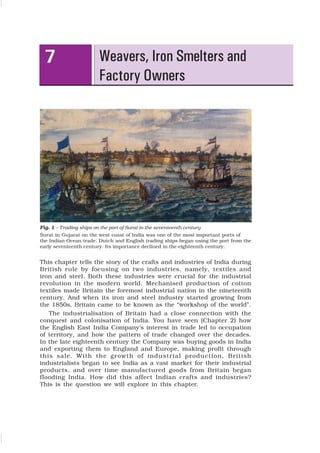
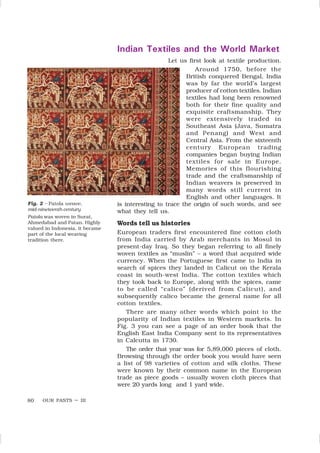
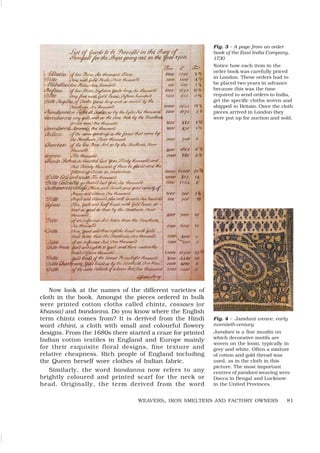
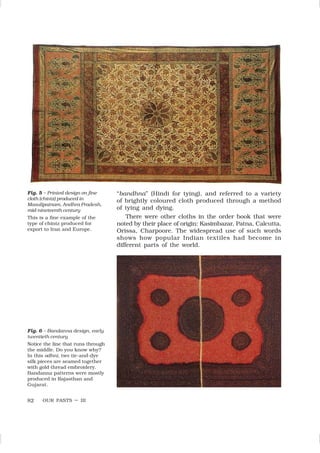
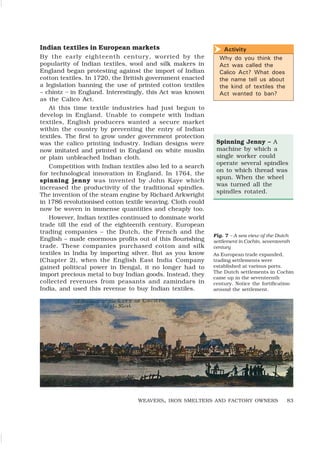
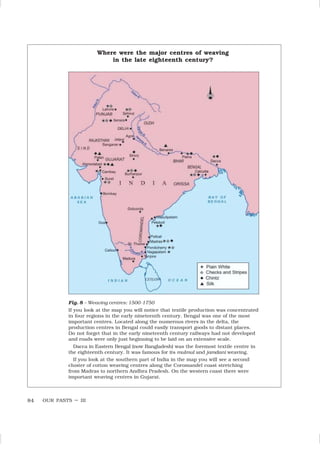
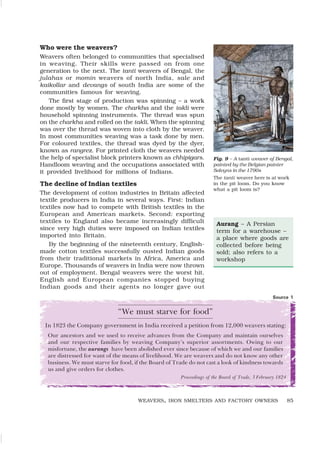

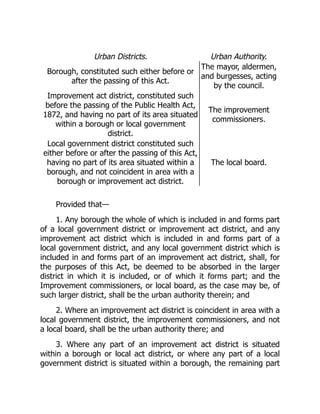
![excellent compound sauce of the added ingredient is immediately
obtained.
Sauces, American. White vinegar, 15 gall.; walnut ketchup, 10
gall.; Madeira wine, 5 gall.; mushroom ketchup, 10 gall,; table salt,
25 lbs. (troy); Canton soy, 4 gall.; powdered capsicum 2 lbs. (troy);
allspice, powdered, coriander powder, of each 1 lb. (troy); cloves,
mace, cinnamon, of each 1⁄2 lb. (troy); assafœtida, 1⁄4 lb. (troy);
dissolved in brandy, 1 gall.; 20 lbs. of hog’s liver is boiled for 12
hours with 10 gall. of water, renewing the water from time to time.
Take out the liver, chop it, mix it with water, and work it through a
sieve; mix with the sauce.
2. White vinegar, 240 gall.; Canton soy, 36 gall.; sugar-house
syrup, 30 gall.; walnut ketchup, 50 gall.; mushroom ketchup, 50
gall.; table salt, 120 lbs. (troy); powdered capsicum, 15 lbs. (troy);
allspice, coriander, of each 7 lbs. (troy); cloves, mace, cinnamon, of
each 4 lbs. (troy); assafœtida, 21⁄2 lbs. (troy), dissolved in St Croix
rum, 1 gall.
3. White vinegar, 1 gall. Canton soy, molasses, of each 1 pint;
walnut ketchup, 11⁄2 pint; table salt, 4 oz.; powdered capsicum,
allspice, of each 1 oz.; coriander, 1⁄2 oz.; cloves, mace, of each 1⁄2
oz.; cinnamon, 6 dr., assafœtida 1⁄4 oz. in 4 oz. of rum.
SAUERKRAUT. [Ger.] Prep. Clean white cabbages, cut them
into small pieces, and stratify them in a cask along with culinary salt
and a few juniper berries and caraway seeds, observing to pack
them down as hard as possible, without crushing them, and to cover
them with a lid pressed down with a heavy weight. The cask should
be placed in a cold situation as soon as a sour smell is perceived.
Used by the Germans and other northern nations of Europe, like our
‘pickled cabbage,’ but more extensively.
SAU′SAGES. From the fat and lean of pork (PORK SAUSAGES), or
of beef (BEEF SAUSAGES), chopped small, flavoured with spice, and
put into gut skins, or pressed into pots or balls (SAUSAGE MEAT). Crum](https://image.slidesharecdn.com/21442579-250527055034-42e560f7/85/Our-Pasts-3-Part-2-History-Class-8-Various-46-320.jpg)
![of bread is also added. Their quality is proportionate to that of the
ingredients, and to the care and cleanliness employed in preparing
them.
A pea sausage, composed of pea flour, fat pork, and a little salt,
was largely consumed by the German soldiers during the Franco-
German campaign. Dr Parkes found 100 parts of this sausage to
consist of—16·2 parts of water, 7·19 of salts, 12·297 of albuminates,
33·65 of fat, and 30·663 of carbohydrates. It is ready cooked, but
can be made into soup, although much relished for a few days. The
soldiers soon became tired of it. In some cases it gave rise to
flatulence and diarrhœa. See Meat.
SAV′ELOYS. Pork sausages made in such a way that they keep
good for a considerable time. Prep. (Mrs Rundell.) Take of young
pork, free from bone and skin, 3 lbs.; salt it with 1 oz. of saltpetre,
and 1⁄2 lb. of common salt, for 2 days; then chop it fine, add, 3
teaspoonfuls of pepper, 1 doz. sage leaves, chopped fine, and 1 lb.
of grated bread; mix well, fill the skins, and steam them or bake
them half an hour in a slack oven. They are said to be good either
hot or cold.
SAV′INE. Syn. Savin; Folia sabinæ, Sabina (Ph. L., E., & D.), L.
“The recent and dried tops of Juniperis sabina, Linn.,” or common
savine. (Ph. L.) It is a powerful stimulant, diaphoretic,
emmenagogue, and anthelmintic; and, externally, rubefacient,
escharotic and vesicant. In large doses it is apt to occasion abortion,
and acts as a poison. Savine powder mixed with verdigris is often
applied to corns and warts. It is now chiefly used in the form of
ointment.—Dose, 5 to 15 gr., twice or thrice daily (with care), in
amenorrhœa and worms. See Cerate.
SAVONETTES. [Fr.] Syn. Wash balls. These are made of any of
the mild toilet soaps, scented at will, generally with the addition of
some powdered starch or farina, and sometimes sand. The spherical
or spheroidal form is given to them by pressure in moulds, or by first
roughly forming them with the hands, and, when quite hard, turning](https://image.slidesharecdn.com/21442579-250527055034-42e560f7/85/Our-Pasts-3-Part-2-History-Class-8-Various-47-320.jpg)