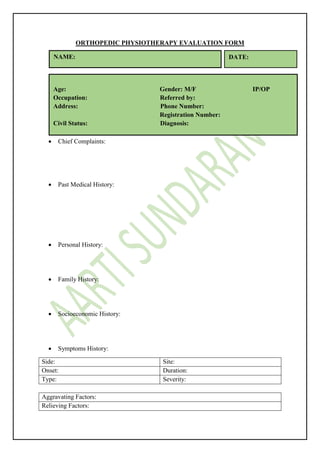
ORTHOPEDIC PHYSIOTHERAPY EVALUATION FORM
 Chief Complaints:
 Past Medical History:
 Personal History:
 Family History:
 Socioeconomic History:
 Symptoms History:
Side: Site:
Onset: Duration:
Type: Severity:
Aggravating Factors:
Relieving Factors:
NAME: DATE:
Age: Gender: M/F IP/OP
Occupation: Referred by:
Address: Phone Number:
Registration Number:
Civil Status: Diagnosis:
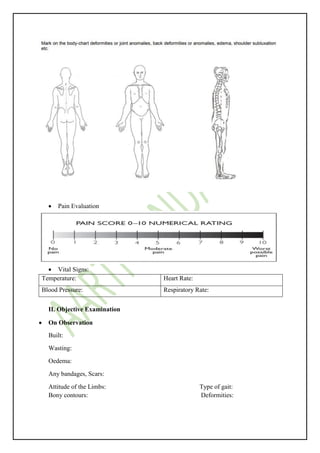
 Pain Evaluation
 Vital Signs:
Temperature: Heart Rate:
Blood Pressure: Respiratory Rate:
II. Objective Examination
 On Observation
Built:
Wasting:
Oedema:
Any bandages, Scars:
Attitude of the Limbs: Type of gait:
Bony contours: Deformities:
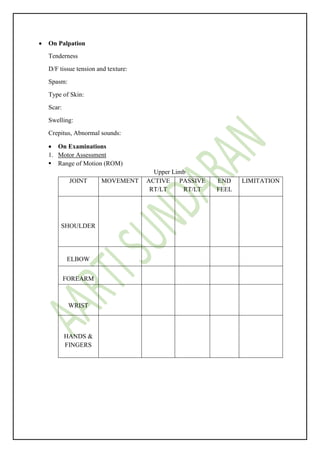
 On Palpation
Tenderness
D/F tissue tension and texture:
Spasm:
Type of Skin:
Scar:
Swelling:
Crepitus, Abnormal sounds:
 On Examinations
1. Motor Assessment
 Range of Motion (ROM)
Upper Limb
JOINT MOVEMENT ACTIVE
RT/LT
PASSIVE
RT/LT
END
FEEL
LIMITATION
SHOULDER
ELBOW
FOREARM
WRIST
HANDS &
FINGERS
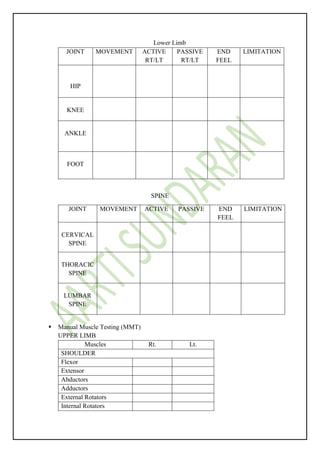
Lower Limb
JOINT MOVEMENT ACTIVE
RT/LT
PASSIVE
RT/LT
END
FEEL
LIMITATION
HIP
KNEE
ANKLE
FOOT
SPINE
JOINT MOVEMENT ACTIVE PASSIVE END
FEEL
LIMITATION
CERVICAL
SPINE
THORACIC
SPINE
LUMBAR
SPINE
 Manual Muscle Testing (MMT)
UPPER LIMB
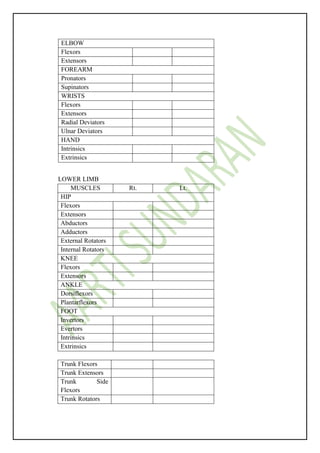
Muscles Rt. Lt.
SHOULDER
Flexor
Extensor
Abductors
Adductors
External Rotators
Internal Rotators
ELBOW
Flexors
Extensors
FOREARM
Pronators
Supinators
WRISTS
Flexors
Extensors
Radial Deviators
Ulnar Deviators
HAND
Intrinsics
Extrinsics
LOWER LIMB
Trunk Flexors
Trunk Extensors
Trunk Side
Flexors
Trunk Rotators
MUSCLES Rt. Lt.
HIP
Flexors
Extensors
Abductors
Adductors
External Rotators
Internal Rotators
KNEE
Flexors
Extensors
ANKLE
Dorsiflexors
Plantarflexors
FOOT
Invertors
Evertors
Intrinsics
Extrinsics
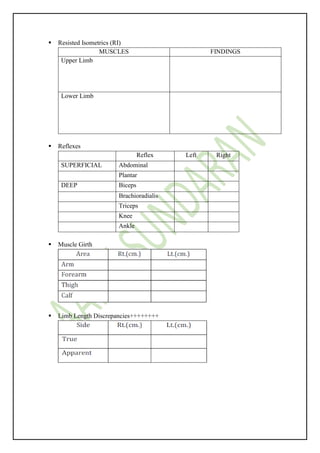
 Resisted Isometrics (RI)
MUSCLES FINDINGS
Upper Limb
Lower Limb
 Reflexes
Reflex Left Right
SUPERFICIAL Abdominal
Plantar
DEEP Biceps
Brachioradialis
Triceps
Knee
Ankle
 Muscle Girth
 Limb Length Discrepancies++++++++
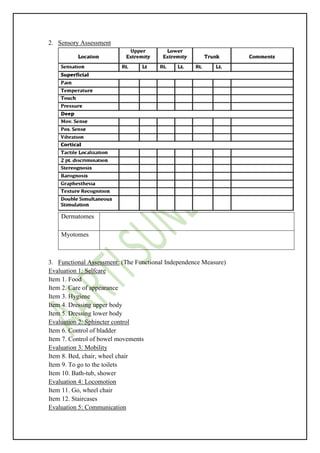
2. Sensory Assessment
Dermatomes
Myotomes
3. Functional Assessment: (The Functional Independence Measure)
Evaluation 1: Selfcare
Item 1. Food
Item 2. Care of appearance
Item 3. Hygiene
Item 4. Dressing upper body
Item 5. Dressing lower body
Evaluation 2: Sphincter control
Item 6. Control of bladder
Item 7. Control of bowel movements
Evaluation 3: Mobility
Item 8. Bed, chair, wheel chair
Item 9. To go to the toilets
Item 10. Bath-tub, shower
Evaluation 4: Locomotion
Item 11. Go, wheel chair
Item 12. Staircases
Evaluation 5: Communication
Item 13. Auditive comprehension
Item 14. Verbal expression
Evaluation 6: Social adjustment/cooperation
Item 15. Capacity to interact and to socially communicate
Item 16. Resolution of the problems
Item 17. Memory
4. Gait Analysis
Stance Phase: Base Width:
Swing Phase: Cadence:
Step Length: Other:
Stride Length:
5. Balance
Static
Sitting (With eyes open & closed)
Standing (With eyes open & closed)
Tandem Standing (With eyes open
&closed)
Dynamic
Reaching Activities
Pertubation
6. Hand Function
Reaching
Grasping
Releasing
Assisstive
Devices
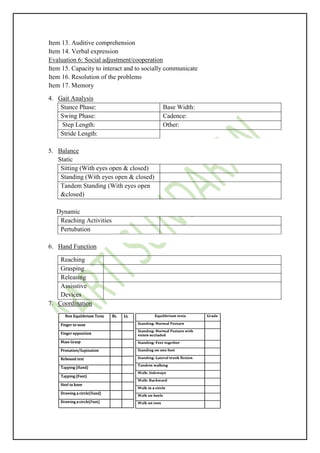
7. Coordination
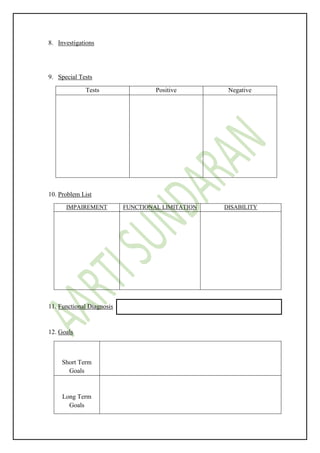
8. Investigations
9. Special Tests
Tests Positive Negative
10. Problem List
IMPAIREMENT FUNCTIONAL LIMITATION DISABILITY
11. Functional Diagnosis
12. Goals
Short Term
Goals
Long Term
Goals
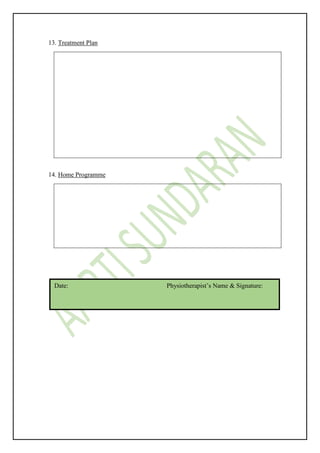
13. Treatment Plan
14. Home Programme
Date: Physiotherapist’s Name & Signature:

Orthopedic physiotherapy evaluation form wm

  • 1.
    ORTHOPEDIC PHYSIOTHERAPY EVALUATIONFORM  Chief Complaints:  Past Medical History:  Personal History:  Family History:  Socioeconomic History:  Symptoms History: Side: Site: Onset: Duration: Type: Severity: Aggravating Factors: Relieving Factors: NAME: DATE: Age: Gender: M/F IP/OP Occupation: Referred by: Address: Phone Number: Registration Number: Civil Status: Diagnosis:
  • 2.
     Pain Evaluation Vital Signs: Temperature: Heart Rate: Blood Pressure: Respiratory Rate: II. Objective Examination  On Observation Built: Wasting: Oedema: Any bandages, Scars: Attitude of the Limbs: Type of gait: Bony contours: Deformities:
  • 3.
     On Palpation Tenderness D/Ftissue tension and texture: Spasm: Type of Skin: Scar: Swelling: Crepitus, Abnormal sounds:  On Examinations 1. Motor Assessment  Range of Motion (ROM) Upper Limb JOINT MOVEMENT ACTIVE RT/LT PASSIVE RT/LT END FEEL LIMITATION SHOULDER ELBOW FOREARM WRIST HANDS & FINGERS
  • 4.
    Lower Limb JOINT MOVEMENTACTIVE RT/LT PASSIVE RT/LT END FEEL LIMITATION HIP KNEE ANKLE FOOT SPINE JOINT MOVEMENT ACTIVE PASSIVE END FEEL LIMITATION CERVICAL SPINE THORACIC SPINE LUMBAR SPINE  Manual Muscle Testing (MMT) UPPER LIMB Muscles Rt. Lt. SHOULDER Flexor Extensor Abductors Adductors External Rotators Internal Rotators
  • 5.
    ELBOW Flexors Extensors FOREARM Pronators Supinators WRISTS Flexors Extensors Radial Deviators Ulnar Deviators HAND Intrinsics Extrinsics LOWERLIMB Trunk Flexors Trunk Extensors Trunk Side Flexors Trunk Rotators MUSCLES Rt. Lt. HIP Flexors Extensors Abductors Adductors External Rotators Internal Rotators KNEE Flexors Extensors ANKLE Dorsiflexors Plantarflexors FOOT Invertors Evertors Intrinsics Extrinsics
  • 6.
     Resisted Isometrics(RI) MUSCLES FINDINGS Upper Limb Lower Limb  Reflexes Reflex Left Right SUPERFICIAL Abdominal Plantar DEEP Biceps Brachioradialis Triceps Knee Ankle  Muscle Girth  Limb Length Discrepancies++++++++
  • 7.
    2. Sensory Assessment Dermatomes Myotomes 3.Functional Assessment: (The Functional Independence Measure) Evaluation 1: Selfcare Item 1. Food Item 2. Care of appearance Item 3. Hygiene Item 4. Dressing upper body Item 5. Dressing lower body Evaluation 2: Sphincter control Item 6. Control of bladder Item 7. Control of bowel movements Evaluation 3: Mobility Item 8. Bed, chair, wheel chair Item 9. To go to the toilets Item 10. Bath-tub, shower Evaluation 4: Locomotion Item 11. Go, wheel chair Item 12. Staircases Evaluation 5: Communication
  • 8.
    Item 13. Auditivecomprehension Item 14. Verbal expression Evaluation 6: Social adjustment/cooperation Item 15. Capacity to interact and to socially communicate Item 16. Resolution of the problems Item 17. Memory 4. Gait Analysis Stance Phase: Base Width: Swing Phase: Cadence: Step Length: Other: Stride Length: 5. Balance Static Sitting (With eyes open & closed) Standing (With eyes open & closed) Tandem Standing (With eyes open &closed) Dynamic Reaching Activities Pertubation 6. Hand Function Reaching Grasping Releasing Assisstive Devices 7. Coordination
  • 9.
    8. Investigations 9. SpecialTests Tests Positive Negative 10. Problem List IMPAIREMENT FUNCTIONAL LIMITATION DISABILITY 11. Functional Diagnosis 12. Goals Short Term Goals Long Term Goals
  • 10.
    13. Treatment Plan 14.Home Programme Date: Physiotherapist’s Name & Signature: