MR. CLEMENTE L DAVERAO JR, IFA
Insurance & Financial Advisor/Masteral Student
Holy Name University
This approach recognizes
people as the main resource
of the organization.
They should be developed
towards higher level of creativity,
competence and satisfaction.
In the traditional approach,
managers decided what employees
should do and closely monitored
their performance to ensure task
accomplishments.
In the human resource
approach, the role of managers
changes from structuring and
controlling to supporting.
It says that methods or behaviors
which work effectively in one
situation fail in another.
Results differ
because situations differ.
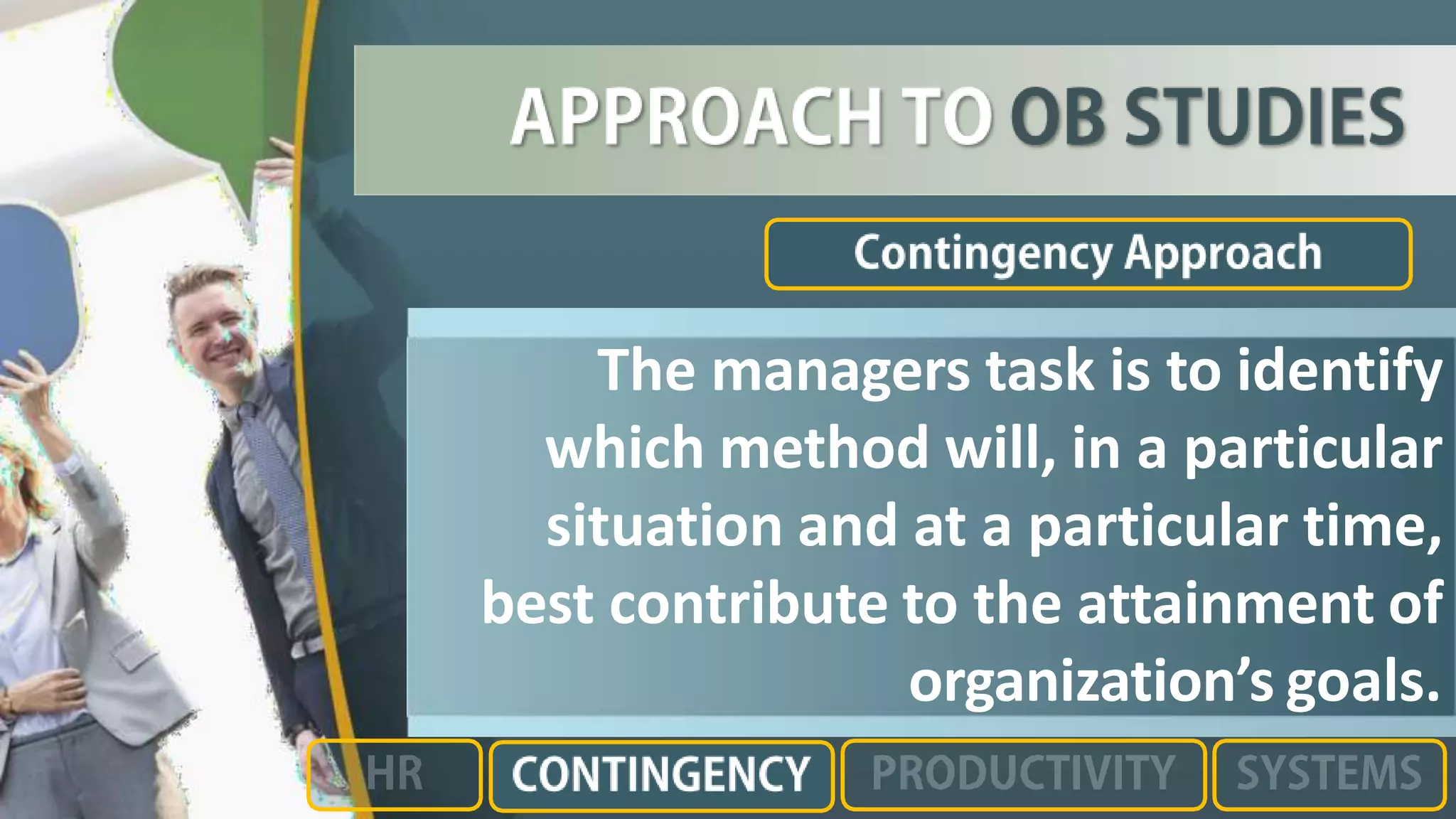
The managers task is to identify
which method will, in a particular
situation and at a particular time,
best contribute to the attainment of
organization’s goals.
It discourages the habitual practice of
universal assumptions about
methods and people.
The contingency approach is more
interdisciplinary, more system-
oriented and more research-oriented
than any other approach.
It is a ratio of output to input
which measures organization’s
effectiveness.
It determines manager’s efficiency in
optimizing resources of the
organization.
Organizational behavior decisions
involve human, social and economic
issues, and so productivity is a
significant part of these decisions.
This approach views OB as a
unified and purposeful system
composed of interrelated parts.
This approach gives managers a way
of looking at the organization as a
whole social system.
The system approach tells us that
the activity of any segment of an
organization affects the activity of
other segments.
And the systems view should be
the concern of every person in an
organization.
Organizational Behavior Presentation.pptx

Organizational Behavior Presentation.pptx

  • 1.
    MR. CLEMENTE LDAVERAO JR, IFA Insurance & Financial Advisor/Masteral Student Holy Name University
  • 18.
    This approach recognizes peopleas the main resource of the organization.
  • 19.
    They should bedeveloped towards higher level of creativity, competence and satisfaction.
  • 20.
    In the traditionalapproach, managers decided what employees should do and closely monitored their performance to ensure task accomplishments.
  • 21.
    In the humanresource approach, the role of managers changes from structuring and controlling to supporting.
  • 22.
    It says thatmethods or behaviors which work effectively in one situation fail in another.
  • 23.
  • 24.
    The managers taskis to identify which method will, in a particular situation and at a particular time, best contribute to the attainment of organization’s goals.
  • 25.
    It discourages thehabitual practice of universal assumptions about methods and people.
  • 26.
    The contingency approachis more interdisciplinary, more system- oriented and more research-oriented than any other approach.
  • 27.
    It is aratio of output to input which measures organization’s effectiveness.
  • 28.
    It determines manager’sefficiency in optimizing resources of the organization.
  • 29.
    Organizational behavior decisions involvehuman, social and economic issues, and so productivity is a significant part of these decisions.
  • 30.
    This approach viewsOB as a unified and purposeful system composed of interrelated parts.
  • 31.
    This approach givesmanagers a way of looking at the organization as a whole social system.
  • 32.
    The system approachtells us that the activity of any segment of an organization affects the activity of other segments.
  • 33.
    And the systemsview should be the concern of every person in an organization.