World
Organ
Donation
Day
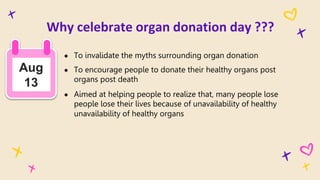
Why celebrate organ donation day ???
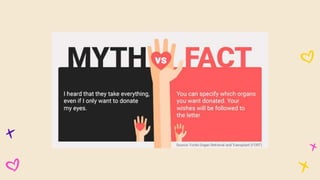
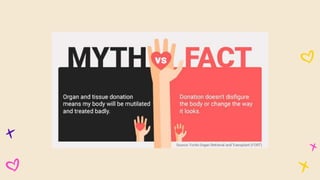
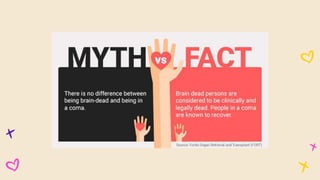
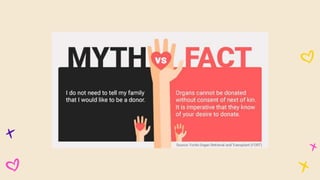
● To invalidate the myths surrounding organ donation
● To encourage people to donate their healthy organs post
organs post death
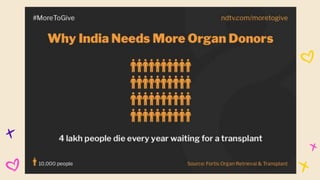
● Aimed at helping people to realize that, many people lose
people lose their lives because of unavailability of healthy
unavailability of healthy organs
Aug
13
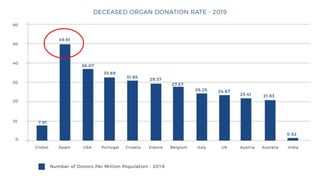
Why!!
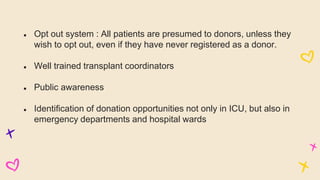
● Opt out system : All patients are presumed to donors, unless they
wish to opt out, even if they have never registered as a donor.
● Well trained transplant coordinators
● Public awareness
● Identification of donation opportunities not only in ICU, but also in
emergency departments and hospital wards
Scenario in India!!
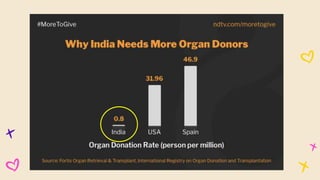
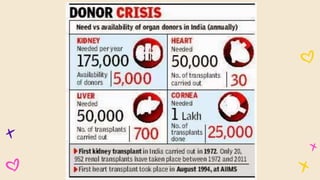
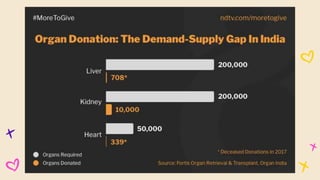
• Lack of donors
• Lack of awareness and improper infrastructure facilities
• Administrative hurdles and conservative mindset of people
• High Cost (especially for uninsured and poor patients)
• Prevention and Control of Organ trading
• Regulation of Non- Govt. Sector
Issues and challenges ??
NOTP
(National Organ Transplant Programme)
● To promote organ donation and transplantation across the country.
● Financial support for:
○ Setting up of State Organ and Tissue Transplant Organizations
(SOTTOs) in each State/UT.
○ Setting up of National/ Regional/State Bio-material centres;
○ Establishing new Organ Transplant/retrieval facilities and
strengthening of existing Organ Transplant/retrieval facilities.
○ Provision of Transplant Coordinators to medical colleges and
trauma centres.
○ Maintenance of deceased donor
○ Dignified funeral of deceased donor
○ Post transplant immune-suppressant drugs to BPL patients
● A Digital Organ Donation Registry is being developed by the
National Health Authority (NHA) and the union health ministry
following consultation with the NITI Aayog for an overhaul of the
National Organ Tissue Transplantation Organization (NOTTO),
which manages and coordinates organ transplantation across the
country.
Latest advancement
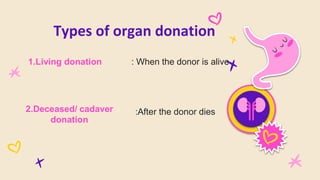
Types of organ donation
1.Living donation : When the donor is alive
:After the donor dies
2.Deceased/ cadaver
donation
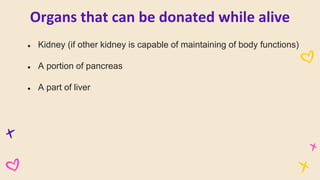
● Kidney (if other kidney is capable of maintaining of body functions)
● A portion of pancreas
● A part of liver
Organs that can be donated while alive
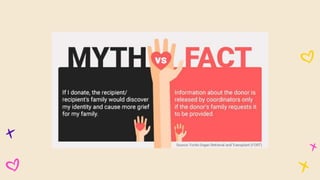
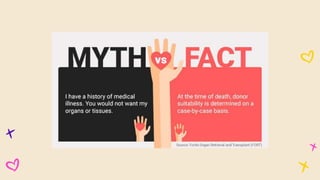
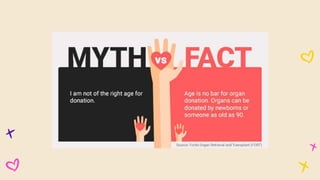
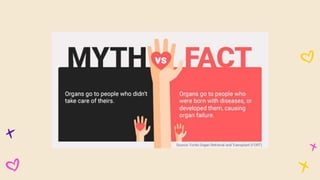
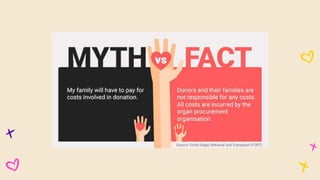
Myths about organ
donation
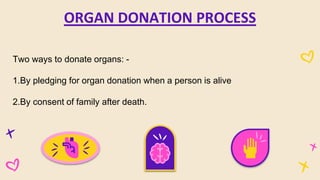
ORGAN DONATION PROCESS
Two ways to donate organs: -
1.By pledging for organ donation when a person is alive
2.By consent of family after death.
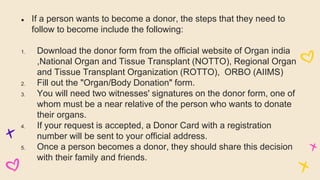
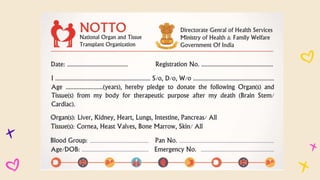
● If a person wants to become a donor, the steps that they need to
follow to become include the following:
1. Download the donor form from the official website of Organ india
,National Organ and Tissue Transplant (NOTTO), Regional Organ
and Tissue Transplant Organization (ROTTO), ORBO (AIIMS)
2. Fill out the "Organ/Body Donation" form.
3. You will need two witnesses' signatures on the donor form, one of
whom must be a near relative of the person who wants to donate
their organs.
4. If your request is accepted, a Donor Card with a registration
number will be sent to your official address.
5. Once a person becomes a donor, they should share this decision
with their family and friends.
Organ donation.pptx
Organ donation.pptx
Organ donation.pptx

Organ donation.pptx

  • 1.
  • 2.
    Why celebrate organdonation day ??? ● To invalidate the myths surrounding organ donation ● To encourage people to donate their healthy organs post organs post death ● Aimed at helping people to realize that, many people lose people lose their lives because of unavailability of healthy unavailability of healthy organs Aug 13
  • 6.
  • 7.
    ● Opt outsystem : All patients are presumed to donors, unless they wish to opt out, even if they have never registered as a donor. ● Well trained transplant coordinators ● Public awareness ● Identification of donation opportunities not only in ICU, but also in emergency departments and hospital wards
  • 8.
  • 13.
    • Lack ofdonors • Lack of awareness and improper infrastructure facilities • Administrative hurdles and conservative mindset of people • High Cost (especially for uninsured and poor patients) • Prevention and Control of Organ trading • Regulation of Non- Govt. Sector Issues and challenges ??
  • 14.
  • 15.
    ● To promoteorgan donation and transplantation across the country. ● Financial support for: ○ Setting up of State Organ and Tissue Transplant Organizations (SOTTOs) in each State/UT. ○ Setting up of National/ Regional/State Bio-material centres; ○ Establishing new Organ Transplant/retrieval facilities and strengthening of existing Organ Transplant/retrieval facilities. ○ Provision of Transplant Coordinators to medical colleges and trauma centres. ○ Maintenance of deceased donor ○ Dignified funeral of deceased donor ○ Post transplant immune-suppressant drugs to BPL patients
  • 16.
    ● A DigitalOrgan Donation Registry is being developed by the National Health Authority (NHA) and the union health ministry following consultation with the NITI Aayog for an overhaul of the National Organ Tissue Transplantation Organization (NOTTO), which manages and coordinates organ transplantation across the country. Latest advancement
  • 17.
    Types of organdonation 1.Living donation : When the donor is alive :After the donor dies 2.Deceased/ cadaver donation
  • 18.
    ● Kidney (ifother kidney is capable of maintaining of body functions) ● A portion of pancreas ● A part of liver Organs that can be donated while alive
  • 21.
  • 31.
    ORGAN DONATION PROCESS Twoways to donate organs: - 1.By pledging for organ donation when a person is alive 2.By consent of family after death.
  • 32.
    ● If aperson wants to become a donor, the steps that they need to follow to become include the following: 1. Download the donor form from the official website of Organ india ,National Organ and Tissue Transplant (NOTTO), Regional Organ and Tissue Transplant Organization (ROTTO), ORBO (AIIMS) 2. Fill out the "Organ/Body Donation" form. 3. You will need two witnesses' signatures on the donor form, one of whom must be a near relative of the person who wants to donate their organs. 4. If your request is accepted, a Donor Card with a registration number will be sent to your official address. 5. Once a person becomes a donor, they should share this decision with their family and friends.