Operations Intern Projects and
Possible Areas for Optimization
Juan Dos Santos
Introduction
• Juan Dos Santos – from Weston, FL
• Industrial and Systems Engineer Major (going into 2nd year) at the University of Florida
– Go Gators!
• Interests: Rugby, programming and coding
• This is his first 1st Internship. Interested in pursuing a career after graduation in the
business sector
Juan’s Goals for his Internship
• See what he like’s and doesn’t like
about his career field
• Exposure to Professional environment
• Create professional value by enhancing
industry skills
• Networking
Quirch Foods Goals for the Internship
• Enable Operations Team to work on various projects
• Promote Quirch Foods in Industrial Engineer college
and create awareness among future hires
• Test and evaluate valued added by having Industrial
Engineer skills at Quirch Foods
Exports
Inefficiencies in Labeling Process
Problem or Issue
Drivers and
Challenges
Drivers: Challenges:
Solutions or
Suggestions
Problem
Identified
Solutions
Drafted
Solutions
Tested
Solution
Implemented
• Labeling Process for Export orders takes as long as two hours.
• Employees have to go up and down
the rows and manually input the
information.
• Products with different lot #,
production dates, etc. have to be
inputted separately.
• There is no way to increase the
number of boxes that have the same
information.
1) Obtain the format that providers use for their barcodes and input format into system so
that once a PO is received from that provider, the warehouse can just scan the product
barcode to obtain the necessary information.
2) Use an engine (such as OpenCV) to extract the label and extract the information, then
use OCR (Optimal Character Recognition) engine (such as Tesseract) to perform a
reading of the information.
Video: Reading a label with OpenCV+ Tesseract OCR.
Transportation
Problem or Issue
Drivers and
Challenges
Drivers: Challenges:
Solutions or
Suggestions
Problem
Identified
Solutions
Drafted
Solutions
Tested
Solution
Implemented
• Quirch trucks are not using the most cost effective fuel measures
• The trucks are not capped at the
most fuel-efficient speed
• Trucks are not turned off when idle
for extended period of times.
• Drivers feel that decreasing their
speed will affect their route
negatively.
1) Govern truck speed at 65 mph
2) Determine whether the 5mph difference will have a negative impact on routes.
3) Turn trucks off when idle for more than 5 minutes.
Effects on routes by setting trucks at 65mph
Analysis
Assumptions:
1)Each entry in the excel sheet equates to 1 minute of driving time.
2) The drivers are driving at 65 mph in a 70mph zone
3) If one can go 65mph, one will travel 0.015384 hours per mile. At
70mph, one will travel 0.01428 hours per mile. Thus, the 5 mile
difference equates to a 0.001104 hours per mile difference.
• Summary –
• Analyzed 8 trucks in Miami.
• The average time added for the month is 3.25 hours which is less than 1 hour
per week.
• 3 trucks had over 5 hours added per week.
File Keeping
Problem or Issue
Drivers and
Challenges
Drivers: Challenges:
Solutions or
Suggestions
Problem
Identified
Solutions
Drafted
Solutions
Tested
Solution
Implemented
• Document sharing is not efficient and ideal
• Documents only have physical copies • Files need to be scanned to be sent
to other company employees
• It is difficult for one person to know
what documents other employees
have.
1) Create a shared “Quirch Fleet” excel sheet that contains a hyperlink to all pertaining
documents.
Figure 1: Screenshot of “Quirch Fleet” excel sheet and upload instructions.
Delivery Visibility
Problem or Issue
Drivers and
Challenges
Drivers: Challenges:
Solutions or
Suggestions
Problem
Identified
Solutions
Drafted
Solutions
Tested
• The time on site is not being
considered when making routes.
• Customer addresses and geofences
are not uploaded correctly into
samsara.
• Supervisors and sales
representatives can’t check the
progress on a route.
• Supervisors base the order of the
stops in a route based on what the
drivers tell them.
• Supervisors, Sales and Customers lack the proper tools to track
deliveries on daily routes.
1) Upload our routes into Samsara and use the fleet tracking functionality to analyze and
optimize routes.
2) Collect customer information such as opening and closing times and use a routing
software to create the most efficient routes.
Solution
Implemented
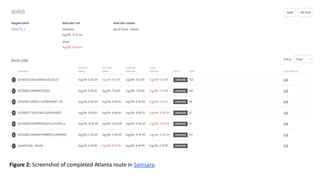
Figure 2: Screenshot of completed Atlanta route in Samsara.
Routing
Problem or Issue
Drivers and
Challenges
Drivers: Challenges:
Solutions or
Suggestions
Problem
Identified
Solutions
Drafted
Solutions
Tested
• Customer’s delivery information is
not available.
• Routes are created based on driver
availability and pay structure.
• Combining routes may lead to needing less
drivers and trucks.
• Driver Compensation Structure
• Supervisors base the order of the stops in a
route based on what the drivers tell them.
• Routes are not being created with the goal of maximizing efficiency.
Solution
Implemented
1) Collect customers’ delivery information and use a routing software to create the most
cost and time efficient routes.
Test Routing
Software
Select &
Purchase
Software
Implement
Software
Collect Delivery
Information
Routes and Samsara
• Bulk uploaded all Quirch Foods clients in order to be able to track our drivers and know
where they stop at all times.
• Challenge: Current Customer Account setup is not ideal for this process
• We have started to upload Atlanta routes on samsara. Doing so can help transportation
supervisors and sales reps track how drivers are doing on the route and when they will
get to their stops.
• Challenge: Very manual process and time consuming. IT integration with Samsara would help.
• Future State: Sales and customers can potentially have their delivery information minutes after
the route is created (6-7pm the day before the delivery) and in real-time.
• Using these tools, we have analyzed multiple variables:
• Helps us track driver performance
• How long they are spending at a store compared to the number of cases sold at the store
• Which routes can be combined and which routes have to stay overnight. Team driving?
• Ability to notify stores when the drivers will be there or if they're running late.
• Challenge: Need IT integration and proper customer contact information

OPS Intern Presentation

  • 1.
    Operations Intern Projectsand Possible Areas for Optimization Juan Dos Santos
  • 2.
    Introduction • Juan DosSantos – from Weston, FL • Industrial and Systems Engineer Major (going into 2nd year) at the University of Florida – Go Gators! • Interests: Rugby, programming and coding • This is his first 1st Internship. Interested in pursuing a career after graduation in the business sector Juan’s Goals for his Internship • See what he like’s and doesn’t like about his career field • Exposure to Professional environment • Create professional value by enhancing industry skills • Networking Quirch Foods Goals for the Internship • Enable Operations Team to work on various projects • Promote Quirch Foods in Industrial Engineer college and create awareness among future hires • Test and evaluate valued added by having Industrial Engineer skills at Quirch Foods
  • 3.
    Exports Inefficiencies in LabelingProcess Problem or Issue Drivers and Challenges Drivers: Challenges: Solutions or Suggestions Problem Identified Solutions Drafted Solutions Tested Solution Implemented • Labeling Process for Export orders takes as long as two hours. • Employees have to go up and down the rows and manually input the information. • Products with different lot #, production dates, etc. have to be inputted separately. • There is no way to increase the number of boxes that have the same information. 1) Obtain the format that providers use for their barcodes and input format into system so that once a PO is received from that provider, the warehouse can just scan the product barcode to obtain the necessary information. 2) Use an engine (such as OpenCV) to extract the label and extract the information, then use OCR (Optimal Character Recognition) engine (such as Tesseract) to perform a reading of the information.
  • 4.
    Video: Reading alabel with OpenCV+ Tesseract OCR.
  • 5.
    Transportation Problem or Issue Driversand Challenges Drivers: Challenges: Solutions or Suggestions Problem Identified Solutions Drafted Solutions Tested Solution Implemented • Quirch trucks are not using the most cost effective fuel measures • The trucks are not capped at the most fuel-efficient speed • Trucks are not turned off when idle for extended period of times. • Drivers feel that decreasing their speed will affect their route negatively. 1) Govern truck speed at 65 mph 2) Determine whether the 5mph difference will have a negative impact on routes. 3) Turn trucks off when idle for more than 5 minutes. Effects on routes by setting trucks at 65mph
  • 6.
    Analysis Assumptions: 1)Each entry inthe excel sheet equates to 1 minute of driving time. 2) The drivers are driving at 65 mph in a 70mph zone 3) If one can go 65mph, one will travel 0.015384 hours per mile. At 70mph, one will travel 0.01428 hours per mile. Thus, the 5 mile difference equates to a 0.001104 hours per mile difference. • Summary – • Analyzed 8 trucks in Miami. • The average time added for the month is 3.25 hours which is less than 1 hour per week. • 3 trucks had over 5 hours added per week.
  • 7.
    File Keeping Problem orIssue Drivers and Challenges Drivers: Challenges: Solutions or Suggestions Problem Identified Solutions Drafted Solutions Tested Solution Implemented • Document sharing is not efficient and ideal • Documents only have physical copies • Files need to be scanned to be sent to other company employees • It is difficult for one person to know what documents other employees have. 1) Create a shared “Quirch Fleet” excel sheet that contains a hyperlink to all pertaining documents.
  • 8.
    Figure 1: Screenshotof “Quirch Fleet” excel sheet and upload instructions.
  • 9.
    Delivery Visibility Problem orIssue Drivers and Challenges Drivers: Challenges: Solutions or Suggestions Problem Identified Solutions Drafted Solutions Tested • The time on site is not being considered when making routes. • Customer addresses and geofences are not uploaded correctly into samsara. • Supervisors and sales representatives can’t check the progress on a route. • Supervisors base the order of the stops in a route based on what the drivers tell them. • Supervisors, Sales and Customers lack the proper tools to track deliveries on daily routes. 1) Upload our routes into Samsara and use the fleet tracking functionality to analyze and optimize routes. 2) Collect customer information such as opening and closing times and use a routing software to create the most efficient routes. Solution Implemented
  • 10.
    Figure 2: Screenshotof completed Atlanta route in Samsara.
  • 11.
    Routing Problem or Issue Driversand Challenges Drivers: Challenges: Solutions or Suggestions Problem Identified Solutions Drafted Solutions Tested • Customer’s delivery information is not available. • Routes are created based on driver availability and pay structure. • Combining routes may lead to needing less drivers and trucks. • Driver Compensation Structure • Supervisors base the order of the stops in a route based on what the drivers tell them. • Routes are not being created with the goal of maximizing efficiency. Solution Implemented 1) Collect customers’ delivery information and use a routing software to create the most cost and time efficient routes. Test Routing Software Select & Purchase Software Implement Software Collect Delivery Information
  • 12.
    Routes and Samsara •Bulk uploaded all Quirch Foods clients in order to be able to track our drivers and know where they stop at all times. • Challenge: Current Customer Account setup is not ideal for this process • We have started to upload Atlanta routes on samsara. Doing so can help transportation supervisors and sales reps track how drivers are doing on the route and when they will get to their stops. • Challenge: Very manual process and time consuming. IT integration with Samsara would help. • Future State: Sales and customers can potentially have their delivery information minutes after the route is created (6-7pm the day before the delivery) and in real-time. • Using these tools, we have analyzed multiple variables: • Helps us track driver performance • How long they are spending at a store compared to the number of cases sold at the store • Which routes can be combined and which routes have to stay overnight. Team driving? • Ability to notify stores when the drivers will be there or if they're running late. • Challenge: Need IT integration and proper customer contact information

Editor's Notes

  • #4 1) If a product has different production dates or lot numbers etc, they have to input it differently. If they input one and then a different and get another that is the same as the first, have to input it again, cant go back and just increase the number.
  • #6 -According to a study by the EPA, a truck that spends 90% of the time on the highway can save $1,450 or more annually by reducing its speed from 70 mph to 65 mph As well as more than $6,000 per truck annually by limiting excessive idling -Using the functionality in our samsara trackers and basic study premises, we concluded that drivers would save an equivalent of 7% of their highway time if they drove at 70mph instead of 65.
  • #8 -- If a new truck is added.
  • #10 - Made an excel sheet which creates the format for samsara customer bulk uploads.