Operations Management for MBAs 5th Edition Meredith Solutions Manual
1.
Operations Management forMBAs 5th Edition
Meredith Solutions Manual download
https://testbankdeal.com/product/operations-management-for-
mbas-5th-edition-meredith-solutions-manual/
Explore and download more test bank or solution manual
at testbankdeal.com
2.
Here are somerecommended products for you. Click the link to
download, or explore more at testbankdeal.com
Operations Management for MBAs 5th Edition Meredith Test
Bank
https://testbankdeal.com/product/operations-management-for-mbas-5th-
edition-meredith-test-bank/
Operations and Supply Chain Management for MBAs 6th
Edition Meredith Test Bank
https://testbankdeal.com/product/operations-and-supply-chain-
management-for-mbas-6th-edition-meredith-test-bank/
Project Management in Practice 5th Edition Meredith
Solutions Manual
https://testbankdeal.com/product/project-management-in-practice-5th-
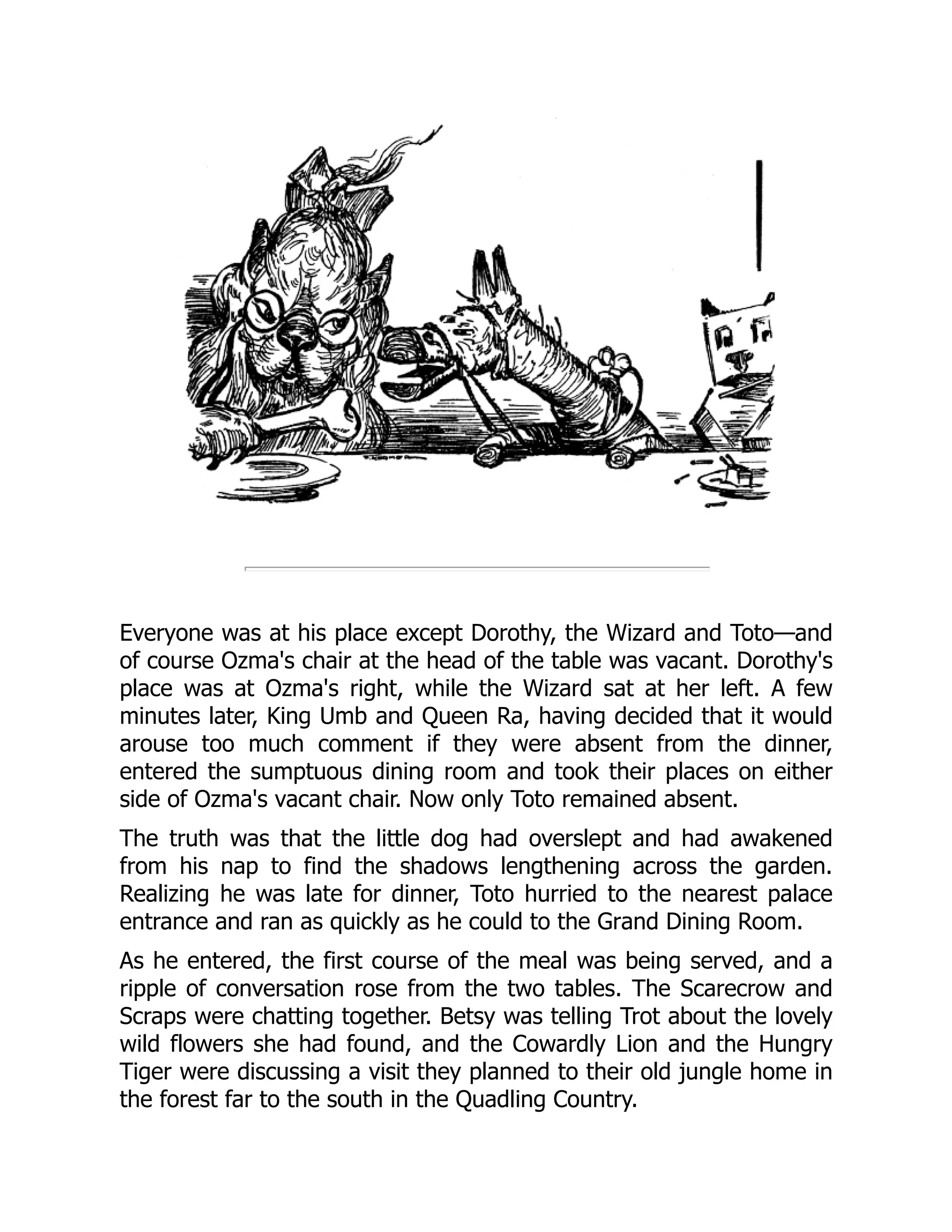
edition-meredith-solutions-manual/
Survey of ECON 3rd Edition Sexton Solutions Manual
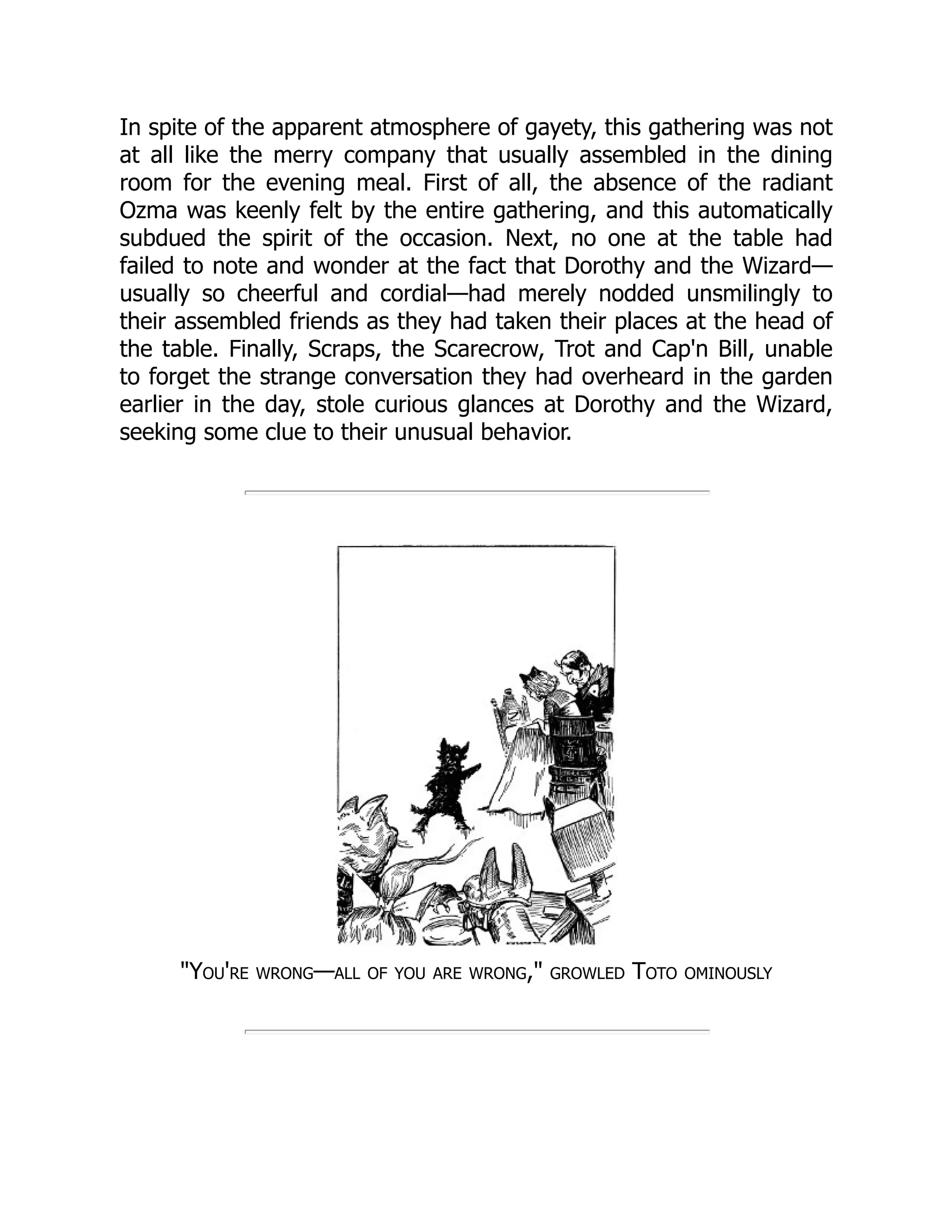
https://testbankdeal.com/product/survey-of-econ-3rd-edition-sexton-
solutions-manual/
3.
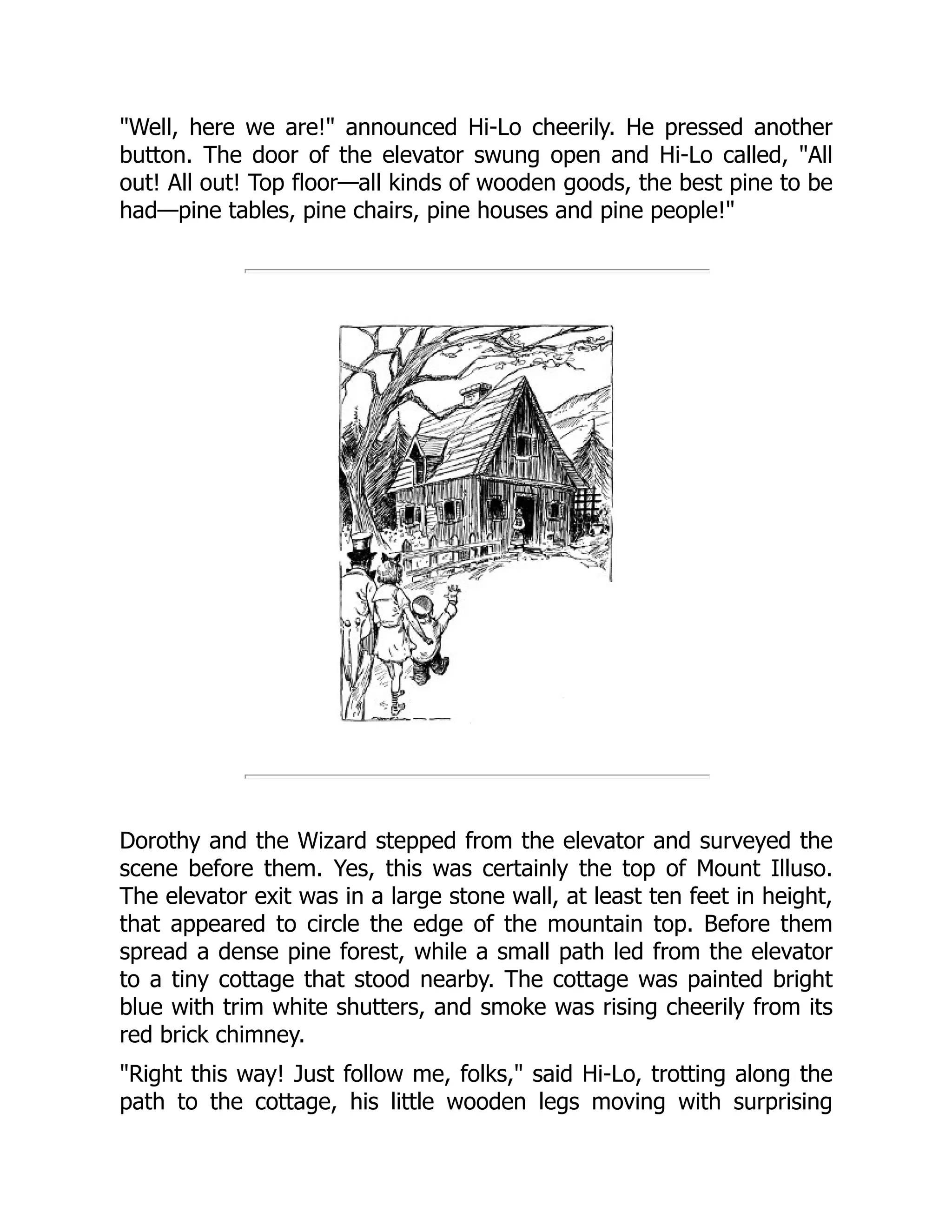
Marketing Real PeopleReal Choices Canadian 4th Edition
Solomon Test Bank
https://testbankdeal.com/product/marketing-real-people-real-choices-
canadian-4th-edition-solomon-test-bank/
Analysis for Financial Management 11th Edition Higgins
Test Bank
https://testbankdeal.com/product/analysis-for-financial-
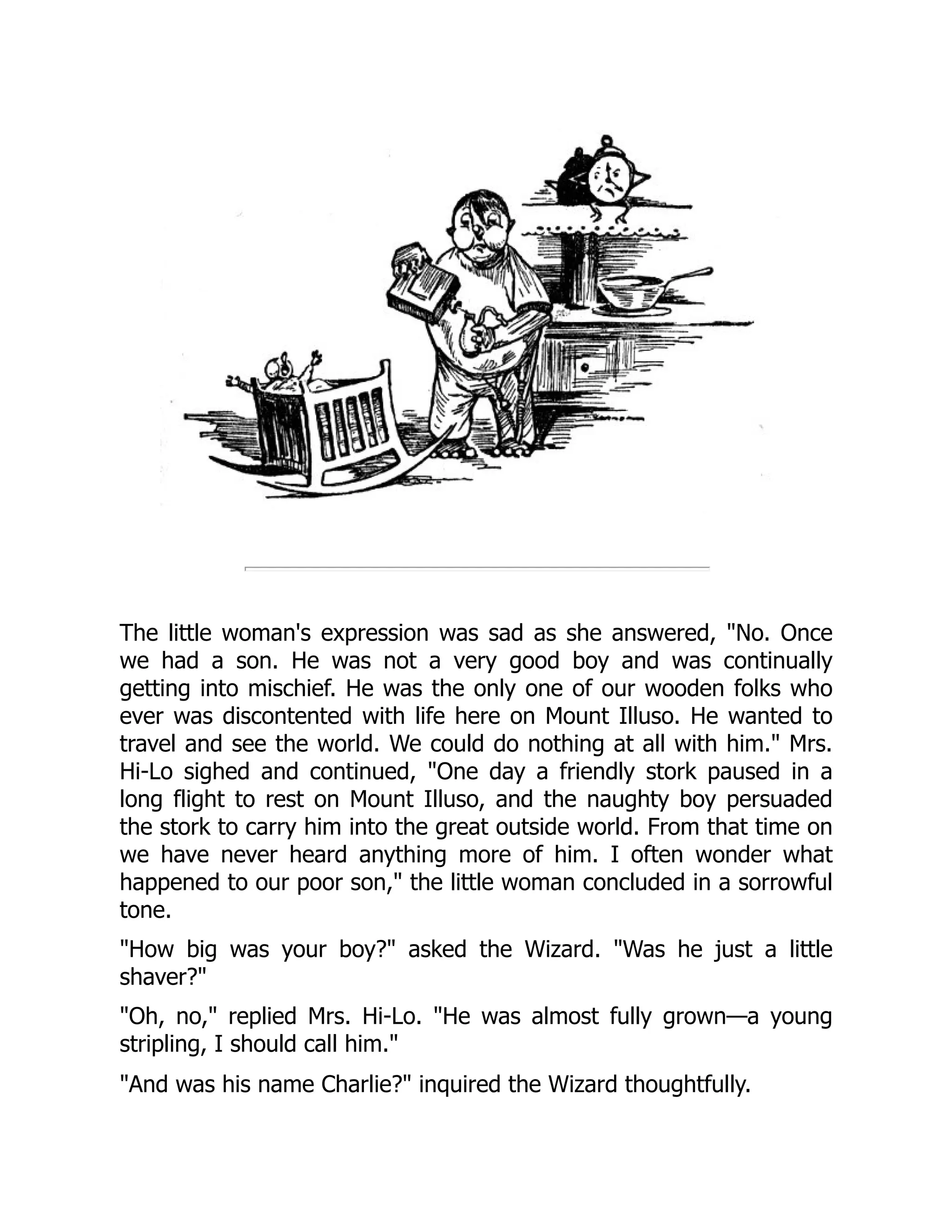
management-11th-edition-higgins-test-bank/
Human Anatomy and Physiology 9th Edition Marieb Test Bank
https://testbankdeal.com/product/human-anatomy-and-physiology-9th-
edition-marieb-test-bank/
Principles of Modern Chemistry 8th Edition Oxtoby
Solutions Manual
https://testbankdeal.com/product/principles-of-modern-chemistry-8th-
edition-oxtoby-solutions-manual/
Making the Team A Guide for Managers 6th Edition Thompson
Solutions Manual
https://testbankdeal.com/product/making-the-team-a-guide-for-
managers-6th-edition-thompson-solutions-manual/
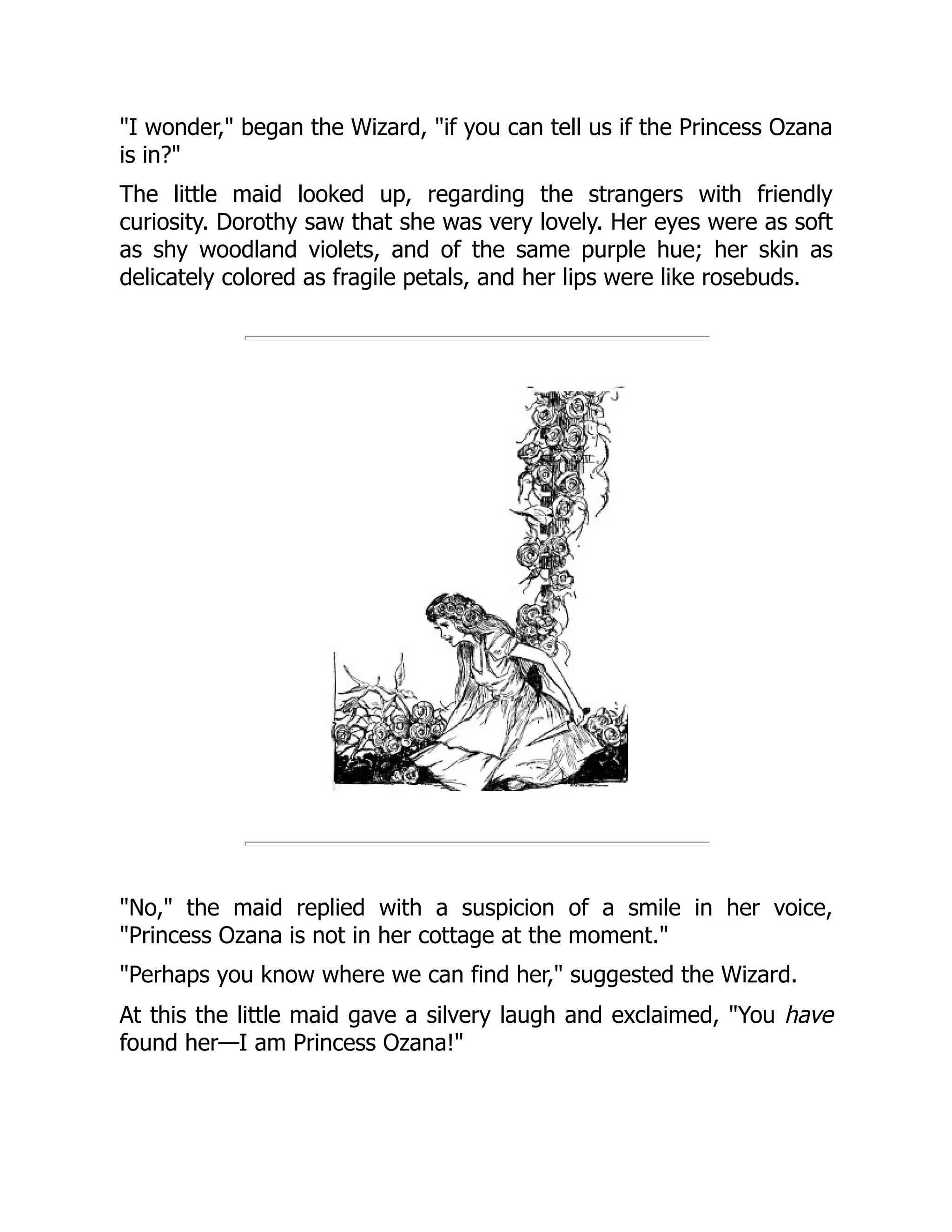
4.
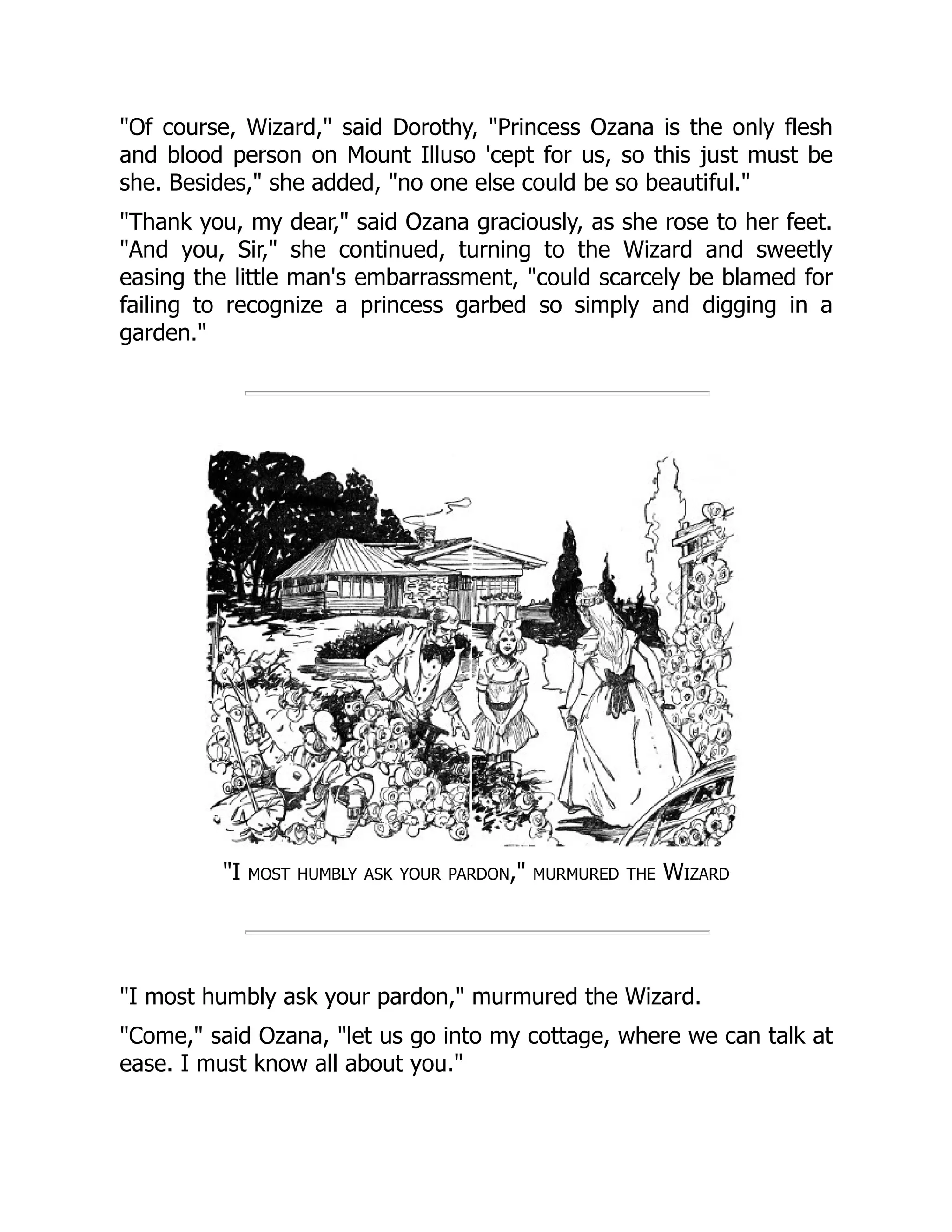
Fundamentals of InvestmentsValuation and Management 7th
Edition Jordan Test Bank
https://testbankdeal.com/product/fundamentals-of-investments-
valuation-and-management-7th-edition-jordan-test-bank/
5.
Chapter 6 –Page 1
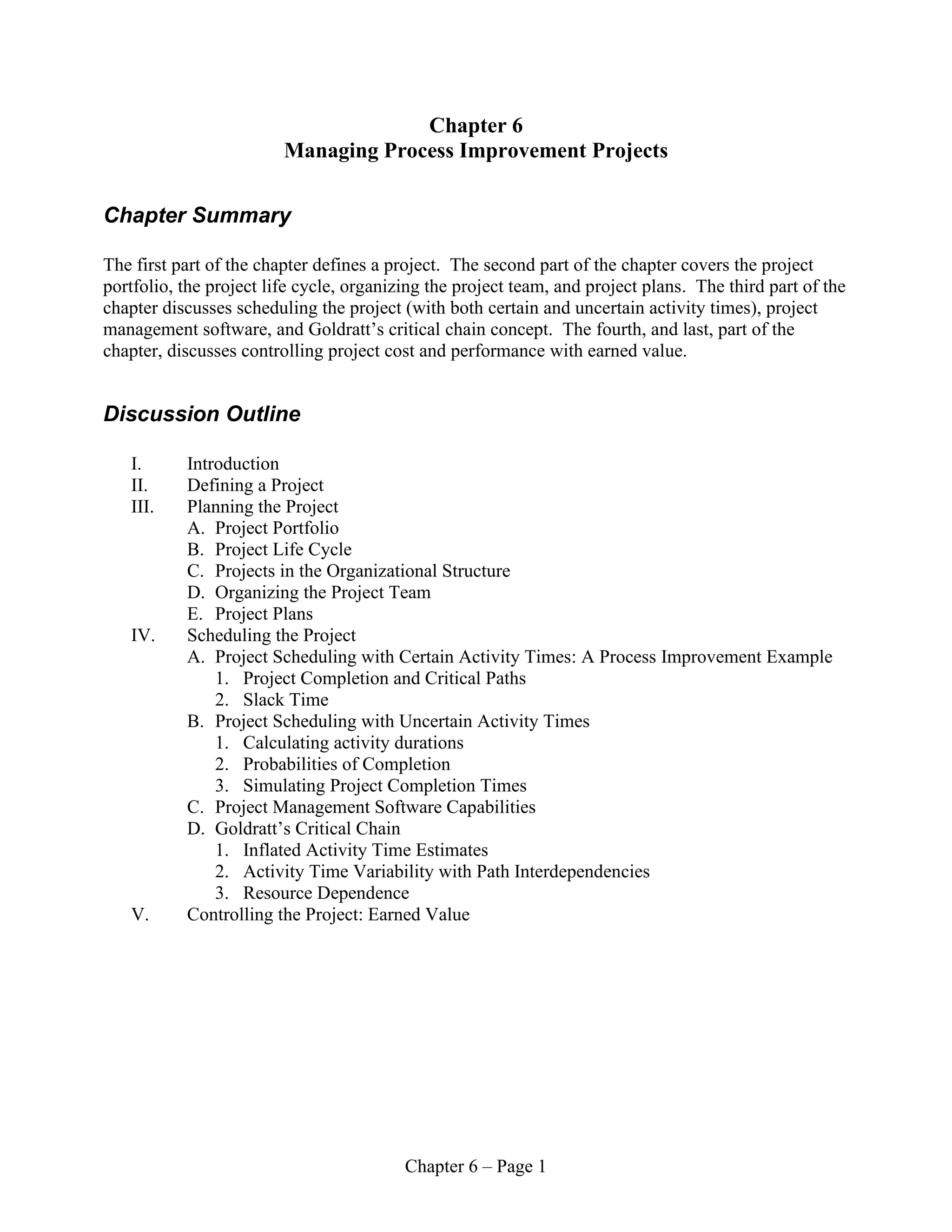
Chapter 6
Managing Process Improvement Projects
Chapter Summary
The first part of the chapter defines a project. The second part of the chapter covers the project
portfolio, the project life cycle, organizing the project team, and project plans. The third part of the
chapter discusses scheduling the project (with both certain and uncertain activity times), project
management software, and Goldratt’s critical chain concept. The fourth, and last, part of the
chapter, discusses controlling project cost and performance with earned value.
Discussion Outline
I. Introduction
II. Defining a Project
III. Planning the Project
A. Project Portfolio
B. Project Life Cycle
C. Projects in the Organizational Structure
D. Organizing the Project Team
E. Project Plans
IV. Scheduling the Project
A. Project Scheduling with Certain Activity Times: A Process Improvement Example
1. Project Completion and Critical Paths
2. Slack Time
B. Project Scheduling with Uncertain Activity Times
1. Calculating activity durations
2. Probabilities of Completion
3. Simulating Project Completion Times
C. Project Management Software Capabilities
D. Goldratt’s Critical Chain
1. Inflated Activity Time Estimates
2. Activity Time Variability with Path Interdependencies
3. Resource Dependence
V. Controlling the Project: Earned Value
6.
Chapter 6 –Page 2
Chapter Teaching Tips
One way to introduce this chapter is to focus on the growth of projects in our society. Another, and
often more engaging, introduction is to devise a project with the class or with one person currently
engaged in a project involving multiple people (e.g., a campus career day), lay out the work
breakdown structure, estimate the activities and the times, and construct and solve the PERT
network. Another engaging issue is to ask the class how they might track the progress of a project
as it progresses. How would they actually measure the amount of progress attained—task-by-task
or by looking at the overall project? Could they trust someone who says that their task, or the
project, is 99% done? If not, what surrogate measures would be helpful for tracking project
progress?
Illustrative Answers to the Expand Your Understanding Questions
1. This major strategic error is more common than any other mistake. It is important to realize that
it is precisely because the tasks are defined so poorly that it is necessary to take longer to plan
the work that must be done. Although we would want to avoid “analysis paralysis,” the
overwhelming tendency is to plan too little rather than too much.
2. The cost-schedule reconciliation charts are more straightforward but cannot easily be compared
since the vertical axis is not the same in both charts. A project manager unfamiliar with the
earned value concept might therefore prefer the reconciliation charts.
3. One simple way is to equate the value with the cost of materials and resources used to date, but
this defeats the purpose. In reality, resources are usually brought in long before a task is
complete and only a minor additional increase in cost (e.g., a day's wages) may represent the
final attainment of a task with considerable value. It is the responsibility of the project manager
to decide on what task completions, or even partial completions, represent value completed for
the sponsor. In practice, there are five commonly used ways (all with potential pitfalls) to
measure earned value: 0-100% (i.e., no credit for the task budget [not actual spending] until a
task is completely finished), 50-50% (half of the budget when the task starts, half when done),
as a percentage of a scarce, critical resource used in proportion to progress (e.g., yards of
concrete poured for a road or building), percent of budgeted time passed since start of the task,
and percent of the budget spent since start of the task.
4. Because typically more things can go wrong than right, the optimistic times will probably be
more accurate.
5. Of the reasons listed in the text for the growth in project operations, the need for quick response
to customers’ needs given today's increasingly intense competition is likely the primary driving
force toward projects.
7.
Chapter 6 –Page 3
6. When activity times are uncertain, we cannot know ahead of time with certainty which path
will take the longest to complete. We only know which path was critical after the project is
completed.
7. If the paths have activities in common, which is quite likely, the paths are not truly
independent. However, if a project has a sufficiently large number of activities, which most
projects do, then the assumption of independence is usually acceptable.
8. The exponential form is probably more common than we have recognized in the past,
particularly for projects where all the pieces have to come together at the end (as contrasted,
say, to functional activities). Behavioral aspects and scheduling issues are also affected by the
project form since conflicts commonly arise during the mid-term accelerated scheduling ramp-
up of the stretched-S curve. With the exponential form this ramp-up occurs at the end of the
project so we should expect personnel and scheduling conflicts later in the project compared to
the stretched-S form.
9. At the beginning of the project it is unclear what project aspects should get top priority (and
thus resources) because everyone involved usually thinks their area is most important. For
much the same reasons, scheduling of still unclear activities is also a source of conflict. As the
project progresses to the implementation stage, the actual execution of the challenging activities
frequently encounters difficulties so technical and scheduling aspects become major sources of
conflict. Toward the end of the project, the due date looms large and schedules to meet this
final, all-important milestone generate severe anxiety and conflict.
10. One dangerous aspect of the wave of inexpensive but powerful software packages available
these days is not understanding fully how the software is arriving at the results it shows and
what assumptions lie behind those results. This can be highly misleading for project managers.
Another possibly even more dangerous aspect is the natural tendency for a project manager to
manage the software instead of the actual project, i.e., collecting information, inputting data to
the program, rescheduling the tasks, inspecting the variances and earned values, and so on.
11. Simulation could also be used to model costs, resource use, interference between projects,
scope changes, rework on a project, conditional looping, and a variety of other aspects of
project management.
12. The earned value for a project is calculated by adding the earned value of all the projects tasks
together. Each task’s earned value is the percentage completion times the budgeted cost of that
task. There is a variety of different ways for determining the percentage completion (see
question 3).
13. The project portfolio illustrates the mix of projects in terms of their degree of both product and
process change (and thus riskiness), and these different levels are divided into four categories
of project types. The aggregate project plan is a map that can be used to illustrate different
types of projects, different sizes, the history/evolution of projects, and most importantly, how
all of these projects are arrayed against the four categories. Management can then see if there
are too many in one category or if there is a gap among the categories or a trend over time, and
so on.
8.
Chapter 6 –Page 4
Apply Your Understanding: e-Razor, Incorporated
The purpose of this case is to reinforce student skills in regards to putting together an aggregate
project plan. The case describes eight project and/or process modification projects and students are
asked to put them into a aggregate project plan.
Answers to Questions
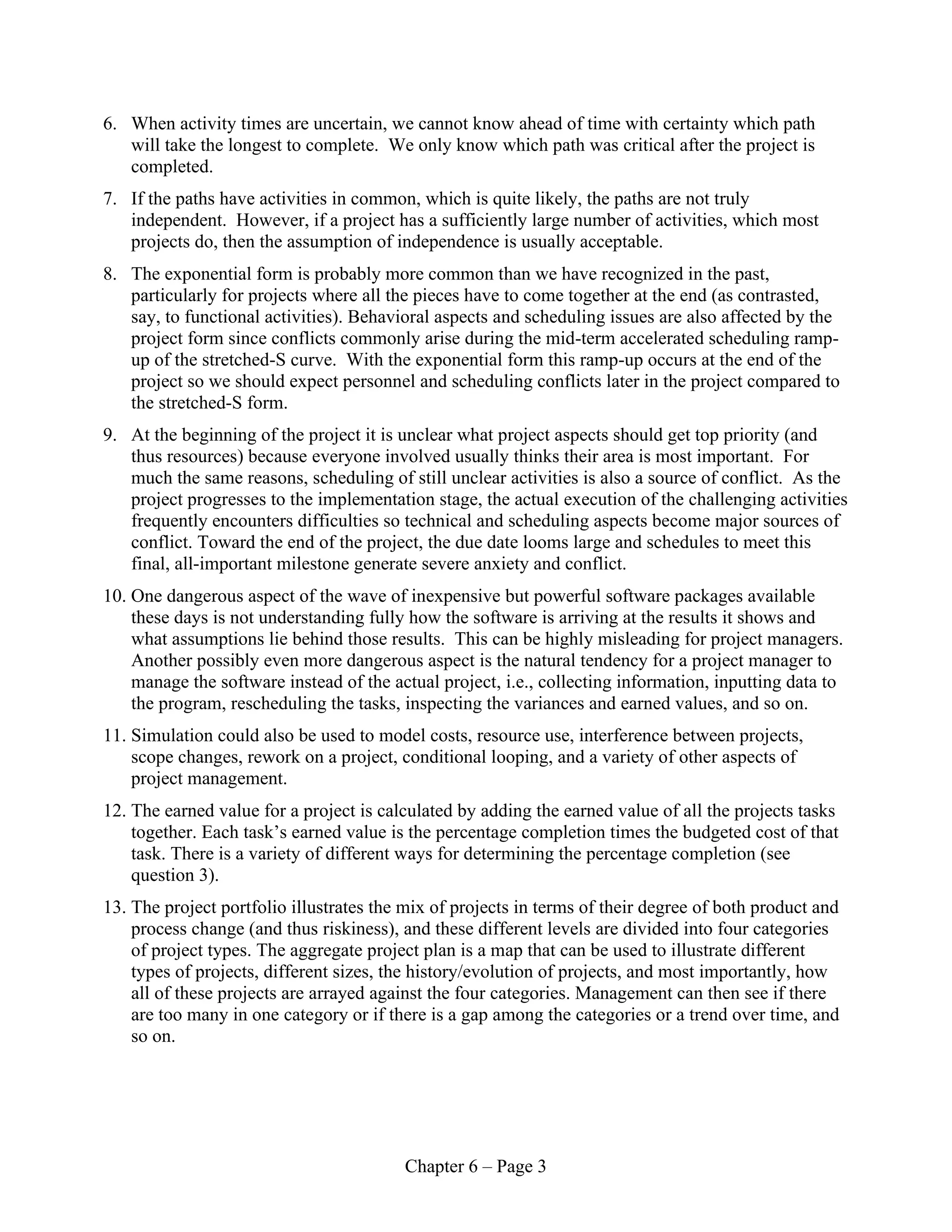
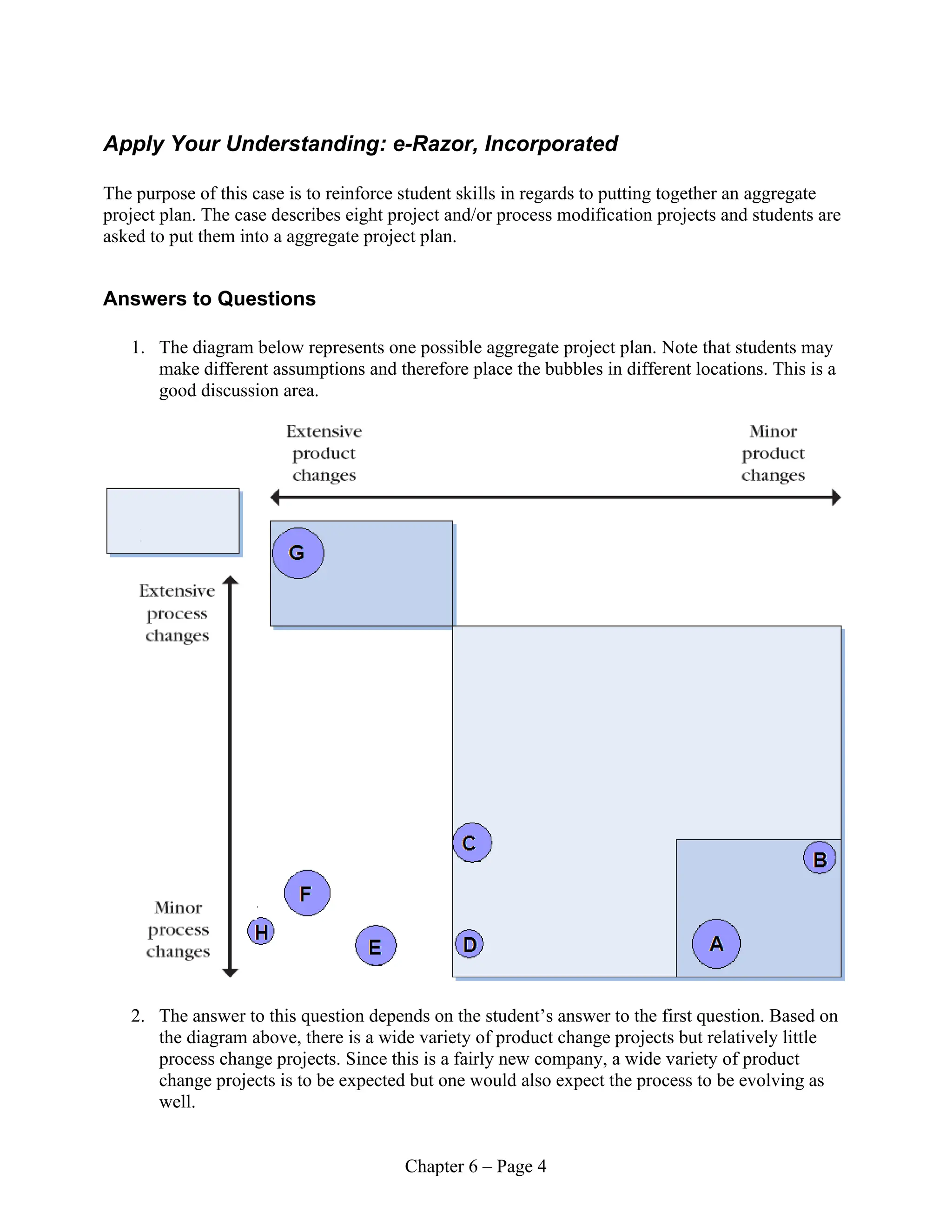
1. The diagram below represents one possible aggregate project plan. Note that students may
make different assumptions and therefore place the bubbles in different locations. This is a
good discussion area.
2. The answer to this question depends on the student’s answer to the first question. Based on
the diagram above, there is a wide variety of product change projects but relatively little
process change projects. Since this is a fairly new company, a wide variety of product
change projects is to be expected but one would also expect the process to be evolving as
well.
9.
Chapter 6 –Page 5
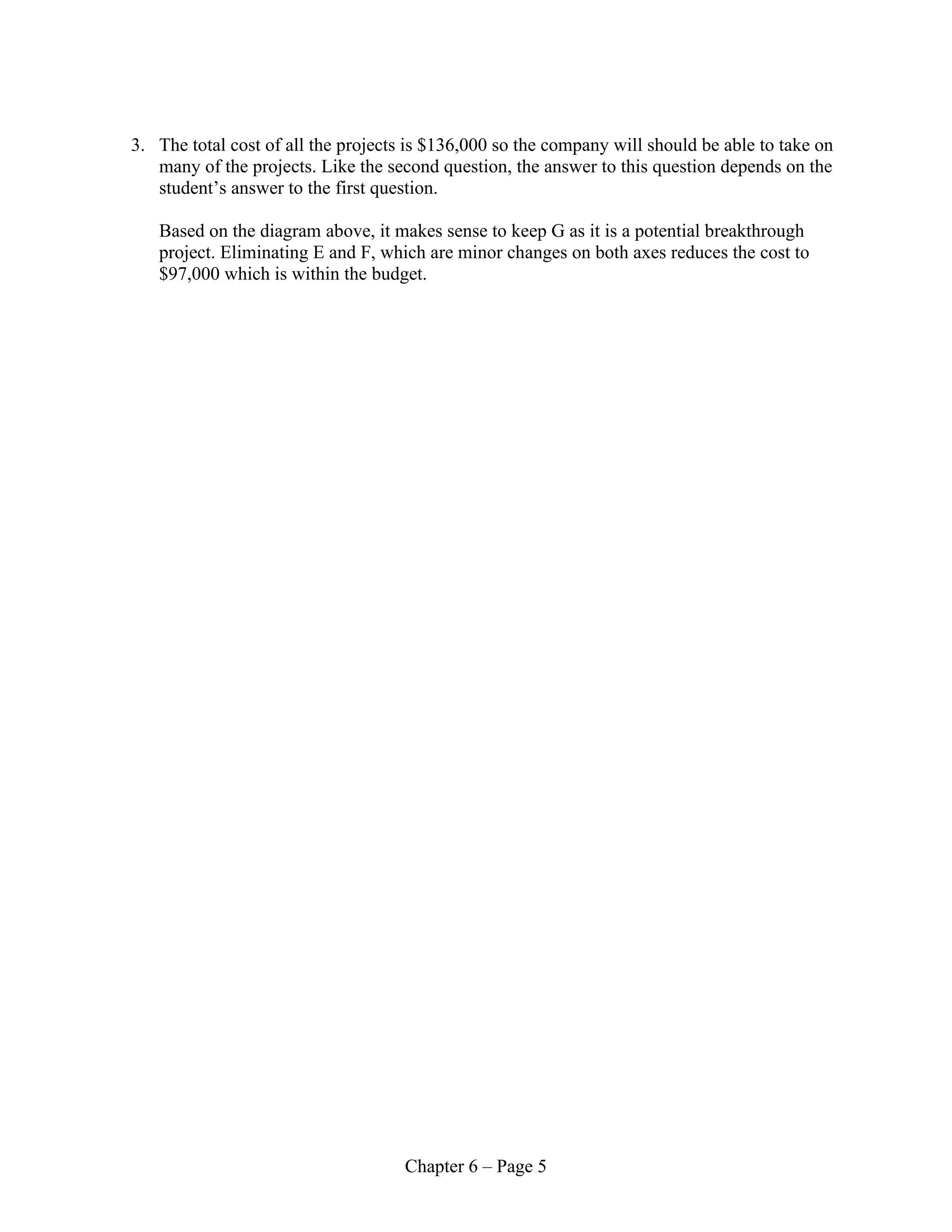
3. The total cost of all the projects is $136,000 so the company will should be able to take on
many of the projects. Like the second question, the answer to this question depends on the
student’s answer to the first question.
Based on the diagram above, it makes sense to keep G as it is a potential breakthrough
project. Eliminating E and F, which are minor changes on both axes reduces the cost to
$97,000 which is within the budget.
10.
Chapter 6 –Page 6
Apply Your Understanding: Nutri-Sam
The purpose of this case is to reinforce students’ skills in analyzing projects with probabilistic time
estimates. The case also provides students with an opportunity to use spreadsheets to simulate the
completion of the project and use the results of the simulation to perform standard probability
calculations.
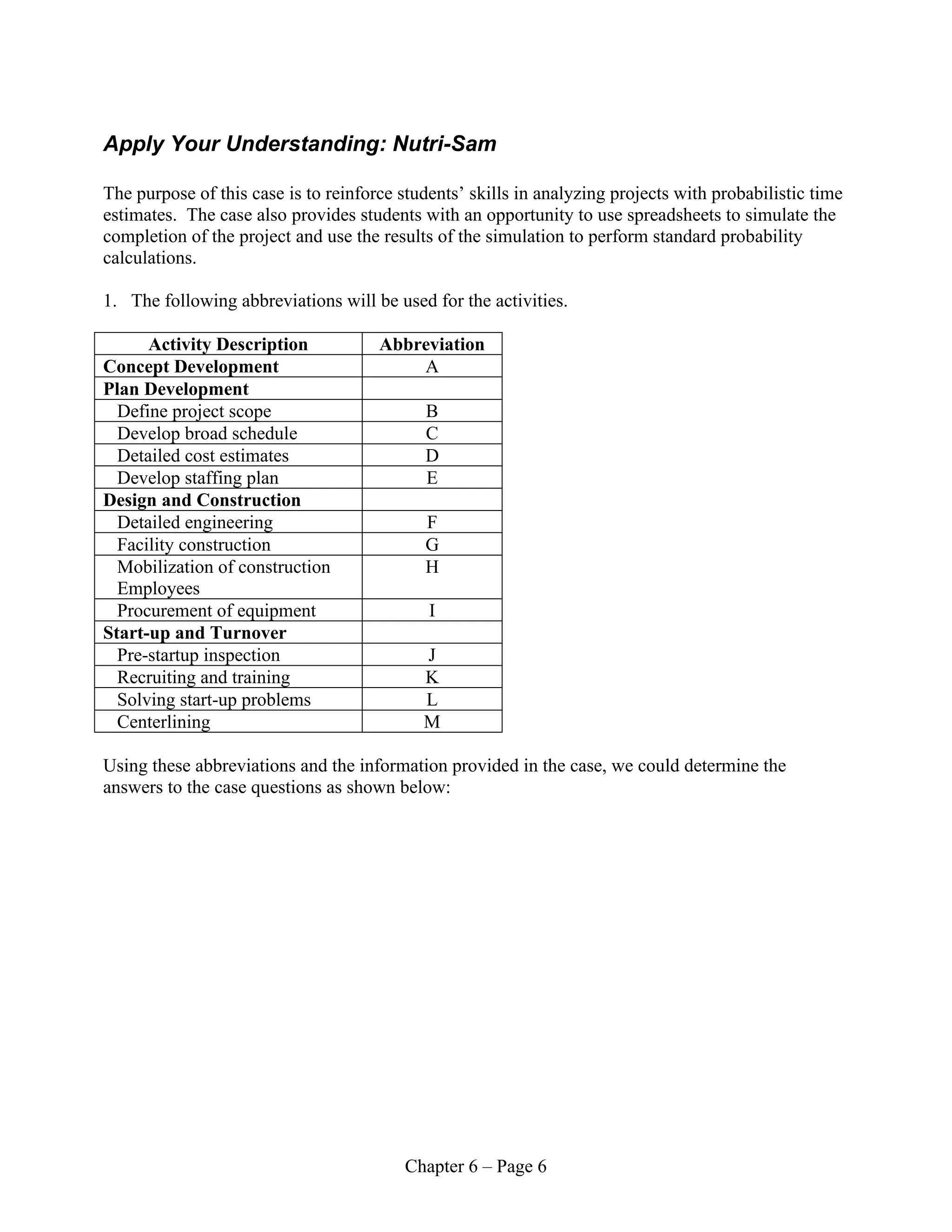
1. The following abbreviations will be used for the activities.
Activity Description Abbreviation
Concept Development A
Plan Development
Define project scope B
Develop broad schedule C
Detailed cost estimates D
Develop staffing plan E
Design and Construction
Detailed engineering F
Facility construction G
Mobilization of construction
Employees
H
Procurement of equipment I
Start-up and Turnover
Pre-startup inspection J
Recruiting and training K
Solving start-up problems L
Centerlining M
Using these abbreviations and the information provided in the case, we could determine the
answers to the case questions as shown below:
11.
Chapter 6 –Page 7
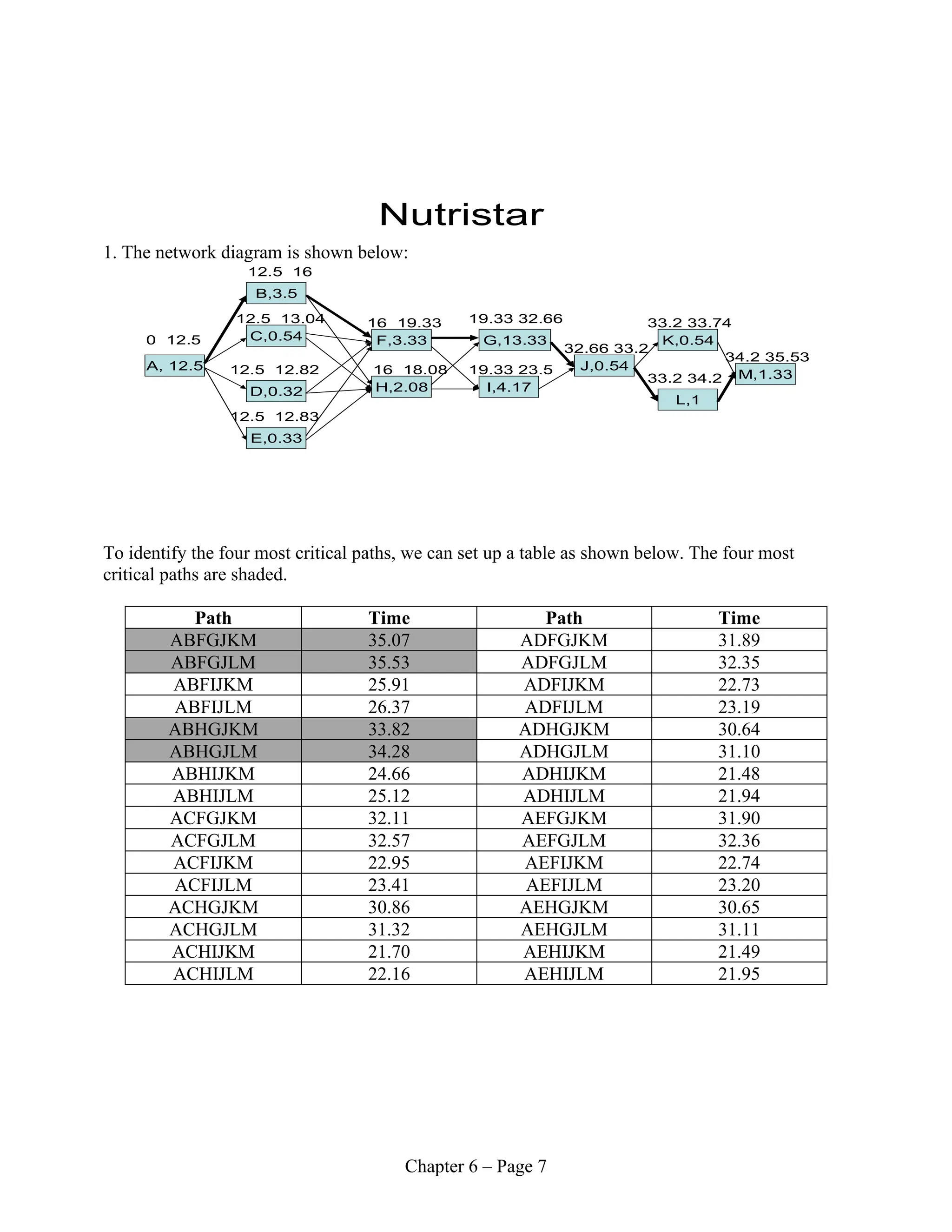
Nutristar
A, 12.5
B,3.5
C,0.54
D,0.32
E,0.33
F,3.33
H,2.08
G,13.33
I,4.17
J,0.54
K,0.54
L,1
M,1.33
0 12.5
12.5 16
12.5 13.04
12.5 12.82
12.5 12.83
16 18.08
16 19.33 19.33 32.66
19.33 23.5
32.66 33.2
33.2 33.74
33.2 34.2
34.2 35.53
1. The network diagram is shown below:
To identify the four most critical paths, we can set up a table as shown below. The four most
critical paths are shaded.
Path Time Path Time
ABFGJKM 35.07 ADFGJKM 31.89
ABFGJLM 35.53 ADFGJLM 32.35
ABFIJKM 25.91 ADFIJKM 22.73
ABFIJLM 26.37 ADFIJLM 23.19
ABHGJKM 33.82 ADHGJKM 30.64
ABHGJLM 34.28 ADHGJLM 31.10
ABHIJKM 24.66 ADHIJKM 21.48
ABHIJLM 25.12 ADHIJLM 21.94
ACFGJKM 32.11 AEFGJKM 31.90
ACFGJLM 32.57 AEFGJLM 32.36
ACFIJKM 22.95 AEFIJKM 22.74
ACFIJLM 23.41 AEFIJLM 23.20
ACHGJKM 30.86 AEHGJKM 30.65
ACHGJLM 31.32 AEHGJLM 31.11
ACHIJKM 21.70 AEHIJKM 21.49
ACHIJLM 22.16 AEHIJLM 21.95
12.
Chapter 6 –Page 8
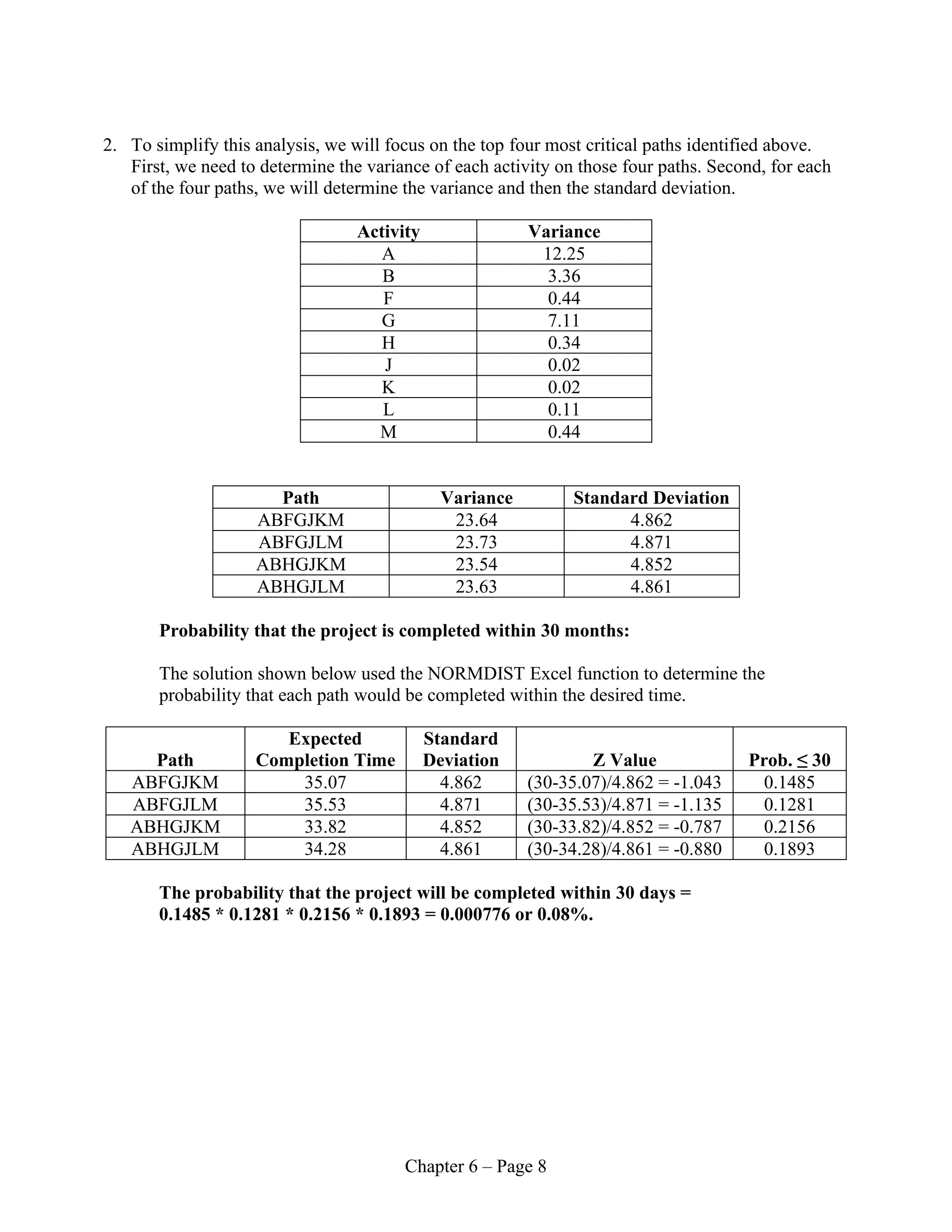
2. To simplify this analysis, we will focus on the top four most critical paths identified above.
First, we need to determine the variance of each activity on those four paths. Second, for each
of the four paths, we will determine the variance and then the standard deviation.
Activity Variance
A 12.25
B 3.36
F 0.44
G 7.11
H 0.34
J 0.02
K 0.02
L 0.11
M 0.44
Path Variance Standard Deviation
ABFGJKM 23.64 4.862
ABFGJLM 23.73 4.871
ABHGJKM 23.54 4.852
ABHGJLM 23.63 4.861
Probability that the project is completed within 30 months:
The solution shown below used the NORMDIST Excel function to determine the
probability that each path would be completed within the desired time.
Path
Expected
Completion Time
Standard
Deviation Z Value Prob. ≤ 30
ABFGJKM 35.07 4.862 (30-35.07)/4.862 = -1.043 0.1485
ABFGJLM 35.53 4.871 (30-35.53)/4.871 = -1.135 0.1281
ABHGJKM 33.82 4.852 (30-33.82)/4.852 = -0.787 0.2156
ABHGJLM 34.28 4.861 (30-34.28)/4.861 = -0.880 0.1893
The probability that the project will be completed within 30 days =
0.1485 * 0.1281 * 0.2156 * 0.1893 = 0.000776 or 0.08%.
13.
Chapter 6 –Page 9
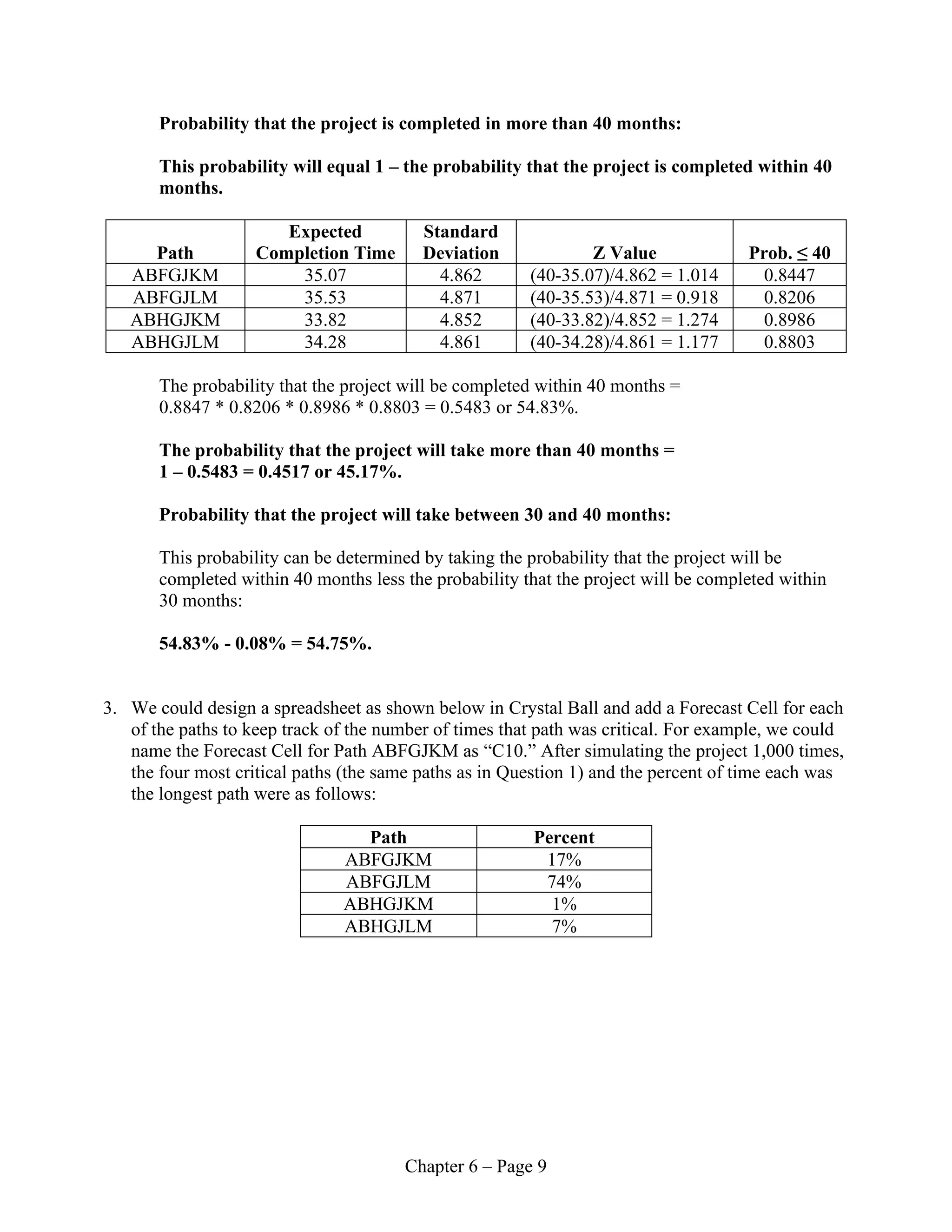
Probability that the project is completed in more than 40 months:
This probability will equal 1 – the probability that the project is completed within 40
months.
Path
Expected
Completion Time
Standard
Deviation Z Value Prob. ≤ 40
ABFGJKM 35.07 4.862 (40-35.07)/4.862 = 1.014 0.8447
ABFGJLM 35.53 4.871 (40-35.53)/4.871 = 0.918 0.8206
ABHGJKM 33.82 4.852 (40-33.82)/4.852 = 1.274 0.8986
ABHGJLM 34.28 4.861 (40-34.28)/4.861 = 1.177 0.8803
The probability that the project will be completed within 40 months =
0.8847 * 0.8206 * 0.8986 * 0.8803 = 0.5483 or 54.83%.
The probability that the project will take more than 40 months =
1 – 0.5483 = 0.4517 or 45.17%.
Probability that the project will take between 30 and 40 months:
This probability can be determined by taking the probability that the project will be
completed within 40 months less the probability that the project will be completed within
30 months:
54.83% - 0.08% = 54.75%.
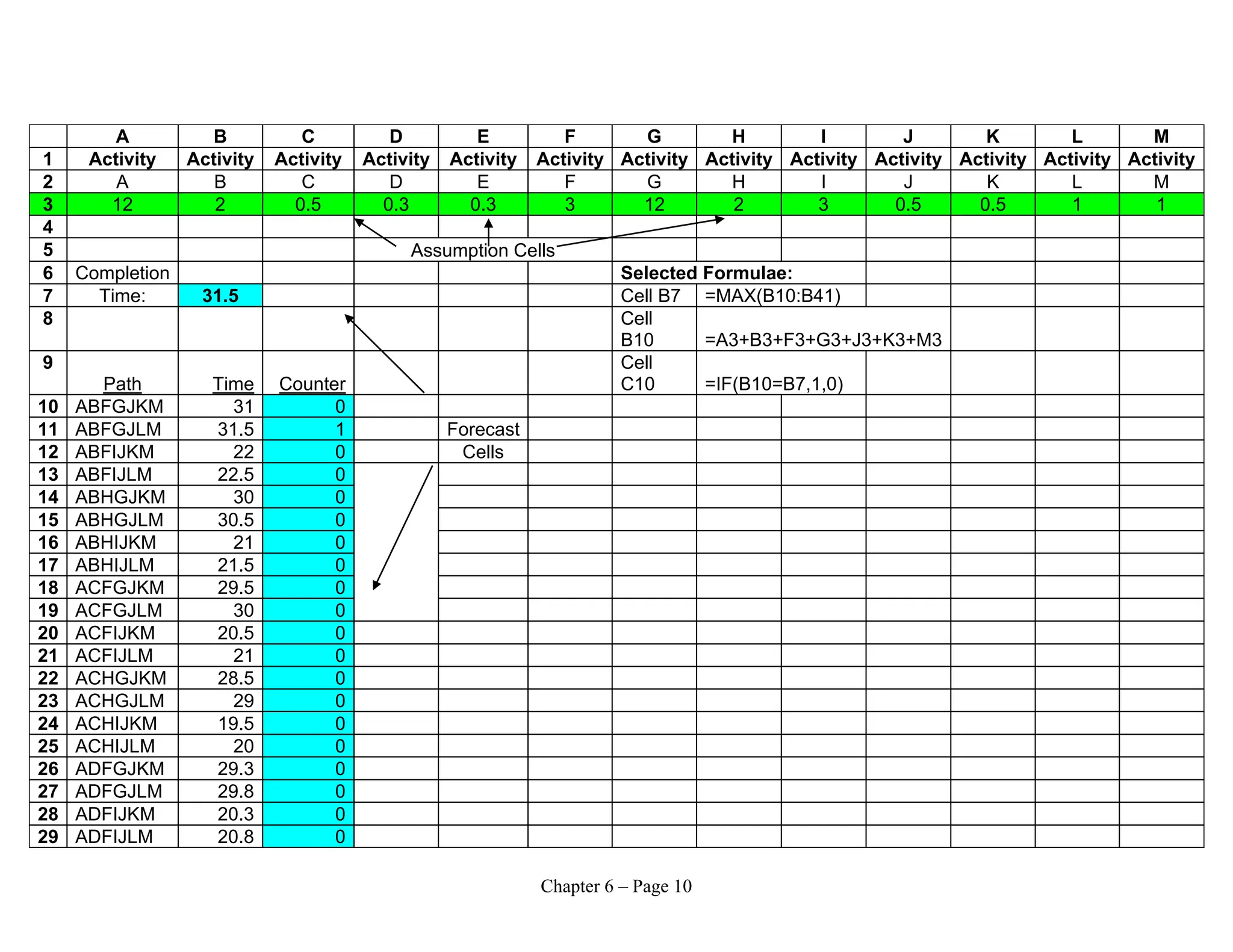
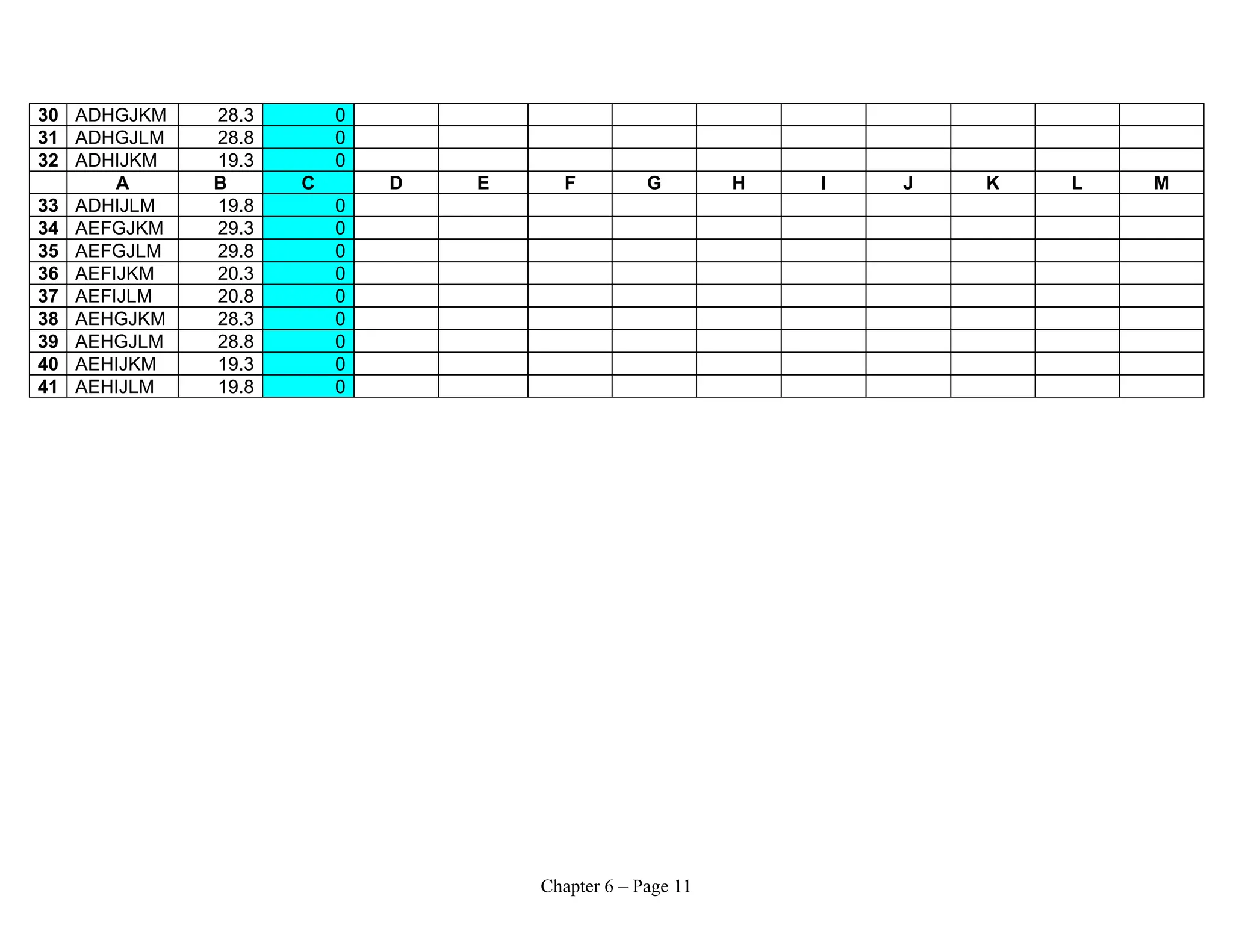
3. We could design a spreadsheet as shown below in Crystal Ball and add a Forecast Cell for each
of the paths to keep track of the number of times that path was critical. For example, we could
name the Forecast Cell for Path ABFGJKM as “C10.” After simulating the project 1,000 times,
the four most critical paths (the same paths as in Question 1) and the percent of time each was
the longest path were as follows:
Path Percent
ABFGJKM 17%
ABFGJLM 74%
ABHGJKM 1%
ABHGJLM 7%
14.
Chapter 6 –Page 10
A B C D E F G H I J K L M
1 Activity Activity Activity Activity Activity Activity Activity Activity Activity Activity Activity Activity Activity
2 A B C D E F G H I J K L M
3 12 2 0.5 0.3 0.3 3 12 2 3 0.5 0.5 1 1
4
5 Assumption Cells
6 Completion Selected Formulae:
7 Time: 31.5 Cell B7 =MAX(B10:B41)
8 Cell
B10 =A3+B3+F3+G3+J3+K3+M3
9
Path Time Counter
Cell
C10 =IF(B10=B7,1,0)
10 ABFGJKM 31 0
11 ABFGJLM 31.5 1 Forecast
12 ABFIJKM 22 0 Cells
13 ABFIJLM 22.5 0
14 ABHGJKM 30 0
15 ABHGJLM 30.5 0
16 ABHIJKM 21 0
17 ABHIJLM 21.5 0
18 ACFGJKM 29.5 0
19 ACFGJLM 30 0
20 ACFIJKM 20.5 0
21 ACFIJLM 21 0
22 ACHGJKM 28.5 0
23 ACHGJLM 29 0
24 ACHIJKM 19.5 0
25 ACHIJLM 20 0
26 ADFGJKM 29.3 0
27 ADFGJLM 29.8 0
28 ADFIJKM 20.3 0
29 ADFIJLM 20.8 0
Chapter 6 –Page 11
30 ADHGJKM 28.3 0
31 ADHGJLM 28.8 0
32 ADHIJKM 19.3 0
A B C D E F G H I J K L M
33 ADHIJLM 19.8 0
34 AEFGJKM 29.3 0
35 AEFGJLM 29.8 0
36 AEFIJKM 20.3 0
37 AEFIJLM 20.8 0
38 AEHGJKM 28.3 0
39 AEHGJLM 28.8 0
40 AEHIJKM 19.3 0
41 AEHIJLM 19.8 0
17.
Chapter 6 –Page 12
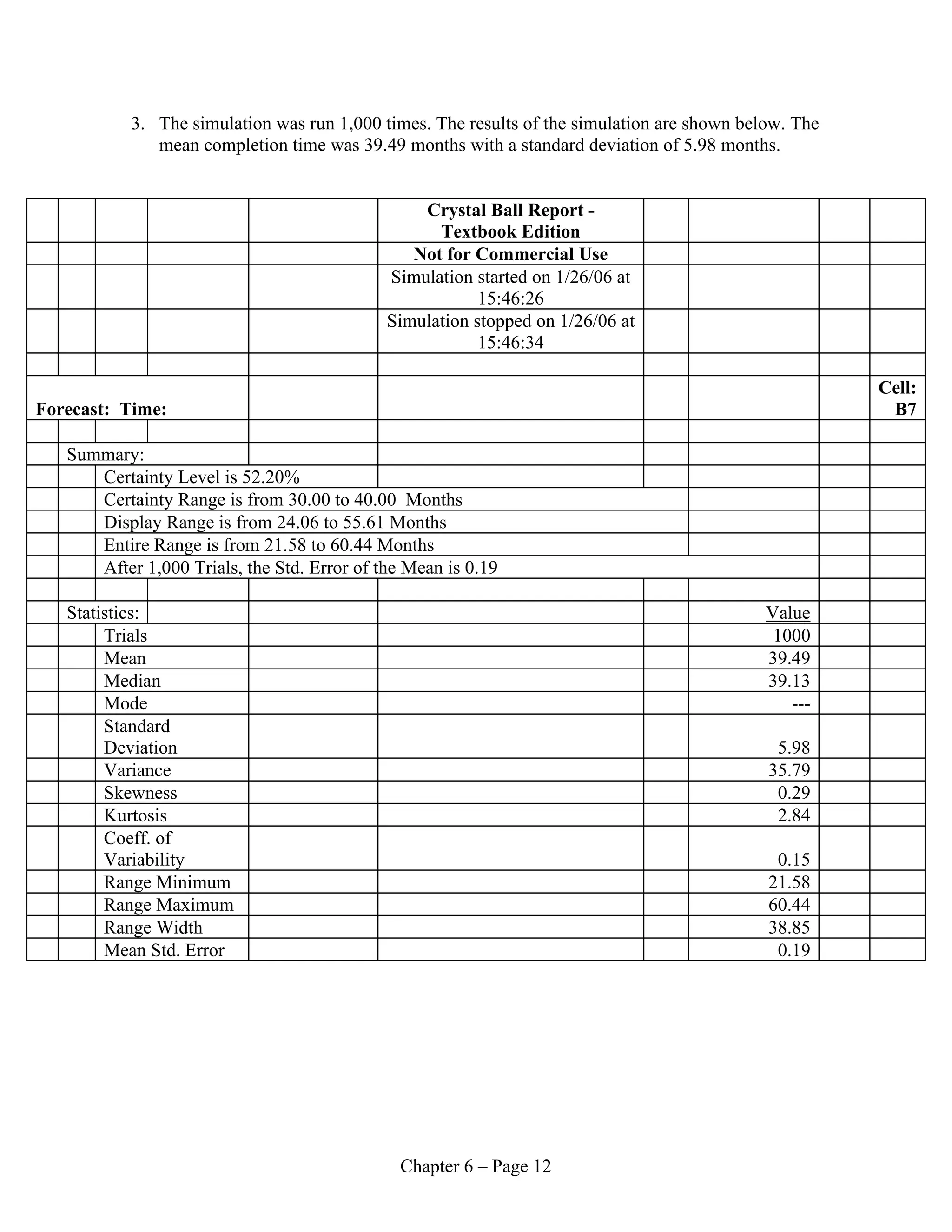
3. The simulation was run 1,000 times. The results of the simulation are shown below. The
mean completion time was 39.49 months with a standard deviation of 5.98 months.
Crystal Ball Report -
Textbook Edition
Not for Commercial Use
Simulation started on 1/26/06 at
15:46:26
Simulation stopped on 1/26/06 at
15:46:34
Forecast: Time:
Cell:
B7
Summary:
Certainty Level is 52.20%
Certainty Range is from 30.00 to 40.00 Months
Display Range is from 24.06 to 55.61 Months
Entire Range is from 21.58 to 60.44 Months
After 1,000 Trials, the Std. Error of the Mean is 0.19
Statistics: Value
Trials 1000
Mean 39.49
Median 39.13
Mode ---
Standard
Deviation 5.98
Variance 35.79
Skewness 0.29
Kurtosis 2.84
Coeff. of
Variability 0.15
Range Minimum 21.58
Range Maximum 60.44
Range Width 38.85
Mean Std. Error 0.19
18.
Chapter 6 –Page 13
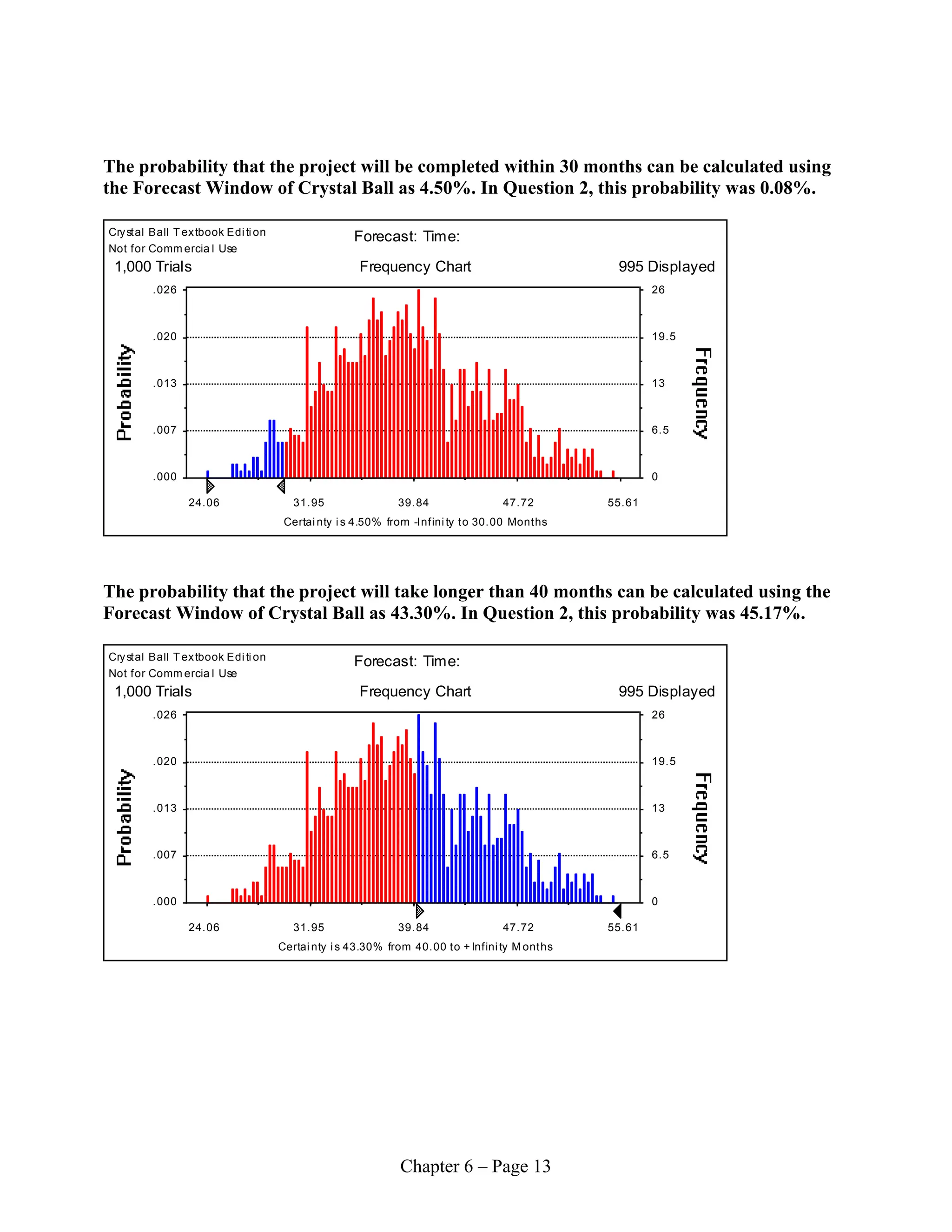
The probability that the project will be completed within 30 months can be calculated using
the Forecast Window of Crystal Ball as 4.50%. In Question 2, this probability was 0.08%.
Crystal Ball Textbook Edi ti on
Not for Comm ercia l Use
Frequency Chart
Certai nty i s 4.50% from -Infini ty to 30.00 Months
.000
.007
.013
.020
.026
0
6.5
13
19.5
26
24.06 31.95 39.84 47.72 55.61
1,000 Trials 995 Displayed
Forecast: Time:
The probability that the project will take longer than 40 months can be calculated using the
Forecast Window of Crystal Ball as 43.30%. In Question 2, this probability was 45.17%.
Crystal Ball Textbook Edi ti on
Not for Comm ercia l Use
Frequency Chart
Certai nty i s 43.30% from 40.00 to + Infini ty M onths
.000
.007
.013
.020
.026
0
6.5
13
19.5
26
24.06 31.95 39.84 47.72 55.61
1,000 Trials 995 Displayed
Forecast: Time:
19.
Chapter 6 –Page 14
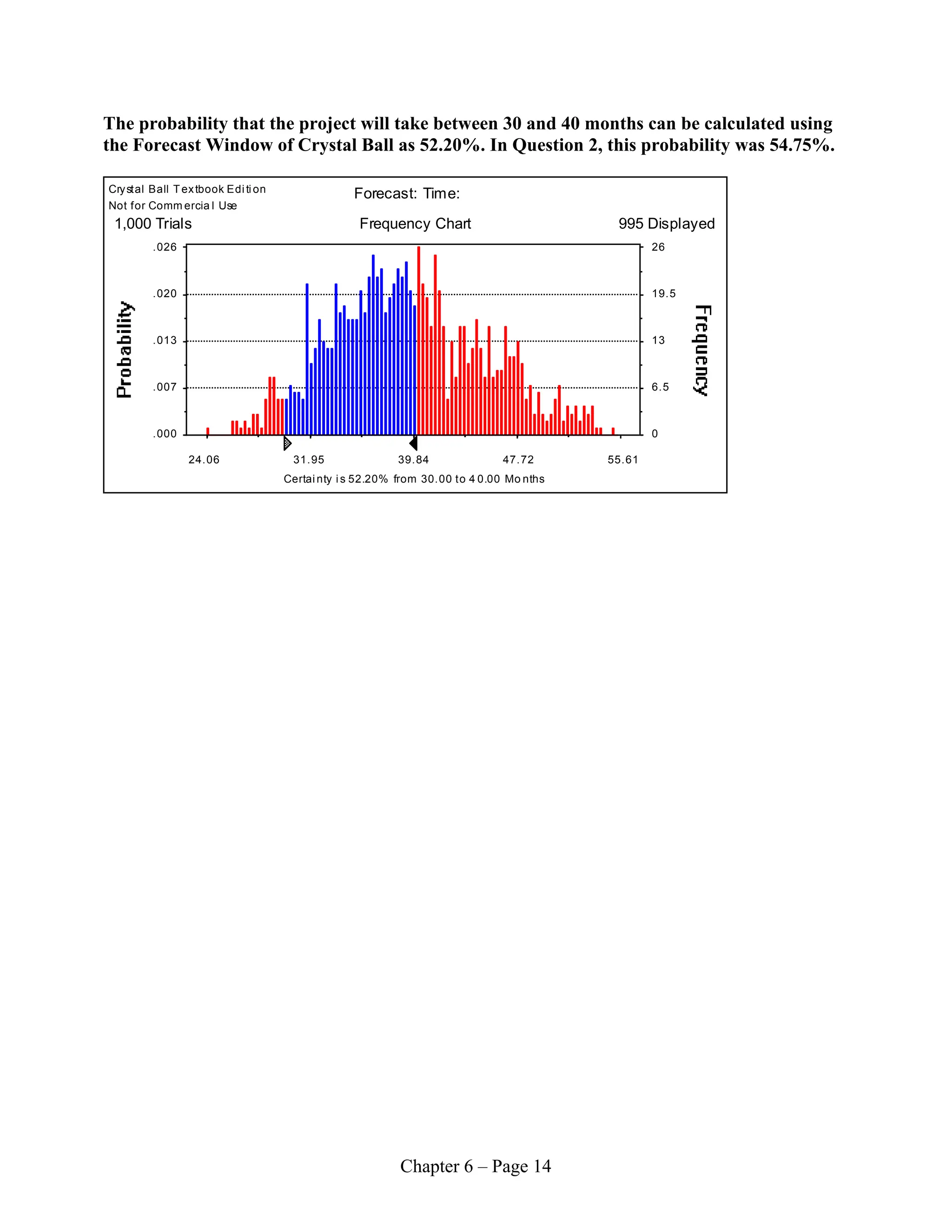
The probability that the project will take between 30 and 40 months can be calculated using
the Forecast Window of Crystal Ball as 52.20%. In Question 2, this probability was 54.75%.
Crystal Ball Textbook Edi ti on
Not for Comm ercia l Use
Frequency Chart
Certai nty i s 52.20% from 30.00 to 4 0.00 Mo nths
.000
.007
.013
.020
.026
0
6.5
13
19.5
26
24.06 31.95 39.84 47.72 55.61
1,000 Trials 995 Displayed
Forecast: Time:
20.
Chapter 6 –Page 15
Suggested Cases/Readings
Case: Biogen Inc.: rBeta Interferon Manufacturing Process Development (Hvd. 9-696-083)
Although there is no teaching note with this case, it is a great example of a failing major
project and the focus of the analysis is fairly clear: What did Biogen do well? What did they do
wrong? Was project management appropriate for them at this time? If not, what should they have
done? What were the 3-4 root causes of their problems? What should they do now?
Case: The Project Manager/Customer Interface (U. of Virginia Darden School, TN: UVA-
OM-0739TN)
This is a good case for illustrating some of the behavioral issues that can arise between a
project manager and the customer. In this situation, the project went fine but the customer’s
interference caused major cost overruns that the customer refused to pay. The issue of who on the
customer’s side is authorized legally to speak for the customer becomes a major point of contention
in the case.
Case: Corning Glass Works: The Z-Glass Project (Hvd. 9-681-091, TN 5-683-045)
This case is an excellent portrayal of the real problems involved in implementing a project,
particularly concerning human behavior and organizational issues. The technical analysis of
laboratory data (especially footnotes) is crucial in the determination of the correct conclusions in
the case also.
Case: Northeast Research Laboratories (B) (Hvd. 9--175-184)
This is a qualitative case involving a post-audit of a project "failure." It concerns a
meddling customer's representative who botches the supplier's project, which the customer then
wishes to cancel. It heavily focuses on human behavior and organizational issues.
Case: Plus Development Corporation (A) (Hvd. 9-687-001, TN 5-690-093)
This case concerns the development of a new, innovative disk drive for computers and the
strategy for producing it. A complication is that the project team is composed of a Japanese
manufacturing team and an American design team but they have different strategies for how to
produce the new product.
Reading: What’s Your Project’s Real Price Tag? (Q. W. Fleming and J. M. Koppelman,
Harvard Business Review, September 2003, pp. 20-22)
The authors argue against tracking the cost of a project using only two dimensions: planned
costs and actual costs. They advise companies to use earned-value management and the cost
performance index, in particular, to monitor project progress.
Reading: Why Good Projects Fail Anyway (N. E. Matta and R. N. Ashkenas, Harvard
Business Review, September 2003, pp. 109-114)
This article discusses how difficult it is for project managers to predict all the activities and
work streams that will be needed to complete a project and to integrate all of the disparate activities
of a project. The author recommends the use of rapid-results initiatives to produce a measurable
Everyone was athis place except Dorothy, the Wizard and Toto—and
of course Ozma's chair at the head of the table was vacant. Dorothy's
place was at Ozma's right, while the Wizard sat at her left. A few
minutes later, King Umb and Queen Ra, having decided that it would
arouse too much comment if they were absent from the dinner,
entered the sumptuous dining room and took their places on either
side of Ozma's vacant chair. Now only Toto remained absent.
The truth was that the little dog had overslept and had awakened
from his nap to find the shadows lengthening across the garden.
Realizing he was late for dinner, Toto hurried to the nearest palace
entrance and ran as quickly as he could to the Grand Dining Room.
As he entered, the first course of the meal was being served, and a
ripple of conversation rose from the two tables. The Scarecrow and
Scraps were chatting together. Betsy was telling Trot about the lovely
wild flowers she had found, and the Cowardly Lion and the Hungry
Tiger were discussing a visit they planned to their old jungle home in
the forest far to the south in the Quadling Country.
23.
In spite ofthe apparent atmosphere of gayety, this gathering was not
at all like the merry company that usually assembled in the dining
room for the evening meal. First of all, the absence of the radiant
Ozma was keenly felt by the entire gathering, and this automatically
subdued the spirit of the occasion. Next, no one at the table had
failed to note and wonder at the fact that Dorothy and the Wizard—
usually so cheerful and cordial—had merely nodded unsmilingly to
their assembled friends as they had taken their places at the head of
the table. Finally, Scraps, the Scarecrow, Trot and Cap'n Bill, unable
to forget the strange conversation they had overheard in the garden
earlier in the day, stole curious glances at Dorothy and the Wizard,
seeking some clue to their unusual behavior.
"You're wrong—all of you are wrong," growled Toto ominously
24.
As Toto trottedinto the dining room, his bright little eyes immediately
sought out his mistress. Toto stopped short; his body became tense
with excitement. He barked loudly and then growled, "Where's
Dorothy?"
In the silence that fell over the dining room at the dog's unusual
actions, Toto repeated his question. "Where's Dorothy?" he
demanded.
The Scarecrow was staring earnestly at Toto. "Why, here's Dorothy,"
the straw man answered. "Right here, where she always sits."
"You're wrong—all of you are wrong," growled Toto ominously. The
little dog was quivering with excitement. "Whoever that is sitting
there might fool the rest of you, but she can't deceive me. She's not
Dorothy at all. Something's happened to Dorothy!"
25.
CHAPTER 9
Mr. andMrs. Hi-Lo
"Step right in, folks! Watch your step, Miss. We're on our way up—
next stop the top! Only two stops—bottom and top. Next stop's the
top!"
The little man spoke with an air of importance, as he smiled at
Dorothy and the Wizard from the stool on which he was perched in
the car which the opening in the stone wall had revealed. They
peered at him curiously.
"Shall we go in?" asked Dorothy, drawing a deep breath.
"To be sure," said the Wizard. "Anything is better than this stone
prison."
"Ah, a philosopher, and a wise one, too," remarked the little man.
As soon as Dorothy and the Wizard were in the elevator—for such it
proved to be—the stone door swung shut. At once the little man
pressed one of several buttons on the side of the car and again they
heard the whirring sound which had puzzled them in the cavern.
Dorothy concluded it was caused by the machinery that operated the
elevator. The little car was shooting upward with a speed that caused
her ears to ring.
"Just swallow several times," advised the Wizard, sensing Dorothy's
discomfort. "That will make equal the air pressure inside and outside
your body. It's a trick I learned when I went up in my balloon to draw
crowds to the circus back in Omaha."
Dorothy did as the Wizard suggested and found the ringing sensation
disappeared.
26.
"Who are you?"asked the Wizard gazing curiously at the little man.
"And where are you taking us?"
"You don't know who I am?" exclaimed the little man with surprise.
"After all, you know you did ring for the elevator, and since I am the
elevator operator, naturally I answered. Allow me to introduce myself.
My name is Hi-Lo and I am taking you to the only other place the
elevator goes except for the bottom—and that's to the top of Mount
Illuso. I assure you it's a far better place than the bottom!"
While he spoke, Dorothy had been regarding the little man who
called himself Hi-Lo. He was very short, his head coming only to
Dorothy's waist. He was dressed in a bright blue uniform with big,
gold buttons. A red cap was perched at a jaunty angle on his head.
His face was round and his cheeks as rosy as two apples. His blue
eyes were very bright and friendly. But the oddest thing about him
was that his clothes appeared to be a part of his body—as though
they were painted on. And Dorothy concluded he was most certainly
made of some substance other than flesh and blood.
"Ah, I see I've aroused your interest," remarked the little man with
satisfaction. "Well, I'm proud to tell you that I am made of the finest
white pine and painted with quick-drying four-hour enamel that flows
easily from the brush and is guaranteed not to chip, crack, craze or
peel. I'm easily washable, too; spots and stains wipe off in a jiffy with
a damp cloth or sponge—no rubbing or scrubbing for me! And I
suppose," Hi-Lo concluded vainly, "you've already admired my rich,
glossy finish and beautiful rainbow colors."
Dorothy smiled at this speech, and the Wizard asked, "Tell me, Hi-Lo,
do people live on the top of Mount Illuso?"
"Of course," Hi-Lo replied in his cheerful voice. "We have a thriving
community of folks—Pineville it's called. But we're all very happy and
contented," he went on hastily. "There's not a lonesome pine among
us, although there are several trails on the mountain top."
"But are there no flesh and blood folks, like us?" queried the Wizard.
Before Hi-Lo could answer, the elevator came to an abrupt stop.
27.
"Well, here weare!" announced Hi-Lo cheerily. He pressed another
button. The door of the elevator swung open and Hi-Lo called, "All
out! All out! Top floor—all kinds of wooden goods, the best pine to be
had—pine tables, pine chairs, pine houses and pine people!"
Dorothy and the Wizard stepped from the elevator and surveyed the
scene before them. Yes, this was certainly the top of Mount Illuso.
The elevator exit was in a large stone wall, at least ten feet in height,
that appeared to circle the edge of the mountain top. Before them
spread a dense pine forest, while a small path led from the elevator
to a tiny cottage that stood nearby. The cottage was painted bright
blue with trim white shutters, and smoke was rising cheerily from its
red brick chimney.
"Right this way! Just follow me, folks," said Hi-Lo, trotting along the
path to the cottage, his little wooden legs moving with surprising
28.
speed. "Mrs. Hi-Lowill certainly be surprised to see you. You are a
real event—the very first visitors we have ever had from down
below."
As they approached the tiny cottage, the front door swung open, and
a little woman stood in the doorway. She was even smaller than Hi-
Lo, and like him was made of wood and painted with the same bright
enamels. She wore a blue and white apron over a red polka-dot
dress. On her head was a trim little lace cap.
"My goodness!" she beamed. "Visitors at last! Do come in and make
yourselves comfortable."
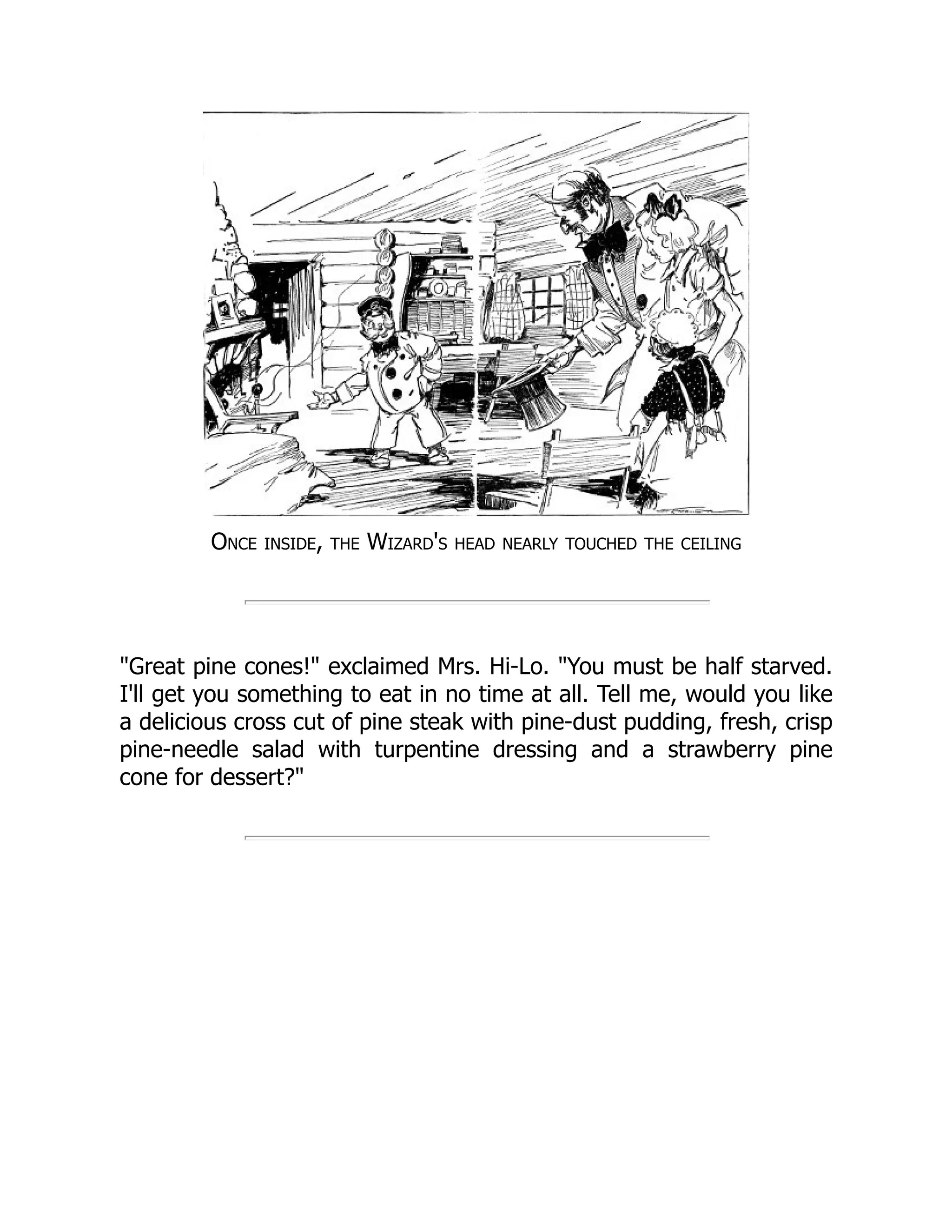
The Wizard found it necessary to bend over to get in the doorway, so
small was the cottage. Once inside, his head nearly touched the
ceiling. The cottage was neatly and attractively furnished with
comfortable pine chairs, tables and a large davenport drawn before a
fireplace on which a log fire crackled cheerfully. The air was sharp on
the mountain top, so the bright fire was a welcome sight to the two
wanderers. All the furniture glowed with the cheerful, gaudy hues of
glossy enamel. Dorothy thought that the wholesome aroma of pine
scent that filled the cottage was especially delightful.
29.
Once inside, theWizard's head nearly touched the ceiling
"Great pine cones!" exclaimed Mrs. Hi-Lo. "You must be half starved.
I'll get you something to eat in no time at all. Tell me, would you like
a delicious cross cut of pine steak with pine-dust pudding, fresh, crisp
pine-needle salad with turpentine dressing and a strawberry pine
cone for dessert?"
30.
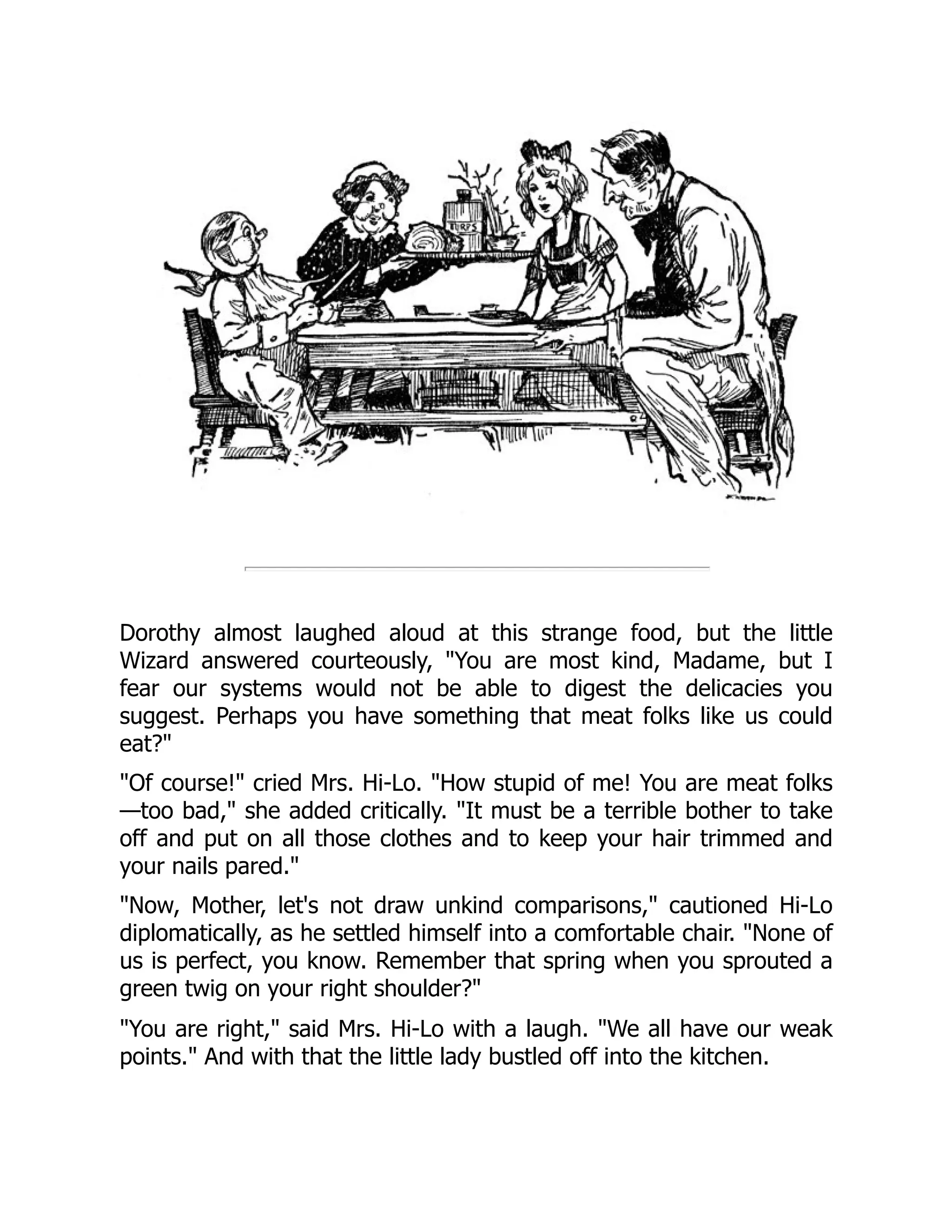
Dorothy almost laughedaloud at this strange food, but the little
Wizard answered courteously, "You are most kind, Madame, but I
fear our systems would not be able to digest the delicacies you
suggest. Perhaps you have something that meat folks like us could
eat?"
"Of course!" cried Mrs. Hi-Lo. "How stupid of me! You are meat folks
—too bad," she added critically. "It must be a terrible bother to take
off and put on all those clothes and to keep your hair trimmed and
your nails pared."
"Now, Mother, let's not draw unkind comparisons," cautioned Hi-Lo
diplomatically, as he settled himself into a comfortable chair. "None of
us is perfect, you know. Remember that spring when you sprouted a
green twig on your right shoulder?"
"You are right," said Mrs. Hi-Lo with a laugh. "We all have our weak
points." And with that the little lady bustled off into the kitchen.
31.
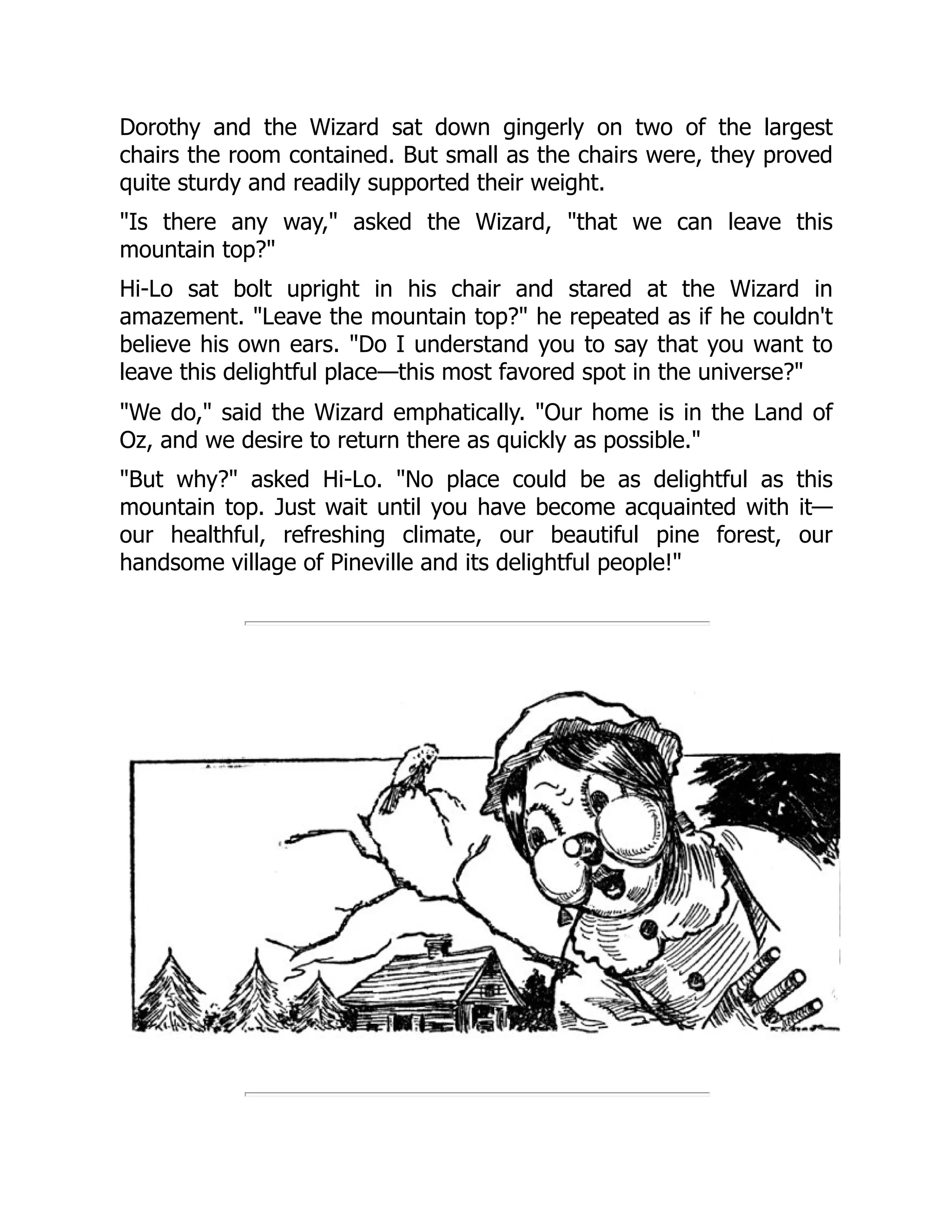
Dorothy and theWizard sat down gingerly on two of the largest
chairs the room contained. But small as the chairs were, they proved
quite sturdy and readily supported their weight.
"Is there any way," asked the Wizard, "that we can leave this
mountain top?"
Hi-Lo sat bolt upright in his chair and stared at the Wizard in
amazement. "Leave the mountain top?" he repeated as if he couldn't
believe his own ears. "Do I understand you to say that you want to
leave this delightful place—this most favored spot in the universe?"
"We do," said the Wizard emphatically. "Our home is in the Land of
Oz, and we desire to return there as quickly as possible."
"But why?" asked Hi-Lo. "No place could be as delightful as this
mountain top. Just wait until you have become acquainted with it—
our healthful, refreshing climate, our beautiful pine forest, our
handsome village of Pineville and its delightful people!"
32.
"Have you everbeen anywhere else?" asked the Wizard quietly.
"No, never—but—"
"Then permit me to say," replied the Wizard, "that you are not
qualified to judge. Little Dorothy and I have traveled in many strange
lands all over the world, and we prefer the Land of Oz for our home."
"Well, everyone to his own taste, of course," muttered Hi-Lo,
unconvinced and a trifle crestfallen.
Just then Mrs. Hi-Lo re-entered the room bearing a tray laden with
steaming hot foods. At her invitation Dorothy and the Wizard pulled
their chairs up to a table, and Mrs. Hi-Lo served the food on gleaming
white enameled pine platters and dishes. There was savory vegetable
soup, scrambled eggs, cheese, lettuce and tomato salad, chocolate
layer cake and lemonade. The food was delicious and as Dorothy and
the Wizard had not eaten since breakfast, and it was now nearly
evening, they did full justice to the meal. Mr. and Mrs. Hi-Lo looked
on with polite curiosity, marveling that the strangers could enjoy such
odd food.
When they had finished the Wizard sighed with satisfaction and sat
back in his chair. "Where did you get this excellent food, if there are
no human beings on the mountain top?" he asked.
"Oh, but there is one meat person like yourselves on Mount Illuso,"
said Mrs. Hi-Lo. "She is our ruler, and many years ago she gave me
the magic recipe for the preparation of human food. As you are the
first human visitors we have ever had, this is the first time I have had
occasion to use the recipe."
"Who is this ruler of yours?" inquired Dorothy.
"She is a beautiful Fairy Princess, named Ozana," Hi-Lo replied.
"Ozana!" exclaimed Dorothy. "Wizard, did you hear that? Ozana—
doesn't that sound an awful lot like an Oz name?"
"It certainly does," agreed the little man. "May we see this Princess
Ozana of yours?" he asked Hi-Lo.
33.
"I was aboutto mention," replied Hi-Lo, "that it was Ozana's orders
when she appointed me Keeper of the Elevator that I was to instruct
any passengers I might have to seek her out at her home in
Pineville."
"Oh, let's go see her right away!" exclaimed Dorothy excitedly.
"Not tonight," objected Hi-Lo. "You would never find your way
through the Pine Forest in the dark. You may stay with us tonight and
be on your way to see Princess Ozana early in the morning."
Dorothy and the Wizard could offer no objection to this sensible and
kindly offer of hospitality. Since it was now quite dark outside, and
the little cottage was cheerful and cozy with the log fire casting
dancing reflections in the brightly enameled furniture, they were
quite content to spend the night there.
After several more questions about the ruler who called herself
Ozana, Dorothy and the Wizard decided that Hi-Lo and his wife knew
nothing more beyond the facts that Princess Ozana had created the
pine folks and built the village for them to live in.
"Have you and Hi-Lo always lived here alone?" Dorothy asked Mrs.
Hi-Lo.
34.
The little woman'sexpression was sad as she answered, "No. Once
we had a son. He was not a very good boy and was continually
getting into mischief. He was the only one of our wooden folks who
ever was discontented with life here on Mount Illuso. He wanted to
travel and see the world. We could do nothing at all with him." Mrs.
Hi-Lo sighed and continued, "One day a friendly stork paused in a
long flight to rest on Mount Illuso, and the naughty boy persuaded
the stork to carry him into the great outside world. From that time on
we have never heard anything more of him. I often wonder what
happened to our poor son," the little woman concluded in a sorrowful
tone.
"How big was your boy?" asked the Wizard. "Was he just a little
shaver?"
"Oh, no," replied Mrs. Hi-Lo. "He was almost fully grown—a young
stripling, I should call him."
"And was his name Charlie?" inquired the Wizard thoughtfully.
35.
"Yes! Yes, itwas! Oh, tell me, Sir," implored Mrs. Hi-Lo, "do you,
perchance, know my son?"
"Not personally," replied the Wizard. "But I can assure you, Madame,
that you have nothing to worry about where your son Charlie is
concerned. That friendly stork knew his business and left Charlie on
the right doorstep."
The Wizard had a small radio in his apartment in the Royal Palace in
the Emerald City, which he sometimes turned on and listened to with
much curiosity. But he never listened for long, as he was subject to
headaches when listening to anything but good music.
"Oh, thank you!" exclaimed Mrs. Hi-Lo. "It is such a relief to know
that our Charlie turned out all right after all. There were times," the
woman confessed, "when I had a horrible suspicion that he was
made from a bad grade of pine—knotty pine, you know."
"There are those who share that opinion," murmured the Wizard. But
Mrs. Hi-Lo was so overjoyed to hear of her son that she paid no
attention to the Wizard's words.
Hi-Lo, who seemed totally uninterested in this conversation
concerning his wayward son, merely muttered, "A bad one, that
youngster," and then yawned somewhat pointedly and remarked that
since their beds were far too small for their guests to occupy, he and
his wife would retire to their bedrooms and Dorothy and the Wizard
could pass the night in the living room.
Mrs. Hi-Lo supplied them with warm blankets and soft pillows, and
then she and Hi-Lo bid them a happy good night. Dorothy made a
snug bed on the davenport, while the Wizard curled up cozily before
the fire.
Just before Dorothy dropped off to sleep she asked, "Do you suppose
this Princess Ozana has any connection with Oz, Wizard?"
"It is possible, and then again, the name may be merely a
coincidence, my dear," the little man answered sleepily, "so don't
build your hopes too high."
36.
A moment laterDorothy's eyes closed and she was sound asleep,
dreaming that Toto, in a bright blue uniform with big gold buttons
and a little red cap, was operating the elevator and saying, "Right this
way, Dorothy! Step lively, please. Going up—next stop, Princess
Ozana!"
37.
CHAPTER 10
The Villageof Pineville
Dorothy and the Wizard awakened bright and early the next morning,
eager to pursue their adventures. Mrs. Hi-Lo prepared a hearty
breakfast for them from her magic recipe and, as they made ready to
leave the pretty little cottage, Hi-Lo advised them:
"Just follow the trail that leads through the Pine Forest and you will
come to the Village of Pineville where Princess Ozana lives. You can't
miss it, and if you walk steadily you should be there by noon."
Stepping from the cottage, Dorothy and the Wizard found the
morning sun bright and warm and the air filled with the pungent
aroma of pine from the forest.
"Good-bye!" called Mrs. Hi-Lo from the door of the cottage.
"Good-bye!" called Mr. Hi-Lo. "Don't forget to remember us to the
Princess!"
"We won't," promised Dorothy. "We'll tell her how kind you've been to
us."
In a short time the cottage was lost to their view, and the two
travelers were deep in the cool shade of the Pine Forest. The trail
over which they walked was carpeted with pine needles, making a
soft and pleasant path for their feet.
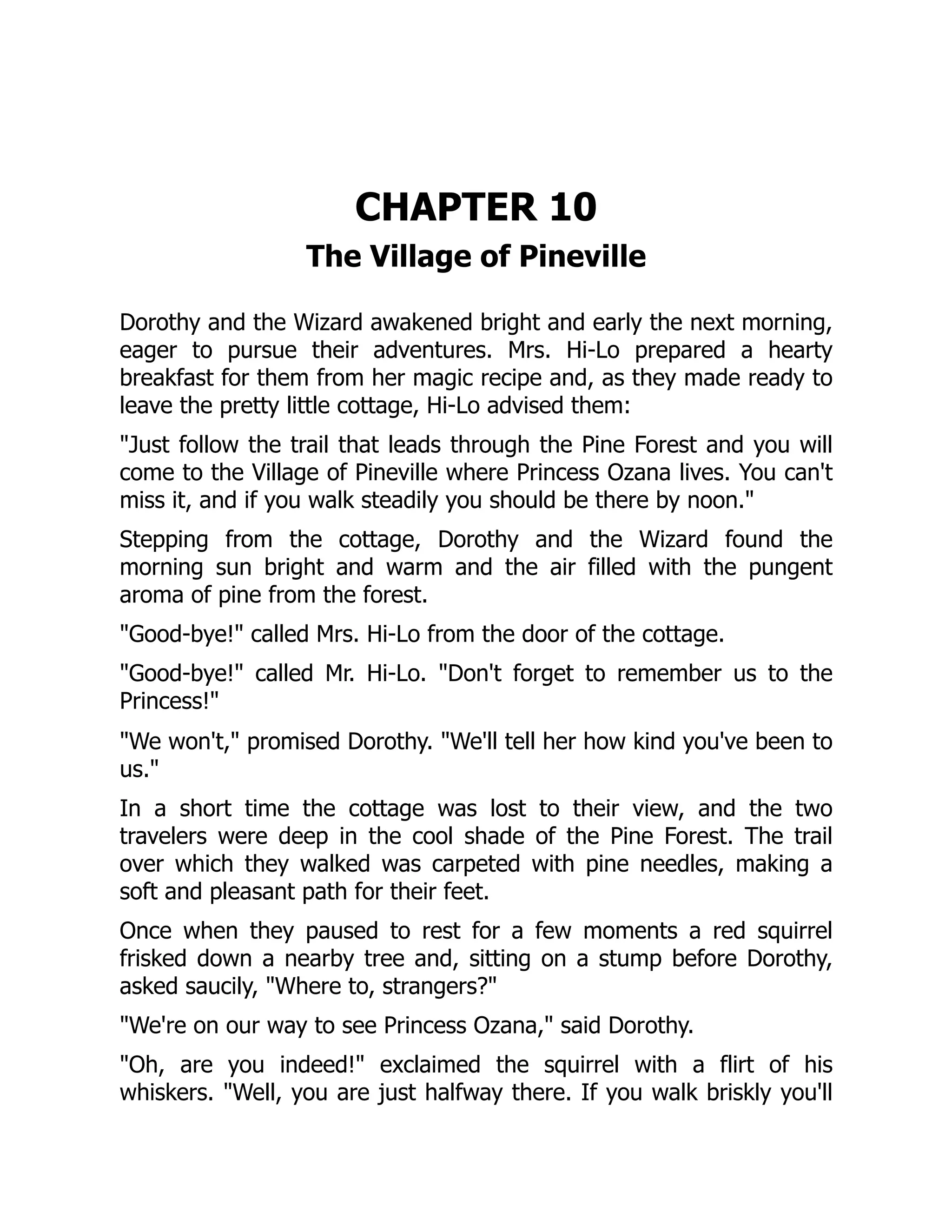
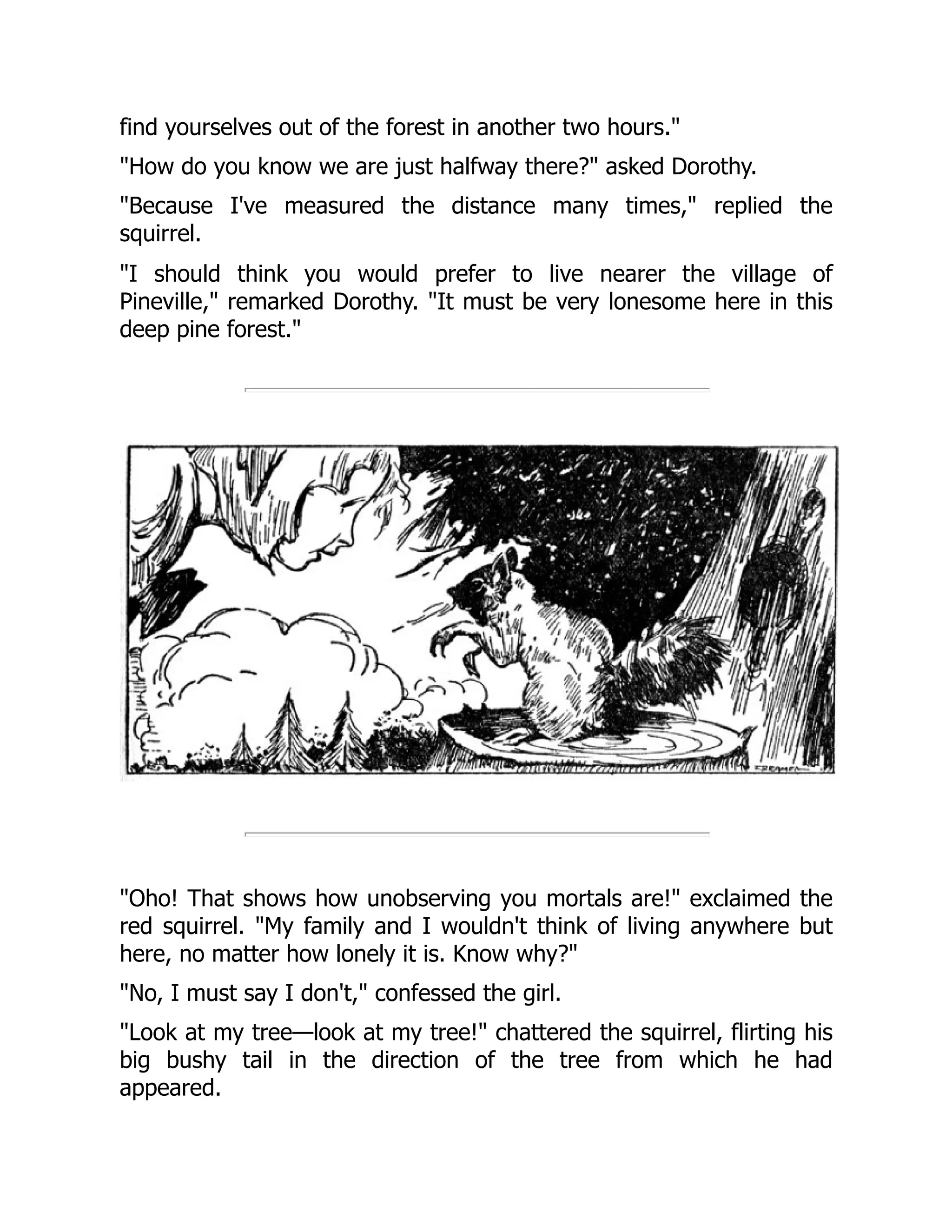
Once when they paused to rest for a few moments a red squirrel
frisked down a nearby tree and, sitting on a stump before Dorothy,
asked saucily, "Where to, strangers?"
"We're on our way to see Princess Ozana," said Dorothy.
"Oh, are you indeed!" exclaimed the squirrel with a flirt of his
whiskers. "Well, you are just halfway there. If you walk briskly you'll
38.
find yourselves outof the forest in another two hours."
"How do you know we are just halfway there?" asked Dorothy.
"Because I've measured the distance many times," replied the
squirrel.
"I should think you would prefer to live nearer the village of
Pineville," remarked Dorothy. "It must be very lonesome here in this
deep pine forest."
"Oho! That shows how unobserving you mortals are!" exclaimed the
red squirrel. "My family and I wouldn't think of living anywhere but
here, no matter how lonely it is. Know why?"
"No, I must say I don't," confessed the girl.
"Look at my tree—look at my tree!" chattered the squirrel, flirting his
big bushy tail in the direction of the tree from which he had
appeared.
39.
"Of course!" chuckledthe Wizard. "It's a hickory tree!"
"But I don't see—" began Dorothy in perplexity.
"What do squirrels like best of all, my dear?" asked the Wizard,
smiling with amusement.
"Oh, Wizard, why didn't I think of that? They like nuts, of course!"
"Exactly!" snapped the little red squirrel. "And since pine trees do not
bear nuts and hickory trees do—well, city life and fine company may
be all right for some folks, but I prefer to remain here in comfort
where I know my family will be well provided for."
And with that the wise little creature gave a leap and a bound and
darted up the trunk of the one and only nut tree in all the Pine
Forest.
Dorothy and the Wizard followed the pine-needle trail on through the
Pine Forest until finally the trees thinned and they stepped out into
an open meadow, bright with yellow buttercups. The sun was almost
directly overhead by this time.
Below the two travelers, in a pretty green valley that formed the
center of the mountain top, lay a small village of several hundred
cottages, all similar to Hi-Lo's. The buildings were painted with glossy
blue enamel and shone brilliantly in the sun. They were grouped in a
circle about one large central cottage that differed from the others in
that it was considerably larger, and, from where Dorothy and the
Wizard stood, appeared to be surrounded by rather extensive
gardens and grounds.
40.
Dorothy and theWizard followed the trail over the meadow to a point
where it broadened into a street that led among the houses. The two
travelers set out on this street, which was wide and pleasant and
paved with blocks of white pine.
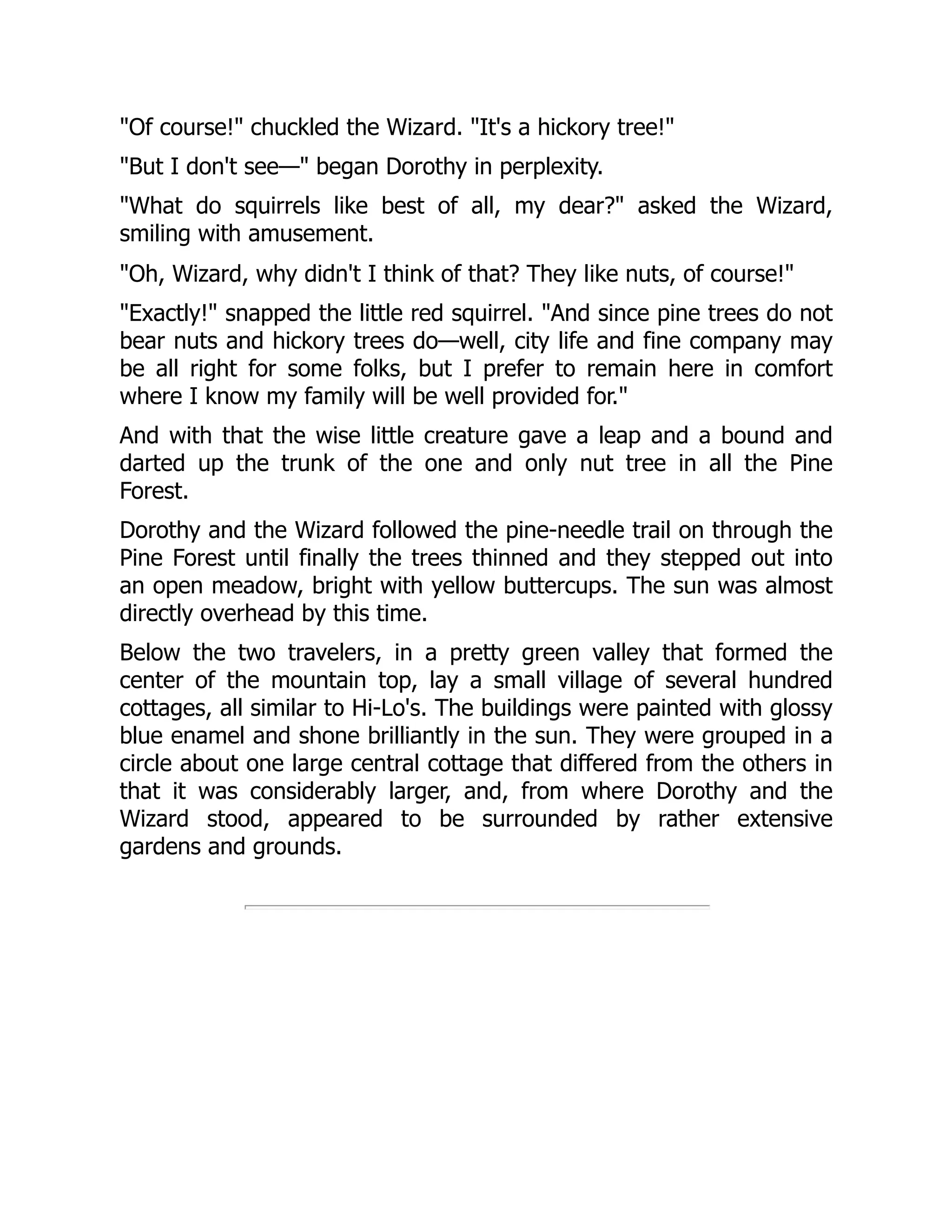
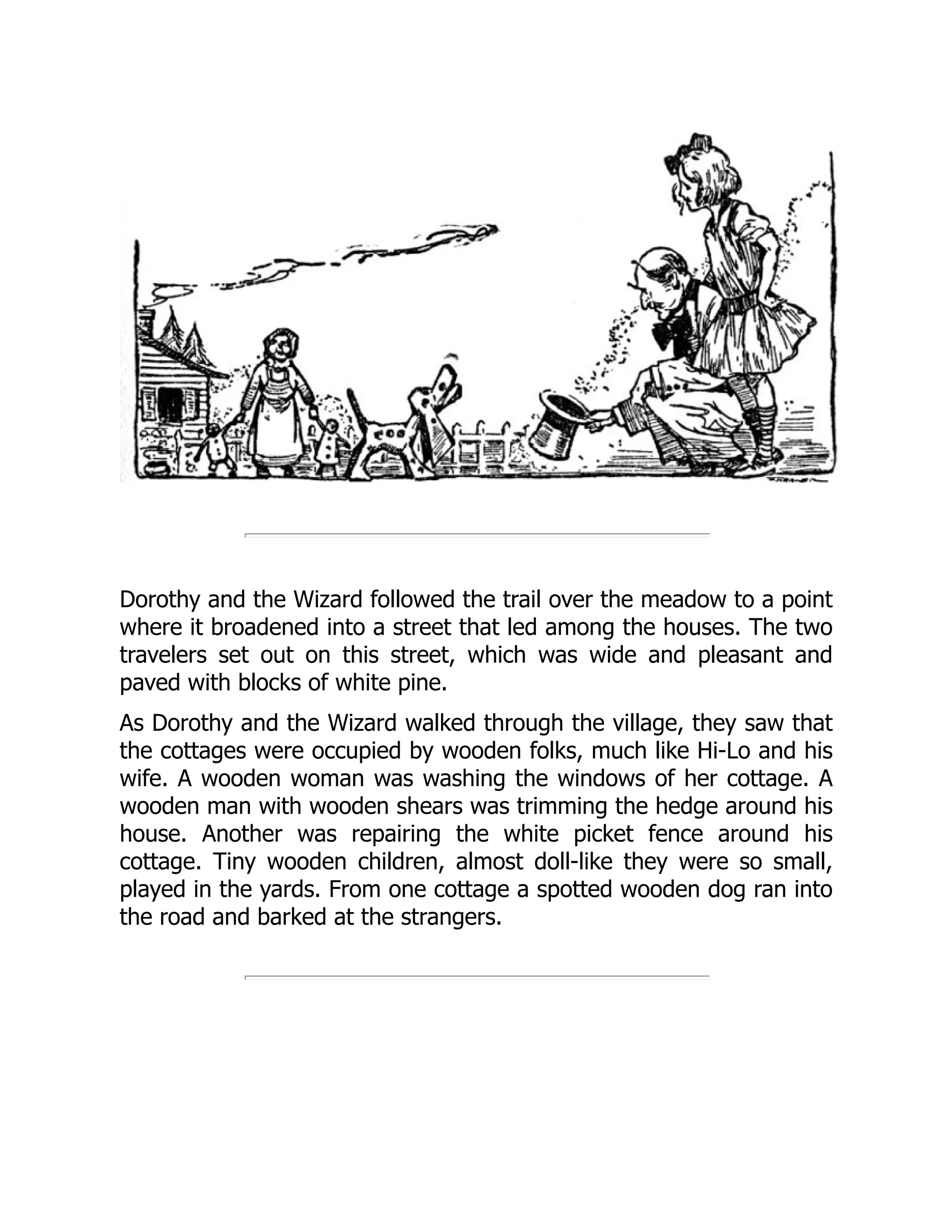
As Dorothy and the Wizard walked through the village, they saw that
the cottages were occupied by wooden folks, much like Hi-Lo and his
wife. A wooden woman was washing the windows of her cottage. A
wooden man with wooden shears was trimming the hedge around his
house. Another was repairing the white picket fence around his
cottage. Tiny wooden children, almost doll-like they were so small,
played in the yards. From one cottage a spotted wooden dog ran into
the road and barked at the strangers.
41.
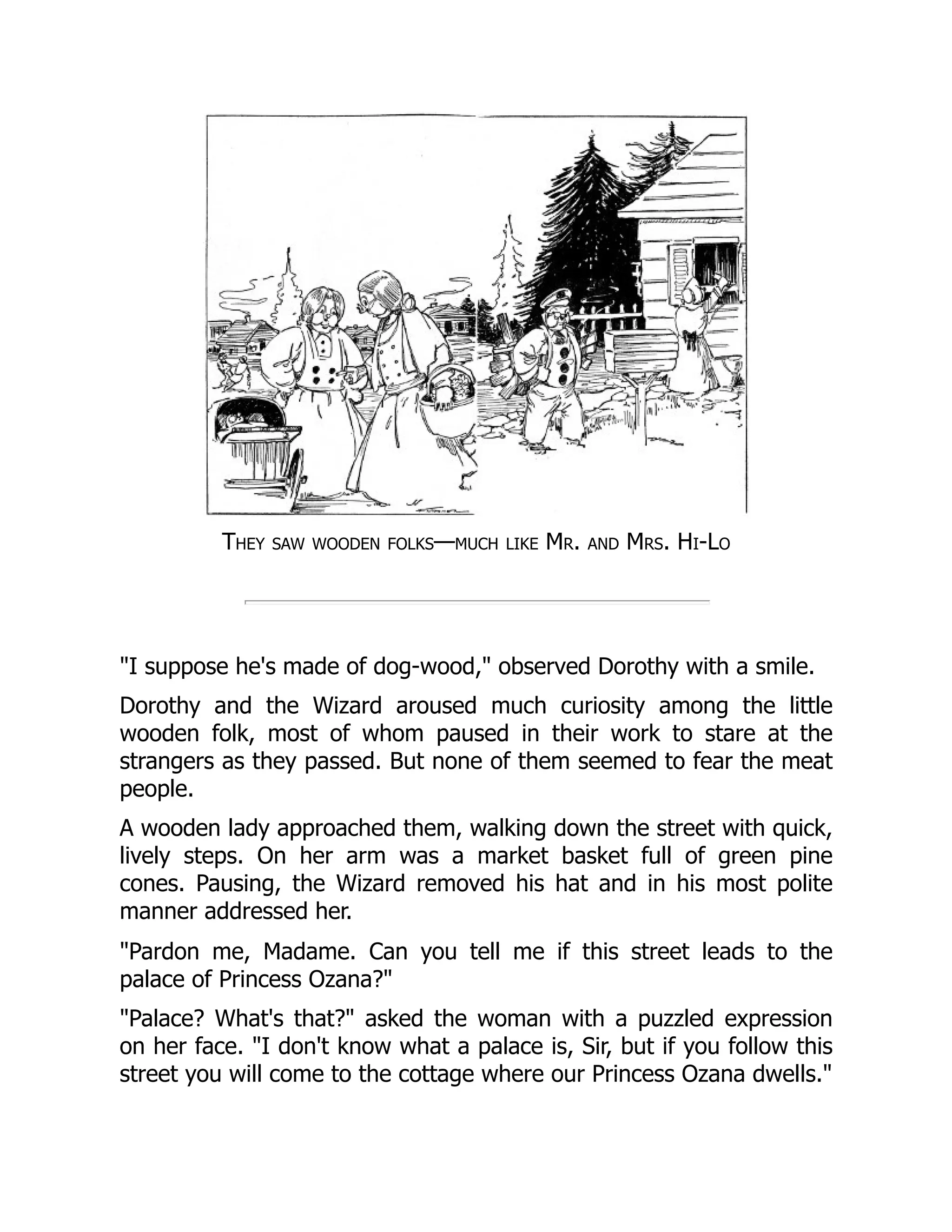
They saw woodenfolks—much like Mr. and Mrs. Hi-Lo
"I suppose he's made of dog-wood," observed Dorothy with a smile.
Dorothy and the Wizard aroused much curiosity among the little
wooden folk, most of whom paused in their work to stare at the
strangers as they passed. But none of them seemed to fear the meat
people.
A wooden lady approached them, walking down the street with quick,
lively steps. On her arm was a market basket full of green pine
cones. Pausing, the Wizard removed his hat and in his most polite
manner addressed her.
"Pardon me, Madame. Can you tell me if this street leads to the
palace of Princess Ozana?"
"Palace? What's that?" asked the woman with a puzzled expression
on her face. "I don't know what a palace is, Sir, but if you follow this
street you will come to the cottage where our Princess Ozana dwells."
42.
"Thank you, Madame,"said the Wizard, and the little woman trotted
busily down the street.
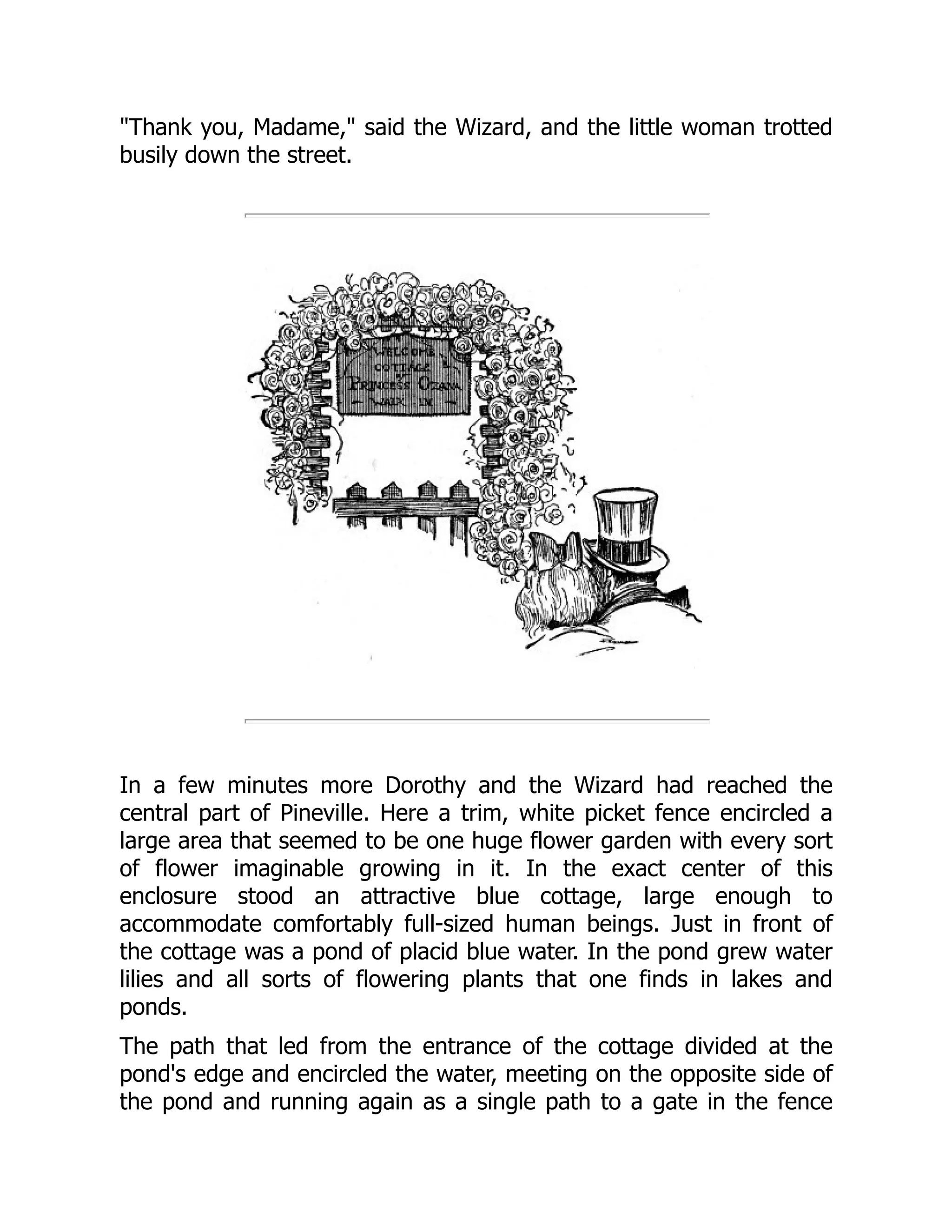
In a few minutes more Dorothy and the Wizard had reached the
central part of Pineville. Here a trim, white picket fence encircled a
large area that seemed to be one huge flower garden with every sort
of flower imaginable growing in it. In the exact center of this
enclosure stood an attractive blue cottage, large enough to
accommodate comfortably full-sized human beings. Just in front of
the cottage was a pond of placid blue water. In the pond grew water
lilies and all sorts of flowering plants that one finds in lakes and
ponds.
The path that led from the entrance of the cottage divided at the
pond's edge and encircled the water, meeting on the opposite side of
the pond and running again as a single path to a gate in the fence
43.
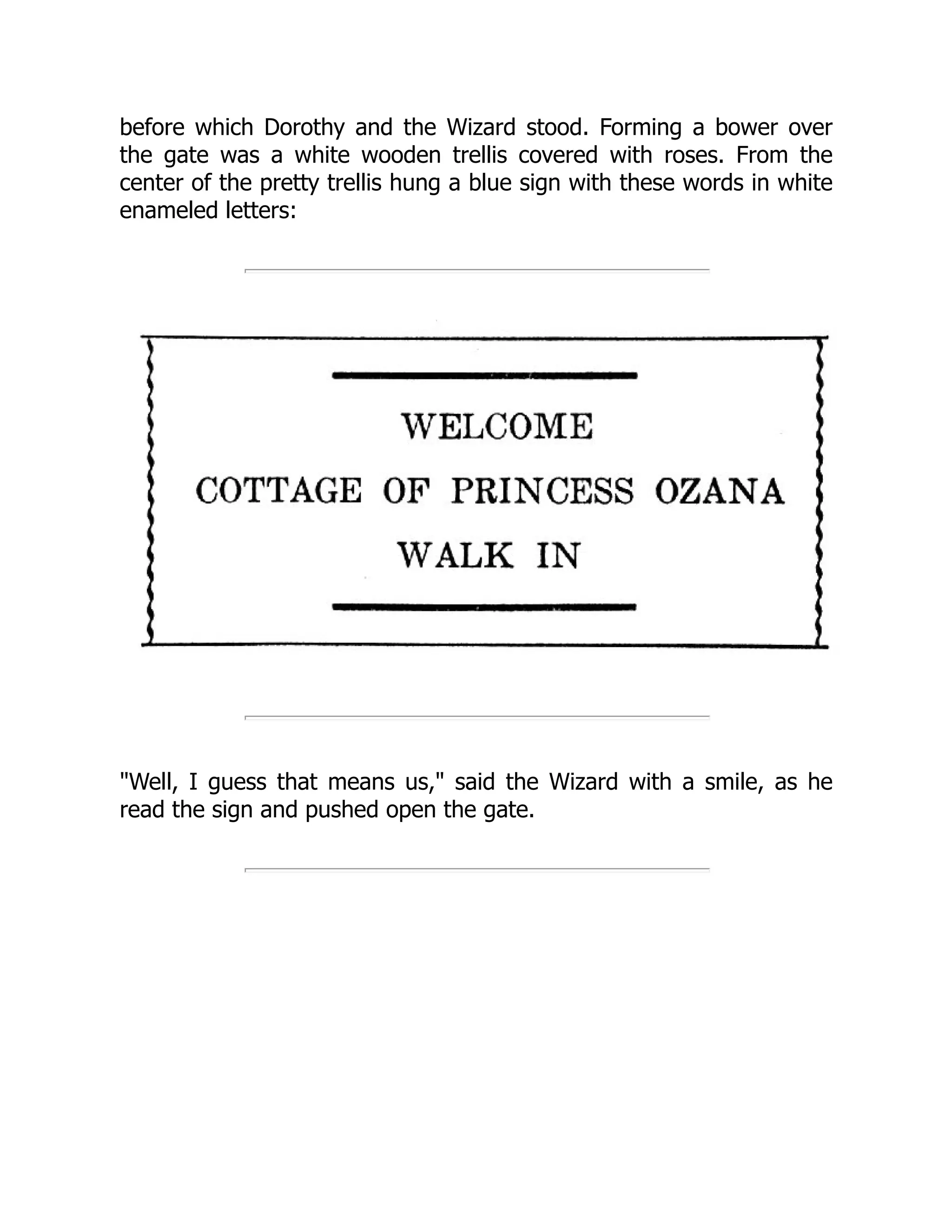
before which Dorothyand the Wizard stood. Forming a bower over
the gate was a white wooden trellis covered with roses. From the
center of the pretty trellis hung a blue sign with these words in white
enameled letters:
"Well, I guess that means us," said the Wizard with a smile, as he
read the sign and pushed open the gate.
45.
CHAPTER 11
Princess Ozana
Dorothyexclaimed with delight as they stepped through the garden
gate. She had no idea any garden could be so beautiful. Flowers of
every known variety grew in profusion. Save for the mossy paths that
wound through the garden, there was not a spot of ground that was
without blossoming plants. As for the pond, it was like a small sea of
lovely blossoming water plants. At the far edge of the pond Dorothy
noted three graceful white swans, sleeping in the shade of a large
flowering bush that grew at the edge of the pond and trailed its
blossoms into the water. The air was sweet with the perfume of
thousands and thousands of flowers.
"Oh, Wizard," gasped Dorothy, "did you ever see anything so lovely?"
"It is indeed a beautiful sight," replied the little man admiringly.
Here and there, throughout the garden, a score or more of little
wooden men were busily at work. Some were watering plants from
blue wooden pails, others were trimming blossoming bushes and
hedges, some were digging out weeds, and others were building
trellises for climbing vines. None of them took the slightest notice of
Dorothy and the Wizard, so absorbed were they in their work.
Not far from where Dorothy and the Wizard stood, was a little maid,
on her knees, digging with a trowel in the soft earth about a beautiful
rambling rose bush that climbed above her on a blue trellis.
"Let's ask her where we can find Princess Ozana," suggested
Dorothy.
A few steps brought them to the side of the maiden who wore a
pretty blue apron with a pink petal design. On her hands were
gardening gloves and her golden hair fell loosely down her back.
46.
"I wonder," beganthe Wizard, "if you can tell us if the Princess Ozana
is in?"
The little maid looked up, regarding the strangers with friendly
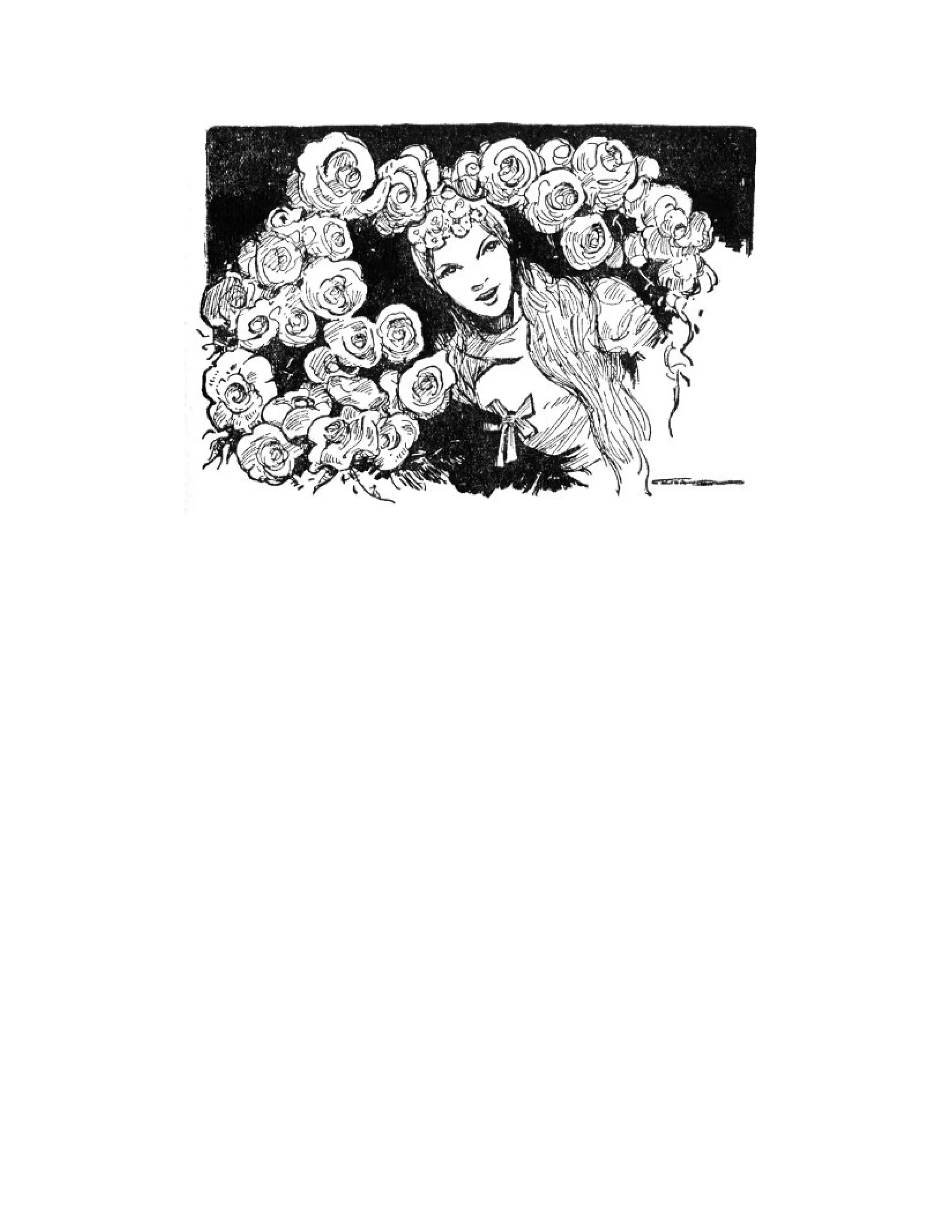
curiosity. Dorothy saw that she was very lovely. Her eyes were as soft
as shy woodland violets, and of the same purple hue; her skin as
delicately colored as fragile petals, and her lips were like rosebuds.
"No," the maid replied with a suspicion of a smile in her voice,
"Princess Ozana is not in her cottage at the moment."
"Perhaps you know where we can find her," suggested the Wizard.
At this the little maid gave a silvery laugh and exclaimed, "You have
found her—I am Princess Ozana!"
47.
"Of course, Wizard,"said Dorothy, "Princess Ozana is the only flesh
and blood person on Mount Illuso 'cept for us, so this just must be
she. Besides," she added, "no one else could be so beautiful."
"Thank you, my dear," said Ozana graciously, as she rose to her feet.
"And you, Sir," she continued, turning to the Wizard and sweetly
easing the little man's embarrassment, "could scarcely be blamed for
failing to recognize a princess garbed so simply and digging in a
garden."
"I most humbly ask your pardon," murmured the Wizard
"I most humbly ask your pardon," murmured the Wizard.
"Come," said Ozana, "let us go into my cottage, where we can talk at
ease. I must know all about you."
48.
Welcome to ourwebsite – the perfect destination for book lovers and
knowledge seekers. We believe that every book holds a new world,
offering opportunities for learning, discovery, and personal growth.
That’s why we are dedicated to bringing you a diverse collection of
books, ranging from classic literature and specialized publications to
self-development guides and children's books.
More than just a book-buying platform, we strive to be a bridge
connecting you with timeless cultural and intellectual values. With an
elegant, user-friendly interface and a smart search system, you can
quickly find the books that best suit your interests. Additionally,
our special promotions and home delivery services help you save time
and fully enjoy the joy of reading.
Join us on a journey of knowledge exploration, passion nurturing, and
personal growth every day!
testbankdeal.com


![Chapter 6 – Page 2
Chapter Teaching Tips
One way to introduce this chapter is to focus on the growth of projects in our society. Another, and
often more engaging, introduction is to devise a project with the class or with one person currently
engaged in a project involving multiple people (e.g., a campus career day), lay out the work
breakdown structure, estimate the activities and the times, and construct and solve the PERT
network. Another engaging issue is to ask the class how they might track the progress of a project
as it progresses. How would they actually measure the amount of progress attained—task-by-task
or by looking at the overall project? Could they trust someone who says that their task, or the
project, is 99% done? If not, what surrogate measures would be helpful for tracking project
progress?
Illustrative Answers to the Expand Your Understanding Questions
1. This major strategic error is more common than any other mistake. It is important to realize that
it is precisely because the tasks are defined so poorly that it is necessary to take longer to plan
the work that must be done. Although we would want to avoid “analysis paralysis,” the
overwhelming tendency is to plan too little rather than too much.
2. The cost-schedule reconciliation charts are more straightforward but cannot easily be compared
since the vertical axis is not the same in both charts. A project manager unfamiliar with the
earned value concept might therefore prefer the reconciliation charts.
3. One simple way is to equate the value with the cost of materials and resources used to date, but
this defeats the purpose. In reality, resources are usually brought in long before a task is
complete and only a minor additional increase in cost (e.g., a day's wages) may represent the
final attainment of a task with considerable value. It is the responsibility of the project manager
to decide on what task completions, or even partial completions, represent value completed for
the sponsor. In practice, there are five commonly used ways (all with potential pitfalls) to
measure earned value: 0-100% (i.e., no credit for the task budget [not actual spending] until a
task is completely finished), 50-50% (half of the budget when the task starts, half when done),
as a percentage of a scarce, critical resource used in proportion to progress (e.g., yards of
concrete poured for a road or building), percent of budgeted time passed since start of the task,
and percent of the budget spent since start of the task.
4. Because typically more things can go wrong than right, the optimistic times will probably be
more accurate.
5. Of the reasons listed in the text for the growth in project operations, the need for quick response
to customers’ needs given today's increasingly intense competition is likely the primary driving
force toward projects.](https://image.slidesharecdn.com/4304-250410061948-ae94dbba/75/Operations-Management-for-MBAs-5th-Edition-Meredith-Solutions-Manual-6-2048.jpg)