Group 3
Concept of
Materials
Management
Materials management is a core function of supply
chain management, involving the planning and
execution of supply chains to meet the material
requirements of a company or organisation.
These requirements include controlling and regulating
the flow of material while simultaneously assessing
variables like demand, price, availability, quality, and
delivery schedule
Key Objectives of
Material
Management
Five R's of Material Management
1. The Right material
2. At the Right time
3. In the Right amount
And of the quality that is:
4. At the Right price
5. From the Right s
ources
Functions
1. Planning: Forecasting material needs based on production.
2. Purchasing: Sourcing and buying materials at the best price.
3. Inventory Control: Managing stock levels to avoid shortages or
excess.
4. Receiving: Checking and handling incoming materials.
5. Storage: Organizing materials in warehouses for easy access.
6. Material Handling: Moving materials efficiently within the facility.
7. Logistics: Coordinating delivery of materials to the right locations.
8. Quality Control: Ensuring materials meet quality standards.
9. Cost Management: Controlling costs related to materials.
10. Disposal: Managing waste or obsolete materials.
Importance
Materials management ensures that the right
materials are available on time and at the best cost,
minimizing waste and delays. It helps control inventory
costs, improves efficiency, and supports quality. Good
materials management keeps production running
smoothly, boosting profitability and overall success.
Challenges
1. Demand Forecasting: Accurately predicting material needs can be difficult,
leading to overstocking or shortages.
2. Supplier Reliability: Inconsistent suppliers can cause delays and affect
production schedules.
3. Inventory Control: Managing inventory to avoid excess stock or stock outs while
controlling storage costs can be challenging.
4. Cost Management: Rising material costs, transportation expenses, and storage
fees can impact budgets.
5. Quality Assurance: Ensuring materials meet quality standards is critical to avoid
defects in production.
6. Technology Integration: Adopting and maintaining the right technology for
tracking and managing materials can be costly and complex.
7. Logistics and Transportation: Coordinating efficient movement of materials can
be challenging, especially with supply chain disruptions.
8. Waste Management: Managing excess or obsolete materials responsibly is
necessary to minimize waste and reduce costs.
Best Practices
1. Accurate Forecasting: Use data to predict material needs and adjust regularly based on
changes in demand.
2. Supplier Relationships: Build strong partnerships with reliable suppliers for consistent
quality and timely deliveries.
3. Inventory Optimization: Use methods like Just-in-Time (JIT) to keep inventory levels low
while ensuring materials are available when needed.
4. Leverage Technology: Use inventory management software for tracking materials and
automating processes.
5. Quality Control: Ensure all materials meet quality standards before they are used in
production.
6. Regular Audits: Conduct periodic checks on inventory to identify and fix discrepancies.
7. Staff Training: Train employees in materials management best practices and technology.
8. Effective Communication: Encourage clear communication between departments to align
material needs and resolve issues quickly.
9. Waste Management: Practice recycling and responsible disposal of obsolete materials to
reduce waste.
10. Continuous Improvement: Regularly review processes to find ways to improve efficiency.
Material Requirement
Planning (MRP)
is a production planning, scheduling, and inventory
control system used to manage the manufacturing
process. It helps ensure that materials and
components are available for production at the right
time and in the correct quantities, minimizing
inventory costs and avoiding production delays.
Bill of Materials
n/a
Ergonomics
Ergonomics
is the scientific study of how humans interact with
their environment, particularly in the context of work
and everyday activities. It focuses on designing or
arranging tools, systems, tasks, and environments in a
way that optimizes human performance, comfort, and
safety, while minimizing the risk of injury or strain.
Key Principles of
materials management
ergonomics
Minimizing Manual
Handling
Reduce the need for workers to lift, carry, or move
heavy materials manually. This can be achieved by
using mechanized equipment like forklifts, conveyors,
or cranes.
Proper Layout
Design
Arrange workstations, storage areas, and material flow
paths to minimize unnecessary movements. Materials
should be stored at a height that minimizes bending,
reaching, and lifting.
Ergonomic Tools
and Equipment
Use tools, containers, and equipment that are
designed to reduce strain, such as adjustable-height
work surfaces, ergonomic lifting aids, and materials
that are easier to handle.
Task Rotation
To avoid repetitive stress injuries, workers should
rotate through different tasks, especially those that
involve heavy lifting or repetitive motions.
Training and
Awareness
Educating workers on safe handling techniques,
proper lifting posture, and the use of assistive devices
helps prevent injuries and increases overall efficiency.
Load Weight and
Size Considerations
Ensure materials are stored in manageable sizes and
weights, and if materials must be lifted manually, they
should be within the safe lifting limits for workers.
Reducing Unnecessary
Movements
Streamline the process of materials handling by
eliminating unnecessary steps and ensuring that
workers can easily access materials without excessive
walking or bending.
Use of Automation
Where feasible, automate material handling processes
to reduce physical demands on workers, such as using
automated guided vehicles (AGVs) or robotic arms for
repetitive tasks.
Environmental
Factors
Maintain a comfortable work environment with proper
lighting, temperature control, and noise management
to reduce fatigue and improve worker focus.
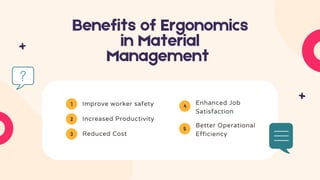
1
2
3
4
5
Improve worker safety
Increased Productivity
Reduced Cost
Enhanced Job
Satisfaction
Better Operational
Efficiency
Benefits of Ergonomics
in Material
Management
Tools and Technologies
Ergonomic tools and equipment for material management
can reduce the physical strain and stress of manual
handling. Here are some examples:
1. Lifting tables
2. Overhead cranes
3. Clamp end effectors
4. Manipulator arms
5. Mobile lifters
6. Ergonomic cutters
7. Carts and conveyor belt scales
8. Pallet positioners, Worker Platforms, and elevated work access lifts
Ergonomics Risk
Assessment
is the process of identifying, evaluating, and
mitigating ergonomic risks or hazards in a workplace
or environment that could lead to physical strain,
discomfort, or injury for workers. The goal is to
improve the design of tasks, tools, equipment, and
workspaces to enhance comfort, safety, and
productivity, while reducing the likelihood of
musculoskeletal disorders (MSDs) or other health
issues caused by poor ergonomic practices.
Ergonomics training
for workers
is a program designed to educate employees on the
principles of ergonomics, how to recognize and
prevent ergonomic hazards, and how to apply proper
techniques and practices to minimize the risk of injury
or strain while performing their tasks. The goal of this
training is to improve workers' comfort, safety, and
overall well-being by teaching them how to work in
ways that align with their body's natural movements
and reduce physical stress.
Handling and
transporting materials
Handling and transporting materials efficiently and
safely are critical aspects of materials management.
Effective practices ensure the safety of workers,
reduce damage to goods, and improve overall
operational efficiency.
Design of tools and
equipments
The design of tools and equipment for material
handling is crucial to enhance safety, efficiency, and
ergonomics in the workplace. Well-designed tools and
equipment reduce physical strain on workers,
minimize the risk of injury, and improve overall
productivity.
Storage
Storage in materials management is a critical function
that directly impacts the efficiency, safety, and
organization of an operation. Proper storage ensures
materials are protected, easily accessible, and
organized in a way that minimizes waste, damage, and
retrieval time.
Environmental
Considerations
refers to the process of recognizing and addressing
the potential impact that activities, processes, or
decisions can have on the natural environment. This
concept is commonly applied across various sectors,
including business, construction, manufacturing, and
urban planning, with the goal of minimizing harm to
the environment and promoting sustainability.
Office Ergonomics
refers to the practice of designing and arranging
office workspaces, furniture, equipment, and tasks to
fit the needs and comfort of employees, with the goal
of improving productivity and reducing the risk of
musculoskeletal disorders (MSDs), discomfort, and
fatigue. Proper office ergonomics ensures that the
work environment supports natural body postures,
minimizes strain, and encourages healthy movement
patterns, especially for employees who spend long
hours working at desks or on computers.
THANK YOU (⁠
✿⁠⁠
♡⁠
‿⁠
♡⁠
)

Operation management operation management

  • 1.
  • 2.
    Concept of Materials Management Materials managementis a core function of supply chain management, involving the planning and execution of supply chains to meet the material requirements of a company or organisation. These requirements include controlling and regulating the flow of material while simultaneously assessing variables like demand, price, availability, quality, and delivery schedule
  • 3.
    Key Objectives of Material Management FiveR's of Material Management 1. The Right material 2. At the Right time 3. In the Right amount And of the quality that is: 4. At the Right price 5. From the Right s ources
  • 4.
    Functions 1. Planning: Forecastingmaterial needs based on production. 2. Purchasing: Sourcing and buying materials at the best price. 3. Inventory Control: Managing stock levels to avoid shortages or excess. 4. Receiving: Checking and handling incoming materials. 5. Storage: Organizing materials in warehouses for easy access. 6. Material Handling: Moving materials efficiently within the facility. 7. Logistics: Coordinating delivery of materials to the right locations. 8. Quality Control: Ensuring materials meet quality standards. 9. Cost Management: Controlling costs related to materials. 10. Disposal: Managing waste or obsolete materials.
  • 5.
    Importance Materials management ensuresthat the right materials are available on time and at the best cost, minimizing waste and delays. It helps control inventory costs, improves efficiency, and supports quality. Good materials management keeps production running smoothly, boosting profitability and overall success.
  • 6.
    Challenges 1. Demand Forecasting:Accurately predicting material needs can be difficult, leading to overstocking or shortages. 2. Supplier Reliability: Inconsistent suppliers can cause delays and affect production schedules. 3. Inventory Control: Managing inventory to avoid excess stock or stock outs while controlling storage costs can be challenging. 4. Cost Management: Rising material costs, transportation expenses, and storage fees can impact budgets. 5. Quality Assurance: Ensuring materials meet quality standards is critical to avoid defects in production. 6. Technology Integration: Adopting and maintaining the right technology for tracking and managing materials can be costly and complex. 7. Logistics and Transportation: Coordinating efficient movement of materials can be challenging, especially with supply chain disruptions. 8. Waste Management: Managing excess or obsolete materials responsibly is necessary to minimize waste and reduce costs.
  • 7.
    Best Practices 1. AccurateForecasting: Use data to predict material needs and adjust regularly based on changes in demand. 2. Supplier Relationships: Build strong partnerships with reliable suppliers for consistent quality and timely deliveries. 3. Inventory Optimization: Use methods like Just-in-Time (JIT) to keep inventory levels low while ensuring materials are available when needed. 4. Leverage Technology: Use inventory management software for tracking materials and automating processes. 5. Quality Control: Ensure all materials meet quality standards before they are used in production. 6. Regular Audits: Conduct periodic checks on inventory to identify and fix discrepancies. 7. Staff Training: Train employees in materials management best practices and technology. 8. Effective Communication: Encourage clear communication between departments to align material needs and resolve issues quickly. 9. Waste Management: Practice recycling and responsible disposal of obsolete materials to reduce waste. 10. Continuous Improvement: Regularly review processes to find ways to improve efficiency.
  • 8.
    Material Requirement Planning (MRP) isa production planning, scheduling, and inventory control system used to manage the manufacturing process. It helps ensure that materials and components are available for production at the right time and in the correct quantities, minimizing inventory costs and avoiding production delays.
  • 9.
  • 10.
  • 11.
    Ergonomics is the scientificstudy of how humans interact with their environment, particularly in the context of work and everyday activities. It focuses on designing or arranging tools, systems, tasks, and environments in a way that optimizes human performance, comfort, and safety, while minimizing the risk of injury or strain.
  • 12.
    Key Principles of materialsmanagement ergonomics
  • 13.
    Minimizing Manual Handling Reduce theneed for workers to lift, carry, or move heavy materials manually. This can be achieved by using mechanized equipment like forklifts, conveyors, or cranes.
  • 14.
    Proper Layout Design Arrange workstations,storage areas, and material flow paths to minimize unnecessary movements. Materials should be stored at a height that minimizes bending, reaching, and lifting.
  • 15.
    Ergonomic Tools and Equipment Usetools, containers, and equipment that are designed to reduce strain, such as adjustable-height work surfaces, ergonomic lifting aids, and materials that are easier to handle.
  • 16.
    Task Rotation To avoidrepetitive stress injuries, workers should rotate through different tasks, especially those that involve heavy lifting or repetitive motions.
  • 17.
    Training and Awareness Educating workerson safe handling techniques, proper lifting posture, and the use of assistive devices helps prevent injuries and increases overall efficiency.
  • 18.
    Load Weight and SizeConsiderations Ensure materials are stored in manageable sizes and weights, and if materials must be lifted manually, they should be within the safe lifting limits for workers.
  • 19.
    Reducing Unnecessary Movements Streamline theprocess of materials handling by eliminating unnecessary steps and ensuring that workers can easily access materials without excessive walking or bending.
  • 20.
    Use of Automation Wherefeasible, automate material handling processes to reduce physical demands on workers, such as using automated guided vehicles (AGVs) or robotic arms for repetitive tasks.
  • 21.
    Environmental Factors Maintain a comfortablework environment with proper lighting, temperature control, and noise management to reduce fatigue and improve worker focus.
  • 22.
    1 2 3 4 5 Improve worker safety IncreasedProductivity Reduced Cost Enhanced Job Satisfaction Better Operational Efficiency Benefits of Ergonomics in Material Management
  • 23.
    Tools and Technologies Ergonomictools and equipment for material management can reduce the physical strain and stress of manual handling. Here are some examples: 1. Lifting tables 2. Overhead cranes 3. Clamp end effectors 4. Manipulator arms 5. Mobile lifters 6. Ergonomic cutters 7. Carts and conveyor belt scales 8. Pallet positioners, Worker Platforms, and elevated work access lifts
  • 24.
    Ergonomics Risk Assessment is theprocess of identifying, evaluating, and mitigating ergonomic risks or hazards in a workplace or environment that could lead to physical strain, discomfort, or injury for workers. The goal is to improve the design of tasks, tools, equipment, and workspaces to enhance comfort, safety, and productivity, while reducing the likelihood of musculoskeletal disorders (MSDs) or other health issues caused by poor ergonomic practices.
  • 25.
    Ergonomics training for workers isa program designed to educate employees on the principles of ergonomics, how to recognize and prevent ergonomic hazards, and how to apply proper techniques and practices to minimize the risk of injury or strain while performing their tasks. The goal of this training is to improve workers' comfort, safety, and overall well-being by teaching them how to work in ways that align with their body's natural movements and reduce physical stress.
  • 26.
    Handling and transporting materials Handlingand transporting materials efficiently and safely are critical aspects of materials management. Effective practices ensure the safety of workers, reduce damage to goods, and improve overall operational efficiency.
  • 27.
    Design of toolsand equipments The design of tools and equipment for material handling is crucial to enhance safety, efficiency, and ergonomics in the workplace. Well-designed tools and equipment reduce physical strain on workers, minimize the risk of injury, and improve overall productivity.
  • 28.
    Storage Storage in materialsmanagement is a critical function that directly impacts the efficiency, safety, and organization of an operation. Proper storage ensures materials are protected, easily accessible, and organized in a way that minimizes waste, damage, and retrieval time.
  • 29.
    Environmental Considerations refers to theprocess of recognizing and addressing the potential impact that activities, processes, or decisions can have on the natural environment. This concept is commonly applied across various sectors, including business, construction, manufacturing, and urban planning, with the goal of minimizing harm to the environment and promoting sustainability.
  • 30.
    Office Ergonomics refers tothe practice of designing and arranging office workspaces, furniture, equipment, and tasks to fit the needs and comfort of employees, with the goal of improving productivity and reducing the risk of musculoskeletal disorders (MSDs), discomfort, and fatigue. Proper office ergonomics ensures that the work environment supports natural body postures, minimizes strain, and encourages healthy movement patterns, especially for employees who spend long hours working at desks or on computers.
  • 31.