Introduction to Operations, Logistics, and Supply Chain Management
• Definitions and Overview: Operations
Management focuses on the efficient
transformation of resources into goods and
services. Logistics Management handles the
flow of goods and information from origin to
consumption. Supply Chain Management
integrates these functions to optimize the end-
to-end process.
• Importance in Business: Effective management
in these areas reduces costs, improves service
levels, and increases overall competitiveness in
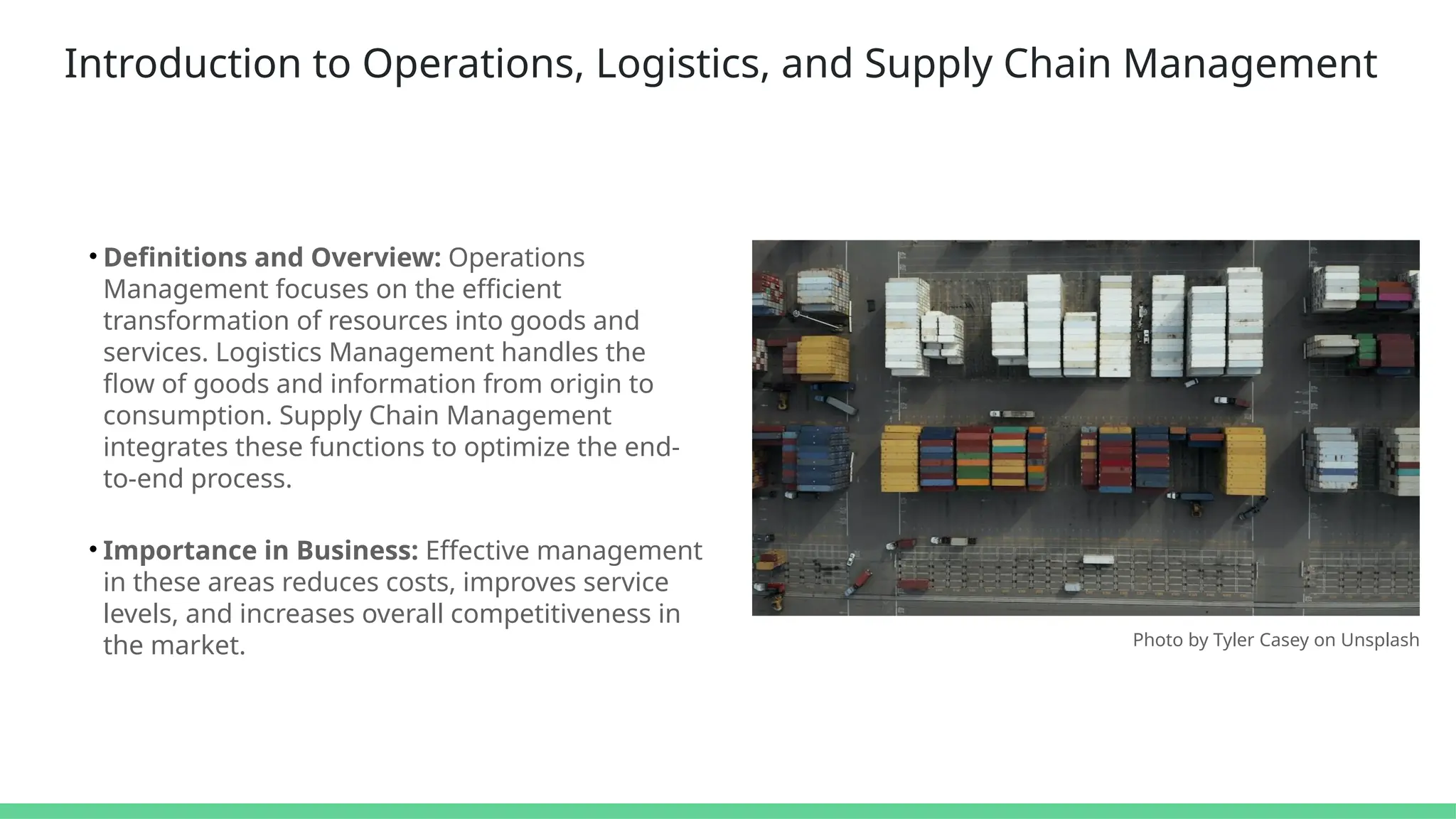
the market. Photo by Tyler Casey on Unsplash
Operations Management
• Key Concepts: Focuses on process efficiency,
productivity, and quality. It involves planning,
organizing, and supervising production and
manufacturing.
• Processes and Strategies: Includes capacity
planning, scheduling, inventory control, and
continuous improvement. Strategies such as
Just-In-Time (JIT), Total Quality Management
(TQM), and Lean Manufacturing are crucial.
• Metrics and Performance Indicators: Common
metrics include throughput, cycle time, and
defect rates. These indicators help measure and
improve operational efficiency.
Photo by Florian Berger on Unsplash
Logistics Management
• Role in Supply Chain: Manages the movement,
storage, and flow of goods, services, and
information within and between supply chain
stages.
• Key Functions: Includes transportation,
warehousing, inventory management, and order
fulfillment. Ensures timely delivery and cost
efficiency.
• Challenges and Solutions: Common challenges
include demand variability, logistics costs, and
disruptions. Solutions involve technology
integration, strategic planning, and contingency
management.
Photo by Elevate on Unsplash

operation management, logistics and supply chain management

  • 1.
    Introduction to Operations,Logistics, and Supply Chain Management • Definitions and Overview: Operations Management focuses on the efficient transformation of resources into goods and services. Logistics Management handles the flow of goods and information from origin to consumption. Supply Chain Management integrates these functions to optimize the end- to-end process. • Importance in Business: Effective management in these areas reduces costs, improves service levels, and increases overall competitiveness in the market. Photo by Tyler Casey on Unsplash
  • 2.
    Operations Management • KeyConcepts: Focuses on process efficiency, productivity, and quality. It involves planning, organizing, and supervising production and manufacturing. • Processes and Strategies: Includes capacity planning, scheduling, inventory control, and continuous improvement. Strategies such as Just-In-Time (JIT), Total Quality Management (TQM), and Lean Manufacturing are crucial. • Metrics and Performance Indicators: Common metrics include throughput, cycle time, and defect rates. These indicators help measure and improve operational efficiency. Photo by Florian Berger on Unsplash
  • 3.
    Logistics Management • Rolein Supply Chain: Manages the movement, storage, and flow of goods, services, and information within and between supply chain stages. • Key Functions: Includes transportation, warehousing, inventory management, and order fulfillment. Ensures timely delivery and cost efficiency. • Challenges and Solutions: Common challenges include demand variability, logistics costs, and disruptions. Solutions involve technology integration, strategic planning, and contingency management. Photo by Elevate on Unsplash