open source in the
     library
 promoting FOSS in a somewhat
        reserved sector


                           Flossie 2012
background & context


License
                 Photo by LDM on Flickr - Some rights reserved
why floss for libraries?

•   financial pressures
•   access to data
•   interoperability
•   hidden libraries and archives
barriers, real and imagined


•legacy data and legacy systems
•vendor oligopoly
•and the usual suspects...
many systems held together with string


           Photo - some rights reserved by psd on flickr
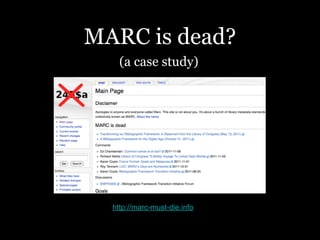
MARC is dead?
    (a case study)


  http://marc-must-die.info
success stories
•    Koha and Evergreen LMSs
•    Institutional repositories
•    Discovery platforms
•    Linked open data
•    Omeka
•    Kuali Open Library Environment (OLE)


    This is just a sample of the great FOSS stuff happening
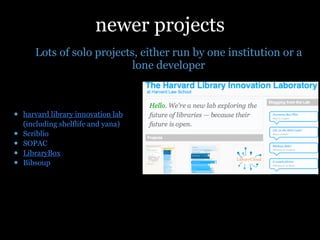
newer projects
     Lots of solo projects, either run by one institution or a
                          lone developer


    harvard library innovation lab
    (including shelflife and yana)
•   Scriblio
•   SOPAC
•   LibraryBox
•   Bibsoup
•   Open Library
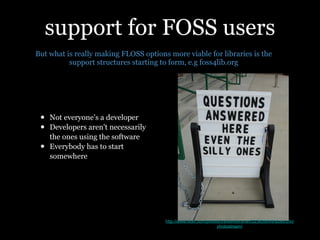
support for FOSS users
But what is really making FLOSS options more viable for libraries is the
          support structures starting to form, e.g foss4lib.org


•   Not everyone's a developer
•   Developers aren't necessarily
    the ones using the software
•   Everybody has to start
    somewhere


                                          Some rights reserved by Travelin' Librarian on Flickr
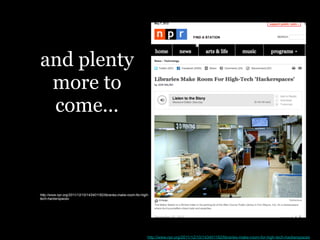
and plenty
 more to
 come...


             http://www.npr.org/2011/12/10/143401182/libraries-make-room-for-high-tech-hackerspaces
thankyou


@katelomax

FOSS for libraries: Promoting open source in a somewhat reserved sector

  • 1.
    open source inthe library promoting FOSS in a somewhat reserved sector Flossie 2012
  • 2.
    background & context License Photo by LDM on Flickr - Some rights reserved
  • 3.
    why floss forlibraries? • financial pressures • access to data • interoperability • hidden libraries and archives
  • 4.
    barriers, real andimagined •legacy data and legacy systems •vendor oligopoly •and the usual suspects...
  • 5.
    many systems heldtogether with string Photo - some rights reserved by psd on flickr
  • 6.
    MARC is dead? (a case study) http://marc-must-die.info
  • 7.
    success stories • Koha and Evergreen LMSs • Institutional repositories • Discovery platforms • Linked open data • Omeka • Kuali Open Library Environment (OLE) This is just a sample of the great FOSS stuff happening
  • 8.
    newer projects Lots of solo projects, either run by one institution or a lone developer harvard library innovation lab (including shelflife and yana) • Scriblio • SOPAC • LibraryBox • Bibsoup • Open Library
  • 9.
    support for FOSSusers But what is really making FLOSS options more viable for libraries is the support structures starting to form, e.g foss4lib.org • Not everyone's a developer • Developers aren't necessarily the ones using the software • Everybody has to start somewhere Some rights reserved by Travelin' Librarian on Flickr
  • 10.
    and plenty moreto come... http://www.npr.org/2011/12/10/143401182/libraries-make-room-for-high-tech-hackerspaces
  • 11.

Editor's Notes