Peter Hilbers
BioModeling & bioInformatics
Dept. BioMedical Engineering
Trends in Healthcare Technology
Overview
•
Introduction
•
General trends in Healthcare Technology
•
Dept BioMedical Engineering(TU/e)
•
Computational Biology example(s)
PAGE 3
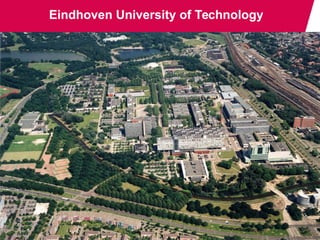
Eindhoven University of Technology
PAGE 4
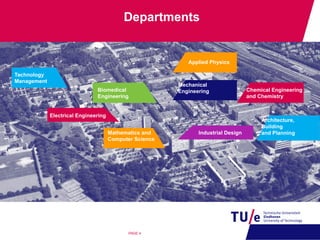
Departments
Architecture,
Building
and Planning
Chemical Engineering
and Chemistry
Applied Physics
Mathematics and
Computer Science
Industrial Design
Electrical Engineering
Biomedical
Engineering
Mechanical
Engineering
Technology
Management
PAGE 5
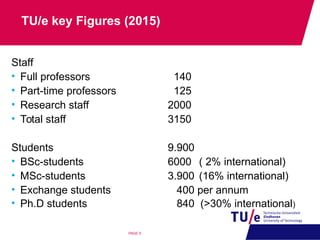
TU/e key Figures (2015)
Staff
• Full professors 140
• Part-time professors 125
• Research staff 2000
• Total staff 3150
Students 9.900
• BSc-students 6000 ( 2% international)
• MSc-students 3.900 (16% international)
• Exchange students 400 per annum
• Ph.D students 840 (>30% international)
05/20/14
PAGE 6April 2009
Welcome
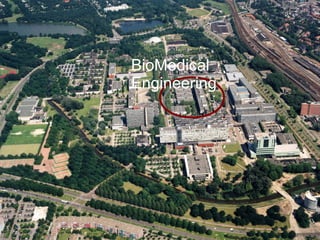
BioMedical
Engineering
05/20/14
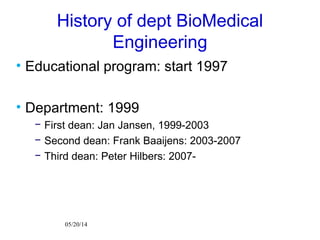
History of dept BioMedical
Engineering
• Educational program: start 1997
• Department: 1999
− First dean: Jan Jansen, 1999-2003
− Second dean: Frank Baaijens: 2003-2007
− Third dean: Peter Hilbers: 2007-
Mission statement
• To be an internationally leading research institute that offers
(post)graduate programs to educate scientists and engineers
for advanced biomedical research and development, who
master a cross disciplinary approach.
• To advance and apply engineering principles and tools
• to unravel the pathophysiology of diseases, and
• to enhance prevention, diagnostics, intervention and
treatment of these diseases by combining natural sciences
and engineering.
/ Biomedische Technologie
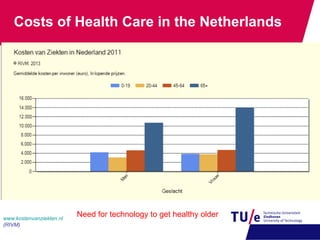
Costs of Health Care in the Netherlands
www.kostenvanziekten.nl
(RIVM)
Need for technology to get healthy older
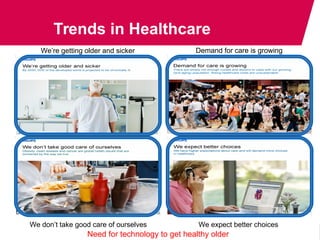
Trends in Healthcare
We’re getting older and sicker Demand for care is growing
We don’t take good care of ourselves We expect better choices
Need for technology to get healthy older
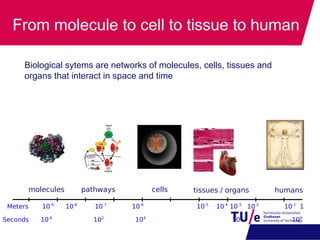
humanstissues / organscellspathwaysmolecules
Seconds 10-6
102
104
105
109
Meters 10-9
10-8
10-7
10-6
10-5
10-4
10-3
10-2
10-1
1
From molecule to cell to tissue to human
Biological sytems are networks of molecules, cells, tissues and
organs that interact in space and time
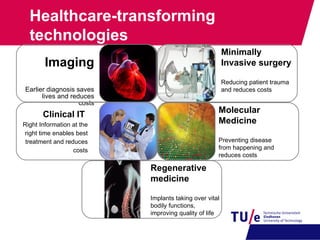
Healthcare-transforming
technologies
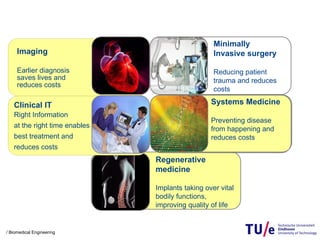
Imaging
Earlier diagnosis saves
lives and reduces
costs
Minimally
Invasive surgery
Reducing patient trauma
and reduces costs
Clinical IT
Right Information at the
right time enables best
treatment and reduces
costs
Molecular
Medicine
Preventing disease
from happening and
reduces costs
Regenerative
medicine
Implants taking over vital
bodily functions,
improving quality of life
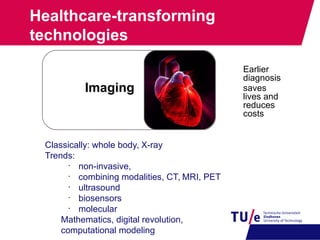
Healthcare-transforming
technologies
Imaging
Classically: whole body, X-ray
Trends:
•
non-invasive,
•
combining modalities, CT, MRI, PET
•
ultrasound
•
biosensors
•
molecular
Mathematics, digital revolution,
computational modeling
Earlier
diagnosis
saves
lives and
reduces
costs
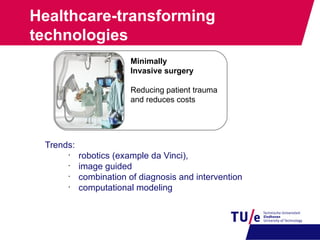
Healthcare-transforming
technologies
Minimally
Invasive surgery
Reducing patient trauma
and reduces costs
Trends:
•
robotics (example da Vinci),
•
image guided
•
combination of diagnosis and intervention
•
computational modeling
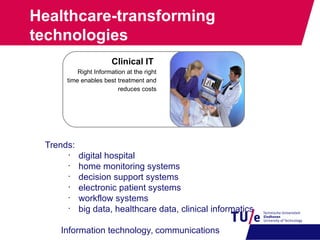
Healthcare-transforming
technologies
Trends:
•
digital hospital
•
home monitoring systems
•
decision support systems
•
electronic patient systems
•
workflow systems
•
big data, healthcare data, clinical informatics
Information technology, communications
Clinical IT
Right Information at the right
time enables best treatment and
reduces costs
Healthcare-transforming
technologies
Trends:
•
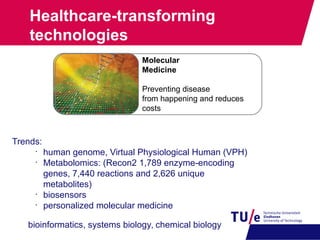
human genome, Virtual Physiological Human (VPH)
•
Metabolomics: (Recon2 1,789 enzyme-encoding
genes, 7,440 reactions and 2,626 unique
metabolites)
•
biosensors
•
personalized molecular medicine
bioinformatics, systems biology, chemical biology
Molecular
Medicine
Preventing disease
from happening and reduces
costs
Healthcare-transforming
technologies
Trends:
•
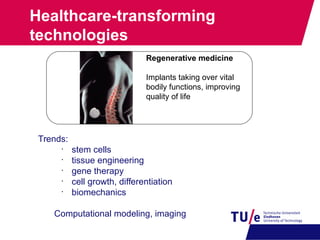
stem cells
•
tissue engineering
•
gene therapy
•
cell growth, differentiation
•
biomechanics
Computational modeling, imaging
Regenerative medicine
Implants taking over vital
bodily functions, improving
quality of life
Imaging
Earlier diagnosis
saves lives and
reduces costs
Minimally
Invasive surgery
Reducing patient
trauma and reduces
costs
Systems Medicine
Preventing disease
from happening and
reduces costs
Regenerative
medicine
Implants taking over vital
bodily functions,
improving quality of life
/ Biomedical Engineering
Clinical IT
Right Information
at the right time enables
best treatment and
reduces costs
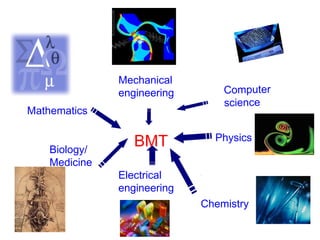
Collaborations at TU/e
Biology/
Medicine
Physics
Electrical
engineering
Chemistry
Mathematics
BMT
Computer
science
Mechanical
engineering
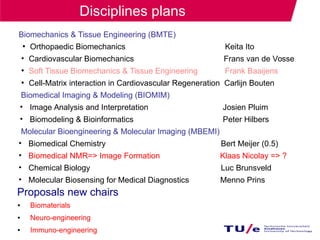
Biomechanics & Tissue Engineering (BMTE)
●
Orthopaedic Biomechanics Keita Ito
• Cardiovascular Biomechanics Frans van de Vosse
●
Soft Tissue Biomechanics & Tissue Engineering Frank Baaijens
●
Cell-Matrix interaction in Cardiovascular Regeneration Carlijn Bouten
Biomedical Imaging & Modeling (BIOMIM)
• Image Analysis and Interpretation Josien Pluim
• Biomodeling & Bioinformatics Peter Hilbers
Molecular Bioengineering & Molecular Imaging (MBEMI)
• Biomedical Chemistry Bert Meijer (0.5)
• Biomedical NMR=> Image Formation Klaas Nicolay => ?
• Chemical Biology Luc Brunsveld
• Molecular Biosensing for Medical Diagnostics Menno Prins
Disciplines plans
Proposals new chairs
● Biomaterials
● Neuro-engineering
● Immuno-engineering
/ Biomedische Technologie
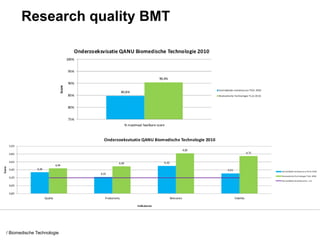
Research quality BMT
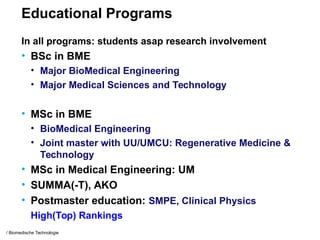
Educational Programs
In all programs: students asap research involvement
• BSc in BME
• Major BioMedical Engineering
• Major Medical Sciences and Technology
• MSc in BME
• BioMedical Engineering
• Joint master with UU/UMCU: Regenerative Medicine &
Technology
• MSc in Medical Engineering: UM
• SUMMA(-T), AKO
• Postmaster education: SMPE, Clinical Physics
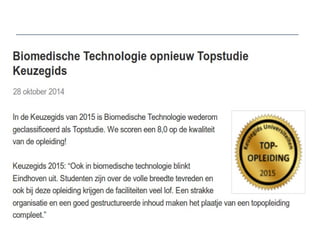
High(Top) Rankings
/ Biomedische Technologie
Onderwijs (3)
2012 start MWT
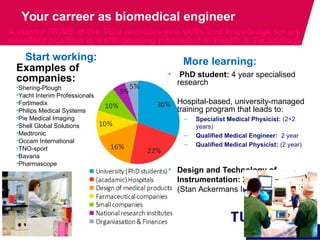
Your carreer as biomedical engineer
/ Biomedische Technologie
A master (B)ME at the TU/e provides you skills and knowledge for an
excellent position in a still growing jobmarket in Health & Technology
Start working:
Examples of
companies:
•Shering-Plough
•Yacht Interim Professionals
•Fortimedix
•Philips Medical Systems
•Pie Medical Imaging
•Shell Global Solutions
•Medtronic
•Occam International
•TNO-sport
•Bavaria
•Pharmascope
• PhD student: 4 year specialised
research
• Hospital-based, university-managed
training program that leads to:
– Specialist Medical Physicist: (2+2
years)
– Qualified Medical Engineer: 2 year
– Qualified Medical Physicist: (2 year)
• Design and Technology of
Instrumentation: 2 year training
(Stan Ackermans Institute).
More learning:
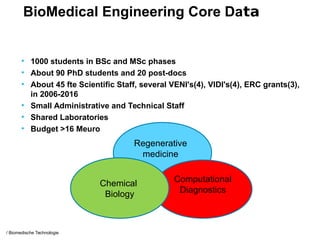
BioMedical Engineering Core Data
• 1000 students in BSc and MSc phases
• About 90 PhD students and 20 post-docs
• About 45 fte Scientific Staff, several VENI's(4), VIDI's(4), ERC grants(3),
in 2006-2016
• Small Administrative and Technical Staff
• Shared Laboratories
• Budget >16 Meuro
/ Biomedische Technologie
Regenerative
medicine
Computational
Diagnostics
Chemical
Biology
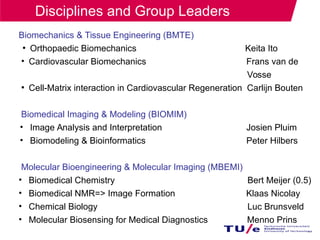
Biomechanics & Tissue Engineering (BMTE)
●
Orthopaedic Biomechanics Keita Ito
• Cardiovascular Biomechanics Frans van de
Vosse
●
Cell-Matrix interaction in Cardiovascular Regeneration Carlijn Bouten
Biomedical Imaging & Modeling (BIOMIM)
• Image Analysis and Interpretation Josien Pluim
• Biomodeling & Bioinformatics Peter Hilbers
Molecular Bioengineering & Molecular Imaging (MBEMI)
• Biomedical Chemistry Bert Meijer (0.5)
• Biomedical NMR=> Image Formation Klaas Nicolay
• Chemical Biology Luc Brunsveld
• Molecular Biosensing for Medical Diagnostics Menno Prins
Disciplines and Group Leaders
Cluster: Regenerative medicine
Biomechanics & Tissue Engineering (BMTE)
● Orthopaedic Biomechanics Keita Ito
● Cardiovascular Biomechanics Frans van de Vosse
● Cell-Matrix interaction in Cardiovascular Regeneration Carlijn
Bouten
● Biomechanics of Soft Tissues Cees Oomens
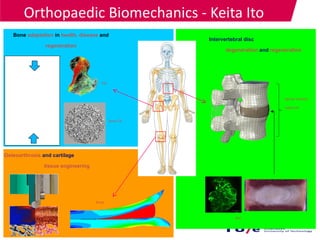
Orthopaedic Biomechanics - Keita Ito
Bone adaptation in health, disease and
regeneration
Intervertebral disc
degeneration and regeneration
Osteoarthrosis and cartilage
tissue engineering
disc
Spinal motion
segment
knee
hip
bone TE
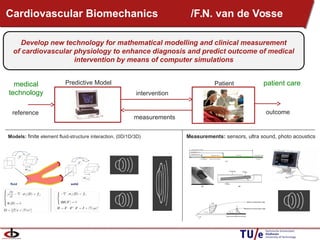
Develop new technology for mathematical modelling and clinical measurement
of cardiovascular physiology to enhance diagnosis and predict outcome of medical
intervention by means of computer simulations
Predictive Model Patient
reference
intervention
outcome
measurements
patient caremedical
technology
Cardiovascular Biomechanics /F.N. van de Vosse
Measurements: sensors, ultra sound, photo acousticsModels: finite element fluid-structure interaction, (0D/1D/3D)
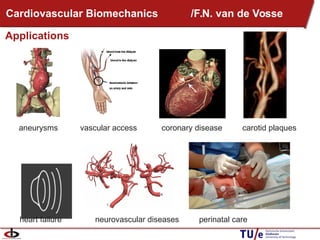
aneurysms vascular access coronary disease carotid plaques
heart failure neurovascular diseases perinatal care
Applications
Cardiovascular Biomechanics /F.N. van de Vosse
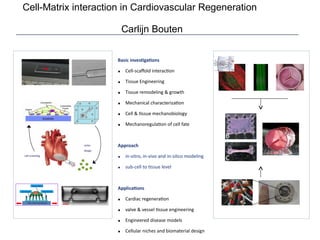
Basic investigations
• Cell-scaffold interaction
• Tissue Engineering
• Tissue remodeling & growth
• Mechanical characterization
• Cell & tissue mechanobiology
• Mechanoregulation of cell fate
Approach
• in-vitro, in-vivo and in-silico modeling
• sub-cell to tissue level
Applications
• Cardiac regeneration
• valve & vessel tissue engineering
• Engineered disease models
• Cellular niches and biomaterial design
cell screening
niche
design
Cell-Matrix interaction in Cardiovascular Regeneration
Carlijn Bouten
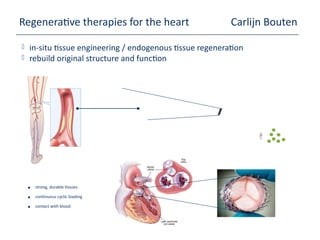
Regenerative therapies for the heart Carlijn Bouten
 in-situ tissue engineering / endogenous tissue regeneration
 rebuild original structure and function
• strong, durable tissues
• continuous cyclic loading
• contact with blood
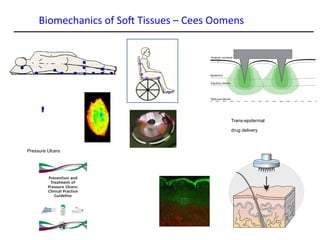
Biomechanics of Soft Tissues – Cees Oomens
Trans-epidermal
drug delivery
Pressure Ulcers
Cluster: Chemical Biology
Molecular Bioengineering & Molecular Imaging (MBEMI)
● Biomedical Chemistry Bert Meijer (0.5)
● Biomedical NMR=> Image Formation Klaas Nicolay
● Chemical Biology Luc Brunsveld
● Molecular Biosensing for Medical Diagnostics Menno Prins
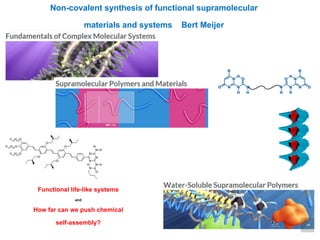
Functional life-like systems
and
How far can we push chemical
self-assembly?
Non-covalent synthesis of functional supramolecular
materials and systems Bert Meijer
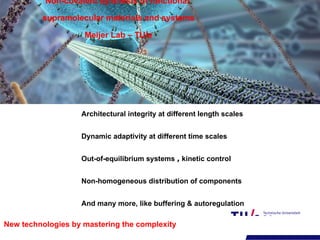
Architectural integrity at different length scales
Dynamic adaptivity at different time scales
Out-of-equilibrium systems , kinetic control
Non-homogeneous distribution of components
And many more, like buffering & autoregulation
Non-covalent synthesis of functional
supramolecular materials and systems
Meijer Lab – TU/e
New technologies by mastering the complexity
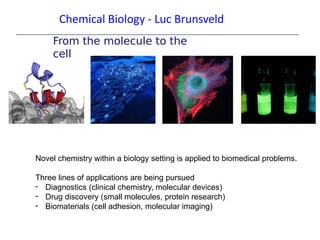
Chemical Biology - Luc Brunsveld
From the molecule to the
cell
Novel chemistry within a biology setting is applied to biomedical problems.
Three lines of applications are being pursued
- Diagnostics (clinical chemistry, molecular devices)
- Drug discovery (small molecules, protein research)
- Biomaterials (cell adhesion, molecular imaging)
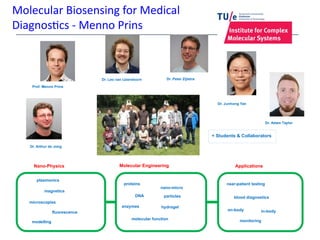
magnetics
plasmonics
fluorescence
microscopies
proteins
DNA
molecular function
near-patient testing
blood diagnostics
monitoring
on-body in-body
modelling
nano-micro
particles
Prof. Menno Prins
Dr. Leo van IJzendoorn
Dr. Arthur de Jong
Dr. Peter Zijlstra
Nano-Physics Molecular Engineering Applications
enzymes
Dr. Junhong Yan
hydrogel
+ Students & Collaborators
Molecular Biosensing for Medical
Diagnostics - Menno Prins
Dr. Adam Taylor
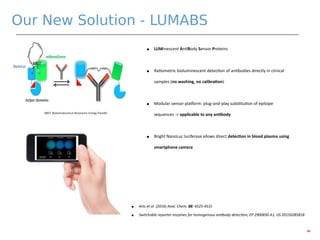
Our New Solution - LUMABS
40
BRET: Bioluminescence Resonance Energy Transfer
• LUMinescent AntiBody Sensor Proteins
• Ratiometric bioluminescent detection of antibodies directly in clinical
samples (no washing, no calibration)
• Modular sensor platform: plug-and-play substitution of epitope
sequences -> applicable to any antibody
• Bright NanoLuc luciferase allows direct detection in blood plasma using
smartphone camera
• Arts et al (2016) Anal. Chem. 88: 4525-4531
• Switchable reporter enzymes for homogenous antibody detection; EP 2900830 A1; US 20150285818
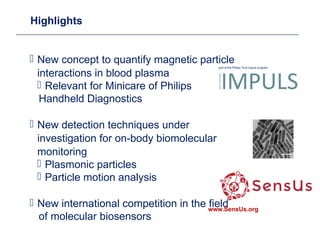
Highlights
 New concept to quantify magnetic particle
interactions in blood plasma
 Relevant for Minicare of Philips
Handheld Diagnostics
 New detection techniques under
investigation for on-body biomolecular
monitoring
 Plasmonic particles
 Particle motion analysis
 New international competition in the field
of molecular biosensors
www.SensUs.org
part of the Philips-TU/e Impuls program
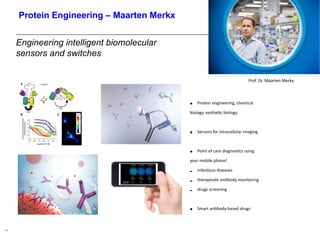
Engineering intelligent biomolecular
sensors and switches
42
• Protein engineering, chemical
biology, synthetic biology
• Sensors for intracellular imaging
• Point of care diagnostics using
your mobile phone!
- infectious diseases
- therapeutic antibody monitoring
- drugs screening
• Smart antibody-based drugs
Prof. Dr. Maarten Merkx
Protein Engineering – Maarten Merkx
Cluster: Computational Diagnostics
Biomedical Imaging & Modeling (BIOMIM)
● Image Analysis and Interpretation Josien Pluim
● Biomodeling & Bioinformatics Peter Hilbers
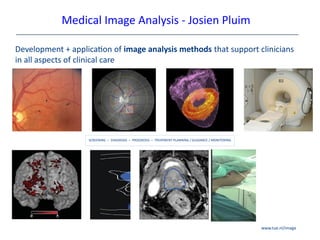
Development + application of image analysis methods that support clinicians
in all aspects of clinical care
SCREENING – DIAGNOSIS – PROGNOSIS – TREATMENT PLANNING / GUIDANCE / MONITORING
www.tue.nl/image
Medical Image Analysis - Josien Pluim
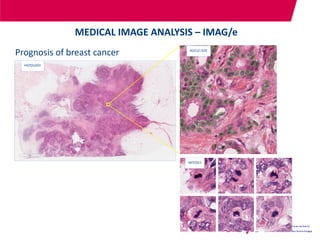
Prognosis of breast cancer
MEDICAL IMAGE ANALYSIS – IMAG/e
HISTOLOGY
NUCLEI SIZE
MITOSES
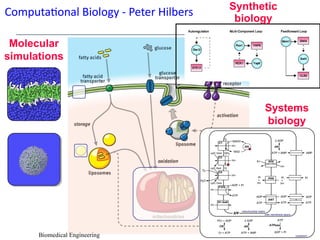
Computational Biology
Systems
biology
Molecular
simulations
Biomedical Engineering
Computational Biology - Peter Hilbers
Systems
biology
Synthetic
biology
Computational Biology
Molecular
simulations
Biomedical Engineering
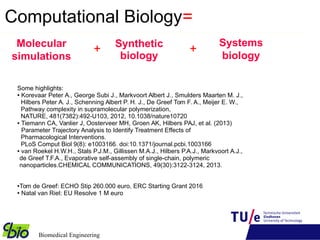
Computational Biology=
Systems
biology
Synthetic
biology
+ +
Some highlights:
● Korevaar Peter A., George Subi J., Markvoort Albert J., Smulders Maarten M. J.,
Hilbers Peter A. J., Schenning Albert P. H. J., De Greef Tom F. A., Meijer E. W.,
Pathway complexity in supramolecular polymerization,
NATURE, 481(7382):492-U103, 2012, 10.1038/nature10720
● Tiemann CA, Vanlier J, Oosterveer MH, Groen AK, Hilbers PAJ, et al. (2013)
Parameter Trajectory Analysis to Identify Treatment Effects of
Pharmacological Interventions.
PLoS Comput Biol 9(8): e1003166. doi:10.1371/journal.pcbi.1003166
● van Roekel H.W.H., Stals P.J.M., Gillissen M.A.J., Hilbers P.A.J., Markvoort A.J.,
de Greef T.F.A., Evaporative self-assembly of single-chain, polymeric
nanoparticles.CHEMICAL COMMUNICATIONS, 49(30):3122-3124, 2013.
●Tom de Greef: ECHO Stip 260.000 euro, ERC Starting Grant 2016
● Natal van Riel: EU Resolve 1 M euro
April 20, 2016
Natal van Riel(also prof at AMC)
Peter Hilbers
Eindhoven University of Technology, the Netherlands
Department of Biomedical Engineering
Systems Biology and Metabolic Diseases
n.a.w.v.riel@tue.nl
@nvanriel
Quantification of variability and
uncertainty in systems medicine
models
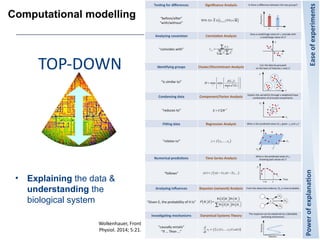
Computational modelling
• Explaining the data &
understanding the
biological system
49
Wolkenhauer, Front
Physiol. 2014; 5:21.
TOP-DOWN
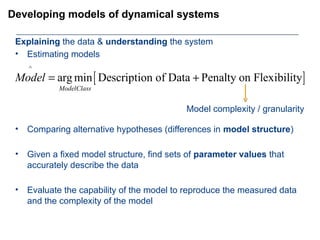
Developing models of dynamical systems
Explaining the data & understanding the system
• Estimating models
• Comparing alternative hypotheses (differences in model structure)
• Given a fixed model structure, find sets of parameter values that
accurately describe the data
• Evaluate the capability of the model to reproduce the measured data
and the complexity of the model
50
Model complexity / granularity
 
^
arg min Description of Data Penalty on Flexibility
ModelClass
Model  
Model Errors
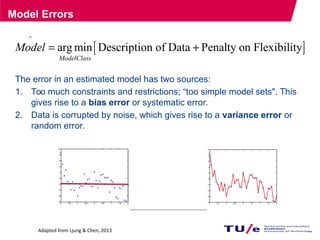
The error in an estimated model has two sources:
1. Too much constraints and restrictions; “too simple model sets". This
gives rise to a bias error or systematic error.
2. Data is corrupted by noise, which gives rise to a variance error or
random error.
51 Adapted from Ljung & Chen, 2013
 
^
arg min Description of Data Penalty on Flexibility
ModelClass
Model  
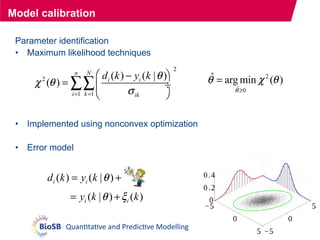
Model calibration
Parameter identification
• Maximum likelihood techniques
• Implemented using nonconvex optimization
• Error model
52
Quantitative and Predictive Modelling
2
2
1 1
( ) ( | )
( )
n N
i i
i k ik
d k y k 
 
 
 
  
 

2
ˆ 0
ˆ arg min ( )

  


( ) ( | )i id k y k  
( | ) ( )i iy k k  
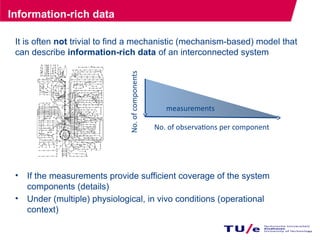
Information-rich data
It is often not trivial to find a mechanistic (mechanism-based) model that
can describe information-rich data of an interconnected system
• If the measurements provide sufficient coverage of the system
components (details)
• Under (multiple) physiological, in vivo conditions (operational
context)
53
measurements
No.ofcomponents
No. of observations per component
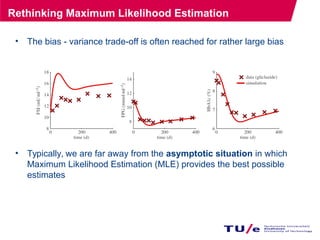
Rethinking Maximum Likelihood Estimation
54
• The bias - variance trade-off is often reached for rather large bias
• Typically, we are far away from the asymptotic situation in which
Maximum Likelihood Estimation (MLE) provides the best possible
estimates
Tiemann et al. (2011) BMC Syst Biol, 5:174
Van Riel et al, Interface Focus 3(2): 20120084, 2013
Tiemann et al. (2013) PloS Comput Biol, 9(8):e1003166
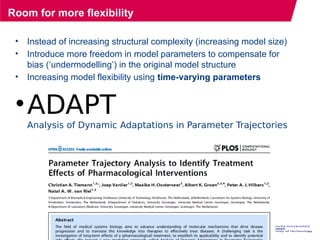
Room for more flexibility
• Instead of increasing structural complexity (increasing model size)
• Introduce more freedom in model parameters to compensate for
bias (‘undermodelling’) in the original model structure
• Increasing model flexibility using time-varying parameters
•ADAPT
Analysis of Dynamic Adaptations in Parameter Trajectories
55
Disease progression and treatment of T2DM
• 1 year follow-up of treatment-naïve T2DM patients (n=2408)
• 3 treatment arms: monotherapy with different hypoglycemic agents
– Pioglitazone – insulin sensitizer
• enhances peripheral glucose uptake
• reduces hepatic glucose production
– Metformin - insulin sensitizer
• decreases hepatic glucose production
– Gliclazide - insulin secretogogue
• stimulates insulin secretion by the pancreatic beta-cells
56
FP
G
[m
m
ol/
L]
Schernthaner et al, Clin. Endocrinol. Metab. 89:6068–6076 (2004)
Charbonnel et al, Diabetic Med. 22:399–405 (2004)
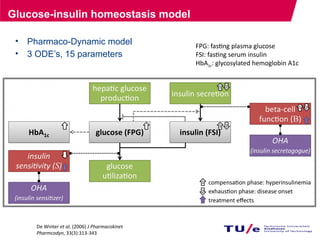
Glucose-insulin homeostasis model
• Pharmaco-Dynamic model
• 3 ODE’s, 15 parameters
57
De Winter et al. (2006) J Pharmacokinet
Pharmcodyn, 33(3):313-343
FPG: fasting plasma glucose
FSI: fasting serum insulin
HbA1c: glycosylated hemoglobin A1c
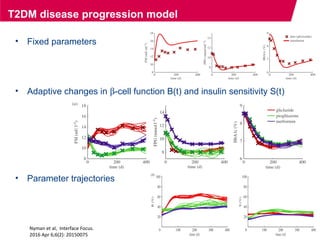
T2DM disease progression model
• Fixed parameters
• Adaptive changes in -cell function B(t) and insulin sensitivity S(t)
• Parameter trajectories
58
Nyman et al, Interface Focus.
2016 Apr 6;6(2): 20150075
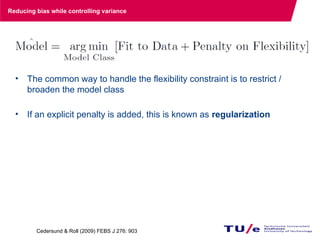
Reducing bias while controlling variance
• The common way to handle the flexibility constraint is to restrict /
broaden the model class
• If an explicit penalty is added, this is known as regularization
59 Cedersund & Roll (2009) FEBS J 276: 903
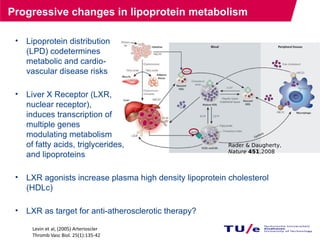
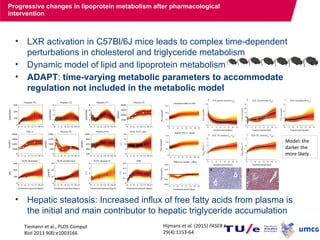
Progressive changes in lipoprotein metabolism
60
Rader & Daugherty,
Nature 451,2008
Lipolysis
• Lipoprotein distribution
(LPD) codetermines
metabolic and cardio-
vascular disease risks
• Liver X Receptor (LXR,
nuclear receptor),
induces transcription of
multiple genes
modulating metabolism
of fatty acids, triglycerides,
and lipoproteins
• LXR agonists increase plasma high density lipoprotein cholesterol
(HDLc)
• LXR as target for anti-atherosclerotic therapy?
Levin et al, (2005) Arterioscler
Thromb Vasc Biol. 25(1):135-42
Progressive changes in lipoprotein metabolism after pharmacological
intervention
• LXR activation in C57Bl/6J mice leads to complex time-dependent
perturbations in cholesterol and triglyceride metabolism
• Dynamic model of lipid and lipoprotein metabolism
• ADAPT: time-varying metabolic parameters to accommodate
regulation not included in the metabolic model
• Hepatic steatosis: Increased influx of free fatty acids from plasma is
the initial and main contributor to hepatic triglyceride accumulation
61
Tiemann et al., PLOS Comput
Biol 2013 9(8):e1003166
Hijmans et al. (2015) FASEB J.
29(4):1153-64
Model: the
darker the
more likely
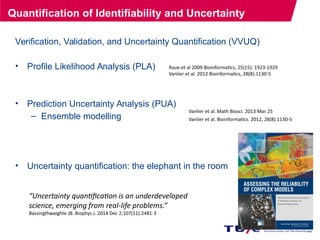
Quantification of Identifiability and Uncertainty
Verification, Validation, and Uncertainty Quantification (VVUQ)
• Profile Likelihood Analysis (PLA)
• Prediction Uncertainty Analysis (PUA)
– Ensemble modelling
• Uncertainty quantification: the elephant in the room
62
Raue.et al 2009 Bioinformatics, 25(15): 1923-1929
Vanlier et al. 2012 Bioinformatics, 28(8):1130-5
“Uncertainty quantification is an underdeveloped
science, emerging from real-life problems.”
Bassingthwaighte JB. Biophys J. 2014 Dec 2;107(11):2481-3
“Uncertainty quantification is an underdeveloped
science, emerging from real-life problems.”
Bassingthwaighte JB. Biophys J. 2014 Dec 2;107(11):2481-3
Vanlier et al. Math Biosci. 2013 Mar 25
Vanlier et al. Bioinformatics. 2012, 28(8):1130-5
Conclusions
• The network structure of the biological systems imposes strong
constraints on possible solutions of a model
• The bias - variance trade-off is often reached for rather large bias,
not favoring MLE
• Systems Biology / Systems Medicine is entering an era in which
dynamic models, despite their size and complexity, are not flexible
enough to correctly describe all data
• Computational techniques to introduce more degrees of freedom in
models, but simultaneously enforcing sparsity if extra flexibility is not
required (ADAPT)
• Model estimation tools are complemented with ‘regularization’
methods to reduce the error (bias) in models without escalating
uncertainties (variance)
63
64
Systems Biology of Disease Progression - ADAPT
modeling
http://www.youtube.com/watch?v=x54ysJDS7i8

Open Lecture Peter Hilbers - July 8, 2016

  • 1.
    Peter Hilbers BioModeling &bioInformatics Dept. BioMedical Engineering Trends in Healthcare Technology
  • 2.
    Overview • Introduction • General trends inHealthcare Technology • Dept BioMedical Engineering(TU/e) • Computational Biology example(s)
  • 3.
  • 4.
    PAGE 4 Departments Architecture, Building and Planning ChemicalEngineering and Chemistry Applied Physics Mathematics and Computer Science Industrial Design Electrical Engineering Biomedical Engineering Mechanical Engineering Technology Management
  • 5.
    PAGE 5 TU/e keyFigures (2015) Staff • Full professors 140 • Part-time professors 125 • Research staff 2000 • Total staff 3150 Students 9.900 • BSc-students 6000 ( 2% international) • MSc-students 3.900 (16% international) • Exchange students 400 per annum • Ph.D students 840 (>30% international)
  • 6.
  • 7.
    05/20/14 History of deptBioMedical Engineering • Educational program: start 1997 • Department: 1999 − First dean: Jan Jansen, 1999-2003 − Second dean: Frank Baaijens: 2003-2007 − Third dean: Peter Hilbers: 2007-
  • 8.
    Mission statement • Tobe an internationally leading research institute that offers (post)graduate programs to educate scientists and engineers for advanced biomedical research and development, who master a cross disciplinary approach. • To advance and apply engineering principles and tools • to unravel the pathophysiology of diseases, and • to enhance prevention, diagnostics, intervention and treatment of these diseases by combining natural sciences and engineering. / Biomedische Technologie
  • 9.
    Costs of HealthCare in the Netherlands www.kostenvanziekten.nl (RIVM) Need for technology to get healthy older
  • 10.
    Trends in Healthcare We’regetting older and sicker Demand for care is growing We don’t take good care of ourselves We expect better choices Need for technology to get healthy older
  • 11.
    humanstissues / organscellspathwaysmolecules Seconds10-6 102 104 105 109 Meters 10-9 10-8 10-7 10-6 10-5 10-4 10-3 10-2 10-1 1 From molecule to cell to tissue to human Biological sytems are networks of molecules, cells, tissues and organs that interact in space and time
  • 12.
    Healthcare-transforming technologies Imaging Earlier diagnosis saves livesand reduces costs Minimally Invasive surgery Reducing patient trauma and reduces costs Clinical IT Right Information at the right time enables best treatment and reduces costs Molecular Medicine Preventing disease from happening and reduces costs Regenerative medicine Implants taking over vital bodily functions, improving quality of life
  • 13.
    Healthcare-transforming technologies Imaging Classically: whole body,X-ray Trends: • non-invasive, • combining modalities, CT, MRI, PET • ultrasound • biosensors • molecular Mathematics, digital revolution, computational modeling Earlier diagnosis saves lives and reduces costs
  • 14.
    Healthcare-transforming technologies Minimally Invasive surgery Reducing patienttrauma and reduces costs Trends: • robotics (example da Vinci), • image guided • combination of diagnosis and intervention • computational modeling
  • 15.
    Healthcare-transforming technologies Trends: • digital hospital • home monitoringsystems • decision support systems • electronic patient systems • workflow systems • big data, healthcare data, clinical informatics Information technology, communications Clinical IT Right Information at the right time enables best treatment and reduces costs
  • 16.
    Healthcare-transforming technologies Trends: • human genome, VirtualPhysiological Human (VPH) • Metabolomics: (Recon2 1,789 enzyme-encoding genes, 7,440 reactions and 2,626 unique metabolites) • biosensors • personalized molecular medicine bioinformatics, systems biology, chemical biology Molecular Medicine Preventing disease from happening and reduces costs
  • 17.
    Healthcare-transforming technologies Trends: • stem cells • tissue engineering • genetherapy • cell growth, differentiation • biomechanics Computational modeling, imaging Regenerative medicine Implants taking over vital bodily functions, improving quality of life
  • 18.
    Imaging Earlier diagnosis saves livesand reduces costs Minimally Invasive surgery Reducing patient trauma and reduces costs Systems Medicine Preventing disease from happening and reduces costs Regenerative medicine Implants taking over vital bodily functions, improving quality of life / Biomedical Engineering Clinical IT Right Information at the right time enables best treatment and reduces costs
  • 19.
  • 20.
    Biomechanics & TissueEngineering (BMTE) ● Orthopaedic Biomechanics Keita Ito • Cardiovascular Biomechanics Frans van de Vosse ● Soft Tissue Biomechanics & Tissue Engineering Frank Baaijens ● Cell-Matrix interaction in Cardiovascular Regeneration Carlijn Bouten Biomedical Imaging & Modeling (BIOMIM) • Image Analysis and Interpretation Josien Pluim • Biomodeling & Bioinformatics Peter Hilbers Molecular Bioengineering & Molecular Imaging (MBEMI) • Biomedical Chemistry Bert Meijer (0.5) • Biomedical NMR=> Image Formation Klaas Nicolay => ? • Chemical Biology Luc Brunsveld • Molecular Biosensing for Medical Diagnostics Menno Prins Disciplines plans Proposals new chairs ● Biomaterials ● Neuro-engineering ● Immuno-engineering
  • 21.
  • 22.
    Educational Programs In allprograms: students asap research involvement • BSc in BME • Major BioMedical Engineering • Major Medical Sciences and Technology • MSc in BME • BioMedical Engineering • Joint master with UU/UMCU: Regenerative Medicine & Technology • MSc in Medical Engineering: UM • SUMMA(-T), AKO • Postmaster education: SMPE, Clinical Physics High(Top) Rankings / Biomedische Technologie
  • 23.
  • 25.
    Your carreer asbiomedical engineer / Biomedische Technologie A master (B)ME at the TU/e provides you skills and knowledge for an excellent position in a still growing jobmarket in Health & Technology Start working: Examples of companies: •Shering-Plough •Yacht Interim Professionals •Fortimedix •Philips Medical Systems •Pie Medical Imaging •Shell Global Solutions •Medtronic •Occam International •TNO-sport •Bavaria •Pharmascope • PhD student: 4 year specialised research • Hospital-based, university-managed training program that leads to: – Specialist Medical Physicist: (2+2 years) – Qualified Medical Engineer: 2 year – Qualified Medical Physicist: (2 year) • Design and Technology of Instrumentation: 2 year training (Stan Ackermans Institute). More learning:
  • 26.
    BioMedical Engineering CoreData • 1000 students in BSc and MSc phases • About 90 PhD students and 20 post-docs • About 45 fte Scientific Staff, several VENI's(4), VIDI's(4), ERC grants(3), in 2006-2016 • Small Administrative and Technical Staff • Shared Laboratories • Budget >16 Meuro / Biomedische Technologie Regenerative medicine Computational Diagnostics Chemical Biology
  • 27.
    Biomechanics & TissueEngineering (BMTE) ● Orthopaedic Biomechanics Keita Ito • Cardiovascular Biomechanics Frans van de Vosse ● Cell-Matrix interaction in Cardiovascular Regeneration Carlijn Bouten Biomedical Imaging & Modeling (BIOMIM) • Image Analysis and Interpretation Josien Pluim • Biomodeling & Bioinformatics Peter Hilbers Molecular Bioengineering & Molecular Imaging (MBEMI) • Biomedical Chemistry Bert Meijer (0.5) • Biomedical NMR=> Image Formation Klaas Nicolay • Chemical Biology Luc Brunsveld • Molecular Biosensing for Medical Diagnostics Menno Prins Disciplines and Group Leaders
  • 28.
    Cluster: Regenerative medicine Biomechanics& Tissue Engineering (BMTE) ● Orthopaedic Biomechanics Keita Ito ● Cardiovascular Biomechanics Frans van de Vosse ● Cell-Matrix interaction in Cardiovascular Regeneration Carlijn Bouten ● Biomechanics of Soft Tissues Cees Oomens
  • 29.
    Orthopaedic Biomechanics -Keita Ito Bone adaptation in health, disease and regeneration Intervertebral disc degeneration and regeneration Osteoarthrosis and cartilage tissue engineering disc Spinal motion segment knee hip bone TE
  • 30.
    Develop new technologyfor mathematical modelling and clinical measurement of cardiovascular physiology to enhance diagnosis and predict outcome of medical intervention by means of computer simulations Predictive Model Patient reference intervention outcome measurements patient caremedical technology Cardiovascular Biomechanics /F.N. van de Vosse Measurements: sensors, ultra sound, photo acousticsModels: finite element fluid-structure interaction, (0D/1D/3D)
  • 31.
    aneurysms vascular accesscoronary disease carotid plaques heart failure neurovascular diseases perinatal care Applications Cardiovascular Biomechanics /F.N. van de Vosse
  • 32.
    Basic investigations • Cell-scaffoldinteraction • Tissue Engineering • Tissue remodeling & growth • Mechanical characterization • Cell & tissue mechanobiology • Mechanoregulation of cell fate Approach • in-vitro, in-vivo and in-silico modeling • sub-cell to tissue level Applications • Cardiac regeneration • valve & vessel tissue engineering • Engineered disease models • Cellular niches and biomaterial design cell screening niche design Cell-Matrix interaction in Cardiovascular Regeneration Carlijn Bouten
  • 33.
    Regenerative therapies forthe heart Carlijn Bouten  in-situ tissue engineering / endogenous tissue regeneration  rebuild original structure and function • strong, durable tissues • continuous cyclic loading • contact with blood
  • 34.
    Biomechanics of SoftTissues – Cees Oomens Trans-epidermal drug delivery Pressure Ulcers
  • 35.
    Cluster: Chemical Biology MolecularBioengineering & Molecular Imaging (MBEMI) ● Biomedical Chemistry Bert Meijer (0.5) ● Biomedical NMR=> Image Formation Klaas Nicolay ● Chemical Biology Luc Brunsveld ● Molecular Biosensing for Medical Diagnostics Menno Prins
  • 36.
    Functional life-like systems and Howfar can we push chemical self-assembly? Non-covalent synthesis of functional supramolecular materials and systems Bert Meijer
  • 37.
    Architectural integrity atdifferent length scales Dynamic adaptivity at different time scales Out-of-equilibrium systems , kinetic control Non-homogeneous distribution of components And many more, like buffering & autoregulation Non-covalent synthesis of functional supramolecular materials and systems Meijer Lab – TU/e New technologies by mastering the complexity
  • 38.
    Chemical Biology -Luc Brunsveld From the molecule to the cell Novel chemistry within a biology setting is applied to biomedical problems. Three lines of applications are being pursued - Diagnostics (clinical chemistry, molecular devices) - Drug discovery (small molecules, protein research) - Biomaterials (cell adhesion, molecular imaging)
  • 39.
    magnetics plasmonics fluorescence microscopies proteins DNA molecular function near-patient testing blooddiagnostics monitoring on-body in-body modelling nano-micro particles Prof. Menno Prins Dr. Leo van IJzendoorn Dr. Arthur de Jong Dr. Peter Zijlstra Nano-Physics Molecular Engineering Applications enzymes Dr. Junhong Yan hydrogel + Students & Collaborators Molecular Biosensing for Medical Diagnostics - Menno Prins Dr. Adam Taylor
  • 40.
    Our New Solution- LUMABS 40 BRET: Bioluminescence Resonance Energy Transfer • LUMinescent AntiBody Sensor Proteins • Ratiometric bioluminescent detection of antibodies directly in clinical samples (no washing, no calibration) • Modular sensor platform: plug-and-play substitution of epitope sequences -> applicable to any antibody • Bright NanoLuc luciferase allows direct detection in blood plasma using smartphone camera • Arts et al (2016) Anal. Chem. 88: 4525-4531 • Switchable reporter enzymes for homogenous antibody detection; EP 2900830 A1; US 20150285818
  • 41.
    Highlights  New conceptto quantify magnetic particle interactions in blood plasma  Relevant for Minicare of Philips Handheld Diagnostics  New detection techniques under investigation for on-body biomolecular monitoring  Plasmonic particles  Particle motion analysis  New international competition in the field of molecular biosensors www.SensUs.org part of the Philips-TU/e Impuls program
  • 42.
    Engineering intelligent biomolecular sensorsand switches 42 • Protein engineering, chemical biology, synthetic biology • Sensors for intracellular imaging • Point of care diagnostics using your mobile phone! - infectious diseases - therapeutic antibody monitoring - drugs screening • Smart antibody-based drugs Prof. Dr. Maarten Merkx Protein Engineering – Maarten Merkx
  • 43.
    Cluster: Computational Diagnostics BiomedicalImaging & Modeling (BIOMIM) ● Image Analysis and Interpretation Josien Pluim ● Biomodeling & Bioinformatics Peter Hilbers
  • 44.
    Development + applicationof image analysis methods that support clinicians in all aspects of clinical care SCREENING – DIAGNOSIS – PROGNOSIS – TREATMENT PLANNING / GUIDANCE / MONITORING www.tue.nl/image Medical Image Analysis - Josien Pluim
  • 45.
    Prognosis of breastcancer MEDICAL IMAGE ANALYSIS – IMAG/e HISTOLOGY NUCLEI SIZE MITOSES
  • 46.
  • 47.
    Computational Biology Molecular simulations Biomedical Engineering ComputationalBiology= Systems biology Synthetic biology + + Some highlights: ● Korevaar Peter A., George Subi J., Markvoort Albert J., Smulders Maarten M. J., Hilbers Peter A. J., Schenning Albert P. H. J., De Greef Tom F. A., Meijer E. W., Pathway complexity in supramolecular polymerization, NATURE, 481(7382):492-U103, 2012, 10.1038/nature10720 ● Tiemann CA, Vanlier J, Oosterveer MH, Groen AK, Hilbers PAJ, et al. (2013) Parameter Trajectory Analysis to Identify Treatment Effects of Pharmacological Interventions. PLoS Comput Biol 9(8): e1003166. doi:10.1371/journal.pcbi.1003166 ● van Roekel H.W.H., Stals P.J.M., Gillissen M.A.J., Hilbers P.A.J., Markvoort A.J., de Greef T.F.A., Evaporative self-assembly of single-chain, polymeric nanoparticles.CHEMICAL COMMUNICATIONS, 49(30):3122-3124, 2013. ●Tom de Greef: ECHO Stip 260.000 euro, ERC Starting Grant 2016 ● Natal van Riel: EU Resolve 1 M euro
  • 48.
    April 20, 2016 Natalvan Riel(also prof at AMC) Peter Hilbers Eindhoven University of Technology, the Netherlands Department of Biomedical Engineering Systems Biology and Metabolic Diseases n.a.w.v.riel@tue.nl @nvanriel Quantification of variability and uncertainty in systems medicine models
  • 49.
    Computational modelling • Explainingthe data & understanding the biological system 49 Wolkenhauer, Front Physiol. 2014; 5:21. TOP-DOWN
  • 50.
    Developing models ofdynamical systems Explaining the data & understanding the system • Estimating models • Comparing alternative hypotheses (differences in model structure) • Given a fixed model structure, find sets of parameter values that accurately describe the data • Evaluate the capability of the model to reproduce the measured data and the complexity of the model 50 Model complexity / granularity   ^ arg min Description of Data Penalty on Flexibility ModelClass Model  
  • 51.
    Model Errors The errorin an estimated model has two sources: 1. Too much constraints and restrictions; “too simple model sets". This gives rise to a bias error or systematic error. 2. Data is corrupted by noise, which gives rise to a variance error or random error. 51 Adapted from Ljung & Chen, 2013   ^ arg min Description of Data Penalty on Flexibility ModelClass Model  
  • 52.
    Model calibration Parameter identification •Maximum likelihood techniques • Implemented using nonconvex optimization • Error model 52 Quantitative and Predictive Modelling 2 2 1 1 ( ) ( | ) ( ) n N i i i k ik d k y k              2 ˆ 0 ˆ arg min ( )       ( ) ( | )i id k y k   ( | ) ( )i iy k k  
  • 53.
    Information-rich data It isoften not trivial to find a mechanistic (mechanism-based) model that can describe information-rich data of an interconnected system • If the measurements provide sufficient coverage of the system components (details) • Under (multiple) physiological, in vivo conditions (operational context) 53 measurements No.ofcomponents No. of observations per component
  • 54.
    Rethinking Maximum LikelihoodEstimation 54 • The bias - variance trade-off is often reached for rather large bias • Typically, we are far away from the asymptotic situation in which Maximum Likelihood Estimation (MLE) provides the best possible estimates
  • 55.
    Tiemann et al.(2011) BMC Syst Biol, 5:174 Van Riel et al, Interface Focus 3(2): 20120084, 2013 Tiemann et al. (2013) PloS Comput Biol, 9(8):e1003166 Room for more flexibility • Instead of increasing structural complexity (increasing model size) • Introduce more freedom in model parameters to compensate for bias (‘undermodelling’) in the original model structure • Increasing model flexibility using time-varying parameters •ADAPT Analysis of Dynamic Adaptations in Parameter Trajectories 55
  • 56.
    Disease progression andtreatment of T2DM • 1 year follow-up of treatment-naïve T2DM patients (n=2408) • 3 treatment arms: monotherapy with different hypoglycemic agents – Pioglitazone – insulin sensitizer • enhances peripheral glucose uptake • reduces hepatic glucose production – Metformin - insulin sensitizer • decreases hepatic glucose production – Gliclazide - insulin secretogogue • stimulates insulin secretion by the pancreatic beta-cells 56 FP G [m m ol/ L] Schernthaner et al, Clin. Endocrinol. Metab. 89:6068–6076 (2004) Charbonnel et al, Diabetic Med. 22:399–405 (2004)
  • 57.
    Glucose-insulin homeostasis model •Pharmaco-Dynamic model • 3 ODE’s, 15 parameters 57 De Winter et al. (2006) J Pharmacokinet Pharmcodyn, 33(3):313-343 FPG: fasting plasma glucose FSI: fasting serum insulin HbA1c: glycosylated hemoglobin A1c
  • 58.
    T2DM disease progressionmodel • Fixed parameters • Adaptive changes in -cell function B(t) and insulin sensitivity S(t) • Parameter trajectories 58 Nyman et al, Interface Focus. 2016 Apr 6;6(2): 20150075
  • 59.
    Reducing bias whilecontrolling variance • The common way to handle the flexibility constraint is to restrict / broaden the model class • If an explicit penalty is added, this is known as regularization 59 Cedersund & Roll (2009) FEBS J 276: 903
  • 60.
    Progressive changes inlipoprotein metabolism 60 Rader & Daugherty, Nature 451,2008 Lipolysis • Lipoprotein distribution (LPD) codetermines metabolic and cardio- vascular disease risks • Liver X Receptor (LXR, nuclear receptor), induces transcription of multiple genes modulating metabolism of fatty acids, triglycerides, and lipoproteins • LXR agonists increase plasma high density lipoprotein cholesterol (HDLc) • LXR as target for anti-atherosclerotic therapy? Levin et al, (2005) Arterioscler Thromb Vasc Biol. 25(1):135-42
  • 61.
    Progressive changes inlipoprotein metabolism after pharmacological intervention • LXR activation in C57Bl/6J mice leads to complex time-dependent perturbations in cholesterol and triglyceride metabolism • Dynamic model of lipid and lipoprotein metabolism • ADAPT: time-varying metabolic parameters to accommodate regulation not included in the metabolic model • Hepatic steatosis: Increased influx of free fatty acids from plasma is the initial and main contributor to hepatic triglyceride accumulation 61 Tiemann et al., PLOS Comput Biol 2013 9(8):e1003166 Hijmans et al. (2015) FASEB J. 29(4):1153-64 Model: the darker the more likely
  • 62.
    Quantification of Identifiabilityand Uncertainty Verification, Validation, and Uncertainty Quantification (VVUQ) • Profile Likelihood Analysis (PLA) • Prediction Uncertainty Analysis (PUA) – Ensemble modelling • Uncertainty quantification: the elephant in the room 62 Raue.et al 2009 Bioinformatics, 25(15): 1923-1929 Vanlier et al. 2012 Bioinformatics, 28(8):1130-5 “Uncertainty quantification is an underdeveloped science, emerging from real-life problems.” Bassingthwaighte JB. Biophys J. 2014 Dec 2;107(11):2481-3 “Uncertainty quantification is an underdeveloped science, emerging from real-life problems.” Bassingthwaighte JB. Biophys J. 2014 Dec 2;107(11):2481-3 Vanlier et al. Math Biosci. 2013 Mar 25 Vanlier et al. Bioinformatics. 2012, 28(8):1130-5
  • 63.
    Conclusions • The networkstructure of the biological systems imposes strong constraints on possible solutions of a model • The bias - variance trade-off is often reached for rather large bias, not favoring MLE • Systems Biology / Systems Medicine is entering an era in which dynamic models, despite their size and complexity, are not flexible enough to correctly describe all data • Computational techniques to introduce more degrees of freedom in models, but simultaneously enforcing sparsity if extra flexibility is not required (ADAPT) • Model estimation tools are complemented with ‘regularization’ methods to reduce the error (bias) in models without escalating uncertainties (variance) 63
  • 64.
    64 Systems Biology ofDisease Progression - ADAPT modeling http://www.youtube.com/watch?v=x54ysJDS7i8