Introduction to biomedical engineering 3ed. Edition Enderle J.
Introduction to biomedical engineering 3ed. Edition Enderle J.
Introduction to biomedical engineering 3ed. Edition Enderle J.
Introduction to biomedical engineering 3ed. Edition Enderle J.
Introduction to biomedical engineering 3ed. Edition Enderle J.
1.
Visit https://ebookultra.com todownload the full version and
explore more ebooks or textbooks
Introduction to biomedical engineering 3ed.
Edition Enderle J.
_____ Click the link below to download _____
https://ebookultra.com/download/introduction-to-biomedical-
engineering-3ed-edition-enderle-j/
Explore and download more ebooks or textbooks at ebookultra.com
2.
Here are somerecommended products that we believe you will be
interested in. You can click the link to download.
An Introduction to Modeling of Transport Processes
Applications to Biomedical Systems Cambridge Texts in
Biomedical Engineering 1st Edition Datta
https://ebookultra.com/download/an-introduction-to-modeling-of-
transport-processes-applications-to-biomedical-systems-cambridge-
texts-in-biomedical-engineering-1st-edition-datta/
Practical Biomedical Signal Analysis Using MATLAB Series
in Medical Physics and Biomedical Engineering 1st Edition
Katarzyna J. Blinowska
https://ebookultra.com/download/practical-biomedical-signal-analysis-
using-matlab-series-in-medical-physics-and-biomedical-engineering-1st-
edition-katarzyna-j-blinowska/
Introduction to chemical engineering thermodynamics 7rd ed
Edition J M Smith
https://ebookultra.com/download/introduction-to-chemical-engineering-
thermodynamics-7rd-ed-edition-j-m-smith/
Engineering mechanics an introduction to dynamics 4th
Edition David J. Mcgill
https://ebookultra.com/download/engineering-mechanics-an-introduction-
to-dynamics-4th-edition-david-j-mcgill/
3.
Introduction to Pythonfor Science and Engineering Second
Edition David J. Pine
https://ebookultra.com/download/introduction-to-python-for-science-
and-engineering-second-edition-david-j-pine/
Relativity an introduction to special and general
relativity 3ed. Edition Hans Stephani
https://ebookultra.com/download/relativity-an-introduction-to-special-
and-general-relativity-3ed-edition-hans-stephani/
Bioinformatics and Biomedical Engineering Proceedings of
the 9th International Conference on Bioinformatics and
Biomedical Engineering 1st Edition James Chou
https://ebookultra.com/download/bioinformatics-and-biomedical-
engineering-proceedings-of-the-9th-international-conference-on-
bioinformatics-and-biomedical-engineering-1st-edition-james-chou/
Encyclopedia of Chromatography 3ed. Edition Cazes J. (Ed.)
https://ebookultra.com/download/encyclopedia-of-chromatography-3ed-
edition-cazes-j-ed/
Engineering Your Future A Comprehensive Introduction to
Engineering 9th edition Oakes
https://ebookultra.com/download/engineering-your-future-a-
comprehensive-introduction-to-engineering-9th-edition-oakes/
5.
Introduction to biomedicalengineering 3ed. Edition
Enderle J. Digital Instant Download
Author(s): Enderle J., Bronzino J.
ISBN(s): 9780123749796, 0123749794
Edition: 3ed.
File Details: PDF, 15.47 MB
Year: 2011
Language: english
Academic Press isan imprint of Elsevier
30 Corporate Drive, Suite 400, Burlington, MA 01803, USA
The Boulevard, Langford Lane, Kidlington, Oxford, OX5 1GB, UK
# 2012 Elsevier Inc. All rights reserved.
No part of this publication may be reproduced or transmitted in any form or by any means, electronic
or mechanical, including photocopying, recording, or any information storage and retrieval system,
without permission in writing from the publisher. Details on how to seek permission, further
information about the Publisher’s permissions policies and our arrangements with organizations such
as the Copyright Clearance Center and the Copyright Licensing Agency, can be found at our website:
www.elsevier.com/permissions.
This book and the individual contributions contained in it are protected under copyright by the
Publisher (other than as may be noted herein).
Notices
Knowledge and best practice in this field are constantly changing. As new research and experience
broaden our understanding, changes in research methods, professional practices, or medical
treatment may become necessary.
Practitioners and researchers must always rely on their own experience and knowledge in
evaluating and using any information, methods, compounds, or experiments described herein. In
using such information or methods they should be mindful of their own safety and the safety of
others, including parties for whom they have a professional responsibility.
To the fullest extent of the law, neither the Publisher nor the authors, contributors, or editors,
assume any liability for any injury and/or damage to persons or property as a matter of products
liability, negligence or otherwise, or from any use or operation of any methods, products,
instructions, or ideas contained in the material herein.
MATLABW
and SimulinkW
are trademarks of The MathWorks, Inc. and are used with permission.
The MathWorks does not warrant the accuracy of the text or exercises in this book. This book’s use or
discussion of MATLABW
and SimulinkW
software or related products does not constitute
endorsement or sponsorship by The MathWorks of a particular pedagogical approach or particular
use of the MATLABW
and SimulinkW
software.
Library of Congress Cataloging-in-Publication Data
Introduction to biomedical engineering / [edited by] John Enderle, Joseph Bronzino. – 3rd ed.
p. ; cm.
Includes bibliographical references and index.
ISBN 978-0-12-374979-6 (alk. paper)
1. Biomedical engineering. I. Enderle, John D. (John Denis) II. Bronzino, Joseph D., 1937-
[DNLM: 1. Biomedical Engineering. QT 36]
R856.I47 2012
610.28–dc22 2010046267
British Library Cataloguing-in-Publication Data
A catalogue record for this book is available from the British Library.
For information on all Academic Press publications
visit our Web site at www.elsevierdirect.com
Printed in the United State of America
11 12 13 14 9 8 7 6 5 4 3 2 1
Contents
Preface xi
Contributors tothe Third Edition xiii
Contributors to the Second Edition xiv
Contributors to the First Edition xv
1. Biomedical Engineering: A Historical
Perspective
JOSEPH D. BRONZINO
1.1 The Evolution of the Modern Health
Care System 2
1.2 The Modern Health Care System 9
1.3 What Is Biomedical Engineering? 16
1.4 Roles Played by the Biomedical Engineers 21
1.5 Recent Advances in Biomedical
Engineering 23
1.6 Professional Status of Biomedical
Engineering 29
1.7 Professional Societies 30
1.8 Exercises 32
2. Moral and Ethical Issues
JOSEPH D. BRONZINO
2.1 Morality and Ethics: A Definition of
Terms 36
2.2 Two Moral Norms: Beneficence and
Nonmaleficence 44
2.3 Redefining Death 45
2.4 The Terminally Ill Patient and Euthanasia 49
2.5 Taking Control 52
2.6 Human Experimentation 53
2.7 Definition and Purpose of
Experimentation 55
2.8 Informed Consent 57
2.9 Regulation of Medical Device Innovation 62
2.10 Marketing Medical Devices 64
2.11 Ethical Issues in Feasibility Studies 65
2.12 Ethical Issues in Emergency Use 67
2.13 Ethical Issues in Treatment Use 70
2.14 The Role of the Biomedical Engineer in the
FDA Process 71
2.15 Exercises 72
3. Anatomy and Physiology
SUSAN BLANCHARD AND JOSEPH D. BRONZINO
3.1 Introduction 76
3.2 Cellular Organization 78
3.3 Tissues 93
3.4 Major Organ Systems 94
3.5 Homeostasis 126
3.6 Exercises 129
4. Biomechanics
JOSEPH L. PALLADINO AND ROY B. DAVIS III
4.1 Introduction 134
4.2 Basic Mechanics 137
4.3 Mechanics of Materials 158
4.4 Viscoelastic Properties 166
4.5 Cartilage, Ligament, Tendon, and
Muscle 170
4.6 Clinical Gait Analysis 175
4.7 Cardiovascular Dynamics 192
4.8 Exercises 215
5. Biomaterials
LIISA T. KUHN
5.1 Materials in Medicine: From Prosthetics to
Regeneration 220
5.2 Biomaterials: Types, Properties, and Their
Applications 221
5.3 Lessons from Nature on Biomaterial Design and
Selection 236
5.4 Tissue–Biomaterial Interactions 240
5.5 Biomaterials Processing Techniques for Guiding
Tissue Repair and Regeneration 250
vii
14.
5.6 Safety Testingand Regulation of
Biomaterials 258
5.7 Application-Specific Strategies for the Design
and Selection of Biomaterials 263
5.8 Exercises 269
6. Tissue Engineering
RANDALL E. MCCLELLAND, ROBERT DENNIS,
LOLA M. REID, JAN P. STEGEMANN, BERNARD PALSSON,
AND JEFFREY M. MACDONALD
6.1 What Is Tissue Engineering? 274
6.2 Biological Considerations 290
6.3 Physical Considerations 319
6.4 Scaling Up 339
6.5 Implementation of Tissue Engineered
Products 343
6.6 Future Directions: Functional Tissue Engineering
and the “-Omics” Sciences 347
6.7 Conclusions 349
6.8 Exercises 349
7. Compartmental Modeling
JOHN D. ENDERLE
7.1 Introduction 360
7.2 Solutes, Compartments, and Volumes 360
7.3 Transfer of Substances between Two
Compartments Separated by a Membrane 362
7.4 Compartmental Modeling Basics 379
7.5 One-Compartment Modeling 381
7.6 Two-Compartment Modeling 391
7.7 Three-Compartment Modeling 403
7.8 Multicompartment Modeling 418
7.9 Exercises 430
8. Biochemical Reactions and Enzyme
Kinetics
JOHN D. ENDERLE
8.1 Chemical Reactions 448
8.2 Enzyme Kinetics 458
8.3 Additional Models Using the Quasi-Steady-State
Approximation 467
8.4 Diffusion, Biochemical Reactions, and Enzyme
Kinetics 473
8.5 Cellular Respiration: Glucose Metabolism and
the Creation of ATP 485
8.6 Enzyme Inhibition, Allosteric Modifiers, and
Cooperative Reactions 497
8.7 Exercises 505
9. Bioinstrumentation
JOHN D. ENDERLE
9.1 Introduction 510
9.2 Basic Bioinstrumentation
System 512
9.3 Charge, Current, Voltage, Power, and
Energy 514
9.4 Resistance 520
9.5 Linear Network Analysis 531
9.6 Linearity and Superposition 537
9.7 Thévenin’s Theorem 541
9.8 Inductors 544
9.9 Capacitors 548
9.10 A General Approach to Solving Circuits
Involving Resistors, Capacitors, and
Inductors 551
9.11 Operational Amplifiers 560
9.12 Time-Varying Signals 572
9.13 Active Analog Filters 578
9.14 Bioinstrumentation Design 588
9.15 Exercises 591
10. Biomedical Sensors
YITZHAK MENDELSON
10.1 Introduction 610
10.2 Biopotential Measurements 616
10.3 Physical Measurements 621
10.4 Blood Gas Sensors 639
10.5 Bioanalytical Sensors 647
10.6 Optical Sensors 651
10.7 Exercises 662
11. Biosignal Processing
MONTY ESCABI
11.1 Introduction 668
11.2 Physiological Origins of Biosignals 668
11.3 Characteristics of Biosignals 671
11.4 Signal Acquisition 674
11.5 Frequency Domain Representation of Biological
Signals 679
11.6 Linear Systems 700
11.7 Signal Averaging 721
viii CONTENTS
15.
11.8 The WaveletTransform and the Short-Time
Fourier Transform 727
11.9 Artificial Intelligence Techniques 732
11.10 Exercises 741
12. Bioelectric Phenomena
JOHN D. ENDERLE
12.1 Introduction 748
12.2 History 748
12.3 Neurons 756
12.4 Basic Biophysics Tools and
Relationships 761
12.5 Equivalent Circuit Model for the Cell
Membrane 773
12.6 The Hodgkin-Huxley Model of the Action
Potential 783
12.7 Model of a Whole Neuron 797
12.8 Chemical Synapses 800
12.9 Exercises 808
13. Physiological Modeling
JOHN D. ENDERLE
13.1 Introduction 818
13.2 An Overview of the Fast Eye Movement
System 821
13.3 The Westheimer Saccadic Eye Movement
Model 828
13.4 The Saccade Controller 835
13.5 Development of an Oculomotor Muscle
Model 838
13.6 The 1984 Linear Reciprocal
Innervation Saccadic Eye Movement
Model 852
13.7 The 1995 Linear Homeomorphic Saccadic
Eye Movement Model 864
13.8 The 2009 Linear Homeomorphic Saccadic
Eye Movement Model 878
13.9 Saccade Neural Pathways 905
13.10 System Identification 910
13.11 Exercises 927
14. Biomedical Transport Processes
GERALD E. MILLER
14.1 Biomedical Mass Transport 938
14.2 Biofluid Mechanics and Momentum
Transport 957
14.3 Biomedical Heat Transport 975
14.4 Exercises 992
15. Radiation Imaging
JOSEPH D. BRONZINO
15.1 Introduction 995
15.2 Emission Imaging Systems 997
15.3 Instrumentation and Imaging Devices 1013
15.4 Radiographic Imaging Systems 1018
15.5 Exercises 1037
16. Medical Imaging
THOMAS SZABO
16.1 Introduction 1040
16.2 Diagnostic Ultrasound Imaging 1042
16.3 Magnetic Resonance Imaging 1071
16.4 Magnetoencephalography 1099
16.5 Contrast Agents 1101
16.6 Comparison of Imaging Modes 1103
16.7 Image Fusion 1106
16.8 Summary 1107
16.9 Exercises 1108
17. Biomedical Optics and Lasers
GERARD L. COTÉ, LIHONG V. WANG, AND
SOHI RASTEGAR
17.1 Introduction to Essential Optical
Principles 1112
17.2 Fundamentals of Light Propagation in
Biological Tissue 1118
17.3 Physical Interaction of Light and Physical
Sensing 1130
17.4 Biochemical Measurement Techniques Using
Light 1139
17.5 Fundamentals of the Photothermal Therapeutic
Effects of Light Sources 1147
17.6 Fiber Optics and Waveguides in
Medicine 1158
17.7 Biomedical Optical Imaging 1165
17.8 Exercises 1170
Appendix 1175
Index 1213
ix
CONTENTS
Preface
The purpose ofthe third edition remains
the same as the first and second editions,
that is, to serve as an introduction to and
overview of the field of biomedical engi-
neering. Many chapters have undergone
major revision from the previous editions
with new end-of-chapter problems added.
Some chapters were eliminated completely,
with several new chapters added to reflect
changes in the field.
Over the past fifty years, as the discipline
of biomedical engineering has evolved, it has
become clear that it is a diverse, seemingly
all-encompassing field that includes such
areas as bioelectric phenomena, bioinformat-
ics, biomaterials, biomechanics, bioinstru-
mentation, biosensors, biosignal processing,
biotechnology, computational biology and
complexity, genomics, medical imaging,
optics and lasers, radiation imaging, tissue
engineering, and moral and ethical issues.
Although it is not possible to cover all of
the biomedical engineering domains in this
textbook, we have made an effort to focus
on most of the major fields of activity in
which biomedical engineers are engaged.
The text is written primarily for engineer-
ing students who have completed differen-
tial equations and a basic course in statics.
Students in their sophomore year or junior
year should be adequately prepared for this
textbook. Students in the biological sciences,
including those in the fields of medicine
and nursing can also read and understand
this material if they have the appropriate
mathematical background.
Although we do attempt to be fairly rigor-
ous with our discussions and proofs, our ulti-
mate aim is to help students grasp the nature
of biomedical engineering. Therefore, we
have compromised when necessary and have
occasionally used less rigorous mathematics
in order to be more understandable. A liberal
use of illustrative examples amplifies con-
cepts and develops problem-solving skills.
Throughout the text, MATLAB® (a matrix
equation solver) and SIMULINK® (an exten-
sion to MATLAB® for simulating dynamic
systems) are used as computer tools to assist
with problem solving. The Appendix pro-
vides the necessary background to use
MATLAB® and SIMULINK®. MATLAB®
and SIMULINK® are available from:
The Mathworks, Inc.
24 Prime Park Way
Natick, Massachusetts 01760
Phone: (508) 647-7000
Email: info@mathworks.com
WWW: http:/
/www.mathworks.com
Chapters are written to provide some his-
torical perspective of the major developments
in a specific biomedical engineering domain
as well as the fundamental principles that
underlie biomedical engineering design, anal-
ysis, and modeling procedures in thatdomain.
In addition, examples of some of the problems
encountered, as well as the techniques used to
solve them, are provided. Selected problems,
ranging from simple to difficult, are presented
at the end of each chapter in the same general
order as covered in the text.
xi
18.
The material inthis textbook has been
designed for a one-semester, two-semester, or
three-quarter sequence depending on the needs
and interests of the instructor. Chapter 1
provides necessary background to understand
the history and appreciate the field of bio-
medical engineering. Chapter 2 presents the
vitallyimportantchapteronbiomedicallybased
morals and ethics. Basic anatomy and physiol-
ogy are provided in Chapter 3. Chapters 4–11
provide the basic core biomedical engineering
areas: biomechanics, biomaterials, tissue engi-
neering, compartmental modeling, biochemical
reactions, bioinstrumentation, biosensors, and
biosignal processing. To assist instructors in
planning the sequence of material they may
wish to emphasize, it is suggested that the
chapters on bioinstrumentation, biosensors
and biosignal processing should be covered
together as they are interdependent on each
other. The remainder of the textbook presents
material on biomedical systems and biomedical
technology (Chapters 12–17).
Readers of the text can visit http:/
/www
.elsevierdirect.com/9780123749796 to view
extra material that may be posted there
from time to time.
Instructors can register at http:/
/www
.textbooks.elsevier.com for access to solu-
tions and additional resources to accompany
the text.
ACKNOWLEDGMENTS
Many people have helped us in writing
this textbook. Well deserved credit is due
to the many contributors who provided
chapters and worked under a very tight
timeline. Special thanks go to our publisher,
Elsevier, especially for the tireless work of
the Publisher, Joseph Hayton and Associate
Editor, Steve Merken. In addition, we
appreciate the work of Lisa Lamenzo, the
Project Manager.
A great debt of gratitude is extended to
Joel Claypool, the editor of the first edition
of the book and Diane Grossman from Aca-
demic Press, and Christine Minihane, the
editor of the second edition. Also, we wish
to acknowledge the efforts of Jonathan
Simpson, the first editor of this edition, who
moved onto to other assignments before this
project was complete.
A final and most important note concerns
our co-author of the first two editions of this
book, Susan Blanchard. She decided that she
wanted to devote more time to her family
and not to continue as a co-author.
xii PREFACE
19.
Contributors to theThird Edition
Susan M. Blanchard Florida Gulf Coast
University, Fort Meyers, Florida
Joseph D. Bronzino Trinity College, Hartford,
Connecticut
Stanley A. Brown Food and Drug
Administration, Gaithersburg, Maryland
Gerard L. Coté Texas A&M University, College
Station, Texas
Robert Dennis University of North Carolina,
Chapel Hill, North Carolina
John Enderle University of Connecticut, Storrs,
Connecticut
Monty Escabı́ University of Connecticut,
Storrs, Connecticut
Liisa T. Kuhn University of Connecticut
Health Center, Farmington, Connecticut
Jeffrey M. Macdonald University of North
Carolina-Chapel Hill, Chapel Hill, North
Carolina
Randall McClelland University of North
Carolina, Chapel Hill, North Carolina
Yitzhak Mendelson Worcester Polytechnic
Institute, Worcester, Massachusetts
Katharine Merritt Food and Drug
Administration, Gaithersburg, Maryland
Gerald E. Miller Virginia Commonwealth
University, Richmond, Virginia
Joseph Palladino Trinity College, Hartford,
Connecticut
Bernard Palsson University of California at San
Diego, San Diego, California
Sohi Rastegar National Science Foundation,
Arlington, Virginia
Lola M. Reid University of North Carolina,
Chapel Hill, North Carolina
Kirk K. Shung University of Southern
California, Los Angeles, California
Jan P. Stegemann University of Michigan, Ann
Arbor, Michigan
Thomas Szabo Boston University, Boston,
Massachusetts
LiHong V. Wang Washington University in
St. Louis, St. Louis, Missouri
xiii
20.
Contributors to theSecond Edition
Susan M. Blanchard Florida Gulf Coast
University, Fort Meyers, Florida
Joseph D. Bronzino Trinity College, Hartford,
Connecticut
Stanley A. Brown Food and Drug
Administration, Gaithersburg, Maryland
Gerard L. Coté Texas A&M University, College
Station, Texas
Charles Coward Drexel University,
Philadelphia, Pennsylvania
Roy B. Davis III Shriners Hospital for
Children, Greenville, South Carolina
Robert Dennis University of North Carolina,
Chapel Hill, North Carolina
John Enderle University of Connecticut, Storrs,
Connecticut
Monty Escabı́ University of Connecticut,
Storrs, Connecticut
Robert J. Fisher University of Massachusetts,
Amherst, Massachusetts
Liisa T. Kuhn University of Connecticut
Health Center, Farmington, Connecticut
Carol Lucas University of North Carolina-
Chapel Hill, Chapel Hill, North Carolina
Jeffrey M. Macdonald University of North
Carolina-Chapel Hill, Chapel Hill, North
Carolina
Amanda Marley North Carolina State
University, Raleigh, North Carolina
Randall McClelland University of North
Carolina, Chapel Hill, North Carolina
Yitzhak Mendelson, PhD Worcester
Polytechnic Institute, Worcester,
Massachusetts
Katharine Merritt Food and Drug
Administration, Gaithersburg, Maryland
Spencer Muse North Carolina State University,
Raleigh, North Carolina
H. Troy Nagle North Carolina State University,
Raleigh, North Carolina
Banu Onaral Drexel University, Philadelphia,
Pennsylvania
Joseph Palladino Trinity College, Hartford,
Connecticut
Bernard Palsson University of California at San
Diego, San Diego, California
Sohi Rastegar National Science Foundation,
Arlington, Virginia
Lola M. Reid University of North Carolina,
Chapel Hill, North Carolina
Kirk K. Shung University of Southern
California, Los Angeles, California
Anne-Marie Stomp North Carolina State
University, Raleigh, North Carolina
Thomas Szabo Boston University, Boston,
Massachusetts
Andrew Szeto San Diego State University, San
Diego, California
LiHong V. Wang Washington University in
St. Louis, St. Louis, Missouri
Melanie T. Young North Carolina State
University, Raleigh, North Carolina
xiv
21.
Contributors to theFirst Edition
Susan M. Blanchard Florida Gulf Coast
University, Fort Meyers, Florida
Joseph D. Bronzino Trinity College, Hartford,
Connecticut
Stanley A. Brown Food and Drug
Administration, Gaithersburg, Maryland
Gerard L. Coté Texas A&M University, College
Station, Texas
Roy B. Davis III Shriners Hospital for
Children, Greenville, South Carolina
John Enderle University of Connecticut, Storrs,
Connecticut
Robert J. Fisher University of Massachusetts,
Amherst, Massachusetts
Carol Lucas University of North Carolina-
Chapel Hill, Chapel Hill, North Carolina
Amanda Marley North Carolina State
University, Raleigh, North Carolina
Yitzhak Mendelson, PhD Worcester
Polytechnic Institute, Worcester,
Massachusetts
Katharine Merritt Food and Drug
Administration, Gaithersburg, Maryland
H. Troy Nagle North Carolina State University,
Raleigh, North Carolina
Joseph Palladino Trinity College, Hartford,
Connecticut
Bernard Palsson University of California at San
Diego, San Diego, California
Sohi Rastegar National Science Foundation,
Arlington, Virginia
Daniel Schneck Virginia Polytechnic Institute &
State University, Blacksburg, Virginia
Kirk K. Shung University of Southern
California, Los Angeles, California
Anne-Marie Stomp North Carolina State
University, Raleigh, North Carolina
Andrew Szeto San Diego State University,
San Diego, California
LiHong V. Wang Washington University in
St. Louis, St. Louis, Missouri
Steven Wright Texas A&M University, College
Station, Texas
Melanie T. Young North Carolina State
University, Raleigh, North Carolina
xv
C H AP T E R
1
Biomedical Engineering:
A Historical Perspective
Joseph D. Bronzino, PhD, PE
O U T L I N E
1.1 The Evolution of the Modern
Health Care System 2
1.2 The Modern Health Care System 9
1.3 What Is Biomedical Engineering? 16
1.4 Roles Played by the Biomedical
Engineers 21
1.5 Recent Advances in Biomedical
Engineering 23
1.6 Professional Status of Biomedical
Engineering 29
1.7 Professional Societies 30
1.8 Exercises 32
Suggested Readings 33
AT THE CONCLUSION OF THIS CHAPTER, STUDENTS WILL BE
ABLE TO:
• Identify the major role that advances
in medical technology have played in
the establishment of the modern health
care system.
• Define what is meant by the term
biomedical engineering and the roles
biomedical engineers play in the health
care delivery system.
• Explain why biomedical engineers are
professionals.
1
Introduction to Biomedical Engineering, Third Edition # 2012 Elsevier Inc. All rights reserved.
24.
In the industrializednations, technological innovation has progressed at such an acceler-
ated pace that it has permeated almost every facet of our lives. This is especially true in
the area of medicine and the delivery of health care services. Although the art of medicine
has a long history, the evolution of a technologically based health care system capable of
providing a wide range of effective diagnostic and therapeutic treatments is a relatively
new phenomenon. Of particular importance in this evolutionary process has been the estab-
lishment of the modern hospital as the center of a technologically sophisticated health care
system.
Since technology has had such a dramatic impact on medical care, engineering profes-
sionals have become intimately involved in many medical ventures. As a result, the disci-
pline of biomedical engineering has emerged as an integrating medium for two dynamic
professions—medicine and engineering—and has assisted in the struggle against illness
and disease by providing tools (such as biosensors, biomaterials, image processing, and
artificial intelligence) that health care professionals can use for research, diagnosis, and
treatment.
Thus, biomedical engineers serve as relatively new members of the health care delivery
team that seeks new solutions for the difficult problems confronting modern society. The
purpose of this chapter is to provide a broad overview of technology’s role in shaping
our modern health care system, highlight the basic roles biomedical engineers play, and
present a view of the professional status of this dynamic field.
1.1 THE EVOLUTION OF THE MODERN HEALTH CARE SYSTEM
Primitive humans considered diseases to be “visitations”—the whimsical acts of affronted
gods or spirits. As a result, medical practice was the domain of the witch doctor and the
medicine man and medicine woman. Yet even as magic became an integral part of the heal-
ing process, the cult and the art of these early practitioners were never entirely limited to
the supernatural. Using their natural instincts and learning from experience, these indivi-
duals developed a primitive science based upon empirical laws. For example, through
acquisition and coding of certain reliable practices, the arts of herb doctoring, bone setting,
surgery, and midwifery were advanced. Just as primitive humans learned from observation
that certain plants and grains were good to eat and could be cultivated, the healers and
shamans observed the nature of certain illnesses and then passed on their experiences to
other generations.
Evidence indicates that the primitive healer took an active, rather than simply intuitive,
interest in the curative arts, acting as a surgeon and a user of tools. For instance, skulls with
holes made in them by trephiners have been collected in various parts of Europe, Asia, and
South America. These holes were cut out of the bone with flint instruments to gain access to
the brain. Although one can only speculate the purpose of these early surgical operations,
magic and religious beliefs seem to be the most likely reasons. Perhaps this procedure
liberated from the skull the malicious demons that were thought to be the cause of extreme
pain (as in the case of migraines) or attacks of falling to the ground (as in epilepsy). That
this procedure was carried out on living patients, some of whom actually survived, is
2 1. BIOMEDICAL ENGINEERING
25.
evident from therounded edges on the bone surrounding the hole, which indicate that
the bone had grown again after the operation. These survivors also achieved a special status
of sanctity so that, after their death, pieces of their skull were used as amulets to ward off
convulsive attacks. From these beginnings, the practice of medicine has become integral to
all human societies and cultures.
It is interesting to note the fate of some of the most successful of these early practitioners.
The Egyptians, for example, have held Imhotep, the architect of the first pyramid (3000 BC),
in great esteem through the centuries, not as a pyramid builder but as a doctor. Imhotep’s
name signified “he who cometh in peace” because he visited the sick to give them “peaceful
sleep.” This early physician practiced his art so well that he was deified in the Egyptian
culture as the god of healing.
Egyptian mythology, like primitive religion, emphasized the interrelationships between
the supernatural and one’s health. For example, consider the mystic sign Rx, which still
adorns all prescriptions today. It has a mythical origin: the legend of the Eye of Horus.
It appears that as a child Horus lost his vision after being viciously attacked by Seth, the
demon of evil. Then Isis, the mother of Horus, called for assistance to Thoth, the most
important god of health, who promptly restored the eye and its powers. Because of this
intervention, the Eye of Horus became the Egyptian symbol of godly protection and recov-
ery, and its descendant, Rx, serves as the most visible link between ancient and modern
medicine.
The concepts and practices of Imhotep and the medical cult he fostered were duly
recorded on papyri and stored in ancient tombs. One scroll (dated c. 1500 BC), which
George Elbers acquired in 1873, contains hundreds of remedies for numerous afflictions
ranging from crocodile bites to constipation. A second famous papyrus (dated c. 1700 BC),
discovered by Edwin Smith in 1862, is considered to be the most important and complete
treatise on surgery of all antiquity. These writings outline proper diagnoses, prognoses, and
treatment in a series of surgical cases. These two papyri are certainly among the outstanding
writings in medical history.
As the influence of ancient Egypt spread, Imhotep was identified by the Greeks with their
own god of healing: Aesculapius. According to legend, the god Apollo fathered Aesculapius
during one of his many earthly visits. Apparently Apollo was a concerned parent, and, as is
the case for many modern parents, he wanted his son to be a physician. He made Chiron, the
centaur, tutor Aesculapius in the ways of healing (Figure 1.1). Chiron’s student became so
proficient as a healer that he soon surpassed his tutor and kept people so healthy that he
began to decrease the population of Hades. Pluto, the god of the underworld, complained
so violently about this course of events that Zeus killed Aesculapius with a thunderbolt
and in the process promoted Aesculapius to Olympus as a god.
Inevitably, mythology has become entangled with historical facts, and it is not certain
whether Aesculapius was in fact an earthly physician like Imhotep, the Egyptian. However,
one thing is clear: by 1000 BC, medicine was already a highly respected profession. In Greece,
the Aesculapia were temples of the healing cult and may be considered the first hospitals
(Figure 1.1). In modern terms, these temples were essentially sanatoriums that had strong
religious overtones. In them, patients were received and psychologically prepared, through
prayer and sacrifice, to appreciate the past achievements of Aesculapius and his physician
priests. After the appropriate rituals, they were allowed to enjoy “temple sleep.” During
3
1.1 THE EVOLUTION OF THE MODERN HEALTH CARE SYSTEM
τοῦ προκειμένου, μήτι δόξωμεν
ἐξ ἑτοίμου λαμβάνειν τῶν
ἀμφισβήτησιν ἐχόντων λόγων.
III
ἔστι τοίνυν πᾶσα λέξις ᾗ
σημαίνομεν τὰς νοήσεις ἡ μὲν
ἔμμετρος, ἡ δὲ ἄμετρος· ὧν
ἑκατέρα καλῆς μὲν ἁρμονίας
τυχοῦσα καλὸν οἵα τ’ ἐστὶ ποιεῖν
καὶ τὸ μέτρον καὶ τὸν 5
λόγον, ἀνεπιστάτως δὲ καὶ ὡς
ἔτυχεν ῥιπτομένη προσαπόλλυσι
καὶ τὸ ἐν τῇ διανοίᾳ χρήσιμον.
πολλοὶ γοῦν καὶ
ποιηταὶ καὶ συγγραφεῖς
φιλόσοφοί τε καὶ ῥήτορες λέξεις
πάνυ καλὰς καὶ πρεπούσας τοῖς
ὑποκειμένοις ἐκλέξαντες
ἐπιμελῶς, ἁρμονίαν δὲ αὐταῖς
ἀποδόντες εἰκαίαν τινὰ καὶ 10
ἄμουσον οὐδὲν χρηστὸν
ἀπέλαυσαν ἐκείνου τοῦ πόνου.
ἕτεροι
δ’ εὐκαταφρόνητα καὶ ταπεινὰ
λαβόντες ὀνόματα, συνθέντες
δ’ αὐτὰ ἡδέως καὶ περιττῶς
πολλὴν τὴν ἀφροδίτην τῷ λόγῳ
περιέθηκαν. καὶ σχεδὸν ἀνάλογόν
τι πεπονθέναι δόξειεν ἂν
ἡ σύνθεσις πρὸς τὴν ἐκλογήν, ὃ
πάσχει τὰ ὀνόματα πρὸς 15
τὰ νοήματα. ὥσπερ γὰρ οὐδὲν
ὄφελος διανοίας ἐστὶ χρηστῆς,
that we may not be thought to
assume off-hand the truth of a
doubtful proposition.
CHAPTER III
THE MAGICAL EFFECT OF
COMPOSITION, OR WORD-
ORDER
Every utterance, then, by which
we express our thoughts is either
in metre or not in metre.
Whichever it be, it can, when
aided by beautiful arrangement,
attain beauty whether of verse or
prose. But speech, if flung out
carelessly at random, at the same
time spoils the value of the
thought. Many poets, and prose-
writers (philosophers and
orators), have carefully chosen
expressions that are distinctly
beautiful and appropriate to the
subject matter, but have reaped
no benefit from their trouble
because they have given them a
rude and haphazard sort of
arrangement: whereas others
have invested their discourse
with great beauty by taking
humble, unpretending words, and
arranging them with charm and
28.
εἰ μή τιςαὐτῇ κόσμον ἀποδώσει
καλῆς ὀνομασίας, οὕτω
κἀνταῦθα οὐδέν ἐστι προὔργου
λέξιν εὑρεῖν καθαρὰν καὶ
καλλιρήμονα,
εἰ μὴ καὶ κόσμον αὐτῇ τις
ἁρμονίας τὸν προσήκοντα
περιθήσει. 20
ἵνα δὲ μὴ δόξω φάσιν
ἀναπόδεικτον λέγειν, ἐξ ὧν
ἐπείσθην κρεῖττον εἶναι καὶ
τελειότερον ἄσκημα τῆς ἐκλογῆς
distinction. It may well be
thought that composition is to
selection what words are to
ideas. For just as a fine thought
is of no avail unless it be clothed
in beautiful language, so here too
pure and elegant expression, is
useless unless it be attired in the
right vesture of arrangement.
But to guard myself against the
appearance of making an
unsupported assertion, I will try
to show by an appeal to facts
4 ἄμετρος ἣ δ’ (ex ἥδ’ corr.) ἔμμετρος F,E || καλ(ῶς) P || μὲν om. M
5 οἵα τ’ M: οἷά τ’ PV: οἷά τε F,E || καὶ τὸ FE: τὸ PMV 6 ἔτυχεν]
ἔοικε M || ῥιπτομένη PMVE: ῥιπτουμένη F 7 τὸ om. F1
|| γοὖν καὶ
F,E: γοῦν PMV 10 ἀποδόντες E γρ M: [ἀποδόν]τες cum litura F:
περιθέντες PV: παραθέντες M 12 δὲ PMV 13 δε PV || ἀντὰ P1
||
ἰδίως EFM1
: ἡδέως ex ἱδίως P1
: ἰδέως M2
|| τ(ῶ) λόγ(ω) P: τῶν
λόγων M 14 ἂν om. M 16 ἐστὶ ante διανοίας ponunt EF 17
κόσμον * * * * * P || ἀποδώσῃ F 18 καὶ ἐνταῦθα EF || πούργου P1
(ρ suprascr. P2
): προὔργον V || καλλιῥήμονα FM,P: καλλιῤῥήμονα V
19 τίς F: τ(ῆς) P,MV 21 φασὶν libri: corr. Krueger || ἀναπόδεικτον P:
ἀναπόδεικτα F2
MV: ἀπόδεικτα F1
22 κρεῖττον] καὶ κρεῖττον F ||
τελεώτερον M
1. ἐξ ἑτοίμου λαμβάνειν: cp. 78 13 ἐξ ἑτοίμου λαβὼν ἐχρήσατο.
9. There is much similarity, both in thought and in expression,
between this passage and the de Sublimitate xl. 2: ἀλλὰ μὴν ὅτι γε
πολλοὶ καὶ συγγραφέων καὶ ποιητῶν οὐκ ὄντες ὑψηλοὶ φύσει, μήποτε
δὲ καὶ ἀμεγέθεις, ὅμως κοινοῖς καὶ δημώδεσι τοῖς ὀνόμασι καὶ οὐδὲν
ἐπαγομένοις περιττὸν ὡς τὰ πολλὰ συγχρώμενοι, διὰ μόνου τοῦ
συνθεῖναι καὶ ἁρμόσαι ταῦτα δ’ ὅμως ὄγκον καὶ διάστημα καὶ τὸ μὴ
ταπεινοὶ δοκεῖν εἶναι περιεβάλοντο, καθάπερ ἄλλοι τε πολλοὶ καὶ
29.
Φίλιστος, Ἀριστοφάνης ἔντισιν, ἐν τοῖς πλείστοις Εὐριπίδης, ἱκανῶς
ἡμῖν δεδήλωται. The author of the de Subl. had, as he himself tells
us, dealt with the subject of composition ἐν δυσὶν συντάγμασιν
(xxxix. 1 ibid.).
13. ἰδίως may be right, meaning with περιττῶς ‘in a special and
distinctive manner.’
14. The Aristotelian ἀναλογία is before the author’s mind here, just
as is the Aristotelian doctrine of τὸ μέσον later in the treatise (246
16).
17. de Demosth. c. 18 οὐχ ἅπαντα δέ γε τὰ πράγματα τὴν αὐτὴν
ἀπαιτεῖ διάλεκτον, ἀλλ’ ἔστιν ὥσπερ σώμασι πρέπουσά τις ἐσθής,
οὕτως καὶ νοήμασιν ἁρμόττουσά τις ὀνομασία.
18. προὔργου: cp. Plato Alcib. II. 149 E ὥστε οὐδὲν αὐτοῖς ἦν
προὔργου θύειν τε καὶ δῶρα τελεῖν μάτην.
21. MS. Canon. 45 has φάσιν, ἀναπόδεικτον, as reported (Journal of
Philology xxvii. 84) by A. B. Poynton, who compares Aristot. Eth. Nic.
1143 b 12 ὥστε δεῖ προσέχειν τῶν ἐμπείρων καὶ πρεσβυτέρων ἢ
φρονίμων ταῖς ἀναποδείκτοις φάσεσι καὶ δόξαις οὐχ ἧττον τῶν
ἀποδείξεων. διὰ γὰρ τὸ ἔχειν ἐκ τῆς ἐμπειρίας ὄμμα ὁρῶσιν ὀρθῶς.
Probably Dionysius has this passage of Aristotle in his mind, and
wishes it to be understood that he does not mean to dogmatize
simply on the score of being an old and experienced teacher. In the
Rhet. ad Alex. 1432 a 33, an oath is defined as: μετὰ θείας
παραλήψεως φάσις ἀναπόδεικτος.
30.
τὴν σύνθεσιν, ἔργῳπειράσομαι
δεικνύναι, ἐμμέτρων τε καὶ
πεζῶν λόγων ἀπαρχὰς ὀλίγας
προχειρισάμενος. λαμβανέσθω
δὲ ποιητῶν μὲν Ὅμηρος,
συγγραφέων δὲ Ἡρόδοτος·
ἀπόχρη
γὰρ ἐκ τούτων καὶ περὶ τῶν
ἄλλων εἰκάσαι. ἔστι δὴ παρ’
Ὁμήρῳ μὲν ὁ παρὰ τῷ συβώτῃ
καταγόμενος Ὀδυσσεὺς περὶ 5
τὴν ἑωθινὴν ὥραν ἀκρατίζεσθαι
μέλλων, ὡς τοῖς παλαιοῖς
ἔθος ἦν· ἔπειτα ὁ Τηλέμαχος
αὐτοῖς ἐπιφαινόμενος ἐκ τῆς εἰς
Πελοπόννησον ἀποδημίας·
πραγμάτια λιτὰ καὶ βιωτικὰ
ἡρμηνευμένα ὑπέρευ. ποῦ δ’
ἐστὶν ἡ τῆς ἑρμηνείας ἀρετή;
τὰ ποιήματα δηλώσει
παρατεθέντα αὐτά· 10
τὼ δ’ αὖτ’ ἐν κλισίῃς Ὀδυσεὺς
καὶ δῖος ὑφορβὸς
ἐντύνοντ’ ἄριστον ἅμ’ ἠοῖ
κειαμένω πῦρ
ἔκπεμψάν τε νομῆας ἅμ’
ἀγρομένοισι σύεσσι.
Τηλέμαχον δὲ περίσσαινον
κύνες ὑλακόμωροι
οὐδ’ ὕλαον προσιόντα. νόησε δὲ
δῖος Ὀδυσσεὺς 15
σαίνοντάς τε κύνας, ὑπὸ δὲ
κτύπος ἦλθε ποδοῖιν·
αἶψα δ’ ἄρ’ Εὔμαιον
προσεφώνεεν ἐγγὺς ἐόντα·
the reasons which have
convinced me that composition is
a more important and effective
art than mere selection of words.
I will first examine a few
specimen passages in prose and
verse. Among poets let Homer be
taken, among prose-writers
Herodotus: from these may be
formed an adequate notion of the
rest.
Well, in Homer we find Odysseus
tarrying in the swineherd’s hut
and about to break his fast at
dawn, as they used to do in
ancient days. Telemachus then
appears in sight, returning from
his sojourn in the Peloponnese.
Trifling incidents of everyday life
as these are, they are inimitably
portrayed. But wherein lies the
excellence of expression? I shall
quote the lines, and they will
speak for themselves:—
As anigh came Telemachus’
feet, the king and the swineherd
wight
Made ready the morning meat,
and by this was the fire alight;
—
They had sent the herdmen
away with the pasturing swine
at the dawning;—
31.
Εὔμαι’, ἦ μάλατίς τοι
ἐλεύσεται ἐνθάδ’ ἑταῖρος
ἢ καὶ γνώριμος ἄλλος, ἐπεὶ
κύνες οὐχ ὑλάουσιν,
ἀλλὰ περισσαίνουσι· ποδῶν δ’
ὑπὸ δοῦπον ἀκούω. 20
οὔπω πᾶν εἴρητο ἔπος, ὅτε οἱ
φίλος υἱὸς
ἔστη ἐνὶ προθύροισι. ταφὼν δ’
ἀνόρουσε συβώτης·
Lo, the dogs have forgotten to
bay, and around the prince are
they fawning!
And Odysseus the godlike
marked the leap and the whine
of the hounds
That ever at strangers barked;
and his ear caught footfall-
sounds.
Straightway he spake, for
beside him was sitting the
master of swine:
“Of a surety, Eumaeus,
hitherward cometh a comrade
of thine,
Or some one the bandogs
know, and not with barking
greet,
But they fawn upon him;
moreover I hear the treading of
feet.”
Not yet were the words well
done, when the porchway
darkened: a face
Was there in the door,—his son!
and Eumaeus sprang up in
amaze.
1 ἔργω F || δεικνῦναι F || ἐνμέτρων F 4 εἰκᾶσαι F 5 ὁμήρ(ω) P ||
τῳ om. P || σϊβώτηι P: corr. in margine P2
|| ὀδυσεὺς P 8
πραγμάτια λιτὰ καὶ PV: πραγμάτια ἅττα F: πραγματιάττα λιτὰ καὶ M
9 δ’ ἔστιν F: δέ (ἐστιν) P 11 κλισίησ’ EFV: κλισίῃ Hom. || ὀδυσσεὺς
FP2
M1
V 12 ἐντύνοντ(ες) P,V 13 ἐκπέμψαντε EFPM ||
ἀγρομένοισ(ιν) P 14 περίσαινον FEV 15 ὀδυσεὺς P 16 περί τε
κτύπος Hom. 17 ἂρ sic FP || ἔπεα πτερόεντα προσηύδα Hom. 18
ἐῦμαι’ P: εὔμαιε V 20 περισαίνουσι FV 22 ἐπὶ F || προθύροισ(ιν) P
32.
5. The extractfrom the Odyssey well illustrates that Homeric
nobleness which pervades even the homeliest scenes; and Dionysius
is right in pointing out that this nobleness does not depend on any
striking choice of phrase, since Homer’s language is usually quite
plain and straightforward.
6. On Odyss. xvi. 2 (ἄριστον) there is the following scholium, ὅτι καὶ
ἐν τῇ Ἰλιάδι ἅμα τῇ ἀνατολῇ ἐσθίουσιν: and similarly on Theocr. i.
50, πρωΐας ἔτι οὔσης ὀλίγον τινὰ ἐσθίομεν ἄρτον καὶ ἄκρατον οἶνον
πίνομεν.
9. The charm of a simple scene, simply but beautifully described, is
seen in Virg. Ecl. vii. 1-15; Georg. ii. 385-9; Aen. v. 328-30, 357-60.
(The Latin illustrations, here and elsewhere, are for the most part
the exempla Latina suggested by Simon Bircov (Bircovius), a Polish
scholar who lived early in the seventeenth century.)
11. By “Hom.” in the critical notes is meant the best attested reading
in the text of Homer. κλισίῃς, however, has some support among the
manuscripts of Homer; and so has the form ἂρ in 76 17, and πέσεν
in 78 1.
14. Monro (Odyss. xiv. 29) regards ὑλακόμωρος as a kind of parody
of the heroic epithets ἐγχεσίμωρος and ἰόμωρος, and thinks that we
cannot tell what precise meaning (if any) was conveyed by the latter
part of the compound. See, further, his note on Iliad ii. 692.
20. The construction must be ὑπὸ ποδῶν: cp. Il. ii. 465 ὑπὸ χθὼν
σμερδαλέον κονάβιζε ποδῶν. The force of ὑπό is half-way between
the literal sense of ‘under’ and the derived sense of ‘caused by’
(Monro).
33.
ἐκ δ’ ἄραοἱ χειρῶν πέσεν
ἄγγεα, τοῖς ἐπονεῖτο
κιρνὰς αἴθοπα οἶνον. ὁ δ’ ἀντίος
ἔδραμ’ ἄνακτος·
κύσσε δέ μιν κεφαλήν τε καὶ
ἄμφω φάεα καλὰ
χεῖράς τ’ ἀμφοτέρας· θαλερὸν
δέ οἱ ἔκπεσε δάκρυ.
ταῦθ’ ὅτι μὲν ἐπάγεται καὶ κηλεῖ
τὰς ἀκοὰς ποιημάτων 5
τε τῶν πάνυ ἡδίστων οὐδενὸς
ἥττω μοῖραν ἔχει, πάντες ἂν
οἶδ’ ὅτι μαρτυρήσειαν. ποῦ δὴ
αὐτῶν ἐστιν ἡ πειθὼ καὶ
διὰ τί τοιαῦτά ἐστι, πότερον διὰ
τὴν ἐκλογὴν τῶν ὀνομάτων
ἢ διὰ τὴν σύνθεσιν; οὐδεὶς ἂν
εἴποι διὰ τὴν ἐκλογήν, ὡς
ἐγὼ πείθομαι· διὰ γὰρ τῶν
εὐτελεστάτων καὶ
ταπεινοτάτων 10
ὀνομάτων πέπλεκται πᾶσα ἡ
λέξις, οἷς ἂν καὶ γεωργὸς καὶ
θαλαττουργὸς καὶ χειροτέχνης καὶ
πᾶς ὁ μηδεμίαν ὤραν τοῦ
λέγειν εὖ ποιούμενος ἐξ ἑτοίμου
λαβὼν ἐχρήσατο. λυθέντος
γοῦν τοῦ μέτρου φαῦλα
φανήσεται τὰ αὐτὰ ταῦτα καὶ
ἄζηλα·
οὔτε γὰρ μεταφοραί τινες ἐν
αὐτοῖς εὐγενεῖς ἔνεισιν
οὔτε 15
ὑπαλλαγαὶ οὔτε καταχρήσεις οὔτ’
ἄλλη τροπικὴ διάλεκτος
Dropped from his hands to the
floor the bowls, wherein erst he
began
The flame-flushed wine to pour,
and to meet his lord he ran;
And he kissed that dear-loved
head, and both his beautiful
eyes;
And he kissed his hands, and he
shed warm tears in his glad
surprise.[89]
Everybody would, I am sure,
testify that these lines cast a spell
of enchantment on the ear, and
rank second to no poetry
whatsoever, however exquisite it
may be. But what is the secret of
their fascination, and what
causes them to be what they
are? Is it the selection of words,
or the composition? No one will
say “the selection”: of that I am
convinced. For the diction
consists, warp and woof, of the
most ordinary, the humblest
words, such as might have been
used off-hand by a farmer, a
seaman, an artisan, or anybody
else who takes no account of
elegant speech. You have only to
break up the metre, and these
very same lines will seem
commonplace and unworthy of
34.
οὐδεμία, οὐδὲ δὴγλῶτται πολλαί
τινες οὐδὲ ξένα ἢ πεποιημένα
ὀνόματα. τί οὖν λείπεται μὴ οὐχὶ
τὴν σύνθεσιν τοῦ
κάλλους τῆς ἑρμηνείας αἰτιᾶσθαι;
τοιαῦτα δ’ ἐστὶ παρὰ τῷ
admiration. For they contain
neither noble metaphors nor
hypallages nor catachreses nor
any other figurative language;
nor yet many unusual terms, nor
foreign or new-coined words.
What alternative, then, is left but
to attribute the beauty of the
style to the composition? There
are countless
1 πέσον Hom. 2 αἴθωπα PM || ἔδραμ(εν) F: ἔδραμ’ E: ἦλθεν PMV
Hom. 3 καὶ φαλήν P 5 ἐπάγεταί τε καὶ F 6 τῶν F: καὶ τῶν PMV ||
οὐδ’ ἑνὸς F1
|| ἥττων F 7 εὖ ante οἶδ’ habet F 8 τοιαύτη F1
||
πότερα F 9 ἐκλογ[ὴ]ν cum litura P || ὡς ἐγὼ πείθομαι om. F 10
καὶ FE: τε καὶ PMV 12 ὤραν Sylburgius: ὥραν PMV: ὧραν F γρ
φροντίδα in marg. M 13 λαβῶν P 14 γοὖν F: γ’ οὖν P 15 ἐν
αὐτοῖς (αὐταῖς P) εὐγενεῖς ἔνεισιν PMV: εἰσὶν εὐγενεῖς ἐν αὐτοῖς EF
16 οὔτε ἄλλη PV || οὐδεμία διάλεκτος F 17 οὐδεδὴ P: οὔτε δὴ FMV
|| γλῶσσαι F || οὐδὲ Sauppius: οὔτε PMV: ἢ in rasura F2
19
τοιαῦτ(α) (εστι) P,MV
7. Perhaps ποῦ δὲ δή: cp. 116 9.
9. Cp. Hor. Ars P. 47 “dixeris egregie notum si callida verbum |
reddiderit iunctura novum.”
On the other hand, the importance of ἐκλογή is illustrated by
Aristotle’s comparison (Poetics xxii. 7) of νῦν δέ μ’ ἐὼν ὀλίγος τε καὶ
οὐτιδανὸς καὶ ἀεικής with νῦν δέ μ’ ἐὼν μικρός τε καὶ ἀσθενικὸς καὶ
ἀειδής.
10. Cp. J. W. Mackail in Class. Rev. xxii. 70, “A quality of the finest
Greek poetry, from Homer to the late anthologists, is its power of
taking common language and transforming it into poetry by an all
but imperceptible touch.” The quality is exemplified in Euripides,
though it did not originate with him (κλέπτεται δ’ εὖ, ἐάν τις ἐκ τῆς
εἰωθυίας διαλέκτου ἐκλέγων συντιθῇ· ὅπερ Εὐριπίδης ποιεῖ καὶ
35.
ὑπέδειξε πρῶτος, Aristot.Rhet. iii. 2, 4: cp. Long. p. 146). So
“tantum series iuncturaque pollet, | tantum de medio sumptis
accedit honoris” (Hor. Ars P. 242-3).
13. λυθέντος γοῦν, κτλ. Cp. Isocr. Evag. 10 οἱ μὲν (sc. ποιηταὶ)
μετὰ μέτρων καὶ ῥυθμῶν ἅπαντα ποιοῦσιν ... ἃ τοσαύτην ἔχει χάριν,
ὥστ’ ἂν καὶ τῇ λέξει καὶ τοῖς ἐνθυμήμασιν ἔχῃ κακῶς, ὅμως αὐταῖς
ταῖς εὐρυθμίαις καὶ ταῖς συμμετρίαις ψυχαγωγοῦσι τοὺς ἀκούοντας.
γνοίη δ’ ἄν τις ἐκεῖθεν τὴν δύναμιν αὐτῶν· ἢν γάρ τις τῶν ποιημάτων
τῶν εὐδοκιμούντων τὰ μὲν ὀνόματα καὶ τὰς διανοίας καταλίπῃ, τὸ δὲ
μέτρον διαλύσῃ, φανήσεται πολὺ καταδεέστερα τῆς δόξης ἧς νῦν
ἔχομεν περὶ αὐτῶν.
14. ἄζηλα: this adjective occurs also in the de Demosth. c. 28, and
more than once in the Antiqq. Rom.
16. ὑπαλλαγαί, καταχρήσεις: see Glossary, s. vv.
17. Usener reads γλῶτται παλαιαί τινες. But (1) γλῶτται are usually
παλαιαί (cp. Galen Gloss. Hipp. xix. 63 ὅσα τοίνυν τῶν ὀνομάτων ἐν
μὲν τοῖς πάλαι χρόνοις ἦν συνήθη, νῦν δὲ οὐκέτι ἐστί, τὰ μὲν
τοιαῦτα γλώττας καλοῦσι, κτλ.): (2) the phrase πολλοί τινες is
elsewhere used by Dionysius, e.g. de Lysia c. 1 οὔτε πολλοῖς τισι
κατέλιπεν ὑπερβολήν, κτλ.
18, 19. An interesting modern parallel is that passage in Coleridge’s
Biographia Literaria (c. 18) which touches on the stanza (in
Wordsworth’s Lyrical Ballads) beginning “In distant countries I have
been.” Coleridge remarks, “The words here are doubtless such as
are current in all ranks of life; and of course not less so in the
hamlet and cottage than in the shop, manufactory, college, or
palace. But is this the order in which the rustic would have placed
the words? I am grievously deceived, if the following less compact
mode of commencing the same tale be not a far more faithful copy,
‘I have been in many parts, far and near, and I don’t know that I
ever saw before a man crying by himself in the public road; a grown
man I mean that was neither sick nor hurt,’” etc.—In this connexion
36.
see also F.W. H. Myers’ Wordsworth, pp. 106 ff., for the music in
Wordsworth’s Affliction of Margaret.
37.
ποιητῇ μυρία, ὡςεὖ οἶδ’ ὅτι
πάντες ἴσασιν· ἐμοὶ δ’
ὑπομνήσεως
ἕνεκα λέγοντι ἀρκεῖ ταῦτα μόνα
εἰρῆσθαι.
φέρε δὴ μεταβῶμεν καὶ ἐπὶ τὴν
πεζὴν διάλεκτον καὶ
σκοπῶμεν, εἰ κἀκείνῃ τοῦτο
συμβέβηκε τὸ πάθος, ὥστε περὶ
μικρὰ καὶ φαῦλα πράγματά τε καὶ
ὀνόματα συνταχθέντα 5
καλῶς μεγάλας γίνεσθαι τὰς
χάριτας. ἔστι δὴ παρὰ τῷ
Ἡροδότῳ βασιλεύς τις Λυδῶν, ὃν
ἐκεῖνος Κανδαύλην ‹καλεῖ,
Μυρσίλον δὲ› καλεῖσθαί φησιν
ὑφ’ Ἑλλήνων, τῆς ἑαυτοῦ
γυναικὸς ἐρῶν, ἔπειτα ἀξιῶν τινα
τῶν ἑταίρων αὐτοῦ γυμνὴν
τὴν ἄνθρωπον ἰδεῖν, ὁ δὲ
ἀπομαχόμενος μὴ ἀναγκασθῆναι,
ὡς 10
δὲ οὐκ ἔπειθεν, ὑπομένων τε καὶ
θεώμενος αὐτήν—πρᾶγμα
οὐχ ὅτι σεμνὸν ἢ καλλιλογεῖσθαι
ἐπιτήδειον, ἀλλὰ καὶ
ταπεινὸν καὶ ἐπικίνδυνον καὶ τοῦ
αἰσχροῦ μᾶλλον ἢ τοῦ καλοῦ
ἐγγυτέρω· ἀλλ’ εἴρηται σφόδρα
δεξιῶς, καὶ κρεῖττον γέγονεν
ἀκουσθῆναι λεγόμενον ἢ ὀφθῆναι
γινόμενον. ἵνα δὲ μή τις 15
ὑπολάβῃ τὴν διάλεκτον εἶναι τῆς
ἡδονῆς αἰτίαν τῇ λέξει,
passages of this kind in Homer,
as everybody of course is well
aware. It is enough to quote this
single instance by way of
reminder.
Let us now pass on to the
language of prose and see if the
same principle holds good of it
too—that great graces invest
trifling and commonplace acts
and words, when they are cast
into the mould of beautiful
composition. For instance, there
is in Herodotus a certain Lydian
king whom he calls Candaules,
adding that he was called
Myrsilus by the Greeks.
Candaules is represented as
infatuated with admiration of his
wife, and then as insisting on one
of his friends seeing the poor
woman naked. The friend
struggled hard against the
constraint put upon him; but
failing to shake the king’s resolve,
he submitted, and viewed her.
The incident, as an incident, is
not only lacking in dignity and,
for the purpose of
embellishment, intractable, but is
also vulgar and hazardous and
more akin to the repulsive than
to the beautiful. But it has been
38.
μεταθεὶς αὐτῆς τὸνχαρακτῆρα εἰς
τὴν Ἀτθίδα γλῶτταν καὶ
οὐδὲν ἄλλο περιεργασάμενος
οὕτως ἐξοίσω τὸν διάλογον.
“Γύνη, οὐ γάρ σε δοκῶ πείθεσθαί
μοι λέγοντι περὶ τοῦ
εἴδους τῆς γυναικός· ὦτα γὰρ
τυγχάνει ἀνθρώποις ὄντα 20
ἀπιστότερα ὀφθαλμῶν· ποίει
ὅπως ἐκείνην θεάσῃ γυμνήν. ὁ
related with great dexterity: it
has been made something far
better to hear told than it was to
see done. And, that no one may
imagine that it is to the dialect
that the charm of the story is
due, I will change its distinctive
forms into Attic, and without any
further meddling with the
language will give the
conversation as it stands:—
“‘Of a truth, Gyges, I think that
thou dost not believe what I say
concerning the beauty of my
wife; indeed, men trust their ears
less fully than their eyes.
Contrive, therefore, to see her
1 δε P,MV 2 εἰρεῖσθαι P 3 μ[ε]ταβῶμεν cum litura P || ἤδη ante
καὶ ἐπὶ add. F || διάλεξιν F 4 καὶ ἐκείνη F || τοῦτο F: τὸ αὐτὸ PV:
τοῦτο αὐτὸ M || τὸ F: om. PMV 6 ἡδονὰς post μεγάλας add. F ||
τὰς PMV: καὶ F 7 καλεῖ Μυρσίλον δὲ om. FM: καλεῖ Μυρσίλον δὲ
καλεῖσθαι om. PV: supplevit Sylburgius coll. Herod. i. 7 9 τινα post
αὐτοῦ ponit F 10 ὁ δὲ PMV: ὃσ F 11 δὲ om. F || αὐτὴν· πρᾶγμα F:
αὐτὴν τὸ πρᾶγμα P: αὐτὴν ἦν· τὸ δὲ πρᾶγμα MV 12 ἐπιτήδειον]
δυνάμενον E 13 ταπεινὸν EPMV: παιδικὸν F 14 ἀλλὰ PM 16 τηῖ P
17 γλῶσσαν F 18 περιειργασμένος P || τὸν λόγον F 19 περὶ]
τ(ους) περι P: τὰ περὶ Va 20 τυγχάνει] ὑπάρχει F
4. Usener’s conjecture παρὰ (for περὶ) may be held to find some
support from 92 21 and 256 10, but on the other hand Dionysius’
love of μεταβολή has always to be remembered.
6. F’s reading ἡδονὰς γίνεσθαι καὶ adds still another καί to the four
already used in this sentence. The two nouns ἡδονὰς ... χάριτας are
superficially attractive, but the plural ἡδοναί is not common in this
sense.
39.
9. γυμνήν: somelight is thrown on various phases of Greek and
non-Greek feeling with regard to any exposure of the person by such
passages as Thucyd. i. 6, Plato Menex. 236 D, Herod. i. 10 (ad f.). As
to the women of Sparta cp. Gardner and Jevons Greek Antiquities
pp. 352, 353.
10. For the participles cp. p. 76 ll. 5-7.
12. οὐχ ὅτι (in a context which gives it the meaning of non solum
non) occurs elsewhere in Dionysius: e.g. Antiqq. Rom. ii. c. 18 καὶ
οὐχ ὅτι θεῶν ἀλλ’ οὐδ’ ἀνθρώπων ἀγαθῶν ἀξίους.
13. ταπεινόν (which is weightily supported) seems to correspond
better than παιδικόν to σεμνόν.—F’s reading παιδικὸν might perhaps
be translated ‘sportive’ or ‘freakish’ (with a reference to boyish
pranks); cp. D.H. p. 196 (s.v. μειρακιώδης) and p. 199 (s.v.
παιδιώδης), and Aristot. Rhet. iii. 11 fin. εἰσὶ δὲ ὑπερβολαὶ
μειρακιώδεις ... διὸ πρεσβυτέρῳ λέγειν ἀπρεπές.
17. So, in de Demosth. c. 41, μετακεκόμισται δ’ εἰς τὴν Ἀτθίδα
διάλεκτον ἡ λέξις (the passage in question being Herod. vii. 8). For
the charm of the Ionic dialect cp. Quintil. ix. 4. 18 “in Herodoto vero
cum omnia (ut ego quidem sentio) lenitur fluunt, tum ipsa διάλεκτος
habet eam iucunditatem, ut latentes etiam numeros complexa
videatur.”
18. οὐδὲν ἄλλο περιεργασάμενος: notwithstanding this
undertaking, the variations from the traditional text of Herodotus are
(as will be seen on reference to the critical footnotes) considerable.
It is no doubt possible that F’s reading τὸν λόγον (‘the story’) is
original, and was changed to τὸν διάλογον (‘the conversation’)
because the whole story is not quoted. But such readings of F as
ὑπάρχει (for τυγχάνει l. 20: against the MSS. of Herodotus) show
that its unsupported testimony must be received with much reserve.
20. This passage of Herodotus may have been before Horace’s mind
(Ars P. 180): “segnius irritant animos demissa per aurem | quam
quae sunt oculis subiecta fidelibus et quae | ipse sibi tradit
spectator.” Cp. also Shakespeare Coriolanus iii. 2 “the eyes of the
40.
ignorant | (are)more learned than the ears.” In the Greek the
emphatic position of both ὦτα and ὀφθαλμῶν is to be noticed; cp.
Introduction, pp. 19-25, for emphasis at the end and at the
beginning of clauses.
41.
δ’ ἀναβοήσας εἶπε·Δέσποτα, τίνα
λόγον λέγεις οὐχ ὑγιᾶ,
κελεύων με δέσποιναν τὴν ἐμὴν
θεάσασθαι γυμνήν; ἅμα δὲ
χιτῶνι ἐκδυομένῳ συνεκδύεται
καὶ τὴν αἰδῶ γυνή. πάλαι
δὲ τὰ καλὰ ἀνθρώποις ἐξεύρηται,
ἐξ ὧν μανθάνειν δεῖ· ἐν οἷς
ἓν τόδ’ ἐστίν, ὁρᾶν τινα τὰ
ἑαυτοῦ. ἐγὼ δὲ πείθομαι
ἐκείνην 5
εἶναι πασῶν γυναικῶν καλλίστην,
καὶ σοῦ δέομαι μὴ
δεῖσθαι ἀνόμων. ὁ μὲν δὴ λέγων
ταῦτα ἀπεμάχετο, ὁ δ’
ἠμείβετο τοῖσδε· Θάρσει Γύγη,
καὶ μὴ φοβοῦ μήτ’ ἐμέ, ὡς
πειρώμενόν σου λέγω λόγον
τόνδε, μήτε γυναῖκα τὴν ἐμήν,
μή τί σοι ἐξ αὐτῆς γένηται
βλάβος. ἀρχὴν γὰρ ἐγὼ
μηχανήσομαι 10
οὕτως, ὥστε μηδὲ μαθεῖν αὐτὴν
ὀφθεῖσαν ὑπὸ σοῦ.
ἀγαγὼν γάρ σε εἰς τὸ οἴκημα, ἐν
ᾧ κοιμώμεθα, ὄπισθε τῆς
ἀνοιγομένης θύρας στήσω· μετὰ
δὲ ἐμὲ εἰσελθόντα παρέσται
καὶ ἡ γυνὴ ἡ ἐμὴ εἰς κοίτην. κεῖται
δ’ ἐγγὺς τῆς εἰσόδου
θρόνος· ἐπὶ τοῦτον τῶν ἱματίων
καθ’ ἓν ἕκαστον ἐκδῦσα 15
θήσει, καὶ καθ’ ἡσυχίαν πολλὴν
παρέσται σοι θεάσασθαι.
ὅταν δ’ ἀπὸ τοῦ θρόνου
naked.’ But he cried out and said:
‘My lord, what is this foolish word
thou sayest, bidding me look
upon my lady naked? for a
woman, when she puts off her
dress, puts off her shamefastness
also. Men of old time have found
out excellent precepts, which it
behoves us to learn and observe;
and among them is this—“Let a
man keep his eyes on his own.”
As for me, I am fully persuaded
that she is the fairest of all
women, and I beseech thee not
to require of me aught that is
unlawful.’ Thus he spoke, and
strove with him. But the other
answered and said: ‘Be of good
cheer, Gyges, and fear not that I
say this to prove thee, or that
harm will come to thee from my
wife. For, in the first place, I will
contrive after such a fashion that
she shall not even know that she
has been seen by thee. I will
bring thee into the room where
we sleep, and set thee behind
the door that stands ajar; and
after I have entered, my wife will
come to bed. Now, near the
entrance there is a seat; and on
this she will place each of her
garments as she puts them off,
so that thou wilt have time
42.
πορεύηται ἐπὶ τὴνεὐνὴν κατὰ
νώτου
τε αὐτῆς γένῃ, σοὶ μελέτω τὸ
ἐντεῦθεν, ὅπως μή σε ὄψεται
ἀπιόντα διὰ θυρῶν. ὁ μὲν δὴ ὡς
οὐκ ἐδύνατο διαφυγεῖν,
ἕτοιμος ἦν [ποιεῖν ταῦτα].” 20
enough to behold. But when she
passes from the seat to the
couch, and thou art behind her
back, then take heed that she
see thee not as thou goest away
through the door.’ Forasmuch,
then, as he could not escape, he
consented to do after this
manner.”[90]
1 δ’ F: δὲ PMV: δὲ μέγα Her. (exc. ACP) || λέγεις λόγον Her. 3
ἐκδυομένῳ F, Her.: ἐκδυομένη PMV 5 ἐν τώδε (τῶδε corr.) F, MV: ἐν
τωῖ δε P || ἔνεστιν corr. F1
, M 6 εἶναι post γυναικῶν traiciunt PMV
7 δεῖσθαι F, Her.: χρήιζειν P, MV || ἀνομῶν P || ταῦτα] τοιαῦτα Her.
|| post ἀπεμάχετο haec verba habet Her., ἀρρωδέων μή τί οἱ ἐξ
αὐτῶν γένηται κακόν || δὲ P 8 ὡς σέο πειρώμενον (vel πειρώμενος)
Her. 9 λόγον λέγω PMV || τόνδε ... ἐγὼ om. add. in marg. P2
10
τ[ι] σοι cum litura F: τισ P 12 ἄγων P: ἐγὼ Her. || ἐσ P,M || ὄπισθεν
PMV 13 θυραστήσω P1
14 καὶ post παρέσται om F || ἐς PMV || δὲ
PMV 15 ἐκδῦσα ante καθ’ ponunt PMV || ἐκδύνουσα Her. 16
παρέξει Her. 17 ὅτ’ ἂν FP ut solent: ἐπεὰν Her. || δε P, MV 18
μελέτω σοι F 19 ἰόντα Her. || δ[ι]α cum litura P || ἐδύνατο F, Her.
(exc. RSVb): ἠδύνατο PMV || διαφεύγειν P 20 ἦν ἕτοιμος Her. ||
ποιεῖν ταῦτα (τά γ’ αὐτά P) om. Her.
3. Cp. Diog. Laert. Vit. Pythag. § 43 τῇ δὲ πρὸς τὸν ἴδιον ἄνδρα
μελλούσῃ πορεύεσθαι παρῄνει (sc. Θεανὼ) ἅμα τοῖς ἐνδύμασι καὶ
τὴν αἰσχύνην ἀποτίθεσθαι, ἀνισταμένην τε πάλιν ἅμ’ αὐτοῖσιν
ἀναλαμβάνειν.
14. εἰς κοίτην and ἐγγὺς τῆς εἰσόδου are Dionysius’ Attic equivalents
for ἐς κοῖτον and ἀγχοῦ τῆς ἐσόδου.
15. καθ’ ἓν ἕκαστον: cp. Herod. viii. 113 ἐκ δὲ τῶν ἄλλων
συμμάχων ἐξελέγετο κατ’ ὀλίγους.
20. Perhaps the effect of Herodotus’ style is best conveyed by the
Elizabethan translation (published in 1584) of Barnaby Rich, which
43.
is, however, confinedto books i. and ii. In The Famous History of
Herodotus, by B. R. (i.e., probably, Barnaby Rich), Dionysius’ extract
from Herod. i. 8 is freely Englished thus: “My faithful servant Gyges,
whereas thou seemest not to credit the large vaunts and often brags
which I make of my lady’s beauty and comeliness (the ears of men
being much more incredulous than their eyes), behold I will so bring
to pass that thou shalt see her naked. Whereat the poor gentleman
greatly abashed, and in no wise willing to assent thereto, made
answer as followeth, My lord (quoth he) what manner of speech is
this which unadvisedly you use in persuading me to behold my lady’s
secrets, for a woman, you know, the more in sight the less in
shame: who together with her garments layeth aside her modesty.
Honest precepts have been devised by our elders which we ought to
remember, whereof this is one, that every man ought to behold his
own. For mine own part I easily believe you that of all women in the
world there is none comparable unto her in beauty. Wherefore I
beseech your grace to have me excused, if in a case so heinous and
unlawful I somewhat refuse to obey your will. Gyges having in this
sort acquitted himself, fearing the danger that might ensue, the king
began afresh to reply, saying, My good Gyges, take heart at grace,
and fear not, lest either myself do go about to examine and feel thy
meaning by the coloured glose of feigned speech, or that the queen
my lady take occasion to work thy displeasure hereby. Pull up thy
spirits, and leave all to me: it is I that will work the means, whereby
she shall never know any part of herself to have been seen by any
creature living. Listen then awhile and give ear to my counsel:—
When night is come, the door of the chamber wherein we lie being
wide set open, I will covertly place thee behind the same: straight at
my entrance thereinto, her custom is not to be long after me,
directly at her coming in, there standeth a bench, whereat
unclothing herself, she accustometh to lay her garments upon it,
propounding her divine and angelical body, to be seen and viewed
for a long space. This done, as she turns from the bench to
bedward, her back being toward thee, have care to slip privily out of
the doors lest haply she espy thee.—The gentleman seeing himself
taken in a trap, that in no wise he could escape without performance
44.
of his lord’sfolly, gave his assent.” [From the rare copy in the British
Museum, with the spelling modernized.]
If Dionysius does not quote the sequel of the story, the reason may
well be that he expects his readers to find it, or to have found it, in
the pages of Herodotus himself.
45.
οὐκ ἂν ἔχοιτις οὐδὲ ἐνταῦθα
εἰπεῖν, ὅτι τὸ ἀξίωμα καὶ
ἡ σεμνότης τῶν ὀνομάτων
εὔμορφον πεποίηκε τὴν φράσιν·
ἀνεπιτήδευτα γάρ ἐστι καὶ
ἀνέκλεκτα, οἷα ἡ φύσις τέθεικεν
σύμβολα τοῖς πράγμασιν· οὐδὲ
γὰρ ἥρμοττεν ἴσως κρείττοσι
χρήσασθαι ἑτέροις. ἀνάγκη δὲ
δήπου, ὅταν τοῖς
κυριωτάτοις 5
τε καὶ προσεχεστάτοις ὀνόμασιν
ἐκφέρηται τὰ νοήματα, μηδὲν
σεμνότερον εἶναι, ἢ οἷά ἐστιν. ὅτι
δὲ οὐδὲν ἐν αὐτοῖς ἐστι
σεμνὸν οὐδὲ περιττόν, ὁ
βουλόμενος εἴσεται μεταθεὶς
οὐδὲν
ὅτι μὴ τὴν ἁρμονίαν. πολλὰ δὲ
καὶ παρὰ τούτῳ τῷ ἀνδρὶ
τοιαῦτά ἐστιν, ἐξ ὧν ἄν τις
τεκμήραιτο, ὅτι οὐκ ἐν τῷ
κάλλει 10
τῶν ὀνομάτων ἡ πειθὼ τῆς
ἑρμηνείας ἦν, ἀλλ’ ἐν τῇ συζυγίᾳ.
καὶ περὶ μὲν τούτων ἱκανὰ ταῦτα.
IV
ἵνα δὲ πολὺ μᾶλλον αἴσθηταί τις,
ὅσην ἔχει ῥώμην ἡ
συνθετικὴ δύναμις ἔν τε ποιήμασι
καὶ λόγοις, λήψομαί τινας
εὖ ἔχειν δοκούσας λέξεις, ὧν τὰς
ἁρμονίας μεταθεὶς ἀλλοῖα 15
Here again no one can say that
the grace of the style is due to
the impressiveness and the
dignity of the words. These have
not been picked and chosen with
studious care; they are simply
the labels affixed to things by
Nature. Indeed, it would perhaps
have been out of place to use
other and grander words. I take
it, in fact, to be always necessary,
whenever ideas are expressed in
proper and appropriate language,
that no word should be more
dignified than the nature of the
ideas. That there is no stately or
grandiose word in the present
passage, any one who likes may
prove by simply changing the
arrangement. There are many
similar passages in this author,
from which it can be seen that
the fascination of his style does
not after all lie in the beauty of
the words but in their
combination. We need not
discuss this question further.
CHAPTER IV
TO CHANGE ORDER IS TO
DESTROY BEAUTY
46.
φαίνεσθαι ποιήσω καὶτὰ μέτρα
καὶ τοὺς λόγους. λαμβανέσθω
δὲ πρῶτον μὲν ἐκ τῶν Ὁμηρικῶν
ταυτί·
ἀλλ’ ἔχεν ὥστε τάλαντα γυνὴ
χερνῆτις ἀληθής,
ἥ τε σταθμὸν ἔχουσα καὶ εἴριον
ἀμφὶς ἀνέλκει
ἰσάζουσ’, ἵνα παισὶν ἀεικέα
μισθὸν ἄροιτο. 20
τοῦτο τὸ μέτρον ἡρωϊκόν ἐστιν
ἑξάπουν τέλειον, κατὰ δάκτυλον
To show yet more conclusively
the great force wielded by the
faculty of composition both in
poetry and prose, I will quote
some passages which are
universally regarded as fine, and
show what a different air is
imparted to both verse and prose
by a mere change in their
arrangement. First let these lines
be taken from the Homeric
poems:—
But with them was it as with a
toil-bowed woman righteous-
souled—
In her scales be the weights
and the wool, and the balance
on high doth she hold
Poised level, that so may the
hard-earned bread to her babes
be doled.[91]
This metre is the complete heroic
metre of six feet, the basis
1 οὐδὲν F 2 πεποίηκεν P 3 ἡ om. PV || τέθεικεν FP: τέθεικε EMV
4 κρείττοσ(ιν) P 5 δὲ δὴ [που] FM: δε P: δὴ Vs 8 περιττὸν οὐδὲ
σεμνὸν F 9 τοῦτο (-τω corr.) τ(ω) P 11 ἦν * * ἀλλ’ P 12 καὶ] ἦν
καὶ M: ἦ καὶ V 13 τις FM: om. PV 14 ποιήμασιν P 15 ἀλλοίας P
17 μὲν om. PMV || ταυτί PMV: ταῦτα F 18 ἔχεν FM: ἔχον PV Hom.
19 εἰριον deleto accentu P 20 ἄρηται Hom. 21 ἡρωϊκόν PMV:
ἡρῷόν F
3. P gives ἀφηκέναι in 262 22, and τέθηκεν may possibly be right
here. The -η- forms are found in some MSS. of Eurip. Hel. 1059 and
Demosth. Chers. 34. But cp. 108 13.
47.
9. καὶ παρὰτούτῳ: perhaps ‘in Herodotus as well as in Homer.’
Reiske, πολλὰ δὲ καὶ ‹ἄλλα› παρὰ τούτῳ τῷ ἀνδρὶ τοιαῦτά ἐστιν.
10. Dionysius seems to allow too little for the charming naïveté of
Herodotus’ mental attitude, which is surely characteristic, whether or
no Herodotus was the first to tell the story. Cp. D.H. p. 11 n. 1. The
narrative which opens in Livy xxxix. c. 9 may be compared and
contrasted.
18. The verse illustrations used on pp. 84, 86 are similarly treated by
Hermogenes (Walz Rhett. Gr. iii. 230, 231; cp. p. 715 ibid.).
21. It seems better to read ἡρωϊκόν here (with PMV) rather than
ἡρῷον (with F), as the form ἡρωϊκός is found consistently elsewhere
(86 3, 88 7, 172 17, 206 10).
Dionysius tends to regard the Homeric hexameter as the original and
perfect metre, from which all others are inferior deflexions. Metres,
after all, have their associations; the associations of the Homeric
hexameter were eminently noble; and so even the choral odes of
Aeschylus gain where the heroic line is most employed. So much, at
any rate, may be conceded to Dionysius’ point of view, prone though
he is to the kind of exaggeration which Tennyson (Life i. 469, 470)
so effectively parodies.
48.
πόδα βαινόμενον. ἐγὼδὴ τῶν
ὀνομάτων τούτων μετακινήσας
τὴν σύνθεσιν τοὺς αὐτοὺς
στίχους ἀντὶ μὲν ἑξαμέτρων
ποιήσω
τετραμέτρους, ἀντὶ δὲ ἡρωϊκῶν
προσοδιακοὺς τὸν τρόπον
τοῦτον·
ἀλλ’ ἔχεν ὥστε γυνὴ χερνῆτις
τάλαντ’ ἀληθής, 5
ἥ τ’ εἴριον ἀμφὶς καὶ σταθμὸν
ἔχουσ’ ἀνέλκει
ἰσάζουσ’, ἵν’ ἀεικέα παισὶν ἄροιτο
μισθόν.
τοιαῦτά ἐστι τὰ πριάπεια, ὑπό
τινων δ’ ἰθυφάλλια λεγόμενα,
ταυτί·
οὐ βέβηλος, ὦ τελέται τοῦ νέου
Διονύσου, 10
κἀγὼ δ’ ἐξ εὐεργεσίης
ὠργιασμένος ἥκω.
ἄλλους πάλιν λαβὼν στίχους
Ὁμηρικούς, οὔτε προσθεὶς
αὐτοῖς οὐδὲν οὔτε ἀφελών, τὴν
δὲ σύνθεσιν ἀλλάξας μόνον
ἕτερον ἀποδώσω γένος τὸ
τετράμετρον καλούμενον
Ἰωνικόν·
ὣς ὁ πρόσθ’ ἵππων καὶ δίφρου
κεῖτο τανυσθείς, 15
βεβρυχώς, κόνιος δεδραγμένος
αἱματοέσσης.
of which is the dactyl. I will
change the order of the words,
and will turn the same lines into
tetrameters instead of
hexameters, into prosodiacs
instead of heroics. Thus:—
But it was with them as with a
righteous-souled woman toil-
bowed,
In her scales weights and wool
lie, on high doth she hold the
balance
Level-poised, so that bread
hardly-earned may be doled to
her babes.
Such are the following Priapean,
or (as some call them)
ithyphallic, lines:—
I am no profane one, O young
Dionysus’ votaries;
By his favour come I too initiate
as one of his.[92]
Taking again other lines of
Homer, and neither adding nor
withdrawing anything, but simply
varying the order, I will produce
another kind of verse, the so-
called Ionic tetrameter:—
So there outstretched was he
lying, his steeds and his chariot
before,
Groaning, convulsively clutching
49.
ὣς ὁ πρόσθ’ἵππων καὶ δίφρου
κεῖτο τανυσθείς,
αἱματοέσσης κόνιος
δεδραγμένος, βεβρυχώς.
the dust that was red with his
gore.[93]
So there outstretched was he
lying, his steeds and his chariot
before,
At the dust that was red with
his gore clutching convulsively,
groaning.
1 πόδα δάκτυλον PMV || τῶν] τῶν αὐτῶν PV 3 προσωιδιακοὺς FP:
προσῳδικοὺς MV 5 ἔχεν FMV: ἔχον P scholl. Hermogenis || τάλαντ’
F: τάλαντα PMV 6 ἥ τ’ FM: ἣ PV || ἐχ(ων)ουσ’ P: ἔχουσα F ||
ἄνελκει P: ἕλκει F 8 [ὑ]πό τινων δὲ ἰθυφάλλια cum litura F, MV:
διφίλια P 10 συμβέβηλος F || τελεταί (sic) P: λέγεται FMV ||
δρονύσου P 11 εὐεργεσίης P: ἐργασίης MV: ἐργασίας F ||
ὀργιασμένος F: ὡργια*σμένος P 13 οὐδὲν αὐτοῖς PV 14 γένος τὸ
F: μέλος PMV || τὸ ante καλούμενον dant PMV 16, 17 om. F 16
αἱματοσέσ(η)ς P: αἱματοέσης V
3. Maximus Planudes (Walz Rhett. Gr. v. 491), referring to this
passage, says: ἃ πῶς ἂν εἶεν προσῳδικὰ (v. προσῳδιακὰ) καὶ
προσόμοια τοῖς πριαπείοις, ἢ πάλιν πῶς ταῦτα πριάπεια, οὐδαμῶς
ἔχω συνορᾶν. For the prosodia (προσόδια, sc. ᾄσματα: also called
προσοδιακοί), or processional songs, see Weir Smyth’s Greek Melic
Poets p. xxxiii.; and for the various metres employed see pp. xxxiv.,
xxxv. ibid. It is clear that Dionysius is not here thinking specially of
the so-called προσοδιακὸς πούς (– – ᴗ). Cp. Bacchyl. Fragm. 19
(Bergk: 7, Jebb).—Reading προσῳδικοὺς (with the inferior MSS.),
and translating by ‘accentual,’ A. J. Ellis (English, Dionysian, and
Hellenic Pronunciation of Greek p. 37) thinks that Dionysius means
“verses in which the effect of high pitch was increased by
superadding stress, so as to give it preponderance over mere
quantity”; and he points out that E. M. Geldart shows (Journal of
Philology 1869, vol. ii. p. 160) that these transformed lines of Homer,
if read as modern Greek, would give rather rough στίχοι πολιτικοί, or
the usual modern accentual verse [the ‘city verses’ referred to by
50.
Gibbon, c. 53].Though it is perhaps unlikely that Dionysius makes
any direct reference to such a change, a stress-accent may, even in
his day, have gradually been triumphing over that pitch-accent which
was consistent with the observance of metrical quantity. Cp. F.
Spencer French Verse p. 70.
5. The metrical difficulties presented by these sections of the C. V.
are discussed in Amsel’s de Vi atque Indole Rhythmorum quid
Veteres Iudicaverint pp. 32 ff. The unprofitably ingenious efforts of
some ancient writers to derive every kind of metre from the heroic
hexameter and the iambic trimeter might be capped, and parodied,
by an attempt to turn such a line as Il. xxiii. 644 (ἔργων τοιούτων.
ἐμὲ δὲ χρὴ γήραϊ λυγρῷ) into an iambic trimeter: the only thing
needed being that the ι of γήραϊ should be not adscript but
subscript. So Schol. Ven. A (ad loc.) ὅτι ὁ στίχος οὗτος καὶ ἑξάμετρος
γίνεται καὶ τρίμετρος παρὰ τὴν ἀγωγὴν τῆς προφορᾶς, and Schol.
Townl. ἐπιτέτευκται ὁ στίχος ταῖς κοιναῖς, ὥστ’ ἢν θέλωμεν καὶ
ἴαμβος ἔσται, ὡς τὸ “σμύρνης ἀκράτου καὶ κέδρου νηλεῖ καπνῷ” (for
the doubtful ascription of this last line to Callimachus see Schneider’s
Callimachea ii. 777).
10. For the author of these Priapean verses—Euphorion (or
Euphronius) ‘of the Chersonese’—see the long discussion in
Susemihl’s Gesch. d. griech. Litt. in der Alexandrinerzeit i. 281, 283.
It is Hephaestion (de Metris Enchiridion c. 16, ed. Westphal) who
attributes the lines Εὐφορίωνι τῷ Χερρονησιώτῃ.
15. The commentators on Hermogenes secure trochees by changing
the order of the words in this line—ἔκειτο καὶ δίφρου τανυσθείς, or
τανυσθεὶς κεῖτο καὶ δίφρου.
51.
τοιαῦτ’ ἐστὶ τὰΣωτάδεια ταυτί·
ἔνθ’ οἱ μὲν ἐπ’ ἄκραισι πυραῖς
νέκυες ἔκειντο
γῆς ἐπὶ ξένης, ὀρφανὰ τείχεα
προλιπόντες
Ἑλλάδος ἱερῆς καὶ μυχὸν ἑστίης
πατρῴης,
ἥβην τ’ ἐρατὴν καὶ καλὸν ἡλίου
πρόσωπον. 5
δυναίμην δ’ ἂν ἔτι πολλὰς ἰδέας
μέτρων καὶ διαφόρους εἰς τὸν
ἡρωϊκὸν ἐμπιπτούσας στίχον
ἐπιδεικνύναι, τὸ δ’ αὐτὸ καὶ τοῖς
ἄλλοις ὀλίγου δεῖν πᾶσι
συμβεβηκὸς μέτροις τε καὶ
ῥυθμοῖς
ἀποφαίνειν, ὥστε τῆς μὲν
ἐκλογῆς τῶν ὀνομάτων τῆς αὐτῆς
μενούσης, τῆς δὲ συνθέσεως
μόνης μεταπεσούσης τά τε 10
μέτρα μεταρρυθμίζεσθαι καὶ
συμμεταπίπτειν αὐτοῖς τὰ
σχήματα, τὰ χρώματα, τὰ ἤθη, τὰ
πάθη, τὴν ὅλην τῶν
ποιημάτων ἀξίωσιν· ἀλλ’
ἀναγκασθήσομαι πλειόνων
ἅψασθαι
θεωρημάτων, ὧν ἔνια ὀλίγοις
πάνυ ἐστὶ γνώριμα. ἐπὶ πολλῶν
δ’ ἴσως καὶ οὐχ ἥκιστα ἐπὶ τῶν
τοιούτων καλῶς ἂν ἔχοι 15
τὰ Εὐριπίδεια ταῦτα ἐπενεγκεῖν·
μή μοι
λεπτῶν θίγγανε μύθων, ψυχή·
Such are the following Sotadean
lines:—
There upon the summit of the
burning pyres their corpses lay
In an alien land, the widowed
walls forsaken far away,
Walls of sacred Hellas; and the
hearths upon the homeland
shore,
Winsome youth, the sun’s fair
face—forsaken all for evermore!
[94]
I could, if I wished, adduce many
more different types of measures
all belonging to the class of the
heroic line, and show that the
same thing is true of almost all
the other metres and rhythms,
namely that, when the choice of
words remains unaltered and
only the arrangement is changed,
the verses invariably lose their
rhythm, while their formation is
ruined, together with the
complexion, the character, the
feeling, and the whole
effectiveness of the lines. But in
so doing I should be obliged to
touch on a number of
speculations, with some of which
very few are familiar. To many
speculations, perhaps, and
particularly to those bearing on
52.
1 τοιαῦτα PMV|| Σωτάδεια Planudes: σωτάδια libri 2 ἄκραισι FM:
ἄκραις PV || ἔγκειντο F 5 ἥβη, suprascr. ν P1
|| ἐρατὴν Hermannus:
ἐραστὴν F: ἐρατεινὴν PMV 6 δυναίμην PV: ἐδυνάμην FM 7 δὲ PMV
|| καὶ P: κἂν F: κἀν MV 8 τε om. F 9 ὀμάτων, suprascr. νο P1
10
μεταπιπτούσης (πεσούσης in marg.) F: μεταπεσούσης M: μάλιστα
πεσούσης PV 12 τὰ πάθη om. P 13 ἀλλ’ ἀναγκασθήσομαι]
ἀναγκασθήσομαι δὲ F: ἀλλ’ ἀν(αν)κασθήσομαι P || ἅπτεσθαι P 14
γνώρισμα F1
15 δὲ PMV || καὶ om. P 19 μέλλοις F 21 οὗν F 22
ἐμμέτρω ὄντων PMV 23 τῶν F: τῶν αὐτῶν E: om. PMV ||
ἀλλασομένης P: ἀλλασσομένης MV 24 τῶ βουλομέν(ω) P || δὲ PMV
et 90 1 25 ἐπειδὴ F: ἐπεὶ PMV
1. These lines of Sotades are quoted by two of the commentators on
Hermogenes—by John of Sicily (Walz vi. 243) and by an anonymous
scholiast (Walz vii. 985). See further in Glossary, s.v. Σωτάδειος.
7. Palaeographically κἀν (MV) is tempting, since the other readings
(κἂν and καὶ) could easily be derived from it. But the difficulty is that
Dionysius seems elsewhere to use the simple dative with συμβαίνω,
and would probably have expressed the meaning ‘in the case of’ by
ἐπί with the genitive. καὶ ἔν γε τῇ ἀρχαίᾳ τῇ ἡμετέρᾳ φωνῇ αὐτὸ
συμβαίνει τὸ ὄνομα (Plato Crat. 398 B) is not parallel.
12. Quintil. Inst. Or. ix. 4. 14, 15 “nam quaedam et sententiis parva
et elocutione modica virtus haec sola commendat. denique quod
cuique visum erit vehementer, dulciter, speciose dictum, solvat et
turbet: aberit omnis vis, iucunditas, decor ... illud notasse satis
habeo, quo pulchriora et sensu et elocutione dissolveris, hoc
orationem magis deformem fore, quia neglegentia collocationis ipsa
verborum luce deprehenditur.”
21. ἐάσειν μοι δοκῶ = omittere mihi placet; cp. Aristoph. Plut.
1186, Aves 671, Vespae 177.
22. Compare the interesting passage in Cic. Orat. 70. 232 “Quantum
autem sit apte dicere, experire licet, si aut compositi oratoris bene
structam collocationem dissolvas permutatione verborum;
corrumpatur enim tota res ... perierit tota res ... videsne, ut ordine
53.
verborum paululum commutato,eisdem tamen verbis stante
sententia, ad nihilum omnia recidant, cum sint ex aptis dissoluta?”
[Various examples are given in the course of the section.]
23. The Epitome here has μενόντων γὰρ τῶν αὐτῶν ὀνομάτων,
ἀλλαττομένης δὲ τῆς συνθέσεως, κ α τ α φ α ν ὲ ς τ ὸ ἐ ν α ὐ τ ῇ
ἄ μ ο υ σ ό ν τ ε κ α ὶ ἀ κ α λ λ ώ π ι σ τ ο ν.
54.
“Κροῖσος ἦν Λυδὸςμὲν γένος,
παῖς δ’ Ἀλυάττου, τύραννος δ’
ἐθνῶν τῶν ἐντὸς Ἅλυος ποταμοῦ·
ὃς ῥέων ἀπὸ μεσημβρίας
μεταξὺ Σύρων τε καὶ
Παφλαγόνων ἐξίησι πρὸς βορέαν
ἄνεμον
εἰς τὸν Εὔξεινον καλούμενον
πόντον.” μετατίθημι τῆς λέξεως
ταύτης τὴν ἁρμονίαν, καὶ
γενήσεταί μοι οὐκέτι
ὑπαγωγικὸν 5
τὸ πλάσμα οὐδ’ ἱστορικόν, ἀλλ’
ὀρθὸν μᾶλλον καὶ ἐναγώνιον·
“Κροῖσος ἦν υἱὸς μὲν Ἀλυάττου,
γένος δὲ Λυδός, τύραννος δὲ
τῶν ἐντὸς Ἅλυος ποταμοῦ ἐθνῶν·
ὃς ἀπὸ μεσημβρίας ῥέων
μεταξὺ Σύρων καὶ Παφλαγόνων
εἰς τὸν Εὔξεινον καλούμενον
πόντον ἐκδίδωσι πρὸς βορέαν
ἄνεμον.” οὗτος ὁ χαρακτὴρ
οὐ 10
πολὺ ἀπέχειν ἂν δόξειεν τῶν
Θουκυδίδου τούτων· “Ἐπίδαμνός
ἐστι πόλις ἐν δεξιᾷ εἰσπλέοντι τὸν
Ἰόνιον κόλπον· προσοικοῦσι
δ’ αὐτὴν Ταυλάντιοι βάρβαροι,
Ἰλλυρικὸν ἔθνος.”
πάλιν δὲ ἀλλάξας τὴν αὐτὴν λέξιν
ἑτέραν αὐτῇ μορφὴν ἀποδώσω
τὸν τρόπον τοῦτον· “Ἀλυάττου
μὲν υἱὸς ἦν Κροῖσος, 15
γένος δὲ Λυδός, τῶν δ’ ἐντὸς
Ἅλυος ποταμοῦ τύραννος ἐθνῶν·
nature of the dialect: “Croesus
was a Lydian by birth and the son
of Alyattes. He was lord over all
the nations on this side of the
river Halys, which flows from the
south between Syria and
Paphlagonia, and falls, towards
the north, into the sea which is
called the Euxine.”[96] I change
the order here, and the cast of
the passage will become no
longer that of a spacious
narrative, but tense rather and
forensic: “Croesus was the son of
Alyattes, and by birth a Lydian.
He was lord, on this side of the
river Halys, over all nations;
which river from the south
flowing between Syria and
Paphlagonia runs into the sea
which is called the Euxine and
debouches towards the north.”
This style would seem not to
differ widely from that of
Thucydides in the words:
“Epidamnus is a city on the right
as you enter the Ionian Gulf: its
next neighbours are barbarians,
the Taulantii, an Illyrian race.”[97]
Once more I will recast the same
passage and give a new form to
it as follows: “Alyattes’ son was
Croesus, by birth a Lydian. Lord
over all nations he was, on this
55.
ὃς ἀπὸ μεσημβρίαςῥέων Σύρων
τε καὶ Παφλαγόνων μεταξὺ
πρὸς βορέαν ἐξίησιν ἄνεμον ἐς
τὸν καλούμενον πόντον
Εὔξεινον.” Ἡγησιακὸν τὸ σχῆμα
τοῦτο τῆς συνθέσεως,
μικρόκομψον, ἀγεννές,
μαλθακόν· τούτων γὰρ τῶν
λήρων 20
side of the river Halys; which
river, from the south flowing
between Syria and Paphlagonia,
falls, with northward run, into the
Euxine-called sea.” This affected,
degenerate, emasculate way of
arranging words resembles that
of Hegesias, the high-priest of
this kind of nonsense. He
1 κροῖσσος P || ἀλυάττεω E 2 ἄλυος FMV ut 8, 16 infra FPMV 3
ἐξίησιν P 4 μαιτατίθημι P: μάρτυρα τίθημι M 5 γενησετέμοι
suprascr. αί P1
|| ὑπαγωγικὸν F: ἐπαγ(ω)γικον suprascr. ϋ P:
ἐπαγωγικὸν MV 6 οὐδε P,MV 7 ἦν Ἀλυάττου μὲν παῖς E ||
ἀλυ*άττου P 9 παφλαγόνων καὶ σύρων F 10 ὁ suprascr. P1
11
δόξειε F 12 (εστι) * * P || πρ(οσ)οικοῦσιν P 13 δὲ PV 14 δὲ
ἀλλάξας F: διαλλάξας PMV || αὐτῆι add. in margine F1
: αὐτὴν PM
16 δ’ om. PV 18 ἐξίησιν FM: ἔξεισιν PV || ἐς F: εἰς PMV ut supra
20 ἀγεννες P,V: ἀγενὲς FMa
3. Hude (following Dionysius) conjecturally restores τε in the text of
Herodotus. Usener, on the other hand, thinks that Dionysius has
deliberately inserted τε here and in l. 17 while omitting it in l. 9.
10. This rugged re-writing of Herodotus shows a real appreciation of
style and should be compared with the remarks which Demetrius (de
Eloc. § 48) makes on Thucydides’ avoidance of smoothness and
evenness of composition, and on his liking for jolting rhythms (e.g.
“from other maladies this year, by common consent, was free,”
rather than “by common consent, this year was free from other
maladies”): καὶ ὁ Θουκυδίδης δὲ πανταχοῦ σχεδὸν φεύγει τὸ λεῖον
καὶ ὁμαλὲς τῆς συνθέσεως, καὶ ἀεὶ μᾶλλόν τι προσκρούοντι ἔοικεν,
ὥσπερ οἱ τὰς τραχείας ὁδοὺς πορευόμενοι, ἐπὰν λέγῃ ὅτι “τὸ μὲν δὴ
ἔτος, ὡς ὡμολόγητο, ἄνοσον ἐς τὰς ἄλλας ἀσθενείας ἐτύγχανεν ὄν.”
ῥᾷον μὲν γὰρ καὶ ἥδιον ὧδ’ ἄν τις εἶπεν, ὅτι “ἄνοσον ἐς τὰς ἄλλας
ἀσθενείας ὂν ἐτύγχανεν,” ἀφῄρητο δ’ αὐτοῦ τὴν μεγαλοπρέπειαν.—
Hermogenes (Walz Rhett. Gr. iii. 206) shows how the passage would
56.
be changed forthe worse by such a πλαγιασμός as the use of a
genitive absolute at the start: e.g. Κροίσου ὄντος κτλ.
11. From this point onwards, the less important of the manuscript
variants are not recorded in the critical apparatus, except in the case
of P which the editor has examined personally.
12. Demetrius (de Eloc. § 199), in quoting this passage, reads
ἐσπλέοντι εἰς: and this may be correct reading in Thucyd. i. 24.
19. Hegesias, in the eyes of Dionysius, was a writer whose originality
displayed itself in unnatural contortions of language; cp.
Introduction, pp. 52-55 supra. The merits of a natural, untutored
prose-order have been indicated once for all by Molière (Le
Bourgeois Gentilhomme ii. 4): “Monsieur Jourdan. Je voudrais donc lui
mettre dans un billet: Belle Marquise, vos beaux yeux me font
mourir d’amour; mais je voudrais que cela fût mis d’une manière
galante, que cela fût tourné gentiment ... Non, vous dis-je, je ne
veux que ces seules paroles-là dans le billet; mais tournées à la
mode, bien arrangées comme il faut. Je vous prie de me dire un
peu, pour voir, les diverses manières dont on les peut mettre.—
Maître de Philosophie. On les peut mettre premièrement comme vous
avez dit: Belle Marquise, vos beaux yeux me font mourir d’amour. Ou
bien: D’amour mourir me font, belle Marquise, vos beaux yeux. Ou
bien: Vos yeux beaux d’amour me font, belle Marquise, mourir. Ou
bien: Mourir vos beaux yeux, belle Marquise, d'amour me font. Ou
bien: Me font vos yeux beaux mourir, belle Marquise, d’amour. [This
is, apparently the crowning absurdity.]—M. Jourdain. Mais de toutes
ces façons-là, laquelle est la meilleure?—Maître de Philosophie. Celle
que vous avez dite: Belle Marquise, vos beaux yeux me font mourir
d’amour.—M. Jourdain. Cependant je n’ai point étudié, et j’ai
fait cela tout du premier coup.”
20. The phrase is perhaps suggested by Aristoph. Nub. 359 σύ τε,
λεπτοτάτων λήρων ἱερεῦ, φράζε πρὸς ἡμᾶς ὅ τι χρῄζεις. Cp. Cic. pro
Sestio 17. 39 “stuprorum sacerdos,” and also D.H. p. 169 (note on
καὶ πολὺς ὁ τελέτης ἐστὶν ἐν τοῖς τοιούτοις παρ’ αὐτῷ). ‘Hierophant,’
‘adept,’ ‘past master,’ will give something of the idea.
58.
ἱερεὺς ἐκεῖνος ἀνὴρτοιαῦτα
γράφων· “Ἐξ ἀγαθῆς ἑορτῆς
ἀγαθὴν ἄγομεν ἄλλην.” “Ἀπὸ
Μαγνησίας εἰμὶ τῆς μεγάλης
Σιπυλεύς.” “Οὐ γὰρ μικρὰν εἰς
Θηβαίων ὕδωρ ἔπτυσεν ὁ
Διόνυσος· ἡδὺς μὲν γάρ ἐστι,
ποιεῖ δὲ μαίνεσθαι.”
ἅλις ἔστω παραδειγμάτων. ἱκανῶς
γὰρ οἴομαι πεποιηκέναι 5
φανερὸν ὃ προὔκειτό μοι, ὅτι
μείζονα ἰσχὺν ἔχει τῆς
ἐκλογῆς ἡ σύνθεσις. καί μοι δοκεῖ
τις οὐκ ἂν ἁμαρτεῖν
εἰκάσας αὐτὴν τῇ Ὁμηρικῇ
Ἀθηνᾷ· ἐκείνη τε γὰρ τὸν
Ὀδυσσέα τὸν αὐτὸν ὄντα ἄλλοτε
ἀλλοῖον ἐποίει φαίνεσθαι,
τοτὲ μὲν μικρὸν καὶ ῥυσὸν καὶ
αἰσχρὸν 10
πτωχῷ λευγαλέῳ ἐναλίγκιον ἠδὲ
γέροντι,
τοτὲ δὲ τῇ αὐτῇ ῥάβδῳ πάλιν
ἐφαψαμένη
μείζονά τ’ εἰσιδέειν καὶ πάσσονα
θῆκεν ἰδέσθαι, κὰδ δὲ κάρητος
οὔλας ἧκε κόμας ὑακινθίνῳ
ἄνθει ὁμοίας, 15
αὕτη τε τὰ αὐτὰ λαμβάνουσα
ὀνόματα τοτὲ μὲν ἄμορφα καὶ
πτωχὰ καὶ ταπεινὰ ποιεῖ
φαίνεσθαι τὰ νοήματα, τοτὲ δ’
writes, for instance, “After a
goodly festival another goodly
one keep we.” “Of Magnesia am
I, the mighty land, a man of
Sipylus I.” “No little drop into the
Theban waters spewed Dionysus:
Oh yea, sweet it is, but madness
it engendereth.”[98]
Enough of examples. I think I
have I sufficiently proved my
point that composition is more
effective than selection. In fact, it
seems to me that one might fairly
compare the former to Athena in
Homer. For she used to make the
same Odysseus appear now in
one form, now in another,—at
one time puny and wrinkled and
ugly,
In semblance like to a beggar
wretched and eld-forlorn,[99]
at another time, by a fresh touch
of the selfsame wand,
She moulded him taller to see,
and broader: his wavy hair
She caused o’er his shoulders to
fall as the hyacinth’s purple
rare.[100]
So, too, composition takes the
same words, and makes the
ideas they convey appear at one
time unlovely, beggarly and
59.
ὑψηλὰ καὶ πλούσια[καὶ ἁδρὰ] καὶ
καλά. καὶ τοῦτ’ ἦν
σχεδὸν ᾧ μάλιστα διαλλάττει
ποιητής τε ποιητοῦ καὶ ῥήτωρ
ῥήτορος, τὸ συντιθέναι δεξιῶς τὰ
ὀνόματα. τοῖς μὲν οὖν 20
ἀρχαίοις ὀλίγου δεῖν πᾶσι πολλὴ
ἐπιτήδευσις ἦν αὐτοῦ, παρ’
ὃ καὶ καλά ἐστιν αὐτῶν τά τε
μέτρα καὶ τὰ μέλη καὶ οἱ
λόγοι· τοῖς δὲ μεταγενεστέροις
οὐκέτι πλὴν ὀλίγων· χρόνῳ δ’
mean; at another, exalted, rich
and beautiful. A main difference
between poet and poet, orator
and orator, really does lie in the
aptness with which they arrange
their words. Almost all the
ancients made a special study of
this; and consequently their
poems, their lyrics, and their
prose are things of beauty. But
among their successors, with few
exceptions, this was no longer so.
1 ἀνὴρ libri: cf. D.H. p. 169 5 ἅλις F: ἂν P || ἔστω F: ἔστω τῶν PMV
|| ἱκαν(ῶς) P1
7 δοκεῖ τις οὐκ ἂν PV: οὐ δοκεῖ τις EFM || ἁμαρτάνειν
PMV 10 μὲν μικρὸν καὶ ῥυσὸν EF: μὲν ῥυσὸν καὶ μικρὸν PMV 11
ἠδὲ] ἠδὲ καὶ F || γέροντα P 12 ῥάβδω P 15 ὑακινθίν(ω) P 16
αὕτη Sylburgius: αὐτή libri 17 πτωχὰ καὶ ταπεινὰ PMV: ταπεινὰ καὶ
πτωχὰ EF || δὲ PMV 18 καὶ ἁδρὰ delevit Sadaeus || τοῦτ’ ἦν
σχεδὸν ὧι PE: τοῦτ’ ἦν ὃ (ᾧ M) FM: τούτῳ V 19 διαλάττει P 20 τὸ
EFP: τῷ MV 21 πᾶσιν P || ἐπιτήδευσις Sylburgius: ἐπίδοσις libri 22
τε om. PV 23 οὐκ ἔστι P || χρον(ω) P
2. Possibly Hegesias began one of his books in this grandiloquent
fashion, referring to his birth in Magnesia at the foot of Mount
Sipylus.
3. μικράν: understand ψακάδα or λιβάδα. Casaubon conjectured
μιαρὰν: Reiske, μικρὰν ‹χολὴν›.
4. ἡδύς: sc. ὁ ποταμός. An easy course would be to change ἡδύς to
ἡδύ with Reiske; but there is no manuscript variant, and the
ambiguity and awkward ellipse may be part of Hegesias’ offence.
13. Vettori suggested the omission here of θῆκεν ἰδέσθαι.
16. Cp. Isocr. Paneg. § 8 ἐπειδὴ δ’ οἱ λόγοι τοιαύτην ἔχουσι τὴν
φύσιν, ὥσθ’ οἷον τ’ εἶναι περὶ τῶν αὐτῶν πολλαχῶς ἐξηγήσασθαι, καὶ
τά τε μεγάλα ταπεινὰ ποιῆσαι καὶ τοῖς μικροῖς περιθεῖναι, κτλ.
60.
17. The antithesesare ὑψηλά)(ταπεινά, πλούσια)(πτωχά, καλά)
(ἄμορφα. The order πτωχὰ καὶ ταπεινά in PMV gives a chiasmus.
ἁδρά is the gloss of some rhetorician on ὑψηλά (cp. de Demosth. c.
34, where this gloss actually occurs in one of the manuscripts). The
word ἁδρός does not belong to Dionysius’ rhetorical terminology; cp.
Long. p. 194.
18. ἦν, ‘was all the time,’ ‘is after all’ (cp. 192 8, etc.).
20. Quintil. ix. 4. 16 “itaque ut confiteor, paene ultimam oratoribus
artem compositionis, quae quidem perfecta sit, contigisse: ita illis
quoque priscis habitam inter curas, in quantum adhuc profecerant,
puto. neque enim mihi quamlibet magnus auctor Cicero persuaserit,
Lysian, Herodotum, Thucydiden parum studiosos eius fuisse”;
Dionys. Hal. de Demosth. c. 36 πολλή τις ἐγένετο ἐν τοῖς ἀρχαίοις
ἐπιθυμία καὶ πρόνοια τοῦ καλῶς ἁρμόττειν τὰ ὀνόματα ἔν τε μέτροις
καὶ δίχα μέτρων, καὶ πάντες, ὅσοι σπουδαίας ἐβουλήθησαν
ἐξενεγκεῖν γραφάς, οὐ μόνον ἐζήτησαν ὀνομάσαι τὰ νοήματα καλῶς,
ἀλλὰ καὶ αὐτὰ ‹τὰ ὀνόματα› εὐκόσμῳ συνθέσει περιλαβεῖν.
21. The conjecture ἐπιτήδευσις may be illustrated by 70 6, 212
19, 256 18, and also by de Demosth. c. 36 (the sentence preceding
that just quoted).—The manuscript reading ἐπίδοσις might possibly
be retained and translated “made numerous contributions to it.”
Disselbeck suggests δόσις, and compares de Demosth. cc. 18, 48,
51.
61.
ὕστερον παντάπασιν ἠμελήθηκαὶ
οὐδεὶς ᾤετο δεῖν ἀναγκαῖον
αὐτὸ εἶναι οὐδὲ συμβάλλεσθαί τι
τῷ κάλλει τῶν λόγων·
τοιγάρτοι τοιαύτας συντάξεις
κατέλιπον οἵας οὐδεὶς ὑπομένει
μέχρι κορωνίδος διελθεῖν,
Φύλαρχον λέγω καὶ Δοῦριν καὶ
Πολύβιον καὶ Ψάωνα καὶ τὸν
Καλλατιανὸν Δημήτριον 5
Ἱερώνυμόν τε καὶ Ἀντίγονον καὶ
Ἡρακλείδην καὶ Ἡγησιάνακτα
καὶ ἄλλους μυρίους· ὧν ἁπάντων
εἰ τὰ ὀνόματα
βουλοίμην λέγειν, ἐπιλείψει με ὁ
τῆς ἡμέρας χρόνος. καὶ τί
δεῖ τούτους θαυμάζειν, ὅπου γε
καὶ οἱ φιλοσοφίαν ἐπαγγελλόμενοι
καὶ τὰς διαλεκτικὰς ἐκφέροντες
τέχνας οὕτως εἰσὶν 10
ἄθλιοι περὶ τὴν σύνθεσιν τῶν
ὀνομάτων ὥστε αἰδεῖσθαι καὶ
λέγειν; ἀπόχρη δὲ τεκμηρίῳ
χρήσασθαι τοῦ λόγου Χρυσίππῳ
τῷ Στωϊκῷ (περαιτέρω γὰρ οὐκ
ἂν προβαίην)· τούτου γὰρ
οὔτ’ ἄμεινον οὐδεὶς τὰς
διαλεκτικὰς τέχνας ἠκρίβωσεν
οὔτε
ἁρμονίᾳ χείρονι συνταχθέντας
ἐξήνεγκε λόγους τῶν γοῦν 15
ὀνόματος καὶ δόξης ἀξιωθέντων.
καίτοι σπουδάζειν γέ τινες
At last, in later times, it was
utterly neglected; no one thought
it absolutely indispensable, or
that it contributed anything to
the beauty of discourse.
Consequently they left behind
them lucubrations that no one
has the patience to read from
beginning to end. I mean men
like Phylarchus, Duris, Polybius,
Psaon, Demetrius of Callatis,
Hieronymus, Antigonus,
Heracleides, Hegesianax, and
countless others: a whole day
would not be enough if I tried to
repeat the bare names of them
all.[101] But why wonder at these,
when even those who call
themselves professors of
philosophy and publish manuals
of dialectic fail so wretchedly in
the arrangement of their words
that I shrink from even
mentioning their names? It is
quite enough to point, in proof of
my statement, to Chrysippus the
Stoic: for farther I will not go.
Among writers who have
achieved any name or distinction,
none have written their treatises
on dialectic with greater
accuracy, and none have
published discourses which are
62.
Welcome to ourwebsite – the ideal destination for book lovers and
knowledge seekers. With a mission to inspire endlessly, we offer a
vast collection of books, ranging from classic literary works to
specialized publications, self-development books, and children's
literature. Each book is a new journey of discovery, expanding
knowledge and enriching the soul of the reade
Our website is not just a platform for buying books, but a bridge
connecting readers to the timeless values of culture and wisdom. With
an elegant, user-friendly interface and an intelligent search system,
we are committed to providing a quick and convenient shopping
experience. Additionally, our special promotions and home delivery
services ensure that you save time and fully enjoy the joy of reading.
Let us accompany you on the journey of exploring knowledge and
personal growth!
ebookultra.com








![Academic Press is an imprint of Elsevier
30 Corporate Drive, Suite 400, Burlington, MA 01803, USA
The Boulevard, Langford Lane, Kidlington, Oxford, OX5 1GB, UK
# 2012 Elsevier Inc. All rights reserved.
No part of this publication may be reproduced or transmitted in any form or by any means, electronic
or mechanical, including photocopying, recording, or any information storage and retrieval system,
without permission in writing from the publisher. Details on how to seek permission, further
information about the Publisher’s permissions policies and our arrangements with organizations such
as the Copyright Clearance Center and the Copyright Licensing Agency, can be found at our website:
www.elsevier.com/permissions.
This book and the individual contributions contained in it are protected under copyright by the
Publisher (other than as may be noted herein).
Notices
Knowledge and best practice in this field are constantly changing. As new research and experience
broaden our understanding, changes in research methods, professional practices, or medical
treatment may become necessary.
Practitioners and researchers must always rely on their own experience and knowledge in
evaluating and using any information, methods, compounds, or experiments described herein. In
using such information or methods they should be mindful of their own safety and the safety of
others, including parties for whom they have a professional responsibility.
To the fullest extent of the law, neither the Publisher nor the authors, contributors, or editors,
assume any liability for any injury and/or damage to persons or property as a matter of products
liability, negligence or otherwise, or from any use or operation of any methods, products,
instructions, or ideas contained in the material herein.
MATLABW
and SimulinkW
are trademarks of The MathWorks, Inc. and are used with permission.
The MathWorks does not warrant the accuracy of the text or exercises in this book. This book’s use or
discussion of MATLABW
and SimulinkW
software or related products does not constitute
endorsement or sponsorship by The MathWorks of a particular pedagogical approach or particular
use of the MATLABW
and SimulinkW
software.
Library of Congress Cataloging-in-Publication Data
Introduction to biomedical engineering / [edited by] John Enderle, Joseph Bronzino. – 3rd ed.
p. ; cm.
Includes bibliographical references and index.
ISBN 978-0-12-374979-6 (alk. paper)
1. Biomedical engineering. I. Enderle, John D. (John Denis) II. Bronzino, Joseph D., 1937-
[DNLM: 1. Biomedical Engineering. QT 36]
R856.I47 2012
610.28–dc22 2010046267
British Library Cataloguing-in-Publication Data
A catalogue record for this book is available from the British Library.
For information on all Academic Press publications
visit our Web site at www.elsevierdirect.com
Printed in the United State of America
11 12 13 14 9 8 7 6 5 4 3 2 1](https://image.slidesharecdn.com/30090-250311192728-e716333b/85/Introduction-to-biomedical-engineering-3ed-Edition-Enderle-J-10-320.jpg)


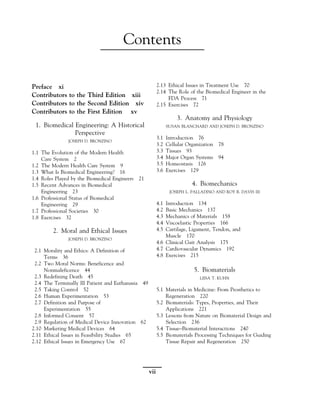
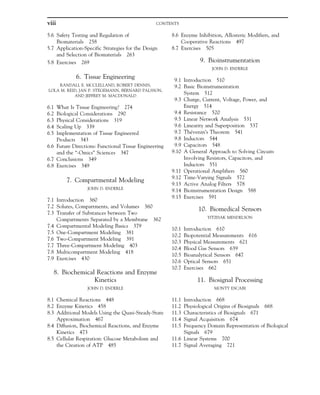



![εἰ μή τις αὐτῇ κόσμον ἀποδώσει
καλῆς ὀνομασίας, οὕτω
κἀνταῦθα οὐδέν ἐστι προὔργου
λέξιν εὑρεῖν καθαρὰν καὶ
καλλιρήμονα,
εἰ μὴ καὶ κόσμον αὐτῇ τις
ἁρμονίας τὸν προσήκοντα
περιθήσει. 20
ἵνα δὲ μὴ δόξω φάσιν
ἀναπόδεικτον λέγειν, ἐξ ὧν
ἐπείσθην κρεῖττον εἶναι καὶ
τελειότερον ἄσκημα τῆς ἐκλογῆς
distinction. It may well be
thought that composition is to
selection what words are to
ideas. For just as a fine thought
is of no avail unless it be clothed
in beautiful language, so here too
pure and elegant expression, is
useless unless it be attired in the
right vesture of arrangement.
But to guard myself against the
appearance of making an
unsupported assertion, I will try
to show by an appeal to facts
4 ἄμετρος ἣ δ’ (ex ἥδ’ corr.) ἔμμετρος F,E || καλ(ῶς) P || μὲν om. M
5 οἵα τ’ M: οἷά τ’ PV: οἷά τε F,E || καὶ τὸ FE: τὸ PMV 6 ἔτυχεν]
ἔοικε M || ῥιπτομένη PMVE: ῥιπτουμένη F 7 τὸ om. F1
|| γοὖν καὶ
F,E: γοῦν PMV 10 ἀποδόντες E γρ M: [ἀποδόν]τες cum litura F:
περιθέντες PV: παραθέντες M 12 δὲ PMV 13 δε PV || ἀντὰ P1
||
ἰδίως EFM1
: ἡδέως ex ἱδίως P1
: ἰδέως M2
|| τ(ῶ) λόγ(ω) P: τῶν
λόγων M 14 ἂν om. M 16 ἐστὶ ante διανοίας ponunt EF 17
κόσμον * * * * * P || ἀποδώσῃ F 18 καὶ ἐνταῦθα EF || πούργου P1
(ρ suprascr. P2
): προὔργον V || καλλιῥήμονα FM,P: καλλιῤῥήμονα V
19 τίς F: τ(ῆς) P,MV 21 φασὶν libri: corr. Krueger || ἀναπόδεικτον P:
ἀναπόδεικτα F2
MV: ἀπόδεικτα F1
22 κρεῖττον] καὶ κρεῖττον F ||
τελεώτερον M
1. ἐξ ἑτοίμου λαμβάνειν: cp. 78 13 ἐξ ἑτοίμου λαβὼν ἐχρήσατο.
9. There is much similarity, both in thought and in expression,
between this passage and the de Sublimitate xl. 2: ἀλλὰ μὴν ὅτι γε
πολλοὶ καὶ συγγραφέων καὶ ποιητῶν οὐκ ὄντες ὑψηλοὶ φύσει, μήποτε
δὲ καὶ ἀμεγέθεις, ὅμως κοινοῖς καὶ δημώδεσι τοῖς ὀνόμασι καὶ οὐδὲν
ἐπαγομένοις περιττὸν ὡς τὰ πολλὰ συγχρώμενοι, διὰ μόνου τοῦ
συνθεῖναι καὶ ἁρμόσαι ταῦτα δ’ ὅμως ὄγκον καὶ διάστημα καὶ τὸ μὴ
ταπεινοὶ δοκεῖν εἶναι περιεβάλοντο, καθάπερ ἄλλοι τε πολλοὶ καὶ](https://image.slidesharecdn.com/30090-250311192728-e716333b/85/Introduction-to-biomedical-engineering-3ed-Edition-Enderle-J-28-320.jpg)
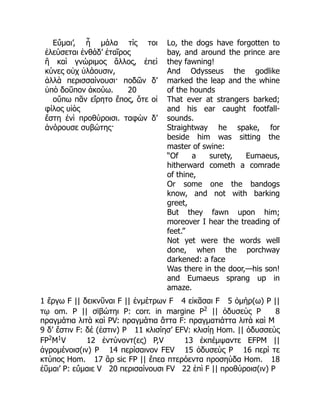
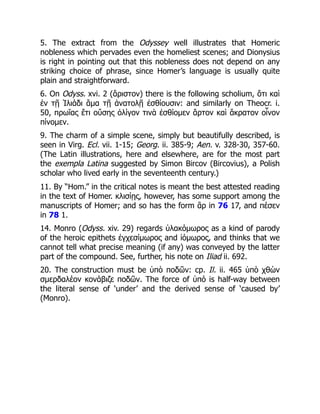
![ἐκ δ’ ἄρα οἱ χειρῶν πέσεν
ἄγγεα, τοῖς ἐπονεῖτο
κιρνὰς αἴθοπα οἶνον. ὁ δ’ ἀντίος
ἔδραμ’ ἄνακτος·
κύσσε δέ μιν κεφαλήν τε καὶ
ἄμφω φάεα καλὰ
χεῖράς τ’ ἀμφοτέρας· θαλερὸν
δέ οἱ ἔκπεσε δάκρυ.
ταῦθ’ ὅτι μὲν ἐπάγεται καὶ κηλεῖ
τὰς ἀκοὰς ποιημάτων 5
τε τῶν πάνυ ἡδίστων οὐδενὸς
ἥττω μοῖραν ἔχει, πάντες ἂν
οἶδ’ ὅτι μαρτυρήσειαν. ποῦ δὴ
αὐτῶν ἐστιν ἡ πειθὼ καὶ
διὰ τί τοιαῦτά ἐστι, πότερον διὰ
τὴν ἐκλογὴν τῶν ὀνομάτων
ἢ διὰ τὴν σύνθεσιν; οὐδεὶς ἂν
εἴποι διὰ τὴν ἐκλογήν, ὡς
ἐγὼ πείθομαι· διὰ γὰρ τῶν
εὐτελεστάτων καὶ
ταπεινοτάτων 10
ὀνομάτων πέπλεκται πᾶσα ἡ
λέξις, οἷς ἂν καὶ γεωργὸς καὶ
θαλαττουργὸς καὶ χειροτέχνης καὶ
πᾶς ὁ μηδεμίαν ὤραν τοῦ
λέγειν εὖ ποιούμενος ἐξ ἑτοίμου
λαβὼν ἐχρήσατο. λυθέντος
γοῦν τοῦ μέτρου φαῦλα
φανήσεται τὰ αὐτὰ ταῦτα καὶ
ἄζηλα·
οὔτε γὰρ μεταφοραί τινες ἐν
αὐτοῖς εὐγενεῖς ἔνεισιν
οὔτε 15
ὑπαλλαγαὶ οὔτε καταχρήσεις οὔτ’
ἄλλη τροπικὴ διάλεκτος
Dropped from his hands to the
floor the bowls, wherein erst he
began
The flame-flushed wine to pour,
and to meet his lord he ran;
And he kissed that dear-loved
head, and both his beautiful
eyes;
And he kissed his hands, and he
shed warm tears in his glad
surprise.[89]
Everybody would, I am sure,
testify that these lines cast a spell
of enchantment on the ear, and
rank second to no poetry
whatsoever, however exquisite it
may be. But what is the secret of
their fascination, and what
causes them to be what they
are? Is it the selection of words,
or the composition? No one will
say “the selection”: of that I am
convinced. For the diction
consists, warp and woof, of the
most ordinary, the humblest
words, such as might have been
used off-hand by a farmer, a
seaman, an artisan, or anybody
else who takes no account of
elegant speech. You have only to
break up the metre, and these
very same lines will seem
commonplace and unworthy of](https://image.slidesharecdn.com/30090-250311192728-e716333b/85/Introduction-to-biomedical-engineering-3ed-Edition-Enderle-J-33-320.jpg)
![οὐδεμία, οὐδὲ δὴ γλῶτται πολλαί
τινες οὐδὲ ξένα ἢ πεποιημένα
ὀνόματα. τί οὖν λείπεται μὴ οὐχὶ
τὴν σύνθεσιν τοῦ
κάλλους τῆς ἑρμηνείας αἰτιᾶσθαι;
τοιαῦτα δ’ ἐστὶ παρὰ τῷ
admiration. For they contain
neither noble metaphors nor
hypallages nor catachreses nor
any other figurative language;
nor yet many unusual terms, nor
foreign or new-coined words.
What alternative, then, is left but
to attribute the beauty of the
style to the composition? There
are countless
1 πέσον Hom. 2 αἴθωπα PM || ἔδραμ(εν) F: ἔδραμ’ E: ἦλθεν PMV
Hom. 3 καὶ φαλήν P 5 ἐπάγεταί τε καὶ F 6 τῶν F: καὶ τῶν PMV ||
οὐδ’ ἑνὸς F1
|| ἥττων F 7 εὖ ante οἶδ’ habet F 8 τοιαύτη F1
||
πότερα F 9 ἐκλογ[ὴ]ν cum litura P || ὡς ἐγὼ πείθομαι om. F 10
καὶ FE: τε καὶ PMV 12 ὤραν Sylburgius: ὥραν PMV: ὧραν F γρ
φροντίδα in marg. M 13 λαβῶν P 14 γοὖν F: γ’ οὖν P 15 ἐν
αὐτοῖς (αὐταῖς P) εὐγενεῖς ἔνεισιν PMV: εἰσὶν εὐγενεῖς ἐν αὐτοῖς EF
16 οὔτε ἄλλη PV || οὐδεμία διάλεκτος F 17 οὐδεδὴ P: οὔτε δὴ FMV
|| γλῶσσαι F || οὐδὲ Sauppius: οὔτε PMV: ἢ in rasura F2
19
τοιαῦτ(α) (εστι) P,MV
7. Perhaps ποῦ δὲ δή: cp. 116 9.
9. Cp. Hor. Ars P. 47 “dixeris egregie notum si callida verbum |
reddiderit iunctura novum.”
On the other hand, the importance of ἐκλογή is illustrated by
Aristotle’s comparison (Poetics xxii. 7) of νῦν δέ μ’ ἐὼν ὀλίγος τε καὶ
οὐτιδανὸς καὶ ἀεικής with νῦν δέ μ’ ἐὼν μικρός τε καὶ ἀσθενικὸς καὶ
ἀειδής.
10. Cp. J. W. Mackail in Class. Rev. xxii. 70, “A quality of the finest
Greek poetry, from Homer to the late anthologists, is its power of
taking common language and transforming it into poetry by an all
but imperceptible touch.” The quality is exemplified in Euripides,
though it did not originate with him (κλέπτεται δ’ εὖ, ἐάν τις ἐκ τῆς
εἰωθυίας διαλέκτου ἐκλέγων συντιθῇ· ὅπερ Εὐριπίδης ποιεῖ καὶ](https://image.slidesharecdn.com/30090-250311192728-e716333b/85/Introduction-to-biomedical-engineering-3ed-Edition-Enderle-J-34-320.jpg)
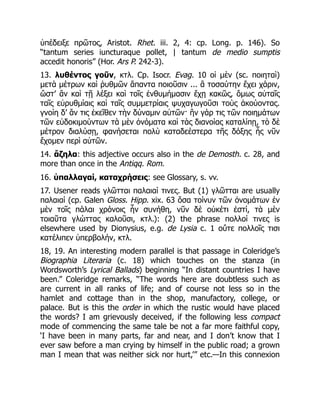
![μεταθεὶς αὐτῆς τὸν χαρακτῆρα εἰς
τὴν Ἀτθίδα γλῶτταν καὶ
οὐδὲν ἄλλο περιεργασάμενος
οὕτως ἐξοίσω τὸν διάλογον.
“Γύνη, οὐ γάρ σε δοκῶ πείθεσθαί
μοι λέγοντι περὶ τοῦ
εἴδους τῆς γυναικός· ὦτα γὰρ
τυγχάνει ἀνθρώποις ὄντα 20
ἀπιστότερα ὀφθαλμῶν· ποίει
ὅπως ἐκείνην θεάσῃ γυμνήν. ὁ
related with great dexterity: it
has been made something far
better to hear told than it was to
see done. And, that no one may
imagine that it is to the dialect
that the charm of the story is
due, I will change its distinctive
forms into Attic, and without any
further meddling with the
language will give the
conversation as it stands:—
“‘Of a truth, Gyges, I think that
thou dost not believe what I say
concerning the beauty of my
wife; indeed, men trust their ears
less fully than their eyes.
Contrive, therefore, to see her
1 δε P,MV 2 εἰρεῖσθαι P 3 μ[ε]ταβῶμεν cum litura P || ἤδη ante
καὶ ἐπὶ add. F || διάλεξιν F 4 καὶ ἐκείνη F || τοῦτο F: τὸ αὐτὸ PV:
τοῦτο αὐτὸ M || τὸ F: om. PMV 6 ἡδονὰς post μεγάλας add. F ||
τὰς PMV: καὶ F 7 καλεῖ Μυρσίλον δὲ om. FM: καλεῖ Μυρσίλον δὲ
καλεῖσθαι om. PV: supplevit Sylburgius coll. Herod. i. 7 9 τινα post
αὐτοῦ ponit F 10 ὁ δὲ PMV: ὃσ F 11 δὲ om. F || αὐτὴν· πρᾶγμα F:
αὐτὴν τὸ πρᾶγμα P: αὐτὴν ἦν· τὸ δὲ πρᾶγμα MV 12 ἐπιτήδειον]
δυνάμενον E 13 ταπεινὸν EPMV: παιδικὸν F 14 ἀλλὰ PM 16 τηῖ P
17 γλῶσσαν F 18 περιειργασμένος P || τὸν λόγον F 19 περὶ]
τ(ους) περι P: τὰ περὶ Va 20 τυγχάνει] ὑπάρχει F
4. Usener’s conjecture παρὰ (for περὶ) may be held to find some
support from 92 21 and 256 10, but on the other hand Dionysius’
love of μεταβολή has always to be remembered.
6. F’s reading ἡδονὰς γίνεσθαι καὶ adds still another καί to the four
already used in this sentence. The two nouns ἡδονὰς ... χάριτας are
superficially attractive, but the plural ἡδοναί is not common in this
sense.](https://image.slidesharecdn.com/30090-250311192728-e716333b/85/Introduction-to-biomedical-engineering-3ed-Edition-Enderle-J-38-320.jpg)
![πορεύηται ἐπὶ τὴν εὐνὴν κατὰ
νώτου
τε αὐτῆς γένῃ, σοὶ μελέτω τὸ
ἐντεῦθεν, ὅπως μή σε ὄψεται
ἀπιόντα διὰ θυρῶν. ὁ μὲν δὴ ὡς
οὐκ ἐδύνατο διαφυγεῖν,
ἕτοιμος ἦν [ποιεῖν ταῦτα].” 20
enough to behold. But when she
passes from the seat to the
couch, and thou art behind her
back, then take heed that she
see thee not as thou goest away
through the door.’ Forasmuch,
then, as he could not escape, he
consented to do after this
manner.”[90]
1 δ’ F: δὲ PMV: δὲ μέγα Her. (exc. ACP) || λέγεις λόγον Her. 3
ἐκδυομένῳ F, Her.: ἐκδυομένη PMV 5 ἐν τώδε (τῶδε corr.) F, MV: ἐν
τωῖ δε P || ἔνεστιν corr. F1
, M 6 εἶναι post γυναικῶν traiciunt PMV
7 δεῖσθαι F, Her.: χρήιζειν P, MV || ἀνομῶν P || ταῦτα] τοιαῦτα Her.
|| post ἀπεμάχετο haec verba habet Her., ἀρρωδέων μή τί οἱ ἐξ
αὐτῶν γένηται κακόν || δὲ P 8 ὡς σέο πειρώμενον (vel πειρώμενος)
Her. 9 λόγον λέγω PMV || τόνδε ... ἐγὼ om. add. in marg. P2
10
τ[ι] σοι cum litura F: τισ P 12 ἄγων P: ἐγὼ Her. || ἐσ P,M || ὄπισθεν
PMV 13 θυραστήσω P1
14 καὶ post παρέσται om F || ἐς PMV || δὲ
PMV 15 ἐκδῦσα ante καθ’ ponunt PMV || ἐκδύνουσα Her. 16
παρέξει Her. 17 ὅτ’ ἂν FP ut solent: ἐπεὰν Her. || δε P, MV 18
μελέτω σοι F 19 ἰόντα Her. || δ[ι]α cum litura P || ἐδύνατο F, Her.
(exc. RSVb): ἠδύνατο PMV || διαφεύγειν P 20 ἦν ἕτοιμος Her. ||
ποιεῖν ταῦτα (τά γ’ αὐτά P) om. Her.
3. Cp. Diog. Laert. Vit. Pythag. § 43 τῇ δὲ πρὸς τὸν ἴδιον ἄνδρα
μελλούσῃ πορεύεσθαι παρῄνει (sc. Θεανὼ) ἅμα τοῖς ἐνδύμασι καὶ
τὴν αἰσχύνην ἀποτίθεσθαι, ἀνισταμένην τε πάλιν ἅμ’ αὐτοῖσιν
ἀναλαμβάνειν.
14. εἰς κοίτην and ἐγγὺς τῆς εἰσόδου are Dionysius’ Attic equivalents
for ἐς κοῖτον and ἀγχοῦ τῆς ἐσόδου.
15. καθ’ ἓν ἕκαστον: cp. Herod. viii. 113 ἐκ δὲ τῶν ἄλλων
συμμάχων ἐξελέγετο κατ’ ὀλίγους.
20. Perhaps the effect of Herodotus’ style is best conveyed by the
Elizabethan translation (published in 1584) of Barnaby Rich, which](https://image.slidesharecdn.com/30090-250311192728-e716333b/85/Introduction-to-biomedical-engineering-3ed-Edition-Enderle-J-42-320.jpg)
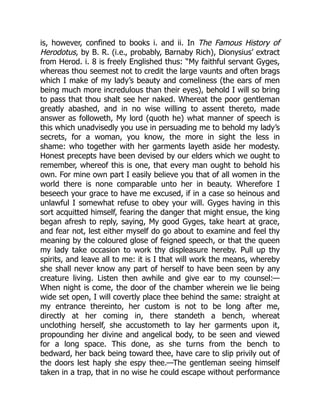
![of his lord’s folly, gave his assent.” [From the rare copy in the British
Museum, with the spelling modernized.]
If Dionysius does not quote the sequel of the story, the reason may
well be that he expects his readers to find it, or to have found it, in
the pages of Herodotus himself.](https://image.slidesharecdn.com/30090-250311192728-e716333b/85/Introduction-to-biomedical-engineering-3ed-Edition-Enderle-J-44-320.jpg)
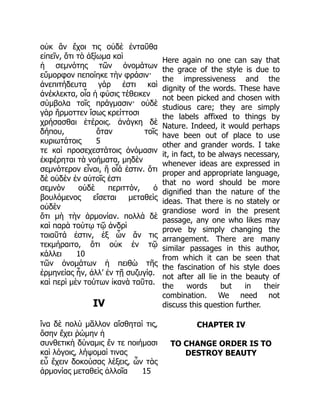
![φαίνεσθαι ποιήσω καὶ τὰ μέτρα
καὶ τοὺς λόγους. λαμβανέσθω
δὲ πρῶτον μὲν ἐκ τῶν Ὁμηρικῶν
ταυτί·
ἀλλ’ ἔχεν ὥστε τάλαντα γυνὴ
χερνῆτις ἀληθής,
ἥ τε σταθμὸν ἔχουσα καὶ εἴριον
ἀμφὶς ἀνέλκει
ἰσάζουσ’, ἵνα παισὶν ἀεικέα
μισθὸν ἄροιτο. 20
τοῦτο τὸ μέτρον ἡρωϊκόν ἐστιν
ἑξάπουν τέλειον, κατὰ δάκτυλον
To show yet more conclusively
the great force wielded by the
faculty of composition both in
poetry and prose, I will quote
some passages which are
universally regarded as fine, and
show what a different air is
imparted to both verse and prose
by a mere change in their
arrangement. First let these lines
be taken from the Homeric
poems:—
But with them was it as with a
toil-bowed woman righteous-
souled—
In her scales be the weights
and the wool, and the balance
on high doth she hold
Poised level, that so may the
hard-earned bread to her babes
be doled.[91]
This metre is the complete heroic
metre of six feet, the basis
1 οὐδὲν F 2 πεποίηκεν P 3 ἡ om. PV || τέθεικεν FP: τέθεικε EMV
4 κρείττοσ(ιν) P 5 δὲ δὴ [που] FM: δε P: δὴ Vs 8 περιττὸν οὐδὲ
σεμνὸν F 9 τοῦτο (-τω corr.) τ(ω) P 11 ἦν * * ἀλλ’ P 12 καὶ] ἦν
καὶ M: ἦ καὶ V 13 τις FM: om. PV 14 ποιήμασιν P 15 ἀλλοίας P
17 μὲν om. PMV || ταυτί PMV: ταῦτα F 18 ἔχεν FM: ἔχον PV Hom.
19 εἰριον deleto accentu P 20 ἄρηται Hom. 21 ἡρωϊκόν PMV:
ἡρῷόν F
3. P gives ἀφηκέναι in 262 22, and τέθηκεν may possibly be right
here. The -η- forms are found in some MSS. of Eurip. Hel. 1059 and
Demosth. Chers. 34. But cp. 108 13.](https://image.slidesharecdn.com/30090-250311192728-e716333b/85/Introduction-to-biomedical-engineering-3ed-Edition-Enderle-J-46-320.jpg)
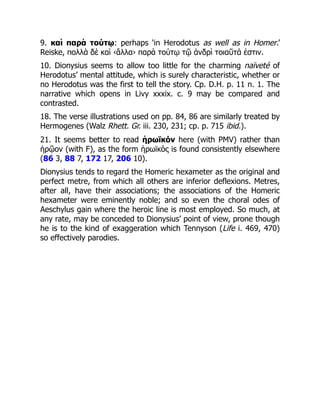
![πόδα βαινόμενον. ἐγὼ δὴ τῶν
ὀνομάτων τούτων μετακινήσας
τὴν σύνθεσιν τοὺς αὐτοὺς
στίχους ἀντὶ μὲν ἑξαμέτρων
ποιήσω
τετραμέτρους, ἀντὶ δὲ ἡρωϊκῶν
προσοδιακοὺς τὸν τρόπον
τοῦτον·
ἀλλ’ ἔχεν ὥστε γυνὴ χερνῆτις
τάλαντ’ ἀληθής, 5
ἥ τ’ εἴριον ἀμφὶς καὶ σταθμὸν
ἔχουσ’ ἀνέλκει
ἰσάζουσ’, ἵν’ ἀεικέα παισὶν ἄροιτο
μισθόν.
τοιαῦτά ἐστι τὰ πριάπεια, ὑπό
τινων δ’ ἰθυφάλλια λεγόμενα,
ταυτί·
οὐ βέβηλος, ὦ τελέται τοῦ νέου
Διονύσου, 10
κἀγὼ δ’ ἐξ εὐεργεσίης
ὠργιασμένος ἥκω.
ἄλλους πάλιν λαβὼν στίχους
Ὁμηρικούς, οὔτε προσθεὶς
αὐτοῖς οὐδὲν οὔτε ἀφελών, τὴν
δὲ σύνθεσιν ἀλλάξας μόνον
ἕτερον ἀποδώσω γένος τὸ
τετράμετρον καλούμενον
Ἰωνικόν·
ὣς ὁ πρόσθ’ ἵππων καὶ δίφρου
κεῖτο τανυσθείς, 15
βεβρυχώς, κόνιος δεδραγμένος
αἱματοέσσης.
of which is the dactyl. I will
change the order of the words,
and will turn the same lines into
tetrameters instead of
hexameters, into prosodiacs
instead of heroics. Thus:—
But it was with them as with a
righteous-souled woman toil-
bowed,
In her scales weights and wool
lie, on high doth she hold the
balance
Level-poised, so that bread
hardly-earned may be doled to
her babes.
Such are the following Priapean,
or (as some call them)
ithyphallic, lines:—
I am no profane one, O young
Dionysus’ votaries;
By his favour come I too initiate
as one of his.[92]
Taking again other lines of
Homer, and neither adding nor
withdrawing anything, but simply
varying the order, I will produce
another kind of verse, the so-
called Ionic tetrameter:—
So there outstretched was he
lying, his steeds and his chariot
before,
Groaning, convulsively clutching](https://image.slidesharecdn.com/30090-250311192728-e716333b/85/Introduction-to-biomedical-engineering-3ed-Edition-Enderle-J-48-320.jpg)
![ὣς ὁ πρόσθ’ ἵππων καὶ δίφρου
κεῖτο τανυσθείς,
αἱματοέσσης κόνιος
δεδραγμένος, βεβρυχώς.
the dust that was red with his
gore.[93]
So there outstretched was he
lying, his steeds and his chariot
before,
At the dust that was red with
his gore clutching convulsively,
groaning.
1 πόδα δάκτυλον PMV || τῶν] τῶν αὐτῶν PV 3 προσωιδιακοὺς FP:
προσῳδικοὺς MV 5 ἔχεν FMV: ἔχον P scholl. Hermogenis || τάλαντ’
F: τάλαντα PMV 6 ἥ τ’ FM: ἣ PV || ἐχ(ων)ουσ’ P: ἔχουσα F ||
ἄνελκει P: ἕλκει F 8 [ὑ]πό τινων δὲ ἰθυφάλλια cum litura F, MV:
διφίλια P 10 συμβέβηλος F || τελεταί (sic) P: λέγεται FMV ||
δρονύσου P 11 εὐεργεσίης P: ἐργασίης MV: ἐργασίας F ||
ὀργιασμένος F: ὡργια*σμένος P 13 οὐδὲν αὐτοῖς PV 14 γένος τὸ
F: μέλος PMV || τὸ ante καλούμενον dant PMV 16, 17 om. F 16
αἱματοσέσ(η)ς P: αἱματοέσης V
3. Maximus Planudes (Walz Rhett. Gr. v. 491), referring to this
passage, says: ἃ πῶς ἂν εἶεν προσῳδικὰ (v. προσῳδιακὰ) καὶ
προσόμοια τοῖς πριαπείοις, ἢ πάλιν πῶς ταῦτα πριάπεια, οὐδαμῶς
ἔχω συνορᾶν. For the prosodia (προσόδια, sc. ᾄσματα: also called
προσοδιακοί), or processional songs, see Weir Smyth’s Greek Melic
Poets p. xxxiii.; and for the various metres employed see pp. xxxiv.,
xxxv. ibid. It is clear that Dionysius is not here thinking specially of
the so-called προσοδιακὸς πούς (– – ᴗ). Cp. Bacchyl. Fragm. 19
(Bergk: 7, Jebb).—Reading προσῳδικοὺς (with the inferior MSS.),
and translating by ‘accentual,’ A. J. Ellis (English, Dionysian, and
Hellenic Pronunciation of Greek p. 37) thinks that Dionysius means
“verses in which the effect of high pitch was increased by
superadding stress, so as to give it preponderance over mere
quantity”; and he points out that E. M. Geldart shows (Journal of
Philology 1869, vol. ii. p. 160) that these transformed lines of Homer,
if read as modern Greek, would give rather rough στίχοι πολιτικοί, or
the usual modern accentual verse [the ‘city verses’ referred to by](https://image.slidesharecdn.com/30090-250311192728-e716333b/85/Introduction-to-biomedical-engineering-3ed-Edition-Enderle-J-49-320.jpg)
![Gibbon, c. 53]. Though it is perhaps unlikely that Dionysius makes
any direct reference to such a change, a stress-accent may, even in
his day, have gradually been triumphing over that pitch-accent which
was consistent with the observance of metrical quantity. Cp. F.
Spencer French Verse p. 70.
5. The metrical difficulties presented by these sections of the C. V.
are discussed in Amsel’s de Vi atque Indole Rhythmorum quid
Veteres Iudicaverint pp. 32 ff. The unprofitably ingenious efforts of
some ancient writers to derive every kind of metre from the heroic
hexameter and the iambic trimeter might be capped, and parodied,
by an attempt to turn such a line as Il. xxiii. 644 (ἔργων τοιούτων.
ἐμὲ δὲ χρὴ γήραϊ λυγρῷ) into an iambic trimeter: the only thing
needed being that the ι of γήραϊ should be not adscript but
subscript. So Schol. Ven. A (ad loc.) ὅτι ὁ στίχος οὗτος καὶ ἑξάμετρος
γίνεται καὶ τρίμετρος παρὰ τὴν ἀγωγὴν τῆς προφορᾶς, and Schol.
Townl. ἐπιτέτευκται ὁ στίχος ταῖς κοιναῖς, ὥστ’ ἢν θέλωμεν καὶ
ἴαμβος ἔσται, ὡς τὸ “σμύρνης ἀκράτου καὶ κέδρου νηλεῖ καπνῷ” (for
the doubtful ascription of this last line to Callimachus see Schneider’s
Callimachea ii. 777).
10. For the author of these Priapean verses—Euphorion (or
Euphronius) ‘of the Chersonese’—see the long discussion in
Susemihl’s Gesch. d. griech. Litt. in der Alexandrinerzeit i. 281, 283.
It is Hephaestion (de Metris Enchiridion c. 16, ed. Westphal) who
attributes the lines Εὐφορίωνι τῷ Χερρονησιώτῃ.
15. The commentators on Hermogenes secure trochees by changing
the order of the words in this line—ἔκειτο καὶ δίφρου τανυσθείς, or
τανυσθεὶς κεῖτο καὶ δίφρου.](https://image.slidesharecdn.com/30090-250311192728-e716333b/85/Introduction-to-biomedical-engineering-3ed-Edition-Enderle-J-50-320.jpg)
![τοιαῦτ’ ἐστὶ τὰ Σωτάδεια ταυτί·
ἔνθ’ οἱ μὲν ἐπ’ ἄκραισι πυραῖς
νέκυες ἔκειντο
γῆς ἐπὶ ξένης, ὀρφανὰ τείχεα
προλιπόντες
Ἑλλάδος ἱερῆς καὶ μυχὸν ἑστίης
πατρῴης,
ἥβην τ’ ἐρατὴν καὶ καλὸν ἡλίου
πρόσωπον. 5
δυναίμην δ’ ἂν ἔτι πολλὰς ἰδέας
μέτρων καὶ διαφόρους εἰς τὸν
ἡρωϊκὸν ἐμπιπτούσας στίχον
ἐπιδεικνύναι, τὸ δ’ αὐτὸ καὶ τοῖς
ἄλλοις ὀλίγου δεῖν πᾶσι
συμβεβηκὸς μέτροις τε καὶ
ῥυθμοῖς
ἀποφαίνειν, ὥστε τῆς μὲν
ἐκλογῆς τῶν ὀνομάτων τῆς αὐτῆς
μενούσης, τῆς δὲ συνθέσεως
μόνης μεταπεσούσης τά τε 10
μέτρα μεταρρυθμίζεσθαι καὶ
συμμεταπίπτειν αὐτοῖς τὰ
σχήματα, τὰ χρώματα, τὰ ἤθη, τὰ
πάθη, τὴν ὅλην τῶν
ποιημάτων ἀξίωσιν· ἀλλ’
ἀναγκασθήσομαι πλειόνων
ἅψασθαι
θεωρημάτων, ὧν ἔνια ὀλίγοις
πάνυ ἐστὶ γνώριμα. ἐπὶ πολλῶν
δ’ ἴσως καὶ οὐχ ἥκιστα ἐπὶ τῶν
τοιούτων καλῶς ἂν ἔχοι 15
τὰ Εὐριπίδεια ταῦτα ἐπενεγκεῖν·
μή μοι
λεπτῶν θίγγανε μύθων, ψυχή·
Such are the following Sotadean
lines:—
There upon the summit of the
burning pyres their corpses lay
In an alien land, the widowed
walls forsaken far away,
Walls of sacred Hellas; and the
hearths upon the homeland
shore,
Winsome youth, the sun’s fair
face—forsaken all for evermore!
[94]
I could, if I wished, adduce many
more different types of measures
all belonging to the class of the
heroic line, and show that the
same thing is true of almost all
the other metres and rhythms,
namely that, when the choice of
words remains unaltered and
only the arrangement is changed,
the verses invariably lose their
rhythm, while their formation is
ruined, together with the
complexion, the character, the
feeling, and the whole
effectiveness of the lines. But in
so doing I should be obliged to
touch on a number of
speculations, with some of which
very few are familiar. To many
speculations, perhaps, and
particularly to those bearing on](https://image.slidesharecdn.com/30090-250311192728-e716333b/85/Introduction-to-biomedical-engineering-3ed-Edition-Enderle-J-51-320.jpg)
![1 τοιαῦτα PMV || Σωτάδεια Planudes: σωτάδια libri 2 ἄκραισι FM:
ἄκραις PV || ἔγκειντο F 5 ἥβη, suprascr. ν P1
|| ἐρατὴν Hermannus:
ἐραστὴν F: ἐρατεινὴν PMV 6 δυναίμην PV: ἐδυνάμην FM 7 δὲ PMV
|| καὶ P: κἂν F: κἀν MV 8 τε om. F 9 ὀμάτων, suprascr. νο P1
10
μεταπιπτούσης (πεσούσης in marg.) F: μεταπεσούσης M: μάλιστα
πεσούσης PV 12 τὰ πάθη om. P 13 ἀλλ’ ἀναγκασθήσομαι]
ἀναγκασθήσομαι δὲ F: ἀλλ’ ἀν(αν)κασθήσομαι P || ἅπτεσθαι P 14
γνώρισμα F1
15 δὲ PMV || καὶ om. P 19 μέλλοις F 21 οὗν F 22
ἐμμέτρω ὄντων PMV 23 τῶν F: τῶν αὐτῶν E: om. PMV ||
ἀλλασομένης P: ἀλλασσομένης MV 24 τῶ βουλομέν(ω) P || δὲ PMV
et 90 1 25 ἐπειδὴ F: ἐπεὶ PMV
1. These lines of Sotades are quoted by two of the commentators on
Hermogenes—by John of Sicily (Walz vi. 243) and by an anonymous
scholiast (Walz vii. 985). See further in Glossary, s.v. Σωτάδειος.
7. Palaeographically κἀν (MV) is tempting, since the other readings
(κἂν and καὶ) could easily be derived from it. But the difficulty is that
Dionysius seems elsewhere to use the simple dative with συμβαίνω,
and would probably have expressed the meaning ‘in the case of’ by
ἐπί with the genitive. καὶ ἔν γε τῇ ἀρχαίᾳ τῇ ἡμετέρᾳ φωνῇ αὐτὸ
συμβαίνει τὸ ὄνομα (Plato Crat. 398 B) is not parallel.
12. Quintil. Inst. Or. ix. 4. 14, 15 “nam quaedam et sententiis parva
et elocutione modica virtus haec sola commendat. denique quod
cuique visum erit vehementer, dulciter, speciose dictum, solvat et
turbet: aberit omnis vis, iucunditas, decor ... illud notasse satis
habeo, quo pulchriora et sensu et elocutione dissolveris, hoc
orationem magis deformem fore, quia neglegentia collocationis ipsa
verborum luce deprehenditur.”
21. ἐάσειν μοι δοκῶ = omittere mihi placet; cp. Aristoph. Plut.
1186, Aves 671, Vespae 177.
22. Compare the interesting passage in Cic. Orat. 70. 232 “Quantum
autem sit apte dicere, experire licet, si aut compositi oratoris bene
structam collocationem dissolvas permutatione verborum;
corrumpatur enim tota res ... perierit tota res ... videsne, ut ordine](https://image.slidesharecdn.com/30090-250311192728-e716333b/85/Introduction-to-biomedical-engineering-3ed-Edition-Enderle-J-52-320.jpg)
![verborum paululum commutato, eisdem tamen verbis stante
sententia, ad nihilum omnia recidant, cum sint ex aptis dissoluta?”
[Various examples are given in the course of the section.]
23. The Epitome here has μενόντων γὰρ τῶν αὐτῶν ὀνομάτων,
ἀλλαττομένης δὲ τῆς συνθέσεως, κ α τ α φ α ν ὲ ς τ ὸ ἐ ν α ὐ τ ῇ
ἄ μ ο υ σ ό ν τ ε κ α ὶ ἀ κ α λ λ ώ π ι σ τ ο ν.](https://image.slidesharecdn.com/30090-250311192728-e716333b/85/Introduction-to-biomedical-engineering-3ed-Edition-Enderle-J-53-320.jpg)
![“Κροῖσος ἦν Λυδὸς μὲν γένος,
παῖς δ’ Ἀλυάττου, τύραννος δ’
ἐθνῶν τῶν ἐντὸς Ἅλυος ποταμοῦ·
ὃς ῥέων ἀπὸ μεσημβρίας
μεταξὺ Σύρων τε καὶ
Παφλαγόνων ἐξίησι πρὸς βορέαν
ἄνεμον
εἰς τὸν Εὔξεινον καλούμενον
πόντον.” μετατίθημι τῆς λέξεως
ταύτης τὴν ἁρμονίαν, καὶ
γενήσεταί μοι οὐκέτι
ὑπαγωγικὸν 5
τὸ πλάσμα οὐδ’ ἱστορικόν, ἀλλ’
ὀρθὸν μᾶλλον καὶ ἐναγώνιον·
“Κροῖσος ἦν υἱὸς μὲν Ἀλυάττου,
γένος δὲ Λυδός, τύραννος δὲ
τῶν ἐντὸς Ἅλυος ποταμοῦ ἐθνῶν·
ὃς ἀπὸ μεσημβρίας ῥέων
μεταξὺ Σύρων καὶ Παφλαγόνων
εἰς τὸν Εὔξεινον καλούμενον
πόντον ἐκδίδωσι πρὸς βορέαν
ἄνεμον.” οὗτος ὁ χαρακτὴρ
οὐ 10
πολὺ ἀπέχειν ἂν δόξειεν τῶν
Θουκυδίδου τούτων· “Ἐπίδαμνός
ἐστι πόλις ἐν δεξιᾷ εἰσπλέοντι τὸν
Ἰόνιον κόλπον· προσοικοῦσι
δ’ αὐτὴν Ταυλάντιοι βάρβαροι,
Ἰλλυρικὸν ἔθνος.”
πάλιν δὲ ἀλλάξας τὴν αὐτὴν λέξιν
ἑτέραν αὐτῇ μορφὴν ἀποδώσω
τὸν τρόπον τοῦτον· “Ἀλυάττου
μὲν υἱὸς ἦν Κροῖσος, 15
γένος δὲ Λυδός, τῶν δ’ ἐντὸς
Ἅλυος ποταμοῦ τύραννος ἐθνῶν·
nature of the dialect: “Croesus
was a Lydian by birth and the son
of Alyattes. He was lord over all
the nations on this side of the
river Halys, which flows from the
south between Syria and
Paphlagonia, and falls, towards
the north, into the sea which is
called the Euxine.”[96] I change
the order here, and the cast of
the passage will become no
longer that of a spacious
narrative, but tense rather and
forensic: “Croesus was the son of
Alyattes, and by birth a Lydian.
He was lord, on this side of the
river Halys, over all nations;
which river from the south
flowing between Syria and
Paphlagonia runs into the sea
which is called the Euxine and
debouches towards the north.”
This style would seem not to
differ widely from that of
Thucydides in the words:
“Epidamnus is a city on the right
as you enter the Ionian Gulf: its
next neighbours are barbarians,
the Taulantii, an Illyrian race.”[97]
Once more I will recast the same
passage and give a new form to
it as follows: “Alyattes’ son was
Croesus, by birth a Lydian. Lord
over all nations he was, on this](https://image.slidesharecdn.com/30090-250311192728-e716333b/85/Introduction-to-biomedical-engineering-3ed-Edition-Enderle-J-54-320.jpg)
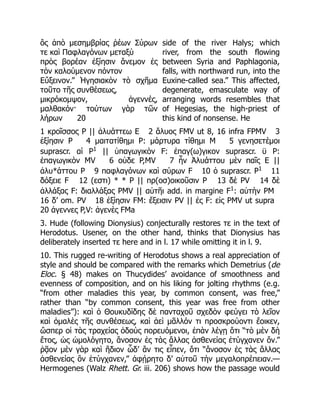
![be changed for the worse by such a πλαγιασμός as the use of a
genitive absolute at the start: e.g. Κροίσου ὄντος κτλ.
11. From this point onwards, the less important of the manuscript
variants are not recorded in the critical apparatus, except in the case
of P which the editor has examined personally.
12. Demetrius (de Eloc. § 199), in quoting this passage, reads
ἐσπλέοντι εἰς: and this may be correct reading in Thucyd. i. 24.
19. Hegesias, in the eyes of Dionysius, was a writer whose originality
displayed itself in unnatural contortions of language; cp.
Introduction, pp. 52-55 supra. The merits of a natural, untutored
prose-order have been indicated once for all by Molière (Le
Bourgeois Gentilhomme ii. 4): “Monsieur Jourdan. Je voudrais donc lui
mettre dans un billet: Belle Marquise, vos beaux yeux me font
mourir d’amour; mais je voudrais que cela fût mis d’une manière
galante, que cela fût tourné gentiment ... Non, vous dis-je, je ne
veux que ces seules paroles-là dans le billet; mais tournées à la
mode, bien arrangées comme il faut. Je vous prie de me dire un
peu, pour voir, les diverses manières dont on les peut mettre.—
Maître de Philosophie. On les peut mettre premièrement comme vous
avez dit: Belle Marquise, vos beaux yeux me font mourir d’amour. Ou
bien: D’amour mourir me font, belle Marquise, vos beaux yeux. Ou
bien: Vos yeux beaux d’amour me font, belle Marquise, mourir. Ou
bien: Mourir vos beaux yeux, belle Marquise, d'amour me font. Ou
bien: Me font vos yeux beaux mourir, belle Marquise, d’amour. [This
is, apparently the crowning absurdity.]—M. Jourdain. Mais de toutes
ces façons-là, laquelle est la meilleure?—Maître de Philosophie. Celle
que vous avez dite: Belle Marquise, vos beaux yeux me font mourir
d’amour.—M. Jourdain. Cependant je n’ai point étudié, et j’ai
fait cela tout du premier coup.”
20. The phrase is perhaps suggested by Aristoph. Nub. 359 σύ τε,
λεπτοτάτων λήρων ἱερεῦ, φράζε πρὸς ἡμᾶς ὅ τι χρῄζεις. Cp. Cic. pro
Sestio 17. 39 “stuprorum sacerdos,” and also D.H. p. 169 (note on
καὶ πολὺς ὁ τελέτης ἐστὶν ἐν τοῖς τοιούτοις παρ’ αὐτῷ). ‘Hierophant,’
‘adept,’ ‘past master,’ will give something of the idea.](https://image.slidesharecdn.com/30090-250311192728-e716333b/85/Introduction-to-biomedical-engineering-3ed-Edition-Enderle-J-56-320.jpg)

![ἱερεὺς ἐκεῖνος ἀνὴρ τοιαῦτα
γράφων· “Ἐξ ἀγαθῆς ἑορτῆς
ἀγαθὴν ἄγομεν ἄλλην.” “Ἀπὸ
Μαγνησίας εἰμὶ τῆς μεγάλης
Σιπυλεύς.” “Οὐ γὰρ μικρὰν εἰς
Θηβαίων ὕδωρ ἔπτυσεν ὁ
Διόνυσος· ἡδὺς μὲν γάρ ἐστι,
ποιεῖ δὲ μαίνεσθαι.”
ἅλις ἔστω παραδειγμάτων. ἱκανῶς
γὰρ οἴομαι πεποιηκέναι 5
φανερὸν ὃ προὔκειτό μοι, ὅτι
μείζονα ἰσχὺν ἔχει τῆς
ἐκλογῆς ἡ σύνθεσις. καί μοι δοκεῖ
τις οὐκ ἂν ἁμαρτεῖν
εἰκάσας αὐτὴν τῇ Ὁμηρικῇ
Ἀθηνᾷ· ἐκείνη τε γὰρ τὸν
Ὀδυσσέα τὸν αὐτὸν ὄντα ἄλλοτε
ἀλλοῖον ἐποίει φαίνεσθαι,
τοτὲ μὲν μικρὸν καὶ ῥυσὸν καὶ
αἰσχρὸν 10
πτωχῷ λευγαλέῳ ἐναλίγκιον ἠδὲ
γέροντι,
τοτὲ δὲ τῇ αὐτῇ ῥάβδῳ πάλιν
ἐφαψαμένη
μείζονά τ’ εἰσιδέειν καὶ πάσσονα
θῆκεν ἰδέσθαι, κὰδ δὲ κάρητος
οὔλας ἧκε κόμας ὑακινθίνῳ
ἄνθει ὁμοίας, 15
αὕτη τε τὰ αὐτὰ λαμβάνουσα
ὀνόματα τοτὲ μὲν ἄμορφα καὶ
πτωχὰ καὶ ταπεινὰ ποιεῖ
φαίνεσθαι τὰ νοήματα, τοτὲ δ’
writes, for instance, “After a
goodly festival another goodly
one keep we.” “Of Magnesia am
I, the mighty land, a man of
Sipylus I.” “No little drop into the
Theban waters spewed Dionysus:
Oh yea, sweet it is, but madness
it engendereth.”[98]
Enough of examples. I think I
have I sufficiently proved my
point that composition is more
effective than selection. In fact, it
seems to me that one might fairly
compare the former to Athena in
Homer. For she used to make the
same Odysseus appear now in
one form, now in another,—at
one time puny and wrinkled and
ugly,
In semblance like to a beggar
wretched and eld-forlorn,[99]
at another time, by a fresh touch
of the selfsame wand,
She moulded him taller to see,
and broader: his wavy hair
She caused o’er his shoulders to
fall as the hyacinth’s purple
rare.[100]
So, too, composition takes the
same words, and makes the
ideas they convey appear at one
time unlovely, beggarly and](https://image.slidesharecdn.com/30090-250311192728-e716333b/85/Introduction-to-biomedical-engineering-3ed-Edition-Enderle-J-58-320.jpg)
![ὑψηλὰ καὶ πλούσια [καὶ ἁδρὰ] καὶ
καλά. καὶ τοῦτ’ ἦν
σχεδὸν ᾧ μάλιστα διαλλάττει
ποιητής τε ποιητοῦ καὶ ῥήτωρ
ῥήτορος, τὸ συντιθέναι δεξιῶς τὰ
ὀνόματα. τοῖς μὲν οὖν 20
ἀρχαίοις ὀλίγου δεῖν πᾶσι πολλὴ
ἐπιτήδευσις ἦν αὐτοῦ, παρ’
ὃ καὶ καλά ἐστιν αὐτῶν τά τε
μέτρα καὶ τὰ μέλη καὶ οἱ
λόγοι· τοῖς δὲ μεταγενεστέροις
οὐκέτι πλὴν ὀλίγων· χρόνῳ δ’
mean; at another, exalted, rich
and beautiful. A main difference
between poet and poet, orator
and orator, really does lie in the
aptness with which they arrange
their words. Almost all the
ancients made a special study of
this; and consequently their
poems, their lyrics, and their
prose are things of beauty. But
among their successors, with few
exceptions, this was no longer so.
1 ἀνὴρ libri: cf. D.H. p. 169 5 ἅλις F: ἂν P || ἔστω F: ἔστω τῶν PMV
|| ἱκαν(ῶς) P1
7 δοκεῖ τις οὐκ ἂν PV: οὐ δοκεῖ τις EFM || ἁμαρτάνειν
PMV 10 μὲν μικρὸν καὶ ῥυσὸν EF: μὲν ῥυσὸν καὶ μικρὸν PMV 11
ἠδὲ] ἠδὲ καὶ F || γέροντα P 12 ῥάβδω P 15 ὑακινθίν(ω) P 16
αὕτη Sylburgius: αὐτή libri 17 πτωχὰ καὶ ταπεινὰ PMV: ταπεινὰ καὶ
πτωχὰ EF || δὲ PMV 18 καὶ ἁδρὰ delevit Sadaeus || τοῦτ’ ἦν
σχεδὸν ὧι PE: τοῦτ’ ἦν ὃ (ᾧ M) FM: τούτῳ V 19 διαλάττει P 20 τὸ
EFP: τῷ MV 21 πᾶσιν P || ἐπιτήδευσις Sylburgius: ἐπίδοσις libri 22
τε om. PV 23 οὐκ ἔστι P || χρον(ω) P
2. Possibly Hegesias began one of his books in this grandiloquent
fashion, referring to his birth in Magnesia at the foot of Mount
Sipylus.
3. μικράν: understand ψακάδα or λιβάδα. Casaubon conjectured
μιαρὰν: Reiske, μικρὰν ‹χολὴν›.
4. ἡδύς: sc. ὁ ποταμός. An easy course would be to change ἡδύς to
ἡδύ with Reiske; but there is no manuscript variant, and the
ambiguity and awkward ellipse may be part of Hegesias’ offence.
13. Vettori suggested the omission here of θῆκεν ἰδέσθαι.
16. Cp. Isocr. Paneg. § 8 ἐπειδὴ δ’ οἱ λόγοι τοιαύτην ἔχουσι τὴν
φύσιν, ὥσθ’ οἷον τ’ εἶναι περὶ τῶν αὐτῶν πολλαχῶς ἐξηγήσασθαι, καὶ
τά τε μεγάλα ταπεινὰ ποιῆσαι καὶ τοῖς μικροῖς περιθεῖναι, κτλ.](https://image.slidesharecdn.com/30090-250311192728-e716333b/85/Introduction-to-biomedical-engineering-3ed-Edition-Enderle-J-59-320.jpg)
![ὕστερον παντάπασιν ἠμελήθη καὶ
οὐδεὶς ᾤετο δεῖν ἀναγκαῖον
αὐτὸ εἶναι οὐδὲ συμβάλλεσθαί τι
τῷ κάλλει τῶν λόγων·
τοιγάρτοι τοιαύτας συντάξεις
κατέλιπον οἵας οὐδεὶς ὑπομένει
μέχρι κορωνίδος διελθεῖν,
Φύλαρχον λέγω καὶ Δοῦριν καὶ
Πολύβιον καὶ Ψάωνα καὶ τὸν
Καλλατιανὸν Δημήτριον 5
Ἱερώνυμόν τε καὶ Ἀντίγονον καὶ
Ἡρακλείδην καὶ Ἡγησιάνακτα
καὶ ἄλλους μυρίους· ὧν ἁπάντων
εἰ τὰ ὀνόματα
βουλοίμην λέγειν, ἐπιλείψει με ὁ
τῆς ἡμέρας χρόνος. καὶ τί
δεῖ τούτους θαυμάζειν, ὅπου γε
καὶ οἱ φιλοσοφίαν ἐπαγγελλόμενοι
καὶ τὰς διαλεκτικὰς ἐκφέροντες
τέχνας οὕτως εἰσὶν 10
ἄθλιοι περὶ τὴν σύνθεσιν τῶν
ὀνομάτων ὥστε αἰδεῖσθαι καὶ
λέγειν; ἀπόχρη δὲ τεκμηρίῳ
χρήσασθαι τοῦ λόγου Χρυσίππῳ
τῷ Στωϊκῷ (περαιτέρω γὰρ οὐκ
ἂν προβαίην)· τούτου γὰρ
οὔτ’ ἄμεινον οὐδεὶς τὰς
διαλεκτικὰς τέχνας ἠκρίβωσεν
οὔτε
ἁρμονίᾳ χείρονι συνταχθέντας
ἐξήνεγκε λόγους τῶν γοῦν 15
ὀνόματος καὶ δόξης ἀξιωθέντων.
καίτοι σπουδάζειν γέ τινες
At last, in later times, it was
utterly neglected; no one thought
it absolutely indispensable, or
that it contributed anything to
the beauty of discourse.
Consequently they left behind
them lucubrations that no one
has the patience to read from
beginning to end. I mean men
like Phylarchus, Duris, Polybius,
Psaon, Demetrius of Callatis,
Hieronymus, Antigonus,
Heracleides, Hegesianax, and
countless others: a whole day
would not be enough if I tried to
repeat the bare names of them
all.[101] But why wonder at these,
when even those who call
themselves professors of
philosophy and publish manuals
of dialectic fail so wretchedly in
the arrangement of their words
that I shrink from even
mentioning their names? It is
quite enough to point, in proof of
my statement, to Chrysippus the
Stoic: for farther I will not go.
Among writers who have
achieved any name or distinction,
none have written their treatises
on dialectic with greater
accuracy, and none have
published discourses which are](https://image.slidesharecdn.com/30090-250311192728-e716333b/85/Introduction-to-biomedical-engineering-3ed-Edition-Enderle-J-61-320.jpg)