Eating well,
feeling good
Guidance if you are losing
weight or underweight
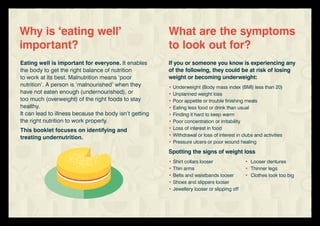
Eating well is important for everyone. It enables
the body to get the right balance of nutrition
to work at its best. Malnutrition means ‘poor
nutrition’. A person is ‘malnourished’ when they
have not eaten enough (undernourished), or
too much (overweight) of the right foods to stay
healthy.
It can lead to illness because the body isn’t getting
the right nutrition to work properly.
This booklet focuses on identifying and
treating undernutrition.
Why is ‘eating well’
important?
If you or someone you know is experiencing any
of the following, they could be at risk of losing
weight or becoming underweight:
•	Underweight (Body mass index (BMI) less than 20)
•	Unplanned weight loss
•	Poor appetite or trouble finishing meals
•	Eating less food or drink than usual
•	Finding it hard to keep warm
•	Poor concentration or irritability
•	Loss of interest in food
•	Withdrawal or loss of interest in clubs and activities
•	Pressure ulcers or poor wound healing
Spotting the signs of weight loss
•	Shirt collars looser	 •	 Looser dentures
•	Thin arms	 •	 Thinner legs
•	Belts and waistbands looser	 •	 Clothes look too big
•	Shoes and slippers looser
•	Jewellery looser or slipping off
What are the symptoms
to look out for?
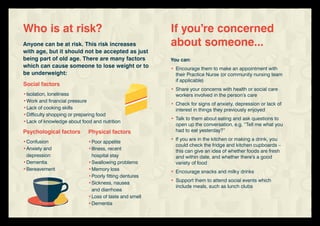
You can:
•	Encourage them to make an appointment with
	 their Practice Nurse (or community nursing team
	 if applicable)
•	Share your concerns with health or social care
	 workers involved in the person’s care
•	Check for signs of anxiety, depression or lack of
	 interest in things they previously enjoyed
•	Talk to them about eating and ask questions to
	 open up the conversation, e.g. “Tell me what you
	 had to eat yesterday?”
•	If you are in the kitchen or making a drink, you
	 could check the fridge and kitchen cupboards –
	 this can give an idea of whether foods are fresh
	 and within date, and whether there’s a good
	 variety of food
•	Encourage snacks and milky drinks
•	Support them to attend social events which
	 include meals, such as lunch clubs
If you’re concerned
about someone...Anyone can be at risk. This risk increases
with age, but it should not be accepted as just
being part of old age. There are many factors
which can cause someone to lose weight or to
be underweight:
Who is at risk?
Social factors
•	Isolation, loneliness
•	Work and financial pressure
•	Lack of cooking skills
•	Difficulty shopping or preparing food
•	Lack of knowledge about food and nutrition
Psychological factors
•	Confusion
•	Anxiety and
	depression
•	Dementia
•	Bereavement
Physical factors
•	Poor appetite
•	Illness, recent
	 hospital stay
•	Swallowing problems
•	Memory loss
•	Poorly fitting dentures
•	Sickness, nausea
	 and diarrhoea
•	Loss of taste and smell
•	Dementia
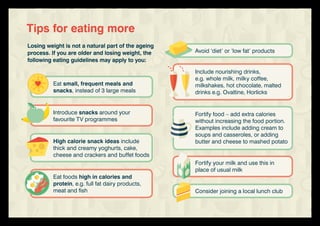
Avoid ‘diet’ or ‘low fat’ products
Include nourishing drinks,
e.g. whole milk, milky coffee,
milkshakes, hot chocolate, malted
drinks e.g. Ovaltine, Horlicks
Fortify food – add extra calories
without increasing the food portion.
Examples include adding cream to
soups and casseroles, or adding
butter and cheese to mashed potato
Fortify your milk and use this in
place of usual milk
Consider joining a local lunch club
Losing weight is not a natural part of the ageing
process. If you are older and losing weight, the
following eating guidelines may apply to you:
Tips for eating more
Eat small, frequent meals and
snacks, instead of 3 large meals
Introduce snacks around your
favourite TV programmes
High calorie snack ideas include
thick and creamy yoghurts, cake,
cheese and crackers and buffet foods
Eat foods high in calories and
protein, e.g. full fat dairy products,
meat and fish
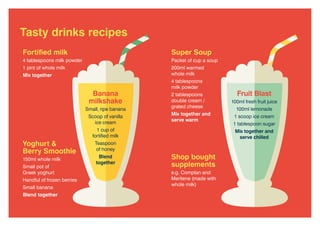
Fortified milk
4 tablespoons milk powder
1 pint of whole milk
Mix together
Banana
milkshake
Small, ripe banana
Scoop of vanilla
ice cream
1 cup of
fortified milk
Teaspoon
of honey
Blend
together
Yoghurt &
Berry Smoothie
150ml whole milk
Small pot of
Greek yoghurt
Handful of frozen berries
Small banana
Blend together
Tasty drinks recipes
Shop bought
supplements
e.g. Complan and
Meritene (made with
whole milk)
Fruit Blast
100ml fresh fruit juice
100ml lemonade
1 scoop ice cream
1 tablespoon sugar
Mix together and
serve chilled
Super Soup
Packet of cup a soup
200ml warmed
whole milk
4 tablespoons
milk powder
2 tablespoons
double cream /
grated cheese
Mix together and
serve warm
If you or someone you know are concerned, it’s best
to seek individual advice from your Practice Nurse
initially, unless you have a medical issue, in which case
you should make an appointment with your GP. Your
community pharmacist may also be able to provide
support and advice.
Your local community organisation (e.g. Age Concern)
and the council can also provide information, and a
range of options to support you.
Email nutrition@wessexahsn.net
for more information about malnutrition
Where to go for help
Licensed under the Creative Commons Attribution-
NonCommercial-NoDerivatives 4.0 International License

OPEN Undernutrition Awareness Leaflet - Eating Well, Feeling Good

  • 1.
    Eating well, feeling good Guidanceif you are losing weight or underweight
  • 2.
    Eating well isimportant for everyone. It enables the body to get the right balance of nutrition to work at its best. Malnutrition means ‘poor nutrition’. A person is ‘malnourished’ when they have not eaten enough (undernourished), or too much (overweight) of the right foods to stay healthy. It can lead to illness because the body isn’t getting the right nutrition to work properly. This booklet focuses on identifying and treating undernutrition. Why is ‘eating well’ important? If you or someone you know is experiencing any of the following, they could be at risk of losing weight or becoming underweight: • Underweight (Body mass index (BMI) less than 20) • Unplanned weight loss • Poor appetite or trouble finishing meals • Eating less food or drink than usual • Finding it hard to keep warm • Poor concentration or irritability • Loss of interest in food • Withdrawal or loss of interest in clubs and activities • Pressure ulcers or poor wound healing Spotting the signs of weight loss • Shirt collars looser • Looser dentures • Thin arms • Thinner legs • Belts and waistbands looser • Clothes look too big • Shoes and slippers looser • Jewellery looser or slipping off What are the symptoms to look out for?
  • 3.
    You can: • Encourage themto make an appointment with their Practice Nurse (or community nursing team if applicable) • Share your concerns with health or social care workers involved in the person’s care • Check for signs of anxiety, depression or lack of interest in things they previously enjoyed • Talk to them about eating and ask questions to open up the conversation, e.g. “Tell me what you had to eat yesterday?” • If you are in the kitchen or making a drink, you could check the fridge and kitchen cupboards – this can give an idea of whether foods are fresh and within date, and whether there’s a good variety of food • Encourage snacks and milky drinks • Support them to attend social events which include meals, such as lunch clubs If you’re concerned about someone...Anyone can be at risk. This risk increases with age, but it should not be accepted as just being part of old age. There are many factors which can cause someone to lose weight or to be underweight: Who is at risk? Social factors • Isolation, loneliness • Work and financial pressure • Lack of cooking skills • Difficulty shopping or preparing food • Lack of knowledge about food and nutrition Psychological factors • Confusion • Anxiety and depression • Dementia • Bereavement Physical factors • Poor appetite • Illness, recent hospital stay • Swallowing problems • Memory loss • Poorly fitting dentures • Sickness, nausea and diarrhoea • Loss of taste and smell • Dementia
  • 4.
    Avoid ‘diet’ or‘low fat’ products Include nourishing drinks, e.g. whole milk, milky coffee, milkshakes, hot chocolate, malted drinks e.g. Ovaltine, Horlicks Fortify food – add extra calories without increasing the food portion. Examples include adding cream to soups and casseroles, or adding butter and cheese to mashed potato Fortify your milk and use this in place of usual milk Consider joining a local lunch club Losing weight is not a natural part of the ageing process. If you are older and losing weight, the following eating guidelines may apply to you: Tips for eating more Eat small, frequent meals and snacks, instead of 3 large meals Introduce snacks around your favourite TV programmes High calorie snack ideas include thick and creamy yoghurts, cake, cheese and crackers and buffet foods Eat foods high in calories and protein, e.g. full fat dairy products, meat and fish
  • 5.
    Fortified milk 4 tablespoonsmilk powder 1 pint of whole milk Mix together Banana milkshake Small, ripe banana Scoop of vanilla ice cream 1 cup of fortified milk Teaspoon of honey Blend together Yoghurt & Berry Smoothie 150ml whole milk Small pot of Greek yoghurt Handful of frozen berries Small banana Blend together Tasty drinks recipes Shop bought supplements e.g. Complan and Meritene (made with whole milk) Fruit Blast 100ml fresh fruit juice 100ml lemonade 1 scoop ice cream 1 tablespoon sugar Mix together and serve chilled Super Soup Packet of cup a soup 200ml warmed whole milk 4 tablespoons milk powder 2 tablespoons double cream / grated cheese Mix together and serve warm
  • 6.
    If you orsomeone you know are concerned, it’s best to seek individual advice from your Practice Nurse initially, unless you have a medical issue, in which case you should make an appointment with your GP. Your community pharmacist may also be able to provide support and advice. Your local community organisation (e.g. Age Concern) and the council can also provide information, and a range of options to support you. Email nutrition@wessexahsn.net for more information about malnutrition Where to go for help Licensed under the Creative Commons Attribution- NonCommercial-NoDerivatives 4.0 International License