On-Chain Asset Tokenization: Redefining Digital Ownership
Discover how on-chain asset tokenization turns real-world assets into secure, tradable digital tokens. Learn its benefits, working process, and impact on global investments.
On-chain asset tokenization
developmenttransforms real-world or
digital assets into blockchain tokens,
ensuring transparency, security, and
seamless ownership transfer.
3.
On-chain tokenization beginsby identifying a real-world or digital asset—such as
real estate, gold, or intellectual property—and representing it on the blockchain. The
asset’s value is divided into digital tokens through smart contracts, which define
ownership rights, rules, and transactions.
Each token represents a fraction of the asset, allowing multiple investors to
participate. Transactions happen directly on the blockchain, ensuring transparency,
security, and instant settlement. Investors can buy, sell, or trade these tokens
across decentralized platforms, unlocking liquidity for traditionally illiquid assets.
4.
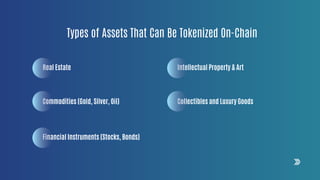
Real Estate
Commodities (Gold,Silver, Oil)
Financial Instruments (Stocks, Bonds)
Types of Assets That Can Be Tokenized On-Chain
Intellectual Property & Art
Collectibles and Luxury Goods
5.
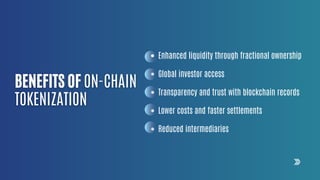
Enhanced liquidity throughfractional ownership
Global investor access
Transparency and trust with blockchain records
Lower costs and faster settlements
Reduced intermediaries
6.
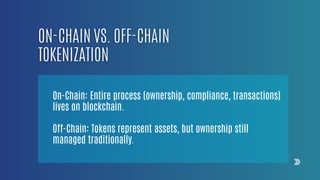
On-Chain: Entire process(ownership, compliance, transactions)
lives on blockchain.
Off-Chain: Tokens represent assets, but ownership still
managed traditionally.
7.
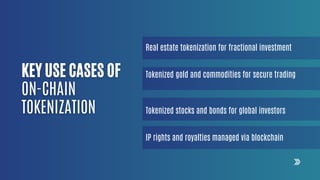
Real estate tokenizationfor fractional investment
Tokenized gold and commodities for secure trading
Tokenized stocks and bonds for global investors
IP rights and royalties managed via blockchain