Asset Tokenization
and Its Impact Across
Sectors
Real-World Asset
Tokenization
Asset tokenization is changing ownership by converting
real-world assets like real estate, art, and commoditiesinto
digital tokens using blockchain. This makes assets more
accessible, liquid, and transparent, allowing more investors
to participate. Across industries like finance, luxury, and IP,
tokenization is paving the way for financial inclusion.
Historical Context
Asset tokenization began with blockchain technology,
particularly Ethereum and smart contracts. Initially applied
to digital assets, tokenization of tangible assets like real
estate and art took off around 2017, later expanding to
include commodities, collectibles, and more by 2020. This
shift makes asset trading and ownership more open and
accessible.
Institutional Adoption
of Tokenization
Institutions such as banks, investment firms, and
corporations are embracing tokenization to cut costs,
simplify transactions, and allow fractional ownership.
Financial giants like BlackRock and Fidelity are exploring
tokenized assets for portfolio diversity, while companies
tokenize assets like real estate and IP for added liquidity.
This trend signals a shift toward a more efficient and
equitable financial system.
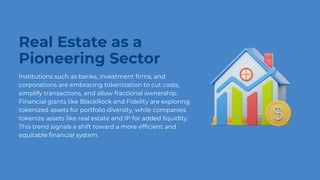
Real Estate as a
Pioneering Sector
Institutions such as banks, investment firms, and
corporations are embracing tokenization to cut costs,
simplify transactions, and allow fractional ownership.
Financial giants like BlackRock and Fidelity are exploring
tokenized assets for portfolio diversity, while companies
tokenize assets like real estate and IP for added liquidity.
This trend signals a shift toward a more efficient and
equitable financial system.
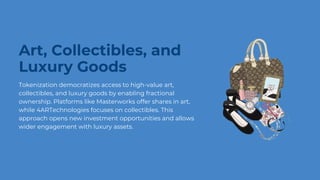
Art, Collectibles, and
Luxury Goods
Tokenization democratizes access to high-value art,
collectibles, and luxury goods by enabling fractional
ownership. Platforms like Masterworks offer shares in art,
while 4ARTechnologies focuses on collectibles. This
approach opens new investment opportunities and allows
wider engagement with luxury assets.
Commodities and
Natural Resources
Tokenized commodities like gold and agricultural assets
allow investors to own fractions of high-value resources.
This approach enhances accessibility, liquidity, and
transparency. Examples like Tether Gold (XAUt) and Paxos
Gold (PAXG) make commodity investment more flexible
and inclusive.
Emerging Categories
– IP and Media Rights
Tokenization is opening investment in intellectual property
(IP) and media rights, allowing fractional ownership of
patents, music, and film royalties. Platforms like Royal let
fans invest in music royalties. This shift empowers creators
and gives investors unique revenue streams.
Real World Asset
Tokenization serivces
Transform assets into digital tokens with our Real World
Asset Tokenization Services. Secure, custom solutions for
creating and trading tokenized assets.
7708889555
contact@blockchainx.tech
www.blockchainx.tech
Contact Us

Asset Tokenization and Its Impact Across Sectors

  • 1.
    Asset Tokenization and ItsImpact Across Sectors
  • 2.
    Real-World Asset Tokenization Asset tokenizationis changing ownership by converting real-world assets like real estate, art, and commoditiesinto digital tokens using blockchain. This makes assets more accessible, liquid, and transparent, allowing more investors to participate. Across industries like finance, luxury, and IP, tokenization is paving the way for financial inclusion.
  • 3.
    Historical Context Asset tokenizationbegan with blockchain technology, particularly Ethereum and smart contracts. Initially applied to digital assets, tokenization of tangible assets like real estate and art took off around 2017, later expanding to include commodities, collectibles, and more by 2020. This shift makes asset trading and ownership more open and accessible.
  • 4.
    Institutional Adoption of Tokenization Institutionssuch as banks, investment firms, and corporations are embracing tokenization to cut costs, simplify transactions, and allow fractional ownership. Financial giants like BlackRock and Fidelity are exploring tokenized assets for portfolio diversity, while companies tokenize assets like real estate and IP for added liquidity. This trend signals a shift toward a more efficient and equitable financial system.
  • 5.
    Real Estate asa Pioneering Sector Institutions such as banks, investment firms, and corporations are embracing tokenization to cut costs, simplify transactions, and allow fractional ownership. Financial giants like BlackRock and Fidelity are exploring tokenized assets for portfolio diversity, while companies tokenize assets like real estate and IP for added liquidity. This trend signals a shift toward a more efficient and equitable financial system.
  • 6.
    Art, Collectibles, and LuxuryGoods Tokenization democratizes access to high-value art, collectibles, and luxury goods by enabling fractional ownership. Platforms like Masterworks offer shares in art, while 4ARTechnologies focuses on collectibles. This approach opens new investment opportunities and allows wider engagement with luxury assets.
  • 7.
    Commodities and Natural Resources Tokenizedcommodities like gold and agricultural assets allow investors to own fractions of high-value resources. This approach enhances accessibility, liquidity, and transparency. Examples like Tether Gold (XAUt) and Paxos Gold (PAXG) make commodity investment more flexible and inclusive.
  • 8.
    Emerging Categories – IPand Media Rights Tokenization is opening investment in intellectual property (IP) and media rights, allowing fractional ownership of patents, music, and film royalties. Platforms like Royal let fans invest in music royalties. This shift empowers creators and gives investors unique revenue streams.
  • 9.
    Real World Asset Tokenizationserivces Transform assets into digital tokens with our Real World Asset Tokenization Services. Secure, custom solutions for creating and trading tokenized assets.
  • 10.