OLIVES
Victoria Di Llllo
HISTORY
 They are native to the Mediterranean region
 They are known as “the noble fruit”
 Evoke feelings of harmony, vitality and health
 Symbol of peace, victory and endurance of life
 Important in Mediterranean culture for a minimum of 4,000
years
 Almost always handpicked, delicate situation
 They vary on size and texture based on type
 To be edible they must be cured (brined, lye cured, dry cured
sun dried), this can take six weeks to nine months or longer
GROWTH
 Olives grow through out the country.
 Olives come from an olives tress which grown on average
between 40-50 feet
 They require long hot growing season for the fruit to ripen
correctly
 They are very delicate crop, a frost in spring can run-in the crop,
the winters have to be cold for the crop to set.
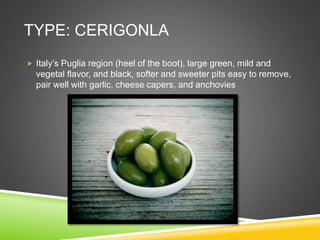
TYPE: CERIGONLA
 Italy’s Puglia region (heel of the boot), large green, mild and
vegetal flavor, and black, softer and sweeter pits easy to remove,
pair well with garlic, cheese capers, and anchovies
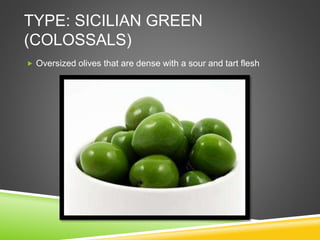
TYPE: SICILIAN GREEN
(COLOSSALS)
 Oversized olives that are dense with a sour and tart flesh
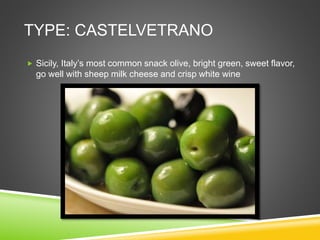
TYPE: CASTELVETRANO
 Sicily, Italy’s most common snack olive, bright green, sweet flavor,
go well with sheep milk cheese and crisp white wine
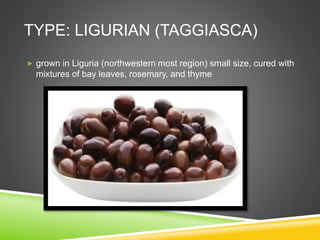
TYPE: LIGURIAN (TAGGIASCA)
 grown in Liguria (northwestern most region) small size, cured with
mixtures of bay leaves, rosemary, and thyme
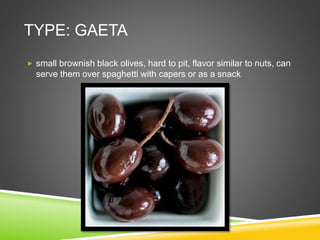
TYPE: GAETA
 small brownish black olives, hard to pit, flavor similar to nuts, can
serve them over spaghetti with capers or as a snack
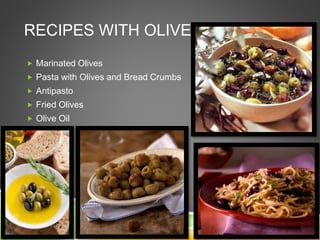
RECIPES WITH OLIVES:
 Marinated Olives
 Pasta with Olives and Bread Crumbs
 Antipasto
 Fried Olives
 Olive Oil
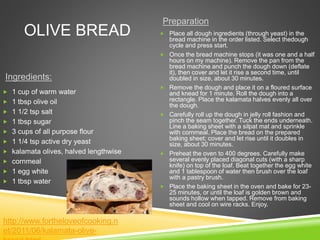
OLIVE BREAD
Ingredients:
Preparation
 1 cup of warm water
 1 tbsp olive oil
 1 1/2 tsp salt
 1 tbsp sugar
 3 cups of all purpose flour
 1 1/4 tsp active dry yeast
 kalamata olives, halved lengthwise
 cornmeal
 1 egg white
 1 tbsp water
 Place all dough ingredients (through yeast) in the
bread machine in the order listed. Select thedough
cycle and press start.
 Once the bread machine stops (it was one and a half
hours on my machine). Remove the pan from the
bread machine and punch the dough down (deflate
it), then cover and let it rise a second time, until
doubled in size, about 30 minutes.
 Remove the dough and place it on a floured surface
and knead for 1 minute. Roll the dough into a
rectangle. Place the kalamata halves evenly all over
the dough.
 Carefully roll up the dough in jelly roll fashion and
pinch the seam together. Tuck the ends underneath.
Line a baking sheet with a silpat mat and sprinkle
with cornmeal. Place the bread on the prepared
baking sheet; cover and let rise until it doubles in
size, about 30 minutes.
 Preheat the oven to 400 degrees. Carefully make
several evenly placed diagonal cuts (with a sharp
knife) on top of the loaf. Beat together the egg white
and 1 tablespoon of water then brush over the loaf
with a pastry brush.
 Place the baking sheet in the oven and bake for 23-
25 minutes, or until the loaf is golden brown and
sounds hollow when tapped. Remove from baking
sheet and cool on wire racks. Enjoy.
http://www.fortheloveofcooking.n
et/2011/06/kalamata-olive-

Olives- Victoria D.

  • 1.
  • 2.
    HISTORY  They arenative to the Mediterranean region  They are known as “the noble fruit”  Evoke feelings of harmony, vitality and health  Symbol of peace, victory and endurance of life  Important in Mediterranean culture for a minimum of 4,000 years  Almost always handpicked, delicate situation  They vary on size and texture based on type  To be edible they must be cured (brined, lye cured, dry cured sun dried), this can take six weeks to nine months or longer
  • 3.
    GROWTH  Olives growthrough out the country.  Olives come from an olives tress which grown on average between 40-50 feet  They require long hot growing season for the fruit to ripen correctly  They are very delicate crop, a frost in spring can run-in the crop, the winters have to be cold for the crop to set.
  • 4.
    TYPE: CERIGONLA  Italy’sPuglia region (heel of the boot), large green, mild and vegetal flavor, and black, softer and sweeter pits easy to remove, pair well with garlic, cheese capers, and anchovies
  • 5.
    TYPE: SICILIAN GREEN (COLOSSALS) Oversized olives that are dense with a sour and tart flesh
  • 6.
    TYPE: CASTELVETRANO  Sicily,Italy’s most common snack olive, bright green, sweet flavor, go well with sheep milk cheese and crisp white wine
  • 7.
    TYPE: LIGURIAN (TAGGIASCA) grown in Liguria (northwestern most region) small size, cured with mixtures of bay leaves, rosemary, and thyme
  • 8.
    TYPE: GAETA  smallbrownish black olives, hard to pit, flavor similar to nuts, can serve them over spaghetti with capers or as a snack
  • 9.
    RECIPES WITH OLIVES: Marinated Olives  Pasta with Olives and Bread Crumbs  Antipasto  Fried Olives  Olive Oil
  • 10.
    OLIVE BREAD Ingredients: Preparation  1cup of warm water  1 tbsp olive oil  1 1/2 tsp salt  1 tbsp sugar  3 cups of all purpose flour  1 1/4 tsp active dry yeast  kalamata olives, halved lengthwise  cornmeal  1 egg white  1 tbsp water  Place all dough ingredients (through yeast) in the bread machine in the order listed. Select thedough cycle and press start.  Once the bread machine stops (it was one and a half hours on my machine). Remove the pan from the bread machine and punch the dough down (deflate it), then cover and let it rise a second time, until doubled in size, about 30 minutes.  Remove the dough and place it on a floured surface and knead for 1 minute. Roll the dough into a rectangle. Place the kalamata halves evenly all over the dough.  Carefully roll up the dough in jelly roll fashion and pinch the seam together. Tuck the ends underneath. Line a baking sheet with a silpat mat and sprinkle with cornmeal. Place the bread on the prepared baking sheet; cover and let rise until it doubles in size, about 30 minutes.  Preheat the oven to 400 degrees. Carefully make several evenly placed diagonal cuts (with a sharp knife) on top of the loaf. Beat together the egg white and 1 tablespoon of water then brush over the loaf with a pastry brush.  Place the baking sheet in the oven and bake for 23- 25 minutes, or until the loaf is golden brown and sounds hollow when tapped. Remove from baking sheet and cool on wire racks. Enjoy. http://www.fortheloveofcooking.n et/2011/06/kalamata-olive-