Percutaneous Nucleoplasty versus Open Discectomy in
       Patients with Lumbar Disc Protrusions


                                  Danil ADAM1.2


     1
         “Carol Davila” Medicine and Pharmacy University, Bucharest, Romania
                      2
                       “Victor Babes” Clinic, Bucharest, Romania
- DISK DEGENERATION or anatochronesis is a normal evolutive process,
  which is characterized by

                                 deshydratation

                                 lactic acid ⇑

                                 glycosaminoglycans ⇓


- DDD is a real socio-economic problem, whith high prevalence
- MECHANICAL FACTORS : compression and shearing forces produce
  fissuration of the disk and disk herniation

- This condition can be treated conservative or operative by many approaches

- MINIMALLY INVASIVE PROCEDURES are increasingly applied for
  treatment of LDH (Lumbar Disk Herniation)

- The results of

 NUCLEOPLASTY BY COBLATION vs. MICRODISCECTOMY

                                                       are presented.
CARDINAL SIGNS in LDH


-   LOW BACK PAIN       Symptoms of LDH may start as
                        LBP, which then develop to
-   LEG PAIN            radicular pain
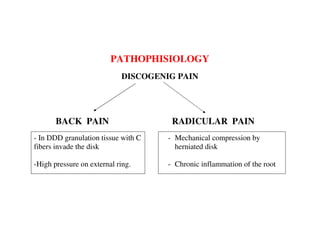
PATHOPHISIOLOGY
                            DISCOGENIG PAIN


       BACK PAIN                      RADICULAR PAIN
- In DDD granulation tissue with C   - Mechanical compression by
fibers invade the disk                 herniated disk

-High pressure on external ring.     - Chronic inflammation of the root
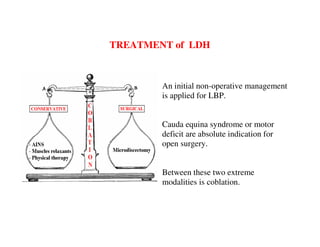
TREATMENT of LDH


        An initial non-operative management
        is applied for LBP.


        Cauda equina syndrome or motor
        deficit are absolute indication for
        open surgery.


        Between these two extreme
        modalities is coblation.
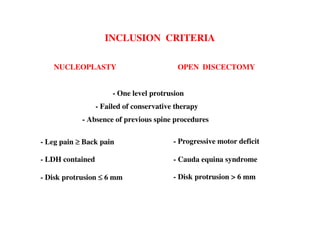
INCLUSION CRITERIA

   NUCLEOPLASTY                            OPEN DISCECTOMY


                       - One level protrusion
                  - Failed of conservative therapy
            - Absence of previous spine procedures

- Leg pain ≥ Back pain                    - Progressive motor deficit

- LDH contained                           - Cauda equina syndrome

- Disk protrusion ≤ 6 mm                  - Disk protrusion > 6 mm
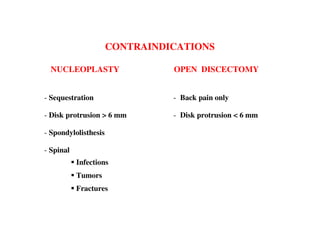
CONTRAINDICATIONS

  NUCLEOPLASTY                  OPEN DISCECTOMY


- Sequestration                 - Back pain only

- Disk protrusion > 6 mm        - Disk protrusion < 6 mm

- Spondylolisthesis

- Spinal
           Infections
           Tumors
           Fractures
MATERIAL


Two cohort of 80 patients treated with coblation and microdiscectomy
between september 2009 – september 2010 are analysed.


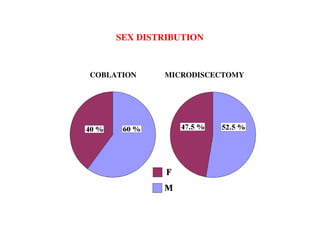
There are not significant differences regarding sex distribution, age or
level of disease.
SEX DISTRIBUTION


COBLATION    MICRODISCECTOMY
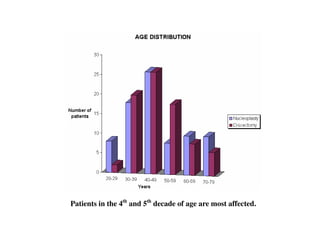
Patients in the 4th and 5th decade of age are most affected.
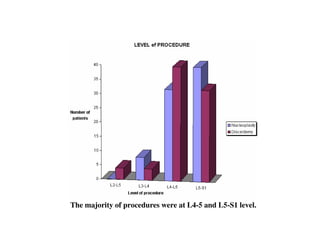
The majority of procedures were at L4-5 and L5-S1 level.
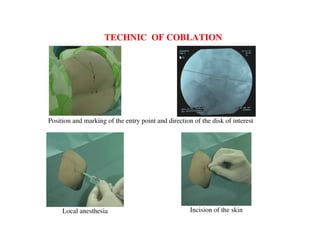
TECHNIC OF COBLATION


Position and marking of the entry point and direction of the disk of interest


     Local anesthesia                                Incision of the skin
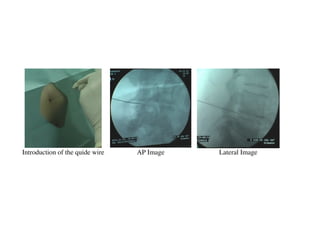
Introduction of the quide wire   AP Image   Lateral Image
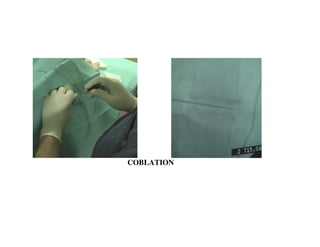
COBLATION
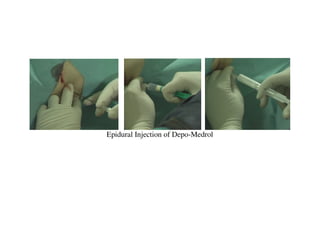
Epidural Injection of Depo-Medrol
RESULTS

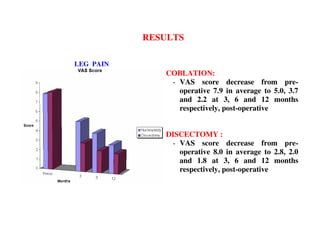
LEG PAIN
              COBLATION:
               - VAS score decrease from pre-
                 operative 7.9 in average to 5.0, 3.7
                 and 2.2 at 3, 6 and 12 months
                 respectively, post-operative


              DISCECTOMY :
               - VAS score decrease from pre-
                 operative 8.0 in average to 2.8, 2.0
                 and 1.8 at 3, 6 and 12 months
                 respectively, post-operative
VAS score


- Improvement of VAS score is bigger for Discectomy patients, but in fact we
  compare “apples with peaches” because the size of protrusion differ in the two
  arms of the study


- Decrease of VAS score in Coblation patients is due to intradiscal pressure
  decrease followed in time by retraction of protrusion


- Downward trend of VAS score is maintained in 1 year follow-up period
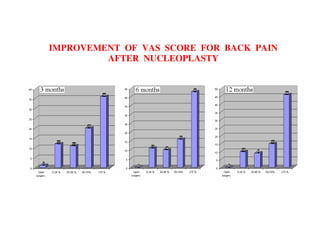
IMPROVEMENT OF VAS SCORE FOR BACK PAIN
         AFTER NUCLEOPLASTY
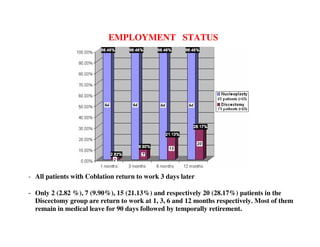
EMPLOYMENT STATUS


- All patients with Coblation return to work 3 days later

- Only 2 (2.82 %), 7 (9.90%), 15 (21.13%) and respectively 20 (28.17%) patients in the
  Discectomy group are return to work at 1, 3, 6 and 12 months respectively. Most of them
  remain in medical leave for 90 days followed by temporally retirement.
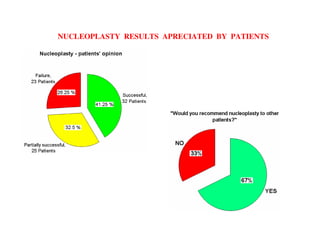
NUCLEOPLASTY RESULTS APRECIATED BY PATIENTS
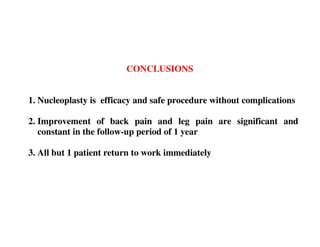
CONCLUSIONS


1. Nucleoplasty is efficacy and safe procedure without complications

2. Improvement of back pain and leg pain are significant and
   constant in the follow-up period of 1 year

3. All but 1 patient return to work immediately

Ok srn d adam

  • 1.
    Percutaneous Nucleoplasty versusOpen Discectomy in Patients with Lumbar Disc Protrusions Danil ADAM1.2 1 “Carol Davila” Medicine and Pharmacy University, Bucharest, Romania 2 “Victor Babes” Clinic, Bucharest, Romania
  • 2.
    - DISK DEGENERATIONor anatochronesis is a normal evolutive process, which is characterized by deshydratation lactic acid ⇑ glycosaminoglycans ⇓ - DDD is a real socio-economic problem, whith high prevalence
  • 3.
    - MECHANICAL FACTORS: compression and shearing forces produce fissuration of the disk and disk herniation - This condition can be treated conservative or operative by many approaches - MINIMALLY INVASIVE PROCEDURES are increasingly applied for treatment of LDH (Lumbar Disk Herniation) - The results of NUCLEOPLASTY BY COBLATION vs. MICRODISCECTOMY are presented.
  • 4.
    CARDINAL SIGNS inLDH - LOW BACK PAIN Symptoms of LDH may start as LBP, which then develop to - LEG PAIN radicular pain
  • 5.
    PATHOPHISIOLOGY DISCOGENIG PAIN BACK PAIN RADICULAR PAIN - In DDD granulation tissue with C - Mechanical compression by fibers invade the disk herniated disk -High pressure on external ring. - Chronic inflammation of the root
  • 6.
    TREATMENT of LDH An initial non-operative management is applied for LBP. Cauda equina syndrome or motor deficit are absolute indication for open surgery. Between these two extreme modalities is coblation.
  • 7.
    INCLUSION CRITERIA NUCLEOPLASTY OPEN DISCECTOMY - One level protrusion - Failed of conservative therapy - Absence of previous spine procedures - Leg pain ≥ Back pain - Progressive motor deficit - LDH contained - Cauda equina syndrome - Disk protrusion ≤ 6 mm - Disk protrusion > 6 mm
  • 8.
    CONTRAINDICATIONS NUCLEOPLASTY OPEN DISCECTOMY - Sequestration - Back pain only - Disk protrusion > 6 mm - Disk protrusion < 6 mm - Spondylolisthesis - Spinal Infections Tumors Fractures
  • 9.
    MATERIAL Two cohort of80 patients treated with coblation and microdiscectomy between september 2009 – september 2010 are analysed. There are not significant differences regarding sex distribution, age or level of disease.
  • 10.
  • 11.
    Patients in the4th and 5th decade of age are most affected.
  • 12.
    The majority ofprocedures were at L4-5 and L5-S1 level.
  • 13.
    TECHNIC OF COBLATION Positionand marking of the entry point and direction of the disk of interest Local anesthesia Incision of the skin
  • 14.
    Introduction of thequide wire AP Image Lateral Image
  • 15.
  • 16.
  • 17.
    RESULTS LEG PAIN COBLATION: - VAS score decrease from pre- operative 7.9 in average to 5.0, 3.7 and 2.2 at 3, 6 and 12 months respectively, post-operative DISCECTOMY : - VAS score decrease from pre- operative 8.0 in average to 2.8, 2.0 and 1.8 at 3, 6 and 12 months respectively, post-operative
  • 18.
    VAS score - Improvementof VAS score is bigger for Discectomy patients, but in fact we compare “apples with peaches” because the size of protrusion differ in the two arms of the study - Decrease of VAS score in Coblation patients is due to intradiscal pressure decrease followed in time by retraction of protrusion - Downward trend of VAS score is maintained in 1 year follow-up period
  • 19.
    IMPROVEMENT OF VASSCORE FOR BACK PAIN AFTER NUCLEOPLASTY
  • 21.
    EMPLOYMENT STATUS - Allpatients with Coblation return to work 3 days later - Only 2 (2.82 %), 7 (9.90%), 15 (21.13%) and respectively 20 (28.17%) patients in the Discectomy group are return to work at 1, 3, 6 and 12 months respectively. Most of them remain in medical leave for 90 days followed by temporally retirement.
  • 22.
  • 23.
    CONCLUSIONS 1. Nucleoplasty isefficacy and safe procedure without complications 2. Improvement of back pain and leg pain are significant and constant in the follow-up period of 1 year 3. All but 1 patient return to work immediately