Prof Amal Kamal
Faculty of Pharmacy , Minia University
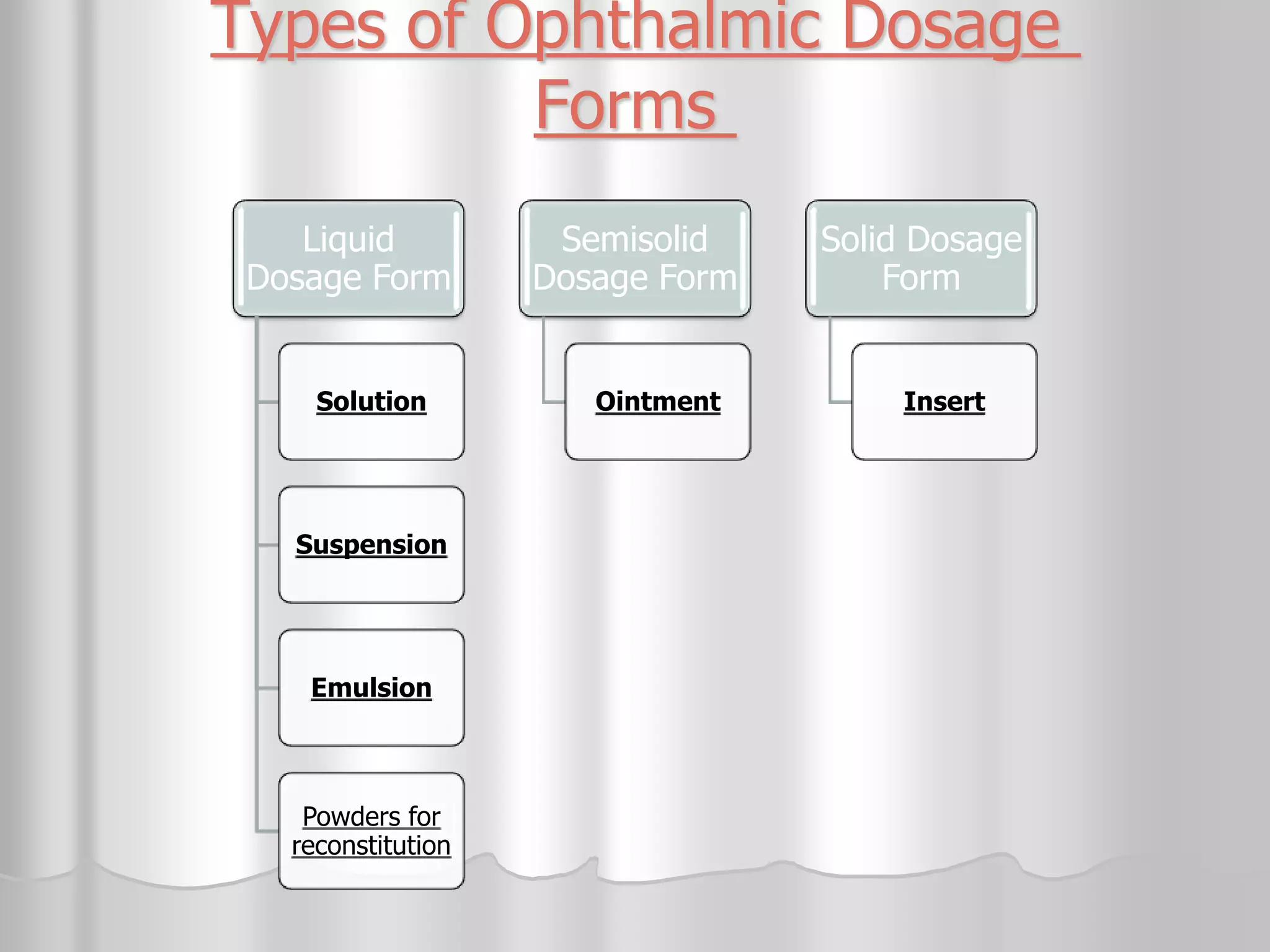
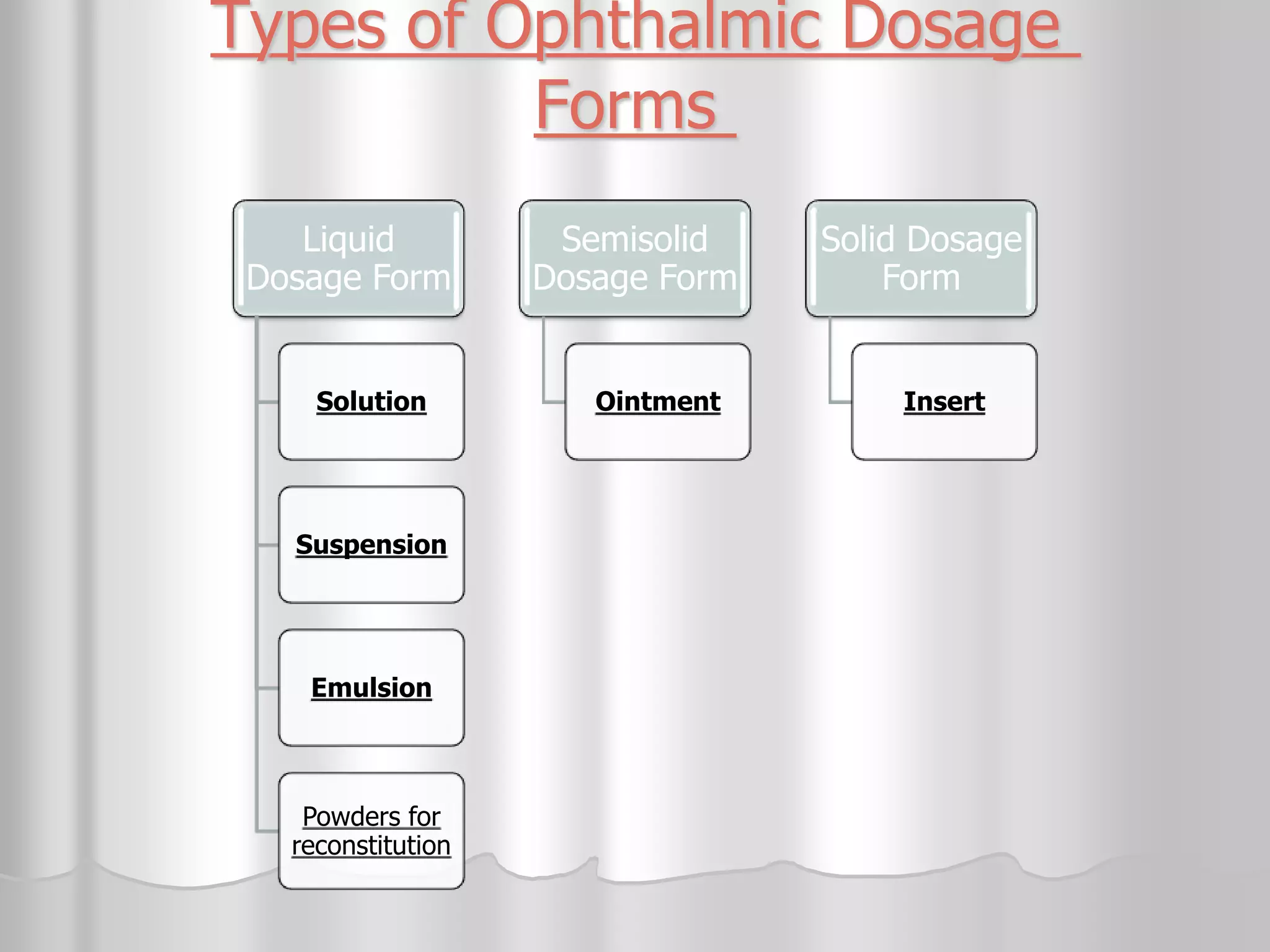
Types of Ophthalmic Dosage
Forms
Liquid
Dosage Form
Solution
Suspension
Emulsion
Powders for
reconstitution
Semisolid
Dosage Form
Ointment
Solid Dosage
Form
Insert
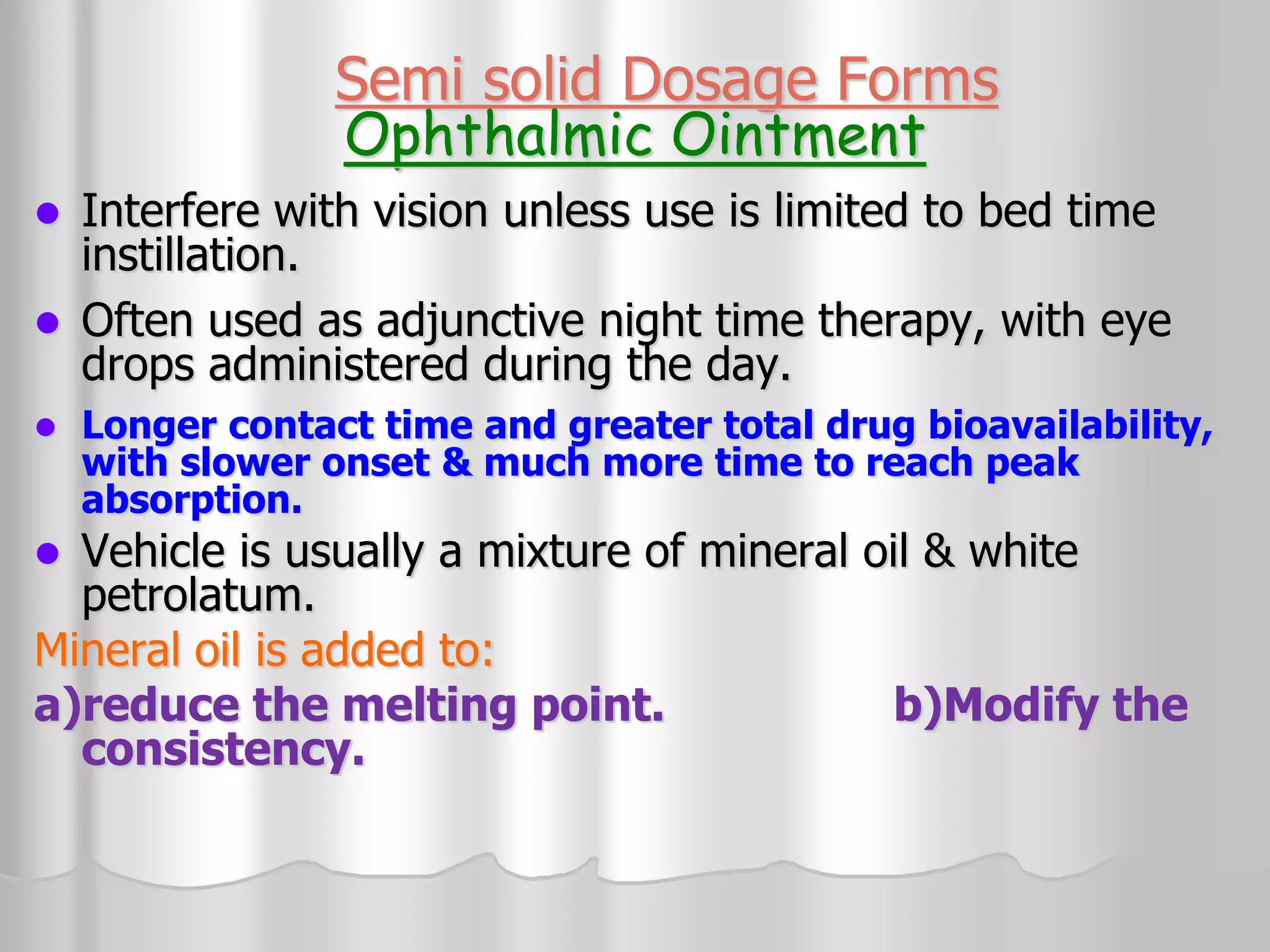
Semi solid Dosage Forms
Ophthalmic Ointment
 Interfere with vision unless use is limited to bed time
instillation.
 Often used as adjunctive night time therapy, with eye
drops administered during the day.
 Longer contact time and greater total drug bioavailability,
with slower onset & much more time to reach peak
absorption.
 Vehicle is usually a mixture of mineral oil & white
petrolatum.
Mineral oil is added to:
a)reduce the melting point. b)Modify the
consistency.
Petrolatum-based ointments are:
a)Bland. b)Inert
nature
which make them suitable vehicle
for moisture -sensitive drugs.
 Ointments used as vehicles for antibiotics,
sulfonamides, antiviral, antifungal, & anti-
inflammatory corticosteroids.
 Anesthesiologists may prescribe the ointment
vehicle for the surgical patient undergoing
general anesthesia to prevent severe and painful
dry eye conditions.
 The anhydrous petrolatum base may be made
more miscible with water through the use of an
anhydrous liquid lanolin derivative , then aqueous
drug solution can be incorporated.
How to use ophthalmic ointment?
1. Wash hands.
2. Remove cap from the tube.
3. With one hand, gently pull the lower eye lid down.
4. While looking up, squeeze a small amount of
ointment (about ¼ to ½ inch) inside lower lid. Be
careful not to touch tip of tube to eye, eyelid,
fingers, etc.
5. Close eye gently and roll eyeball in all directions
while eye is closed. Temporary blurring may occur.
6. The closed eye lid may be rubbed vey gently by a
finger to distribute the drug through out the fornix.
7. Replace cap on tube.
Types of Ophthalmic Dosage
Forms
Liquid
Dosage Form
Solution
Suspension
Emulsion
Powders for
reconstitution
Semisolid
Dosage Form
Ointment
Solid Dosage
Form
Insert
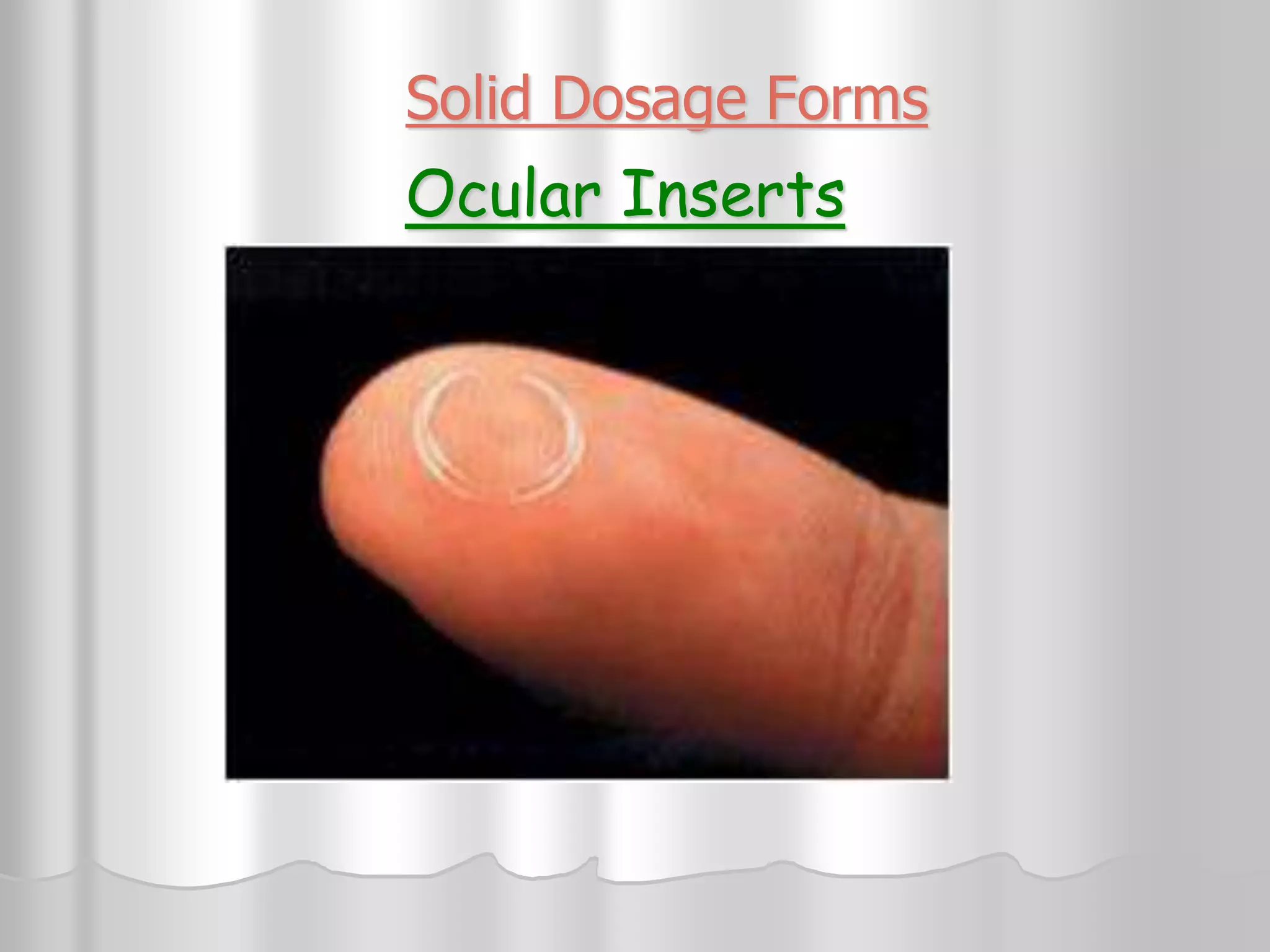
Solid Dosage Forms
Ocular Inserts
Non erodible Ocular Inserts

In 1975, the first controlled release topical dosage
form was marketed in the United States by the Alza
Corporation which was pilocarpine ocusert.

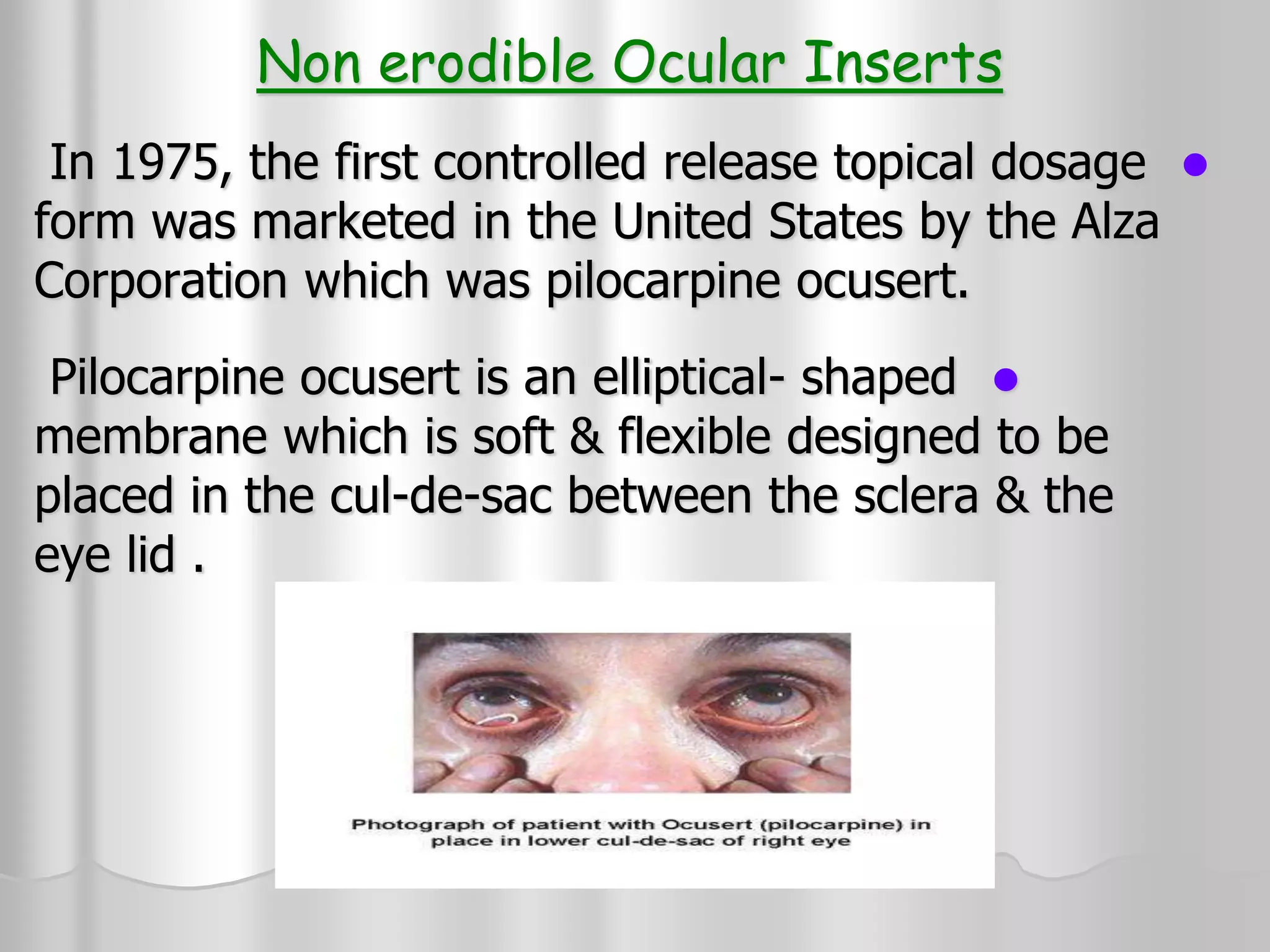
Pilocarpine ocusert is an elliptical- shaped
membrane which is soft & flexible designed to be
placed in the cul-de-sac between the sclera & the
eye lid .
Intranasal and intraoccular drug delivery 03/10/2009
3.Intraocular Drug Delivery
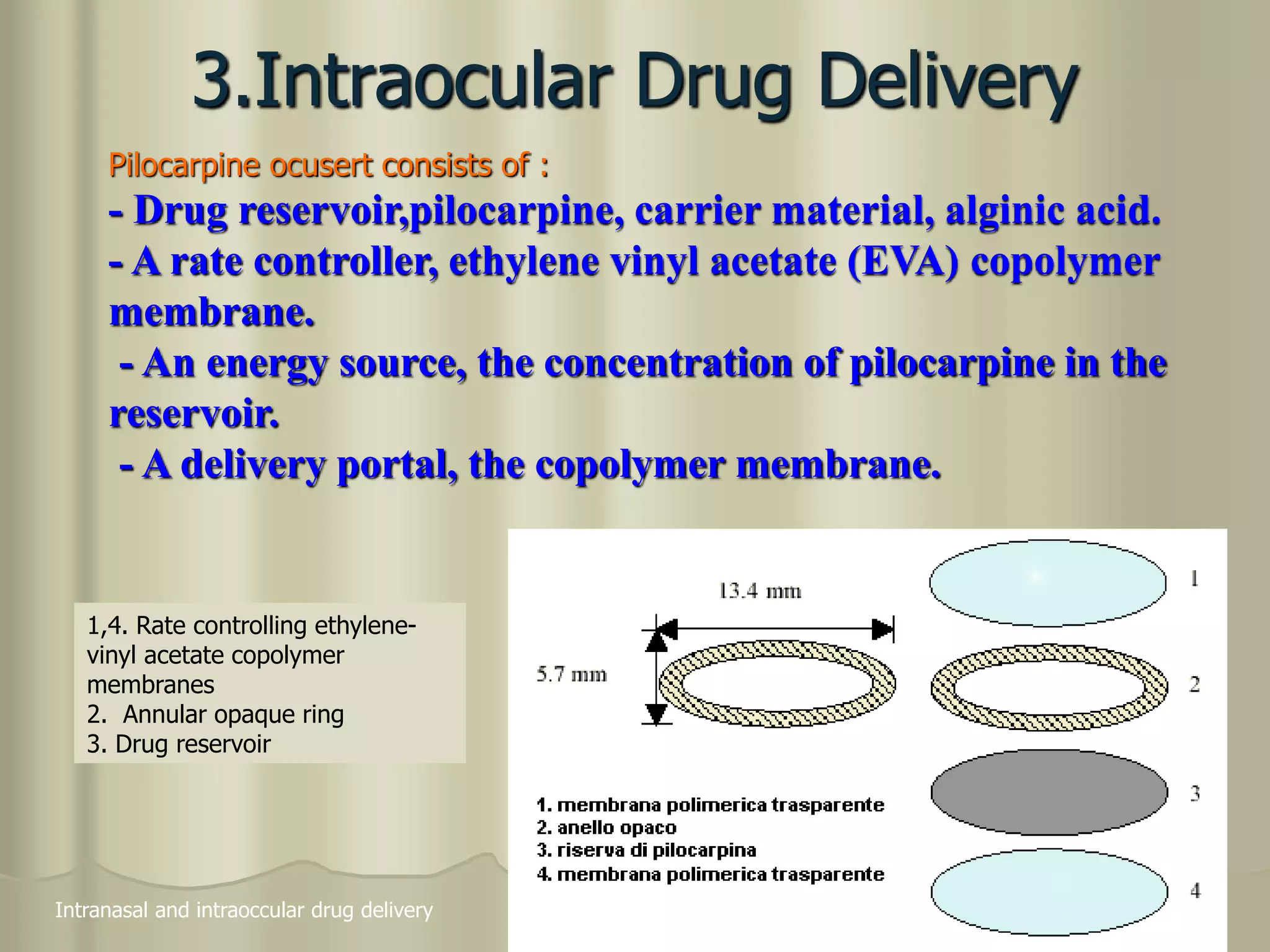
1,4. Rate controlling ethylene-
vinyl acetate copolymer
membranes
2. Annular opaque ring
3. Drug reservoir
Pilocarpine ocusert consists of :
- Drug reservoir,pilocarpine, carrier material, alginic acid.
- A rate controller, ethylene vinyl acetate (EVA) copolymer
membrane.
- An energy source, the concentration of pilocarpine in the
reservoir.
- A delivery portal, the copolymer membrane.
Intranasal and intraoccular drug delivery 03/10/2009
•Design:
The ocusert is sterile, oval in shape & flexible,
It is made of a central core or reservoir which contains the
drug embedded in an alginic acid gel-like base,
the drug reservoir is surrounded by a rate-limiting or
controlling membrane made of vinyl acetate-ethylene co-
polymer which gives a steady and controlled drug release for a
certain period of time.
The device is bordered by a white annular ring consisting of
vinyl acetate-ethylene co-polymer impregnated with titanium
dioxide (a powdered pigment) that darkens the borders of the
ocusert. The border makes the ocusert easier for the patient to
visualize.
Intranasal and intraoccular drug delivery 03/10/2009
Pilocarpine ocusert
•Used to treat Glaucoma because it reduces intraocular pressure
• It is designed to release pilocarpine at a controlled required rate
(for example, 20 microgram  hour or 40 microgram or 80
microgram per hour), for a certain period of time (like 7 days), after
7 days the ocusert is removed & replaced by a new one, so it’s more
convenient than pilocarpine eye drops which is used 4 times a day
normally.
Advantages over drop therapy for the glaucoma patient:
Exposes the patient to only one-fourth to one-eighth the amount of pilcarpine
compared to drop therapy. (reduced local side effects & toxicity.)
It provides a continuous around – the clock- control of IOP.
Patient convenience & improved compliance.(administered only once per
week.)

Patient must check periodically that the unit is still in
place, particularly in the morning upon arising.

It is doubtful that the ocusert will replace the
standard drop therapy for glaucoma, but it will offer
the physician an alternate means of therapy for
certain patient groups such as those who are
sensitive to the preservatives in ophthalmic
solutions, those who do not have the
competency to instill drops, & those who
cannot tolerate some
Erodible Ocular Inserts
 Why ?
1. They do not have to be removed at
the end of the therapy
2. Increase retention time
3. Increase penetration of the drug
4. Prolonged effect
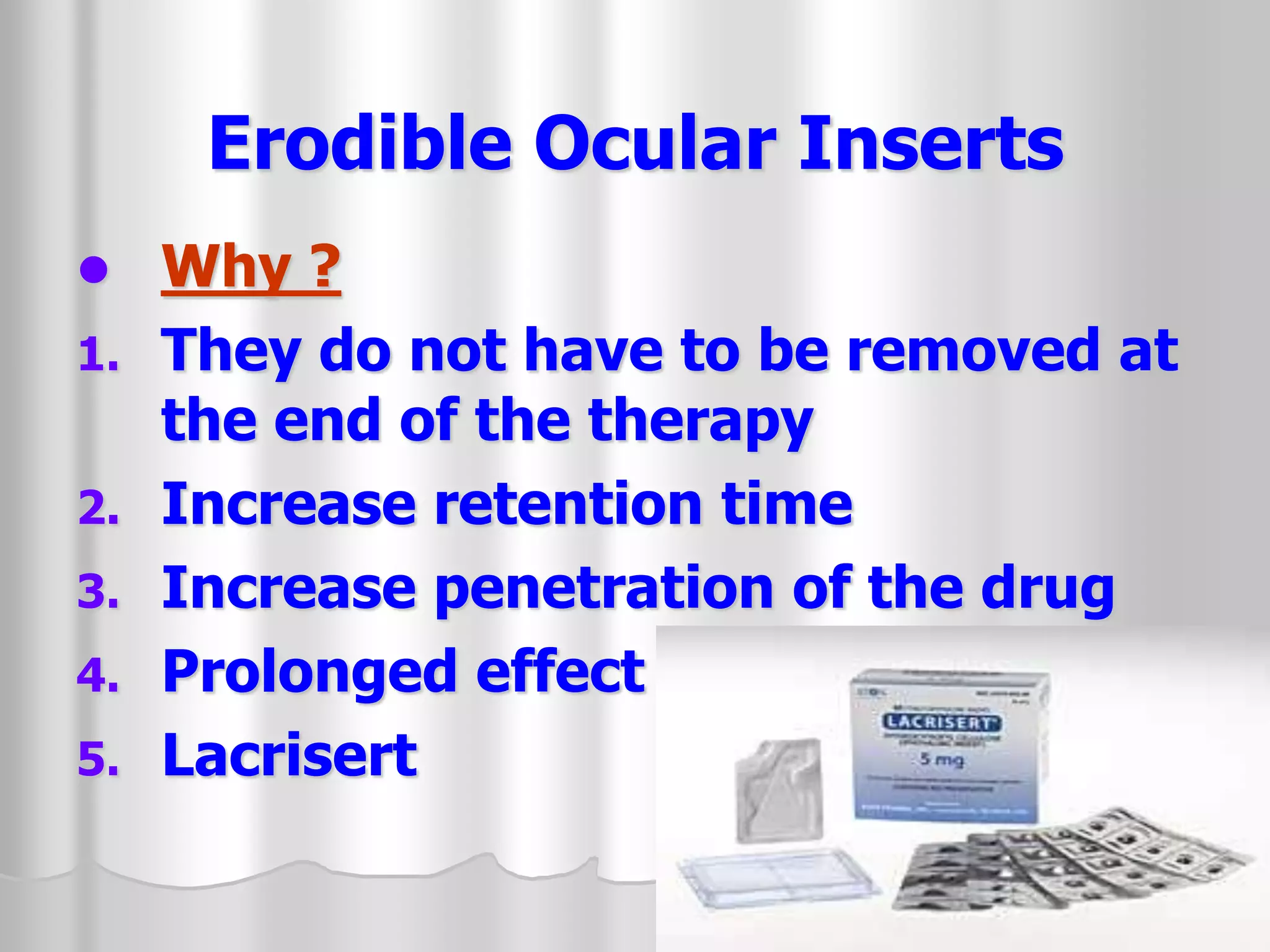
5. Lacrisert
Lacrisert used in case of dry eye
It contain 5 mg of HPMC in a
rod-shaped for of about
1.27mm diameter and
3.5mm long, no preservative
since the it is anhydrous.
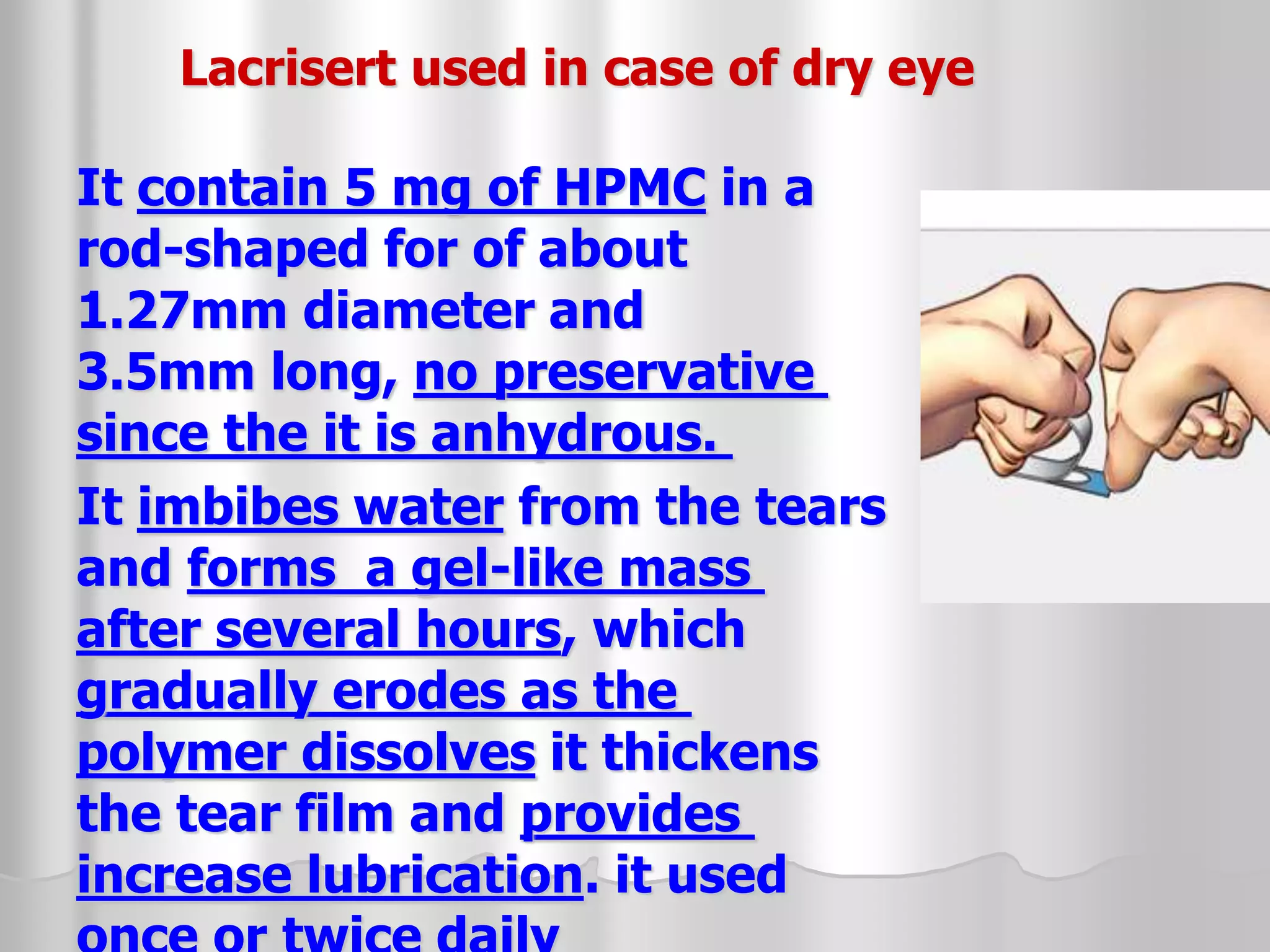
It imbibes water from the tears
and forms a gel-like mass
after several hours, which
gradually erodes as the
polymer dissolves it thickens
the tear film and provides
increase lubrication. it used
Soft Contact Lens
Soft hydrophilic contact lens of the hydroxyl ethyl
methacrylate (HEMA) type polymer to prolong
delivery of pilocarpine.
 Lens is presoaked in a sterile unpreserved
solution of the drug.
 Placed in the eye over the cornea for a period of
time, usually few minutes to several hours to
increase the amount of drug absorbed or to prolong
the duration of effect.(reduce the frequency of drug
instillation & give diurnal control to the treatment of glaucoma)
•
Uncontrolled nature to the release of drug from
it.
Potential for increased risks of contamination
since unpreserved drug solutions must be used
& the patient must disinfect the lens himself.
 Example of contact lenses
 The Bionite lens which is made from
hydrophilic polymer (2-hydroxy ethyl
methacrylate ) has been shown to
produce a greater penetration of
fluorescein.
. Intraocular injection
1. Subconjunctival Injections
2. Intracmeral Injections
 Injections may be made:
a)Directly into the anterior chamber (e.g.
acetyl choline chloride, viscoelastics,
alpha-chymotrypsin)
b)Directly into the vitreous chamber (e.g.
amphtericin B, getamicin sulphate).
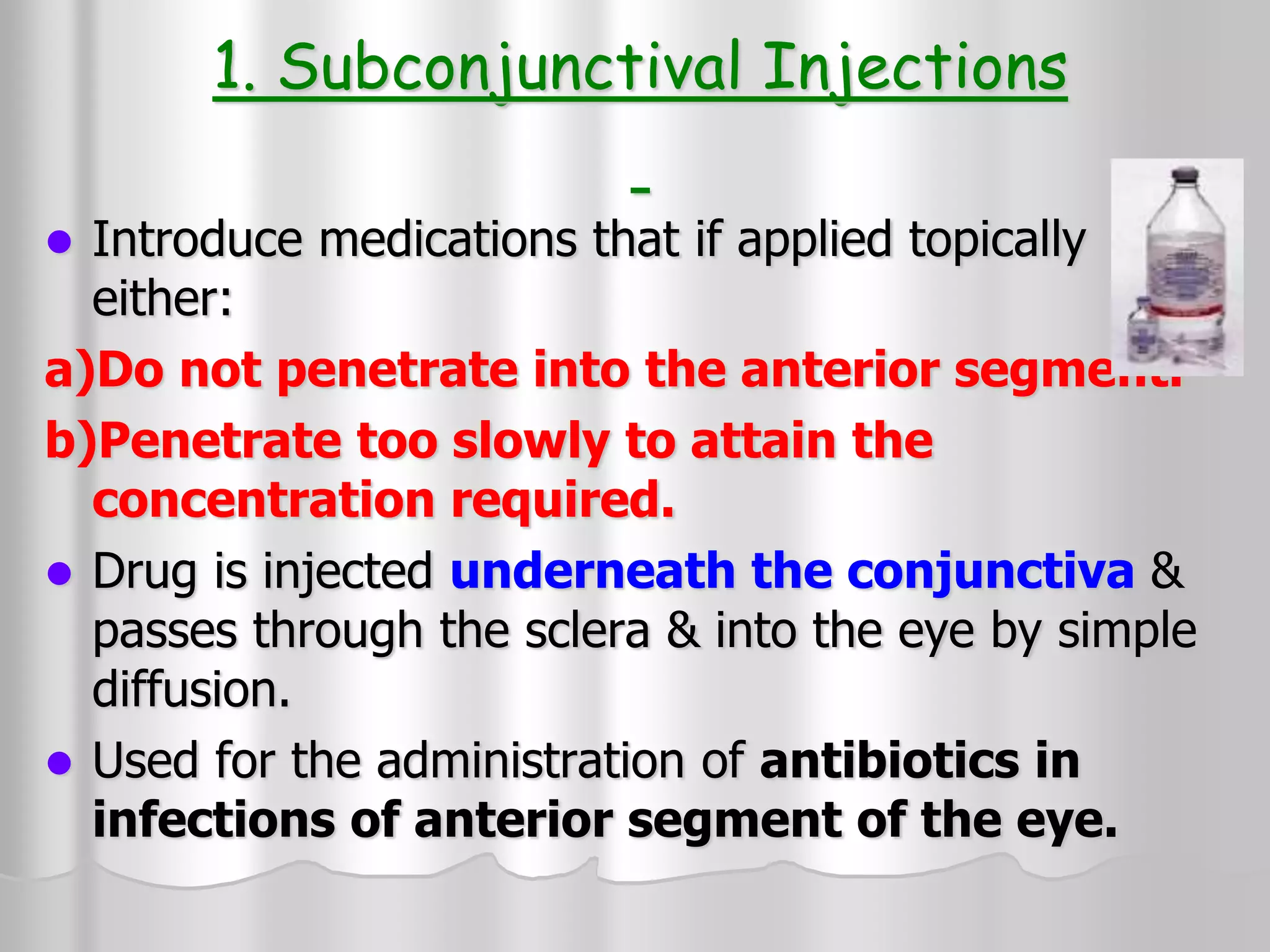
1. Subconjunctival Injections
 Introduce medications that if applied topically
either:
a)Do not penetrate into the anterior segment.
b)Penetrate too slowly to attain the
concentration required.
 Drug is injected underneath the conjunctiva &
passes through the sclera & into the eye by simple
diffusion.
 Used for the administration of antibiotics in
infections of anterior segment of the eye.
2. Intracmeral Injections
 Injections may be made:
a)Directly into the anterior chamber (e.g. acetyl
choline chloride, alpha-chymotrypsin)
b)Directly into the vitreous chamber (e.g. amphtericin
B, getamicin sulphate).
 Injections are not made into the posterior chamber.
2. Intracmeral Injections

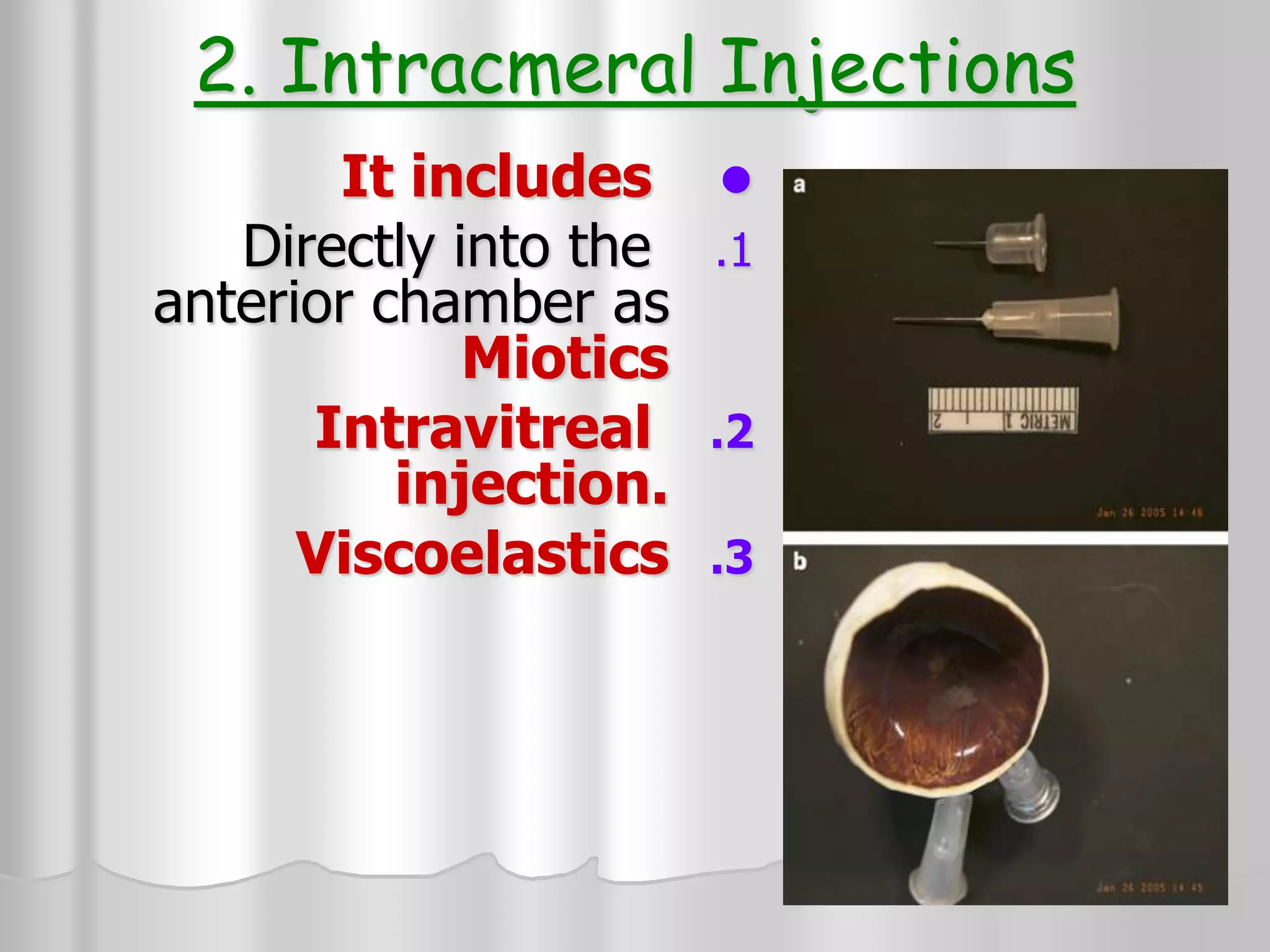
It includes
.1
Directly into the
anterior chamber as
Miotics
.2
Intravitreal
injection.
.3
Viscoelastics
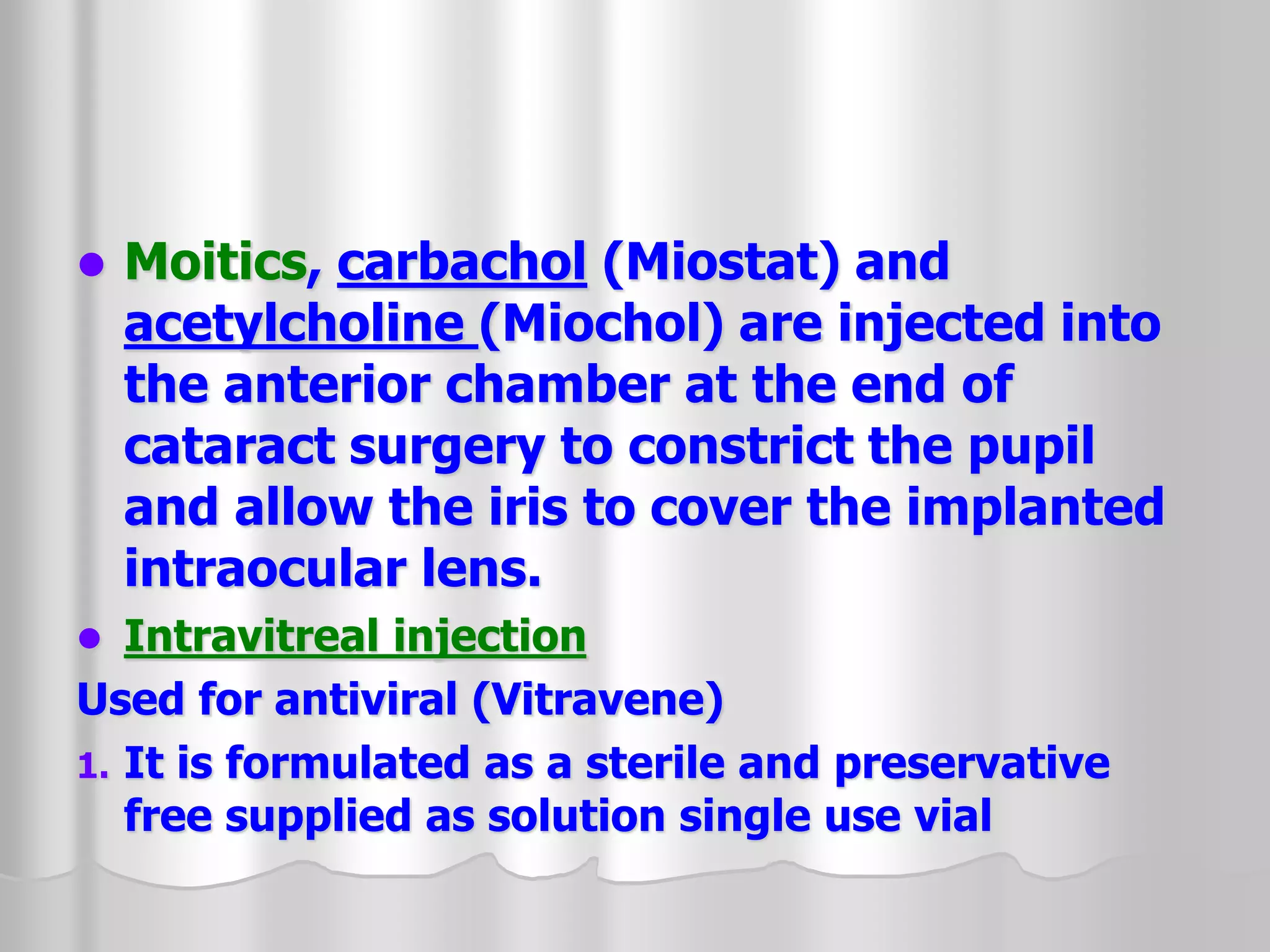
 Moitics, carbachol (Miostat) and
acetylcholine (Miochol) are injected into
the anterior chamber at the end of
cataract surgery to constrict the pupil
and allow the iris to cover the implanted
intraocular lens.
 Intravitreal injection
Used for antiviral (Vitravene)
1. It is formulated as a sterile and preservative
free supplied as solution single use vial
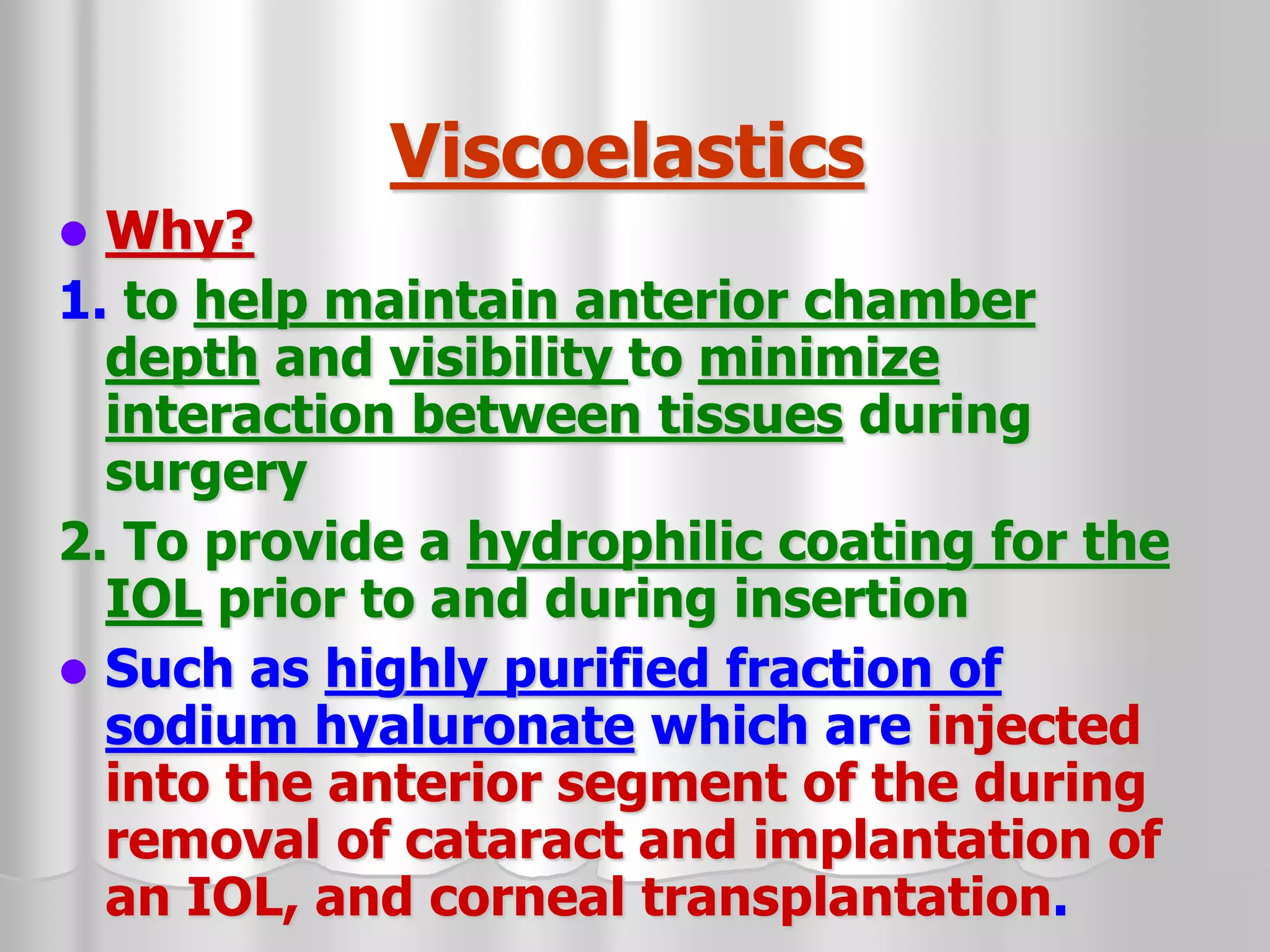
Viscoelastics
 Why?
1. to help maintain anterior chamber
depth and visibility to minimize
interaction between tissues during
surgery
2. To provide a hydrophilic coating for the
IOL prior to and during insertion
 Such as highly purified fraction of
sodium hyaluronate which are injected
into the anterior segment of the during
removal of cataract and implantation of
an IOL, and corneal transplantation.
 The solution is packaged in disposable
glass syrings which are terminally
sterilized and aseptically packaged
(ProVisc or Amvisc)
 Also Chondrotin sodium (Viscoat or Duo
Visc)
Implant

Intravitreal Implant
 The sterile implant is a tablet of
ganciiclovir with mangensium
stearate and is coated to retard drug
release with polyvinylalcohol and
EVA polymers
 It surgically implanted in the
vitreous cavity and releases the drug
over 5-8 moth.
2. Intraocular lens for treatment of
cataract
Intranasal and intraoccular drug delivery 03/10/2009
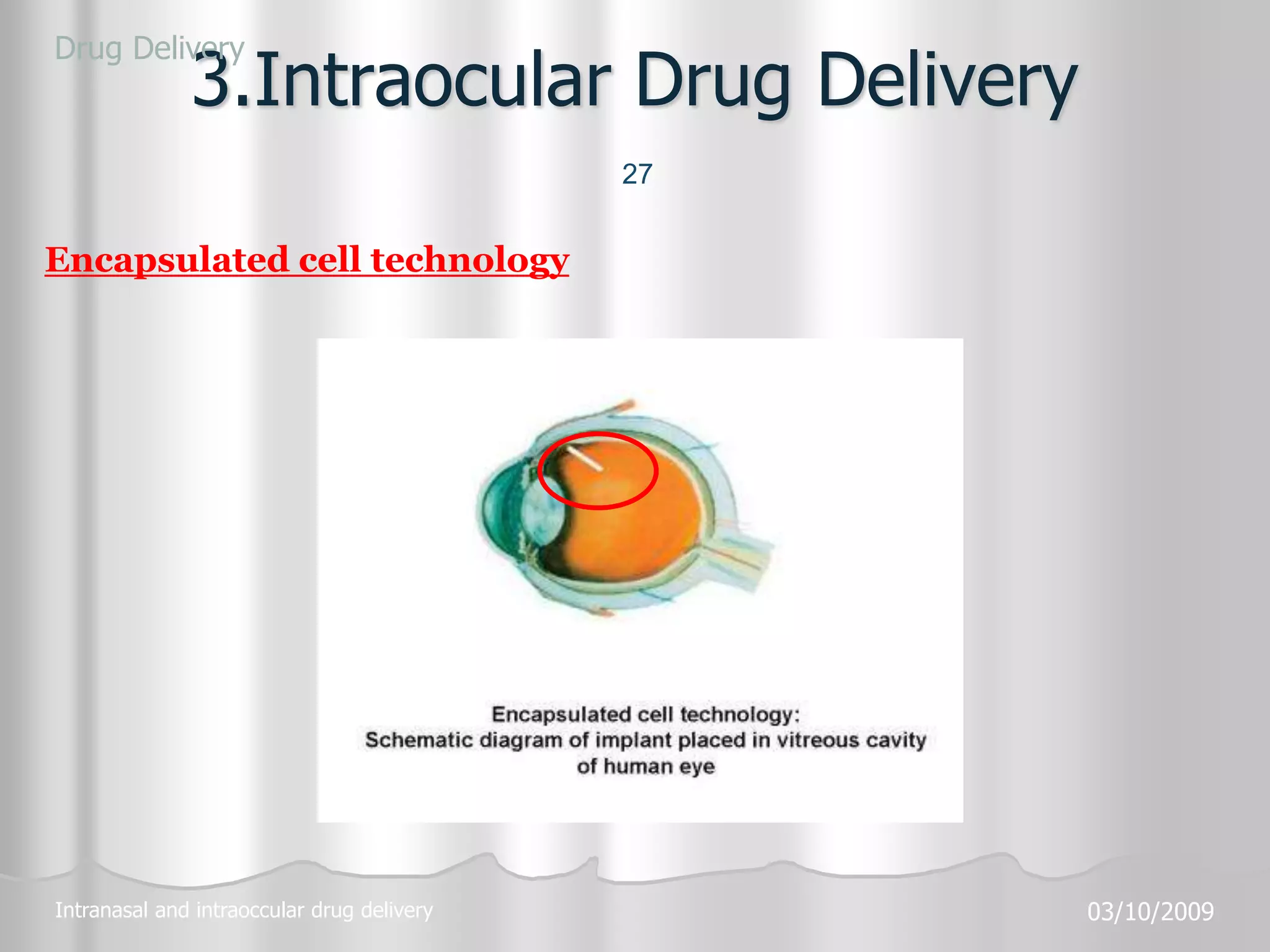
Encapsulated cell technology
Cells transfected with specific human genes are
surgically implanted into the vitreous cavity. In a
phase I trial where the implants were used to treat
patients with retinitis pigmentosa, the implants were
productive for 6 months and there were no
substantive safety issues.
27
Intranasal and intraoccular drug delivery 03/10/2009
3.Intraocular Drug Delivery
Encapsulated cell technology
Drug Delivery
Intraocular irrigating solution
:
 It is a balanced salt solution used
for ocular surgical use.
 It contain five essential ions:
sodium, potassium, calcium,
magnesium, and chloride. It also
contain citrate and acetate ions
which provide some buffer capacity.
 They are preservative free to
prevent toxicity to the internal
tissues of the eye. so it single use
only.
 They are sterile and must be
pyrogen free so it required sterile
water for injection as the vehicle.
 They are not delivery vehicle

ocular solid dosge form.ppt

  • 1.
    Prof Amal Kamal Facultyof Pharmacy , Minia University
  • 2.
    Types of OphthalmicDosage Forms Liquid Dosage Form Solution Suspension Emulsion Powders for reconstitution Semisolid Dosage Form Ointment Solid Dosage Form Insert
  • 3.
    Semi solid DosageForms Ophthalmic Ointment  Interfere with vision unless use is limited to bed time instillation.  Often used as adjunctive night time therapy, with eye drops administered during the day.  Longer contact time and greater total drug bioavailability, with slower onset & much more time to reach peak absorption.  Vehicle is usually a mixture of mineral oil & white petrolatum. Mineral oil is added to: a)reduce the melting point. b)Modify the consistency.
  • 4.
    Petrolatum-based ointments are: a)Bland.b)Inert nature which make them suitable vehicle for moisture -sensitive drugs.
  • 5.
     Ointments usedas vehicles for antibiotics, sulfonamides, antiviral, antifungal, & anti- inflammatory corticosteroids.  Anesthesiologists may prescribe the ointment vehicle for the surgical patient undergoing general anesthesia to prevent severe and painful dry eye conditions.  The anhydrous petrolatum base may be made more miscible with water through the use of an anhydrous liquid lanolin derivative , then aqueous drug solution can be incorporated.
  • 6.
    How to useophthalmic ointment? 1. Wash hands. 2. Remove cap from the tube. 3. With one hand, gently pull the lower eye lid down. 4. While looking up, squeeze a small amount of ointment (about ¼ to ½ inch) inside lower lid. Be careful not to touch tip of tube to eye, eyelid, fingers, etc. 5. Close eye gently and roll eyeball in all directions while eye is closed. Temporary blurring may occur. 6. The closed eye lid may be rubbed vey gently by a finger to distribute the drug through out the fornix. 7. Replace cap on tube.
  • 7.
    Types of OphthalmicDosage Forms Liquid Dosage Form Solution Suspension Emulsion Powders for reconstitution Semisolid Dosage Form Ointment Solid Dosage Form Insert
  • 8.
  • 9.
    Non erodible OcularInserts  In 1975, the first controlled release topical dosage form was marketed in the United States by the Alza Corporation which was pilocarpine ocusert.  Pilocarpine ocusert is an elliptical- shaped membrane which is soft & flexible designed to be placed in the cul-de-sac between the sclera & the eye lid .
  • 10.
    Intranasal and intraocculardrug delivery 03/10/2009 3.Intraocular Drug Delivery 1,4. Rate controlling ethylene- vinyl acetate copolymer membranes 2. Annular opaque ring 3. Drug reservoir Pilocarpine ocusert consists of : - Drug reservoir,pilocarpine, carrier material, alginic acid. - A rate controller, ethylene vinyl acetate (EVA) copolymer membrane. - An energy source, the concentration of pilocarpine in the reservoir. - A delivery portal, the copolymer membrane.
  • 11.
    Intranasal and intraocculardrug delivery 03/10/2009 •Design: The ocusert is sterile, oval in shape & flexible, It is made of a central core or reservoir which contains the drug embedded in an alginic acid gel-like base, the drug reservoir is surrounded by a rate-limiting or controlling membrane made of vinyl acetate-ethylene co- polymer which gives a steady and controlled drug release for a certain period of time. The device is bordered by a white annular ring consisting of vinyl acetate-ethylene co-polymer impregnated with titanium dioxide (a powdered pigment) that darkens the borders of the ocusert. The border makes the ocusert easier for the patient to visualize.
  • 12.
    Intranasal and intraocculardrug delivery 03/10/2009 Pilocarpine ocusert •Used to treat Glaucoma because it reduces intraocular pressure • It is designed to release pilocarpine at a controlled required rate (for example, 20 microgram hour or 40 microgram or 80 microgram per hour), for a certain period of time (like 7 days), after 7 days the ocusert is removed & replaced by a new one, so it’s more convenient than pilocarpine eye drops which is used 4 times a day normally. Advantages over drop therapy for the glaucoma patient: Exposes the patient to only one-fourth to one-eighth the amount of pilcarpine compared to drop therapy. (reduced local side effects & toxicity.) It provides a continuous around – the clock- control of IOP. Patient convenience & improved compliance.(administered only once per week.)
  • 13.
     Patient must checkperiodically that the unit is still in place, particularly in the morning upon arising.  It is doubtful that the ocusert will replace the standard drop therapy for glaucoma, but it will offer the physician an alternate means of therapy for certain patient groups such as those who are sensitive to the preservatives in ophthalmic solutions, those who do not have the competency to instill drops, & those who cannot tolerate some
  • 14.
    Erodible Ocular Inserts Why ? 1. They do not have to be removed at the end of the therapy 2. Increase retention time 3. Increase penetration of the drug 4. Prolonged effect 5. Lacrisert
  • 15.
    Lacrisert used incase of dry eye It contain 5 mg of HPMC in a rod-shaped for of about 1.27mm diameter and 3.5mm long, no preservative since the it is anhydrous. It imbibes water from the tears and forms a gel-like mass after several hours, which gradually erodes as the polymer dissolves it thickens the tear film and provides increase lubrication. it used
  • 16.
    Soft Contact Lens Softhydrophilic contact lens of the hydroxyl ethyl methacrylate (HEMA) type polymer to prolong delivery of pilocarpine.  Lens is presoaked in a sterile unpreserved solution of the drug.  Placed in the eye over the cornea for a period of time, usually few minutes to several hours to increase the amount of drug absorbed or to prolong the duration of effect.(reduce the frequency of drug instillation & give diurnal control to the treatment of glaucoma)
  • 17.
    • Uncontrolled nature tothe release of drug from it. Potential for increased risks of contamination since unpreserved drug solutions must be used & the patient must disinfect the lens himself.  Example of contact lenses  The Bionite lens which is made from hydrophilic polymer (2-hydroxy ethyl methacrylate ) has been shown to produce a greater penetration of fluorescein.
  • 18.
    . Intraocular injection 1.Subconjunctival Injections 2. Intracmeral Injections  Injections may be made: a)Directly into the anterior chamber (e.g. acetyl choline chloride, viscoelastics, alpha-chymotrypsin) b)Directly into the vitreous chamber (e.g. amphtericin B, getamicin sulphate).
  • 19.
    1. Subconjunctival Injections Introduce medications that if applied topically either: a)Do not penetrate into the anterior segment. b)Penetrate too slowly to attain the concentration required.  Drug is injected underneath the conjunctiva & passes through the sclera & into the eye by simple diffusion.  Used for the administration of antibiotics in infections of anterior segment of the eye.
  • 20.
    2. Intracmeral Injections Injections may be made: a)Directly into the anterior chamber (e.g. acetyl choline chloride, alpha-chymotrypsin) b)Directly into the vitreous chamber (e.g. amphtericin B, getamicin sulphate).  Injections are not made into the posterior chamber.
  • 21.
    2. Intracmeral Injections  Itincludes .1 Directly into the anterior chamber as Miotics .2 Intravitreal injection. .3 Viscoelastics
  • 22.
     Moitics, carbachol(Miostat) and acetylcholine (Miochol) are injected into the anterior chamber at the end of cataract surgery to constrict the pupil and allow the iris to cover the implanted intraocular lens.  Intravitreal injection Used for antiviral (Vitravene) 1. It is formulated as a sterile and preservative free supplied as solution single use vial
  • 23.
    Viscoelastics  Why? 1. tohelp maintain anterior chamber depth and visibility to minimize interaction between tissues during surgery 2. To provide a hydrophilic coating for the IOL prior to and during insertion  Such as highly purified fraction of sodium hyaluronate which are injected into the anterior segment of the during removal of cataract and implantation of an IOL, and corneal transplantation.
  • 24.
     The solutionis packaged in disposable glass syrings which are terminally sterilized and aseptically packaged (ProVisc or Amvisc)  Also Chondrotin sodium (Viscoat or Duo Visc)
  • 25.
    Implant  Intravitreal Implant  Thesterile implant is a tablet of ganciiclovir with mangensium stearate and is coated to retard drug release with polyvinylalcohol and EVA polymers  It surgically implanted in the vitreous cavity and releases the drug over 5-8 moth. 2. Intraocular lens for treatment of cataract
  • 26.
    Intranasal and intraocculardrug delivery 03/10/2009 Encapsulated cell technology Cells transfected with specific human genes are surgically implanted into the vitreous cavity. In a phase I trial where the implants were used to treat patients with retinitis pigmentosa, the implants were productive for 6 months and there were no substantive safety issues.
  • 27.
    27 Intranasal and intraocculardrug delivery 03/10/2009 3.Intraocular Drug Delivery Encapsulated cell technology Drug Delivery
  • 28.
    Intraocular irrigating solution : It is a balanced salt solution used for ocular surgical use.  It contain five essential ions: sodium, potassium, calcium, magnesium, and chloride. It also contain citrate and acetate ions which provide some buffer capacity.
  • 29.
     They arepreservative free to prevent toxicity to the internal tissues of the eye. so it single use only.  They are sterile and must be pyrogen free so it required sterile water for injection as the vehicle.  They are not delivery vehicle