About OCD
 OCD is characterized by varying degrees of
obsessions and compulsions which dominate
and disrupt the person’s life, depending on the
individual
 Obsessions: persistent thoughts, ideas, impulses, or
images that invade a person’s consciousness.
 Compulsions: repetitive and rigid behaviors or mental
acts in which the person engages in an effort to reduce
anxiety
 The fourth most common mental disorder.
Causes
 Psychological Factors
 Biological Factors
 Neurotransmitters Role
Prevalence of OCD
 Lifetime prevalence, 2-3%
 One-year prevalence, 1-2% worldwide
 Equal in males and females
 Equally distributed among races/ethnicities
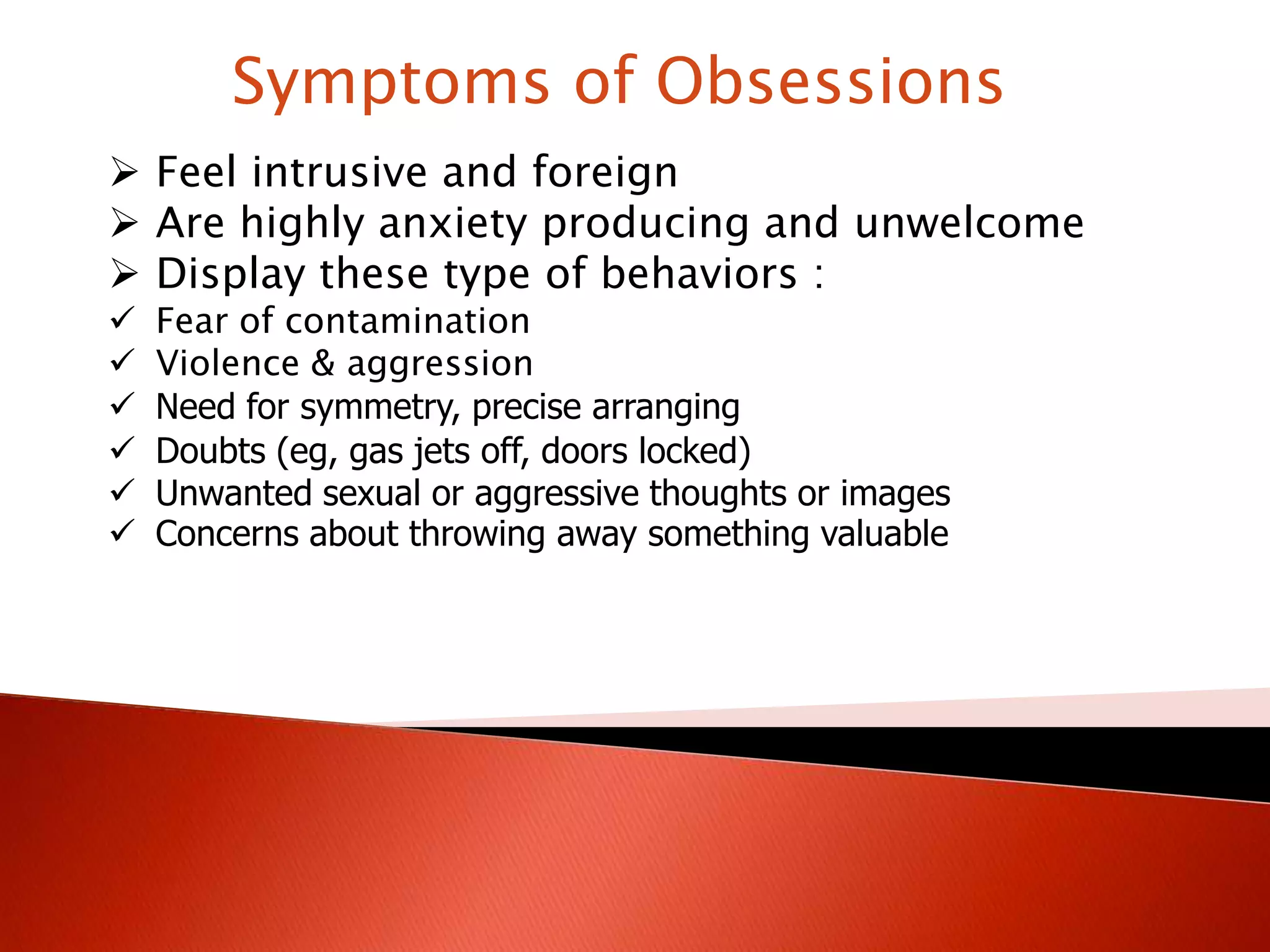
Symptoms of Obsessions
 Feel intrusive and foreign
 Are highly anxiety producing and unwelcome
 Display these type of behaviors :
 Fear of contamination
 Violence & aggression
 Need for symmetry, precise arranging
 Doubts (eg, gas jets off, doors locked)
 Unwanted sexual or aggressive thoughts or images
 Concerns about throwing away something valuable
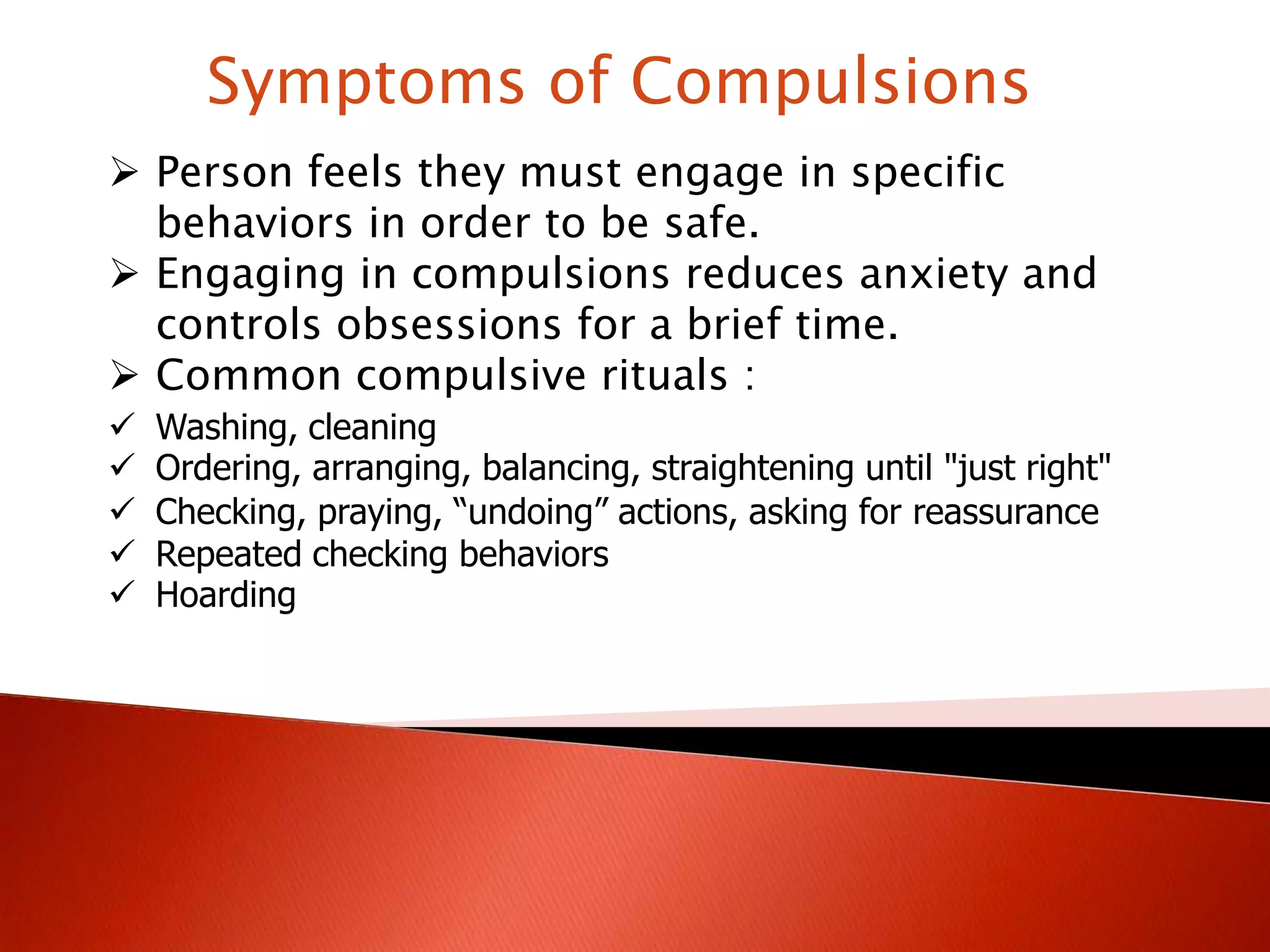
Symptoms of Compulsions
 Person feels they must engage in specific
behaviors in order to be safe.
 Engaging in compulsions reduces anxiety and
controls obsessions for a brief time.
 Common compulsive rituals :
 Washing, cleaning
 Ordering, arranging, balancing, straightening until "just right"
 Checking, praying, “undoing” actions, asking for reassurance
 Repeated checking behaviors
 Hoarding
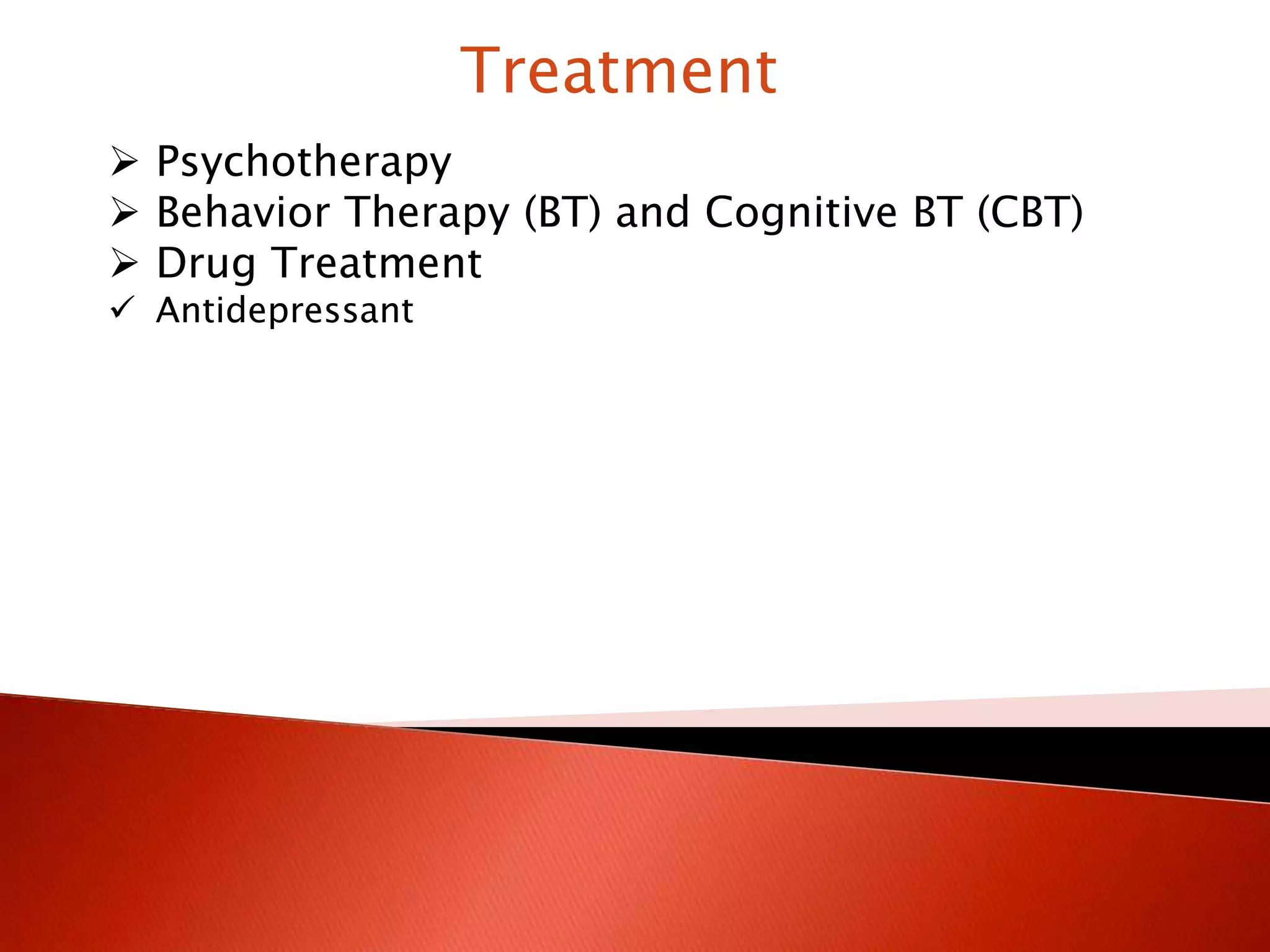
Treatment
 Psychotherapy
 Behavior Therapy (BT) and Cognitive BT (CBT)
 Drug Treatment
 Antidepressant
Office Address
Contact Us
T H E IT PEOPLE

Obsessive Compulsive Disorder (OCD)

  • 2.
    About OCD  OCDis characterized by varying degrees of obsessions and compulsions which dominate and disrupt the person’s life, depending on the individual  Obsessions: persistent thoughts, ideas, impulses, or images that invade a person’s consciousness.  Compulsions: repetitive and rigid behaviors or mental acts in which the person engages in an effort to reduce anxiety  The fourth most common mental disorder.
  • 3.
    Causes  Psychological Factors Biological Factors  Neurotransmitters Role
  • 4.
    Prevalence of OCD Lifetime prevalence, 2-3%  One-year prevalence, 1-2% worldwide  Equal in males and females  Equally distributed among races/ethnicities
  • 5.
    Symptoms of Obsessions Feel intrusive and foreign  Are highly anxiety producing and unwelcome  Display these type of behaviors :  Fear of contamination  Violence & aggression  Need for symmetry, precise arranging  Doubts (eg, gas jets off, doors locked)  Unwanted sexual or aggressive thoughts or images  Concerns about throwing away something valuable
  • 6.
    Symptoms of Compulsions Person feels they must engage in specific behaviors in order to be safe.  Engaging in compulsions reduces anxiety and controls obsessions for a brief time.  Common compulsive rituals :  Washing, cleaning  Ordering, arranging, balancing, straightening until "just right"  Checking, praying, “undoing” actions, asking for reassurance  Repeated checking behaviors  Hoarding
  • 7.
    Treatment  Psychotherapy  BehaviorTherapy (BT) and Cognitive BT (CBT)  Drug Treatment  Antidepressant
  • 8.
  • 9.
  • 10.
    T H EIT PEOPLE