Effective science teaching also requires teaching about  the nature of science .  Scientific knowledge is the product of observation and inference.   Observations and Inferences
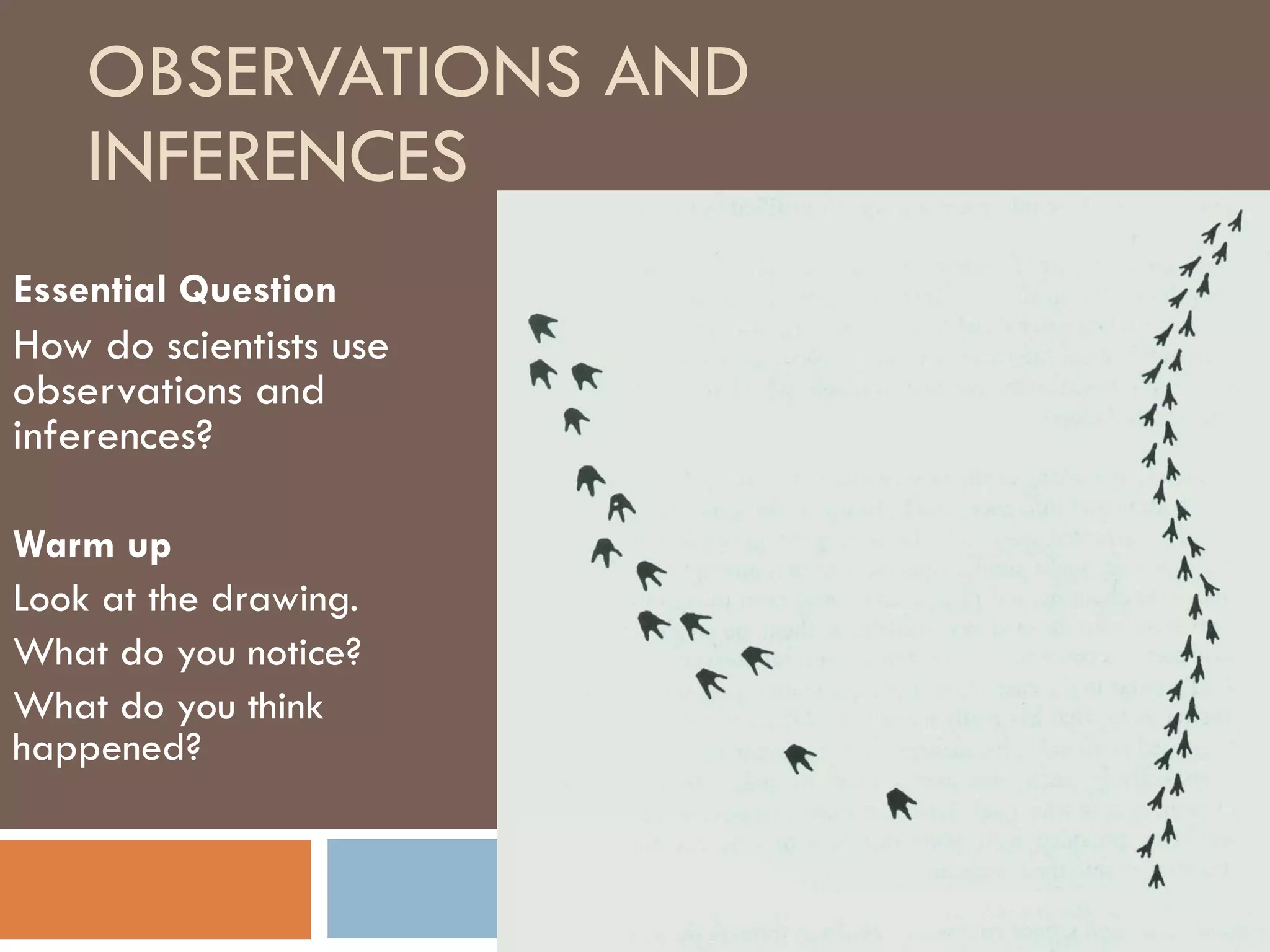
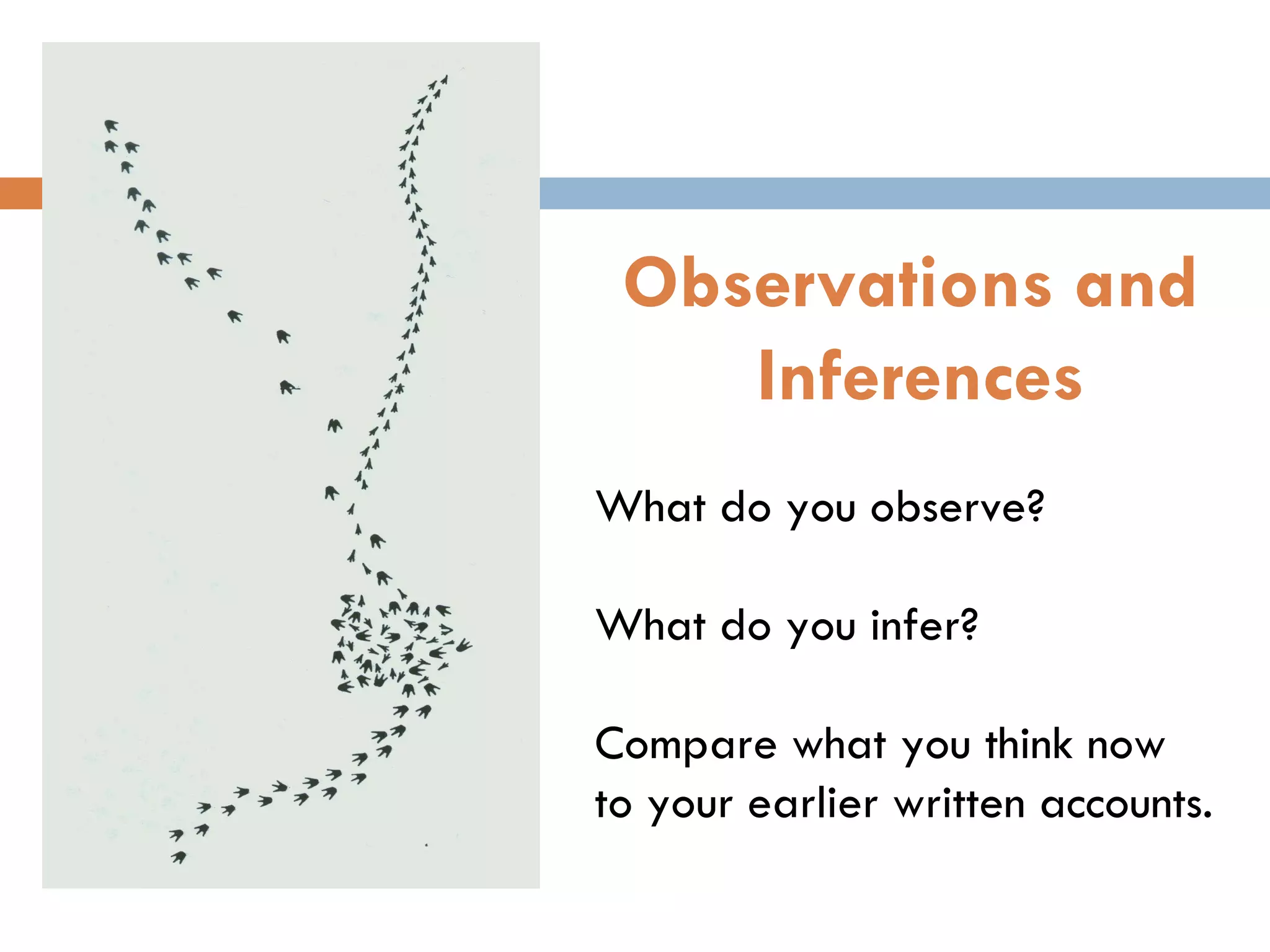
OBSERVATIONS AND INFERENCES Essential Question How do scientists use observations and inferences? Warm up Look at the drawing.  What do you notice? What do you think happened?
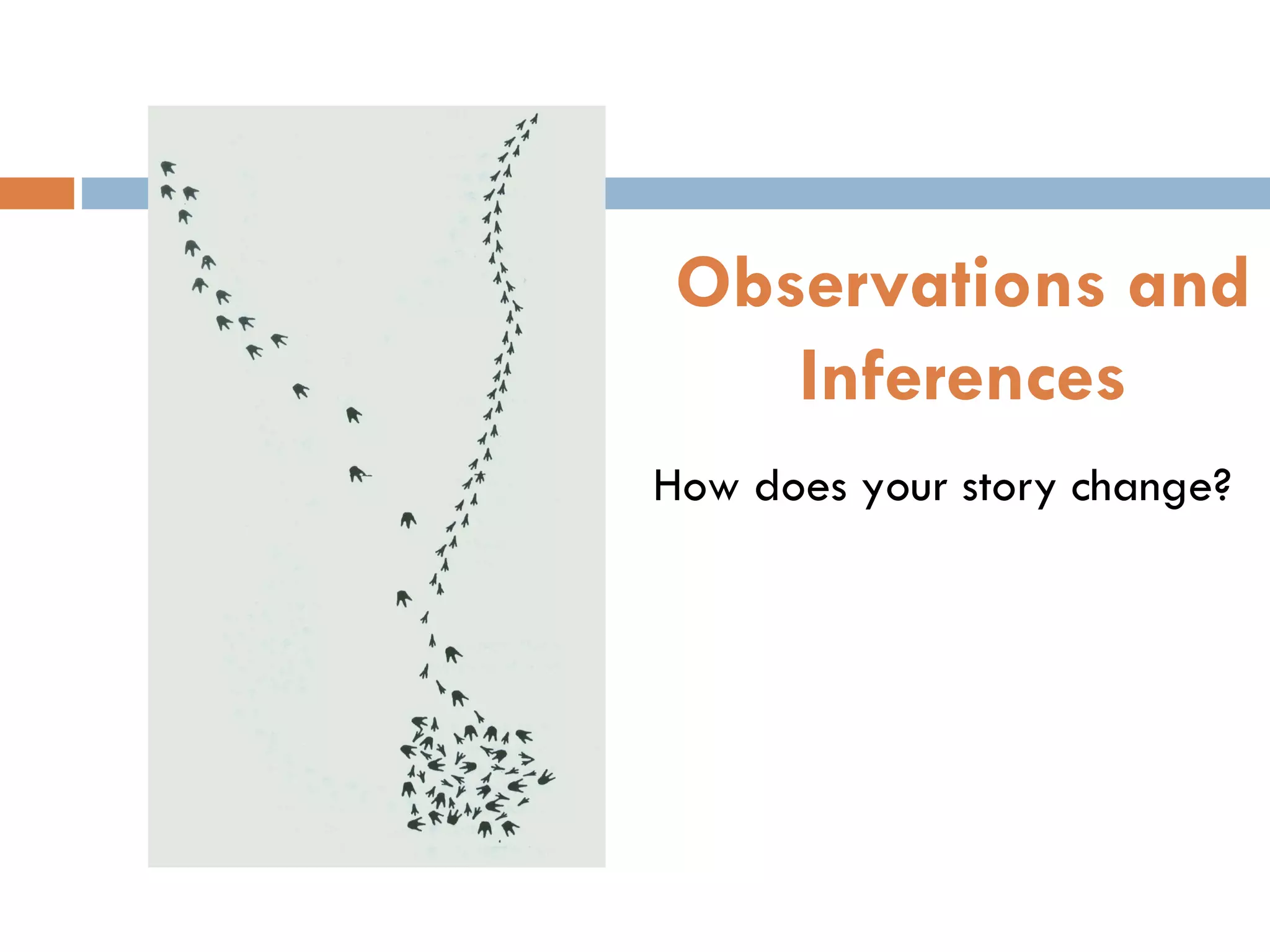
How does your story change? Observations and  Inferences
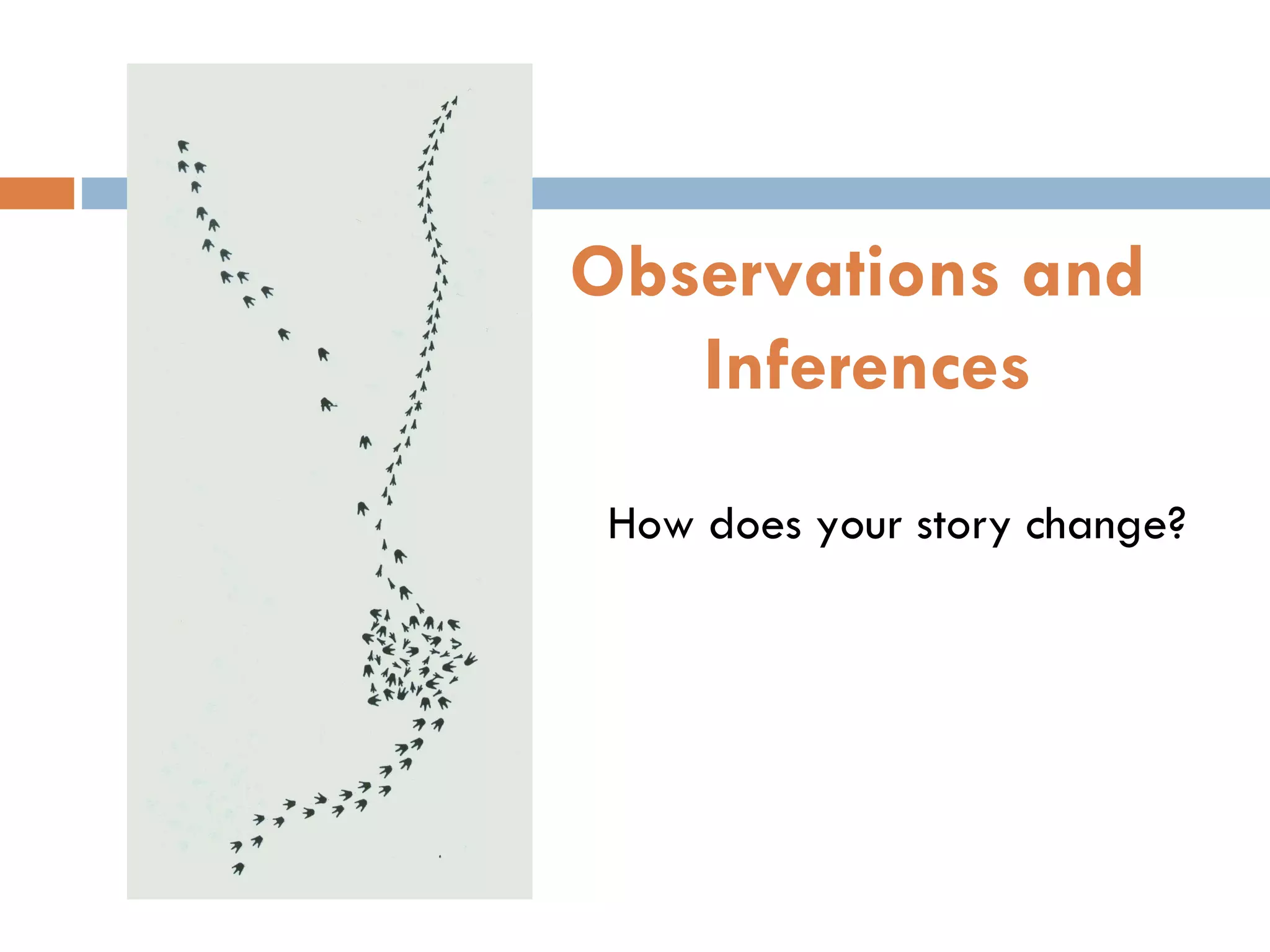
What do you observe? What do you infer? Compare what you think now  to your earlier written accounts.  Observations and  Inferences
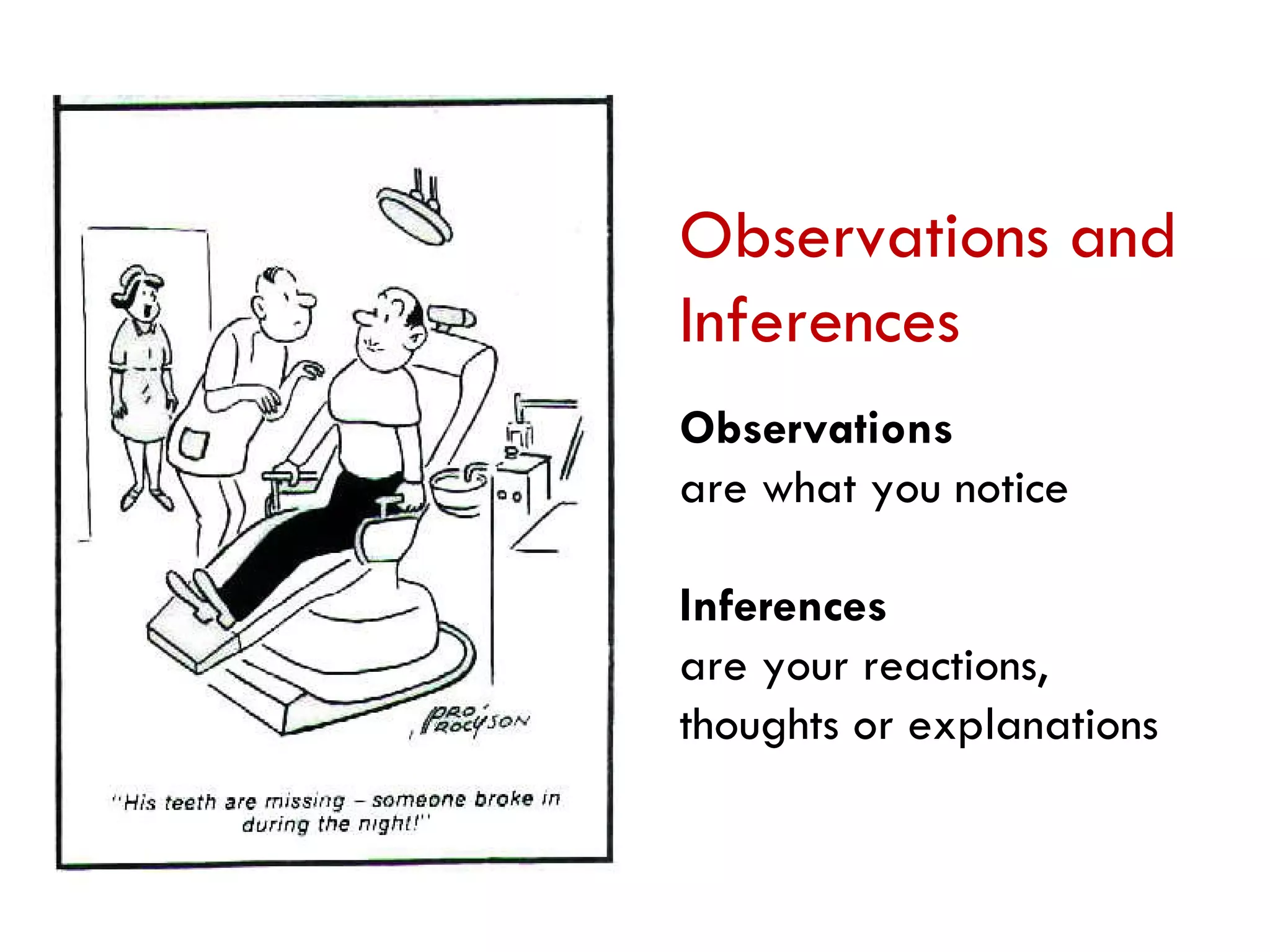
Observations and Inferences Observations  are what you notice Inferences   are your reactions, thoughts or explanations
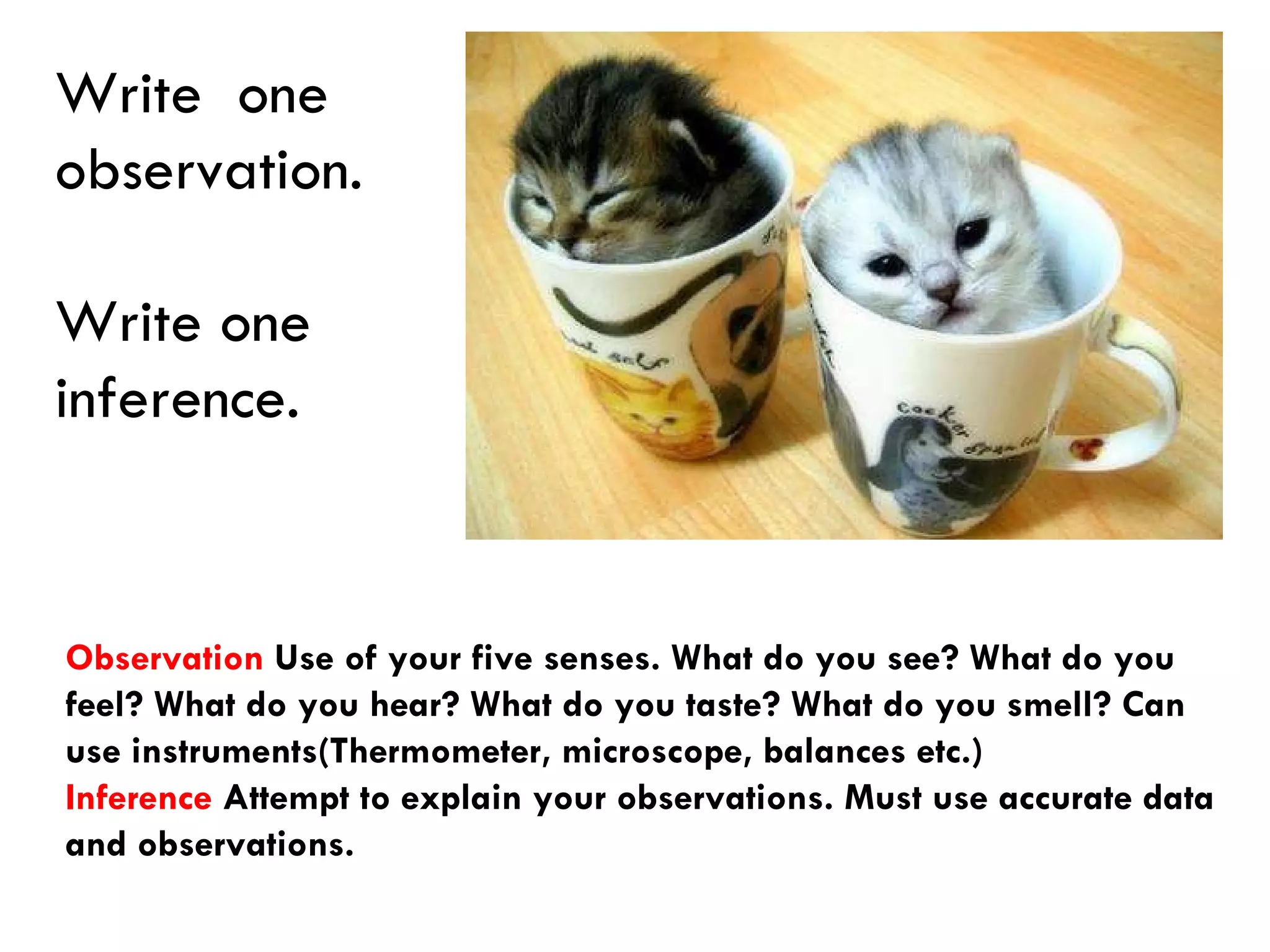
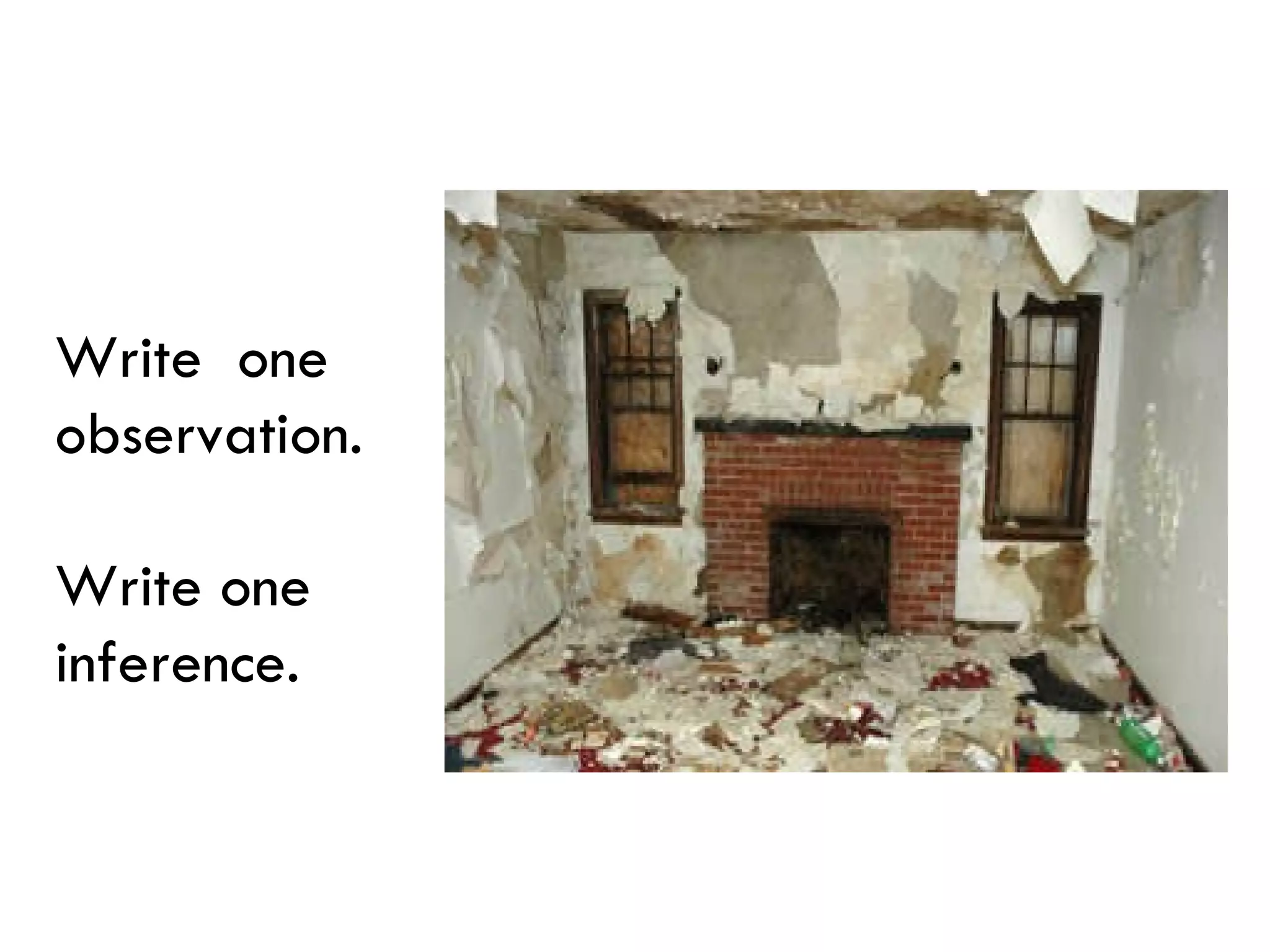
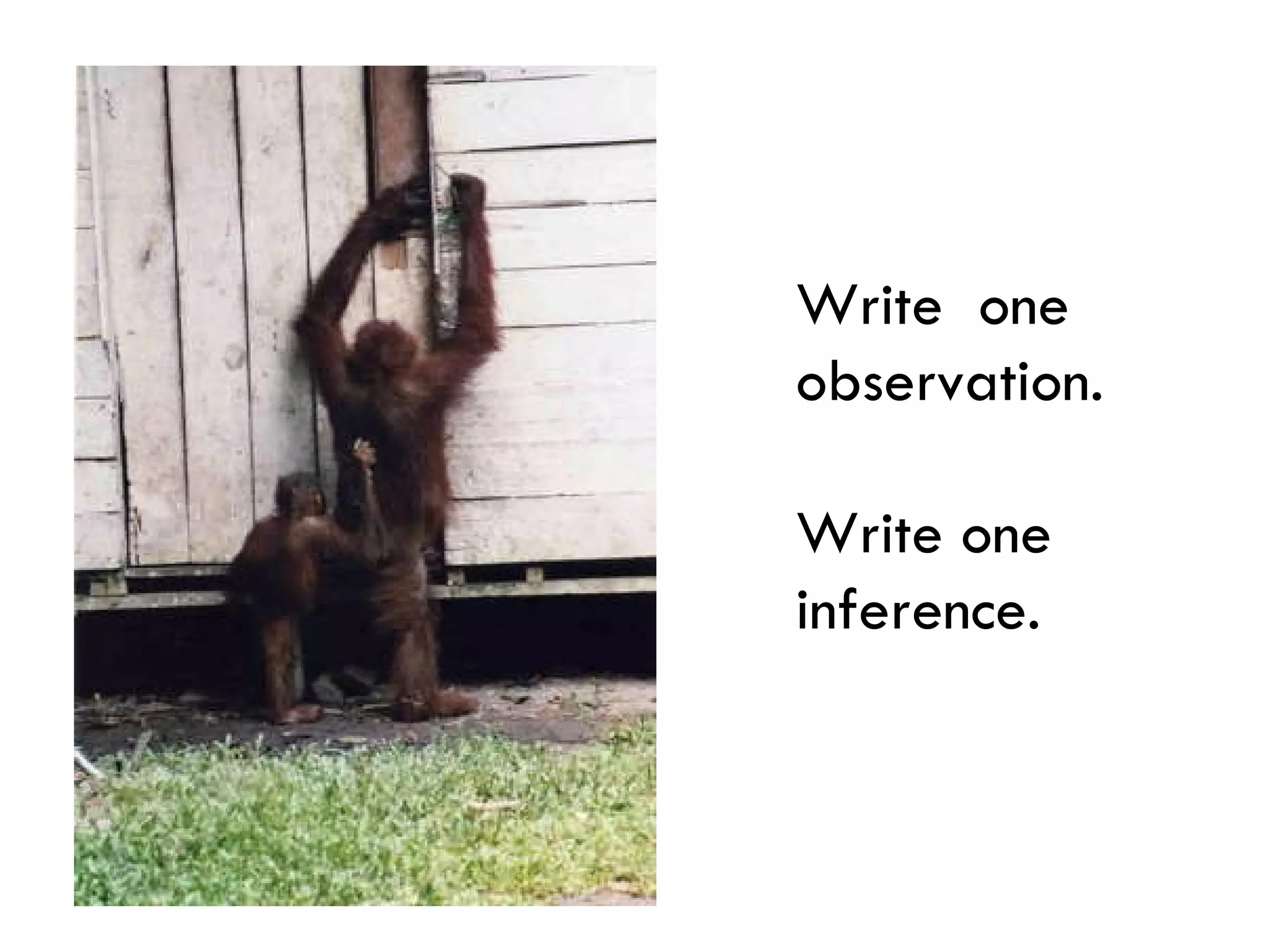
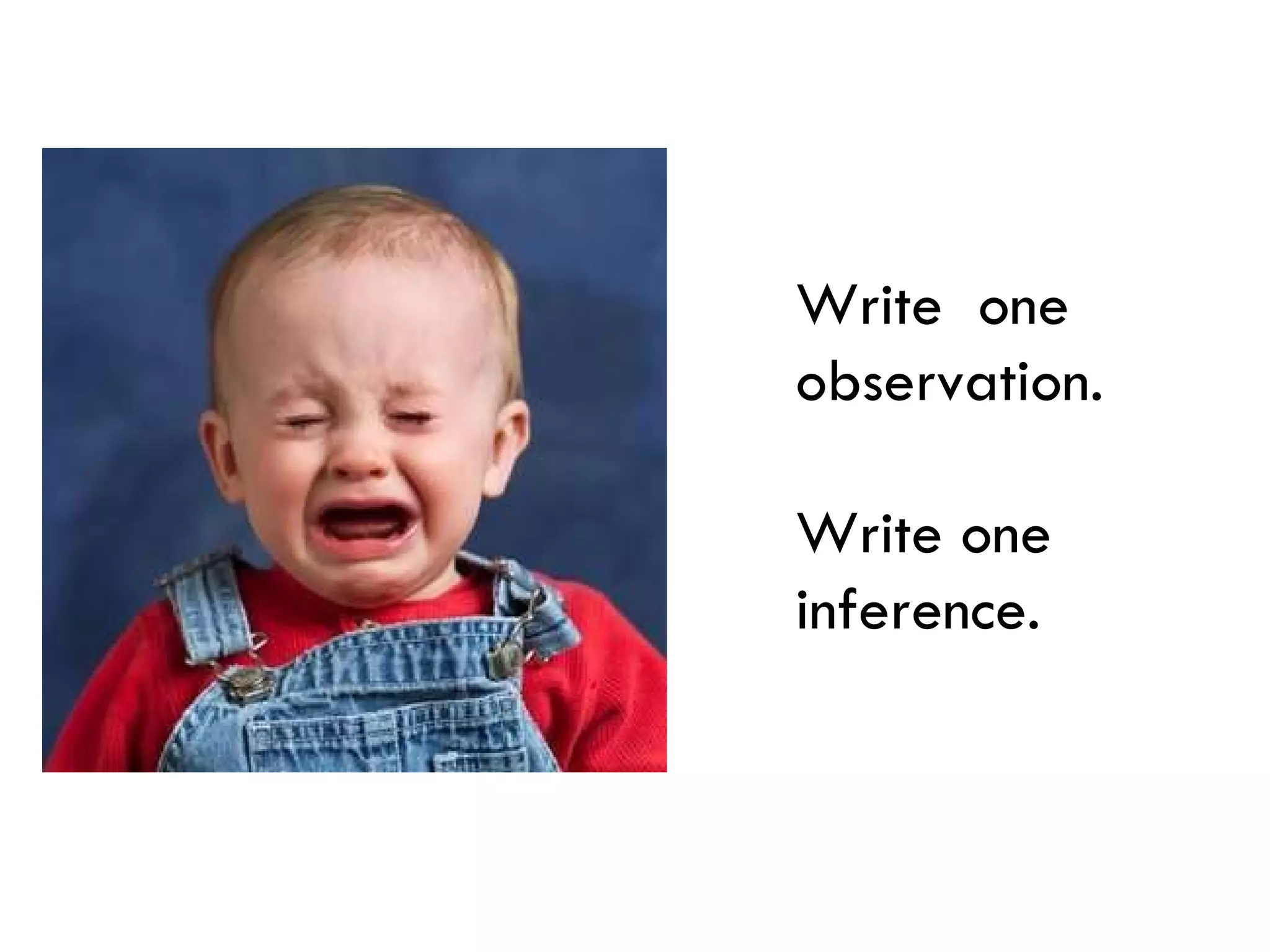
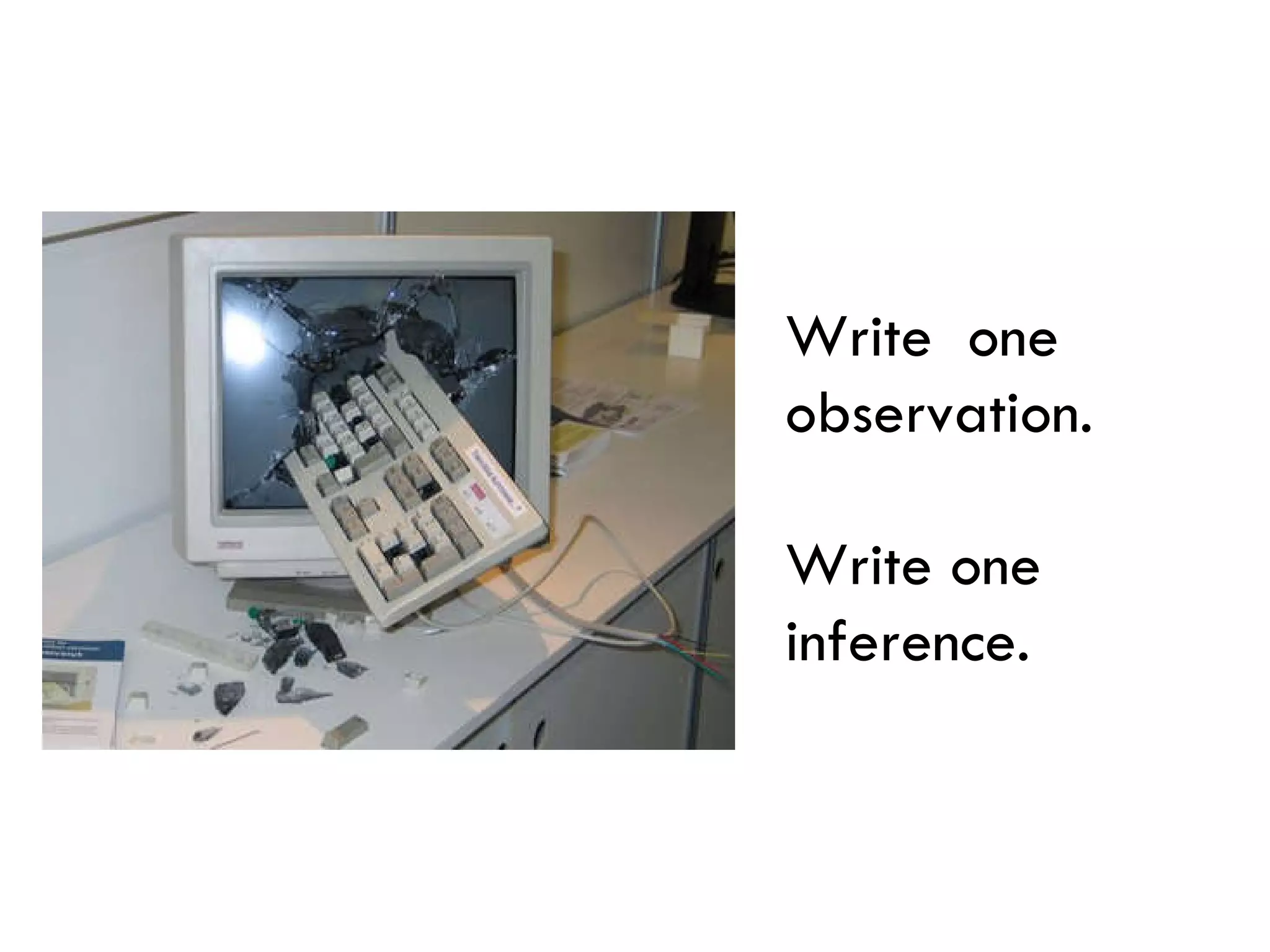
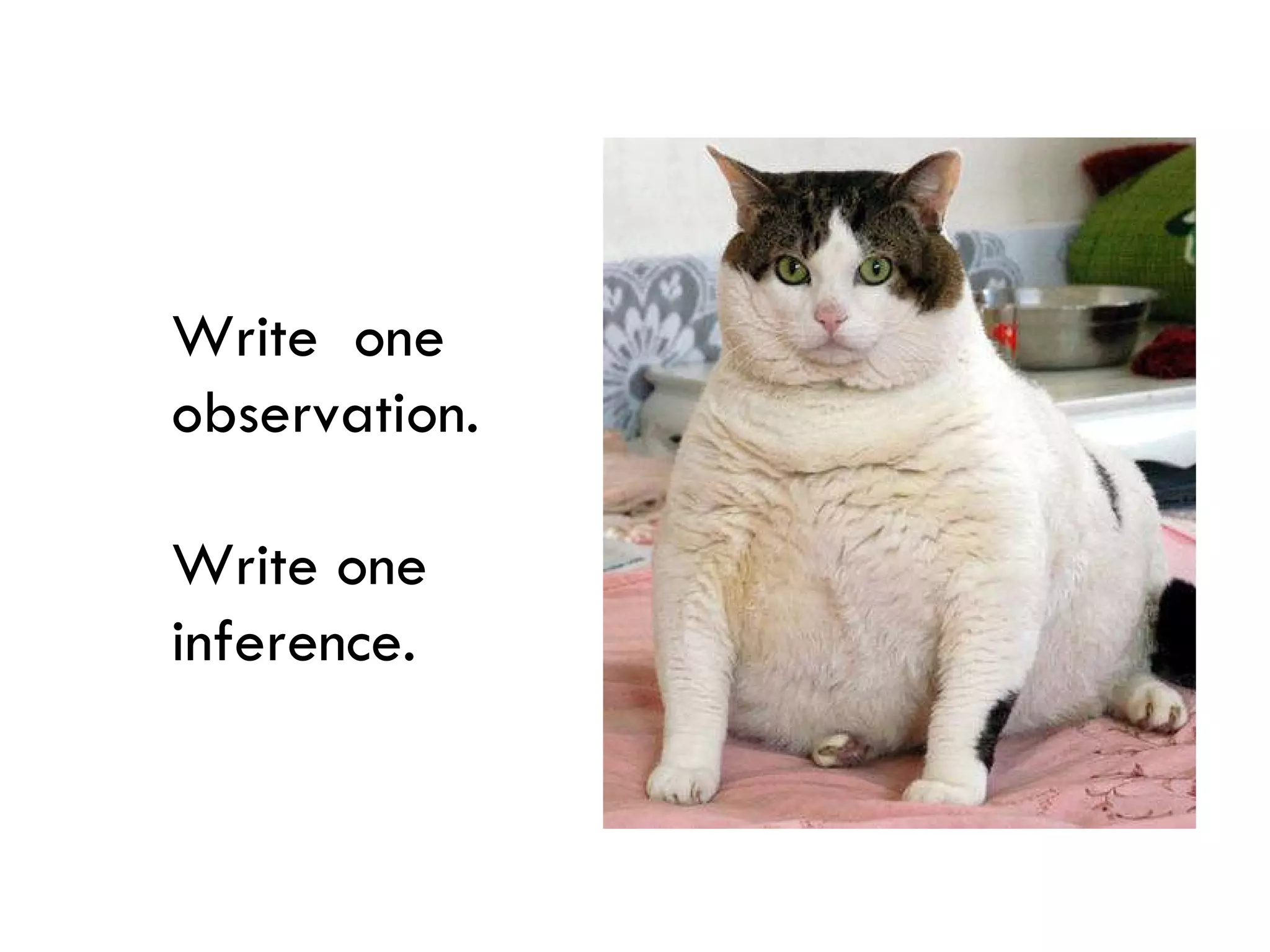
Write  one  observation.  Write one inference. Observation  Use of your five senses. What do you see? What do you feel? What do you hear? What do you taste? What do you smell? Can use instruments(Thermometer, microscope, balances etc.) Inference  Attempt to explain your observations. Must use accurate data and observations.
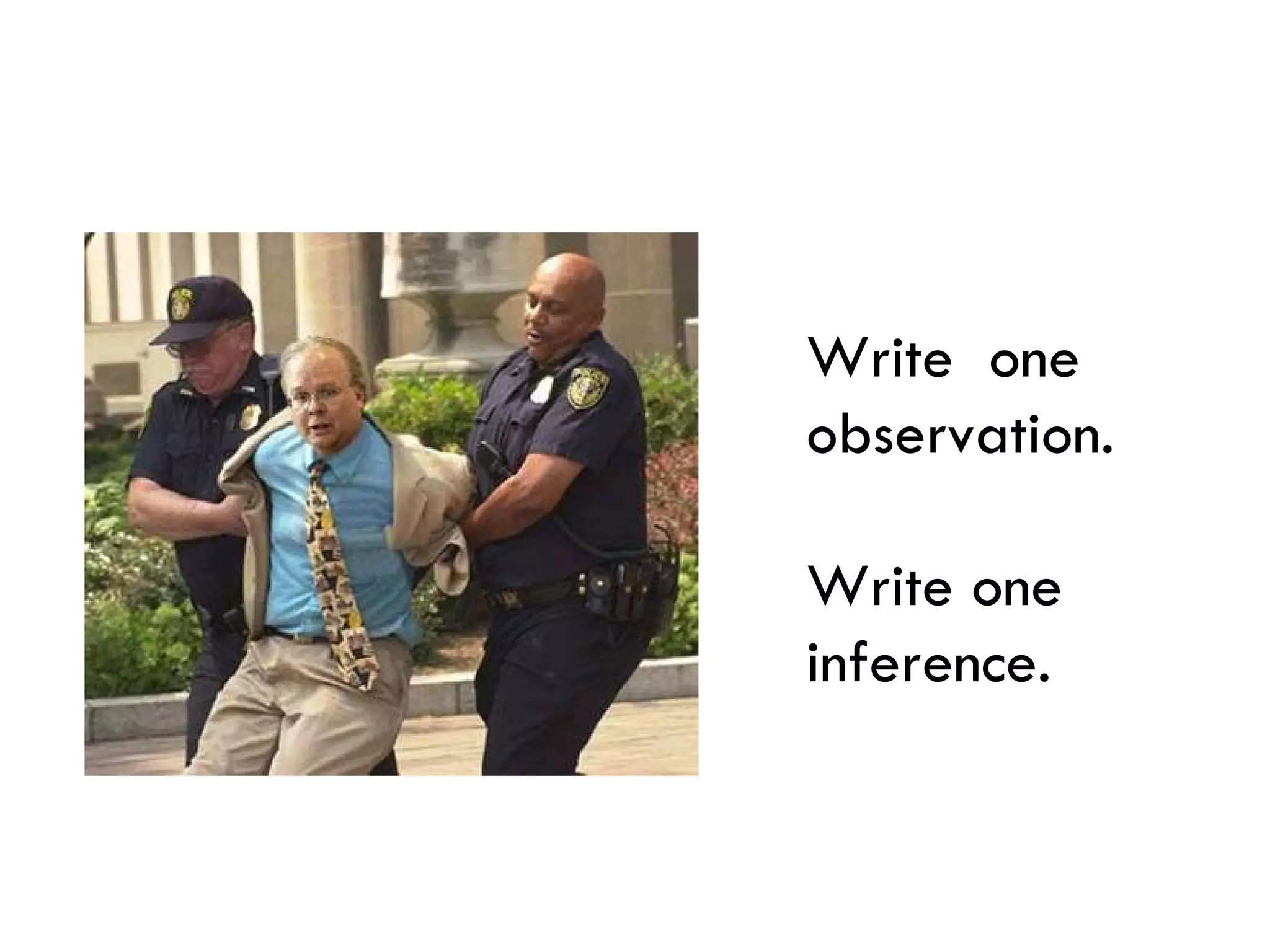
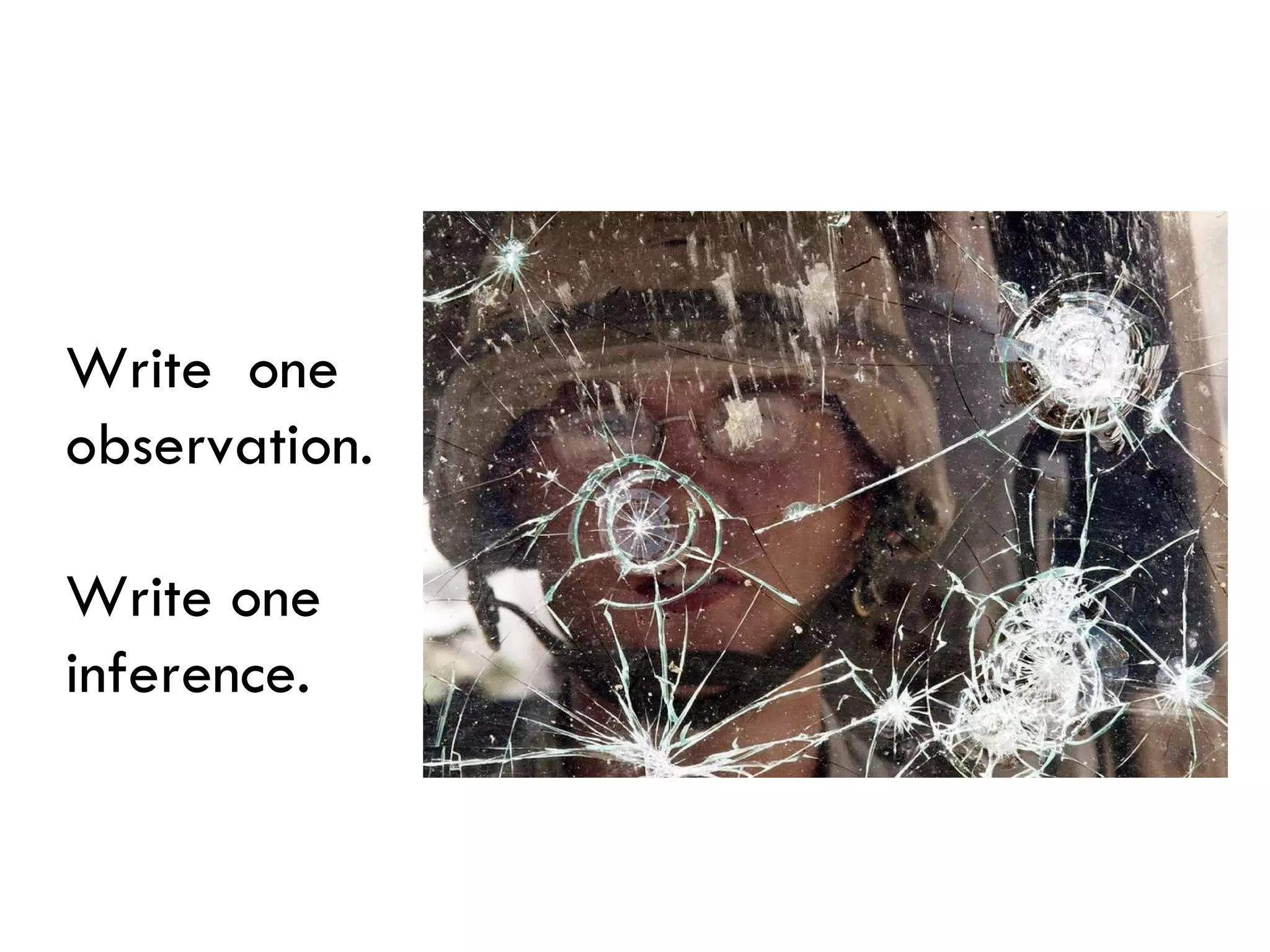
Write  one observation.  Write one inference.
Quantitative / Qualitative Observation Quantitative observations are ones that are based on a QUANTITY.  These would be measurements.  Weight Height Length Qualitative Observations.  These are based on characteristics.  Color Size Texture
Obsertainer Lab  Activity to simulate and introduce how scientists observe things they cannot "see” Students used their observation skills to determine the inner configuration of a closed container by making indirect observations and using the scientific method.  The goal is not to guess what specific object is in the Obsertainer, but to describe the shape or configuration sufficiently to make a sketch of the inside.
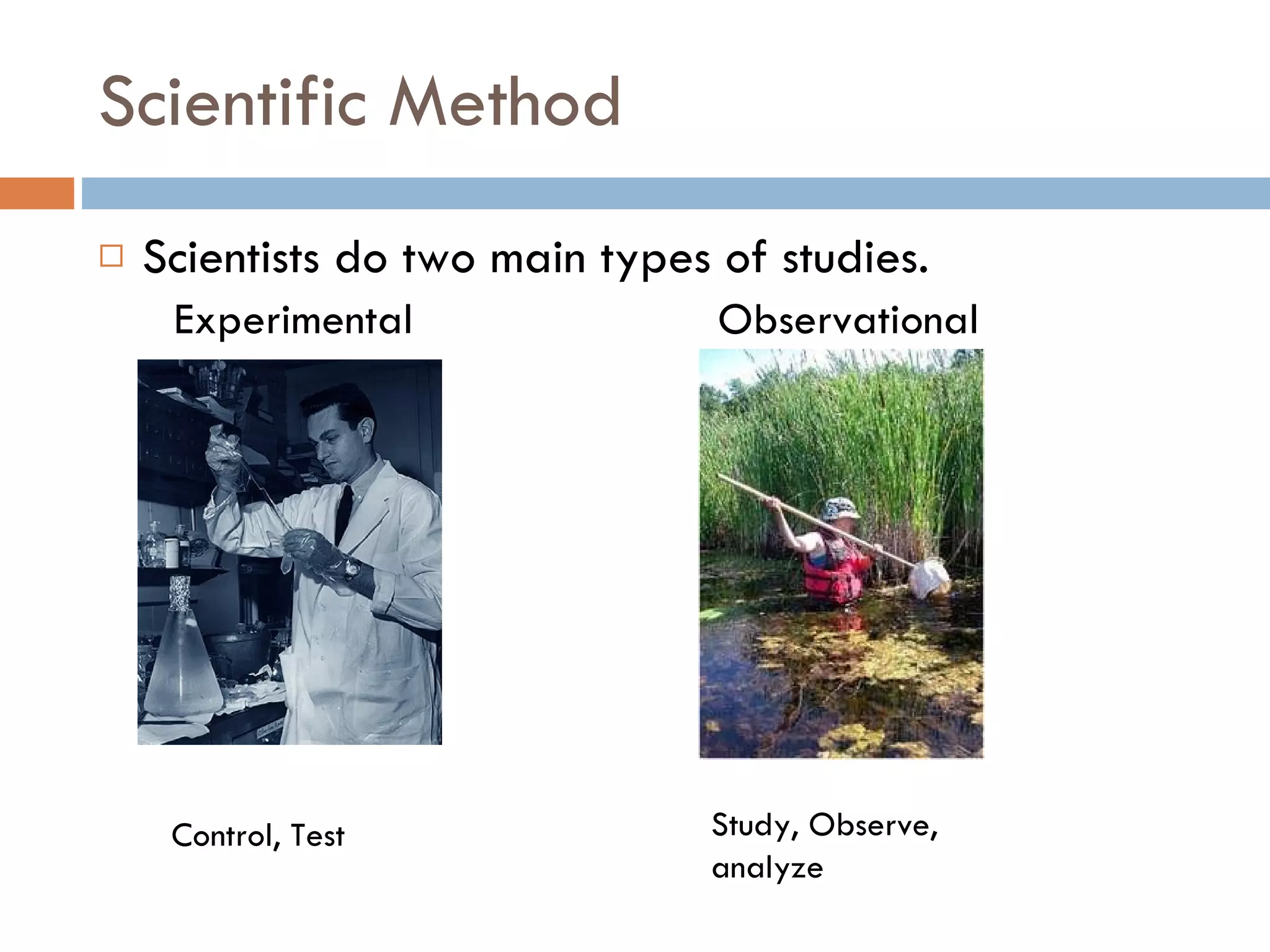
Scientific Method Scientists do two main types of studies.  Experimental  Observational Control, Test Study, Observe, analyze
Experimental Study To answer a question or solve a problem through a test.  Problem Background information Hypothesis Experiment Analyze data Conclusion
Observational Study Can’t always test so scientist will OBSERVE and try to learn that way.  Problem: What kind of life is in a pond ecosystem? Observation: Go out into the pond and make observations and collect specimens.  Analyze data: Study specimens.  Conclusion: Talk about what you learned.
Observations and Inferences Scientific knowledge is developed from a combination of both observations and inferences.  Observations are made from information gathered with the five senses, often augmented with technology. Inferences are logical interpretations derived from a combination of observation and prior knowledge. Together, they form the basis of all scientific ideas.
Summary What is the difference between an observation and an inference.  What is the difference between a quantitative observation and a qualitative observation.  How can people have different inferences about the same observations. What is an observational study?

observationinference

  • 1.
    Effective science teachingalso requires teaching about the nature of science . Scientific knowledge is the product of observation and inference. Observations and Inferences
  • 2.
    OBSERVATIONS AND INFERENCESEssential Question How do scientists use observations and inferences? Warm up Look at the drawing. What do you notice? What do you think happened?
  • 3.
    How does yourstory change? Observations and Inferences
  • 4.
    How does yourstory change? Observations and Inferences
  • 5.
    What do youobserve? What do you infer? Compare what you think now to your earlier written accounts. Observations and Inferences
  • 6.
    Observations and InferencesObservations are what you notice Inferences are your reactions, thoughts or explanations
  • 7.
    Write one observation. Write one inference. Observation Use of your five senses. What do you see? What do you feel? What do you hear? What do you taste? What do you smell? Can use instruments(Thermometer, microscope, balances etc.) Inference Attempt to explain your observations. Must use accurate data and observations.
  • 8.
    Write oneobservation. Write one inference.
  • 9.
    Write oneobservation. Write one inference.
  • 10.
    Write oneobservation. Write one inference.
  • 11.
    Write oneobservation. Write one inference.
  • 12.
    Write oneobservation. Write one inference.
  • 13.
    Write oneobservation. Write one inference.
  • 14.
    Write oneobservation. Write one inference.
  • 15.
    Quantitative / QualitativeObservation Quantitative observations are ones that are based on a QUANTITY. These would be measurements. Weight Height Length Qualitative Observations. These are based on characteristics. Color Size Texture
  • 16.
    Obsertainer Lab Activity to simulate and introduce how scientists observe things they cannot "see” Students used their observation skills to determine the inner configuration of a closed container by making indirect observations and using the scientific method. The goal is not to guess what specific object is in the Obsertainer, but to describe the shape or configuration sufficiently to make a sketch of the inside.
  • 17.
    Scientific Method Scientistsdo two main types of studies. Experimental Observational Control, Test Study, Observe, analyze
  • 18.
    Experimental Study Toanswer a question or solve a problem through a test. Problem Background information Hypothesis Experiment Analyze data Conclusion
  • 19.
    Observational Study Can’talways test so scientist will OBSERVE and try to learn that way. Problem: What kind of life is in a pond ecosystem? Observation: Go out into the pond and make observations and collect specimens. Analyze data: Study specimens. Conclusion: Talk about what you learned.
  • 20.
    Observations and InferencesScientific knowledge is developed from a combination of both observations and inferences. Observations are made from information gathered with the five senses, often augmented with technology. Inferences are logical interpretations derived from a combination of observation and prior knowledge. Together, they form the basis of all scientific ideas.
  • 21.
    Summary What isthe difference between an observation and an inference. What is the difference between a quantitative observation and a qualitative observation. How can people have different inferences about the same observations. What is an observational study?

Editor's Notes

  • #4 추론 (inference) 의 사전적 정의 : 알려진 사실로부터 새로운 사실을 추출해 나가는 과정