Scientific InquiryChapter 1, Section 2 – The Nature of Science & Technology
Scientific inquiry refers to the diverse ways in which scientists study the natural world and propose explanations based on the evidence they gather.What is scientific inquiry?
Scientific inquiry often begins with a problem or question about an observationSome questions CANNOT be answered by scientific inquiryQuestions dealing with personal tastes or judgments Posing Questions
A hypothesis is a possible explanation for a set of observations or answer to a scientific questionIS NOT a factMUST be testableDeveloping a Hypothesis
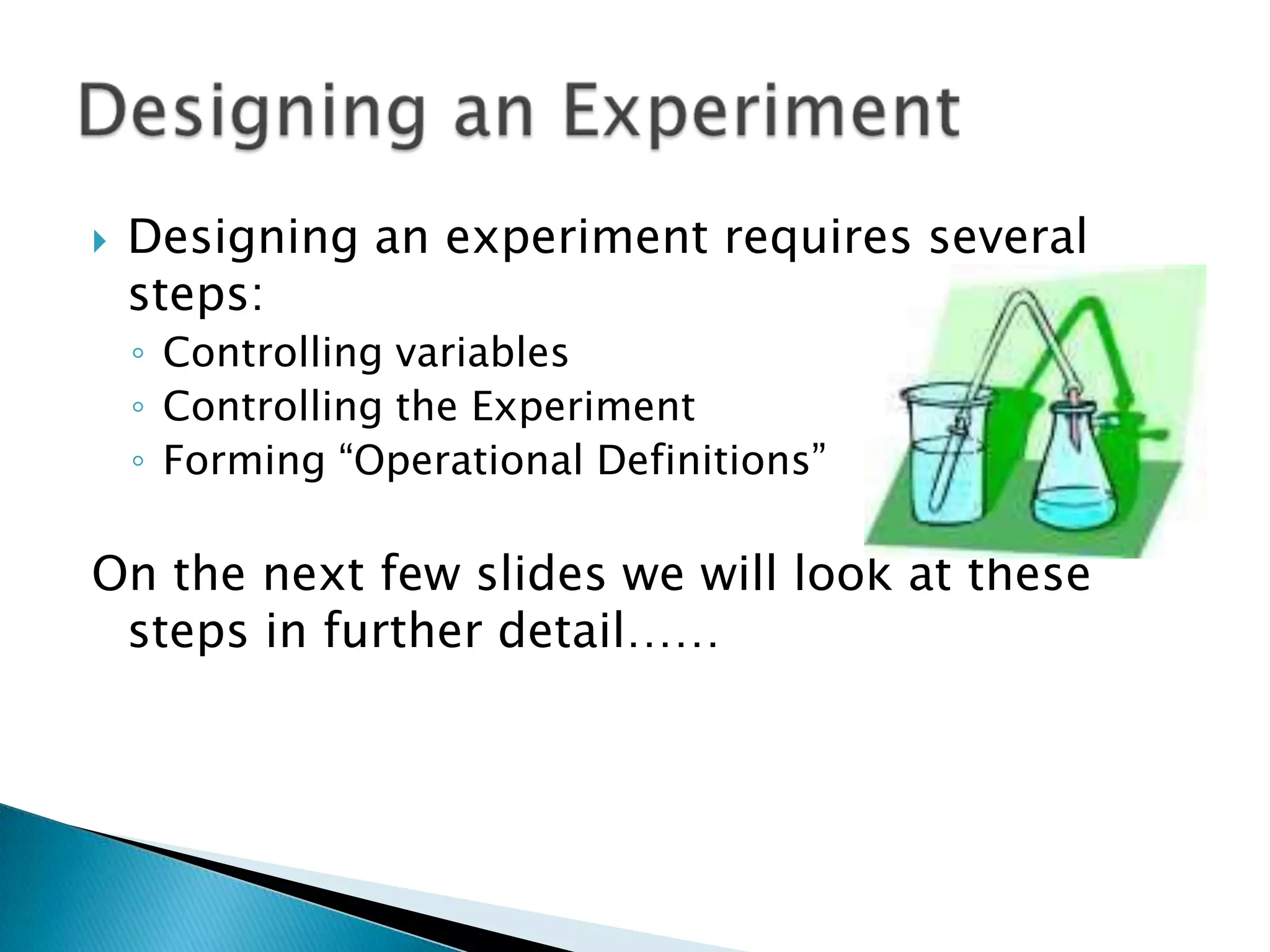
Designing an experiment requires several steps:Controlling variablesControlling the ExperimentForming “Operational Definitions”On the next few slides we will look at these steps in further detail……Designing an Experiment
A variable is a factor that can change in an experimentThe one variable that is purposely changed to test your hypothesis is the MANIPULATED VARIABLE (or independent variable)The factor that MAY change in response to the manipulated variable is the RESPONDING VARIABLE (or dependent variable)Controlling Variables
An experiment in which only one variable is manipulated at a time is a CONTROLLED EXPERIMENTWhy is it important to control your experiment???Controlling the Experiment
An operational definition is a statement that describes how to measure a particular variable or define a particular termForming operational definitions
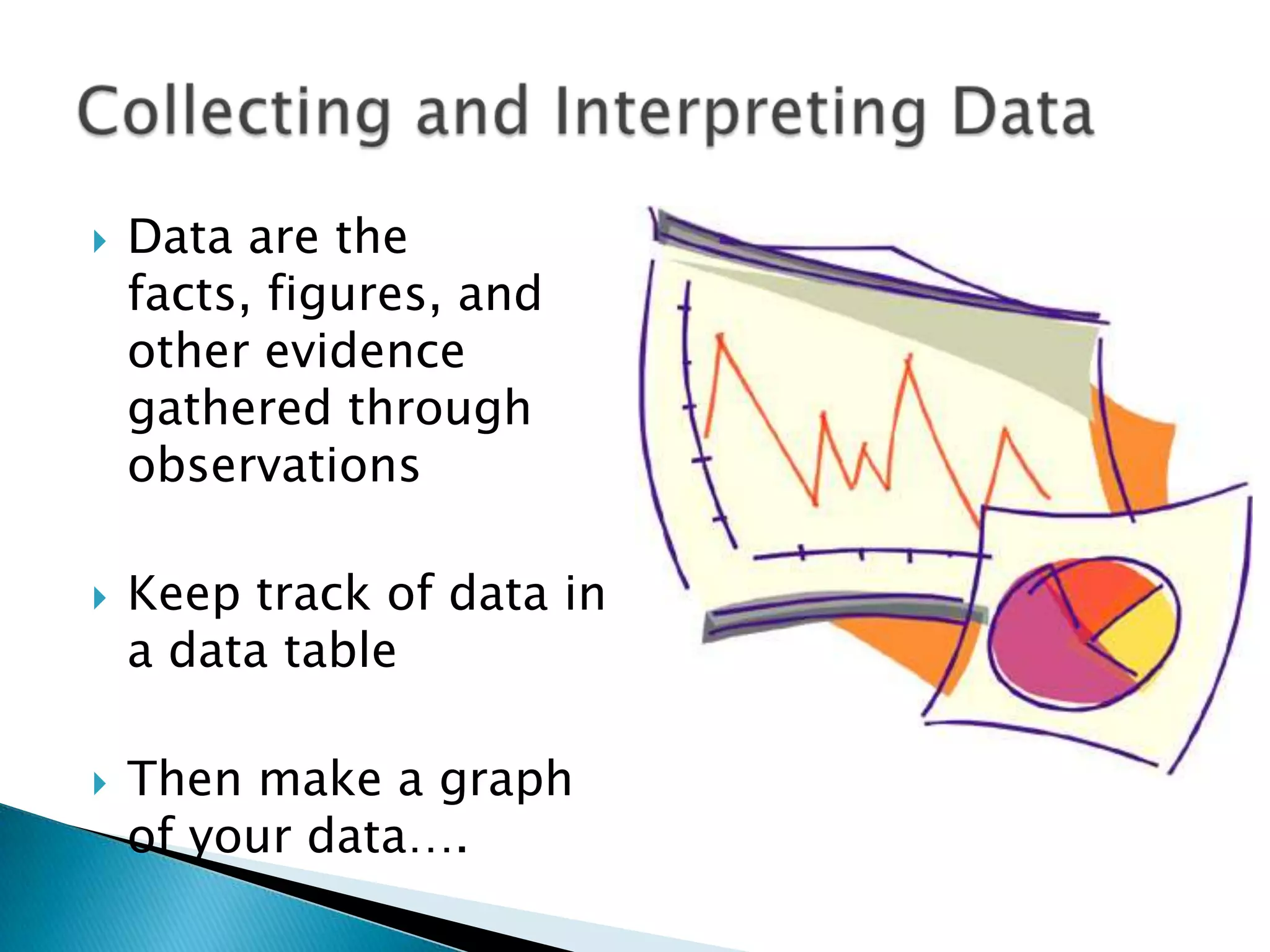
Data are the facts, figures, and other evidence gathered through observationsKeep track of data in a data tableThen make a graph of your data….Collecting and Interpreting Data
A conclusion is a summary of what you have learned in an experimentPoints to consider in your conclusion:Does the data support the hypothesis?Did you collect enough data?Did anything happen that may have affected the results?Address these points in your summaryDrawing conclusions
An important part of the scientific inquiry process is communicating your resultsCommunicating is the sharing of ideas and experimental findings through writing and speakingCommunicating
A scientific theory is a well-tested explanation for a wide range of observations or experimental resultsA scientific law is a statement that describes what scientists expect to happen every time under a particular set of conditionsScientific Theories and Laws

Chapter 1, Section 2

  • 1.
    Scientific InquiryChapter 1,Section 2 – The Nature of Science & Technology
  • 2.
    Scientific inquiry refersto the diverse ways in which scientists study the natural world and propose explanations based on the evidence they gather.What is scientific inquiry?
  • 3.
    Scientific inquiry oftenbegins with a problem or question about an observationSome questions CANNOT be answered by scientific inquiryQuestions dealing with personal tastes or judgments Posing Questions
  • 4.
    A hypothesis isa possible explanation for a set of observations or answer to a scientific questionIS NOT a factMUST be testableDeveloping a Hypothesis
  • 5.
    Designing an experimentrequires several steps:Controlling variablesControlling the ExperimentForming “Operational Definitions”On the next few slides we will look at these steps in further detail……Designing an Experiment
  • 6.
    A variable isa factor that can change in an experimentThe one variable that is purposely changed to test your hypothesis is the MANIPULATED VARIABLE (or independent variable)The factor that MAY change in response to the manipulated variable is the RESPONDING VARIABLE (or dependent variable)Controlling Variables
  • 7.
    An experiment inwhich only one variable is manipulated at a time is a CONTROLLED EXPERIMENTWhy is it important to control your experiment???Controlling the Experiment
  • 8.
    An operational definitionis a statement that describes how to measure a particular variable or define a particular termForming operational definitions
  • 9.
    Data are thefacts, figures, and other evidence gathered through observationsKeep track of data in a data tableThen make a graph of your data….Collecting and Interpreting Data
  • 10.
    A conclusion isa summary of what you have learned in an experimentPoints to consider in your conclusion:Does the data support the hypothesis?Did you collect enough data?Did anything happen that may have affected the results?Address these points in your summaryDrawing conclusions
  • 11.
    An important partof the scientific inquiry process is communicating your resultsCommunicating is the sharing of ideas and experimental findings through writing and speakingCommunicating
  • 12.
    A scientific theoryis a well-tested explanation for a wide range of observations or experimental resultsA scientific law is a statement that describes what scientists expect to happen every time under a particular set of conditionsScientific Theories and Laws