QUARTER 1- WEEK5
LESSON 4 :SCIENCE PROCESS SKILLS
:INFERENCE
2.
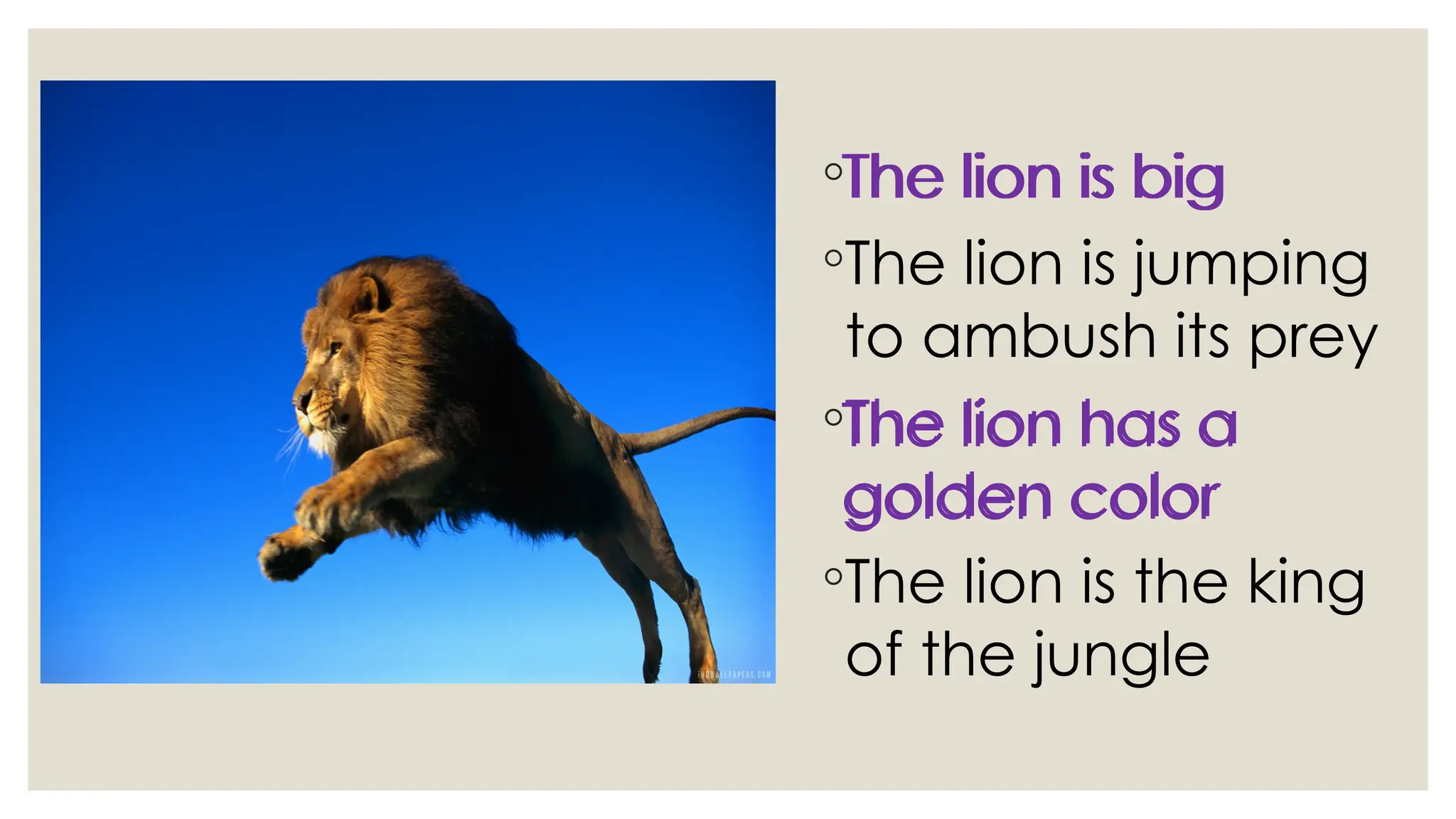
◦The lion isbig
◦The lion is jumping
to ambush its prey
◦The lion has a
golden color
◦The lion is the king
of the jungle
The lion is big
The lion has a
golden color
3.
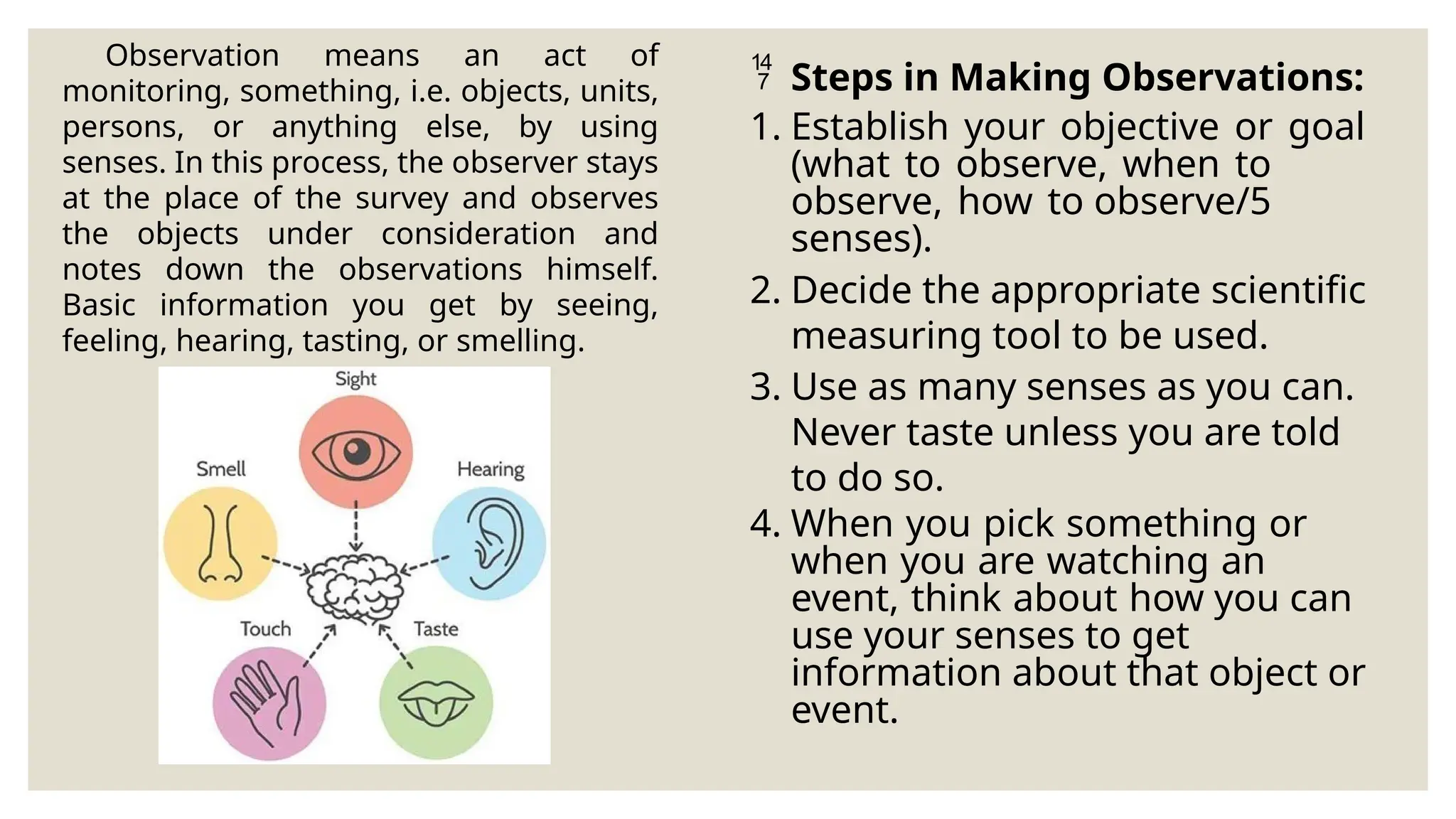
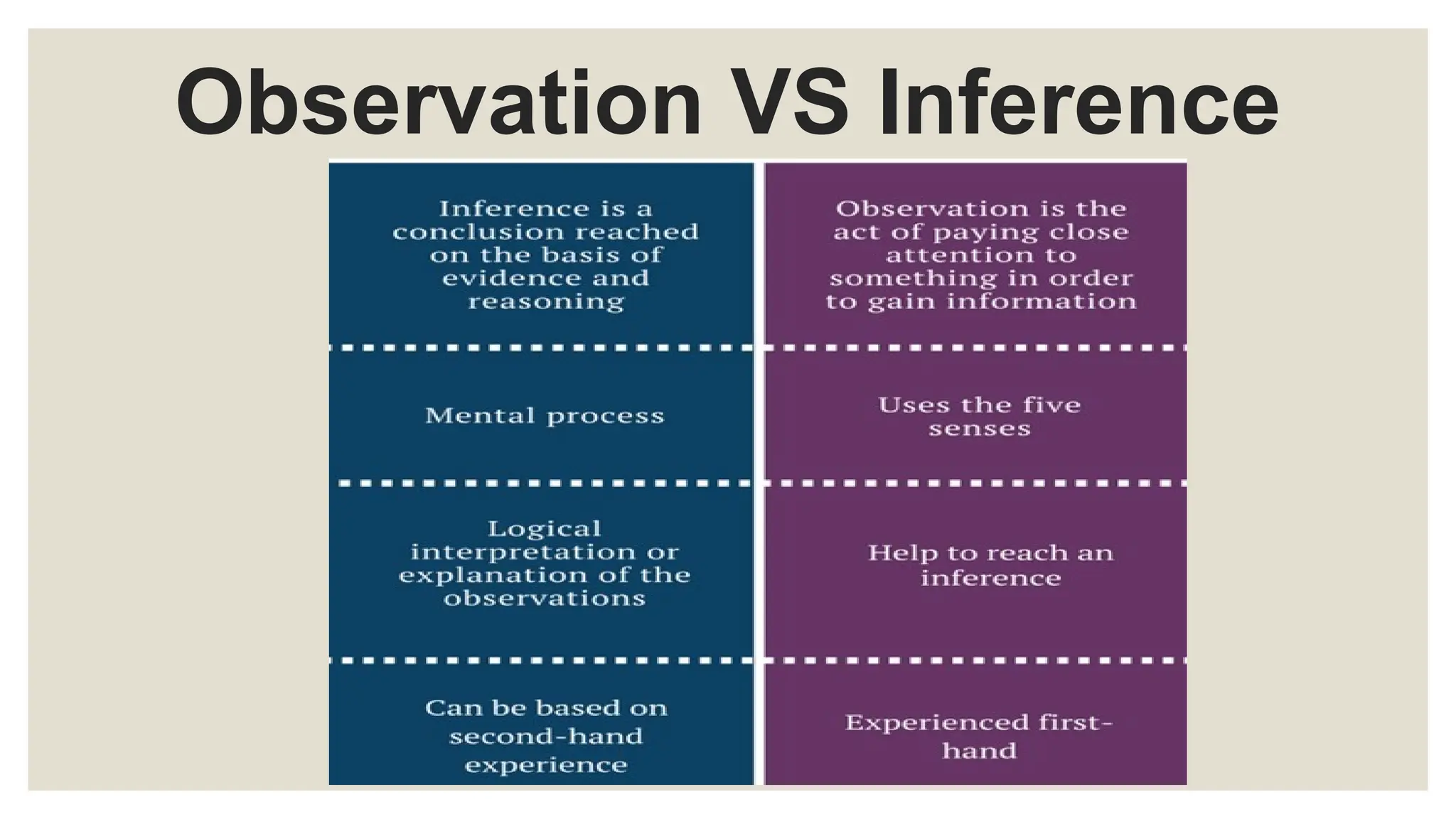
Observation means anact of
monitoring, something, i.e. objects, units,
persons, or anything else, by using
senses. In this process, the observer stays
at the place of the survey and observes
the objects under consideration and
notes down the observations himself.
Basic information you get by seeing,
feeling, hearing, tasting, or smelling.
Steps in Making Observations:
1. Establish your objective or goal
(what to observe, when to
observe, how to observe/5
senses).
2. Decide the appropriate scientific
measuring tool to be used.
3. Use as many senses as you can.
Never taste unless you are told
to do so.
4. When you pick something or
when you are watching an
event, think about how you can
use your senses to get
information about that object or
event.
SCIENTIFIC OBSERVATION
A scientistlooking at a chemical reaction.
A doctor watching a patient after
administering an injection.
Air flight controllers watching their
monitors for airplane movements and
locations.
6.
TECHNICAL OBSERVATION
A chefwatching his roast in the oven as it
cooks.
A fisherman watching his line for
tautness indicating a fish has bitten the
bait.
A daycare provider watching the
children’s interaction.
7.
SOCIAL OBSERVATION
A childwatching a fish in a tank.
A parent observing her children playing
together.
Kids watching ducks swim on a pond.
8.
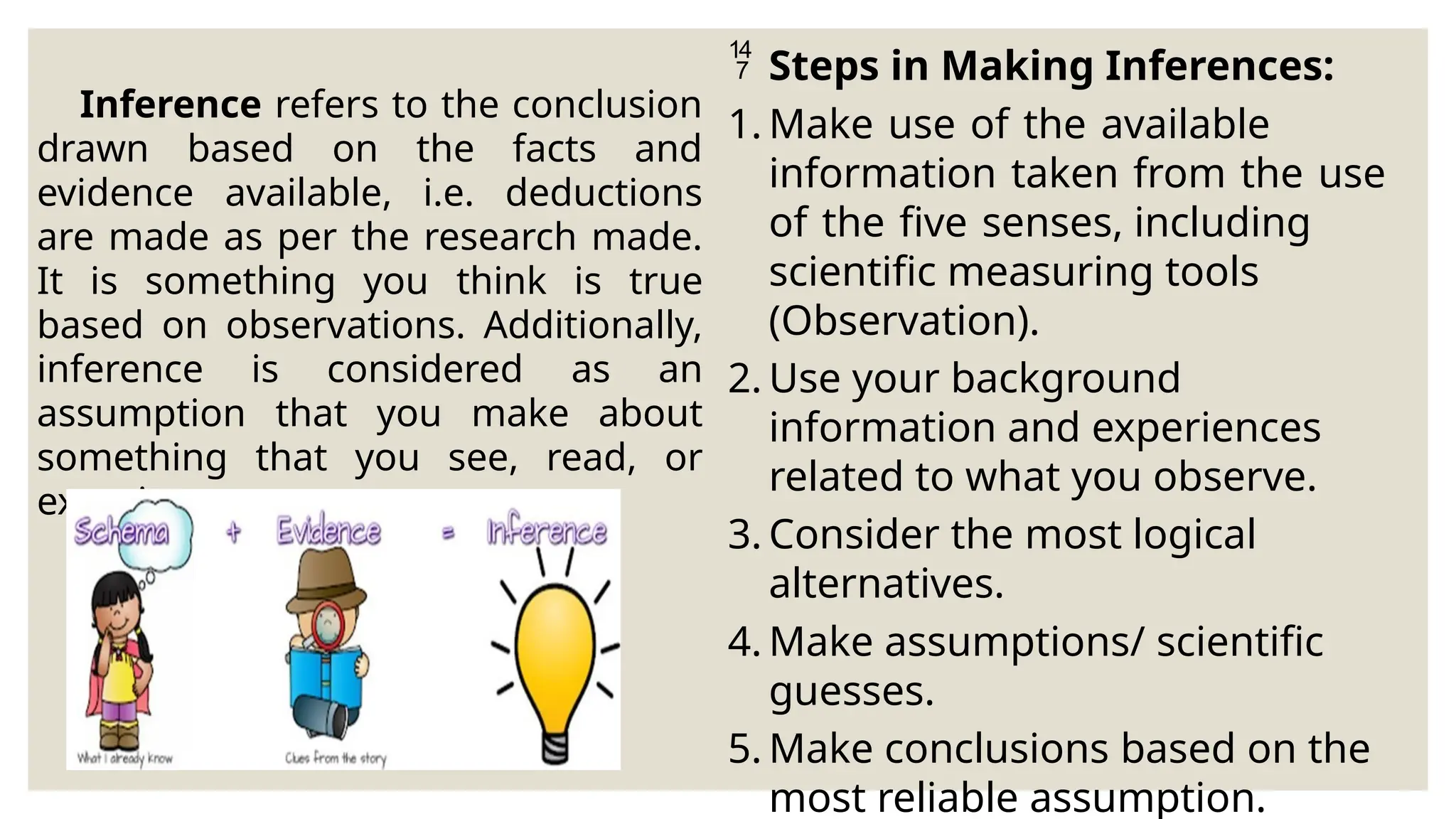
Inference refers tothe conclusion
drawn based on the facts and
evidence available, i.e. deductions
are made as per the research made.
It is something you think is true
based on observations. Additionally,
inference is considered as an
assumption that you make about
something that you see, read, or
experience.
Steps in Making Inferences:
1. Make use of the available
information taken from the use
of the five senses, including
scientific measuring tools
(Observation).
2. Use your background
information and experiences
related to what you observe.
3. Consider the most logical
alternatives.
4. Make assumptions/ scientific
guesses.
5. Make conclusions based on the
most reliable assumption.
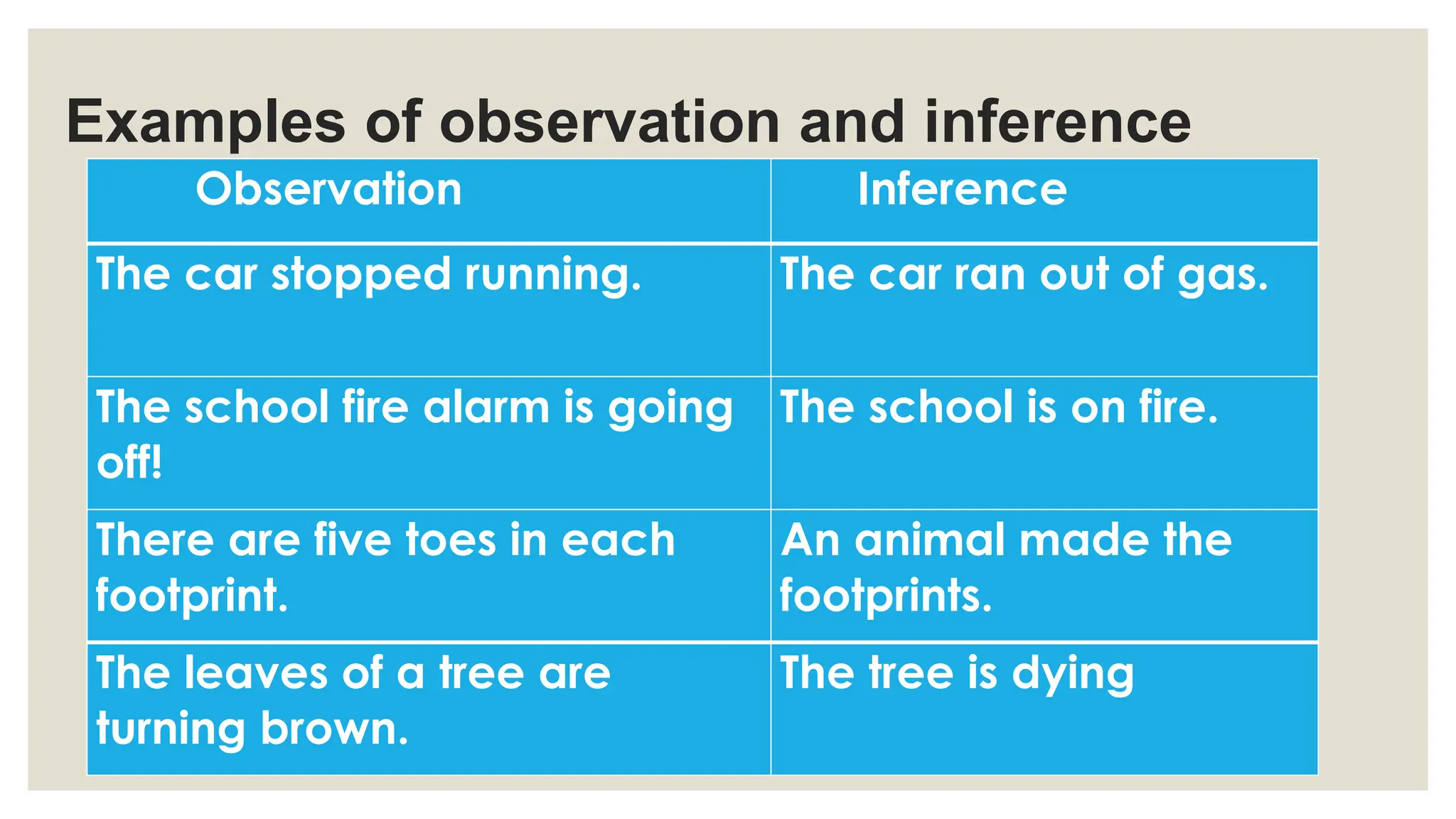
Examples of observationand inference
Observation Inference
The car stopped running. The car ran out of gas.
The school fire alarm is going
off!
The school is on fire.
There are five toes in each
footprint.
An animal made the
footprints.
The leaves of a tree are
turning brown.
The tree is dying
11.
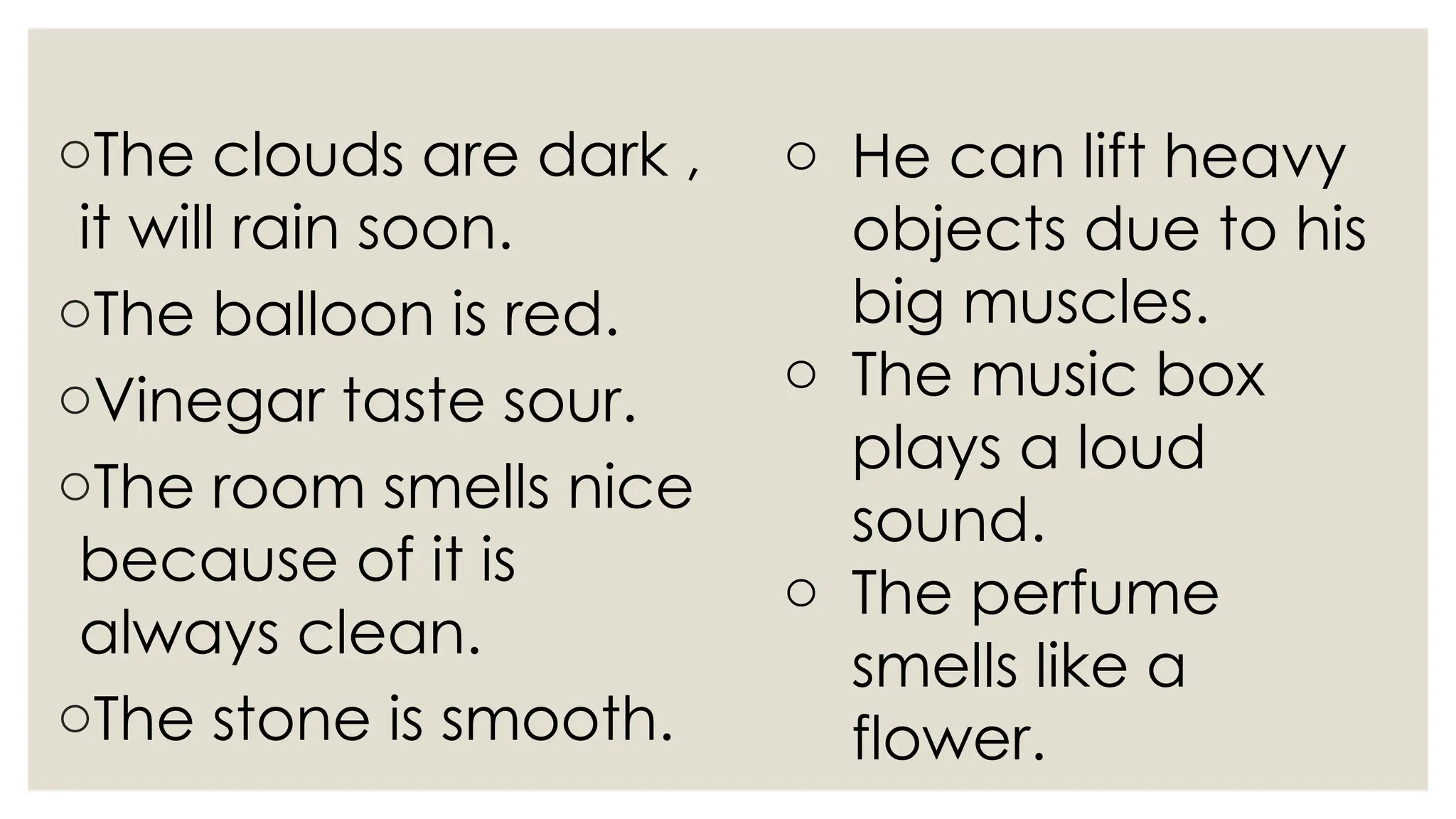
oThe clouds aredark ,
it will rain soon.
oThe balloon is red.
oVinegar taste sour.
oThe room smells nice
because of it is
always clean.
oThe stone is smooth.
o He can lift heavy
objects due to his
big muscles.
o The music box
plays a loud
sound.
o The perfume
smells like a
flower.
Editor's Notes
#4 Observation is the process of watching someone or something. Often, observation is an informal action, but it can also be formal and involve data collection. An observation can also be the collected informal itself.
#5 Observation is the process of watching someone or something. Often, observation is an informal action, but it can also be formal and involve data collection. An observation can also be the collected informal itself.
#6 Observation is the process of watching someone or something. Often, observation is an informal action, but it can also be formal and involve data collection. An observation can also be the collected informal itself.
#7 Observation is the process of watching someone or something. Often, observation is an informal action, but it can also be formal and involve data collection. An observation can also be the collected informal itself.