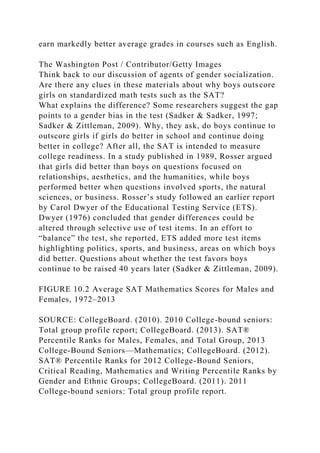
Observation Collaboration
This week you will complete an observation activity in your
community. This activity will help prepare you for the Week 7
Assignment. This Forum is unique so read the instructions and
point values carefully.
Write a 500+ word initial post that includes these components:
· Observation: 5 points
· Go to a public place and observe the people there for 25
minutes. What are the details of the location? Describe the
general context (time of day, lighting, sounds, vibe/energy,
etc.). Describe the people around you and their
sociodemographic characteristics (age, race/ethnicity,
gender/sex, socioeconomic status, etc.).
· Norms: 10 points
· Identify two or more social norms that people engaged in at
the public place. A norm is a social rule. There are many norms
that help to frame how we are supposed to behave in our daily
lives, one example is gender norms (what are social rules we
follow to 'be masculine' and to 'be feminine'); another example
is standing in line (consider what would happen if you cut
everyone in line at 8am in a Starbucks?).
· Concepts: 10 points
· How do these norms you observed in the scene fit with
sociological concepts and theories we’ve learned so far in
class? Some examples of sociological concepts we’ve learned
about so far include gender roles and emotional labor. (What is
a sociological concept? See below).
· Reflection: 5 points
· Reflect on your experience. How was this observing others
through a sociological lens different from when you’ve “people
watched” in the past? What perspectives do you think a
sociologist can bring to our understanding of everyday human
behavior?
· Active Forum Engagement: 10 points:
· Remember to write at least three 100+ peer responses. As
with our other Forums, two responses need to be to peer posts
and one response needs to be to someone who commented on
your post. In any public scene, all of us will notice different
things, and find different observations important or
unimportant. In your peer responses, help one another identify
sociodemographic characteristics, social norms, or sociological
concepts that the classmate may not have noticed. Consider
helping one another notice common themes in the types of
public places you choose and your observations of people in
those scenes.
· Active Forum Presence: 5 points
· Learner posts 4+ different days in the learning week. Initial
post is made by Thursday 11:55pm ET of the learning week.
Response posts are made by Sunday 11:55pm ET of the
learning week.
· Writing Skills: 5 points
· Post is 500+ words. All posts reflect widely accepted
academic writing protocols like using capital letters (“I am” not
“i am”), cohesive sentences, and no texting language. Dialogue
is also polite and respectful of different points of view.
What is a “sociological concept?” They are all the bold terms
and phrases within the text, such as "socialization," "norms"
and "folkways." Look at the bottom of the text page for the
concepts and definitions. Key terms (sociological concepts) are
also listed following the Summary of each Chapter.
Additionally, the entire glossary contains sociological concepts.
The Week 5 Forum meets the following course objectives:
· Apply a sociological perspective to the social world
· Analyze contemporary social issues using the sociological
imagination and use sociological theories and concepts to
analyze everyday life.
A Class Divided
Jane Elliot's Experiment where she divided the class into two
groups based on their eye color to illustrate discrimination and
prejudice. What is racism? discrimination? prejudice? How does
this film illustrate these concepts?
The Rwandan Genocide Resources
A PBS report on the genocide in Rwanda. Examine the role of
the United Nations, or specific countries, such as the United
States, during the genocide. Where they aware of what was
happening? If they were, what actions were taken?
RACE AND ETHNICITY
Racial/ethnic Breakdown in U.S.
Compare your state's racial/ethnic breakdown to that of the total
United States. Click state tab, and then click on your state in the
map to see your state's breakdown compared to that of the
country as a whole. How different or similar are they? Why do
you think the differences or similarities exist?
Researching Affirmative Action
This website has information on many interesting US Supreme
Court cases. Three important decisions that relate to the status
of minority groups are the 1896 Plessey v Ferguson; the 1954
Brown Decision; and the 1972 Bakke case regarding
Affirmative Action. Review some of these cases and consider
the impact of these decisions.
Ellis Island
Did your family arrive at Ellis Island? This website is for the
Ellis Island Museum, and it allows you to research (by clicking
on 'genealogy') whether your great-grandparents were one of the
millions who passed through this famous immigration center,
now a national museum.
GENDER
Timeline of Women's Rights Movement 1848-1998
Timeline of women's movement.
Violence Against Women Ads (Genderads.com)
A compilation of ads that portray violence against women.
RACE AND
ETHNICITY
Aaron Huey/National Geographic Creative
Media Library
CHAPTER 9 Media Library
AUDIO
Residential Segregation
Genocide in Darfur and Rwanda
VIDEO
White Privilege
Race Relations in America and Ferguson, MO
Native American Struggles
CQ RESEARCHER
Race and Education in America
Post Racial Society: Fact or Fiction?
PACIFIC STANDARD MAGAZINE
Side Effects of Racism
JOURNAL
Racial Disparities in incarceration
Racialization of Crime and Punishment in America
Arab Americans Post 9/11
p.203
IN THIS CHAPTER
The Social Construction of Race and Ethnicity
Minority and Dominant Group Relations
Theoretical Approaches to Ethnicity, Racism, and Minority
Status
Prejudice, Stereotyping, and Discrimination
Racial and Ethnic Groups in the United States
Race and Ethnicity in a Global Perspective
Why Study Race and Ethnicity From a Sociological
Perspective?
WHAT DO YOU THINK?
1. What makes a group a “minority”? Does this term have both
qualitative and quantitative dimensions?
2. Why does racial residential segregation exist and persist in
major U.S. cities? What are the consequences of racial
residential segregation?
3. How is the ethnic and racial composition of the United
States changing? What factors are driving this change?
p.204
A DREAM DEFERRED . . .
Permission granted from MSU.
African American poet Langston Hughes (1902–1967) is known
for, among other writings, the poem “A Dream
Deferred” *(sometimes called “Harlem”):
What happens to a dream deferred
Does it dry up
like a raisin in the sun?
Or fester like a sore—
And then run?
Does it stink like rotten meat?
Or crust and sugar over—
like a syrupy sweet?
Maybe it just sags
like a heavy load.
Or does it explode?
In the 1920s and 1930s, Hughes was one of the writers of the
Harlem Renaissance, highlighting issues of race relations and
inequality. In his most famous poem, Hughes contemplated the
consequences of a “dream deferred.” Indeed, the dreams of
many African Americans had been deferred—or denied. Mary
Jean Price Walls was among them.
Race and Education in America
CLICK TO SHOW
p.205
Mary Jean Price Walls, the child of a Black mother and a White
father, dreamed of being a teacher. In 1950, Mary Jean was the
salutatorian of her graduating class at Lincoln High School, an
all-Black school. She applied for admission to Missouri State
University (MSU), the only institution of higher education near
her home and, thus, the only one she could afford to attend. She
never received an answer and never went to college, instead
becoming mother to eight children and, later, cleaning homes
and working as a janitor (Moore, 2012).
At age 52, one of Walls’s sons, Terry Walls, went back to
college, enrolling at MSU. As a student, he sought to find out
why his mother had been denied admission to the school. Using
the university archives, he tracked down the thin, onionskin
paper on which his mother’s application for admission was
written. He also learned that MSU’s regents had held a special
meeting: “Formal minutes reveal that her application was denied
because those same classes were available at the all-black
college four hours away” (Moore, 2012). Without funds to
attend a college away from home, Mary Jean could not realize
her dream of being a teacher. Desegregation of U.S. education
would begin slowly with the Supreme Court ruling in Brown v.
Board of Education in 1954, too late for Mary Jean to achieve
her ambition.
In 2010, MSU granted Mary Jean an honorary degree,
recognizing the opportunity that had been closed to her by
racism. In 2012, MSU awarded a diploma to Terry Walls, her
son, for completion of his college work.
What are we to conclude from Mary Jean’s story? Clearly, her
dream was denied. Today, African Americans like Mary Jean’s
children have legally protected opportunities for education and
professional success. But race is still a powerful social force,
influencing interpersonal interactions and institutional
arrangements in the United States. And racism, though often
more subtle than that experienced by Mary Jean, remains a
potent obstacle for many who seek to fulfill dreams of
education, housing, and professional achievement.
Post Racial Society: Fact or Fiction?
CLICK TO SHOW
Race and ethnicity are key issues in sociology. We begin this
chapter with a discussion of the social construction of race and
ethnicity. We then consider some of forms that minority-
majority group relations may take. We also look at theoretical
perspectives on ethnicity, racism, and minority group status.
This leads to a discussion of prejudice and discrimination and
the consequences of these social phenomena. We then examine
the experiences of different racial and ethnic groups in the
United States and how group membership may shape people’s
political, economic, and social status. Finally, we consider the
historical and contemporary significance of race in a global
perspective, focusing in particular on racial labeling and the
crime of genocide in recent history.
THE SOCIAL CONSTRUCTION OF RACE AND ETHNICITY
Sociologists W. I. Thomas and Dorothy Thomas (1928)
observed that “if [people] define situations as real, they are real
in their consequences” (pp. 571–572). The wisdom of the
Thomases’ observation is powerfully demonstrated by the way
societies construct definitions of racial and ethnic groups and
then respond as though the definitions represent objective
realities.
RACE
One of the most dynamic areas of scientific research in recent
years has been the Human Genome Project. Among its
compelling findings is the discovery that genetically all human
beings are nearly identical. Less than 0.01% of the total gene
pool contributes to racial differences (as manifested in physical
characteristics), whereas thousands of genes contribute to traits
that include intelligence, artistic talent, athletic talent, and
social skills (Angier, 2000; Cavalli-Sforza, Menozzi, & Piazza,
1994). Based on this research, many scientists agree that “race
is a social concept, not a scientific one.... we all evolved in the
last 100,000 years from the same small number of tribes that
migrated out of Africa and colonized the world” (Angier, 2000).
Sociologists define a race as a group of people who share a set
of characteristics (usually physical characteristics) deemed by
society to be socially significant. Notice that this definition
suggests that physical characteristics are not the only—or even
necessarily the most important—way of defining “races.” For
many years, Catholics and Protestants in Ireland defined one
another as separate races, and the United States long considered
Jews a separate racial category from Europeans, even though
distinctive physical characteristics between these groups are in
the eye of the beholder rather than objectively verifiable
(Schaefer, 2009).
p.206
While sociologists do not treat race as scientifically significant,
it is, as we will see in this chapter, socially
significant. Following the observation of the Thomases, we can
conclude that because race is defined as real, it is real in its
consequences. Racial differentiation has historically been linked
to power: Racial categories have facilitated the treatment (or
maltreatment) of others based on membership in given racial
groups.
Notably, race is also social scientifically significant. Statistical
data on phenomena ranging from obesity and poverty to crime
and educational attainment are gathered and sorted by race. This
book features such data throughout its pages. While sociologists
generally agree that races cannot be objectively, biologically
differentiated, it is a fact that they also use race to sort statistics
and establish social facts about groups in society. This
implicitly acknowledges that this “social concept” is profoundly
real as a differentiating mechanism with historical and
contemporary consequences.
ETHNICITY
Although race may be a particularly significant social category
in terms of consequences for people’s lives, other socially
defined categorizations are also important. Among these,
ethnicity ranks next to race in significance. Ethnicity refers
to characteristics of groups associated with national origins,
languages, and cultural and religious practices. While ethnicity
can be based on cultural self-identification (that is, one may
choose to embrace one’s Irish or Brazilian roots and traditions),
an acknowledgment or degree of acceptance by a larger group is
often necessary. For example, a third-generation Italian
American may choose to self-identify as Italian. If he cannot
speak Italian, however, others who identify as Italian may not
see him as “authentically” Italian. The sociological significance
of belonging to a particular racial or ethnic group is that society
may treat group members differently, judging them or giving
them favorable or unfavorable treatment based on membership
and perceived affiliation.
MINORITIES
Any racial, ethnic, religious, or other group can constitute a
“minority” in a society. Minorities are less powerful groups
who are dominated politically and economically by a more
powerful group and, often, who experience discrimination on
the basis of characteristics deemed by the majority to be
socially significant. Minorities are usually distinguished by
gender or physical and cultural attributes that make them
recognizable to the dominant group. Minorities often are fewer
in number than the dominant population. In the United States,
African Americans, Latinos, and Asians are less numerous than
the White majority, though the higher number of births among
non-Whites, combined with immigration, will begin to change
this fact in coming decades.
Although one usually thinks of minorities as being fewer in
number (the term implies a numerical difference), the important
aspect of being a minority group is that the group has
relatively less access to power and resources valued by
society. Thus, sociologically, women in the United States, and
in most cultures worldwide, may be considered a minority
despite the fact that they outnumber men. In South Africa
before the end of apartheid rule in the early 1990s, a small
number of Whites dominated the much larger minority of what
were termed Black, colored, and mixed races.
MINORITY AND DOMINANT GROUP RELATIONS
Modern societies are characterized by racial and ethnic
heterogeneity, as well as by divisions between dominant and
minority groups. The coexistence of racial and ethnic groups
can be a source of social conflict. Among minorities’ most
frequently used methods of resolving such conflict are social
movements designed to challenge and change existing social
relations. In extreme cases, resolution may be sought through
revolution or rebellion. Dominant populations respond to such
social movements with a variety of social and political policies,
ranging from expulsion and segregation to assimilation of
minorities and the acceptance of cultural pluralism. We discuss
this spectrum of relationships below.
EXPULSION
Conflicts between White settlers and Native Americans over
land and resources in the United States in the 1800s often ended
with the removal of Native Americans to isolated reservations.
Sociologically, the process of forcibly removing people from
one part of the country is referred to as expulsion. Native
Americans populated broad swaths of North America when the
first European settlers arrived. As U.S. settlement expanded
westward, Native Americans were driven under military arms to
march, sometimes thousands of miles, to areas designated by the
government as Native American reservations. These
reservations continue to be socially and economically marginal
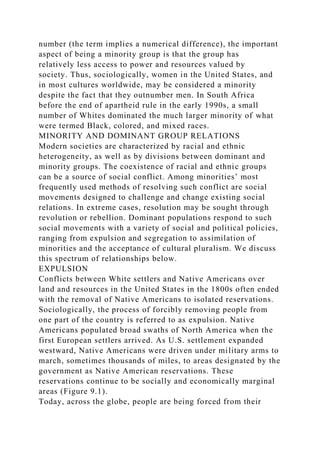
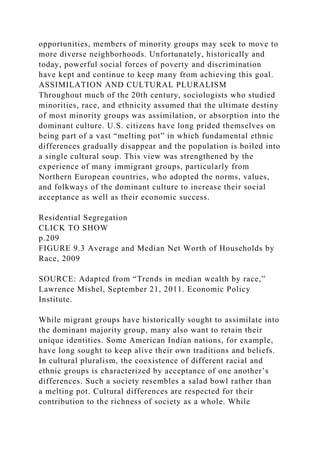
areas (Figure 9.1).
Today, across the globe, people are being forced from their
homes due to civil wars, ethnic and sectarian conflicts, and
rebellions. It is estimated that in 2013 the number of displaced
persons and refugees reached more than 39 million: 29 million
internally displaced and more than 10 million refugees. While
not all are victims of official policies of expulsion, many suffer
the dire consequences of ethnic clashes between dominant and
minority groups (United Nations High Commissioner for
Refugees, 2012, 2013).
p.207
FIGURE 9.1 American Indian Reservations in the United States
SOURCE: U.S. Parks Service.
SEGREGATION
© David Turnley/Corbis
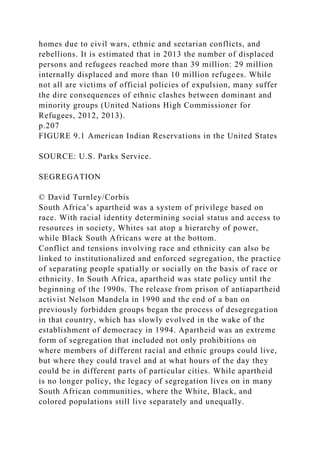
South Africa’s apartheid was a system of privilege based on
race. With racial identity determining social status and access to
resources in society, Whites sat atop a hierarchy of power,
while Black South Africans were at the bottom.
Conflict and tensions involving race and ethnicity can also be
linked to institutionalized and enforced segregation, the practice
of separating people spatially or socially on the basis of race or
ethnicity. In South Africa, apartheid was state policy until the
beginning of the 1990s. The release from prison of antiapartheid
activist Nelson Mandela in 1990 and the end of a ban on
previously forbidden groups began the process of desegregation
in that country, which has slowly evolved in the wake of the
establishment of democracy in 1994. Apartheid was an extreme
form of segregation that included not only prohibitions on
where members of different racial and ethnic groups could live,
but where they could travel and at what hours of the day they
could be in different parts of particular cities. While apartheid
is no longer policy, the legacy of segregation lives on in many
South African communities, where the White, Black, and
colored populations still live separately and unequally.
Before the 1960s, segregation on the basis of race was common
practice and legally upheld in many parts of the United States.
In some places it was a crime for Whites to rent apartments or
sell homes to non-Whites (Molotch, 1972). In the South, Blacks
could not sit in the same restaurants as Whites. When they rode
the same buses, Blacks were required by law to sit at the back.
In other parts of the country, restaurants and hotels could refuse
to serve dark-skinned customers.
The civil rights movement of the 1960s succeeded in securing
the passage of federal laws that outlawed segregation. Despite
this success, high levels of racial segregation remain a reality in
U.S. cities. Why is this the case in the post–civil rights era?
First, it is legal and commonplace for housing markets to be
segregated by income. Since minorities tend to be poorer then
Whites, many cannot afford to live in predominantly White
neighborhoods, where residents may be wealthier and housing
costs higher. Second, laws outlawing the consideration of race
in home rental and sale practices are not always followed by
real estate agents, landlords, and lenders, who may steer
minorities away from predominantly White neighborhoods
(Squires, 2003; Squires, Friedman, & Saidat, 2002). Third,
White residents sometimes move out of neighborhoods when
increasing numbers of minority residents move in (Woldoff,
2011).
p.208
© Julie Dermansky/Corbis
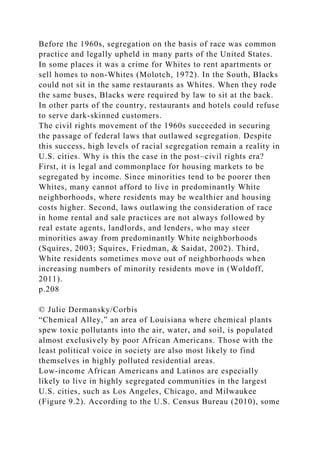
“Chemical Alley,” an area of Louisiana where chemical plants
spew toxic pollutants into the air, water, and soil, is populated
almost exclusively by poor African Americans. Those with the
least political voice in society are also most likely to find
themselves in highly polluted residential areas.
Low-income African Americans and Latinos are especially
likely to live in highly segregated communities in the largest
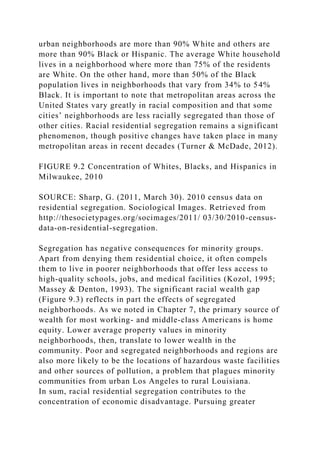
U.S. cities, such as Los Angeles, Chicago, and Milwaukee
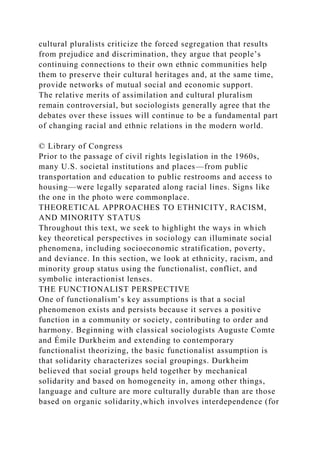
(Figure 9.2). According to the U.S. Census Bureau (2010), some
urban neighborhoods are more than 90% White and others are
more than 90% Black or Hispanic. The average White household
lives in a neighborhood where more than 75% of the residents
are White. On the other hand, more than 50% of the Black
population lives in neighborhoods that vary from 34% to 54%
Black. It is important to note that metropolitan areas across the
United States vary greatly in racial composition and that some
cities’ neighborhoods are less racially segregated than those of
other cities. Racial residential segregation remains a significant
phenomenon, though positive changes have taken place in many
metropolitan areas in recent decades (Turner & McDade, 2012).
FIGURE 9.2 Concentration of Whites, Blacks, and Hispanics in
Milwaukee, 2010
SOURCE: Sharp, G. (2011, March 30). 2010 census data on
residential segregation. Sociological Images. Retrieved from
http://thesocietypages.org/socimages/2011/ 03/30/2010-census-
data-on-residential-segregation.
Segregation has negative consequences for minority groups.
Apart from denying them residential choice, it often compels
them to live in poorer neighborhoods that offer less access to
high-quality schools, jobs, and medical facilities (Kozol, 1995;
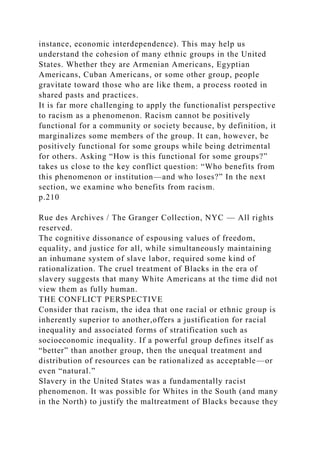
Massey & Denton, 1993). The significant racial wealth gap
(Figure 9.3) reflects in part the effects of segregated
neighborhoods. As we noted in Chapter 7, the primary source of
wealth for most working- and middle-class Americans is home
equity. Lower average property values in minority
neighborhoods, then, translate to lower wealth in the
community. Poor and segregated neighborhoods and regions are
also more likely to be the locations of hazardous waste facilities
and other sources of pollution, a problem that plagues minority
communities from urban Los Angeles to rural Louisiana.
In sum, racial residential segregation contributes to the
concentration of economic disadvantage. Pursuing greater
opportunities, members of minority groups may seek to move to
more diverse neighborhoods. Unfortunately, historically and
today, powerful social forces of poverty and discrimination
have kept and continue to keep many from achieving this goal.
ASSIMILATION AND CULTURAL PLURALISM
Throughout much of the 20th century, sociologists who studied
minorities, race, and ethnicity assumed that the ultimate destiny
of most minority groups was assimilation, or absorption into the
dominant culture. U.S. citizens have long prided themselves on
being part of a vast “melting pot” in which fundamental ethnic
differences gradually disappear and the population is boiled into
a single cultural soup. This view was strengthened by the
experience of many immigrant groups, particularly from
Northern European countries, who adopted the norms, values,
and folkways of the dominant culture to increase their social
acceptance as well as their economic success.
Residential Segregation
CLICK TO SHOW
p.209
FIGURE 9.3 Average and Median Net Worth of Households by
Race, 2009
SOURCE: Adapted from “Trends in median wealth by race,”
Lawrence Mishel, September 21, 2011. Economic Policy
Institute.
While migrant groups have historically sought to assimilate into
the dominant majority group, many also want to retain their
unique identities. Some American Indian nations, for example,
have long sought to keep alive their own traditions and beliefs.
In cultural pluralism, the coexistence of different racial and
ethnic groups is characterized by acceptance of one another’s
differences. Such a society resembles a salad bowl rather than
a melting pot. Cultural differences are respected for their
contribution to the richness of society as a whole. While
cultural pluralists criticize the forced segregation that results
from prejudice and discrimination, they argue that people’s
continuing connections to their own ethnic communities help
them to preserve their cultural heritages and, at the same time,
provide networks of mutual social and economic support.
The relative merits of assimilation and cultural pluralism
remain controversial, but sociologists generally agree that the
debates over these issues will continue to be a fundamental part
of changing racial and ethnic relations in the modern world.
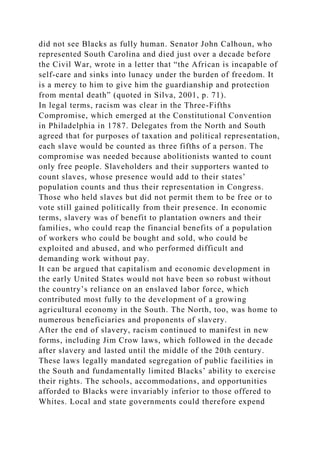
© Library of Congress
Prior to the passage of civil rights legislation in the 1960s,
many U.S. societal institutions and places—from public
transportation and education to public restrooms and access to
housing—were legally separated along racial lines. Signs like
the one in the photo were commonplace.
THEORETICAL APPROACHES TO ETHNICITY, RACISM,
AND MINORITY STATUS
Throughout this text, we seek to highlight the ways in which
key theoretical perspectives in sociology can illuminate social
phenomena, including socioeconomic stratification, poverty,
and deviance. In this section, we look at ethnicity, racism, and
minority group status using the functionalist, conflict, and
symbolic interactionist lenses.
THE FUNCTIONALIST PERSPECTIVE
One of functionalism’s key assumptions is that a social
phenomenon exists and persists because it serves a positive
function in a community or society, contributing to order and
harmony. Beginning with classical sociologists Auguste Comte
and Émile Durkheim and extending to contemporary
functionalist theorizing, the basic functionalist assumption is
that solidarity characterizes social groupings. Durkheim
believed that social groups held together by mechanical
solidarity and based on homogeneity in, among other things,
language and culture are more culturally durable than are those
based on organic solidarity,which involves interdependence (for
instance, economic interdependence). This may help us
understand the cohesion of many ethnic groups in the United
States. Whether they are Armenian Americans, Egyptian
Americans, Cuban Americans, or some other group, people
gravitate toward those who are like them, a process rooted in
shared pasts and practices.
It is far more challenging to apply the functionalist perspective
to racism as a phenomenon. Racism cannot be positively
functional for a community or society because, by definition, it
marginalizes some members of the group. It can, however, be
positively functional for some groups while being detrimental
for others. Asking “How is this functional for some groups?”
takes us close to the key conflict question: “Who benefits from
this phenomenon or institution—and who loses?” In the next
section, we examine who benefits from racism.
p.210
Rue des Archives / The Granger Collection, NYC — All rights
reserved.
The cognitive dissonance of espousing values of freedom,
equality, and justice for all, while simultaneously maintaining
an inhumane system of slave labor, required some kind of
rationalization. The cruel treatment of Blacks in the era of
slavery suggests that many White Americans at the time did not
view them as fully human.
THE CONFLICT PERSPECTIVE
Consider that racism, the idea that one racial or ethnic group is
inherently superior to another,offers a justification for racial
inequality and associated forms of stratification such as
socioeconomic inequality. If a powerful group defines itself as
“better” than another group, then the unequal treatment and
distribution of resources can be rationalized as acceptable—or
even “natural.”
Slavery in the United States was a fundamentally racist
phenomenon. It was possible for Whites in the South (and many
in the North) to justify the maltreatment of Blacks because they
did not see Blacks as fully human. Senator John Calhoun, who
represented South Carolina and died just over a decade before
the Civil War, wrote in a letter that “the African is incapable of
self-care and sinks into lunacy under the burden of freedom. It
is a mercy to him to give him the guardianship and protection
from mental death” (quoted in Silva, 2001, p. 71).
In legal terms, racism was clear in the Three-Fifths
Compromise, which emerged at the Constitutional Convention
in Philadelphia in 1787. Delegates from the North and South
agreed that for purposes of taxation and political representation,
each slave would be counted as three fifths of a person. The
compromise was needed because abolitionists wanted to count
only free people. Slaveholders and their supporters wanted to
count slaves, whose presence would add to their states’
population counts and thus their representation in Congress.
Those who held slaves but did not permit them to be free or to
vote still gained politically from their presence. In economic
terms, slavery was of benefit to plantation owners and their
families, who could reap the financial benefits of a population
of workers who could be bought and sold, who could be
exploited and abused, and who performed difficult and
demanding work without pay.
It can be argued that capitalism and economic development in
the early United States would not have been so robust without
the country’s reliance on an enslaved labor force, which
contributed most fully to the development of a growing
agricultural economy in the South. The North, too, was home to
numerous beneficiaries and proponents of slavery.
After the end of slavery, racism continued to manifest in new
forms, including Jim Crow laws, which followed in the decade
after slavery and lasted until the middle of the 20th century.
These laws legally mandated segregation of public facilities in
the South and fundamentally limited Blacks’ ability to exercise
their rights. The schools, accommodations, and opportunities
afforded to Blacks were invariably inferior to those offered to
Whites. Local and state governments could therefore expend
fewer funds on their Black populations, and White populations
benefited from reduced competition in higher education and the
labor market. Racism made Jim Crow laws both possible and
widely acceptable, because it offered a basic justification for
their existence and persistence.
While racism is clearly of no benefit to its victims and has
negative effects on society as a whole, the conflict perspective
entreats us to recognize the ways in which it has provided
benefits for some more powerful groups in society. These
benefits help to explain the existence and persistence of racism
over time.
THE SYMBOLIC INTERACTIONIST PERSPECTIVE
Sociologist Louis Wirth (1945) has noted that minority groups
share particular traits. First, membership in a minority group is
essentially involuntary—that is, someone is socially classified
as a member of a group that is discriminated against and is not,
in most instances, free to opt out. Second, as we discussed
above, minority status is a question not of numbers
(“minorities” may outnumber the dominant group) but rather of
control of valued resources. Third, minorities do not share the
full privileges of mobility or opportunity enjoyed by the
dominant group. Finally, membership in the minority group
conditions the treatment of group members by others in society.
Specifically, Wirth states, societal minorities are “treated as
members of a category, irrespective of their individual merits”
(p. 349).
p.211
Wirth’s definition recalls symbolic interactionist Erving
Goffman’s concept of a stigma, an attribute that is deeply
discrediting to an individual or a group because it overshadows
other attributes and merits the individual or group may
possess. Goffman (1963b) presented the unlikely scenario of a
young woman born without a nose: While the young woman has
a spectrum of interesting and engaging characteristics—she is a
bright student and a good dancer—she is defined by her stigma,
and her treatment by others is ever defined and determined by
her “difference.”
Goffman examined what he called mixed contacts—that
is, interactions between those who are stigmatized and those
who are “normal” (by normal, he meant only those who are
members of the dominant, nonstigmatized group—the term was
not intended to denote normality as contrasting with deviance).
Goffman concluded that mixed contacts are shaped by the
presence of the stigma, which influences the way each social
interaction unfolds. While the stigmatized identity may not be
the point of the interaction, it is inevitably a part of it. Think
about your own social interactions: Have you experienced what
Goffman describes? How would you expand or modify his
sociological description based on those experiences?
In the next section, we turn to issues of prejudice and
discrimination, considering how our judgments about someone’s
race or ethnicity—or about the racial or ethnic identity of an
entire group—are manifested in practice.
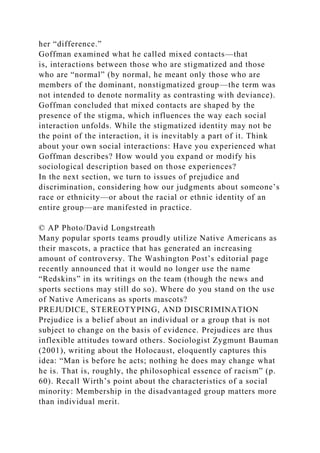
© AP Photo/David Longstreath
Many popular sports teams proudly utilize Native Americans as
their mascots, a practice that has generated an increasing
amount of controversy. The Washington Post’s editorial page
recently announced that it would no longer use the name
“Redskins” in its writings on the team (though the news and
sports sections may still do so). Where do you stand on the use
of Native Americans as sports mascots?
PREJUDICE, STEREOTYPING, AND DISCRIMINATION
Prejudice is a belief about an individual or a group that is not
subject to change on the basis of evidence. Prejudices are thus
inflexible attitudes toward others. Sociologist Zygmunt Bauman
(2001), writing about the Holocaust, eloquently captures this
idea: “Man is before he acts; nothing he does may change what
he is. That is, roughly, the philosophical essence of racism” (p.
60). Recall Wirth’s point about the characteristics of a social
minority: Membership in the disadvantaged group matters more
than individual merit.
When prejudices are strongly held, no amount of evidence is
likely to change the belief. Among neo-Nazis, for example,
prejudice against Jews runs deep. Some neo-Nazis even deny
the occurrence of the Holocaust, despite clearly authentic
firsthand accounts, films, and photographs of Nazi Germany’s
concentration camps, where millions of Jews were killed during
World War II. Why do prejudicial beliefs trump evidence in
cases such as Holocaust denial? Why is prejudice difficult to
overcome, even with facts? We may gain some insight into
these issues by looking at another social phenomenon linked to
prejudice—stereotyping.
Stereotyping is the generalization of a set of characteristics to
all members of a group. Ethnic and racial stereotypes are often
produced and reproduced in popular films: Think about images
in U.S. action movies of scheming Italian mafiosi, tough
African American street gangs, and violent Asian gangsters or
martial artists. Or consider the ways that we may attribute
characteristics—intelligence, entrepreneurship, sloth, or
slyness—to entire groups based on experiences with or
information from others about just a few members of that group.
Stereotyping offers a way for human beings to organize and
categorize the social world—but the attributions we make may
be deeply flawed.
From a sociological perspective, we may argue that while
stereotypes are often flawed, they are also functional for some
groups—though dysfunctional for others. Consider that one of
the social forces contributing to racism is the desire of one
group to exploit another. Research on early contacts between
Europeans and Africans suggests that negative stereotypes of
Africans developed afterEuropeans discovered the economic
value of exploiting African labor and the natural resources of
the African continent. That is, White Europeans stereotyped
Black Africans as, for instance, unintelligent or less than human
when such images suited the Europeans’ need to justify
enslavement and economic exploitation of this population.
White Privilege
CLICK TO SHOW
p.212
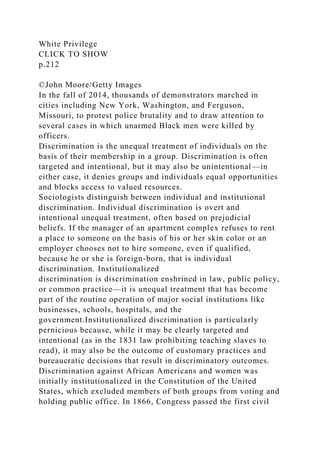
©John Moore/Getty Images
In the fall of 2014, thousands of demonstrators marched in
cities including New York, Washington, and Ferguson,
Missouri, to protest police brutality and to draw attention to
several cases in which unarmed Black men were killed by
officers.
Discrimination is the unequal treatment of individuals on the
basis of their membership in a group. Discrimination is often
targeted and intentional, but it may also be unintentional—in
either case, it denies groups and individuals equal opportunities
and blocks access to valued resources.
Sociologists distinguish between individual and institutional
discrimination. Individual discrimination is overt and
intentional unequal treatment, often based on prejudicial
beliefs. If the manager of an apartment complex refuses to rent
a place to someone on the basis of his or her skin color or an
employer chooses not to hire someone, even if qualified,
because he or she is foreign-born, that is individual
discrimination. Institutionalized
discrimination is discrimination enshrined in law, public policy,
or common practice—it is unequal treatment that has become
part of the routine operation of major social institutions like
businesses, schools, hospitals, and the
government.Institutionalized discrimination is particularly
pernicious because, while it may be clearly targeted and
intentional (as in the 1831 law prohibiting teaching slaves to
read), it may also be the outcome of customary practices and
bureaucratic decisions that result in discriminatory outcomes.
Discrimination against African Americans and women was
initially institutionalized in the Constitution of the United
States, which excluded members of both groups from voting and
holding public office. In 1866, Congress passed the first civil
rights act, giving Black men the right to vote, hold public
office, use public accommodations, and serve on juries. In 1883,
however, the U.S. Supreme Court declared the 1866 law
unconstitutional, and states then passed laws restricting where
minorities could live, go to school, receive accommodations,
and such. These laws were upheld by the U.S. Supreme Court in
the case of Plessy v. Ferguson in 1896. It took more than 75
years for the court to reverse itself.
In the 1960s, the Supreme Court held that laws
institutionalizing discrimination were unconstitutional. Open
forms of discrimination, such as signs and advertisements that
said “Whites only” or “Jews need not apply,” were deemed
illegal. Research and experience suggest, however, that
discrimination often continues in more subtle and complex
forms. Consider, once again, the case of housing and
discrimination. Institutionalized discrimination affects
opportunities for housing and, by extension, opportunities for
building individual and community wealth through home
ownership. We noted earlier in the chapter that African
Americans often still live in segregated neighborhoods.
Discrimination is part of the reason; for example, Blacks have
been historically less likely to secure mortgages. Paired testing
studies in which researchers have sent Black and White
applicants with nearly identical financial profiles to apply for
mortgages have determined that Whites as a group continue to
be advantaged in their treatment by lending institutions
(Silverman, 2005). Among other benefits, Whites enjoy higher
rates of approval and better loan conditions (Turner, Popkin, &
Rawlings, 2009).
These practices, as we saw earlier, have had a powerful effect
on the wealth gap between Whites and African Americans.
Because most wealth held by the U.S. middle class exists in the
form of home equity, the opportunity to own a home in a
neighborhood with good property values is a key way to accrue
wealth.
The turn of the millennium, however, ushered in a shift in
mortgage lending. Banks had plenty of money to lend for home
purchases, and among those targeted by banks eager to make
mortgage loans were minorities, even those with low incomes
and poor credit. The lending bonanza was no boon for these
groups, however, because many of the loans made were
subprime (subprime loans carry a higher risk that the borrower
will default, and the terms are more stringent to compensate for
this risk). Subprime loans were five times more common in
predominantly Black neighborhoods than in White ones (Pettit
& Reuben, 2010), and many borrowers did not fully understand
the terms of their loans, such as “balloon” interest rates that
rose dramatically over the life of a loan. One consequence was a
massive wave of foreclosures beginning in 2008.
Race Relations in America and Ferguson, MO
CLICK TO SHOW
p.213
While minority and poor communities were not the only ones
affected by the subprime loan fiasco, they were
disproportionately harmed. The Center for Responsible Lending
(2011) estimates that “property depreciation related to
foreclosures between 2009 and 2012 [will] end up costing black
communities $194 billion and Latino communities $177
billion.” Foreclosures have hit these communities hard: In 2011,
the Latino foreclosure rate was nearly 12%, and for Blacks it
was just under 10%. By comparison, the foreclosure rate for
Asians was just over 6%; for Whites it was 5% (Weller,
Ajinkya, & Farrell, 2012).
In the three sections that follow, we discuss contemporary
manifestations and consequences of individual and
institutionalized discrimination, highlighting housing, the
justice system, and women’s health.
TECHNOLOGIES OF DISCRIMINATION
Have you recently rented or purchased an apartment or a home?
Did you consult the classified ads in your local newspaper, or
drive around desirable neighborhoods looking for rental or sale
signs? In all likelihood, you went to the Internet and headed for
a site such as Craigslist, which offers, among many other
things, advertisements for rental units of all sizes and price
points. Between 50% and 70% of all renters utilize the Internet
in searching for a home, up from just 2% in 1995 (National
Association of Realtors, 2006). Among those seeking a home to
buy, the figure is even higher. Enforcement of the Fair Housing
Act, the primary purpose of which is to keep discriminatory
practices in check, has not kept pace with the explosive growth
of the online housing market. From blatant “Whites only”
statements to more veiled implications that people of color will
not be accepted, the Internet is rife with the potential for
housing discrimination.
Recent research shows that some housing providers and sellers
are selecting interested parties who have “White”-sounding
names over those whose names sound “ethnic.” For example, a
recent study used Craigslist to analyze responses of potential
housing providers to home seekers giving their names as Neil,
Tyrone, and Jorge (Friedman, Squires, & Galvan, 2010). The
researchers found that respondents with “White-sounding”
names (for example, Neil) were most likely to get multiple
responses, be put in touch with the housing provider, be offered
the opportunity to look at the house, and be told the property is
available. While racial and ethnic discrimination are not legal in
modern America, new forms of digitally enabled discrimination
are challenging integration efforts and reinforcing long-existing
patterns of segregation in U.S. communities. The Internet can
also be a source of other forms of prejudice and discrimination,
as we discuss in the Technology and Societybox on page 214.
PRISON, POLITICS, AND POWER
One of the key rights of U.S. citizenship is the right to vote—
that is, the right to have a voice in the country’s political
process. Some citizens, however, are denied this right. Many of
those who cannot vote have been legally disenfranchised
because of state laws that prohibit ex-felons who have served
their prison sentences from voting. Statistically speaking, this
translates into about 5.3 million disenfranchised individuals,
including roughly 1.4 million Black men. A staggering 13% of
the Black population cannot legally vote as a direct result of
these laws (Sentencing Project, 2011).
In the mid-20th century, more than 70% of those incarcerated in
the United States were White; by the end of the 20th century
those numbers had reversed, and most prisoners were non-White
(Wacquant, 2002; Western & Pettit, 2010). This shift has had a
profound effect on African Americans: 48 states prohibit
inmates from voting while they are incarcerated, 35 prohibit
parolees from voting, and 30 prohibit people on probation from
voting. In addition, Virginia, Kentucky, Iowa, and Florida all
have lifetime voting bans on anyone who has been convicted of
a felony (Sentencing Project, 2011).
Among those disenfranchised African Americans is Jarvious
Cotton. Law professor Michelle Alexander writes about Cotton
in her book The New Jim Crow: Mass Incarceration in the Age
of Colorblindness (2010):
Like his father, grandfather, great-grandfather, and great-great-
grandfather, [Jarvious Cotton] has been denied the right to
participate in our electoral democracy.... Cotton’s great-great-
grandfather could not vote as a slave. His great-grandfather was
beaten to death by the Ku Klux Klan for attempting to vote. His
grandfather was prevented from voting by Klan intimidation.
His father was barred from voting by poll taxes and literacy
tests. Today, Jarvious Cotton cannot vote because he, like many
black men in the United States, has been labeled a felon and is
currently on parole....
...Once you’re labeled a felon, the old forms of
discrimination—employment discrimination, housing
discrimination, denial of the right to vote, denial of educational
opportunity, denial of food stamps and other public benefits,
and exclusion from jury service—are suddenly legal.... We have
not ended racial caste in America; we have merely redesigned
it. (pp. 1–2)
Alexander (2010) argues that the U.S. criminal justice system
effectively functions as a modern incarnation of the Jim Crow
laws. Today, she suggests, the expansion of the prison
population to include nonviolent offenders, particularly people
of color, has contributed to the development of a population
denied opportunities to have a political voice as well as
education, work, and housing. Prison populations also include
women of color (though they are fewer in number). The Behind
the Numbers box on page 215 points to another aspect of
discrimination in the criminal justice system—colorism.
Racial Disparities in incarceration
CLICK TO SHOW
p.214
TECHNOLOGY & SOCIETY
HATE GOES DIGITAL
©REUTERS/reuters photographer
The Internet is a powerful method of exercising one’s freedom
of speech. Some racist groups, like this White pride
organization, have taken advantage of the Internet to spread
messages of hate.
Sociologists use the term scapegoating to refer to one group
blaming another for problems that members of the first group
face. As early as the 14th century, social theorist Ibn Khaldun
observed that the perception of an outside threat serves to
increase solidarity within a society. Scapegoating also aids the
bonding of social groups that share a fear or hatred of other
populations.
In the United States, scapegoating is commonly used by “hate
groups,” whose numbers have spiraled upward in recent years.
Organized White separatist and supremacist groups target their
appeals primarily to lower-income Whites, blaming their poor
economic position on other groups, in particular immigrants and
Blacks, though Jews have also historically been a target.
According to the Southern Poverty Law Center (2013), which
tracks hate groups, there were 939 known active hate groups
across the United States in 2013, including neo-Nazis, Ku Klux
Klan groups, racist skinhead groups, neo-Confederate groups,
Black separatists, border vigilantes, and a growing number of
antigovernment militias. Hate group activities range from
criminal acts to marches, rallies, speeches, pamphlet and book
publication, video production, and meetings, both public and
secret.
Since 2000, there has been an estimated 54% increase in the
number of hate groups (or at least groups known to researchers).
Why has the number risen? Key reasons include Latino
immigration and an associated perception of threat as the
demographic composition shifts away from White dominance in
some states, including Texas and California, and among the
youngest generations; the election of the first Black president;
and the economic crisis, which, even before its official
beginning in 2008, hit many communities hard (Southern
Poverty Law Center, 2011).
Another potential factor in the growth of hate groups is the
Internet. The ease of interaction with like-minded individuals
on popular social networking sites has provided fertile soil for
hate groups to form, recruit, and spread their messages. The
ease of forming or joining a group on the Internet (and the
anonymity it offers), the changes in U.S. demographics, and
economic uncertainty are a powerful mix: A recent study of
online hate group activity identified more than 20,000
“problematic” sites, which included blogs, Twitter accounts,
Facebook groups, and other forums associated with the spread
of hate. The study also suggested that “digital hate” is on the
rise: The number of sites identified as problematic rose by 30%
from 2012 to 2013 (Simon Wiesenthal Center, 2013).
“Digital hate” can be manifested as “trolling,” taking over a
targeted web user’s identity and damaging his or her reputation.
Antihate activists and groups, including the Southern Poverty
Law Center, are among those targeted by hackers representing
hate groups or working alone to discredit them. Another digital
aspect of the subculture of hate is the popularity of “hate
games” that transform violence against gays, immigrants,
people of color, or Jews into “entertainment” (Simon
Wiesenthal Center, 2011).
Hate groups have a long history in the United States, but the
Internet has transformed the social landscape by offering new
forums for communication and recruitment, as well as new and
anonymous means of expressing hate and prejudice. While the
Internet is also home to groups and organizations actively
engaged in combating these trends, the broad proliferation of
digital hate remains a problem to be addressed and solved.
THINK IT THROUGH
Can hate speech—or hateful speech—be controlled on the
Internet? Should communities or states try to control it through
legislation? What are other means of addressing it?
p.215
BEHIND THE NUMBERS
BLACK WOMEN, “COLORISM,” AND PRISON
SENTENCING
© Scott Houston/Corbis
In 2011, 26,000 African American women were serving time in
U.S. prisons for federal and state crimes (Carson & Sabol,
2012). What characterizes these female prisoners? Most were
convicted of nonviolent crimes, including drug crimes. Many
are parents from poor communities. According to researchers at
Villanova University, another characteristic of imprisoned
women is darker skin tone. Related to racism, but useful to
distinguish from it, is the phenomenon of colorism—that is,
discrimination based on skin tone. What does colorism look like
in practice?
Researchers examined more than 12,000 cases of Black women
sentenced to prison in North Carolina. In order to ensure
comparability of cases, they took into account the types of
crimes for which the women were sentenced as well as the
women’s criminal histories. They concluded that women with
lighter skin tone were given more lenient sentences and served
shorter prison terms than their darker-skinned peers.
Specifically, lighter-skinned women were sentenced to about
12% less time and served about 11% less time (Viglione,
Hannon, & DeFina, 2011).
Does colorism explain the difference in sentencing? Researchers
believe the perception of how “White” someone is does
matter—to both Whites and Blacks. William Darity, a professor
of African American studies and economics at Duke University
and director of the Research Network on Racial and Ethnic
Inequality, has conducted research on the impact of skin tone on
marriage rates for women and employment for men. Darity
points out that “all blacks don’t face the same type or degree of
discrimination.” Furthermore, the preference for lighter-skinned
women is expressed by both Black and White men (quoted in
Sanders, 2011).
While understanding and combating racism remain key issues
on the agenda of researchers and policy
makers, colorism, reacting to others on the basis of skin color,
is also a topic of consequence. A 2008 initiative by the U.S.
Equal Employment Opportunity Commission explicitly includes
colorism as a form of discrimination (Sanders, 2011).
THINK IT THROUGH
How might a sociologist explain the more acute discrimination
faced by African Americans with darker skin in comparison
with their lighter-skinned peers?
CONSEQUENCES OF PREJUDICE AND DISCRIMINATION:
RACE AND HEALTH
Sociologists studying discrimination are also interested in the
health of populations. Some researchers argue that racism and
other disadvantages suffered by Black women in the United
States contribute to the much higher level of negative birth
outcomes in this population, including low birth weight and
infant mortality (Colen, Geronimus, Bound, & James, 2006).
Consider the following statistics: Black women are 60% more
likely than White women to experience premature births, and
Black babies are about 230% more likely than White babies to
die before the age of 1 (Norris, 2011). Black women are also
more than twice as likely to give birth to very low-weight
infants than their White or Latina sisters (Ventura Curtin,
Abma, & Henshaw, 2012).
These data suggest that race trumps other identified predictors
of health, including age, income, and educational attainment
(Norris, 2011). While health outcomes are predictably favorable
among White women as they gain economic status and give
birth in their 20s and early 30s (rather than their teens), Black
women’s birth outcomes do not appear to follow this pattern
(Colen et al., 2006).
Racialization of Crime and Punishment in America
CLICK TO SHOW
Side Effects of Racism
CLICK TO SHOW
p.216
Why is race such a powerful predictor of birth outcomes?
Answers to this question are varied and complex. Public health
researcher Arline Geronimus (1992) argues that the racial
disparity in birth outcomes—and its stubborn resistance to
improvement even as Black women make educational and
economic gains—can be attributed to a phenomenon she
terms weathering. Geronimus describes weathering as an
amalgamation of racism and stressors ranging from
environmental pollutants to crime to poor health care. These
lead, she argues, to a demonstrable deterioration of health,
including poor birth outcomes, advanced aging, and even early
death.
Geronimus’s argument was met with skepticism when she
proposed it two decades ago, but it has increasingly gained
acceptance. Even in their 20s and 30s, Geronimus says, African
American women are “suffering from hypertension at two or
three times the rate of whites their own age. African-Americans
at age 35 have the rates of disability of white Americans who
are 55, and we haven’t seen much traction over 20 to 30 years
of trying to reduce and eliminate these disparities” (quoted in
Norris, 2011). To see such medical statistics through the prism
of social science is a goal of social epidemiology, which is the
study of communities and their social statuses, practices, and
problems with the aim of understanding patterns of health and
disease.
It is challenging to draw a direct connection between race-
related social stressors and negative health outcomes; critics
have questioned the link, and more work remains to be done.
However, the work of Geronimus demonstrates how sociology
can highlight connections between private troubles—such as the
birth of a low-weight or preterm infant—and public issues
(Figure 9.4). As Geronimus points out, we are just beginning to
see the impact of public policy choices in areas such as housing
and economics on women’s health (Norris, 2011).
FIGURE 9.4 Racial Disparities in Birth Outcomes in the United
States, 1990–2007
SOURCE: Ventura, S. J., Curtin, S. C., Abma, J. C., &
Henshaw, S. K. (2012). Estimated pregnancy rates and rates of
pregnancy outcomes for the United States, 1990–2008. National
Vital Statistics Reports, 60(7).
FIGURE 9.5 U.S. Population by Race and Hispanic Origin, 2012
and 2060 (projected)
*AIAN: American Indian and Alaska Native
**NHPI: Native Hawaiian and Other Pacific Islander
SOURCE: U.S. Census Bureau. (2012). USA QuickFacts.
Prejudice and discrimination have a long history and take a
multitude of forms, some overt, many quite subtle. Will the
United States see a decline in prejudice and discrimination as
ethnic and racial diversity grows, or will the changing
demographic picture make conflicts more acute? Next we look
at some of the major groups that make up the U.S. population
and see how their numbers are changing.
RACIAL AND ETHNIC GROUPS IN THE UNITED STATES
The area now called the United States was once occupied by
hundreds of Native American nations. Later came Europeans,
most of whom were English, though early settlers also included
the French, Dutch, and Spanish, among others. Beginning in
1619, Africans were brought as slaves and added a substantial
minority to the European population. Hundreds of thousands of
Europeans continued to arrive from Norway, Sweden, Germany,
and Russia to start farms and work in the factories of early
industrial America. In the mid-1800s, Chinese immigrants were
brought in to provide the heavy labor for building railroads and
mining gold and silver. Between 1890 and 1930, nearly 28
million people immigrated to the United States. After the 1950s,
immigrants came mostly from Latin America and Asia (Figure
9.6).
p.217
FIGURE 9.6 Number of Persons Obtaining Legal Permanent
U.S. Resident Status, 1820–2010
SOURCE: Department of Homeland Security, Office of
Immigration Statistics, Yearbook of Immigration Statistics,
2010.
Today, non-Whites make up just under 30% of the U.S.
population. If current trends hold, non-Whites will constitute a
numeric majority nationwide by about 2040. Non-Whites
already constitute a majority in Texas, which has a growing
Latino population. Between 2000 and 2012, the U.S. Latino
population nearly doubled, to more than 16% percent of the
U.S. population, surpassing African Americans (about 13%).
Asians also experienced double-digit growth from 2000 to 2010
and now constitute about 5% of the U.S. population (Humes,
Jones, & Ramirez, 2011).
The rapid growth of minority populations reflects growth from
both new births and migration. Migration is the primary engine
of population growth in the United States. In fact, demographers
estimate that by the middle of the 21st century, fully one fifth
of the U.S. population will be immigrants. In a population
estimated to reach more than 438 million by 2050, 67 million
will be immigrants, and about 50 million will be the children
and grandchildren of immigrants (Pew Research Center, 2008).
Overall, the trend toward a more racially and ethnically diverse
country is clear: At the time of the 2010 census, the majority of
children under 2 years old were non-White.
In the following sections we look in more depth at the racial
and ethnic groups that have come together to constitute U.S.
culture and society today.
AMERICAN INDIANS
There is no agreement on how many people were living in North
America when the Europeans arrived around the beginning of
the 16th century, but anthropologists’ best guess is about 20
million. Thousands of thriving societies existed throughout
North and South America in this period. Encounter between
European explorers and Native Americans soon became
conquest, and despite major resistance, the indigenous
populations were eventually defeated and their lands
confiscated by European settlers. It is believed that between
1500 and 1800 the North American Indian population was
reduced from more than 20 million to fewer than 600,000
(Haggerty, 1991). American Indians, like conquered and
oppressed peoples everywhere, did not passively accept the
European invasion. The “Indian Wars” are among the bloodiest
in U.S. history, but resistance was not enough. First, White
settlers had access to superior weaponry that Native Americans
could not effectively counter. Second, Whites’ control of
political, economic, and environmental policies gave them a
powerful advantage. Consider, for instance, the U.S.
government’s decision to permit the unregulated slaughter of
bison (buffalo) in the post–Civil War era. From about 1866,
when millions of bison roamed the American West and the
Great Plains, to the 1890s, this key Native American resource
was decimated until just a few thousand remained (Moloney,
2012; Smits, 1994).
Since the 1960s, some Native Americans have focused on
efforts to force the U.S. government to honor treaties and
improve their living conditions, particularly on reservations. In
1969, the group Indians of All Tribes (IAT), citing the Treaty of
Fort Laramie (1868), which states that all unused or abandoned
federal land must be returned to the Indians, seized the
abandoned island of Alcatraz, a former prison island in the San
Francisco Bay, and issued a proclamation that contained the
following (deliberately ironic) declarations: “We, the native
Americans, re-claim the land known as Alcatraz Island in the
name of all American Indians by right of discovery.... We feel
that this so-called Alcatraz Island is more than suitable for an
Indian Reservation, as determined by the white man’s own
standards.” The IAT went on to note the island’s “suitability”
by pointing out that, among other things, it had no fresh running
water, no industries to provide employment, no health care
facilities, and no oil or mineral rights for inhabitants. This
comparison was intended to point to the devastating conditions
on most reservations.
The IAT occupied Alcatraz for more than 18 months. The
occupation ended when some IAT members left due to poor
living conditions, as the federal government shut off all power
and water to the island, and others were removed when the
government took control of the island in June 1971.
Despite centuries of struggle, more than 60% of the 4.9 million
American Indians in the United States today live in urban areas
and are among the poorest people in the nation: More than half
of all Native American children are born into poverty, three
times the rate for White children. About 1.9 million Native
Americans live on reservations, where unemployment rates run
as high as 50%. With limited economic opportunities, Native
Americans also have relatively low educational attainment: Just
13% have earned bachelor’s degrees (Ogunwole, Drewery, &
Rios-Vargas, 2012).
Native American Struggles
CLICK TO SHOW
p.218
©AARON HUEY/National Geographic Creative
American Indians lived in the territorial United States long
before the political state was established. They suffered the loss
of territory and population as a result of U.S. government
policies. Even today, American Indian communities face unique
challenges.
The Inequality Matters box on page 220 raises another issue
pertinent to the status of Native Americans in the United States:
Who has the power to name this population?
AFRICAN AMERICANS
In 1903, W. E. B. Du Bois penned the following words: “The
problem of the Twentieth Century is the problem of the color
line” (1903/2008, p. 9). By that he meant that grappling with
the legacy of 250 years of slavery would be one of the great
problems of the 20th century. Indeed, as this chapter shows, Du
Bois was right, although he did not foresee that the “color line”
would incorporate not just African Americans but Hispanics,
Asians, American Indians, and other minorities as well.
Slavery forcibly brought more than 9 million people, mostly
from West Africa, to North and South America. Although the
stereotype of slaves gratefully serving their White masters
dominated U.S. culture for many years, the fact is that slave
revolts were frequent throughout the South. More than 250
Black uprisings against slavery were recorded from 1700 to
1865, and many others were not recorded (Greenberg, 1996;
Williams-Meyers, 1996).
Immediately following the end of slavery, during the
Reconstruction period, African Americans sought to establish
political and economic equality. Former slaves gained the right
to vote, and in some jurisdictions they constituted the majority
of registered voters. Black legislators were elected in every
southern state. Between 1870 and 1901, 22 Blacks served in the
U.S. Congress, while hundreds of others served in state
legislatures, on city councils, and as elected and appointed
officials throughout the South (Holt, 1977). Their success was
short-lived. White southern legislators, still a majority, passed
Jim Crow laws excluding Blacks from voting and using public
transportation. In time, every aspect of life was constrained for
Blacks, including access to hospitals, schools, restaurants,
churches, jobs, recreation sites, and cemeteries. By 1901,
because literacy was required to vote and most Blacks had been
effectively denied even a basic education, the registration of
Black voters had dwindled to a mere handful (Morrison, 1987).
The North’s higher degree of industrialization offered a promise
of economic opportunity, even though social and political
discrimination existed there as well. Between 1940 and 1970,
more than 5 million African Americans left the rural South for
what they hoped would be a better life in the North (Lemann,
1991). Whether they stayed in the South or moved to the North,
however, many Blacks were still being denied fundamental
rights nearly 100 years after slavery was abolished.
p.219
By the 1950s, the social landscape was changing—consider the
fact that having fought against a racist regime in Nazi Germany
in the 1940s, the United States found it far more difficult to
justify continued discrimination against its own minority
populations. Legal mandates for equality, however, did not
easily translate to actual practices, and the 1960s saw a wave of
protest from African Americans eager to claim greater rights
and opportunities. The civil rights movement was committed to
nonviolent forms of protest. Participants in the movement used
strikes, boycotts, voter registration drives, sit-ins, and freedom
rides in their efforts to achieve racial equality. In 1964,
following what was at the time the largest civil rights
demonstration in the nation’s history, a march on Washington,
D.C., the federal government passed the first in a series of civil
rights laws that made it illegal to discriminate on the basis of
race, sex, religion, physical disability, or ethnic origin.
All African Americans have not benefited from legislation
aimed at abolishing discrimination (Wilson, 2010). In
particular, the poorest Blacks—those living in disadvantaged
urban and rural areas—lack the opportunities that could make a
difference in their lives. Many poor Black Americans suffer
from having very little social capital, including uneducated
parents, inadequate schools, lack of skills and training, and poor
local job opportunities. As a result, nearly half of all African
American workers are today employed in unskilled or
semiskilled service jobs—as health care aides, janitors, and
food service workers, for example—compared with only a
quarter of all Whites. Few of these occupations offer the
opportunity to earn a living wage.
Over time, African Americans have been broadly successful in
improving their economic circumstances. The economic gains of
African Americans, however, have been more tenuous than
those of most other groups, and the Great Recession that began
in 2007 substantially eroded Black wealth and income in
America. Consider that from 2007 to 2010 the median income of
Black Americans fell by about 10%, while that of White
Americans dropped by 5% (Mishel, Bivens, Gould, & Shierholz,
2012).
Although African Americans have had mixed success in gaining
economic power, as a group they have seen important gains in
political power. In the early 1960s, there were only 103 African
Americans holding public office in the United States. By 1970,
about 715 Blacks held elected office at the city and county
levels. By the 1990s, however, the figure had surpassed 5,000,
and in recent decades major cities—including New York, Los
Angeles, Chicago, and Washington—have elected Black mayors,
and Black representation on city and town councils and state
bodies has grown dramatically. At the federal level there have
been fewer gains, although, clearly, President Obama’s election
in November 2008 and reelection in 2012 represented a
profound political breakthrough for Blacks. Following the
congressional elections of November 2012, the House of
Representatives had 42 Black members, but only a single
African American was serving in the Senate.
LATINOS/LATINAS
The category of Latino (or Hispanic, the term used by the U.S.
Census Bureau) includes people whose heritages lie in the many
different cultures of Latin America. Latinos largely share the
Spanish language as part of their ethnic heritage. According to
official estimates, there are 32 million Latinos living in the
United States, making them the largest minority group. It is
probable that official data actually underestimate the total
Latino population, given that they likely miss a sizable number
of undocumented immigrants. Latinos are increasing in numbers
more rapidly than any other minority group, because of both
high immigration rates and high birthrates. By 2025, they are
expected to number nearly 59 million and make up about a fifth
of the U.S. population.
Many Latinos trace their ancestry to a time when the
southwestern states were part of Mexico. During the mid-19th
century, the United States sought to purchase from Mexico what
are now Texas and California. Mexico refused to sell, leading to
the 1846–1848 U.S.–Mexican War. Following its victory, the
U.S. government forced Mexico to sell two fifths of its
territory, enabling the United States to acquire all the land that
now makes up the southwestern states, including California,
Texas, New Mexico, and Arizona. Along with this vast territory
came the people who inhabited it, including tens of thousands of
Mexicans who were forced by White settlers to forfeit their
property and who suffered discrimination at the hands of the
Whites (Valenzuela, 1992).
Latinos have experienced some of the same obstacles of
prejudice and discrimination in the United States as have
African Americans. They continue to be discriminated against
and live below the standards of the dominant population. At the
same time, the very category of Latino is problematic for
sociologists because it encompasses several different ethnic
groups with very different experiences of immigration. Latinos
are often referred to in a way that implies uniformity across
members of this group, when in reality Latinos constitute a
diverse ethnic population with roots in a range of countries in
Central America, South America, and the Caribbean (Figure
9.7). To add to the complexity, Latinos who are born in the
United States, or who have the majority of their families
anchored in the United States, are increasingly different from
the people who permanently reside in their families’ countries
of origin. We discuss two of the most prominent Latino groups
below.
p.220
INEQUALITY MATTERS
WHO HAS THE POWER TO NAME?
“A language is a dialect that has an army and a navy,” said
sociolinguist Max Weinreich. Before White Europeans came to
North America, one of the largest Indian nations was the Dineh,
a name that means “the People of the Earth.” No one knows
exactly why, but the Spaniards renamed them “Navajo,” the
designation by which Europeans have referred to them ever
since. While Native Americans were being outgunned and
oppressed by the wave of White European settlers, their
language was also subject to marginalization, as was their
power to name themselves.
Sociologist Pierre Bourdieu (1991) has pointed out that
language is a medium of power, a vehicle that may confer either
status or function as a means of devaluation and exclusion.
Historically, minority groups have been denied opportunities to
name themselves. What is the appropriate name for the people
who lived for thousands of years in what today is known as
North and South America? They are commonly referred to
as Indians, Native Americans, indigenous peoples, or
simply Natives. Two prominent organizations—the National
Congress of American Indians and the American Indian
Movement—use American Indian to describe themselves. Yet
others object to the term because, like the word Navajo, it was
given to them by European settlers and their descendants.
Those who object to American Indian feel the
alternative, Native American, captures the fact that they alone
among ethnic groups are truly native to this continent, but this
name also was given by European settlers. Others argue that
nothing short of the correct name for each nation (such as
Sioux, Pawnee, Cheyenne, Dineh, or Cherokee) is acceptable.
However, referring to each separate nation is problematic when
we speak of the collective of Native Americans. After years of
controversy among the members of the various nations, their
leaders agreed to accept American Indian to refer to themselves
collectively (Scott, Tehranian, & Mathias, 2002).
The name for a particular racial or ethnic group may be highly
contested, since it carries with it information about the group’s
social history. The effort by many groups to “name themselves”
reflects their belief that to passively accept the name given by
society’s dominant group is to potentially accept being silenced.
American Indian activists Laura Waterman Wittstock and Elaine
J. Salinas (1998) suggest in their history of the American Indian
Movement that “in the 30 years of its formal history, the
American Indian Movement (AIM) has given witness to a great
many changes. We say formal history, because the movement
existed for 500 years without a name. The leaders and members
of today’s AIM never fail to remember all of those who have
traveled on before, having given their talent and their lives for
the survival of the people.”
THINK IT THROUGH
Bourdieu highlights the “power to name” as one that is more
likely to be held and exercised by dominant groups in society.
Can you name another situation in which the power to name
gives an advantage to one group and disadvantage to another?
MEXICAN AMERICANS Mexicans are the largest group of
Latinos in the United States. A large proportion of the Mexican
American population lives in California, New Mexico, Texas,
and Arizona, though migration to the American South has grown
substantially. The immigration of Mexican Americans has long
reflected the immediate labor needs of the U.S. economy
(Barrera, 1979; Muller & Espenshade, 1985). During the 1930s,
state and local governments forcibly sent hundreds of thousands
of Mexican immigrants back to Mexico, but when the United
States experienced a labor shortage during World War II,
immigration was again encouraged. After the war
the bracero (manual laborer) program enabled 4 million
Mexicans to work as temporary farm laborers in the United
States, often under exploitative conditions. The program was
ended in 1964, but by the 1980s, immigration was on the
upsurge, with millions of people fleeing poverty and political
turmoil in Latin America by illegally entering the United States.
p.221
FIGURE 9.7 Countries of Origin of the Hispanic Population in
the United States, 2010
SOURCE: Data from Pew Research Center. 2012. Hispanic
origins profiles, 2010 by Seth Motel and Eileen Patten. Pew
Hispanic Center.
© ZUMA Press, Inc. / Alamy
Arizona’s SB 1070 legislation gives law enforcement officers
the right to ask for proof of legal residency within the United
States. This controversial law allows officers to exercise
discretion in determining who “looks” like a legal or illegal
resident.
Political rhetoric about the threat of illegal immigrants seeking
U.S. jobs has become increasingly heated in the recession that
began in 2008, although the numbers of such immigrants have
likely been falling. In fact, recent data suggest that a host of
factors—including the dangers of crossing the U.S.–Mexico
border due to drug violence on the Mexican side, harsher
immigration laws in states from Georgia to Arizona, and the
dearth of employment in the wake of the recession—have
pushed illegal immigration down, perhaps to the point that more
undocumented migrants are leaving the United States than
entering it (Massey, 2011).
Most ethnic Mexicans in the United States are legal residents,
and the number of those rising into the middle class has grown
considerably, though the number living in poverty has also
risen, particularly in the wake of the economic crisis.
CUBAN AMERICANS When Fidel Castro came to power in
Cuba in 1959, Cubans who opposed his communist regime
sought to emigrate to the United States. These included some of
Castro’s political opponents, but most were middle-class
Cubans whose standard of living was declining under Castro’s
economic policies and the U.S. economic embargo of Cuba.
About half a million entered the United States, mostly through
Florida, which is just 90 miles away from Cuba.
The Cuban community has enjoyed both economic and, perhaps
as a result, political success in Florida (Ferment, 1989; Stepick
& Grenier, 1993). In contrast to many immigrants, who tend to
come from the poorer strata of their native countries, Cuban
immigrants were often highly educated professionals and
businesspeople before they fled to the United States. They
brought with them a considerable reserve of training, skill, and
sometimes wealth.
The anticommunist stance of the new migrants was also a good
fit with U.S. foreign policy and the effort to crush communist
politics in the Western Hemisphere. The U.S. government
provided financial assistance such as small business loans to
Cuban immigrants. It also offered a spectrum of language
classes, job training programs, and recertification classes for
physicians, architects, nurses, teachers, and lawyers who sought
to reestablish their professional credentials in the United States.
About three-quarters of all Cubans arriving before 1974
received some form of government benefits, the highest rate of
any minority community.
While Cuban migrants have tended to have higher levels of
education than Mexican immigrants do, their status in the
United States has also been strongly influenced by the political
and economic (that is, the structural) needs of the U.S.
government. U.S. economic needs have determined whether the
government encouraged or discouraged the migration of manual
labor power from Mexico, while political considerations have
fostered a support network for migrants endorsing the U.S.
government’s effort to end the communist Castro regime in
Cuba.
ASIAN AMERICANS
Asian immigrants were instrumental in the development of
industrialization in the United States. In the mid-1900s,
construction began on the transcontinental railroad that would
link California with the industrializing East. At the same time,
gold and silver were discovered in the American West. Labor
was desperately needed to mine these natural resources and to
work on building the railroad. At the time, China was suffering
a severe drought. U.S. entrepreneurs seeking labor quickly saw
the potential fit of supply and demand, and hundreds of
thousands of Chinese were brought to the United States as
inexpensive manual labor. Most came voluntarily, but some
were kidnapped by U.S. ship captains and brought to the West
Coast.
p.222
About 4% of Americans today trace their origins to Asian
countries such as India, China, Japan, Korea, and Vietnam. The
number of Asian Americans is growing, primarily because of
immigration (Asian American birthrates, following the pattern
in Asian countries, are low). Like Latinos, Asian Americans
constitute a population of great ethnic diversity; the wide-
ranging characteristics of this population cannot be fully
captured by the term Asian American (Figure 9.8).
Asian Americans, like members of other minority groups, have
experienced prejudice and discrimination. For example, during
World War II, many Japanese Americans were forcibly placed
in internment camps, and their property was confiscated
(Daniels, 2004; Harth, 2001). The U.S. government feared their
allegiances were with Japan—an enemy in World War II—rather
than the United States. While the teaching of German was
banned in some schools, drastic measures were not taken against
German or Italian Americans, although Germany and Italy were
allied with Japan during the war.
© AP Photo/anonymous
Beginning in 1942, the U.S. government relocated an estimated
110,000 Japanese Americans living on the West Coast to
internment camps. The government feared disloyalty after the
Japanese attack on Pearl Harbor, in spite of the fact that more
than 60% of those interned were U.S. citizens.
In spite of obstacles, the Asian American population has been
successful in making economic gains. Asian Americans as a
whole have the highest median household income of any
minority group, as well as the lowest rates of divorce, teenage
pregnancy, and unemployment. Their economic success reflects
the fact that, like Cuban Americans, recent Asian immigrants
have come from higher socioeconomic backgrounds, bringing
greater financial resources and more human capital (Zhou,
2009). Family networks and kinship obligations also play an
important role. In many Asian American communities, informal
community-based lending organizations provide capital for
businesses, families and friends support one another as
customers and employees, and profits are reinvested in the
community (Ferment, 1989; Gilbertson & Gurak, 1993; Kasarda,
1993).
At the same time, there are substantial differences within the
Asian American population. Nearly half of all Asian Indian
Americans, for example, are professionals, compared with less
than a quarter of Korean Americans, who are much more likely
to run small businesses and factories. Poverty and hardship are
more prevalent among those from Southeast Asia, particularly
immigrants from Cambodia and Laos, which are deeply
impoverished countries with less educated populations.
FIGURE 9.8 Countries of Origin of the Asian Population in the
United States, 2010
SOURCE: Data from Pew Research Center. 2012. The rise of
Asian Americans. Pew Social & Demographic Trends.
ARAB AMERICANS
Immigrants from Arab countries began coming to the United
States in the 1880s. The last major wave of Arab migration
occurred in the decade following World War II (PBS, 2011).
Contrary to popular perceptions, most members of today’s Arab
American population were born in the United States. The
majority trace their roots back to Lebanon, Syria, Palestine,
Egypt, and Iraq (Arab American Institute, 2012).
Arab Americans face a unique set of challenges and obstacles.
Immediately following the September 11, 2001, terrorist
attacks, Arab Americans as a group suffered stigma, and acts of
discrimination against them increased sharply. The terror
attacks provided an avenue for legitimating the views of racists
and xenophobes (Salaita, 2005), but institutionalized prejudice
was also obvious in the increase in “random” screenings and
searches that targeted Arab Americans.
Arab Americans Post 9/11
CLICK TO SHOW
p.223
FIGURE 9.9 Legal Migration to the United States by Region of
Origin, 1820–2009
SOURCE: Data from Table 2, Persons Obtaining Legal
Permanent Resident Status by Region and Selected Country of
Last Residence: Fiscal Years 1820 to 2012. Yearbook of
Immigration Statistics: 2012 Legal Permanent Residents. U.S.
Department of Homeland Security.
At the same time, Arab Americans represent a “model
minority”—a racial or ethnic group with higher levels of
achievement than the general population in areas such as
education and income. Like Asian Americans, Arab Americans
as a demographic group have been notably successful in these
two fields; 45% have at least a bachelor’s degree or higher
(compared to 28% for the general population), and in 2008 their
mean individual income was 27% higher than the national
average (Arab American Institute Foundation, 2011).
WHITE ETHNIC AMERICANS
White people have always made up a high percentage of the
foreign-born population in the United States. The stereotype of
minorities as people of color leaves out significant pockets of
White ethnic minorities. In the early days of mass migration to
the United States, the dominant group was White Protestants
from Europe. Whites from Europe who were not Protestant—
particularly Catholics and Jews—were defined as ethnic
minorities, and their status was clearly marginal in U.S. society.
In mid-19th-century Boston, for example, Irish Catholics made
up a large portion of the city’s poor and were stereotyped as
drunken, criminal, and generally immoral (Handlin, 1991). The
term paddy wagon, used to describe a police van that picks up
the drunk and disorderly, came from the notion that the Irish
were such vans’ most common occupants. (Paddy was a
derogatory term for an Irishman.) Over time, however, White
ethnic groups assimilated with relative ease because, for the
most part, they looked much like the dominant population
(Prell, 1999). To further their assimilation, some families
changed their names and encouraged their children to speak
English only. Today, most of these White ethnic groups—Irish,
Italians, Russians, and others—have integrated fully into U.S.
society (Figure 9.9). They are, on the whole, born wealthier,
have more social capital, and encounter fewer barriers to
mobility than other racial and ethnic groups.
If dark skin has historically been an obstacle in U.S. society,
light skin has been an advantage. That advantage, however, may
go unrecognized. As Peggy McIntosh writes in her thought-
provoking article “White Privilege: Unpacking the Invisible
Knapsack” (1990), “as a white person, I realized I had been
taught about racism as something that puts others at a
disadvantage, but had been taught not to see one of its corollary
aspects, white privilege, which puts me at an advantage.... I
have come to see white privilege as an invisible package of
unearned assets that I can count on cashing in each day, but
about which I was ‘meant’ to remain oblivious” (p. 31).
McIntosh goes on to outline these “assets,” including the
following: When Whites are told about their national heritage,
or the origins of “civilization,” they are shown that White
people shaped it. Posters, picture books, greeting cards, toys,
and dolls all overwhelmingly feature White images. As a White
person, she need not worry that her coworkers at an affirmative
action employer will suspect she got her job only because of her
race. If she needed any medical or legal help, her race alone
would not be considered a risk factor or hindrance in obtaining
such services. These are just a few among the 50 unearned
privileges of White skin that McIntosh identifies. Her argument
is essentially that obliviousness to the advantages of White skin
“maintain[s] the myth of meritocracy, the myth that democratic
choice is equally available to all” (1999, p. 36). Recognition of
skin privilege, in contrast, would be a challenge to the structure
of power, which prefers to ignore whatever does not support the
story of achievement as an outcome of merit.
p.224
FIGURE 9.10 Race, Ethnicity, and Hispanic Origin Questions,
U.S. Bureau of the Census Form, 2010
SOURCE: U.S. Bureau of the Census.
Is the recognition of racial or ethnic advantages as important as
recognition of racial or ethnic disadvantages? Can this help to
level the field of opportunity for all Americans? What do you
think?
MULTIRACIAL AMERICANS
As we note in the Inequality Matters box on page 220, naming
is an important sociological action. It may be an exercise of
power or an act of recognition. In 2000, the U.S. Census
Bureau’s questionnaire for the first time permitted respondents
to select more than one race in describing themselves. In 2000,
about 2.4% of Americans, or 6.8 million people, identified
themselves as multiracial. In the 2010 census that figure grew to
9 million people (2.9% of Americans). Interestingly, the self-
reported multiracial population grew much more dramatically
than than the single-race population: The former rose by 32%,
while the latter rose by just over 9% (Jones & Bullock, 2012).
The rise in the numbers of U.S. residents describing themselves
as belonging to more than one race should perhaps not come as
any surprise. On one hand, more children are being born into
interracial partnerships: In 2010, 10% of heterosexual married
couples (5.4 million) were interracial, and the figure is even
higher among unmarried couples (Lofquist, Lugaila, O’Connell,
& Feliz, 2012). On the other hand, because this is a self-
reported status, more people may be choosing to identify
themselves as multiracial as the availability of the category
becomes more widely known and as multiracial status becomes
more broadly accepted.
Notably, being biracial or multiracial is not a new phenomenon.
It is, in some respects, a newly named phenomenon that is also
of growing interest to researchers. The politics of
multiracialism can be complicated, with competing interests at
play. For example, leading up to the 2000 census, many mixed-
race individuals and advocacy groups favored the addition of an
entirely separate “multiple race” option on the census
questionnaire, as opposed to allowing respondents to check
multiple boxes from among the established racial categories.
They argued that the addition of such an option would allow for
fluidity in the way that individuals identify themselves, freeing
them from the constraints of categories imposed on them by the
state. Others, including some prominent civil rights leaders,
countered that identification according to the established racial
categories is necessary to ensure that civil rights legislation is
enforced and that inequalities in housing, income, education,
and so on are documented accurately (Roquemore & Brunsma,
2008). On one hand, the lived experience of multiracial
Americans and their right to self-identify must be respected; on
the other hand, the Census Bureau must fulfill its obligation to
provide legislators with accurate information on inequality.
Social science research tells us that individuals’ racial
identification plays an important role in how others interact
with them, their social networks, and even their life chances
(Khanna, 2011). Thus, the question of how a person self-
identifies, and how others perceive him or her, has real
consequences in that individual’s everyday life.
p.225
RACE AND ETHNICITY IN A GLOBAL PERSPECTIVE
While our focus to this point has been on the United States,
issues of racial and ethnic identities and inequalities are global
in scope. Around the world, unstable minority and majority
relationships, fears of rising migration from developing
countries, and even ethnic and racial hatreds that explode into
brutal violence highlight again how important it is for us to
understand the causes and dynamics of categories that, while
socially constructed, are powerfully real in their consequences.
European countries such as France, Germany, and Denmark
have struggled in recent years to deal with challenges of
immigration, discrimination, and prejudice. Migration to
Northern and Western Europe from developing states,
particularly those in North Africa and the Middle East, has
risen, driven by a combination of push factors (social forces
such as dire economic conditions and inadequate educational
opportunities that encourage migrants to leave their home
countries) and pull factors (forces that draw migrants to a given
country, such as labor shortages that can be filled by low- or
high-skilled migrants or an existing ethnic network that can
offer new migrants support). In a short period of time, the large
numbers of job seekers from developing countries in search of
better lives have transformed the populations of many European
countries from largely ethnically homogeneous to
multicultural—a change that has caused some political and
social tensions.
Tensions in Europe revolve at least in part around the fact that a
substantial proportion of migrants from developing states are
Muslim, and some have brought with them religious practices,
such as veiling, that are not perceived to be a good fit with
largely secular European societies. By some estimates, Muslims
will account for about a fifth of the population of the European
Union by 2050 (Mudde, 2011). In 2011, France, in which about
10% of the population is Muslim, became the first country in
Europe to ban the full face veil, also known as the burqa, which
is the customary dress for some Muslim women. Similar
legislation has been introduced, but not passed, in Belgium and
the Netherlands. Earlier, when France banned all overt religious
symbols from schools in 2004, civil defiance and violence
followed. The Parisian suburbs burned as young French
Muslims rioted, demanding opportunity and acceptance in a
society that has traditionally narrowly defined who is “French.”
In some cases, ethnic and racial tensions have had even more
explosive effects. Earlier in this chapter, we talked about four
forms that majority–minority relations can take: expulsion,
segregation, assimilation, and cultural pluralism. Here we add a
fifth form: genocide.
GENOCIDE: THE MASS DESTRUCTION OF SOCIETIES
Genocide can be defined as the mass, systematic destruction of
a people or a nation. According to the Convention on the
Prevention and Punishment of the Crime of Genocide, adopted
by the United Nations General Assembly in 1948, when
genocide was declared a crime under international law, it
includes “any of the following acts committed with intent to
destroy, in whole or in part, a national, ethnical, racial or
religious group, as such:
a. Killing members of the group;
b. Causing serious bodily or mental harm to members of the
group;
c. Deliberately inflicting on the group conditions of life
calculated to bring about its physical destruction in whole or in
part;
d. Imposing measures intended to prevent births within the
group;
e. Forcibly transferring children of the group to another
group.”
The mass killing of people because of their membership in a
particular group is ages old. Hans Van Wees (2010) notes that
ancient Christian and Hebrew religious texts contain evidence
of early religiously motivated mass killings. Roger W. Smith
(2002) points out that the Assyrians, Greeks, Romans, and
Mongols, among others, engaged in genocide, but their
perspective on mass killing was shaped by their time. He notes
that rulers boasted about the thousands they killed and the
peoples they eliminated. Genocide as both a term and a defined
crime is much more recent.
Genocide in Darfur and Rwanda
CLICK TO SHOW
p.226
FIGURE 9.11 Select Genocides Around the World, 1914–
Present
The word genocide was coined in the 1940s by Polish émigré
Raphael Lemkin, who left his native country in the late 1930s,
several years before Adolf Hitler’s Nazi army overran it. A
lawyer and an academic, Lemkin was also a crusader for human
rights, and, aware of Nazi atrocities in Europe, he sought to
inspire U.S. decision makers to act against the mass killing of
Jews and other targeted groups. In a 1941 radio broadcast,
British prime minister Winston Churchill decried the “barbaric
fury” of the Nazis and declared, “We are in the presence of a
crime without a name.” Lemkin, who heard the broadcast,
undertook to name the crime and, through this naming, to bring
an end to it (Power, 2002).
Sociologist Pierre Bourdieu (1991) points to the significance of
language in structuring the perception that social agents (such
as governments or populations) have of the world around them.
The very act of naming a phenomenon confers on it a social
reality. Lemkin sought to use the act of naming as a vehicle for
action against Nazi atrocities and against future threats to the
physical, political, cultural, and economic existence of
collectivities (Shaw, 2010). Lemkin settled on genocide,a
hybrid of the Greek geno, meaning “tribe” or “race,” and the
Latin cide (from caedere), or “killing.”
The 1948 U.N. Convention on the Prevention and Punishment of
the Crime of Genocide created a potentially powerful new
political reality, though it narrowed the definition from the
broad articulation championed by Lemkin (Shaw, 2010).
Theoretically, state sovereignty could no longer shield a country
from the consequences of committing genocide, because the
nations that signed the U.N. convention were bound by it to
prevent, suppress, and punish such crimes. At the same time,
the notion of an obligation to intervene is loose and open to
interpretation, as history has shown. Humanitarian
organizations such as Genocide Watch and institutions such as
the U.S. Holocaust Memorial Museum have sounded the alarm
on recent atrocities, often labeling them genocide even while
many governments have resisted using the term.
Genocides in the second half of the 20th century include
slaughters carried out by the Khmer Rouge in Cambodia in the
1970s, Saddam Hussein’s 1987–1988 campaign against ethnic
Kurds in Iraq, and Serb atrocities in the former Yugoslav states
of Bosnia-Herzegovina and Kosovo in the late 1990s (Figure
9.11). The 21st century has already seen the genocidal
destruction of Black Africans, including the Darfuris, Abyei,
and Nuba, by Arab militias linked to the government in Sudan.
One of the most discussed cases of genocide in the late 20th
century took place in Rwanda, where in 1994 no fewer than
800,000 ethnic Tutsis were killed by ethnic Hutus in the space
of just 100 days. Many killings were done by machete, and
women and girls were targeted for sexual violence. By most
accounts, Tutsis and Hutus are not so different from one
another; they are members of the same ethnic group, live in the
same areas, and share a common language. One cultural
difference of considerable importance, however, is that for the
Tutsis the cow is sacred and cannot be killed or used for food.
The Hutus, who have a long tradition of farming, were forced to
leave large areas of land open for cattle grazing, thus limiting
the fertile ground available for farming. As the cattle herds
multiplied, so did tensions and conflict. Notably, for many
years the Tutsis, while fewer in number (representing
approximately 14% of the population), dominated the Hutus
politically and economically (Kapuscinski, 2001).
p.227
© Joe McNally / Contributor/Getty Images
The award-winning film Hotel Rwanda captured just a fragment
of the 1994 genocide in Rwanda. Nearly a million ethnic Tutsis
were systematically killed by ethnic Hutus in less than 100
days
Rwanda was long a colony of Belgium, but in the 1950s, Tutsis
began to demand independence, as did many other colonized
peoples in Africa. The Belgians incited the Hutus to rebel
against the Tutsi ruling class. The rebellion was unsuccessful,
but the seeds for genocide were planted in fertile soil, and
sporadic ethnic violence erupted in the decades that followed.
Belgium finally relinquished power and granted Rwanda
independence in 1962. From the early 1970s, the government
was headed by a moderate Hutu leader, Major General Juvénal
Habyarimana (BBC, 2008). In the early 1990s, General
Habyarimana agreed to a power-sharing arrangement with Tutsis
in Rwanda, angering some nationalist Hutus, who did not want
to see a division of power. In 1994, the general was assassinated
(his private jet was shot down), and radical Hutus took the
opportunity to turn on both Tutsi countrymen and moderate
Hutus, murdering at least 800,000 people in just a few short
months.
In the section below, we consider the question of how
genocide—such as the mass killing of Rwanda’s Tutsi
population in 1994—looks through a sociological lens.
WHAT EXPLAINS GENOCIDE?
Taking a sociological perspective, we might ask, “Who benefits
from genocide?” Why do countries or leaders make a choice to
pursue or allow genocidal actions? Genocide is the product of
conscious decisions made by those who stand to benefit from it
and who anticipate minimal costs for their actions.
Chalk and Jonassohn (1990) suggest that those who pursue
genocide do so to eliminate a real or perceived threat, to spread
fear among enemies, to eliminate a real or potential threat to
another group, to gain wealth or power for a dominant group,
and/or to realize an ideological goal. Shaw (2010) has noted
that “genocide is a crime of social classification, in which
power-holders target particular populations for social and often
physical destruction” (p. 142).
Anton Weiss-Wendt (2010) points out that to the degree that
genocide “requires premeditation” (p. 81), governments are
generally implicated in the crime. Among the necessary parts is
also the creation of a “genocidal mentality,” not only among the
leadership but also among a sufficient number of individuals to
ensure the participation, or at least the support or indifference,
of a large proportion of the population (Goldhagen, 1997;
Markusen, 2002). Part of creating a genocidal mentality is
dehumanizing the victims. By emphasizing their “otherness,” or
the idea that the group to be victimized is less than fully human,
agents of genocide stamp out sympathy for their targets,
replacing it with a sense of threat or disgust. Modern media
have made the process of disseminating the propaganda of
dehumanization increasingly easy. Radio broadcasts to a Hutu
audience in Rwanda in the time leading up to the genocide
implored Hutus to “kill [Tutsi] cockroaches” (Gourevitch,
1999).
Another mechanism is the “establishment of genocidal
institutions and organizations,” which construct propaganda to
justify and institutions or other means to carry out the genocide.
Finally, the recruitment and training of perpetrators is
important, as is the establishment of methods of group
destruction (Markusen, 2002). In Rwanda, it is notable that
some Hutu Power groups had already in the early 1990s begun
to arm civilians with hand weapons like machetes, ostensibly as
self-defense against Tutsi rebels. Many of these were later used
in the genocide. As Hutus and Tutsis lived side by side in many
cities and rural areas, identification of victims was rapid and
easy.
Choosing genocide as a policy incurs costs as well as benefits.
Clearly, outside forces can impose costs on a genocidal regime;
we have seen that signatories to the 1948 U.N. convention are
theoretically obligated to intervene. But historically,
intervention has often been too little and too late. Why, in the
face of overwhelming evidence of genocide (as in Rwanda or
Bosnia-Herzegovina or Sudan), does the international
community not step in? One answer is that these states also
make choices based on perceived costs and benefits.
Intervention in the affairs of another state can be costly, and
many leaders avoid it. In a historical overview of U.S.
responses to genocide, for instance, Samantha Power (2002)
argues: that “American leaders did not act because they did not
want to. They believed that genocide was wrong, but they were
not prepared to invest the military, financial, diplomatic, or
domestic political capital needed to stop it” (p. 508).
p.228
Genocide is an extreme and brutal manifestation of majority–
minority relations. It is the effort to destroy indiscriminately an
entire racial or ethnic group. Does genocide continue to be a
viable option for states or regimes wishing to destroy groups
labeled by powerful leaders as inferior or dangerous? How
should outside states—and concerned individuals—respond
when conflict and intolerance evolve into genocide? What do
you think?
WHY STUDY RACE AND ETHNICITY FROM A
SOCIOLOGICAL PERSPECTIVE?
Living in the United States, we are surrounded by serious and
casual discussions and comments about race, ethnic jokes, and
anecdotes, stories, and studies about race and ethnicity. Rarely
do we stop to ask ourselves what racial and ethnic categories
really mean and why they are significant. Who decided they
should be significant, and why? What institutions in society
reinforce this belief? What institutions challenge it? As a
society we have simply accepted such categories as “Black” and
“White” as real. Sociologists, however, argue that they are
“socially constructed”—what is real is not race but rather the
consequences of racism, with its accompanying prejudice and
discrimination.
Sociologically defined concepts such as “race”—as well as
prejudice, discrimination, assimilation, and the like—help us
see domestic and international conflicts in a different light. We
may begin to understand that socially constructed categories
marginalize and even dehumanize certain groups, and that we
must recognize these symbolic acts, as well as the violent acts—
from hate crimes to genocides—that may accompany them.
We benefit in our personal lives too from recognizing the
socially constructed nature of categories such as race. We ought
to pause and ask ourselves: Why is treatment of individuals
often conditioned on skin color? Why has our society opted to
define this marker as significant? What must we do culturally,
socially, politically, educationally, and economically to pull
down the artificial barriers imposed by socially constructed
categories?
p.229
WHAT CAN I DO WITH A
SOCIOLOGY DEGREE?
SKILLS AND CAREERS: CRITICAL THINKING SKILLS
Critical thinking is the ability to evaluate claims about society,
politics, the economy, culture, the environment, or any other
area of knowledge by using reason and evidence. Critical
thinking skills are very broad, but they encompass the ability to
evaluate and interpret data logically and rigorously to form
ideas and understandings, determine actions, and identify
solutions to problems. They also include the inclination and
knowledge required to be a critical consumer of information,
thoughtfully questioning rather than simply accepting arguments
or solutions at face value. Critical thinking is not
about criticizing but about deeply understanding.
Every chapter in this book seeks to help you sharpen your
critical thinking by helping you to see more deeply into the
social processes and structures that affect our lives and society
and to raise questions about social phenomena we may take for
granted. In this chapter we saw, for instance, that racial
residential segregation is still widespread in the United States—
that is, people of different racial groups often live in different
neighborhoods. As well, neighborhoods dominated by Whites
tend to have the greatest access to desired resources such as
good public schools, safe places to play, and a variety of
shopping options. Applying critical thinking to this issue
means asking questions about the existence and persistence of
racial residential segregation in the contemporary United States,
assessing and addressing our own assumptions about the issue,
and working to reason out answers by seeking reliable
information and evidence that can be applied to analysis of the
issue. As a sociologist in training you will develop a more
comprehensive understanding of your social world and will
learn both to ask critical questions about why things are as they
are and to seek out and find evidence-based answers to those
questions.
The ability to exercise critical thinking skills is of great value
in both graduate education and the world of work. Critical
thinking skills are a key part of job tasks that include analysis,
argumentation, research, and investigation. These kinds of tasks
are commonly part of the job descriptions of, among others,
lawyers and judges, government investigators, reporters and
correspondents, intelligence analysts, professors and
researchers, and management consultants. These jobs are to be
found in a diverse array of occupational fields that include
business/management, government, criminal justice, media,
education, health care, and the law.
THINK ABOUT CAREERS
How is critical thinking different from criticizing? How does it
differ from other kinds of “thinking” we might apply to issues
or problems?
Notice that critical thinking is a skill often associated with
occupations and jobs that demand investigation and analysis.
What is the connection between these kinds of tasks and critical
thinking?
p.230
SUMMARY
• Race is not a biological category but a social construct. Its
societal significance derives from the fact that people in a
particular culture believe, falsely, that there are biologically
distinguishable races and then act on the basis of this belief.
The perceived differences among “races” are often distorted and
lead to prejudice and discrimination.
• Many societies include different ethnic groups with varied
histories, cultures, and practices.
• Minorities, typically because of their race or ethnicity, may
experience prejudice and discrimination. Different types of
minority–dominant group relations
include expulsion, assimilation, segregation, and cultural
pluralism.
• Prejudice usually relies on stereotyping and scapegoating.
During difficult economic times prejudice may increase, as
people seek someone to blame for their predicament.
• The civil rights struggles that began in the United States
more than 60 years ago led to passage of civil rights and
affirmative action legislation that has reduced, but not
eliminated, the effects of prejudice and discrimination against
minorities.
• Although discrimination is against the law in the United
States, it is still widely practiced. Institutionalized
discrimination in particular results in the unequal treatment of
minorities in employment, housing, education, and other areas.
• The United States is a multiethnic, multiracial society.
Minority groups—including American Indians, African
Americans, Latinos, and Asian Americans—make up more than
30% of the population. The U.S. Census Bureau has projected
that this figure will rise to nearly 50% in the next 40 years.
• Historically, the vast majority of immigrants to the United
States have come from Europe, but in recent years the pattern
has changed, and currently most come from Latin America and
Asia.
• With a few exceptions, minority groups are disadvantaged in
the United States relative to the majority White population in
terms of income, numbers living in poverty, and the quality of
education and health care, as well as political voice. Though the
disadvantages of dark skin are recognized, the privileges of
light skin have not been widely acknowledged.
• Genocide is the mass and systematic destruction of a people
or a nation. The 1948 United Nations Convention on the
Prevention and Punishment of the Crime of Genocide obligates
signatories to act against genocide.
KEY TERMS
race, 205
ethnicity, 206
minorities, 206
expulsion, 206
segregation, 207
assimilation, 208
cultural pluralism, 209
racism, 210
stigma, 211
mixed contacts, 211
prejudice, 211
stereotyping, 211
discrimination, 211
individual discrimination, 212
institutionalized discrimination, 212
scapegoating, 215
social epidemiology, 216
genocide, 225
p.231
DISCUSSION QUESTIONS
1. If genetic differences between people who have different
physical characteristics (like skin color) are minor, why do we
as a society continue to use race as a socially significant
category?
2. As noted in the chapter, racial residential segregation
remains a key problem in the United States. What sociological
factors explain its persistence in an era when housing
discrimination is illegal?
3. What links have researchers identified between race and
health outcomes in the United States? What sociological factors
explain relatively poorer health among minorities than among
Whites? How might public policy be used to address this
problem?
4. Do you think immigration will continue to grow in coming
decades in the United States? What kinds of factors might
influence immigration trends?
5. What factors make communities vulnerable to genocide?
How should other countries respond when genocide seems
imminent or is already under way?
Sharpen your skills with SAGE edge
at edge.sagepub.com/chambliss2e
A personalized approach to help you accomplish your course-
work goals in an easy-to-use learning environment.
*SOURCE: “Dream Deferred” from The Collected Poems of
Langston Hughes by Langston Hughes, edited by Arnold
Rampersad with David Roessel, Associate Editor. Copyright ©
1994 by The Estate of Langston Hughes. Used by permission of
Alfred A. Knopf, an imprint of Knopf Doubleday Publishing
Group, a division of Random House
10 GENDER AND SOCIETY Reuters/Mark Blinch Media
Library CHAPTER 10 Media Library AUDIO Gender Identity
Disorder Firing Jill Abramson VIDEO Gender Stereotyping
Gender Segregation at School Gender Roles Gender Wage Gap
Emma Watson’s Gender Equality Speech CQ RESEARCHER
Gender and Work Debate Feminism Women and Human Rights
PACIFIC STANDARD MAGAZINE Gender Gap in
Employment JOURNAL Gender Norms Doing Gender:
Women on the Force Gender and Social Change REFERENCE
Gender Theory p.233 IN THIS CHAPTER Sociological
Concepts of Sex and Gender Constructing Gendered Selves
Gender and Society Gender and Economics: Men, Women, and
the Gender Wage Gap Men, Women, and Workplace Promotion:
Glass Ceilings and Glass Escalators Classical Theories and
Feminist Thinking Gender in a Global Perspective Why Study
Gender From a Sociological Perspective? WHAT DO YOU
THINK? 1. Why do boys as a group outscore girls as a group
on the SAT, even though girls on average do better in school?
2. Why are women today more likely to enroll in and complete
college than their male peers? 3. Why do men as a group
continue to outearn women as a group? p.234 WHERE THE
BOYS ARE (NOT) Reuters/Larry Downing If you attend
college on a coed campus and suspect that there are fewer men
than women in many of your courses, it is not your imagination.
A 2010 article about campus life at a U.S. college begins as
follows: Another ladies’ night, not by choice. After midnight on
a rainy night last week in Chapel Hill, N.C., a large group of
sorority women at the University of North Carolina squeezed
into the corner booth of a gritty basement bar. Bathed in a neon
glow, they splashed beer from pitchers, traded jokes and belted
out lyrics to a Taylor Swift heartache anthem thundering
overhead. As a night out, it had everything—except guys. “This
is so typical, like all nights, 10 out of 10,” said Kate Andrew, a
senior from Albemarle, N.C. The experience has grown
tiresome: they slip on tight-fitting tops, hair sculpted, makeup
just so, all for the benefit of one another, Ms. Andrew said,
“because there are no guys.” North Carolina, with a student
body that is nearly 60 percent female, is just one of many large
universities that at times feels eerily like a women’s college.
Women have represented about 57 percent of enrollments at
American colleges since at least 2000, according to a recent
report by the American Council on Education. Researchers there
cite several reasons: women tend to have higher grades; men
tend to drop out in disproportionate numbers; and female
enrollment skews higher among older students, low-income
students, and Black and Hispanic students. (Williams, 2010)
This story suggests that women are moving ahead in academic
achievement—and men are falling behind. This is a significant
social phenomenon that we explore in this chapter. p.235 ©
Peter Turnley/Corbis Football remains a male-dominated sport
at all levels of play, but some young women have taken
advantage of new opportunities to join teams. Most current
female players are kickers, but a few also populate the ranks of
other field positions like linebacker. Women’s advancements in
higher education represent a powerful social transformation.
This change, however, is only part of a story that still finds
women earning less than their male counterparts in the
workforce and reaching fewer positions at the top of the
corporate ladder and in politics. Women across the globe remain
deeply vulnerable to violence and exploitation. Deep-seated
prejudices hamper both men and women who do not behave as
their societies expect: Gays, lesbians, transgendered
individuals, and others who “do gender” differently may be
subject to ostracism, discrimination, and abuse. In this chapter,
we look at the social category of gender and its continuing
significance in modern society, examining its effects on
individuals, groups, and societies. Gender Stereotyping CLICK
TO SHOW Gender Norms CLICK TO SHOW We begin with a
discussion of key concepts of sex and gender and how those are
used in sociological study. We then address the construction of
gendered selves, looking at agents of socialization—including
the family, media, and schools—and examining the idea that
gender is as much an action and a process as an identity. This
leads us to a wide-ranging discussion of gender and society. We
focus on gender and family life, higher education, the wage gap,
and sexual harassment to understand how gender norms, roles,
and expectations shape the experiences of men and women in
key societal institutions. Next we turn to both the classical
canon and contemporary feminist thinking about gender, ending
with a section on women’s global concerns, including maternal
mortality, sex trafficking, and rape in war. We examine the
marginality of women and the steps being taken to empower
them to change their own lives and communities.
SOCIOLOGICAL CONCEPTS OF SEX AND GENDER
Sociologists acknowledge that complex interactions between
biology and culture shape behavioral differences associated
with gender. They seek to take both forces into account, though
most believe culture and society play more important roles in
structuring gender and gender roles, the attitudes and behaviors
considered appropriately “masculine” or “feminine” in a
particular culture. Sociologists thus argue that gender-specific
behaviors are not reducible to biological differences; rather,
biology, culture, and social learning all interact to shape human
behaviors. To highlight the distinction between biological and
social factors, sociologists use the term sex to refer to
biological identity and the term gender to refer to the
“masculine” or “feminine” roles associated with sex. Sex
encompasses the anatomical and other biological differences
between males and females that originate in human genes. Many
of these biologically based sex differences, such as differences
in genitalia, are usually present at birth. Others, triggered by
male or female hormones, develop later—for example, female
menstruation and differences in muscle mass, facial hair, height,
and vocal characteristics. Gender encompasses the norms, roles,
and behavioral characteristics associated in a given society with
being male or female. Gender is less about being biologically
male or female than about conforming to mainstream notions of
masculinity and femininity, though the characteristics we
associate with gender vary across time and space. Biologically
based sex differences are not unimportant in shaping social
norms of gender. The fact that only biological women can bear
and nurse children, for example, has enormous implications for
women’s roles in all societies (Huber, 2006), but this does not
mean that, as Sigmund Freud asserted, biology is destiny.
Before we move on, it is worth noting that many sociologists
consider both sex and gender to be dynamic concepts. While it
is clear that gender, which is associated with norms, roles, and
behaviors that shift over time, is socially constructed, a growing
number of researchers have suggested that sex is also socially
constructed rather than solely biological (Preves, 2003). They
cite cases of infants born with ambiguous sex characteristics
and/or an abnormal chromosomal makeup. Such uncertainties in
sex categorization are rarely tolerated by doctors, parents of
these infants, or society. As a result, such children are usually
subjected to surgeries and medications intended to render them
“categorizable” in societally normative terms. p.236 Kristian
Dowling/TB / Contributor/Getty Images/ AP Photo/Aaron
Vincent Elkaim Thomas Beatie (left) attracted attention in 2007
as the first “pregnant man.” Beatie is a transgender male who
preserved his female reproductive organs after transitioning.
Jenna Talackova (right) attracted the public’s attention in 2012
as the first male-to-female transgender contestant in the Miss
Universe Canada pageant. Both individuals transgress
traditional sex and gender boundaries, inviting both positive and
negative reactions in society Transgender is an umbrella term
used to describe those whose gender identity, expression, or
behavior differs from their assigned sex at birth or is outside
the two gender categories. A person who was female assigned at
birth (FAAB) but identifies as a man (FTM) may be described
as transgender, as may a person who was male assigned at birth
(MAAB) but identifies as a woman (MTF). Transgender also
includes, but is not limited to, other categories and identities,
such as transsexual, cross-dresser, androgynous, genderqueer,
bigender, third gender, and gender nonconforming. Transsexual
usually refers to people who use surgery and hormones to
change their sex to match their preferred gender. It is important
to note that being trans is a gender orientation, not a sexuality.
Transgendered people may have heterosexual, lesbian, gay, or
bisexual sexual orientation. Clearly, both sex and gender can be
complicated. In early 2012, officials of the Miss Universe
Canada competition disqualified would-be contestant Jenna
Talackova, who was born a male; they claimed that being born a
female was a requirement to compete. Within days, however,
the judges decided Talackova could compete (Schabner, 2012).
In a YouTube video for Miss International Queen, a
transgender/transsexual pageant in which she had previously
competed, Talackova said she began hormone therapy at age 14
and had sexual reassignment surgery at 19. She defines herself
as a woman, and her gender display is clearly feminine. Is sex
at birth an immutable category? Or should individuals have the
freedom to define themselves, pushing boundaries of both
gender and sex? Gender Identity Disorder CLICK TO SHOW
p.237 © Robin Utrecht Fotografie/HillCreek Pictures/Corbis
The Surma people of the Omo Valley in Ethiopia use body
adornments as part of members’ gender display. Ear labrets are
worn by women as well as men, though lip plates, which stretch
the lower lip away from the mouth, are only worn by women. In
spite of the controversy that surrounded her entry in the May
2012 Miss Universe Canada pageant, Talackova placed among
the top 12 finalists and earned one of four “Miss Congeniality”
ribbons. CONSTRUCTING GENDERED SELVES Across the
diverse cultures of our planet, males are generally expected to
behave in culturally defined “masculine” ways and females in
“feminine” ways. Few people fully conform to these
stereotypes—most exhibit a blend of characteristics. Still, in
many cultures people believe male and female stereotypes
represent fundamental and real sex differences, and while some
“blending” is acceptable, there are social consequences for
diverging too far from the social scripts of gender. What is
considered “masculine” and “feminine” differs across cultures,
and gender displays can vary dramatically. Among the Canela of
Brazil, for example, large, colorful disks called kui are inserted
into holes pierced into a boy’s ears. Repeated piercings and
insertions stretch the holes to a large size in order to enable the
ears to eventually accommodate disks that are several inches
across. This painful process is performed to enable the boy to
better hear the wisdom of his elders, as well as to make him
attractive to women (Crocker, 1986, 1990, 1994). This practice
would not be considered masculine in U.S. culture, although
earrings, once considered a mark of femininity, are now
commonplace symbols of masculinity in some U.S. subcultures.
Pressures to conform to conventional gender roles exist in all
cultures. At the same time, norms and characteristics are
dynamic, meaning men and women both shape and are shaped
by these expectations. We can think of gender roles as being
continuously learned and relearned through social interaction
(Fenstermaker & West, 2002). That is, they are neither
biologically determined nor passively acquired from others.
Rather, each of us plays a dynamic role in learning what it
means to be a boy or a girl and a man or a woman in a particular
culture. In becoming accomplished actors of these roles, we
often forget we are playing parts and become closely identified
with the roles themselves. Yet, because we are constantly
renegotiating our gender roles in social interaction, we can
change and challenge those “rules” regarding gender that we
find to be limiting. Crucial early influences on gender roles
include family, peer groups, the mass media, and schools. These
are among the important agents of gender socialization that
contribute to the creation of our gendered selves. THE ROOTS
OF GENDER: THE FAMILY Children learn a great deal about
socially normative gender roles from their families, particularly
their parents. The power of the family in the production and
reproduction of gender has led some sociologists to call the
home a “factory of gendered personalities” (Fenstermaker Berk,
1985; Goldscheider & Waite, 1991). Often parents have
particular beliefs about how their infant daughters and sons are
supposed to behave, and they communicate these attitudes in
countless subtle and not-so-subtle ways. A girl may play with a
toy truck with few social consequences, while a boy may face
acute teasing for enjoying a baby doll. This distinction may
seem to favor girls, but we can also argue that it highlights the
stigmatization and marginalization of practices and objects
associated with femininity. A number of studies have shown
that many parents have senses of gender differences that affect
their behaviors toward children, often from birth (Eliot, 2009;
Marini, 1990). One study found that mothers spoke differently
to their babies in utero depending on if they knew the babies
were boys or girls (K. Smith, 2005). Hilary Lips (2008) has
written that parents give their daughters “roots” and their sons
“wings”—that is, they nurture closer and more dependent ties
with girls than they do with boys. Some studies have also shown
that boys are more likely to be taught to complete tasks on their
own, while girls are instructed to ask for help or have tasks
completed for them (Lindsey & Mize, 2001), a difference that
has been documented in the early-education classroom (Sadker
& Zittleman, 2009). Echoing these findings, Denny (2011)
found marked differences in the types of activities required of
Boy Scouts and Girl Scouts. Girl Scouts’ activities are more
likely to be group oriented and artistic in nature than are Boy
Scouts’ activities, which are more likely to be solo and
scientific. p.238 © Jason Edwards/National Geographic
Society/Corbis Are gender differences between little girls and
little boys more natural or learned? Think about evidence you
would use to support both arguments. Which seems more
persuasive? Why? Toys and books also function as staples of
early childhood socialization in the family. Consider a recent
study that examined 300 children’s picture books published
from 1902 to 2000 (DeWitt, Cready, & Seward, 2013). The
researchers studied portrayals in the books of mothers and
fathers as, variously, companions, disciplinarians, caregivers,
nurturers, and providers. Perhaps surprisingly, they found that,
in spite of dramatic societal changes over the period examined,
the traditional model of the nurturing, homemaking mother and
the breadwinning father still prevailed in books published late
in the 20th century. Underscoring the significance of the
finding, the authors note that books do not just “entertain”; they
also “socialize.” While parental practices may reinforce gender
stereotypes, parents can play an equally important part in
countering gender stereotyping by being role models and
socializing their children into norms and values reflecting
greater gender equality. For example, daughters encouraged to
excel in traditionally “male” areas like science and mathematics
are more likely to grow up to pursue science- or math-related
careers (Bhanot & Jovanovic, 2005; Tenenbaum & Leaper,
2003). Just a few decades ago, women were a clear minority in
most institutions of higher education. Legal measures such as
Title IX legislation, which was enacted in 1972, prohibited
discrimination in educational institutions receiving federal
funding and opened more educational opportunities to women.
By the 1960s and 1970s, young women had greater social and
economic support at home as well. Both society and families
have been part of the revolution in women’s higher education,
though women still lag in the well-paid but historically male-
dominated fields of science, math, and engineering. GENDER
AMONG FRIENDS: PEER INFLUENCES The actions and
judgments of our peers affect the ways we enact our gender
roles. Beginning at an early age, girls and boys learn
stereotypical gender roles in peer groups (Martin & Fabes,
2001). Aina and Cameron (2011) suggest that friendship
patterns and peer pressure reflect and affirm stereotypes. This is
particularly acute among boys, who “police” peers, stigmatizing
perceived feminine traits. Playing in same-sex peer groups,
interestingly enough, may have a different effect from playing
more often in mixed groups. Martin and Fabes (2001) point to a
“social dosage effect,” such that play among young girls who
stay with all-girl groups tend to reflect norms of encouragement
and support, while young boys in same-gender groups develop a
tendency toward more aggressive and competitive play.
Research on elementary school playgroups has found that girls
often gather in smaller groups, playing games that include
imitation and the taking of turns. Boys, on the other hand, play
in larger groups at rule-governed games that occur over larger
physical distances than girls occupy (Richards, 2012; Thorne,
1993). Long before they become teenagers, young people learn
that gender matters and that the roles, norms, and expectations
of boys and girls are often different. During late childhood and
adolescence, children are especially concerned about what their
friends think of them—far more than about what their parents
think. In her ethnography of a racially diverse working-class
high school, C. J. Pascoe (2007) uncovered how teenage boys
reinforced norms of masculinity and heterosexuality by
disciplining behavior deemed inappropriate, feminine, or
otherwise “unmanly,” using slurs like “fag” and “faggot.”
Pressures for peer conformity remain strong into college, where
sororities, fraternities, athletic teams, and other social groups
may reproduce stereotypical gender behavior (Edwards, 2007).
Homophobia can be acute during this period and, as we will see
later in the chapter, may result in sexual harassment (D’Augelli,
Pilkington, & Hershberger, 2002; Wyss, 2007). As young people
move into adulthood, the pressures for gender conformity
decline somewhat—or perhaps more models for gender roles
become available to those who opt not to conform to dominant
expectations. MEDIA POWER: REFLECTING AND
REINFORCING GENDER Scholars have written extensively on
the role television plays in reinforcing gender identities in
society (Barner, 1999; Condry, 1989; Gauntlett, 2008).
According to the American Academy of Child and Adolescent
Psychiatry (2011), the average child in the United States spends
3 to 4 hours per day in front of the TV, more if the child has a
television in his or her bedroom. We might therefore predict
that the often highly gendered messages conveyed by everything
from characters to themes to advertisements will have powerful
impacts on images, norms, and identities. While much has
changed in U.S. society in terms of gender roles, media images
often appear frozen in time, persistently peddling domestic or
highly sexualized images of women—or cattiness, a trait for
women that appears frequently on “reality” TV programs like
the various Real Housewives shows and Dance Moms—and
images of men as aggressive if also analytic and often
financially successful (as in television’s Mad Men). p.239 ©
Sandy Huffaker/Corbis A recent report in the New York Times
documents the harassment of females in online gaming
communities, a phenomenon that is now pervasive, particularly
in competitive games with strangers. Some women seek safer
playing environments in smaller online “clans” of identified
gamers (O’Leary, 2012). Cartoons also convey gendered
images. One study found that male cartoon characters
outnumber female characters four to one—the same ratio as 25
years before. Moreover, male cartoon characters tend to be
powerful, dominant, smart, and aggressive; female characters
generally lack personalities altogether (Spicher & Hudak, 1997;
Thompson & Scantlin, 2007). Other research has found that
male cartoon characters use more physical aggression, while
females are more likely to display behaviors that are fearful,
polite and supportive, or romantic (Gokcearslan, 2010; Leaper,
Breed, Hoffman, & Perlman, 2002). An analysis of prime-time
TV sitcoms in Canada concluded that the body types of female
characters are often a factor in the humor; the heavier the
character, the more likely she is to be the target of negative
comments by male characters, as a means of getting a laugh
(Fouts & Burggraf, 2000; Himes & Thompson, 2007). The
music industry, too, traffics in gender stereotypes. Wallis
(2011) and Turner (2011) found that popular music videos tend
to portray women as sex objects who are submissive in relation
to men. Indeed, as Aubrey and Frisby (2011) state, “although
sexual objectification is commonplace in media culture, music
videos provide the most potent examples of it” (p. 475). Caputi
(2014) notes the sexism inherent in the way that young female
pop stars are “branded,” with the media hypersexualizing them
and subjecting their romantic relationships to intense scrutiny.
While research finds the objectification of women in the music
industry to be strongest in hip-hop and pop music, it can be
observed across genres (Aubrey & Frisby, 2011). Moreover,
because music videos today are often viewed online and on
mobile devices in addition to the more traditional outlets of
television channels such as MTV, these gendered images reach a
wider audience than they might have even a decade ago. Video
games offer an area for expanding research on media and
socialization. By some estimates, fully 92% of children ages 2
to 17 play video games. The majority of gamers are male,
though the proportion of girls has been growing (NPD Group,
2006). This is significant because content studies suggest that
popular video games consistently convey stereotypical gender
images. Downs and Smith (2010), in an analysis of 60 video
games with a total of 489 characters, determined that women
were likely to be presented in hypersexualized ways that
included being partially nude or wearing revealing attire.
Reflecting common findings that men are “action” figures while
women are largely passive, Haninger and Thompson (2004)
discovered that in the 81 teen-rated games they sampled, fully
72 had playable male characters, while just 42 had playable
female characters. The consequences of these gender messages
are significant, as female gamers report sexual threats and
harassment from their male counterparts in the interactive
online gaming community (O’Leary, 2012). In an age of
growing media influence, when stories and images and ideas
reach us not only through television, films, and games but also
through computers, phones, and other devices, it is important to
consider what kinds of gender images are being “sold” to us. Do
new media sources offer more diverse images? Are old
stereotypes still pervasive? What do you think? GENDER IN
THE CLASSROOM: SCHOOLS AND SOCIALIZATION
According to some researchers, in addition to providing
instruction in basic subjects, schools are an important site of a
“hidden curriculum,” or the unspoken socialization to norms,
values, and roles—including gender roles (Basow, 2004;
Margolis, 2001). For example, there is evidence that from an
early age shyness is discouraged in boys at school because it is
viewed as violating the masculine norm of assertiveness (Doey,
Coplan, & Kingsbury, 2013). The roles of teachers,
administrators, and other adults in the school provide some
early lessons to students about their future career prospects.
Pre-K and elementary teaching is still largely female dominated,
and in many elementary schools the only men are
administrators, physical education teachers or coaches, and
janitors (Figure 10.1). Gender Segregation at School CLICK TO
SHOW Gender Roles CLICK TO SHOW p.240 FIGURE
10.1 Percentage of Female Teachers in Educational Occupations
SOURCE: Bureau of Labor Statistics. (2012c). 11. Employed
persons by detailed occupation, sex, race, and Hispanic or
Latino ethnicity. Household Data Annual Averages.
Washington, DC: U.S. Government Printing Office. Classroom
materials reflect gender power and position too. Books on
history, for instance, are still heavily populated by male
characters, the great heroes and villains of the global and local
past. Until very recently, when books began to present a more
diverse cast of historical characters, women were not viewed as
an integral part of the historical record. The vast majority
remained silent and invisible, their history subsumed under
general descriptions of men’s lives.... Extraordinary figures like
the queens of sixteenth-century Europe or the nineteenth-
century reformers in the United States, active agents in their
own right, fared no better. Though [they were] sometimes
praised for having successfully assumed male roles, traditional,
patronizing phrases and denigrating stereotypes abstracted and
diminished even their exceptional personalities and experiences.
(Zinsser, 1993, p. 3) Even today, where women (and, often,
minorities) appear in history textbooks, they may still be shown
in special features (such as essay boxes) outside the main text
that are more likely to be overlooked. In their book Failing at
Fairness (1997), David Sadker and Myra Sadker argue that in
most history texts students see few women. Their study of one
819-page text yielded less than a full page of references devoted
to women. Another book contained four pictures of men for
every one of women, and just about 3% of the text was allotted
to telling about women. The authors write about challenging
high school seniors to name 20 famous U.S. women, past or
present (not including sports or entertainment figures). In the
allotted 5 minutes, most students were able to come up with just
a handful, but they had little trouble naming famous men
(Sadker & Sadker, 1997). Clearly, changes have been made in
the teaching of history since Sadker and Sadker’s work. Have
those altered the gender balance in history teaching? How
would you perform on such a quiz, and what sociological
factors would you cite to explain your performance? DOING
GENDER Sociologists commonly define gender as a product of
agents of socialization, the combined influences of which create
gendered selves. The implication is that gender is an
internalized identity, not natural, but still a fundamental aspect
of the social self. Another sociological perspective, described
below, suggests that gender is less an identity than an activity.
As we saw in Chapter 4, sociologist Erving Goffman (1959)
argued that the social self is the product of a social interaction.
Thus, the individual engages in “impression management” to
tailor his or her presentation of self in a way most favorable to
the given situation. Goffman argued that the individual (or a
group) is concerned with defining the situation and ensuring a
believable performance. Goffman’s work does not have gender
at its center, though some of his examples of impression
management are telling. For instance, he illustrated idealization,
in which we present ourselves in ways that exemplify the values
and norms of society, with a young woman choosing not to
appear smarter than her male date. While her decision to “play
dumb” may have gone the way of the 1950s (when Goffman’s
book was written), it demonstrates how individuals seek to
perform gender in accordance with societal expectations.
Building on some of Goffman’s ideas, Candace West and Don
Zimmerman’s (1987) article “Doing Gender” suggests that
gender is an activity we do rather than a fixed identity. West
and Zimmerman posit that sex is a set of biological categories
for classifying people as male or female; a person’s sex
category is the socially required identification display that
confirms his or her membership in a given category, including
displaying and enacting gender as social norms and expectations
determine. Thus, gender is an activity that creates differences
between men and women that, while not biological, appear
natural because they are so consistently enacted. Membership in
a sex category also brings differential access to power and
resources, affecting interpersonal relationships and social
status. Recall Jenna Talackova, the transsexual Miss Universe
Canada contestant. Since she was raised as a male, she had to
learn to “do gender” in a way consistent with the sex she
aspired to be—female. While most men and women “do gender”
largely without effort, thanks to socialization, for a trans
individual the process may be more conscious, deliberate, and
apparent—and no less important for acceptance as a member of
his or her new sex category. Doing Gender: Women on the
Force CLICK TO SHOW p.241 AP Photo/Rui Vieira How do
you see the future division of labor in your family? If you are
already a spouse or parent, think about your level of satisfaction
with how household work is divided in your family. What might
you want to change and why? GENDER AND SOCIETY
Anthropological studies have found that inequalities in almost
all known societies, past and present, favor men over women
(Huber, 2006). Women are occasionally equal to men
economically, politically, or socially, but in no known society
do they have greater control over economic and political
resources, exercise greater power and authority, or enjoy more
prestige than men (Chafetz, 1984). Many sociologists explain
this inequality by noting that women alone can give birth to and
(particularly important before modern bottle-feeding) nurse
infants, two activities essential to a society’s continuation but
usually lacking in social status. Given that a major source of
power, wealth, and status is the ability to earn money or acquire
other goods of value, any limitations on women’s ability to
pursue these rewards affects their social position. In hunting
and gathering and early horticultural societies, women produced
nearly as much food as men and were more equal in power and
prestige, though wealth differences were minimal in such
subsistence economies (Huber, 1990, 1993; Mukhopadhyay &
Higgins, 1988). With the emergence of agricultural societies
and the development of metallurgy, trade and warfare became
much more central features of social organization. Because
women spent large portions of their active years pregnant or
nursing infants, they were less likely to become merchants or
warriors. Strong states emerged to manage warfare and trade,
and these were controlled by men. Research suggests that
women’s status suffered accordingly (Friedl, 1975; Grant,
1991). In modern industrial societies, the requirements of
physical survival, reproduction, and economic organization no
longer exert the same sorts of constraints. The ability to have
fewer children, along with the invention of bottle-feeding
around 1910, freed women from long periods of pregnancy and
nursing. Mass education, established in most industrial nations
by the end of the 19th century, encouraged women to seek
knowledge and eventually careers outside the home. Today,
gender stratification persists, but in a rapidly changing and
dynamic social environment. Families, the educational system,
and the labor force are all in flux. Below we examine these
areas and the ways women’s and men’s status and roles are
changing. GENDER AND FAMILY LIFE Domestic tasks—child
care, cooking, cleaning, and shopping for necessities of living—
can entail long hours of work. In the United States, women still
do the disproportionate share of housework and child care. Men
are more likely to engage in nonroutine domestic tasks, such as
making home repairs or taking the children on outings.
Attitudes and practices change, though slowly. Just over a
generation ago, a study found that fewer than 5% of husbands
did as much housework as their wives (Coltrane & Ishii-Kuntz,
1992). In a 15-year study that tracked thousands of men and
women born after World War II, Goldscheider and Waite (1991)
found that, in two-parent families with teenage boys and girls,
girls were assigned five times as many household chores as
their brothers. More recently, a 2007 Time magazine survey
found that 84% of respondents (men and women) agreed that
husbands and wives “negotiate the rules, relationships and
responsibilities more than those earlier generations did” (Gibbs,
2009). A study by the University of Michigan found that the
total amount of housework done by women has fallen since
1976 from an average of 26 hours per week to about 17, while
the amount done by men has grown from 6 hours to 13 hours
(Achen & Stafford, 2005; Reaney & Goldsmith, 2008). Clearly,
there has been some convergence. Labor-saving devices (like
the microwave oven) have contributed to changes, as has the
ability of more dual-earner households to pass the burden of
domestic work to housekeepers, gardeners, and the like. At the
same time, women are still primarily responsible for domestic
work in most two-parent households (Davis, Greenstein, &
Marks, 2007). Arlie Hochschild (2012) calls this responsibility
the second shift—the unpaid housework women typically do
after they come home from their paid employment. p.242 Some
data show that unmarried women who live with men spend less
time on housework than do married women—even when
numbers of children and hours of paid work are taken into
account (Davis et al., 2007). The division of household labor is
more likely to be equal among lesbian and gay couples (Kurdek,
2007). What might explain these differences? One recent study
with about 17,000 respondents in 28 countries suggests that
marriage has a “traditionalizing” effect on couples, even those
who describe themselves and their practices in egalitarian terms
(Davis et al., 2007). GENDER IN HIGH SCHOOL: WHY DO
BOYS OUTSCORE GIRLS ON THE SAT? Girls outperform
boys on many academic measures: earning high grades,
enrolling in Advanced Placement (AP) courses, achieving
academic honors, finishing in the top 10% of their class, and
graduating, to name a few. One measure where boys have
consistently outpaced their female peers, however, is the SAT
(originally the Scholastic Aptitude Test, later renamed the
Scholastic Assessment Test, and now officially known by the
initials SAT). In 2013, the average score for males on the
mathematics section of the SAT was 531 out of 800; females
scored an average of 499. While both boys’ and girls’ scores
have risen over time, the gap has remained largely steady
(Figure 10.2). While boys’ advantage on the verbal section of
the SAT is smaller, it too has persisted, though girls tend to
earn markedly better average grades in courses such as English.
The Washington Post / Contributor/Getty Images Think back to
our discussion of agents of gender socialization. Are there any
clues in these materials about why boys outscore girls on
standardized math tests such as the SAT? What explains the
difference? Some researchers suggest the gap points to a gender
bias in the test (Sadker & Sadker, 1997; Sadker & Zittleman,
2009). Why, they ask, do boys continue to outscore girls if girls
do better in school and continue doing better in college? After
all, the SAT is intended to measure college readiness. In a study
published in 1989, Rosser argued that girls did better than boys
on questions focused on relationships, aesthetics, and the
humanities, while boys performed better when questions
involved sports, the natural sciences, or business. Rosser’s
study followed an earlier report by Carol Dwyer of the
Educational Testing Service (ETS). Dwyer (1976) concluded
that gender differences could be altered through selective use of
test items. In an effort to “balance” the test, she reported, ETS
added more test items highlighting politics, sports, and
business, areas on which boys did better. Questions about
whether the test favors boys continue to be raised 40 years later
(Sadker & Zittleman, 2009). FIGURE 10.2 Average SAT
Mathematics Scores for Males and Females, 1972–2013
SOURCE: CollegeBoard. (2010). 2010 College-bound seniors:
Total group profile report; CollegeBoard. (2013). SAT®
Percentile Ranks for Males, Females, and Total Group, 2013
College-Bound Seniors—Mathematics; CollegeBoard. (2012).
SAT® Percentile Ranks for 2012 College-Bound Seniors,
Critical Reading, Mathematics and Writing Percentile Ranks by
Gender and Ethnic Groups; CollegeBoard. (2011). 2011
College-bound seniors: Total group profile report. Some
researchers argue that girls may underperform on math tests
because they have been socialized to believe that boys are better
at math. This is an example of what researchers call stereotype
threat, a situation in which an individual is at risk of confirming
a negative stereotype about his or her social group (Steele &
Aronson, 1995). This concept highlights the assertion that a
person’s performance on a task may be negatively affected by
anxiety related to perceived low expectations of the individual’s
group—such as the expectation that “girls are not good at
math.” One experimental study showed that informing female
test takers of stereotype threat before a test improved their
performance (Johns, Schmader, & Martens, 2005). On the other
hand, some observers suggest that boys’ higher scores on the
math section of the SAT are a result of a different phenomenon.
Christina Hoff Sommers (2000) argues that more girls—and
girls representing more varying levels of achievement and
ability—take the test, explaining their lower average score.
Boys’ higher average score, suggests Hoff, is the product of a
limited pool of test takers representing the best-prepared young
men. p.243 Is the SAT gender biased because it shows boys
outperforming girls, even though girls end up earning better
grades and dropping out of college less frequently? Or is it
evidence of girls’ advantages, because girls are more likely to
take college entrance exams and go to college? What other
factors may be at play here? GENDER AND HIGHER
EDUCATION We began this chapter by noting that more
women than men are studying in U.S. institutions of higher
education. Consider that by age 24, nearly 28% of women today
have earned a bachelor’s degree, while just 19% of men have
done so (U.S. Bureau of Labor Statistics, 2012a). The gap is
smaller for Whites and larger in Black and Hispanic populations
Today women make up the larger share of college students; in
the past they were actively discouraged from pursuing higher
education. In the late 19th century, powerful social barriers
stood in the way, such as beliefs about women’s capacity to
succeed at both education and reproduction. Some believed that
the “ovaries—not the brain—were the most important organ in a
woman’s body” (Brumberg, 1997, p. 8). Author Joan Brumberg
(1997) writes, The most persuasive spokesperson for this point
of view was Dr. Edward Clarke, a highly regarded professor at
Harvard Medical School, whose popular book Sex in Education;
Or, A Fair Chance for the Girls (1873) was a powerful statement
of the ideology of “ovarian determinism.” In a series of case
studies drawn from his clinical practice, Clarke described
adolescent women whose menstrual cycles, reproductive
capacity, and general health were all ruined, in his opinion, by
inattention to their special monthly demands [menstruation]....
Clarke argued against higher education because he believed
women’s bodies were more complicated than men’s; this
difference meant that young girls needed time and ease to
develop, free from the drain of intellectual activity. (p. 8) While
the idea of a “brain–womb conflict” faded as the United States
entered the 20th century, other beliefs persisted. Ordinary
families with resources to support college study were more
likely to invest them in their sons, who were expected to be
their future families’ primary breadwinners. Families that did
seek education for their daughters ran into structural barriers.
For example, until the passage of Title IX in 1972, some U.S.
colleges and universities, particularly at the graduate and
professional school level, limited or prohibited female
enrollment. Although Title IX is often associated with
increasing equity in women’s access to collegiate athletic
opportunities, in fact it requires gender equity for men and
women in every educational program receiving federal funding.
In 1972, women were earning just 7% of law degrees and 9% of
medical degrees in the United States (National Organization for
Women, n.d.). By contrast, the U.S. Census Bureau reported in
2010 that 11% of men and 10% of women 25 and older had
attained an education higher than a bachelor’s degree. As well,
women make up 60% of advanced degree holders ages 25 to 29.
In addition, according to data from the U.S. Census Bureau
(2011a), more women than men now hold degrees overall, with
37% having earned at least a bachelor’s degree compared to
35% of men. The proportion of women enrolled in college has
been greater than the proportion of men since 1991, though the
actual numbers of women have been greater since the early
1980s, since women make up a larger share of the population
(Figure 10.3). Women’s climb to equality in educational
opportunity has been long and slow, but their gains in higher
education since Title IX have been dramatic and rapid (National
Center for Education Statistics, 2011b). Researchers suggest
several reasons for women’s growing presence in higher
education. First, a high school degree is a prerequisite to
college, and more men than women leave high school without
diplomas. Among ethnic groups in the United States, only in the
Asian/Pacific Islander category are men and women essentially
equal in the proportion of those who finish high school (Figure
10.4). Second, young women as a group have higher grades than
young men: In 2009, the mean high school grade point average
for female students was 3.10 of a possible 4.0, while for male
students it was 2.90 (National Center for Education Statistics,
2009). This makes women more likely candidates for college
matriculation. Third, the numbers are affected by substantially
higher female enrollment among some demographic groups,
including Black and Hispanic, low-income, and older students.
Black women substantially outpace their male peers in
completing college: Fully 63% of college-educated young Black
adults are female, while just 37% are male (Wang & Parker,
2011). Among older (“nontraditional”) students, women
outnumber men by about two to one (U.S. Department of State,
2008). FIGURE 10.3 Percentage of Male and Female High
School Graduates Enrolling in College, 1970–2012
SOURCE:National Center for Education Statistics. (2011).
Recent high school completers and their enrollment in college,
by sex: 1960 through 2010. Digest of Education Statistics.
p.244 Finally, men are more likely than women to leave college
without finishing a degree. (See Figure 10.5.) A recent study
points to the pivotal role of student debt in this process. For
most American college students, the ability to secure loans has
become a prerequisite to entering college. For some, mounting
debt during their undergraduate years leads to a rethinking of
the benefit of the degree versus dropping out to enter the
workforce. Data suggest that men may be more averse than
women to accruing debt: Men drop out with lower levels of debt
than women do, but they are also more likely to leave before
graduating (Dwyer, Hodson, & McCloud, 2013). FIGURE
10.4 Status Completion Rates of 18- Through 24-Year-Olds Not
Currently Enrolled in High School, by Race/Ethnicity and Sex,
2009 NOTE: Status completion rates measure the percentage of
18- through 24-year-olds who are not enrolled in high school
and who also hold a high school diploma or alternative
credential, such as a Gereral Educational Development (GED)
certificate. Those still enrolled in high-school are excluded
from the analysis. Respondents were able to identify themselves
as being two or more races. The white, non-Hispanic; Black,
non-Hispanic; Asian/Pacific Islander, non-Hispanic; and
American Indian/Alaska Native, non-Hispanic categories consist
of individuals who considered themselves to be one race and
who did not identify as Hispanic. Non-Hispanics who identified
themselves as multiracial are included in the “two or more
races, non-Hispanic” category. The Hispanic category consists
of Hispanics of all and racial combinations. SOURCE: U.S.
Department of Education. (2012). Trends in high school dropout
and completion rates in the United States: 1972–2009.
FIGURE 10.5 Cumulative U.S. College Degree Gap in Favor of
Women, 1982–2013 *Includes associate, bachelor’s, master’s,
and doctoral degrees. SOURCE: U.S. Department of Education.
Interestingly, a 2011 Pew Research Center survey found that
women are more likely than men to say college was “very
useful” in increasing their knowledge and helping them grow
intellectually (81% compared to 67%), as well as helping them
grow and mature as a person (73% compared to 64%). Public
perceptions about the necessity of a college education for
“getting ahead in life” were also split by gender: 77% of
respondents indicated this was true for women, while 68% felt it
was true for men (Wang & Parker, 2011). In 2009, the U.S.
Commission on Civil Rights began an investigation into whether
some college admissions offices discriminate against qualified
female applicants in order to support a desired “gender balance”
in student population (Jaschik, 2009). Ironically, Title IX does
give admissions departments in private liberal arts colleges the
legal right to consider gender as a factor in admission. As of
March 2011, the investigation was shelved due to disagreements
over the data collected from 19 schools (Lederman, 2011). What
does the general public believe about women’s gains (and men’s
proportional losses) in the attainment of higher education? The
Behind the Numbers box on page 245 suggests some answers.
GENDER AND ECONOMICS: MEN, WOMEN, AND THE
GENDER WAGE GAP Given their rising achievements in
education, are women enjoying earnings that equal or surpass
those of men? Women have made tremendous gains in the
workplace, but in the United States and across the globe, as a
group they continue to lag behind men in earnings in most
occupational categories. The gender wage gap is the difference
between the earnings of women who work full-time year-round
as a group and those of men who work full-time year-round as a
group. Why does it persist? p.245 BEHIND THE NUMBERS
GENDER AND HIGHER EDUCATION: QUESTIONS AND
PERCEPTIONS Experienced social researchers will tell you
that myriad variables can affect the findings of a survey,
including the wording and the order of the questions. Consider
the questions asked by the Pew Research Center on the shifting
proportion of men and women in higher education. When asked
whether the fact that “more women than men are graduating
from college is a good thing, rather than a bad thing,” 52% of
respondents evaluated the trend positively, 7% said it was a
“bad thing,” and 39% said it “made no difference” (Wang &
Parker, 2011; Figure 10.6). In contrast, when asked whether the
fact that “fewer men than women are graduating from college”
is a good or bad thing for society, only 46% said it was a “bad
thing”; 12% said it was good, and 38% that it “made no
difference” (Figure 10.7). While the percentage of people who
thought the phenomenon was not important did not change
significantly, the difference in the number who thought it was
good was quite dramatic. When a positive trend (more women
graduating) was emphasized, survey respondents reacted
positively. When a negative trend (fewer men graduating) was
emphasized, survey respondents reacted negatively. In
evaluating social research, we need to be critical and informed
consumers of information and pay attention not only to survey
responses but to the questions the researchers posed as well.
THINK IT THROUGH What does the Pew study tell us about
public attitudes toward the phenomenon of changing
demographics in higher education? What does it tell us about
the significance of question wording in public surveys? Would
your responses have differed depending on the question
wording? FIGURE 10.6 Attitudes Toward Female Graduation
Rates FIGURE 10.7 Attitudes Toward Male Graduation Rates
SOURCE: Based on Pew Research Center. (August 17, 2011).
Women see value and benefits of college; Men lag on both
fronts, survey finds, Wendy Wang and Kim Parker. Washington,
DC: W. Wang & K. Parker. Reprinted with permission. p.246 At
the end of the 19th century, only one in five women age 16 or
older was paid for her work; most paid workers were young,
unmarried, or poor (often all three) and held very low-wage
jobs. By 1950, five years after the end of World War II, the
proportion of American women working outside the home for
pay rose to one-third. The enormous economic expansion that
continued through the 1970s drew even more women into the
paid workforce, attracted by higher pay and supported by the
passage of laws such as the Equal Pay Act of 1963, which made
unequal pay for equal work illegal. Women’s educational gains
also opened up more professional and well-paid positions to
them. By 1980, more than half of U.S. women were in the paid
workforce. At the beginning of the 20th century, median
earnings for women working in full-time, year-round jobs were
only half as much as those for men. In 1963 they were still only
about three fifths as much, but by 1999 the gap had narrowed,
and women earned just over 72% of the median male wage.
These gains were partly the result of postwar “baby boom”
women, many of them educated and skilled, entering the
workforce and moving into higher-paying jobs as they gained
experience. Figures from early 2014 show that women working
full-time and year-round earned about 80% of what their male
counterparts earned, with variations by race and ethnicity (see
Figure 10.8). This translates to average weekly earnings of $722
for women and $872 for men. This continuing difference has
two key components, which we look at next. One important
aspect of the gender wage gap is the fact that men and women
are still, and more than we might think, concentrated in
different occupations. Researchers label this phenomenon
occupational segregation by gender. When we identify the 20
most common occupations for women and for men, only 4
appear on both lists. Nearly 40% of women are employed in
“traditionally female” occupations, and about 44% of men work
in “traditionally male” occupations (Hegewisch & Liepmann,
2012). Why does gender occupational segregation exist and
persist? To answer this question, we borrow some terms from
economics. For the purposes of our analysis, labor supply
factors highlight reasons that women or men may “prefer”
particular occupations, preparing for, pursuing, and accepting
these positions in the labor force. Labor demand factors
highlight the needs and preferences of the employer. Labor
supply factors draw our attention to the agency we exercise in
choosing a career path and the decisions we make about how
and when to be a part of the paid labor force. A generation ago
many high school– or college-educated working women were
likely to work in one of three occupational categories:
secretarial work, nursing, and teaching (below the college
level). Why did they opt for these occupations? One key factor
was socialization; women were encouraged to choose
“feminine” occupations, and many did. Another factor may be
choices women made based on their families’ needs; a teacher’s
daytime hours and summers off better fit her children’s
schedules than a full year of full-time work. FIGURE 10.8 The
Gender Wage Gap by Race and Ethnicity for Full-Time U.S.
Workers 16 and Older, 2014 SOURCE: U.S. Bureau of Labor
Statistics 2012, Median usual weekly earnings of full-time wage
and salary workers by selected characteristics, annual averages;
U.S. Bureau of Labor Statistics. (2014). Median usual weekly
earnings of full-time wage and salary workers by selected
characteristics, annual averages. Economic News Release.
Washington, DC: U.S. Government Printing Office. Today,
women are far less limited by either imagination or structural
obstacles, as we have seen in the educational and occupational
statistics. At the same time, the top 10 jobs most commonly
occupied by women today still include several heavily and
traditionally “feminine” jobs done by women since they entered
the workforce in large numbers starting in the 1960s and 1970s
(see Table 10.1). We can also use labor supply factors to talk
about men’s “preferences” in the workforce. Men are more
broadly spread throughout the U.S. Census Bureau’s
occupational categories than are women, though in many
categories, such as engineer and pilot, they make up a
substantial share of all workers. Imagine a young man interested
in health and medicine. Would he be encouraged to pursue a
career as a nurse? There is still a powerful sense in our society
that nursing is a “female” occupation. The popular film Meet
the Parents (2000) centers on a daughter’s young male suitor, a
nurse, whose occupation is the object of both jokes and concern
that he is not smart enough to be doctor. We even use the term
male nurse when referring to men in the nursing profession
because our default understanding of “nurse” is a woman.
Perhaps it is not surprising, then, that men still make up just a
small fraction of nurses. Gender Wage Gap CLICK TO SHOW
Firing Jill Abramson CLICK TO SHOW p.247 TABLE
10.1 Most Common Occupations for U.S. Women and Men
(Full-Time), 2012 SOURCE: Hegewisch, A. and Matite, M.
(2013). Gender wage gap by occupation. IWPR #C350a, Tables
1 and 2. Institute for Women’s Policy Research, Washington,
DC. Reprinted with permission. Labor demand factors
highlight what employers need and prefer—employees with
human capital, or the skills valuable in the particular workplace.
A landscaper seeking a partner will want to hire someone with
skills in landscaping; an office manager will seek an
administrative assistant who is tech savvy and organized; an
accounting firm will want a competent accountant. These
preferences are not gendered but instead focus on skills and
credentials. Corbis Flirt / Alamy The proportion of female
physicians and surgeons is rising: between 2003 and 2011, their
share rose from about 30 percent to nearly 34 percent. The
proportion of male registered nurses has also grown, to about 9
percent in 2011 from 8 percent in 2003. What factors might
account for these shifts? However, other labor supply factors
may introduce gender into employer preferences. For example,
some employers believe they will incur higher indirect labor
costs by hiring females. Indirect labor costs include the time,
training, or money spent when an employee takes time off to
care for sick family members, opts for parental leave, arrives at
work late, or leaves after receiving employer-provided training.
Because women are still associated with the roles of wife and
mother, employers often assume they are more likely than men
to be costly employees. Stereotypes may also condition
employers’ views, especially when jobs are strongly perceived
as “feminine” or “masculine.” Just as a preschool or child-care
center might be wary of hiring a man to work with small
children or infants (because women are perceived to be more
nurturing), a construction firm might hesitate to hire a woman
to head a team of workers (because men are widely perceived to
be more comfortable under male leadership). Gender and Work
Debate CLICK TO SHOW p.248 Looking at labor supply and
labor demand factors can help us to sort out how men and
women have become concentrated in different occupations.
Gender occupational segregation is significant because jobs
dominated by men have historically paid more than jobs
dominated by women. That is, those jobs have higher pay
scales, which means that men’s earnings tend to start higher and
end higher than women’s earnings. Even within occupational
categories, men tend to earn more than their female
counterparts. Data from the U.S. Bureau of Labor Statistics
(2012c) show that, for example, among retail salespersons (an
occupation that is 41% female), women earn about 75% of
men’s median weekly earnings. For waiters and waitresses, the
gap is larger: Women earn just 64% of the median weekly
earnings of their male counterparts. In other occupations, such
as bookkeeping/accounting, there is no gap, but this is an
exception. Table 10.2 offers some additional comparisons. What
explains these differences within occupations? First, while the
Equal Pay Act of 1963 made it illegal to pay men and women
different wages for the same work, numerous violations have
been documented in fields from journalism to construction to
academia. Second, in some occupations, men and women
concentrate in different specialties, with men tending to occupy
the most lucrative sectors. For instance, male physicians are
more likely than females to specialize in cardiology, which pays
better than areas where women tend to concentrate, such as
pediatrics. Similarly, women real estate agents are more likely
to sell residential properties, while men are more likely to sell
commercial properties, which bring in higher profits and
commissions. Even among restaurant servers, men tend to
concentrate in high-end restaurants, while women dominate in
diners and chain restaurants. TABLE 10.2 The Pay Gap in
Selected Occupations, 2011 SOURCE: Bureau of Labor
Statistics. (2012d). 39. Median weekly earnings of full-time
wage and salary workers by detailed occupation and sex.
Household Data Annual Averages. Washington, DC: U.S.
Government Printing Office. MEN, WOMEN, AND
WORKPLACE PROMOTION: GLASS CEILINGS AND GLASS
ESCALATORS When it comes to the positions with the highest
status and pay, qualified women still encounter a glass ceiling,
an artificial boundary that allows them to see the next
occupational level even as structural obstacles keep them from
reaching it. A 2006 study of 1,200 executives in eight countries,
including the United States, Austria, and Australia, found that a
substantial proportion of women (70%) and a majority of men
(57%) agreed that a glass ceiling prevents women from moving
ahead in the business hierarchy (Clark, 2006). They may be
correct; women occupied just 18 chief executive officer
positions in the Fortune 500 companies in 2012 (Hoare, 2012).
An earlier study of women of color in corporate management
found that female managers in general earned significantly less
than White male managers, and that Black, Latina, and Asian
American female managers earned less than their male
counterparts. Non-White female managers also tended to be
concentrated in the lowest-paying management positions. Those
who did reach the senior management level often complained
about lacking influential mentors and not having “a style men
are comfortable with” as barriers to their advancement
(Catalyst, 1997, 1999). Recent data show that just under 6% of
women are working in traditionally male occupations and just
4.6% of men work in traditionally female occupations
(Hegewisch & Liepmann, 2012). While these figures are small,
sociologist Christine Williams’s (1995) work suggests that
when men work in traditional “women’s” jobs, such as
librarianship, social work, nursing, and elementary school
teaching, they benefit from a glass escalator, a nearly invisible
promotional boost that men gain in female-dominated
occupations. Williams found that bosses often presumed that the
men in her study wanted to move up—for example, a teacher
was assumed to want an administrative position, or a nurse was
assumed to want to be a head nurse. Many of the men were put
on promotional tracks even when they were ambivalent about
leaving positions in which they felt satisfied. However, it
should be noted that men experience the glass escalator effect
differently based on their race. Wingfield (2008), for example,
found that African American male nurses did not benefit from
their gender in the same way that White male nurses did,
despite their dedication to the field. Gender Gap in Employment
CLICK TO SHOW p.249 SEXUAL HARASSMENT According
to federal Equal Employment Opportunity Commission
guidelines, sexual harassment consists of unwelcome sexual
advances, requests for sexual favors, or physical conduct of a
sexual nature when such conduct is used as a condition of
employment, instruction, evaluation, benefits, or other
opportunities; or when such conduct interferes with an
individual’s performance or contributes to an intimidating,
hostile, or offensive environment. This definition describes two
key types of sexual harassment. Quid pro quo sexual harassment
is “something for something,” or the demand or implication that
a sexual favor will buy a promotion or just an opportunity to
keep one’s job. Hostile environment harassment is defined by
conditions someone perceives as intimidating, uncomfortable, or
otherwise distressing. Quid pro quo sexual harassment typically
occurs in a situation of unequal power—for example, between
supervisor and employee or between professor and student. It
ranges from crude and explicit efforts to coerce someone into a
clearly unwanted sexual relationship to subtle innuendoes that
carry the same meaning. Sexual harassment is found between
peers in school as well. In a 1990s study of 1,600 students from
79 high schools across the country, 4 of 5 young people
reported being sexually harassed at least once, mainly by other
students. Harassment ranged from unwanted sexual comments to
forced sexual activity. Only a moderately higher percentage of
girls than boys reported being harassed. Girls were harassed
more frequently, however, and about a quarter reported that the
experience was so distressing it forced them to stay home or cut
class, interfering with their studies (American Association of
University Women, 1993). Has growing awareness of the
problem changed the situation? A survey conducted in 2011
found that, in fact, “sexual harassment is part of everyday life
in middle and high schools. About 48 percent of the students
surveyed experienced some form of sexual harassment in the
2010–2011 school year, and the majority of those students (87
percent) said it had a negative effect on them” (Hill & Kearl,
2011, p. 2). New means of harassment have grown, too,
including texting, e-mail, and Facebook, and nearly one third of
the students reported experiencing harassment through
electronic media. The report’s authors point out that even
witnessing sexual harassment, as a third to a quarter of students
do, can negatively affect perceptions of safety and appear to
“normalize” the offense. The most likely victims of sexual
harassment in schools continue to be girls and students of both
sexes who are or are perceived to be gay or lesbian. Girls are
more likely to report physical or sexual harassment. They also
report more acutely negative effects, from emotional to
academic consequences (Hill & Kearl, 2011). Many harassers
have themselves been victims, and, paradoxically, many also
characterize their behavior toward others as “no big deal” or
funny. Yet a recent study found sexual harassment at school had
a more negative effect on teens’ health than bullying, even
though bullying was more common (Gruber & Fineran, 2008).
What, then, is the relationship between sexual harassment and
gender? It may be indirect. If, for instance, the popular media
frequently portray women as hypersexualized, sexually
available, and passive, these images may influence the ways
boys see girls and girls see themselves (Jhally, 2007). Or
consider that heterosexuality is elevated as the norm; nearly all
media portrayals of relationships highlight heterosexual
couples, and adolescents still commonly use the word gay as an
insult. What other connections between sexual harassment and
societal messages about gender can we as sociologists make to
more fully understand the persistence of this problem?
CLASSICAL THEORIES AND FEMINIST THINKING Until the
middle of the 20th century, most sociological theories assumed
that existing sex roles and norms were positively functional for
society—and natural. Contemporary scholarship, particularly by
feminist sociologists, challenges this perspective. CLASSICAL
SOCIOLOGICAL APPROACHES TO GENDER For the
“founding fathers” of sociology, whom we met in Chapter 1,
gender stratification was all but invisible. While Friedrich
Engels did address women’s experience of inequalities, a
common theme was that men and women were organically and
naturally suited to the unequal gender roles in European society.
Auguste Comte and Émile Durkheim drew on earlier
philosophers, including Jean-Jacques Rousseau, to argue that
women were best suited to “private” family roles such as
nurturance, childbearing, and child rearing and were in many
ways “naturally” subordinate to men. Men were seen as
possessing inherent advantages in such “public” spheres as
science, industry, and government (Comte, 1975; Durkheim,
1895/1964). Gender Theory CLICK TO SHOW p.250
INEQUALITY MATTERS LEGAL GENDER
DISCRIMINATION IN THE UNITED STATES Alex Wong /
Staff/Getty Images Is employment discrimination on the basis of
gender, race, ethnicity, religion, or sexual orientation ever
acceptable? Until 1963, it was legal for employers to pay male
and female workers different wages for doing the same job. The
Equal Pay Act (EPA) of 1963 prohibits employers from
discriminating on the basis of sex for jobs that entail “equal
skill, effort, and responsibility, and which are performed under
similar working conditions.” While some objected that the EPA
would increase unemployment among women, it was broadly
supported and has been credited with narrowing the gender
wage gap. The EPA was followed by Title VII of the Civil
Rights Act of 1964, which forbade discrimination on the basis
of sex in hiring, promotion, and other basic conditions of
employment. While conditions of work for women have yet to
achieve full equality, legal protections have significantly
improved women’s opportunities to achieve economic
independence, to support their families, and to contribute to the
economic growth of the country. Advocacy organizations,
including the Human Rights Campaign (HRC; www.hrc.org),
argue that these opportunities are not fully afforded to U.S.
workers who are gay, lesbian, bisexual, or transgender.
According to the HRC (2014), it is legal in 29 states for
employers to discriminate based on sexual orientation, and in 33
states to do so based on gender identity or expression. As a
result, LGBT people may face legal discrimination in
employment, including in hiring, firing, or promotion. As of
early 2014, however, 17 states and the District of Columbia
prohibited discrimination based on either sexual orientation or
gender identity, while 4 others forbade discrimination based on
sexual orientation. Similar federal legislation has not been
enacted; the Employment Non-Discrimination Act (ENDA) has
been proposed to prohibit public and private employers,
employment agencies, and labor unions from “using an
individual’s sexual orientation or gender identity as the basis
for employment decisions, such as hiring, firing, promotion or
compensation,” but it has not passed Congress. THINK IT
THROUGH Why would it be in the interest of an employer to
discriminate on the basis of race, gender, sexual orientation,
sexual identity, or other group membership? What sociological
factors might be used to explain discrimination in the
workplace? p.251 The roots of this perspective were sought in
human physiology. In one popular theory, women were reported
to have smaller brain capacity than men based on their relative
skull sizes. (By this standard, elephants should be more
intelligent than humans, because their skulls are larger.)
Because of ostensible differences in brain size, men were
assumed to be biologically more rational, with an advantage in
pursuits that required skills of reasoning and logic, such as
business and governance. Women were seen as inherently more
emotional and better at pursuits requiring emotional skills, such
as nurturing. Few women’s voices were present or prominent in
early sociology. Charlotte Perkins Gilman (1898) was one of the
first female and feminist sociologists. Gilman viewed
heterosexual marriage between males and females as a
sexuoeconomic relation. Women were expected to be financially
dependent on men, and in turn serve as caregivers for their
husbands and children. Women’s gender socialization included
significant pressure to find husbands, who in turn felt obligated
to support their wives. Thus, the sexual relationship between
men and women also became an economic one, with negative
effects for the relationship as well as for women’s autonomy.
Until relatively recently, some sociologists (predominantly
men) argued that sex-role differences—whether biological or
social in origin—were positively functional for social harmony,
order, and stability. For example, functionalist sociologist
Talcott Parsons, one of the most influential midcentury U.S.
sociologists, offered a theory of sex roles in the U.S. kinship
system that sought to explain them in terms of their
functionality (Parsons, 1954; Parsons & Bales, 1955). Parsons
argued that in an industrial society women make their societal
contribution by raising children and maintaining the family
unit; men do so by earning the family income through outside
labor. Parsons did not attribute this role specialization to
biology; rather, he argued, women were socialized in the family
to acquire the “expressive” qualities, such as sympathy and
emotionality, needed in the private sphere of the home. Men
were socialized into such “instrumental” qualities as rationality
and competitiveness, which were needed for the capitalist
workplace. Competition for standing in the family was thus
avoided, and the family’s status in society was clear because it
derived from the man’s position. Hence, sex roles functioned on
both the micro (family) and macro (society) levels. Feminist
theorists rejected Parsons’s theory. While he did recognize sex
roles as the product of socialization rather than nature, his
perspective appeared to justify what many feminists saw as a
sex–role division rooted in, and reproducing, fundamental
inequalities. In a capitalist society, power derives from the
ability to earn independently, and the role Parsons foresaw for
women was one of economic and social dependence.
CONTEMPORARY U.S. FEMINIST THINKING ON GENDER
If you were a woman... 40 years ago, the odds were good that
your husband provided the money to buy [this magazine]. That
you voted the same way he did. That if you got breast cancer, he
might be asked to sign the form authorizing a mastectomy. That
your son was heading to college but not your daughter. That
your boss, if you had a job, could explain that he was paying
you less because, after all, you were probably working just for
pocket money. (Gibbs, 2009) The fact that the world looks
fundamentally different today is to a large degree thanks to the
feminist movements of both the distant and the recent past.
Feminism is the belief that social equality should exist between
the sexes; the term also refers to social movements aimed at
achieving that goal. Feminism is directly tied to both analysis
and action. It seeks to explain, expose, and eliminate sexism,
the belief that one sex is innately superior to the other and is
therefore justified in having a dominant social position. In the
United States and most other societies, sexism takes the form of
men’s dominance over women. Feminists seek to analyze why it
exists and how it can be eliminated. Feminism emerged in the
United States in connection with abolitionism, the attempts to
end slavery during the 1830s; this movement gave birth to the
struggle by women to achieve basic rights, such as the rights to
vote and to own land. The first wave of feminism began in
1848, when Elizabeth Cady Stanton and Lucretia Mott
organized a convention in Seneca Falls, New York, to pursue
women’s expanded rights. While their efforts were a landmark
in women’s history, the results they sought were achieved only
much later (women did not gain the vote in the United States
until 1920). Feminist activism was also limited to a small group
of women and their male supporters in an environment that saw
sex differences as natural. The 1963 publication of Betty
Friedan’s The Feminine Mystique, which argued that
stereotypes of femininity distorted women’s actual experiences
and contributed to their unhappiness, helped initiate the second
wave of the women’s movement, with social theorizing and
activism that was much broader in scope (Bernard, 1981, 1982;
Epstein, 1988; Friedan, 1963, 1981). Women’s experiences in
the civil rights and anti–Vietnam War social movements also
helped shape a growing feminist consciousness. Emma Watson’s
Gender Equality Speech CLICK TO SHOW Feminism CLICK
TO SHOW p.252 © Alex Milan Tracy /
Demotix/Demotix/Corbis/ Keystone / Staff/Getty Images
Activists have long sought to bring attention to conditions of
female oppression and male dominance. While mid-20th-century
activists including Bella Abzug highlighted problems such as
limited roles for women outside of motherhood, 21st-century
activists have come out against societal practices such as the
shaming of women who violate conventional norms of dress or
sexuality. The second wave, like the first, called for the equal
treatment of women. Women and men were to be viewed not as
fundamentally different but as similar; given equal opportunity,
women would show themselves the equals of men in all
respects. This revival of feminist thinking strongly appealed to
the growing number of well-educated, professional women
drawn to work and public life during the 1960s (Buechler,
1990), and an explosion of feminist thinking and activism
followed. Women in their 20s, 30s, and 40s today came of age
after the feminist social movement had already made great
strides and are less likely to have experienced the same degree
of discrimination as their predecessors. At the same time,
although only about a quarter of all U.S. women describe
themselves as “feminist,” more than two thirds believe the
women’s movement has made their lives better—including 75%
of all women under age 35. Further, 82% of U.S. women believe
that the status of women has improved over the past 25 years,
and about half of all younger women believe there is still a need
for a strong women’s movement (Alfano, 2009). Several broad
streams of feminist thinking agree on the importance of basic
economic, social, and political equality for women—equal pay
for equal work and the sharing of housework. They differ in
their analyses of the causes of inequality, however, and in the
solutions they propose. Below we provide a brief overview of
feminism’s varied manifestations. Liberal feminism, reflected in
the work of Betty Friedan and those who followed her lead,
holds that women’s inequality is primarily the result of
imperfect institutions, which can be corrected by reforms that
do not fundamentally alter society itself. To eliminate this
inequality, liberal feminists have fought to elect women to the
U.S. House and Senate, to enact an Equal Rights Amendment
(ERA) to the U.S. Constitution, and to protect women’s rights
to make choices about their fertility and their family lives. As
its name implies, socialist feminism is rooted in the socialist
tradition. It is deeply critical of capitalist institutions and
practices and regards women’s inequality as the result of the
combination of capitalistic economic relations and male
domination (patriarchy), arguing that both must be
fundamentally transformed before women can achieve equality
(Chafetz, 1997). This viewpoint originated in the writings of
Marx and Engels, who argued that inequality, including that of
women, is an inevitable feature of capitalism. Engels
(1884/1942), for example, sought to demonstrate that the family
unit was historically based on the exploitation and male
“ownership” of women (the practice of a father “giving away”
his daughter in marriage is rooted in the symbolic “giving” of a
young woman from one “keeper” to a new one). Socialist
feminism in the United States emerged in the 1960s, when
liberal feminists became frustrated by the pace of social reform
and began to address more fundamental sources of women’s
oppression (Hartmann, 1984; Jaggar, 1983; MacKinnon, 1982;
Rowbotham, 1973). Some feminists grew frustrated with the
civil rights and antiwar organizations of the 1960s and 1970s,
which were headed by male leaders who often treated women as
second-class citizens. Mindful that true equality for women has
yet to be achieved under any existing political economic
system, radical feminism argues that women’s inequality
underlies all other forms of inequality. Radical feminists point
to gender inequality in the economy, religion, and other
institutions to argue that relations between the sexes must be
radically transformed before women can hope to achieve true
equality. Radical feminists thus focus their attention on the
nature of patriarchy, any set of social relationships in which
men dominate women, pointing to male dominance in economics
and politics as chief examples. p.253 Radical feminists argue
that if patriarchal norms and values go unchallenged, many
women will accept them as normal, even natural. Thus, while
men should also work to end male domination, it is only by
joining with other women that women can hope to truly
empower themselves and confront male domination in whatever
form. Radical feminists advocate all-women efforts to provide
shelters for battered women, rape crisis intervention, and other
issues that affect women directly (Barry, 1979; Dworkin, 1981,
1987, 1989; Faludi, 1991; Firestone, 1971; Griffin, 1978, 1979,
1981; Millett, 1970). Multicultural feminism aims to understand
and end inequality for all women, regardless of race, class,
nationality, age, sexual orientation, physical ability, or other
characteristics (B. Smith, 1990). Multicultural feminists seek to
build coalitions among women, creating international and global
organizations, networks, and programs to achieve women’s
equality. They acknowledge that much of the contemporary
women’s movement originated among heterosexual, White, and
middle- or upper-class women in Europe and North America and
that as a result its central ideas reflect these women’s
perspectives. These perspectives are being challenged and
changed by feminists of color from Africa, Asia, and Latin
America, as well as homosexual, bisexual, and trans women,
contributing to an enriched multicultural feminist understanding
(Andersen & Collins, 1992; Anzaldúa, 1990; Chafetz, 1997;
Narayan & Harding, 2000; Zinn, Weber, Higginbotham, & Dill,
1990). Third-wave feminism emerged in the early 1990s as a
response to some of the perceived shortcomings of second-wave
feminism. While third-wave feminists have paid significant
attention to issues such as gender violence and rape,
reproductive rights, and “reclamation of femininity,” they also
argue that any issue a feminist finds important can and should
be talked about. Choice is a central tenet; whether a woman
wants to wear makeup, dress in feminine clothing, and be a
stay-at-home mother or whether she wants to cut her hair short,
wear gender-ambiguous clothing, and work in a male-dominated
field—any choice is valid. There is also an emphasis on
intersectional feminism, which recognizes the intersecting
oppressions of race, class, gender, sexuality, and so on.
Intersectional feminism is a response to the critique of second-
wave feminism that has suggested it caters mainly to the needs
of middle-class, White, heterosexual women. Third-wave
feminists also use the Internet and social media as vehicles of
activism. Although the current movement is not often
recognized as a “wave” by academics, perhaps because of its
broad focus and lack of definition, many young people identify
as third-wave feminists (Baumgardner & Richards, 2010). Do
you identify with any of the types of feminism mentioned
above? What would you identify as important feminist issues
today? FEMINIST PERSPECTIVES ON DOING SOCIOLOGY
Sociologists Dorothy Smith and Patricia Hill Collins offer
valuable perspectives on what it means to do sociology from a
feminist perspective, explicitly recognizing women as both
subjects and creators of new knowledge. Smith (1987, 1990,
2005) is a key originator of standpoint theory, which says the
knowledge we create is conditioned by where we stand—that is,
by our subjective social position. Our sociological picture of the
world has emerged from a variety of standpoints, but until
recently they were largely the perspectives of educated and
often economically privileged White males. Smith thus suggests
that our world of knowledge is incomplete. Standpoint theory
offers a challenge to the sociological (and general scientific)
idea that researchers can be, in Max Weber’s words, “value-
free.” Smith argues that standpoint does matter, since we do not
so much discover knowledge as we create it from data we gather
and interpret from our own standpoint. Recall Victorian doctor
Edward Clarke’s influential book about the “brain–womb”
conflict, positing that higher education could damage young
women’s reproductive capacity. Could such “knowledge” have
emerged from the research of a female physician of that time?
Would the theorizing of Karl Marx or Talcott Parsons look the
same from a woman’s perspective? What do you think? Patricia
Hill Collins (1990) has integrated elements of these ideas into
her articulation of “Black feminist thought.” She offers
standpoint epistemology, a philosophical perspective that what
we can know is affected by the position we occupy in society.
Epistemology is the study of how we know what we know and
how we discern what we believe to be valid knowledge. Collins
argues that Black women have long been denied status as
“agents of knowledge”—that is, creators of knowledge about
their own lives and experiences. Other groups have used their
power to define Black women, creating a picture that is
incomplete and disempowering. Collins calls for recognition of
Black women as agents of knowledge and the use of Black
feminist thought as a tool for resisting oppression. p.254 ©
Alamy/ Everett MCDFAIN FE005/Pictorial Press Ltd In the film
The Fault in Our Stars (2014), actress Shailene Woodley
portrays Hazel, a young woman facing cancer who falls in love
with a fellow patient, Augustus. The two bond over their shared
battle and develop a tender and loving relationship. In
Divergent (2014), Woodley plays Beatrice, a 16-year-old living
in a dystopian future society in which teens face dangerous
choices in a deeply divided society. “Tris” is compelled by
circumstances to heroically seek a critical secret of her society.
How might young women relate differently to these two
characters? What makes each character relatable to the
audience? Collins points to factors that fundamentally affect
status and standpoint, including gender, race, class, and sexual
orientation. The concept of a matrix of domination, a system of
social positions in which any individual may concurrently
occupy a status (for example, gender, race, class, or sexual
orientation) as a member of a dominated group and a status as a
member of a dominating group, highlights this point. Collins
(1990) writes that “all groups possess varying amounts of
penalty and privilege in one historically created system....
Depending on the context, an individual may be an oppressor, a
member of an oppressed group, or simultaneously oppressor and
oppressed” (p. 225). Black women’s experience of multiple
oppressions makes them wary of dominant frames of knowledge,
few of which have emerged from their own experience. Thus,
Collins argues, comprehensive knowledge is born of a multitude
of standpoints, and creation of knowledge is a form of power
that should extend across social groups. TOWARD A
SOCIOLOGY OF MASCULINITY Integrating women’s voices
into contemporary sociology is an important goal. At the same
time, as sociologist Michael Kimmel (1986) argues, because
men still dominate sociology it is also necessary to develop a
sociology of masculinity. Sociologist Raewyn Connell (2010)
notes that “masculinities” are not the same as men, adding that
masculinities concern in particular the position of men in the
gender order. Kimmel (1996) follows David and Brannon’s
(1976) idea that in U.S. culture there are four “basic rules of
manhood”: • No “sissy stuff”—avoid any hint of femininity.
• Be a “big deal”—acquire wealth, power, and status. • Be a
“sturdy oak”—never show your emotions. • “Give ’em hell”—
exude a sense of daring and aggressiveness. These “rules”
reflect the concept of hegemonic masculinity, or the culturally
normative idea of male behavior, which often emphasizes
strength, domination, and aggression (Connell &
Messerschmidt, 2005). Kimmel argues that such notions of
masculinity are so deeply ingrained in culture that when we
discuss social problems, ranging from “teen violence” in U.S.
schools to “ethnic cleansing” in Bosnia-Herzegovina, we forget
that we are really talking almost entirely about the behavior of
men. Masculinity as a factor in violence remains obscured.
Before sociologists can understand these social problems, says
Kimmel, they must understand how masculine socialization
contributes to them. This means “men’s studies”—the study of
masculinity—should become as much a part of the college
curriculum as “women’s studies.” Of course, Kimmel
acknowledges that men are already well integrated into college
curricula. In fact, if you look at the college curriculum, every
course that doesn’t have the word “women” in the title is about
men. Every course that isn’t in “women’s studies” is de facto a
course in men’s studies. Except we call it history, political
science, literature, chemistry. But it’s always about men as
political leaders, military heroes, scientists, writers, artists.
Men, themselves, are invisible as men. Rarely, if ever, do we
see a course that examines the lives of men as men. What is the
impact of gender on the lives of these famous men? How does
masculinity play a part in the lives of great artists, writers,
presidents, etc.? (Kimmel, 2000, pp. 5–6) p.255 AP Photo/Andy
Wong Hospitals in many industrialized countries have tried to
cope with nursing shortages by enticing trained nurses from
developing countries to migrate. Because modern hospitals offer
good pay and clean, well-supplied working conditions, many
nurses, by choice or necessity, leave their home countries
behind to work abroad. Notably then, the role played by gender
in shaping power relations is largely overlooked. Kimmel’s
research reminds us how unstated notions of masculinity run
through the ideas and pronouncements of men who “shaped
history.” For example, Louis Stack Sullivan, the inventor of the
skyscraper, once said his ambition was to create “masculine
forms,” and President Lyndon Johnson, during the Vietnam
War, said of North Vietnam’s communist leader, “I didn’t just
screw Ho Chi Minh, I cut his pecker off” (Kimmel, 1996, p.
268). Only by studying the social construction of masculinity
can we hope to understand that “men” are made and not born.
And that, Kimmel believes, is an important step toward
achieving gender equality in both attitudes and practices.
GENDER IN A GLOBAL PERSPECTIVE Being born a woman
is a risk. If you are reading these words in the United States,
you might feel that statement is an exaggeration. Certainly,
women in the United States are at greater risk than their male
counterparts of falling victim to crimes such as sexual assault or
rape, of experiencing discrimination in the workplace, or of
being subjected to sexual harassment on the street, at work, or
in school. American women are also much more likely to be
poor or uninsured than their female counterparts in many
European states, including Sweden, Denmark, and Germany. At
the same time, as we have seen in this chapter, women have
made dramatic gains in areas such as education, which have
brought them independence, earning power, and greater
workplace opportunities. Women are in positions of power in
politics, the economy, culture, and education. Being born a
woman carries risks—and opportunities. In many places across
the globe where you might be reading these words you are
likely a male, because millions of women are denied education
and cannot read. They are also more likely than men to be
denied medical care, trafficked into the sex trade, and denied
the right to own or inherit property. They are less likely to go to
school, to earn wages equivalent to their work, and to eat when
the family’s food is scarce. In this section, we highlight issues
of gender and equality from a global perspective. MOTHERS
AND CHILDREN: THE THREAT OF MATERNAL
MORTALITY In a small hospital in Yokadouma, Cameroon, 24-
year-old Prudence died in childbirth. Here is a small piece of
her story: Prudence had been living with her family in a village
seventy-five miles away [from the hospital], and she had
received no prenatal care. She went into labor at full term,
assisted by a traditional birth attendant who had no training.
But Prudence’s cervix was blocked, and the baby couldn’t come
out. After three days of labor, the birth attendant sat on
Prudence’s stomach and jumped up and down. That ruptured
Prudence’s uterus. The family paid a man with a motorcycle to
take Prudence to the hospital. The hospital’s doctor... realized
that she needed an emergency cesarean. But he wanted $100 for
the surgery, and Prudence’s husband and parents said that they
could raise only $20.... If she had been a man, the family
probably would have sold enough possessions to raise $100.
(Kristof & WuDunn, 2009, pp. 109–110) The dangers of
childbirth have been nearly alleviated in industrialized
countries, and maternal mortality is a rarity. In many
developing countries, however, the dangers are just as much
social, cultural, and economic as physical (Table 10.3). Kristof
and WuDunn (2009) write that Prudence died due to a massive
infection, but apart from physical and biological factors, her
history also included lack of schooling, lack of rural health care
capacity, and cultural disregard for women. WOMEN AND
EDUCATION Educated, literate women are healthier women;
there is a powerful correlation between education and health. A
2010 global study also found a conclusive link between greater
education of mothers and lower child mortality, as more
educated mothers are more likely to understand and practice
good hygiene and health practices (Brown, 2010). Lower child
mortality also correlates with fewer pregnancies and smaller
families, because if women feel confident their children will
survive, they are less inclined to feel the need for “extra”
children who can reach adulthood and support the family.
Gender and Social Change CLICK TO SHOW p.256 TABLE
10.3 Maternal Mortality Rate for Selected Countries, 2010
SOURCE: World Health Organization. (2012). Maternal
mortality country profiles. Global Health Observatory (GHO).
A better-educated birth attendant can treat her patient more
effectively; she is clearly less likely to sit on a patient’s
stomach and risk rupturing her uterus. By raising income
potential, education can also offer families like Prudence’s the
opportunity to pay for needed medical services without delay.
LACK OF RURAL HEALTH SYSTEMS Kristof and WuDunn
(2009) write that “if Cameroon had a better health care
structure, the hospital would have operated on Prudence as soon
as she arrived. It would have had powerful antibiotics to treat
her infection. It would have trained rural birth attendants in the
area, equipped with cell phones to summon an ambulance. Any
one of these factors might have saved Prudence” (p. 114). The
global ratio of physicians to population is dramatically skewed,
with wealthy countries far more likely to have more doctors per
1,000 population than poor states (see Table 10.4). Global
“brain drain” is also an obstacle to the development of rural
health care systems. DISREGARD FOR WOMEN Countries
where women are marginalized have high rates of maternal
mortality. Indeed, where women have little social, cultural,
economic, or political voice, their lives seem to carry little
significance, and scarce resources may be directed elsewhere
(Hausmann, Tyson, & Zahidi, 2011). In 21st-century China,
“39,000 girls die annually... because parents don’t give them the
same medical care and attention that boys receive—and that is
just in the first year of life” (Kristof & WuDunn, 2009, p. xiv).
TABLE 10.4 Physicians Density Rate in Selected Countries
SOURCE: World Health Organization. (2011). Health
workforce—Aggregated data, density per 1,000. Data
Repository: World Health Statistics. In spite of the power of
some women on the global stage (recent U.S. secretaries of state
Condoleezza Rice, Madeleine Albright, and Hillary Clinton
come to mind, as well as German chancellor Angela Merkel and
influential International Monetary Fund head Christine Lagarde
of France), women’s global voice is still limited. Inadequate
funding of “women’s concerns,” including maternal health
initiatives—and perhaps even their definition as “women’s
concerns” rather than family or national concerns—speak to the
priority they hold. THE PRICE OF (BEING) A GIRL On the
illicit global market, available goods include weapons, drugs,
pirated software and films, and women and girls. Impoverished
girls from the developing world are particularly vulnerable to
sexual exploitation and trafficking. According to the annual
Trafficking in Persons Report published by the U.S. Department
of State (2012c), it is difficult to pin down the extent of this
“modern-day slavery.” The International Labour Organization
estimates that more than 12 million adults and children
experience forced or bonded labor or sexual servitude, with 55%
of forced labor and 98% of sex trafficking victims being women
and girls. Of these, just under a million and a half may be
victims of commercial sexual exploitation (U.S. Department of
State, 2012c). In India, the sex trade and sex trafficking are
pervasive (Kara, 2009). According to Kristof and WuDunn
(2009), p.257 GLOBAL ISSUES SON PREFERENCE IN
MODERNIZING SOCIETIES Tim Graham / Contributor/Getty
Images Son preference has led to substantially skewed gender
ratios in some regions of China. How might the
overrepresentation of boys in a school classroom affect the
dynamics of teaching, learning, and socializing? In the natural
order of things, 104 to 106 boys are born for every 100 girls.
We don’t know the precise reasons for this difference, though as
far as we do know, it has always existed. In the societal order of
things, from the ancient Greeks to the modern world, many
families have pursued the goal of bringing forth a male heir.
Aristotle counseled that “men should tie off their left testicle
during intercourse if they wanted a son” (Hvistendahl, 2011, p.
xv) because the Greeks believed it was the right testicle that
produced boys. Far more sophisticated techniques for sex
selection are available today, including prenatal identification
of sex through ultrasound. Intuitively, we might associate son
preference and the determined pursuit of a male child with
traditional societies. After all, greater opportunity and equality
for women are among the hallmarks of modern societies. Some
researchers suggest, however, that rising sex ratio gaps in
regions including East Asia (China, Vietnam), South Asia
(India, Pakistan), and Asia Minor (Armenia, Azerbaijan,
Georgia) are associated with societal modernization (Guilmoto,
2007; Hvistendahl, 2011). That is, while son preference is
rooted in traditional cultural norms, the means to ensure the
birth of a son are decidedly modern. How skewed are sex ratios
in these regions? In some parts of China, Hvistendahl (2011)
reports, there is a dramatic divergence from the natural ratio:
“In Yichun, Jiangxi, there are 137 boys for every 100 girls
under age four. In Fangchenggang, Guangxi, the number jumps
to 153. And in Tianmen, Hubei, 176” (p. 23). While these
figures are statistical outliers, the country figures are also
striking: In 2010, China’s male-to-female birth ratio was
estimated at 121:100, and India’s was 112:100 (Hvistendahl,
2011). Demographer Christophe Guilmoto (2007) points to three
commonalities among the regions where sex ratios have become
acutely skewed. First, advances in health care brought by rapid
development have made prenatal screening widely available.
Second, fertility rates have often shown steep declines. Third,
abortion is pervasive. The first two factors are clearly
correlated with modernization, though their relationship to
skewing sex ratios is unexpected. Guilmoto notes, however, that
low fertility translates into a lowered natural probability of
having a son. (Vietnam has a total fertility rate—that is, average
births per wom an—of just 1.9; the rate in China is 1.5.) This
fact, together with the technological means to select for sex, is
one of the drivers of the higher number of boys. Hvistendahl
(2011) observes that “Guilmoto found sex selection typically
starts with the urban, well educated stratum of society. Elites
are the first to gain access to a new technology.... But like any
new technology, sex selection does not remain the domain of
the elite” (pp. 10–11). Modernization has brought women new
opportunities, gains in education and pay, and a more prominent
voice in society. It has also brought new and perhaps
unexpected threats to the female sex, particularly where it meets
the currents of traditional cultural norms such as son
preference. THINK IT THROUGH How should states and
societies respond to the manifestation of son preference in sex-
selective abortions? Is a solution to the problem more likely to
be a product of changes in attitudes or a result of changes in
policies? p.258 Reuters/Pool New In 1997, Madeleine Albright
became the first female U.S. Secretary of State in history. She
served until 2001. Condoleezza Rice served from 2005 to 2009,
when she was replaced by Hillary Clinton (pictured), who
occupied the position until early 2013. India almost certainly
has more modern [sex] slaves... than any other country. There
are 2 to 3 million prostitutes in India.... One 2008 study of
Indian brothels found that of Indian and Nepali prostitutes who
started as teenagers, a significant number have said that they
had been coerced into the brothels; women who began working
in their twenties were more likely to have made the choice
themselves, often to feed their children. (p. 5) Among the
reasons for this situation are, first, in conservative societies
such as India, Pakistan, and other neighboring states, societal
norms dictate that young couples wait until marriage to
consummate a relationship. “Respectable” middle-class girls are
expected to save their virginity for their husbands. For young
men, then, access to prostitutes offers a penalty-free way to
gain sexual pleasure and experience before marriage. Second,
the girls and young women in the brothels are usually poor,
illiterate villagers with no power or voice and few advocates or
protectors (Kara, 2009). Police are not only unlikely to help
them but may participate in their exploitation as well. The
diminished status conferred by deep poverty and being female
imposes a profound double burden on girls and women. It is no
coincidence that in a global environment that so often
marginalizes women and girls, the trade in their bodies and
lives is vast, widespread, and often ignored by authorities.
WOMEN AND CONFLICT: RAPE IN WAR The existence of
rape in war has a long and grim history across the globe.
Women, who are often perceived in society as property rather
than autonomous individuals, have been taken by soldiers and
officers as “spoils of war” for many centuries. During World
War I, when Germany invaded Belgium and France, German
soldiers terrorized villages by burning houses, raping women,
and killing villagers. During World War II, rape was practiced
by all sides, with Nazi German forces assaulting girls and
women as they beat a path into the Soviet Union. When the war
shifted in favor of the Allies, Soviet soldiers took revenge, in
part through brutal assaults on German women. In the Asian
theater of conflict in World War II, it is estimated that between
100,000 and 200,000 Korean women were kidnapped by
Japanese soldiers and transported to the front lines, where they
were pressed into sexual slavery as “comfort women.” In the
late 20th and early 21st centuries, wars in Rwanda, the
Democratic Republic of Congo (DRC), and the former
Yugoslavia have been scenes of mass sexual violence against
women. In the DRC, for example, tens of thousands of women
have been raped by armed combatants in the country’s civil war.
In recent years, scholars have begun to draw attention to the
proposition that rape is not just a product of war but also a
policy of war. That is, rape is a conscious instrument of war for
combatants (Niarchos, 1995). As in any rape, the victim in war
is likely to see the assault and its consequences as a serious
personal trouble, which it clearly is. However, the scale of the
phenomenon of rape in war suggests that it is not just a private
trouble but also a public issue. We might begin with the
question, “What is the role of rape in war?” To ask the question
is not to justify rape in war (such a thing is morally impossible)
but to analyze how it functions as a practice and policy in
conflict. We propose several responses to this question. First,
rape has historically been a “normal” component of war and a
“right” of the victors. Those who have conquered their enemies
may make a claim on the spoils of war, which include female
bodies perceived as another form of property to be appropriated
or conferred as “rewards.” Amnesty International, a nonprofit
organization that lobbies for awareness and change in the area
of human rights, reported that in Northern Uganda, the Lord’s
Resistance Army (LRA) was abducting young girls and women
and handing them over as “wives” to LRA fighters as prizes for
“good behavior,” which included following orders to kill
villagers and prisoners of war (Amnesty International, 2004;
Lough & Denholm, 2005). Second, rape targets women for
political and strategic reasons, including territorial gain. In the
former Yugoslavia, for instance, rape and its threat were used to
drive women from their homes so that the territory could be
occupied by the aggressors (Thomas & Ralph, 1999). Rape may
also be a way of physically destroying a community or group, as
the brutality of war rapes can leave women unable to bear
children (Frederick & AWARE Committee on Rape, 2001). In
some areas, raped women are also considered dishonorable and
may be shunned by their families and the community, as has
sometimes been the case in the DRC (Moore, 2010). Third, it
has been suggested that rape is a means of communication
between male combatants on opposing sides. Where women are
considered the “property” of their fathers, husbands, brothers,
or the patriarchal social order itself, rape is a symbolic assault
on the men who have failed to protect them. This “function” has
powerful historical roots: “Even as a system of law [on war]
developed, rape was defined as a property crime against the man
who owned the raped woman” (Frederick & AWARE Committee
on Rape, 2001, p. 12). p.259 Rebecca Blackwell / Oxfam
America According to the British nonprofit organization Oxfam,
by 2012 more than 7,000 Saving for Change groups existed in
2,625 villages in Mali. The women make small weekly deposits
into a common fund and lend to one another from the fund at a
10% monthly interest rate. Rape in war is thus not just an
incidental phenomenon but a strategic one as well. Women are
targeted as representatives of a community and a gender. They
are victimized by their rapists and often again by families and
communities that feel shamed by the rapes. This private trouble
has, as we see, many links to public issues. CHANGE
HAPPENS: WOMEN’S EMPOWERMENT It is possible to
empower women across the globe. The nonprofit organization
Oxfam America (www.oxfamamerica.org), for example, features
a program called Saving for Change, which emphasizes
“savings-led microfinance.” Participating groups of women save
and pool their money, agree on guidelines for investing or
lending in their communities, and organize their resources to
serve local needs. The groups enhance not only the women’s
economic capital but also their social capital, building ties that
support them in times of economic or other crises. While Oxfam
funds coaches who help the women get started, Saving for
Change groups are not financed or managed from the outside;
they are fully autonomous and run by the women themselves.
According to Hausmann et al. (2011), Mali has a female literacy
rate of just 18% (men’s literacy rate is also low at 35%), high
rates of early marriage, and few legal protections for women.
But Mali, a site of where the Saving for Change program is in
operation, also has a growing practice of savings-led
microfinance empowering women to save, earn, lend, and
invest. With coaching, women can gain financial literacy and
empowerment despite their lack of schooling. More mature
savings groups are serving the global market for local
commodities such as shea butter, a popular cosmetic ingredient.
Other countries where women are participating in savings-led
microfinance programs are Senegal, with a female literacy rate
of 39% (compared to men’s rate of 62%), and Cambodia, where
female literacy is somewhat higher at 71% (to men’s 85%).
Expansion continues around the world. Some fear that women’s
empowerment can foster backlash, manifested as violence or
social repercussions. Some patriarchal, conservative societies
may not be ready to see women take the initiative to address
sexual exploitation, bring attention to crimes against women, or
grow economically independent of men, and the victimization of
women who step out of traditionally subjugated roles is a risk.
On the other hand, greater independence—social or economic—
may allow women to leave violent relationships or challenge
norms that marginalize them. The effects of women’s economic
empowerment can also go beyond their own lives, improving
prospects for their children and communities. Studies suggest
that when women earn and control economic resources, family
money is more likely to go toward needs such as food,
medicine, and housing (Kristof & WuDunn, 2009). Maternal and
child mortality are reduced with women’s empowerment, as are
the poverty, marginality, and illiteracy that may lead desperate
girls and women to the global sex trade. Mobilization of human
and intellectual capital is a critical part of domestic
development for a country. It is not a coincidence that countries
offering opportunity and mobility to women prosper
economically; where fully half the population is deprived of
rights, education, and access to the labor market, the
consequences are ultimately borne by the whole society and
state. WHY STUDY GENDER FROM A SOCIOLOGICAL
PERSPECTIVE? Gender matters. Whether we are talking about
the toys a child may receive on a birthday, encouragement to
study different academic subjects, or pay and promotions on the
job, gender can make a difference in someone’s experience. It
can determine whether someone has the opportunity to visit a
health clinic, attend school, or work in a paid job. Historically
and often today it still gives men the power to choose whom
women will marry, what they can own, and whether they can
assert control over their own lives, fertility, economic
independence, and physical safety. When we study gender roles,
we have the opportunity to recognize the power of sex and
gender as categories that offer opportunities and construct
obstacles. Girls and women have made tremendous strides in
schools, families, and workplaces, and for many, equality seems
achievable. For many others, marginality is still the hallmark of
societal experiences. But women have agency, and even women
in deprived circumstances can develop economic and political
and social voice. Public interest and political will can open
doors to better lives for millions of girls and women. Boys and
men are part of this picture too. Women’s growing roles
challenge men to reconsider long-held ideas about sex and
gender and to imagine, along with women, a world in which
gender equality improves not only individual lives but also
families, communities, and countries. Women and Human
Rights CLICK TO SHOW p.260 WHAT CAN I DO WITH A
SOCIOLOGY DEGREE? SKILLS AND CAREERS:
ACTIVE UNDERSTANDING OF DIVERSITY The development
of an understanding of diversity is central to sociological study.
As a sociology student, you will gain knowledge related to the
histories, practices, and perspectives of diverse groups and will
develop intercultural competence. You will also study and apply
theories that lend themselves to the analysis of diversity and
ways in which it can underpin societal harmony as well as
conflict. The close understanding of diversity can inform
important research about societal challenges and potential
solutions. Active reflection on this knowledge supports the
development of skills to effectively work through and with
differences that may divide communities and individuals by
race, gender, sexuality, culture, religion, and class, among
others. A key part of developing an active understanding of
diversity is learning to see the world from the perspectives of
others. In this chapter, we learned about the feminist
sociological perspectives of Dorothy Smith and Patricia Hill
Collins. Recall Smith’s standpoint theory, which suggests that
the knowledge we construct is conditioned by where we stand—
that is, by our subjective social position. Collins points to the
idea that some groups have historically had the power to create
knowledge about and mainstream images of themselves, while
other groups, including African American women, have been
denied this power. These theorists advocate for the integration
of more “standpoints” and a more diverse discipline that
recognizes that creation of knowledge and even “facts” is not
just an objective process but can also reflect one’s social
position and power. As a major in the social scientific
discipline of sociology, you will be exposed to a breadth of
theoretical and empirical work that illuminates the social world
from a variety of perspectives and helps you to see how the
positions of different groups in the social structure may affect
perceptions, practices, and opportunities. You will be well
prepared for the diverse and dynamic workplace of the future—
and the present. An understanding of diversity and possession
of the skills to work effectively with diverse groups of
colleagues, clients, students, and leaders are important assets in
today’s job market. Among the many job titles for which
diversity knowledge and skills are essential are diversity
workshop trainer, equal employment officer, cultural diversity
liaison, manager of diversity initiatives, organizational
development and leadership consultant, director of
college/university diversity services, and case manager. These
jobs are to be found in a broad range of occupational fields,
including higher education, human resources, business and
management, media, medicine, law, government, the nonprofit
sector, and human services. THINK ABOUT CAREERS How
would you describe to an employer the skill of understanding
diversity (or intercultural competence)? How would you explain
to a colleague or friend the importance of this skill? p.261 ,
SUMMARY • Gender roles are the attitudes and behaviors
considered appropriately “masculine” or “feminine” in a
particular culture. In understanding such roles, sociologists use
the term sex to refer to biological differences between males
and females, and gender to refer to differences between males
and females that are socially learned. • Children begin to
learn culturally appropriate masculine and feminine gender
identities as soon as they are born, and these roles are
reinforced and renegotiated throughout life. • Gender roles are
learned through social interaction with others. Early family
influences, peer pressure, the mass media, and the hidden
curriculum in schools are especially important sources of
gender socialization. • Gender stratification is found in
virtually all known societies, largely because, until the advent
of modern industrial production, the requirements of
childbearing and nursing constrained women to roles less likely
to provide major sources of food. In modern societies,
technological changes have removed such barriers to full
equality, although stratification continues to persist. • Women
do more housework than men in all industrial societies, even
when they engage in full-time paid employment outside the
home. • Women typically work in lower-paying occupations
than men and are paid less than men are for similar jobs. They
have made gains but are still less likely to be promoted in most
positions than are their male peers. • Sexual harassment
continues to be a problem. Schools are sites of harassment that
can target young people based on gender or sexual orientation.
• Liberal feminism argues that women’s inequality is
primarily the result of imperfect institutions. Socialist feminism
argues that women’s inequality results from the combination of
capitalistic economic relations and male domination. Radical
feminism focuses on patriarchy as the source of domination.
Finally, multicultural feminism emphasizes ending inequality
for all women, regardless of race, class, nationality, age, sexual
orientation, or other characteristics. Third-wave feminism is a
nascent movement highlighting women’s agency. • Globally,
being born female is still a risk. Women are disadvantaged in
access to power, health care, and safety. At the same time,
women are taking the initiative in many developing areas to
improve their own lives and those of their communities and
families. KEY TERMS gender roles, 235 sex, 235 gender, 236
transgender, 236 transsexual, 236 sexuality, 236 sex category,
240 second shift, 241 stereotype threat, 242 gender wage gap,
246 occupational segregation by gender, 246 labor supply
factors, 246 labor demand factors, 246 human capital, 247
indirect labor costs, 247 glass ceiling, 248 glass escalator, 248
sexual harassment, 249 quid pro quo sexual harassment, 249
hostile environment harassment, 249 feminism, 251 sexism, 251
liberal feminism, 252 socialist feminism, 252 radical feminism,
253 patriarchy, 253 multicultural feminism, 253 standpoint
theory, 253 standpoint epistemology, 253 matrix of domination,
254 p.262 DISCUSSION QUESTIONS 1. How does one
“become” a man or a woman? Explain how the individual is
socialized into a gender at the following life stages: early
childhood, preteen years, adolescence, young adulthood,
parenthood. Now consider the other gender. How is this
socialization different? 2. Data show that more women than
men enroll in and complete college. What are the key reasons
for this? Be sure to distinguish between the issues of enrollment
and completion and to consider how gender may (or may not)
play a role. 3. Throughout the chapter, we learned about
gender inequalities in institutions including the family,
education, and the workplace. Think about another institution,
such as religion, politics, or criminal justice. What kinds of
research questions could we create to study gender inequality
there? 4. There have been several waves of feminism, and
women have gained a spectrum of legal rights and new
opportunities. Is feminism as an ideology still needed in our
society? Explain your answer. 5. Why is maternal mortality
much higher in some developing countries than in more
economically advanced countries? How might countries with
high rates of maternal mortality address this problem
effectively? How can the international community contribute to
reducing the incidence of maternal mortality? Sharpen your
skills with SAGE edge at edge.sagepub.com/chambliss2e A
personalized approach to help you accomplish your course-work
goals in an easy-to-use learning environment.
10
GENDER
AND SOCIETY
Reuters/Mark Blinch
Media Library
CHAPTER 10 Media Library
AUDIO
Gender Identity Disorder
Firing Jill Abramson
VIDEO
Gender Stereotyping
Gender Segregation at School
Gender Roles
Gender Wage Gap
Emma Watson’s Gender Equality Speech
CQ RESEARCHER
Gender and Work Debate
Feminism
Women and Human Rights
PACIFIC STANDARD MAGAZINE
Gender Gap in Employment
JOURNAL
Gender Norms
Doing Gender: Women on the Force
Gender and Social Change
REFERENCE
Gender Theory
p.233
IN THIS CHAPTER
Sociological Concepts of Sex and Gender
Constructing Gendered Selves
Gender and Society
Gender and Economics: Men, Women, and the Gender Wage
Gap
Men, Women, and Workplace Promotion: Glass Ceilings and
Glass Escalators
Classical Theories and Feminist Thinking
Gender in a Global Perspective
Why Study Gender From a Sociological Perspective?
WHAT DO YOU THINK?
1. Why do boys as a group outscore girls as a group on the
SAT, even though girls on average do better in school?
2. Why are women today more likely to enroll in and complete
college than their male peers?
3. Why do men as a group continue to outearn women as a
group?
p.234
WHERE THE BOYS ARE (NOT)
Reuters/Larry Downing
If you attend college on a coed campus and suspect that there
are fewer men than women in many of your courses, it is not
your imagination. A 2010 article about campus life at a U.S.
college begins as follows:
Another ladies’ night, not by choice.
After midnight on a rainy night last week in Chapel Hill, N.C.,
a large group of sorority women at the University of North
Carolina squeezed into the corner booth of a gritty basement
bar. Bathed in a neon glow, they splashed beer from pitchers,
traded jokes and belted out lyrics to a Taylor Swift heartache
anthem thundering overhead. As a night out, it had everything—
except guys.
“This is so typical, like all nights, 10 out of 10,” said Kate
Andrew, a senior from Albemarle, N.C. The experience has
grown tiresome: they slip on tight-fitting tops, hair sculpted,
makeup just so, all for the benefit of one another, Ms. Andrew
said, “because there are no guys.”
North Carolina, with a student body that is nearly 60 percent
female, is just one of many large universities that at times feels
eerily like a women’s college. Women have represented about
57 percent of enrollments at American colleges since at least
2000, according to a recent report by the American Council on
Education. Researchers there cite several reasons: women tend
to have higher grades; men tend to drop out in disproportionate
numbers; and female enrollment skews higher among older
students, low-income students, and Black and Hispanic students.
(Williams, 2010)
This story suggests that women are moving ahead in academic
achievement—and men are falling behind. This is a significant
social phenomenon that we explore in this chapter.
p.235
© Peter Turnley/Corbis
Football remains a male-dominated sport at all levels of play,
but some young women have taken advantage of new
opportunities to join teams. Most current female players are
kickers, but a few also populate the ranks of other field
positions like linebacker.
Women’s advancements in higher education represent a
powerful social transformation. This change, however, is only
part of a story that still finds women earning less than their
male counterparts in the workforce and reaching fewer positions
at the top of the corporate ladder and in politics. Women across
the globe remain deeply vulnerable to violence and exploitation.
Deep-seated prejudices hamper both men and women who do
not behave as their societies expect: Gays, lesbians,
transgendered individuals, and others who “do gender”
differently may be subject to ostracism, discrimination, and
abuse. In this chapter, we look at the social category of gender
and its continuing significance in modern society, examining its
effects on individuals, groups, and societies.
Gender Stereotyping
CLICK TO SHOW
Gender Norms
CLICK TO SHOW
We begin with a discussion of key concepts of sex and gender
and how those are used in sociological study. We then address
the construction of gendered selves, looking at agents of
socialization—including the family, media, and schools—and
examining the idea that gender is as much an action and a
process as an identity. This leads us to a wide-ranging
discussion of gender and society. We focus on gender and
family life, higher education, the wage gap, and sexual
harassment to understand how gender norms, roles, and
expectations shape the experiences of men and women in key
societal institutions. Next we turn to both the classical canon
and contemporary feminist thinking about gender, ending with a
section on women’s global concerns, including maternal
mortality, sex trafficking, and rape in war. We examine the
marginality of women and the steps being taken to empower
them to change their own lives and communities.
SOCIOLOGICAL CONCEPTS OF SEX AND GENDER
Sociologists acknowledge that complex interactions between
biology and culture shape behavioral differences associated
with gender. They seek to take both forces into account, though
most believe culture and society play more important roles in
structuring gender and gender roles, the attitudes and behaviors
considered appropriately “masculine” or “feminine” in a
particular culture. Sociologists thus argue that gender-specific
behaviors are not reducible to biological differences; rather,
biology, culture, and social learning all interact to shape human
behaviors.
To highlight the distinction between biological and social
factors, sociologists use the term sex to refer to biological
identity and the term gender to refer to the “masculine” or
“feminine” roles associated with sex. Sex encompasses
the anatomical and other biological differences between males
and females that originate in human genes. Many of these
biologically based sex differences, such as differences in
genitalia, are usually present at birth. Others, triggered by male
or female hormones, develop later—for example, female
menstruation and differences in muscle mass, facial hair, height,
and vocal characteristics.
Gender encompasses the norms, roles, and behavioral
characteristics associated in a given society with being male or
female. Gender is less about being biologically male or female
than about conforming to mainstream notions
of masculinity and femininity, though the characteristics we
associate with gender vary across time and space. Biologically
based sex differences are not unimportant in shaping social
norms of gender. The fact that only biological women can bear
and nurse children, for example, has enormous implications for
women’s roles in all societies (Huber, 2006), but this does not
mean that, as Sigmund Freud asserted, biology is destiny.
Before we move on, it is worth noting that many sociologists
consider both sex and gender to be dynamic concepts. While it
is clear that gender, which is associated with norms, roles, and
behaviors that shift over time, is socially constructed, a growing
number of researchers have suggested that sexis also socially
constructed rather than solely biological (Preves, 2003). They
cite cases of infants born with ambiguous sex characteristics
and/or an abnormal chromosomal makeup. Such uncertainties in
sex categorization are rarely tolerated by doctors, parents of
these infants, or society. As a result, such children are usually
subjected to surgeries and medications intended to render them
“categorizable” in societally normative terms.
p.236
Kristian Dowling/TB / Contributor/Getty Images/ AP
Photo/Aaron Vincent Elkaim
Thomas Beatie (left) attracted attention in 2007 as the first
“pregnant man.” Beatie is a transgender male who preserved his
female reproductive organs after transitioning. Jenna Talackova
(right) attracted the public’s attention in 2012 as the first male-
to-female transgender contestant in the Miss Universe Canada
pageant. Both individuals transgress traditional sex and gender
boundaries, inviting both positive and negative reactions in
society
Transgender is an umbrella term used to describe those whose
gender identity, expression, or behavior differs from their
assigned sex at birth or is outside the two gender categories. A
person who was female assigned at birth (FAAB) but identifies
as a man (FTM) may be described as transgender, as may a
person who was male assigned at birth (MAAB) but identifies as
a woman (MTF). Transgender also includes, but is not limited
to, other categories and identities, such as transsexual, cross-
dresser, androgynous, genderqueer, bigender, third gender, and
gender nonconforming. Transsexual usually refers to people
who use surgery and hormones to change their sex to match
their preferred gender. It is important to note that being trans is
a gender orientation,not a sexuality. Transgendered people may
have heterosexual, lesbian, gay, or bisexual sexual orientation.
Clearly, both sex and gender can be complicated. In early 2012,
officials of the Miss Universe Canada competition disqualified
would-be contestant Jenna Talackova, who was born a male;
they claimed that being born a female was a requirement to
compete. Within days, however, the judges decided Talackova
could compete (Schabner, 2012). In a YouTube video for Miss
International Queen, a transgender/transsexual pageant in which
she had previously competed, Talackova said she began
hormone therapy at age 14 and had sexual reassignment surgery
at 19. She defines herself as a woman, and her gender display is
clearly feminine. Is sex at birth an immutable category? Or
should individuals have the freedom to define themselves,
pushing boundaries of both gender and sex?
Gender Identity Disorder
CLICK TO SHOW
p.237
© Robin Utrecht Fotografie/HillCreek Pictures/Corbis
The Surma people of the Omo Valley in Ethiopia use body
adornments as part of members’ gender display. Ear labrets are
worn by women as well as men, though lip plates, which stretch
the lower lip away from the mouth, are only worn by women.
In spite of the controversy that surrounded her entry in the May
2012 Miss Universe Canada pageant, Talackova placed among
the top 12 finalists and earned one of four “Miss Congeniality”
ribbons.
CONSTRUCTING GENDERED SELVES
Across the diverse cultures of our planet, males are generally
expected to behave in culturally defined “masculine” ways and
females in “feminine” ways. Few people fully conform to these
stereotypes—most exhibit a blend of characteristics. Still, in
many cultures people believe male and female stereotypes
represent fundamental and real sex differences, and while some
“blending” is acceptable, there are social consequences for
diverging too far from the social scripts of gender.
What is considered “masculine” and “feminine” differs across
cultures, and gender displays can vary dramatically. Among the
Canela of Brazil, for example, large, colorful disks
called kui are inserted into holes pierced into a boy’s ears.
Repeated piercings and insertions stretch the holes to a large
size in order to enable the ears to eventually accommodate disks
that are several inches across. This painful process is performed
to enable the boy to better hear the wisdom of his elders, as
well as to make him attractive to women (Crocker, 1986, 1990,
1994). This practice would not be considered masculine in U.S.
culture, although earrings, once considered a mark of
femininity, are now commonplace symbols of masculinity in
some U.S. subcultures.
Pressures to conform to conventional gender roles exist in all
cultures. At the same time, norms and characteristics are
dynamic, meaning men and women both shape and are shaped
by these expectations. We can think of gender roles as being
continuously learned and relearned through social interaction
(Fenstermaker & West, 2002). That is, they are neither
biologically determined nor passively acquired from others.
Rather, each of us plays a dynamic role in learning what it
means to be a boy or a girl and a man or a woman in a particular
culture. In becoming accomplished actors of these roles, we
often forget we are playing parts and become closely identified
with the roles themselves. Yet, because we are constantly
renegotiating our gender roles in social interaction, we can
change and challenge those “rules” regarding gender that we
find to be limiting.
Crucial early influences on gender roles include family, peer
groups, the mass media, and schools. These are among the
important agents of gender socialization that contribute to the
creation of our gendered selves.
THE ROOTS OF GENDER: THE FAMILY
Children learn a great deal about socially normative gender
roles from their families, particularly their parents. The power
of the family in the production and reproduction of gender has
led some sociologists to call the home a “factory of gendered
personalities” (Fenstermaker Berk, 1985; Goldscheider &
Waite, 1991).
Often parents have particular beliefs about how their infant
daughters and sons are supposed to behave, and they
communicate these attitudes in countless subtle and not-so-
subtle ways. A girl may play with a toy truck with few social
consequences, while a boy may face acute teasing for enjoying a
baby doll. This distinction may seem to favor girls, but we can
also argue that it highlights the stigmatization and
marginalization of practices and objects associated with
femininity.
A number of studies have shown that many parents have senses
of gender differences that affect their behaviors toward
children, often from birth (Eliot, 2009; Marini, 1990). One
study found that mothers spoke differently to their babies in
utero depending on if they knew the babies were boys or girls
(K. Smith, 2005).
Hilary Lips (2008) has written that parents give their daughters
“roots” and their sons “wings”—that is, they nurture closer and
more dependent ties with girls than they do with boys. Some
studies have also shown that boys are more likely to be taught
to complete tasks on their own, while girls are instructed to ask
for help or have tasks completed for them (Lindsey & Mize,
2001), a difference that has been documented in the early-
education classroom (Sadker & Zittleman, 2009). Echoing these
findings, Denny (2011) found marked differences in the types of
activities required of Boy Scouts and Girl Scouts. Girl Scouts’
activities are more likely to be group oriented and artistic in
nature than are Boy Scouts’ activities, which are more likely to
be solo and scientific.
p.238
© Jason Edwards/National Geographic Society/Corbis
Are gender differences between little girls and little boys more
natural or learned? Think about evidence you would use to
support both arguments. Which seems more persuasive? Why?
Toys and books also function as staples of early childhood
socialization in the family. Consider a recent study that
examined 300 children’s picture books published from 1902 to
2000 (DeWitt, Cready, & Seward, 2013). The researchers
studied portrayals in the books of mothers and fathers as,
variously, companions, disciplinarians, caregivers, nurturers,
and providers. Perhaps surprisingly, they found that, in spite of
dramatic societal changes over the period examined, the
traditional model of the nurturing, homemaking mother and the
breadwinning father still prevailed in books published late in
the 20th century. Underscoring the significance of the finding,
the authors note that books do not just “entertain”; they also
“socialize.”
While parental practices may reinforce gender stereotypes,
parents can play an equally important part in countering gender
stereotyping by being role models and socializing their children
into norms and values reflecting greater gender equality. For
example, daughters encouraged to excel in traditionally “male”
areas like science and mathematics are more likely to grow up
to pursue science- or math-related careers (Bhanot & Jovanovic,
2005; Tenenbaum & Leaper, 2003). Just a few decades ago,
women were a clear minority in most institutions of higher
education. Legal measures such as Title IX legislation, which
was enacted in 1972, prohibited discrimination in educational
institutions receiving federal funding and opened more
educational opportunities to women. By the 1960s and 1970s,
young women had greater social and economic support at home
as well. Both society and families have been part of the
revolution in women’s higher education, though women still lag
in the well-paid but historically male-dominated fields of
science, math, and engineering.
GENDER AMONG FRIENDS: PEER INFLUENCES
The actions and judgments of our peers affect the ways we enact
our gender roles. Beginning at an early age, girls and boys learn
stereotypical gender roles in peer groups (Martin & Fabes,
2001). Aina and Cameron (2011) suggest that friendship
patterns and peer pressure reflect and affirm stereotypes. This is
particularly acute among boys, who “police” peers, stigmatizing
perceived feminine traits. Playing in same-sex peer groups,
interestingly enough, may have a different effect from playing
more often in mixed groups. Martin and Fabes (2001) point to a
“social dosage effect,” such that play among young girls who
stay with all-girl groups tend to reflect norms of encouragement
and support, while young boys in same-gender groups develop a
tendency toward more aggressive and competitive play.
Research on elementary school playgroups has found that girls
often gather in smaller groups, playing games that include
imitation and the taking of turns. Boys, on the other hand, play
in larger groups at rule-governed games that occur over larger
physical distances than girls occupy (Richards, 2012; Thorne,
1993). Long before they become teenagers, young people learn
that gender matters and that the roles, norms, and expectations
of boys and girls are often different.
During late childhood and adolescence, children are especially
concerned about what their friends think of them—far more than
about what their parents think. In her ethnography of a racially
diverse working-class high school, C. J. Pascoe (2007)
uncovered how teenage boys reinforced norms of masculinity
and heterosexuality by disciplining behavior deemed
inappropriate, feminine, or otherwise “unmanly,” using slurs
like “fag” and “faggot.”
Pressures for peer conformity remain strong into college, where
sororities, fraternities, athletic teams, and other social groups
may reproduce stereotypical gender behavior (Edwards, 2007).
Homophobia can be acute during this period and, as we will see
later in the chapter, may result in sexual harassment (D’Augelli,
Pilkington, & Hershberger, 2002; Wyss, 2007). As young people
move into adulthood, the pressures for gender conformity
decline somewhat—or perhaps more models for gender roles
become available to those who opt not to conform to dominant
expectations.
MEDIA POWER: REFLECTING AND REINFORCING
GENDER
Scholars have written extensively on the role television plays in
reinforcing gender identities in society (Barner, 1999; Condry,
1989; Gauntlett, 2008). According to the American Academy of
Child and Adolescent Psychiatry (2011), the average child in
the United States spends 3 to 4 hours per day in front of the TV,
more if the child has a television in his or her bedroom. We
might therefore predict that the often highly gendered messages
conveyed by everything from characters to themes to
advertisements will have powerful impacts on images, norms,
and identities. While much has changed in U.S. society in terms
of gender roles, media images often appear frozen in time,
persistently peddling domestic or highly sexualized images of
women—or cattiness, a trait for women that appears frequently
on “reality” TV programs like the various Real
Housewives shows and Dance Moms—and images of men as
aggressive if also analytic and often financially successful (as
in television’s Mad Men).
p.239
© Sandy Huffaker/Corbis
A recent report in the New York Times documents the
harassment of females in online gaming communities, a
phenomenon that is now pervasive, particularly in competitive
games with strangers. Some women seek safer playing
environments in smaller online “clans” of identified gamers
(O’Leary, 2012).
Cartoons also convey gendered images. One study found that
male cartoon characters outnumber female characters four to
one—the same ratio as 25 years before. Moreover, male cartoon
characters tend to be powerful, dominant, smart, and aggressive;
female characters generally lack personalities altogether
(Spicher & Hudak, 1997; Thompson & Scantlin, 2007). Other
research has found that male cartoon characters use more
physical aggression, while females are more likely to display
behaviors that are fearful, polite and supportive, or romantic
(Gokcearslan, 2010; Leaper, Breed, Hoffman, & Perlman,
2002). An analysis of prime-time TV sitcoms in Canada
concluded that the body types of female characters are often a
factor in the humor; the heavier the character, the more likely
she is to be the target of negative comments by male characters,
as a means of getting a laugh (Fouts & Burggraf, 2000; Himes
& Thompson, 2007).
The music industry, too, traffics in gender stereotypes. Wallis
(2011) and Turner (2011) found that popular music videos tend
to portray women as sex objects who are submissive in relation
to men. Indeed, as Aubrey and Frisby (2011) state, “although
sexual objectification is commonplace in media culture, music
videos provide the most potent examples of it” (p. 475). Caputi
(2014) notes the sexism inherent in the way that young female
pop stars are “branded,” with the media hypersexualizing them
and subjecting their romantic relationships to intense scrutiny.
While research finds the objectification of women in the music
industry to be strongest in hip-hop and pop music, it can be
observed across genres (Aubrey & Frisby, 2011). Moreover,
because music videos today are often viewed online and on
mobile devices in addition to the more traditional outlets of
television channels such as MTV, these gendered images reach a
wider audience than they might have even a decade ago.
Video games offer an area for expanding research on media and
socialization. By some estimates, fully 92% of children ages 2
to 17 play video games. The majority of gamers are male,
though the proportion of girls has been growing (NPD Group,
2006). This is significant because content studies suggest that
popular video games consistently convey stereotypical gender
images. Downs and Smith (2010), in an analysis of 60 video
games with a total of 489 characters, determined that women
were likely to be presented in hypersexualized ways that
included being partially nude or wearing revealing attire.
Reflecting common findings that men are “action” figures while
women are largely passive, Haninger and Thompson (2004)
discovered that in the 81 teen-rated games they sampled, fully
72 had playable male characters, while just 42 had playable
female characters. The consequences of these gender messages
are significant, as female gamers report sexual threats and
harassment from their male counterparts in the interactive
online gaming community (O’Leary, 2012).
In an age of growing media influence, when stories and images
and ideas reach us not only through television, films, and games
but also through computers, phones, and other devices, it is
important to consider what kinds of gender images are being
“sold” to us. Do new media sources offer more diverse images?
Are old stereotypes still pervasive? What do you think?
GENDER IN THE CLASSROOM: SCHOOLS AND
SOCIALIZATION
According to some researchers, in addition to providing
instruction in basic subjects, schools are an important site of a
“hidden curriculum,” or the unspoken socialization to norms,
values, and roles—including gender roles (Basow, 2004;
Margolis, 2001). For example, there is evidence that from an
early age shyness is discouraged in boys at school because it is
viewed as violating the masculine norm of assertiveness (Doey,
Coplan, & Kingsbury, 2013). The roles of teachers,
administrators, and other adults in the school provide some
early lessons to students about their future career prospects.
Pre-K and elementary teaching is still largely female dominated,
and in many elementary schools the only men are
administrators, physical education teachers or coaches, and
janitors (Figure 10.1).
Gender Segregation at School
CLICK TO SHOW
Gender Roles
CLICK TO SHOW
p.240
FIGURE 10.1 Percentage of Female Teachers in Educational
Occupations
SOURCE: Bureau of Labor Statistics. (2012c). 11. Employed
persons by detailed occupation, sex, race, and Hispanic or
Latino ethnicity. Household Data Annual Averages.
Washington, DC: U.S. Government Printing Office.
Classroom materials reflect gender power and position too.
Books on history, for instance, are still heavily populated by
male characters, the great heroes and villains of the global and
local past. Until very recently, when books began to present a
more diverse cast of historical characters,
women were not viewed as an integral part of the historical
record. The vast majority remained silent and invisible, their
history subsumed under general descriptions of men’s lives....
Extraordinary figures like the queens of sixteenth-century
Europe or the nineteenth-century reformers in the United States,
active agents in their own right, fared no better. Though [they
were] sometimes praised for having successfully assumed male
roles, traditional, patronizing phrases and denigrating
stereotypes abstracted and diminished even their exceptional
personalities and experiences. (Zinsser, 1993, p. 3)
Even today, where women (and, often, minorities) appear in
history textbooks, they may still be shown in special features
(such as essay boxes) outside the main text that are more likely
to be overlooked. In their book Failing at Fairness (1997),
David Sadker and Myra Sadker argue that in most history texts
students see few women. Their study of one 819-page text
yielded less than a full page of references devoted to women.
Another book contained four pictures of men for every one of
women, and just about 3% of the text was allotted to telling
about women.
The authors write about challenging high school seniors to name
20 famous U.S. women, past or present (not including sports or
entertainment figures). In the allotted 5 minutes, most students
were able to come up with just a handful, but they had little
trouble naming famous men (Sadker & Sadker, 1997). Clearly,
changes have been made in the teaching of history since Sadker
and Sadker’s work. Have those altered the gender balance in
history teaching? How would you perform on such a quiz, and
what sociological factors would you cite to explain your
performance?
DOING GENDER
Sociologists commonly define gender as a product of agents of
socialization, the combined influences of which create gendered
selves. The implication is that gender is an internalized identity,
not natural, but still a fundamental aspect of the social self.
Another sociological perspective, described below, suggests
that gender is less an identity than an activity.
As we saw in Chapter 4, sociologist Erving Goffman (1959)
argued that the social self is the productof a social interaction.
Thus, the individual engages in “impression management” to
tailor his or her presentation of self in a way most favorable to
the given situation. Goffman argued that the individual (or a
group) is concerned with defining the situation and ensuring a
believable performance.
Goffman’s work does not have gender at its center, though some
of his examples of impression management are telling. For
instance, he illustrated idealization, in which we present
ourselves in ways that exemplify the values and norms of
society, with a young woman choosing not to appear smarter
than her male date. While her decision to “play dumb” may have
gone the way of the 1950s (when Goffman’s book was written),
it demonstrates how individuals seek to perform gender in
accordance with societal expectations.
Building on some of Goffman’s ideas, Candace West and Don
Zimmerman’s (1987) article “Doing Gender” suggests that
gender is an activity we do rather than a fixed identity. West
and Zimmerman posit that sex is a set of biological categories
for classifying people as male or female; a person’s sex
category is the socially required identification display that
confirms his or her membership in a given category, including
displaying and enacting gender as social norms and expectations
determine. Thus, gender is an activity that creates differences
between men and women that, while not biological, appear
natural because they are so consistently enacted. Membership in
a sex category also brings differential access to power and
resources, affecting interpersonal relationships and social
status.
Recall Jenna Talackova, the transsexual Miss Universe Canada
contestant. Since she was raised as a male, she had to learn to
“do gender” in a way consistent with the sex she aspired to be—
female. While most men and women “do gender” largely
without effort, thanks to socialization, for a trans individual the
process may be more conscious, deliberate, and apparent—and
no less important for acceptance as a member of his or her new
sex category.
Doing Gender: Women on the Force
CLICK TO SHOW
p.241
AP Photo/Rui Vieira
How do you see the future division of labor in your family? If
you are already a spouse or parent, think about your level of
satisfaction with how household work is divided in your family.
What might you want to change and why?
GENDER AND SOCIETY
Anthropological studies have found that inequalities in almost
all known societies, past and present, favor men over women
(Huber, 2006). Women are occasionally equal to men
economically, politically, or socially, but in no known society
do they have greater control over economic and political
resources, exercise greater power and authority, or enjoy more
prestige than men (Chafetz, 1984). Many sociologists explain
this inequality by noting that women alone can give birth to and
(particularly important before modern bottle-feeding) nurse
infants, two activities essential to a society’s continuation but
usually lacking in social status. Given that a major source of
power, wealth, and status is the ability to earn money or acquire
other goods of value, any limitations on women’s ability to
pursue these rewards affects their social position.
In hunting and gathering and early horticultural societies,
women produced nearly as much food as men and were more
equal in power and prestige, though wealth differences were
minimal in such subsistence economies (Huber, 1990, 1993;
Mukhopadhyay & Higgins, 1988). With the emergence of
agricultural societies and the development of metallurgy, trade
and warfare became much more central features of social
organization. Because women spent large portions of their
active years pregnant or nursing infants, they were less likely to
become merchants or warriors. Strong states emerged to manage
warfare and trade, and these were controlled by men. Research
suggests that women’s status suffered accordingly (Friedl,
1975; Grant, 1991).
In modern industrial societies, the requirements of physical
survival, reproduction, and economic organization no longer
exert the same sorts of constraints. The ability to have fewer
children, along with the invention of bottle-feeding around
1910, freed women from long periods of pregnancy and nursing.
Mass education, established in most industrial nations by the
end of the 19th century, encouraged women to seek knowledge
and eventually careers outside the home.
Today, gender stratification persists, but in a rapidly changing
and dynamic social environment. Families, the educational
system, and the labor force are all in flux. Below we examine
these areas and the ways women’s and men’s status and roles
are changing.
GENDER AND FAMILY LIFE
Domestic tasks—child care, cooking, cleaning, and shopping for
necessities of living—can entail long hours of work. In the
United States, women still do the disproportionate share of
housework and child care. Men are more likely to engage in
nonroutine domestic tasks, such as making home repairs or
taking the children on outings.
Attitudes and practices change, though slowly. Just over a
generation ago, a study found that fewer than 5% of husbands
did as much housework as their wives (Coltrane & Ishii-Kuntz,
1992). In a 15-year study that tracked thousands of men and
women born after World War II, Goldscheider and Waite (1991)
found that, in two-parent families with teenage boys and girls,
girls were assigned five times as many household chores as
their brothers.
More recently, a 2007 Time magazine survey found that 84% of
respondents (men and women) agreed that husbands and wives
“negotiate the rules, relationships and responsibilities more than
those earlier generations did” (Gibbs, 2009). A study by the
University of Michigan found that the total amount of
housework done by women has fallen since 1976 from an
average of 26 hours per week to about 17, while the amount
done by men has grown from 6 hours to 13 hours (Achen &
Stafford, 2005; Reaney & Goldsmith, 2008). Clearly, there has
been some convergence. Labor-saving devices (like the
microwave oven) have contributed to changes, as has the ability
of more dual-earner households to pass the burden of domestic
work to housekeepers, gardeners, and the like. At the same
time, women are still primarily responsible for domestic work
in most two-parent households (Davis, Greenstein, & Marks,
2007). Arlie Hochschild (2012) calls this responsibility
the second shift—the unpaid housework women typically do
after they come home from their paid employment.
p.242
Some data show that unmarried women who live with men
spend less time on housework than do married women—even
when numbers of children and hours of paid work are taken into
account (Davis et al., 2007). The division of household labor is
more likely to be equal among lesbian and gay couples (Kurdek,
2007). What might explain these differences? One recent study
with about 17,000 respondents in 28 countries suggests that
marriage has a “traditionalizing” effect on couples, even those
who describe themselves and their practices in egalitarian terms
(Davis et al., 2007).
GENDER IN HIGH SCHOOL: WHY DO BOYS OUTSCORE
GIRLS ON THE SAT?
Girls outperform boys on many academic measures: earning
high grades, enrolling in Advanced Placement (AP) courses,
achieving academic honors, finishing in the top 10% of their
class, and graduating, to name a few. One measure where boys
have consistently outpaced their female peers, however, is the
SAT (originally the Scholastic Aptitude Test, later renamed the
Scholastic Assessment Test, and now officially known by the
initials SAT). In 2013, the average score for males on the
mathematics section of the SAT was 531 out of 800; females
scored an average of 499. While both boys’ and girls’ scores
have risen over time, the gap has remained largely steady
(Figure 10.2). While boys’ advantage on the verbal section of
the SAT is smaller, it too has persisted, though girls tend to
earn markedly better average grades in courses such as English.
The Washington Post / Contributor/Getty Images
Think back to our discussion of agents of gender socialization.
Are there any clues in these materials about why boys outscore
girls on standardized math tests such as the SAT?
What explains the difference? Some researchers suggest the gap
points to a gender bias in the test (Sadker & Sadker, 1997;
Sadker & Zittleman, 2009). Why, they ask, do boys continue to
outscore girls if girls do better in school and continue doing
better in college? After all, the SAT is intended to measure
college readiness. In a study published in 1989, Rosser argued
that girls did better than boys on questions focused on
relationships, aesthetics, and the humanities, while boys
performed better when questions involved sports, the natural
sciences, or business. Rosser’s study followed an earlier report
by Carol Dwyer of the Educational Testing Service (ETS).
Dwyer (1976) concluded that gender differences could be
altered through selective use of test items. In an effort to
“balance” the test, she reported, ETS added more test items
highlighting politics, sports, and business, areas on which boys
did better. Questions about whether the test favors boys
continue to be raised 40 years later (Sadker & Zittleman, 2009).
FIGURE 10.2 Average SAT Mathematics Scores for Males and
Females, 1972–2013
SOURCE: CollegeBoard. (2010). 2010 College-bound seniors:
Total group profile report; CollegeBoard. (2013). SAT®
Percentile Ranks for Males, Females, and Total Group, 2013
College-Bound Seniors—Mathematics; CollegeBoard. (2012).
SAT® Percentile Ranks for 2012 College-Bound Seniors,
Critical Reading, Mathematics and Writing Percentile Ranks by
Gender and Ethnic Groups; CollegeBoard. (2011). 2011
College-bound seniors: Total group profile report.
Some researchers argue that girls may underperform on math
tests because they have been socialized to believe that boys are
better at math. This is an example of what researchers
call stereotype threat, a situation in which an individual is at
risk of confirming a negative stereotype about his or her social
group (Steele & Aronson, 1995). This concept highlights the
assertion that a person’s performance on a task may be
negatively affected by anxiety related to perceived low
expectations of the individual’s group—such as the expectation
that “girls are not good at math.” One experimental study
showed that informing female test takers of stereotype threat
before a test improved their performance (Johns, Schmader, &
Martens, 2005).
On the other hand, some observers suggest that boys’ higher
scores on the math section of the SAT are a result of a different
phenomenon. Christina Hoff Sommers (2000) argues that more
girls—and girls representing more varying levels of
achievement and ability—take the test, explaining their lower
average score. Boys’ higher average score, suggests Hoff, is the
product of a limited pool of test takers representing the best-
prepared young men.
p.243
Is the SAT gender biased because it shows boys outperforming
girls, even though girls end up earning better grades and
dropping out of college less frequently? Or is it evidence of
girls’ advantages, because girls are more likely to take college
entrance exams and go to college? What other factors may be at
play here?
GENDER AND HIGHER EDUCATION
We began this chapter by noting that more women than men are
studying in U.S. institutions of higher education. Consider that
by age 24, nearly 28% of women today have earned a bachelor’s
degree, while just 19% of men have done so (U.S. Bureau of
Labor Statistics, 2012a). The gap is smaller for Whites and
larger in Black and Hispanic populations
Today women make up the larger share of college students; in
the past they were actively discouraged from pursuing higher
education. In the late 19th century, powerful social barriers
stood in the way, such as beliefs about women’s capacity to
succeed at both education and reproduction. Some believed that
the “ovaries—not the brain—were the most important organ in a
woman’s body” (Brumberg, 1997, p. 8). Author Joan Brumberg
(1997) writes,
The most persuasive spokesperson for this point of view was
Dr. Edward Clarke, a highly regarded professor at Harvard
Medical School, whose popular book Sex in Education; Or, A
Fair Chance for the Girls(1873) was a powerful statement of the
ideology of “ovarian determinism.” In a series of case studies
drawn from his clinical practice, Clarke described adolescent
women whose menstrual cycles, reproductive capacity, and
general health were all ruined, in his opinion, by inattention to
their special monthly demands [menstruation].... Clarke argued
against higher education because he believed women’s bodies
were more complicated than men’s; this difference meant that
young girls needed time and ease to develop, free from the drain
of intellectual activity. (p. 8)
While the idea of a “brain–womb conflict” faded as the United
States entered the 20th century, other beliefs persisted.
Ordinary families with resources to support college study were
more likely to invest them in their sons, who were expected to
be their future families’ primary breadwinners. Families that did
seek education for their daughters ran into structural barriers.
For example, until the passage of Title IX in 1972, some U.S.
colleges and universities, particularly at the graduate and
professional school level, limited or prohibited female
enrollment.
Although Title IX is often associated with increasing equity in
women’s access to collegiate athletic opportunities, in fact it
requires gender equity for men and women in every educational
program receiving federal funding. In 1972, women were
earning just 7% of law degrees and 9% of medical degrees in
the United States (National Organization for Women, n.d.). By
contrast, the U.S. Census Bureau reported in 2010 that 11% of
men and 10% of women 25 and older had attained an education
higher than a bachelor’s degree. As well, women make up 60%
of advanced degree holders ages 25 to 29. In addition,
according to data from the U.S. Census Bureau (2011a), more
women than men now hold degrees overall, with 37% having
earned at least a bachelor’s degree compared to 35% of men.
The proportion of women enrolled in college has been greater
than the proportion of men since 1991, though the
actual numbers of women have been greater since the early
1980s, since women make up a larger share of the population
(Figure 10.3). Women’s climb to equality in educational
opportunity has been long and slow, but their gains in higher
education since Title IX have been dramatic and rapid (National
Center for Education Statistics, 2011b).
Researchers suggest several reasons for women’s growing
presence in higher education. First, a high school degree is a
prerequisite to college, and more men than women leave high
school without diplomas. Among ethnic groups in the United
States, only in the Asian/Pacific Islander category are men and
women essentially equal in the proportion of those who finish
high school (Figure 10.4).
Second, young women as a group have higher grades than young
men: In 2009, the mean high school grade point average for
female students was 3.10 of a possible 4.0, while for male
students it was 2.90 (National Center for Education Statistics,
2009). This makes women more likely candidates for college
matriculation. Third, the numbers are affected by substantially
higher female enrollment among some demographic groups,
including Black and Hispanic, low-income, and older students.
Black women substantially outpace their male peers in
completing college: Fully 63% of college-educated young Black
adults are female, while just 37% are male (Wang & Parker,
2011). Among older (“nontraditional”) students, women
outnumber men by about two to one (U.S. Department of State,
2008).
FIGURE 10.3 Percentage of Male and Female High School
Graduates Enrolling in College, 1970–2012
SOURCE:National Center for Education Statistics. (2011).
Recent high school completers and their enrollment in college,
by sex: 1960 through 2010. Digest of Education Statistics.
p.244
Finally, men are more likely than women to leave college
without finishing a degree. (See Figure 10.5.) A recent study
points to the pivotal role of student debt in this process. For
most American college students, the ability to secure loans has
become a prerequisite to entering college. For some, mounting
debt during their undergraduate years leads to a rethinking of
the benefit of the degree versus dropping out to enter the
workforce. Data suggest that men may be more averse than
women to accruing debt: Men drop out with lower levels of debt
than women do, but they are also more likely to leave before
graduating (Dwyer, Hodson, & McCloud, 2013).
FIGURE 10.4 Status Completion Rates of 18- Through 24-Year-
Olds Not Currently Enrolled in High School, by Race/Ethnicity
and Sex, 2009
NOTE: Status completion rates measure the percentage of 18-
through 24-year-olds who are not enrolled in high school and
who also hold a high school diploma or alternative credential,
such as a Gereral Educational Development (GED) certificate.
Those still enrolled in high-school are excluded from the
analysis. Respondents were able to identify themselves as being
two or more races. The white, non-Hispanic; Black, non-
Hispanic; Asian/Pacific Islander, non-Hispanic; and American
Indian/Alaska Native, non-Hispanic categories consist of
individuals who considered themselves to be one race and who
did not identify as Hispanic. Non-Hispanics who identified
themselves as multiracial are included in the “two or more
races, non-Hispanic” category. The Hispanic category consists
of Hispanics of all and racial combinations.
SOURCE: U.S. Department of Education. (2012). Trends in
high school dropout and completion rates in the United States:
1972–2009.
FIGURE 10.5 Cumulative U.S. College Degree Gap in Favor of
Women, 1982–2013
*Includes associate, bachelor’s, master’s, and doctoral degrees.
SOURCE: U.S. Department of Education.
Interestingly, a 2011 Pew Research Center survey found that
women are more likely than men to say college was “very
useful” in increasing their knowledge and helping them grow
intellectually (81% compared to 67%), as well as helping them
grow and mature as a person (73% compared to 64%). Public
perceptions about the necessity of a college education for
“getting ahead in life” were also split by gender: 77% of
respondents indicated this was true for women, while 68% felt it
was true for men (Wang & Parker, 2011).
In 2009, the U.S. Commission on Civil Rights began an
investigation into whether some college admissions offices
discriminate against qualified female applicants in order to
support a desired “gender balance” in student population
(Jaschik, 2009). Ironically, Title IX does give admissions
departments in private liberal arts colleges the legal right to
consider gender as a factor in admission. As of March 2011, the
investigation was shelved due to disagreements over the data
collected from 19 schools (Lederman, 2011). What does the
general public believe about women’s gains (and men’s
proportional losses) in the attainment of higher education?
The Behind the Numbers box on page 245 suggests some
answers.
GENDER AND ECONOMICS: MEN, WOMEN, AND THE
GENDER WAGE GAP
Given their rising achievements in education, are women
enjoying earnings that equal or surpass those of men? Women
have made tremendous gains in the workplace, but in the United
States and across the globe, as a group they continue to lag
behind men in earnings in most occupational categories.
The gender wage gap is the difference between the earnings of
women who work full-time year-round as a group and those of
men who work full-time year-round as a group. Why does it
persist?
p.245
BEHIND THE NUMBERS
GENDER AND HIGHER EDUCATION: QUESTIONS AND
PERCEPTIONS
Experienced social researchers will tell you that myriad
variables can affect the findings of a survey, including the
wording and the order of the questions. Consider the questions
asked by the Pew Research Center on the shifting proportion of
men and women in higher education.
When asked whether the fact that “more women than men are
graduating from college is a good thing, rather than a bad
thing,” 52% of respondents evaluated the trend positively, 7%
said it was a “bad thing,” and 39% said it “made no difference”
(Wang & Parker, 2011; Figure 10.6). In contrast, when asked
whether the fact that “fewer men than women are graduating
from college” is a good or bad thing for society, only 46% said
it was a “bad thing”; 12% said it was good, and 38% that it
“made no difference” (Figure 10.7).
While the percentage of people who thought the phenomenon
was not important did not change significantly, the difference in
the number who thought it was good was quite dramatic. When
a positive trend (more women graduating) was emphasized,
survey respondents reacted positively. When a negative trend
(fewer men graduating) was emphasized, survey respondents
reacted negatively. In evaluating social research, we need to be
critical and informed consumers of information and pay
attention not only to survey responses but to the questions the
researchers posed as well.
THINK IT THROUGH
What does the Pew study tell us about public attitudes toward
the phenomenon of changing demographics in higher education?
What does it tell us about the significance of question wording
in public surveys? Would your responses have differed
depending on the question wording?
FIGURE 10.6 Attitudes Toward Female Graduation Rates
FIGURE 10.7 Attitudes Toward Male Graduation Rates
SOURCE: Based on Pew Research Center. (August 17,
2011). Women see value and benefits of college; Men lag on
both fronts, survey finds, Wendy Wang and Kim Parker.
Washington, DC: W. Wang & K. Parker. Reprinted with
permission.
p.246
At the end of the 19th century, only one in five women age 16
or older was paid for her work; most paid workers were young,
unmarried, or poor (often all three) and held very low-wage
jobs. By 1950, five years after the end of World War II, the
proportion of American women working outside the home for
pay rose to one-third. The enormous economic expansion that
continued through the 1970s drew even more women into the
paid workforce, attracted by higher pay and supported by the
passage of laws such as the Equal Pay Act of 1963, which made
unequal pay for equal work illegal. Women’s educational gains
also opened up more professional and well-paid positions to
them. By 1980, more than half of U.S. women were in the paid
workforce.
At the beginning of the 20th century, median earnings for
women working in full-time, year-round jobs were only half as
much as those for men. In 1963 they were still only about three
fifths as much, but by 1999 the gap had narrowed, and women
earned just over 72% of the median male wage. These gains
were partly the result of postwar “baby boom” women, many of
them educated and skilled, entering the workforce and moving
into higher-paying jobs as they gained experience.
Figures from early 2014 show that women working full-time
and year-round earned about 80% of what their male
counterparts earned, with variations by race and ethnicity
(see Figure 10.8). This translates to average weekly earnings of
$722 for women and $872 for men. This continuing difference
has two key components, which we look at next.
One important aspect of the gender wage gap is the fact
that men and women are still, and more than we might
think, concentrated in different occupations. Researchers label
this phenomenon occupational segregation by gender. When we
identify the 20 most common occupations for women and for
men, only 4 appear on both lists. Nearly 40% of women are
employed in “traditionally female” occupations, and about 44%
of men work in “traditionally male” occupations (Hegewisch &
Liepmann, 2012).
Why does gender occupational segregation exist and persist? To
answer this question, we borrow some terms from economics.
For the purposes of our analysis, labor supply factors highlight
reasons that women or men may “prefer” particular
occupations, preparing for, pursuing, and accepting these
positions in the labor force. Labor demand factors highlight the
needs and preferences of the employer.
Labor supply factors draw our attention to the agency we
exercise in choosing a career path and the decisions we make
about how and when to be a part of the paid labor force. A
generation ago many high school– or college-educated working
women were likely to work in one of three occupational
categories: secretarial work, nursing, and teaching (below the
college level). Why did they opt for these occupations? One key
factor was socialization; women were encouraged to choose
“feminine” occupations, and many did. Another factor may be
choices women made based on their families’ needs; a teacher’s
daytime hours and summers off better fit her children’s
schedules than a full year of full-time work.
FIGURE 10.8 The Gender Wage Gap by Race and Ethnicity for
Full-Time U.S. Workers 16 and Older, 2014
SOURCE: U.S. Bureau of Labor Statistics 2012, Median usual
weekly earnings of full-time wage and salary workers by
selected characteristics, annual averages; U.S. Bureau of Labor
Statistics. (2014). Median usual weekly earnings of full-time
wage and salary workers by selected characteristics, annual
averages. Economic News Release. Washington, DC: U.S.
Government Printing Office.
Today, women are far less limited by either imagination or
structural obstacles, as we have seen in the educational and
occupational statistics. At the same time, the top 10 jobs most
commonly occupied by women today still include several
heavily and traditionally “feminine” jobs done by women since
they entered the workforce in large numbers starting in the
1960s and 1970s (see Table 10.1).
We can also use labor supply factors to talk about men’s
“preferences” in the workforce. Men are more broadly spread
throughout the U.S. Census Bureau’s occupational categories
than are women, though in many categories, such as engineer
and pilot, they make up a substantial share of all workers.
Imagine a young man interested in health and medicine. Would
he be encouraged to pursue a career as a nurse? There is still a
powerful sense in our society that nursing is a “female”
occupation. The popular film Meet the Parents (2000) centers on
a daughter’s young male suitor, a nurse, whose occupation is
the object of both jokes and concern that he is not smart enough
to be doctor. We even use the term male nurse when referring to
men in the nursing profession because our default understanding
of “nurse” is a woman. Perhaps it is not surprising, then, that
men still make up just a small fraction of nurses.
Gender Wage Gap
CLICK TO SHOW
Firing Jill Abramson
CLICK TO SHOW
p.247
TABLE 10.1 Most Common Occupations for U.S. Women and
Men (Full-Time), 2012
SOURCE: Hegewisch, A. and Matite, M. (2013). Gender wage
gap by occupation. IWPR #C350a, Tables 1 and 2. Institute for
Women’s Policy Research, Washington, DC. Reprinted with
permission.
Labor demand factors highlight what employers need and
prefer—employees with human capital, or the skills valuable in
the particular workplace. A landscaper seeking a partner will
want to hire someone with skills in landscaping; an office
manager will seek an administrative assistant who is tech savvy
and organized; an accounting firm will want a competent
accountant. These preferences are not gendered but instead
focus on skills and credentials.
Corbis Flirt / Alamy
The proportion of female physicians and surgeons is rising:
between 2003 and 2011, their share rose from about 30 percent
to nearly 34 percent. The proportion of male registered nurses
has also grown, to about 9 percent in 2011 from 8 percent in
2003. What factors might account for these shifts?
However, other labor supply factors may introduce gender into
employer preferences. For example, some employers believe
they will incur higher indirect labor costs by hiring
females. Indirect labor costs include the time, training, or
money spent when an employee takes time off to care for sick
family members, opts for parental leave, arrives at work late, or
leaves after receiving employer-provided training. Because
women are still associated with the roles of wife and mother,
employers often assume they are more likely than men to be
costly employees.
Stereotypes may also condition employers’ views, especially
when jobs are strongly perceived as “feminine” or “masculine.”
Just as a preschool or child-care center might be wary of hiring
a man to work with small children or infants (because women
are perceived to be more nurturing), a construction firm might
hesitate to hire a woman to head a team of workers (because
men are widely perceived to be more comfortable under male
leadership).
Gender and Work Debate
CLICK TO SHOW
p.248
Looking at labor supply and labor demand factors can help us to
sort out how men and women have become concentrated in
different occupations. Gender occupational segregation is
significant because jobs dominated by men have historically
paid more than jobs dominated by women. That is, those jobs
have higher pay scales, which means that men’s earnings tend to
start higher and end higher than women’s earnings.
Even within occupational categories, men tend to earn more
than their female counterparts. Data from the U.S. Bureau of
Labor Statistics (2012c) show that, for example, among retail
salespersons (an occupation that is 41% female), women earn
about 75% of men’s median weekly earnings. For waiters and
waitresses, the gap is larger: Women earn just 64% of the
median weekly earnings of their male counterparts. In other
occupations, such as bookkeeping/accounting, there is no gap,
but this is an exception. Table 10.2 offers some additional
comparisons.
What explains these differences within occupations? First,
while the Equal Pay Act of 1963 made it illegal to pay men and
women different wages for the same work, numerous violations
have been documented in fields from journalism to construction
to academia. Second, in some occupations, men and women
concentrate in different specialties, with men tending to occupy
the most lucrative sectors. For instance, male physicians are
more likely than females to specialize in cardiology, which pays
better than areas where women tend to concentrate, such as
pediatrics. Similarly, women real estate agents are more likely
to sell residential properties, while men are more likely to sell
commercial properties, which bring in higher profits and
commissions. Even among restaurant servers, men tend to
concentrate in high-end restaurants, while women dominate in
diners and chain restaurants.
TABLE 10.2 The Pay Gap in Selected Occupations, 2011
SOURCE: Bureau of Labor Statistics. (2012d). 39. Median
weekly earnings of full-time wage and salary workers by
detailed occupation and sex. Household Data Annual Averages.
Washington, DC: U.S. Government Printing Office.
MEN, WOMEN, AND WORKPLACE PROMOTION: GLASS
CEILINGS AND GLASS ESCALATORS
When it comes to the positions with the highest status and pay,
qualified women still encounter a glass ceiling, an artificial
boundary that allows them to see the next occupational level
even as structural obstacles keep them from reaching it. A 2006
study of 1,200 executives in eight countries, including the
United States, Austria, and Australia, found that a substantial
proportion of women (70%) and a majority of men (57%) agreed
that a glass ceiling prevents women from moving ahead in the
business hierarchy (Clark, 2006). They may be correct; women
occupied just 18 chief executive officer positions in
the Fortune 500 companies in 2012 (Hoare, 2012).
An earlier study of women of color in corporate management
found that female managers in general earned significantly less
than White male managers, and that Black, Latina, and Asian
American female managers earned less than their male
counterparts. Non-White female managers also tended to be
concentrated in the lowest-paying management positions. Those
who did reach the senior management level often complained
about lacking influential mentors and not having “a style men
are comfortable with” as barriers to their advancement
(Catalyst, 1997, 1999).
Recent data show that just under 6% of women are working in
traditionally male occupations and just 4.6% of men work in
traditionally female occupations (Hegewisch & Liepmann,
2012). While these figures are small, sociologist Christine
Williams’s (1995) work suggests that when men work in
traditional “women’s” jobs, such as librarianship, social work,
nursing, and elementary school teaching, they benefit from
a glass escalator, a nearly invisible promotional boost that men
gain in female-dominated occupations. Williams found that
bosses often presumed that the men in her study wanted to move
up—for example, a teacher was assumed to want an
administrative position, or a nurse was assumed to want to be a
head nurse. Many of the men were put on promotional tracks
even when they were ambivalent about leaving positions in
which they felt satisfied. However, it should be noted that men
experience the glass escalator effect differently based on their
race. Wingfield (2008), for example, found that African
American male nurses did not benefit from their gender in the
same way that White male nurses did, despite their dedication to
the field.
Gender Gap in Employment
CLICK TO SHOW
p.249
SEXUAL HARASSMENT
According to federal Equal Employment Opportunity
Commission guidelines, sexual harassmentconsists of
unwelcome sexual advances, requests for sexual favors, or
physical conduct of a sexual nature when such conduct is used
as a condition of employment, instruction, evaluation, benefits,
or other opportunities; or when such conduct interferes with an
individual’s performance or contributes to an intimidating,
hostile, or offensive environment. This definition describes two
key types of sexual harassment. Quid pro quo sexual
harassment is “something for something,” or the demand or
implication that a sexual favor will buy a promotion or just an
opportunity to keep one’s job. Hostile environment
harassment is defined by conditions someone perceives as
intimidating, uncomfortable, or otherwise distressing.
Quid pro quo sexual harassment typically occurs in a situation
of unequal power—for example, between supervisor and
employee or between professor and student. It ranges from
crude and explicit efforts to coerce someone into a clearly
unwanted sexual relationship to subtle innuendoes that carry the
same meaning.
Sexual harassment is found between peers in school as well. In
a 1990s study of 1,600 students from 79 high schools across the
country, 4 of 5 young people reported being sexually harassed
at least once, mainly by other students. Harassment ranged from
unwanted sexual comments to forced sexual activity. Only a
moderately higher percentage of girls than boys reported being
harassed. Girls were harassed more frequently, however, and
about a quarter reported that the experience was so distressing it
forced them to stay home or cut class, interfering with their
studies (American Association of University Women, 1993).
Has growing awareness of the problem changed the situation? A
survey conducted in 2011 found that, in fact, “sexual
harassment is part of everyday life in middle and high schools.
About 48 percent of the students surveyed experienced some
form of sexual harassment in the 2010–2011 school year, and
the majority of those students (87 percent) said it had a negative
effect on them” (Hill & Kearl, 2011, p. 2). New means of
harassment have grown, too, including texting, e-mail, and
Facebook, and nearly one third of the students reported
experiencing harassment through electronic media. The report’s
authors point out that even witnessing sexual harassment, as a
third to a quarter of students do, can negatively affect
perceptions of safety and appear to “normalize” the offense.
The most likely victims of sexual harassment in schools
continue to be girls and students of both sexes who are or are
perceived to be gay or lesbian. Girls are more likely to report
physical or sexual harassment. They also report more acutely
negative effects, from emotional to academic consequences
(Hill & Kearl, 2011). Many harassers have themselves been
victims, and, paradoxically, many also characterize their
behavior toward others as “no big deal” or funny. Yet a recent
study found sexual harassment at school had a more negative
effect on teens’ health than bullying, even though bullying was
more common (Gruber & Fineran, 2008).
What, then, is the relationship between sexual harassment and
gender? It may be indirect. If, for instance, the popular media
frequently portray women as hypersexualized, sexually
available, and passive, these images may influence the ways
boys see girls and girls see themselves (Jhally, 2007). Or
consider that heterosexuality is elevated as the norm; nearly all
media portrayals of relationships highlight heterosexual
couples, and adolescents still commonly use the word gay as an
insult. What other connections between sexual harassment and
societal messages about gender can we as sociologists make to
more fully understand the persistence of this problem?
CLASSICAL THEORIES AND FEMINIST THINKING
Until the middle of the 20th century, most sociological theories
assumed that existing sex roles and norms were positively
functional for society—and natural. Contemporary scholarship,
particularly by feminist sociologists, challenges this
perspective.
CLASSICAL SOCIOLOGICAL APPROACHES TO GENDER
For the “founding fathers” of sociology, whom we met
in Chapter 1, gender stratification was all but invisible. While
Friedrich Engels did address women’s experience of
inequalities, a common theme was that men and women were
organically and naturally suited to the unequal gender roles in
European society. Auguste Comte and Émile Durkheim drew on
earlier philosophers, including Jean-Jacques Rousseau, to argue
that women were best suited to “private” family roles such as
nurturance, childbearing, and child rearing and were in many
ways “naturally” subordinate to men. Men were seen as
possessing inherent advantages in such “public” spheres as
science, industry, and government (Comte, 1975; Durkheim,
1895/1964).
Gender Theory
CLICK TO SHOW
p.250
INEQUALITY MATTERS
LEGAL GENDER DISCRIMINATION IN THE UNITED
STATES
Alex Wong / Staff/Getty Images
Is employment discrimination on the basis of gender, race,
ethnicity, religion, or sexual orientation ever acceptable?
Until 1963, it was legal for employers to pay male and female
workers different wages for doing the same job. The Equal Pay
Act (EPA) of 1963 prohibits employers from discriminating on
the basis of sex for jobs that entail “equal skill, effort, and
responsibility, and which are performed under similar working
conditions.” While some objected that the EPA would increase
unemployment among women, it was broadly supported and has
been credited with narrowing the gender wage gap.
The EPA was followed by Title VII of the Civil Rights Act of
1964, which forbade discrimination on the basis of sex in
hiring, promotion, and other basic conditions of employment.
While conditions of work for women have yet to achieve full
equality, legal protections have significantly improved women’s
opportunities to achieve economic independence, to support
their families, and to contribute to the economic growth of the
country.
Advocacy organizations, including the Human Rights Campaign
(HRC; www.hrc.org), argue that these opportunities are not
fully afforded to U.S. workers who are gay, lesbian, bisexual, or
transgender. According to the HRC (2014), it is legal in 29
states for employers to discriminate based on sexual orientation,
and in 33 states to do so based on gender identity or expression.
As a result, LGBT people may face legal discrimination in
employment, including in hiring, firing, or promotion. As of
early 2014, however, 17 states and the District of Columbia
prohibited discrimination based on either sexual orientation or
gender identity, while 4 others forbade discrimination based on
sexual orientation. Similar federal legislation has not been
enacted; the Employment Non-Discrimination Act (ENDA) has
been proposed to prohibit public and private employers,
employment agencies, and labor unions from “using an
individual’s sexual orientation or gender identity as the basis
for employment decisions, such as hiring, firing, promotion or
compensation,” but it has not passed Congress.
THINK IT THROUGH
Why would it be in the interest of an employer to discriminate
on the basis of race, gender, sexual orientation, sexual identity,
or other group membership? What sociological factors might be
used to explain discrimination in the workplace?
p.251
The roots of this perspective were sought in human physiology.
In one popular theory, women were reported to have smaller
brain capacity than men based on their relative skull sizes. (By
this standard, elephants should be more intelligent than humans,
because their skulls are larger.) Because of ostensible
differences in brain size, men were assumed to be biologically
more rational, with an advantage in pursuits that required skills
of reasoning and logic, such as business and governance.
Women were seen as inherently more emotional and better at
pursuits requiring emotional skills, such as nurturing.
Few women’s voices were present or prominent in early
sociology. Charlotte Perkins Gilman (1898) was one of the first
female and feminist sociologists. Gilman viewed heterosexual
marriage between males and females as a sexuoeconomic
relation. Women were expected to be financially dependent on
men, and in turn serve as caregivers for their husbands and
children. Women’s gender socialization included significant
pressure to find husbands, who in turn felt obligated to support
their wives. Thus, the sexual relationship between men and
women also became an economic one, with negative effects for
the relationship as well as for women’s autonomy.
Until relatively recently, some sociologists (predominantly
men) argued that sex-role differences—whether biological or
social in origin—were positively functional for social harmony,
order, and stability. For example, functionalist sociologist
Talcott Parsons, one of the most influential midcentury U.S.
sociologists, offered a theory of sex roles in the U.S. kinship
system that sought to explain them in terms of their
functionality (Parsons, 1954; Parsons & Bales, 1955).
Parsons argued that in an industrial society women make their
societal contribution by raising children and maintaining the
family unit; men do so by earning the family income through
outside labor. Parsons did not attribute this role specialization
to biology; rather, he argued, women were socialized in the
family to acquire the “expressive” qualities, such as sympathy
and emotionality, needed in the private sphere of the home. Men
were socialized into such “instrumental” qualities as rationality
and competitiveness, which were needed for the capitalist
workplace. Competition for standing in the family was thus
avoided, and the family’s status in society was clear because it
derived from the man’s position. Hence, sex roles functioned on
both the micro (family) and macro (society) levels.
Feminist theorists rejected Parsons’s theory. While he did
recognize sex roles as the product of socialization rather than
nature, his perspective appeared to justify what many feminists
saw as a sex–role division rooted in, and reproducing,
fundamental inequalities. In a capitalist society, power derives
from the ability to earn independently, and the role Parsons
foresaw for women was one of economic and social dependence.
CONTEMPORARY U.S. FEMINIST THINKING ON GENDER
If you were a woman... 40 years ago, the odds were good that
your husband provided the money to buy [this magazine]. That
you voted the same way he did. That if you got breast cancer, he
might be asked to sign the form authorizing a mastectomy. That
your son was heading to college but not your daughter. That
your boss, if you had a job, could explain that he was paying
you less because, after all, you were probably working just for
pocket money. (Gibbs, 2009)
The fact that the world looks fundamentally different today is to
a large degree thanks to the feminist movements of both the
distant and the recent past.
Feminism is the belief that social equality should exist between
the sexes; the term also refers to social movements aimed at
achieving that goal. Feminism is directly tied to both analysis
and action. It seeks to explain, expose, and
eliminate sexism, the belief that one sex is innately superior to
the other and is therefore justified in having a dominant social
position. In the United States and most other societies, sexism
takes the form of men’s dominance over women. Feminists seek
to analyze why it exists and how it can be eliminated.
Feminism emerged in the United States in connection with
abolitionism, the attempts to end slavery during the 1830s; this
movement gave birth to the struggle by women to achieve basic
rights, such as the rights to vote and to own land. The first wave
of feminism began in 1848, when Elizabeth Cady Stanton and
Lucretia Mott organized a convention in Seneca Falls, New
York, to pursue women’s expanded rights. While their efforts
were a landmark in women’s history, the results they sought
were achieved only much later (women did not gain the vote in
the United States until 1920). Feminist activism was also
limited to a small group of women and their male supporters in
an environment that saw sex differences as natural.
The 1963 publication of Betty Friedan’s The Feminine
Mystique, which argued that stereotypes of femininity distorted
women’s actual experiences and contributed to their
unhappiness, helped initiate the second wave of the women’s
movement, with social theorizing and activism that was much
broader in scope (Bernard, 1981, 1982; Epstein, 1988; Friedan,
1963, 1981). Women’s experiences in the civil rights and anti–
Vietnam War social movements also helped shape a growing
feminist consciousness.
Emma Watson’s Gender Equality Speech
CLICK TO SHOW
Feminism
CLICK TO SHOW
p.252
© Alex Milan Tracy / Demotix/Demotix/Corbis/ Keystone /
Staff/Getty Images
Activists have long sought to bring attention to conditions of
female oppression and male dominance. While mid-20th-century
activists including Bella Abzug highlighted problems such as
limited roles for women outside of motherhood, 21st-century
activists have come out against societal practices such as the
shaming of women who violate conventional norms of dress or
sexuality.
The second wave, like the first, called for the equal treatment of
women. Women and men were to be viewed not as
fundamentally different but as similar; given equal opportunity,
women would show themselves the equals of men in all
respects. This revival of feminist thinking strongly appealed to
the growing number of well-educated, professional women
drawn to work and public life during the 1960s (Buechler,
1990), and an explosion of feminist thinking and activism
followed.
Women in their 20s, 30s, and 40s today came of age after the
feminist social movement had already made great strides and
are less likely to have experienced the same degree of
discrimination as their predecessors. At the same time, although
only about a quarter of all U.S. women describe themselves as
“feminist,” more than two thirds believe the women’s movement
has made their lives better—including 75% of all women under
age 35. Further, 82% of U.S. women believe that the status of
women has improved over the past 25 years, and about half of
all younger women believe there is still a need for a strong
women’s movement (Alfano, 2009).
Several broad streams of feminist thinking agree on the
importance of basic economic, social, and political equality for
women—equal pay for equal work and the sharing of
housework. They differ in their analyses of the causes of
inequality, however, and in the solutions they propose. Below
we provide a brief overview of feminism’s varied
manifestations.
Liberal feminism, reflected in the work of Betty Friedan and
those who followed her lead, holds that women’s inequality is
primarily the result of imperfect institutions, which can be
corrected by reforms that do not fundamentally alter society
itself. To eliminate this inequality, liberal feminists have fought
to elect women to the U.S. House and Senate, to enact an Equal
Rights Amendment (ERA) to the U.S. Constitution, and to
protect women’s rights to make choices about their fertility and
their family lives.
As its name implies, socialist feminism is rooted in the socialist
tradition. It is deeply critical of capitalist institutions and
practices and regards women’s inequality as the result of the
combination of capitalistic economic relations and male
domination (patriarchy), arguing that both must be
fundamentally transformed before women can achieve
equality (Chafetz, 1997). This viewpoint originated in the
writings of Marx and Engels, who argued that inequality,
including that of women, is an inevitable feature of capitalism.
Engels (1884/1942), for example, sought to demonstrate that the
family unit was historically based on the exploitation and male
“ownership” of women (the practice of a father “giving away”
his daughter in marriage is rooted in the symbolic “giving” of a
young woman from one “keeper” to a new one). Socialist
feminism in the United States emerged in the 1960s, when
liberal feminists became frustrated by the pace of social reform
and began to address more fundamental sources of women’s
oppression (Hartmann, 1984; Jaggar, 1983; MacKinnon, 1982;
Rowbotham, 1973).
Some feminists grew frustrated with the civil rights and antiwar
organizations of the 1960s and 1970s, which were headed by
male leaders who often treated women as second-class citizens.
Mindful that true equality for women has yet to be achieved
under any existing political economic system, radical
feminism argues that women’s inequality underlies all other
forms of inequality.Radical feminists point to gender inequality
in the economy, religion, and other institutions to argue that
relations between the sexes must be radically transformed
before women can hope to achieve true equality. Radical
feminists thus focus their attention on the nature
of patriarchy, any set of social relationships in which men
dominate women, pointing to male dominance in economics and
politics as chief examples.
p.253
Radical feminists argue that if patriarchal norms and values go
unchallenged, many women will accept them as normal, even
natural. Thus, while men should also work to end male
domination, it is only by joining with other women that women
can hope to truly empower themselves and confront male
domination in whatever form. Radical feminists advocate all-
women efforts to provide shelters for battered women, rape
crisis intervention, and other issues that affect women directly
(Barry, 1979; Dworkin, 1981, 1987, 1989; Faludi, 1991;
Firestone, 1971; Griffin, 1978, 1979, 1981; Millett, 1970).
Multicultural feminism aims to understand and end inequality
for all women, regardless of race, class, nationality, age, sexual
orientation, physical ability, or other characteristics (B. Smith,
1990). Multicultural feminists seek to build coalitions among
women, creating international and global organizations,
networks, and programs to achieve women’s equality. They
acknowledge that much of the contemporary women’s
movement originated among heterosexual, White, and middle-
or upper-class women in Europe and North America and that as
a result its central ideas reflect these women’s perspectives.
These perspectives are being challenged and changed by
feminists of color from Africa, Asia, and Latin America, as well
as homosexual, bisexual, and trans women, contributing to an
enriched multicultural feminist understanding (Andersen &
Collins, 1992; Anzaldúa, 1990; Chafetz, 1997; Narayan &
Harding, 2000; Zinn, Weber, Higginbotham, & Dill, 1990).
Third-wave feminism emerged in the early 1990s as a response
to some of the perceived shortcomings of second-wave
feminism. While third-wave feminists have paid significant
attention to issues such as gender violence and rape,
reproductive rights, and “reclamation of femininity,” they also
argue that any issue a feminist finds important can and should
be talked about. Choice is a central tenet; whether a woman
wants to wear makeup, dress in feminine clothing, and be a
stay-at-home mother or whether she wants to cut her hair short,
wear gender-ambiguous clothing, and work in a male-dominated
field—any choice is valid.
There is also an emphasis on intersectional feminism, which
recognizes the intersecting oppressions of race, class, gender,
sexuality, and so on. Intersectional feminism is a response to
the critique of second-wave feminism that has suggested it
caters mainly to the needs of middle-class, White, heterosexual
women. Third-wave feminists also use the Internet and social
media as vehicles of activism. Although the current movement
is not often recognized as a “wave” by academics, perhaps
because of its broad focus and lack of definition, many young
people identify as third-wave feminists (Baumgardner &
Richards, 2010).
Do you identify with any of the types of feminism mentioned
above? What would you identify as important feminist issues
today?
FEMINIST PERSPECTIVES ON DOING SOCIOLOGY
Sociologists Dorothy Smith and Patricia Hill Collins offer
valuable perspectives on what it means to do sociology from a
feminist perspective, explicitly recognizing women as both
subjects and creators of new knowledge. Smith (1987, 1990,
2005) is a key originator of standpoint theory, which says the
knowledge we create is conditioned by where we stand—that is,
by our subjective social position.Our sociological picture of the
world has emerged from a variety of standpoints, but until
recently they were largely the perspectives of educated and
often economically privileged White males. Smith thus suggests
that our world of knowledge is incomplete.
Standpoint theory offers a challenge to the sociological (and
general scientific) idea that researchers can be, in Max Weber’s
words, “value-free.” Smith argues that standpoint does matter,
since we do not so much discover knowledge as we create it
from data we gather and interpret from our own standpoint.
Recall Victorian doctor Edward Clarke’s influential book about
the “brain–womb” conflict, positing that higher education could
damage young women’s reproductive capacity. Could such
“knowledge” have emerged from the research of a female
physician of that time? Would the theorizing of Karl Marx or
Talcott Parsons look the same from a woman’s perspective?
What do you think?
Patricia Hill Collins (1990) has integrated elements of these
ideas into her articulation of “Black feminist thought.” She
offers standpoint epistemology, a philosophical perspective that
what we can know is affected by the position we occupy in
society. Epistemology is the study of how we know what we
know and how we discern what we believe to be valid
knowledge. Collins argues that Black women have long been
denied status as “agents of knowledge”—that is, creators of
knowledge about their own lives and experiences. Other groups
have used their power to define Black women, creating a picture
that is incomplete and disempowering. Collins calls for
recognition of Black women as agents of knowledge and the use
of Black feminist thought as a tool for resisting oppression.
p.254
© Alamy/ Everett MCDFAIN FE005/Pictorial Press Ltd
In the film The Fault in Our Stars (2014), actress Shailene
Woodley portrays Hazel, a young woman facing cancer who
falls in love with a fellow patient, Augustus. The two bond over
their shared battle and develop a tender and loving relationship.
In Divergent (2014), Woodley plays Beatrice, a 16-year-old
living in a dystopian future society in which teens face
dangerous choices in a deeply divided society. “Tris” is
compelled by circumstances to heroically seek a critical secret
of her society. How might young women relate differently to
these two characters? What makes each character relatable to
the audience?
Collins points to factors that fundamentally affect status and
standpoint, including gender, race, class, and sexual orientation.
The concept of a matrix of domination, a system of social
positions in which any individual may concurrently occupy a
status (for example, gender, race, class, or sexual orientation)
as a member of a dominated group and a status as a member of a
dominating group,highlights this point. Collins (1990) writes
that “all groups possess varying amounts of penalty and
privilege in one historically created system.... Depending on the
context, an individual may be an oppressor, a member of an
oppressed group, or simultaneously oppressor and oppressed”
(p. 225).
Black women’s experience of multiple oppressions makes them
wary of dominant frames of knowledge, few of which have
emerged from their own experience. Thus, Collins argues,
comprehensive knowledge is born of a multitude of standpoints,
and creation of knowledge is a form of power that should extend
across social groups.
TOWARD A SOCIOLOGY OF MASCULINITY
Integrating women’s voices into contemporary sociology is an
important goal. At the same time, as sociologist Michael
Kimmel (1986) argues, because men still dominate sociology it
is also necessary to develop a sociology of
masculinity. Sociologist Raewyn Connell (2010) notes that
“masculinities” are not the same as men, adding that
masculinities concern in particular the position of men in the
gender order.
Kimmel (1996) follows David and Brannon’s (1976) idea that in
U.S. culture there are four “basic rules of manhood”:
• No “sissy stuff”—avoid any hint of femininity.
• Be a “big deal”—acquire wealth, power, and status.
• Be a “sturdy oak”—never show your emotions.
• “Give ’em hell”—exude a sense of daring and
aggressiveness.
These “rules” reflect the concept of hegemonic masculinity, or
the culturally normative idea of male behavior, which often
emphasizes strength, domination, and aggression (Connell &
Messerschmidt, 2005). Kimmel argues that such notions of
masculinity are so deeply ingrained in culture that when we
discuss social problems, ranging from “teen violence” in U.S.
schools to “ethnic cleansing” in Bosnia-Herzegovina, we forget
that we are really talking almost entirely about the behavior of
men. Masculinity as a factor in violence remains obscured.
Before sociologists can understand these social problems, says
Kimmel, they must understand how masculine socialization
contributes to them. This means “men’s studies”—the study of
masculinity—should become as much a part of the college
curriculum as “women’s studies.” Of course, Kimmel
acknowledges that men are already well integrated into college
curricula. In fact,
if you look at the college curriculum, every course that doesn’t
have the word “women” in the title is about men. Every course
that isn’t in “women’s studies” is de facto a course in men’s
studies. Except we call it history, political science, literature,
chemistry. But it’s always about men as political leaders,
military heroes, scientists, writers, artists. Men, themselves, are
invisible as men. Rarely, if ever, do we see a course that
examines the lives of men as men. What is the impact of gender
on the lives of these famous men? How does masculinity play a
part in the lives of great artists, writers, presidents, etc.?
(Kimmel, 2000, pp. 5–6)
p.255
AP Photo/Andy Wong
Hospitals in many industrialized countries have tried to cope
with nursing shortages by enticing trained nurses from
developing countries to migrate. Because modern hospitals offer
good pay and clean, well-supplied working conditions, many
nurses, by choice or necessity, leave their home countries
behind to work abroad.
Notably then, the role played by gender in shaping power
relations is largely overlooked. Kimmel’s research reminds us
how unstated notions of masculinity run through the ideas and
pronouncements of men who “shaped history.” For example,
Louis Stack Sullivan, the inventor of the skyscraper, once said
his ambition was to create “masculine forms,” and President
Lyndon Johnson, during the Vietnam War, said of North
Vietnam’s communist leader, “I didn’t just screw Ho Chi Minh,
I cut his pecker off” (Kimmel, 1996, p. 268).
Only by studying the social construction of masculinity can we
hope to understand that “men” are made and not born. And that,
Kimmel believes, is an important step toward achieving gender
equality in both attitudes and practices.
GENDER IN A GLOBAL PERSPECTIVE
Being born a woman is a risk. If you are reading these words in
the United States, you might feel that statement is an
exaggeration. Certainly, women in the United States are at
greater risk than their male counterparts of falling victim to
crimes such as sexual assault or rape, of experiencing
discrimination in the workplace, or of being subjected to sexual
harassment on the street, at work, or in school. American
women are also much more likely to be poor or uninsured than
their female counterparts in many European states, including
Sweden, Denmark, and Germany.
At the same time, as we have seen in this chapter, women have
made dramatic gains in areas such as education, which have
brought them independence, earning power, and greater
workplace opportunities. Women are in positions of power in
politics, the economy, culture, and education. Being born a
woman carries risks—and opportunities.
In many places across the globe where you might be reading
these words you are likely a male, because millions of women
are denied education and cannot read. They are also more likely
than men to be denied medical care, trafficked into the sex
trade, and denied the right to own or inherit property. They are
less likely to go to school, to earn wages equivalent to their
work, and to eat when the family’s food is scarce. In this
section, we highlight issues of gender and equality from a
global perspective.
MOTHERS AND CHILDREN: THE THREAT OF MATERNAL
MORTALITY
In a small hospital in Yokadouma, Cameroon, 24-year-old
Prudence died in childbirth. Here is a small piece of her story:
Prudence had been living with her family in a village seventy-
five miles away [from the hospital], and she had received no
prenatal care. She went into labor at full term, assisted by a
traditional birth attendant who had no training. But Prudence’s
cervix was blocked, and the baby couldn’t come out. After three
days of labor, the birth attendant sat on Prudence’s stomach and
jumped up and down. That ruptured Prudence’s uterus. The
family paid a man with a motorcycle to take Prudence to the
hospital. The hospital’s doctor... realized that she needed an
emergency cesarean. But he wanted $100 for the surgery, and
Prudence’s husband and parents said that they could raise only
$20.... If she had been a man, the family probably would have
sold enough possessions to raise $100. (Kristof & WuDunn,
2009, pp. 109–110)
The dangers of childbirth have been nearly alleviated in
industrialized countries, and maternal mortality is a rarity. In
many developing countries, however, the dangers are just as
much social, cultural, and economic as physical (Table 10.3).
Kristof and WuDunn (2009) write that Prudence died due to a
massive infection, but apart from physical and biological
factors, her history also included lack of schooling, lack of rural
health care capacity, and cultural disregard for women.
WOMEN AND EDUCATION Educated, literate women are
healthier women; there is a powerful correlation between
education and health. A 2010 global study also found a
conclusive link between greater education of mothers and lower
child mortality, as more educated mothers are more likely to
understand and practice good hygiene and health practices
(Brown, 2010). Lower child mortality also correlates with fewer
pregnancies and smaller families, because if women feel
confident their children will survive, they are less inclined to
feel the need for “extra” children who can reach adulthood and
support the family.
Gender and Social Change
CLICK TO SHOW
p.256
TABLE 10.3 Maternal Mortality Rate for Selected Countries,
2010
SOURCE: World Health Organization. (2012). Maternal
mortality country profiles. Global Health Observatory (GHO).
A better-educated birth attendant can treat her patient more
effectively; she is clearly less likely to sit on a patient’s
stomach and risk rupturing her uterus. By raising income
potential, education can also offer families like Prudence’s the
opportunity to pay for needed medical services without delay.
LACK OF RURAL HEALTH SYSTEMS Kristof and WuDunn
(2009) write that “if Cameroon had a better health care
structure, the hospital would have operated on Prudence as soon
as she arrived. It would have had powerful antibiotics to treat
her infection. It would have trained rural birth attendants in the
area, equipped with cell phones to summon an ambulance. Any
one of these factors might have saved Prudence” (p. 114). The
global ratio of physicians to population is dramatically skewed,
with wealthy countries far more likely to have more doctors per
1,000 population than poor states (see Table 10.4). Global
“brain drain” is also an obstacle to the development of rural
health care systems.
DISREGARD FOR WOMEN Countries where women are
marginalized have high rates of maternal mortality. Indeed,
where women have little social, cultural, economic, or political
voice, their lives seem to carry little significance, and scarce
resources may be directed elsewhere (Hausmann, Tyson, &
Zahidi, 2011). In 21st-century China, “39,000 girls die
annually... because parents don’t give them the same medical
care and attention that boys receive—and that is just in the first
year of life” (Kristof & WuDunn, 2009, p. xiv).
TABLE 10.4 Physicians Density Rate in Selected Countries
SOURCE: World Health Organization. (2011). Health
workforce—Aggregated data, density per 1,000. Data
Repository: World Health Statistics.
In spite of the power of some women on the global stage (recent
U.S. secretaries of state Condoleezza Rice, Madeleine Albright,
and Hillary Clinton come to mind, as well as German chancellor
Angela Merkel and influential International Monetary Fund
head Christine Lagarde of France), women’s global voice is still
limited. Inadequate funding of “women’s concerns,” including
maternal health initiatives—and perhaps even their definition as
“women’s concerns” rather than family or national concerns—
speak to the priority they hold.
THE PRICE OF (BEING) A GIRL
On the illicit global market, available goods include weapons,
drugs, pirated software and films, and women and girls.
Impoverished girls from the developing world are particularly
vulnerable to sexual exploitation and trafficking. According to
the annual Trafficking in Persons Report published by the U.S.
Department of State (2012c), it is difficult to pin down the
extent of this “modern-day slavery.” The International Labour
Organization estimates that more than 12 million adults and
children experience forced or bonded labor or sexual servitude,
with 55% of forced labor and 98% of sex trafficking victims
being women and girls. Of these, just under a million and a half
may be victims of commercial sexual exploitation (U.S.
Department of State, 2012c).
In India, the sex trade and sex trafficking are pervasive (Kara,
2009). According to Kristof and WuDunn (2009),
p.257
GLOBAL ISSUES
SON PREFERENCE IN MODERNIZING SOCIETIES
Tim Graham / Contributor/Getty Images
Son preference has led to substantially skewed gender ratios in
some regions of China. How might the overrepresentation of
boys in a school classroom affect the dynamics of teaching,
learning, and socializing?
In the natural order of things, 104 to 106 boys are born for
every 100 girls. We don’t know the precise reasons for this
difference, though as far as we do know, it has always existed.
In the societal order of things, from the ancient Greeks to the
modern world, many families have pursued the goal of bringing
forth a male heir. Aristotle counseled that “men should tie off
their left testicle during intercourse if they wanted a son”
(Hvistendahl, 2011, p. xv) because the Greeks believed it was
the right testicle that produced boys. Far more sophisticated
techniques for sex selection are available today, including
prenatal identification of sex through ultrasound.
Intuitively, we might associate son preference and the
determined pursuit of a male child with traditional societies.
After all, greater opportunity and equality for women are among
the hallmarks of modern societies. Some researchers suggest,
however, that rising sex ratio gaps in regions including East
Asia (China, Vietnam), South Asia (India, Pakistan), and Asia
Minor (Armenia, Azerbaijan, Georgia) are associated with
societal modernization (Guilmoto, 2007; Hvistendahl, 2011).
That is, while son preference is rooted in traditional cultural
norms, the means to ensure the birth of a son are decidedly
modern.
How skewed are sex ratios in these regions? In some parts of
China, Hvistendahl (2011) reports, there is a dramatic
divergence from the natural ratio: “In Yichun, Jiangxi, there are
137 boys for every 100 girls under age four. In Fangchenggang,
Guangxi, the number jumps to 153. And in Tianmen, Hubei,
176” (p. 23). While these figures are statistical outliers, the
country figures are also striking: In 2010, China’s male-to-
female birth ratio was estimated at 121:100, and India’s was
112:100 (Hvistendahl, 2011).
Demographer Christophe Guilmoto (2007) points to three
commonalities among the regions where sex ratios have become
acutely skewed. First, advances in health care brought by rapid
development have made prenatal screening widely available.
Second, fertility rates have often shown steep declines. Third,
abortion is pervasive. The first two factors are clearly
correlated with modernization, though their relationship to
skewing sex ratios is unexpected. Guilmoto notes, however, that
low fertility translates into a lowered natural probability of
having a son. (Vietnam has a total fertility rate—that is, average
births per wom an—of just 1.9; the rate in China is 1.5.) This
fact, together with the technological means to select for sex, is
one of the drivers of the higher number of boys. Hvistendahl
(2011) observes that “Guilmoto found sex selection typically
starts with the urban, well educated stratum of society. Elites
are the first to gain access to a new technology.... But like any
new technology, sex selection does not remain the domain of
the elite” (pp. 10–11).
Modernization has brought women new opportunities, gains in
education and pay, and a more prominent voice in society. It has
also brought new and perhaps unexpected threats to the female
sex, particularly where it meets the currents of traditional
cultural norms such as son preference.
THINK IT THROUGH
How should states and societies respond to the manifestation of
son preference in sex-selective abortions? Is a solution to the
problem more likely to be a product of changes in attitudes or a
result of changes in policies?
p.258
Reuters/Pool New
In 1997, Madeleine Albright became the first female U.S.
Secretary of State in history. She served until 2001.
Condoleezza Rice served from 2005 to 2009, when she was
replaced by Hillary Clinton (pictured), who occupied the
position until early 2013.
India almost certainly has more modern [sex] slaves... than any
other country. There are 2 to 3 million prostitutes in India....
One 2008 study of Indian brothels found that of Indian and
Nepali prostitutes who started as teenagers, a significant
number have said that they had been coerced into the brothels;
women who began working in their twenties were more likely to
have made the choice themselves, often to feed their children.
(p. 5)
Among the reasons for this situation are, first, in conservative
societies such as India, Pakistan, and other neighboring states,
societal norms dictate that young couples wait until marriage to
consummate a relationship. “Respectable” middle-class girls are
expected to save their virginity for their husbands. For young
men, then, access to prostitutes offers a penalty-free way to
gain sexual pleasure and experience before marriage. Second,
the girls and young women in the brothels are usually poor,
illiterate villagers with no power or voice and few advocates or
protectors (Kara, 2009). Police are not only unlikely to help
them but may participate in their exploitation as well.
The diminished status conferred by deep poverty and being
female imposes a profound double burden on girls and women.
It is no coincidence that in a global environment that so often
marginalizes women and girls, the trade in their bodies and
lives is vast, widespread, and often ignored by authorities.
WOMEN AND CONFLICT: RAPE IN WAR
The existence of rape in war has a long and grim history across
the globe. Women, who are often perceived in society as
property rather than autonomous individuals, have been taken
by soldiers and officers as “spoils of war” for many centuries.
During World War I, when Germany invaded Belgium and
France, German soldiers terrorized villages by burning houses,
raping women, and killing villagers. During World War II, rape
was practiced by all sides, with Nazi German forces assaulting
girls and women as they beat a path into the Soviet Union.
When the war shifted in favor of the Allies, Soviet soldiers took
revenge, in part through brutal assaults on German women. In
the Asian theater of conflict in World War II, it is estimated
that between 100,000 and 200,000 Korean women were
kidnapped by Japanese soldiers and transported to the front
lines, where they were pressed into sexual slavery as “comfort
women.”
In the late 20th and early 21st centuries, wars in Rwanda, the
Democratic Republic of Congo (DRC), and the former
Yugoslavia have been scenes of mass sexual violence against
women. In the DRC, for example, tens of thousands of women
have been raped by armed combatants in the country’s civil war.
In recent years, scholars have begun to draw attention to the
proposition that rape is not just a product of war but also
a policy of war. That is, rape is a conscious instrument of war
for combatants (Niarchos, 1995).
As in any rape, the victim in war is likely to see the assault and
its consequences as a serious personal trouble, which it clearly
is. However, the scale of the phenomenon of rape in war
suggests that it is not just a private trouble but also a public
issue. We might begin with the question, “What is the role of
rape in war?” To ask the question is not to justify rape in war
(such a thing is morally impossible) but to analyze how it
functions as a practice and policy in conflict. We propose
several responses to this question.
First, rape has historically been a “normal” component of war
and a “right” of the victors. Those who have conquered their
enemies may make a claim on the spoils of war, which include
female bodies perceived as another form of property to be
appropriated or conferred as “rewards.” Amnesty International,
a nonprofit organization that lobbies for awareness and change
in the area of human rights, reported that in Northern Uganda,
the Lord’s Resistance Army (LRA) was abducting young girls
and women and handing them over as “wives” to LRA fighters
as prizes for “good behavior,” which included following orders
to kill villagers and prisoners of war (Amnesty International,
2004; Lough & Denholm, 2005).
Second, rape targets women for political and strategic reasons,
including territorial gain. In the former Yugoslavia, for
instance, rape and its threat were used to drive women from
their homes so that the territory could be occupied by the
aggressors (Thomas & Ralph, 1999). Rape may also be a way of
physically destroying a community or group, as the brutality of
war rapes can leave women unable to bear children (Frederick &
AWARE Committee on Rape, 2001). In some areas, raped
women are also considered dishonorable and may be shunned by
their families and the community, as has sometimes been the
case in the DRC (Moore, 2010).
Third, it has been suggested that rape is a means of
communication between male combatants on opposing sides.
Where women are considered the “property” of their fathers,
husbands, brothers, or the patriarchal social order itself, rape is
a symbolic assault on the men who have failed to protect them.
This “function” has powerful historical roots: “Even as a system
of law [on war] developed, rape was defined as a property crime
against the man who owned the raped woman” (Frederick &
AWARE Committee on Rape, 2001, p. 12).
p.259
Rebecca Blackwell / Oxfam America
According to the British nonprofit organization Oxfam, by 2012
more than 7,000 Saving for Change groups existed in 2,625
villages in Mali. The women make small weekly deposits into a
common fund and lend to one another from the fund at a 10%
monthly interest rate.
Rape in war is thus not just an incidental phenomenon but a
strategic one as well. Women are targeted as representatives of
a community and a gender. They are victimized by their rapists
and often again by families and communities that feel shamed
by the rapes. This private trouble has, as we see, many links to
public issues.
CHANGE HAPPENS: WOMEN’S EMPOWERMENT
It is possible to empower women across the globe. The
nonprofit organization Oxfam America
(www.oxfamamerica.org), for example, features a program
called Saving for Change, which emphasizes “savings-led
microfinance.” Participating groups of women save and pool
their money, agree on guidelines for investing or lending in
their communities, and organize their resources to serve local
needs. The groups enhance not only the women’s economic
capital but also their social capital, building ties that support
them in times of economic or other crises. While Oxfam funds
coaches who help the women get started, Saving for Change
groups are not financed or managed from the outside; they are
fully autonomous and run by the women themselves.
According to Hausmann et al. (2011), Mali has a female literacy
rate of just 18% (men’s literacy rate is also low at 35%), high
rates of early marriage, and few legal protections for women.
But Mali, a site of where the Saving for Change program is in
operation, also has a growing practice of savings-led
microfinance empowering women to save, earn, lend, and
invest. With coaching, women can gain financial literacy and
empowerment despite their lack of schooling. More mature
savings groups are serving the global market for local
commodities such as shea butter, a popular cosmetic ingredient.
Other countries where women are participating in savings-led
microfinance programs are Senegal, with a female literacy rate
of 39% (compared to men’s rate of 62%), and Cambodia, where
female literacy is somewhat higher at 71% (to men’s 85%).
Expansion continues around the world.
Some fear that women’s empowerment can foster backlash,
manifested as violence or social repercussions. Some
patriarchal, conservative societies may not be ready to see
women take the initiative to address sexual exploitation, bring
attention to crimes against women, or grow economically
independent of men, and the victimization of women who step
out of traditionally subjugated roles is a risk.
On the other hand, greater independence—social or economic—
may allow women to leave violent relationships or challenge
norms that marginalize them. The effects of women’s economic
empowerment can also go beyond their own lives, improving
prospects for their children and communities. Studies suggest
that when women earn and control economic resources, family
money is more likely to go toward needs such as food,
medicine, and housing (Kristof & WuDunn, 2009). Maternal and
child mortality are reduced with women’s empowerment, as are
the poverty, marginality, and illiteracy that may lead desperate
girls and women to the global sex trade. Mobilization of human
and intellectual capital is a critical part of domestic
development for a country. It is not a coincidence that countries
offering opportunity and mobility to women prosper
economically; where fully half the population is deprived of
rights, education, and access to the labor market, the
consequences are ultimately borne by the whole society and
state.
WHY STUDY GENDER FROM A SOCIOLOGICAL
PERSPECTIVE?
Gender matters. Whether we are talking about the toys a child
may receive on a birthday, encouragement to study different
academic subjects, or pay and promotions on the job, gender can
make a difference in someone’s experience. It can determine
whether someone has the opportunity to visit a health clinic,
attend school, or work in a paid job. Historically and often
today it still gives men the power to choose whom women will
marry, what they can own, and whether they can assert control
over their own lives, fertility, economic independence, and
physical safety.
When we study gender roles, we have the opportunity to
recognize the power of sex and gender as categories that offer
opportunities and construct obstacles. Girls and women have
made tremendous strides in schools, families, and workplaces,
and for many, equality seems achievable. For many others,
marginality is still the hallmark of societal experiences. But
women have agency, and even women in deprived circumstances
can develop economic and political and social voice. Public
interest and political will can open doors to better lives for
millions of girls and women.
Boys and men are part of this picture too. Women’s growing
roles challenge men to reconsider long-held ideas about sex and
gender and to imagine, along with women, a world in which
gender equality improves not only individual lives but also
families, communities, and countries.
Women and Human Rights
CLICK TO SHOW
p.260
WHAT CAN I DO WITH A
SOCIOLOGY DEGREE?
SKILLS AND CAREERS: ACTIVE UNDERSTANDING OF
DIVERSITY
The development of an understanding of diversity is central to
sociological study. As a sociology student, you will gain
knowledge related to the histories, practices, and perspectives
of diverse groups and will develop intercultural competence.
You will also study and apply theories that lend themselves to
the analysis of diversity and ways in which it can underpin
societal harmony as well as conflict. The close understanding of
diversity can inform important research about societal
challenges and potential solutions. Active reflection on this
knowledge supports the development of skills to effectively
work through and with differences that may divide communities
and individuals by race, gender, sexuality, culture, religion, and
class, among others.
A key part of developing an active understanding of diversity is
learning to see the world from the perspectives of others. In this
chapter, we learned about the feminist sociological perspectives
of Dorothy Smith and Patricia Hill Collins. Recall
Smith’s standpoint theory, which suggests that the knowledge
we construct is conditioned by where we stand—that is, by our
subjective social position. Collins points to the idea that some
groups have historically had the power to create knowledge
about and mainstream images of themselves, while other groups,
including African American women, have been denied this
power. These theorists advocate for the integration of more
“standpoints” and a more diverse discipline that recognizes that
creation of knowledge and even “facts” is not just an objective
process but can also reflect one’s social position and power. As
a major in the social scientific discipline of sociology, you will
be exposed to a breadth of theoretical and empirical work that
illuminates the social world from a variety of perspectives and
helps you to see how the positions of different groups in the
social structure may affect perceptions, practices, and
opportunities. You will be well prepared for the diverse and
dynamic workplace of the future—and the present.
An understanding of diversity and possession of the skills to
work effectively with diverse groups of colleagues, clients,
students, and leaders are important assets in today’s job market.
Among the many job titles for which diversity knowledge and
skills are essential are diversity workshop trainer, equal
employment officer, cultural diversity liaison, manager of
diversity initiatives, organizational development and leadership
consultant, director of college/university diversity services, and
case manager. These jobs are to be found in a broad range
of occupational fields,including higher education, human
resources, business and management, media, medicine, law,
government, the nonprofit sector, and human services.
THINK ABOUT CAREERS
How would you describe to an employer the skill of
understanding diversity (or intercultural competence)?
How would you explain to a colleague or friend the importance
of this skill?
p.261
,
SUMMARY
• Gender roles are the attitudes and behaviors considered
appropriately “masculine” or “feminine” in a particular culture.
In understanding such roles, sociologists use the term sexto
refer to biological differences between males and females,
and gender to refer to differences between males and females
that are socially learned.
• Children begin to learn culturally appropriate masculine and
feminine gender identities as soon as they are born, and these
roles are reinforced and renegotiated throughout life.
• Gender roles are learned through social interaction with
others. Early family influences, peer pressure, the mass media,
and the hidden curriculum in schools are especially important
sources of gender socialization.
• Gender stratification is found in virtually all known
societies, largely because, until the advent of modern industrial
production, the requirements of childbearing and nursing
constrained women to roles less likely to provide major sources
of food. In modern societies, technological changes have
removed such barriers to full equality, although stratification
continues to persist.
• Women do more housework than men in all industrial
societies, even when they engage in full-time paid employment
outside the home.
• Women typically work in lower-paying occupations than
men and are paid less than men are for similar jobs. They have
made gains but are still less likely to be promoted in most
positions than are their male peers.
• Sexual harassment continues to be a problem. Schools are
sites of harassment that can target young people based on
gender or sexual orientation.
• Liberal feminism argues that women’s inequality is
primarily the result of imperfect institutions. Socialist
feminism argues that women’s inequality results from the
combination of capitalistic economic relations and male
domination. Radical feminismfocuses on patriarchy as the
source of domination. Finally, multicultural
feminismemphasizes ending inequality for all women,
regardless of race, class, nationality, age, sexual orientation, or
other characteristics. Third-wave feminism is a nascent
movement highlighting women’s agency.
• Globally, being born female is still a risk. Women are
disadvantaged in access to power, health care, and safety. At the
same time, women are taking the initiative in many developing
areas to improve their own lives and those of their communities
and families.
KEY TERMS
gender roles, 235
sex, 235
gender, 236
transgender, 236
transsexual, 236
sexuality, 236
sex category, 240
second shift, 241
stereotype threat, 242
gender wage gap, 246
occupational segregation by gender, 246
labor supply factors, 246
labor demand factors, 246
human capital, 247
indirect labor costs, 247
glass ceiling, 248
glass escalator, 248
sexual harassment, 249
quid pro quo sexual harassment, 249
hostile environment harassment, 249
feminism, 251
sexism, 251
liberal feminism, 252
socialist feminism, 252
radical feminism, 253
patriarchy, 253
multicultural feminism, 253
standpoint theory, 253
standpoint epistemology, 253
matrix of domination, 254
p.262
DISCUSSION QUESTIONS
1. How does one “become” a man or a woman? Explain how
the individual is socialized into a gender at the following life
stages: early childhood, preteen years, adolescence, young
adulthood, parenthood. Now consider the other gender. How is
this socialization different?
2. Data show that more women than men enroll in and
complete college. What are the key reasons for this? Be sure to
distinguish between the issues of enrollment and completion and
to consider how gender may (or may not) play a role.
3. Throughout the chapter, we learned about gender
inequalities in institutions including the family, education, and
the workplace. Think about another institution, such as religion,
politics, or criminal justice. What kinds of research questions
could we create to study gender inequality there?
4. There have been several waves of feminism, and women
have gained a spectrum of legal rights and new opportunities. Is
feminism as an ideology still needed in our society? Explain
your answer.
5. Why is maternal mortality much higher in some developing
countries than in more economically advanced countries? How
might countries with high rates of maternal mortality address
this problem effectively? How can the international community
contribute to reducing the incidence of maternal mortality?
Sharpen your skills with SAGE edge
at edge.sagepub.com/chambliss2e
A personalized approach to help you accomplish your course-
work goals in an easy-to-use learning environment.
Observation Collaboration
This week you will complete an observation activity in your
community.
This activity will help
prepare you for the Week 7 Assignment.
This Forum is unique so read the instructions and point
values carefully.
Write a 500+ word
initial post that includes these
components:
·
Observation: 5 points
o
Go to a public place and observe the people there for 25
minutes. What are the
details of the location?
Describe the general context (time of day, lighting,
sounds, vibe/energy, etc.).
De
scribe the people around you and their
sociodemographic characteristics (age, race/ethnicity,
gender/sex, socioeconomic
status, etc.).
·
Norms: 10 points
o
Identify two or more social norms that people engaged in at the
public place.
A
norm is a social rule.
There are many norms that help to frame how we are
supposed to behave in our daily lives, one example is gender
norms (what are
social rules we follow to 'be masculine' and to 'be feminine');
another example is
standing in line (consider what would happen
if you cut everyone in line at 8am in
a Starbucks?).
·
Concepts: 10 points
o
How do these norms you observed in the scene fit with
sociological concepts and
theories we’ve learned so far in class?
Some examples of sociological concepts
we’ve learned about s
o far include gender roles and emotional labor. (What is a
sociological concept? See below).
·
Reflection: 5 points
o
Reflect on your experience.
How was this observing others through a sociological
lens different from when you’ve “people watched” in the past
?
What perspectives
do you think a sociologist can bring to our understanding of
everyday human
behavior?
·
Active Forum Engagement:
10 points:
o
Remember to write at least three 100+ peer responses.
As with our other
Forums, two responses need to be to pee
r posts and one response needs to be to
someone who commented on your post.
In any public scene, all of us will notice
different things, and find different observations important or
unimportant.
In
your peer responses, help one another identify sociodemo
graphic characteristics,
social norms, or sociological concepts that the classmate may
not have
noticed.
Consider helping one another notice common themes in the
types of
public places you choose and your observations of people in
those scenes.
·
Active For
um Presence: 5 points
o
Learner posts 4+ different days in the learning week.
Initial post is made by Thursday
11:55pm ET of the learning week.
Response posts are made by Sunday 11:55pm ET of the
learning week.
·
Writing Skills: 5 points
o
Post is 500+ words.
All posts reflect widely accepted academic writing protocols
like using
capital letters (“I am” not “i am”), cohesive sentences, and no
texting language. Dialogue is
also polite and respectful of different points of view.
What is
a “
sociological concept
?” They are all the
bold terms and phrases
within the text,
such as "socialization," "norms" and "folkways."
Look at the bottom of the text page for the
concepts and definitions.
Key terms (sociological concepts) are also listed following the
Summary of e
ach Chapter.
Additionally, the entire glossary contains sociological concepts.
Observation Collaboration
This week you will complete an observation activity in your
community. This activity will help
prepare you for the Week 7 Assignment. This Forum is unique
so read the instructions and point
values carefully.
Write a 500+ word initial post that includes these components:
s
o Go to a public place and observe the people there for 25
minutes. What are the
details of the location? Describe the general context (time of
day, lighting,
sounds, vibe/energy, etc.). Describe the people around you and
their
sociodemographic characteristics (age, race/ethnicity,
gender/sex, socioeconomic
status, etc.).
o Identify two or more social norms that people engaged in at
the public place. A
norm is a social rule. There are many norms that help to frame
how we are
supposed to behave in our daily lives, one example is gender
norms (what are
social rules we follow to 'be masculine' and to 'be feminine');
another example is
standing in line (consider what would happen if you cut
everyone in line at 8am in
a Starbucks?).
o How do these norms you observed in the scene fit with
sociological concepts and
theories we’ve learned so far in class? Some examples of
sociological concepts
we’ve learned about so far include gender roles and emotional
labor. (What is a
sociological concept? See below).
o Reflect on your experience. How was this observing others
through a sociological
lens different from when you’ve “people watched” in the past?
What perspectives
do you think a sociologist can bring to our understanding of
everyday human
behavior?
o Remember to write at least three 100+ peer responses. As
with our other
Forums, two responses need to be to peer posts and one
response needs to be to
someone who commented on your post. In any public scene, all
of us will notice
different things, and find different observations important or
unimportant. In
your peer responses, help one another identify
sociodemographic characteristics,
social norms, or sociological concepts that the classmate may
not have
noticed. Consider helping one another notice common themes
in the types of
public places you choose and your observations of people in
those scenes.
5 points
o Learner posts 4+ different days in the learning week. Initial
post is made by Thursday
11:55pm ET of the learning week. Response posts are made by
Sunday 11:55pm ET of the
learning week.
o Post is 500+ words. All posts reflect widely accepted
academic writing protocols like using
capital letters (“I am” not “i am”), cohesive sentences, and no
texting language. Dialogue is
also polite and respectful of different points of view.
What is a “sociological concept?” They are all the bold terms
and phrases within the text,
such as "socialization," "norms" and "folkways." Look at the
bottom of the text page for the
concepts and definitions. Key terms (sociological concepts) are
also listed following the
Summary of each Chapter. Additionally, the entire glossary
contains sociological concepts.

Observation CollaborationThis week you will complete an observat.docx

  • 1.
    Observation Collaboration This weekyou will complete an observation activity in your community. This activity will help prepare you for the Week 7 Assignment. This Forum is unique so read the instructions and point values carefully. Write a 500+ word initial post that includes these components: · Observation: 5 points · Go to a public place and observe the people there for 25 minutes. What are the details of the location? Describe the general context (time of day, lighting, sounds, vibe/energy, etc.). Describe the people around you and their sociodemographic characteristics (age, race/ethnicity, gender/sex, socioeconomic status, etc.). · Norms: 10 points · Identify two or more social norms that people engaged in at the public place. A norm is a social rule. There are many norms that help to frame how we are supposed to behave in our daily lives, one example is gender norms (what are social rules we follow to 'be masculine' and to 'be feminine'); another example is standing in line (consider what would happen if you cut everyone in line at 8am in a Starbucks?). · Concepts: 10 points · How do these norms you observed in the scene fit with sociological concepts and theories we’ve learned so far in class? Some examples of sociological concepts we’ve learned about so far include gender roles and emotional labor. (What is a sociological concept? See below). · Reflection: 5 points · Reflect on your experience. How was this observing others through a sociological lens different from when you’ve “people watched” in the past? What perspectives do you think a sociologist can bring to our understanding of everyday human behavior? · Active Forum Engagement: 10 points:
  • 2.
    · Remember towrite at least three 100+ peer responses. As with our other Forums, two responses need to be to peer posts and one response needs to be to someone who commented on your post. In any public scene, all of us will notice different things, and find different observations important or unimportant. In your peer responses, help one another identify sociodemographic characteristics, social norms, or sociological concepts that the classmate may not have noticed. Consider helping one another notice common themes in the types of public places you choose and your observations of people in those scenes. · Active Forum Presence: 5 points · Learner posts 4+ different days in the learning week. Initial post is made by Thursday 11:55pm ET of the learning week. Response posts are made by Sunday 11:55pm ET of the learning week. · Writing Skills: 5 points · Post is 500+ words. All posts reflect widely accepted academic writing protocols like using capital letters (“I am” not “i am”), cohesive sentences, and no texting language. Dialogue is also polite and respectful of different points of view. What is a “sociological concept?” They are all the bold terms and phrases within the text, such as "socialization," "norms" and "folkways." Look at the bottom of the text page for the concepts and definitions. Key terms (sociological concepts) are also listed following the Summary of each Chapter. Additionally, the entire glossary contains sociological concepts. The Week 5 Forum meets the following course objectives: · Apply a sociological perspective to the social world · Analyze contemporary social issues using the sociological imagination and use sociological theories and concepts to analyze everyday life.
  • 3.
    A Class Divided JaneElliot's Experiment where she divided the class into two groups based on their eye color to illustrate discrimination and prejudice. What is racism? discrimination? prejudice? How does this film illustrate these concepts? The Rwandan Genocide Resources A PBS report on the genocide in Rwanda. Examine the role of the United Nations, or specific countries, such as the United States, during the genocide. Where they aware of what was happening? If they were, what actions were taken? RACE AND ETHNICITY Racial/ethnic Breakdown in U.S. Compare your state's racial/ethnic breakdown to that of the total United States. Click state tab, and then click on your state in the map to see your state's breakdown compared to that of the country as a whole. How different or similar are they? Why do you think the differences or similarities exist? Researching Affirmative Action This website has information on many interesting US Supreme Court cases. Three important decisions that relate to the status of minority groups are the 1896 Plessey v Ferguson; the 1954 Brown Decision; and the 1972 Bakke case regarding Affirmative Action. Review some of these cases and consider the impact of these decisions. Ellis Island Did your family arrive at Ellis Island? This website is for the Ellis Island Museum, and it allows you to research (by clicking on 'genealogy') whether your great-grandparents were one of the millions who passed through this famous immigration center, now a national museum. GENDER
  • 4.
    Timeline of Women'sRights Movement 1848-1998 Timeline of women's movement. Violence Against Women Ads (Genderads.com) A compilation of ads that portray violence against women. RACE AND ETHNICITY Aaron Huey/National Geographic Creative Media Library CHAPTER 9 Media Library AUDIO Residential Segregation Genocide in Darfur and Rwanda VIDEO White Privilege Race Relations in America and Ferguson, MO Native American Struggles CQ RESEARCHER Race and Education in America Post Racial Society: Fact or Fiction? PACIFIC STANDARD MAGAZINE Side Effects of Racism JOURNAL Racial Disparities in incarceration Racialization of Crime and Punishment in America Arab Americans Post 9/11 p.203 IN THIS CHAPTER The Social Construction of Race and Ethnicity Minority and Dominant Group Relations Theoretical Approaches to Ethnicity, Racism, and Minority Status Prejudice, Stereotyping, and Discrimination
  • 5.
    Racial and EthnicGroups in the United States Race and Ethnicity in a Global Perspective Why Study Race and Ethnicity From a Sociological Perspective? WHAT DO YOU THINK? 1. What makes a group a “minority”? Does this term have both qualitative and quantitative dimensions? 2. Why does racial residential segregation exist and persist in major U.S. cities? What are the consequences of racial residential segregation? 3. How is the ethnic and racial composition of the United States changing? What factors are driving this change? p.204 A DREAM DEFERRED . . . Permission granted from MSU. African American poet Langston Hughes (1902–1967) is known for, among other writings, the poem “A Dream Deferred” *(sometimes called “Harlem”): What happens to a dream deferred Does it dry up like a raisin in the sun? Or fester like a sore— And then run? Does it stink like rotten meat? Or crust and sugar over— like a syrupy sweet? Maybe it just sags like a heavy load. Or does it explode? In the 1920s and 1930s, Hughes was one of the writers of the Harlem Renaissance, highlighting issues of race relations and
  • 6.
    inequality. In hismost famous poem, Hughes contemplated the consequences of a “dream deferred.” Indeed, the dreams of many African Americans had been deferred—or denied. Mary Jean Price Walls was among them. Race and Education in America CLICK TO SHOW p.205 Mary Jean Price Walls, the child of a Black mother and a White father, dreamed of being a teacher. In 1950, Mary Jean was the salutatorian of her graduating class at Lincoln High School, an all-Black school. She applied for admission to Missouri State University (MSU), the only institution of higher education near her home and, thus, the only one she could afford to attend. She never received an answer and never went to college, instead becoming mother to eight children and, later, cleaning homes and working as a janitor (Moore, 2012). At age 52, one of Walls’s sons, Terry Walls, went back to college, enrolling at MSU. As a student, he sought to find out why his mother had been denied admission to the school. Using the university archives, he tracked down the thin, onionskin paper on which his mother’s application for admission was written. He also learned that MSU’s regents had held a special meeting: “Formal minutes reveal that her application was denied because those same classes were available at the all-black college four hours away” (Moore, 2012). Without funds to attend a college away from home, Mary Jean could not realize her dream of being a teacher. Desegregation of U.S. education would begin slowly with the Supreme Court ruling in Brown v. Board of Education in 1954, too late for Mary Jean to achieve her ambition. In 2010, MSU granted Mary Jean an honorary degree, recognizing the opportunity that had been closed to her by racism. In 2012, MSU awarded a diploma to Terry Walls, her son, for completion of his college work. What are we to conclude from Mary Jean’s story? Clearly, her
  • 7.
    dream was denied.Today, African Americans like Mary Jean’s children have legally protected opportunities for education and professional success. But race is still a powerful social force, influencing interpersonal interactions and institutional arrangements in the United States. And racism, though often more subtle than that experienced by Mary Jean, remains a potent obstacle for many who seek to fulfill dreams of education, housing, and professional achievement. Post Racial Society: Fact or Fiction? CLICK TO SHOW Race and ethnicity are key issues in sociology. We begin this chapter with a discussion of the social construction of race and ethnicity. We then consider some of forms that minority- majority group relations may take. We also look at theoretical perspectives on ethnicity, racism, and minority group status. This leads to a discussion of prejudice and discrimination and the consequences of these social phenomena. We then examine the experiences of different racial and ethnic groups in the United States and how group membership may shape people’s political, economic, and social status. Finally, we consider the historical and contemporary significance of race in a global perspective, focusing in particular on racial labeling and the crime of genocide in recent history. THE SOCIAL CONSTRUCTION OF RACE AND ETHNICITY Sociologists W. I. Thomas and Dorothy Thomas (1928) observed that “if [people] define situations as real, they are real in their consequences” (pp. 571–572). The wisdom of the Thomases’ observation is powerfully demonstrated by the way societies construct definitions of racial and ethnic groups and then respond as though the definitions represent objective realities. RACE One of the most dynamic areas of scientific research in recent years has been the Human Genome Project. Among its compelling findings is the discovery that genetically all human
  • 8.
    beings are nearlyidentical. Less than 0.01% of the total gene pool contributes to racial differences (as manifested in physical characteristics), whereas thousands of genes contribute to traits that include intelligence, artistic talent, athletic talent, and social skills (Angier, 2000; Cavalli-Sforza, Menozzi, & Piazza, 1994). Based on this research, many scientists agree that “race is a social concept, not a scientific one.... we all evolved in the last 100,000 years from the same small number of tribes that migrated out of Africa and colonized the world” (Angier, 2000). Sociologists define a race as a group of people who share a set of characteristics (usually physical characteristics) deemed by society to be socially significant. Notice that this definition suggests that physical characteristics are not the only—or even necessarily the most important—way of defining “races.” For many years, Catholics and Protestants in Ireland defined one another as separate races, and the United States long considered Jews a separate racial category from Europeans, even though distinctive physical characteristics between these groups are in the eye of the beholder rather than objectively verifiable (Schaefer, 2009). p.206 While sociologists do not treat race as scientifically significant, it is, as we will see in this chapter, socially significant. Following the observation of the Thomases, we can conclude that because race is defined as real, it is real in its consequences. Racial differentiation has historically been linked to power: Racial categories have facilitated the treatment (or maltreatment) of others based on membership in given racial groups. Notably, race is also social scientifically significant. Statistical data on phenomena ranging from obesity and poverty to crime and educational attainment are gathered and sorted by race. This book features such data throughout its pages. While sociologists generally agree that races cannot be objectively, biologically differentiated, it is a fact that they also use race to sort statistics and establish social facts about groups in society. This
  • 9.
    implicitly acknowledges thatthis “social concept” is profoundly real as a differentiating mechanism with historical and contemporary consequences. ETHNICITY Although race may be a particularly significant social category in terms of consequences for people’s lives, other socially defined categorizations are also important. Among these, ethnicity ranks next to race in significance. Ethnicity refers to characteristics of groups associated with national origins, languages, and cultural and religious practices. While ethnicity can be based on cultural self-identification (that is, one may choose to embrace one’s Irish or Brazilian roots and traditions), an acknowledgment or degree of acceptance by a larger group is often necessary. For example, a third-generation Italian American may choose to self-identify as Italian. If he cannot speak Italian, however, others who identify as Italian may not see him as “authentically” Italian. The sociological significance of belonging to a particular racial or ethnic group is that society may treat group members differently, judging them or giving them favorable or unfavorable treatment based on membership and perceived affiliation. MINORITIES Any racial, ethnic, religious, or other group can constitute a “minority” in a society. Minorities are less powerful groups who are dominated politically and economically by a more powerful group and, often, who experience discrimination on the basis of characteristics deemed by the majority to be socially significant. Minorities are usually distinguished by gender or physical and cultural attributes that make them recognizable to the dominant group. Minorities often are fewer in number than the dominant population. In the United States, African Americans, Latinos, and Asians are less numerous than the White majority, though the higher number of births among non-Whites, combined with immigration, will begin to change this fact in coming decades. Although one usually thinks of minorities as being fewer in
  • 10.
    number (the termimplies a numerical difference), the important aspect of being a minority group is that the group has relatively less access to power and resources valued by society. Thus, sociologically, women in the United States, and in most cultures worldwide, may be considered a minority despite the fact that they outnumber men. In South Africa before the end of apartheid rule in the early 1990s, a small number of Whites dominated the much larger minority of what were termed Black, colored, and mixed races. MINORITY AND DOMINANT GROUP RELATIONS Modern societies are characterized by racial and ethnic heterogeneity, as well as by divisions between dominant and minority groups. The coexistence of racial and ethnic groups can be a source of social conflict. Among minorities’ most frequently used methods of resolving such conflict are social movements designed to challenge and change existing social relations. In extreme cases, resolution may be sought through revolution or rebellion. Dominant populations respond to such social movements with a variety of social and political policies, ranging from expulsion and segregation to assimilation of minorities and the acceptance of cultural pluralism. We discuss this spectrum of relationships below. EXPULSION Conflicts between White settlers and Native Americans over land and resources in the United States in the 1800s often ended with the removal of Native Americans to isolated reservations. Sociologically, the process of forcibly removing people from one part of the country is referred to as expulsion. Native Americans populated broad swaths of North America when the first European settlers arrived. As U.S. settlement expanded westward, Native Americans were driven under military arms to march, sometimes thousands of miles, to areas designated by the government as Native American reservations. These reservations continue to be socially and economically marginal areas (Figure 9.1). Today, across the globe, people are being forced from their
  • 11.
    homes due tocivil wars, ethnic and sectarian conflicts, and rebellions. It is estimated that in 2013 the number of displaced persons and refugees reached more than 39 million: 29 million internally displaced and more than 10 million refugees. While not all are victims of official policies of expulsion, many suffer the dire consequences of ethnic clashes between dominant and minority groups (United Nations High Commissioner for Refugees, 2012, 2013). p.207 FIGURE 9.1 American Indian Reservations in the United States SOURCE: U.S. Parks Service. SEGREGATION © David Turnley/Corbis South Africa’s apartheid was a system of privilege based on race. With racial identity determining social status and access to resources in society, Whites sat atop a hierarchy of power, while Black South Africans were at the bottom. Conflict and tensions involving race and ethnicity can also be linked to institutionalized and enforced segregation, the practice of separating people spatially or socially on the basis of race or ethnicity. In South Africa, apartheid was state policy until the beginning of the 1990s. The release from prison of antiapartheid activist Nelson Mandela in 1990 and the end of a ban on previously forbidden groups began the process of desegregation in that country, which has slowly evolved in the wake of the establishment of democracy in 1994. Apartheid was an extreme form of segregation that included not only prohibitions on where members of different racial and ethnic groups could live, but where they could travel and at what hours of the day they could be in different parts of particular cities. While apartheid is no longer policy, the legacy of segregation lives on in many South African communities, where the White, Black, and colored populations still live separately and unequally.
  • 12.
    Before the 1960s,segregation on the basis of race was common practice and legally upheld in many parts of the United States. In some places it was a crime for Whites to rent apartments or sell homes to non-Whites (Molotch, 1972). In the South, Blacks could not sit in the same restaurants as Whites. When they rode the same buses, Blacks were required by law to sit at the back. In other parts of the country, restaurants and hotels could refuse to serve dark-skinned customers. The civil rights movement of the 1960s succeeded in securing the passage of federal laws that outlawed segregation. Despite this success, high levels of racial segregation remain a reality in U.S. cities. Why is this the case in the post–civil rights era? First, it is legal and commonplace for housing markets to be segregated by income. Since minorities tend to be poorer then Whites, many cannot afford to live in predominantly White neighborhoods, where residents may be wealthier and housing costs higher. Second, laws outlawing the consideration of race in home rental and sale practices are not always followed by real estate agents, landlords, and lenders, who may steer minorities away from predominantly White neighborhoods (Squires, 2003; Squires, Friedman, & Saidat, 2002). Third, White residents sometimes move out of neighborhoods when increasing numbers of minority residents move in (Woldoff, 2011). p.208 © Julie Dermansky/Corbis “Chemical Alley,” an area of Louisiana where chemical plants spew toxic pollutants into the air, water, and soil, is populated almost exclusively by poor African Americans. Those with the least political voice in society are also most likely to find themselves in highly polluted residential areas. Low-income African Americans and Latinos are especially likely to live in highly segregated communities in the largest U.S. cities, such as Los Angeles, Chicago, and Milwaukee (Figure 9.2). According to the U.S. Census Bureau (2010), some
  • 13.
    urban neighborhoods aremore than 90% White and others are more than 90% Black or Hispanic. The average White household lives in a neighborhood where more than 75% of the residents are White. On the other hand, more than 50% of the Black population lives in neighborhoods that vary from 34% to 54% Black. It is important to note that metropolitan areas across the United States vary greatly in racial composition and that some cities’ neighborhoods are less racially segregated than those of other cities. Racial residential segregation remains a significant phenomenon, though positive changes have taken place in many metropolitan areas in recent decades (Turner & McDade, 2012). FIGURE 9.2 Concentration of Whites, Blacks, and Hispanics in Milwaukee, 2010 SOURCE: Sharp, G. (2011, March 30). 2010 census data on residential segregation. Sociological Images. Retrieved from http://thesocietypages.org/socimages/2011/ 03/30/2010-census- data-on-residential-segregation. Segregation has negative consequences for minority groups. Apart from denying them residential choice, it often compels them to live in poorer neighborhoods that offer less access to high-quality schools, jobs, and medical facilities (Kozol, 1995; Massey & Denton, 1993). The significant racial wealth gap (Figure 9.3) reflects in part the effects of segregated neighborhoods. As we noted in Chapter 7, the primary source of wealth for most working- and middle-class Americans is home equity. Lower average property values in minority neighborhoods, then, translate to lower wealth in the community. Poor and segregated neighborhoods and regions are also more likely to be the locations of hazardous waste facilities and other sources of pollution, a problem that plagues minority communities from urban Los Angeles to rural Louisiana. In sum, racial residential segregation contributes to the concentration of economic disadvantage. Pursuing greater
  • 14.
    opportunities, members ofminority groups may seek to move to more diverse neighborhoods. Unfortunately, historically and today, powerful social forces of poverty and discrimination have kept and continue to keep many from achieving this goal. ASSIMILATION AND CULTURAL PLURALISM Throughout much of the 20th century, sociologists who studied minorities, race, and ethnicity assumed that the ultimate destiny of most minority groups was assimilation, or absorption into the dominant culture. U.S. citizens have long prided themselves on being part of a vast “melting pot” in which fundamental ethnic differences gradually disappear and the population is boiled into a single cultural soup. This view was strengthened by the experience of many immigrant groups, particularly from Northern European countries, who adopted the norms, values, and folkways of the dominant culture to increase their social acceptance as well as their economic success. Residential Segregation CLICK TO SHOW p.209 FIGURE 9.3 Average and Median Net Worth of Households by Race, 2009 SOURCE: Adapted from “Trends in median wealth by race,” Lawrence Mishel, September 21, 2011. Economic Policy Institute. While migrant groups have historically sought to assimilate into the dominant majority group, many also want to retain their unique identities. Some American Indian nations, for example, have long sought to keep alive their own traditions and beliefs. In cultural pluralism, the coexistence of different racial and ethnic groups is characterized by acceptance of one another’s differences. Such a society resembles a salad bowl rather than a melting pot. Cultural differences are respected for their contribution to the richness of society as a whole. While
  • 15.
    cultural pluralists criticizethe forced segregation that results from prejudice and discrimination, they argue that people’s continuing connections to their own ethnic communities help them to preserve their cultural heritages and, at the same time, provide networks of mutual social and economic support. The relative merits of assimilation and cultural pluralism remain controversial, but sociologists generally agree that the debates over these issues will continue to be a fundamental part of changing racial and ethnic relations in the modern world. © Library of Congress Prior to the passage of civil rights legislation in the 1960s, many U.S. societal institutions and places—from public transportation and education to public restrooms and access to housing—were legally separated along racial lines. Signs like the one in the photo were commonplace. THEORETICAL APPROACHES TO ETHNICITY, RACISM, AND MINORITY STATUS Throughout this text, we seek to highlight the ways in which key theoretical perspectives in sociology can illuminate social phenomena, including socioeconomic stratification, poverty, and deviance. In this section, we look at ethnicity, racism, and minority group status using the functionalist, conflict, and symbolic interactionist lenses. THE FUNCTIONALIST PERSPECTIVE One of functionalism’s key assumptions is that a social phenomenon exists and persists because it serves a positive function in a community or society, contributing to order and harmony. Beginning with classical sociologists Auguste Comte and Émile Durkheim and extending to contemporary functionalist theorizing, the basic functionalist assumption is that solidarity characterizes social groupings. Durkheim believed that social groups held together by mechanical solidarity and based on homogeneity in, among other things, language and culture are more culturally durable than are those based on organic solidarity,which involves interdependence (for
  • 16.
    instance, economic interdependence).This may help us understand the cohesion of many ethnic groups in the United States. Whether they are Armenian Americans, Egyptian Americans, Cuban Americans, or some other group, people gravitate toward those who are like them, a process rooted in shared pasts and practices. It is far more challenging to apply the functionalist perspective to racism as a phenomenon. Racism cannot be positively functional for a community or society because, by definition, it marginalizes some members of the group. It can, however, be positively functional for some groups while being detrimental for others. Asking “How is this functional for some groups?” takes us close to the key conflict question: “Who benefits from this phenomenon or institution—and who loses?” In the next section, we examine who benefits from racism. p.210 Rue des Archives / The Granger Collection, NYC — All rights reserved. The cognitive dissonance of espousing values of freedom, equality, and justice for all, while simultaneously maintaining an inhumane system of slave labor, required some kind of rationalization. The cruel treatment of Blacks in the era of slavery suggests that many White Americans at the time did not view them as fully human. THE CONFLICT PERSPECTIVE Consider that racism, the idea that one racial or ethnic group is inherently superior to another,offers a justification for racial inequality and associated forms of stratification such as socioeconomic inequality. If a powerful group defines itself as “better” than another group, then the unequal treatment and distribution of resources can be rationalized as acceptable—or even “natural.” Slavery in the United States was a fundamentally racist phenomenon. It was possible for Whites in the South (and many in the North) to justify the maltreatment of Blacks because they
  • 17.
    did not seeBlacks as fully human. Senator John Calhoun, who represented South Carolina and died just over a decade before the Civil War, wrote in a letter that “the African is incapable of self-care and sinks into lunacy under the burden of freedom. It is a mercy to him to give him the guardianship and protection from mental death” (quoted in Silva, 2001, p. 71). In legal terms, racism was clear in the Three-Fifths Compromise, which emerged at the Constitutional Convention in Philadelphia in 1787. Delegates from the North and South agreed that for purposes of taxation and political representation, each slave would be counted as three fifths of a person. The compromise was needed because abolitionists wanted to count only free people. Slaveholders and their supporters wanted to count slaves, whose presence would add to their states’ population counts and thus their representation in Congress. Those who held slaves but did not permit them to be free or to vote still gained politically from their presence. In economic terms, slavery was of benefit to plantation owners and their families, who could reap the financial benefits of a population of workers who could be bought and sold, who could be exploited and abused, and who performed difficult and demanding work without pay. It can be argued that capitalism and economic development in the early United States would not have been so robust without the country’s reliance on an enslaved labor force, which contributed most fully to the development of a growing agricultural economy in the South. The North, too, was home to numerous beneficiaries and proponents of slavery. After the end of slavery, racism continued to manifest in new forms, including Jim Crow laws, which followed in the decade after slavery and lasted until the middle of the 20th century. These laws legally mandated segregation of public facilities in the South and fundamentally limited Blacks’ ability to exercise their rights. The schools, accommodations, and opportunities afforded to Blacks were invariably inferior to those offered to Whites. Local and state governments could therefore expend
  • 18.
    fewer funds ontheir Black populations, and White populations benefited from reduced competition in higher education and the labor market. Racism made Jim Crow laws both possible and widely acceptable, because it offered a basic justification for their existence and persistence. While racism is clearly of no benefit to its victims and has negative effects on society as a whole, the conflict perspective entreats us to recognize the ways in which it has provided benefits for some more powerful groups in society. These benefits help to explain the existence and persistence of racism over time. THE SYMBOLIC INTERACTIONIST PERSPECTIVE Sociologist Louis Wirth (1945) has noted that minority groups share particular traits. First, membership in a minority group is essentially involuntary—that is, someone is socially classified as a member of a group that is discriminated against and is not, in most instances, free to opt out. Second, as we discussed above, minority status is a question not of numbers (“minorities” may outnumber the dominant group) but rather of control of valued resources. Third, minorities do not share the full privileges of mobility or opportunity enjoyed by the dominant group. Finally, membership in the minority group conditions the treatment of group members by others in society. Specifically, Wirth states, societal minorities are “treated as members of a category, irrespective of their individual merits” (p. 349). p.211 Wirth’s definition recalls symbolic interactionist Erving Goffman’s concept of a stigma, an attribute that is deeply discrediting to an individual or a group because it overshadows other attributes and merits the individual or group may possess. Goffman (1963b) presented the unlikely scenario of a young woman born without a nose: While the young woman has a spectrum of interesting and engaging characteristics—she is a bright student and a good dancer—she is defined by her stigma, and her treatment by others is ever defined and determined by
  • 19.
    her “difference.” Goffman examinedwhat he called mixed contacts—that is, interactions between those who are stigmatized and those who are “normal” (by normal, he meant only those who are members of the dominant, nonstigmatized group—the term was not intended to denote normality as contrasting with deviance). Goffman concluded that mixed contacts are shaped by the presence of the stigma, which influences the way each social interaction unfolds. While the stigmatized identity may not be the point of the interaction, it is inevitably a part of it. Think about your own social interactions: Have you experienced what Goffman describes? How would you expand or modify his sociological description based on those experiences? In the next section, we turn to issues of prejudice and discrimination, considering how our judgments about someone’s race or ethnicity—or about the racial or ethnic identity of an entire group—are manifested in practice. © AP Photo/David Longstreath Many popular sports teams proudly utilize Native Americans as their mascots, a practice that has generated an increasing amount of controversy. The Washington Post’s editorial page recently announced that it would no longer use the name “Redskins” in its writings on the team (though the news and sports sections may still do so). Where do you stand on the use of Native Americans as sports mascots? PREJUDICE, STEREOTYPING, AND DISCRIMINATION Prejudice is a belief about an individual or a group that is not subject to change on the basis of evidence. Prejudices are thus inflexible attitudes toward others. Sociologist Zygmunt Bauman (2001), writing about the Holocaust, eloquently captures this idea: “Man is before he acts; nothing he does may change what he is. That is, roughly, the philosophical essence of racism” (p. 60). Recall Wirth’s point about the characteristics of a social minority: Membership in the disadvantaged group matters more than individual merit.
  • 20.
    When prejudices arestrongly held, no amount of evidence is likely to change the belief. Among neo-Nazis, for example, prejudice against Jews runs deep. Some neo-Nazis even deny the occurrence of the Holocaust, despite clearly authentic firsthand accounts, films, and photographs of Nazi Germany’s concentration camps, where millions of Jews were killed during World War II. Why do prejudicial beliefs trump evidence in cases such as Holocaust denial? Why is prejudice difficult to overcome, even with facts? We may gain some insight into these issues by looking at another social phenomenon linked to prejudice—stereotyping. Stereotyping is the generalization of a set of characteristics to all members of a group. Ethnic and racial stereotypes are often produced and reproduced in popular films: Think about images in U.S. action movies of scheming Italian mafiosi, tough African American street gangs, and violent Asian gangsters or martial artists. Or consider the ways that we may attribute characteristics—intelligence, entrepreneurship, sloth, or slyness—to entire groups based on experiences with or information from others about just a few members of that group. Stereotyping offers a way for human beings to organize and categorize the social world—but the attributions we make may be deeply flawed. From a sociological perspective, we may argue that while stereotypes are often flawed, they are also functional for some groups—though dysfunctional for others. Consider that one of the social forces contributing to racism is the desire of one group to exploit another. Research on early contacts between Europeans and Africans suggests that negative stereotypes of Africans developed afterEuropeans discovered the economic value of exploiting African labor and the natural resources of the African continent. That is, White Europeans stereotyped Black Africans as, for instance, unintelligent or less than human when such images suited the Europeans’ need to justify enslavement and economic exploitation of this population.
  • 21.
    White Privilege CLICK TOSHOW p.212 ©John Moore/Getty Images In the fall of 2014, thousands of demonstrators marched in cities including New York, Washington, and Ferguson, Missouri, to protest police brutality and to draw attention to several cases in which unarmed Black men were killed by officers. Discrimination is the unequal treatment of individuals on the basis of their membership in a group. Discrimination is often targeted and intentional, but it may also be unintentional—in either case, it denies groups and individuals equal opportunities and blocks access to valued resources. Sociologists distinguish between individual and institutional discrimination. Individual discrimination is overt and intentional unequal treatment, often based on prejudicial beliefs. If the manager of an apartment complex refuses to rent a place to someone on the basis of his or her skin color or an employer chooses not to hire someone, even if qualified, because he or she is foreign-born, that is individual discrimination. Institutionalized discrimination is discrimination enshrined in law, public policy, or common practice—it is unequal treatment that has become part of the routine operation of major social institutions like businesses, schools, hospitals, and the government.Institutionalized discrimination is particularly pernicious because, while it may be clearly targeted and intentional (as in the 1831 law prohibiting teaching slaves to read), it may also be the outcome of customary practices and bureaucratic decisions that result in discriminatory outcomes. Discrimination against African Americans and women was initially institutionalized in the Constitution of the United States, which excluded members of both groups from voting and holding public office. In 1866, Congress passed the first civil
  • 22.
    rights act, givingBlack men the right to vote, hold public office, use public accommodations, and serve on juries. In 1883, however, the U.S. Supreme Court declared the 1866 law unconstitutional, and states then passed laws restricting where minorities could live, go to school, receive accommodations, and such. These laws were upheld by the U.S. Supreme Court in the case of Plessy v. Ferguson in 1896. It took more than 75 years for the court to reverse itself. In the 1960s, the Supreme Court held that laws institutionalizing discrimination were unconstitutional. Open forms of discrimination, such as signs and advertisements that said “Whites only” or “Jews need not apply,” were deemed illegal. Research and experience suggest, however, that discrimination often continues in more subtle and complex forms. Consider, once again, the case of housing and discrimination. Institutionalized discrimination affects opportunities for housing and, by extension, opportunities for building individual and community wealth through home ownership. We noted earlier in the chapter that African Americans often still live in segregated neighborhoods. Discrimination is part of the reason; for example, Blacks have been historically less likely to secure mortgages. Paired testing studies in which researchers have sent Black and White applicants with nearly identical financial profiles to apply for mortgages have determined that Whites as a group continue to be advantaged in their treatment by lending institutions (Silverman, 2005). Among other benefits, Whites enjoy higher rates of approval and better loan conditions (Turner, Popkin, & Rawlings, 2009). These practices, as we saw earlier, have had a powerful effect on the wealth gap between Whites and African Americans. Because most wealth held by the U.S. middle class exists in the form of home equity, the opportunity to own a home in a neighborhood with good property values is a key way to accrue wealth. The turn of the millennium, however, ushered in a shift in
  • 23.
    mortgage lending. Bankshad plenty of money to lend for home purchases, and among those targeted by banks eager to make mortgage loans were minorities, even those with low incomes and poor credit. The lending bonanza was no boon for these groups, however, because many of the loans made were subprime (subprime loans carry a higher risk that the borrower will default, and the terms are more stringent to compensate for this risk). Subprime loans were five times more common in predominantly Black neighborhoods than in White ones (Pettit & Reuben, 2010), and many borrowers did not fully understand the terms of their loans, such as “balloon” interest rates that rose dramatically over the life of a loan. One consequence was a massive wave of foreclosures beginning in 2008. Race Relations in America and Ferguson, MO CLICK TO SHOW p.213 While minority and poor communities were not the only ones affected by the subprime loan fiasco, they were disproportionately harmed. The Center for Responsible Lending (2011) estimates that “property depreciation related to foreclosures between 2009 and 2012 [will] end up costing black communities $194 billion and Latino communities $177 billion.” Foreclosures have hit these communities hard: In 2011, the Latino foreclosure rate was nearly 12%, and for Blacks it was just under 10%. By comparison, the foreclosure rate for Asians was just over 6%; for Whites it was 5% (Weller, Ajinkya, & Farrell, 2012). In the three sections that follow, we discuss contemporary manifestations and consequences of individual and institutionalized discrimination, highlighting housing, the justice system, and women’s health. TECHNOLOGIES OF DISCRIMINATION Have you recently rented or purchased an apartment or a home? Did you consult the classified ads in your local newspaper, or drive around desirable neighborhoods looking for rental or sale
  • 24.
    signs? In alllikelihood, you went to the Internet and headed for a site such as Craigslist, which offers, among many other things, advertisements for rental units of all sizes and price points. Between 50% and 70% of all renters utilize the Internet in searching for a home, up from just 2% in 1995 (National Association of Realtors, 2006). Among those seeking a home to buy, the figure is even higher. Enforcement of the Fair Housing Act, the primary purpose of which is to keep discriminatory practices in check, has not kept pace with the explosive growth of the online housing market. From blatant “Whites only” statements to more veiled implications that people of color will not be accepted, the Internet is rife with the potential for housing discrimination. Recent research shows that some housing providers and sellers are selecting interested parties who have “White”-sounding names over those whose names sound “ethnic.” For example, a recent study used Craigslist to analyze responses of potential housing providers to home seekers giving their names as Neil, Tyrone, and Jorge (Friedman, Squires, & Galvan, 2010). The researchers found that respondents with “White-sounding” names (for example, Neil) were most likely to get multiple responses, be put in touch with the housing provider, be offered the opportunity to look at the house, and be told the property is available. While racial and ethnic discrimination are not legal in modern America, new forms of digitally enabled discrimination are challenging integration efforts and reinforcing long-existing patterns of segregation in U.S. communities. The Internet can also be a source of other forms of prejudice and discrimination, as we discuss in the Technology and Societybox on page 214. PRISON, POLITICS, AND POWER One of the key rights of U.S. citizenship is the right to vote— that is, the right to have a voice in the country’s political process. Some citizens, however, are denied this right. Many of those who cannot vote have been legally disenfranchised because of state laws that prohibit ex-felons who have served their prison sentences from voting. Statistically speaking, this
  • 25.
    translates into about5.3 million disenfranchised individuals, including roughly 1.4 million Black men. A staggering 13% of the Black population cannot legally vote as a direct result of these laws (Sentencing Project, 2011). In the mid-20th century, more than 70% of those incarcerated in the United States were White; by the end of the 20th century those numbers had reversed, and most prisoners were non-White (Wacquant, 2002; Western & Pettit, 2010). This shift has had a profound effect on African Americans: 48 states prohibit inmates from voting while they are incarcerated, 35 prohibit parolees from voting, and 30 prohibit people on probation from voting. In addition, Virginia, Kentucky, Iowa, and Florida all have lifetime voting bans on anyone who has been convicted of a felony (Sentencing Project, 2011). Among those disenfranchised African Americans is Jarvious Cotton. Law professor Michelle Alexander writes about Cotton in her book The New Jim Crow: Mass Incarceration in the Age of Colorblindness (2010): Like his father, grandfather, great-grandfather, and great-great- grandfather, [Jarvious Cotton] has been denied the right to participate in our electoral democracy.... Cotton’s great-great- grandfather could not vote as a slave. His great-grandfather was beaten to death by the Ku Klux Klan for attempting to vote. His grandfather was prevented from voting by Klan intimidation. His father was barred from voting by poll taxes and literacy tests. Today, Jarvious Cotton cannot vote because he, like many black men in the United States, has been labeled a felon and is currently on parole.... ...Once you’re labeled a felon, the old forms of discrimination—employment discrimination, housing discrimination, denial of the right to vote, denial of educational opportunity, denial of food stamps and other public benefits, and exclusion from jury service—are suddenly legal.... We have not ended racial caste in America; we have merely redesigned it. (pp. 1–2) Alexander (2010) argues that the U.S. criminal justice system
  • 26.
    effectively functions asa modern incarnation of the Jim Crow laws. Today, she suggests, the expansion of the prison population to include nonviolent offenders, particularly people of color, has contributed to the development of a population denied opportunities to have a political voice as well as education, work, and housing. Prison populations also include women of color (though they are fewer in number). The Behind the Numbers box on page 215 points to another aspect of discrimination in the criminal justice system—colorism. Racial Disparities in incarceration CLICK TO SHOW p.214 TECHNOLOGY & SOCIETY HATE GOES DIGITAL ©REUTERS/reuters photographer The Internet is a powerful method of exercising one’s freedom of speech. Some racist groups, like this White pride organization, have taken advantage of the Internet to spread messages of hate. Sociologists use the term scapegoating to refer to one group blaming another for problems that members of the first group face. As early as the 14th century, social theorist Ibn Khaldun observed that the perception of an outside threat serves to increase solidarity within a society. Scapegoating also aids the bonding of social groups that share a fear or hatred of other populations. In the United States, scapegoating is commonly used by “hate groups,” whose numbers have spiraled upward in recent years. Organized White separatist and supremacist groups target their appeals primarily to lower-income Whites, blaming their poor economic position on other groups, in particular immigrants and Blacks, though Jews have also historically been a target. According to the Southern Poverty Law Center (2013), which
  • 27.
    tracks hate groups,there were 939 known active hate groups across the United States in 2013, including neo-Nazis, Ku Klux Klan groups, racist skinhead groups, neo-Confederate groups, Black separatists, border vigilantes, and a growing number of antigovernment militias. Hate group activities range from criminal acts to marches, rallies, speeches, pamphlet and book publication, video production, and meetings, both public and secret. Since 2000, there has been an estimated 54% increase in the number of hate groups (or at least groups known to researchers). Why has the number risen? Key reasons include Latino immigration and an associated perception of threat as the demographic composition shifts away from White dominance in some states, including Texas and California, and among the youngest generations; the election of the first Black president; and the economic crisis, which, even before its official beginning in 2008, hit many communities hard (Southern Poverty Law Center, 2011). Another potential factor in the growth of hate groups is the Internet. The ease of interaction with like-minded individuals on popular social networking sites has provided fertile soil for hate groups to form, recruit, and spread their messages. The ease of forming or joining a group on the Internet (and the anonymity it offers), the changes in U.S. demographics, and economic uncertainty are a powerful mix: A recent study of online hate group activity identified more than 20,000 “problematic” sites, which included blogs, Twitter accounts, Facebook groups, and other forums associated with the spread of hate. The study also suggested that “digital hate” is on the rise: The number of sites identified as problematic rose by 30% from 2012 to 2013 (Simon Wiesenthal Center, 2013). “Digital hate” can be manifested as “trolling,” taking over a targeted web user’s identity and damaging his or her reputation. Antihate activists and groups, including the Southern Poverty Law Center, are among those targeted by hackers representing hate groups or working alone to discredit them. Another digital
  • 28.
    aspect of thesubculture of hate is the popularity of “hate games” that transform violence against gays, immigrants, people of color, or Jews into “entertainment” (Simon Wiesenthal Center, 2011). Hate groups have a long history in the United States, but the Internet has transformed the social landscape by offering new forums for communication and recruitment, as well as new and anonymous means of expressing hate and prejudice. While the Internet is also home to groups and organizations actively engaged in combating these trends, the broad proliferation of digital hate remains a problem to be addressed and solved. THINK IT THROUGH Can hate speech—or hateful speech—be controlled on the Internet? Should communities or states try to control it through legislation? What are other means of addressing it? p.215 BEHIND THE NUMBERS BLACK WOMEN, “COLORISM,” AND PRISON SENTENCING © Scott Houston/Corbis In 2011, 26,000 African American women were serving time in U.S. prisons for federal and state crimes (Carson & Sabol, 2012). What characterizes these female prisoners? Most were convicted of nonviolent crimes, including drug crimes. Many are parents from poor communities. According to researchers at Villanova University, another characteristic of imprisoned women is darker skin tone. Related to racism, but useful to distinguish from it, is the phenomenon of colorism—that is, discrimination based on skin tone. What does colorism look like in practice? Researchers examined more than 12,000 cases of Black women sentenced to prison in North Carolina. In order to ensure comparability of cases, they took into account the types of crimes for which the women were sentenced as well as the
  • 29.
    women’s criminal histories.They concluded that women with lighter skin tone were given more lenient sentences and served shorter prison terms than their darker-skinned peers. Specifically, lighter-skinned women were sentenced to about 12% less time and served about 11% less time (Viglione, Hannon, & DeFina, 2011). Does colorism explain the difference in sentencing? Researchers believe the perception of how “White” someone is does matter—to both Whites and Blacks. William Darity, a professor of African American studies and economics at Duke University and director of the Research Network on Racial and Ethnic Inequality, has conducted research on the impact of skin tone on marriage rates for women and employment for men. Darity points out that “all blacks don’t face the same type or degree of discrimination.” Furthermore, the preference for lighter-skinned women is expressed by both Black and White men (quoted in Sanders, 2011). While understanding and combating racism remain key issues on the agenda of researchers and policy makers, colorism, reacting to others on the basis of skin color, is also a topic of consequence. A 2008 initiative by the U.S. Equal Employment Opportunity Commission explicitly includes colorism as a form of discrimination (Sanders, 2011). THINK IT THROUGH How might a sociologist explain the more acute discrimination faced by African Americans with darker skin in comparison with their lighter-skinned peers? CONSEQUENCES OF PREJUDICE AND DISCRIMINATION: RACE AND HEALTH Sociologists studying discrimination are also interested in the health of populations. Some researchers argue that racism and other disadvantages suffered by Black women in the United States contribute to the much higher level of negative birth outcomes in this population, including low birth weight and
  • 30.
    infant mortality (Colen,Geronimus, Bound, & James, 2006). Consider the following statistics: Black women are 60% more likely than White women to experience premature births, and Black babies are about 230% more likely than White babies to die before the age of 1 (Norris, 2011). Black women are also more than twice as likely to give birth to very low-weight infants than their White or Latina sisters (Ventura Curtin, Abma, & Henshaw, 2012). These data suggest that race trumps other identified predictors of health, including age, income, and educational attainment (Norris, 2011). While health outcomes are predictably favorable among White women as they gain economic status and give birth in their 20s and early 30s (rather than their teens), Black women’s birth outcomes do not appear to follow this pattern (Colen et al., 2006). Racialization of Crime and Punishment in America CLICK TO SHOW Side Effects of Racism CLICK TO SHOW p.216 Why is race such a powerful predictor of birth outcomes? Answers to this question are varied and complex. Public health researcher Arline Geronimus (1992) argues that the racial disparity in birth outcomes—and its stubborn resistance to improvement even as Black women make educational and economic gains—can be attributed to a phenomenon she terms weathering. Geronimus describes weathering as an amalgamation of racism and stressors ranging from environmental pollutants to crime to poor health care. These lead, she argues, to a demonstrable deterioration of health, including poor birth outcomes, advanced aging, and even early death. Geronimus’s argument was met with skepticism when she proposed it two decades ago, but it has increasingly gained
  • 31.
    acceptance. Even intheir 20s and 30s, Geronimus says, African American women are “suffering from hypertension at two or three times the rate of whites their own age. African-Americans at age 35 have the rates of disability of white Americans who are 55, and we haven’t seen much traction over 20 to 30 years of trying to reduce and eliminate these disparities” (quoted in Norris, 2011). To see such medical statistics through the prism of social science is a goal of social epidemiology, which is the study of communities and their social statuses, practices, and problems with the aim of understanding patterns of health and disease. It is challenging to draw a direct connection between race- related social stressors and negative health outcomes; critics have questioned the link, and more work remains to be done. However, the work of Geronimus demonstrates how sociology can highlight connections between private troubles—such as the birth of a low-weight or preterm infant—and public issues (Figure 9.4). As Geronimus points out, we are just beginning to see the impact of public policy choices in areas such as housing and economics on women’s health (Norris, 2011). FIGURE 9.4 Racial Disparities in Birth Outcomes in the United States, 1990–2007 SOURCE: Ventura, S. J., Curtin, S. C., Abma, J. C., & Henshaw, S. K. (2012). Estimated pregnancy rates and rates of pregnancy outcomes for the United States, 1990–2008. National Vital Statistics Reports, 60(7). FIGURE 9.5 U.S. Population by Race and Hispanic Origin, 2012 and 2060 (projected) *AIAN: American Indian and Alaska Native **NHPI: Native Hawaiian and Other Pacific Islander SOURCE: U.S. Census Bureau. (2012). USA QuickFacts.
  • 32.
    Prejudice and discriminationhave a long history and take a multitude of forms, some overt, many quite subtle. Will the United States see a decline in prejudice and discrimination as ethnic and racial diversity grows, or will the changing demographic picture make conflicts more acute? Next we look at some of the major groups that make up the U.S. population and see how their numbers are changing. RACIAL AND ETHNIC GROUPS IN THE UNITED STATES The area now called the United States was once occupied by hundreds of Native American nations. Later came Europeans, most of whom were English, though early settlers also included the French, Dutch, and Spanish, among others. Beginning in 1619, Africans were brought as slaves and added a substantial minority to the European population. Hundreds of thousands of Europeans continued to arrive from Norway, Sweden, Germany, and Russia to start farms and work in the factories of early industrial America. In the mid-1800s, Chinese immigrants were brought in to provide the heavy labor for building railroads and mining gold and silver. Between 1890 and 1930, nearly 28 million people immigrated to the United States. After the 1950s, immigrants came mostly from Latin America and Asia (Figure 9.6). p.217 FIGURE 9.6 Number of Persons Obtaining Legal Permanent U.S. Resident Status, 1820–2010 SOURCE: Department of Homeland Security, Office of Immigration Statistics, Yearbook of Immigration Statistics, 2010. Today, non-Whites make up just under 30% of the U.S. population. If current trends hold, non-Whites will constitute a numeric majority nationwide by about 2040. Non-Whites already constitute a majority in Texas, which has a growing Latino population. Between 2000 and 2012, the U.S. Latino population nearly doubled, to more than 16% percent of the
  • 33.
    U.S. population, surpassingAfrican Americans (about 13%). Asians also experienced double-digit growth from 2000 to 2010 and now constitute about 5% of the U.S. population (Humes, Jones, & Ramirez, 2011). The rapid growth of minority populations reflects growth from both new births and migration. Migration is the primary engine of population growth in the United States. In fact, demographers estimate that by the middle of the 21st century, fully one fifth of the U.S. population will be immigrants. In a population estimated to reach more than 438 million by 2050, 67 million will be immigrants, and about 50 million will be the children and grandchildren of immigrants (Pew Research Center, 2008). Overall, the trend toward a more racially and ethnically diverse country is clear: At the time of the 2010 census, the majority of children under 2 years old were non-White. In the following sections we look in more depth at the racial and ethnic groups that have come together to constitute U.S. culture and society today. AMERICAN INDIANS There is no agreement on how many people were living in North America when the Europeans arrived around the beginning of the 16th century, but anthropologists’ best guess is about 20 million. Thousands of thriving societies existed throughout North and South America in this period. Encounter between European explorers and Native Americans soon became conquest, and despite major resistance, the indigenous populations were eventually defeated and their lands confiscated by European settlers. It is believed that between 1500 and 1800 the North American Indian population was reduced from more than 20 million to fewer than 600,000 (Haggerty, 1991). American Indians, like conquered and oppressed peoples everywhere, did not passively accept the European invasion. The “Indian Wars” are among the bloodiest in U.S. history, but resistance was not enough. First, White settlers had access to superior weaponry that Native Americans could not effectively counter. Second, Whites’ control of
  • 34.
    political, economic, andenvironmental policies gave them a powerful advantage. Consider, for instance, the U.S. government’s decision to permit the unregulated slaughter of bison (buffalo) in the post–Civil War era. From about 1866, when millions of bison roamed the American West and the Great Plains, to the 1890s, this key Native American resource was decimated until just a few thousand remained (Moloney, 2012; Smits, 1994). Since the 1960s, some Native Americans have focused on efforts to force the U.S. government to honor treaties and improve their living conditions, particularly on reservations. In 1969, the group Indians of All Tribes (IAT), citing the Treaty of Fort Laramie (1868), which states that all unused or abandoned federal land must be returned to the Indians, seized the abandoned island of Alcatraz, a former prison island in the San Francisco Bay, and issued a proclamation that contained the following (deliberately ironic) declarations: “We, the native Americans, re-claim the land known as Alcatraz Island in the name of all American Indians by right of discovery.... We feel that this so-called Alcatraz Island is more than suitable for an Indian Reservation, as determined by the white man’s own standards.” The IAT went on to note the island’s “suitability” by pointing out that, among other things, it had no fresh running water, no industries to provide employment, no health care facilities, and no oil or mineral rights for inhabitants. This comparison was intended to point to the devastating conditions on most reservations. The IAT occupied Alcatraz for more than 18 months. The occupation ended when some IAT members left due to poor living conditions, as the federal government shut off all power and water to the island, and others were removed when the government took control of the island in June 1971. Despite centuries of struggle, more than 60% of the 4.9 million American Indians in the United States today live in urban areas and are among the poorest people in the nation: More than half of all Native American children are born into poverty, three
  • 35.
    times the ratefor White children. About 1.9 million Native Americans live on reservations, where unemployment rates run as high as 50%. With limited economic opportunities, Native Americans also have relatively low educational attainment: Just 13% have earned bachelor’s degrees (Ogunwole, Drewery, & Rios-Vargas, 2012). Native American Struggles CLICK TO SHOW p.218 ©AARON HUEY/National Geographic Creative American Indians lived in the territorial United States long before the political state was established. They suffered the loss of territory and population as a result of U.S. government policies. Even today, American Indian communities face unique challenges. The Inequality Matters box on page 220 raises another issue pertinent to the status of Native Americans in the United States: Who has the power to name this population? AFRICAN AMERICANS In 1903, W. E. B. Du Bois penned the following words: “The problem of the Twentieth Century is the problem of the color line” (1903/2008, p. 9). By that he meant that grappling with the legacy of 250 years of slavery would be one of the great problems of the 20th century. Indeed, as this chapter shows, Du Bois was right, although he did not foresee that the “color line” would incorporate not just African Americans but Hispanics, Asians, American Indians, and other minorities as well. Slavery forcibly brought more than 9 million people, mostly from West Africa, to North and South America. Although the stereotype of slaves gratefully serving their White masters dominated U.S. culture for many years, the fact is that slave revolts were frequent throughout the South. More than 250 Black uprisings against slavery were recorded from 1700 to
  • 36.
    1865, and manyothers were not recorded (Greenberg, 1996; Williams-Meyers, 1996). Immediately following the end of slavery, during the Reconstruction period, African Americans sought to establish political and economic equality. Former slaves gained the right to vote, and in some jurisdictions they constituted the majority of registered voters. Black legislators were elected in every southern state. Between 1870 and 1901, 22 Blacks served in the U.S. Congress, while hundreds of others served in state legislatures, on city councils, and as elected and appointed officials throughout the South (Holt, 1977). Their success was short-lived. White southern legislators, still a majority, passed Jim Crow laws excluding Blacks from voting and using public transportation. In time, every aspect of life was constrained for Blacks, including access to hospitals, schools, restaurants, churches, jobs, recreation sites, and cemeteries. By 1901, because literacy was required to vote and most Blacks had been effectively denied even a basic education, the registration of Black voters had dwindled to a mere handful (Morrison, 1987). The North’s higher degree of industrialization offered a promise of economic opportunity, even though social and political discrimination existed there as well. Between 1940 and 1970, more than 5 million African Americans left the rural South for what they hoped would be a better life in the North (Lemann, 1991). Whether they stayed in the South or moved to the North, however, many Blacks were still being denied fundamental rights nearly 100 years after slavery was abolished. p.219 By the 1950s, the social landscape was changing—consider the fact that having fought against a racist regime in Nazi Germany in the 1940s, the United States found it far more difficult to justify continued discrimination against its own minority populations. Legal mandates for equality, however, did not easily translate to actual practices, and the 1960s saw a wave of protest from African Americans eager to claim greater rights and opportunities. The civil rights movement was committed to
  • 37.
    nonviolent forms ofprotest. Participants in the movement used strikes, boycotts, voter registration drives, sit-ins, and freedom rides in their efforts to achieve racial equality. In 1964, following what was at the time the largest civil rights demonstration in the nation’s history, a march on Washington, D.C., the federal government passed the first in a series of civil rights laws that made it illegal to discriminate on the basis of race, sex, religion, physical disability, or ethnic origin. All African Americans have not benefited from legislation aimed at abolishing discrimination (Wilson, 2010). In particular, the poorest Blacks—those living in disadvantaged urban and rural areas—lack the opportunities that could make a difference in their lives. Many poor Black Americans suffer from having very little social capital, including uneducated parents, inadequate schools, lack of skills and training, and poor local job opportunities. As a result, nearly half of all African American workers are today employed in unskilled or semiskilled service jobs—as health care aides, janitors, and food service workers, for example—compared with only a quarter of all Whites. Few of these occupations offer the opportunity to earn a living wage. Over time, African Americans have been broadly successful in improving their economic circumstances. The economic gains of African Americans, however, have been more tenuous than those of most other groups, and the Great Recession that began in 2007 substantially eroded Black wealth and income in America. Consider that from 2007 to 2010 the median income of Black Americans fell by about 10%, while that of White Americans dropped by 5% (Mishel, Bivens, Gould, & Shierholz, 2012). Although African Americans have had mixed success in gaining economic power, as a group they have seen important gains in political power. In the early 1960s, there were only 103 African Americans holding public office in the United States. By 1970, about 715 Blacks held elected office at the city and county levels. By the 1990s, however, the figure had surpassed 5,000,
  • 38.
    and in recentdecades major cities—including New York, Los Angeles, Chicago, and Washington—have elected Black mayors, and Black representation on city and town councils and state bodies has grown dramatically. At the federal level there have been fewer gains, although, clearly, President Obama’s election in November 2008 and reelection in 2012 represented a profound political breakthrough for Blacks. Following the congressional elections of November 2012, the House of Representatives had 42 Black members, but only a single African American was serving in the Senate. LATINOS/LATINAS The category of Latino (or Hispanic, the term used by the U.S. Census Bureau) includes people whose heritages lie in the many different cultures of Latin America. Latinos largely share the Spanish language as part of their ethnic heritage. According to official estimates, there are 32 million Latinos living in the United States, making them the largest minority group. It is probable that official data actually underestimate the total Latino population, given that they likely miss a sizable number of undocumented immigrants. Latinos are increasing in numbers more rapidly than any other minority group, because of both high immigration rates and high birthrates. By 2025, they are expected to number nearly 59 million and make up about a fifth of the U.S. population. Many Latinos trace their ancestry to a time when the southwestern states were part of Mexico. During the mid-19th century, the United States sought to purchase from Mexico what are now Texas and California. Mexico refused to sell, leading to the 1846–1848 U.S.–Mexican War. Following its victory, the U.S. government forced Mexico to sell two fifths of its territory, enabling the United States to acquire all the land that now makes up the southwestern states, including California, Texas, New Mexico, and Arizona. Along with this vast territory came the people who inhabited it, including tens of thousands of Mexicans who were forced by White settlers to forfeit their property and who suffered discrimination at the hands of the
  • 39.
    Whites (Valenzuela, 1992). Latinoshave experienced some of the same obstacles of prejudice and discrimination in the United States as have African Americans. They continue to be discriminated against and live below the standards of the dominant population. At the same time, the very category of Latino is problematic for sociologists because it encompasses several different ethnic groups with very different experiences of immigration. Latinos are often referred to in a way that implies uniformity across members of this group, when in reality Latinos constitute a diverse ethnic population with roots in a range of countries in Central America, South America, and the Caribbean (Figure 9.7). To add to the complexity, Latinos who are born in the United States, or who have the majority of their families anchored in the United States, are increasingly different from the people who permanently reside in their families’ countries of origin. We discuss two of the most prominent Latino groups below. p.220 INEQUALITY MATTERS WHO HAS THE POWER TO NAME? “A language is a dialect that has an army and a navy,” said sociolinguist Max Weinreich. Before White Europeans came to North America, one of the largest Indian nations was the Dineh, a name that means “the People of the Earth.” No one knows exactly why, but the Spaniards renamed them “Navajo,” the designation by which Europeans have referred to them ever since. While Native Americans were being outgunned and oppressed by the wave of White European settlers, their language was also subject to marginalization, as was their power to name themselves. Sociologist Pierre Bourdieu (1991) has pointed out that language is a medium of power, a vehicle that may confer either status or function as a means of devaluation and exclusion. Historically, minority groups have been denied opportunities to
  • 40.
    name themselves. Whatis the appropriate name for the people who lived for thousands of years in what today is known as North and South America? They are commonly referred to as Indians, Native Americans, indigenous peoples, or simply Natives. Two prominent organizations—the National Congress of American Indians and the American Indian Movement—use American Indian to describe themselves. Yet others object to the term because, like the word Navajo, it was given to them by European settlers and their descendants. Those who object to American Indian feel the alternative, Native American, captures the fact that they alone among ethnic groups are truly native to this continent, but this name also was given by European settlers. Others argue that nothing short of the correct name for each nation (such as Sioux, Pawnee, Cheyenne, Dineh, or Cherokee) is acceptable. However, referring to each separate nation is problematic when we speak of the collective of Native Americans. After years of controversy among the members of the various nations, their leaders agreed to accept American Indian to refer to themselves collectively (Scott, Tehranian, & Mathias, 2002). The name for a particular racial or ethnic group may be highly contested, since it carries with it information about the group’s social history. The effort by many groups to “name themselves” reflects their belief that to passively accept the name given by society’s dominant group is to potentially accept being silenced. American Indian activists Laura Waterman Wittstock and Elaine J. Salinas (1998) suggest in their history of the American Indian Movement that “in the 30 years of its formal history, the American Indian Movement (AIM) has given witness to a great many changes. We say formal history, because the movement existed for 500 years without a name. The leaders and members of today’s AIM never fail to remember all of those who have traveled on before, having given their talent and their lives for the survival of the people.” THINK IT THROUGH Bourdieu highlights the “power to name” as one that is more
  • 41.
    likely to beheld and exercised by dominant groups in society. Can you name another situation in which the power to name gives an advantage to one group and disadvantage to another? MEXICAN AMERICANS Mexicans are the largest group of Latinos in the United States. A large proportion of the Mexican American population lives in California, New Mexico, Texas, and Arizona, though migration to the American South has grown substantially. The immigration of Mexican Americans has long reflected the immediate labor needs of the U.S. economy (Barrera, 1979; Muller & Espenshade, 1985). During the 1930s, state and local governments forcibly sent hundreds of thousands of Mexican immigrants back to Mexico, but when the United States experienced a labor shortage during World War II, immigration was again encouraged. After the war the bracero (manual laborer) program enabled 4 million Mexicans to work as temporary farm laborers in the United States, often under exploitative conditions. The program was ended in 1964, but by the 1980s, immigration was on the upsurge, with millions of people fleeing poverty and political turmoil in Latin America by illegally entering the United States. p.221 FIGURE 9.7 Countries of Origin of the Hispanic Population in the United States, 2010 SOURCE: Data from Pew Research Center. 2012. Hispanic origins profiles, 2010 by Seth Motel and Eileen Patten. Pew Hispanic Center. © ZUMA Press, Inc. / Alamy Arizona’s SB 1070 legislation gives law enforcement officers the right to ask for proof of legal residency within the United States. This controversial law allows officers to exercise discretion in determining who “looks” like a legal or illegal
  • 42.
    resident. Political rhetoric aboutthe threat of illegal immigrants seeking U.S. jobs has become increasingly heated in the recession that began in 2008, although the numbers of such immigrants have likely been falling. In fact, recent data suggest that a host of factors—including the dangers of crossing the U.S.–Mexico border due to drug violence on the Mexican side, harsher immigration laws in states from Georgia to Arizona, and the dearth of employment in the wake of the recession—have pushed illegal immigration down, perhaps to the point that more undocumented migrants are leaving the United States than entering it (Massey, 2011). Most ethnic Mexicans in the United States are legal residents, and the number of those rising into the middle class has grown considerably, though the number living in poverty has also risen, particularly in the wake of the economic crisis. CUBAN AMERICANS When Fidel Castro came to power in Cuba in 1959, Cubans who opposed his communist regime sought to emigrate to the United States. These included some of Castro’s political opponents, but most were middle-class Cubans whose standard of living was declining under Castro’s economic policies and the U.S. economic embargo of Cuba. About half a million entered the United States, mostly through Florida, which is just 90 miles away from Cuba. The Cuban community has enjoyed both economic and, perhaps as a result, political success in Florida (Ferment, 1989; Stepick & Grenier, 1993). In contrast to many immigrants, who tend to come from the poorer strata of their native countries, Cuban immigrants were often highly educated professionals and businesspeople before they fled to the United States. They brought with them a considerable reserve of training, skill, and sometimes wealth. The anticommunist stance of the new migrants was also a good fit with U.S. foreign policy and the effort to crush communist politics in the Western Hemisphere. The U.S. government provided financial assistance such as small business loans to
  • 43.
    Cuban immigrants. Italso offered a spectrum of language classes, job training programs, and recertification classes for physicians, architects, nurses, teachers, and lawyers who sought to reestablish their professional credentials in the United States. About three-quarters of all Cubans arriving before 1974 received some form of government benefits, the highest rate of any minority community. While Cuban migrants have tended to have higher levels of education than Mexican immigrants do, their status in the United States has also been strongly influenced by the political and economic (that is, the structural) needs of the U.S. government. U.S. economic needs have determined whether the government encouraged or discouraged the migration of manual labor power from Mexico, while political considerations have fostered a support network for migrants endorsing the U.S. government’s effort to end the communist Castro regime in Cuba. ASIAN AMERICANS Asian immigrants were instrumental in the development of industrialization in the United States. In the mid-1900s, construction began on the transcontinental railroad that would link California with the industrializing East. At the same time, gold and silver were discovered in the American West. Labor was desperately needed to mine these natural resources and to work on building the railroad. At the time, China was suffering a severe drought. U.S. entrepreneurs seeking labor quickly saw the potential fit of supply and demand, and hundreds of thousands of Chinese were brought to the United States as inexpensive manual labor. Most came voluntarily, but some were kidnapped by U.S. ship captains and brought to the West Coast. p.222 About 4% of Americans today trace their origins to Asian countries such as India, China, Japan, Korea, and Vietnam. The number of Asian Americans is growing, primarily because of immigration (Asian American birthrates, following the pattern
  • 44.
    in Asian countries,are low). Like Latinos, Asian Americans constitute a population of great ethnic diversity; the wide- ranging characteristics of this population cannot be fully captured by the term Asian American (Figure 9.8). Asian Americans, like members of other minority groups, have experienced prejudice and discrimination. For example, during World War II, many Japanese Americans were forcibly placed in internment camps, and their property was confiscated (Daniels, 2004; Harth, 2001). The U.S. government feared their allegiances were with Japan—an enemy in World War II—rather than the United States. While the teaching of German was banned in some schools, drastic measures were not taken against German or Italian Americans, although Germany and Italy were allied with Japan during the war. © AP Photo/anonymous Beginning in 1942, the U.S. government relocated an estimated 110,000 Japanese Americans living on the West Coast to internment camps. The government feared disloyalty after the Japanese attack on Pearl Harbor, in spite of the fact that more than 60% of those interned were U.S. citizens. In spite of obstacles, the Asian American population has been successful in making economic gains. Asian Americans as a whole have the highest median household income of any minority group, as well as the lowest rates of divorce, teenage pregnancy, and unemployment. Their economic success reflects the fact that, like Cuban Americans, recent Asian immigrants have come from higher socioeconomic backgrounds, bringing greater financial resources and more human capital (Zhou, 2009). Family networks and kinship obligations also play an important role. In many Asian American communities, informal community-based lending organizations provide capital for businesses, families and friends support one another as customers and employees, and profits are reinvested in the community (Ferment, 1989; Gilbertson & Gurak, 1993; Kasarda, 1993).
  • 45.
    At the sametime, there are substantial differences within the Asian American population. Nearly half of all Asian Indian Americans, for example, are professionals, compared with less than a quarter of Korean Americans, who are much more likely to run small businesses and factories. Poverty and hardship are more prevalent among those from Southeast Asia, particularly immigrants from Cambodia and Laos, which are deeply impoverished countries with less educated populations. FIGURE 9.8 Countries of Origin of the Asian Population in the United States, 2010 SOURCE: Data from Pew Research Center. 2012. The rise of Asian Americans. Pew Social & Demographic Trends. ARAB AMERICANS Immigrants from Arab countries began coming to the United States in the 1880s. The last major wave of Arab migration occurred in the decade following World War II (PBS, 2011). Contrary to popular perceptions, most members of today’s Arab American population were born in the United States. The majority trace their roots back to Lebanon, Syria, Palestine, Egypt, and Iraq (Arab American Institute, 2012). Arab Americans face a unique set of challenges and obstacles. Immediately following the September 11, 2001, terrorist attacks, Arab Americans as a group suffered stigma, and acts of discrimination against them increased sharply. The terror attacks provided an avenue for legitimating the views of racists and xenophobes (Salaita, 2005), but institutionalized prejudice was also obvious in the increase in “random” screenings and searches that targeted Arab Americans. Arab Americans Post 9/11 CLICK TO SHOW p.223 FIGURE 9.9 Legal Migration to the United States by Region of
  • 46.
    Origin, 1820–2009 SOURCE: Datafrom Table 2, Persons Obtaining Legal Permanent Resident Status by Region and Selected Country of Last Residence: Fiscal Years 1820 to 2012. Yearbook of Immigration Statistics: 2012 Legal Permanent Residents. U.S. Department of Homeland Security. At the same time, Arab Americans represent a “model minority”—a racial or ethnic group with higher levels of achievement than the general population in areas such as education and income. Like Asian Americans, Arab Americans as a demographic group have been notably successful in these two fields; 45% have at least a bachelor’s degree or higher (compared to 28% for the general population), and in 2008 their mean individual income was 27% higher than the national average (Arab American Institute Foundation, 2011). WHITE ETHNIC AMERICANS White people have always made up a high percentage of the foreign-born population in the United States. The stereotype of minorities as people of color leaves out significant pockets of White ethnic minorities. In the early days of mass migration to the United States, the dominant group was White Protestants from Europe. Whites from Europe who were not Protestant— particularly Catholics and Jews—were defined as ethnic minorities, and their status was clearly marginal in U.S. society. In mid-19th-century Boston, for example, Irish Catholics made up a large portion of the city’s poor and were stereotyped as drunken, criminal, and generally immoral (Handlin, 1991). The term paddy wagon, used to describe a police van that picks up the drunk and disorderly, came from the notion that the Irish were such vans’ most common occupants. (Paddy was a derogatory term for an Irishman.) Over time, however, White ethnic groups assimilated with relative ease because, for the most part, they looked much like the dominant population (Prell, 1999). To further their assimilation, some families
  • 47.
    changed their namesand encouraged their children to speak English only. Today, most of these White ethnic groups—Irish, Italians, Russians, and others—have integrated fully into U.S. society (Figure 9.9). They are, on the whole, born wealthier, have more social capital, and encounter fewer barriers to mobility than other racial and ethnic groups. If dark skin has historically been an obstacle in U.S. society, light skin has been an advantage. That advantage, however, may go unrecognized. As Peggy McIntosh writes in her thought- provoking article “White Privilege: Unpacking the Invisible Knapsack” (1990), “as a white person, I realized I had been taught about racism as something that puts others at a disadvantage, but had been taught not to see one of its corollary aspects, white privilege, which puts me at an advantage.... I have come to see white privilege as an invisible package of unearned assets that I can count on cashing in each day, but about which I was ‘meant’ to remain oblivious” (p. 31). McIntosh goes on to outline these “assets,” including the following: When Whites are told about their national heritage, or the origins of “civilization,” they are shown that White people shaped it. Posters, picture books, greeting cards, toys, and dolls all overwhelmingly feature White images. As a White person, she need not worry that her coworkers at an affirmative action employer will suspect she got her job only because of her race. If she needed any medical or legal help, her race alone would not be considered a risk factor or hindrance in obtaining such services. These are just a few among the 50 unearned privileges of White skin that McIntosh identifies. Her argument is essentially that obliviousness to the advantages of White skin “maintain[s] the myth of meritocracy, the myth that democratic choice is equally available to all” (1999, p. 36). Recognition of skin privilege, in contrast, would be a challenge to the structure of power, which prefers to ignore whatever does not support the story of achievement as an outcome of merit. p.224 FIGURE 9.10 Race, Ethnicity, and Hispanic Origin Questions,
  • 48.
    U.S. Bureau ofthe Census Form, 2010 SOURCE: U.S. Bureau of the Census. Is the recognition of racial or ethnic advantages as important as recognition of racial or ethnic disadvantages? Can this help to level the field of opportunity for all Americans? What do you think? MULTIRACIAL AMERICANS As we note in the Inequality Matters box on page 220, naming is an important sociological action. It may be an exercise of power or an act of recognition. In 2000, the U.S. Census Bureau’s questionnaire for the first time permitted respondents to select more than one race in describing themselves. In 2000, about 2.4% of Americans, or 6.8 million people, identified themselves as multiracial. In the 2010 census that figure grew to 9 million people (2.9% of Americans). Interestingly, the self- reported multiracial population grew much more dramatically than than the single-race population: The former rose by 32%, while the latter rose by just over 9% (Jones & Bullock, 2012). The rise in the numbers of U.S. residents describing themselves as belonging to more than one race should perhaps not come as any surprise. On one hand, more children are being born into interracial partnerships: In 2010, 10% of heterosexual married couples (5.4 million) were interracial, and the figure is even higher among unmarried couples (Lofquist, Lugaila, O’Connell, & Feliz, 2012). On the other hand, because this is a self- reported status, more people may be choosing to identify themselves as multiracial as the availability of the category becomes more widely known and as multiracial status becomes more broadly accepted. Notably, being biracial or multiracial is not a new phenomenon. It is, in some respects, a newly named phenomenon that is also of growing interest to researchers. The politics of multiracialism can be complicated, with competing interests at play. For example, leading up to the 2000 census, many mixed-
  • 49.
    race individuals andadvocacy groups favored the addition of an entirely separate “multiple race” option on the census questionnaire, as opposed to allowing respondents to check multiple boxes from among the established racial categories. They argued that the addition of such an option would allow for fluidity in the way that individuals identify themselves, freeing them from the constraints of categories imposed on them by the state. Others, including some prominent civil rights leaders, countered that identification according to the established racial categories is necessary to ensure that civil rights legislation is enforced and that inequalities in housing, income, education, and so on are documented accurately (Roquemore & Brunsma, 2008). On one hand, the lived experience of multiracial Americans and their right to self-identify must be respected; on the other hand, the Census Bureau must fulfill its obligation to provide legislators with accurate information on inequality. Social science research tells us that individuals’ racial identification plays an important role in how others interact with them, their social networks, and even their life chances (Khanna, 2011). Thus, the question of how a person self- identifies, and how others perceive him or her, has real consequences in that individual’s everyday life. p.225 RACE AND ETHNICITY IN A GLOBAL PERSPECTIVE While our focus to this point has been on the United States, issues of racial and ethnic identities and inequalities are global in scope. Around the world, unstable minority and majority relationships, fears of rising migration from developing countries, and even ethnic and racial hatreds that explode into brutal violence highlight again how important it is for us to understand the causes and dynamics of categories that, while socially constructed, are powerfully real in their consequences. European countries such as France, Germany, and Denmark have struggled in recent years to deal with challenges of immigration, discrimination, and prejudice. Migration to Northern and Western Europe from developing states,
  • 50.
    particularly those inNorth Africa and the Middle East, has risen, driven by a combination of push factors (social forces such as dire economic conditions and inadequate educational opportunities that encourage migrants to leave their home countries) and pull factors (forces that draw migrants to a given country, such as labor shortages that can be filled by low- or high-skilled migrants or an existing ethnic network that can offer new migrants support). In a short period of time, the large numbers of job seekers from developing countries in search of better lives have transformed the populations of many European countries from largely ethnically homogeneous to multicultural—a change that has caused some political and social tensions. Tensions in Europe revolve at least in part around the fact that a substantial proportion of migrants from developing states are Muslim, and some have brought with them religious practices, such as veiling, that are not perceived to be a good fit with largely secular European societies. By some estimates, Muslims will account for about a fifth of the population of the European Union by 2050 (Mudde, 2011). In 2011, France, in which about 10% of the population is Muslim, became the first country in Europe to ban the full face veil, also known as the burqa, which is the customary dress for some Muslim women. Similar legislation has been introduced, but not passed, in Belgium and the Netherlands. Earlier, when France banned all overt religious symbols from schools in 2004, civil defiance and violence followed. The Parisian suburbs burned as young French Muslims rioted, demanding opportunity and acceptance in a society that has traditionally narrowly defined who is “French.” In some cases, ethnic and racial tensions have had even more explosive effects. Earlier in this chapter, we talked about four forms that majority–minority relations can take: expulsion, segregation, assimilation, and cultural pluralism. Here we add a fifth form: genocide. GENOCIDE: THE MASS DESTRUCTION OF SOCIETIES Genocide can be defined as the mass, systematic destruction of
  • 51.
    a people ora nation. According to the Convention on the Prevention and Punishment of the Crime of Genocide, adopted by the United Nations General Assembly in 1948, when genocide was declared a crime under international law, it includes “any of the following acts committed with intent to destroy, in whole or in part, a national, ethnical, racial or religious group, as such: a. Killing members of the group; b. Causing serious bodily or mental harm to members of the group; c. Deliberately inflicting on the group conditions of life calculated to bring about its physical destruction in whole or in part; d. Imposing measures intended to prevent births within the group; e. Forcibly transferring children of the group to another group.” The mass killing of people because of their membership in a particular group is ages old. Hans Van Wees (2010) notes that ancient Christian and Hebrew religious texts contain evidence of early religiously motivated mass killings. Roger W. Smith (2002) points out that the Assyrians, Greeks, Romans, and Mongols, among others, engaged in genocide, but their perspective on mass killing was shaped by their time. He notes that rulers boasted about the thousands they killed and the peoples they eliminated. Genocide as both a term and a defined crime is much more recent. Genocide in Darfur and Rwanda CLICK TO SHOW p.226 FIGURE 9.11 Select Genocides Around the World, 1914– Present The word genocide was coined in the 1940s by Polish émigré
  • 52.
    Raphael Lemkin, wholeft his native country in the late 1930s, several years before Adolf Hitler’s Nazi army overran it. A lawyer and an academic, Lemkin was also a crusader for human rights, and, aware of Nazi atrocities in Europe, he sought to inspire U.S. decision makers to act against the mass killing of Jews and other targeted groups. In a 1941 radio broadcast, British prime minister Winston Churchill decried the “barbaric fury” of the Nazis and declared, “We are in the presence of a crime without a name.” Lemkin, who heard the broadcast, undertook to name the crime and, through this naming, to bring an end to it (Power, 2002). Sociologist Pierre Bourdieu (1991) points to the significance of language in structuring the perception that social agents (such as governments or populations) have of the world around them. The very act of naming a phenomenon confers on it a social reality. Lemkin sought to use the act of naming as a vehicle for action against Nazi atrocities and against future threats to the physical, political, cultural, and economic existence of collectivities (Shaw, 2010). Lemkin settled on genocide,a hybrid of the Greek geno, meaning “tribe” or “race,” and the Latin cide (from caedere), or “killing.” The 1948 U.N. Convention on the Prevention and Punishment of the Crime of Genocide created a potentially powerful new political reality, though it narrowed the definition from the broad articulation championed by Lemkin (Shaw, 2010). Theoretically, state sovereignty could no longer shield a country from the consequences of committing genocide, because the nations that signed the U.N. convention were bound by it to prevent, suppress, and punish such crimes. At the same time, the notion of an obligation to intervene is loose and open to interpretation, as history has shown. Humanitarian organizations such as Genocide Watch and institutions such as the U.S. Holocaust Memorial Museum have sounded the alarm on recent atrocities, often labeling them genocide even while many governments have resisted using the term. Genocides in the second half of the 20th century include
  • 53.
    slaughters carried outby the Khmer Rouge in Cambodia in the 1970s, Saddam Hussein’s 1987–1988 campaign against ethnic Kurds in Iraq, and Serb atrocities in the former Yugoslav states of Bosnia-Herzegovina and Kosovo in the late 1990s (Figure 9.11). The 21st century has already seen the genocidal destruction of Black Africans, including the Darfuris, Abyei, and Nuba, by Arab militias linked to the government in Sudan. One of the most discussed cases of genocide in the late 20th century took place in Rwanda, where in 1994 no fewer than 800,000 ethnic Tutsis were killed by ethnic Hutus in the space of just 100 days. Many killings were done by machete, and women and girls were targeted for sexual violence. By most accounts, Tutsis and Hutus are not so different from one another; they are members of the same ethnic group, live in the same areas, and share a common language. One cultural difference of considerable importance, however, is that for the Tutsis the cow is sacred and cannot be killed or used for food. The Hutus, who have a long tradition of farming, were forced to leave large areas of land open for cattle grazing, thus limiting the fertile ground available for farming. As the cattle herds multiplied, so did tensions and conflict. Notably, for many years the Tutsis, while fewer in number (representing approximately 14% of the population), dominated the Hutus politically and economically (Kapuscinski, 2001). p.227 © Joe McNally / Contributor/Getty Images The award-winning film Hotel Rwanda captured just a fragment of the 1994 genocide in Rwanda. Nearly a million ethnic Tutsis were systematically killed by ethnic Hutus in less than 100 days Rwanda was long a colony of Belgium, but in the 1950s, Tutsis began to demand independence, as did many other colonized peoples in Africa. The Belgians incited the Hutus to rebel against the Tutsi ruling class. The rebellion was unsuccessful, but the seeds for genocide were planted in fertile soil, and
  • 54.
    sporadic ethnic violenceerupted in the decades that followed. Belgium finally relinquished power and granted Rwanda independence in 1962. From the early 1970s, the government was headed by a moderate Hutu leader, Major General Juvénal Habyarimana (BBC, 2008). In the early 1990s, General Habyarimana agreed to a power-sharing arrangement with Tutsis in Rwanda, angering some nationalist Hutus, who did not want to see a division of power. In 1994, the general was assassinated (his private jet was shot down), and radical Hutus took the opportunity to turn on both Tutsi countrymen and moderate Hutus, murdering at least 800,000 people in just a few short months. In the section below, we consider the question of how genocide—such as the mass killing of Rwanda’s Tutsi population in 1994—looks through a sociological lens. WHAT EXPLAINS GENOCIDE? Taking a sociological perspective, we might ask, “Who benefits from genocide?” Why do countries or leaders make a choice to pursue or allow genocidal actions? Genocide is the product of conscious decisions made by those who stand to benefit from it and who anticipate minimal costs for their actions. Chalk and Jonassohn (1990) suggest that those who pursue genocide do so to eliminate a real or perceived threat, to spread fear among enemies, to eliminate a real or potential threat to another group, to gain wealth or power for a dominant group, and/or to realize an ideological goal. Shaw (2010) has noted that “genocide is a crime of social classification, in which power-holders target particular populations for social and often physical destruction” (p. 142). Anton Weiss-Wendt (2010) points out that to the degree that genocide “requires premeditation” (p. 81), governments are generally implicated in the crime. Among the necessary parts is also the creation of a “genocidal mentality,” not only among the leadership but also among a sufficient number of individuals to ensure the participation, or at least the support or indifference, of a large proportion of the population (Goldhagen, 1997;
  • 55.
    Markusen, 2002). Partof creating a genocidal mentality is dehumanizing the victims. By emphasizing their “otherness,” or the idea that the group to be victimized is less than fully human, agents of genocide stamp out sympathy for their targets, replacing it with a sense of threat or disgust. Modern media have made the process of disseminating the propaganda of dehumanization increasingly easy. Radio broadcasts to a Hutu audience in Rwanda in the time leading up to the genocide implored Hutus to “kill [Tutsi] cockroaches” (Gourevitch, 1999). Another mechanism is the “establishment of genocidal institutions and organizations,” which construct propaganda to justify and institutions or other means to carry out the genocide. Finally, the recruitment and training of perpetrators is important, as is the establishment of methods of group destruction (Markusen, 2002). In Rwanda, it is notable that some Hutu Power groups had already in the early 1990s begun to arm civilians with hand weapons like machetes, ostensibly as self-defense against Tutsi rebels. Many of these were later used in the genocide. As Hutus and Tutsis lived side by side in many cities and rural areas, identification of victims was rapid and easy. Choosing genocide as a policy incurs costs as well as benefits. Clearly, outside forces can impose costs on a genocidal regime; we have seen that signatories to the 1948 U.N. convention are theoretically obligated to intervene. But historically, intervention has often been too little and too late. Why, in the face of overwhelming evidence of genocide (as in Rwanda or Bosnia-Herzegovina or Sudan), does the international community not step in? One answer is that these states also make choices based on perceived costs and benefits. Intervention in the affairs of another state can be costly, and many leaders avoid it. In a historical overview of U.S. responses to genocide, for instance, Samantha Power (2002) argues: that “American leaders did not act because they did not want to. They believed that genocide was wrong, but they were
  • 56.
    not prepared toinvest the military, financial, diplomatic, or domestic political capital needed to stop it” (p. 508). p.228 Genocide is an extreme and brutal manifestation of majority– minority relations. It is the effort to destroy indiscriminately an entire racial or ethnic group. Does genocide continue to be a viable option for states or regimes wishing to destroy groups labeled by powerful leaders as inferior or dangerous? How should outside states—and concerned individuals—respond when conflict and intolerance evolve into genocide? What do you think? WHY STUDY RACE AND ETHNICITY FROM A SOCIOLOGICAL PERSPECTIVE? Living in the United States, we are surrounded by serious and casual discussions and comments about race, ethnic jokes, and anecdotes, stories, and studies about race and ethnicity. Rarely do we stop to ask ourselves what racial and ethnic categories really mean and why they are significant. Who decided they should be significant, and why? What institutions in society reinforce this belief? What institutions challenge it? As a society we have simply accepted such categories as “Black” and “White” as real. Sociologists, however, argue that they are “socially constructed”—what is real is not race but rather the consequences of racism, with its accompanying prejudice and discrimination. Sociologically defined concepts such as “race”—as well as prejudice, discrimination, assimilation, and the like—help us see domestic and international conflicts in a different light. We may begin to understand that socially constructed categories marginalize and even dehumanize certain groups, and that we must recognize these symbolic acts, as well as the violent acts— from hate crimes to genocides—that may accompany them. We benefit in our personal lives too from recognizing the socially constructed nature of categories such as race. We ought to pause and ask ourselves: Why is treatment of individuals often conditioned on skin color? Why has our society opted to
  • 57.
    define this markeras significant? What must we do culturally, socially, politically, educationally, and economically to pull down the artificial barriers imposed by socially constructed categories? p.229 WHAT CAN I DO WITH A SOCIOLOGY DEGREE? SKILLS AND CAREERS: CRITICAL THINKING SKILLS Critical thinking is the ability to evaluate claims about society, politics, the economy, culture, the environment, or any other area of knowledge by using reason and evidence. Critical thinking skills are very broad, but they encompass the ability to evaluate and interpret data logically and rigorously to form ideas and understandings, determine actions, and identify solutions to problems. They also include the inclination and knowledge required to be a critical consumer of information, thoughtfully questioning rather than simply accepting arguments or solutions at face value. Critical thinking is not about criticizing but about deeply understanding. Every chapter in this book seeks to help you sharpen your critical thinking by helping you to see more deeply into the social processes and structures that affect our lives and society and to raise questions about social phenomena we may take for granted. In this chapter we saw, for instance, that racial residential segregation is still widespread in the United States— that is, people of different racial groups often live in different neighborhoods. As well, neighborhoods dominated by Whites tend to have the greatest access to desired resources such as good public schools, safe places to play, and a variety of shopping options. Applying critical thinking to this issue means asking questions about the existence and persistence of
  • 58.
    racial residential segregationin the contemporary United States, assessing and addressing our own assumptions about the issue, and working to reason out answers by seeking reliable information and evidence that can be applied to analysis of the issue. As a sociologist in training you will develop a more comprehensive understanding of your social world and will learn both to ask critical questions about why things are as they are and to seek out and find evidence-based answers to those questions. The ability to exercise critical thinking skills is of great value in both graduate education and the world of work. Critical thinking skills are a key part of job tasks that include analysis, argumentation, research, and investigation. These kinds of tasks are commonly part of the job descriptions of, among others, lawyers and judges, government investigators, reporters and correspondents, intelligence analysts, professors and researchers, and management consultants. These jobs are to be found in a diverse array of occupational fields that include business/management, government, criminal justice, media, education, health care, and the law. THINK ABOUT CAREERS How is critical thinking different from criticizing? How does it differ from other kinds of “thinking” we might apply to issues or problems? Notice that critical thinking is a skill often associated with occupations and jobs that demand investigation and analysis. What is the connection between these kinds of tasks and critical thinking? p.230 SUMMARY • Race is not a biological category but a social construct. Its societal significance derives from the fact that people in a particular culture believe, falsely, that there are biologically distinguishable races and then act on the basis of this belief.
  • 59.
    The perceived differencesamong “races” are often distorted and lead to prejudice and discrimination. • Many societies include different ethnic groups with varied histories, cultures, and practices. • Minorities, typically because of their race or ethnicity, may experience prejudice and discrimination. Different types of minority–dominant group relations include expulsion, assimilation, segregation, and cultural pluralism. • Prejudice usually relies on stereotyping and scapegoating. During difficult economic times prejudice may increase, as people seek someone to blame for their predicament. • The civil rights struggles that began in the United States more than 60 years ago led to passage of civil rights and affirmative action legislation that has reduced, but not eliminated, the effects of prejudice and discrimination against minorities. • Although discrimination is against the law in the United States, it is still widely practiced. Institutionalized discrimination in particular results in the unequal treatment of minorities in employment, housing, education, and other areas. • The United States is a multiethnic, multiracial society. Minority groups—including American Indians, African Americans, Latinos, and Asian Americans—make up more than 30% of the population. The U.S. Census Bureau has projected that this figure will rise to nearly 50% in the next 40 years. • Historically, the vast majority of immigrants to the United States have come from Europe, but in recent years the pattern has changed, and currently most come from Latin America and Asia. • With a few exceptions, minority groups are disadvantaged in the United States relative to the majority White population in terms of income, numbers living in poverty, and the quality of education and health care, as well as political voice. Though the disadvantages of dark skin are recognized, the privileges of light skin have not been widely acknowledged.
  • 60.
    • Genocide isthe mass and systematic destruction of a people or a nation. The 1948 United Nations Convention on the Prevention and Punishment of the Crime of Genocide obligates signatories to act against genocide. KEY TERMS race, 205 ethnicity, 206 minorities, 206 expulsion, 206 segregation, 207 assimilation, 208 cultural pluralism, 209 racism, 210 stigma, 211 mixed contacts, 211 prejudice, 211 stereotyping, 211 discrimination, 211 individual discrimination, 212 institutionalized discrimination, 212 scapegoating, 215 social epidemiology, 216 genocide, 225 p.231 DISCUSSION QUESTIONS 1. If genetic differences between people who have different physical characteristics (like skin color) are minor, why do we as a society continue to use race as a socially significant category? 2. As noted in the chapter, racial residential segregation remains a key problem in the United States. What sociological factors explain its persistence in an era when housing discrimination is illegal? 3. What links have researchers identified between race and health outcomes in the United States? What sociological factors explain relatively poorer health among minorities than among
  • 61.
    Whites? How mightpublic policy be used to address this problem? 4. Do you think immigration will continue to grow in coming decades in the United States? What kinds of factors might influence immigration trends? 5. What factors make communities vulnerable to genocide? How should other countries respond when genocide seems imminent or is already under way? Sharpen your skills with SAGE edge at edge.sagepub.com/chambliss2e A personalized approach to help you accomplish your course- work goals in an easy-to-use learning environment. *SOURCE: “Dream Deferred” from The Collected Poems of Langston Hughes by Langston Hughes, edited by Arnold Rampersad with David Roessel, Associate Editor. Copyright © 1994 by The Estate of Langston Hughes. Used by permission of Alfred A. Knopf, an imprint of Knopf Doubleday Publishing Group, a division of Random House 10 GENDER AND SOCIETY Reuters/Mark Blinch Media Library CHAPTER 10 Media Library AUDIO Gender Identity Disorder Firing Jill Abramson VIDEO Gender Stereotyping Gender Segregation at School Gender Roles Gender Wage Gap Emma Watson’s Gender Equality Speech CQ RESEARCHER Gender and Work Debate Feminism Women and Human Rights PACIFIC STANDARD MAGAZINE Gender Gap in Employment JOURNAL Gender Norms Doing Gender: Women on the Force Gender and Social Change REFERENCE Gender Theory p.233 IN THIS CHAPTER Sociological Concepts of Sex and Gender Constructing Gendered Selves Gender and Society Gender and Economics: Men, Women, and the Gender Wage Gap Men, Women, and Workplace Promotion: Glass Ceilings and Glass Escalators Classical Theories and Feminist Thinking Gender in a Global Perspective Why Study
  • 62.
    Gender From aSociological Perspective? WHAT DO YOU THINK? 1. Why do boys as a group outscore girls as a group on the SAT, even though girls on average do better in school? 2. Why are women today more likely to enroll in and complete college than their male peers? 3. Why do men as a group continue to outearn women as a group? p.234 WHERE THE BOYS ARE (NOT) Reuters/Larry Downing If you attend college on a coed campus and suspect that there are fewer men than women in many of your courses, it is not your imagination. A 2010 article about campus life at a U.S. college begins as follows: Another ladies’ night, not by choice. After midnight on a rainy night last week in Chapel Hill, N.C., a large group of sorority women at the University of North Carolina squeezed into the corner booth of a gritty basement bar. Bathed in a neon glow, they splashed beer from pitchers, traded jokes and belted out lyrics to a Taylor Swift heartache anthem thundering overhead. As a night out, it had everything—except guys. “This is so typical, like all nights, 10 out of 10,” said Kate Andrew, a senior from Albemarle, N.C. The experience has grown tiresome: they slip on tight-fitting tops, hair sculpted, makeup just so, all for the benefit of one another, Ms. Andrew said, “because there are no guys.” North Carolina, with a student body that is nearly 60 percent female, is just one of many large universities that at times feels eerily like a women’s college. Women have represented about 57 percent of enrollments at American colleges since at least 2000, according to a recent report by the American Council on Education. Researchers there cite several reasons: women tend to have higher grades; men tend to drop out in disproportionate numbers; and female enrollment skews higher among older students, low-income students, and Black and Hispanic students. (Williams, 2010) This story suggests that women are moving ahead in academic achievement—and men are falling behind. This is a significant social phenomenon that we explore in this chapter. p.235 © Peter Turnley/Corbis Football remains a male-dominated sport at all levels of play, but some young women have taken
  • 63.
    advantage of newopportunities to join teams. Most current female players are kickers, but a few also populate the ranks of other field positions like linebacker. Women’s advancements in higher education represent a powerful social transformation. This change, however, is only part of a story that still finds women earning less than their male counterparts in the workforce and reaching fewer positions at the top of the corporate ladder and in politics. Women across the globe remain deeply vulnerable to violence and exploitation. Deep-seated prejudices hamper both men and women who do not behave as their societies expect: Gays, lesbians, transgendered individuals, and others who “do gender” differently may be subject to ostracism, discrimination, and abuse. In this chapter, we look at the social category of gender and its continuing significance in modern society, examining its effects on individuals, groups, and societies. Gender Stereotyping CLICK TO SHOW Gender Norms CLICK TO SHOW We begin with a discussion of key concepts of sex and gender and how those are used in sociological study. We then address the construction of gendered selves, looking at agents of socialization—including the family, media, and schools—and examining the idea that gender is as much an action and a process as an identity. This leads us to a wide-ranging discussion of gender and society. We focus on gender and family life, higher education, the wage gap, and sexual harassment to understand how gender norms, roles, and expectations shape the experiences of men and women in key societal institutions. Next we turn to both the classical canon and contemporary feminist thinking about gender, ending with a section on women’s global concerns, including maternal mortality, sex trafficking, and rape in war. We examine the marginality of women and the steps being taken to empower them to change their own lives and communities. SOCIOLOGICAL CONCEPTS OF SEX AND GENDER Sociologists acknowledge that complex interactions between biology and culture shape behavioral differences associated with gender. They seek to take both forces into account, though
  • 64.
    most believe cultureand society play more important roles in structuring gender and gender roles, the attitudes and behaviors considered appropriately “masculine” or “feminine” in a particular culture. Sociologists thus argue that gender-specific behaviors are not reducible to biological differences; rather, biology, culture, and social learning all interact to shape human behaviors. To highlight the distinction between biological and social factors, sociologists use the term sex to refer to biological identity and the term gender to refer to the “masculine” or “feminine” roles associated with sex. Sex encompasses the anatomical and other biological differences between males and females that originate in human genes. Many of these biologically based sex differences, such as differences in genitalia, are usually present at birth. Others, triggered by male or female hormones, develop later—for example, female menstruation and differences in muscle mass, facial hair, height, and vocal characteristics. Gender encompasses the norms, roles, and behavioral characteristics associated in a given society with being male or female. Gender is less about being biologically male or female than about conforming to mainstream notions of masculinity and femininity, though the characteristics we associate with gender vary across time and space. Biologically based sex differences are not unimportant in shaping social norms of gender. The fact that only biological women can bear and nurse children, for example, has enormous implications for women’s roles in all societies (Huber, 2006), but this does not mean that, as Sigmund Freud asserted, biology is destiny. Before we move on, it is worth noting that many sociologists consider both sex and gender to be dynamic concepts. While it is clear that gender, which is associated with norms, roles, and behaviors that shift over time, is socially constructed, a growing number of researchers have suggested that sex is also socially constructed rather than solely biological (Preves, 2003). They cite cases of infants born with ambiguous sex characteristics and/or an abnormal chromosomal makeup. Such uncertainties in sex categorization are rarely tolerated by doctors, parents of
  • 65.
    these infants, orsociety. As a result, such children are usually subjected to surgeries and medications intended to render them “categorizable” in societally normative terms. p.236 Kristian Dowling/TB / Contributor/Getty Images/ AP Photo/Aaron Vincent Elkaim Thomas Beatie (left) attracted attention in 2007 as the first “pregnant man.” Beatie is a transgender male who preserved his female reproductive organs after transitioning. Jenna Talackova (right) attracted the public’s attention in 2012 as the first male-to-female transgender contestant in the Miss Universe Canada pageant. Both individuals transgress traditional sex and gender boundaries, inviting both positive and negative reactions in society Transgender is an umbrella term used to describe those whose gender identity, expression, or behavior differs from their assigned sex at birth or is outside the two gender categories. A person who was female assigned at birth (FAAB) but identifies as a man (FTM) may be described as transgender, as may a person who was male assigned at birth (MAAB) but identifies as a woman (MTF). Transgender also includes, but is not limited to, other categories and identities, such as transsexual, cross-dresser, androgynous, genderqueer, bigender, third gender, and gender nonconforming. Transsexual usually refers to people who use surgery and hormones to change their sex to match their preferred gender. It is important to note that being trans is a gender orientation, not a sexuality. Transgendered people may have heterosexual, lesbian, gay, or bisexual sexual orientation. Clearly, both sex and gender can be complicated. In early 2012, officials of the Miss Universe Canada competition disqualified would-be contestant Jenna Talackova, who was born a male; they claimed that being born a female was a requirement to compete. Within days, however, the judges decided Talackova could compete (Schabner, 2012). In a YouTube video for Miss International Queen, a transgender/transsexual pageant in which she had previously competed, Talackova said she began hormone therapy at age 14 and had sexual reassignment surgery at 19. She defines herself as a woman, and her gender display is clearly feminine. Is sex
  • 66.
    at birth animmutable category? Or should individuals have the freedom to define themselves, pushing boundaries of both gender and sex? Gender Identity Disorder CLICK TO SHOW p.237 © Robin Utrecht Fotografie/HillCreek Pictures/Corbis The Surma people of the Omo Valley in Ethiopia use body adornments as part of members’ gender display. Ear labrets are worn by women as well as men, though lip plates, which stretch the lower lip away from the mouth, are only worn by women. In spite of the controversy that surrounded her entry in the May 2012 Miss Universe Canada pageant, Talackova placed among the top 12 finalists and earned one of four “Miss Congeniality” ribbons. CONSTRUCTING GENDERED SELVES Across the diverse cultures of our planet, males are generally expected to behave in culturally defined “masculine” ways and females in “feminine” ways. Few people fully conform to these stereotypes—most exhibit a blend of characteristics. Still, in many cultures people believe male and female stereotypes represent fundamental and real sex differences, and while some “blending” is acceptable, there are social consequences for diverging too far from the social scripts of gender. What is considered “masculine” and “feminine” differs across cultures, and gender displays can vary dramatically. Among the Canela of Brazil, for example, large, colorful disks called kui are inserted into holes pierced into a boy’s ears. Repeated piercings and insertions stretch the holes to a large size in order to enable the ears to eventually accommodate disks that are several inches across. This painful process is performed to enable the boy to better hear the wisdom of his elders, as well as to make him attractive to women (Crocker, 1986, 1990, 1994). This practice would not be considered masculine in U.S. culture, although earrings, once considered a mark of femininity, are now commonplace symbols of masculinity in some U.S. subcultures. Pressures to conform to conventional gender roles exist in all cultures. At the same time, norms and characteristics are dynamic, meaning men and women both shape and are shaped by these expectations. We can think of gender roles as being
  • 67.
    continuously learned andrelearned through social interaction (Fenstermaker & West, 2002). That is, they are neither biologically determined nor passively acquired from others. Rather, each of us plays a dynamic role in learning what it means to be a boy or a girl and a man or a woman in a particular culture. In becoming accomplished actors of these roles, we often forget we are playing parts and become closely identified with the roles themselves. Yet, because we are constantly renegotiating our gender roles in social interaction, we can change and challenge those “rules” regarding gender that we find to be limiting. Crucial early influences on gender roles include family, peer groups, the mass media, and schools. These are among the important agents of gender socialization that contribute to the creation of our gendered selves. THE ROOTS OF GENDER: THE FAMILY Children learn a great deal about socially normative gender roles from their families, particularly their parents. The power of the family in the production and reproduction of gender has led some sociologists to call the home a “factory of gendered personalities” (Fenstermaker Berk, 1985; Goldscheider & Waite, 1991). Often parents have particular beliefs about how their infant daughters and sons are supposed to behave, and they communicate these attitudes in countless subtle and not-so-subtle ways. A girl may play with a toy truck with few social consequences, while a boy may face acute teasing for enjoying a baby doll. This distinction may seem to favor girls, but we can also argue that it highlights the stigmatization and marginalization of practices and objects associated with femininity. A number of studies have shown that many parents have senses of gender differences that affect their behaviors toward children, often from birth (Eliot, 2009; Marini, 1990). One study found that mothers spoke differently to their babies in utero depending on if they knew the babies were boys or girls (K. Smith, 2005). Hilary Lips (2008) has written that parents give their daughters “roots” and their sons “wings”—that is, they nurture closer and more dependent ties with girls than they do with boys. Some studies have also shown
  • 68.
    that boys aremore likely to be taught to complete tasks on their own, while girls are instructed to ask for help or have tasks completed for them (Lindsey & Mize, 2001), a difference that has been documented in the early-education classroom (Sadker & Zittleman, 2009). Echoing these findings, Denny (2011) found marked differences in the types of activities required of Boy Scouts and Girl Scouts. Girl Scouts’ activities are more likely to be group oriented and artistic in nature than are Boy Scouts’ activities, which are more likely to be solo and scientific. p.238 © Jason Edwards/National Geographic Society/Corbis Are gender differences between little girls and little boys more natural or learned? Think about evidence you would use to support both arguments. Which seems more persuasive? Why? Toys and books also function as staples of early childhood socialization in the family. Consider a recent study that examined 300 children’s picture books published from 1902 to 2000 (DeWitt, Cready, & Seward, 2013). The researchers studied portrayals in the books of mothers and fathers as, variously, companions, disciplinarians, caregivers, nurturers, and providers. Perhaps surprisingly, they found that, in spite of dramatic societal changes over the period examined, the traditional model of the nurturing, homemaking mother and the breadwinning father still prevailed in books published late in the 20th century. Underscoring the significance of the finding, the authors note that books do not just “entertain”; they also “socialize.” While parental practices may reinforce gender stereotypes, parents can play an equally important part in countering gender stereotyping by being role models and socializing their children into norms and values reflecting greater gender equality. For example, daughters encouraged to excel in traditionally “male” areas like science and mathematics are more likely to grow up to pursue science- or math-related careers (Bhanot & Jovanovic, 2005; Tenenbaum & Leaper, 2003). Just a few decades ago, women were a clear minority in most institutions of higher education. Legal measures such as Title IX legislation, which was enacted in 1972, prohibited
  • 69.
    discrimination in educationalinstitutions receiving federal funding and opened more educational opportunities to women. By the 1960s and 1970s, young women had greater social and economic support at home as well. Both society and families have been part of the revolution in women’s higher education, though women still lag in the well-paid but historically male- dominated fields of science, math, and engineering. GENDER AMONG FRIENDS: PEER INFLUENCES The actions and judgments of our peers affect the ways we enact our gender roles. Beginning at an early age, girls and boys learn stereotypical gender roles in peer groups (Martin & Fabes, 2001). Aina and Cameron (2011) suggest that friendship patterns and peer pressure reflect and affirm stereotypes. This is particularly acute among boys, who “police” peers, stigmatizing perceived feminine traits. Playing in same-sex peer groups, interestingly enough, may have a different effect from playing more often in mixed groups. Martin and Fabes (2001) point to a “social dosage effect,” such that play among young girls who stay with all-girl groups tend to reflect norms of encouragement and support, while young boys in same-gender groups develop a tendency toward more aggressive and competitive play. Research on elementary school playgroups has found that girls often gather in smaller groups, playing games that include imitation and the taking of turns. Boys, on the other hand, play in larger groups at rule-governed games that occur over larger physical distances than girls occupy (Richards, 2012; Thorne, 1993). Long before they become teenagers, young people learn that gender matters and that the roles, norms, and expectations of boys and girls are often different. During late childhood and adolescence, children are especially concerned about what their friends think of them—far more than about what their parents think. In her ethnography of a racially diverse working-class high school, C. J. Pascoe (2007) uncovered how teenage boys reinforced norms of masculinity and heterosexuality by disciplining behavior deemed inappropriate, feminine, or otherwise “unmanly,” using slurs like “fag” and “faggot.”
  • 70.
    Pressures for peerconformity remain strong into college, where sororities, fraternities, athletic teams, and other social groups may reproduce stereotypical gender behavior (Edwards, 2007). Homophobia can be acute during this period and, as we will see later in the chapter, may result in sexual harassment (D’Augelli, Pilkington, & Hershberger, 2002; Wyss, 2007). As young people move into adulthood, the pressures for gender conformity decline somewhat—or perhaps more models for gender roles become available to those who opt not to conform to dominant expectations. MEDIA POWER: REFLECTING AND REINFORCING GENDER Scholars have written extensively on the role television plays in reinforcing gender identities in society (Barner, 1999; Condry, 1989; Gauntlett, 2008). According to the American Academy of Child and Adolescent Psychiatry (2011), the average child in the United States spends 3 to 4 hours per day in front of the TV, more if the child has a television in his or her bedroom. We might therefore predict that the often highly gendered messages conveyed by everything from characters to themes to advertisements will have powerful impacts on images, norms, and identities. While much has changed in U.S. society in terms of gender roles, media images often appear frozen in time, persistently peddling domestic or highly sexualized images of women—or cattiness, a trait for women that appears frequently on “reality” TV programs like the various Real Housewives shows and Dance Moms—and images of men as aggressive if also analytic and often financially successful (as in television’s Mad Men). p.239 © Sandy Huffaker/Corbis A recent report in the New York Times documents the harassment of females in online gaming communities, a phenomenon that is now pervasive, particularly in competitive games with strangers. Some women seek safer playing environments in smaller online “clans” of identified gamers (O’Leary, 2012). Cartoons also convey gendered images. One study found that male cartoon characters outnumber female characters four to one—the same ratio as 25 years before. Moreover, male cartoon characters tend to be
  • 71.
    powerful, dominant, smart,and aggressive; female characters generally lack personalities altogether (Spicher & Hudak, 1997; Thompson & Scantlin, 2007). Other research has found that male cartoon characters use more physical aggression, while females are more likely to display behaviors that are fearful, polite and supportive, or romantic (Gokcearslan, 2010; Leaper, Breed, Hoffman, & Perlman, 2002). An analysis of prime-time TV sitcoms in Canada concluded that the body types of female characters are often a factor in the humor; the heavier the character, the more likely she is to be the target of negative comments by male characters, as a means of getting a laugh (Fouts & Burggraf, 2000; Himes & Thompson, 2007). The music industry, too, traffics in gender stereotypes. Wallis (2011) and Turner (2011) found that popular music videos tend to portray women as sex objects who are submissive in relation to men. Indeed, as Aubrey and Frisby (2011) state, “although sexual objectification is commonplace in media culture, music videos provide the most potent examples of it” (p. 475). Caputi (2014) notes the sexism inherent in the way that young female pop stars are “branded,” with the media hypersexualizing them and subjecting their romantic relationships to intense scrutiny. While research finds the objectification of women in the music industry to be strongest in hip-hop and pop music, it can be observed across genres (Aubrey & Frisby, 2011). Moreover, because music videos today are often viewed online and on mobile devices in addition to the more traditional outlets of television channels such as MTV, these gendered images reach a wider audience than they might have even a decade ago. Video games offer an area for expanding research on media and socialization. By some estimates, fully 92% of children ages 2 to 17 play video games. The majority of gamers are male, though the proportion of girls has been growing (NPD Group, 2006). This is significant because content studies suggest that popular video games consistently convey stereotypical gender images. Downs and Smith (2010), in an analysis of 60 video games with a total of 489 characters, determined that women
  • 72.
    were likely tobe presented in hypersexualized ways that included being partially nude or wearing revealing attire. Reflecting common findings that men are “action” figures while women are largely passive, Haninger and Thompson (2004) discovered that in the 81 teen-rated games they sampled, fully 72 had playable male characters, while just 42 had playable female characters. The consequences of these gender messages are significant, as female gamers report sexual threats and harassment from their male counterparts in the interactive online gaming community (O’Leary, 2012). In an age of growing media influence, when stories and images and ideas reach us not only through television, films, and games but also through computers, phones, and other devices, it is important to consider what kinds of gender images are being “sold” to us. Do new media sources offer more diverse images? Are old stereotypes still pervasive? What do you think? GENDER IN THE CLASSROOM: SCHOOLS AND SOCIALIZATION According to some researchers, in addition to providing instruction in basic subjects, schools are an important site of a “hidden curriculum,” or the unspoken socialization to norms, values, and roles—including gender roles (Basow, 2004; Margolis, 2001). For example, there is evidence that from an early age shyness is discouraged in boys at school because it is viewed as violating the masculine norm of assertiveness (Doey, Coplan, & Kingsbury, 2013). The roles of teachers, administrators, and other adults in the school provide some early lessons to students about their future career prospects. Pre-K and elementary teaching is still largely female dominated, and in many elementary schools the only men are administrators, physical education teachers or coaches, and janitors (Figure 10.1). Gender Segregation at School CLICK TO SHOW Gender Roles CLICK TO SHOW p.240 FIGURE 10.1 Percentage of Female Teachers in Educational Occupations SOURCE: Bureau of Labor Statistics. (2012c). 11. Employed persons by detailed occupation, sex, race, and Hispanic or Latino ethnicity. Household Data Annual Averages.
  • 73.
    Washington, DC: U.S.Government Printing Office. Classroom materials reflect gender power and position too. Books on history, for instance, are still heavily populated by male characters, the great heroes and villains of the global and local past. Until very recently, when books began to present a more diverse cast of historical characters, women were not viewed as an integral part of the historical record. The vast majority remained silent and invisible, their history subsumed under general descriptions of men’s lives.... Extraordinary figures like the queens of sixteenth-century Europe or the nineteenth- century reformers in the United States, active agents in their own right, fared no better. Though [they were] sometimes praised for having successfully assumed male roles, traditional, patronizing phrases and denigrating stereotypes abstracted and diminished even their exceptional personalities and experiences. (Zinsser, 1993, p. 3) Even today, where women (and, often, minorities) appear in history textbooks, they may still be shown in special features (such as essay boxes) outside the main text that are more likely to be overlooked. In their book Failing at Fairness (1997), David Sadker and Myra Sadker argue that in most history texts students see few women. Their study of one 819-page text yielded less than a full page of references devoted to women. Another book contained four pictures of men for every one of women, and just about 3% of the text was allotted to telling about women. The authors write about challenging high school seniors to name 20 famous U.S. women, past or present (not including sports or entertainment figures). In the allotted 5 minutes, most students were able to come up with just a handful, but they had little trouble naming famous men (Sadker & Sadker, 1997). Clearly, changes have been made in the teaching of history since Sadker and Sadker’s work. Have those altered the gender balance in history teaching? How would you perform on such a quiz, and what sociological factors would you cite to explain your performance? DOING GENDER Sociologists commonly define gender as a product of agents of socialization, the combined influences of which create
  • 74.
    gendered selves. Theimplication is that gender is an internalized identity, not natural, but still a fundamental aspect of the social self. Another sociological perspective, described below, suggests that gender is less an identity than an activity. As we saw in Chapter 4, sociologist Erving Goffman (1959) argued that the social self is the product of a social interaction. Thus, the individual engages in “impression management” to tailor his or her presentation of self in a way most favorable to the given situation. Goffman argued that the individual (or a group) is concerned with defining the situation and ensuring a believable performance. Goffman’s work does not have gender at its center, though some of his examples of impression management are telling. For instance, he illustrated idealization, in which we present ourselves in ways that exemplify the values and norms of society, with a young woman choosing not to appear smarter than her male date. While her decision to “play dumb” may have gone the way of the 1950s (when Goffman’s book was written), it demonstrates how individuals seek to perform gender in accordance with societal expectations. Building on some of Goffman’s ideas, Candace West and Don Zimmerman’s (1987) article “Doing Gender” suggests that gender is an activity we do rather than a fixed identity. West and Zimmerman posit that sex is a set of biological categories for classifying people as male or female; a person’s sex category is the socially required identification display that confirms his or her membership in a given category, including displaying and enacting gender as social norms and expectations determine. Thus, gender is an activity that creates differences between men and women that, while not biological, appear natural because they are so consistently enacted. Membership in a sex category also brings differential access to power and resources, affecting interpersonal relationships and social status. Recall Jenna Talackova, the transsexual Miss Universe Canada contestant. Since she was raised as a male, she had to learn to “do gender” in a way consistent with the sex she aspired to be—female. While most men and women “do gender”
  • 75.
    largely without effort,thanks to socialization, for a trans individual the process may be more conscious, deliberate, and apparent—and no less important for acceptance as a member of his or her new sex category. Doing Gender: Women on the Force CLICK TO SHOW p.241 AP Photo/Rui Vieira How do you see the future division of labor in your family? If you are already a spouse or parent, think about your level of satisfaction with how household work is divided in your family. What might you want to change and why? GENDER AND SOCIETY Anthropological studies have found that inequalities in almost all known societies, past and present, favor men over women (Huber, 2006). Women are occasionally equal to men economically, politically, or socially, but in no known society do they have greater control over economic and political resources, exercise greater power and authority, or enjoy more prestige than men (Chafetz, 1984). Many sociologists explain this inequality by noting that women alone can give birth to and (particularly important before modern bottle-feeding) nurse infants, two activities essential to a society’s continuation but usually lacking in social status. Given that a major source of power, wealth, and status is the ability to earn money or acquire other goods of value, any limitations on women’s ability to pursue these rewards affects their social position. In hunting and gathering and early horticultural societies, women produced nearly as much food as men and were more equal in power and prestige, though wealth differences were minimal in such subsistence economies (Huber, 1990, 1993; Mukhopadhyay & Higgins, 1988). With the emergence of agricultural societies and the development of metallurgy, trade and warfare became much more central features of social organization. Because women spent large portions of their active years pregnant or nursing infants, they were less likely to become merchants or warriors. Strong states emerged to manage warfare and trade, and these were controlled by men. Research suggests that women’s status suffered accordingly (Friedl, 1975; Grant, 1991). In modern industrial societies, the requirements of
  • 76.
    physical survival, reproduction,and economic organization no longer exert the same sorts of constraints. The ability to have fewer children, along with the invention of bottle-feeding around 1910, freed women from long periods of pregnancy and nursing. Mass education, established in most industrial nations by the end of the 19th century, encouraged women to seek knowledge and eventually careers outside the home. Today, gender stratification persists, but in a rapidly changing and dynamic social environment. Families, the educational system, and the labor force are all in flux. Below we examine these areas and the ways women’s and men’s status and roles are changing. GENDER AND FAMILY LIFE Domestic tasks—child care, cooking, cleaning, and shopping for necessities of living— can entail long hours of work. In the United States, women still do the disproportionate share of housework and child care. Men are more likely to engage in nonroutine domestic tasks, such as making home repairs or taking the children on outings. Attitudes and practices change, though slowly. Just over a generation ago, a study found that fewer than 5% of husbands did as much housework as their wives (Coltrane & Ishii-Kuntz, 1992). In a 15-year study that tracked thousands of men and women born after World War II, Goldscheider and Waite (1991) found that, in two-parent families with teenage boys and girls, girls were assigned five times as many household chores as their brothers. More recently, a 2007 Time magazine survey found that 84% of respondents (men and women) agreed that husbands and wives “negotiate the rules, relationships and responsibilities more than those earlier generations did” (Gibbs, 2009). A study by the University of Michigan found that the total amount of housework done by women has fallen since 1976 from an average of 26 hours per week to about 17, while the amount done by men has grown from 6 hours to 13 hours (Achen & Stafford, 2005; Reaney & Goldsmith, 2008). Clearly, there has been some convergence. Labor-saving devices (like the microwave oven) have contributed to changes, as has the ability of more dual-earner households to pass the burden of
  • 77.
    domestic work tohousekeepers, gardeners, and the like. At the same time, women are still primarily responsible for domestic work in most two-parent households (Davis, Greenstein, & Marks, 2007). Arlie Hochschild (2012) calls this responsibility the second shift—the unpaid housework women typically do after they come home from their paid employment. p.242 Some data show that unmarried women who live with men spend less time on housework than do married women—even when numbers of children and hours of paid work are taken into account (Davis et al., 2007). The division of household labor is more likely to be equal among lesbian and gay couples (Kurdek, 2007). What might explain these differences? One recent study with about 17,000 respondents in 28 countries suggests that marriage has a “traditionalizing” effect on couples, even those who describe themselves and their practices in egalitarian terms (Davis et al., 2007). GENDER IN HIGH SCHOOL: WHY DO BOYS OUTSCORE GIRLS ON THE SAT? Girls outperform boys on many academic measures: earning high grades, enrolling in Advanced Placement (AP) courses, achieving academic honors, finishing in the top 10% of their class, and graduating, to name a few. One measure where boys have consistently outpaced their female peers, however, is the SAT (originally the Scholastic Aptitude Test, later renamed the Scholastic Assessment Test, and now officially known by the initials SAT). In 2013, the average score for males on the mathematics section of the SAT was 531 out of 800; females scored an average of 499. While both boys’ and girls’ scores have risen over time, the gap has remained largely steady (Figure 10.2). While boys’ advantage on the verbal section of the SAT is smaller, it too has persisted, though girls tend to earn markedly better average grades in courses such as English. The Washington Post / Contributor/Getty Images Think back to our discussion of agents of gender socialization. Are there any clues in these materials about why boys outscore girls on standardized math tests such as the SAT? What explains the difference? Some researchers suggest the gap points to a gender
  • 78.
    bias in thetest (Sadker & Sadker, 1997; Sadker & Zittleman, 2009). Why, they ask, do boys continue to outscore girls if girls do better in school and continue doing better in college? After all, the SAT is intended to measure college readiness. In a study published in 1989, Rosser argued that girls did better than boys on questions focused on relationships, aesthetics, and the humanities, while boys performed better when questions involved sports, the natural sciences, or business. Rosser’s study followed an earlier report by Carol Dwyer of the Educational Testing Service (ETS). Dwyer (1976) concluded that gender differences could be altered through selective use of test items. In an effort to “balance” the test, she reported, ETS added more test items highlighting politics, sports, and business, areas on which boys did better. Questions about whether the test favors boys continue to be raised 40 years later (Sadker & Zittleman, 2009). FIGURE 10.2 Average SAT Mathematics Scores for Males and Females, 1972–2013 SOURCE: CollegeBoard. (2010). 2010 College-bound seniors: Total group profile report; CollegeBoard. (2013). SAT® Percentile Ranks for Males, Females, and Total Group, 2013 College-Bound Seniors—Mathematics; CollegeBoard. (2012). SAT® Percentile Ranks for 2012 College-Bound Seniors, Critical Reading, Mathematics and Writing Percentile Ranks by Gender and Ethnic Groups; CollegeBoard. (2011). 2011 College-bound seniors: Total group profile report. Some researchers argue that girls may underperform on math tests because they have been socialized to believe that boys are better at math. This is an example of what researchers call stereotype threat, a situation in which an individual is at risk of confirming a negative stereotype about his or her social group (Steele & Aronson, 1995). This concept highlights the assertion that a person’s performance on a task may be negatively affected by anxiety related to perceived low expectations of the individual’s group—such as the expectation that “girls are not good at math.” One experimental study showed that informing female test takers of stereotype threat before a test improved their
  • 79.
    performance (Johns, Schmader,& Martens, 2005). On the other hand, some observers suggest that boys’ higher scores on the math section of the SAT are a result of a different phenomenon. Christina Hoff Sommers (2000) argues that more girls—and girls representing more varying levels of achievement and ability—take the test, explaining their lower average score. Boys’ higher average score, suggests Hoff, is the product of a limited pool of test takers representing the best-prepared young men. p.243 Is the SAT gender biased because it shows boys outperforming girls, even though girls end up earning better grades and dropping out of college less frequently? Or is it evidence of girls’ advantages, because girls are more likely to take college entrance exams and go to college? What other factors may be at play here? GENDER AND HIGHER EDUCATION We began this chapter by noting that more women than men are studying in U.S. institutions of higher education. Consider that by age 24, nearly 28% of women today have earned a bachelor’s degree, while just 19% of men have done so (U.S. Bureau of Labor Statistics, 2012a). The gap is smaller for Whites and larger in Black and Hispanic populations Today women make up the larger share of college students; in the past they were actively discouraged from pursuing higher education. In the late 19th century, powerful social barriers stood in the way, such as beliefs about women’s capacity to succeed at both education and reproduction. Some believed that the “ovaries—not the brain—were the most important organ in a woman’s body” (Brumberg, 1997, p. 8). Author Joan Brumberg (1997) writes, The most persuasive spokesperson for this point of view was Dr. Edward Clarke, a highly regarded professor at Harvard Medical School, whose popular book Sex in Education; Or, A Fair Chance for the Girls (1873) was a powerful statement of the ideology of “ovarian determinism.” In a series of case studies drawn from his clinical practice, Clarke described adolescent women whose menstrual cycles, reproductive capacity, and general health were all ruined, in his opinion, by inattention to their special monthly demands [menstruation]....
  • 80.
    Clarke argued againsthigher education because he believed women’s bodies were more complicated than men’s; this difference meant that young girls needed time and ease to develop, free from the drain of intellectual activity. (p. 8) While the idea of a “brain–womb conflict” faded as the United States entered the 20th century, other beliefs persisted. Ordinary families with resources to support college study were more likely to invest them in their sons, who were expected to be their future families’ primary breadwinners. Families that did seek education for their daughters ran into structural barriers. For example, until the passage of Title IX in 1972, some U.S. colleges and universities, particularly at the graduate and professional school level, limited or prohibited female enrollment. Although Title IX is often associated with increasing equity in women’s access to collegiate athletic opportunities, in fact it requires gender equity for men and women in every educational program receiving federal funding. In 1972, women were earning just 7% of law degrees and 9% of medical degrees in the United States (National Organization for Women, n.d.). By contrast, the U.S. Census Bureau reported in 2010 that 11% of men and 10% of women 25 and older had attained an education higher than a bachelor’s degree. As well, women make up 60% of advanced degree holders ages 25 to 29. In addition, according to data from the U.S. Census Bureau (2011a), more women than men now hold degrees overall, with 37% having earned at least a bachelor’s degree compared to 35% of men. The proportion of women enrolled in college has been greater than the proportion of men since 1991, though the actual numbers of women have been greater since the early 1980s, since women make up a larger share of the population (Figure 10.3). Women’s climb to equality in educational opportunity has been long and slow, but their gains in higher education since Title IX have been dramatic and rapid (National Center for Education Statistics, 2011b). Researchers suggest several reasons for women’s growing presence in higher education. First, a high school degree is a prerequisite to
  • 81.
    college, and moremen than women leave high school without diplomas. Among ethnic groups in the United States, only in the Asian/Pacific Islander category are men and women essentially equal in the proportion of those who finish high school (Figure 10.4). Second, young women as a group have higher grades than young men: In 2009, the mean high school grade point average for female students was 3.10 of a possible 4.0, while for male students it was 2.90 (National Center for Education Statistics, 2009). This makes women more likely candidates for college matriculation. Third, the numbers are affected by substantially higher female enrollment among some demographic groups, including Black and Hispanic, low-income, and older students. Black women substantially outpace their male peers in completing college: Fully 63% of college-educated young Black adults are female, while just 37% are male (Wang & Parker, 2011). Among older (“nontraditional”) students, women outnumber men by about two to one (U.S. Department of State, 2008). FIGURE 10.3 Percentage of Male and Female High School Graduates Enrolling in College, 1970–2012 SOURCE:National Center for Education Statistics. (2011). Recent high school completers and their enrollment in college, by sex: 1960 through 2010. Digest of Education Statistics. p.244 Finally, men are more likely than women to leave college without finishing a degree. (See Figure 10.5.) A recent study points to the pivotal role of student debt in this process. For most American college students, the ability to secure loans has become a prerequisite to entering college. For some, mounting debt during their undergraduate years leads to a rethinking of the benefit of the degree versus dropping out to enter the workforce. Data suggest that men may be more averse than women to accruing debt: Men drop out with lower levels of debt than women do, but they are also more likely to leave before graduating (Dwyer, Hodson, & McCloud, 2013). FIGURE 10.4 Status Completion Rates of 18- Through 24-Year-Olds Not Currently Enrolled in High School, by Race/Ethnicity and Sex, 2009 NOTE: Status completion rates measure the percentage of
  • 82.
    18- through 24-year-oldswho are not enrolled in high school and who also hold a high school diploma or alternative credential, such as a Gereral Educational Development (GED) certificate. Those still enrolled in high-school are excluded from the analysis. Respondents were able to identify themselves as being two or more races. The white, non-Hispanic; Black, non-Hispanic; Asian/Pacific Islander, non-Hispanic; and American Indian/Alaska Native, non-Hispanic categories consist of individuals who considered themselves to be one race and who did not identify as Hispanic. Non-Hispanics who identified themselves as multiracial are included in the “two or more races, non-Hispanic” category. The Hispanic category consists of Hispanics of all and racial combinations. SOURCE: U.S. Department of Education. (2012). Trends in high school dropout and completion rates in the United States: 1972–2009. FIGURE 10.5 Cumulative U.S. College Degree Gap in Favor of Women, 1982–2013 *Includes associate, bachelor’s, master’s, and doctoral degrees. SOURCE: U.S. Department of Education. Interestingly, a 2011 Pew Research Center survey found that women are more likely than men to say college was “very useful” in increasing their knowledge and helping them grow intellectually (81% compared to 67%), as well as helping them grow and mature as a person (73% compared to 64%). Public perceptions about the necessity of a college education for “getting ahead in life” were also split by gender: 77% of respondents indicated this was true for women, while 68% felt it was true for men (Wang & Parker, 2011). In 2009, the U.S. Commission on Civil Rights began an investigation into whether some college admissions offices discriminate against qualified female applicants in order to support a desired “gender balance” in student population (Jaschik, 2009). Ironically, Title IX does give admissions departments in private liberal arts colleges the legal right to consider gender as a factor in admission. As of March 2011, the investigation was shelved due to disagreements over the data collected from 19 schools (Lederman, 2011). What does the general public believe about women’s gains (and men’s
  • 83.
    proportional losses) inthe attainment of higher education? The Behind the Numbers box on page 245 suggests some answers. GENDER AND ECONOMICS: MEN, WOMEN, AND THE GENDER WAGE GAP Given their rising achievements in education, are women enjoying earnings that equal or surpass those of men? Women have made tremendous gains in the workplace, but in the United States and across the globe, as a group they continue to lag behind men in earnings in most occupational categories. The gender wage gap is the difference between the earnings of women who work full-time year-round as a group and those of men who work full-time year-round as a group. Why does it persist? p.245 BEHIND THE NUMBERS GENDER AND HIGHER EDUCATION: QUESTIONS AND PERCEPTIONS Experienced social researchers will tell you that myriad variables can affect the findings of a survey, including the wording and the order of the questions. Consider the questions asked by the Pew Research Center on the shifting proportion of men and women in higher education. When asked whether the fact that “more women than men are graduating from college is a good thing, rather than a bad thing,” 52% of respondents evaluated the trend positively, 7% said it was a “bad thing,” and 39% said it “made no difference” (Wang & Parker, 2011; Figure 10.6). In contrast, when asked whether the fact that “fewer men than women are graduating from college” is a good or bad thing for society, only 46% said it was a “bad thing”; 12% said it was good, and 38% that it “made no difference” (Figure 10.7). While the percentage of people who thought the phenomenon was not important did not change significantly, the difference in the number who thought it was good was quite dramatic. When a positive trend (more women graduating) was emphasized, survey respondents reacted positively. When a negative trend (fewer men graduating) was emphasized, survey respondents reacted negatively. In evaluating social research, we need to be critical and informed consumers of information and pay attention not only to survey responses but to the questions the researchers posed as well.
  • 84.
    THINK IT THROUGHWhat does the Pew study tell us about public attitudes toward the phenomenon of changing demographics in higher education? What does it tell us about the significance of question wording in public surveys? Would your responses have differed depending on the question wording? FIGURE 10.6 Attitudes Toward Female Graduation Rates FIGURE 10.7 Attitudes Toward Male Graduation Rates SOURCE: Based on Pew Research Center. (August 17, 2011). Women see value and benefits of college; Men lag on both fronts, survey finds, Wendy Wang and Kim Parker. Washington, DC: W. Wang & K. Parker. Reprinted with permission. p.246 At the end of the 19th century, only one in five women age 16 or older was paid for her work; most paid workers were young, unmarried, or poor (often all three) and held very low-wage jobs. By 1950, five years after the end of World War II, the proportion of American women working outside the home for pay rose to one-third. The enormous economic expansion that continued through the 1970s drew even more women into the paid workforce, attracted by higher pay and supported by the passage of laws such as the Equal Pay Act of 1963, which made unequal pay for equal work illegal. Women’s educational gains also opened up more professional and well-paid positions to them. By 1980, more than half of U.S. women were in the paid workforce. At the beginning of the 20th century, median earnings for women working in full-time, year-round jobs were only half as much as those for men. In 1963 they were still only about three fifths as much, but by 1999 the gap had narrowed, and women earned just over 72% of the median male wage. These gains were partly the result of postwar “baby boom” women, many of them educated and skilled, entering the workforce and moving into higher-paying jobs as they gained experience. Figures from early 2014 show that women working full-time and year-round earned about 80% of what their male counterparts earned, with variations by race and ethnicity (see Figure 10.8). This translates to average weekly earnings of $722 for women and $872 for men. This continuing difference has
  • 85.
    two key components,which we look at next. One important aspect of the gender wage gap is the fact that men and women are still, and more than we might think, concentrated in different occupations. Researchers label this phenomenon occupational segregation by gender. When we identify the 20 most common occupations for women and for men, only 4 appear on both lists. Nearly 40% of women are employed in “traditionally female” occupations, and about 44% of men work in “traditionally male” occupations (Hegewisch & Liepmann, 2012). Why does gender occupational segregation exist and persist? To answer this question, we borrow some terms from economics. For the purposes of our analysis, labor supply factors highlight reasons that women or men may “prefer” particular occupations, preparing for, pursuing, and accepting these positions in the labor force. Labor demand factors highlight the needs and preferences of the employer. Labor supply factors draw our attention to the agency we exercise in choosing a career path and the decisions we make about how and when to be a part of the paid labor force. A generation ago many high school– or college-educated working women were likely to work in one of three occupational categories: secretarial work, nursing, and teaching (below the college level). Why did they opt for these occupations? One key factor was socialization; women were encouraged to choose “feminine” occupations, and many did. Another factor may be choices women made based on their families’ needs; a teacher’s daytime hours and summers off better fit her children’s schedules than a full year of full-time work. FIGURE 10.8 The Gender Wage Gap by Race and Ethnicity for Full-Time U.S. Workers 16 and Older, 2014 SOURCE: U.S. Bureau of Labor Statistics 2012, Median usual weekly earnings of full-time wage and salary workers by selected characteristics, annual averages; U.S. Bureau of Labor Statistics. (2014). Median usual weekly earnings of full-time wage and salary workers by selected characteristics, annual averages. Economic News Release. Washington, DC: U.S. Government Printing Office. Today,
  • 86.
    women are farless limited by either imagination or structural obstacles, as we have seen in the educational and occupational statistics. At the same time, the top 10 jobs most commonly occupied by women today still include several heavily and traditionally “feminine” jobs done by women since they entered the workforce in large numbers starting in the 1960s and 1970s (see Table 10.1). We can also use labor supply factors to talk about men’s “preferences” in the workforce. Men are more broadly spread throughout the U.S. Census Bureau’s occupational categories than are women, though in many categories, such as engineer and pilot, they make up a substantial share of all workers. Imagine a young man interested in health and medicine. Would he be encouraged to pursue a career as a nurse? There is still a powerful sense in our society that nursing is a “female” occupation. The popular film Meet the Parents (2000) centers on a daughter’s young male suitor, a nurse, whose occupation is the object of both jokes and concern that he is not smart enough to be doctor. We even use the term male nurse when referring to men in the nursing profession because our default understanding of “nurse” is a woman. Perhaps it is not surprising, then, that men still make up just a small fraction of nurses. Gender Wage Gap CLICK TO SHOW Firing Jill Abramson CLICK TO SHOW p.247 TABLE 10.1 Most Common Occupations for U.S. Women and Men (Full-Time), 2012 SOURCE: Hegewisch, A. and Matite, M. (2013). Gender wage gap by occupation. IWPR #C350a, Tables 1 and 2. Institute for Women’s Policy Research, Washington, DC. Reprinted with permission. Labor demand factors highlight what employers need and prefer—employees with human capital, or the skills valuable in the particular workplace. A landscaper seeking a partner will want to hire someone with skills in landscaping; an office manager will seek an administrative assistant who is tech savvy and organized; an accounting firm will want a competent accountant. These preferences are not gendered but instead focus on skills and credentials. Corbis Flirt / Alamy The proportion of female
  • 87.
    physicians and surgeonsis rising: between 2003 and 2011, their share rose from about 30 percent to nearly 34 percent. The proportion of male registered nurses has also grown, to about 9 percent in 2011 from 8 percent in 2003. What factors might account for these shifts? However, other labor supply factors may introduce gender into employer preferences. For example, some employers believe they will incur higher indirect labor costs by hiring females. Indirect labor costs include the time, training, or money spent when an employee takes time off to care for sick family members, opts for parental leave, arrives at work late, or leaves after receiving employer-provided training. Because women are still associated with the roles of wife and mother, employers often assume they are more likely than men to be costly employees. Stereotypes may also condition employers’ views, especially when jobs are strongly perceived as “feminine” or “masculine.” Just as a preschool or child-care center might be wary of hiring a man to work with small children or infants (because women are perceived to be more nurturing), a construction firm might hesitate to hire a woman to head a team of workers (because men are widely perceived to be more comfortable under male leadership). Gender and Work Debate CLICK TO SHOW p.248 Looking at labor supply and labor demand factors can help us to sort out how men and women have become concentrated in different occupations. Gender occupational segregation is significant because jobs dominated by men have historically paid more than jobs dominated by women. That is, those jobs have higher pay scales, which means that men’s earnings tend to start higher and end higher than women’s earnings. Even within occupational categories, men tend to earn more than their female counterparts. Data from the U.S. Bureau of Labor Statistics (2012c) show that, for example, among retail salespersons (an occupation that is 41% female), women earn about 75% of men’s median weekly earnings. For waiters and waitresses, the gap is larger: Women earn just 64% of the median weekly earnings of their male counterparts. In other occupations, such
  • 88.
    as bookkeeping/accounting, thereis no gap, but this is an exception. Table 10.2 offers some additional comparisons. What explains these differences within occupations? First, while the Equal Pay Act of 1963 made it illegal to pay men and women different wages for the same work, numerous violations have been documented in fields from journalism to construction to academia. Second, in some occupations, men and women concentrate in different specialties, with men tending to occupy the most lucrative sectors. For instance, male physicians are more likely than females to specialize in cardiology, which pays better than areas where women tend to concentrate, such as pediatrics. Similarly, women real estate agents are more likely to sell residential properties, while men are more likely to sell commercial properties, which bring in higher profits and commissions. Even among restaurant servers, men tend to concentrate in high-end restaurants, while women dominate in diners and chain restaurants. TABLE 10.2 The Pay Gap in Selected Occupations, 2011 SOURCE: Bureau of Labor Statistics. (2012d). 39. Median weekly earnings of full-time wage and salary workers by detailed occupation and sex. Household Data Annual Averages. Washington, DC: U.S. Government Printing Office. MEN, WOMEN, AND WORKPLACE PROMOTION: GLASS CEILINGS AND GLASS ESCALATORS When it comes to the positions with the highest status and pay, qualified women still encounter a glass ceiling, an artificial boundary that allows them to see the next occupational level even as structural obstacles keep them from reaching it. A 2006 study of 1,200 executives in eight countries, including the United States, Austria, and Australia, found that a substantial proportion of women (70%) and a majority of men (57%) agreed that a glass ceiling prevents women from moving ahead in the business hierarchy (Clark, 2006). They may be correct; women occupied just 18 chief executive officer positions in the Fortune 500 companies in 2012 (Hoare, 2012). An earlier study of women of color in corporate management found that female managers in general earned significantly less
  • 89.
    than White malemanagers, and that Black, Latina, and Asian American female managers earned less than their male counterparts. Non-White female managers also tended to be concentrated in the lowest-paying management positions. Those who did reach the senior management level often complained about lacking influential mentors and not having “a style men are comfortable with” as barriers to their advancement (Catalyst, 1997, 1999). Recent data show that just under 6% of women are working in traditionally male occupations and just 4.6% of men work in traditionally female occupations (Hegewisch & Liepmann, 2012). While these figures are small, sociologist Christine Williams’s (1995) work suggests that when men work in traditional “women’s” jobs, such as librarianship, social work, nursing, and elementary school teaching, they benefit from a glass escalator, a nearly invisible promotional boost that men gain in female-dominated occupations. Williams found that bosses often presumed that the men in her study wanted to move up—for example, a teacher was assumed to want an administrative position, or a nurse was assumed to want to be a head nurse. Many of the men were put on promotional tracks even when they were ambivalent about leaving positions in which they felt satisfied. However, it should be noted that men experience the glass escalator effect differently based on their race. Wingfield (2008), for example, found that African American male nurses did not benefit from their gender in the same way that White male nurses did, despite their dedication to the field. Gender Gap in Employment CLICK TO SHOW p.249 SEXUAL HARASSMENT According to federal Equal Employment Opportunity Commission guidelines, sexual harassment consists of unwelcome sexual advances, requests for sexual favors, or physical conduct of a sexual nature when such conduct is used as a condition of employment, instruction, evaluation, benefits, or other opportunities; or when such conduct interferes with an individual’s performance or contributes to an intimidating, hostile, or offensive environment. This definition describes two
  • 90.
    key types ofsexual harassment. Quid pro quo sexual harassment is “something for something,” or the demand or implication that a sexual favor will buy a promotion or just an opportunity to keep one’s job. Hostile environment harassment is defined by conditions someone perceives as intimidating, uncomfortable, or otherwise distressing. Quid pro quo sexual harassment typically occurs in a situation of unequal power—for example, between supervisor and employee or between professor and student. It ranges from crude and explicit efforts to coerce someone into a clearly unwanted sexual relationship to subtle innuendoes that carry the same meaning. Sexual harassment is found between peers in school as well. In a 1990s study of 1,600 students from 79 high schools across the country, 4 of 5 young people reported being sexually harassed at least once, mainly by other students. Harassment ranged from unwanted sexual comments to forced sexual activity. Only a moderately higher percentage of girls than boys reported being harassed. Girls were harassed more frequently, however, and about a quarter reported that the experience was so distressing it forced them to stay home or cut class, interfering with their studies (American Association of University Women, 1993). Has growing awareness of the problem changed the situation? A survey conducted in 2011 found that, in fact, “sexual harassment is part of everyday life in middle and high schools. About 48 percent of the students surveyed experienced some form of sexual harassment in the 2010–2011 school year, and the majority of those students (87 percent) said it had a negative effect on them” (Hill & Kearl, 2011, p. 2). New means of harassment have grown, too, including texting, e-mail, and Facebook, and nearly one third of the students reported experiencing harassment through electronic media. The report’s authors point out that even witnessing sexual harassment, as a third to a quarter of students do, can negatively affect perceptions of safety and appear to “normalize” the offense. The most likely victims of sexual harassment in schools continue to be girls and students of both sexes who are or are perceived to be gay or lesbian. Girls are
  • 91.
    more likely toreport physical or sexual harassment. They also report more acutely negative effects, from emotional to academic consequences (Hill & Kearl, 2011). Many harassers have themselves been victims, and, paradoxically, many also characterize their behavior toward others as “no big deal” or funny. Yet a recent study found sexual harassment at school had a more negative effect on teens’ health than bullying, even though bullying was more common (Gruber & Fineran, 2008). What, then, is the relationship between sexual harassment and gender? It may be indirect. If, for instance, the popular media frequently portray women as hypersexualized, sexually available, and passive, these images may influence the ways boys see girls and girls see themselves (Jhally, 2007). Or consider that heterosexuality is elevated as the norm; nearly all media portrayals of relationships highlight heterosexual couples, and adolescents still commonly use the word gay as an insult. What other connections between sexual harassment and societal messages about gender can we as sociologists make to more fully understand the persistence of this problem? CLASSICAL THEORIES AND FEMINIST THINKING Until the middle of the 20th century, most sociological theories assumed that existing sex roles and norms were positively functional for society—and natural. Contemporary scholarship, particularly by feminist sociologists, challenges this perspective. CLASSICAL SOCIOLOGICAL APPROACHES TO GENDER For the “founding fathers” of sociology, whom we met in Chapter 1, gender stratification was all but invisible. While Friedrich Engels did address women’s experience of inequalities, a common theme was that men and women were organically and naturally suited to the unequal gender roles in European society. Auguste Comte and Émile Durkheim drew on earlier philosophers, including Jean-Jacques Rousseau, to argue that women were best suited to “private” family roles such as nurturance, childbearing, and child rearing and were in many ways “naturally” subordinate to men. Men were seen as possessing inherent advantages in such “public” spheres as
  • 92.
    science, industry, andgovernment (Comte, 1975; Durkheim, 1895/1964). Gender Theory CLICK TO SHOW p.250 INEQUALITY MATTERS LEGAL GENDER DISCRIMINATION IN THE UNITED STATES Alex Wong / Staff/Getty Images Is employment discrimination on the basis of gender, race, ethnicity, religion, or sexual orientation ever acceptable? Until 1963, it was legal for employers to pay male and female workers different wages for doing the same job. The Equal Pay Act (EPA) of 1963 prohibits employers from discriminating on the basis of sex for jobs that entail “equal skill, effort, and responsibility, and which are performed under similar working conditions.” While some objected that the EPA would increase unemployment among women, it was broadly supported and has been credited with narrowing the gender wage gap. The EPA was followed by Title VII of the Civil Rights Act of 1964, which forbade discrimination on the basis of sex in hiring, promotion, and other basic conditions of employment. While conditions of work for women have yet to achieve full equality, legal protections have significantly improved women’s opportunities to achieve economic independence, to support their families, and to contribute to the economic growth of the country. Advocacy organizations, including the Human Rights Campaign (HRC; www.hrc.org), argue that these opportunities are not fully afforded to U.S. workers who are gay, lesbian, bisexual, or transgender. According to the HRC (2014), it is legal in 29 states for employers to discriminate based on sexual orientation, and in 33 states to do so based on gender identity or expression. As a result, LGBT people may face legal discrimination in employment, including in hiring, firing, or promotion. As of early 2014, however, 17 states and the District of Columbia prohibited discrimination based on either sexual orientation or gender identity, while 4 others forbade discrimination based on sexual orientation. Similar federal legislation has not been enacted; the Employment Non-Discrimination Act (ENDA) has been proposed to prohibit public and private employers,
  • 93.
    employment agencies, andlabor unions from “using an individual’s sexual orientation or gender identity as the basis for employment decisions, such as hiring, firing, promotion or compensation,” but it has not passed Congress. THINK IT THROUGH Why would it be in the interest of an employer to discriminate on the basis of race, gender, sexual orientation, sexual identity, or other group membership? What sociological factors might be used to explain discrimination in the workplace? p.251 The roots of this perspective were sought in human physiology. In one popular theory, women were reported to have smaller brain capacity than men based on their relative skull sizes. (By this standard, elephants should be more intelligent than humans, because their skulls are larger.) Because of ostensible differences in brain size, men were assumed to be biologically more rational, with an advantage in pursuits that required skills of reasoning and logic, such as business and governance. Women were seen as inherently more emotional and better at pursuits requiring emotional skills, such as nurturing. Few women’s voices were present or prominent in early sociology. Charlotte Perkins Gilman (1898) was one of the first female and feminist sociologists. Gilman viewed heterosexual marriage between males and females as a sexuoeconomic relation. Women were expected to be financially dependent on men, and in turn serve as caregivers for their husbands and children. Women’s gender socialization included significant pressure to find husbands, who in turn felt obligated to support their wives. Thus, the sexual relationship between men and women also became an economic one, with negative effects for the relationship as well as for women’s autonomy. Until relatively recently, some sociologists (predominantly men) argued that sex-role differences—whether biological or social in origin—were positively functional for social harmony, order, and stability. For example, functionalist sociologist Talcott Parsons, one of the most influential midcentury U.S. sociologists, offered a theory of sex roles in the U.S. kinship system that sought to explain them in terms of their
  • 94.
    functionality (Parsons, 1954;Parsons & Bales, 1955). Parsons argued that in an industrial society women make their societal contribution by raising children and maintaining the family unit; men do so by earning the family income through outside labor. Parsons did not attribute this role specialization to biology; rather, he argued, women were socialized in the family to acquire the “expressive” qualities, such as sympathy and emotionality, needed in the private sphere of the home. Men were socialized into such “instrumental” qualities as rationality and competitiveness, which were needed for the capitalist workplace. Competition for standing in the family was thus avoided, and the family’s status in society was clear because it derived from the man’s position. Hence, sex roles functioned on both the micro (family) and macro (society) levels. Feminist theorists rejected Parsons’s theory. While he did recognize sex roles as the product of socialization rather than nature, his perspective appeared to justify what many feminists saw as a sex–role division rooted in, and reproducing, fundamental inequalities. In a capitalist society, power derives from the ability to earn independently, and the role Parsons foresaw for women was one of economic and social dependence. CONTEMPORARY U.S. FEMINIST THINKING ON GENDER If you were a woman... 40 years ago, the odds were good that your husband provided the money to buy [this magazine]. That you voted the same way he did. That if you got breast cancer, he might be asked to sign the form authorizing a mastectomy. That your son was heading to college but not your daughter. That your boss, if you had a job, could explain that he was paying you less because, after all, you were probably working just for pocket money. (Gibbs, 2009) The fact that the world looks fundamentally different today is to a large degree thanks to the feminist movements of both the distant and the recent past. Feminism is the belief that social equality should exist between the sexes; the term also refers to social movements aimed at achieving that goal. Feminism is directly tied to both analysis and action. It seeks to explain, expose, and eliminate sexism,
  • 95.
    the belief thatone sex is innately superior to the other and is therefore justified in having a dominant social position. In the United States and most other societies, sexism takes the form of men’s dominance over women. Feminists seek to analyze why it exists and how it can be eliminated. Feminism emerged in the United States in connection with abolitionism, the attempts to end slavery during the 1830s; this movement gave birth to the struggle by women to achieve basic rights, such as the rights to vote and to own land. The first wave of feminism began in 1848, when Elizabeth Cady Stanton and Lucretia Mott organized a convention in Seneca Falls, New York, to pursue women’s expanded rights. While their efforts were a landmark in women’s history, the results they sought were achieved only much later (women did not gain the vote in the United States until 1920). Feminist activism was also limited to a small group of women and their male supporters in an environment that saw sex differences as natural. The 1963 publication of Betty Friedan’s The Feminine Mystique, which argued that stereotypes of femininity distorted women’s actual experiences and contributed to their unhappiness, helped initiate the second wave of the women’s movement, with social theorizing and activism that was much broader in scope (Bernard, 1981, 1982; Epstein, 1988; Friedan, 1963, 1981). Women’s experiences in the civil rights and anti–Vietnam War social movements also helped shape a growing feminist consciousness. Emma Watson’s Gender Equality Speech CLICK TO SHOW Feminism CLICK TO SHOW p.252 © Alex Milan Tracy / Demotix/Demotix/Corbis/ Keystone / Staff/Getty Images Activists have long sought to bring attention to conditions of female oppression and male dominance. While mid-20th-century activists including Bella Abzug highlighted problems such as limited roles for women outside of motherhood, 21st-century activists have come out against societal practices such as the shaming of women who violate conventional norms of dress or sexuality. The second wave, like the first, called for the equal treatment of women. Women and men were to be viewed not as
  • 96.
    fundamentally different butas similar; given equal opportunity, women would show themselves the equals of men in all respects. This revival of feminist thinking strongly appealed to the growing number of well-educated, professional women drawn to work and public life during the 1960s (Buechler, 1990), and an explosion of feminist thinking and activism followed. Women in their 20s, 30s, and 40s today came of age after the feminist social movement had already made great strides and are less likely to have experienced the same degree of discrimination as their predecessors. At the same time, although only about a quarter of all U.S. women describe themselves as “feminist,” more than two thirds believe the women’s movement has made their lives better—including 75% of all women under age 35. Further, 82% of U.S. women believe that the status of women has improved over the past 25 years, and about half of all younger women believe there is still a need for a strong women’s movement (Alfano, 2009). Several broad streams of feminist thinking agree on the importance of basic economic, social, and political equality for women—equal pay for equal work and the sharing of housework. They differ in their analyses of the causes of inequality, however, and in the solutions they propose. Below we provide a brief overview of feminism’s varied manifestations. Liberal feminism, reflected in the work of Betty Friedan and those who followed her lead, holds that women’s inequality is primarily the result of imperfect institutions, which can be corrected by reforms that do not fundamentally alter society itself. To eliminate this inequality, liberal feminists have fought to elect women to the U.S. House and Senate, to enact an Equal Rights Amendment (ERA) to the U.S. Constitution, and to protect women’s rights to make choices about their fertility and their family lives. As its name implies, socialist feminism is rooted in the socialist tradition. It is deeply critical of capitalist institutions and practices and regards women’s inequality as the result of the combination of capitalistic economic relations and male domination (patriarchy), arguing that both must be
  • 97.
    fundamentally transformed beforewomen can achieve equality (Chafetz, 1997). This viewpoint originated in the writings of Marx and Engels, who argued that inequality, including that of women, is an inevitable feature of capitalism. Engels (1884/1942), for example, sought to demonstrate that the family unit was historically based on the exploitation and male “ownership” of women (the practice of a father “giving away” his daughter in marriage is rooted in the symbolic “giving” of a young woman from one “keeper” to a new one). Socialist feminism in the United States emerged in the 1960s, when liberal feminists became frustrated by the pace of social reform and began to address more fundamental sources of women’s oppression (Hartmann, 1984; Jaggar, 1983; MacKinnon, 1982; Rowbotham, 1973). Some feminists grew frustrated with the civil rights and antiwar organizations of the 1960s and 1970s, which were headed by male leaders who often treated women as second-class citizens. Mindful that true equality for women has yet to be achieved under any existing political economic system, radical feminism argues that women’s inequality underlies all other forms of inequality. Radical feminists point to gender inequality in the economy, religion, and other institutions to argue that relations between the sexes must be radically transformed before women can hope to achieve true equality. Radical feminists thus focus their attention on the nature of patriarchy, any set of social relationships in which men dominate women, pointing to male dominance in economics and politics as chief examples. p.253 Radical feminists argue that if patriarchal norms and values go unchallenged, many women will accept them as normal, even natural. Thus, while men should also work to end male domination, it is only by joining with other women that women can hope to truly empower themselves and confront male domination in whatever form. Radical feminists advocate all-women efforts to provide shelters for battered women, rape crisis intervention, and other issues that affect women directly (Barry, 1979; Dworkin, 1981, 1987, 1989; Faludi, 1991; Firestone, 1971; Griffin, 1978, 1979,
  • 98.
    1981; Millett, 1970).Multicultural feminism aims to understand and end inequality for all women, regardless of race, class, nationality, age, sexual orientation, physical ability, or other characteristics (B. Smith, 1990). Multicultural feminists seek to build coalitions among women, creating international and global organizations, networks, and programs to achieve women’s equality. They acknowledge that much of the contemporary women’s movement originated among heterosexual, White, and middle- or upper-class women in Europe and North America and that as a result its central ideas reflect these women’s perspectives. These perspectives are being challenged and changed by feminists of color from Africa, Asia, and Latin America, as well as homosexual, bisexual, and trans women, contributing to an enriched multicultural feminist understanding (Andersen & Collins, 1992; Anzaldúa, 1990; Chafetz, 1997; Narayan & Harding, 2000; Zinn, Weber, Higginbotham, & Dill, 1990). Third-wave feminism emerged in the early 1990s as a response to some of the perceived shortcomings of second-wave feminism. While third-wave feminists have paid significant attention to issues such as gender violence and rape, reproductive rights, and “reclamation of femininity,” they also argue that any issue a feminist finds important can and should be talked about. Choice is a central tenet; whether a woman wants to wear makeup, dress in feminine clothing, and be a stay-at-home mother or whether she wants to cut her hair short, wear gender-ambiguous clothing, and work in a male-dominated field—any choice is valid. There is also an emphasis on intersectional feminism, which recognizes the intersecting oppressions of race, class, gender, sexuality, and so on. Intersectional feminism is a response to the critique of second- wave feminism that has suggested it caters mainly to the needs of middle-class, White, heterosexual women. Third-wave feminists also use the Internet and social media as vehicles of activism. Although the current movement is not often recognized as a “wave” by academics, perhaps because of its broad focus and lack of definition, many young people identify
  • 99.
    as third-wave feminists(Baumgardner & Richards, 2010). Do you identify with any of the types of feminism mentioned above? What would you identify as important feminist issues today? FEMINIST PERSPECTIVES ON DOING SOCIOLOGY Sociologists Dorothy Smith and Patricia Hill Collins offer valuable perspectives on what it means to do sociology from a feminist perspective, explicitly recognizing women as both subjects and creators of new knowledge. Smith (1987, 1990, 2005) is a key originator of standpoint theory, which says the knowledge we create is conditioned by where we stand—that is, by our subjective social position. Our sociological picture of the world has emerged from a variety of standpoints, but until recently they were largely the perspectives of educated and often economically privileged White males. Smith thus suggests that our world of knowledge is incomplete. Standpoint theory offers a challenge to the sociological (and general scientific) idea that researchers can be, in Max Weber’s words, “value- free.” Smith argues that standpoint does matter, since we do not so much discover knowledge as we create it from data we gather and interpret from our own standpoint. Recall Victorian doctor Edward Clarke’s influential book about the “brain–womb” conflict, positing that higher education could damage young women’s reproductive capacity. Could such “knowledge” have emerged from the research of a female physician of that time? Would the theorizing of Karl Marx or Talcott Parsons look the same from a woman’s perspective? What do you think? Patricia Hill Collins (1990) has integrated elements of these ideas into her articulation of “Black feminist thought.” She offers standpoint epistemology, a philosophical perspective that what we can know is affected by the position we occupy in society. Epistemology is the study of how we know what we know and how we discern what we believe to be valid knowledge. Collins argues that Black women have long been denied status as “agents of knowledge”—that is, creators of knowledge about their own lives and experiences. Other groups have used their power to define Black women, creating a picture that is
  • 100.
    incomplete and disempowering.Collins calls for recognition of Black women as agents of knowledge and the use of Black feminist thought as a tool for resisting oppression. p.254 © Alamy/ Everett MCDFAIN FE005/Pictorial Press Ltd In the film The Fault in Our Stars (2014), actress Shailene Woodley portrays Hazel, a young woman facing cancer who falls in love with a fellow patient, Augustus. The two bond over their shared battle and develop a tender and loving relationship. In Divergent (2014), Woodley plays Beatrice, a 16-year-old living in a dystopian future society in which teens face dangerous choices in a deeply divided society. “Tris” is compelled by circumstances to heroically seek a critical secret of her society. How might young women relate differently to these two characters? What makes each character relatable to the audience? Collins points to factors that fundamentally affect status and standpoint, including gender, race, class, and sexual orientation. The concept of a matrix of domination, a system of social positions in which any individual may concurrently occupy a status (for example, gender, race, class, or sexual orientation) as a member of a dominated group and a status as a member of a dominating group, highlights this point. Collins (1990) writes that “all groups possess varying amounts of penalty and privilege in one historically created system.... Depending on the context, an individual may be an oppressor, a member of an oppressed group, or simultaneously oppressor and oppressed” (p. 225). Black women’s experience of multiple oppressions makes them wary of dominant frames of knowledge, few of which have emerged from their own experience. Thus, Collins argues, comprehensive knowledge is born of a multitude of standpoints, and creation of knowledge is a form of power that should extend across social groups. TOWARD A SOCIOLOGY OF MASCULINITY Integrating women’s voices into contemporary sociology is an important goal. At the same time, as sociologist Michael Kimmel (1986) argues, because men still dominate sociology it is also necessary to develop a sociology of masculinity. Sociologist Raewyn Connell (2010)
  • 101.
    notes that “masculinities”are not the same as men, adding that masculinities concern in particular the position of men in the gender order. Kimmel (1996) follows David and Brannon’s (1976) idea that in U.S. culture there are four “basic rules of manhood”: • No “sissy stuff”—avoid any hint of femininity. • Be a “big deal”—acquire wealth, power, and status. • Be a “sturdy oak”—never show your emotions. • “Give ’em hell”— exude a sense of daring and aggressiveness. These “rules” reflect the concept of hegemonic masculinity, or the culturally normative idea of male behavior, which often emphasizes strength, domination, and aggression (Connell & Messerschmidt, 2005). Kimmel argues that such notions of masculinity are so deeply ingrained in culture that when we discuss social problems, ranging from “teen violence” in U.S. schools to “ethnic cleansing” in Bosnia-Herzegovina, we forget that we are really talking almost entirely about the behavior of men. Masculinity as a factor in violence remains obscured. Before sociologists can understand these social problems, says Kimmel, they must understand how masculine socialization contributes to them. This means “men’s studies”—the study of masculinity—should become as much a part of the college curriculum as “women’s studies.” Of course, Kimmel acknowledges that men are already well integrated into college curricula. In fact, if you look at the college curriculum, every course that doesn’t have the word “women” in the title is about men. Every course that isn’t in “women’s studies” is de facto a course in men’s studies. Except we call it history, political science, literature, chemistry. But it’s always about men as political leaders, military heroes, scientists, writers, artists. Men, themselves, are invisible as men. Rarely, if ever, do we see a course that examines the lives of men as men. What is the impact of gender on the lives of these famous men? How does masculinity play a part in the lives of great artists, writers, presidents, etc.? (Kimmel, 2000, pp. 5–6) p.255 AP Photo/Andy Wong Hospitals in many industrialized countries have tried to cope with nursing shortages by enticing trained nurses from
  • 102.
    developing countries tomigrate. Because modern hospitals offer good pay and clean, well-supplied working conditions, many nurses, by choice or necessity, leave their home countries behind to work abroad. Notably then, the role played by gender in shaping power relations is largely overlooked. Kimmel’s research reminds us how unstated notions of masculinity run through the ideas and pronouncements of men who “shaped history.” For example, Louis Stack Sullivan, the inventor of the skyscraper, once said his ambition was to create “masculine forms,” and President Lyndon Johnson, during the Vietnam War, said of North Vietnam’s communist leader, “I didn’t just screw Ho Chi Minh, I cut his pecker off” (Kimmel, 1996, p. 268). Only by studying the social construction of masculinity can we hope to understand that “men” are made and not born. And that, Kimmel believes, is an important step toward achieving gender equality in both attitudes and practices. GENDER IN A GLOBAL PERSPECTIVE Being born a woman is a risk. If you are reading these words in the United States, you might feel that statement is an exaggeration. Certainly, women in the United States are at greater risk than their male counterparts of falling victim to crimes such as sexual assault or rape, of experiencing discrimination in the workplace, or of being subjected to sexual harassment on the street, at work, or in school. American women are also much more likely to be poor or uninsured than their female counterparts in many European states, including Sweden, Denmark, and Germany. At the same time, as we have seen in this chapter, women have made dramatic gains in areas such as education, which have brought them independence, earning power, and greater workplace opportunities. Women are in positions of power in politics, the economy, culture, and education. Being born a woman carries risks—and opportunities. In many places across the globe where you might be reading these words you are likely a male, because millions of women are denied education and cannot read. They are also more likely than men to be denied medical care, trafficked into the sex trade, and denied
  • 103.
    the right toown or inherit property. They are less likely to go to school, to earn wages equivalent to their work, and to eat when the family’s food is scarce. In this section, we highlight issues of gender and equality from a global perspective. MOTHERS AND CHILDREN: THE THREAT OF MATERNAL MORTALITY In a small hospital in Yokadouma, Cameroon, 24- year-old Prudence died in childbirth. Here is a small piece of her story: Prudence had been living with her family in a village seventy-five miles away [from the hospital], and she had received no prenatal care. She went into labor at full term, assisted by a traditional birth attendant who had no training. But Prudence’s cervix was blocked, and the baby couldn’t come out. After three days of labor, the birth attendant sat on Prudence’s stomach and jumped up and down. That ruptured Prudence’s uterus. The family paid a man with a motorcycle to take Prudence to the hospital. The hospital’s doctor... realized that she needed an emergency cesarean. But he wanted $100 for the surgery, and Prudence’s husband and parents said that they could raise only $20.... If she had been a man, the family probably would have sold enough possessions to raise $100. (Kristof & WuDunn, 2009, pp. 109–110) The dangers of childbirth have been nearly alleviated in industrialized countries, and maternal mortality is a rarity. In many developing countries, however, the dangers are just as much social, cultural, and economic as physical (Table 10.3). Kristof and WuDunn (2009) write that Prudence died due to a massive infection, but apart from physical and biological factors, her history also included lack of schooling, lack of rural health care capacity, and cultural disregard for women. WOMEN AND EDUCATION Educated, literate women are healthier women; there is a powerful correlation between education and health. A 2010 global study also found a conclusive link between greater education of mothers and lower child mortality, as more educated mothers are more likely to understand and practice good hygiene and health practices (Brown, 2010). Lower child mortality also correlates with fewer pregnancies and smaller
  • 104.
    families, because ifwomen feel confident their children will survive, they are less inclined to feel the need for “extra” children who can reach adulthood and support the family. Gender and Social Change CLICK TO SHOW p.256 TABLE 10.3 Maternal Mortality Rate for Selected Countries, 2010 SOURCE: World Health Organization. (2012). Maternal mortality country profiles. Global Health Observatory (GHO). A better-educated birth attendant can treat her patient more effectively; she is clearly less likely to sit on a patient’s stomach and risk rupturing her uterus. By raising income potential, education can also offer families like Prudence’s the opportunity to pay for needed medical services without delay. LACK OF RURAL HEALTH SYSTEMS Kristof and WuDunn (2009) write that “if Cameroon had a better health care structure, the hospital would have operated on Prudence as soon as she arrived. It would have had powerful antibiotics to treat her infection. It would have trained rural birth attendants in the area, equipped with cell phones to summon an ambulance. Any one of these factors might have saved Prudence” (p. 114). The global ratio of physicians to population is dramatically skewed, with wealthy countries far more likely to have more doctors per 1,000 population than poor states (see Table 10.4). Global “brain drain” is also an obstacle to the development of rural health care systems. DISREGARD FOR WOMEN Countries where women are marginalized have high rates of maternal mortality. Indeed, where women have little social, cultural, economic, or political voice, their lives seem to carry little significance, and scarce resources may be directed elsewhere (Hausmann, Tyson, & Zahidi, 2011). In 21st-century China, “39,000 girls die annually... because parents don’t give them the same medical care and attention that boys receive—and that is just in the first year of life” (Kristof & WuDunn, 2009, p. xiv). TABLE 10.4 Physicians Density Rate in Selected Countries SOURCE: World Health Organization. (2011). Health workforce—Aggregated data, density per 1,000. Data Repository: World Health Statistics. In spite of the power of
  • 105.
    some women onthe global stage (recent U.S. secretaries of state Condoleezza Rice, Madeleine Albright, and Hillary Clinton come to mind, as well as German chancellor Angela Merkel and influential International Monetary Fund head Christine Lagarde of France), women’s global voice is still limited. Inadequate funding of “women’s concerns,” including maternal health initiatives—and perhaps even their definition as “women’s concerns” rather than family or national concerns—speak to the priority they hold. THE PRICE OF (BEING) A GIRL On the illicit global market, available goods include weapons, drugs, pirated software and films, and women and girls. Impoverished girls from the developing world are particularly vulnerable to sexual exploitation and trafficking. According to the annual Trafficking in Persons Report published by the U.S. Department of State (2012c), it is difficult to pin down the extent of this “modern-day slavery.” The International Labour Organization estimates that more than 12 million adults and children experience forced or bonded labor or sexual servitude, with 55% of forced labor and 98% of sex trafficking victims being women and girls. Of these, just under a million and a half may be victims of commercial sexual exploitation (U.S. Department of State, 2012c). In India, the sex trade and sex trafficking are pervasive (Kara, 2009). According to Kristof and WuDunn (2009), p.257 GLOBAL ISSUES SON PREFERENCE IN MODERNIZING SOCIETIES Tim Graham / Contributor/Getty Images Son preference has led to substantially skewed gender ratios in some regions of China. How might the overrepresentation of boys in a school classroom affect the dynamics of teaching, learning, and socializing? In the natural order of things, 104 to 106 boys are born for every 100 girls. We don’t know the precise reasons for this difference, though as far as we do know, it has always existed. In the societal order of things, from the ancient Greeks to the modern world, many families have pursued the goal of bringing forth a male heir. Aristotle counseled that “men should tie off their left testicle during intercourse if they wanted a son” (Hvistendahl, 2011, p.
  • 106.
    xv) because theGreeks believed it was the right testicle that produced boys. Far more sophisticated techniques for sex selection are available today, including prenatal identification of sex through ultrasound. Intuitively, we might associate son preference and the determined pursuit of a male child with traditional societies. After all, greater opportunity and equality for women are among the hallmarks of modern societies. Some researchers suggest, however, that rising sex ratio gaps in regions including East Asia (China, Vietnam), South Asia (India, Pakistan), and Asia Minor (Armenia, Azerbaijan, Georgia) are associated with societal modernization (Guilmoto, 2007; Hvistendahl, 2011). That is, while son preference is rooted in traditional cultural norms, the means to ensure the birth of a son are decidedly modern. How skewed are sex ratios in these regions? In some parts of China, Hvistendahl (2011) reports, there is a dramatic divergence from the natural ratio: “In Yichun, Jiangxi, there are 137 boys for every 100 girls under age four. In Fangchenggang, Guangxi, the number jumps to 153. And in Tianmen, Hubei, 176” (p. 23). While these figures are statistical outliers, the country figures are also striking: In 2010, China’s male-to-female birth ratio was estimated at 121:100, and India’s was 112:100 (Hvistendahl, 2011). Demographer Christophe Guilmoto (2007) points to three commonalities among the regions where sex ratios have become acutely skewed. First, advances in health care brought by rapid development have made prenatal screening widely available. Second, fertility rates have often shown steep declines. Third, abortion is pervasive. The first two factors are clearly correlated with modernization, though their relationship to skewing sex ratios is unexpected. Guilmoto notes, however, that low fertility translates into a lowered natural probability of having a son. (Vietnam has a total fertility rate—that is, average births per wom an—of just 1.9; the rate in China is 1.5.) This fact, together with the technological means to select for sex, is one of the drivers of the higher number of boys. Hvistendahl (2011) observes that “Guilmoto found sex selection typically
  • 107.
    starts with theurban, well educated stratum of society. Elites are the first to gain access to a new technology.... But like any new technology, sex selection does not remain the domain of the elite” (pp. 10–11). Modernization has brought women new opportunities, gains in education and pay, and a more prominent voice in society. It has also brought new and perhaps unexpected threats to the female sex, particularly where it meets the currents of traditional cultural norms such as son preference. THINK IT THROUGH How should states and societies respond to the manifestation of son preference in sex- selective abortions? Is a solution to the problem more likely to be a product of changes in attitudes or a result of changes in policies? p.258 Reuters/Pool New In 1997, Madeleine Albright became the first female U.S. Secretary of State in history. She served until 2001. Condoleezza Rice served from 2005 to 2009, when she was replaced by Hillary Clinton (pictured), who occupied the position until early 2013. India almost certainly has more modern [sex] slaves... than any other country. There are 2 to 3 million prostitutes in India.... One 2008 study of Indian brothels found that of Indian and Nepali prostitutes who started as teenagers, a significant number have said that they had been coerced into the brothels; women who began working in their twenties were more likely to have made the choice themselves, often to feed their children. (p. 5) Among the reasons for this situation are, first, in conservative societies such as India, Pakistan, and other neighboring states, societal norms dictate that young couples wait until marriage to consummate a relationship. “Respectable” middle-class girls are expected to save their virginity for their husbands. For young men, then, access to prostitutes offers a penalty-free way to gain sexual pleasure and experience before marriage. Second, the girls and young women in the brothels are usually poor, illiterate villagers with no power or voice and few advocates or protectors (Kara, 2009). Police are not only unlikely to help them but may participate in their exploitation as well. The diminished status conferred by deep poverty and being female
  • 108.
    imposes a profounddouble burden on girls and women. It is no coincidence that in a global environment that so often marginalizes women and girls, the trade in their bodies and lives is vast, widespread, and often ignored by authorities. WOMEN AND CONFLICT: RAPE IN WAR The existence of rape in war has a long and grim history across the globe. Women, who are often perceived in society as property rather than autonomous individuals, have been taken by soldiers and officers as “spoils of war” for many centuries. During World War I, when Germany invaded Belgium and France, German soldiers terrorized villages by burning houses, raping women, and killing villagers. During World War II, rape was practiced by all sides, with Nazi German forces assaulting girls and women as they beat a path into the Soviet Union. When the war shifted in favor of the Allies, Soviet soldiers took revenge, in part through brutal assaults on German women. In the Asian theater of conflict in World War II, it is estimated that between 100,000 and 200,000 Korean women were kidnapped by Japanese soldiers and transported to the front lines, where they were pressed into sexual slavery as “comfort women.” In the late 20th and early 21st centuries, wars in Rwanda, the Democratic Republic of Congo (DRC), and the former Yugoslavia have been scenes of mass sexual violence against women. In the DRC, for example, tens of thousands of women have been raped by armed combatants in the country’s civil war. In recent years, scholars have begun to draw attention to the proposition that rape is not just a product of war but also a policy of war. That is, rape is a conscious instrument of war for combatants (Niarchos, 1995). As in any rape, the victim in war is likely to see the assault and its consequences as a serious personal trouble, which it clearly is. However, the scale of the phenomenon of rape in war suggests that it is not just a private trouble but also a public issue. We might begin with the question, “What is the role of rape in war?” To ask the question is not to justify rape in war (such a thing is morally impossible) but to analyze how it functions as a practice and policy in
  • 109.
    conflict. We proposeseveral responses to this question. First, rape has historically been a “normal” component of war and a “right” of the victors. Those who have conquered their enemies may make a claim on the spoils of war, which include female bodies perceived as another form of property to be appropriated or conferred as “rewards.” Amnesty International, a nonprofit organization that lobbies for awareness and change in the area of human rights, reported that in Northern Uganda, the Lord’s Resistance Army (LRA) was abducting young girls and women and handing them over as “wives” to LRA fighters as prizes for “good behavior,” which included following orders to kill villagers and prisoners of war (Amnesty International, 2004; Lough & Denholm, 2005). Second, rape targets women for political and strategic reasons, including territorial gain. In the former Yugoslavia, for instance, rape and its threat were used to drive women from their homes so that the territory could be occupied by the aggressors (Thomas & Ralph, 1999). Rape may also be a way of physically destroying a community or group, as the brutality of war rapes can leave women unable to bear children (Frederick & AWARE Committee on Rape, 2001). In some areas, raped women are also considered dishonorable and may be shunned by their families and the community, as has sometimes been the case in the DRC (Moore, 2010). Third, it has been suggested that rape is a means of communication between male combatants on opposing sides. Where women are considered the “property” of their fathers, husbands, brothers, or the patriarchal social order itself, rape is a symbolic assault on the men who have failed to protect them. This “function” has powerful historical roots: “Even as a system of law [on war] developed, rape was defined as a property crime against the man who owned the raped woman” (Frederick & AWARE Committee on Rape, 2001, p. 12). p.259 Rebecca Blackwell / Oxfam America According to the British nonprofit organization Oxfam, by 2012 more than 7,000 Saving for Change groups existed in 2,625 villages in Mali. The women make small weekly deposits into a common fund and lend to one another from the fund at a
  • 110.
    10% monthly interestrate. Rape in war is thus not just an incidental phenomenon but a strategic one as well. Women are targeted as representatives of a community and a gender. They are victimized by their rapists and often again by families and communities that feel shamed by the rapes. This private trouble has, as we see, many links to public issues. CHANGE HAPPENS: WOMEN’S EMPOWERMENT It is possible to empower women across the globe. The nonprofit organization Oxfam America (www.oxfamamerica.org), for example, features a program called Saving for Change, which emphasizes “savings-led microfinance.” Participating groups of women save and pool their money, agree on guidelines for investing or lending in their communities, and organize their resources to serve local needs. The groups enhance not only the women’s economic capital but also their social capital, building ties that support them in times of economic or other crises. While Oxfam funds coaches who help the women get started, Saving for Change groups are not financed or managed from the outside; they are fully autonomous and run by the women themselves. According to Hausmann et al. (2011), Mali has a female literacy rate of just 18% (men’s literacy rate is also low at 35%), high rates of early marriage, and few legal protections for women. But Mali, a site of where the Saving for Change program is in operation, also has a growing practice of savings-led microfinance empowering women to save, earn, lend, and invest. With coaching, women can gain financial literacy and empowerment despite their lack of schooling. More mature savings groups are serving the global market for local commodities such as shea butter, a popular cosmetic ingredient. Other countries where women are participating in savings-led microfinance programs are Senegal, with a female literacy rate of 39% (compared to men’s rate of 62%), and Cambodia, where female literacy is somewhat higher at 71% (to men’s 85%). Expansion continues around the world. Some fear that women’s empowerment can foster backlash, manifested as violence or social repercussions. Some patriarchal, conservative societies
  • 111.
    may not beready to see women take the initiative to address sexual exploitation, bring attention to crimes against women, or grow economically independent of men, and the victimization of women who step out of traditionally subjugated roles is a risk. On the other hand, greater independence—social or economic— may allow women to leave violent relationships or challenge norms that marginalize them. The effects of women’s economic empowerment can also go beyond their own lives, improving prospects for their children and communities. Studies suggest that when women earn and control economic resources, family money is more likely to go toward needs such as food, medicine, and housing (Kristof & WuDunn, 2009). Maternal and child mortality are reduced with women’s empowerment, as are the poverty, marginality, and illiteracy that may lead desperate girls and women to the global sex trade. Mobilization of human and intellectual capital is a critical part of domestic development for a country. It is not a coincidence that countries offering opportunity and mobility to women prosper economically; where fully half the population is deprived of rights, education, and access to the labor market, the consequences are ultimately borne by the whole society and state. WHY STUDY GENDER FROM A SOCIOLOGICAL PERSPECTIVE? Gender matters. Whether we are talking about the toys a child may receive on a birthday, encouragement to study different academic subjects, or pay and promotions on the job, gender can make a difference in someone’s experience. It can determine whether someone has the opportunity to visit a health clinic, attend school, or work in a paid job. Historically and often today it still gives men the power to choose whom women will marry, what they can own, and whether they can assert control over their own lives, fertility, economic independence, and physical safety. When we study gender roles, we have the opportunity to recognize the power of sex and gender as categories that offer opportunities and construct obstacles. Girls and women have made tremendous strides in schools, families, and workplaces, and for many, equality seems
  • 112.
    achievable. For manyothers, marginality is still the hallmark of societal experiences. But women have agency, and even women in deprived circumstances can develop economic and political and social voice. Public interest and political will can open doors to better lives for millions of girls and women. Boys and men are part of this picture too. Women’s growing roles challenge men to reconsider long-held ideas about sex and gender and to imagine, along with women, a world in which gender equality improves not only individual lives but also families, communities, and countries. Women and Human Rights CLICK TO SHOW p.260 WHAT CAN I DO WITH A SOCIOLOGY DEGREE? SKILLS AND CAREERS: ACTIVE UNDERSTANDING OF DIVERSITY The development of an understanding of diversity is central to sociological study. As a sociology student, you will gain knowledge related to the histories, practices, and perspectives of diverse groups and will develop intercultural competence. You will also study and apply theories that lend themselves to the analysis of diversity and ways in which it can underpin societal harmony as well as conflict. The close understanding of diversity can inform important research about societal challenges and potential solutions. Active reflection on this knowledge supports the development of skills to effectively work through and with differences that may divide communities and individuals by race, gender, sexuality, culture, religion, and class, among others. A key part of developing an active understanding of diversity is learning to see the world from the perspectives of others. In this chapter, we learned about the feminist sociological perspectives of Dorothy Smith and Patricia Hill Collins. Recall Smith’s standpoint theory, which suggests that the knowledge we construct is conditioned by where we stand— that is, by our subjective social position. Collins points to the idea that some groups have historically had the power to create knowledge about and mainstream images of themselves, while other groups, including African American women, have been denied this power. These theorists advocate for the integration
  • 113.
    of more “standpoints”and a more diverse discipline that recognizes that creation of knowledge and even “facts” is not just an objective process but can also reflect one’s social position and power. As a major in the social scientific discipline of sociology, you will be exposed to a breadth of theoretical and empirical work that illuminates the social world from a variety of perspectives and helps you to see how the positions of different groups in the social structure may affect perceptions, practices, and opportunities. You will be well prepared for the diverse and dynamic workplace of the future— and the present. An understanding of diversity and possession of the skills to work effectively with diverse groups of colleagues, clients, students, and leaders are important assets in today’s job market. Among the many job titles for which diversity knowledge and skills are essential are diversity workshop trainer, equal employment officer, cultural diversity liaison, manager of diversity initiatives, organizational development and leadership consultant, director of college/university diversity services, and case manager. These jobs are to be found in a broad range of occupational fields, including higher education, human resources, business and management, media, medicine, law, government, the nonprofit sector, and human services. THINK ABOUT CAREERS How would you describe to an employer the skill of understanding diversity (or intercultural competence)? How would you explain to a colleague or friend the importance of this skill? p.261 , SUMMARY • Gender roles are the attitudes and behaviors considered appropriately “masculine” or “feminine” in a particular culture. In understanding such roles, sociologists use the term sex to refer to biological differences between males and females, and gender to refer to differences between males and females that are socially learned. • Children begin to learn culturally appropriate masculine and feminine gender identities as soon as they are born, and these roles are reinforced and renegotiated throughout life. • Gender roles are learned through social interaction with others. Early family
  • 114.
    influences, peer pressure,the mass media, and the hidden curriculum in schools are especially important sources of gender socialization. • Gender stratification is found in virtually all known societies, largely because, until the advent of modern industrial production, the requirements of childbearing and nursing constrained women to roles less likely to provide major sources of food. In modern societies, technological changes have removed such barriers to full equality, although stratification continues to persist. • Women do more housework than men in all industrial societies, even when they engage in full-time paid employment outside the home. • Women typically work in lower-paying occupations than men and are paid less than men are for similar jobs. They have made gains but are still less likely to be promoted in most positions than are their male peers. • Sexual harassment continues to be a problem. Schools are sites of harassment that can target young people based on gender or sexual orientation. • Liberal feminism argues that women’s inequality is primarily the result of imperfect institutions. Socialist feminism argues that women’s inequality results from the combination of capitalistic economic relations and male domination. Radical feminism focuses on patriarchy as the source of domination. Finally, multicultural feminism emphasizes ending inequality for all women, regardless of race, class, nationality, age, sexual orientation, or other characteristics. Third-wave feminism is a nascent movement highlighting women’s agency. • Globally, being born female is still a risk. Women are disadvantaged in access to power, health care, and safety. At the same time, women are taking the initiative in many developing areas to improve their own lives and those of their communities and families. KEY TERMS gender roles, 235 sex, 235 gender, 236 transgender, 236 transsexual, 236 sexuality, 236 sex category, 240 second shift, 241 stereotype threat, 242 gender wage gap, 246 occupational segregation by gender, 246 labor supply factors, 246 labor demand factors, 246 human capital, 247 indirect labor costs, 247 glass ceiling, 248 glass escalator, 248
  • 115.
    sexual harassment, 249quid pro quo sexual harassment, 249 hostile environment harassment, 249 feminism, 251 sexism, 251 liberal feminism, 252 socialist feminism, 252 radical feminism, 253 patriarchy, 253 multicultural feminism, 253 standpoint theory, 253 standpoint epistemology, 253 matrix of domination, 254 p.262 DISCUSSION QUESTIONS 1. How does one “become” a man or a woman? Explain how the individual is socialized into a gender at the following life stages: early childhood, preteen years, adolescence, young adulthood, parenthood. Now consider the other gender. How is this socialization different? 2. Data show that more women than men enroll in and complete college. What are the key reasons for this? Be sure to distinguish between the issues of enrollment and completion and to consider how gender may (or may not) play a role. 3. Throughout the chapter, we learned about gender inequalities in institutions including the family, education, and the workplace. Think about another institution, such as religion, politics, or criminal justice. What kinds of research questions could we create to study gender inequality there? 4. There have been several waves of feminism, and women have gained a spectrum of legal rights and new opportunities. Is feminism as an ideology still needed in our society? Explain your answer. 5. Why is maternal mortality much higher in some developing countries than in more economically advanced countries? How might countries with high rates of maternal mortality address this problem effectively? How can the international community contribute to reducing the incidence of maternal mortality? Sharpen your skills with SAGE edge at edge.sagepub.com/chambliss2e A personalized approach to help you accomplish your course-work goals in an easy-to-use learning environment. 10 GENDER AND SOCIETY
  • 116.
    Reuters/Mark Blinch Media Library CHAPTER10 Media Library AUDIO Gender Identity Disorder Firing Jill Abramson VIDEO Gender Stereotyping Gender Segregation at School Gender Roles Gender Wage Gap Emma Watson’s Gender Equality Speech CQ RESEARCHER Gender and Work Debate Feminism Women and Human Rights PACIFIC STANDARD MAGAZINE Gender Gap in Employment JOURNAL Gender Norms Doing Gender: Women on the Force Gender and Social Change REFERENCE Gender Theory p.233 IN THIS CHAPTER Sociological Concepts of Sex and Gender Constructing Gendered Selves Gender and Society Gender and Economics: Men, Women, and the Gender Wage Gap Men, Women, and Workplace Promotion: Glass Ceilings and Glass Escalators
  • 117.
    Classical Theories andFeminist Thinking Gender in a Global Perspective Why Study Gender From a Sociological Perspective? WHAT DO YOU THINK? 1. Why do boys as a group outscore girls as a group on the SAT, even though girls on average do better in school? 2. Why are women today more likely to enroll in and complete college than their male peers? 3. Why do men as a group continue to outearn women as a group? p.234 WHERE THE BOYS ARE (NOT) Reuters/Larry Downing If you attend college on a coed campus and suspect that there are fewer men than women in many of your courses, it is not your imagination. A 2010 article about campus life at a U.S. college begins as follows: Another ladies’ night, not by choice. After midnight on a rainy night last week in Chapel Hill, N.C., a large group of sorority women at the University of North Carolina squeezed into the corner booth of a gritty basement bar. Bathed in a neon glow, they splashed beer from pitchers, traded jokes and belted out lyrics to a Taylor Swift heartache anthem thundering overhead. As a night out, it had everything— except guys. “This is so typical, like all nights, 10 out of 10,” said Kate Andrew, a senior from Albemarle, N.C. The experience has grown tiresome: they slip on tight-fitting tops, hair sculpted, makeup just so, all for the benefit of one another, Ms. Andrew said, “because there are no guys.” North Carolina, with a student body that is nearly 60 percent female, is just one of many large universities that at times feels
  • 118.
    eerily like awomen’s college. Women have represented about 57 percent of enrollments at American colleges since at least 2000, according to a recent report by the American Council on Education. Researchers there cite several reasons: women tend to have higher grades; men tend to drop out in disproportionate numbers; and female enrollment skews higher among older students, low-income students, and Black and Hispanic students. (Williams, 2010) This story suggests that women are moving ahead in academic achievement—and men are falling behind. This is a significant social phenomenon that we explore in this chapter. p.235 © Peter Turnley/Corbis Football remains a male-dominated sport at all levels of play, but some young women have taken advantage of new opportunities to join teams. Most current female players are kickers, but a few also populate the ranks of other field positions like linebacker. Women’s advancements in higher education represent a powerful social transformation. This change, however, is only part of a story that still finds women earning less than their male counterparts in the workforce and reaching fewer positions at the top of the corporate ladder and in politics. Women across the globe remain deeply vulnerable to violence and exploitation. Deep-seated prejudices hamper both men and women who do not behave as their societies expect: Gays, lesbians, transgendered individuals, and others who “do gender” differently may be subject to ostracism, discrimination, and abuse. In this chapter, we look at the social category of gender and its continuing significance in modern society, examining its effects on individuals, groups, and societies. Gender Stereotyping CLICK TO SHOW
  • 119.
    Gender Norms CLICK TOSHOW We begin with a discussion of key concepts of sex and gender and how those are used in sociological study. We then address the construction of gendered selves, looking at agents of socialization—including the family, media, and schools—and examining the idea that gender is as much an action and a process as an identity. This leads us to a wide-ranging discussion of gender and society. We focus on gender and family life, higher education, the wage gap, and sexual harassment to understand how gender norms, roles, and expectations shape the experiences of men and women in key societal institutions. Next we turn to both the classical canon and contemporary feminist thinking about gender, ending with a section on women’s global concerns, including maternal mortality, sex trafficking, and rape in war. We examine the marginality of women and the steps being taken to empower them to change their own lives and communities. SOCIOLOGICAL CONCEPTS OF SEX AND GENDER Sociologists acknowledge that complex interactions between biology and culture shape behavioral differences associated with gender. They seek to take both forces into account, though most believe culture and society play more important roles in structuring gender and gender roles, the attitudes and behaviors considered appropriately “masculine” or “feminine” in a particular culture. Sociologists thus argue that gender-specific behaviors are not reducible to biological differences; rather, biology, culture, and social learning all interact to shape human behaviors. To highlight the distinction between biological and social factors, sociologists use the term sex to refer to biological identity and the term gender to refer to the “masculine” or “feminine” roles associated with sex. Sex encompasses the anatomical and other biological differences between males and females that originate in human genes. Many of these biologically based sex differences, such as differences in
  • 120.
    genitalia, are usuallypresent at birth. Others, triggered by male or female hormones, develop later—for example, female menstruation and differences in muscle mass, facial hair, height, and vocal characteristics. Gender encompasses the norms, roles, and behavioral characteristics associated in a given society with being male or female. Gender is less about being biologically male or female than about conforming to mainstream notions of masculinity and femininity, though the characteristics we associate with gender vary across time and space. Biologically based sex differences are not unimportant in shaping social norms of gender. The fact that only biological women can bear and nurse children, for example, has enormous implications for women’s roles in all societies (Huber, 2006), but this does not mean that, as Sigmund Freud asserted, biology is destiny. Before we move on, it is worth noting that many sociologists consider both sex and gender to be dynamic concepts. While it is clear that gender, which is associated with norms, roles, and behaviors that shift over time, is socially constructed, a growing number of researchers have suggested that sexis also socially constructed rather than solely biological (Preves, 2003). They cite cases of infants born with ambiguous sex characteristics and/or an abnormal chromosomal makeup. Such uncertainties in sex categorization are rarely tolerated by doctors, parents of these infants, or society. As a result, such children are usually subjected to surgeries and medications intended to render them “categorizable” in societally normative terms. p.236 Kristian Dowling/TB / Contributor/Getty Images/ AP Photo/Aaron Vincent Elkaim Thomas Beatie (left) attracted attention in 2007 as the first “pregnant man.” Beatie is a transgender male who preserved his female reproductive organs after transitioning. Jenna Talackova (right) attracted the public’s attention in 2012 as the first male-
  • 121.
    to-female transgender contestantin the Miss Universe Canada pageant. Both individuals transgress traditional sex and gender boundaries, inviting both positive and negative reactions in society Transgender is an umbrella term used to describe those whose gender identity, expression, or behavior differs from their assigned sex at birth or is outside the two gender categories. A person who was female assigned at birth (FAAB) but identifies as a man (FTM) may be described as transgender, as may a person who was male assigned at birth (MAAB) but identifies as a woman (MTF). Transgender also includes, but is not limited to, other categories and identities, such as transsexual, cross- dresser, androgynous, genderqueer, bigender, third gender, and gender nonconforming. Transsexual usually refers to people who use surgery and hormones to change their sex to match their preferred gender. It is important to note that being trans is a gender orientation,not a sexuality. Transgendered people may have heterosexual, lesbian, gay, or bisexual sexual orientation. Clearly, both sex and gender can be complicated. In early 2012, officials of the Miss Universe Canada competition disqualified would-be contestant Jenna Talackova, who was born a male; they claimed that being born a female was a requirement to compete. Within days, however, the judges decided Talackova could compete (Schabner, 2012). In a YouTube video for Miss International Queen, a transgender/transsexual pageant in which she had previously competed, Talackova said she began hormone therapy at age 14 and had sexual reassignment surgery at 19. She defines herself as a woman, and her gender display is clearly feminine. Is sex at birth an immutable category? Or should individuals have the freedom to define themselves, pushing boundaries of both gender and sex? Gender Identity Disorder CLICK TO SHOW p.237
  • 122.
    © Robin UtrechtFotografie/HillCreek Pictures/Corbis The Surma people of the Omo Valley in Ethiopia use body adornments as part of members’ gender display. Ear labrets are worn by women as well as men, though lip plates, which stretch the lower lip away from the mouth, are only worn by women. In spite of the controversy that surrounded her entry in the May 2012 Miss Universe Canada pageant, Talackova placed among the top 12 finalists and earned one of four “Miss Congeniality” ribbons. CONSTRUCTING GENDERED SELVES Across the diverse cultures of our planet, males are generally expected to behave in culturally defined “masculine” ways and females in “feminine” ways. Few people fully conform to these stereotypes—most exhibit a blend of characteristics. Still, in many cultures people believe male and female stereotypes represent fundamental and real sex differences, and while some “blending” is acceptable, there are social consequences for diverging too far from the social scripts of gender. What is considered “masculine” and “feminine” differs across cultures, and gender displays can vary dramatically. Among the Canela of Brazil, for example, large, colorful disks called kui are inserted into holes pierced into a boy’s ears. Repeated piercings and insertions stretch the holes to a large size in order to enable the ears to eventually accommodate disks that are several inches across. This painful process is performed to enable the boy to better hear the wisdom of his elders, as well as to make him attractive to women (Crocker, 1986, 1990, 1994). This practice would not be considered masculine in U.S. culture, although earrings, once considered a mark of femininity, are now commonplace symbols of masculinity in some U.S. subcultures. Pressures to conform to conventional gender roles exist in all cultures. At the same time, norms and characteristics are dynamic, meaning men and women both shape and are shaped by these expectations. We can think of gender roles as being
  • 123.
    continuously learned andrelearned through social interaction (Fenstermaker & West, 2002). That is, they are neither biologically determined nor passively acquired from others. Rather, each of us plays a dynamic role in learning what it means to be a boy or a girl and a man or a woman in a particular culture. In becoming accomplished actors of these roles, we often forget we are playing parts and become closely identified with the roles themselves. Yet, because we are constantly renegotiating our gender roles in social interaction, we can change and challenge those “rules” regarding gender that we find to be limiting. Crucial early influences on gender roles include family, peer groups, the mass media, and schools. These are among the important agents of gender socialization that contribute to the creation of our gendered selves. THE ROOTS OF GENDER: THE FAMILY Children learn a great deal about socially normative gender roles from their families, particularly their parents. The power of the family in the production and reproduction of gender has led some sociologists to call the home a “factory of gendered personalities” (Fenstermaker Berk, 1985; Goldscheider & Waite, 1991). Often parents have particular beliefs about how their infant daughters and sons are supposed to behave, and they communicate these attitudes in countless subtle and not-so- subtle ways. A girl may play with a toy truck with few social consequences, while a boy may face acute teasing for enjoying a baby doll. This distinction may seem to favor girls, but we can also argue that it highlights the stigmatization and marginalization of practices and objects associated with femininity. A number of studies have shown that many parents have senses of gender differences that affect their behaviors toward children, often from birth (Eliot, 2009; Marini, 1990). One study found that mothers spoke differently to their babies in utero depending on if they knew the babies were boys or girls
  • 124.
    (K. Smith, 2005). HilaryLips (2008) has written that parents give their daughters “roots” and their sons “wings”—that is, they nurture closer and more dependent ties with girls than they do with boys. Some studies have also shown that boys are more likely to be taught to complete tasks on their own, while girls are instructed to ask for help or have tasks completed for them (Lindsey & Mize, 2001), a difference that has been documented in the early- education classroom (Sadker & Zittleman, 2009). Echoing these findings, Denny (2011) found marked differences in the types of activities required of Boy Scouts and Girl Scouts. Girl Scouts’ activities are more likely to be group oriented and artistic in nature than are Boy Scouts’ activities, which are more likely to be solo and scientific. p.238 © Jason Edwards/National Geographic Society/Corbis Are gender differences between little girls and little boys more natural or learned? Think about evidence you would use to support both arguments. Which seems more persuasive? Why? Toys and books also function as staples of early childhood socialization in the family. Consider a recent study that examined 300 children’s picture books published from 1902 to 2000 (DeWitt, Cready, & Seward, 2013). The researchers studied portrayals in the books of mothers and fathers as, variously, companions, disciplinarians, caregivers, nurturers, and providers. Perhaps surprisingly, they found that, in spite of dramatic societal changes over the period examined, the traditional model of the nurturing, homemaking mother and the breadwinning father still prevailed in books published late in the 20th century. Underscoring the significance of the finding, the authors note that books do not just “entertain”; they also “socialize.” While parental practices may reinforce gender stereotypes, parents can play an equally important part in countering gender stereotyping by being role models and socializing their children
  • 125.
    into norms andvalues reflecting greater gender equality. For example, daughters encouraged to excel in traditionally “male” areas like science and mathematics are more likely to grow up to pursue science- or math-related careers (Bhanot & Jovanovic, 2005; Tenenbaum & Leaper, 2003). Just a few decades ago, women were a clear minority in most institutions of higher education. Legal measures such as Title IX legislation, which was enacted in 1972, prohibited discrimination in educational institutions receiving federal funding and opened more educational opportunities to women. By the 1960s and 1970s, young women had greater social and economic support at home as well. Both society and families have been part of the revolution in women’s higher education, though women still lag in the well-paid but historically male-dominated fields of science, math, and engineering. GENDER AMONG FRIENDS: PEER INFLUENCES The actions and judgments of our peers affect the ways we enact our gender roles. Beginning at an early age, girls and boys learn stereotypical gender roles in peer groups (Martin & Fabes, 2001). Aina and Cameron (2011) suggest that friendship patterns and peer pressure reflect and affirm stereotypes. This is particularly acute among boys, who “police” peers, stigmatizing perceived feminine traits. Playing in same-sex peer groups, interestingly enough, may have a different effect from playing more often in mixed groups. Martin and Fabes (2001) point to a “social dosage effect,” such that play among young girls who stay with all-girl groups tend to reflect norms of encouragement and support, while young boys in same-gender groups develop a tendency toward more aggressive and competitive play. Research on elementary school playgroups has found that girls often gather in smaller groups, playing games that include imitation and the taking of turns. Boys, on the other hand, play in larger groups at rule-governed games that occur over larger physical distances than girls occupy (Richards, 2012; Thorne, 1993). Long before they become teenagers, young people learn that gender matters and that the roles, norms, and expectations
  • 126.
    of boys andgirls are often different. During late childhood and adolescence, children are especially concerned about what their friends think of them—far more than about what their parents think. In her ethnography of a racially diverse working-class high school, C. J. Pascoe (2007) uncovered how teenage boys reinforced norms of masculinity and heterosexuality by disciplining behavior deemed inappropriate, feminine, or otherwise “unmanly,” using slurs like “fag” and “faggot.” Pressures for peer conformity remain strong into college, where sororities, fraternities, athletic teams, and other social groups may reproduce stereotypical gender behavior (Edwards, 2007). Homophobia can be acute during this period and, as we will see later in the chapter, may result in sexual harassment (D’Augelli, Pilkington, & Hershberger, 2002; Wyss, 2007). As young people move into adulthood, the pressures for gender conformity decline somewhat—or perhaps more models for gender roles become available to those who opt not to conform to dominant expectations. MEDIA POWER: REFLECTING AND REINFORCING GENDER Scholars have written extensively on the role television plays in reinforcing gender identities in society (Barner, 1999; Condry, 1989; Gauntlett, 2008). According to the American Academy of Child and Adolescent Psychiatry (2011), the average child in the United States spends 3 to 4 hours per day in front of the TV, more if the child has a television in his or her bedroom. We might therefore predict that the often highly gendered messages conveyed by everything from characters to themes to advertisements will have powerful impacts on images, norms, and identities. While much has changed in U.S. society in terms of gender roles, media images often appear frozen in time, persistently peddling domestic or highly sexualized images of women—or cattiness, a trait for women that appears frequently on “reality” TV programs like the various Real Housewives shows and Dance Moms—and images of men as
  • 127.
    aggressive if alsoanalytic and often financially successful (as in television’s Mad Men). p.239 © Sandy Huffaker/Corbis A recent report in the New York Times documents the harassment of females in online gaming communities, a phenomenon that is now pervasive, particularly in competitive games with strangers. Some women seek safer playing environments in smaller online “clans” of identified gamers (O’Leary, 2012). Cartoons also convey gendered images. One study found that male cartoon characters outnumber female characters four to one—the same ratio as 25 years before. Moreover, male cartoon characters tend to be powerful, dominant, smart, and aggressive; female characters generally lack personalities altogether (Spicher & Hudak, 1997; Thompson & Scantlin, 2007). Other research has found that male cartoon characters use more physical aggression, while females are more likely to display behaviors that are fearful, polite and supportive, or romantic (Gokcearslan, 2010; Leaper, Breed, Hoffman, & Perlman, 2002). An analysis of prime-time TV sitcoms in Canada concluded that the body types of female characters are often a factor in the humor; the heavier the character, the more likely she is to be the target of negative comments by male characters, as a means of getting a laugh (Fouts & Burggraf, 2000; Himes & Thompson, 2007). The music industry, too, traffics in gender stereotypes. Wallis (2011) and Turner (2011) found that popular music videos tend to portray women as sex objects who are submissive in relation to men. Indeed, as Aubrey and Frisby (2011) state, “although sexual objectification is commonplace in media culture, music videos provide the most potent examples of it” (p. 475). Caputi (2014) notes the sexism inherent in the way that young female pop stars are “branded,” with the media hypersexualizing them and subjecting their romantic relationships to intense scrutiny.
  • 128.
    While research findsthe objectification of women in the music industry to be strongest in hip-hop and pop music, it can be observed across genres (Aubrey & Frisby, 2011). Moreover, because music videos today are often viewed online and on mobile devices in addition to the more traditional outlets of television channels such as MTV, these gendered images reach a wider audience than they might have even a decade ago. Video games offer an area for expanding research on media and socialization. By some estimates, fully 92% of children ages 2 to 17 play video games. The majority of gamers are male, though the proportion of girls has been growing (NPD Group, 2006). This is significant because content studies suggest that popular video games consistently convey stereotypical gender images. Downs and Smith (2010), in an analysis of 60 video games with a total of 489 characters, determined that women were likely to be presented in hypersexualized ways that included being partially nude or wearing revealing attire. Reflecting common findings that men are “action” figures while women are largely passive, Haninger and Thompson (2004) discovered that in the 81 teen-rated games they sampled, fully 72 had playable male characters, while just 42 had playable female characters. The consequences of these gender messages are significant, as female gamers report sexual threats and harassment from their male counterparts in the interactive online gaming community (O’Leary, 2012). In an age of growing media influence, when stories and images and ideas reach us not only through television, films, and games but also through computers, phones, and other devices, it is important to consider what kinds of gender images are being “sold” to us. Do new media sources offer more diverse images? Are old stereotypes still pervasive? What do you think? GENDER IN THE CLASSROOM: SCHOOLS AND SOCIALIZATION According to some researchers, in addition to providing instruction in basic subjects, schools are an important site of a “hidden curriculum,” or the unspoken socialization to norms,
  • 129.
    values, and roles—includinggender roles (Basow, 2004; Margolis, 2001). For example, there is evidence that from an early age shyness is discouraged in boys at school because it is viewed as violating the masculine norm of assertiveness (Doey, Coplan, & Kingsbury, 2013). The roles of teachers, administrators, and other adults in the school provide some early lessons to students about their future career prospects. Pre-K and elementary teaching is still largely female dominated, and in many elementary schools the only men are administrators, physical education teachers or coaches, and janitors (Figure 10.1). Gender Segregation at School CLICK TO SHOW Gender Roles CLICK TO SHOW p.240 FIGURE 10.1 Percentage of Female Teachers in Educational Occupations SOURCE: Bureau of Labor Statistics. (2012c). 11. Employed persons by detailed occupation, sex, race, and Hispanic or Latino ethnicity. Household Data Annual Averages. Washington, DC: U.S. Government Printing Office. Classroom materials reflect gender power and position too. Books on history, for instance, are still heavily populated by male characters, the great heroes and villains of the global and local past. Until very recently, when books began to present a more diverse cast of historical characters, women were not viewed as an integral part of the historical record. The vast majority remained silent and invisible, their history subsumed under general descriptions of men’s lives.... Extraordinary figures like the queens of sixteenth-century Europe or the nineteenth-century reformers in the United States,
  • 130.
    active agents intheir own right, fared no better. Though [they were] sometimes praised for having successfully assumed male roles, traditional, patronizing phrases and denigrating stereotypes abstracted and diminished even their exceptional personalities and experiences. (Zinsser, 1993, p. 3) Even today, where women (and, often, minorities) appear in history textbooks, they may still be shown in special features (such as essay boxes) outside the main text that are more likely to be overlooked. In their book Failing at Fairness (1997), David Sadker and Myra Sadker argue that in most history texts students see few women. Their study of one 819-page text yielded less than a full page of references devoted to women. Another book contained four pictures of men for every one of women, and just about 3% of the text was allotted to telling about women. The authors write about challenging high school seniors to name 20 famous U.S. women, past or present (not including sports or entertainment figures). In the allotted 5 minutes, most students were able to come up with just a handful, but they had little trouble naming famous men (Sadker & Sadker, 1997). Clearly, changes have been made in the teaching of history since Sadker and Sadker’s work. Have those altered the gender balance in history teaching? How would you perform on such a quiz, and what sociological factors would you cite to explain your performance? DOING GENDER Sociologists commonly define gender as a product of agents of socialization, the combined influences of which create gendered selves. The implication is that gender is an internalized identity, not natural, but still a fundamental aspect of the social self. Another sociological perspective, described below, suggests that gender is less an identity than an activity. As we saw in Chapter 4, sociologist Erving Goffman (1959) argued that the social self is the productof a social interaction. Thus, the individual engages in “impression management” to tailor his or her presentation of self in a way most favorable to
  • 131.
    the given situation.Goffman argued that the individual (or a group) is concerned with defining the situation and ensuring a believable performance. Goffman’s work does not have gender at its center, though some of his examples of impression management are telling. For instance, he illustrated idealization, in which we present ourselves in ways that exemplify the values and norms of society, with a young woman choosing not to appear smarter than her male date. While her decision to “play dumb” may have gone the way of the 1950s (when Goffman’s book was written), it demonstrates how individuals seek to perform gender in accordance with societal expectations. Building on some of Goffman’s ideas, Candace West and Don Zimmerman’s (1987) article “Doing Gender” suggests that gender is an activity we do rather than a fixed identity. West and Zimmerman posit that sex is a set of biological categories for classifying people as male or female; a person’s sex category is the socially required identification display that confirms his or her membership in a given category, including displaying and enacting gender as social norms and expectations determine. Thus, gender is an activity that creates differences between men and women that, while not biological, appear natural because they are so consistently enacted. Membership in a sex category also brings differential access to power and resources, affecting interpersonal relationships and social status. Recall Jenna Talackova, the transsexual Miss Universe Canada contestant. Since she was raised as a male, she had to learn to “do gender” in a way consistent with the sex she aspired to be— female. While most men and women “do gender” largely without effort, thanks to socialization, for a trans individual the process may be more conscious, deliberate, and apparent—and no less important for acceptance as a member of his or her new sex category. Doing Gender: Women on the Force
  • 132.
    CLICK TO SHOW p.241 APPhoto/Rui Vieira How do you see the future division of labor in your family? If you are already a spouse or parent, think about your level of satisfaction with how household work is divided in your family. What might you want to change and why? GENDER AND SOCIETY Anthropological studies have found that inequalities in almost all known societies, past and present, favor men over women (Huber, 2006). Women are occasionally equal to men economically, politically, or socially, but in no known society do they have greater control over economic and political resources, exercise greater power and authority, or enjoy more prestige than men (Chafetz, 1984). Many sociologists explain this inequality by noting that women alone can give birth to and (particularly important before modern bottle-feeding) nurse infants, two activities essential to a society’s continuation but usually lacking in social status. Given that a major source of power, wealth, and status is the ability to earn money or acquire other goods of value, any limitations on women’s ability to pursue these rewards affects their social position. In hunting and gathering and early horticultural societies, women produced nearly as much food as men and were more equal in power and prestige, though wealth differences were minimal in such subsistence economies (Huber, 1990, 1993; Mukhopadhyay & Higgins, 1988). With the emergence of agricultural societies and the development of metallurgy, trade and warfare became much more central features of social organization. Because women spent large portions of their active years pregnant or nursing infants, they were less likely to become merchants or warriors. Strong states emerged to manage warfare and trade, and these were controlled by men. Research suggests that women’s status suffered accordingly (Friedl, 1975; Grant, 1991).
  • 133.
    In modern industrialsocieties, the requirements of physical survival, reproduction, and economic organization no longer exert the same sorts of constraints. The ability to have fewer children, along with the invention of bottle-feeding around 1910, freed women from long periods of pregnancy and nursing. Mass education, established in most industrial nations by the end of the 19th century, encouraged women to seek knowledge and eventually careers outside the home. Today, gender stratification persists, but in a rapidly changing and dynamic social environment. Families, the educational system, and the labor force are all in flux. Below we examine these areas and the ways women’s and men’s status and roles are changing. GENDER AND FAMILY LIFE Domestic tasks—child care, cooking, cleaning, and shopping for necessities of living—can entail long hours of work. In the United States, women still do the disproportionate share of housework and child care. Men are more likely to engage in nonroutine domestic tasks, such as making home repairs or taking the children on outings. Attitudes and practices change, though slowly. Just over a generation ago, a study found that fewer than 5% of husbands did as much housework as their wives (Coltrane & Ishii-Kuntz, 1992). In a 15-year study that tracked thousands of men and women born after World War II, Goldscheider and Waite (1991) found that, in two-parent families with teenage boys and girls, girls were assigned five times as many household chores as their brothers. More recently, a 2007 Time magazine survey found that 84% of respondents (men and women) agreed that husbands and wives “negotiate the rules, relationships and responsibilities more than those earlier generations did” (Gibbs, 2009). A study by the University of Michigan found that the total amount of housework done by women has fallen since 1976 from an average of 26 hours per week to about 17, while the amount done by men has grown from 6 hours to 13 hours (Achen &
  • 134.
    Stafford, 2005; Reaney& Goldsmith, 2008). Clearly, there has been some convergence. Labor-saving devices (like the microwave oven) have contributed to changes, as has the ability of more dual-earner households to pass the burden of domestic work to housekeepers, gardeners, and the like. At the same time, women are still primarily responsible for domestic work in most two-parent households (Davis, Greenstein, & Marks, 2007). Arlie Hochschild (2012) calls this responsibility the second shift—the unpaid housework women typically do after they come home from their paid employment. p.242 Some data show that unmarried women who live with men spend less time on housework than do married women—even when numbers of children and hours of paid work are taken into account (Davis et al., 2007). The division of household labor is more likely to be equal among lesbian and gay couples (Kurdek, 2007). What might explain these differences? One recent study with about 17,000 respondents in 28 countries suggests that marriage has a “traditionalizing” effect on couples, even those who describe themselves and their practices in egalitarian terms (Davis et al., 2007). GENDER IN HIGH SCHOOL: WHY DO BOYS OUTSCORE GIRLS ON THE SAT? Girls outperform boys on many academic measures: earning high grades, enrolling in Advanced Placement (AP) courses, achieving academic honors, finishing in the top 10% of their class, and graduating, to name a few. One measure where boys have consistently outpaced their female peers, however, is the SAT (originally the Scholastic Aptitude Test, later renamed the Scholastic Assessment Test, and now officially known by the initials SAT). In 2013, the average score for males on the mathematics section of the SAT was 531 out of 800; females scored an average of 499. While both boys’ and girls’ scores have risen over time, the gap has remained largely steady (Figure 10.2). While boys’ advantage on the verbal section of the SAT is smaller, it too has persisted, though girls tend to
  • 135.
    earn markedly betteraverage grades in courses such as English. The Washington Post / Contributor/Getty Images Think back to our discussion of agents of gender socialization. Are there any clues in these materials about why boys outscore girls on standardized math tests such as the SAT? What explains the difference? Some researchers suggest the gap points to a gender bias in the test (Sadker & Sadker, 1997; Sadker & Zittleman, 2009). Why, they ask, do boys continue to outscore girls if girls do better in school and continue doing better in college? After all, the SAT is intended to measure college readiness. In a study published in 1989, Rosser argued that girls did better than boys on questions focused on relationships, aesthetics, and the humanities, while boys performed better when questions involved sports, the natural sciences, or business. Rosser’s study followed an earlier report by Carol Dwyer of the Educational Testing Service (ETS). Dwyer (1976) concluded that gender differences could be altered through selective use of test items. In an effort to “balance” the test, she reported, ETS added more test items highlighting politics, sports, and business, areas on which boys did better. Questions about whether the test favors boys continue to be raised 40 years later (Sadker & Zittleman, 2009). FIGURE 10.2 Average SAT Mathematics Scores for Males and Females, 1972–2013 SOURCE: CollegeBoard. (2010). 2010 College-bound seniors: Total group profile report; CollegeBoard. (2013). SAT® Percentile Ranks for Males, Females, and Total Group, 2013 College-Bound Seniors—Mathematics; CollegeBoard. (2012). SAT® Percentile Ranks for 2012 College-Bound Seniors, Critical Reading, Mathematics and Writing Percentile Ranks by Gender and Ethnic Groups; CollegeBoard. (2011). 2011 College-bound seniors: Total group profile report.
  • 136.
    Some researchers arguethat girls may underperform on math tests because they have been socialized to believe that boys are better at math. This is an example of what researchers call stereotype threat, a situation in which an individual is at risk of confirming a negative stereotype about his or her social group (Steele & Aronson, 1995). This concept highlights the assertion that a person’s performance on a task may be negatively affected by anxiety related to perceived low expectations of the individual’s group—such as the expectation that “girls are not good at math.” One experimental study showed that informing female test takers of stereotype threat before a test improved their performance (Johns, Schmader, & Martens, 2005). On the other hand, some observers suggest that boys’ higher scores on the math section of the SAT are a result of a different phenomenon. Christina Hoff Sommers (2000) argues that more girls—and girls representing more varying levels of achievement and ability—take the test, explaining their lower average score. Boys’ higher average score, suggests Hoff, is the product of a limited pool of test takers representing the best- prepared young men. p.243 Is the SAT gender biased because it shows boys outperforming girls, even though girls end up earning better grades and dropping out of college less frequently? Or is it evidence of girls’ advantages, because girls are more likely to take college entrance exams and go to college? What other factors may be at play here? GENDER AND HIGHER EDUCATION We began this chapter by noting that more women than men are studying in U.S. institutions of higher education. Consider that by age 24, nearly 28% of women today have earned a bachelor’s degree, while just 19% of men have done so (U.S. Bureau of Labor Statistics, 2012a). The gap is smaller for Whites and larger in Black and Hispanic populations Today women make up the larger share of college students; in
  • 137.
    the past theywere actively discouraged from pursuing higher education. In the late 19th century, powerful social barriers stood in the way, such as beliefs about women’s capacity to succeed at both education and reproduction. Some believed that the “ovaries—not the brain—were the most important organ in a woman’s body” (Brumberg, 1997, p. 8). Author Joan Brumberg (1997) writes, The most persuasive spokesperson for this point of view was Dr. Edward Clarke, a highly regarded professor at Harvard Medical School, whose popular book Sex in Education; Or, A Fair Chance for the Girls(1873) was a powerful statement of the ideology of “ovarian determinism.” In a series of case studies drawn from his clinical practice, Clarke described adolescent women whose menstrual cycles, reproductive capacity, and general health were all ruined, in his opinion, by inattention to their special monthly demands [menstruation].... Clarke argued against higher education because he believed women’s bodies were more complicated than men’s; this difference meant that young girls needed time and ease to develop, free from the drain of intellectual activity. (p. 8) While the idea of a “brain–womb conflict” faded as the United States entered the 20th century, other beliefs persisted. Ordinary families with resources to support college study were more likely to invest them in their sons, who were expected to be their future families’ primary breadwinners. Families that did seek education for their daughters ran into structural barriers. For example, until the passage of Title IX in 1972, some U.S. colleges and universities, particularly at the graduate and professional school level, limited or prohibited female enrollment. Although Title IX is often associated with increasing equity in women’s access to collegiate athletic opportunities, in fact it requires gender equity for men and women in every educational program receiving federal funding. In 1972, women were earning just 7% of law degrees and 9% of medical degrees in the United States (National Organization for Women, n.d.). By
  • 138.
    contrast, the U.S.Census Bureau reported in 2010 that 11% of men and 10% of women 25 and older had attained an education higher than a bachelor’s degree. As well, women make up 60% of advanced degree holders ages 25 to 29. In addition, according to data from the U.S. Census Bureau (2011a), more women than men now hold degrees overall, with 37% having earned at least a bachelor’s degree compared to 35% of men. The proportion of women enrolled in college has been greater than the proportion of men since 1991, though the actual numbers of women have been greater since the early 1980s, since women make up a larger share of the population (Figure 10.3). Women’s climb to equality in educational opportunity has been long and slow, but their gains in higher education since Title IX have been dramatic and rapid (National Center for Education Statistics, 2011b). Researchers suggest several reasons for women’s growing presence in higher education. First, a high school degree is a prerequisite to college, and more men than women leave high school without diplomas. Among ethnic groups in the United States, only in the Asian/Pacific Islander category are men and women essentially equal in the proportion of those who finish high school (Figure 10.4). Second, young women as a group have higher grades than young men: In 2009, the mean high school grade point average for female students was 3.10 of a possible 4.0, while for male students it was 2.90 (National Center for Education Statistics, 2009). This makes women more likely candidates for college matriculation. Third, the numbers are affected by substantially higher female enrollment among some demographic groups, including Black and Hispanic, low-income, and older students. Black women substantially outpace their male peers in completing college: Fully 63% of college-educated young Black adults are female, while just 37% are male (Wang & Parker, 2011). Among older (“nontraditional”) students, women outnumber men by about two to one (U.S. Department of State, 2008).
  • 139.
    FIGURE 10.3 Percentageof Male and Female High School Graduates Enrolling in College, 1970–2012 SOURCE:National Center for Education Statistics. (2011). Recent high school completers and their enrollment in college, by sex: 1960 through 2010. Digest of Education Statistics. p.244 Finally, men are more likely than women to leave college without finishing a degree. (See Figure 10.5.) A recent study points to the pivotal role of student debt in this process. For most American college students, the ability to secure loans has become a prerequisite to entering college. For some, mounting debt during their undergraduate years leads to a rethinking of the benefit of the degree versus dropping out to enter the workforce. Data suggest that men may be more averse than women to accruing debt: Men drop out with lower levels of debt than women do, but they are also more likely to leave before graduating (Dwyer, Hodson, & McCloud, 2013). FIGURE 10.4 Status Completion Rates of 18- Through 24-Year- Olds Not Currently Enrolled in High School, by Race/Ethnicity and Sex, 2009 NOTE: Status completion rates measure the percentage of 18- through 24-year-olds who are not enrolled in high school and who also hold a high school diploma or alternative credential, such as a Gereral Educational Development (GED) certificate. Those still enrolled in high-school are excluded from the analysis. Respondents were able to identify themselves as being two or more races. The white, non-Hispanic; Black, non- Hispanic; Asian/Pacific Islander, non-Hispanic; and American Indian/Alaska Native, non-Hispanic categories consist of individuals who considered themselves to be one race and who did not identify as Hispanic. Non-Hispanics who identified themselves as multiracial are included in the “two or more
  • 140.
    races, non-Hispanic” category.The Hispanic category consists of Hispanics of all and racial combinations. SOURCE: U.S. Department of Education. (2012). Trends in high school dropout and completion rates in the United States: 1972–2009. FIGURE 10.5 Cumulative U.S. College Degree Gap in Favor of Women, 1982–2013 *Includes associate, bachelor’s, master’s, and doctoral degrees. SOURCE: U.S. Department of Education. Interestingly, a 2011 Pew Research Center survey found that women are more likely than men to say college was “very useful” in increasing their knowledge and helping them grow intellectually (81% compared to 67%), as well as helping them grow and mature as a person (73% compared to 64%). Public perceptions about the necessity of a college education for “getting ahead in life” were also split by gender: 77% of respondents indicated this was true for women, while 68% felt it was true for men (Wang & Parker, 2011). In 2009, the U.S. Commission on Civil Rights began an investigation into whether some college admissions offices discriminate against qualified female applicants in order to support a desired “gender balance” in student population (Jaschik, 2009). Ironically, Title IX does give admissions departments in private liberal arts colleges the legal right to consider gender as a factor in admission. As of March 2011, the investigation was shelved due to disagreements over the data collected from 19 schools (Lederman, 2011). What does the general public believe about women’s gains (and men’s proportional losses) in the attainment of higher education? The Behind the Numbers box on page 245 suggests some answers. GENDER AND ECONOMICS: MEN, WOMEN, AND THE GENDER WAGE GAP
  • 141.
    Given their risingachievements in education, are women enjoying earnings that equal or surpass those of men? Women have made tremendous gains in the workplace, but in the United States and across the globe, as a group they continue to lag behind men in earnings in most occupational categories. The gender wage gap is the difference between the earnings of women who work full-time year-round as a group and those of men who work full-time year-round as a group. Why does it persist? p.245 BEHIND THE NUMBERS GENDER AND HIGHER EDUCATION: QUESTIONS AND PERCEPTIONS Experienced social researchers will tell you that myriad variables can affect the findings of a survey, including the wording and the order of the questions. Consider the questions asked by the Pew Research Center on the shifting proportion of men and women in higher education. When asked whether the fact that “more women than men are graduating from college is a good thing, rather than a bad thing,” 52% of respondents evaluated the trend positively, 7% said it was a “bad thing,” and 39% said it “made no difference” (Wang & Parker, 2011; Figure 10.6). In contrast, when asked whether the fact that “fewer men than women are graduating from college” is a good or bad thing for society, only 46% said it was a “bad thing”; 12% said it was good, and 38% that it “made no difference” (Figure 10.7). While the percentage of people who thought the phenomenon was not important did not change significantly, the difference in the number who thought it was good was quite dramatic. When a positive trend (more women graduating) was emphasized, survey respondents reacted positively. When a negative trend (fewer men graduating) was emphasized, survey respondents reacted negatively. In evaluating social research, we need to be critical and informed consumers of information and pay
  • 142.
    attention not onlyto survey responses but to the questions the researchers posed as well. THINK IT THROUGH What does the Pew study tell us about public attitudes toward the phenomenon of changing demographics in higher education? What does it tell us about the significance of question wording in public surveys? Would your responses have differed depending on the question wording? FIGURE 10.6 Attitudes Toward Female Graduation Rates FIGURE 10.7 Attitudes Toward Male Graduation Rates SOURCE: Based on Pew Research Center. (August 17, 2011). Women see value and benefits of college; Men lag on both fronts, survey finds, Wendy Wang and Kim Parker. Washington, DC: W. Wang & K. Parker. Reprinted with permission. p.246 At the end of the 19th century, only one in five women age 16 or older was paid for her work; most paid workers were young, unmarried, or poor (often all three) and held very low-wage jobs. By 1950, five years after the end of World War II, the proportion of American women working outside the home for pay rose to one-third. The enormous economic expansion that continued through the 1970s drew even more women into the paid workforce, attracted by higher pay and supported by the passage of laws such as the Equal Pay Act of 1963, which made unequal pay for equal work illegal. Women’s educational gains also opened up more professional and well-paid positions to them. By 1980, more than half of U.S. women were in the paid workforce. At the beginning of the 20th century, median earnings for women working in full-time, year-round jobs were only half as much as those for men. In 1963 they were still only about three fifths as much, but by 1999 the gap had narrowed, and women
  • 143.
    earned just over72% of the median male wage. These gains were partly the result of postwar “baby boom” women, many of them educated and skilled, entering the workforce and moving into higher-paying jobs as they gained experience. Figures from early 2014 show that women working full-time and year-round earned about 80% of what their male counterparts earned, with variations by race and ethnicity (see Figure 10.8). This translates to average weekly earnings of $722 for women and $872 for men. This continuing difference has two key components, which we look at next. One important aspect of the gender wage gap is the fact that men and women are still, and more than we might think, concentrated in different occupations. Researchers label this phenomenon occupational segregation by gender. When we identify the 20 most common occupations for women and for men, only 4 appear on both lists. Nearly 40% of women are employed in “traditionally female” occupations, and about 44% of men work in “traditionally male” occupations (Hegewisch & Liepmann, 2012). Why does gender occupational segregation exist and persist? To answer this question, we borrow some terms from economics. For the purposes of our analysis, labor supply factors highlight reasons that women or men may “prefer” particular occupations, preparing for, pursuing, and accepting these positions in the labor force. Labor demand factors highlight the needs and preferences of the employer. Labor supply factors draw our attention to the agency we exercise in choosing a career path and the decisions we make about how and when to be a part of the paid labor force. A generation ago many high school– or college-educated working women were likely to work in one of three occupational categories: secretarial work, nursing, and teaching (below the college level). Why did they opt for these occupations? One key factor was socialization; women were encouraged to choose “feminine” occupations, and many did. Another factor may be choices women made based on their families’ needs; a teacher’s
  • 144.
    daytime hours andsummers off better fit her children’s schedules than a full year of full-time work. FIGURE 10.8 The Gender Wage Gap by Race and Ethnicity for Full-Time U.S. Workers 16 and Older, 2014 SOURCE: U.S. Bureau of Labor Statistics 2012, Median usual weekly earnings of full-time wage and salary workers by selected characteristics, annual averages; U.S. Bureau of Labor Statistics. (2014). Median usual weekly earnings of full-time wage and salary workers by selected characteristics, annual averages. Economic News Release. Washington, DC: U.S. Government Printing Office. Today, women are far less limited by either imagination or structural obstacles, as we have seen in the educational and occupational statistics. At the same time, the top 10 jobs most commonly occupied by women today still include several heavily and traditionally “feminine” jobs done by women since they entered the workforce in large numbers starting in the 1960s and 1970s (see Table 10.1). We can also use labor supply factors to talk about men’s “preferences” in the workforce. Men are more broadly spread throughout the U.S. Census Bureau’s occupational categories than are women, though in many categories, such as engineer and pilot, they make up a substantial share of all workers. Imagine a young man interested in health and medicine. Would he be encouraged to pursue a career as a nurse? There is still a powerful sense in our society that nursing is a “female” occupation. The popular film Meet the Parents (2000) centers on a daughter’s young male suitor, a nurse, whose occupation is the object of both jokes and concern that he is not smart enough to be doctor. We even use the term male nurse when referring to men in the nursing profession because our default understanding of “nurse” is a woman. Perhaps it is not surprising, then, that men still make up just a small fraction of nurses.
  • 145.
    Gender Wage Gap CLICKTO SHOW Firing Jill Abramson CLICK TO SHOW p.247 TABLE 10.1 Most Common Occupations for U.S. Women and Men (Full-Time), 2012 SOURCE: Hegewisch, A. and Matite, M. (2013). Gender wage gap by occupation. IWPR #C350a, Tables 1 and 2. Institute for Women’s Policy Research, Washington, DC. Reprinted with permission. Labor demand factors highlight what employers need and prefer—employees with human capital, or the skills valuable in the particular workplace. A landscaper seeking a partner will want to hire someone with skills in landscaping; an office manager will seek an administrative assistant who is tech savvy and organized; an accounting firm will want a competent accountant. These preferences are not gendered but instead focus on skills and credentials. Corbis Flirt / Alamy The proportion of female physicians and surgeons is rising: between 2003 and 2011, their share rose from about 30 percent to nearly 34 percent. The proportion of male registered nurses has also grown, to about 9 percent in 2011 from 8 percent in 2003. What factors might account for these shifts? However, other labor supply factors may introduce gender into employer preferences. For example, some employers believe they will incur higher indirect labor costs by hiring females. Indirect labor costs include the time, training, or money spent when an employee takes time off to care for sick family members, opts for parental leave, arrives at work late, or
  • 146.
    leaves after receivingemployer-provided training. Because women are still associated with the roles of wife and mother, employers often assume they are more likely than men to be costly employees. Stereotypes may also condition employers’ views, especially when jobs are strongly perceived as “feminine” or “masculine.” Just as a preschool or child-care center might be wary of hiring a man to work with small children or infants (because women are perceived to be more nurturing), a construction firm might hesitate to hire a woman to head a team of workers (because men are widely perceived to be more comfortable under male leadership). Gender and Work Debate CLICK TO SHOW p.248 Looking at labor supply and labor demand factors can help us to sort out how men and women have become concentrated in different occupations. Gender occupational segregation is significant because jobs dominated by men have historically paid more than jobs dominated by women. That is, those jobs have higher pay scales, which means that men’s earnings tend to start higher and end higher than women’s earnings. Even within occupational categories, men tend to earn more than their female counterparts. Data from the U.S. Bureau of Labor Statistics (2012c) show that, for example, among retail salespersons (an occupation that is 41% female), women earn about 75% of men’s median weekly earnings. For waiters and waitresses, the gap is larger: Women earn just 64% of the median weekly earnings of their male counterparts. In other occupations, such as bookkeeping/accounting, there is no gap, but this is an exception. Table 10.2 offers some additional comparisons. What explains these differences within occupations? First, while the Equal Pay Act of 1963 made it illegal to pay men and women different wages for the same work, numerous violations
  • 147.
    have been documentedin fields from journalism to construction to academia. Second, in some occupations, men and women concentrate in different specialties, with men tending to occupy the most lucrative sectors. For instance, male physicians are more likely than females to specialize in cardiology, which pays better than areas where women tend to concentrate, such as pediatrics. Similarly, women real estate agents are more likely to sell residential properties, while men are more likely to sell commercial properties, which bring in higher profits and commissions. Even among restaurant servers, men tend to concentrate in high-end restaurants, while women dominate in diners and chain restaurants. TABLE 10.2 The Pay Gap in Selected Occupations, 2011 SOURCE: Bureau of Labor Statistics. (2012d). 39. Median weekly earnings of full-time wage and salary workers by detailed occupation and sex. Household Data Annual Averages. Washington, DC: U.S. Government Printing Office. MEN, WOMEN, AND WORKPLACE PROMOTION: GLASS CEILINGS AND GLASS ESCALATORS When it comes to the positions with the highest status and pay, qualified women still encounter a glass ceiling, an artificial boundary that allows them to see the next occupational level even as structural obstacles keep them from reaching it. A 2006 study of 1,200 executives in eight countries, including the United States, Austria, and Australia, found that a substantial proportion of women (70%) and a majority of men (57%) agreed that a glass ceiling prevents women from moving ahead in the business hierarchy (Clark, 2006). They may be correct; women occupied just 18 chief executive officer positions in the Fortune 500 companies in 2012 (Hoare, 2012). An earlier study of women of color in corporate management found that female managers in general earned significantly less than White male managers, and that Black, Latina, and Asian
  • 148.
    American female managersearned less than their male counterparts. Non-White female managers also tended to be concentrated in the lowest-paying management positions. Those who did reach the senior management level often complained about lacking influential mentors and not having “a style men are comfortable with” as barriers to their advancement (Catalyst, 1997, 1999). Recent data show that just under 6% of women are working in traditionally male occupations and just 4.6% of men work in traditionally female occupations (Hegewisch & Liepmann, 2012). While these figures are small, sociologist Christine Williams’s (1995) work suggests that when men work in traditional “women’s” jobs, such as librarianship, social work, nursing, and elementary school teaching, they benefit from a glass escalator, a nearly invisible promotional boost that men gain in female-dominated occupations. Williams found that bosses often presumed that the men in her study wanted to move up—for example, a teacher was assumed to want an administrative position, or a nurse was assumed to want to be a head nurse. Many of the men were put on promotional tracks even when they were ambivalent about leaving positions in which they felt satisfied. However, it should be noted that men experience the glass escalator effect differently based on their race. Wingfield (2008), for example, found that African American male nurses did not benefit from their gender in the same way that White male nurses did, despite their dedication to the field. Gender Gap in Employment CLICK TO SHOW p.249 SEXUAL HARASSMENT According to federal Equal Employment Opportunity Commission guidelines, sexual harassmentconsists of unwelcome sexual advances, requests for sexual favors, or physical conduct of a sexual nature when such conduct is used
  • 149.
    as a conditionof employment, instruction, evaluation, benefits, or other opportunities; or when such conduct interferes with an individual’s performance or contributes to an intimidating, hostile, or offensive environment. This definition describes two key types of sexual harassment. Quid pro quo sexual harassment is “something for something,” or the demand or implication that a sexual favor will buy a promotion or just an opportunity to keep one’s job. Hostile environment harassment is defined by conditions someone perceives as intimidating, uncomfortable, or otherwise distressing. Quid pro quo sexual harassment typically occurs in a situation of unequal power—for example, between supervisor and employee or between professor and student. It ranges from crude and explicit efforts to coerce someone into a clearly unwanted sexual relationship to subtle innuendoes that carry the same meaning. Sexual harassment is found between peers in school as well. In a 1990s study of 1,600 students from 79 high schools across the country, 4 of 5 young people reported being sexually harassed at least once, mainly by other students. Harassment ranged from unwanted sexual comments to forced sexual activity. Only a moderately higher percentage of girls than boys reported being harassed. Girls were harassed more frequently, however, and about a quarter reported that the experience was so distressing it forced them to stay home or cut class, interfering with their studies (American Association of University Women, 1993). Has growing awareness of the problem changed the situation? A survey conducted in 2011 found that, in fact, “sexual harassment is part of everyday life in middle and high schools. About 48 percent of the students surveyed experienced some form of sexual harassment in the 2010–2011 school year, and the majority of those students (87 percent) said it had a negative effect on them” (Hill & Kearl, 2011, p. 2). New means of harassment have grown, too, including texting, e-mail, and Facebook, and nearly one third of the students reported experiencing harassment through electronic media. The report’s
  • 150.
    authors point outthat even witnessing sexual harassment, as a third to a quarter of students do, can negatively affect perceptions of safety and appear to “normalize” the offense. The most likely victims of sexual harassment in schools continue to be girls and students of both sexes who are or are perceived to be gay or lesbian. Girls are more likely to report physical or sexual harassment. They also report more acutely negative effects, from emotional to academic consequences (Hill & Kearl, 2011). Many harassers have themselves been victims, and, paradoxically, many also characterize their behavior toward others as “no big deal” or funny. Yet a recent study found sexual harassment at school had a more negative effect on teens’ health than bullying, even though bullying was more common (Gruber & Fineran, 2008). What, then, is the relationship between sexual harassment and gender? It may be indirect. If, for instance, the popular media frequently portray women as hypersexualized, sexually available, and passive, these images may influence the ways boys see girls and girls see themselves (Jhally, 2007). Or consider that heterosexuality is elevated as the norm; nearly all media portrayals of relationships highlight heterosexual couples, and adolescents still commonly use the word gay as an insult. What other connections between sexual harassment and societal messages about gender can we as sociologists make to more fully understand the persistence of this problem? CLASSICAL THEORIES AND FEMINIST THINKING Until the middle of the 20th century, most sociological theories assumed that existing sex roles and norms were positively functional for society—and natural. Contemporary scholarship, particularly by feminist sociologists, challenges this perspective. CLASSICAL SOCIOLOGICAL APPROACHES TO GENDER For the “founding fathers” of sociology, whom we met in Chapter 1, gender stratification was all but invisible. While Friedrich Engels did address women’s experience of inequalities, a common theme was that men and women were
  • 151.
    organically and naturallysuited to the unequal gender roles in European society. Auguste Comte and Émile Durkheim drew on earlier philosophers, including Jean-Jacques Rousseau, to argue that women were best suited to “private” family roles such as nurturance, childbearing, and child rearing and were in many ways “naturally” subordinate to men. Men were seen as possessing inherent advantages in such “public” spheres as science, industry, and government (Comte, 1975; Durkheim, 1895/1964). Gender Theory CLICK TO SHOW p.250 INEQUALITY MATTERS LEGAL GENDER DISCRIMINATION IN THE UNITED STATES Alex Wong / Staff/Getty Images Is employment discrimination on the basis of gender, race, ethnicity, religion, or sexual orientation ever acceptable? Until 1963, it was legal for employers to pay male and female workers different wages for doing the same job. The Equal Pay Act (EPA) of 1963 prohibits employers from discriminating on the basis of sex for jobs that entail “equal skill, effort, and responsibility, and which are performed under similar working conditions.” While some objected that the EPA would increase unemployment among women, it was broadly supported and has been credited with narrowing the gender wage gap. The EPA was followed by Title VII of the Civil Rights Act of 1964, which forbade discrimination on the basis of sex in hiring, promotion, and other basic conditions of employment. While conditions of work for women have yet to achieve full equality, legal protections have significantly improved women’s opportunities to achieve economic independence, to support their families, and to contribute to the economic growth of the
  • 152.
    country. Advocacy organizations, includingthe Human Rights Campaign (HRC; www.hrc.org), argue that these opportunities are not fully afforded to U.S. workers who are gay, lesbian, bisexual, or transgender. According to the HRC (2014), it is legal in 29 states for employers to discriminate based on sexual orientation, and in 33 states to do so based on gender identity or expression. As a result, LGBT people may face legal discrimination in employment, including in hiring, firing, or promotion. As of early 2014, however, 17 states and the District of Columbia prohibited discrimination based on either sexual orientation or gender identity, while 4 others forbade discrimination based on sexual orientation. Similar federal legislation has not been enacted; the Employment Non-Discrimination Act (ENDA) has been proposed to prohibit public and private employers, employment agencies, and labor unions from “using an individual’s sexual orientation or gender identity as the basis for employment decisions, such as hiring, firing, promotion or compensation,” but it has not passed Congress. THINK IT THROUGH Why would it be in the interest of an employer to discriminate on the basis of race, gender, sexual orientation, sexual identity, or other group membership? What sociological factors might be used to explain discrimination in the workplace? p.251 The roots of this perspective were sought in human physiology. In one popular theory, women were reported to have smaller brain capacity than men based on their relative skull sizes. (By this standard, elephants should be more intelligent than humans, because their skulls are larger.) Because of ostensible differences in brain size, men were assumed to be biologically more rational, with an advantage in pursuits that required skills of reasoning and logic, such as business and governance. Women were seen as inherently more emotional and better at pursuits requiring emotional skills, such as nurturing. Few women’s voices were present or prominent in early
  • 153.
    sociology. Charlotte PerkinsGilman (1898) was one of the first female and feminist sociologists. Gilman viewed heterosexual marriage between males and females as a sexuoeconomic relation. Women were expected to be financially dependent on men, and in turn serve as caregivers for their husbands and children. Women’s gender socialization included significant pressure to find husbands, who in turn felt obligated to support their wives. Thus, the sexual relationship between men and women also became an economic one, with negative effects for the relationship as well as for women’s autonomy. Until relatively recently, some sociologists (predominantly men) argued that sex-role differences—whether biological or social in origin—were positively functional for social harmony, order, and stability. For example, functionalist sociologist Talcott Parsons, one of the most influential midcentury U.S. sociologists, offered a theory of sex roles in the U.S. kinship system that sought to explain them in terms of their functionality (Parsons, 1954; Parsons & Bales, 1955). Parsons argued that in an industrial society women make their societal contribution by raising children and maintaining the family unit; men do so by earning the family income through outside labor. Parsons did not attribute this role specialization to biology; rather, he argued, women were socialized in the family to acquire the “expressive” qualities, such as sympathy and emotionality, needed in the private sphere of the home. Men were socialized into such “instrumental” qualities as rationality and competitiveness, which were needed for the capitalist workplace. Competition for standing in the family was thus avoided, and the family’s status in society was clear because it derived from the man’s position. Hence, sex roles functioned on both the micro (family) and macro (society) levels. Feminist theorists rejected Parsons’s theory. While he did recognize sex roles as the product of socialization rather than nature, his perspective appeared to justify what many feminists saw as a sex–role division rooted in, and reproducing, fundamental inequalities. In a capitalist society, power derives
  • 154.
    from the abilityto earn independently, and the role Parsons foresaw for women was one of economic and social dependence. CONTEMPORARY U.S. FEMINIST THINKING ON GENDER If you were a woman... 40 years ago, the odds were good that your husband provided the money to buy [this magazine]. That you voted the same way he did. That if you got breast cancer, he might be asked to sign the form authorizing a mastectomy. That your son was heading to college but not your daughter. That your boss, if you had a job, could explain that he was paying you less because, after all, you were probably working just for pocket money. (Gibbs, 2009) The fact that the world looks fundamentally different today is to a large degree thanks to the feminist movements of both the distant and the recent past. Feminism is the belief that social equality should exist between the sexes; the term also refers to social movements aimed at achieving that goal. Feminism is directly tied to both analysis and action. It seeks to explain, expose, and eliminate sexism, the belief that one sex is innately superior to the other and is therefore justified in having a dominant social position. In the United States and most other societies, sexism takes the form of men’s dominance over women. Feminists seek to analyze why it exists and how it can be eliminated. Feminism emerged in the United States in connection with abolitionism, the attempts to end slavery during the 1830s; this movement gave birth to the struggle by women to achieve basic rights, such as the rights to vote and to own land. The first wave of feminism began in 1848, when Elizabeth Cady Stanton and Lucretia Mott organized a convention in Seneca Falls, New York, to pursue women’s expanded rights. While their efforts were a landmark in women’s history, the results they sought were achieved only much later (women did not gain the vote in the United States until 1920). Feminist activism was also limited to a small group of women and their male supporters in an environment that saw sex differences as natural. The 1963 publication of Betty Friedan’s The Feminine
  • 155.
    Mystique, which arguedthat stereotypes of femininity distorted women’s actual experiences and contributed to their unhappiness, helped initiate the second wave of the women’s movement, with social theorizing and activism that was much broader in scope (Bernard, 1981, 1982; Epstein, 1988; Friedan, 1963, 1981). Women’s experiences in the civil rights and anti– Vietnam War social movements also helped shape a growing feminist consciousness. Emma Watson’s Gender Equality Speech CLICK TO SHOW Feminism CLICK TO SHOW p.252 © Alex Milan Tracy / Demotix/Demotix/Corbis/ Keystone / Staff/Getty Images Activists have long sought to bring attention to conditions of female oppression and male dominance. While mid-20th-century activists including Bella Abzug highlighted problems such as limited roles for women outside of motherhood, 21st-century activists have come out against societal practices such as the shaming of women who violate conventional norms of dress or sexuality. The second wave, like the first, called for the equal treatment of women. Women and men were to be viewed not as fundamentally different but as similar; given equal opportunity, women would show themselves the equals of men in all respects. This revival of feminist thinking strongly appealed to the growing number of well-educated, professional women drawn to work and public life during the 1960s (Buechler, 1990), and an explosion of feminist thinking and activism followed.
  • 156.
    Women in their20s, 30s, and 40s today came of age after the feminist social movement had already made great strides and are less likely to have experienced the same degree of discrimination as their predecessors. At the same time, although only about a quarter of all U.S. women describe themselves as “feminist,” more than two thirds believe the women’s movement has made their lives better—including 75% of all women under age 35. Further, 82% of U.S. women believe that the status of women has improved over the past 25 years, and about half of all younger women believe there is still a need for a strong women’s movement (Alfano, 2009). Several broad streams of feminist thinking agree on the importance of basic economic, social, and political equality for women—equal pay for equal work and the sharing of housework. They differ in their analyses of the causes of inequality, however, and in the solutions they propose. Below we provide a brief overview of feminism’s varied manifestations. Liberal feminism, reflected in the work of Betty Friedan and those who followed her lead, holds that women’s inequality is primarily the result of imperfect institutions, which can be corrected by reforms that do not fundamentally alter society itself. To eliminate this inequality, liberal feminists have fought to elect women to the U.S. House and Senate, to enact an Equal Rights Amendment (ERA) to the U.S. Constitution, and to protect women’s rights to make choices about their fertility and their family lives. As its name implies, socialist feminism is rooted in the socialist tradition. It is deeply critical of capitalist institutions and practices and regards women’s inequality as the result of the combination of capitalistic economic relations and male domination (patriarchy), arguing that both must be fundamentally transformed before women can achieve equality (Chafetz, 1997). This viewpoint originated in the writings of Marx and Engels, who argued that inequality, including that of women, is an inevitable feature of capitalism.
  • 157.
    Engels (1884/1942), forexample, sought to demonstrate that the family unit was historically based on the exploitation and male “ownership” of women (the practice of a father “giving away” his daughter in marriage is rooted in the symbolic “giving” of a young woman from one “keeper” to a new one). Socialist feminism in the United States emerged in the 1960s, when liberal feminists became frustrated by the pace of social reform and began to address more fundamental sources of women’s oppression (Hartmann, 1984; Jaggar, 1983; MacKinnon, 1982; Rowbotham, 1973). Some feminists grew frustrated with the civil rights and antiwar organizations of the 1960s and 1970s, which were headed by male leaders who often treated women as second-class citizens. Mindful that true equality for women has yet to be achieved under any existing political economic system, radical feminism argues that women’s inequality underlies all other forms of inequality.Radical feminists point to gender inequality in the economy, religion, and other institutions to argue that relations between the sexes must be radically transformed before women can hope to achieve true equality. Radical feminists thus focus their attention on the nature of patriarchy, any set of social relationships in which men dominate women, pointing to male dominance in economics and politics as chief examples. p.253 Radical feminists argue that if patriarchal norms and values go unchallenged, many women will accept them as normal, even natural. Thus, while men should also work to end male domination, it is only by joining with other women that women can hope to truly empower themselves and confront male domination in whatever form. Radical feminists advocate all- women efforts to provide shelters for battered women, rape crisis intervention, and other issues that affect women directly (Barry, 1979; Dworkin, 1981, 1987, 1989; Faludi, 1991; Firestone, 1971; Griffin, 1978, 1979, 1981; Millett, 1970). Multicultural feminism aims to understand and end inequality
  • 158.
    for all women,regardless of race, class, nationality, age, sexual orientation, physical ability, or other characteristics (B. Smith, 1990). Multicultural feminists seek to build coalitions among women, creating international and global organizations, networks, and programs to achieve women’s equality. They acknowledge that much of the contemporary women’s movement originated among heterosexual, White, and middle- or upper-class women in Europe and North America and that as a result its central ideas reflect these women’s perspectives. These perspectives are being challenged and changed by feminists of color from Africa, Asia, and Latin America, as well as homosexual, bisexual, and trans women, contributing to an enriched multicultural feminist understanding (Andersen & Collins, 1992; Anzaldúa, 1990; Chafetz, 1997; Narayan & Harding, 2000; Zinn, Weber, Higginbotham, & Dill, 1990). Third-wave feminism emerged in the early 1990s as a response to some of the perceived shortcomings of second-wave feminism. While third-wave feminists have paid significant attention to issues such as gender violence and rape, reproductive rights, and “reclamation of femininity,” they also argue that any issue a feminist finds important can and should be talked about. Choice is a central tenet; whether a woman wants to wear makeup, dress in feminine clothing, and be a stay-at-home mother or whether she wants to cut her hair short, wear gender-ambiguous clothing, and work in a male-dominated field—any choice is valid. There is also an emphasis on intersectional feminism, which recognizes the intersecting oppressions of race, class, gender, sexuality, and so on. Intersectional feminism is a response to the critique of second-wave feminism that has suggested it caters mainly to the needs of middle-class, White, heterosexual women. Third-wave feminists also use the Internet and social media as vehicles of activism. Although the current movement is not often recognized as a “wave” by academics, perhaps because of its broad focus and lack of definition, many young people identify as third-wave feminists (Baumgardner &
  • 159.
    Richards, 2010). Do youidentify with any of the types of feminism mentioned above? What would you identify as important feminist issues today? FEMINIST PERSPECTIVES ON DOING SOCIOLOGY Sociologists Dorothy Smith and Patricia Hill Collins offer valuable perspectives on what it means to do sociology from a feminist perspective, explicitly recognizing women as both subjects and creators of new knowledge. Smith (1987, 1990, 2005) is a key originator of standpoint theory, which says the knowledge we create is conditioned by where we stand—that is, by our subjective social position.Our sociological picture of the world has emerged from a variety of standpoints, but until recently they were largely the perspectives of educated and often economically privileged White males. Smith thus suggests that our world of knowledge is incomplete. Standpoint theory offers a challenge to the sociological (and general scientific) idea that researchers can be, in Max Weber’s words, “value-free.” Smith argues that standpoint does matter, since we do not so much discover knowledge as we create it from data we gather and interpret from our own standpoint. Recall Victorian doctor Edward Clarke’s influential book about the “brain–womb” conflict, positing that higher education could damage young women’s reproductive capacity. Could such “knowledge” have emerged from the research of a female physician of that time? Would the theorizing of Karl Marx or Talcott Parsons look the same from a woman’s perspective? What do you think? Patricia Hill Collins (1990) has integrated elements of these ideas into her articulation of “Black feminist thought.” She offers standpoint epistemology, a philosophical perspective that what we can know is affected by the position we occupy in society. Epistemology is the study of how we know what we know and how we discern what we believe to be valid knowledge. Collins argues that Black women have long been denied status as “agents of knowledge”—that is, creators of
  • 160.
    knowledge about theirown lives and experiences. Other groups have used their power to define Black women, creating a picture that is incomplete and disempowering. Collins calls for recognition of Black women as agents of knowledge and the use of Black feminist thought as a tool for resisting oppression. p.254 © Alamy/ Everett MCDFAIN FE005/Pictorial Press Ltd In the film The Fault in Our Stars (2014), actress Shailene Woodley portrays Hazel, a young woman facing cancer who falls in love with a fellow patient, Augustus. The two bond over their shared battle and develop a tender and loving relationship. In Divergent (2014), Woodley plays Beatrice, a 16-year-old living in a dystopian future society in which teens face dangerous choices in a deeply divided society. “Tris” is compelled by circumstances to heroically seek a critical secret of her society. How might young women relate differently to these two characters? What makes each character relatable to the audience? Collins points to factors that fundamentally affect status and standpoint, including gender, race, class, and sexual orientation. The concept of a matrix of domination, a system of social positions in which any individual may concurrently occupy a status (for example, gender, race, class, or sexual orientation) as a member of a dominated group and a status as a member of a dominating group,highlights this point. Collins (1990) writes that “all groups possess varying amounts of penalty and privilege in one historically created system.... Depending on the context, an individual may be an oppressor, a member of an oppressed group, or simultaneously oppressor and oppressed” (p. 225). Black women’s experience of multiple oppressions makes them wary of dominant frames of knowledge, few of which have emerged from their own experience. Thus, Collins argues,
  • 161.
    comprehensive knowledge isborn of a multitude of standpoints, and creation of knowledge is a form of power that should extend across social groups. TOWARD A SOCIOLOGY OF MASCULINITY Integrating women’s voices into contemporary sociology is an important goal. At the same time, as sociologist Michael Kimmel (1986) argues, because men still dominate sociology it is also necessary to develop a sociology of masculinity. Sociologist Raewyn Connell (2010) notes that “masculinities” are not the same as men, adding that masculinities concern in particular the position of men in the gender order. Kimmel (1996) follows David and Brannon’s (1976) idea that in U.S. culture there are four “basic rules of manhood”: • No “sissy stuff”—avoid any hint of femininity. • Be a “big deal”—acquire wealth, power, and status. • Be a “sturdy oak”—never show your emotions. • “Give ’em hell”—exude a sense of daring and aggressiveness. These “rules” reflect the concept of hegemonic masculinity, or the culturally normative idea of male behavior, which often emphasizes strength, domination, and aggression (Connell & Messerschmidt, 2005). Kimmel argues that such notions of masculinity are so deeply ingrained in culture that when we discuss social problems, ranging from “teen violence” in U.S. schools to “ethnic cleansing” in Bosnia-Herzegovina, we forget that we are really talking almost entirely about the behavior of men. Masculinity as a factor in violence remains obscured. Before sociologists can understand these social problems, says Kimmel, they must understand how masculine socialization contributes to them. This means “men’s studies”—the study of masculinity—should become as much a part of the college curriculum as “women’s studies.” Of course, Kimmel acknowledges that men are already well integrated into college curricula. In fact, if you look at the college curriculum, every course that doesn’t
  • 162.
    have the word“women” in the title is about men. Every course that isn’t in “women’s studies” is de facto a course in men’s studies. Except we call it history, political science, literature, chemistry. But it’s always about men as political leaders, military heroes, scientists, writers, artists. Men, themselves, are invisible as men. Rarely, if ever, do we see a course that examines the lives of men as men. What is the impact of gender on the lives of these famous men? How does masculinity play a part in the lives of great artists, writers, presidents, etc.? (Kimmel, 2000, pp. 5–6) p.255 AP Photo/Andy Wong Hospitals in many industrialized countries have tried to cope with nursing shortages by enticing trained nurses from developing countries to migrate. Because modern hospitals offer good pay and clean, well-supplied working conditions, many nurses, by choice or necessity, leave their home countries behind to work abroad. Notably then, the role played by gender in shaping power relations is largely overlooked. Kimmel’s research reminds us how unstated notions of masculinity run through the ideas and pronouncements of men who “shaped history.” For example, Louis Stack Sullivan, the inventor of the skyscraper, once said his ambition was to create “masculine forms,” and President Lyndon Johnson, during the Vietnam War, said of North Vietnam’s communist leader, “I didn’t just screw Ho Chi Minh, I cut his pecker off” (Kimmel, 1996, p. 268). Only by studying the social construction of masculinity can we hope to understand that “men” are made and not born. And that, Kimmel believes, is an important step toward achieving gender equality in both attitudes and practices. GENDER IN A GLOBAL PERSPECTIVE Being born a woman is a risk. If you are reading these words in the United States, you might feel that statement is an exaggeration. Certainly, women in the United States are at
  • 163.
    greater risk thantheir male counterparts of falling victim to crimes such as sexual assault or rape, of experiencing discrimination in the workplace, or of being subjected to sexual harassment on the street, at work, or in school. American women are also much more likely to be poor or uninsured than their female counterparts in many European states, including Sweden, Denmark, and Germany. At the same time, as we have seen in this chapter, women have made dramatic gains in areas such as education, which have brought them independence, earning power, and greater workplace opportunities. Women are in positions of power in politics, the economy, culture, and education. Being born a woman carries risks—and opportunities. In many places across the globe where you might be reading these words you are likely a male, because millions of women are denied education and cannot read. They are also more likely than men to be denied medical care, trafficked into the sex trade, and denied the right to own or inherit property. They are less likely to go to school, to earn wages equivalent to their work, and to eat when the family’s food is scarce. In this section, we highlight issues of gender and equality from a global perspective. MOTHERS AND CHILDREN: THE THREAT OF MATERNAL MORTALITY In a small hospital in Yokadouma, Cameroon, 24-year-old Prudence died in childbirth. Here is a small piece of her story: Prudence had been living with her family in a village seventy- five miles away [from the hospital], and she had received no prenatal care. She went into labor at full term, assisted by a traditional birth attendant who had no training. But Prudence’s cervix was blocked, and the baby couldn’t come out. After three days of labor, the birth attendant sat on Prudence’s stomach and jumped up and down. That ruptured Prudence’s uterus. The family paid a man with a motorcycle to take Prudence to the hospital. The hospital’s doctor... realized that she needed an emergency cesarean. But he wanted $100 for the surgery, and
  • 164.
    Prudence’s husband andparents said that they could raise only $20.... If she had been a man, the family probably would have sold enough possessions to raise $100. (Kristof & WuDunn, 2009, pp. 109–110) The dangers of childbirth have been nearly alleviated in industrialized countries, and maternal mortality is a rarity. In many developing countries, however, the dangers are just as much social, cultural, and economic as physical (Table 10.3). Kristof and WuDunn (2009) write that Prudence died due to a massive infection, but apart from physical and biological factors, her history also included lack of schooling, lack of rural health care capacity, and cultural disregard for women. WOMEN AND EDUCATION Educated, literate women are healthier women; there is a powerful correlation between education and health. A 2010 global study also found a conclusive link between greater education of mothers and lower child mortality, as more educated mothers are more likely to understand and practice good hygiene and health practices (Brown, 2010). Lower child mortality also correlates with fewer pregnancies and smaller families, because if women feel confident their children will survive, they are less inclined to feel the need for “extra” children who can reach adulthood and support the family. Gender and Social Change CLICK TO SHOW p.256 TABLE 10.3 Maternal Mortality Rate for Selected Countries, 2010 SOURCE: World Health Organization. (2012). Maternal mortality country profiles. Global Health Observatory (GHO). A better-educated birth attendant can treat her patient more effectively; she is clearly less likely to sit on a patient’s stomach and risk rupturing her uterus. By raising income
  • 165.
    potential, education canalso offer families like Prudence’s the opportunity to pay for needed medical services without delay. LACK OF RURAL HEALTH SYSTEMS Kristof and WuDunn (2009) write that “if Cameroon had a better health care structure, the hospital would have operated on Prudence as soon as she arrived. It would have had powerful antibiotics to treat her infection. It would have trained rural birth attendants in the area, equipped with cell phones to summon an ambulance. Any one of these factors might have saved Prudence” (p. 114). The global ratio of physicians to population is dramatically skewed, with wealthy countries far more likely to have more doctors per 1,000 population than poor states (see Table 10.4). Global “brain drain” is also an obstacle to the development of rural health care systems. DISREGARD FOR WOMEN Countries where women are marginalized have high rates of maternal mortality. Indeed, where women have little social, cultural, economic, or political voice, their lives seem to carry little significance, and scarce resources may be directed elsewhere (Hausmann, Tyson, & Zahidi, 2011). In 21st-century China, “39,000 girls die annually... because parents don’t give them the same medical care and attention that boys receive—and that is just in the first year of life” (Kristof & WuDunn, 2009, p. xiv). TABLE 10.4 Physicians Density Rate in Selected Countries SOURCE: World Health Organization. (2011). Health workforce—Aggregated data, density per 1,000. Data Repository: World Health Statistics. In spite of the power of some women on the global stage (recent U.S. secretaries of state Condoleezza Rice, Madeleine Albright, and Hillary Clinton come to mind, as well as German chancellor Angela Merkel and influential International Monetary Fund head Christine Lagarde of France), women’s global voice is still limited. Inadequate funding of “women’s concerns,” including
  • 166.
    maternal health initiatives—andperhaps even their definition as “women’s concerns” rather than family or national concerns— speak to the priority they hold. THE PRICE OF (BEING) A GIRL On the illicit global market, available goods include weapons, drugs, pirated software and films, and women and girls. Impoverished girls from the developing world are particularly vulnerable to sexual exploitation and trafficking. According to the annual Trafficking in Persons Report published by the U.S. Department of State (2012c), it is difficult to pin down the extent of this “modern-day slavery.” The International Labour Organization estimates that more than 12 million adults and children experience forced or bonded labor or sexual servitude, with 55% of forced labor and 98% of sex trafficking victims being women and girls. Of these, just under a million and a half may be victims of commercial sexual exploitation (U.S. Department of State, 2012c). In India, the sex trade and sex trafficking are pervasive (Kara, 2009). According to Kristof and WuDunn (2009), p.257 GLOBAL ISSUES SON PREFERENCE IN MODERNIZING SOCIETIES Tim Graham / Contributor/Getty Images Son preference has led to substantially skewed gender ratios in some regions of China. How might the overrepresentation of boys in a school classroom affect the dynamics of teaching, learning, and socializing? In the natural order of things, 104 to 106 boys are born for every 100 girls. We don’t know the precise reasons for this difference, though as far as we do know, it has always existed. In the societal order of things, from the ancient Greeks to the modern world, many families have pursued the goal of bringing forth a male heir. Aristotle counseled that “men should tie off their left testicle during intercourse if they wanted a son”
  • 167.
    (Hvistendahl, 2011, p.xv) because the Greeks believed it was the right testicle that produced boys. Far more sophisticated techniques for sex selection are available today, including prenatal identification of sex through ultrasound. Intuitively, we might associate son preference and the determined pursuit of a male child with traditional societies. After all, greater opportunity and equality for women are among the hallmarks of modern societies. Some researchers suggest, however, that rising sex ratio gaps in regions including East Asia (China, Vietnam), South Asia (India, Pakistan), and Asia Minor (Armenia, Azerbaijan, Georgia) are associated with societal modernization (Guilmoto, 2007; Hvistendahl, 2011). That is, while son preference is rooted in traditional cultural norms, the means to ensure the birth of a son are decidedly modern. How skewed are sex ratios in these regions? In some parts of China, Hvistendahl (2011) reports, there is a dramatic divergence from the natural ratio: “In Yichun, Jiangxi, there are 137 boys for every 100 girls under age four. In Fangchenggang, Guangxi, the number jumps to 153. And in Tianmen, Hubei, 176” (p. 23). While these figures are statistical outliers, the country figures are also striking: In 2010, China’s male-to- female birth ratio was estimated at 121:100, and India’s was 112:100 (Hvistendahl, 2011). Demographer Christophe Guilmoto (2007) points to three commonalities among the regions where sex ratios have become acutely skewed. First, advances in health care brought by rapid development have made prenatal screening widely available. Second, fertility rates have often shown steep declines. Third, abortion is pervasive. The first two factors are clearly correlated with modernization, though their relationship to skewing sex ratios is unexpected. Guilmoto notes, however, that low fertility translates into a lowered natural probability of having a son. (Vietnam has a total fertility rate—that is, average births per wom an—of just 1.9; the rate in China is 1.5.) This fact, together with the technological means to select for sex, is
  • 168.
    one of thedrivers of the higher number of boys. Hvistendahl (2011) observes that “Guilmoto found sex selection typically starts with the urban, well educated stratum of society. Elites are the first to gain access to a new technology.... But like any new technology, sex selection does not remain the domain of the elite” (pp. 10–11). Modernization has brought women new opportunities, gains in education and pay, and a more prominent voice in society. It has also brought new and perhaps unexpected threats to the female sex, particularly where it meets the currents of traditional cultural norms such as son preference. THINK IT THROUGH How should states and societies respond to the manifestation of son preference in sex-selective abortions? Is a solution to the problem more likely to be a product of changes in attitudes or a result of changes in policies? p.258 Reuters/Pool New In 1997, Madeleine Albright became the first female U.S. Secretary of State in history. She served until 2001. Condoleezza Rice served from 2005 to 2009, when she was replaced by Hillary Clinton (pictured), who occupied the position until early 2013. India almost certainly has more modern [sex] slaves... than any other country. There are 2 to 3 million prostitutes in India.... One 2008 study of Indian brothels found that of Indian and Nepali prostitutes who started as teenagers, a significant number have said that they had been coerced into the brothels; women who began working in their twenties were more likely to have made the choice themselves, often to feed their children. (p. 5) Among the reasons for this situation are, first, in conservative societies such as India, Pakistan, and other neighboring states, societal norms dictate that young couples wait until marriage to consummate a relationship. “Respectable” middle-class girls are
  • 169.
    expected to savetheir virginity for their husbands. For young men, then, access to prostitutes offers a penalty-free way to gain sexual pleasure and experience before marriage. Second, the girls and young women in the brothels are usually poor, illiterate villagers with no power or voice and few advocates or protectors (Kara, 2009). Police are not only unlikely to help them but may participate in their exploitation as well. The diminished status conferred by deep poverty and being female imposes a profound double burden on girls and women. It is no coincidence that in a global environment that so often marginalizes women and girls, the trade in their bodies and lives is vast, widespread, and often ignored by authorities. WOMEN AND CONFLICT: RAPE IN WAR The existence of rape in war has a long and grim history across the globe. Women, who are often perceived in society as property rather than autonomous individuals, have been taken by soldiers and officers as “spoils of war” for many centuries. During World War I, when Germany invaded Belgium and France, German soldiers terrorized villages by burning houses, raping women, and killing villagers. During World War II, rape was practiced by all sides, with Nazi German forces assaulting girls and women as they beat a path into the Soviet Union. When the war shifted in favor of the Allies, Soviet soldiers took revenge, in part through brutal assaults on German women. In the Asian theater of conflict in World War II, it is estimated that between 100,000 and 200,000 Korean women were kidnapped by Japanese soldiers and transported to the front lines, where they were pressed into sexual slavery as “comfort women.” In the late 20th and early 21st centuries, wars in Rwanda, the Democratic Republic of Congo (DRC), and the former Yugoslavia have been scenes of mass sexual violence against women. In the DRC, for example, tens of thousands of women have been raped by armed combatants in the country’s civil war. In recent years, scholars have begun to draw attention to the proposition that rape is not just a product of war but also
  • 170.
    a policy ofwar. That is, rape is a conscious instrument of war for combatants (Niarchos, 1995). As in any rape, the victim in war is likely to see the assault and its consequences as a serious personal trouble, which it clearly is. However, the scale of the phenomenon of rape in war suggests that it is not just a private trouble but also a public issue. We might begin with the question, “What is the role of rape in war?” To ask the question is not to justify rape in war (such a thing is morally impossible) but to analyze how it functions as a practice and policy in conflict. We propose several responses to this question. First, rape has historically been a “normal” component of war and a “right” of the victors. Those who have conquered their enemies may make a claim on the spoils of war, which include female bodies perceived as another form of property to be appropriated or conferred as “rewards.” Amnesty International, a nonprofit organization that lobbies for awareness and change in the area of human rights, reported that in Northern Uganda, the Lord’s Resistance Army (LRA) was abducting young girls and women and handing them over as “wives” to LRA fighters as prizes for “good behavior,” which included following orders to kill villagers and prisoners of war (Amnesty International, 2004; Lough & Denholm, 2005). Second, rape targets women for political and strategic reasons, including territorial gain. In the former Yugoslavia, for instance, rape and its threat were used to drive women from their homes so that the territory could be occupied by the aggressors (Thomas & Ralph, 1999). Rape may also be a way of physically destroying a community or group, as the brutality of war rapes can leave women unable to bear children (Frederick & AWARE Committee on Rape, 2001). In some areas, raped women are also considered dishonorable and may be shunned by their families and the community, as has sometimes been the case in the DRC (Moore, 2010). Third, it has been suggested that rape is a means of communication between male combatants on opposing sides.
  • 171.
    Where women areconsidered the “property” of their fathers, husbands, brothers, or the patriarchal social order itself, rape is a symbolic assault on the men who have failed to protect them. This “function” has powerful historical roots: “Even as a system of law [on war] developed, rape was defined as a property crime against the man who owned the raped woman” (Frederick & AWARE Committee on Rape, 2001, p. 12). p.259 Rebecca Blackwell / Oxfam America According to the British nonprofit organization Oxfam, by 2012 more than 7,000 Saving for Change groups existed in 2,625 villages in Mali. The women make small weekly deposits into a common fund and lend to one another from the fund at a 10% monthly interest rate. Rape in war is thus not just an incidental phenomenon but a strategic one as well. Women are targeted as representatives of a community and a gender. They are victimized by their rapists and often again by families and communities that feel shamed by the rapes. This private trouble has, as we see, many links to public issues. CHANGE HAPPENS: WOMEN’S EMPOWERMENT It is possible to empower women across the globe. The nonprofit organization Oxfam America (www.oxfamamerica.org), for example, features a program called Saving for Change, which emphasizes “savings-led microfinance.” Participating groups of women save and pool their money, agree on guidelines for investing or lending in their communities, and organize their resources to serve local needs. The groups enhance not only the women’s economic capital but also their social capital, building ties that support them in times of economic or other crises. While Oxfam funds coaches who help the women get started, Saving for Change groups are not financed or managed from the outside; they are fully autonomous and run by the women themselves. According to Hausmann et al. (2011), Mali has a female literacy
  • 172.
    rate of just18% (men’s literacy rate is also low at 35%), high rates of early marriage, and few legal protections for women. But Mali, a site of where the Saving for Change program is in operation, also has a growing practice of savings-led microfinance empowering women to save, earn, lend, and invest. With coaching, women can gain financial literacy and empowerment despite their lack of schooling. More mature savings groups are serving the global market for local commodities such as shea butter, a popular cosmetic ingredient. Other countries where women are participating in savings-led microfinance programs are Senegal, with a female literacy rate of 39% (compared to men’s rate of 62%), and Cambodia, where female literacy is somewhat higher at 71% (to men’s 85%). Expansion continues around the world. Some fear that women’s empowerment can foster backlash, manifested as violence or social repercussions. Some patriarchal, conservative societies may not be ready to see women take the initiative to address sexual exploitation, bring attention to crimes against women, or grow economically independent of men, and the victimization of women who step out of traditionally subjugated roles is a risk. On the other hand, greater independence—social or economic— may allow women to leave violent relationships or challenge norms that marginalize them. The effects of women’s economic empowerment can also go beyond their own lives, improving prospects for their children and communities. Studies suggest that when women earn and control economic resources, family money is more likely to go toward needs such as food, medicine, and housing (Kristof & WuDunn, 2009). Maternal and child mortality are reduced with women’s empowerment, as are the poverty, marginality, and illiteracy that may lead desperate girls and women to the global sex trade. Mobilization of human and intellectual capital is a critical part of domestic development for a country. It is not a coincidence that countries offering opportunity and mobility to women prosper economically; where fully half the population is deprived of
  • 173.
    rights, education, andaccess to the labor market, the consequences are ultimately borne by the whole society and state. WHY STUDY GENDER FROM A SOCIOLOGICAL PERSPECTIVE? Gender matters. Whether we are talking about the toys a child may receive on a birthday, encouragement to study different academic subjects, or pay and promotions on the job, gender can make a difference in someone’s experience. It can determine whether someone has the opportunity to visit a health clinic, attend school, or work in a paid job. Historically and often today it still gives men the power to choose whom women will marry, what they can own, and whether they can assert control over their own lives, fertility, economic independence, and physical safety. When we study gender roles, we have the opportunity to recognize the power of sex and gender as categories that offer opportunities and construct obstacles. Girls and women have made tremendous strides in schools, families, and workplaces, and for many, equality seems achievable. For many others, marginality is still the hallmark of societal experiences. But women have agency, and even women in deprived circumstances can develop economic and political and social voice. Public interest and political will can open doors to better lives for millions of girls and women. Boys and men are part of this picture too. Women’s growing roles challenge men to reconsider long-held ideas about sex and gender and to imagine, along with women, a world in which gender equality improves not only individual lives but also families, communities, and countries. Women and Human Rights CLICK TO SHOW p.260 WHAT CAN I DO WITH A SOCIOLOGY DEGREE?
  • 174.
    SKILLS AND CAREERS:ACTIVE UNDERSTANDING OF DIVERSITY The development of an understanding of diversity is central to sociological study. As a sociology student, you will gain knowledge related to the histories, practices, and perspectives of diverse groups and will develop intercultural competence. You will also study and apply theories that lend themselves to the analysis of diversity and ways in which it can underpin societal harmony as well as conflict. The close understanding of diversity can inform important research about societal challenges and potential solutions. Active reflection on this knowledge supports the development of skills to effectively work through and with differences that may divide communities and individuals by race, gender, sexuality, culture, religion, and class, among others. A key part of developing an active understanding of diversity is learning to see the world from the perspectives of others. In this chapter, we learned about the feminist sociological perspectives of Dorothy Smith and Patricia Hill Collins. Recall Smith’s standpoint theory, which suggests that the knowledge we construct is conditioned by where we stand—that is, by our subjective social position. Collins points to the idea that some groups have historically had the power to create knowledge about and mainstream images of themselves, while other groups, including African American women, have been denied this power. These theorists advocate for the integration of more “standpoints” and a more diverse discipline that recognizes that creation of knowledge and even “facts” is not just an objective process but can also reflect one’s social position and power. As a major in the social scientific discipline of sociology, you will be exposed to a breadth of theoretical and empirical work that
  • 175.
    illuminates the socialworld from a variety of perspectives and helps you to see how the positions of different groups in the social structure may affect perceptions, practices, and opportunities. You will be well prepared for the diverse and dynamic workplace of the future—and the present. An understanding of diversity and possession of the skills to work effectively with diverse groups of colleagues, clients, students, and leaders are important assets in today’s job market. Among the many job titles for which diversity knowledge and skills are essential are diversity workshop trainer, equal employment officer, cultural diversity liaison, manager of diversity initiatives, organizational development and leadership consultant, director of college/university diversity services, and case manager. These jobs are to be found in a broad range of occupational fields,including higher education, human resources, business and management, media, medicine, law, government, the nonprofit sector, and human services. THINK ABOUT CAREERS How would you describe to an employer the skill of understanding diversity (or intercultural competence)? How would you explain to a colleague or friend the importance of this skill? p.261 , SUMMARY • Gender roles are the attitudes and behaviors considered appropriately “masculine” or “feminine” in a particular culture. In understanding such roles, sociologists use the term sexto refer to biological differences between males and females, and gender to refer to differences between males and females that are socially learned. • Children begin to learn culturally appropriate masculine and feminine gender identities as soon as they are born, and these roles are reinforced and renegotiated throughout life.
  • 176.
    • Gender rolesare learned through social interaction with others. Early family influences, peer pressure, the mass media, and the hidden curriculum in schools are especially important sources of gender socialization. • Gender stratification is found in virtually all known societies, largely because, until the advent of modern industrial production, the requirements of childbearing and nursing constrained women to roles less likely to provide major sources of food. In modern societies, technological changes have removed such barriers to full equality, although stratification continues to persist. • Women do more housework than men in all industrial societies, even when they engage in full-time paid employment outside the home. • Women typically work in lower-paying occupations than men and are paid less than men are for similar jobs. They have made gains but are still less likely to be promoted in most positions than are their male peers. • Sexual harassment continues to be a problem. Schools are sites of harassment that can target young people based on gender or sexual orientation. • Liberal feminism argues that women’s inequality is primarily the result of imperfect institutions. Socialist feminism argues that women’s inequality results from the combination of capitalistic economic relations and male domination. Radical feminismfocuses on patriarchy as the source of domination. Finally, multicultural feminismemphasizes ending inequality for all women, regardless of race, class, nationality, age, sexual orientation, or other characteristics. Third-wave feminism is a nascent movement highlighting women’s agency. • Globally, being born female is still a risk. Women are disadvantaged in access to power, health care, and safety. At the same time, women are taking the initiative in many developing areas to improve their own lives and those of their communities and families.
  • 177.
    KEY TERMS gender roles,235 sex, 235 gender, 236 transgender, 236 transsexual, 236 sexuality, 236 sex category, 240 second shift, 241 stereotype threat, 242 gender wage gap, 246 occupational segregation by gender, 246 labor supply factors, 246 labor demand factors, 246 human capital, 247 indirect labor costs, 247 glass ceiling, 248 glass escalator, 248 sexual harassment, 249 quid pro quo sexual harassment, 249 hostile environment harassment, 249 feminism, 251 sexism, 251 liberal feminism, 252 socialist feminism, 252 radical feminism, 253 patriarchy, 253 multicultural feminism, 253 standpoint theory, 253 standpoint epistemology, 253 matrix of domination, 254 p.262 DISCUSSION QUESTIONS 1. How does one “become” a man or a woman? Explain how the individual is socialized into a gender at the following life stages: early childhood, preteen years, adolescence, young
  • 178.
    adulthood, parenthood. Nowconsider the other gender. How is this socialization different? 2. Data show that more women than men enroll in and complete college. What are the key reasons for this? Be sure to distinguish between the issues of enrollment and completion and to consider how gender may (or may not) play a role. 3. Throughout the chapter, we learned about gender inequalities in institutions including the family, education, and the workplace. Think about another institution, such as religion, politics, or criminal justice. What kinds of research questions could we create to study gender inequality there? 4. There have been several waves of feminism, and women have gained a spectrum of legal rights and new opportunities. Is feminism as an ideology still needed in our society? Explain your answer. 5. Why is maternal mortality much higher in some developing countries than in more economically advanced countries? How might countries with high rates of maternal mortality address this problem effectively? How can the international community contribute to reducing the incidence of maternal mortality? Sharpen your skills with SAGE edge at edge.sagepub.com/chambliss2e A personalized approach to help you accomplish your course- work goals in an easy-to-use learning environment. Observation Collaboration This week you will complete an observation activity in your community. This activity will help prepare you for the Week 7 Assignment.
  • 179.
    This Forum isunique so read the instructions and point values carefully. Write a 500+ word initial post that includes these components: · Observation: 5 points o Go to a public place and observe the people there for 25 minutes. What are the details of the location? Describe the general context (time of day, lighting, sounds, vibe/energy, etc.). De scribe the people around you and their sociodemographic characteristics (age, race/ethnicity, gender/sex, socioeconomic status, etc.). · Norms: 10 points o
  • 180.
    Identify two ormore social norms that people engaged in at the public place. A norm is a social rule. There are many norms that help to frame how we are supposed to behave in our daily lives, one example is gender norms (what are social rules we follow to 'be masculine' and to 'be feminine'); another example is standing in line (consider what would happen if you cut everyone in line at 8am in a Starbucks?). · Concepts: 10 points o How do these norms you observed in the scene fit with sociological concepts and theories we’ve learned so far in class? Some examples of sociological concepts we’ve learned about s o far include gender roles and emotional labor. (What is a sociological concept? See below). ·
  • 181.
    Reflection: 5 points o Reflecton your experience. How was this observing others through a sociological lens different from when you’ve “people watched” in the past ? What perspectives do you think a sociologist can bring to our understanding of everyday human behavior? · Active Forum Engagement: 10 points: o Remember to write at least three 100+ peer responses. As with our other Forums, two responses need to be to pee r posts and one response needs to be to someone who commented on your post. In any public scene, all of us will notice different things, and find different observations important or
  • 182.
    unimportant. In your peer responses,help one another identify sociodemo graphic characteristics, social norms, or sociological concepts that the classmate may not have noticed. Consider helping one another notice common themes in the types of public places you choose and your observations of people in those scenes. · Active For um Presence: 5 points o Learner posts 4+ different days in the learning week. Initial post is made by Thursday 11:55pm ET of the learning week. Response posts are made by Sunday 11:55pm ET of the learning week. · Writing Skills: 5 points o
  • 183.
    Post is 500+words. All posts reflect widely accepted academic writing protocols like using capital letters (“I am” not “i am”), cohesive sentences, and no texting language. Dialogue is also polite and respectful of different points of view. What is a “ sociological concept ?” They are all the bold terms and phrases within the text, such as "socialization," "norms" and "folkways." Look at the bottom of the text page for the concepts and definitions. Key terms (sociological concepts) are also listed following the Summary of e ach Chapter. Additionally, the entire glossary contains sociological concepts. Observation Collaboration This week you will complete an observation activity in your community. This activity will help
  • 184.
    prepare you forthe Week 7 Assignment. This Forum is unique so read the instructions and point values carefully. Write a 500+ word initial post that includes these components: s o Go to a public place and observe the people there for 25 minutes. What are the details of the location? Describe the general context (time of day, lighting, sounds, vibe/energy, etc.). Describe the people around you and their sociodemographic characteristics (age, race/ethnicity, gender/sex, socioeconomic status, etc.). o Identify two or more social norms that people engaged in at the public place. A norm is a social rule. There are many norms that help to frame how we are supposed to behave in our daily lives, one example is gender norms (what are social rules we follow to 'be masculine' and to 'be feminine'); another example is standing in line (consider what would happen if you cut everyone in line at 8am in a Starbucks?). o How do these norms you observed in the scene fit with sociological concepts and theories we’ve learned so far in class? Some examples of sociological concepts we’ve learned about so far include gender roles and emotional labor. (What is a sociological concept? See below). o Reflect on your experience. How was this observing others
  • 185.
    through a sociological lensdifferent from when you’ve “people watched” in the past? What perspectives do you think a sociologist can bring to our understanding of everyday human behavior? o Remember to write at least three 100+ peer responses. As with our other Forums, two responses need to be to peer posts and one response needs to be to someone who commented on your post. In any public scene, all of us will notice different things, and find different observations important or unimportant. In your peer responses, help one another identify sociodemographic characteristics, social norms, or sociological concepts that the classmate may not have noticed. Consider helping one another notice common themes in the types of public places you choose and your observations of people in those scenes. 5 points o Learner posts 4+ different days in the learning week. Initial post is made by Thursday 11:55pm ET of the learning week. Response posts are made by Sunday 11:55pm ET of the learning week. o Post is 500+ words. All posts reflect widely accepted academic writing protocols like using capital letters (“I am” not “i am”), cohesive sentences, and no texting language. Dialogue is also polite and respectful of different points of view.
  • 186.
    What is a“sociological concept?” They are all the bold terms and phrases within the text, such as "socialization," "norms" and "folkways." Look at the bottom of the text page for the concepts and definitions. Key terms (sociological concepts) are also listed following the Summary of each Chapter. Additionally, the entire glossary contains sociological concepts.