

Objective 2
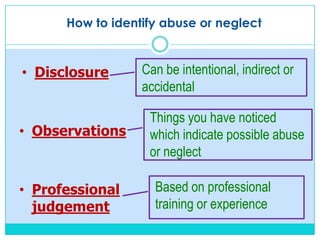
- 1. How to identifyabuse or neglect Can be intentional, indirect or accidental Things you have noticed which indicate possible abuse or neglect Based on professional training or experience • Disclosure • Observations • Professional judgement
Editor's Notes
- #2 DISCLOSURESIntentional disclosure by child, parent/caregiver or another personIndirect or accidental disclosure by child or parent/caregiver. For example -Telling another childProviding hints – in drawings, play or storiesDisguising a disclosure by posing ‘what if’ or ‘a friend of mine’ scenariosPresenting with somatic symptoms (such as constantly feeling sick)Can occur in small pieces over timeOBSERVATIONSIndicators of abuse and neglect (see Child Wellbeing and Child Protection – NSW Interagency Guidelines)physical, social or psychologicalin children and in parents/caregiversSome indicators alone are sufficient Some indicators meaningful only when they co-exist with othersSCREENING TOOL for abuse or neglect developed by CSODesigned to help schools assess if a concern involves abuse or neglectSets out legal criteria for reporting in a checklist:Reasonable grounds for concernConcern must be currentHarm circumstance