OBJECT POOL
DESIGN
PATTERN PRESENTED TO
Prof. Dr. Shazia Arshad
PRESENTED BY
Muhammad Naeem 2019-CS-232
Talha Ashraf 2019-CS-239
Definition
Object pool pattern is a software creational
design pattern that is used in situations where the
cost of initializing a class instance is very high.
Basically, an Object pool is a container that
contains some amount of objects. So, when an
object is taken from the pool, it is not available in
the pool until it is put back.
The Object Pool Design Pattern satisfies the
Single Responsibility Principle (SRP) of SOLID.
The SRP states that a class should have only one reason
to change. In the context of the Object Pool pattern,
the pool class is responsible for managing a collection
of objects and providing them to clients when
requested. The pool class has the responsibility of
creating and destroying objects, managing the state of
the pool, and handling concurrency issues.
Principle to whom it satisfies?
When we have work to allocate or deallocate many
objects
Also, when we know that we have a limited number
of objects that will be in memory at the same time.
When to use?
Layman
Example
UML Diagram
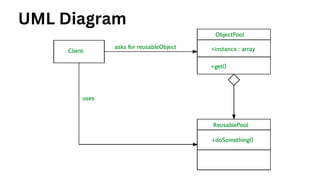
Client: This is the class that uses an object of the
PooledObject type.
ReuseablePool: The PooledObject class is the type that
is expensive or slow to instantiate, or that has limited
availability, so is to be held in the object pool.
ObjectPool: The Pool class is the most important class
in the object pool design pattern. ObjectPool maintains
a list of available objects and a collection of objects
that have already been requested from the pool.
Code
Example
It offers a significant performance boost.
It manages the connections and provides a way
to reuse and share them.
Object pool pattern is used when the rate of
initializing an instance of the class is high.
Advantages
Thanks :)

Object Pool Design Pattern.pdf

  • 1.
    OBJECT POOL DESIGN PATTERN PRESENTEDTO Prof. Dr. Shazia Arshad PRESENTED BY Muhammad Naeem 2019-CS-232 Talha Ashraf 2019-CS-239
  • 2.
    Definition Object pool patternis a software creational design pattern that is used in situations where the cost of initializing a class instance is very high. Basically, an Object pool is a container that contains some amount of objects. So, when an object is taken from the pool, it is not available in the pool until it is put back.
  • 3.
    The Object PoolDesign Pattern satisfies the Single Responsibility Principle (SRP) of SOLID. The SRP states that a class should have only one reason to change. In the context of the Object Pool pattern, the pool class is responsible for managing a collection of objects and providing them to clients when requested. The pool class has the responsibility of creating and destroying objects, managing the state of the pool, and handling concurrency issues. Principle to whom it satisfies?
  • 4.
    When we havework to allocate or deallocate many objects Also, when we know that we have a limited number of objects that will be in memory at the same time. When to use?
  • 5.
  • 6.
  • 7.
    Client: This isthe class that uses an object of the PooledObject type. ReuseablePool: The PooledObject class is the type that is expensive or slow to instantiate, or that has limited availability, so is to be held in the object pool. ObjectPool: The Pool class is the most important class in the object pool design pattern. ObjectPool maintains a list of available objects and a collection of objects that have already been requested from the pool.
  • 8.
  • 9.
    It offers asignificant performance boost. It manages the connections and provides a way to reuse and share them. Object pool pattern is used when the rate of initializing an instance of the class is high. Advantages
  • 10.