Mechanism of Action of Chemotherapeutic
Enzymes of the Nucleotide Biosynthetic Pathway
1
 Chemotherapeutic enzymes are enzyme
which are targeted for cancer treatment.
 In nucleotide biosynthesis, the nucleotides
enzymes are the primary targets of inhibition
for the treatment of cancer disorder (Zahind
et al., 2002).
Chemotherapeutic Enzymes
2
Roles of Nucleotides
 Source of DNA/RNA.
 Source of energy.
 Source of cofactors.
 for cell survival and proliferation.
3
Cont.
 High concentrations of nucleotides
metabolites have been indicated in tumor
cells.
 Leading to the development of antitumor
drugs.
 Which work by blocking DNA synthesis
and halting cell growth(Alba et al 2017)
4
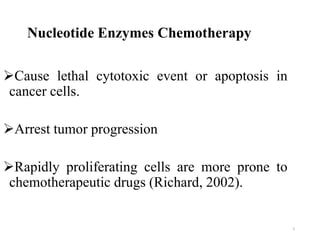
Nucleotide Enzymes Chemotherapy
Cause lethal cytotoxic event or apoptosis in
cancer cells.
Arrest tumor progression
Rapidly proliferating cells are more prone to
chemotherapeutic drugs (Richard, 2002).
5
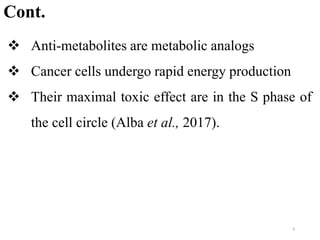
 Anti-metabolites are metabolic analogs
 Cancer cells undergo rapid energy production
 Their maximal toxic effect are in the S phase of
the cell circle (Alba et al., 2017).
Cont.
6
Cont.
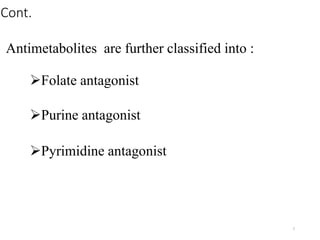
Antimetabolites are further classified into :
Folate antagonist
Purine antagonist
Pyrimidine antagonist
7
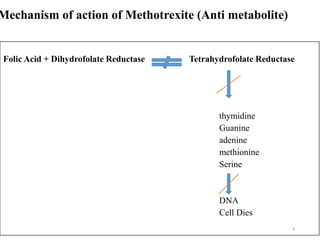
Mechanism of action of Methotrexite (Anti metabolite)
Folic Acid + Dihydrofolate Reductase Tetrahydrofolate Reductase
thymidine
Guanine
adenine
methionine
Serine
DNA
Cell Dies
8
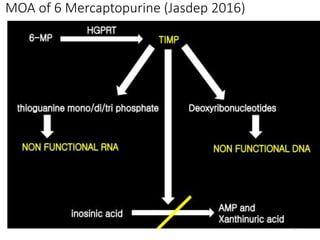
MOA of 6 Mercaptopurine (Jasdep 2016)
9
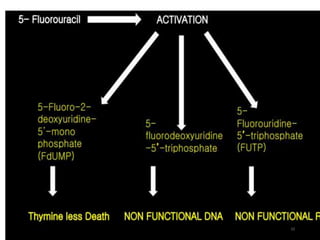
10
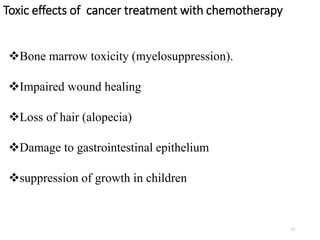
Toxic effects of cancer treatment with chemotherapy
Bone marrow toxicity (myelosuppression).
Impaired wound healing
Loss of hair (alopecia)
Damage to gastrointestinal epithelium
suppression of growth in children
11
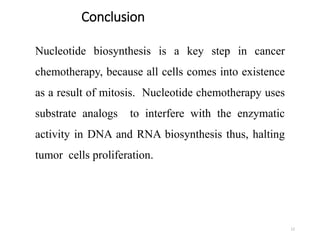
Conclusion
Nucleotide biosynthesis is a key step in cancer
chemotherapy, because all cells comes into existence
as a result of mitosis. Nucleotide chemotherapy uses
substrate analogs to interfere with the enzymatic
activity in DNA and RNA biosynthesis thus, halting
tumor cells proliferation.
12
References
•Alba L. Dan Y and Mathew G (2017) Targeting
metabolism for Cancer Chemotherapy, Cell Chemical
Biology Review September.
•Jasdep Singh (2016), Cancer Chemotherapy,
Departmental of Pharmacological Science, Maharaja
Ranjid Technical University Bathinda.
•Jilian H.Davis Cancer Chemotherapy, Department of
Pharmacology Howard University.
13
Cont.
•Richard, I., Stephen, D. Paul, K. (2002). Inhibitors of
Denovo Nucleotides Biosyntheis as Drugs. Accounting of
Chemical Research. 3(2):23-56.
• Zahind H and Siddik Anderson (2002) Mechanism of
action of cancer chemotherapeutic agent, Cancer
Handbook 1st Edition John Wiley and Sons
14
15

Nucleotide chemotherapy

  • 1.
    Mechanism of Actionof Chemotherapeutic Enzymes of the Nucleotide Biosynthetic Pathway 1
  • 2.
     Chemotherapeutic enzymesare enzyme which are targeted for cancer treatment.  In nucleotide biosynthesis, the nucleotides enzymes are the primary targets of inhibition for the treatment of cancer disorder (Zahind et al., 2002). Chemotherapeutic Enzymes 2
  • 3.
    Roles of Nucleotides Source of DNA/RNA.  Source of energy.  Source of cofactors.  for cell survival and proliferation. 3
  • 4.
    Cont.  High concentrationsof nucleotides metabolites have been indicated in tumor cells.  Leading to the development of antitumor drugs.  Which work by blocking DNA synthesis and halting cell growth(Alba et al 2017) 4
  • 5.
    Nucleotide Enzymes Chemotherapy Causelethal cytotoxic event or apoptosis in cancer cells. Arrest tumor progression Rapidly proliferating cells are more prone to chemotherapeutic drugs (Richard, 2002). 5
  • 6.
     Anti-metabolites aremetabolic analogs  Cancer cells undergo rapid energy production  Their maximal toxic effect are in the S phase of the cell circle (Alba et al., 2017). Cont. 6
  • 7.
    Cont. Antimetabolites are furtherclassified into : Folate antagonist Purine antagonist Pyrimidine antagonist 7
  • 8.
    Mechanism of actionof Methotrexite (Anti metabolite) Folic Acid + Dihydrofolate Reductase Tetrahydrofolate Reductase thymidine Guanine adenine methionine Serine DNA Cell Dies 8
  • 9.
    MOA of 6Mercaptopurine (Jasdep 2016) 9
  • 10.
  • 11.
    Toxic effects ofcancer treatment with chemotherapy Bone marrow toxicity (myelosuppression). Impaired wound healing Loss of hair (alopecia) Damage to gastrointestinal epithelium suppression of growth in children 11
  • 12.
    Conclusion Nucleotide biosynthesis isa key step in cancer chemotherapy, because all cells comes into existence as a result of mitosis. Nucleotide chemotherapy uses substrate analogs to interfere with the enzymatic activity in DNA and RNA biosynthesis thus, halting tumor cells proliferation. 12
  • 13.
    References •Alba L. DanY and Mathew G (2017) Targeting metabolism for Cancer Chemotherapy, Cell Chemical Biology Review September. •Jasdep Singh (2016), Cancer Chemotherapy, Departmental of Pharmacological Science, Maharaja Ranjid Technical University Bathinda. •Jilian H.Davis Cancer Chemotherapy, Department of Pharmacology Howard University. 13
  • 14.
    Cont. •Richard, I., Stephen,D. Paul, K. (2002). Inhibitors of Denovo Nucleotides Biosyntheis as Drugs. Accounting of Chemical Research. 3(2):23-56. • Zahind H and Siddik Anderson (2002) Mechanism of action of cancer chemotherapeutic agent, Cancer Handbook 1st Edition John Wiley and Sons 14
  • 15.