NUCLEAR TECHNOLOGY REVIEW 2011
The following States are Members of the International Atomic Energy Agency:

AFGHANISTAN                         GHANA                                NORWAY
ALBANIA                             GREECE                               OMAN
ALGERIA                             GUATEMALA                            PAKISTAN
ANGOLA                              HAITI                                PALAU
ARGENTINA                           HOLY SEE                             PANAMA
ARMENIA                             HONDURAS                             PARAGUAY
AUSTRALIA                           HUNGARY                              PERU
AUSTRIA                             ICELAND                              PHILIPPINES
AZERBAIJAN                          INDIA                                POLAND
BAHRAIN                             INDONESIA
                                                                         PORTUGAL
BANGLADESH                          IRAN, ISLAMIC REPUBLIC OF
                                                                         QATAR
BELARUS                             IRAQ
                                                                         REPUBLIC OF MOLDOVA
BELGIUM                             IRELAND
                                                                         ROMANIA
BELIZE                              ISRAEL
                                                                         RUSSIAN FEDERATION
BENIN                               ITALY
BOLIVIA                             JAMAICA                              SAUDI ARABIA
BOSNIA AND HERZEGOVINA              JAPAN                                SENEGAL
BOTSWANA                            JORDAN                               SERBIA
BRAZIL                              KAZAKHSTAN                           SEYCHELLES
BULGARIA                            KENYA                                SIERRA LEONE
BURKINA FASO                        KOREA, REPUBLIC OF                   SINGAPORE
BURUNDI                             KUWAIT                               SLOVAKIA
CAMBODIA                            KYRGYZSTAN                           SLOVENIA
CAMEROON                            LATVIA                               SOUTH AFRICA
CANADA                              LEBANON                              SPAIN
CENTRAL AFRICAN                    LESOTHO                              SRI LANKA
  REPUBLIC                          LIBERIA                              SUDAN
CHAD                                LIBYAN ARAB JAMAHIRIYA               SWEDEN
CHILE                               LIECHTENSTEIN                        SWITZERLAND
CHINA                               LITHUANIA                            SYRIAN ARAB REPUBLIC
COLOMBIA                            LUXEMBOURG                           TAJIKISTAN
CONGO                               MADAGASCAR                           THAILAND
COSTA RICA                          MALAWI                               THE FORMER YUGOSLAV 
CÔTE D’IVOIRE                       MALAYSIA                               REPUBLIC OF MACEDONIA
CROATIA                             MALI
                                                                         TUNISIA
CUBA                                MALTA
                                                                         TURKEY
CYPRUS                              MARSHALL ISLANDS
                                                                         UGANDA
CZECH REPUBLIC                      MAURITANIA
                                                                         UKRAINE
DEMOCRATIC REPUBLIC                MAURITIUS
                                                                         UNITED ARAB EMIRATES
  OF THE CONGO                      MEXICO
DENMARK                             MONACO                               UNITED KINGDOM OF 
DOMINICAN REPUBLIC                  MONGOLIA                               GREAT BRITAIN AND 
ECUADOR                             MONTENEGRO                             NORTHERN IRELAND
EGYPT                               MOROCCO                              UNITED REPUBLIC 
EL SALVADOR                         MOZAMBIQUE                             OF TANZANIA
ERITREA                             MYANMAR                              UNITED STATES OF AMERICA
ESTONIA                             NAMIBIA                              URUGUAY
ETHIOPIA                            NEPAL                                UZBEKISTAN
FINLAND                             NETHERLANDS                          VENEZUELA
FRANCE                              NEW ZEALAND                          VIETNAM
GABON                               NICARAGUA                            YEMEN
GEORGIA                             NIGER                                ZAMBIA
GERMANY                             NIGERIA                              ZIMBABWE

       The Agency’s Statute was approved on 23 October 1956 by the Conference on the Statute of the
IAEA held at United Nations Headquarters, New York; it entered into force on 29 July 1957. The
Headquarters of the Agency are situated in Vienna. Its principal objective is “to accelerate and enlarge the
contribution of atomic energy to peace, health and prosperity throughout the world’’.
NUCLEAR TECHNOLOGY
    REVIEW 2011


INTERNATIONAL ATOMIC ENERGY AGENCY
            VIENNA, 2011
COPYRIGHT NOTICE

      All IAEA scientific and technical publications are protected by the terms of
the Universal Copyright Convention as adopted in 1952 (Berne) and as revised in
1972 (Paris). The copyright has since been extended by the World Intellectual
Property Organization (Geneva) to include electronic and virtual intellectual
property. Permission to use whole or parts of texts contained in IAEA
publications in printed or electronic form must be obtained and is usually subject
to royalty agreements. Proposals for non-commercial reproductions and
translations are welcomed and considered on a case-by-case basis. Enquiries
should be addressed to the IAEA Publishing Section at:

      Marketing and Sales Unit, Publishing Section
      International Atomic Energy Agency
      Vienna International Centre
      PO Box 100
      1400 Vienna, Austria
      fax: +43 1 2600 29302
      tel.: +43 1 2600 22417
      email: sales.publications@iaea.org
      http://www.iaea.org/books


                                         © IAEA, 2011
                                  Printed by the IAEA in Austria
                                          September 2011
                                         IAEA/NTR/2011


                                   EDITORIAL NOTE

       This report does not address questions of responsibility, legal or otherwise, for acts or
omissions on the part of any person.
       Although great care has been taken to maintain the accuracy of information contained in
this publication, neither the IAEA nor its Member States assume any responsibility for
consequences which may arise from its use.
       The use of particular designations of countries or territories does not imply any
judgement by the publisher, the IAEA, as to the legal status of such countries or territories, of
their authorities and institutions or of the delimitation of their boundaries.
       The mention of names of specific companies or products (whether or not indicated as
registered) does not imply any intention to infringe proprietary rights, nor should it be
construed as an endorsement or recommendation on the part of the IAEA.
CONTENTS


EXECUTIVE SUMMARY. . . . . . . . . . . . . . . . . . . . . . . . . . . . . . . . . . . . . .                    1

A.     POWER APPLICATIONS . . . . . . . . . . . . . . . . . . . . . . . . . . . . . . . . .                     5

       A.1. Nuclear power today . . . . . . . . . . . . . . . . . . . . . . . . . . . . . . . . . .             5
       A.2. Projected growth for nuclear power . . . . . . . . . . . . . . . . . . . . . .                      8
       A.3. Fuel cycle . . . . . . . . . . . . . . . . . . . . . . . . . . . . . . . . . . . . . . . . . .     11
            A.3.1. Uranium resources and production . . . . . . . . . . . . . . . .                            11
            A.3.2. Conversion, enrichment and fuel fabrication . . . . . . . . .                               12
            A.3.3. Back end of the fuel cycle . . . . . . . . . . . . . . . . . . . . . . .                    14
            A.3.4. Radioactive waste management and
                   decommissioning . . . . . . . . . . . . . . . . . . . . . . . . . . . . . .                 15
       A.4. Safety . . . . . . . . . . . . . . . . . . . . . . . . . . . . . . . . . . . . . . . . . . . . .   18


B.     ADVANCED FISSION AND FUSION . . . . . . . . . . . . . . . . . . . . . . .                               20

       B.1. Advanced fission . . . . . . . . . . . . . . . . . . . . . . . . . . . . . . . . . . . .           20
            B.1.1. Water cooled reactors . . . . . . . . . . . . . . . . . . . . . . . . . . .                 20
            B.1.2. Fast neutron systems . . . . . . . . . . . . . . . . . . . . . . . . . . .                  22
            B.1.3. Gas cooled reactors . . . . . . . . . . . . . . . . . . . . . . . . . . . .                 23
            B.1.4. INPRO and GIF . . . . . . . . . . . . . . . . . . . . . . . . . . . . . . .                 23
       B.2. Fusion . . . . . . . . . . . . . . . . . . . . . . . . . . . . . . . . . . . . . . . . . . . . .   25


C.     ATOMIC AND NUCLEAR DATA . . . . . . . . . . . . . . . . . . . . . . . . . .                             26

D.     ACCELERATOR AND RESEARCH REACTOR
       APPLICATIONS . . . . . . . . . . . . . . . . . . . . . . . . . . . . . . . . . . . . . . . . .          29

       D.1. Accelerators . . . . . . . . . . . . . . . . . . . . . . . . . . . . . . . . . . . . . . . .       29
       D.2. Research Reactors. . . . . . . . . . . . . . . . . . . . . . . . . . . . . . . . . . . .           30

E.     NUCLEAR TECHNOLOGIES IN FOOD
       AND AGRICULTURE . . . . . . . . . . . . . . . . . . . . . . . . . . . . . . . . . . . .                 34

       E.1. Improving livestock productivity and health . . . . . . . . . . . . . . .                          34
       E.2. Insect pest control . . . . . . . . . . . . . . . . . . . . . . . . . . . . . . . . . . . .        35
E.3. Crop improvement . . . . . . . . . . . . . . . . . . . . . . . . . . . . . . . . . . .            37
     E.4. Soil and water management . . . . . . . . . . . . . . . . . . . . . . . . . . . .                 39
          E.4.1. New frontiers for assessing soil carbon sequestration
                 in farmlands . . . . . . . . . . . . . . . . . . . . . . . . . . . . . . . . . .           39
          E.4.2. Use of oxygen isotopes of phosphate to trace
                 phosphorus sources and cycling in soils . . . . . . . . . . . .                            40


F.   HUMAN HEALTH . . . . . . . . . . . . . . . . . . . . . . . . . . . . . . . . . . . . . . .             42

     F.1. Nutrition . . . . . . . . . . . . . . . . . . . . . . . . . . . . . . . . . . . . . . . . . . .   42
     F.2. Advances in radiation oncology applications . . . . . . . . . . . . . . .                         42
     F.3. New developments in nuclear medicine technology
          for cardiac studies . . . . . . . . . . . . . . . . . . . . . . . . . . . . . . . . . . . .       43

G.   ENVIRONMENT . . . . . . . . . . . . . . . . . . . . . . . . . . . . . . . . . . . . . . . .            45

     G.1. Nuclear technology for early warning of marine harmful
          algal blooms . . . . . . . . . . . . . . . . . . . . . . . . . . . . . . . . . . . . . . . .      45
     G.2. Long lived radionuclides to understand environmental
          processes . . . . . . . . . . . . . . . . . . . . . . . . . . . . . . . . . . . . . . . . . . .   46

H.   WATER RESOURCES . . . . . . . . . . . . . . . . . . . . . . . . . . . . . . . . . . . .                48

I.   RADIOISOTOPE PRODUCTION AND RADIATION
     TECHNOLOGY. . . . . . . . . . . . . . . . . . . . . . . . . . . . . . . . . . . . . . . . . .          49

     I.1. Radioisotopes and radiopharmaceuticals . . . . . . . . . . . . . . . . . .                        49
          I.1.1. Molecular targeting agents for imaging
                 and therapy . . . . . . . . . . . . . . . . . . . . . . . . . . . . . . . . . . .          49
          I.1.2. Security of supplies of molybdenum-99
                 and technetium-99m . . . . . . . . . . . . . . . . . . . . . . . . . . . .                 50
     I.2. Radiation technology applications . . . . . . . . . . . . . . . . . . . . . . .                   51
          I.2.1. Integrated radiotracer and computer simulation
                 approaches for sediment management . . . . . . . . . . . . . .                             51
          I.2.2. Low energy electron beam (EB) accelerators . . . . . . . .                                 51

ANNEX I:           RECENT DEVELOPMENTS IN THE TECHNOLOGY
                   OF RADIATION ONCOLOGY . . . . . . . . . . . . . . . . . . . . .                          55
ANNEX II:    ENHANCING FOOD SAFETY AND QUALITY
             THROUGH ISOTOPIC TECHNIQUES FOR
             FOOD TRACEABILITY . . . . . . . . . . . . . . . . . . . . . . . . . . .        68

ANNEX III:   USING ISOTOPES EFFECTIVELY
             TO SUPPORT COMPREHENSIVE GROUNDWATER
             MANAGEMENT . . . . . . . . . . . . . . . . . . . . . . . . . . . . . . . . .   78
EXECUTIVE SUMMARY

      The accident at the Fukushima-Daiichi Nuclear Power Plant, caused by the
extraordinary natural disasters of the earthquake and tsunamis that struck Japan
on 11 March 2011, continues to be assessed. As this report focuses on
developments in 2010, the accident and its implications are not addressed here,
but will be addressed in future reports of the Agency.
      In 2010, construction started on sixteen new nuclear power reactors, the
largest number since 1985. With five new reactors connected to the grid and only
one reactor retired during the year, total nuclear power capacity around the world
increased to 375 GW(e). Revised projections in 2010 of future nuclear power
growth still indicated high expectations for nuclear power expansion.
      Expansion and near and long term growth prospects remained centred in
Asia. Two thirds of the reactors currently under construction are in Asia, as were
thirteen of the sixteen construction starts. Of these, ten construction starts were in
China alone. Trends of uprates and renewed or extended licences for operating
reactors continued in 2010, particularly in some European countries where the
trend towards reconsidering policies that restricted the future use of nuclear
power continued. Interest in starting new nuclear power programmes remained
high, with over 60 Member States having indicated to the Agency their interest in
considering the introduction of nuclear power.
      In the 2010 edition of the OECD/NEA–IAEA ‘Red Book’, estimates of
identified conventional uranium resources at less than $130/kg U decreased
slightly compared to the previous edition, but uranium production worldwide
significantly increased due largely to increased production in Kazakhstan.
Uranium spot prices, which declined in 2009, reached at the end of 2010 their
highest levels in over two years topping $160/kg U, despite early and mid-year
prices fluctuating between $105/kg U and $115/kg U.
      The Board of Governors, in December 2010, approved the establishment of
an IAEA low enriched uranium (LEU) bank, which will be owned and managed
by the IAEA, as a supply of last resort, for power generation. Also in December,
an LEU reserve under the aegis of the Agency was opened in Angarsk, Russian
Federation, comprising 120 tonnes of LEU, which is sufficient for two full cores
of fuel for a 1000 MW(e) power reactor.
      More than 50 Member States are considering alternatives or have begun
developing disposal options appropriate for their waste inventories. In January
2010, a decree came into force in Slovenia confirming the site for its low and
intermediate level waste repository.
      In November 2010, the European Commission issued a proposal for a
Council Directive on the management of spent fuel and radioactive waste that
included asking EU Member States to present national programmes, indicating


                                                                                    1
when, where and how they will build and manage final repositories aimed at
guaranteeing the highest safety standards. Finland and Sweden are preparing the
documentation for construction licences for deep geological facilities designated
for spent fuel. The French Nuclear Safety Authority (ASN) presented a new
edition of the national plan for the management of radioactive material.
        In the USA, the Blue Ribbon Commission on America’s Nuclear Future
was established in January 2010 after the US Government’s 2009 decision not to
proceed with the Yucca Mountain deep geological repository. The Commission’s
first, interim report is expected in July 2011.
        IAEA support continued to Member States and international programmes to
return research reactor fuel to its country of origin. As part of the Russian
Research Reactor Fuel Return (RRRFR) programme, approximately 109 kg of
fresh high enriched urarium (HEU) fuel and 376 kg of spent HEU fuel were
repatriated to the Russian Federation. 2500 kg of degraded, spent, research
reactor fuel was transported from Vinča, Serbia, to the Russian Federation at the
end of 2010. The Vinča repatriation work also marked the successful
implementation of the largest value technical cooperation project in the Agency’s
history.
        In China, the 65 MW(th) (20 MW(e)) pool-type China Experimental Fast
Reactor (CEFR) reached criticality for the first time on 21 July 2010. In Japan,
the 280 MW(e) prototype fast breeder reactor was restarted on 6 May 2010 and
confirmation tests have started.
        With respect to nuclear fusion, the International Thermonuclear
Experimental Reactor (ITER) officially moved into its construction phase in July
2010. It is expected that first plasma will be achieved in November 2019.
Substantial progress has also been made at the National Ignition Facility (NIF) in
the USA where a 1 MJ pulse was achieved in January 2010.
        The development, testing, validation, and implementation of rapid and
accurate nuclear and nuclear related techniques for early disease diagnosis have
played a major role in improving food security in 2010. For example, vaccines
are being developed against brucellosis (a widespread zoonotic disease) in
Argentina and Georgia; parasitic worm infections in Ethiopia, Sudan and Sri
Lanka; theileriosis in China and Turkey; trypanosomosis in India and Kenya;
anaplasmosis in Thailand; and fishborne parasites in the Islamic Republic of Iran.
        An important strategic component of raising productivity and assuring
global food security will be to increase investment in pest management. The
proceedings of an FAO/IAEA coordinated research project (CRP), that brought
together 18 research teams from 15 countries, were published in 2010. Its results
point to a series of innovative ways for ionizing radiation to add value to the
implementation of biological control using predators and parasitoids as


2
complements to the sterile insect technique to manage insect pests in an
environmentally friendly way.
       In 2010, mutations or naturally occurring heritable changes in the genetic
material of plants continued to be successfully exploited to identify and select
traits that are important for crop improvement. Nuclear techniques for mutation
induction can increase the rates of the genetic changes and thus the adaptability of
crops to climate change and variability. Nuclear technology packages based on
mutation induction and efficiency enhancing molecular technologies and
biotechnologies, including tissue culture and high throughput molecular
technologies, have been developed to help to identify and exploit key traits for
climate change and variability adaptation.
       In the human health area, advances that continued in 2010 in radiation
oncology are leading to improved treatment such that it is now possible to more
precisely match the irradiated volume to the shape of the tumour and thereby
better preserve healthy neighbouring tissue. The three dimensional conformal
radiotherapy (3-D–CRT) is being used to design treatment fields that are focused
on the targeted tumour.
       Respiratory gated radiotherapy takes into account organ and tumour
movement during patient respiration. This is particularly relevant for tumours
located in the chest, the larynx, the abdomen, the prostate and the bladder, as well
as the pelvis in general. In this computer driven radiotherapy, the programme
analyses the movements and triggers the treatment beam at the appropriate time.
       Advances in nuclear medicine during the last three years have led to
reductions in both scanning time as well as the radiation dose administered to
patients while improving the overall image quality that allows for a more
confident and efficient diagnosis of cardiovascular diseases. New detector
material such as cadmium zinc telluride (CZT) combined with focused pinhole
collimation and 3-D reconstruction is now used in traditional SPECT imaging to
reduce the scanning time.
       The outbreak of harmful algal blooms (HABs) in coastal areas can lead to
significant economic losses through the damage to seafood that is harvested for
both domestic as well as for export purposes. Nuclear techniques allow for an
accurate and rapid assessment of such HABs as a means to support the efforts of
national regulatory bodies to ensure the safety of seafood. The 2010 annual
meeting of the Scientific Association Dedicated to Analytical Excellence
(AOAC) identified the receptor binding assay (RBA) method, a nuclear
technology based on the use of radiolabelled toxins, as one of the two developed
alternative methods that have been successfully tested in prevalidation studies.
       Long lived radionuclides are being used to investigate marine resources,
oceanographic processes and to assess marine contamination in support of coastal
zone management. Due to their own decay over time, radionuclides allow


                                                                                  3
researchers to date and study such large scale environmental processes, as well as
obtain data otherwise not accessible.
      Stable and radioactive isotopes are being used in time and cost effective
studies of groundwater resources in, for example, the Guarani Aquifer System of
South America, the Tadla Basin of Morocco, and the Nubian Sandstone Aquifer
System of northern Africa. The obtained isotope data have been used in 2010 to
confirm traditional hydrological studies and to provide insight into groundwater
flow and aquifer dynamics, all of which contribute to comprehensive
groundwater management.
      The importance of radioisotopes and radiopharmaceuticals continued to
grow in 2010. The use of highly specific radiopharmaceuticals as biomarkers of
molecular processes underlying a disease, an approach known as ‘molecular
imaging’, is increasing as they serve either as an early indicator of the disease, or
as an objective parameter for measuring the efficacy of treatment, particularly for
cancer patients.
      Technical challenges resulted in recurrent, extended, and often coincident
research reactor shutdowns that contributed to further prolonging the
molybdenum-99 supply crisis which began in late 2007. Coordinated, worldwide
efforts to improve demand side efficiency, reduce transport challenges and
approve capable reactors for target irradiation significantly helped mitigate the
impact of the crisis throughout 2010. South Africa became the first major
producer to deliver industrial scale quantities of LEU based molybdenum-99 for
export in 2010 and large scale production of molybdenum-99 also began in
December 2010 at the Research Institute of Atomic Reactors in Dimitrovgrad,
Russian Federation. Furthermore, the shortages faced in the supplies of fission-
produced molybdenum-99, and in turn of technetium-99m generators, have also
led to increased interest in exploring and developing alternative technologies for
their production, in particular those that do not use HEU. In addition, making use
of accelerator based approaches would help reduce the sole dependence on aged
reactors serving the fission molybdenum-99 industry. Canadian researchers are
investigating cyclotron based direct production of technetium-99m, as a near
term alternative, at medical centres that are located near low or medium energy
cyclotrons.
      Recent developments in industrial radiation technology applications
include integrated radiotracer and computer simulation approaches for sediment
management. In 2009-2010, radiotracer investigations using scandium-46
labelled glass powder as a tracer were carried out at an existing dumping site and
two proposed dumping sites in India. The results indicated that the existing site
and one of the proposed sites were suitable for dumping dredged sediments,
while the other proposed site was not.


4
A. POWER APPLICATIONS


A.1.   Nuclear power today

      For the seventh year in a row, the number of construction starts on new
reactors increased. Although far from attaining the peak of 44 in 1976, the 16
construction starts in 2010, the highest number since 1985, denote a marked
increase from the figures of the 1990s and early 2000s.
      As of 31 December 2010, there were 441 nuclear power reactors in
operation worldwide, with a total capacity of 375 GW(e) (see Table A-1). This
represents some 4 GW(e) more total capacity than at the end of 2009, mostly due
to five new grid connections (Lingao-3 (1000 MW(e)) and Qinshan 2-3
(610 MW(e)) in China, Rajasthan-6 (202 MW(e)) in India, Rostov-2 (950
MW(e)) in the Russian Federation and Shin Kori-1 (960 MW(e)) in the Republic
of Korea) and only one retirement (Phenix (130 MW(e)) in France).
      There were 16 construction starts in 2010: Angra-3 in Brazil; Changjiang-1
and -2, Fangchenggang-1 and -2, Fuqing-3, Haiyang-2, Ningde-3 and -4,
Taishan-2, and Yangjiang-3 in China; Kakrapar-3 and -4 in India; Ohma in Japan;
and Leningrad 2-2 and Rostov-4 in the Russian Federation. This compares with
12 construction starts plus the restart of active construction at two reactors in
2009, and ten construction starts in 2008.
      As of 31 December 2010, a total of 67 reactors were under construction, the
largest number since 1990.
      Expansion and near term and long term growth prospects remained centred
in Asia. Of the 16 construction starts in 2010, 13 were in Asia. As shown in
Table A-1, 45 of the 67 reactors under construction are in Asia, as are 34 of the
last 43 new reactors to have been connected to the grid.
      The trend towards uprates and renewed or extended licences for many
operating reactors continued in 2010. In the USA, the Nuclear Regulatory
Commission (NRC) renewed the operating licence for the Cooper Nuclear
Station in Nebraska and the Duane Arnold Energy Center in Iowa for an
additional 20 years, bringing the total number of approved licence renewals since
2000 to 61. Furthermore, six uprate applications were approved by the NRC in
2010, and 12 power uprate applications, comprising a total of about 1355 MW(e),
were under review. In the UK, the Nuclear Installations Inspectorate approved an
operational licence extension for the twin-unit Wylfa Nuclear Power Plant for up
to two additional years. Furthermore, it approved licence extensions from 30 to
35 years for four reactors at Hartlepool and Heysham-1. In the Russian
Federation, Russian regulator Rostechnadzor issued a 15 year operating licence
extension for Unit 4 of the Leningrad Nuclear Power Plant.


                                                                               5
6
    TABLE A-1. NUCLEAR POWER REACTORS IN OPERATION AND UNDER CONSTRUCTION IN THE WORLD (AS
    OF 31 DECEMBER 2010)a

                                                           Reactors under     Nuclear electricity       Total operating
                                Reactors in operation
                                                            construction       supplied in 2010     experience through 2010
                   COUNTRY
                                No. of                  No of                              % of
                                         Total MW(e)            Total MW(e)    TW·h                   Years      Months
                                units                   units                              total
    Argentina                        2           935        1           692       6.69      5.91          64            7
    Armenia                          1           375                              2.29     39.42          36            8
    Belgium                          7         5 926                             45.73     51.16         240            7
    Brazil                           2         1 884       1          1 245      13.90      3.06          39            3
    Bulgaria                         2         1 906       2          1 906      14.24     33.13         149            3
    Canada                          18        12 569                             85.50     15.07         600            2
    China                           13        10 058      28         28 230      70.96      1.82         111            2
    Czech Republic                   6         3 678                             26.44     33.27         116           10
    Finland                          4         2 716       1          1 600      21.89     28.43         127            4
    France                          58        63 130       1          1 600     410.09     74.12       1 758            4
    Germany                         17        20 490                            133.01     28.38         768            5
    Hungary                          4         1 889                             14.66     42.10         102            2
    India                           19         4 189       6           3766      20.48      2.85         337            3
    Iran, Islamic Republic Of                              1            915
    Japan                          54         46 821       2          2 650     280.25     29.21       1 494            8
    Korea, Republic Of             21         18 698       5          5 560     141.89     32.18         360            1
    Mexico                          2          1 300                              5.59      3.59          37           11
    Netherlands                     1            482                              3.75      3.38          66            0
    Pakistan                        2            425       1            300       2.56      2.60          49           10
    Romania                         2          1 300                             10.70     19.48          17           11
    Russian Federation             32         22 693      11          9 153     159.41     17.09        1026            5
TABLE A-1. NUCLEAR POWER REACTORS IN OPERATION AND UNDER CONSTRUCTION IN THE WORLD (AS
    OF 31 DECEMBER 2010)a (cont.)

                                                                                Reactors under        Nuclear electricity       Total operating
                                                   Reactors in operation
                                                                                 construction          supplied in 2010     experience through 2010
                     COUNTRY
                                                   No. of                   No of                                  % of
                                                            Total MW(e)              Total MW(e)       TW·h                   Years      Months
                                                   units                    units                                  total
    Slovakia                                            4         1 816         2            782         13.54     51.80         136            7
    Slovenia                                            1           666                                   5.38     37.30          29            3
    South Africa                                        2         1 800                                  12.90      5.18          52            3
    Spain                                               8         7 514                                  59.26     20.09         277            6
    Sweden                                             10         9 303                                  55.73     38.13         382            6
    Switzerland                                         5         3 238                                  25.34     38.01         179           11
    Ukraine                                            15        13 107         2           1900         83.95     48.11         383            6
    United Kingdom                                     19        10 137                                  56.85     15.66       1 476            8
    United States Of America                         104        101 240         1           1 165       807.08     19.59       3 603           11
    Totalb, c                                        441        375 267        67         64 064       2629.95     13.5       14 353            4
    a
        Data are from the IAEA’s Power Reactor Information System (http://www.iaea.org/pris).
    b
        The total includes the following data from Taiwan, China: 6 units, 4982 MW in operation; 2 units, 2600 MW under construction; 39.89 TW·h of
        nuclear electricity generation, representing 19.3% of the total electricity generated.
    c
        The total operating experience includes Taiwan, China (176 years, 1 month), and shutdown plants in Italy (81 years), Kazakhstan (25 years,
        10 months) and Lithuania (43 years, 6 months).


7
In some European countries, where restrictions had previously been put on
the future use of nuclear power, the trend towards reconsidering these policies,
initiated in 2009, continued in 2010. In Spain, the government approved a ten
year licence extension for the two-unit Almarez nuclear power plant and for
Unit 2 of the Vandellos nuclear power plant. In November 2010, the EC formally
launched the European Sustainable Nuclear Industrial Initiative (ESNII) in
support of the EU's Strategic Energy Technology Plan (SETP). ESNII addresses
the need for demonstration of Gen IV fast neutron reactor technologies, together
with the supporting research infrastructures, fuel facilities and R&D work. ESNII
concentrates on the design and construction of prototypes of the next generation
of nuclear systems, on ways of extending the operational lifetimes of existing
nuclear power plants and on the development of long term radioactive waste
management solutions.
       Interest in examining nuclear power as an option remained high, with over
60 Member States having indicated to the Agency their interest in considering the
introduction of nuclear power. The IAEA offers these Member States a broad
range of assistance including standards and guidelines, increased technical
assistance, review services, capacity building and knowledge networks. An
Integrated Nuclear Infrastructure Review (INIR) mission was conducted by the
IAEA in Thailand in December 2010.

A.2.   Projected growth for nuclear power

       Each year the Agency updates its low and high projections for global
growth in nuclear power. In 2010, despite a continued sluggish world economy,
high expectations for the technology’s future prevailed. This can be seen in the
2010 revision of the Agency’s low projection for global capacity, which increased
to 546 GW(e) in 2030 compared to the 2009 projection of 511 GW(e). In the
updated high projection, global capacity reached 803 GW(e), a slight decrease
compared to the 2009 projection of 807 GW(e). The margin between the high and
low projections for 2030 remained high, although it decreased to 257 GW(e).
       The upward shift in both the 2010 projections is greatest for Asia, a region
that not only includes countries which currently possess commercial nuclear
power programmes, like China, India, Japan, the Republic of Korea and Pakistan,
but also several newcomer countries which can reasonably be expected to have
nuclear power plants in operation by 2030 (see Fig. A-1). In the low projection,
this region alone accounts for 85% of net nuclear capacity growth between 2009
and 2030. High energy demand — especially for electricity — is driven by
continuous population growth, accelerated economic development aspirations
and energy security concerns. This high energy demand, coupled with a future
most likely characterized by high and volatile fossil fuel prices and


8
environmental considerations, has encouraged a quest for low-carbon energy
supplies, of which nuclear power is a part.
      According to 2010 projections, the rest of the world, except for the
countries of the Commonwealth of Independent States (CIS) where the projected
increase is more significant, exhibits only a modest projected increase in nuclear
generating capacity. Electricity demand uncertainty — due to the slow economic
recovery, the lack of certainty about a new international environmental agreement
on climate change and the future in general, and continued financial conservatism
in the wake of the financial crisis — had led to a wait and see attitude in Europe
and North America. In the latter, the recent boom in cheap shale gas supplies may
have also contributed to a slowdown in expectations.
      The high projection suggests that medium and long term factors driving
rising expectations were, in 2010, once again becoming a dominant force,
specifically the continued good performance and safety of nuclear power plants,
persistent concerns about global warming, energy supply security and high and
volatile fossil fuel prices, and projected persistent energy demand growth in the
medium and long term. A faster economic recovery in the 2010 projections


FIG. A-1. Development of regional nuclear generating capacities 2009–2030, low and high
2010 projections.


                                                                                     9
800

                       700

                       600
     GW(e) installed


                       500

                       400

                       300

                       200

                       100

                        0
                              2009                  2020                 2030

                             Current policies   New policies   450 ppm

FIG. A-2. The impact of different policies on the global expansion of nuclear power between
2009 and 2030 (Source: 2010 World Energy Outlook).


results in increased electricity demand, leading to an expansion of nuclear
generation in all regions. Still, Asia accounts for almost 60% of the global
capacity increase and once more dominates the high projection. The remaining
expansion occurs in the traditional nuclear power countries of the Organisation
for Economic Co-operation and Development (OECD) and CIS, while
newcomers show early signs of strong market penetration around 2025–2030.
      The OECD International Energy Agency’s (IEA’s) 2010 World Energy
Outlook projections (Figure A-2) follow a largely similar trajectory to the IAEA’s
2010 projections, with the ‘current policies scenario’ predicting a total global
installed capacity of 535 GW(e) by 2030 (compared to 546 GW(e) for the IAEA
low projection) while in the 450 ppm scenario1, nuclear power capacity amounts
to 760 GW(e) by 2030 (close to the 803 GW(e) of the IAEA’s high projection).


      1
        The 450 ppm scenario limits the maximum atmospheric greenhouse gas concentration
to 450 parts per million (ppm) and implies a substantial transformation of the global energy
system.


10
A.3.     Fuel cycle2

A.3.1.    Uranium resources and production

      In 2010 the OECD/NEA and the IAEA published the latest edition of the
‘Red Book’, Uranium 2009: Resources, Production and Demand. It estimated
identified conventional uranium resources, recoverable at a cost of less than
$130/kg U, at 5.4 million tonnes of uranium (Mt U). This is 1.2% less than was
estimated in the previous edition. In addition, there were an estimated 0.9 Mt U
of identified conventional resources recoverable at costs between $130/kg U and
$260/kg U, bringing total identified resources recoverable at a cost of less than
$260/kg U to 6.3 Mt U. For reference, the spot price for uranium in 2010
fluctuated between $105/kg U and $115/kg U until mid-year before increasing
strongly to top $160/kg U by year end, representing a two-year high.
      Total undiscovered resources (prognosticated and speculative resources)
reported in the Red Book amounted to more than 10.4 Mt U, declining slightly
from the 10.5 Mt U reported in the previous edition (published in 2008).
Undiscovered conventional resources were estimated at over 6.5 Mt U at a cost of
less than $130/kg U, with an additional 0.37 Mt U at costs between $130/kg U
and $260/kg U. These included both resources that are expected to occur either in
or near known deposits, and more speculative resources that are thought to exist
in geologically favourable, yet unexplored areas. There were also an estimated
additional 3.6 Mt U of speculative resources for which production costs had not
been specified.
      Unconventional uranium resources and thorium further expand the resource
base. Unconventional resources include uranium in seawater and resources from
which uranium is only recoverable as a minor by-product. Very few countries
currently report unconventional resources. Past estimates of potentially
recoverable uranium associated with phosphates, non-ferrous ores, carbonatite,
black schist and lignite are of the order of 10 Mt U. Worldwide resources of
thorium have been estimated to be about 6 Mt. Although thorium has been used
as fuel on a demonstration basis, further work is still needed before it can be
considered on an equal basis with uranium.
      Data on worldwide exploration and mine development expenditures are
reported in the Red Book only through 2008. They totalled $1.641 billion in


       2
          More detailed information on Agency activities concerning the fuel cycle is available
in the relevant sections of the latest Annual Report (http://www.iaea.org/Publications/Reports/
Anrep2010) and at http://www.iaea.org/OurWork/ST/NE/NEFW/ index.html.


                                                                                            11
2008, an increase of 133% on the 2006 figures reported in the Red Book’s
previous edition.
      In 2009, uranium production worldwide was over 50 770 t U, up 16% from
43 800 t U in 2008. It is estimated that production will increase in 2010 to
55 000 t U. Australia, Canada and Kazakhstan accounted for 63% of world
production in 2009, and these three countries together with Namibia, Niger, the
Russian Federation, Uzbekistan and the USA accounted for 93%. In Kazakhstan,
uranium production in 2009 increased by more than 70% from 2008, making it by
far the world’s top uranium producer in 2009 (up from fifth place in 2003 and
second place in 2008). Furthermore, Kazakhstan’s total uranium production in
2010 is expected to increase by 30% compared to 2009. In Malawi, uranium
production started in 2009 with 100 t U. In 2010 it rose to 660 t U.
      Uranium production in 2009 covered only about 82% of the world’s
estimated reactor requirements of 61 730 t U. The remainder was covered by five
secondary sources: stockpiles of natural uranium, stockpiles of enriched uranium,
reprocessed uranium from spent fuel, mixed oxide (MOX) fuel with uranium-235
partially replaced by plutonium-239 from reprocessed spent fuel, and re-
enrichment of depleted uranium tails (depleted uranium contains less than 0.7%
uranium-235). At the estimated 2009 rate of consumption, the projected lifetime
of the 5.4 Mt U of identified conventional resources recoverable at less than
$130/kg U is around 90 years. This compares favourably to reserves of 30–50
years for other commodities (e.g. copper, zinc, oil and natural gas).
      Based on projections available in 2010, the world annual reactor-related
uranium requirements were projected to rise to between 87 370 t U and
138 165 t U by 2035. Currently projected primary uranium production
capabilities including existing, committed, planned and prospective production
centres could satisfy projected world uranium demand until 2028, based on the
high end of this range, or until 2035, based on the low end. Beyond these dates, in
order for production to be able to provide fuel for all reactors for their entire
operational lifetimes, including new reactors added to the grid up to 2035,
additional resources will need to be identified, new mines will need to be
developed and existing mines will need to be expanded in a timely manner.

A.3.2.   Conversion, enrichment and fuel fabrication

Total global conversion capacity remained stable in 2010 at about 76 000 tonnes
of natural uranium (t U) per year for uranium hexafluoride (UF6) and 4500 t U
per year for uranium dioxide (UO2). Demand for UF6 conversion was also stable
at about 62 000 t U per year.
      Total global enrichment capacity is currently about 60 million separative
work units (SWUs) per year, compared to a total demand of approximately


12
45 million SWUs per year. Both to replace old facilities using gaseous diffusion
and in anticipation of a global expansion of nuclear power, four new commercial
scale enrichment facilities, all using centrifuge enrichment, are under
development or construction: Georges Besse II in France and the American
Centrifuge Plant (ACP), the Areva Eagle Rock facility and the URENCO USA
facility (formerly called the National Enrichment Facility (NEF)) in the USA.
Commercial operation at Georges Besse II began in December 2010 with
delivery of the first container of uranium. As for the URENCO USA facility,
commercial operations began in June 2010. Furthermore, the NRC has released a
favourable safety evaluation report for Global Laser Enrichment’s (GLE’s)
proposed 3–6 million SWU laser enrichment facility in North Carolina. The
initial phase of the test loop programme for the separation of isotopes by laser
excitation (SILEX) enrichment technology has been successfully completed by
GLE.
       Japan Nuclear Fuel Limited (JNFL) expects to begin the commercial
operation of improved centrifuge cascades at Rokkasho-mura in 2011–2012 and
to expand the current capacity of 150 000 SWUs to 1.5 million SWUs by 2020. In
2010, Armenia and Ukraine joined Kazakhstan and the Russian Federation as
members of the International Uranium Enrichment Centre (IUEC), established in
2007 in Angarsk in the Russian Federation. Argentina has been performing
research and development work on new enrichment technologies, such as
centrifuge and laser enrichment, at the same time as rebuilding its gaseous
diffusion capacity at Pilcaniyeu. The rebuilt Pilcaniyeu plant is expected to
become operational in 2011.
       In 2010, three deconversion facilities came on line, two in the USA (in
Paducah, Kentucky, and Portsmouth, Ohio) and one (W-ECP in Krasnoyarsk) in
the Russian Federation. Current total world deconversion capacity is about
60 000 t per year.
       In December 2010, the Board of Governors approved the establishment of
an IAEA low enriched uranium (LEU) bank that will be owned and managed by
the Agency, as a supply of last resort for nuclear power generation. Should a
Member State’s LEU supply be disrupted, and the supply cannot be restored by
the commercial market, State to State arrangements, or any other such means, the
Member State may call upon the IAEA LEU bank to secure LEU supplies. The
establishment of the LEU bank is an additional instrument that aims at assuring
the supply of nuclear material for fuel and it follows the agreement approved by
the Board in November 2009, which was signed by the Agency with the Russian
Federation in March 2010, to establish an LEU reserve for supply to the IAEA
Member States. In December 2010, the fuel reserve was fully stocked to its
planned capacity of 120 t of LEU by the Russian State Atomic Energy


                                                                             13
Corporation (Rosatom) and placed under IAEA safeguards at the Angarsk
nuclear facility in Siberia.
       Total global fuel fabrication capacity remained at about 13 000 t U per year
(enriched uranium) for light water reactor (LWR) fuel and about 4000 t U per
year (natural uranium) for pressurized heavy water reactor (PHWR) fuel. Total
demand was also stable at about 10 400 t U per year. Expansion of current
facilities is under way in China, the Republic of Korea and the USA and new
fabrication facilities are planned in Kazakhstan and in Ukraine. The planned
fabrication facility in Kazakhstan, with an expected capacity of 400 t U per year,
is a joint venture between AREVA and Kazatomprom and is scheduled to be
completed in 2014.
       The current fabrication capacity for mixed uranium–plutonium oxide
(MOX) fuel is around 250 tonnes of heavy metal (t HM), with the main facilities
located in France, India and the UK and some smaller ones in Japan and the
Russian Federation. In October 2010, JNFL started building a new MOX fuel
manufacturing facility (130 t HM MOX) in Rokkasho Village, Aomori
Prefecture. It is planned to be completed in March 2016. A similar facility is
planned at Seversk (Tomsk-7) in the Russian Federation. The Russian Federation
has also planned a 60 t per year commercial facility to fabricate MOX fuel and a
14 t per year facility to fabricate dense mixed nitride fuel for fast neutron reactors.
In the UK, a new MOX fabrication facility is being added to the SMP-Sellafield
to enable the fulfilment of new, long term contracts for MOX supply. Additional
MOX fuel fabrication capacity is under construction in the USA to use surplus
weapon-grade plutonium. Ikata-3 and Fukushima Daiichi-3 in Japan started using
MOX fuel in 2010. Worldwide, 33 thermal reactors currently use MOX fuel.

A.3.3.   Back end of the fuel cycle

      The total amount of spent fuel that has been discharged globally is
approximately 320 000 t HM, of which about 95 000 t HM have already been
reprocessed and about 225 000 t HM are stored in spent fuel storage pools at
reactors or in away-from-reactor (AFR) storage facilities. AFR storage facilities
are being regularly expanded. Total global reprocessing capacity is about
5000 t HM per year. Final commissioning tests have begun at the new Rokkasho
reprocessing plant in Japan, which is now scheduled for completion in 2012.
China is constructing a pilot reprocessing plant and hot test operation was
completed at the end of 2010. China is also planning to build a commercial
reprocessing facility and the siting process is still under way.
      A demonstration of the direct use of recycled uranium as fuel in a CANDU
reactor has started at the Qinshan nuclear power plant in China.


14
In India, construction of the first fast reactor fuel cycle facility (FRFCF),
which includes a fuel fabrication and reprocessing plant, a reactor core sub-
assembly plant, a reprocessed uranium oxide plant and a waste management plant
to serve the upcoming 500 MW Prototype Fast Breeder Reactor (PFBR), is
ongoing.

A.3.4.    Radioactive waste management and decommissioning

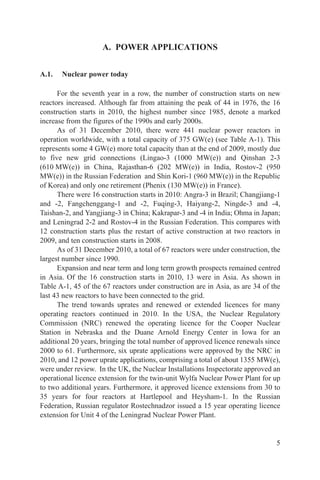
      The global radioactive waste inventory reported as in storage in 2008 (the
most recent year available) was approximately 17.6 million cubic metres3
(Table A-2). The amount of disposed radioactive waste was approximately
640 000 cubic metres per year, primarily low and very low level waste (LLW and
VLLW, indicated below as LILW-SL4). Total disposed volume up to 2008 was
approximately 24.6 million cubic metres. The annual accumulation of processed
high level waste (HLW) is fairly constant, with an average accumulation rate of
approximately 850 cubic metres per year worldwide.


TABLE A-2. GLOBAL ESTIMATE OF RADIOACTIVE WASTE
INVENTORY FOR 2008

                                               Storage              Cumulative disposal
             Waste class
                                            (cubic metres)            (cubic metres)
Short lived low and intermediate level
                                                  3 618 000               24 349 000
waste (LILW-SL)
Long lived low and intermediate level
                                                13 609 000                   208 000
waste (LILW-LL)
High level waste (HLW)                             384 000                     4 000
Source: NEWMDB, 2010.


     High level waste continues to be vitrified in several countries using either
hot crucible induction or joule heated melters. The use of a cold crucible


      3
          Estimate developed using the IAEA’s Net Enabled Waste Management Database
(NEWMDB) and other open sources for countries that are not reporting to the NEWMDB.
       4
          The inventory in NEWMDB is currently reported according to the superseded Agency
recommendations for waste classification contained in Safety Series No. 111-G-1.1,
Classification of Radioactive Waste (1994). These have been recently superseded by a new
classification scheme outlined in General Safety Guide No. GSG-1, Classification of
Radioactive Waste (2009). Data in NEWMDB are currently undergoing conversion into the
new classification scheme.


                                                                                       15
induction melter at the R7 plant in La Hague, France, remains an example of
progress in this area. In the UK, the vitrification plant at Sellafield reached a
major milestone in 2009 when it completed the production of the 5000th
container of high level solid waste. JNFL continued to experience challenges in
2010 with its vitrification unit and had to postpone the commercial operation of
the Rokkasho reprocessing plant by another two years. At Hanford, USA, the
construction of the world’s largest waste treatment plant (WTP) is about 50%
complete. The $12 billion WTP, expected to start operations in 2019, will process
and stabilize about 200 000 m3 of a variety of complex legacy waste by pre-
treatment followed by vitrification.
      More than 50 Member States are considering alternatives or have begun
developing disposal options appropriate for their waste inventories. The options
considered include: trench disposal of VLLW (France, Spain), naturally
occurring radioactive material (NORM) waste (Malaysia, Syrian Arab Republic)
or LLW in arid areas (Islamic Republic of Iran, South Africa, USA); near surface
engineered structures for LLW (Belgium, Bulgaria, Lithuania, Romania,
Slovenia); intermediate depth disposal of LILW (Hungary, Republic of Korea,
Japan) and NORM waste (Norway); as well as borehole disposal of LLW (USA)
and disused sealed sources (Ghana, Islamic Republic of Iran, Philippines).
Finland and Sweden are preparing the documentation for construction licences
for deep geological facilities designated for spent fuel.
      In January 2010, a decree came into force in Slovenia confirming the site
for its LILW repository, located near Slovenia’s only existing nuclear power
plant. Construction is scheduled to begin in two to three years. In Canada, the
Nuclear Waste Management Organization (NWMO) began a process in May
2010 to select a permanent storage site for a deep geological repository for used
nuclear fuel by issuing an invitation for interested communities to come forward.
In Germany, the construction of an underground repository for LILW has begun
at the former Konrad iron mine in Lower Saxony. In Sweden, the Swedish
Nuclear Fuel and Waste Management Company (SKB) submitted, in March
2011, its application for a final spent fuel geological repository to be located in
Östhammar. The construction of the nuclear fuel repository should start in 2015,
and disposal operations are expected to start in 2025. At the Olkiluoto site in
Finland, the Onkalo access tunnel was excavated, by the end of 2010, to a length
of 4570 m and its final disposal depth of 434 m. Initially, Onkalo will function as
an underground rock characterization facility to ensure the suitability of the site.
Then the access tunnel and other underground structures will be used for disposal.
The construction licence application is expected in 2012 and the operating licence
process around 2020.
      In the USA, the Blue Ribbon Commission on America’s Nuclear Future
was established in January 2010 after the US Government’s 2009 decision not to


16
proceed with the Yucca Mountain deep geological repository. The Commission,
set up to provide recommendations for developing a long term solution to
managing the USA’s used nuclear fuel and nuclear waste, plans to address the
temporary storage of spent fuel for time periods from 120 years to as long as 300
years. A first, interim report is scheduled to be available in July 2011 and the
Commission’s final report is expected in 2012. Furthermore, the NRC Chairman
ordered NRC staff to halt review of the Yucca Mountain licence application in
October 2010.
      The French Nuclear Safety Authority (ASN) presented a new edition of the
national plan for the management of radioactive materials. It includes a project
for long term, reversible, geological disposal of high level and medium level
waste and a project for long term, shallow disposal of low level radioactive waste.
France is progressing with its preparations for the construction of its geological
repository for HLW; the facility will also accommodate national intermediate
level waste (ILW).
      Many bilateral and multilateral initiatives have been launched jointly with
the Agency to improve control over sealed radioactive sources as well as to
remove them from unsafe and unsecure locations. High activity sources pose
particular problems as significant constraints prevent their easy movement. The
mobile hot cell, a technology developed by the Nuclear Energy Corporation of
South Africa (Necsa) under contract to the Agency, was deployed in 2010 in
Uruguay to extract 14 components with high activity sources from the devices in
which they were housed and package them into transport containers for
repatriation to the country of origin.
      In November 2010, the European Commission issued a proposal for a
Council Directive on the management of spent fuel and radioactive waste that
included asking EU Member States to present national programmes, indicating
when, where and how they will build and manage final repositories aimed at
guaranteeing the highest safety standards.

Decommissioning

      Worldwide power reactor decommissioning statistics did not change
significantly in 2010. At the end of the year, 124 power reactors were shut down.
Of these, 15 reactors were fully dismantled, 52 were in the process of being
dismantled or planning for short-term dismantling, 48 were being kept in safe
enclosure mode, 3 were entombed, and 6 did not yet have specified
decommissioning strategies.
      The dismantling process of the Australian Nuclear Science and Technology
Organisation’s Moata research reactor, the first reactor ever to be
decommissioned in Australia, began in July 2009 with the preliminary


                                                                                17
dismantling and removal of all internal components. The dismantling of the bio-
shield commenced in March 2010 and was completed in September 2010. The
decommissioning of the 100 kW(th) Argonaut type reactor was successfully
completed within the agreed budget (4.2 million Australian dollars) and within a
total project duration of two years from receipt of the decommissioning licence to
site release.
       In Central and Eastern Europe, the decommissioning of shutdown reactors
has begun to accelerate with projects under way in Bulgaria, Lithuania, Slovakia
and Ukraine. All of the nuclear power plants in Central and Eastern Europe have
either prepared, or are close to completing, preliminary decommissioning plans in
compliance with Agency recommendations.
       Initiatives are under way to address legacy radioactive waste, accumulated
in the early stages of nuclear science, industry and defence technologies
development. The Agency’s Contact Expert Group, established in 1996, has
proven an efficient forum for information exchange and coordination of nuclear
legacy programmes in the Russian Federation. At the end of 2010, the Russian
Federation, with significant help from international partners who covered about a
third of the programme’s funding, had defuelled and dismantled 191
decommissioned nuclear submarines. Four submarines are currently being
dismantled and five are expected to be dismantled by the end of 2012. The
submarine reactor units, generally containing two defuelled reactors, are being
sealed and placed in a long term storage facility. The creation of two regional
radioactive waste conditioning and long term storage centres is under way.
Furthermore, a joint programme for recovering powerful radioisotope
thermoelectric generators (RTGs) that were used for navigation purposes along
the coastline of the Russian Federation is also under way and the majority of the
870 Russian RTGs have been recovered, with only 248 remaining.

A.4.    Safety5

      Safety indicators, such as those published by the World Association of
Nuclear Operators (WANO) and reproduced in Figs A-3 and A-4, improved
dramatically in the 1990s. In recent years, in most areas the situation has
stabilized, with an additional improvement in 2009. However, the gap between
the best and worst performers is still large, providing substantial room for
continuing improvement. More detailed safety information and recent


      5
        More detailed information on Agency activities concerning nuclear safety is available
in relevant sections of the latest Annual Report (http://www.iaea.org/Publications/
Reports/Anrep2010/) and at http://www-ns.iaea.org/.


18
2.0


                   1.80

           1.5


           1.0
                          1.00


           0.5                   0.60   0.60           0.60
                                               0.50            0.50
                                                                        0.40


           0.0
                  1990    1995   2000   2005   2006    2007    2008     2009
         Units     369    404     417   425    429     425     418      420
         reporting

FIG. A-3. Unplanned automatic scrams per 7000 hours critical (source: WANO 2009
Performance Indicators).


developments related to all nuclear applications through the end of 2010 are
presented in the Nuclear Safety Review for the Year 2010.


           6


           5      5.20

           4


           3
                          2.90

           2

                                 1.63
           1                            1.30    1.21
                                                        0.96     0.92     0.78
           0
                  1990    1995   2000   2005    2006    2007    2008      2009
      Stations    169      192    203    208     209    207      216       216
      reporting

FIG. A-4. Industrial safety accident rate at nuclear power plants — number per
1 000 000 person-hours worked (source: WANO 2009 Performance Indicators). Note: These
incidents are not necessarily radiological in nature.


                                                                                  19
B. ADVANCED FISSION AND FUSION


B.1.       Advanced fission6

B.1.1.      Water cooled reactors7

      In the area of small and medium size reactors, Argentina has begun
preparing for the construction of a 25 MW(e) prototype power reactor based on
the ‘CAREM concept’. It is expected that the reactor would be operational by the
middle of the decade. Pre-feasibility studies are under way for the construction of
a 150 MW(e) unit.
      In 2010, China started the construction of eight new reactors. These include
610 MW(e) and 1000 MW(e) evolutionary PWRs based on existing operating
plant technology, as well as newer designs of AP-1000 and European Pressurized
Water Reactor (EPR) designs. China is currently developing the CAP-1400 and
CAP-1700 designs, which are larger versions of the AP-1000. At the same time,
China is investing in research for the design of a Chinese supercritical water
cooled reactor (SCWR).
      In France, AREVA continues to market the 1600+ MW(e) EPR for
domestic and international applications. AREVA is also developing the
1100+MW(e) ATMEA PWR, together with Mitsubishi Heavy Industries of
Japan, and the 1250+ MW(e) KERENA boiling water reactor (BWR), in
partnership with Germany’s E.ON.
      In 2010, Japan started the construction of a new advanced boiling water
reactor (ABWR). Hitachi is pursuing the development of 600, 900 and
1700 MW(e) versions of the ABWR, as well as the 1700 MW(e) ABWR-II.
Mitsubishi Heavy Industries has developed a 1700 MW(e) version of the
advanced pressurized water reactor (APWR) for the US market, the US-APWR,
which is progressing through the NRC design certification process. A European
version of the APWR, the EU-APWR, is also under development and will be
assessed for compliance with European utility requirements. Furthermore, Japan
is also pursuing the development of an innovative supercritical water cooled
reactor design.

       6
          More detailed information on Agency activities concerning advanced fission reactors
is available in relevant sections of the latest Annual Report (http://www.iaea.org/
Publications/Reports/Anrep2010/)
        7
           Detailed technical information about all the advanced reactor designs mentioned in
this section is available in the Agency’s Advanced Reactors Information System (ARIS) at
http://aris.iaea.org.


20
A new indigenous OPR-1000 was connected to the grid in the Republic of
Korea in 2010. Construction of the first advanced power reactor, APR-1400, is
progressing according to plan and contracts were awarded in late 2009 for the
construction of four more APR-1400s in the United Arab Emirates. The Republic
of Korea is developing a European version of the APR-1400, the EU-APR-1400,
which will be assessed for compliance with European utility requirements. It is
also developing a US version, the US-APR-1400, which will be submitted for
NRC design certification. In parallel, development of the 1500 MW(e) APR+
continued in 2010 and initiation of the design of the APR-1000 was announced.
In the area of small and medium sized reactors, the Republic of Korea increased
its efforts to develop the 330 MW(th) SMART integral PWR.
       Construction of two more reactors started in the Russian Federation in
2010, including a WWER-1200. Plans to develop the WWER-1200A, as well as
the WWER-600 and WWER-1800, based on the current WWER-1200 design
were also announced. Furthermore, the Russian Federation is working on an
innovative WWER-SC supercritical water cooled reactor and construction is
continuing on the KLT 40S, a floating small reactor for specialized applications.
       In the USA, the NRC is progressing with the design certification process for
five advanced water cooled reactor designs: the AP-1000, US-APWR, US-EPR,
the Westinghouse SMR, and the Economic Simplified Boiling Water Reactor
(ESBWR). The NRC is reviewing an amended design certification for the AP-
1000, which received design certification in 2006. The ESBWR was the first in
this series to receive approval (October 2010). In addition, it is expected that the
US-APR1400, Babcock & Wilcox’s 125 MW(e) mPower integral PWR and
NuScale Power’s 45 MW(e) integral PWR will also be submitted for NRC design
certification in the near future.
       In Canada, in 2010 the Canadian Nuclear Safety Commission (CNSC)
completed Phase 1 of a Pre-Project Design Review of the 700 MW(e) Enhanced
CANDU-6 design, a Generation III design which incorporates several
innovations from the CANDU-9 design as well as from the recent experience
with CANDU-6 units built in China and the Republic of Korea. Phase 2 of the
EC6 Pre-Project Design Review, currently under way, is to be completed early in
2012. Atomic Energy of Canada Limited (AECL) has also continued
development of the Advanced CANDU reactor (ACR-1000), a Generation III+
design which incorporates very high component standardization and slightly
enriched uranium to compensate for the use of light water as the primary coolant.
In January 2011, the CNSC completed Phase 3 of the Pre-Project Design Review
of the Advanced CANDU Reactor (ACR-1000), making it the first advanced
nuclear power reactor to have completed three phases of such a design review by
the CNSC. AECL is also actively developing a CANDU Supercritical Water
Reactor, a Generation IV design which will further Canada’s leadership of the


                                                                                 21
Generation IV International Forum’s Supercritical Water Cooled Reactor
(SCWR) programme.
      In India, a new 220 MW(e) pressurized heavy water reactor (PHWR) was
connected to the grid in 2010. India is marketing this reactor for construction in
countries with small grids. Six more reactors are under construction, including
one 220 MW(e) PHWR, two evolutionary 700 MW(e) PHWR, two WWER-
1000s and the 500 MW(e) Prototype Fast Breeder Reactor. The Nuclear Power
Corporation of India Limited (NPCIL) has developed an evolutionary
700 MW(e) PHWR. Four projects involving eight units of this 700 MW(e)
PHWRs were launched in 2010. The Bhabha Atomic Research Centre (BARC) is
finalizing the design of a 300 MW(e) Advanced Heavy Water Reactor (AHWR),
which will use thorium with heavy water moderation, a boiling light water
coolant in vertical pressure tubes, and passive safety systems.

B.1.2.   Fast neutron systems

       In China, the 65 MW(th) (20 MW(e)) pool-type China Experimental Fast
Reactor (CEFR) reached criticality for the first time on 21 July 2010. The CEFR
physics startup programme is currently under way.
       Construction works for India’s 500 MW(e) Prototype Fast Breeder Reactor
(PFBR) at Kalpakkam are well under way: the safety, primary and internal
vessels are installed. The reactor building is closed. Commissioning is planned
for late 2012– early 2013.
       Japan restarted the 280 MW(e) prototype fast breeder reactor in May 2010.
The confirmation tests have started.
       In the Russian Federation, construction of the BN-800 fast reactor at
Beloyarsk is progressing. Almost all components have been ordered and
manufacturing is well under way. Commissioning is planned for 2013.
       Belgium has established, within the framework of Euratom, a team to
pursue the design work for MYRRHA (multi-purpose hybrid research reactor for
high-tech applications), a subcritical experimental fast reactor. In 2010, the
Belgian Government allocated, for the period through 2014, €60 million to fund
the first phase of the MYRRHA project. The total cost of the project, which
enjoys the support of Euratom, the European Commission, the European Strategy
Forum on Research Infrastructures and the European Sustainable Nuclear
Industrial Initiative, is estimated at €960 million. To test subcriticality
monitoring, an experimental facility, GUINEVERE, has been built, coupling a
continuous deuteron accelerator with a titanium–tritium target installed in a lead
cooled, fast subcritical multiplying system. GUINEVERE is scheduled to be
operational in 2011.


22
B.1.3.   Gas cooled reactors

      In China, the implementation plan for the demonstration high temperature
gas cooled reactor has been approved by the Government. The project licence is
under review and the first concrete pouring is expected in 2011.
      In South Africa, considered the lead country for building high temperature
gas cooled reactors, plans for the pebble bed modular reactor (PBMR) had been
halted in 2010 as a result, inter alia, of financial constraints in the wake of the
global financial economic crisis. The project has been placed under a ‘care and
maintenance plan’ to safeguard intellectual property and assets until the
government decides on further plans.
      In Japan, more rigorous tests — 90 days in total with 50 days at 950 °C —
of the High Temperature Engineering Test Reactor (HTTR) were completed. The
Japanese Government is investigating the feasibility of connecting the HTTR to a
hydrogen production system for the small scale production of hydrogen.
      In the USA, testing for tri-structural isotropic (TRISO) fuel safety, as
measured by fuel failures during long periods of irradiation, continued at the
advanced test reactor (ATR) at the Idaho National Laboratory. Post irradiation
examination work began on the first fuel experiment (AGR-1), and the second
fuel experiment (AGR-2) was inserted into ATR in mid-2010. The next
generation nuclear plant (NGNP) project has been slightly delayed, with the
conceptual design studies completed in early 2011. Generally, NGNP is focused
on the production of high temperature process heat applications with reactor
outlet temperatures greater than 750°C. In 2011, work will focus on establishing
a public private partnership to begin design, licensing and construction of a
demonstration reactor.
      The Republic of Korea has, over the past six years, been investing in a
number of test facilities for engineering testing of systems and components for a
high temperature reactor coupled with a hydrogen production facility. Process
heat applications are also planned, with a number of industrial heat users
collaborating with the nuclear research community to find optimal methods to
produce heat and hydrogen from a high temperature reactor. The selection of a
reactor concept is scheduled to take place by 2015, when most of the other system
tests will have been completed. The Nuclear Hydrogen Development and
Demonstration (NHDD) project is receiving strong support from both industry
and the government.

B.1.4.   INPRO and GIF

     The International Project on Innovative Nuclear Reactors and Fuel Cycles
(INPRO), which supports Member States in developing and deploying


                                                                                23
sustainable nuclear energy systems, celebrated its 10th anniversary in 2010 and
welcomed a new member, Poland, increasing total membership to 32. The
INPRO Dialogue Forum, held twice in 2010, supported an ongoing discussion on
a diverse range of topics among stakeholders from all stages of nuclear maturity.
Two Nuclear Energy System Assessments (NESAs), by Belarus and Kazakhstan
respectively, were under way and an IAEA publication, Introduction to the Use of
the INPRO Methodology in a Nuclear Energy System Assessment, was issued as
part of a NESA support package for Member States. Two collaborative projects,
Proliferation Resistance: Acquisition/Diversion Pathways Analysis (PRADA)
and Further Investigation of the 233U/Th Fuel Cycle (ThFC), were completed in
2010. In response to increased Member States’ interest in the joint modelling of
global and regional trends in the deployment of nuclear power, the collaborative
project on Global Architecture of Innovative Nuclear Systems Based on Thermal
and Fast Reactors including Closed Fuel Cycles (GAINS) continued its
methodological simulation studies for transition strategies from present to future
nuclear energy systems.
      The Generation IV International Forum (GIF), through a system of
contracts and agreements, coordinates research activities on six next generation
nuclear energy systems selected in 2002 and described in A Technology Roadmap
for Generation IV Nuclear Energy Systems: gas cooled fast reactors (GFRs), lead
cooled fast reactors, molten salt reactors, sodium cooled fast reactors (SFRs),
supercritical water cooled reactors (SCWRs) and very high temperature reactors
(VHTRs). The six selected systems employ a variety of reactor, energy
conversion and fuel cycle technologies. Their designs feature thermal and fast
neutron spectra, closed and open fuel cycles and a wide range of reactor sizes
from very small to very large. Depending on their respective degrees of technical
maturity, the Generation IV systems are expected to become available for
commercial introduction in the period between 2015 and 2030 or beyond. GIF
currently has 13 members8.
      The IAEA and GIF cooperate in the areas of risk and safety, proliferation
resistance and physical protection, economic evaluation modelling and
methodologies as well as other topics like small and medium-sized reactors,
thorium and fuel cycle implications. In 2010, an IAEA/GIF workshop focused on
operational safety aspects of SFRs, improving understanding of the safety issues
of SFRs.


      8
        Argentina, Brazil, Canada, China, Euratom, France, Japan, the Republic of Korea,
South Africa, Switzerland, Russian Federation, UK and USA


24
B.2.   Fusion

      The baseline design features for the International Thermonuclear
Experimental Reactor (ITER) device and facility were agreed to by all parties at
the extraordinary ITER Council meeting in July 2010. Since then, ITER has
officially moved from the design review phase to the construction phase.
According to an updated schedule, first plasma will be achieved in November
2019 and deuterium-tritium operation will start by March 2027, ultimately taking
ITER to 500 MW output power.
      Substantial progress has been made at the National Ignition Facility (NIF)
at the Lawrence Livermore National Laboratory, USA, since its dedication in
May 2009. A 1 MJ pulse was achieved in January 2010 and integrated ignition
experiments with a fully functioning, complete set of detectors began in
September 2010. These experiments include basic high energy density science
research in fields such as astrophysics, nuclear physics, radiation transport,
materials dynamics and hydrodynamics.
      Two     new     superconducting     medium-sized      tokamaks,     Korea
Superconducting Tokamak Advanced Research (KSTAR) in the Republic of
Korea (Fig. B-1) and Experimental Advanced Superconducting Tokamak
(EAST) in China, are now in full operation. These long-pulse ITER-related
experiments are aimed at investigating relevant ITER issues associated with
steady-state operation. Both experiments have started high power operation with
the use of additional plasma heating. The Korean National Fusion Research
Institute (NFRI), home of KSTAR, hosted in October 2010 the 23rd IAEA Fusion
Energy Conference (FEC 2010), at which reports were presented on the latest
advances in all major fusion plasma experiments.


           FIG. B-1. The KSTAR device at NFRI, Daejeon, Republic of Korea.


                                                                             25
C. ATOMIC AND NUCLEAR DATA


      The major nuclear databases developed by the International Network of
Nuclear Reaction Data Centres and the International Network of Nuclear
Structure and Decay Data Evaluators, coordinated by the Agency, are
continuously improved. Of particular note in 2010, the web retrieval system was
enhanced to deliver nuclear reaction data and their covariances in different
formats, including graphical visualization.
      The International Fusion Materials Irradiation Facility (IFMIF) is an
international project currently under development to test materials to be used in
the DEMO demonstration reactor or commercial fusion power reactor. Recently,
Spain has started a national project, TechnoFusión, to provide technical support
for IFMIF and DEMO to simulate extreme material damage through light and
heavy ions. To provide nuclear data for these and other fusion facilities, a
substantial extension of the Fusion Evaluated Nuclear Data Library 2.1 (FENDL-
2.1) is necessary to include higher energies, as well as incident charged particles
and the evaluation of related uncertainties.
      In 2010, the triennial International Conference on Nuclear Data for Science
and Technology was held in the Republic of Korea, bringing together several
hundred scientists and engineers involved in the production or use of nuclear data
for fission and fusion energy, accelerator technology, dosimetry and shielding,


FIG. C-1. Three-dimensional plot of energy–energy correlations for nuclear reaction cross-
sections.


26
FIG. C-2. Conceptual design of IFMIF (PIE = post-irradiation examination; RFQ = radio
frequency quadrupole; DTL = drift tube linac).


astrophysics and other relevant areas. Covering theoretical model developments
as well as data measurement, evaluation, processing, validation and
dissemination activities, the conference made major contributions to the
improvement of nuclear data.
       The Virtual Atomic and Molecular Data Centre (VAMDC) is a three and a
half year project funded by the European Union’s Seventh Framework
Programme for Research and Technological Development to provide a unified
interface for about two dozen atomic and molecular databases. The project held
its first annual meeting in 2010. The XML Schema for Atoms, Molecules and
Solids (XSAMS), whose development is coordinated by the Agency, is a key
factor for assuring interoperability.
       The Linac Coherent Light Source (LCLS) X ray free electron laser (XFEL),
which commenced operation in April 2009, had a very successful year in 2010
and is producing experimental atomic data in regimes that were previously
inaccessible. The peak brightness of the LCLS exceeds by 2–3 orders of
magnitude that of earlier free electron lasers, making it possible to study matter in
conditions such as those occurring in supernova explosions, stellar interiors and
laser produced plasma.


                                                                                  27
FIG. C-3. LCLS X ray free electron laser.


28
D. ACCELERATOR AND RESEARCH REACTOR
                   APPLICATIONS


D.1.   Accelerators

      Advances in accelerator technology have created an opportunity for
developing suitable analytical methods for studying the technology of
manufacturing new radiation resistant materials.
      An accelerator-driven system aimed at providing protons and neutrons for
various R&D applications received financial support in 2010 in Belgium under
the MYRRHA project. A proton accelerator coupled to a subcritical fast core will
be used, inter alia, to support new R&D activities in waste transmutation. From
2022 onwards, MYRRHA will contribute to the development of innovative
solutions in the field of nuclear technologies, medical applications, nuclear
industry and renewable energy sources.
      X ray based techniques have become key spectroscopy and imaging tools in
many fields, from medicine to engineering. Advances in X ray beam focusing,
specimen handling and measurement automation in synchrotron X ray sources
have, in the last two years, extended their applications in support of research
related to human immunodeficiency virus (HIV) infection, causes of cancer, the
function of the nervous system and cellular signalling, photosynthesis, etc. For
example, the researchers at the SPring-8 facility in Japan have developed a light
collection technique that enables the generation of high brilliance X ray beams of
7 nm in diameter. This may lead to the development of an X ray microscope with
nanometre-level resolution which could be used to directly observe the structure
of molecules and atoms. Next generation X ray source technology, such as
Energy Recovery Linac (ERL, Cornell University, USA), and the completion of
several X ray free electron laser (XFEL) facilities worldwide open new
opportunities to study behaviour of atoms and molecules under extreme
conditions.
      High-resolution hard X ray synchrotron radiation microtomography,
successfully applied in 2010 at the European Synchrotron Radiation Facility
(ESRF), is currently the only method capable of providing 3 D information in
support of the study of novel materials for nuclear fusion reactors.
      In environmental monitoring studies, scientists from the University of
Leicester and the British Geological Survey have used Diamond Light Source to
study the chemical speciation, bioaccessibility and mobility of particles from dust
and soil collected around uranium processing plants.
      A quantitative chemical X ray fluorescence technique has been used for the
first time in 2010, by scientists from the laboratory of the Research and


                                                                                29
Restoration Centre of the Museums of France and ESRF, for in situ non-invasive
characterization of seven paintings (including the Mona Lisa) directly in the
rooms of the Louvre Museum. The results, published in July 2010, have helped
identify and study the techniques applied by the old masters, such as the famous
‘sfumato’ technique used by Leonardo da Vinci.

D.2.    Research Reactors

      Currently, over 20 Member States are considering building new research
reactors; many as the first step in a national programme to introduce nuclear
power in parallel with other peaceful applications of nuclear technologies. In
Jordan, the development of the first multipurpose 5 MW research reactor is at an
advanced design stage, with construction about to start. Argentina and Brazil,
within the framework of their bilateral cooperation programme, have concluded
an agreement regarding the development and construction, in each of the two
countries, of research reactors of advanced design and with substantial
radioisotope production capacity.


FIG. D-1. X ray fluorescence technique applied for in situ non-invasive characterization of the
Mona Lisa painting in the Louvre Museum, France (courtesy of the laboratory of the Research
and Restoration Centre of the Museums of France, C2RMF).


30
According to the Agency’s Research Reactor Database9, at the end of 2010
there were 249 research reactors around the world; 237 of which were operational
and 12 had temporarily been shut down. Another 5 are under construction or
planned. Only 2 research reactors were commissioned in 2010: the China
Advanced Research Reactor (CARR) and the Chinese Experimental Fast Reactor
(CEFR), both at the China Institute of Atomic Energy (CIAE) near Beijing.
CARR went critical for the first time on 13 May 2010 and CEFR on 21 July 2010.
       As older research reactors retire and are replaced by fewer, more multi-
purpose reactors, the number of operational research reactors and critical
facilities is expected to drop to between 100 and 150 by 2020. Greater
international cooperation will be required to ensure broad access to these
facilities and their efficient use. Cooperative networks are also proving to be
helpful to upgrade existing facilities and develop new facilities. Thus, in addition
to the existing five research reactor coalitions in the Eastern Europe, Caribbean,
Central Asia, Baltic and Mediterranean regions, new coalitions and networks are
envisaged to increase research reactor operations and utilization and to make the
reactors truly viable.
       The US Global Threat Reduction Initiative (GTRI) continued to carry out
its efforts to convert research reactor fuel, and targets used in isotope production


                        FIG. D-2. China Advanced Research Reactor.


     9
         http://nucleus.iaea.org/RRDB/.


                                                                                 31
facilities, from HEU to LEU. In 2009, GTRI’s scope was expanded from 129
research reactors to 200, and, by the end of 2010, 72 research reactors around the
world that operated with HEU fuel had been converted to LEU fuel or had been
shut down before conversion during the over 30 years of international
cooperation conversion efforts. Of these, 33 research reactors have been
converted since the programme was intensified in 2004.
       IAEA support continued to Member States and international programmes to
return research reactor fuel to its country of origin. As part of the Russian
Research Reactor Fuel Return (RRRFR) programme, five shipments amounting
to approximately 109 kg of fresh HEU fuel were repatriated from Belarus, the
Czech Republic and Ukraine under contracts arranged by the Agency. The
Agency also assisted in the repatriation of around 376 kg of spent HEU fuel from
Belarus, Poland, Serbia (13.2 kg from Vinča) and Ukraine.
       At the end of 2010, 2500 kg of degraded, spent, research reactor fuel, most
of which was LEU fuel, was transported from Vinča, Serbia, to the Russian
Federation. The successful implementation of this largest value technical
cooperation project in Agency history marked the cumulative result of the
collaborative efforts of the Agency, as well as a significant number of external
financial donors and technical support organizations. Further work will continue
to support efforts to fully decommission the facility.
       South Africa continues to lead the way for conversion (from HEU to LEU)
of targets and chemical processing equipment used in the production of
molybdenum-99 for large scale producers, becoming the first major producer to
deliver industrial scale quantities of LEU based molybdenum-99 for export in
2010. The Research Institute of Atomic Reactors in Dimitrovgrad, Russian
Federation, also began large-scale production of molybdenum-99 in 2010, with
the first batch (meeting all requirements) delivered to partners abroad in
December 2010. Production levels were expected to reach 800 curies per week by
the end of May 2011 and 2500 curies per week following completion of the
second phase of the project in 2012. Previously in 2002, Argentina had
successfully converted small scale molybdenum-99 production and it
subsequently developed and exported this technology to Australia and Egypt.
Also during 2010, Australia reported steady progress in efforts to increase
production of LEU fission based molybdenum-99.
       Technical challenges resulted in recurrent, extended, and often coincident
research reactor shutdowns that contributed to further prolonging the
molybdenum-99 supply crisis which began in late 200710. Coordinated,
worldwide efforts to improve demand side efficiency, reduce transport challenges


     10
          See also Section I.1 on radioisotopes and radiopharmaceuticals.


32
and approve capable reactors for target irradiation significantly helped mitigate
the impact of the crisis throughout 2010 until reactors undergoing planned and
unplanned long term outages were returned to service. The National Atomic
Energy Commission in Argentina doubled its output of molybdenum-99, thereby
ensuring that Argentina was self-sufficient and helping to meet the needs of other
countries in the region. In Belgium, the Nuclear Research Centre in Mol
increased the HEU target irradiation capacity of its BR-2 reactor and performed
an additional operational cycle while the National Institute for Radioelements at
Fleuras increased its target treatment capacity. However, an OECD/NEA report11,
published in September 2010 with IAEA input, concluded that threats to
molybdenum-99 supply security will remain until all technical, market and policy
issues are addressed.
      Advanced, very high density uranium–molybdenum fuels that are currently
under development are required for the conversion of high flux and high
performance research reactors. In this regard, significant progress has been made
in the past few years. Uranium–molybdenum fuel behaviour and performance are
being investigated collaboratively by the International Fuel Development
Working Group. In the USA, efforts are focused on the development of
monolithic uranium–molybdenum fuel for use in high flux research reactors.
Significant advances are taking place as fabrication technology matures. A new
European initiative was consolidated in 2009 to qualify very high density LEU
dispersed uranium–molybdenum fuel for high flux European reactors converted
to use of LEU fuel. Although substantial progress in uranium–molybdenum fuel
development and qualification was made in 2010, further progress and significant
testing are needed to achieve the timely commercial availability of very high
density qualified LEU fuels.


     11
          http://www.nea.fr/med-radio/reports/MO-99.pdf.


                                                                               33
E. NUCLEAR TECHNOLOGIES IN FOOD AND
                       AGRICULTURE12


E.1.        Improving livestock productivity and health

      The development, testing, validation, and implementation of rapid and
accurate nuclear and nuclear related techniques for early disease diagnosis have
played a major role in improving food security. An example is the global
eradication of rinderpest, which is expected to be officially declared by the Food
and Agriculture Organization of the United Nations (FAO) and the World Animal
Health Organisation (OIE) in 2011. Nevertheless, the world still faces challenges
from other transboundary animal diseases (TADs), some of which can potentially
affect humans. It is vital that these diseases are diagnosed quickly, accurately and
preferably in the field, and that the appropriate control measures are subsequently
implemented. New irradiation technologies for the development of safe and
effective vaccines, stable and radioactive labelling, and tracing platforms for
sensitive and specific pathogen identification, as well as the use of stable isotopes
to monitor migratory animals, are currently being developed.
      When the pathogen components of the vaccine are attenuated or non-
infective, irradiated vaccines retain their ability to stimulate a strong immune
response. Some Member States are receiving support for the development of such
vaccines for a number of TADs for which there are currently no effective
vaccines. For example, vaccines are being developed against brucellosis (a
widespread zoonotic disease) in Argentina and Georgia; parasitic worm
infections in Ethiopia, Sudan and Sri Lanka; theileriosis in China and Turkey;
trypanosomosis in India and Kenya; anaplasmosis in Thailand; and fish borne
parasites in the Islamic Republic of Iran.
      In order to discover the causes of the adverse side effects or vaccine failures
of the capripox13 vaccine, a full genome sequencing of several field and vaccine
strains has been undertaken to identify the presence or absence of the genes that
might be responsible. Greater understanding of disease resistance and the role of
the different genes involved in the immune response to livestock diseases will be
provided by studies on the genomes of sheep and goat using DNA microarray
technologies by applying phosphorus-32 and sulphur-35 labelling. This is an
important step towards understanding the phenotypic and genotypic variation of
farm animals.


       12
            Additional information is available in the annexes at the end of this report.
       13
            Capripox viruses cause goat pox, sheep pox and lumpy skin disease.


34
Important progress has been achieved during 2009 and 2010 in the
development of a radiation hybrid map (RH Maps3) for goats using cobalt-60
irradiation. This has been done in collaboration with several institutions around
the world (Institut national de la recherche agronomique (INRA), France; Texas
A&M University, USA; Huazhong Agricultural University, Central China;
DNALANDMARK, Canada). This will enable the identification of genetic
markers of economically productive traits that can be used in breeding.

E.2.   Insect pest control

      Investing in land, seeds, water, fertilizer, labour and other inputs, only to
have the resulting agricultural outputs partially or totally destroyed by insect
pests, is a very inefficient use of the limited resources available for feeding a
growing population. Therefore, an important strategic component of raising
productivity and assuring global food security will be to increase investment in
pest management. However, the current reliance on insecticides impairs the
natural balance, leaves residues on food and regularly leads to insect pests
developing resistance. As a result, there is increasing demand for more efficient,
environmentally friendly and sustainable pest control approaches.
      In the field of insect pest control, the demand for nuclear techniques has in
the past largely been confined to insect sterilization for the area-wide integrated
application of the sterile insect technique (SIT) and related genetic control
methods. Nevertheless, great potential for the biological control of insect pests is
offered by the application of radiation to increase the cost-effectiveness and
safety of introducing and releasing natural enemies (parasitoids and predators),
and to facilitate the trade in these natural enemies.
      Eighteen research teams from 15 countries, under an FAO/IAEA
coordinated research project (CRP) that culminated in 2010, addressed different
constraints related to different production and handling systems for biological
control agents, including the potential presence of accompanying pest organisms
during their shipment. The findings indicate that there are numerous innovative
ways where ionizing radiation such as gamma or X rays can add value to the
implementation of biological control, such as increasing the shelf life of natural
enemies or hosts and reducing the cost and logistics of holding and separating
parasitoids and non-parasitized pest adults before being able to ship them to
customers.
      Additionally, radiation can be applied to partially or completely sterilize
hosts or prey for deployment in the field to increase the initial survival and early
build-up of natural or released biological control agents in advance of seasonal
pest population build-up, as well as to use reproductively inactivated hosts as


                                                                                 35
FIG. E-1. Parasitoid females probing with their long ovipositors into fruit in order to inject
their eggs into their host.


sentinels in the field. Applying radiation can also help to reduce the risks
associated with the introduction of exotic biological control agents, which can
become pests of non-target organisms if not carefully screened under semi-
natural or natural conditions. Sterilized biological control agents can be tested for
host-specificity under field conditions without any risk of establishment.
      Radiation is also a very useful tool for studying host–parasitoid
physiological interactions, such as host immune responses, by suppressing the
defensive reactions of natural or factitious hosts. Finally, the feasibility of
integrating natural enemy and sterile insect releases into area-wide integrated pest
control programmes has been demonstrated.
      Some of these nuclear applications are already being applied on a large
scale, for example in Pakistan, where biological control agents are being
deployed for the control of major pests of cotton and sugarcane crops.14


       14
          All these applications have been published in a 362-page special edition of the peer
reviewed journal Biocontrol Science and Technology. Please see: http://www-naweb.iaea.org/
nafa/ipc/crp/Biocontrol_final.pdf.


36
FIG. E-2. Parasitoid females ovipositing into an artificial diet containing host larvae as part
of the process of mass rearing.


E.3.    Crop improvement

      The World Bank estimated in 2009 that developing countries will bear
70–80% of the climate change damage cost, with agriculture being the most
affected sector. The main effects of climate change on agriculture will probably
be due to higher temperature variability, changes in rainfall patterns, including
increased intensity and frequency of extreme events (floods and droughts), as
well as a rise in sea level thereby affecting coastal areas where large amounts of
cultivated land are located (this land can be significantly affected by salt water
intrusion).
      One possible response is the genetic improvement of crops. Mutations or
naturally occurring heritable changes in the genetic material of plants have
always been successfully exploited to identify and select traits that are important
for crop improvement. Nuclear techniques for mutation induction can increase
the rates of the genetic changes and thus the adaptability of crops to climate
change and variability by:

    • Exploiting genetic diversity from existing mutated populations to assess
       tolerance to stresses associated with climate change in terms of yield and
       yield components;


                                                                                            37
• Applying existing tools to characterize physiological and biochemical
       responses to these stresses through the application of stable isotope
       techniques;
     • Analysing and exploiting mutations using various molecular tools, as well
       as by using associated bioinformatics tools to evaluate large datasets and
       visualize metabolic pathways affected by stresses and/or genotypes.

      Several Member States have mutated populations of major food crops ready
for phenotyping and molecular characterization. In order to enhance the
efficiency of nuclear mutation induction techniques, future efforts will involve
adapting the most advanced technologies, and characterizing the existing mutated
populations, thus broadening the adaptation of crops to climate change and
variability. These new efficiency enhancing technologies include: high-
throughput pyrosequencing or direct deep sequencing of genomes for which the
sequence of a close relative is already available, and high resolution melt (HRM)
analysis, which uses polymerase chain reaction (PCR) and fluorescent
intercalating dyes to detect rare mutations in genes with large introns. Single base
mismatches can be detected using fluorescence monitoring systems and this
could be considered an extension of identifying single nucleotide polymorphisms
(SNPs) in plants. These methods are further supported by the steep fall in the
costs of DNA sequencing allowing genomic regions to be oversampled,
eliminating errors and accelerating mutation discovery in polyploid species like
wheat with pooled mutagenized populations. Climate change could lead to
significant losses of genetic diversity within cultivated species. Sophisticated
models to predict and simulate the effects of climate change are now available
and could be customized for selected crops in targeted regions — this is called


FIG. E-3. Exploiting radiation-induced mutations for improving crops and enhancing the
understanding of gene function. The various colours correspond to different mutations. These
are advanced mutants, which are stored and will later be screened against a particular stress to
select the positive mutants (credit: D. Shu, China).


38
bioinformatics. Access to genome databases and crop germplasm in gene banks
around the world through multilateral instruments provides valuable tools to
combat these key challenges facing food and agriculture.
      Nuclear technology packages based on mutation induction and efficiency
enhancing biotechnologies can help to identify and exploit key traits for
adaptation to climate change and variability. These techniques can be extended to
forests, which also play a crucial role in climate stabilization.

E.4.        Soil and water management

E.4.1.       New frontiers for assessing soil carbon sequestration in farmlands

       Soil organic carbon (SOC) is an important component of soil organic matter
that provides essential nutrients for crop growth, increases resilience against soil
erosion and improves water conservation. Increasing SOC storage, also known as
carbon sequestration, helps offset CO2 emissions from farming activities such as
cropping and livestock production, while enhancing soil quality and water
retention, and decreasing nutrient losses. Soil carbon sequestration is the balance
between carbon inputs to soil through plant biomass and the release of carbon
from soil as CO2 through microbial activity and the decomposition of organic
residues. Quantifying the extent of CO2 released from soil and identifying its
source can help determine management factors that affect soil processes
influencing CO2 release.
       Stable isotopes of carbon (carbon-13 and carbon-12) in CO2 released from
soil are used to assess organic matter dynamics, carbon sequestration potential
and the stabilization of carbon in soils. However, studies conducted in 201015
have shown that point measurements of carbon-13 are affected by soil and
atmospheric conditions at the given location and time of measurements. The
uncertainties in carbon-13 values associated with location and time can be
addressed through continuous and real time measurement of carbon-13. Gas
analysers, using near-infrared lasers with high analytical sensitivities have been
developed16 to measure carbon-13 and carbon-12 in atmospheric CO2. These
portable analysers do not require frequent calibration and can be deployed in the
field. With such accuracy and robustness, these analysers provide more precise
quantification of soil carbon processes in agricultural landscapes across different


       15
           PHILLIPS, C.L., et al., Soil moisture effects on the carbon isotope composition of
soil respiration, Rapid Commun. in Mass Spectrom. 24 (2010), 1271-1280.
        16
           NICKERSON, N., RISK, D., Physical controls on the isotopic composition of soil
respired and CO2, J. Geophys. Res. Biogeos. 114 (2009) G01016, doi:10.1029/2008JG000844.


                                                                                          39
spatial and temporal scales and, hence, open up new frontiers in assessing soil
carbon sequestration in farmlands.

E.4.2.   Use of oxygen isotopes of phosphate to trace phosphorus sources and
         cycling in soils

      Phosphorus is an essential element in plant, human and animal nutrition. In
view of the fact that many regions of the world have soils with low levels of
phosphorus and that phosphorus deficiency limits plant growth and reduces crop
production and food quality, it is crucial to have a better understanding of
phosphorus dynamics. Phosphorus has one stable isotope (phosphorus-31) and
several radioisotopes (from phosphorus-26 to phosphorus-30 and from
phosphorus-32 to phosphorus-38), but the only two isotopes that are suitable for
agronomic studies (phosphorus-32 and phosphorus-33) have very short half-lives
of 14.3 and 25.3 days, respectively, making it difficult to undertake any long term
research. Because phosphorus has only one stable isotope, researchers have
started to explore the potential of oxygen isotopes in both inorganic and organic
phosphorus compounds to study and understand phosphorus dynamics in both
cropping and livestock production systems to improve soil fertility and food
productivity. Such information is very important for the future management of
phosphorus for sustainable intensification of agricultural production and for
minimizing the adverse effects of excess phosphorus on the environment.


FIG. E-4. Improving soil quality and enhancing land carbon sequestration: growing soybean
under conservation agriculture in Brazil (courtesy of B. Alves, Embrapa, Brazil).


40
In order to analyse oxygen-18 in soil from different soil phosphorus
fractions, phosphate must be extracted from the soil, purified and converted to
silver orthophosphate. A group of scientists17 has recently developed protocols
for estimating oxygen-18 for soils with different soil phosphorus status and plant
availability in different countries. Soils under different farm management
practices (e.g. fertilizer or manure applications) showed varying oxygen-18
signatures in soil phosphorus indicating the potential of oxygen-18 as an isotopic
tracer for studying phosphorus cycling, tracing phosphorus sources and
ultimately providing a better understanding of soil phosphorus dynamics in agro-
ecosystems.


        17
           TAMBURINI, F., BERNASCONI, S.M., ANGERT, A., WEINER, T., FROSSARD,
E., A method for the analysis of the δ18O of inorganic phosphate extracted from soils with HCl,
Eur. J. Soil Sci 61, 6 (2010) 1025-1032.


                                                                                            41
F. HUMAN HEALTH


F.1.        Nutrition

       Stable isotope techniques, based on deuterium dilution, are important tools
for assessment of body composition and the intake of human milk by breastfed
infants. In recent years, with support from the Agency, these techniques have
moved from being purely research tools available in only a few centres of
excellence, mainly in industrialized countries, to tools for evaluation of public
health nutrition interventions in developing countries. The change has been
facilitated by focusing on the introduction of user friendly spectroscopic
techniques for analysis of deuterium enrichment in specimens containing water.
Fourier transform infrared spectrometry (FTIR) is a technique that is easy to learn
and relatively inexpensive, and the instruments require little maintenance. The
technique is therefore well suited for use in developing countries with limited
resources. With support from the Agency, considerable capacity has been
established in the past couple of years in Africa and Latin America and stable
isotope techniques using FTIR for the analysis of deuterium in saliva are
currently being used in the evaluation of nutritional interventions to provide
health professionals and policymakers with a sound evidence base for
interventions as part of efforts for ensuring healthy growth in infants and
children.

F.2.        Advances in radiation oncology applications18

      Three dimensional conformal radiotherapy (3 D–CRT) is used to describe
the design and delivery of radiotherapy treatment planning based on 3-D image
data with treatment fields individually shaped to treat only the target tissue. By
using three dimensional conformal radiation therapy, with or without intensity
modulation, it is now possible to match the prescribed dose of radiation to the
shape of the tumour and thereby to better preserve healthy neighbouring tissue.
Radiation oncologists face particular problems in regions of the body where
organs and tumours move during treatment. As the delivery of the radiation dose
becomes more and more precise, movements of organs and tumours become a
significant factor that influences the accuracy of the dose delivery. This is
particularly dramatic for chest located tumours which move during breathing.
The same happens with tumours located in the larynx, the abdomen (liver), the


       18
            Additional information is available in the annexes at the end of this report.


42
prostate and the bladder, as well as the pelvis in general, all of which also move
during and between treatment applications.
      Through the development of respiratory gated radiotherapy, tumour motion
can now be taken into account very precisely. In computer driven respiratory
gated radiotherapy, a small plastic box with reflective markers is placed on the
patient’s abdomen. The reflective markers move during breathing, and a digital
camera hooked to a central processing unit monitors these movements in real
time. A computer programme analyses the movements and triggers the treatment
beam at the same moment of the respiratory cycle. With this technique it is also
possible to choose the respiratory phase. Depending on the tumour’s location, it
will be irradiated during inspiration or expiration. Therefore the tumour will
always be encompassed by the radiation beam while avoiding exposure of critical
organs.

F.3.   New developments in nuclear medicine technology for cardiac studies

      In the past three years, there have been major advances in nuclear medicine,
in particular in the field of cardiology. There has been a reduction in the scanning
time and administered radiation dose to patients combined with an improvement
in the overall image quality, thus allowing a more confident and efficient
diagnosis of cardiovascular diseases and improving workflow.
      The technological concept of conventional Anger gamma camera systems
used in SPECT imaging has not changed over the past fifty years. This traditional
design uses a thallium-doped sodium iodine crystal that scintillates in response to
gamma photons, producing a weak flash of light, coupled with a set of
photomultiplier tubes that detect the fluorescent flash. New technology, however,
combines new detector materials such as cadmium zinc telluride (CZT), the use
of focused pin hole collimation, 3 D reconstruction, and data acquisition models.
In a traditional Anger camera, a gamma ray strikes a sodium iodide scintillation
crystal, producing a flash of light; a photomultiplier tube then transforms the light
photon into an electric charge, completing a two-step process. With a solid-state
detector, a gamma ray strikes a different type of crystal, such as CZT, which is a
semiconductor that converts the photon directly to a digital electronic signal, a
one-step process.
      The new high speed system is characterized by an increase in count
sensitivity, allowing for a reduction of the study time and administered radiation
dose, without compromising the quality of the studies and diagnostic capabilities.
With the new systems the effective radiation dose is in the range of 1/10 as
compared to the dose delivered with the use of conventional nuclear medicine
technology.


                                                                                  43
Conventional


                                         Solid-state
                                          detectors


FIG. F-1. Myocardial perfusion images using conventional SPECT technology (upper row) and
a new dedicated cardiac camera equipped with solid state CZT detectors (bottom row). Studies
were performed sequentially on the same patient. Difference in image resolution can be readily
appreciated (courtesy B. Hutton and S. Ben-Haim, UCL Hospitals, London, UK).


      The scanning time is reduced to a four minute stress/two minute rest
acquisition with the high speed camera providing images with improved
resolution and a similar amount of perfusion abnormality as in the conventional
SPECT myocardial perfusion images (MPIs) (Fig. F-1.).19
      The new systems allow the possibility of combining the molecular nuclear
medicine images with anatomic details provided by the computed tomography
machines. The two different types of equipment, merged into ‘hybrid systems’,
allow for a combined evaluation of function and structure in a single diagnostic
procedure to obtain the most from each modality. This is a huge improvement in
patient care that is currently being applied in nuclear cardiology and will certainly
be used more widely in future in other clinical fields, such as oncology.


      19
          SHARIR, T., SLOMKA, P.J., BERMAN, D.S., Solid-state SPECT technology: Fast
and furious. J. Nucl. Cardiol. 17 (2010) 890–6.


44
G. ENVIRONMENT


G.1.   Nuclear technology for early warning of marine harmful algal blooms

      Marine harmful algal blooms (HABs) are caused by the growth and
accumulation of microscopic algae, mainly as a consequence of human activities.
Toxic phytoplankton are filtered from the seawater as food by shellfish which
then accumulate the algal toxins to levels which can be lethal to humans or other
consumers. In addition to cases of deaths as well as poisoning and toxic effects
that have been reported by countries, in 2002 the United Nations Environment
Programme’s Global Programme of Action for the Protection of the Marine
Environment from Land-based Activities reported significant economic losses
due to harmful algal blooms amounting to hundreds of millions of dollars.
      In the USA as well as in the European Union (EU), all containers and all
consignments of shellfish must be accompanied by a tag and a health certificate
that identify the area of origin, the harvester and the date of harvesting. This
information must follow the shellfish during its transport, through the processing
and distribution all the way to retail sales, allowing for the tracing of the product
should a health problem arise. In 2010, the EU and the USA started looking into
requiring a certificate for HAB toxin-free shellfish which is still under
consideration. If the legislation is passed, all imports of high-price shellfish
without such certificate will be banned in the future. In 2009, the European Food
Safety Authority’s (EFSA’s) CONTAM Panel on contaminants in the food chain
noted that “the current mouse bioassay method is not considered an appropriate
tool for control purposes.” The receptor binding assay (RBA) method, a nuclear
technology based on the use of radiolabelled toxins, was identified at the annual
meeting of AOAC International (The Scientific Association Dedicated to
Analytical Excellence) in 2010 as one of the two developed alternative methods
that have been successfully tested in prevalidation studies and will be important
for the national regulatory authorities for shellfish export.
      The RBA method is also a potent research tool for better assessing algal
toxin dynamics as a function of physico-chemical changes in the water column
that can help to identify factors regulating toxicity and facilitate development of
predictive models for bloom toxicity. At an Agency Collaborating Centre in the
Philippines, scientific investigations are being carried out using the RBA
technique to evaluate the capacity of HAB toxins to accumulate in seafood
species such as mussels or oysters.


                                                                                  45
30

                          25
  No. of Member States


                          20

                          15

                          10

                           5

                           0
                               1997 1998 2000 2002 2005 2007 2009 2010
                                                        Year
FIG. G-1. Total number of Member States that have requested the transfer of the receptor
binding assay method through technical cooperation projects.


      The demand from Member States for the implementation of this technology
is increasing as shown in Fig. G-1. Consequently, its use is expected to continue
to grow in the next decade.

G.2.                     Long lived radionuclides to understand environmental processes

      Long lived radionuclides, due to their high variability in nature and
different physical and chemical properties, have been used to study
biogeochemical processes (e.g. migration, oceanographic or sedimentation
investigations). The radioactive characteristics of these nuclides and the variation
of mother-to-progeny ratios as a function of time are used in dating
measurements (e.g. carbon-14 or uranium-lead dating) and for the investigation
of time dependent natural processes, such as migration or sedimentation studies.
      Such long-lived radionuclides can serve as natural and human-made tracers
and radioactive clocks in the environment, which allow researchers to date and
study large scale environmental processes, as well as obtain information
otherwise not accessible. Furthermore, with uncertainty surrounding future
climatic scenarios and potential environmental responses, research is increasingly
turning to radionuclide-based tracers and dating methodologies for improving the


46
understanding of environmental processes and changes in marine, freshwater and
terrestrial environments.
      Radionuclides provide tools to investigate ocean resources, oceanographic
processes and marine contamination on a quantitative basis and at the same time
can help in addressing coastal zone management problems. Given that
radionuclides contain a ‘clock’ owing to their decay over time, they can be used
to study temporal bio-geochemical processes in the marine environment.
      During the past two decades, owing to the rapid development of inorganic
mass spectrometric instrumentation, the use of inductively coupled plasma mass
spectrometers (ICP–MSs), especially inductively coupled plasma sector field
mass spectrometers (ICP–SFMSs) equipped with double focusing sector field
analysers, has become a complementary and alternative tool to traditional
radioanalytical methods (e.g. alpha spectrometry and liquid scintillation) for the
analysis of long-lived radionuclides. Mass spectrometric techniques dominate the
field of isotopic analysis because they are less time consuming, can have a lower
detection limit, and are very precise and accurate. ICP-MS is sometimes the only
technique capable of determining an isotopic ‘fingerprint’, especially for minor
isotopes of an element.
      Sources of environmental contamination can be identified by an isotopic
abundance and/or an isotopic ratio analysis which serves as a kind of ‘fingerprint’
of the contamination. Chemicals produced from distinct sources by essentially
different processes are expected to exhibit specific isotopic compositions that can
be used to identify sources.
      Once the different sources (e.g. anthropogenic or natural geogenic) are
identified, the isotopic abundances and the isotopic ratios can be used to quantify
source apportionment. Isotopic signatures are the basis for the investigation of
historical and environmental changes of the selected sampling sites.


                                                                                47
H. WATER RESOURCES20


       Studies using stable and radioactive isotopes are being used in support of
comprehensive groundwater management as the time and cost effectiveness of
these techniques is more widely recognized. There are several recent examples
where isotopic techniques have been utilized to support groundwater
management. For example, in the Guarani Aquifer System of South America, the
Tadla Basin of Morocco, and the Nubian Sandstone Aquifer System of northern
Africa, interpretations of isotope data have been used to not only confirm
traditional hydrological studies but to provide insight into groundwater flow and
aquifer dynamics. In particular, isotopes have been used in these areas to define
groundwater recharge sources and mechanisms, determine groundwater age and
rate of movement, and to quantify the mixing of groundwater between aquifers.
The application of isotopic techniques in hydrological investigations in general
and in the comprehensive management of groundwater resources in particular is
expected to grow substantially in the coming years.


     20
          Additional information is available in the annexes at the end of this report.


48
I. RADIOISOTOPE PRODUCTION AND RADIATION
                      TECHNOLOGY


I.1.     Radioisotopes and radiopharmaceuticals

I.1.1.    Molecular targeting agents for imaging and therapy

       Radioisotope-based imaging modalities such as single photon emission
computed tomography (SPECT) and positron emission tomography (PET)
require the continuous availability of novel radiopharmaceuticals (chemical
compounds or biological substances labelled with a radioisotope) to address
diagnostic problems. The use of highly specific radiopharmaceuticals as
biomarkers of molecular processes underlying a disease, an approach known as
‘molecular imaging’, serves either as an early indicator of the disease, or as an
objective parameter for measuring the efficacy of treatment, most notably in
cancer patients. A number of labelled compounds have been designed for
targeting previously unexplored biological processes. This requires highly
efficient procedures for their preparation that has led to the development of
alternative approaches. In the PET field, new generator systems and compact
cyclotrons for producing gallium-68, fluorine-18 and carbon-11, and new
automatic synthesis modules based on microfluidics are actively being
investigated.
       Finding additional effective methods of therapeutic treatment for cancer is
one of the most urgent challenges in radiation medicine. The molecular
diagnostic imaging approach has been successfully extended and used to deliver
a therapeutic dose of radioactivity to a tumour site to destroy cancerous cells
(radionuclide therapy). This is achieved by incorporating a suitable therapeutic
radionuclide into a molecular vector that, after in vivo administration, is rapidly
accumulated at the tumour site as a result of its specific affinity for a molecular
target selectively expressed by cancer cells. This way, radioactivity is adequately
and strongly retained at the tumour site, and particles emitted during radionuclide
decay closely interact with cancer cells without having to overcome any
biological barrier. Neuroendocrine tumours are one of the best suited conditions
for such radionuclide therapy with yttrium-90 and lutetium-177 labelled peptides
called DOATATOC and DOTATAE, respectively. Other advantages of
radionuclide therapy are the availability of a significant number of radioactive
nuclides having characteristics suitable for therapeutic applications
(e.g. yttrium-90, lutetium-177, copper-67, copper-64, rhenium-188, bismuth-
213), which can be chemically linked to a variety of carrier biomolecules for the
selective targeting of different types of cancerous cells.


                                                                                49
I.1.2.        Security of supplies of molybdenum-99 and technetium-99m21

      The severe shortages faced from the end of 2007 until the third quarter 2010
in the supplies of fission-produced molybdenum-99, and in turn of technetium-
99m generators, have led to considerably increased interest in exploring and
developing alternative technologies for their production.22 Making use of
technologies that do not use high enriched uranium and addressing the
corresponding development issues, as well as making use of accelerator based
approaches would help to reduce dependence on aged reactors serving the fission
molybdenum-99 industry. For example, research is being carried out into
producing molybdenum-99 through photonuclear reactions from very highly
enriched molybdenum-100 targets (molybdenum-100 (gamma, neutron)
molybdenum-99) in 15–20 MeV electron accelerators.23
      Cyclotron-based direct production of technetium-99m is proposed by
Canadian researchers as a practical alternative to at least partly alleviate shortages
in countries that have access to low or medium energy cyclotrons. The economics
of direct production of technetium-99m on a daily basis in the required quantities
needs further investigation. The method of directly producing technetium-99m by
molybdenum-100 (p,2n) technetium-99m reaction relies on taking advantage of
the nearly 40 cyclotrons able to accelerate protons in the range of 20–30 MeV
(Fig. I-1.). Highly enriched molybdenum-100 targets are necessary in this method
to ensure the radionuclide purity of technetium-99m required for medical use.
      Consequently, for both of the above-mentioned approaches, the technology
for recovering and recycling enriched molybdenum-100 targets would be an
essential prerequisite and suitable protocols and methods still need to be
developed.


         21
              See also Section D.2 on Research Reactors.
         22
              Additional information is available in Annex VII of the Nuclear Technology Review
2010.
         23
          OECD Nuclear Energy Agency, The Supply of Medical Radioisotopes – Review of
Potential Molybdenum-99–Technetium-99m Production Technologies, OECD, Paris (2010).


50
Europe
                                              11
                          North
                         America                      Asia
                           10                         and
                                                     Middle
                                            Africa    East
                                              2        14
                             South
                            America                           Australia
                               2                                 1


FIG. I-1. Distribution of cyclotrons with energy over 20 MeV for medical isotope production
(credit: D. Schlyer, Brookhaven National Laboratory, USA, based on four major cyclotron
manufacturers).


I.2.     Radiation technology applications

I.2.1.    Integrated radiotracer and computer simulation approaches for
          sediment management

      Over the past few years an integrated modelling and tracer approach to
address the complex problem of the movement of sediments along the coast and
seabed has increasingly been used. Radiotracer techniques provide quantitative
information such as velocity, thickness and rate of transport of sediments, which
can be used for the validation of mathematical models. New advanced systems
have been developed (Fig. I.2.) such as compact data acquisition systems
integrated with the Global Positioning System (GPS) for the monitoring of
radiotracer concentrations as a function of latitude and longitude; improved
injection systems for safe and convenient radiotracer injection; and new software
packages for accurate data treatment and interpretation. For example, in 2009 and
2010 in India, radiotracer investigations were carried out using scandium-46
labelled glass powder as a tracer at an existing dumping area in Visakhapatnam
Port and two proposed dumping sites in Kolkata Port. The results indicated that
the existing area and one of the proposed sites were suitable for dumping dredged
sediments, while the other proposed site was not suitable as a significant amount
of sediment movement toward a navigation channel was observed.

I.2.2.    Low energy electron beam (EB) accelerators

    The fastest growing market for industrial electron accelerators in 2010
(www.Radtech.org) has been in the range of <100 keV to a few hundred keV,


                                                                                        51
FIG. I-2. Sketch of GPS integrated gamma counting system for sediment tracing studies in a
coastal area.

sufficiently low in energy that they can be shielded with high density metal —
most commonly lead, although more recently steel. Most low energy electron
beam accelerators can be fitted online in continuous industrial processes such as
in the printing and coating industries.
      The curing of inks, coatings and adhesives by EB treatment eliminates the
need to use volatile organic compounds, enabling manufacturers to attain high
production speeds with minimal energy consumption and reduced environmental
impact. In these applications, electron beam technology yields as much as a 90%
reduction in electricity consumption compared to conventional thermal drying
and curing. Compact, moderate cost low energy EB accelerators are available
from several manufacturers for laboratory use and for integration into high speed
coating, printing and surface treatment processes. An example of such a machine
operating at 80 to 120 keV is shown in Fig. I-3.
      Additional uses of low energy EB accelerators include cross-linking of heat
shrinkable and nano-composite films that are used, for example, in food
packaging. Such films extend the shelf life of meat, poultry and dairy products
and are used to create tamper resistant packaging. The use of EB curing of
packaging materials and related applications increased during the last two years
in response to evolving market requirements and demands for innovations.


52
FIG. I-3. Self-shielded   low-energy   AEB   Application   Development   Unit   (source:
http://www.aeb.com/).


                                                                                     53
.
Annex I

           RECENT DEVELOPMENTS IN THE TECHNOLOGY
                   OF RADIATION ONCOLOGY

I–1.     Introduction

      The accurate targeting of tumours with maximal sparing of normal tissues
has been the foremost goal of radiotherapy practice. Over the past two decades,
the ability to achieve this goal has improved greatly through advances in imaging
technology, specifically the development of computerized tomography (CT),
magnetic resonance imaging (MRI), positron emission tomography (PET) and
fusion PET/CT [I-1].
      Developments in imaging technology coupled with advances in computer
technology have fundamentally changed the processes of tumour targeting and
radiation therapy planning. The ability to display anatomical information in an
infinite selection of views has led to the emergence of three-dimensional
conformal radiotherapy (3 D–CRT); a modality in which the volume treated
conforms closely to the shape of the tumour volume.
      During the past decade, the leap in radiotherapy technology has been
overwhelming. The present report presents an overview of recent developments
in radiotherapy technology.

I–2.     Recent technological advances

I–2.1.    Intensity modulated radiation therapy (IMRT)

      Intensity modulated radiation therapy (IMRT) is a sophisticated type of
three-dimensional conformal radiotherapy that assigns non-uniform intensities to
a tiny subdivision of beams called beamlets. The ability to optimally manipulate
the intensities of individual rays within each beam leads to greatly increased
control over the overall radiation fluence (i.e. the total number of
photons/particles crossing over a given volume per unit time). This in turn allows
for the custom design of optimal dose distributions. Improved dose distributions
often lead to improved tumour control and reduced toxicity in normal tissue [I-2].
      When a tumour is not well separated from the surrounding organs at risk
and/or has a concave or irregular shape, there may be no practical combination of
uniform-intensity beams that will safely treat the tumour and spare the healthy
organs. In such instances, adding IMRT to beam shaping allows for much tighter
conformity to targets. IMRT requires the setting of the relative intensities of tens
of thousands of individual beamlets comprising an intensity modulated treatment


                                                                                 55
plan. This task cannot be accomplished manually and requires the use of a
multileaf collimator (MLC) [I-3] and specialized computer assisted optimization
methods.
      During the International Conference on Advances in Radiation Oncology
(ICARO) organized by the IAEA in April 2009 [I-4], a debate was held on
“IMRT: Are you ready for it?” with panel members who represented various
views from all regions of the world. Health economics was identified as a key
driver in the adoption of IMRT as a treatment modality. Nevertheless, there is still
a lack of randomized trials that clearly demonstrate the clinical benefits of IMRT
in many tumour sites other than improved dose distribution and a reduction in
toxicity in some situations. Unexpected toxicities and recurrences have been
reported in specialized literature on radiation oncology [I-1].
      Advanced radiation treatment technologies such as IMRT require improved
patient immobilization and image guidance techniques. There is some debate as
to whether image guidance is always required with IMRT to ensure accurate
delivery and whether it is required daily. This is due to the use of tighter margins
around the tumour and the sharp dose fall-off with IMRT. Image guidance may be
necessary in specific cases, such as when immobilization is not optimal or when
hypofractionation is used. Other techniques to control organ motion during
treatment such as respiratory-gating and breath-hold techniques may be
necessary when reduced target volumes are considered.
      Since IMRT sometimes uses more treatment fields from different
directions, its use may increase the volume of normal tissue receiving low doses
which might lead to a higher risk of secondary cancers. This is of particular
concern in the case of paediatric patients. With the introduction of any advanced
technology, such as IMRT and image guided radiation therapy, data should be
collected in advance to allow a thorough evaluation of cost-effectiveness and
cost-benefit.
      Experts advise caution in the widespread implementation of these new
technologies [I-4]. If the identification of target tissues is uncertain when margins
around target volumes are tight, the likelihood of geographical misses or under-
dosing of the target increases.

I–2.2.   Image guided radiation therapy (IGRT)

     IGRT is a technology aimed at increasing the precision of radiotherapy by
frequently imaging the target and/or healthy tissues just before treatment and then
adapting the treatment based on these images. There are several image guidance
options available: non-integrated CT scans, integrated X ray (kv) imaging, active
implanted markers, ultrasound, single-slice CT, conventional CT or integrated
cone-beam CT [I-5].


56
Safety margins are used in order to account for geometric uncertainties
during radiotherapy (patient movements, internal organ movements). In many
cases, these margins include part of the organs at risk, thereby limiting dose
increases. The aim of image guided radiation therapy is to improve accuracy by
imaging tumours and critical structures just before irradiation [I-5]. The
availability of high quality imaging systems and automatic image registration has
led to many new clinical applications such as the high precision hypofractionated
treatments of brain metastases and solitary lung tumours with real time tumour
position corrections.

I–2.3.   Helical tomotherapy

      Helical tomotherapy is a modality of radiation therapy in which the
radiation is delivered slice-by-slice (hence the use of the Greek prefix tomo-,
which means ‘slice’). This method of delivery differs from other forms of
external beam radiation therapy in which the entire tumour volume is irradiated at
one time [I-6] (Fig. I-1). The overall treatment time is relatively short which is the
main advantage of this method.
      Radiation therapy has developed with a strong reliance on homogeneity of
dose throughout the tumour. Helical tomotherapy embodies the sequential
delivery of radiation to different parts of the tumour which raises two important
issues. First, this method, known as ‘field matching’, brings with it the possibility
of a less-than-perfect match between two adjacent fields with a resultant ‘hot


                          Fig. I-1. Helical tomotherapy device.


                                                                                   57
spot’ and/or ‘cold spot’ within the tumour. The second issue is that if the patient
or tumour moves during this sequential delivery, a hot or cold spot may result.
The first problem can be overcome, or at least minimized, by careful construction
of the beam delivery system. The second requires close attention to the position
of the target throughout treatment delivery.

I–2.4.   Volumetric modulated arc therapy

       Volumetric modulated arc therapy is a technique that delivers a precisely
sculptured 3-D dose distribution with a single 360 degree rotation of the linear
accelerator gantry [I-7]. It is made possible by a treatment planning algorithm
that simultaneously changes three parameters during treatment: (1) rotation speed
of the gantry, (2) shape of the treatment aperture using the movement of multileaf
collimator leaves, and (3) delivery dose rate.
       Volumetric modulated arc therapy differs from other techniques such as
helical tomotherapy or intensity modulated arc therapy (IMAT) in that it delivers
doses to the whole volume, rather than slice-by-slice. The treatment planning
algorithm contributes to the treatment precision helping to spare normal healthy
tissue. The only downside of this technology is the high cost of the machine.

I–2.5.   Stereotactic radiotherapy

      Stereotactic radiotherapy (also called ‘radiosurgery’ although there is no
surgery involved) consists of the delivery of a relatively high dose of radiation to
a small volume using a precise stereotactic localization technique. The
stereotactic component of the technique refers to the immobilization or fixation
of the patient with a rigid head frame system that establishes a patient-specific
coordinate system for the entire treatment process [I-8]. This modality is usually
applied in the treatment of intracranial tumours. After placement of the head
frame, typically by use of four pins that penetrate the scalp and impinge the outer
table of the skull, an imaging study (CT, MRI) is performed to localize the target
volume relative to the head frame coordinates.
      Stereotactic radiotherapy can be delivered using a gamma knife device.
This machine uses 201 small cobalt-60 sources collimated to converge in a small
volume where the lesion is located.
      A linear accelerator can be modified to perform stereotactic radiotherapy
(Fig. I-2). The linear accelerator is modified to accept a tertiary collimator
assembly to accurately position circular collimators to form small circular fields
of 4 to 40 mm in diameter. The peripheral dose is spread over a large volume by
using radiation paths that follow arcs. Stereotactic radiotherapy is continuously
being improved and it remains a popular and increasingly used modality.


58
Fig. I-2. A linear accelerator commonly used in radiosurgery.


      Small intracranial tumours in general, pituitary adenomas, small
meningiomas, acoustic neuroma, craniopharyngioma, pineal tumours, brain
metastasis or non-malignant conditions such as arterio-venous malformations are
often treated with stereotactic radiotherapy. Stereotactic body radiotherapy is also
being used to treat localized liver tumours.

I–2.6.   Robotic radiotherapy

      Robotic radiotherapy is a frameless robotic radiosurgery system (Fig. I-3).
The two main elements of robotic radiotherapy are the radiation produced from a
small linear accelerator and a robotic arm which allows the energy to be directed
towards any part of the body from any direction.
      The robotic radiotherapy system is a method of delivering radiotherapy
with the intention of targeting treatment more accurately than standard
radiotherapy. Owing to its high cost, it is not widely available, although the
number of centres offering the treatment around the world has grown in recent
years to over 150, particularly in North America, East Asia and Europe. The
robotic radiotherapy system is used for treatment of malignant and benign
tumours, as well as other medical conditions.


                                                                                 59
I–3.     Challenges in radiotherapy and ways to address them

I–3.1.    The fourth dimension: Time and movement

       Radiation oncologists face particular problems in treating parts of the body
where organs and tumours may move during treatment. Movement of the target
due to respiration or for any other reason during treatment increases the risk of
missing the targeted area or underdosing the area. As the delivery of the radiation
dose becomes more and more precise, movements of organs and tumour have a
significant effect on the accuracy of the dose delivery. This is particularly
dramatic for tumours located in the chest, since they move during breathing.
However, movement is not only an issue with tumours located in the chest;
tumours in the larynx, abdomen (liver), prostate and bladder and in the pelvis in
general, also move during and between treatment applications.
       As a result of the development of respiratory, gated radiotherapy during the
last five years or so, tumour motion can now be taken into account very precisely
[I-9]. In computer driven respiratory gated radiotherapy, a small plastic box with
reflective markers is placed on the patient’s abdomen. The reflecting markers
move during breathing and a digital camera hooked to a central processing unit
monitors these movements in real time. A computer programme analyses the


                         FIG. I-3. Robotic radiotherapy unit.


60
movements and triggers the treatment beam synchronized with the respiratory
cycle. With this technique it is also possible to choose the respiratory phase;
depending on its location, the tumour can be irradiated during inspiration or
expiration. Therefore, the tumour will always be encompassed by the radiation
beam but excessive exposure of critical organs will be avoided.

I–3.2.   PET in radiotherapy treatment planning

       Recent years have seen an increasing trend in the use of positron emission
tomography (PET) and PET/CT imaging in oncology. Along with diagnosis,
staging, relapse detection and follow-up, one of the main applications of PET/CT
is the assessment of treatment response and treatment planning. PET provides
molecular information about the tumour microenvironment (‘functional
imaging’) in addition to anatomical imaging. Therefore, it is highly beneficial to
integrate PET data into radiotherapy treatment planning. The use of functional
imaging to better delineate the treatment target is a good example of
individualized treatment. In fact, instead of using a previously established field or
set of fields, the radiation dose is shaped on the tumour for each individual patient
[I-10].
       PET/CT radiotherapy treatment planning is an evolving strategy which
presents some obstacles that need to be addressed. The use of PET for target
volume delineation requires specific tuning of parameters such as image
acquisition, processing and segmentation and these may vary from one tumour
site to another. This is currently the topic of intensive research work.

I–3.3.   Particle therapy: Proton beam and heavy ions

      There is an increasing use of particle therapy in the field of radiation
oncology with increasing focus on the application of proton beam therapy.
According to data from the Particle Therapy Co-Operative Group, as of March
2010 there are 30 proton therapy centres in operation worldwide, and more than
67 000 patients have been treated with this therapy. The number of operating
proton centres is projected to double in the near future.
      The advantage of particle therapy, including proton therapy, is that the
particle beam can provide a more precise dose distribution compared to photon
beam (X ray) radiotherapy. A particle beam deposits its energy at a certain depth
as a sharp energy peak called Bragg peak, releasing a much lower dose before and
almost none after this peak. Thus, by manipulating this characteristic, particle
therapy can yield better dose distributions than photon therapy, providing the
therapeutic dose to the tumour while minimizing unnecessary doses to healthy
tissues [I-11–I-13].


                                                                                  61
One of the main issues surrounding the application of proton therapy is the
lack of evidence on clinical benefit from comparative controlled clinical trials.
While the superiority of the dose distribution of proton therapy has been clearly
shown in physical studies on proton therapy, the clinical evidence comes mostly
from phase II clinical studies or retrospective series.
      Cost-effectiveness is another concern currently surrounding proton beam
therapy. The implementation of proton therapy requires a sophisticated facility
with accelerators such as cyclotrons or synchrotrons. Socio-economic cost-
benefit analysis is required in order to demonstrate that proton therapy should be
included as a part of standard cancer treatment modalities [I-14].
      The main issues surrounding the application of proton and carbon ion
therapy (Fig. I-4) are similar, namely the lack of evidence from randomized
controlled clinical trials of the benefits of the therapy and the high cost. While
conducting randomized controlled studies may be difficult for such a highly
specialized treatment, objective outcome data analysis such as from a matched-
pair controlled study, is warranted to assess the true benefit of particle therapy.
The cost of implementing carbon ion therapy is even higher than the cost of
proton therapy. While the effort to down size the scale and cost of carbon ion
therapy facilities is ongoing, a cost–benefit analysis would be necessary when
considering the significant initial capital investment required.


Fig. I-4. Schematic diagram of carbon ion therapy facility (courtesy of Gunma University
Heavy Ion Medical Center).


62
I–3.4.   Introduction of advanced technologies: The radiation oncologist’s
         perspective

       The implementation of advanced radiotherapy technologies often leads to
less personal contact between the physician and the patient. The radiation
oncologist deals more and more with planning systems and dose–volume
histograms (DVHs) and there is less interaction with the actual patient. This trend
needs to be consciously counterbalanced by a more personal and holistic
approach. This distance also makes it more difficult for the medical staff to
intuitively understand the relationship between the radiation fields and the
patient’s anatomy. Whereas with 3-D conformal radiation therapy the physician
can rely on port films to assess the irradiated volume, with IMRT the physician
must rely on tools such as computer simulations and DVHs. Users of advanced
technologies should be cautioned not to become too dependent upon the
technology itself. Experts generally recommend that advanced technologies such
as IMRT/IGRT should not be acquired until physicians and other radiotherapy
staff are fully experienced with treatment planning techniques in 3D conformal
therapy.
       Modern 3-D approaches including IMRT introduce new requirements in
terms of understanding of axial imaging and tumour/organ delineation. Recent
literature points to an uncertainty level at this stage known as ‘inter-observer
variations’. Efforts continue to harmonize the criteria with which tumours, organs
and anatomical structures are contoured by the radiation oncologist and how
volumes are defined. The treatment of tumours in the head-and-neck region with
IMRT also requires an initial process of learning for the treating team.

I–3.5.   Introduction of advanced technologies: The medical physics perspective

      The introduction of IMRT and stereotactic radiation therapy procedures
brings special physics problems. For example, calibrations have to be performed
in small fields where the dosimetry is challenging, and no harmonized dosimetry
protocol exists. Use of the correct type of dosimeter is critical and errors in
measurement can be substantial. Several new treatment machines provide
radiation beams that do not comply with the reference field dimensions given in
existing dosimetry protocols, thereby complicating the accurate determination of
dose for small and non-standard beams.
      The introduction of highly precise collimators (and their use in IMRT),
small fields, robotics, stereotactic delivery, volumetric arc therapy and image
guidance has brought new challenges for commissioning and quality assurance
(QA). Existing QA guidelines are often inadequate for the use of some of these
technologies [I-14]. The new technologies are developing at a historically high


                                                                                63
rate. New commissioning and QA protocols do not follow that pace. Increasingly
complex QA procedures require additional staff in adequate numbers in the
radiotherapy centres that actually implement the advanced technologies. New QA
procedures are needed and are under development. In the meantime, the existing
paradigm of commissioning followed by frequent QA should continue, with
attention paid to the capabilities offered by the new technologies. Risk
management tools should be adapted from other industries, to help focus QA
procedures on where they can be most effective [I-14].

I–3.6.    Brachytherapy

       Brachytherapy is the administration of radiation therapy by placing
radioactive sources adjacent to or into tumours or body cavities. With this mode
of therapy, a high radiation dose can be delivered locally to the tumour with rapid
dose fall-off in the surrounding normal tissues. In the past, brachytherapy was
carried out mostly with radium or radon sources. Currently, the use of artificially
produced radionuclides such as caesium-137, iridium-192, gold-198, iodine-125
and palladium-103 is rapidly increasing.
       According to the definition of the International Commission on Radiation
Units (ICRU) [I-15], high dose rate (HDR) brachytherapy means more than 12
gray per hour (Gy/h), although the usual dose rate delivered in current practices is
about 100–300 Gy/h. The use of HDR brachytherapy (Fig. I-5) has the advantage
that treatments can be performed in a few minutes allowing them to be given in
an outpatient setting with minimal risk of applicator movement and minimal
patient discomfort. Remote controlled afterloading brachytherapy devices
eliminate the hazards of radiation exposure.
       A recent development in the field of HDR brachytherapy is the
miniaturization of cobalt-60 sources into microsources that are the same size as a
HDR iridium-192 source. These new systems have the same versatility of all
modern afterloading HDR systems but with the added advantage of using an


         Fig. I-5. High dose rate brachytherapy microsource (Courtesy of Nucletron)


64
isotope with a half-life of 5.27 years. This makes it possible to replace the source
only every 5 years instead of every 3–4 months as is the case with iridium-192.
The savings in terms of resources, time and procedures are significant [I-16].
      Currently, the image-based treatment planning of gynaecological
brachytherapy takes full advantage of modern imaging techniques (CT, MRI) to
visualize the tumour, the applicators and the organs at risk and prescribes the
doses accurately to pre-defined volumes and with dose–volume constraints
[I-17].

I–3.7.   Challenges in the introduction of new technologies

       The potential or actual use of new advanced technologies raises questions
about cost, efficacy and ethics. The increased capital and operating costs and the
economic burden of increased QA is a challenge [I-14]. Stereotactic radiosurgery,
stereotactic body radiation therapy (SBRT), proton and other charged particle
therapies using single or hypo-fractionation regimens have the advantage of
saving time but require well-qualified personnel and excellent QA/QC
programmes, as there is little chance of adjustment once the treatment has been
initiated.
       The major challenges for using technically advanced equipment and
techniques are: appropriate human resources, qualified and trained staff for the
accurate delivery of high therapeutic radiation doses; infrastructure requirements
capable of handling this technology most efficiently and effectively; types and
stages of cancers to be treated; development of commissioning and QA/QC
protocols; and institutional resources and clinical backup to deal with increased
downtime for the more complex technologies [I-19].
       Advanced technological needs for radiation oncology must be considered in
the context of the needs of the countries concerned in terms of essential
infrastructure in order to allow for a smooth, incremental and safe progression to
advanced radiotherapy services.
       An important theme echoed by experts is the global shortage of skilled
professionals [I-2, I-10]. It is noted that while short-term and local solutions have
been devised, there is a need in many countries for a long-term strategy to
establish training programmes and produce trainers and educators who could
increase the availability of adequately trained staff in the radiotherapy
disciplines. Training must be adapted to both the working environment and the
available technology; little benefit is derived by a trainee or the trainee’s
institution when the education addresses a technology not available in his or her
own country.
       There is clearly a role for networking on the national and regional levels to
support local education programmes.


                                                                                  65
SUMMARY

       Recent technological developments in radiation oncology have resulted in
better dose distributions and reduced toxicity in selected tumour sites which may
in turn lead to potentially higher chances of local tumour control and improved
cure rates. This is one of the reasons why these treatments have become more
popular among radiation oncologists and hospital administrators. However,
increased revenues of IMRT and other new technologies may lead to their
overutilization. The clinical scientific evidence regarding local tumour control
and overall cancer survival for most tumour sites are generally inconclusive at
this time.
       Additional clinical trials are necessary to demonstrate the benefits of
advanced technologies before they are adopted for widespread use.


                                 REFERENCES
[I–1]  VIKRAM, B., COLEMAN, C.N., DEYE, J.A., Current status and future potential of
       advanced technologies in radiation oncology: challenges and resources. Oncol 23 3
       (2009) 279.
[I–2] GALVIN, J.M., EZZEL, G., EISBRUCH, A., et al., Implementing IMRT in clinical
       practice: a joint document of the American Society for Therapeutic Radiology and
       Oncology and the American Association of Physicists in Medicine, Int. J. Radiat.
       Oncol. Biol. Phys. 58 5 (2004) 1616–34.
[I–3] GALVIN, J.M.; SMITH, A.R., LALLY, B., Characterization of a multi-leaf collimator
       system, Int. J. Rad. Oncol Biol. Phys. 25 (1993) 181–92.
[I–4] SALMINEN, E., et al., International Conference on Advances in Radiation Oncology:
       Outcomes of an IAEA Meeting, Radiat. Oncol. (Submitted).
[I–5] VAN HERK, M., Different styles of image guided radiotherapy, Sem. Radiat. Oncol. 17
       4 (2007) 258–267.
[I–6] ROCK MACKIE, T., et al., Tomotherapy; a new concept for the delivery of dynamic
       conformal radiotherapy, Med. Phys. 20 6 (1993) 1709–1719.
[I–7] OTTO, K., Volumetric modulated arc therapy: IMRT in a single gantry arc, Med. Phys.
       35 1 (2008) 310.
[I–8] BOURLAND, J.D., “Stereotactic radiosurgery”, Clinical Radiation Oncology, 2nd edn
       (GUNDERSON, L.L., TEPPER, J., Eds), Elsevier Churchill Livingstone, (2007) 151
       Ch. 6.
[I–9] GIKAS, S.M., YORKE, E., Deep inspiration breath hold and respiratory gating
       strategies for reducing organ motion in radiation treatment, Sem. Rad. Oncol. 14 1
       (2004) 6575.
[I–10] CHITI, A., KRIENKO, M., GREGOIRE, V., Clinical use of PET-CT data for
       radiotherapy planning; What are we looking for? Radiat. Oncol. 96 (2010) 277–279.


66
[I–11] BRADA, M., PIJLS-JOHANNESMA, M., DE RUYSSCHER, D., Proton therapy in
       clinical practice: Current clinical evidence, J. Clin. Oncol. 25 8 (2007) 965–970.
[I–12] SCHULTZ-ERTNER, D., TSUJII, H., Particle radiation therapy using proton and
       heavier ion beams, J. Clin. Oncol. 25 8 (2007) 953–964.
[I–13] OKADA, T., et al., Carbon ion radiotherapy: Clinical experiences at National Institute
       of Radiological Science (NIRS), J. Radiat. Res. 51 4 (2010) 355–364.
[I–14] WILLIAMSON, J.F., THOMADSEN, B.R., Quality assurance of radiation therapy and
       the challenges of advanced technologies. Int. J. Radiat. Oncol. Biol. Phys. (71 Proc.
       Symp Suppl., 2008).
[I–15] INTERNATIONAL            COMMISSION           FOR       RADIATION        UNITS     AND
       MEASUREMENTS, Prescribing, Recording and Reporting Photon Beam Therapy
       (Suppl. ICRU Report 50), ICRU Report 62 (1999).
[I–16] SAHOO, S., SELVAM, T.P., VISHWAKARMA, R.S., CHOURASIYA, G., Monte
       Carlo modelling of 60Co HDR brachytherapy source in water and in different solid
       water phantom materials, J. Med. Phys. 35 (2010) 1522.
[I–17] DIMOPOULOS, J.C.A., et al., Inter-observer comparison of target delineation for
       MRI-assisted cervical cancer brachytherapy: Application of the GYN GEC-ESTRO
       recommendations, Radiother. Oncol. 91 2 (2009) 166-172.
[I–18] VAN DER WERF, E., Time and motion study of radiotherapy delivery: Economic
       burden of increased quality assurance and IMRT, Radiother. Oncol. 93 1 (2009)
       137-40.
[I–19] VAN DYK, J., “Commissioning and implementation of a quality assurance programme
       for new technologies”, Book of extended synopsis of International Conference on
       Advances in Radiation Oncology (ICARO) (2009).


                                                                                          67
Annex II

 ENHANCING FOOD SAFETY AND QUALITY THROUGH ISOTOPIC
         TECHNIQUES FOR FOOD TRACEABILITY

II–1. Introduction

      Producing safe and high quality food is a prerequisite to ensure consumer
health and successful domestic and international trade, and is critical to the
sustainable development of national agricultural resources. Systems to trace food
or feed products through specified stages of production, processing and
distribution play a key role in assuring food safety. Such traceability systems are
typically based on a continuous ‘paper-trail’ and effective labelling. However,
analytical techniques that enable the provenance of food to be determined provide
an independent means of verifying ‘paper’ traceability systems and also help to
prove product authenticity, to combat fraudulent practices and to control
adulteration, which are important issues for economic, religious or cultural
reasons.
      Food traceability primarily focuses on food safety and quality, but also
impacts on food security - the quantity and overall availability of food. Applying
food traceability techniques can reduce food losses by minimizing recalls of food
consignments if the production region can be determined scientifically.
      Proof of provenance has become an important topic in the context of food
safety, food quality and consumer protection in accordance with national
legislation and international standards and guidelines. Provenance means to
identify and ensure the origin of a commodity and thereby the region where it was
produced. Recent incidents, such as the outbreak of food poisoning from
Salmonella in contaminated peppers from Mexico, which occurred in the USA in
2008, have demonstrated the need for effective traceability systems and the
deficiencies in current paper-based systems. The failure to trace the contaminated
batch of peppers to their origin resulted in a wide-scale, costly and lengthy recall
procedure involving many producers in Mexico and retail outlets in the USA.
      Therefore, an independent and universally applicable analytical strategy to
verify the declared country of origin of food can be an invaluable tool to enable
regulatory authorities to trace contaminated foods back to their source. Isotopic
and elemental fingerprinting provides a robust analytical tool to determine the
origin of food. These techniques, when used in conjunction with food safety
surveillance programmes, provide independent verification of food traceability
systems, thereby helping to protect human health and facilitate international trade
worldwide. The availability of verified traceability systems can also facilitate the
targeted withdrawal and/or recall of contaminated products from the market if


68
necessary. Such action can reduce the enormous economic impact of a ‘blanket
withdrawal/recall’ and the subsequent damage to industry and consumer
confidence. Furthermore, public awareness of the existence of tools and protocols
to determine product origin, in a food safety context, can act as a deterrent to
traders who knowingly re-route contaminated products to mislead importers, thus
preventing the occurrence of incidents related to ‘third country’ dumping of
unsafe commodities.
      The capability to certify food origin or authenticity is of significant
economic importance to many stakeholders in developing countries. For
example, some food products can be marketed using labels, e.g. geographical
indication (GI) or organic produce, that are based on standards of identity or
composition related to a very specific production area or production practices.
This adds value to such products in terms of marketability and increased export
value. Basmati rice from India and Pakistan, for example, is defined by its
cultivar and also by its area of production. Genomic techniques can easily
confirm the cultivar of Basmati rice, while isotopic and elemental fingerprinting
is essential to determine its geographical origin. Isotopic parameters have also
recently been added to the protected denomination of origin (PDO) technical
specification of Grana Padano cheese (Italy) and other food commodities are
undergoing similar characterisations.
      In addition to their application to enhance food safety, these techniques can
be applied to address religious or cultural issues. For example, whilst safe for
human consumption, the animal or botanical source of a food may render it unfit
for some consumers. For instance, gelatine derived from porcine sources and
ethanol derived from wines or spirits are not compliant with halal guidelines, nor
are they in accordance with definitions given by Codex Alimentarius (1997).


FIG. II-1. Traceability of food covers various factors along the food chain. Beyond regulatory
and organizational criteria, the verification of documentation is essential (picture courtesy of
K. A. Donelly, Nofima).


                                                                                             69
II–2. Nuclear and nuclear-related techniques for food traceability

       Nuclear techniques are uniquely tailored for the determination of food
provenance. These methodologies, such as those listed in Table II-1, may be used
for traceability and authentication of food and have the potential to be applied in
many developing countries, thereby enhancing their capacities to improve food
safety and quality. Where appropriate, these techniques can also be
complemented by conventional, non-nuclear approaches.
       The following nuclear techniques can be used to measure the isotopic (e.g.
hydrogen-3/ hydrogen-2/ hydrogen-1, carbon-13/ carbon-12, nitrogen-15/
nitrogen14, oxygen-18/ oxygen-16, sulphur-34/ sulphur-32, strontium-87/
strontium-86, lead-208/ lead-207/ lead-206) and elemental (e.g. macro, micro,
and trace) composition of food:

TABLE II-1. GLOSSARY OF TERMS FOR ANALYTICAL METHODS USED
FOR FOOD TRACEABILITY AND THEIR FINGERPRINT CHARACTERIS-
TICS
Method                                        Abbreviation   Fingerprint
Neutron activation analysis                   NAA            Isotopic and elemental
Multicollector inductively coupled plasma –   MC-ICP-MS      Isotopic and elemental
mass spectrometry
Nuclear magnetic resonance                    NMR            Isotopic
Thermal ionization – mass spectrometry        TIMS           Isotopic
Isotope ratio mass spectrometry               IRMS           Isotopic
Cavity-ring-down spectroscopy                 CRDS           Isotopic
Atomic absorption spectrometry                AAS            Elemental
Atomic emission spectrometry                  AES            Elemental


       In order to determine an isotopic fingerprint of a specific product, an
extensive quality-assured database of authentic food samples is required.
Appropriate modelling of the isotopic and elemental data, using multivariate
statistics, is a prerequisite for identifying isotopic and elemental fingerprints.
Only a few databases covering wide regional distribution exist so far. A
considerable amount of additional data needs to be collected to provide
universally applicable information that could make data comparable from diverse
regions world wide.
       The application of the cavity-ring-down spectroscopy (CRDS) technology
to distinguish between C3 (sesame, soybean) and C4 (corn) plants through
isotopic techniques is an example. Photosynthetic carbon isotope fractionation is


70
related to carbon dioxide uptake and enzymatic processes. The C3 plants, named
due to the number of carbons in an intermediate molecule in the relevant
biochemical pathway, discriminate more heavily against carbon-13 than the C4
plants and therefore have more negative δ13C values (calculated from the ratio of
carbon-13 to carbon-12 in the plant). Plotting the data from δ13C measurements
therefore shows a dramatic difference between the oils from C3 plants (sesame,
soybean) and that from corn, which is a C4 type plant. From the plot, it can be
observed that even the two oils from C3 plants are clearly distinct. Accordingly,
the adulteration of respective plant oils with materials of lesser quality and value
can be determined.

II–3. Supplementary and combined analytical techniques
      supporting food traceability

       In addition to nuclear and nuclear-related approaches, various non-nuclear
techniques can provide complimentary data to complete or confirm results
obtained by isotopic and elemental fingerprinting. For instance, seafood is a
highly perishable food item which is increasingly traded globally. Particular
conditions and difficulties have to be taken into account compared to other food
products and different analytical techniques are applicable for characterizing
seafood. More than 500 species are traded in the European market alone. A large
number of processed fish products have lost their morphological characteristics
and for instance fraud, where low grade fillets are substituted for high-value
fillets, can only be discovered by means of a combination of reliable analytical
methods to determine the species and geographical origin.
       The most appropriate technique is related to the specific condition of the
seafood product, e.g. processed vs. unprocessed, or whether or not it is a closely
related or a different species. Separation and characterisation of specific proteins


FIG. II-2. δ13C (‰) values for different food commodities. Sesame and soybean are C3 plants
that can be distinguished from C4 plants due to different isotope discrimination patterns.
Adulteration with other ingredients can be detected by shifts in the δ13C values.


                                                                                        71
through isoelectric focusing (IEF) of sarcoplasmic proteins (water soluble
proteins) is the method of choice for the identification of fish species. DNA based
methods using polymerase chain reaction (PCR) for nucleic acid amplification is
the key technology for species identification, as there is no limitation when
different processing treatments of fish and seafood are used.
      The most important techniques for the determination of geographical origin
are the methods using the variability of stable isotopes (hydrogen-2/ hydrogen-1,
nitrogen-15/ nitrogen-14, carbon-13/ carbon-12, oxygen-18/ oxygen-16) in
different biological tissues. It is well known that freshwater ecosystems are
generally carbon-13- and nitrogen-15-depleted in comparison to marine
ecosystems. Consequently, the analysis of these stable isotopes ratios can be used
for distinguishing between freshwater and marine fish. Furthermore, different
feedings often lead to significant fingerprints in terms of stable isotope ratios in
the body so that stable isotope analysis can be also used to distinguish between
different environments. Nuclear magnetic resonance, coupled with isotopic ratio
mass spectrometry (NMR/IRMS) and site-specific natural isotope fractionation
by nuclear resonance (SNIF-NMR), are the two main methods to determine the
ratios of stable isotopes.

II–4. Isotopic traceability techniques for rapid response to emerging food
      safety risks

       The food supply is vulnerable to a range of food hazards (microbiological,
chemical, physical) that may arise at any stage of the food supply chain. In
addition to well publicized food safety incidents such as aflatoxins in maize,
dioxins in pork, melamine in dairy products, and Salmonella in peanuts, new
hazards and risks are continually emerging. These may be related to unintentional
contamination with, e.g. agrochemicals or bacteria, or intentional contamination
(adulteration for economic fraud or with the intent to harm consumers). Other
issues may also pose threats to food safety which are not yet well understood or
characterized, for example the effects of climate change on food production, or
emerging technologies such as the use of nanoparticles in food.
       Isotopic measurement techniques can provide an effective means for the
identification and tracking of food products, allowing a rapid first response to
counter any threat by efficiently tracing and removing affected products from the
market. Stable isotope and radio labelling techniques can also provide a second-
tier analytical portfolio to help to detect, identify and characterize the hazard. For
example, radio-labelling offers a uniquely sensitive traceability method to
investigate the fate of nanoparticles in foods. Nanoparticles are increasingly
applied on a broad range of applications and may also play a vital role as food
additives. However, the respective risk assessment and evaluation are just in their


72
infancy. The development and application of these techniques would address
vulnerabilities in the food supply chain due to emerging threats and help establish
effective preventative systems and incident response strategies.
      Specific future tasks would be to develop isotopic traceability
methodologies and systems to facilitate the rapid tracking of contaminated
products and their removal from the market. The development of related stable
and radio-isotope techniques that can be applied to detect and characterize
emerging food safety hazards and assess and control the risks associated with
those hazards is also envisioned.

II–5. Analytical and managerial challenges for food traceability

      Multi-element and isotopic analyses have previously been applied to a
range of foodstuffs to develop methods that will permit their geographical origin
to be determined with varying degrees of certainty. A vast array of analytical
techniques and parameters have been studied to verify the provenance of regional
foods, such as aroma, sugar, phenolic and flavour compound profiling, by gas and
liquid chromatography and ‘fingerprinting’ or chemical profiling by 1H NMR
(using hydrogen-1 as target atom), near infrared and fluorescence spectroscopy.
These techniques can be extremely powerful tools for food origin determination
in their own right and NMR profiling is often reported to be used in conjunction
with multi-element isotopic and trace element analysis.
      Food authentication requires a database of genuine samples to which the
‘suspect’ test sample can be compared to establish its authenticity. In order to
characterize markers for an authenticity parameter, such as geographical origin,
there is a requirement for a large number of independent variables to be measured
and statistically ‘screened’ in order to identify key tracers that differentiate the
regions or countries of interest. Measuring elemental concentrations and isotopic


FIG. II-3. Synthetic chemicals feedstock suppliers distinguished by δ13C ranges. Adulteration
is detectable unequivocally by differences in δ13C values (graphics from Picarro Inc.).


                                                                                          73
variation in regional products is arguably the best analytical strategy for
accurately verifying geographical origin.
      Meat (beef and lamb), dairy products (milk, butter, cheese), beverages (tea,
coffee, juice), cereal crops (rice, wheat) and wine have, to date, been the main
commodities of interest investigated using the techniques mentioned above.
Other commodities such as olive oils have been analysed for geographical
classification using multi-element data together with sensory parameters,
combined with multivariate statistics.
      Further research activities have also been undertaken to identify the
regional provenance of asparagus using strontium isotope ratio measurement by
multicollector inductively coupled plasma mass spectrometry (MC-ICP-MS).
Tracing to origin is also an important issue for protection of the market and
trading interests for other commodities such as saffron.
      The relative abundance of natural strontium (Sr) isotopes is related to local
geological conditions and may therefore provide information on the origin of raw
cheese products. Values of Sr isotope abundance ratios in terrestrial vegetation
are linked with the Sr isotopic composition of the soil, which is influenced by
bedrock, soil/water properties and atmospheric inputs. The typical strontium
mass content of mobile strontium in soil and in solution ranges from 0.2 to 20 mg
kg-1 (µg Sr leached per g of soil). For different types of geological samples the
overall mass contents of Sr range from 1 up to 2000 mg kg-1 and from 0.01 to
7620 mg L-1 for hydrological samples (seawater, rivers, rain) and from 8 to 2500
mg kg-1 for biological samples (wood, roots). Biological processes, whether
involved in plant or animal metabolism, do not significantly fractionate strontium
isotopes. It has been found that geological properties (e.g. Sr isotope abundance
ratios) are reflected directly in the cheeses when the cows are kept under a
controlled dietary regime and are not fed with industrially produced feeds or
feeds from geographically distant sources.
      There is still considerable room for improvement in both sampling and
analytical methodology. In particular, there is a need to ensure that:

     • Procedures used by exporting countries are in harmony with those used by
       the competent authorities in importing countries as provided under
       applicable legal norms. For example at the European level under the
       Regulation (EC) 882/2004, on official controls performed to ensure the
       verification of compliance with feed and food law, animal health and
       animal welfare rules;
     • Attributes of food authenticity are clearly identifiable, documented and/or
       measurable by all involved parties;


74
• The limitations inherent in analytical data, in particular concepts such as
     uncertainty and limits of quantification, are understood by all concerned,
     and;
   • Mechanisms are developed to assist in the preparation of appropriate
     commercial specifications as well as making certain that sampling and
     analytical methods used ‘in house’ (usually rapid methods) are fit for
     purpose. This involves taking into account not only the analyte but also the
     food matrix in which it is analysed.

     Also in the field of food authenticity, besides reliable but time consuming
analytical methods, there is a need for the development of fast, simple, robust
methods of proven efficacy and reliability.

II–6. Conclusion

      A deeper understanding of how meteorological and geochemical signatures
are transferred into food systems would allow the generation of isotopic and
multi-element maps for foods from different geographical locations, which could
be incorporated into traceability systems. Comparative databases constructed
from these data can then be used as benchmarks in ongoing scientific
developments of the future.
      Food traceability is an emerging topic that is becoming increasingly
relevant especially in terms of international trade. For the export and import of
food, the development of traceability systems has been identified as a priority,
especially in connection with food safety. Therefore, the implementation of food
traceability mechanisms, including analytical methodologies for verification, is
particularly relevant for developing countries who wish to increase extending
their share in international food trade. International organizations, such as the
IAEA, can play a role towards providing equal access to such technologies in the
future as well as assisting developing countries to build the necessary capacities
to use them.


                                                                               75
REFERENCES
[II–1] Official Journal of the European Communities, REGULATION (EC) No 178/2002 OF
        THE EUROPEAN PARLIAMENT AND OF THE COUNCIL of 28 January 2002
        laying down the general principles and requirements of food law, establishing the
        European Food Safety Authority and laying down procedures in matters of food safety,
        http://eurlex.europa.eu/pri/en/oj/dat/2002/l_031/l_03120020201en00010024.pdf
[II–2] Factsheet Food Traceability, 2007, European Commission, Health & Consumer
        Protection Directorate-General, http://ec.europa.eu/food/food/foodlaw/traceability/
        factsheet_trace_2007_en.pdf
[II–3] CARCEA, M., et al., Food authenticity assessment: ensuring compliance with food
        legislation and traceability requirements, Quality Assurance and Safety of Crops &
        Foods ISSN 1757-8361.
[II–4] SCHRÖDER, U., Challenges in the Traceability of Seafood, J. Verbr. Lebensm. 3
        (2008) 45-48.
[II–5] SUZUKI, Y., et al., Geographical origin of polished rice based on multiple element and
        stable isotope analyses, Food Chem. 109 (2008) 470–475.
[II–6] LO FEUDO, G., et al., Investigating the Origin of Tomatoes and Triple Concentrated
        Tomato Pastes through Multielement Determination by Inductively Coupled Plasma
        Mass Spectrometry and Statistical Analysis, J. Agric. Food Chem. (2010) 58 (6)
        3801–3807.
[II–7] SWOBODA, S., et al., Identification of Marchfeld asparagus using Sr isotope ratio
        measurements by MC-ICP-MS, Anal. Bioanal. Chem. 390 (2008) 487–494.
[II–8] KELLY, S., et al., Tracing the geographical origin of food: The application of multi-
        element and multi-isotope analysis, Trends Food Sc. Technol. 16 (2005) 555–56.
[II–9] ODDONE, M., et al., Authentication and Traceability Study of Hazelnuts from
        Piedmont, Italy, J. Agric. Food Chem. 57 (9) (2009) 3404-3408.
[II–10] MOLKENTIN, J., Authentication of Organic Milk Using 13C and the Linolenic Acid
        Content of Milk Fat, J. Agric. Food Chem., 57 (3) (2009) 785-790.
[II–11] AURSAND, M., et al., C NMR Pattern Recognition Techniques for the Classification
        of Atlantic Salmon (Salmo salar L.) According to Their Wild, Farmed, and
        Geographical Origin, J. Agric. Food Chem. 57 (9) (2009) 3444-3451.
[II–12] MAÇATELLI, M., et al., Verification of the geographical origin of European butters
        using PTR-MS, J. Food Comp. Anal. 22 (2009) 169-175.
[II–13] RASPOR, P., Bio-markers: traceability in food safety issues, Acta Biochim. Polon. 52
        3 (2005) 659–664.
[II–14] STANIMIROVA, I., et al., Tracing the geographical origin of honeys using the
        GCxGC-MS and pattern recognition techniques, Food Chem. 118 (2010) 171-176.
[II–15] CAMIN, F., et al., Multi-element (H,C,N,S) stable isotope characteristics of lamb meat
        from different European regions, Anal. Bioanal. Chem. 389 (2007) 309-320.
[II–16] PROHASKA, T., et al., Identification of Marchfeld asparagus using Sr isotope ratio
        measurements by MC-ICP-MS, Anal. Bioanal. Chem. 390 (2008) 487-494.
[II–17] FORTUNATO, G., et al., Application of strontium isotope abundance ratios measured
        by MC-ICP-MS for food authentication, J. Anal. At. Spectrom. 19 (2004) 227-234.
[II–18] ALONSO, G.L., et al., Worldwide market screening of saffron volatile composition, J.
        Sci. Food Agric. 89 (2009) 1950-1954.


76
[II–19] RHODES, et al., Emerging Techniques in Vegetable Oil Analysis Using Stable Isotope
        Ratio Mass Spectrometry, Grasas y Aceites, 34 53 Fasc. 1 (2002) 34-44.


                                                                                       77
Annex III
 USING ISOTOPES EFFECTIVELY TO SUPPORT COMPREHENSIVE
              GROUNDWATER MANAGEMENT
III–1. Introduction


      Many countries are not able to manage their water resources to sustainably
meet current and future demands because they lack a comprehensive assessment
of the quality and availability of their resources. The need for comprehensive
assessments is well recognized, but often the required information is unavailable
owing to gaps in hydrological information and understanding. These gaps are
particularly acute with respect to groundwater resources.
      It is estimated that more than 97% of the Earth’s available fresh water is
located underground, yet this vital resource is often poorly understood and poorly
managed. Stable and radioactive isotope techniques are cost effective tools in
hydrological investigations and assessments, and are critical in supporting
effective water management. Isotopes are commonly employed to investigate:

     •   Sources and mechanisms of groundwater recharge;
     •   Groundwater age and dynamics;
     •   Interconnections between aquifers;
     •   Interaction between surface water and groundwater;
     •   Groundwater salinization;
     •   Groundwater pollution.


III–2. The use of isotopes in groundwater hydrology

III–2.1. Sources and mechanisms of groundwater recharge

      A qualitative and quantitative characterization of groundwater recharge is
essential to ensure the sustainable development and management of groundwater
resources. Aquifers which receive little recharge exhibit only small fluctuations
in groundwater levels; a reliable estimate of recharge rate cannot therefore easily
be obtained on the basis of classical approaches alone, such as water level
monitoring. Isotope techniques are virtually the only tools which can be used to
identify and evaluate present day groundwater recharge under arid and semi-arid
conditions.
      The isotopic composition of groundwater (expressed as abundance of
oxygen-18 and deuterium) is determined by the isotopic composition of recharge.


78
If most of the recharge is derived from direct infiltration of precipitation, the
groundwater will reflect the isotopic composition of that precipitation. However,
if most of the recharge is derived from surface water (rivers or lakes) instead of
from precipitation, the groundwater will reflect the mean isotopic composition of
the contributing river or lake. This isotopic composition is expected to be
measurably different from that of local precipitation. The difference arises from
the fact that recharge via bank filtration may represent water originating from
precipitation in a distant area, for instance in a high mountain region. In high
mountain regions the isotopic content of precipitation is different to that of
precipitation falling on plains. This difference in isotopic composition allows for
differentiation of precipitation sources, and hence of recharge mechanisms. In
addition to differences in isotopic composition of groundwater resulting from
different recharge sources, there can be differences due to how recently recharge
occurred. In hydrological settings in which groundwater is very old
(>10 000 years), regional climatic conditions at the time of recharge may have
been different from those existing today, and this is reflected in the isotope
composition of the groundwater (Fig. III-1).


FIG. III-1. Collecting water samples for hydrochemical and isotopic analysis in Uganda.
(Photo credit: Uganda, Ministry of Water, Land and Environment.)


                                                                                    79
It is possible to identify, and in some instances quantify, modern recharge
— within 40 to 50 years — by measuring isotopes and dissolved gases (e.g.
tritium, tritium and helium-3, chlorofluorocarbons (CFCs) and sulphur
hexafluoride (SF6)) in soil water in an unsaturated zone or in groundwater from
shallow, unconfined aquifers and springs. The tritium–helium-3 method enables
bomb tritium from atmospheric testing carried out between 1954 and 1963 to be
used to estimate groundwater recharge rates by determining the residence time of
different groundwater samples collected at different depths. Even in cases of low
vertical flow velocities, identification of the tritium and helium-3 peaks can be
used for dating and thus for recharge rate estimation (recharge rate = porosity ×
vertical flow velocity). In addition, the mere presence of helium-3 derived from
the decay of tritium in groundwater with no measurable tritium provides evidence
of modern recharge. Tritium and helium-3 data can be modelled to estimate
recharge to groundwater and transport parameters of aquifers.
       Under certain circumstances, the residence time and thus recharge rate of
modern groundwater can also be estimated by measuring the seasonal variations
of hydrogen and oxygen isotopes. The applicability of this method is limited to
those areas where precipitation shows a pronounced seasonal variation, such as in
mountainous areas.
       Groundwater in shallow aquifers typically has a residence time of decades
to hundreds of years. In contrast, deeper and less permeable aquifers that extend
for many kilometres can have through-flow times of thousands of years. If the
flow regime is simple and mixing is minimal, such aquifers can serve as archives
of information about environmental conditions at the time of recharge. The stable
isotopes of hydrogen and oxygen in palaeowaters (groundwater recharged under
climate conditions different than today) reflect the air temperature at land surface
and the air mass circulation (origin of moisture) at the time of precipitation and
infiltration. While palaeotemperatures derived from oxygen–deuterium analyses
are useful, recently developed noble gas analytical methods provide greater
certainty and precision in palaeotemperature determination.

III–2.2. Groundwater age and dynamics

      The radioactive decay of environmental radioisotopes and the transient
nature of some of these (bomb tritium, anthropogenic krypton-85, bomb carbon-
14 and bomb chlorine-36) make such isotopes a unique tool for determining
groundwater residence time. Residence time, also called groundwater age, is the
length of time water has been isolated from the atmosphere. Recharge of
unconfined aquifers usually results in a vertical gradient of groundwater ages
(increasing age with depth), while in confined aquifers the dominating feature is


80
FIG. III-2. Field work at a coastal aquifer in Peru.


a horizontal or lateral gradient (age increasing with distance from area of
recharge). In the former case this gradient is approximately proportional to the
inverse of the recharge rate (volume/time), while in the latter case the gradient is
approximately proportional to the inverse of the flow velocity. Therefore, the
hydrogeologically relevant parameters primarily addressed by groundwater
dating with radioactive isotopes are the recharge rate and flow velocity of
groundwater in unconfined and confined aquifers, respectively.
      One of the approaches to determine groundwater flow rate is to estimate
flow velocity by measuring the decrease in the radioisotope concentration along
the flow path. If the mean porosity value of the aquifer is known, groundwater
flow rate can be estimated. This simple approach requires access to at least two
wells along the flow path of an aquifer and knowledge of the initial radioisotope
concentration in the recharge area (Fig. III-2).
      Under natural conditions, groundwater movement is generally very slow,
often in the order of a few metres per year. Water that has moved a few kilometres


                                                                                 81
along the flow path under these conditions is hundreds or thousands of years old;
an age beyond the dating range of tritium, tritium and helium-3, and
chlorofluorocarbons. Therefore, in large aquifers with long flow paths, the most
common radiometric approach to determining groundwater residence times has
been carbon-14. Its half-life of 5730 years makes it a suitable tool for the dating
of groundwater in an age range of about 2000 to 40 000 years.
       Very slow moving groundwater in deep confined aquifers extending over
tens and, in some cases, several hundreds of kilometres can reach ages of tens and
even hundreds of thousands of years. These ages are beyond the dating range of
carbon-14 and require the use of very long-lived radioisotopes. Of the three long-
lived radioisotopes used in water studies — krypton-81, chlorine-36 and iodine-
129 — only chlorine-36 has been found to have wider practical use so far.
However, interpretation of chlorine-36 data to ascertain groundwater age is often
hampered by insufficient knowledge of in situ production of the isotope owing to
reactions in the aquifer matrix. Recent developments in sampling and analytical
methods suggest that the use of krypton-81 may grow substantially given that it is
a reliable tool to date groundwater in the range of 40 000 to 1 million years old.

III–2.3. Interconnections between aquifers

      Both groundwater dynamics and groundwater contamination can be
influenced by hydraulic interconnections between aquifers. Environmental
isotopes, especially stable isotopes, can be used to investigate such
interconnections, provided the isotopic composition of groundwater in the
aquifers being measured is different. Thus, isotopes can be used to prove a lack of
hydraulic interconnections between aquifers based on contrasting compositions.
In some settings, hydraulic connections exist naturally between aquifers, and this
can be evaluated through variations in isotopic composition. Intense exploitation
of an aquifer can induce leakage from overlying and underlying aquifers. Stable
isotope data can be used to estimate the flow of groundwater from adjacent
aquifers.

III–2.4. Interaction between surface water and groundwater

       Groundwater often consists of a mixture of recharge from surface water
(lakes or rivers) and local precipitation. It is important to know the proportions of
these recharge components in order to increase the sustainable supply of drinking
water through bank infiltration, and to prevent drinking water pollution by
infiltration of water from a contaminated surface water source. Different recharge
components can be identified through the stable isotope compositions of
groundwater because evaporation of water in surface water bodies, in particular


82
under semi-arid and arid conditions, leads to an increase in the proportion of the
heavy isotopes deuterium and oxygen-18. A simple isotopic balance equation can
then be used to estimate the relative proportions of surface water and
precipitation in recharge. The accuracy of this determination generally depends
on the magnitude of the difference in isotopic composition of the two components
and under ideal conditions is in the order of a few per cent.
      River water can show a seasonal variation in isotopic composition, usually
observed with reduced amplitude and after a time lag in wells near the river. This
time lag as well as the change in mean isotopic composition provides the
minimum time (transit time) required for river water and possibly its dissolved
pollutants to reach a groundwater supply well. Isotope composition also provides
insight into the fraction of river water in recharge (possibly polluted) relative to
other recharge sources.
      In arid climates, river water may be enriched in deuterium and oxygen-18
relative to groundwater if it was replenished under historical conditions with
greater humidity. The fraction of river water in groundwater can be estimated
based on the differences in isotopic composition of the mixing components.

III–2.5. Groundwater salinization

      In areas where salinization of groundwater is occurring, it is necessary to
identify the mechanism of salinization in order to prevent or alleviate the cause.
Isotope techniques can be used to distinguish the importance of the following
processes which may lead to the salinization of groundwater:

   • Leaching of salts by percolating water;
   • Intrusion, present or past, of salt water bodies such as sea water, brackish
     surface water or brines; and
   • Concentration of dissolved salts through evaporation.

III–2.6. Groundwater pollution

      Pollution of aquifers by anthropogenic contaminants is of great concern in
the management of water resources. Environmental isotopes can be used to trace
the pathways of pollutants in aquifers and predict spatial distribution and
temporal changes. This information is critical in order to be able to understand the
source of contaminants, assess their scale and migration, and to plan for
remediation. Measurements of the concentration and stable isotope composition
of sulphate and nitrate in groundwater have been widely used to identify sources
of sulphate/nitrate pollution. The stable isotope composition of sulphate and
nitrate has also been used to evaluate microbial sulphate reduction and


                                                                                 83
denitrification processes, respectively. Concentration and stable isotope
composition of hydrocarbons and their degradation products can together provide
a powerful tool for pollution assessment and remediation. The combined use of
the stable carbon isotopic composition of carbon dioxide and the oxygen isotope
composition of molecular oxygen, nitrate or sulphate provides a robust tracer for
the verification and quantification of microbiological processes associated with
hydrocarbon contaminated groundwater.

III–3. Examples of groundwater management using isotopes

      Isotopes are being effectively used in comprehensive groundwater
management in many settings around the world. Three recent applications
highlight important contributions of isotopic techniques to understanding and
managing groundwater resources.

III–3.1. Groundwater dynamics in the Guaraní Aquifer System in South America

      The Guaraní Aquifer System (GAS) is one the largest transboundary
hydrogeological units in the world, covering about 1.1 million km2, mainly
within the Paraná river basin in parts of Argentina, Brazil, Paraguay and Uruguay
(Fig. III-3). The GAS is formed mainly by sandstone layers and related
sedimentary materials of Triassic and Jurassic age, deposited in continental
environments. The aquifer crops out along the main western and eastern
boundaries of the system, but most of the aquifer is confined by basaltic layers of
Cretaceous age (in some places the aquifer is covered by more than 1500 m of
basalt and other sediments). The main aquifer units show important differences in
thickness (from less than 50 m to more than 600 m, with a mean thickness of 250
m) but it is assumed that there is hydraulic continuity over the whole extension of
the aquifer. The GAS exhibits good hydraulic properties for groundwater flow.
However, low hydraulic gradients in the deeper part of the aquifer system are
responsible for very low groundwater velocities (<1 metre per year), and
therefore for old to very old groundwater (in the range of 40 000 to 1 million
years old).
      The results of isotope studies indicate the existence of distinct shallow and
deep groundwater flows in areas close to the outcrop of the aquifer. Groundwater
in the recharge area mainly discharges to local rivers crossing the outcrop area;
this shallow groundwater is more prone to pollution by human activities. Isotope
data and numerical modelling have indicated that active groundwater recharge to
the deep confined aquifer system is very limited, probably in the order of 1% of
annual precipitation over the recharge area (10–15 mm/year). Environmental


84
FIG. III-3. Map of the Guaraní Aquifer System.


isotopes have been used to address some unresolved hydrological issues that are
relevant to the development of a sound conceptual hydrodynamic model of the
GAS, including: (a) delineation of major hydrogeological sectors within the
GAS, (b) characterization of recharge processes and flow patterns, and (c)
groundwater dynamics in the confined part of the aquifer.
      The combined use of piezometric, hydrochemical and isotope data has
allowed for the identification of areas of recent recharge, discharge and no-flow
boundaries. For example, present-day recharge was confirmed in outcrop areas
representing ‘windows’ of aquifer outcrops in the impermeable basalt cover.
Hydraulic considerations and numerical modelling indicate that the magnitude of
groundwater flow involving the deep aquifer is limited. On the other hand,
discharge mechanisms have not been fully studied owing to the difficulties in
measuring small discharges of groundwater in areas with large runoff. Besides
discharge along the outcrop area on the borders of the aquifer, other factors
affecting groundwater flow were studied. For instance, in areas characterized by
the presence of dikes, chemical and isotope composition of springs discharging
water to major rivers confirmed that deep aquifer water contributes to the flow.


                                                                              85
Similarly, the chemical and isotope composition of water in extensive wetlands
located in Argentina suggest a deep aquifer contribution to baseflow.
      Recent work has resulted in a revised conceptual model of the GAS that has
important implications for the exploitation of groundwater in the GAS sectors,
differentiated based on hydrochemical and isotope data. Groundwater extracted
from the unconfined part of the aquifer is fully renewable due to the potential for
enhanced recharge under intensive pumping. Water balance considerations
indicate potential recharge in the order of 300–500 mm/year. However, these
areas are vulnerable to pollution and other impacts of human activity.
Groundwater extraction in the confined portion is economically feasible only to
certain depths (about 400 m) and, therefore, a substantial amount of the water
resources from deep horizons are not available for extraction. Owing to the
hydraulic character of the deep confined aquifer, as shown by the long residence
time of groundwater, the exploitation of this deep groundwater resource is
controlled by the storage coefficient of the GAS. This groundwater usually
presents higher mineralization and is well protected against pollution, although
extraction would require comprehensive planning.

III–3.2. Improving understanding of hydrogeology in Morocco’s Tadla Basin

      The Tadla Basin is an important agricultural area situated in the centre of
Morocco, where demand for groundwater is increasing greatly. Groundwater
provides the majority of the freshwater supply for irrigation and cities and is
taken from a multi-layered aquifer system. Early traditional hydrological studies
have revealed important relationships between aquifer layers and the locations of
recharge and discharge. More recently this aquifer system has been studied as
part of several projects undertaken by the Agency, the Moroccan National Centre
for Nuclear Energy, Sciences and Technology (CNESTEN), and the Moroccan
water authority. Isotope data confirm that sedimentary layers separating the four
aquifers of the Tadla Basin allow the hydrological mixing of groundwater
between the aquifers, and that some mixing is indeed occurring. Spatial analyses
of isotope data have resulted in interpolation maps for oxygen-18, tritium and
carbon-14 in the Turonian, Eocene and Quaternary aquifers. These interpolations
are important aids for understanding and visualizing hydrological trends across
the basin within a given aquifer and also in illustrating differences between the
aquifers.
      As an example, interpolation of isotope data from the Turonian aquifer, the
oldest and deepest aquifer of the multi-layered system and the most important
water supply aquifer in the basin, provides very interesting results. Interpolation
of carbon-14 data in the Turonian aquifer (Fig. III-4) shows high activity of
carbon-14 (expressed as per cent modern carbon (pMC)) in the northeast (green


86
colours) compared to the west side of the basin (coloured red). Greater carbon-14
activities in the northeast are indicative of recent recharge. Interpolation of
tritium ages in the Turonian aquifer (not shown) supports the supposition of
relatively young water in the northeast part of the aquifer. Carbon-14 and tritium
interpolations also show that the confined aquifer zone in the west is
characterized by relatively older water (low carbon-14 activity and low tritium
content). These interpolations highlight the fact that recharge is greatest in the
northeast of the basin and suggest a dominant groundwater flow from northeast to
southwest.
      Interpolation of oxygen-18 data for the Turonian aquifer (Fig. III-5) also
reveals strong differences across the basin. The effect of high elevation recharge
is clearly shown by more negative isotope values along the southern border with
the high Atlas Mountains/Tassout area (coloured blue) as compared to more
positive values in the northern parts of the basin (coloured orange). Interpolation
maps of isotopic data are similarly useful for interpreting details of groundwater
movement in the other aquifers of the Tadla Basin.
      The application of isotope techniques in the Tadla Basin has resulted in a
greater understanding of aquifer characteristics and groundwater flow.
Specifically, isotopic techniques have provided confirmation of observations
obtained using traditional hydrological investigations, have identified the source
aquifer for the Tassout Springs (disproving an earlier hypothesis), and have


FIG. III-4. Spatial distribution of carbon-14 activities in the Turonian aquifer in per cent
modern carbon (pMC).


                                                                                         87
FIG. III-5. Spatial distribution of oxygen-18 contents in the Turonian aquifer in per mil vs
Vienna Standard Mean Ocean Water (VSMOW).


supported a better calibrated numerical model used for the simulation of
groundwater dynamics. In these ways, isotopes have been directly used to support
the optimization of groundwater management in the Tadla Plain.

III–3.3. New light shed on the Nubian Aquifer

       A joint project by the Agency, the United Nations Development Programme
(UNDP) and the Global Environment Facility (GEF) on the Nubian Sandstone
Aquifer System (NSAS) is primarily aimed at developing a four-country
cooperative strategy for the rational management of this transboundary aquifer
system. The NSAS — underlying Chad, Egypt, Libyan Arab Jamahiriya and
Sudan — is a single, massive reservoir of high quality groundwater (Fig. III-6).
Yet the NSAS has very different characteristics in each country and each country
has different development objectives for the aquifer.
       An essential first step in developing management strategies for the NSAS is
to understand both the transboundary and local effects of producing water from
the aquifer under present rates of withdrawal as well as under development
scenarios in the future. This understanding is being gained through the
development of a numerical groundwater flow model of the aquifer system. A
critical step in the development of this model has been the use of groundwater age


88
FIG. III-6. Map showing the location of the Nubian Aquifer.

to constrain aquifer parameter values to provide reliable simulations of
groundwater flow systems.
      The NSAS model has had to meet several unique criteria. It has to be
conceptually simple to accommodate limited information on aquifer
hydrogeology and sparse observations of water levels. The model also has to
provide realistic estimates for this very large aquifer spanning approximately two
million square kilometres. And perhaps most importantly, the model has to earn
the approval of national coordinators and technical experts from the four
participating countries.
      A number of previous studies have indicated that groundwater in the NSAS
is about 40 000 years old, as indicated by the presence of measurable carbon-14
activity in deep groundwater samples. However, using krypton isotopes (krypton-
81), groundwater recovered from production wells near oases in the western
desert of Egypt has been estimated to vary in age from about 200 000 to 1.5
million years. To resolve this discrepancy in groundwater age, three samples of
groundwater from Sudan were collected and analysed for carbon-14 using two
methods: chemically treating 50–200 L of water to extract carbon, and analysis
using accelerator mass spectrometry (AMS), which requires only one litre of
water and no chemical treatment in the field.
      Results indicate large differences between conventional and AMS methods
for the same groundwater sample. AMS analysis indicates an age beyond the
range of the carbon-14 dating technique (~50 000 years), whereas traditional,


                                                                               89
chemical extraction techniques indicate an age of about 20 000 years. This
younger age estimate is probably due to contamination with atmospheric carbon
dioxide during the sampling and extraction processes. AMS measurements are
considered to be much more reliable as they do not require chemical treatment of
large samples. Therefore, it was concluded that existing carbon-14 data from the
NSAS for deep wells (showing ages of 20 000–40 000 years) are unreliable and
that these samples probably have ages of greater than 50 000 years. This
conclusion supports the findings from krypton analysis and, as a result,
groundwater ages of 200 000 to 1.5 million years have been used in calibrating
the groundwater flow model.
      A calibrated model (Fig. III-7) was used to simulate groundwater flow in
the NSAS for the past three million years, with wet and dry periods represented
using approximate palaeoclimate records. The three-dimensionality of the model
permitted the use of ‘particle tracking’, or tracing the movement of individual
water parcels through the aquifer system. This enabled estimation of the age of
water at any location and time during the simulation. By adjusting porosity, the
model was refined to correctly simulate the age of water in the aquifer. Thus
refined, model simulations provide visualization of groundwater recharge and
discharge locations as well as subsurface flow paths. The interpretation of isotope
data from NSAS water will continue to play an important role in model
refinement and comprehensive groundwater management at both regional and
finer scale grid sizes.

III–4. Role of isotopes in national assessments of water resources as a first
       step in groundwater management

      A new initiative has been launched by the Agency to facilitate the
integration of isotopes into national water resource assessments conducted by
Member States. This initiative, called the IAEA Water Availability Enhancement
(IAEA WAVE) project, will assist Member States in identifying gaps in existing
hydrological information and understanding, in improving national capacities for
collecting, managing and interpreting water resource data, and in using advanced
techniques to simulate hydrological systems for resource management. Isotope
techniques have an important role to play in providing fundamental information
on water resources, as well as providing broader insight into aquifer
characteristics and hydrological settings. As a result of addressing these gaps in
hydrological information and understanding, the capacity of Member States to
conduct comprehensive national water resource assessments will be
strengthened. The IAEA WAVE project aims to build on, and complement, other


90
FIG. III-7. Oblique views of the geometry for the earlier two-dimensional NSAS groundwater
model (above) and the three-dimensional NSAS groundwater model (below). Pumping areas
are shown in blue. Two-dimensional models must assume that the effects of pumping reach
through the entire thickness of the aquifer. For thick aquifer systems, a three-dimensional
model can provide a more accurate depiction of the local influences of pumping.


international, regional and national initiatives to provide decision makers with
reliable tools for better management of their water resources.
      The pilot phase of the IAEA WAVE project is currently under way. In this
phase, the Agency is cooperating with selected Member States to identify and
characterize gaps in national water resource assessments, and to develop a work
programme aimed at strengthening local capacity to address these gaps. Where
isotopic techniques are involved, the Agency has a primary responsibility to
provide support and training. Other components of the work programme will be
met by locating and recommending expert support, technological support, and
training within the international hydrological community. Successful IAEA
WAVE pilot studies will provide valuable information on water availability as a
direct result of increased hydrological expertise and technological capabilities of
Member States, with a particular focus on the application of isotopic techniques
to groundwater resources. The project will strengthen Member States’ capacities
to develop and regularly update water resource assessments, and to design and
implement resource management strategies.


                                                                                        91
III–5. Summary

      Studies using stable and radioactive isotopes are being conducted more
frequently in support of comprehensive groundwater management as the time and
cost effectiveness of these techniques is recognized. In the Guaraní Aquifer
System of South America, the Tadla Basin of Morocco and the Nubian Sandstone
Aquifer System of northern Africa, interpretations of isotope data have been used
to not only confirm traditional hydrological studies, but also to provide insight
into groundwater flows and aquifer dynamics. In particular, isotopes have been
used in these areas to define groundwater recharge sources and mechanisms, to
determine groundwater age and rate of movement, and to quantify the mixing of
groundwater between aquifers. Isotope techniques have additional applications
and it is expected that all applications will be considered and potentially
employed during the IAEA WAVE project pilot phase. The application of isotopic
techniques in hydrological investigations in general and in the comprehensive
management of groundwater resources in particular is expected to grow
substantially in the coming years.


                                                                               11-17411


92
Atoms for Peace


Atoms for Peace

Nuclear technology review for 2011

  • 2.
  • 3.
    The following Statesare Members of the International Atomic Energy Agency: AFGHANISTAN GHANA NORWAY ALBANIA GREECE OMAN ALGERIA GUATEMALA PAKISTAN ANGOLA HAITI PALAU ARGENTINA HOLY SEE PANAMA ARMENIA HONDURAS PARAGUAY AUSTRALIA HUNGARY PERU AUSTRIA ICELAND PHILIPPINES AZERBAIJAN INDIA POLAND BAHRAIN INDONESIA PORTUGAL BANGLADESH IRAN, ISLAMIC REPUBLIC OF QATAR BELARUS IRAQ REPUBLIC OF MOLDOVA BELGIUM IRELAND ROMANIA BELIZE ISRAEL RUSSIAN FEDERATION BENIN ITALY BOLIVIA JAMAICA SAUDI ARABIA BOSNIA AND HERZEGOVINA JAPAN SENEGAL BOTSWANA JORDAN SERBIA BRAZIL KAZAKHSTAN SEYCHELLES BULGARIA KENYA SIERRA LEONE BURKINA FASO KOREA, REPUBLIC OF SINGAPORE BURUNDI KUWAIT SLOVAKIA CAMBODIA KYRGYZSTAN SLOVENIA CAMEROON LATVIA SOUTH AFRICA CANADA LEBANON SPAIN CENTRAL AFRICAN  LESOTHO SRI LANKA REPUBLIC LIBERIA SUDAN CHAD LIBYAN ARAB JAMAHIRIYA SWEDEN CHILE LIECHTENSTEIN SWITZERLAND CHINA LITHUANIA SYRIAN ARAB REPUBLIC COLOMBIA LUXEMBOURG TAJIKISTAN CONGO MADAGASCAR THAILAND COSTA RICA MALAWI THE FORMER YUGOSLAV  CÔTE D’IVOIRE MALAYSIA REPUBLIC OF MACEDONIA CROATIA MALI TUNISIA CUBA MALTA TURKEY CYPRUS MARSHALL ISLANDS UGANDA CZECH REPUBLIC MAURITANIA UKRAINE DEMOCRATIC REPUBLIC  MAURITIUS UNITED ARAB EMIRATES OF THE CONGO MEXICO DENMARK MONACO UNITED KINGDOM OF  DOMINICAN REPUBLIC MONGOLIA GREAT BRITAIN AND  ECUADOR MONTENEGRO NORTHERN IRELAND EGYPT MOROCCO UNITED REPUBLIC  EL SALVADOR MOZAMBIQUE OF TANZANIA ERITREA MYANMAR UNITED STATES OF AMERICA ESTONIA NAMIBIA URUGUAY ETHIOPIA NEPAL UZBEKISTAN FINLAND NETHERLANDS VENEZUELA FRANCE NEW ZEALAND VIETNAM GABON NICARAGUA YEMEN GEORGIA NIGER ZAMBIA GERMANY NIGERIA ZIMBABWE The Agency’s Statute was approved on 23 October 1956 by the Conference on the Statute of the IAEA held at United Nations Headquarters, New York; it entered into force on 29 July 1957. The Headquarters of the Agency are situated in Vienna. Its principal objective is “to accelerate and enlarge the contribution of atomic energy to peace, health and prosperity throughout the world’’.
  • 4.
    NUCLEAR TECHNOLOGY REVIEW 2011 INTERNATIONAL ATOMIC ENERGY AGENCY VIENNA, 2011
  • 5.
    COPYRIGHT NOTICE All IAEA scientific and technical publications are protected by the terms of the Universal Copyright Convention as adopted in 1952 (Berne) and as revised in 1972 (Paris). The copyright has since been extended by the World Intellectual Property Organization (Geneva) to include electronic and virtual intellectual property. Permission to use whole or parts of texts contained in IAEA publications in printed or electronic form must be obtained and is usually subject to royalty agreements. Proposals for non-commercial reproductions and translations are welcomed and considered on a case-by-case basis. Enquiries should be addressed to the IAEA Publishing Section at: Marketing and Sales Unit, Publishing Section International Atomic Energy Agency Vienna International Centre PO Box 100 1400 Vienna, Austria fax: +43 1 2600 29302 tel.: +43 1 2600 22417 email: sales.publications@iaea.org http://www.iaea.org/books © IAEA, 2011 Printed by the IAEA in Austria September 2011 IAEA/NTR/2011 EDITORIAL NOTE This report does not address questions of responsibility, legal or otherwise, for acts or omissions on the part of any person. Although great care has been taken to maintain the accuracy of information contained in this publication, neither the IAEA nor its Member States assume any responsibility for consequences which may arise from its use. The use of particular designations of countries or territories does not imply any judgement by the publisher, the IAEA, as to the legal status of such countries or territories, of their authorities and institutions or of the delimitation of their boundaries. The mention of names of specific companies or products (whether or not indicated as registered) does not imply any intention to infringe proprietary rights, nor should it be construed as an endorsement or recommendation on the part of the IAEA.
  • 6.
    CONTENTS EXECUTIVE SUMMARY. .. . . . . . . . . . . . . . . . . . . . . . . . . . . . . . . . . . . . 1 A. POWER APPLICATIONS . . . . . . . . . . . . . . . . . . . . . . . . . . . . . . . . . 5 A.1. Nuclear power today . . . . . . . . . . . . . . . . . . . . . . . . . . . . . . . . . . 5 A.2. Projected growth for nuclear power . . . . . . . . . . . . . . . . . . . . . . 8 A.3. Fuel cycle . . . . . . . . . . . . . . . . . . . . . . . . . . . . . . . . . . . . . . . . . . 11 A.3.1. Uranium resources and production . . . . . . . . . . . . . . . . 11 A.3.2. Conversion, enrichment and fuel fabrication . . . . . . . . . 12 A.3.3. Back end of the fuel cycle . . . . . . . . . . . . . . . . . . . . . . . 14 A.3.4. Radioactive waste management and decommissioning . . . . . . . . . . . . . . . . . . . . . . . . . . . . . . 15 A.4. Safety . . . . . . . . . . . . . . . . . . . . . . . . . . . . . . . . . . . . . . . . . . . . . 18 B. ADVANCED FISSION AND FUSION . . . . . . . . . . . . . . . . . . . . . . . 20 B.1. Advanced fission . . . . . . . . . . . . . . . . . . . . . . . . . . . . . . . . . . . . 20 B.1.1. Water cooled reactors . . . . . . . . . . . . . . . . . . . . . . . . . . . 20 B.1.2. Fast neutron systems . . . . . . . . . . . . . . . . . . . . . . . . . . . 22 B.1.3. Gas cooled reactors . . . . . . . . . . . . . . . . . . . . . . . . . . . . 23 B.1.4. INPRO and GIF . . . . . . . . . . . . . . . . . . . . . . . . . . . . . . . 23 B.2. Fusion . . . . . . . . . . . . . . . . . . . . . . . . . . . . . . . . . . . . . . . . . . . . . 25 C. ATOMIC AND NUCLEAR DATA . . . . . . . . . . . . . . . . . . . . . . . . . . 26 D. ACCELERATOR AND RESEARCH REACTOR APPLICATIONS . . . . . . . . . . . . . . . . . . . . . . . . . . . . . . . . . . . . . . . . . 29 D.1. Accelerators . . . . . . . . . . . . . . . . . . . . . . . . . . . . . . . . . . . . . . . . 29 D.2. Research Reactors. . . . . . . . . . . . . . . . . . . . . . . . . . . . . . . . . . . . 30 E. NUCLEAR TECHNOLOGIES IN FOOD AND AGRICULTURE . . . . . . . . . . . . . . . . . . . . . . . . . . . . . . . . . . . . 34 E.1. Improving livestock productivity and health . . . . . . . . . . . . . . . 34 E.2. Insect pest control . . . . . . . . . . . . . . . . . . . . . . . . . . . . . . . . . . . . 35
  • 7.
    E.3. Crop improvement. . . . . . . . . . . . . . . . . . . . . . . . . . . . . . . . . . . 37 E.4. Soil and water management . . . . . . . . . . . . . . . . . . . . . . . . . . . . 39 E.4.1. New frontiers for assessing soil carbon sequestration in farmlands . . . . . . . . . . . . . . . . . . . . . . . . . . . . . . . . . . 39 E.4.2. Use of oxygen isotopes of phosphate to trace phosphorus sources and cycling in soils . . . . . . . . . . . . 40 F. HUMAN HEALTH . . . . . . . . . . . . . . . . . . . . . . . . . . . . . . . . . . . . . . . 42 F.1. Nutrition . . . . . . . . . . . . . . . . . . . . . . . . . . . . . . . . . . . . . . . . . . . 42 F.2. Advances in radiation oncology applications . . . . . . . . . . . . . . . 42 F.3. New developments in nuclear medicine technology for cardiac studies . . . . . . . . . . . . . . . . . . . . . . . . . . . . . . . . . . . . 43 G. ENVIRONMENT . . . . . . . . . . . . . . . . . . . . . . . . . . . . . . . . . . . . . . . . 45 G.1. Nuclear technology for early warning of marine harmful algal blooms . . . . . . . . . . . . . . . . . . . . . . . . . . . . . . . . . . . . . . . . 45 G.2. Long lived radionuclides to understand environmental processes . . . . . . . . . . . . . . . . . . . . . . . . . . . . . . . . . . . . . . . . . . . 46 H. WATER RESOURCES . . . . . . . . . . . . . . . . . . . . . . . . . . . . . . . . . . . . 48 I. RADIOISOTOPE PRODUCTION AND RADIATION TECHNOLOGY. . . . . . . . . . . . . . . . . . . . . . . . . . . . . . . . . . . . . . . . . . 49 I.1. Radioisotopes and radiopharmaceuticals . . . . . . . . . . . . . . . . . . 49 I.1.1. Molecular targeting agents for imaging and therapy . . . . . . . . . . . . . . . . . . . . . . . . . . . . . . . . . . . 49 I.1.2. Security of supplies of molybdenum-99 and technetium-99m . . . . . . . . . . . . . . . . . . . . . . . . . . . . 50 I.2. Radiation technology applications . . . . . . . . . . . . . . . . . . . . . . . 51 I.2.1. Integrated radiotracer and computer simulation approaches for sediment management . . . . . . . . . . . . . . 51 I.2.2. Low energy electron beam (EB) accelerators . . . . . . . . 51 ANNEX I: RECENT DEVELOPMENTS IN THE TECHNOLOGY OF RADIATION ONCOLOGY . . . . . . . . . . . . . . . . . . . . . 55
  • 8.
    ANNEX II: ENHANCING FOOD SAFETY AND QUALITY THROUGH ISOTOPIC TECHNIQUES FOR FOOD TRACEABILITY . . . . . . . . . . . . . . . . . . . . . . . . . . . 68 ANNEX III: USING ISOTOPES EFFECTIVELY TO SUPPORT COMPREHENSIVE GROUNDWATER MANAGEMENT . . . . . . . . . . . . . . . . . . . . . . . . . . . . . . . . . 78
  • 10.
    EXECUTIVE SUMMARY The accident at the Fukushima-Daiichi Nuclear Power Plant, caused by the extraordinary natural disasters of the earthquake and tsunamis that struck Japan on 11 March 2011, continues to be assessed. As this report focuses on developments in 2010, the accident and its implications are not addressed here, but will be addressed in future reports of the Agency. In 2010, construction started on sixteen new nuclear power reactors, the largest number since 1985. With five new reactors connected to the grid and only one reactor retired during the year, total nuclear power capacity around the world increased to 375 GW(e). Revised projections in 2010 of future nuclear power growth still indicated high expectations for nuclear power expansion. Expansion and near and long term growth prospects remained centred in Asia. Two thirds of the reactors currently under construction are in Asia, as were thirteen of the sixteen construction starts. Of these, ten construction starts were in China alone. Trends of uprates and renewed or extended licences for operating reactors continued in 2010, particularly in some European countries where the trend towards reconsidering policies that restricted the future use of nuclear power continued. Interest in starting new nuclear power programmes remained high, with over 60 Member States having indicated to the Agency their interest in considering the introduction of nuclear power. In the 2010 edition of the OECD/NEA–IAEA ‘Red Book’, estimates of identified conventional uranium resources at less than $130/kg U decreased slightly compared to the previous edition, but uranium production worldwide significantly increased due largely to increased production in Kazakhstan. Uranium spot prices, which declined in 2009, reached at the end of 2010 their highest levels in over two years topping $160/kg U, despite early and mid-year prices fluctuating between $105/kg U and $115/kg U. The Board of Governors, in December 2010, approved the establishment of an IAEA low enriched uranium (LEU) bank, which will be owned and managed by the IAEA, as a supply of last resort, for power generation. Also in December, an LEU reserve under the aegis of the Agency was opened in Angarsk, Russian Federation, comprising 120 tonnes of LEU, which is sufficient for two full cores of fuel for a 1000 MW(e) power reactor. More than 50 Member States are considering alternatives or have begun developing disposal options appropriate for their waste inventories. In January 2010, a decree came into force in Slovenia confirming the site for its low and intermediate level waste repository. In November 2010, the European Commission issued a proposal for a Council Directive on the management of spent fuel and radioactive waste that included asking EU Member States to present national programmes, indicating 1
  • 11.
    when, where andhow they will build and manage final repositories aimed at guaranteeing the highest safety standards. Finland and Sweden are preparing the documentation for construction licences for deep geological facilities designated for spent fuel. The French Nuclear Safety Authority (ASN) presented a new edition of the national plan for the management of radioactive material. In the USA, the Blue Ribbon Commission on America’s Nuclear Future was established in January 2010 after the US Government’s 2009 decision not to proceed with the Yucca Mountain deep geological repository. The Commission’s first, interim report is expected in July 2011. IAEA support continued to Member States and international programmes to return research reactor fuel to its country of origin. As part of the Russian Research Reactor Fuel Return (RRRFR) programme, approximately 109 kg of fresh high enriched urarium (HEU) fuel and 376 kg of spent HEU fuel were repatriated to the Russian Federation. 2500 kg of degraded, spent, research reactor fuel was transported from Vinča, Serbia, to the Russian Federation at the end of 2010. The Vinča repatriation work also marked the successful implementation of the largest value technical cooperation project in the Agency’s history. In China, the 65 MW(th) (20 MW(e)) pool-type China Experimental Fast Reactor (CEFR) reached criticality for the first time on 21 July 2010. In Japan, the 280 MW(e) prototype fast breeder reactor was restarted on 6 May 2010 and confirmation tests have started. With respect to nuclear fusion, the International Thermonuclear Experimental Reactor (ITER) officially moved into its construction phase in July 2010. It is expected that first plasma will be achieved in November 2019. Substantial progress has also been made at the National Ignition Facility (NIF) in the USA where a 1 MJ pulse was achieved in January 2010. The development, testing, validation, and implementation of rapid and accurate nuclear and nuclear related techniques for early disease diagnosis have played a major role in improving food security in 2010. For example, vaccines are being developed against brucellosis (a widespread zoonotic disease) in Argentina and Georgia; parasitic worm infections in Ethiopia, Sudan and Sri Lanka; theileriosis in China and Turkey; trypanosomosis in India and Kenya; anaplasmosis in Thailand; and fishborne parasites in the Islamic Republic of Iran. An important strategic component of raising productivity and assuring global food security will be to increase investment in pest management. The proceedings of an FAO/IAEA coordinated research project (CRP), that brought together 18 research teams from 15 countries, were published in 2010. Its results point to a series of innovative ways for ionizing radiation to add value to the implementation of biological control using predators and parasitoids as 2
  • 12.
    complements to thesterile insect technique to manage insect pests in an environmentally friendly way. In 2010, mutations or naturally occurring heritable changes in the genetic material of plants continued to be successfully exploited to identify and select traits that are important for crop improvement. Nuclear techniques for mutation induction can increase the rates of the genetic changes and thus the adaptability of crops to climate change and variability. Nuclear technology packages based on mutation induction and efficiency enhancing molecular technologies and biotechnologies, including tissue culture and high throughput molecular technologies, have been developed to help to identify and exploit key traits for climate change and variability adaptation. In the human health area, advances that continued in 2010 in radiation oncology are leading to improved treatment such that it is now possible to more precisely match the irradiated volume to the shape of the tumour and thereby better preserve healthy neighbouring tissue. The three dimensional conformal radiotherapy (3-D–CRT) is being used to design treatment fields that are focused on the targeted tumour. Respiratory gated radiotherapy takes into account organ and tumour movement during patient respiration. This is particularly relevant for tumours located in the chest, the larynx, the abdomen, the prostate and the bladder, as well as the pelvis in general. In this computer driven radiotherapy, the programme analyses the movements and triggers the treatment beam at the appropriate time. Advances in nuclear medicine during the last three years have led to reductions in both scanning time as well as the radiation dose administered to patients while improving the overall image quality that allows for a more confident and efficient diagnosis of cardiovascular diseases. New detector material such as cadmium zinc telluride (CZT) combined with focused pinhole collimation and 3-D reconstruction is now used in traditional SPECT imaging to reduce the scanning time. The outbreak of harmful algal blooms (HABs) in coastal areas can lead to significant economic losses through the damage to seafood that is harvested for both domestic as well as for export purposes. Nuclear techniques allow for an accurate and rapid assessment of such HABs as a means to support the efforts of national regulatory bodies to ensure the safety of seafood. The 2010 annual meeting of the Scientific Association Dedicated to Analytical Excellence (AOAC) identified the receptor binding assay (RBA) method, a nuclear technology based on the use of radiolabelled toxins, as one of the two developed alternative methods that have been successfully tested in prevalidation studies. Long lived radionuclides are being used to investigate marine resources, oceanographic processes and to assess marine contamination in support of coastal zone management. Due to their own decay over time, radionuclides allow 3
  • 13.
    researchers to dateand study such large scale environmental processes, as well as obtain data otherwise not accessible. Stable and radioactive isotopes are being used in time and cost effective studies of groundwater resources in, for example, the Guarani Aquifer System of South America, the Tadla Basin of Morocco, and the Nubian Sandstone Aquifer System of northern Africa. The obtained isotope data have been used in 2010 to confirm traditional hydrological studies and to provide insight into groundwater flow and aquifer dynamics, all of which contribute to comprehensive groundwater management. The importance of radioisotopes and radiopharmaceuticals continued to grow in 2010. The use of highly specific radiopharmaceuticals as biomarkers of molecular processes underlying a disease, an approach known as ‘molecular imaging’, is increasing as they serve either as an early indicator of the disease, or as an objective parameter for measuring the efficacy of treatment, particularly for cancer patients. Technical challenges resulted in recurrent, extended, and often coincident research reactor shutdowns that contributed to further prolonging the molybdenum-99 supply crisis which began in late 2007. Coordinated, worldwide efforts to improve demand side efficiency, reduce transport challenges and approve capable reactors for target irradiation significantly helped mitigate the impact of the crisis throughout 2010. South Africa became the first major producer to deliver industrial scale quantities of LEU based molybdenum-99 for export in 2010 and large scale production of molybdenum-99 also began in December 2010 at the Research Institute of Atomic Reactors in Dimitrovgrad, Russian Federation. Furthermore, the shortages faced in the supplies of fission- produced molybdenum-99, and in turn of technetium-99m generators, have also led to increased interest in exploring and developing alternative technologies for their production, in particular those that do not use HEU. In addition, making use of accelerator based approaches would help reduce the sole dependence on aged reactors serving the fission molybdenum-99 industry. Canadian researchers are investigating cyclotron based direct production of technetium-99m, as a near term alternative, at medical centres that are located near low or medium energy cyclotrons. Recent developments in industrial radiation technology applications include integrated radiotracer and computer simulation approaches for sediment management. In 2009-2010, radiotracer investigations using scandium-46 labelled glass powder as a tracer were carried out at an existing dumping site and two proposed dumping sites in India. The results indicated that the existing site and one of the proposed sites were suitable for dumping dredged sediments, while the other proposed site was not. 4
  • 14.
    A. POWER APPLICATIONS A.1. Nuclear power today For the seventh year in a row, the number of construction starts on new reactors increased. Although far from attaining the peak of 44 in 1976, the 16 construction starts in 2010, the highest number since 1985, denote a marked increase from the figures of the 1990s and early 2000s. As of 31 December 2010, there were 441 nuclear power reactors in operation worldwide, with a total capacity of 375 GW(e) (see Table A-1). This represents some 4 GW(e) more total capacity than at the end of 2009, mostly due to five new grid connections (Lingao-3 (1000 MW(e)) and Qinshan 2-3 (610 MW(e)) in China, Rajasthan-6 (202 MW(e)) in India, Rostov-2 (950 MW(e)) in the Russian Federation and Shin Kori-1 (960 MW(e)) in the Republic of Korea) and only one retirement (Phenix (130 MW(e)) in France). There were 16 construction starts in 2010: Angra-3 in Brazil; Changjiang-1 and -2, Fangchenggang-1 and -2, Fuqing-3, Haiyang-2, Ningde-3 and -4, Taishan-2, and Yangjiang-3 in China; Kakrapar-3 and -4 in India; Ohma in Japan; and Leningrad 2-2 and Rostov-4 in the Russian Federation. This compares with 12 construction starts plus the restart of active construction at two reactors in 2009, and ten construction starts in 2008. As of 31 December 2010, a total of 67 reactors were under construction, the largest number since 1990. Expansion and near term and long term growth prospects remained centred in Asia. Of the 16 construction starts in 2010, 13 were in Asia. As shown in Table A-1, 45 of the 67 reactors under construction are in Asia, as are 34 of the last 43 new reactors to have been connected to the grid. The trend towards uprates and renewed or extended licences for many operating reactors continued in 2010. In the USA, the Nuclear Regulatory Commission (NRC) renewed the operating licence for the Cooper Nuclear Station in Nebraska and the Duane Arnold Energy Center in Iowa for an additional 20 years, bringing the total number of approved licence renewals since 2000 to 61. Furthermore, six uprate applications were approved by the NRC in 2010, and 12 power uprate applications, comprising a total of about 1355 MW(e), were under review. In the UK, the Nuclear Installations Inspectorate approved an operational licence extension for the twin-unit Wylfa Nuclear Power Plant for up to two additional years. Furthermore, it approved licence extensions from 30 to 35 years for four reactors at Hartlepool and Heysham-1. In the Russian Federation, Russian regulator Rostechnadzor issued a 15 year operating licence extension for Unit 4 of the Leningrad Nuclear Power Plant. 5
  • 15.
    6 TABLE A-1. NUCLEAR POWER REACTORS IN OPERATION AND UNDER CONSTRUCTION IN THE WORLD (AS OF 31 DECEMBER 2010)a Reactors under Nuclear electricity Total operating Reactors in operation construction supplied in 2010 experience through 2010 COUNTRY No. of No of % of Total MW(e) Total MW(e) TW·h Years Months units units total Argentina 2 935 1 692 6.69 5.91 64 7 Armenia 1 375 2.29 39.42 36 8 Belgium 7 5 926 45.73 51.16 240 7 Brazil 2 1 884 1 1 245 13.90 3.06 39 3 Bulgaria 2 1 906 2 1 906 14.24 33.13 149 3 Canada 18 12 569 85.50 15.07 600 2 China 13 10 058 28 28 230 70.96 1.82 111 2 Czech Republic 6 3 678 26.44 33.27 116 10 Finland 4 2 716 1 1 600 21.89 28.43 127 4 France 58 63 130 1 1 600 410.09 74.12 1 758 4 Germany 17 20 490 133.01 28.38 768 5 Hungary 4 1 889 14.66 42.10 102 2 India 19 4 189 6 3766 20.48 2.85 337 3 Iran, Islamic Republic Of 1 915 Japan 54 46 821 2 2 650 280.25 29.21 1 494 8 Korea, Republic Of 21 18 698 5 5 560 141.89 32.18 360 1 Mexico 2 1 300 5.59 3.59 37 11 Netherlands 1 482 3.75 3.38 66 0 Pakistan 2 425 1 300 2.56 2.60 49 10 Romania 2 1 300 10.70 19.48 17 11 Russian Federation 32 22 693 11 9 153 159.41 17.09 1026 5
  • 16.
    TABLE A-1. NUCLEARPOWER REACTORS IN OPERATION AND UNDER CONSTRUCTION IN THE WORLD (AS OF 31 DECEMBER 2010)a (cont.) Reactors under Nuclear electricity Total operating Reactors in operation construction supplied in 2010 experience through 2010 COUNTRY No. of No of % of Total MW(e) Total MW(e) TW·h Years Months units units total Slovakia 4 1 816 2 782 13.54 51.80 136 7 Slovenia 1 666 5.38 37.30 29 3 South Africa 2 1 800 12.90 5.18 52 3 Spain 8 7 514 59.26 20.09 277 6 Sweden 10 9 303 55.73 38.13 382 6 Switzerland 5 3 238 25.34 38.01 179 11 Ukraine 15 13 107 2 1900 83.95 48.11 383 6 United Kingdom 19 10 137 56.85 15.66 1 476 8 United States Of America 104 101 240 1 1 165 807.08 19.59 3 603 11 Totalb, c 441 375 267 67 64 064 2629.95 13.5 14 353 4 a Data are from the IAEA’s Power Reactor Information System (http://www.iaea.org/pris). b The total includes the following data from Taiwan, China: 6 units, 4982 MW in operation; 2 units, 2600 MW under construction; 39.89 TW·h of nuclear electricity generation, representing 19.3% of the total electricity generated. c The total operating experience includes Taiwan, China (176 years, 1 month), and shutdown plants in Italy (81 years), Kazakhstan (25 years, 10 months) and Lithuania (43 years, 6 months). 7
  • 17.
    In some Europeancountries, where restrictions had previously been put on the future use of nuclear power, the trend towards reconsidering these policies, initiated in 2009, continued in 2010. In Spain, the government approved a ten year licence extension for the two-unit Almarez nuclear power plant and for Unit 2 of the Vandellos nuclear power plant. In November 2010, the EC formally launched the European Sustainable Nuclear Industrial Initiative (ESNII) in support of the EU's Strategic Energy Technology Plan (SETP). ESNII addresses the need for demonstration of Gen IV fast neutron reactor technologies, together with the supporting research infrastructures, fuel facilities and R&D work. ESNII concentrates on the design and construction of prototypes of the next generation of nuclear systems, on ways of extending the operational lifetimes of existing nuclear power plants and on the development of long term radioactive waste management solutions. Interest in examining nuclear power as an option remained high, with over 60 Member States having indicated to the Agency their interest in considering the introduction of nuclear power. The IAEA offers these Member States a broad range of assistance including standards and guidelines, increased technical assistance, review services, capacity building and knowledge networks. An Integrated Nuclear Infrastructure Review (INIR) mission was conducted by the IAEA in Thailand in December 2010. A.2. Projected growth for nuclear power Each year the Agency updates its low and high projections for global growth in nuclear power. In 2010, despite a continued sluggish world economy, high expectations for the technology’s future prevailed. This can be seen in the 2010 revision of the Agency’s low projection for global capacity, which increased to 546 GW(e) in 2030 compared to the 2009 projection of 511 GW(e). In the updated high projection, global capacity reached 803 GW(e), a slight decrease compared to the 2009 projection of 807 GW(e). The margin between the high and low projections for 2030 remained high, although it decreased to 257 GW(e). The upward shift in both the 2010 projections is greatest for Asia, a region that not only includes countries which currently possess commercial nuclear power programmes, like China, India, Japan, the Republic of Korea and Pakistan, but also several newcomer countries which can reasonably be expected to have nuclear power plants in operation by 2030 (see Fig. A-1). In the low projection, this region alone accounts for 85% of net nuclear capacity growth between 2009 and 2030. High energy demand — especially for electricity — is driven by continuous population growth, accelerated economic development aspirations and energy security concerns. This high energy demand, coupled with a future most likely characterized by high and volatile fossil fuel prices and 8
  • 18.
    environmental considerations, hasencouraged a quest for low-carbon energy supplies, of which nuclear power is a part. According to 2010 projections, the rest of the world, except for the countries of the Commonwealth of Independent States (CIS) where the projected increase is more significant, exhibits only a modest projected increase in nuclear generating capacity. Electricity demand uncertainty — due to the slow economic recovery, the lack of certainty about a new international environmental agreement on climate change and the future in general, and continued financial conservatism in the wake of the financial crisis — had led to a wait and see attitude in Europe and North America. In the latter, the recent boom in cheap shale gas supplies may have also contributed to a slowdown in expectations. The high projection suggests that medium and long term factors driving rising expectations were, in 2010, once again becoming a dominant force, specifically the continued good performance and safety of nuclear power plants, persistent concerns about global warming, energy supply security and high and volatile fossil fuel prices, and projected persistent energy demand growth in the medium and long term. A faster economic recovery in the 2010 projections FIG. A-1. Development of regional nuclear generating capacities 2009–2030, low and high 2010 projections. 9
  • 19.
    800 700 600 GW(e) installed 500 400 300 200 100 0 2009 2020 2030 Current policies New policies 450 ppm FIG. A-2. The impact of different policies on the global expansion of nuclear power between 2009 and 2030 (Source: 2010 World Energy Outlook). results in increased electricity demand, leading to an expansion of nuclear generation in all regions. Still, Asia accounts for almost 60% of the global capacity increase and once more dominates the high projection. The remaining expansion occurs in the traditional nuclear power countries of the Organisation for Economic Co-operation and Development (OECD) and CIS, while newcomers show early signs of strong market penetration around 2025–2030. The OECD International Energy Agency’s (IEA’s) 2010 World Energy Outlook projections (Figure A-2) follow a largely similar trajectory to the IAEA’s 2010 projections, with the ‘current policies scenario’ predicting a total global installed capacity of 535 GW(e) by 2030 (compared to 546 GW(e) for the IAEA low projection) while in the 450 ppm scenario1, nuclear power capacity amounts to 760 GW(e) by 2030 (close to the 803 GW(e) of the IAEA’s high projection). 1 The 450 ppm scenario limits the maximum atmospheric greenhouse gas concentration to 450 parts per million (ppm) and implies a substantial transformation of the global energy system. 10
  • 20.
    A.3. Fuel cycle2 A.3.1. Uranium resources and production In 2010 the OECD/NEA and the IAEA published the latest edition of the ‘Red Book’, Uranium 2009: Resources, Production and Demand. It estimated identified conventional uranium resources, recoverable at a cost of less than $130/kg U, at 5.4 million tonnes of uranium (Mt U). This is 1.2% less than was estimated in the previous edition. In addition, there were an estimated 0.9 Mt U of identified conventional resources recoverable at costs between $130/kg U and $260/kg U, bringing total identified resources recoverable at a cost of less than $260/kg U to 6.3 Mt U. For reference, the spot price for uranium in 2010 fluctuated between $105/kg U and $115/kg U until mid-year before increasing strongly to top $160/kg U by year end, representing a two-year high. Total undiscovered resources (prognosticated and speculative resources) reported in the Red Book amounted to more than 10.4 Mt U, declining slightly from the 10.5 Mt U reported in the previous edition (published in 2008). Undiscovered conventional resources were estimated at over 6.5 Mt U at a cost of less than $130/kg U, with an additional 0.37 Mt U at costs between $130/kg U and $260/kg U. These included both resources that are expected to occur either in or near known deposits, and more speculative resources that are thought to exist in geologically favourable, yet unexplored areas. There were also an estimated additional 3.6 Mt U of speculative resources for which production costs had not been specified. Unconventional uranium resources and thorium further expand the resource base. Unconventional resources include uranium in seawater and resources from which uranium is only recoverable as a minor by-product. Very few countries currently report unconventional resources. Past estimates of potentially recoverable uranium associated with phosphates, non-ferrous ores, carbonatite, black schist and lignite are of the order of 10 Mt U. Worldwide resources of thorium have been estimated to be about 6 Mt. Although thorium has been used as fuel on a demonstration basis, further work is still needed before it can be considered on an equal basis with uranium. Data on worldwide exploration and mine development expenditures are reported in the Red Book only through 2008. They totalled $1.641 billion in 2 More detailed information on Agency activities concerning the fuel cycle is available in the relevant sections of the latest Annual Report (http://www.iaea.org/Publications/Reports/ Anrep2010) and at http://www.iaea.org/OurWork/ST/NE/NEFW/ index.html. 11
  • 21.
    2008, an increaseof 133% on the 2006 figures reported in the Red Book’s previous edition. In 2009, uranium production worldwide was over 50 770 t U, up 16% from 43 800 t U in 2008. It is estimated that production will increase in 2010 to 55 000 t U. Australia, Canada and Kazakhstan accounted for 63% of world production in 2009, and these three countries together with Namibia, Niger, the Russian Federation, Uzbekistan and the USA accounted for 93%. In Kazakhstan, uranium production in 2009 increased by more than 70% from 2008, making it by far the world’s top uranium producer in 2009 (up from fifth place in 2003 and second place in 2008). Furthermore, Kazakhstan’s total uranium production in 2010 is expected to increase by 30% compared to 2009. In Malawi, uranium production started in 2009 with 100 t U. In 2010 it rose to 660 t U. Uranium production in 2009 covered only about 82% of the world’s estimated reactor requirements of 61 730 t U. The remainder was covered by five secondary sources: stockpiles of natural uranium, stockpiles of enriched uranium, reprocessed uranium from spent fuel, mixed oxide (MOX) fuel with uranium-235 partially replaced by plutonium-239 from reprocessed spent fuel, and re- enrichment of depleted uranium tails (depleted uranium contains less than 0.7% uranium-235). At the estimated 2009 rate of consumption, the projected lifetime of the 5.4 Mt U of identified conventional resources recoverable at less than $130/kg U is around 90 years. This compares favourably to reserves of 30–50 years for other commodities (e.g. copper, zinc, oil and natural gas). Based on projections available in 2010, the world annual reactor-related uranium requirements were projected to rise to between 87 370 t U and 138 165 t U by 2035. Currently projected primary uranium production capabilities including existing, committed, planned and prospective production centres could satisfy projected world uranium demand until 2028, based on the high end of this range, or until 2035, based on the low end. Beyond these dates, in order for production to be able to provide fuel for all reactors for their entire operational lifetimes, including new reactors added to the grid up to 2035, additional resources will need to be identified, new mines will need to be developed and existing mines will need to be expanded in a timely manner. A.3.2. Conversion, enrichment and fuel fabrication Total global conversion capacity remained stable in 2010 at about 76 000 tonnes of natural uranium (t U) per year for uranium hexafluoride (UF6) and 4500 t U per year for uranium dioxide (UO2). Demand for UF6 conversion was also stable at about 62 000 t U per year. Total global enrichment capacity is currently about 60 million separative work units (SWUs) per year, compared to a total demand of approximately 12
  • 22.
    45 million SWUsper year. Both to replace old facilities using gaseous diffusion and in anticipation of a global expansion of nuclear power, four new commercial scale enrichment facilities, all using centrifuge enrichment, are under development or construction: Georges Besse II in France and the American Centrifuge Plant (ACP), the Areva Eagle Rock facility and the URENCO USA facility (formerly called the National Enrichment Facility (NEF)) in the USA. Commercial operation at Georges Besse II began in December 2010 with delivery of the first container of uranium. As for the URENCO USA facility, commercial operations began in June 2010. Furthermore, the NRC has released a favourable safety evaluation report for Global Laser Enrichment’s (GLE’s) proposed 3–6 million SWU laser enrichment facility in North Carolina. The initial phase of the test loop programme for the separation of isotopes by laser excitation (SILEX) enrichment technology has been successfully completed by GLE. Japan Nuclear Fuel Limited (JNFL) expects to begin the commercial operation of improved centrifuge cascades at Rokkasho-mura in 2011–2012 and to expand the current capacity of 150 000 SWUs to 1.5 million SWUs by 2020. In 2010, Armenia and Ukraine joined Kazakhstan and the Russian Federation as members of the International Uranium Enrichment Centre (IUEC), established in 2007 in Angarsk in the Russian Federation. Argentina has been performing research and development work on new enrichment technologies, such as centrifuge and laser enrichment, at the same time as rebuilding its gaseous diffusion capacity at Pilcaniyeu. The rebuilt Pilcaniyeu plant is expected to become operational in 2011. In 2010, three deconversion facilities came on line, two in the USA (in Paducah, Kentucky, and Portsmouth, Ohio) and one (W-ECP in Krasnoyarsk) in the Russian Federation. Current total world deconversion capacity is about 60 000 t per year. In December 2010, the Board of Governors approved the establishment of an IAEA low enriched uranium (LEU) bank that will be owned and managed by the Agency, as a supply of last resort for nuclear power generation. Should a Member State’s LEU supply be disrupted, and the supply cannot be restored by the commercial market, State to State arrangements, or any other such means, the Member State may call upon the IAEA LEU bank to secure LEU supplies. The establishment of the LEU bank is an additional instrument that aims at assuring the supply of nuclear material for fuel and it follows the agreement approved by the Board in November 2009, which was signed by the Agency with the Russian Federation in March 2010, to establish an LEU reserve for supply to the IAEA Member States. In December 2010, the fuel reserve was fully stocked to its planned capacity of 120 t of LEU by the Russian State Atomic Energy 13
  • 23.
    Corporation (Rosatom) andplaced under IAEA safeguards at the Angarsk nuclear facility in Siberia. Total global fuel fabrication capacity remained at about 13 000 t U per year (enriched uranium) for light water reactor (LWR) fuel and about 4000 t U per year (natural uranium) for pressurized heavy water reactor (PHWR) fuel. Total demand was also stable at about 10 400 t U per year. Expansion of current facilities is under way in China, the Republic of Korea and the USA and new fabrication facilities are planned in Kazakhstan and in Ukraine. The planned fabrication facility in Kazakhstan, with an expected capacity of 400 t U per year, is a joint venture between AREVA and Kazatomprom and is scheduled to be completed in 2014. The current fabrication capacity for mixed uranium–plutonium oxide (MOX) fuel is around 250 tonnes of heavy metal (t HM), with the main facilities located in France, India and the UK and some smaller ones in Japan and the Russian Federation. In October 2010, JNFL started building a new MOX fuel manufacturing facility (130 t HM MOX) in Rokkasho Village, Aomori Prefecture. It is planned to be completed in March 2016. A similar facility is planned at Seversk (Tomsk-7) in the Russian Federation. The Russian Federation has also planned a 60 t per year commercial facility to fabricate MOX fuel and a 14 t per year facility to fabricate dense mixed nitride fuel for fast neutron reactors. In the UK, a new MOX fabrication facility is being added to the SMP-Sellafield to enable the fulfilment of new, long term contracts for MOX supply. Additional MOX fuel fabrication capacity is under construction in the USA to use surplus weapon-grade plutonium. Ikata-3 and Fukushima Daiichi-3 in Japan started using MOX fuel in 2010. Worldwide, 33 thermal reactors currently use MOX fuel. A.3.3. Back end of the fuel cycle The total amount of spent fuel that has been discharged globally is approximately 320 000 t HM, of which about 95 000 t HM have already been reprocessed and about 225 000 t HM are stored in spent fuel storage pools at reactors or in away-from-reactor (AFR) storage facilities. AFR storage facilities are being regularly expanded. Total global reprocessing capacity is about 5000 t HM per year. Final commissioning tests have begun at the new Rokkasho reprocessing plant in Japan, which is now scheduled for completion in 2012. China is constructing a pilot reprocessing plant and hot test operation was completed at the end of 2010. China is also planning to build a commercial reprocessing facility and the siting process is still under way. A demonstration of the direct use of recycled uranium as fuel in a CANDU reactor has started at the Qinshan nuclear power plant in China. 14
  • 24.
    In India, constructionof the first fast reactor fuel cycle facility (FRFCF), which includes a fuel fabrication and reprocessing plant, a reactor core sub- assembly plant, a reprocessed uranium oxide plant and a waste management plant to serve the upcoming 500 MW Prototype Fast Breeder Reactor (PFBR), is ongoing. A.3.4. Radioactive waste management and decommissioning The global radioactive waste inventory reported as in storage in 2008 (the most recent year available) was approximately 17.6 million cubic metres3 (Table A-2). The amount of disposed radioactive waste was approximately 640 000 cubic metres per year, primarily low and very low level waste (LLW and VLLW, indicated below as LILW-SL4). Total disposed volume up to 2008 was approximately 24.6 million cubic metres. The annual accumulation of processed high level waste (HLW) is fairly constant, with an average accumulation rate of approximately 850 cubic metres per year worldwide. TABLE A-2. GLOBAL ESTIMATE OF RADIOACTIVE WASTE INVENTORY FOR 2008 Storage Cumulative disposal Waste class (cubic metres) (cubic metres) Short lived low and intermediate level 3 618 000 24 349 000 waste (LILW-SL) Long lived low and intermediate level 13 609 000 208 000 waste (LILW-LL) High level waste (HLW) 384 000 4 000 Source: NEWMDB, 2010. High level waste continues to be vitrified in several countries using either hot crucible induction or joule heated melters. The use of a cold crucible 3 Estimate developed using the IAEA’s Net Enabled Waste Management Database (NEWMDB) and other open sources for countries that are not reporting to the NEWMDB. 4 The inventory in NEWMDB is currently reported according to the superseded Agency recommendations for waste classification contained in Safety Series No. 111-G-1.1, Classification of Radioactive Waste (1994). These have been recently superseded by a new classification scheme outlined in General Safety Guide No. GSG-1, Classification of Radioactive Waste (2009). Data in NEWMDB are currently undergoing conversion into the new classification scheme. 15
  • 25.
    induction melter atthe R7 plant in La Hague, France, remains an example of progress in this area. In the UK, the vitrification plant at Sellafield reached a major milestone in 2009 when it completed the production of the 5000th container of high level solid waste. JNFL continued to experience challenges in 2010 with its vitrification unit and had to postpone the commercial operation of the Rokkasho reprocessing plant by another two years. At Hanford, USA, the construction of the world’s largest waste treatment plant (WTP) is about 50% complete. The $12 billion WTP, expected to start operations in 2019, will process and stabilize about 200 000 m3 of a variety of complex legacy waste by pre- treatment followed by vitrification. More than 50 Member States are considering alternatives or have begun developing disposal options appropriate for their waste inventories. The options considered include: trench disposal of VLLW (France, Spain), naturally occurring radioactive material (NORM) waste (Malaysia, Syrian Arab Republic) or LLW in arid areas (Islamic Republic of Iran, South Africa, USA); near surface engineered structures for LLW (Belgium, Bulgaria, Lithuania, Romania, Slovenia); intermediate depth disposal of LILW (Hungary, Republic of Korea, Japan) and NORM waste (Norway); as well as borehole disposal of LLW (USA) and disused sealed sources (Ghana, Islamic Republic of Iran, Philippines). Finland and Sweden are preparing the documentation for construction licences for deep geological facilities designated for spent fuel. In January 2010, a decree came into force in Slovenia confirming the site for its LILW repository, located near Slovenia’s only existing nuclear power plant. Construction is scheduled to begin in two to three years. In Canada, the Nuclear Waste Management Organization (NWMO) began a process in May 2010 to select a permanent storage site for a deep geological repository for used nuclear fuel by issuing an invitation for interested communities to come forward. In Germany, the construction of an underground repository for LILW has begun at the former Konrad iron mine in Lower Saxony. In Sweden, the Swedish Nuclear Fuel and Waste Management Company (SKB) submitted, in March 2011, its application for a final spent fuel geological repository to be located in Östhammar. The construction of the nuclear fuel repository should start in 2015, and disposal operations are expected to start in 2025. At the Olkiluoto site in Finland, the Onkalo access tunnel was excavated, by the end of 2010, to a length of 4570 m and its final disposal depth of 434 m. Initially, Onkalo will function as an underground rock characterization facility to ensure the suitability of the site. Then the access tunnel and other underground structures will be used for disposal. The construction licence application is expected in 2012 and the operating licence process around 2020. In the USA, the Blue Ribbon Commission on America’s Nuclear Future was established in January 2010 after the US Government’s 2009 decision not to 16
  • 26.
    proceed with theYucca Mountain deep geological repository. The Commission, set up to provide recommendations for developing a long term solution to managing the USA’s used nuclear fuel and nuclear waste, plans to address the temporary storage of spent fuel for time periods from 120 years to as long as 300 years. A first, interim report is scheduled to be available in July 2011 and the Commission’s final report is expected in 2012. Furthermore, the NRC Chairman ordered NRC staff to halt review of the Yucca Mountain licence application in October 2010. The French Nuclear Safety Authority (ASN) presented a new edition of the national plan for the management of radioactive materials. It includes a project for long term, reversible, geological disposal of high level and medium level waste and a project for long term, shallow disposal of low level radioactive waste. France is progressing with its preparations for the construction of its geological repository for HLW; the facility will also accommodate national intermediate level waste (ILW). Many bilateral and multilateral initiatives have been launched jointly with the Agency to improve control over sealed radioactive sources as well as to remove them from unsafe and unsecure locations. High activity sources pose particular problems as significant constraints prevent their easy movement. The mobile hot cell, a technology developed by the Nuclear Energy Corporation of South Africa (Necsa) under contract to the Agency, was deployed in 2010 in Uruguay to extract 14 components with high activity sources from the devices in which they were housed and package them into transport containers for repatriation to the country of origin. In November 2010, the European Commission issued a proposal for a Council Directive on the management of spent fuel and radioactive waste that included asking EU Member States to present national programmes, indicating when, where and how they will build and manage final repositories aimed at guaranteeing the highest safety standards. Decommissioning Worldwide power reactor decommissioning statistics did not change significantly in 2010. At the end of the year, 124 power reactors were shut down. Of these, 15 reactors were fully dismantled, 52 were in the process of being dismantled or planning for short-term dismantling, 48 were being kept in safe enclosure mode, 3 were entombed, and 6 did not yet have specified decommissioning strategies. The dismantling process of the Australian Nuclear Science and Technology Organisation’s Moata research reactor, the first reactor ever to be decommissioned in Australia, began in July 2009 with the preliminary 17
  • 27.
    dismantling and removalof all internal components. The dismantling of the bio- shield commenced in March 2010 and was completed in September 2010. The decommissioning of the 100 kW(th) Argonaut type reactor was successfully completed within the agreed budget (4.2 million Australian dollars) and within a total project duration of two years from receipt of the decommissioning licence to site release. In Central and Eastern Europe, the decommissioning of shutdown reactors has begun to accelerate with projects under way in Bulgaria, Lithuania, Slovakia and Ukraine. All of the nuclear power plants in Central and Eastern Europe have either prepared, or are close to completing, preliminary decommissioning plans in compliance with Agency recommendations. Initiatives are under way to address legacy radioactive waste, accumulated in the early stages of nuclear science, industry and defence technologies development. The Agency’s Contact Expert Group, established in 1996, has proven an efficient forum for information exchange and coordination of nuclear legacy programmes in the Russian Federation. At the end of 2010, the Russian Federation, with significant help from international partners who covered about a third of the programme’s funding, had defuelled and dismantled 191 decommissioned nuclear submarines. Four submarines are currently being dismantled and five are expected to be dismantled by the end of 2012. The submarine reactor units, generally containing two defuelled reactors, are being sealed and placed in a long term storage facility. The creation of two regional radioactive waste conditioning and long term storage centres is under way. Furthermore, a joint programme for recovering powerful radioisotope thermoelectric generators (RTGs) that were used for navigation purposes along the coastline of the Russian Federation is also under way and the majority of the 870 Russian RTGs have been recovered, with only 248 remaining. A.4. Safety5 Safety indicators, such as those published by the World Association of Nuclear Operators (WANO) and reproduced in Figs A-3 and A-4, improved dramatically in the 1990s. In recent years, in most areas the situation has stabilized, with an additional improvement in 2009. However, the gap between the best and worst performers is still large, providing substantial room for continuing improvement. More detailed safety information and recent 5 More detailed information on Agency activities concerning nuclear safety is available in relevant sections of the latest Annual Report (http://www.iaea.org/Publications/ Reports/Anrep2010/) and at http://www-ns.iaea.org/. 18
  • 28.
    2.0 1.80 1.5 1.0 1.00 0.5 0.60 0.60 0.60 0.50 0.50 0.40 0.0 1990 1995 2000 2005 2006 2007 2008 2009 Units 369 404 417 425 429 425 418 420 reporting FIG. A-3. Unplanned automatic scrams per 7000 hours critical (source: WANO 2009 Performance Indicators). developments related to all nuclear applications through the end of 2010 are presented in the Nuclear Safety Review for the Year 2010. 6 5 5.20 4 3 2.90 2 1.63 1 1.30 1.21 0.96 0.92 0.78 0 1990 1995 2000 2005 2006 2007 2008 2009 Stations 169 192 203 208 209 207 216 216 reporting FIG. A-4. Industrial safety accident rate at nuclear power plants — number per 1 000 000 person-hours worked (source: WANO 2009 Performance Indicators). Note: These incidents are not necessarily radiological in nature. 19
  • 29.
    B. ADVANCED FISSIONAND FUSION B.1. Advanced fission6 B.1.1. Water cooled reactors7 In the area of small and medium size reactors, Argentina has begun preparing for the construction of a 25 MW(e) prototype power reactor based on the ‘CAREM concept’. It is expected that the reactor would be operational by the middle of the decade. Pre-feasibility studies are under way for the construction of a 150 MW(e) unit. In 2010, China started the construction of eight new reactors. These include 610 MW(e) and 1000 MW(e) evolutionary PWRs based on existing operating plant technology, as well as newer designs of AP-1000 and European Pressurized Water Reactor (EPR) designs. China is currently developing the CAP-1400 and CAP-1700 designs, which are larger versions of the AP-1000. At the same time, China is investing in research for the design of a Chinese supercritical water cooled reactor (SCWR). In France, AREVA continues to market the 1600+ MW(e) EPR for domestic and international applications. AREVA is also developing the 1100+MW(e) ATMEA PWR, together with Mitsubishi Heavy Industries of Japan, and the 1250+ MW(e) KERENA boiling water reactor (BWR), in partnership with Germany’s E.ON. In 2010, Japan started the construction of a new advanced boiling water reactor (ABWR). Hitachi is pursuing the development of 600, 900 and 1700 MW(e) versions of the ABWR, as well as the 1700 MW(e) ABWR-II. Mitsubishi Heavy Industries has developed a 1700 MW(e) version of the advanced pressurized water reactor (APWR) for the US market, the US-APWR, which is progressing through the NRC design certification process. A European version of the APWR, the EU-APWR, is also under development and will be assessed for compliance with European utility requirements. Furthermore, Japan is also pursuing the development of an innovative supercritical water cooled reactor design. 6 More detailed information on Agency activities concerning advanced fission reactors is available in relevant sections of the latest Annual Report (http://www.iaea.org/ Publications/Reports/Anrep2010/) 7 Detailed technical information about all the advanced reactor designs mentioned in this section is available in the Agency’s Advanced Reactors Information System (ARIS) at http://aris.iaea.org. 20
  • 30.
    A new indigenousOPR-1000 was connected to the grid in the Republic of Korea in 2010. Construction of the first advanced power reactor, APR-1400, is progressing according to plan and contracts were awarded in late 2009 for the construction of four more APR-1400s in the United Arab Emirates. The Republic of Korea is developing a European version of the APR-1400, the EU-APR-1400, which will be assessed for compliance with European utility requirements. It is also developing a US version, the US-APR-1400, which will be submitted for NRC design certification. In parallel, development of the 1500 MW(e) APR+ continued in 2010 and initiation of the design of the APR-1000 was announced. In the area of small and medium sized reactors, the Republic of Korea increased its efforts to develop the 330 MW(th) SMART integral PWR. Construction of two more reactors started in the Russian Federation in 2010, including a WWER-1200. Plans to develop the WWER-1200A, as well as the WWER-600 and WWER-1800, based on the current WWER-1200 design were also announced. Furthermore, the Russian Federation is working on an innovative WWER-SC supercritical water cooled reactor and construction is continuing on the KLT 40S, a floating small reactor for specialized applications. In the USA, the NRC is progressing with the design certification process for five advanced water cooled reactor designs: the AP-1000, US-APWR, US-EPR, the Westinghouse SMR, and the Economic Simplified Boiling Water Reactor (ESBWR). The NRC is reviewing an amended design certification for the AP- 1000, which received design certification in 2006. The ESBWR was the first in this series to receive approval (October 2010). In addition, it is expected that the US-APR1400, Babcock & Wilcox’s 125 MW(e) mPower integral PWR and NuScale Power’s 45 MW(e) integral PWR will also be submitted for NRC design certification in the near future. In Canada, in 2010 the Canadian Nuclear Safety Commission (CNSC) completed Phase 1 of a Pre-Project Design Review of the 700 MW(e) Enhanced CANDU-6 design, a Generation III design which incorporates several innovations from the CANDU-9 design as well as from the recent experience with CANDU-6 units built in China and the Republic of Korea. Phase 2 of the EC6 Pre-Project Design Review, currently under way, is to be completed early in 2012. Atomic Energy of Canada Limited (AECL) has also continued development of the Advanced CANDU reactor (ACR-1000), a Generation III+ design which incorporates very high component standardization and slightly enriched uranium to compensate for the use of light water as the primary coolant. In January 2011, the CNSC completed Phase 3 of the Pre-Project Design Review of the Advanced CANDU Reactor (ACR-1000), making it the first advanced nuclear power reactor to have completed three phases of such a design review by the CNSC. AECL is also actively developing a CANDU Supercritical Water Reactor, a Generation IV design which will further Canada’s leadership of the 21
  • 31.
    Generation IV InternationalForum’s Supercritical Water Cooled Reactor (SCWR) programme. In India, a new 220 MW(e) pressurized heavy water reactor (PHWR) was connected to the grid in 2010. India is marketing this reactor for construction in countries with small grids. Six more reactors are under construction, including one 220 MW(e) PHWR, two evolutionary 700 MW(e) PHWR, two WWER- 1000s and the 500 MW(e) Prototype Fast Breeder Reactor. The Nuclear Power Corporation of India Limited (NPCIL) has developed an evolutionary 700 MW(e) PHWR. Four projects involving eight units of this 700 MW(e) PHWRs were launched in 2010. The Bhabha Atomic Research Centre (BARC) is finalizing the design of a 300 MW(e) Advanced Heavy Water Reactor (AHWR), which will use thorium with heavy water moderation, a boiling light water coolant in vertical pressure tubes, and passive safety systems. B.1.2. Fast neutron systems In China, the 65 MW(th) (20 MW(e)) pool-type China Experimental Fast Reactor (CEFR) reached criticality for the first time on 21 July 2010. The CEFR physics startup programme is currently under way. Construction works for India’s 500 MW(e) Prototype Fast Breeder Reactor (PFBR) at Kalpakkam are well under way: the safety, primary and internal vessels are installed. The reactor building is closed. Commissioning is planned for late 2012– early 2013. Japan restarted the 280 MW(e) prototype fast breeder reactor in May 2010. The confirmation tests have started. In the Russian Federation, construction of the BN-800 fast reactor at Beloyarsk is progressing. Almost all components have been ordered and manufacturing is well under way. Commissioning is planned for 2013. Belgium has established, within the framework of Euratom, a team to pursue the design work for MYRRHA (multi-purpose hybrid research reactor for high-tech applications), a subcritical experimental fast reactor. In 2010, the Belgian Government allocated, for the period through 2014, €60 million to fund the first phase of the MYRRHA project. The total cost of the project, which enjoys the support of Euratom, the European Commission, the European Strategy Forum on Research Infrastructures and the European Sustainable Nuclear Industrial Initiative, is estimated at €960 million. To test subcriticality monitoring, an experimental facility, GUINEVERE, has been built, coupling a continuous deuteron accelerator with a titanium–tritium target installed in a lead cooled, fast subcritical multiplying system. GUINEVERE is scheduled to be operational in 2011. 22
  • 32.
    B.1.3. Gas cooled reactors In China, the implementation plan for the demonstration high temperature gas cooled reactor has been approved by the Government. The project licence is under review and the first concrete pouring is expected in 2011. In South Africa, considered the lead country for building high temperature gas cooled reactors, plans for the pebble bed modular reactor (PBMR) had been halted in 2010 as a result, inter alia, of financial constraints in the wake of the global financial economic crisis. The project has been placed under a ‘care and maintenance plan’ to safeguard intellectual property and assets until the government decides on further plans. In Japan, more rigorous tests — 90 days in total with 50 days at 950 °C — of the High Temperature Engineering Test Reactor (HTTR) were completed. The Japanese Government is investigating the feasibility of connecting the HTTR to a hydrogen production system for the small scale production of hydrogen. In the USA, testing for tri-structural isotropic (TRISO) fuel safety, as measured by fuel failures during long periods of irradiation, continued at the advanced test reactor (ATR) at the Idaho National Laboratory. Post irradiation examination work began on the first fuel experiment (AGR-1), and the second fuel experiment (AGR-2) was inserted into ATR in mid-2010. The next generation nuclear plant (NGNP) project has been slightly delayed, with the conceptual design studies completed in early 2011. Generally, NGNP is focused on the production of high temperature process heat applications with reactor outlet temperatures greater than 750°C. In 2011, work will focus on establishing a public private partnership to begin design, licensing and construction of a demonstration reactor. The Republic of Korea has, over the past six years, been investing in a number of test facilities for engineering testing of systems and components for a high temperature reactor coupled with a hydrogen production facility. Process heat applications are also planned, with a number of industrial heat users collaborating with the nuclear research community to find optimal methods to produce heat and hydrogen from a high temperature reactor. The selection of a reactor concept is scheduled to take place by 2015, when most of the other system tests will have been completed. The Nuclear Hydrogen Development and Demonstration (NHDD) project is receiving strong support from both industry and the government. B.1.4. INPRO and GIF The International Project on Innovative Nuclear Reactors and Fuel Cycles (INPRO), which supports Member States in developing and deploying 23
  • 33.
    sustainable nuclear energysystems, celebrated its 10th anniversary in 2010 and welcomed a new member, Poland, increasing total membership to 32. The INPRO Dialogue Forum, held twice in 2010, supported an ongoing discussion on a diverse range of topics among stakeholders from all stages of nuclear maturity. Two Nuclear Energy System Assessments (NESAs), by Belarus and Kazakhstan respectively, were under way and an IAEA publication, Introduction to the Use of the INPRO Methodology in a Nuclear Energy System Assessment, was issued as part of a NESA support package for Member States. Two collaborative projects, Proliferation Resistance: Acquisition/Diversion Pathways Analysis (PRADA) and Further Investigation of the 233U/Th Fuel Cycle (ThFC), were completed in 2010. In response to increased Member States’ interest in the joint modelling of global and regional trends in the deployment of nuclear power, the collaborative project on Global Architecture of Innovative Nuclear Systems Based on Thermal and Fast Reactors including Closed Fuel Cycles (GAINS) continued its methodological simulation studies for transition strategies from present to future nuclear energy systems. The Generation IV International Forum (GIF), through a system of contracts and agreements, coordinates research activities on six next generation nuclear energy systems selected in 2002 and described in A Technology Roadmap for Generation IV Nuclear Energy Systems: gas cooled fast reactors (GFRs), lead cooled fast reactors, molten salt reactors, sodium cooled fast reactors (SFRs), supercritical water cooled reactors (SCWRs) and very high temperature reactors (VHTRs). The six selected systems employ a variety of reactor, energy conversion and fuel cycle technologies. Their designs feature thermal and fast neutron spectra, closed and open fuel cycles and a wide range of reactor sizes from very small to very large. Depending on their respective degrees of technical maturity, the Generation IV systems are expected to become available for commercial introduction in the period between 2015 and 2030 or beyond. GIF currently has 13 members8. The IAEA and GIF cooperate in the areas of risk and safety, proliferation resistance and physical protection, economic evaluation modelling and methodologies as well as other topics like small and medium-sized reactors, thorium and fuel cycle implications. In 2010, an IAEA/GIF workshop focused on operational safety aspects of SFRs, improving understanding of the safety issues of SFRs. 8 Argentina, Brazil, Canada, China, Euratom, France, Japan, the Republic of Korea, South Africa, Switzerland, Russian Federation, UK and USA 24
  • 34.
    B.2. Fusion The baseline design features for the International Thermonuclear Experimental Reactor (ITER) device and facility were agreed to by all parties at the extraordinary ITER Council meeting in July 2010. Since then, ITER has officially moved from the design review phase to the construction phase. According to an updated schedule, first plasma will be achieved in November 2019 and deuterium-tritium operation will start by March 2027, ultimately taking ITER to 500 MW output power. Substantial progress has been made at the National Ignition Facility (NIF) at the Lawrence Livermore National Laboratory, USA, since its dedication in May 2009. A 1 MJ pulse was achieved in January 2010 and integrated ignition experiments with a fully functioning, complete set of detectors began in September 2010. These experiments include basic high energy density science research in fields such as astrophysics, nuclear physics, radiation transport, materials dynamics and hydrodynamics. Two new superconducting medium-sized tokamaks, Korea Superconducting Tokamak Advanced Research (KSTAR) in the Republic of Korea (Fig. B-1) and Experimental Advanced Superconducting Tokamak (EAST) in China, are now in full operation. These long-pulse ITER-related experiments are aimed at investigating relevant ITER issues associated with steady-state operation. Both experiments have started high power operation with the use of additional plasma heating. The Korean National Fusion Research Institute (NFRI), home of KSTAR, hosted in October 2010 the 23rd IAEA Fusion Energy Conference (FEC 2010), at which reports were presented on the latest advances in all major fusion plasma experiments. FIG. B-1. The KSTAR device at NFRI, Daejeon, Republic of Korea. 25
  • 35.
    C. ATOMIC ANDNUCLEAR DATA The major nuclear databases developed by the International Network of Nuclear Reaction Data Centres and the International Network of Nuclear Structure and Decay Data Evaluators, coordinated by the Agency, are continuously improved. Of particular note in 2010, the web retrieval system was enhanced to deliver nuclear reaction data and their covariances in different formats, including graphical visualization. The International Fusion Materials Irradiation Facility (IFMIF) is an international project currently under development to test materials to be used in the DEMO demonstration reactor or commercial fusion power reactor. Recently, Spain has started a national project, TechnoFusión, to provide technical support for IFMIF and DEMO to simulate extreme material damage through light and heavy ions. To provide nuclear data for these and other fusion facilities, a substantial extension of the Fusion Evaluated Nuclear Data Library 2.1 (FENDL- 2.1) is necessary to include higher energies, as well as incident charged particles and the evaluation of related uncertainties. In 2010, the triennial International Conference on Nuclear Data for Science and Technology was held in the Republic of Korea, bringing together several hundred scientists and engineers involved in the production or use of nuclear data for fission and fusion energy, accelerator technology, dosimetry and shielding, FIG. C-1. Three-dimensional plot of energy–energy correlations for nuclear reaction cross- sections. 26
  • 36.
    FIG. C-2. Conceptualdesign of IFMIF (PIE = post-irradiation examination; RFQ = radio frequency quadrupole; DTL = drift tube linac). astrophysics and other relevant areas. Covering theoretical model developments as well as data measurement, evaluation, processing, validation and dissemination activities, the conference made major contributions to the improvement of nuclear data. The Virtual Atomic and Molecular Data Centre (VAMDC) is a three and a half year project funded by the European Union’s Seventh Framework Programme for Research and Technological Development to provide a unified interface for about two dozen atomic and molecular databases. The project held its first annual meeting in 2010. The XML Schema for Atoms, Molecules and Solids (XSAMS), whose development is coordinated by the Agency, is a key factor for assuring interoperability. The Linac Coherent Light Source (LCLS) X ray free electron laser (XFEL), which commenced operation in April 2009, had a very successful year in 2010 and is producing experimental atomic data in regimes that were previously inaccessible. The peak brightness of the LCLS exceeds by 2–3 orders of magnitude that of earlier free electron lasers, making it possible to study matter in conditions such as those occurring in supernova explosions, stellar interiors and laser produced plasma. 27
  • 37.
    FIG. C-3. LCLSX ray free electron laser. 28
  • 38.
    D. ACCELERATOR ANDRESEARCH REACTOR APPLICATIONS D.1. Accelerators Advances in accelerator technology have created an opportunity for developing suitable analytical methods for studying the technology of manufacturing new radiation resistant materials. An accelerator-driven system aimed at providing protons and neutrons for various R&D applications received financial support in 2010 in Belgium under the MYRRHA project. A proton accelerator coupled to a subcritical fast core will be used, inter alia, to support new R&D activities in waste transmutation. From 2022 onwards, MYRRHA will contribute to the development of innovative solutions in the field of nuclear technologies, medical applications, nuclear industry and renewable energy sources. X ray based techniques have become key spectroscopy and imaging tools in many fields, from medicine to engineering. Advances in X ray beam focusing, specimen handling and measurement automation in synchrotron X ray sources have, in the last two years, extended their applications in support of research related to human immunodeficiency virus (HIV) infection, causes of cancer, the function of the nervous system and cellular signalling, photosynthesis, etc. For example, the researchers at the SPring-8 facility in Japan have developed a light collection technique that enables the generation of high brilliance X ray beams of 7 nm in diameter. This may lead to the development of an X ray microscope with nanometre-level resolution which could be used to directly observe the structure of molecules and atoms. Next generation X ray source technology, such as Energy Recovery Linac (ERL, Cornell University, USA), and the completion of several X ray free electron laser (XFEL) facilities worldwide open new opportunities to study behaviour of atoms and molecules under extreme conditions. High-resolution hard X ray synchrotron radiation microtomography, successfully applied in 2010 at the European Synchrotron Radiation Facility (ESRF), is currently the only method capable of providing 3 D information in support of the study of novel materials for nuclear fusion reactors. In environmental monitoring studies, scientists from the University of Leicester and the British Geological Survey have used Diamond Light Source to study the chemical speciation, bioaccessibility and mobility of particles from dust and soil collected around uranium processing plants. A quantitative chemical X ray fluorescence technique has been used for the first time in 2010, by scientists from the laboratory of the Research and 29
  • 39.
    Restoration Centre ofthe Museums of France and ESRF, for in situ non-invasive characterization of seven paintings (including the Mona Lisa) directly in the rooms of the Louvre Museum. The results, published in July 2010, have helped identify and study the techniques applied by the old masters, such as the famous ‘sfumato’ technique used by Leonardo da Vinci. D.2. Research Reactors Currently, over 20 Member States are considering building new research reactors; many as the first step in a national programme to introduce nuclear power in parallel with other peaceful applications of nuclear technologies. In Jordan, the development of the first multipurpose 5 MW research reactor is at an advanced design stage, with construction about to start. Argentina and Brazil, within the framework of their bilateral cooperation programme, have concluded an agreement regarding the development and construction, in each of the two countries, of research reactors of advanced design and with substantial radioisotope production capacity. FIG. D-1. X ray fluorescence technique applied for in situ non-invasive characterization of the Mona Lisa painting in the Louvre Museum, France (courtesy of the laboratory of the Research and Restoration Centre of the Museums of France, C2RMF). 30
  • 40.
    According to theAgency’s Research Reactor Database9, at the end of 2010 there were 249 research reactors around the world; 237 of which were operational and 12 had temporarily been shut down. Another 5 are under construction or planned. Only 2 research reactors were commissioned in 2010: the China Advanced Research Reactor (CARR) and the Chinese Experimental Fast Reactor (CEFR), both at the China Institute of Atomic Energy (CIAE) near Beijing. CARR went critical for the first time on 13 May 2010 and CEFR on 21 July 2010. As older research reactors retire and are replaced by fewer, more multi- purpose reactors, the number of operational research reactors and critical facilities is expected to drop to between 100 and 150 by 2020. Greater international cooperation will be required to ensure broad access to these facilities and their efficient use. Cooperative networks are also proving to be helpful to upgrade existing facilities and develop new facilities. Thus, in addition to the existing five research reactor coalitions in the Eastern Europe, Caribbean, Central Asia, Baltic and Mediterranean regions, new coalitions and networks are envisaged to increase research reactor operations and utilization and to make the reactors truly viable. The US Global Threat Reduction Initiative (GTRI) continued to carry out its efforts to convert research reactor fuel, and targets used in isotope production FIG. D-2. China Advanced Research Reactor. 9 http://nucleus.iaea.org/RRDB/. 31
  • 41.
    facilities, from HEUto LEU. In 2009, GTRI’s scope was expanded from 129 research reactors to 200, and, by the end of 2010, 72 research reactors around the world that operated with HEU fuel had been converted to LEU fuel or had been shut down before conversion during the over 30 years of international cooperation conversion efforts. Of these, 33 research reactors have been converted since the programme was intensified in 2004. IAEA support continued to Member States and international programmes to return research reactor fuel to its country of origin. As part of the Russian Research Reactor Fuel Return (RRRFR) programme, five shipments amounting to approximately 109 kg of fresh HEU fuel were repatriated from Belarus, the Czech Republic and Ukraine under contracts arranged by the Agency. The Agency also assisted in the repatriation of around 376 kg of spent HEU fuel from Belarus, Poland, Serbia (13.2 kg from Vinča) and Ukraine. At the end of 2010, 2500 kg of degraded, spent, research reactor fuel, most of which was LEU fuel, was transported from Vinča, Serbia, to the Russian Federation. The successful implementation of this largest value technical cooperation project in Agency history marked the cumulative result of the collaborative efforts of the Agency, as well as a significant number of external financial donors and technical support organizations. Further work will continue to support efforts to fully decommission the facility. South Africa continues to lead the way for conversion (from HEU to LEU) of targets and chemical processing equipment used in the production of molybdenum-99 for large scale producers, becoming the first major producer to deliver industrial scale quantities of LEU based molybdenum-99 for export in 2010. The Research Institute of Atomic Reactors in Dimitrovgrad, Russian Federation, also began large-scale production of molybdenum-99 in 2010, with the first batch (meeting all requirements) delivered to partners abroad in December 2010. Production levels were expected to reach 800 curies per week by the end of May 2011 and 2500 curies per week following completion of the second phase of the project in 2012. Previously in 2002, Argentina had successfully converted small scale molybdenum-99 production and it subsequently developed and exported this technology to Australia and Egypt. Also during 2010, Australia reported steady progress in efforts to increase production of LEU fission based molybdenum-99. Technical challenges resulted in recurrent, extended, and often coincident research reactor shutdowns that contributed to further prolonging the molybdenum-99 supply crisis which began in late 200710. Coordinated, worldwide efforts to improve demand side efficiency, reduce transport challenges 10 See also Section I.1 on radioisotopes and radiopharmaceuticals. 32
  • 42.
    and approve capablereactors for target irradiation significantly helped mitigate the impact of the crisis throughout 2010 until reactors undergoing planned and unplanned long term outages were returned to service. The National Atomic Energy Commission in Argentina doubled its output of molybdenum-99, thereby ensuring that Argentina was self-sufficient and helping to meet the needs of other countries in the region. In Belgium, the Nuclear Research Centre in Mol increased the HEU target irradiation capacity of its BR-2 reactor and performed an additional operational cycle while the National Institute for Radioelements at Fleuras increased its target treatment capacity. However, an OECD/NEA report11, published in September 2010 with IAEA input, concluded that threats to molybdenum-99 supply security will remain until all technical, market and policy issues are addressed. Advanced, very high density uranium–molybdenum fuels that are currently under development are required for the conversion of high flux and high performance research reactors. In this regard, significant progress has been made in the past few years. Uranium–molybdenum fuel behaviour and performance are being investigated collaboratively by the International Fuel Development Working Group. In the USA, efforts are focused on the development of monolithic uranium–molybdenum fuel for use in high flux research reactors. Significant advances are taking place as fabrication technology matures. A new European initiative was consolidated in 2009 to qualify very high density LEU dispersed uranium–molybdenum fuel for high flux European reactors converted to use of LEU fuel. Although substantial progress in uranium–molybdenum fuel development and qualification was made in 2010, further progress and significant testing are needed to achieve the timely commercial availability of very high density qualified LEU fuels. 11 http://www.nea.fr/med-radio/reports/MO-99.pdf. 33
  • 43.
    E. NUCLEAR TECHNOLOGIESIN FOOD AND AGRICULTURE12 E.1. Improving livestock productivity and health The development, testing, validation, and implementation of rapid and accurate nuclear and nuclear related techniques for early disease diagnosis have played a major role in improving food security. An example is the global eradication of rinderpest, which is expected to be officially declared by the Food and Agriculture Organization of the United Nations (FAO) and the World Animal Health Organisation (OIE) in 2011. Nevertheless, the world still faces challenges from other transboundary animal diseases (TADs), some of which can potentially affect humans. It is vital that these diseases are diagnosed quickly, accurately and preferably in the field, and that the appropriate control measures are subsequently implemented. New irradiation technologies for the development of safe and effective vaccines, stable and radioactive labelling, and tracing platforms for sensitive and specific pathogen identification, as well as the use of stable isotopes to monitor migratory animals, are currently being developed. When the pathogen components of the vaccine are attenuated or non- infective, irradiated vaccines retain their ability to stimulate a strong immune response. Some Member States are receiving support for the development of such vaccines for a number of TADs for which there are currently no effective vaccines. For example, vaccines are being developed against brucellosis (a widespread zoonotic disease) in Argentina and Georgia; parasitic worm infections in Ethiopia, Sudan and Sri Lanka; theileriosis in China and Turkey; trypanosomosis in India and Kenya; anaplasmosis in Thailand; and fish borne parasites in the Islamic Republic of Iran. In order to discover the causes of the adverse side effects or vaccine failures of the capripox13 vaccine, a full genome sequencing of several field and vaccine strains has been undertaken to identify the presence or absence of the genes that might be responsible. Greater understanding of disease resistance and the role of the different genes involved in the immune response to livestock diseases will be provided by studies on the genomes of sheep and goat using DNA microarray technologies by applying phosphorus-32 and sulphur-35 labelling. This is an important step towards understanding the phenotypic and genotypic variation of farm animals. 12 Additional information is available in the annexes at the end of this report. 13 Capripox viruses cause goat pox, sheep pox and lumpy skin disease. 34
  • 44.
    Important progress hasbeen achieved during 2009 and 2010 in the development of a radiation hybrid map (RH Maps3) for goats using cobalt-60 irradiation. This has been done in collaboration with several institutions around the world (Institut national de la recherche agronomique (INRA), France; Texas A&M University, USA; Huazhong Agricultural University, Central China; DNALANDMARK, Canada). This will enable the identification of genetic markers of economically productive traits that can be used in breeding. E.2. Insect pest control Investing in land, seeds, water, fertilizer, labour and other inputs, only to have the resulting agricultural outputs partially or totally destroyed by insect pests, is a very inefficient use of the limited resources available for feeding a growing population. Therefore, an important strategic component of raising productivity and assuring global food security will be to increase investment in pest management. However, the current reliance on insecticides impairs the natural balance, leaves residues on food and regularly leads to insect pests developing resistance. As a result, there is increasing demand for more efficient, environmentally friendly and sustainable pest control approaches. In the field of insect pest control, the demand for nuclear techniques has in the past largely been confined to insect sterilization for the area-wide integrated application of the sterile insect technique (SIT) and related genetic control methods. Nevertheless, great potential for the biological control of insect pests is offered by the application of radiation to increase the cost-effectiveness and safety of introducing and releasing natural enemies (parasitoids and predators), and to facilitate the trade in these natural enemies. Eighteen research teams from 15 countries, under an FAO/IAEA coordinated research project (CRP) that culminated in 2010, addressed different constraints related to different production and handling systems for biological control agents, including the potential presence of accompanying pest organisms during their shipment. The findings indicate that there are numerous innovative ways where ionizing radiation such as gamma or X rays can add value to the implementation of biological control, such as increasing the shelf life of natural enemies or hosts and reducing the cost and logistics of holding and separating parasitoids and non-parasitized pest adults before being able to ship them to customers. Additionally, radiation can be applied to partially or completely sterilize hosts or prey for deployment in the field to increase the initial survival and early build-up of natural or released biological control agents in advance of seasonal pest population build-up, as well as to use reproductively inactivated hosts as 35
  • 45.
    FIG. E-1. Parasitoidfemales probing with their long ovipositors into fruit in order to inject their eggs into their host. sentinels in the field. Applying radiation can also help to reduce the risks associated with the introduction of exotic biological control agents, which can become pests of non-target organisms if not carefully screened under semi- natural or natural conditions. Sterilized biological control agents can be tested for host-specificity under field conditions without any risk of establishment. Radiation is also a very useful tool for studying host–parasitoid physiological interactions, such as host immune responses, by suppressing the defensive reactions of natural or factitious hosts. Finally, the feasibility of integrating natural enemy and sterile insect releases into area-wide integrated pest control programmes has been demonstrated. Some of these nuclear applications are already being applied on a large scale, for example in Pakistan, where biological control agents are being deployed for the control of major pests of cotton and sugarcane crops.14 14 All these applications have been published in a 362-page special edition of the peer reviewed journal Biocontrol Science and Technology. Please see: http://www-naweb.iaea.org/ nafa/ipc/crp/Biocontrol_final.pdf. 36
  • 46.
    FIG. E-2. Parasitoidfemales ovipositing into an artificial diet containing host larvae as part of the process of mass rearing. E.3. Crop improvement The World Bank estimated in 2009 that developing countries will bear 70–80% of the climate change damage cost, with agriculture being the most affected sector. The main effects of climate change on agriculture will probably be due to higher temperature variability, changes in rainfall patterns, including increased intensity and frequency of extreme events (floods and droughts), as well as a rise in sea level thereby affecting coastal areas where large amounts of cultivated land are located (this land can be significantly affected by salt water intrusion). One possible response is the genetic improvement of crops. Mutations or naturally occurring heritable changes in the genetic material of plants have always been successfully exploited to identify and select traits that are important for crop improvement. Nuclear techniques for mutation induction can increase the rates of the genetic changes and thus the adaptability of crops to climate change and variability by: • Exploiting genetic diversity from existing mutated populations to assess tolerance to stresses associated with climate change in terms of yield and yield components; 37
  • 47.
    • Applying existingtools to characterize physiological and biochemical responses to these stresses through the application of stable isotope techniques; • Analysing and exploiting mutations using various molecular tools, as well as by using associated bioinformatics tools to evaluate large datasets and visualize metabolic pathways affected by stresses and/or genotypes. Several Member States have mutated populations of major food crops ready for phenotyping and molecular characterization. In order to enhance the efficiency of nuclear mutation induction techniques, future efforts will involve adapting the most advanced technologies, and characterizing the existing mutated populations, thus broadening the adaptation of crops to climate change and variability. These new efficiency enhancing technologies include: high- throughput pyrosequencing or direct deep sequencing of genomes for which the sequence of a close relative is already available, and high resolution melt (HRM) analysis, which uses polymerase chain reaction (PCR) and fluorescent intercalating dyes to detect rare mutations in genes with large introns. Single base mismatches can be detected using fluorescence monitoring systems and this could be considered an extension of identifying single nucleotide polymorphisms (SNPs) in plants. These methods are further supported by the steep fall in the costs of DNA sequencing allowing genomic regions to be oversampled, eliminating errors and accelerating mutation discovery in polyploid species like wheat with pooled mutagenized populations. Climate change could lead to significant losses of genetic diversity within cultivated species. Sophisticated models to predict and simulate the effects of climate change are now available and could be customized for selected crops in targeted regions — this is called FIG. E-3. Exploiting radiation-induced mutations for improving crops and enhancing the understanding of gene function. The various colours correspond to different mutations. These are advanced mutants, which are stored and will later be screened against a particular stress to select the positive mutants (credit: D. Shu, China). 38
  • 48.
    bioinformatics. Access togenome databases and crop germplasm in gene banks around the world through multilateral instruments provides valuable tools to combat these key challenges facing food and agriculture. Nuclear technology packages based on mutation induction and efficiency enhancing biotechnologies can help to identify and exploit key traits for adaptation to climate change and variability. These techniques can be extended to forests, which also play a crucial role in climate stabilization. E.4. Soil and water management E.4.1. New frontiers for assessing soil carbon sequestration in farmlands Soil organic carbon (SOC) is an important component of soil organic matter that provides essential nutrients for crop growth, increases resilience against soil erosion and improves water conservation. Increasing SOC storage, also known as carbon sequestration, helps offset CO2 emissions from farming activities such as cropping and livestock production, while enhancing soil quality and water retention, and decreasing nutrient losses. Soil carbon sequestration is the balance between carbon inputs to soil through plant biomass and the release of carbon from soil as CO2 through microbial activity and the decomposition of organic residues. Quantifying the extent of CO2 released from soil and identifying its source can help determine management factors that affect soil processes influencing CO2 release. Stable isotopes of carbon (carbon-13 and carbon-12) in CO2 released from soil are used to assess organic matter dynamics, carbon sequestration potential and the stabilization of carbon in soils. However, studies conducted in 201015 have shown that point measurements of carbon-13 are affected by soil and atmospheric conditions at the given location and time of measurements. The uncertainties in carbon-13 values associated with location and time can be addressed through continuous and real time measurement of carbon-13. Gas analysers, using near-infrared lasers with high analytical sensitivities have been developed16 to measure carbon-13 and carbon-12 in atmospheric CO2. These portable analysers do not require frequent calibration and can be deployed in the field. With such accuracy and robustness, these analysers provide more precise quantification of soil carbon processes in agricultural landscapes across different 15 PHILLIPS, C.L., et al., Soil moisture effects on the carbon isotope composition of soil respiration, Rapid Commun. in Mass Spectrom. 24 (2010), 1271-1280. 16 NICKERSON, N., RISK, D., Physical controls on the isotopic composition of soil respired and CO2, J. Geophys. Res. Biogeos. 114 (2009) G01016, doi:10.1029/2008JG000844. 39
  • 49.
    spatial and temporalscales and, hence, open up new frontiers in assessing soil carbon sequestration in farmlands. E.4.2. Use of oxygen isotopes of phosphate to trace phosphorus sources and cycling in soils Phosphorus is an essential element in plant, human and animal nutrition. In view of the fact that many regions of the world have soils with low levels of phosphorus and that phosphorus deficiency limits plant growth and reduces crop production and food quality, it is crucial to have a better understanding of phosphorus dynamics. Phosphorus has one stable isotope (phosphorus-31) and several radioisotopes (from phosphorus-26 to phosphorus-30 and from phosphorus-32 to phosphorus-38), but the only two isotopes that are suitable for agronomic studies (phosphorus-32 and phosphorus-33) have very short half-lives of 14.3 and 25.3 days, respectively, making it difficult to undertake any long term research. Because phosphorus has only one stable isotope, researchers have started to explore the potential of oxygen isotopes in both inorganic and organic phosphorus compounds to study and understand phosphorus dynamics in both cropping and livestock production systems to improve soil fertility and food productivity. Such information is very important for the future management of phosphorus for sustainable intensification of agricultural production and for minimizing the adverse effects of excess phosphorus on the environment. FIG. E-4. Improving soil quality and enhancing land carbon sequestration: growing soybean under conservation agriculture in Brazil (courtesy of B. Alves, Embrapa, Brazil). 40
  • 50.
    In order toanalyse oxygen-18 in soil from different soil phosphorus fractions, phosphate must be extracted from the soil, purified and converted to silver orthophosphate. A group of scientists17 has recently developed protocols for estimating oxygen-18 for soils with different soil phosphorus status and plant availability in different countries. Soils under different farm management practices (e.g. fertilizer or manure applications) showed varying oxygen-18 signatures in soil phosphorus indicating the potential of oxygen-18 as an isotopic tracer for studying phosphorus cycling, tracing phosphorus sources and ultimately providing a better understanding of soil phosphorus dynamics in agro- ecosystems. 17 TAMBURINI, F., BERNASCONI, S.M., ANGERT, A., WEINER, T., FROSSARD, E., A method for the analysis of the δ18O of inorganic phosphate extracted from soils with HCl, Eur. J. Soil Sci 61, 6 (2010) 1025-1032. 41
  • 51.
    F. HUMAN HEALTH F.1. Nutrition Stable isotope techniques, based on deuterium dilution, are important tools for assessment of body composition and the intake of human milk by breastfed infants. In recent years, with support from the Agency, these techniques have moved from being purely research tools available in only a few centres of excellence, mainly in industrialized countries, to tools for evaluation of public health nutrition interventions in developing countries. The change has been facilitated by focusing on the introduction of user friendly spectroscopic techniques for analysis of deuterium enrichment in specimens containing water. Fourier transform infrared spectrometry (FTIR) is a technique that is easy to learn and relatively inexpensive, and the instruments require little maintenance. The technique is therefore well suited for use in developing countries with limited resources. With support from the Agency, considerable capacity has been established in the past couple of years in Africa and Latin America and stable isotope techniques using FTIR for the analysis of deuterium in saliva are currently being used in the evaluation of nutritional interventions to provide health professionals and policymakers with a sound evidence base for interventions as part of efforts for ensuring healthy growth in infants and children. F.2. Advances in radiation oncology applications18 Three dimensional conformal radiotherapy (3 D–CRT) is used to describe the design and delivery of radiotherapy treatment planning based on 3-D image data with treatment fields individually shaped to treat only the target tissue. By using three dimensional conformal radiation therapy, with or without intensity modulation, it is now possible to match the prescribed dose of radiation to the shape of the tumour and thereby to better preserve healthy neighbouring tissue. Radiation oncologists face particular problems in regions of the body where organs and tumours move during treatment. As the delivery of the radiation dose becomes more and more precise, movements of organs and tumours become a significant factor that influences the accuracy of the dose delivery. This is particularly dramatic for chest located tumours which move during breathing. The same happens with tumours located in the larynx, the abdomen (liver), the 18 Additional information is available in the annexes at the end of this report. 42
  • 52.
    prostate and thebladder, as well as the pelvis in general, all of which also move during and between treatment applications. Through the development of respiratory gated radiotherapy, tumour motion can now be taken into account very precisely. In computer driven respiratory gated radiotherapy, a small plastic box with reflective markers is placed on the patient’s abdomen. The reflective markers move during breathing, and a digital camera hooked to a central processing unit monitors these movements in real time. A computer programme analyses the movements and triggers the treatment beam at the same moment of the respiratory cycle. With this technique it is also possible to choose the respiratory phase. Depending on the tumour’s location, it will be irradiated during inspiration or expiration. Therefore the tumour will always be encompassed by the radiation beam while avoiding exposure of critical organs. F.3. New developments in nuclear medicine technology for cardiac studies In the past three years, there have been major advances in nuclear medicine, in particular in the field of cardiology. There has been a reduction in the scanning time and administered radiation dose to patients combined with an improvement in the overall image quality, thus allowing a more confident and efficient diagnosis of cardiovascular diseases and improving workflow. The technological concept of conventional Anger gamma camera systems used in SPECT imaging has not changed over the past fifty years. This traditional design uses a thallium-doped sodium iodine crystal that scintillates in response to gamma photons, producing a weak flash of light, coupled with a set of photomultiplier tubes that detect the fluorescent flash. New technology, however, combines new detector materials such as cadmium zinc telluride (CZT), the use of focused pin hole collimation, 3 D reconstruction, and data acquisition models. In a traditional Anger camera, a gamma ray strikes a sodium iodide scintillation crystal, producing a flash of light; a photomultiplier tube then transforms the light photon into an electric charge, completing a two-step process. With a solid-state detector, a gamma ray strikes a different type of crystal, such as CZT, which is a semiconductor that converts the photon directly to a digital electronic signal, a one-step process. The new high speed system is characterized by an increase in count sensitivity, allowing for a reduction of the study time and administered radiation dose, without compromising the quality of the studies and diagnostic capabilities. With the new systems the effective radiation dose is in the range of 1/10 as compared to the dose delivered with the use of conventional nuclear medicine technology. 43
  • 53.
    Conventional Solid-state detectors FIG. F-1. Myocardial perfusion images using conventional SPECT technology (upper row) and a new dedicated cardiac camera equipped with solid state CZT detectors (bottom row). Studies were performed sequentially on the same patient. Difference in image resolution can be readily appreciated (courtesy B. Hutton and S. Ben-Haim, UCL Hospitals, London, UK). The scanning time is reduced to a four minute stress/two minute rest acquisition with the high speed camera providing images with improved resolution and a similar amount of perfusion abnormality as in the conventional SPECT myocardial perfusion images (MPIs) (Fig. F-1.).19 The new systems allow the possibility of combining the molecular nuclear medicine images with anatomic details provided by the computed tomography machines. The two different types of equipment, merged into ‘hybrid systems’, allow for a combined evaluation of function and structure in a single diagnostic procedure to obtain the most from each modality. This is a huge improvement in patient care that is currently being applied in nuclear cardiology and will certainly be used more widely in future in other clinical fields, such as oncology. 19 SHARIR, T., SLOMKA, P.J., BERMAN, D.S., Solid-state SPECT technology: Fast and furious. J. Nucl. Cardiol. 17 (2010) 890–6. 44
  • 54.
    G. ENVIRONMENT G.1. Nuclear technology for early warning of marine harmful algal blooms Marine harmful algal blooms (HABs) are caused by the growth and accumulation of microscopic algae, mainly as a consequence of human activities. Toxic phytoplankton are filtered from the seawater as food by shellfish which then accumulate the algal toxins to levels which can be lethal to humans or other consumers. In addition to cases of deaths as well as poisoning and toxic effects that have been reported by countries, in 2002 the United Nations Environment Programme’s Global Programme of Action for the Protection of the Marine Environment from Land-based Activities reported significant economic losses due to harmful algal blooms amounting to hundreds of millions of dollars. In the USA as well as in the European Union (EU), all containers and all consignments of shellfish must be accompanied by a tag and a health certificate that identify the area of origin, the harvester and the date of harvesting. This information must follow the shellfish during its transport, through the processing and distribution all the way to retail sales, allowing for the tracing of the product should a health problem arise. In 2010, the EU and the USA started looking into requiring a certificate for HAB toxin-free shellfish which is still under consideration. If the legislation is passed, all imports of high-price shellfish without such certificate will be banned in the future. In 2009, the European Food Safety Authority’s (EFSA’s) CONTAM Panel on contaminants in the food chain noted that “the current mouse bioassay method is not considered an appropriate tool for control purposes.” The receptor binding assay (RBA) method, a nuclear technology based on the use of radiolabelled toxins, was identified at the annual meeting of AOAC International (The Scientific Association Dedicated to Analytical Excellence) in 2010 as one of the two developed alternative methods that have been successfully tested in prevalidation studies and will be important for the national regulatory authorities for shellfish export. The RBA method is also a potent research tool for better assessing algal toxin dynamics as a function of physico-chemical changes in the water column that can help to identify factors regulating toxicity and facilitate development of predictive models for bloom toxicity. At an Agency Collaborating Centre in the Philippines, scientific investigations are being carried out using the RBA technique to evaluate the capacity of HAB toxins to accumulate in seafood species such as mussels or oysters. 45
  • 55.
    30 25 No. of Member States 20 15 10 5 0 1997 1998 2000 2002 2005 2007 2009 2010 Year FIG. G-1. Total number of Member States that have requested the transfer of the receptor binding assay method through technical cooperation projects. The demand from Member States for the implementation of this technology is increasing as shown in Fig. G-1. Consequently, its use is expected to continue to grow in the next decade. G.2. Long lived radionuclides to understand environmental processes Long lived radionuclides, due to their high variability in nature and different physical and chemical properties, have been used to study biogeochemical processes (e.g. migration, oceanographic or sedimentation investigations). The radioactive characteristics of these nuclides and the variation of mother-to-progeny ratios as a function of time are used in dating measurements (e.g. carbon-14 or uranium-lead dating) and for the investigation of time dependent natural processes, such as migration or sedimentation studies. Such long-lived radionuclides can serve as natural and human-made tracers and radioactive clocks in the environment, which allow researchers to date and study large scale environmental processes, as well as obtain information otherwise not accessible. Furthermore, with uncertainty surrounding future climatic scenarios and potential environmental responses, research is increasingly turning to radionuclide-based tracers and dating methodologies for improving the 46
  • 56.
    understanding of environmentalprocesses and changes in marine, freshwater and terrestrial environments. Radionuclides provide tools to investigate ocean resources, oceanographic processes and marine contamination on a quantitative basis and at the same time can help in addressing coastal zone management problems. Given that radionuclides contain a ‘clock’ owing to their decay over time, they can be used to study temporal bio-geochemical processes in the marine environment. During the past two decades, owing to the rapid development of inorganic mass spectrometric instrumentation, the use of inductively coupled plasma mass spectrometers (ICP–MSs), especially inductively coupled plasma sector field mass spectrometers (ICP–SFMSs) equipped with double focusing sector field analysers, has become a complementary and alternative tool to traditional radioanalytical methods (e.g. alpha spectrometry and liquid scintillation) for the analysis of long-lived radionuclides. Mass spectrometric techniques dominate the field of isotopic analysis because they are less time consuming, can have a lower detection limit, and are very precise and accurate. ICP-MS is sometimes the only technique capable of determining an isotopic ‘fingerprint’, especially for minor isotopes of an element. Sources of environmental contamination can be identified by an isotopic abundance and/or an isotopic ratio analysis which serves as a kind of ‘fingerprint’ of the contamination. Chemicals produced from distinct sources by essentially different processes are expected to exhibit specific isotopic compositions that can be used to identify sources. Once the different sources (e.g. anthropogenic or natural geogenic) are identified, the isotopic abundances and the isotopic ratios can be used to quantify source apportionment. Isotopic signatures are the basis for the investigation of historical and environmental changes of the selected sampling sites. 47
  • 57.
    H. WATER RESOURCES20 Studies using stable and radioactive isotopes are being used in support of comprehensive groundwater management as the time and cost effectiveness of these techniques is more widely recognized. There are several recent examples where isotopic techniques have been utilized to support groundwater management. For example, in the Guarani Aquifer System of South America, the Tadla Basin of Morocco, and the Nubian Sandstone Aquifer System of northern Africa, interpretations of isotope data have been used to not only confirm traditional hydrological studies but to provide insight into groundwater flow and aquifer dynamics. In particular, isotopes have been used in these areas to define groundwater recharge sources and mechanisms, determine groundwater age and rate of movement, and to quantify the mixing of groundwater between aquifers. The application of isotopic techniques in hydrological investigations in general and in the comprehensive management of groundwater resources in particular is expected to grow substantially in the coming years. 20 Additional information is available in the annexes at the end of this report. 48
  • 58.
    I. RADIOISOTOPE PRODUCTIONAND RADIATION TECHNOLOGY I.1. Radioisotopes and radiopharmaceuticals I.1.1. Molecular targeting agents for imaging and therapy Radioisotope-based imaging modalities such as single photon emission computed tomography (SPECT) and positron emission tomography (PET) require the continuous availability of novel radiopharmaceuticals (chemical compounds or biological substances labelled with a radioisotope) to address diagnostic problems. The use of highly specific radiopharmaceuticals as biomarkers of molecular processes underlying a disease, an approach known as ‘molecular imaging’, serves either as an early indicator of the disease, or as an objective parameter for measuring the efficacy of treatment, most notably in cancer patients. A number of labelled compounds have been designed for targeting previously unexplored biological processes. This requires highly efficient procedures for their preparation that has led to the development of alternative approaches. In the PET field, new generator systems and compact cyclotrons for producing gallium-68, fluorine-18 and carbon-11, and new automatic synthesis modules based on microfluidics are actively being investigated. Finding additional effective methods of therapeutic treatment for cancer is one of the most urgent challenges in radiation medicine. The molecular diagnostic imaging approach has been successfully extended and used to deliver a therapeutic dose of radioactivity to a tumour site to destroy cancerous cells (radionuclide therapy). This is achieved by incorporating a suitable therapeutic radionuclide into a molecular vector that, after in vivo administration, is rapidly accumulated at the tumour site as a result of its specific affinity for a molecular target selectively expressed by cancer cells. This way, radioactivity is adequately and strongly retained at the tumour site, and particles emitted during radionuclide decay closely interact with cancer cells without having to overcome any biological barrier. Neuroendocrine tumours are one of the best suited conditions for such radionuclide therapy with yttrium-90 and lutetium-177 labelled peptides called DOATATOC and DOTATAE, respectively. Other advantages of radionuclide therapy are the availability of a significant number of radioactive nuclides having characteristics suitable for therapeutic applications (e.g. yttrium-90, lutetium-177, copper-67, copper-64, rhenium-188, bismuth- 213), which can be chemically linked to a variety of carrier biomolecules for the selective targeting of different types of cancerous cells. 49
  • 59.
    I.1.2. Security of supplies of molybdenum-99 and technetium-99m21 The severe shortages faced from the end of 2007 until the third quarter 2010 in the supplies of fission-produced molybdenum-99, and in turn of technetium- 99m generators, have led to considerably increased interest in exploring and developing alternative technologies for their production.22 Making use of technologies that do not use high enriched uranium and addressing the corresponding development issues, as well as making use of accelerator based approaches would help to reduce dependence on aged reactors serving the fission molybdenum-99 industry. For example, research is being carried out into producing molybdenum-99 through photonuclear reactions from very highly enriched molybdenum-100 targets (molybdenum-100 (gamma, neutron) molybdenum-99) in 15–20 MeV electron accelerators.23 Cyclotron-based direct production of technetium-99m is proposed by Canadian researchers as a practical alternative to at least partly alleviate shortages in countries that have access to low or medium energy cyclotrons. The economics of direct production of technetium-99m on a daily basis in the required quantities needs further investigation. The method of directly producing technetium-99m by molybdenum-100 (p,2n) technetium-99m reaction relies on taking advantage of the nearly 40 cyclotrons able to accelerate protons in the range of 20–30 MeV (Fig. I-1.). Highly enriched molybdenum-100 targets are necessary in this method to ensure the radionuclide purity of technetium-99m required for medical use. Consequently, for both of the above-mentioned approaches, the technology for recovering and recycling enriched molybdenum-100 targets would be an essential prerequisite and suitable protocols and methods still need to be developed. 21 See also Section D.2 on Research Reactors. 22 Additional information is available in Annex VII of the Nuclear Technology Review 2010. 23 OECD Nuclear Energy Agency, The Supply of Medical Radioisotopes – Review of Potential Molybdenum-99–Technetium-99m Production Technologies, OECD, Paris (2010). 50
  • 60.
    Europe 11 North America Asia 10 and Middle Africa East 2 14 South America Australia 2 1 FIG. I-1. Distribution of cyclotrons with energy over 20 MeV for medical isotope production (credit: D. Schlyer, Brookhaven National Laboratory, USA, based on four major cyclotron manufacturers). I.2. Radiation technology applications I.2.1. Integrated radiotracer and computer simulation approaches for sediment management Over the past few years an integrated modelling and tracer approach to address the complex problem of the movement of sediments along the coast and seabed has increasingly been used. Radiotracer techniques provide quantitative information such as velocity, thickness and rate of transport of sediments, which can be used for the validation of mathematical models. New advanced systems have been developed (Fig. I.2.) such as compact data acquisition systems integrated with the Global Positioning System (GPS) for the monitoring of radiotracer concentrations as a function of latitude and longitude; improved injection systems for safe and convenient radiotracer injection; and new software packages for accurate data treatment and interpretation. For example, in 2009 and 2010 in India, radiotracer investigations were carried out using scandium-46 labelled glass powder as a tracer at an existing dumping area in Visakhapatnam Port and two proposed dumping sites in Kolkata Port. The results indicated that the existing area and one of the proposed sites were suitable for dumping dredged sediments, while the other proposed site was not suitable as a significant amount of sediment movement toward a navigation channel was observed. I.2.2. Low energy electron beam (EB) accelerators The fastest growing market for industrial electron accelerators in 2010 (www.Radtech.org) has been in the range of <100 keV to a few hundred keV, 51
  • 61.
    FIG. I-2. Sketchof GPS integrated gamma counting system for sediment tracing studies in a coastal area. sufficiently low in energy that they can be shielded with high density metal — most commonly lead, although more recently steel. Most low energy electron beam accelerators can be fitted online in continuous industrial processes such as in the printing and coating industries. The curing of inks, coatings and adhesives by EB treatment eliminates the need to use volatile organic compounds, enabling manufacturers to attain high production speeds with minimal energy consumption and reduced environmental impact. In these applications, electron beam technology yields as much as a 90% reduction in electricity consumption compared to conventional thermal drying and curing. Compact, moderate cost low energy EB accelerators are available from several manufacturers for laboratory use and for integration into high speed coating, printing and surface treatment processes. An example of such a machine operating at 80 to 120 keV is shown in Fig. I-3. Additional uses of low energy EB accelerators include cross-linking of heat shrinkable and nano-composite films that are used, for example, in food packaging. Such films extend the shelf life of meat, poultry and dairy products and are used to create tamper resistant packaging. The use of EB curing of packaging materials and related applications increased during the last two years in response to evolving market requirements and demands for innovations. 52
  • 62.
    FIG. I-3. Self-shielded low-energy AEB Application Development Unit (source: http://www.aeb.com/). 53
  • 63.
  • 64.
    Annex I RECENT DEVELOPMENTS IN THE TECHNOLOGY OF RADIATION ONCOLOGY I–1. Introduction The accurate targeting of tumours with maximal sparing of normal tissues has been the foremost goal of radiotherapy practice. Over the past two decades, the ability to achieve this goal has improved greatly through advances in imaging technology, specifically the development of computerized tomography (CT), magnetic resonance imaging (MRI), positron emission tomography (PET) and fusion PET/CT [I-1]. Developments in imaging technology coupled with advances in computer technology have fundamentally changed the processes of tumour targeting and radiation therapy planning. The ability to display anatomical information in an infinite selection of views has led to the emergence of three-dimensional conformal radiotherapy (3 D–CRT); a modality in which the volume treated conforms closely to the shape of the tumour volume. During the past decade, the leap in radiotherapy technology has been overwhelming. The present report presents an overview of recent developments in radiotherapy technology. I–2. Recent technological advances I–2.1. Intensity modulated radiation therapy (IMRT) Intensity modulated radiation therapy (IMRT) is a sophisticated type of three-dimensional conformal radiotherapy that assigns non-uniform intensities to a tiny subdivision of beams called beamlets. The ability to optimally manipulate the intensities of individual rays within each beam leads to greatly increased control over the overall radiation fluence (i.e. the total number of photons/particles crossing over a given volume per unit time). This in turn allows for the custom design of optimal dose distributions. Improved dose distributions often lead to improved tumour control and reduced toxicity in normal tissue [I-2]. When a tumour is not well separated from the surrounding organs at risk and/or has a concave or irregular shape, there may be no practical combination of uniform-intensity beams that will safely treat the tumour and spare the healthy organs. In such instances, adding IMRT to beam shaping allows for much tighter conformity to targets. IMRT requires the setting of the relative intensities of tens of thousands of individual beamlets comprising an intensity modulated treatment 55
  • 65.
    plan. This taskcannot be accomplished manually and requires the use of a multileaf collimator (MLC) [I-3] and specialized computer assisted optimization methods. During the International Conference on Advances in Radiation Oncology (ICARO) organized by the IAEA in April 2009 [I-4], a debate was held on “IMRT: Are you ready for it?” with panel members who represented various views from all regions of the world. Health economics was identified as a key driver in the adoption of IMRT as a treatment modality. Nevertheless, there is still a lack of randomized trials that clearly demonstrate the clinical benefits of IMRT in many tumour sites other than improved dose distribution and a reduction in toxicity in some situations. Unexpected toxicities and recurrences have been reported in specialized literature on radiation oncology [I-1]. Advanced radiation treatment technologies such as IMRT require improved patient immobilization and image guidance techniques. There is some debate as to whether image guidance is always required with IMRT to ensure accurate delivery and whether it is required daily. This is due to the use of tighter margins around the tumour and the sharp dose fall-off with IMRT. Image guidance may be necessary in specific cases, such as when immobilization is not optimal or when hypofractionation is used. Other techniques to control organ motion during treatment such as respiratory-gating and breath-hold techniques may be necessary when reduced target volumes are considered. Since IMRT sometimes uses more treatment fields from different directions, its use may increase the volume of normal tissue receiving low doses which might lead to a higher risk of secondary cancers. This is of particular concern in the case of paediatric patients. With the introduction of any advanced technology, such as IMRT and image guided radiation therapy, data should be collected in advance to allow a thorough evaluation of cost-effectiveness and cost-benefit. Experts advise caution in the widespread implementation of these new technologies [I-4]. If the identification of target tissues is uncertain when margins around target volumes are tight, the likelihood of geographical misses or under- dosing of the target increases. I–2.2. Image guided radiation therapy (IGRT) IGRT is a technology aimed at increasing the precision of radiotherapy by frequently imaging the target and/or healthy tissues just before treatment and then adapting the treatment based on these images. There are several image guidance options available: non-integrated CT scans, integrated X ray (kv) imaging, active implanted markers, ultrasound, single-slice CT, conventional CT or integrated cone-beam CT [I-5]. 56
  • 66.
    Safety margins areused in order to account for geometric uncertainties during radiotherapy (patient movements, internal organ movements). In many cases, these margins include part of the organs at risk, thereby limiting dose increases. The aim of image guided radiation therapy is to improve accuracy by imaging tumours and critical structures just before irradiation [I-5]. The availability of high quality imaging systems and automatic image registration has led to many new clinical applications such as the high precision hypofractionated treatments of brain metastases and solitary lung tumours with real time tumour position corrections. I–2.3. Helical tomotherapy Helical tomotherapy is a modality of radiation therapy in which the radiation is delivered slice-by-slice (hence the use of the Greek prefix tomo-, which means ‘slice’). This method of delivery differs from other forms of external beam radiation therapy in which the entire tumour volume is irradiated at one time [I-6] (Fig. I-1). The overall treatment time is relatively short which is the main advantage of this method. Radiation therapy has developed with a strong reliance on homogeneity of dose throughout the tumour. Helical tomotherapy embodies the sequential delivery of radiation to different parts of the tumour which raises two important issues. First, this method, known as ‘field matching’, brings with it the possibility of a less-than-perfect match between two adjacent fields with a resultant ‘hot Fig. I-1. Helical tomotherapy device. 57
  • 67.
    spot’ and/or ‘coldspot’ within the tumour. The second issue is that if the patient or tumour moves during this sequential delivery, a hot or cold spot may result. The first problem can be overcome, or at least minimized, by careful construction of the beam delivery system. The second requires close attention to the position of the target throughout treatment delivery. I–2.4. Volumetric modulated arc therapy Volumetric modulated arc therapy is a technique that delivers a precisely sculptured 3-D dose distribution with a single 360 degree rotation of the linear accelerator gantry [I-7]. It is made possible by a treatment planning algorithm that simultaneously changes three parameters during treatment: (1) rotation speed of the gantry, (2) shape of the treatment aperture using the movement of multileaf collimator leaves, and (3) delivery dose rate. Volumetric modulated arc therapy differs from other techniques such as helical tomotherapy or intensity modulated arc therapy (IMAT) in that it delivers doses to the whole volume, rather than slice-by-slice. The treatment planning algorithm contributes to the treatment precision helping to spare normal healthy tissue. The only downside of this technology is the high cost of the machine. I–2.5. Stereotactic radiotherapy Stereotactic radiotherapy (also called ‘radiosurgery’ although there is no surgery involved) consists of the delivery of a relatively high dose of radiation to a small volume using a precise stereotactic localization technique. The stereotactic component of the technique refers to the immobilization or fixation of the patient with a rigid head frame system that establishes a patient-specific coordinate system for the entire treatment process [I-8]. This modality is usually applied in the treatment of intracranial tumours. After placement of the head frame, typically by use of four pins that penetrate the scalp and impinge the outer table of the skull, an imaging study (CT, MRI) is performed to localize the target volume relative to the head frame coordinates. Stereotactic radiotherapy can be delivered using a gamma knife device. This machine uses 201 small cobalt-60 sources collimated to converge in a small volume where the lesion is located. A linear accelerator can be modified to perform stereotactic radiotherapy (Fig. I-2). The linear accelerator is modified to accept a tertiary collimator assembly to accurately position circular collimators to form small circular fields of 4 to 40 mm in diameter. The peripheral dose is spread over a large volume by using radiation paths that follow arcs. Stereotactic radiotherapy is continuously being improved and it remains a popular and increasingly used modality. 58
  • 68.
    Fig. I-2. Alinear accelerator commonly used in radiosurgery. Small intracranial tumours in general, pituitary adenomas, small meningiomas, acoustic neuroma, craniopharyngioma, pineal tumours, brain metastasis or non-malignant conditions such as arterio-venous malformations are often treated with stereotactic radiotherapy. Stereotactic body radiotherapy is also being used to treat localized liver tumours. I–2.6. Robotic radiotherapy Robotic radiotherapy is a frameless robotic radiosurgery system (Fig. I-3). The two main elements of robotic radiotherapy are the radiation produced from a small linear accelerator and a robotic arm which allows the energy to be directed towards any part of the body from any direction. The robotic radiotherapy system is a method of delivering radiotherapy with the intention of targeting treatment more accurately than standard radiotherapy. Owing to its high cost, it is not widely available, although the number of centres offering the treatment around the world has grown in recent years to over 150, particularly in North America, East Asia and Europe. The robotic radiotherapy system is used for treatment of malignant and benign tumours, as well as other medical conditions. 59
  • 69.
    I–3. Challenges in radiotherapy and ways to address them I–3.1. The fourth dimension: Time and movement Radiation oncologists face particular problems in treating parts of the body where organs and tumours may move during treatment. Movement of the target due to respiration or for any other reason during treatment increases the risk of missing the targeted area or underdosing the area. As the delivery of the radiation dose becomes more and more precise, movements of organs and tumour have a significant effect on the accuracy of the dose delivery. This is particularly dramatic for tumours located in the chest, since they move during breathing. However, movement is not only an issue with tumours located in the chest; tumours in the larynx, abdomen (liver), prostate and bladder and in the pelvis in general, also move during and between treatment applications. As a result of the development of respiratory, gated radiotherapy during the last five years or so, tumour motion can now be taken into account very precisely [I-9]. In computer driven respiratory gated radiotherapy, a small plastic box with reflective markers is placed on the patient’s abdomen. The reflecting markers move during breathing and a digital camera hooked to a central processing unit monitors these movements in real time. A computer programme analyses the FIG. I-3. Robotic radiotherapy unit. 60
  • 70.
    movements and triggersthe treatment beam synchronized with the respiratory cycle. With this technique it is also possible to choose the respiratory phase; depending on its location, the tumour can be irradiated during inspiration or expiration. Therefore, the tumour will always be encompassed by the radiation beam but excessive exposure of critical organs will be avoided. I–3.2. PET in radiotherapy treatment planning Recent years have seen an increasing trend in the use of positron emission tomography (PET) and PET/CT imaging in oncology. Along with diagnosis, staging, relapse detection and follow-up, one of the main applications of PET/CT is the assessment of treatment response and treatment planning. PET provides molecular information about the tumour microenvironment (‘functional imaging’) in addition to anatomical imaging. Therefore, it is highly beneficial to integrate PET data into radiotherapy treatment planning. The use of functional imaging to better delineate the treatment target is a good example of individualized treatment. In fact, instead of using a previously established field or set of fields, the radiation dose is shaped on the tumour for each individual patient [I-10]. PET/CT radiotherapy treatment planning is an evolving strategy which presents some obstacles that need to be addressed. The use of PET for target volume delineation requires specific tuning of parameters such as image acquisition, processing and segmentation and these may vary from one tumour site to another. This is currently the topic of intensive research work. I–3.3. Particle therapy: Proton beam and heavy ions There is an increasing use of particle therapy in the field of radiation oncology with increasing focus on the application of proton beam therapy. According to data from the Particle Therapy Co-Operative Group, as of March 2010 there are 30 proton therapy centres in operation worldwide, and more than 67 000 patients have been treated with this therapy. The number of operating proton centres is projected to double in the near future. The advantage of particle therapy, including proton therapy, is that the particle beam can provide a more precise dose distribution compared to photon beam (X ray) radiotherapy. A particle beam deposits its energy at a certain depth as a sharp energy peak called Bragg peak, releasing a much lower dose before and almost none after this peak. Thus, by manipulating this characteristic, particle therapy can yield better dose distributions than photon therapy, providing the therapeutic dose to the tumour while minimizing unnecessary doses to healthy tissues [I-11–I-13]. 61
  • 71.
    One of themain issues surrounding the application of proton therapy is the lack of evidence on clinical benefit from comparative controlled clinical trials. While the superiority of the dose distribution of proton therapy has been clearly shown in physical studies on proton therapy, the clinical evidence comes mostly from phase II clinical studies or retrospective series. Cost-effectiveness is another concern currently surrounding proton beam therapy. The implementation of proton therapy requires a sophisticated facility with accelerators such as cyclotrons or synchrotrons. Socio-economic cost- benefit analysis is required in order to demonstrate that proton therapy should be included as a part of standard cancer treatment modalities [I-14]. The main issues surrounding the application of proton and carbon ion therapy (Fig. I-4) are similar, namely the lack of evidence from randomized controlled clinical trials of the benefits of the therapy and the high cost. While conducting randomized controlled studies may be difficult for such a highly specialized treatment, objective outcome data analysis such as from a matched- pair controlled study, is warranted to assess the true benefit of particle therapy. The cost of implementing carbon ion therapy is even higher than the cost of proton therapy. While the effort to down size the scale and cost of carbon ion therapy facilities is ongoing, a cost–benefit analysis would be necessary when considering the significant initial capital investment required. Fig. I-4. Schematic diagram of carbon ion therapy facility (courtesy of Gunma University Heavy Ion Medical Center). 62
  • 72.
    I–3.4. Introduction of advanced technologies: The radiation oncologist’s perspective The implementation of advanced radiotherapy technologies often leads to less personal contact between the physician and the patient. The radiation oncologist deals more and more with planning systems and dose–volume histograms (DVHs) and there is less interaction with the actual patient. This trend needs to be consciously counterbalanced by a more personal and holistic approach. This distance also makes it more difficult for the medical staff to intuitively understand the relationship between the radiation fields and the patient’s anatomy. Whereas with 3-D conformal radiation therapy the physician can rely on port films to assess the irradiated volume, with IMRT the physician must rely on tools such as computer simulations and DVHs. Users of advanced technologies should be cautioned not to become too dependent upon the technology itself. Experts generally recommend that advanced technologies such as IMRT/IGRT should not be acquired until physicians and other radiotherapy staff are fully experienced with treatment planning techniques in 3D conformal therapy. Modern 3-D approaches including IMRT introduce new requirements in terms of understanding of axial imaging and tumour/organ delineation. Recent literature points to an uncertainty level at this stage known as ‘inter-observer variations’. Efforts continue to harmonize the criteria with which tumours, organs and anatomical structures are contoured by the radiation oncologist and how volumes are defined. The treatment of tumours in the head-and-neck region with IMRT also requires an initial process of learning for the treating team. I–3.5. Introduction of advanced technologies: The medical physics perspective The introduction of IMRT and stereotactic radiation therapy procedures brings special physics problems. For example, calibrations have to be performed in small fields where the dosimetry is challenging, and no harmonized dosimetry protocol exists. Use of the correct type of dosimeter is critical and errors in measurement can be substantial. Several new treatment machines provide radiation beams that do not comply with the reference field dimensions given in existing dosimetry protocols, thereby complicating the accurate determination of dose for small and non-standard beams. The introduction of highly precise collimators (and their use in IMRT), small fields, robotics, stereotactic delivery, volumetric arc therapy and image guidance has brought new challenges for commissioning and quality assurance (QA). Existing QA guidelines are often inadequate for the use of some of these technologies [I-14]. The new technologies are developing at a historically high 63
  • 73.
    rate. New commissioningand QA protocols do not follow that pace. Increasingly complex QA procedures require additional staff in adequate numbers in the radiotherapy centres that actually implement the advanced technologies. New QA procedures are needed and are under development. In the meantime, the existing paradigm of commissioning followed by frequent QA should continue, with attention paid to the capabilities offered by the new technologies. Risk management tools should be adapted from other industries, to help focus QA procedures on where they can be most effective [I-14]. I–3.6. Brachytherapy Brachytherapy is the administration of radiation therapy by placing radioactive sources adjacent to or into tumours or body cavities. With this mode of therapy, a high radiation dose can be delivered locally to the tumour with rapid dose fall-off in the surrounding normal tissues. In the past, brachytherapy was carried out mostly with radium or radon sources. Currently, the use of artificially produced radionuclides such as caesium-137, iridium-192, gold-198, iodine-125 and palladium-103 is rapidly increasing. According to the definition of the International Commission on Radiation Units (ICRU) [I-15], high dose rate (HDR) brachytherapy means more than 12 gray per hour (Gy/h), although the usual dose rate delivered in current practices is about 100–300 Gy/h. The use of HDR brachytherapy (Fig. I-5) has the advantage that treatments can be performed in a few minutes allowing them to be given in an outpatient setting with minimal risk of applicator movement and minimal patient discomfort. Remote controlled afterloading brachytherapy devices eliminate the hazards of radiation exposure. A recent development in the field of HDR brachytherapy is the miniaturization of cobalt-60 sources into microsources that are the same size as a HDR iridium-192 source. These new systems have the same versatility of all modern afterloading HDR systems but with the added advantage of using an Fig. I-5. High dose rate brachytherapy microsource (Courtesy of Nucletron) 64
  • 74.
    isotope with ahalf-life of 5.27 years. This makes it possible to replace the source only every 5 years instead of every 3–4 months as is the case with iridium-192. The savings in terms of resources, time and procedures are significant [I-16]. Currently, the image-based treatment planning of gynaecological brachytherapy takes full advantage of modern imaging techniques (CT, MRI) to visualize the tumour, the applicators and the organs at risk and prescribes the doses accurately to pre-defined volumes and with dose–volume constraints [I-17]. I–3.7. Challenges in the introduction of new technologies The potential or actual use of new advanced technologies raises questions about cost, efficacy and ethics. The increased capital and operating costs and the economic burden of increased QA is a challenge [I-14]. Stereotactic radiosurgery, stereotactic body radiation therapy (SBRT), proton and other charged particle therapies using single or hypo-fractionation regimens have the advantage of saving time but require well-qualified personnel and excellent QA/QC programmes, as there is little chance of adjustment once the treatment has been initiated. The major challenges for using technically advanced equipment and techniques are: appropriate human resources, qualified and trained staff for the accurate delivery of high therapeutic radiation doses; infrastructure requirements capable of handling this technology most efficiently and effectively; types and stages of cancers to be treated; development of commissioning and QA/QC protocols; and institutional resources and clinical backup to deal with increased downtime for the more complex technologies [I-19]. Advanced technological needs for radiation oncology must be considered in the context of the needs of the countries concerned in terms of essential infrastructure in order to allow for a smooth, incremental and safe progression to advanced radiotherapy services. An important theme echoed by experts is the global shortage of skilled professionals [I-2, I-10]. It is noted that while short-term and local solutions have been devised, there is a need in many countries for a long-term strategy to establish training programmes and produce trainers and educators who could increase the availability of adequately trained staff in the radiotherapy disciplines. Training must be adapted to both the working environment and the available technology; little benefit is derived by a trainee or the trainee’s institution when the education addresses a technology not available in his or her own country. There is clearly a role for networking on the national and regional levels to support local education programmes. 65
  • 75.
    SUMMARY Recent technological developments in radiation oncology have resulted in better dose distributions and reduced toxicity in selected tumour sites which may in turn lead to potentially higher chances of local tumour control and improved cure rates. This is one of the reasons why these treatments have become more popular among radiation oncologists and hospital administrators. However, increased revenues of IMRT and other new technologies may lead to their overutilization. The clinical scientific evidence regarding local tumour control and overall cancer survival for most tumour sites are generally inconclusive at this time. Additional clinical trials are necessary to demonstrate the benefits of advanced technologies before they are adopted for widespread use. REFERENCES [I–1] VIKRAM, B., COLEMAN, C.N., DEYE, J.A., Current status and future potential of advanced technologies in radiation oncology: challenges and resources. Oncol 23 3 (2009) 279. [I–2] GALVIN, J.M., EZZEL, G., EISBRUCH, A., et al., Implementing IMRT in clinical practice: a joint document of the American Society for Therapeutic Radiology and Oncology and the American Association of Physicists in Medicine, Int. J. Radiat. Oncol. Biol. Phys. 58 5 (2004) 1616–34. [I–3] GALVIN, J.M.; SMITH, A.R., LALLY, B., Characterization of a multi-leaf collimator system, Int. J. Rad. Oncol Biol. Phys. 25 (1993) 181–92. [I–4] SALMINEN, E., et al., International Conference on Advances in Radiation Oncology: Outcomes of an IAEA Meeting, Radiat. Oncol. (Submitted). [I–5] VAN HERK, M., Different styles of image guided radiotherapy, Sem. Radiat. Oncol. 17 4 (2007) 258–267. [I–6] ROCK MACKIE, T., et al., Tomotherapy; a new concept for the delivery of dynamic conformal radiotherapy, Med. Phys. 20 6 (1993) 1709–1719. [I–7] OTTO, K., Volumetric modulated arc therapy: IMRT in a single gantry arc, Med. Phys. 35 1 (2008) 310. [I–8] BOURLAND, J.D., “Stereotactic radiosurgery”, Clinical Radiation Oncology, 2nd edn (GUNDERSON, L.L., TEPPER, J., Eds), Elsevier Churchill Livingstone, (2007) 151 Ch. 6. [I–9] GIKAS, S.M., YORKE, E., Deep inspiration breath hold and respiratory gating strategies for reducing organ motion in radiation treatment, Sem. Rad. Oncol. 14 1 (2004) 6575. [I–10] CHITI, A., KRIENKO, M., GREGOIRE, V., Clinical use of PET-CT data for radiotherapy planning; What are we looking for? Radiat. Oncol. 96 (2010) 277–279. 66
  • 76.
    [I–11] BRADA, M.,PIJLS-JOHANNESMA, M., DE RUYSSCHER, D., Proton therapy in clinical practice: Current clinical evidence, J. Clin. Oncol. 25 8 (2007) 965–970. [I–12] SCHULTZ-ERTNER, D., TSUJII, H., Particle radiation therapy using proton and heavier ion beams, J. Clin. Oncol. 25 8 (2007) 953–964. [I–13] OKADA, T., et al., Carbon ion radiotherapy: Clinical experiences at National Institute of Radiological Science (NIRS), J. Radiat. Res. 51 4 (2010) 355–364. [I–14] WILLIAMSON, J.F., THOMADSEN, B.R., Quality assurance of radiation therapy and the challenges of advanced technologies. Int. J. Radiat. Oncol. Biol. Phys. (71 Proc. Symp Suppl., 2008). [I–15] INTERNATIONAL COMMISSION FOR RADIATION UNITS AND MEASUREMENTS, Prescribing, Recording and Reporting Photon Beam Therapy (Suppl. ICRU Report 50), ICRU Report 62 (1999). [I–16] SAHOO, S., SELVAM, T.P., VISHWAKARMA, R.S., CHOURASIYA, G., Monte Carlo modelling of 60Co HDR brachytherapy source in water and in different solid water phantom materials, J. Med. Phys. 35 (2010) 1522. [I–17] DIMOPOULOS, J.C.A., et al., Inter-observer comparison of target delineation for MRI-assisted cervical cancer brachytherapy: Application of the GYN GEC-ESTRO recommendations, Radiother. Oncol. 91 2 (2009) 166-172. [I–18] VAN DER WERF, E., Time and motion study of radiotherapy delivery: Economic burden of increased quality assurance and IMRT, Radiother. Oncol. 93 1 (2009) 137-40. [I–19] VAN DYK, J., “Commissioning and implementation of a quality assurance programme for new technologies”, Book of extended synopsis of International Conference on Advances in Radiation Oncology (ICARO) (2009). 67
  • 77.
    Annex II ENHANCINGFOOD SAFETY AND QUALITY THROUGH ISOTOPIC TECHNIQUES FOR FOOD TRACEABILITY II–1. Introduction Producing safe and high quality food is a prerequisite to ensure consumer health and successful domestic and international trade, and is critical to the sustainable development of national agricultural resources. Systems to trace food or feed products through specified stages of production, processing and distribution play a key role in assuring food safety. Such traceability systems are typically based on a continuous ‘paper-trail’ and effective labelling. However, analytical techniques that enable the provenance of food to be determined provide an independent means of verifying ‘paper’ traceability systems and also help to prove product authenticity, to combat fraudulent practices and to control adulteration, which are important issues for economic, religious or cultural reasons. Food traceability primarily focuses on food safety and quality, but also impacts on food security - the quantity and overall availability of food. Applying food traceability techniques can reduce food losses by minimizing recalls of food consignments if the production region can be determined scientifically. Proof of provenance has become an important topic in the context of food safety, food quality and consumer protection in accordance with national legislation and international standards and guidelines. Provenance means to identify and ensure the origin of a commodity and thereby the region where it was produced. Recent incidents, such as the outbreak of food poisoning from Salmonella in contaminated peppers from Mexico, which occurred in the USA in 2008, have demonstrated the need for effective traceability systems and the deficiencies in current paper-based systems. The failure to trace the contaminated batch of peppers to their origin resulted in a wide-scale, costly and lengthy recall procedure involving many producers in Mexico and retail outlets in the USA. Therefore, an independent and universally applicable analytical strategy to verify the declared country of origin of food can be an invaluable tool to enable regulatory authorities to trace contaminated foods back to their source. Isotopic and elemental fingerprinting provides a robust analytical tool to determine the origin of food. These techniques, when used in conjunction with food safety surveillance programmes, provide independent verification of food traceability systems, thereby helping to protect human health and facilitate international trade worldwide. The availability of verified traceability systems can also facilitate the targeted withdrawal and/or recall of contaminated products from the market if 68
  • 78.
    necessary. Such actioncan reduce the enormous economic impact of a ‘blanket withdrawal/recall’ and the subsequent damage to industry and consumer confidence. Furthermore, public awareness of the existence of tools and protocols to determine product origin, in a food safety context, can act as a deterrent to traders who knowingly re-route contaminated products to mislead importers, thus preventing the occurrence of incidents related to ‘third country’ dumping of unsafe commodities. The capability to certify food origin or authenticity is of significant economic importance to many stakeholders in developing countries. For example, some food products can be marketed using labels, e.g. geographical indication (GI) or organic produce, that are based on standards of identity or composition related to a very specific production area or production practices. This adds value to such products in terms of marketability and increased export value. Basmati rice from India and Pakistan, for example, is defined by its cultivar and also by its area of production. Genomic techniques can easily confirm the cultivar of Basmati rice, while isotopic and elemental fingerprinting is essential to determine its geographical origin. Isotopic parameters have also recently been added to the protected denomination of origin (PDO) technical specification of Grana Padano cheese (Italy) and other food commodities are undergoing similar characterisations. In addition to their application to enhance food safety, these techniques can be applied to address religious or cultural issues. For example, whilst safe for human consumption, the animal or botanical source of a food may render it unfit for some consumers. For instance, gelatine derived from porcine sources and ethanol derived from wines or spirits are not compliant with halal guidelines, nor are they in accordance with definitions given by Codex Alimentarius (1997). FIG. II-1. Traceability of food covers various factors along the food chain. Beyond regulatory and organizational criteria, the verification of documentation is essential (picture courtesy of K. A. Donelly, Nofima). 69
  • 79.
    II–2. Nuclear andnuclear-related techniques for food traceability Nuclear techniques are uniquely tailored for the determination of food provenance. These methodologies, such as those listed in Table II-1, may be used for traceability and authentication of food and have the potential to be applied in many developing countries, thereby enhancing their capacities to improve food safety and quality. Where appropriate, these techniques can also be complemented by conventional, non-nuclear approaches. The following nuclear techniques can be used to measure the isotopic (e.g. hydrogen-3/ hydrogen-2/ hydrogen-1, carbon-13/ carbon-12, nitrogen-15/ nitrogen14, oxygen-18/ oxygen-16, sulphur-34/ sulphur-32, strontium-87/ strontium-86, lead-208/ lead-207/ lead-206) and elemental (e.g. macro, micro, and trace) composition of food: TABLE II-1. GLOSSARY OF TERMS FOR ANALYTICAL METHODS USED FOR FOOD TRACEABILITY AND THEIR FINGERPRINT CHARACTERIS- TICS Method Abbreviation Fingerprint Neutron activation analysis NAA Isotopic and elemental Multicollector inductively coupled plasma – MC-ICP-MS Isotopic and elemental mass spectrometry Nuclear magnetic resonance NMR Isotopic Thermal ionization – mass spectrometry TIMS Isotopic Isotope ratio mass spectrometry IRMS Isotopic Cavity-ring-down spectroscopy CRDS Isotopic Atomic absorption spectrometry AAS Elemental Atomic emission spectrometry AES Elemental In order to determine an isotopic fingerprint of a specific product, an extensive quality-assured database of authentic food samples is required. Appropriate modelling of the isotopic and elemental data, using multivariate statistics, is a prerequisite for identifying isotopic and elemental fingerprints. Only a few databases covering wide regional distribution exist so far. A considerable amount of additional data needs to be collected to provide universally applicable information that could make data comparable from diverse regions world wide. The application of the cavity-ring-down spectroscopy (CRDS) technology to distinguish between C3 (sesame, soybean) and C4 (corn) plants through isotopic techniques is an example. Photosynthetic carbon isotope fractionation is 70
  • 80.
    related to carbondioxide uptake and enzymatic processes. The C3 plants, named due to the number of carbons in an intermediate molecule in the relevant biochemical pathway, discriminate more heavily against carbon-13 than the C4 plants and therefore have more negative δ13C values (calculated from the ratio of carbon-13 to carbon-12 in the plant). Plotting the data from δ13C measurements therefore shows a dramatic difference between the oils from C3 plants (sesame, soybean) and that from corn, which is a C4 type plant. From the plot, it can be observed that even the two oils from C3 plants are clearly distinct. Accordingly, the adulteration of respective plant oils with materials of lesser quality and value can be determined. II–3. Supplementary and combined analytical techniques supporting food traceability In addition to nuclear and nuclear-related approaches, various non-nuclear techniques can provide complimentary data to complete or confirm results obtained by isotopic and elemental fingerprinting. For instance, seafood is a highly perishable food item which is increasingly traded globally. Particular conditions and difficulties have to be taken into account compared to other food products and different analytical techniques are applicable for characterizing seafood. More than 500 species are traded in the European market alone. A large number of processed fish products have lost their morphological characteristics and for instance fraud, where low grade fillets are substituted for high-value fillets, can only be discovered by means of a combination of reliable analytical methods to determine the species and geographical origin. The most appropriate technique is related to the specific condition of the seafood product, e.g. processed vs. unprocessed, or whether or not it is a closely related or a different species. Separation and characterisation of specific proteins FIG. II-2. δ13C (‰) values for different food commodities. Sesame and soybean are C3 plants that can be distinguished from C4 plants due to different isotope discrimination patterns. Adulteration with other ingredients can be detected by shifts in the δ13C values. 71
  • 81.
    through isoelectric focusing(IEF) of sarcoplasmic proteins (water soluble proteins) is the method of choice for the identification of fish species. DNA based methods using polymerase chain reaction (PCR) for nucleic acid amplification is the key technology for species identification, as there is no limitation when different processing treatments of fish and seafood are used. The most important techniques for the determination of geographical origin are the methods using the variability of stable isotopes (hydrogen-2/ hydrogen-1, nitrogen-15/ nitrogen-14, carbon-13/ carbon-12, oxygen-18/ oxygen-16) in different biological tissues. It is well known that freshwater ecosystems are generally carbon-13- and nitrogen-15-depleted in comparison to marine ecosystems. Consequently, the analysis of these stable isotopes ratios can be used for distinguishing between freshwater and marine fish. Furthermore, different feedings often lead to significant fingerprints in terms of stable isotope ratios in the body so that stable isotope analysis can be also used to distinguish between different environments. Nuclear magnetic resonance, coupled with isotopic ratio mass spectrometry (NMR/IRMS) and site-specific natural isotope fractionation by nuclear resonance (SNIF-NMR), are the two main methods to determine the ratios of stable isotopes. II–4. Isotopic traceability techniques for rapid response to emerging food safety risks The food supply is vulnerable to a range of food hazards (microbiological, chemical, physical) that may arise at any stage of the food supply chain. In addition to well publicized food safety incidents such as aflatoxins in maize, dioxins in pork, melamine in dairy products, and Salmonella in peanuts, new hazards and risks are continually emerging. These may be related to unintentional contamination with, e.g. agrochemicals or bacteria, or intentional contamination (adulteration for economic fraud or with the intent to harm consumers). Other issues may also pose threats to food safety which are not yet well understood or characterized, for example the effects of climate change on food production, or emerging technologies such as the use of nanoparticles in food. Isotopic measurement techniques can provide an effective means for the identification and tracking of food products, allowing a rapid first response to counter any threat by efficiently tracing and removing affected products from the market. Stable isotope and radio labelling techniques can also provide a second- tier analytical portfolio to help to detect, identify and characterize the hazard. For example, radio-labelling offers a uniquely sensitive traceability method to investigate the fate of nanoparticles in foods. Nanoparticles are increasingly applied on a broad range of applications and may also play a vital role as food additives. However, the respective risk assessment and evaluation are just in their 72
  • 82.
    infancy. The developmentand application of these techniques would address vulnerabilities in the food supply chain due to emerging threats and help establish effective preventative systems and incident response strategies. Specific future tasks would be to develop isotopic traceability methodologies and systems to facilitate the rapid tracking of contaminated products and their removal from the market. The development of related stable and radio-isotope techniques that can be applied to detect and characterize emerging food safety hazards and assess and control the risks associated with those hazards is also envisioned. II–5. Analytical and managerial challenges for food traceability Multi-element and isotopic analyses have previously been applied to a range of foodstuffs to develop methods that will permit their geographical origin to be determined with varying degrees of certainty. A vast array of analytical techniques and parameters have been studied to verify the provenance of regional foods, such as aroma, sugar, phenolic and flavour compound profiling, by gas and liquid chromatography and ‘fingerprinting’ or chemical profiling by 1H NMR (using hydrogen-1 as target atom), near infrared and fluorescence spectroscopy. These techniques can be extremely powerful tools for food origin determination in their own right and NMR profiling is often reported to be used in conjunction with multi-element isotopic and trace element analysis. Food authentication requires a database of genuine samples to which the ‘suspect’ test sample can be compared to establish its authenticity. In order to characterize markers for an authenticity parameter, such as geographical origin, there is a requirement for a large number of independent variables to be measured and statistically ‘screened’ in order to identify key tracers that differentiate the regions or countries of interest. Measuring elemental concentrations and isotopic FIG. II-3. Synthetic chemicals feedstock suppliers distinguished by δ13C ranges. Adulteration is detectable unequivocally by differences in δ13C values (graphics from Picarro Inc.). 73
  • 83.
    variation in regionalproducts is arguably the best analytical strategy for accurately verifying geographical origin. Meat (beef and lamb), dairy products (milk, butter, cheese), beverages (tea, coffee, juice), cereal crops (rice, wheat) and wine have, to date, been the main commodities of interest investigated using the techniques mentioned above. Other commodities such as olive oils have been analysed for geographical classification using multi-element data together with sensory parameters, combined with multivariate statistics. Further research activities have also been undertaken to identify the regional provenance of asparagus using strontium isotope ratio measurement by multicollector inductively coupled plasma mass spectrometry (MC-ICP-MS). Tracing to origin is also an important issue for protection of the market and trading interests for other commodities such as saffron. The relative abundance of natural strontium (Sr) isotopes is related to local geological conditions and may therefore provide information on the origin of raw cheese products. Values of Sr isotope abundance ratios in terrestrial vegetation are linked with the Sr isotopic composition of the soil, which is influenced by bedrock, soil/water properties and atmospheric inputs. The typical strontium mass content of mobile strontium in soil and in solution ranges from 0.2 to 20 mg kg-1 (µg Sr leached per g of soil). For different types of geological samples the overall mass contents of Sr range from 1 up to 2000 mg kg-1 and from 0.01 to 7620 mg L-1 for hydrological samples (seawater, rivers, rain) and from 8 to 2500 mg kg-1 for biological samples (wood, roots). Biological processes, whether involved in plant or animal metabolism, do not significantly fractionate strontium isotopes. It has been found that geological properties (e.g. Sr isotope abundance ratios) are reflected directly in the cheeses when the cows are kept under a controlled dietary regime and are not fed with industrially produced feeds or feeds from geographically distant sources. There is still considerable room for improvement in both sampling and analytical methodology. In particular, there is a need to ensure that: • Procedures used by exporting countries are in harmony with those used by the competent authorities in importing countries as provided under applicable legal norms. For example at the European level under the Regulation (EC) 882/2004, on official controls performed to ensure the verification of compliance with feed and food law, animal health and animal welfare rules; • Attributes of food authenticity are clearly identifiable, documented and/or measurable by all involved parties; 74
  • 84.
    • The limitationsinherent in analytical data, in particular concepts such as uncertainty and limits of quantification, are understood by all concerned, and; • Mechanisms are developed to assist in the preparation of appropriate commercial specifications as well as making certain that sampling and analytical methods used ‘in house’ (usually rapid methods) are fit for purpose. This involves taking into account not only the analyte but also the food matrix in which it is analysed. Also in the field of food authenticity, besides reliable but time consuming analytical methods, there is a need for the development of fast, simple, robust methods of proven efficacy and reliability. II–6. Conclusion A deeper understanding of how meteorological and geochemical signatures are transferred into food systems would allow the generation of isotopic and multi-element maps for foods from different geographical locations, which could be incorporated into traceability systems. Comparative databases constructed from these data can then be used as benchmarks in ongoing scientific developments of the future. Food traceability is an emerging topic that is becoming increasingly relevant especially in terms of international trade. For the export and import of food, the development of traceability systems has been identified as a priority, especially in connection with food safety. Therefore, the implementation of food traceability mechanisms, including analytical methodologies for verification, is particularly relevant for developing countries who wish to increase extending their share in international food trade. International organizations, such as the IAEA, can play a role towards providing equal access to such technologies in the future as well as assisting developing countries to build the necessary capacities to use them. 75
  • 85.
    REFERENCES [II–1] Official Journalof the European Communities, REGULATION (EC) No 178/2002 OF THE EUROPEAN PARLIAMENT AND OF THE COUNCIL of 28 January 2002 laying down the general principles and requirements of food law, establishing the European Food Safety Authority and laying down procedures in matters of food safety, http://eurlex.europa.eu/pri/en/oj/dat/2002/l_031/l_03120020201en00010024.pdf [II–2] Factsheet Food Traceability, 2007, European Commission, Health & Consumer Protection Directorate-General, http://ec.europa.eu/food/food/foodlaw/traceability/ factsheet_trace_2007_en.pdf [II–3] CARCEA, M., et al., Food authenticity assessment: ensuring compliance with food legislation and traceability requirements, Quality Assurance and Safety of Crops & Foods ISSN 1757-8361. [II–4] SCHRÖDER, U., Challenges in the Traceability of Seafood, J. Verbr. Lebensm. 3 (2008) 45-48. [II–5] SUZUKI, Y., et al., Geographical origin of polished rice based on multiple element and stable isotope analyses, Food Chem. 109 (2008) 470–475. [II–6] LO FEUDO, G., et al., Investigating the Origin of Tomatoes and Triple Concentrated Tomato Pastes through Multielement Determination by Inductively Coupled Plasma Mass Spectrometry and Statistical Analysis, J. Agric. Food Chem. (2010) 58 (6) 3801–3807. [II–7] SWOBODA, S., et al., Identification of Marchfeld asparagus using Sr isotope ratio measurements by MC-ICP-MS, Anal. Bioanal. Chem. 390 (2008) 487–494. [II–8] KELLY, S., et al., Tracing the geographical origin of food: The application of multi- element and multi-isotope analysis, Trends Food Sc. Technol. 16 (2005) 555–56. [II–9] ODDONE, M., et al., Authentication and Traceability Study of Hazelnuts from Piedmont, Italy, J. Agric. Food Chem. 57 (9) (2009) 3404-3408. [II–10] MOLKENTIN, J., Authentication of Organic Milk Using 13C and the Linolenic Acid Content of Milk Fat, J. Agric. Food Chem., 57 (3) (2009) 785-790. [II–11] AURSAND, M., et al., C NMR Pattern Recognition Techniques for the Classification of Atlantic Salmon (Salmo salar L.) According to Their Wild, Farmed, and Geographical Origin, J. Agric. Food Chem. 57 (9) (2009) 3444-3451. [II–12] MAÇATELLI, M., et al., Verification of the geographical origin of European butters using PTR-MS, J. Food Comp. Anal. 22 (2009) 169-175. [II–13] RASPOR, P., Bio-markers: traceability in food safety issues, Acta Biochim. Polon. 52 3 (2005) 659–664. [II–14] STANIMIROVA, I., et al., Tracing the geographical origin of honeys using the GCxGC-MS and pattern recognition techniques, Food Chem. 118 (2010) 171-176. [II–15] CAMIN, F., et al., Multi-element (H,C,N,S) stable isotope characteristics of lamb meat from different European regions, Anal. Bioanal. Chem. 389 (2007) 309-320. [II–16] PROHASKA, T., et al., Identification of Marchfeld asparagus using Sr isotope ratio measurements by MC-ICP-MS, Anal. Bioanal. Chem. 390 (2008) 487-494. [II–17] FORTUNATO, G., et al., Application of strontium isotope abundance ratios measured by MC-ICP-MS for food authentication, J. Anal. At. Spectrom. 19 (2004) 227-234. [II–18] ALONSO, G.L., et al., Worldwide market screening of saffron volatile composition, J. Sci. Food Agric. 89 (2009) 1950-1954. 76
  • 86.
    [II–19] RHODES, etal., Emerging Techniques in Vegetable Oil Analysis Using Stable Isotope Ratio Mass Spectrometry, Grasas y Aceites, 34 53 Fasc. 1 (2002) 34-44. 77
  • 87.
    Annex III USINGISOTOPES EFFECTIVELY TO SUPPORT COMPREHENSIVE GROUNDWATER MANAGEMENT III–1. Introduction Many countries are not able to manage their water resources to sustainably meet current and future demands because they lack a comprehensive assessment of the quality and availability of their resources. The need for comprehensive assessments is well recognized, but often the required information is unavailable owing to gaps in hydrological information and understanding. These gaps are particularly acute with respect to groundwater resources. It is estimated that more than 97% of the Earth’s available fresh water is located underground, yet this vital resource is often poorly understood and poorly managed. Stable and radioactive isotope techniques are cost effective tools in hydrological investigations and assessments, and are critical in supporting effective water management. Isotopes are commonly employed to investigate: • Sources and mechanisms of groundwater recharge; • Groundwater age and dynamics; • Interconnections between aquifers; • Interaction between surface water and groundwater; • Groundwater salinization; • Groundwater pollution. III–2. The use of isotopes in groundwater hydrology III–2.1. Sources and mechanisms of groundwater recharge A qualitative and quantitative characterization of groundwater recharge is essential to ensure the sustainable development and management of groundwater resources. Aquifers which receive little recharge exhibit only small fluctuations in groundwater levels; a reliable estimate of recharge rate cannot therefore easily be obtained on the basis of classical approaches alone, such as water level monitoring. Isotope techniques are virtually the only tools which can be used to identify and evaluate present day groundwater recharge under arid and semi-arid conditions. The isotopic composition of groundwater (expressed as abundance of oxygen-18 and deuterium) is determined by the isotopic composition of recharge. 78
  • 88.
    If most ofthe recharge is derived from direct infiltration of precipitation, the groundwater will reflect the isotopic composition of that precipitation. However, if most of the recharge is derived from surface water (rivers or lakes) instead of from precipitation, the groundwater will reflect the mean isotopic composition of the contributing river or lake. This isotopic composition is expected to be measurably different from that of local precipitation. The difference arises from the fact that recharge via bank filtration may represent water originating from precipitation in a distant area, for instance in a high mountain region. In high mountain regions the isotopic content of precipitation is different to that of precipitation falling on plains. This difference in isotopic composition allows for differentiation of precipitation sources, and hence of recharge mechanisms. In addition to differences in isotopic composition of groundwater resulting from different recharge sources, there can be differences due to how recently recharge occurred. In hydrological settings in which groundwater is very old (>10 000 years), regional climatic conditions at the time of recharge may have been different from those existing today, and this is reflected in the isotope composition of the groundwater (Fig. III-1). FIG. III-1. Collecting water samples for hydrochemical and isotopic analysis in Uganda. (Photo credit: Uganda, Ministry of Water, Land and Environment.) 79
  • 89.
    It is possibleto identify, and in some instances quantify, modern recharge — within 40 to 50 years — by measuring isotopes and dissolved gases (e.g. tritium, tritium and helium-3, chlorofluorocarbons (CFCs) and sulphur hexafluoride (SF6)) in soil water in an unsaturated zone or in groundwater from shallow, unconfined aquifers and springs. The tritium–helium-3 method enables bomb tritium from atmospheric testing carried out between 1954 and 1963 to be used to estimate groundwater recharge rates by determining the residence time of different groundwater samples collected at different depths. Even in cases of low vertical flow velocities, identification of the tritium and helium-3 peaks can be used for dating and thus for recharge rate estimation (recharge rate = porosity × vertical flow velocity). In addition, the mere presence of helium-3 derived from the decay of tritium in groundwater with no measurable tritium provides evidence of modern recharge. Tritium and helium-3 data can be modelled to estimate recharge to groundwater and transport parameters of aquifers. Under certain circumstances, the residence time and thus recharge rate of modern groundwater can also be estimated by measuring the seasonal variations of hydrogen and oxygen isotopes. The applicability of this method is limited to those areas where precipitation shows a pronounced seasonal variation, such as in mountainous areas. Groundwater in shallow aquifers typically has a residence time of decades to hundreds of years. In contrast, deeper and less permeable aquifers that extend for many kilometres can have through-flow times of thousands of years. If the flow regime is simple and mixing is minimal, such aquifers can serve as archives of information about environmental conditions at the time of recharge. The stable isotopes of hydrogen and oxygen in palaeowaters (groundwater recharged under climate conditions different than today) reflect the air temperature at land surface and the air mass circulation (origin of moisture) at the time of precipitation and infiltration. While palaeotemperatures derived from oxygen–deuterium analyses are useful, recently developed noble gas analytical methods provide greater certainty and precision in palaeotemperature determination. III–2.2. Groundwater age and dynamics The radioactive decay of environmental radioisotopes and the transient nature of some of these (bomb tritium, anthropogenic krypton-85, bomb carbon- 14 and bomb chlorine-36) make such isotopes a unique tool for determining groundwater residence time. Residence time, also called groundwater age, is the length of time water has been isolated from the atmosphere. Recharge of unconfined aquifers usually results in a vertical gradient of groundwater ages (increasing age with depth), while in confined aquifers the dominating feature is 80
  • 90.
    FIG. III-2. Fieldwork at a coastal aquifer in Peru. a horizontal or lateral gradient (age increasing with distance from area of recharge). In the former case this gradient is approximately proportional to the inverse of the recharge rate (volume/time), while in the latter case the gradient is approximately proportional to the inverse of the flow velocity. Therefore, the hydrogeologically relevant parameters primarily addressed by groundwater dating with radioactive isotopes are the recharge rate and flow velocity of groundwater in unconfined and confined aquifers, respectively. One of the approaches to determine groundwater flow rate is to estimate flow velocity by measuring the decrease in the radioisotope concentration along the flow path. If the mean porosity value of the aquifer is known, groundwater flow rate can be estimated. This simple approach requires access to at least two wells along the flow path of an aquifer and knowledge of the initial radioisotope concentration in the recharge area (Fig. III-2). Under natural conditions, groundwater movement is generally very slow, often in the order of a few metres per year. Water that has moved a few kilometres 81
  • 91.
    along the flowpath under these conditions is hundreds or thousands of years old; an age beyond the dating range of tritium, tritium and helium-3, and chlorofluorocarbons. Therefore, in large aquifers with long flow paths, the most common radiometric approach to determining groundwater residence times has been carbon-14. Its half-life of 5730 years makes it a suitable tool for the dating of groundwater in an age range of about 2000 to 40 000 years. Very slow moving groundwater in deep confined aquifers extending over tens and, in some cases, several hundreds of kilometres can reach ages of tens and even hundreds of thousands of years. These ages are beyond the dating range of carbon-14 and require the use of very long-lived radioisotopes. Of the three long- lived radioisotopes used in water studies — krypton-81, chlorine-36 and iodine- 129 — only chlorine-36 has been found to have wider practical use so far. However, interpretation of chlorine-36 data to ascertain groundwater age is often hampered by insufficient knowledge of in situ production of the isotope owing to reactions in the aquifer matrix. Recent developments in sampling and analytical methods suggest that the use of krypton-81 may grow substantially given that it is a reliable tool to date groundwater in the range of 40 000 to 1 million years old. III–2.3. Interconnections between aquifers Both groundwater dynamics and groundwater contamination can be influenced by hydraulic interconnections between aquifers. Environmental isotopes, especially stable isotopes, can be used to investigate such interconnections, provided the isotopic composition of groundwater in the aquifers being measured is different. Thus, isotopes can be used to prove a lack of hydraulic interconnections between aquifers based on contrasting compositions. In some settings, hydraulic connections exist naturally between aquifers, and this can be evaluated through variations in isotopic composition. Intense exploitation of an aquifer can induce leakage from overlying and underlying aquifers. Stable isotope data can be used to estimate the flow of groundwater from adjacent aquifers. III–2.4. Interaction between surface water and groundwater Groundwater often consists of a mixture of recharge from surface water (lakes or rivers) and local precipitation. It is important to know the proportions of these recharge components in order to increase the sustainable supply of drinking water through bank infiltration, and to prevent drinking water pollution by infiltration of water from a contaminated surface water source. Different recharge components can be identified through the stable isotope compositions of groundwater because evaporation of water in surface water bodies, in particular 82
  • 92.
    under semi-arid andarid conditions, leads to an increase in the proportion of the heavy isotopes deuterium and oxygen-18. A simple isotopic balance equation can then be used to estimate the relative proportions of surface water and precipitation in recharge. The accuracy of this determination generally depends on the magnitude of the difference in isotopic composition of the two components and under ideal conditions is in the order of a few per cent. River water can show a seasonal variation in isotopic composition, usually observed with reduced amplitude and after a time lag in wells near the river. This time lag as well as the change in mean isotopic composition provides the minimum time (transit time) required for river water and possibly its dissolved pollutants to reach a groundwater supply well. Isotope composition also provides insight into the fraction of river water in recharge (possibly polluted) relative to other recharge sources. In arid climates, river water may be enriched in deuterium and oxygen-18 relative to groundwater if it was replenished under historical conditions with greater humidity. The fraction of river water in groundwater can be estimated based on the differences in isotopic composition of the mixing components. III–2.5. Groundwater salinization In areas where salinization of groundwater is occurring, it is necessary to identify the mechanism of salinization in order to prevent or alleviate the cause. Isotope techniques can be used to distinguish the importance of the following processes which may lead to the salinization of groundwater: • Leaching of salts by percolating water; • Intrusion, present or past, of salt water bodies such as sea water, brackish surface water or brines; and • Concentration of dissolved salts through evaporation. III–2.6. Groundwater pollution Pollution of aquifers by anthropogenic contaminants is of great concern in the management of water resources. Environmental isotopes can be used to trace the pathways of pollutants in aquifers and predict spatial distribution and temporal changes. This information is critical in order to be able to understand the source of contaminants, assess their scale and migration, and to plan for remediation. Measurements of the concentration and stable isotope composition of sulphate and nitrate in groundwater have been widely used to identify sources of sulphate/nitrate pollution. The stable isotope composition of sulphate and nitrate has also been used to evaluate microbial sulphate reduction and 83
  • 93.
    denitrification processes, respectively.Concentration and stable isotope composition of hydrocarbons and their degradation products can together provide a powerful tool for pollution assessment and remediation. The combined use of the stable carbon isotopic composition of carbon dioxide and the oxygen isotope composition of molecular oxygen, nitrate or sulphate provides a robust tracer for the verification and quantification of microbiological processes associated with hydrocarbon contaminated groundwater. III–3. Examples of groundwater management using isotopes Isotopes are being effectively used in comprehensive groundwater management in many settings around the world. Three recent applications highlight important contributions of isotopic techniques to understanding and managing groundwater resources. III–3.1. Groundwater dynamics in the Guaraní Aquifer System in South America The Guaraní Aquifer System (GAS) is one the largest transboundary hydrogeological units in the world, covering about 1.1 million km2, mainly within the Paraná river basin in parts of Argentina, Brazil, Paraguay and Uruguay (Fig. III-3). The GAS is formed mainly by sandstone layers and related sedimentary materials of Triassic and Jurassic age, deposited in continental environments. The aquifer crops out along the main western and eastern boundaries of the system, but most of the aquifer is confined by basaltic layers of Cretaceous age (in some places the aquifer is covered by more than 1500 m of basalt and other sediments). The main aquifer units show important differences in thickness (from less than 50 m to more than 600 m, with a mean thickness of 250 m) but it is assumed that there is hydraulic continuity over the whole extension of the aquifer. The GAS exhibits good hydraulic properties for groundwater flow. However, low hydraulic gradients in the deeper part of the aquifer system are responsible for very low groundwater velocities (<1 metre per year), and therefore for old to very old groundwater (in the range of 40 000 to 1 million years old). The results of isotope studies indicate the existence of distinct shallow and deep groundwater flows in areas close to the outcrop of the aquifer. Groundwater in the recharge area mainly discharges to local rivers crossing the outcrop area; this shallow groundwater is more prone to pollution by human activities. Isotope data and numerical modelling have indicated that active groundwater recharge to the deep confined aquifer system is very limited, probably in the order of 1% of annual precipitation over the recharge area (10–15 mm/year). Environmental 84
  • 94.
    FIG. III-3. Mapof the Guaraní Aquifer System. isotopes have been used to address some unresolved hydrological issues that are relevant to the development of a sound conceptual hydrodynamic model of the GAS, including: (a) delineation of major hydrogeological sectors within the GAS, (b) characterization of recharge processes and flow patterns, and (c) groundwater dynamics in the confined part of the aquifer. The combined use of piezometric, hydrochemical and isotope data has allowed for the identification of areas of recent recharge, discharge and no-flow boundaries. For example, present-day recharge was confirmed in outcrop areas representing ‘windows’ of aquifer outcrops in the impermeable basalt cover. Hydraulic considerations and numerical modelling indicate that the magnitude of groundwater flow involving the deep aquifer is limited. On the other hand, discharge mechanisms have not been fully studied owing to the difficulties in measuring small discharges of groundwater in areas with large runoff. Besides discharge along the outcrop area on the borders of the aquifer, other factors affecting groundwater flow were studied. For instance, in areas characterized by the presence of dikes, chemical and isotope composition of springs discharging water to major rivers confirmed that deep aquifer water contributes to the flow. 85
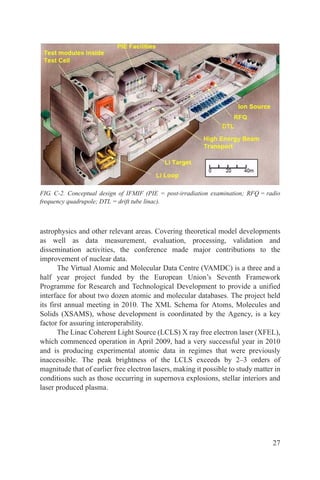
  • 95.
    Similarly, the chemicaland isotope composition of water in extensive wetlands located in Argentina suggest a deep aquifer contribution to baseflow. Recent work has resulted in a revised conceptual model of the GAS that has important implications for the exploitation of groundwater in the GAS sectors, differentiated based on hydrochemical and isotope data. Groundwater extracted from the unconfined part of the aquifer is fully renewable due to the potential for enhanced recharge under intensive pumping. Water balance considerations indicate potential recharge in the order of 300–500 mm/year. However, these areas are vulnerable to pollution and other impacts of human activity. Groundwater extraction in the confined portion is economically feasible only to certain depths (about 400 m) and, therefore, a substantial amount of the water resources from deep horizons are not available for extraction. Owing to the hydraulic character of the deep confined aquifer, as shown by the long residence time of groundwater, the exploitation of this deep groundwater resource is controlled by the storage coefficient of the GAS. This groundwater usually presents higher mineralization and is well protected against pollution, although extraction would require comprehensive planning. III–3.2. Improving understanding of hydrogeology in Morocco’s Tadla Basin The Tadla Basin is an important agricultural area situated in the centre of Morocco, where demand for groundwater is increasing greatly. Groundwater provides the majority of the freshwater supply for irrigation and cities and is taken from a multi-layered aquifer system. Early traditional hydrological studies have revealed important relationships between aquifer layers and the locations of recharge and discharge. More recently this aquifer system has been studied as part of several projects undertaken by the Agency, the Moroccan National Centre for Nuclear Energy, Sciences and Technology (CNESTEN), and the Moroccan water authority. Isotope data confirm that sedimentary layers separating the four aquifers of the Tadla Basin allow the hydrological mixing of groundwater between the aquifers, and that some mixing is indeed occurring. Spatial analyses of isotope data have resulted in interpolation maps for oxygen-18, tritium and carbon-14 in the Turonian, Eocene and Quaternary aquifers. These interpolations are important aids for understanding and visualizing hydrological trends across the basin within a given aquifer and also in illustrating differences between the aquifers. As an example, interpolation of isotope data from the Turonian aquifer, the oldest and deepest aquifer of the multi-layered system and the most important water supply aquifer in the basin, provides very interesting results. Interpolation of carbon-14 data in the Turonian aquifer (Fig. III-4) shows high activity of carbon-14 (expressed as per cent modern carbon (pMC)) in the northeast (green 86
  • 96.
    colours) compared tothe west side of the basin (coloured red). Greater carbon-14 activities in the northeast are indicative of recent recharge. Interpolation of tritium ages in the Turonian aquifer (not shown) supports the supposition of relatively young water in the northeast part of the aquifer. Carbon-14 and tritium interpolations also show that the confined aquifer zone in the west is characterized by relatively older water (low carbon-14 activity and low tritium content). These interpolations highlight the fact that recharge is greatest in the northeast of the basin and suggest a dominant groundwater flow from northeast to southwest. Interpolation of oxygen-18 data for the Turonian aquifer (Fig. III-5) also reveals strong differences across the basin. The effect of high elevation recharge is clearly shown by more negative isotope values along the southern border with the high Atlas Mountains/Tassout area (coloured blue) as compared to more positive values in the northern parts of the basin (coloured orange). Interpolation maps of isotopic data are similarly useful for interpreting details of groundwater movement in the other aquifers of the Tadla Basin. The application of isotope techniques in the Tadla Basin has resulted in a greater understanding of aquifer characteristics and groundwater flow. Specifically, isotopic techniques have provided confirmation of observations obtained using traditional hydrological investigations, have identified the source aquifer for the Tassout Springs (disproving an earlier hypothesis), and have FIG. III-4. Spatial distribution of carbon-14 activities in the Turonian aquifer in per cent modern carbon (pMC). 87
  • 97.
    FIG. III-5. Spatialdistribution of oxygen-18 contents in the Turonian aquifer in per mil vs Vienna Standard Mean Ocean Water (VSMOW). supported a better calibrated numerical model used for the simulation of groundwater dynamics. In these ways, isotopes have been directly used to support the optimization of groundwater management in the Tadla Plain. III–3.3. New light shed on the Nubian Aquifer A joint project by the Agency, the United Nations Development Programme (UNDP) and the Global Environment Facility (GEF) on the Nubian Sandstone Aquifer System (NSAS) is primarily aimed at developing a four-country cooperative strategy for the rational management of this transboundary aquifer system. The NSAS — underlying Chad, Egypt, Libyan Arab Jamahiriya and Sudan — is a single, massive reservoir of high quality groundwater (Fig. III-6). Yet the NSAS has very different characteristics in each country and each country has different development objectives for the aquifer. An essential first step in developing management strategies for the NSAS is to understand both the transboundary and local effects of producing water from the aquifer under present rates of withdrawal as well as under development scenarios in the future. This understanding is being gained through the development of a numerical groundwater flow model of the aquifer system. A critical step in the development of this model has been the use of groundwater age 88
  • 98.
    FIG. III-6. Mapshowing the location of the Nubian Aquifer. to constrain aquifer parameter values to provide reliable simulations of groundwater flow systems. The NSAS model has had to meet several unique criteria. It has to be conceptually simple to accommodate limited information on aquifer hydrogeology and sparse observations of water levels. The model also has to provide realistic estimates for this very large aquifer spanning approximately two million square kilometres. And perhaps most importantly, the model has to earn the approval of national coordinators and technical experts from the four participating countries. A number of previous studies have indicated that groundwater in the NSAS is about 40 000 years old, as indicated by the presence of measurable carbon-14 activity in deep groundwater samples. However, using krypton isotopes (krypton- 81), groundwater recovered from production wells near oases in the western desert of Egypt has been estimated to vary in age from about 200 000 to 1.5 million years. To resolve this discrepancy in groundwater age, three samples of groundwater from Sudan were collected and analysed for carbon-14 using two methods: chemically treating 50–200 L of water to extract carbon, and analysis using accelerator mass spectrometry (AMS), which requires only one litre of water and no chemical treatment in the field. Results indicate large differences between conventional and AMS methods for the same groundwater sample. AMS analysis indicates an age beyond the range of the carbon-14 dating technique (~50 000 years), whereas traditional, 89
  • 99.
    chemical extraction techniquesindicate an age of about 20 000 years. This younger age estimate is probably due to contamination with atmospheric carbon dioxide during the sampling and extraction processes. AMS measurements are considered to be much more reliable as they do not require chemical treatment of large samples. Therefore, it was concluded that existing carbon-14 data from the NSAS for deep wells (showing ages of 20 000–40 000 years) are unreliable and that these samples probably have ages of greater than 50 000 years. This conclusion supports the findings from krypton analysis and, as a result, groundwater ages of 200 000 to 1.5 million years have been used in calibrating the groundwater flow model. A calibrated model (Fig. III-7) was used to simulate groundwater flow in the NSAS for the past three million years, with wet and dry periods represented using approximate palaeoclimate records. The three-dimensionality of the model permitted the use of ‘particle tracking’, or tracing the movement of individual water parcels through the aquifer system. This enabled estimation of the age of water at any location and time during the simulation. By adjusting porosity, the model was refined to correctly simulate the age of water in the aquifer. Thus refined, model simulations provide visualization of groundwater recharge and discharge locations as well as subsurface flow paths. The interpretation of isotope data from NSAS water will continue to play an important role in model refinement and comprehensive groundwater management at both regional and finer scale grid sizes. III–4. Role of isotopes in national assessments of water resources as a first step in groundwater management A new initiative has been launched by the Agency to facilitate the integration of isotopes into national water resource assessments conducted by Member States. This initiative, called the IAEA Water Availability Enhancement (IAEA WAVE) project, will assist Member States in identifying gaps in existing hydrological information and understanding, in improving national capacities for collecting, managing and interpreting water resource data, and in using advanced techniques to simulate hydrological systems for resource management. Isotope techniques have an important role to play in providing fundamental information on water resources, as well as providing broader insight into aquifer characteristics and hydrological settings. As a result of addressing these gaps in hydrological information and understanding, the capacity of Member States to conduct comprehensive national water resource assessments will be strengthened. The IAEA WAVE project aims to build on, and complement, other 90
  • 100.
    FIG. III-7. Obliqueviews of the geometry for the earlier two-dimensional NSAS groundwater model (above) and the three-dimensional NSAS groundwater model (below). Pumping areas are shown in blue. Two-dimensional models must assume that the effects of pumping reach through the entire thickness of the aquifer. For thick aquifer systems, a three-dimensional model can provide a more accurate depiction of the local influences of pumping. international, regional and national initiatives to provide decision makers with reliable tools for better management of their water resources. The pilot phase of the IAEA WAVE project is currently under way. In this phase, the Agency is cooperating with selected Member States to identify and characterize gaps in national water resource assessments, and to develop a work programme aimed at strengthening local capacity to address these gaps. Where isotopic techniques are involved, the Agency has a primary responsibility to provide support and training. Other components of the work programme will be met by locating and recommending expert support, technological support, and training within the international hydrological community. Successful IAEA WAVE pilot studies will provide valuable information on water availability as a direct result of increased hydrological expertise and technological capabilities of Member States, with a particular focus on the application of isotopic techniques to groundwater resources. The project will strengthen Member States’ capacities to develop and regularly update water resource assessments, and to design and implement resource management strategies. 91
  • 101.
    III–5. Summary Studies using stable and radioactive isotopes are being conducted more frequently in support of comprehensive groundwater management as the time and cost effectiveness of these techniques is recognized. In the Guaraní Aquifer System of South America, the Tadla Basin of Morocco and the Nubian Sandstone Aquifer System of northern Africa, interpretations of isotope data have been used to not only confirm traditional hydrological studies, but also to provide insight into groundwater flows and aquifer dynamics. In particular, isotopes have been used in these areas to define groundwater recharge sources and mechanisms, to determine groundwater age and rate of movement, and to quantify the mixing of groundwater between aquifers. Isotope techniques have additional applications and it is expected that all applications will be considered and potentially employed during the IAEA WAVE project pilot phase. The application of isotopic techniques in hydrological investigations in general and in the comprehensive management of groundwater resources in particular is expected to grow substantially in the coming years. 11-17411 92
  • 102.