NOx characteristics
NO – Nitric oxide
• Colorless and odorless gas
• Insoluble in water
•Toxic
NO2 – Nitrogen dioxide
• Usually a dimer compound (N2O4) at low 0C
• Distinct reddish-brown color
• Moderately soluble in aqueous liquids
• Toxic
• Contributes to brown haze that occurs with smog
NOx Formation
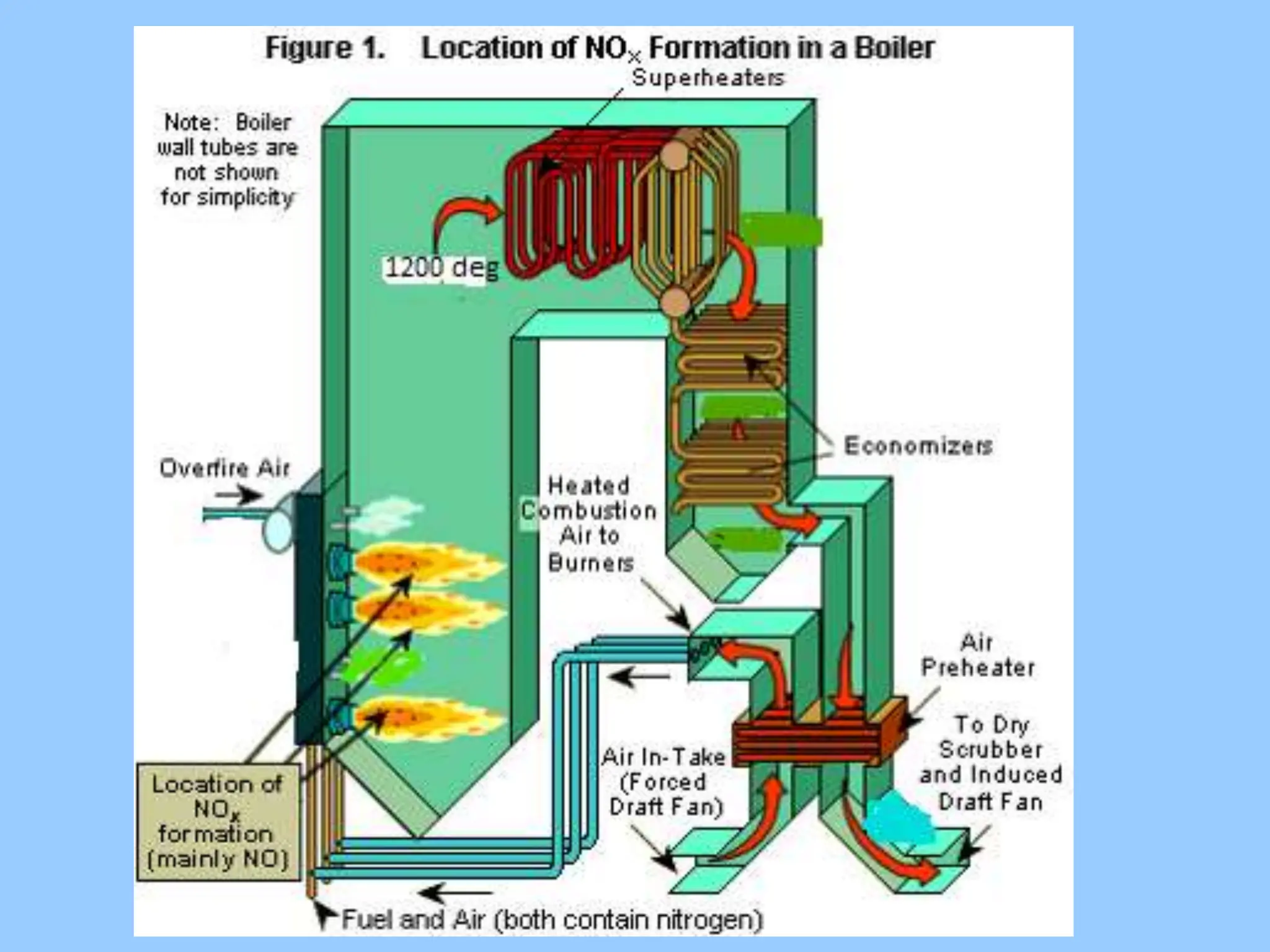
• Formed at elevated temperatures during
combustion of fuel in the presence of air.
• Approximately 90 to 95% of the nitrogen
oxides generated in combustion
processes are in the form of nitric oxide
(NO).
• Once in the atmosphere, the NO reacts in
a variety of photochemical and thermal
reactions to form NO2.
• Thermal NOx: formed by reaction between
N2 and O2 in the air; sensitive to temperature
• Fuel (or Prompt) NOx: formed from combustion
of fuel containing organic nitrogen; dependent on
local combustion conditions and nitrogen content
in the fuel.
• Not all of the fuel nitrogen compounds are
released during combustion. Unlike sulfur, a
significant fraction of the fuel nitrogen remains in
the bottom ash or in the fly ash.
NOx Formation
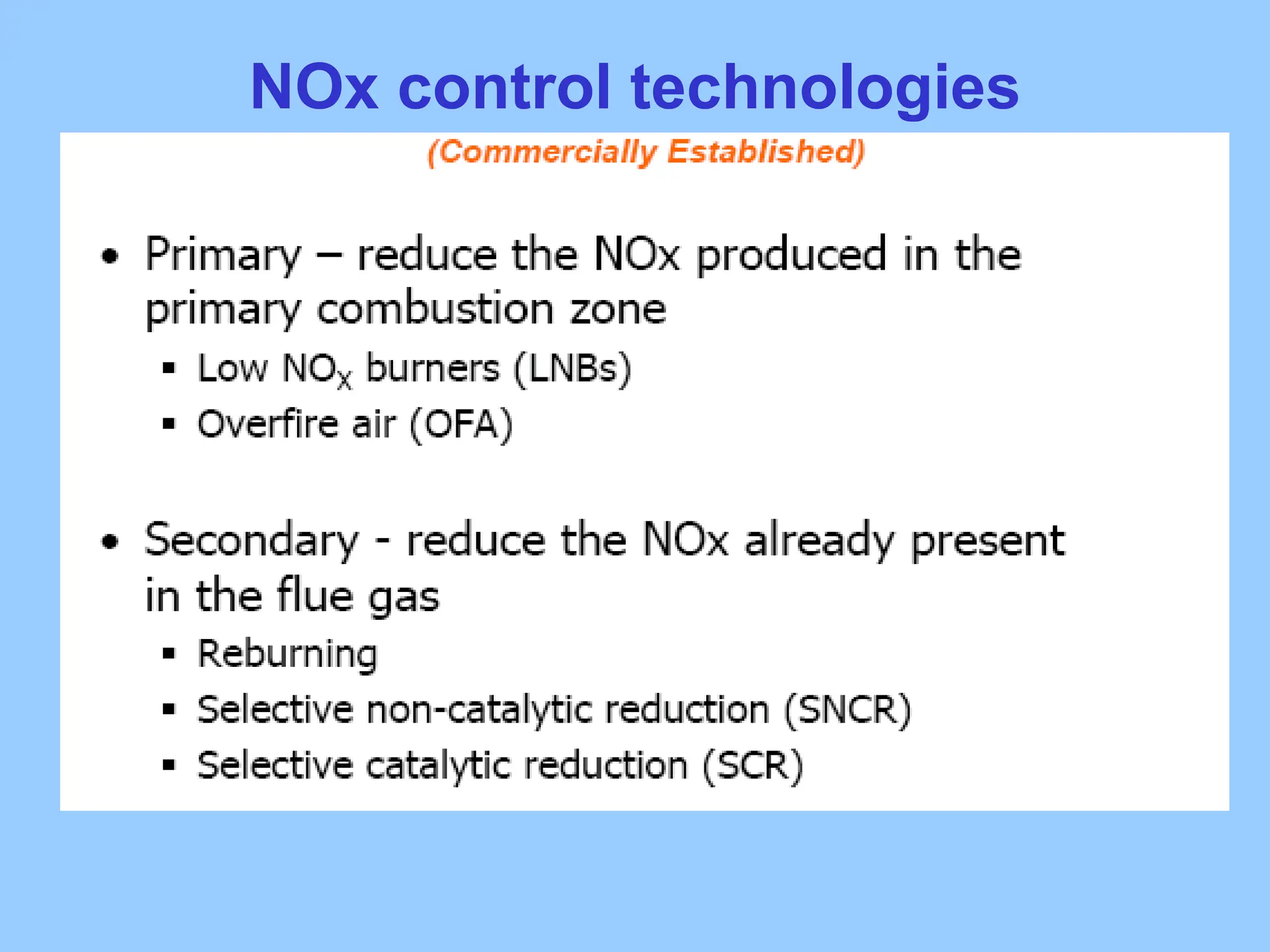
NOx control technologies
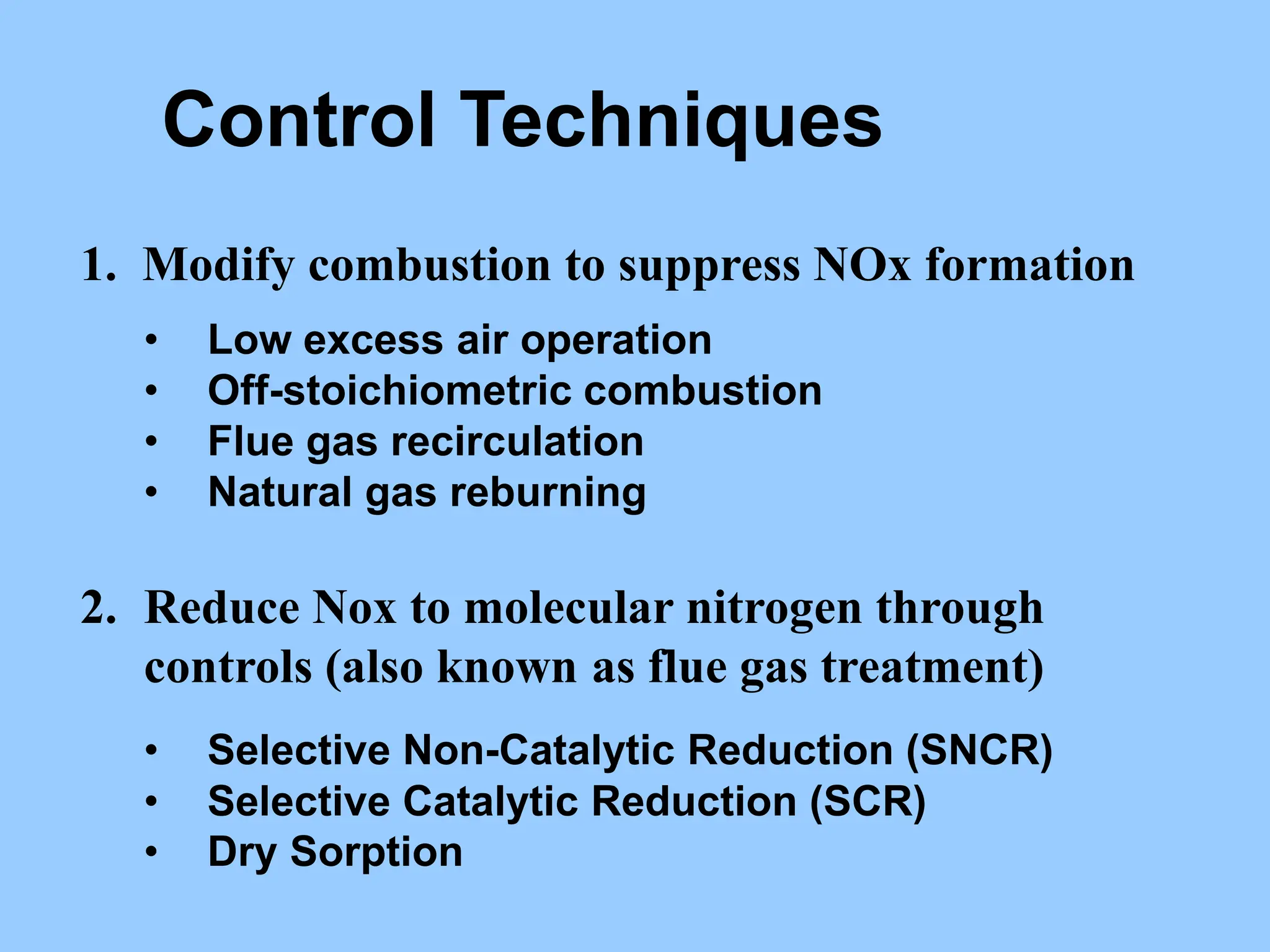
Control Techniques
1. Modify combustion to suppress NOx formation
• Low excess air operation
• Off-stoichiometric combustion
• Flue gas recirculation
• Natural gas reburning
2. Reduce Nox to molecular nitrogen through
controls (also known as flue gas treatment)
• Selective Non-Catalytic Reduction (SNCR)
• Selective Catalytic Reduction (SCR)
• Dry Sorption
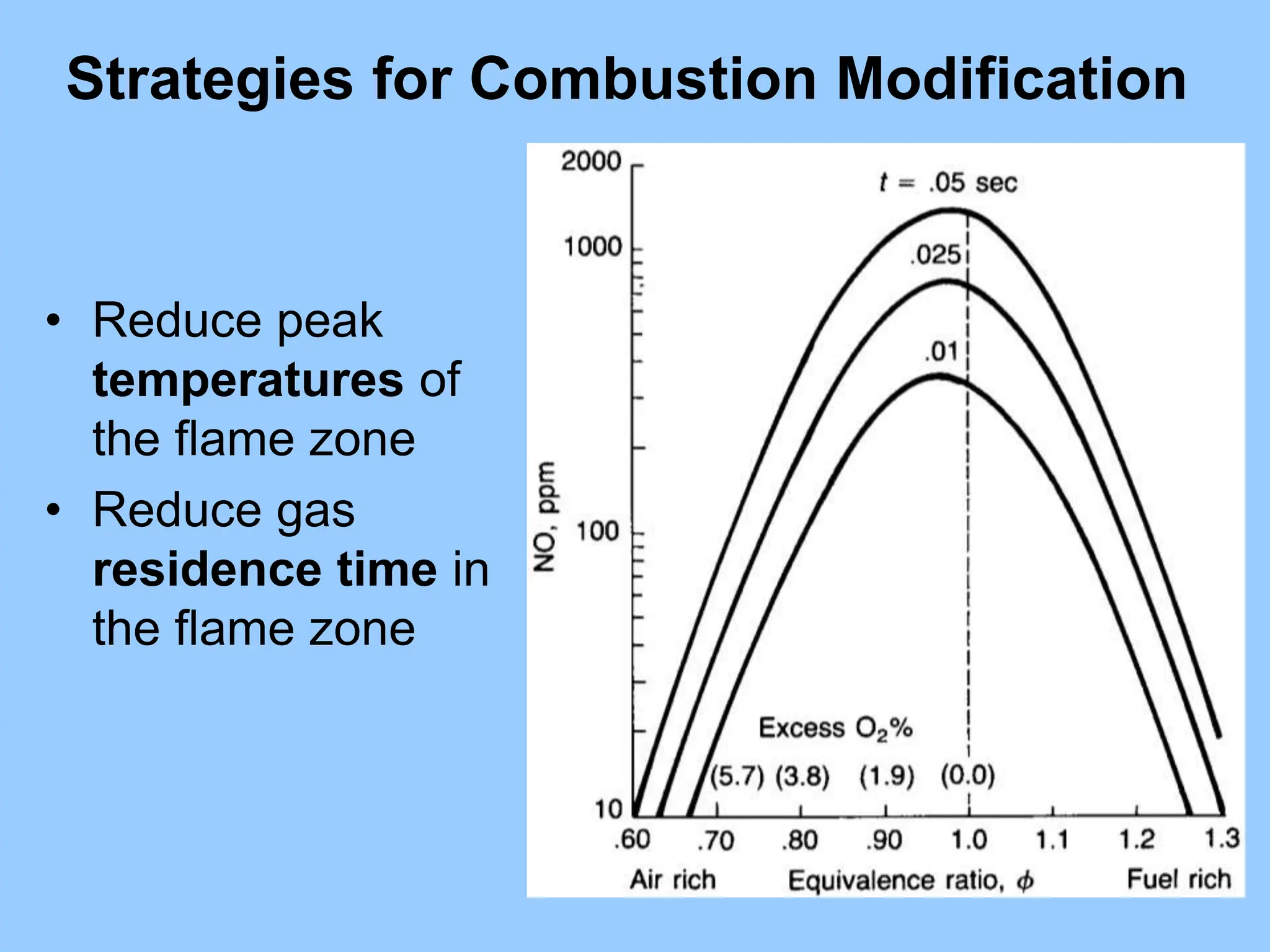
Strategies for Combustion Modification
• Reduce peak
temperatures of
the flame zone
• Reduce gas
residence time in
the flame zone
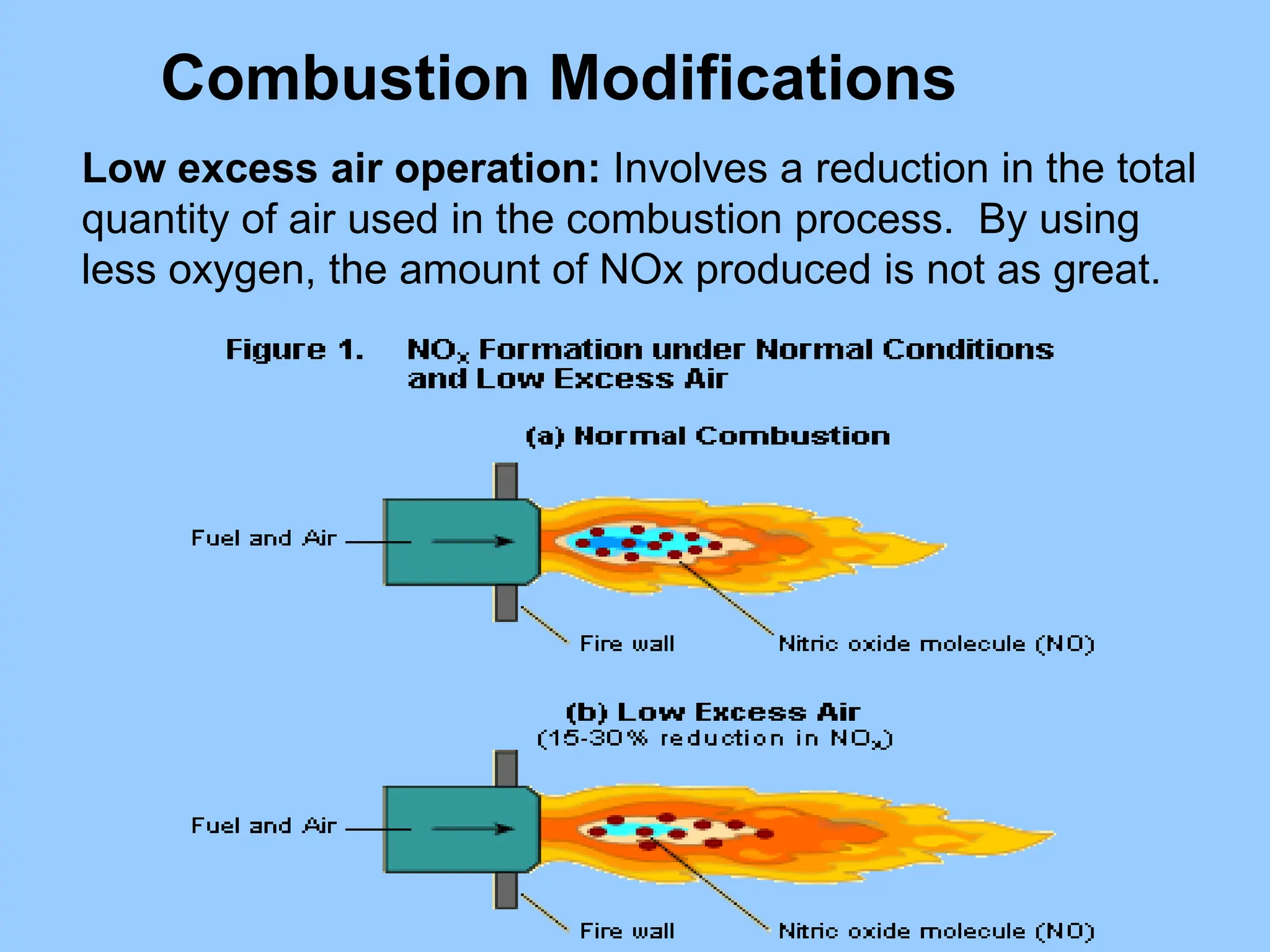
Combustion Modifications
Low excess air operation: Involves a reduction in the total
quantity of air used in the combustion process. By using
less oxygen, the amount of NOx produced is not as great.
Combustion Modifications
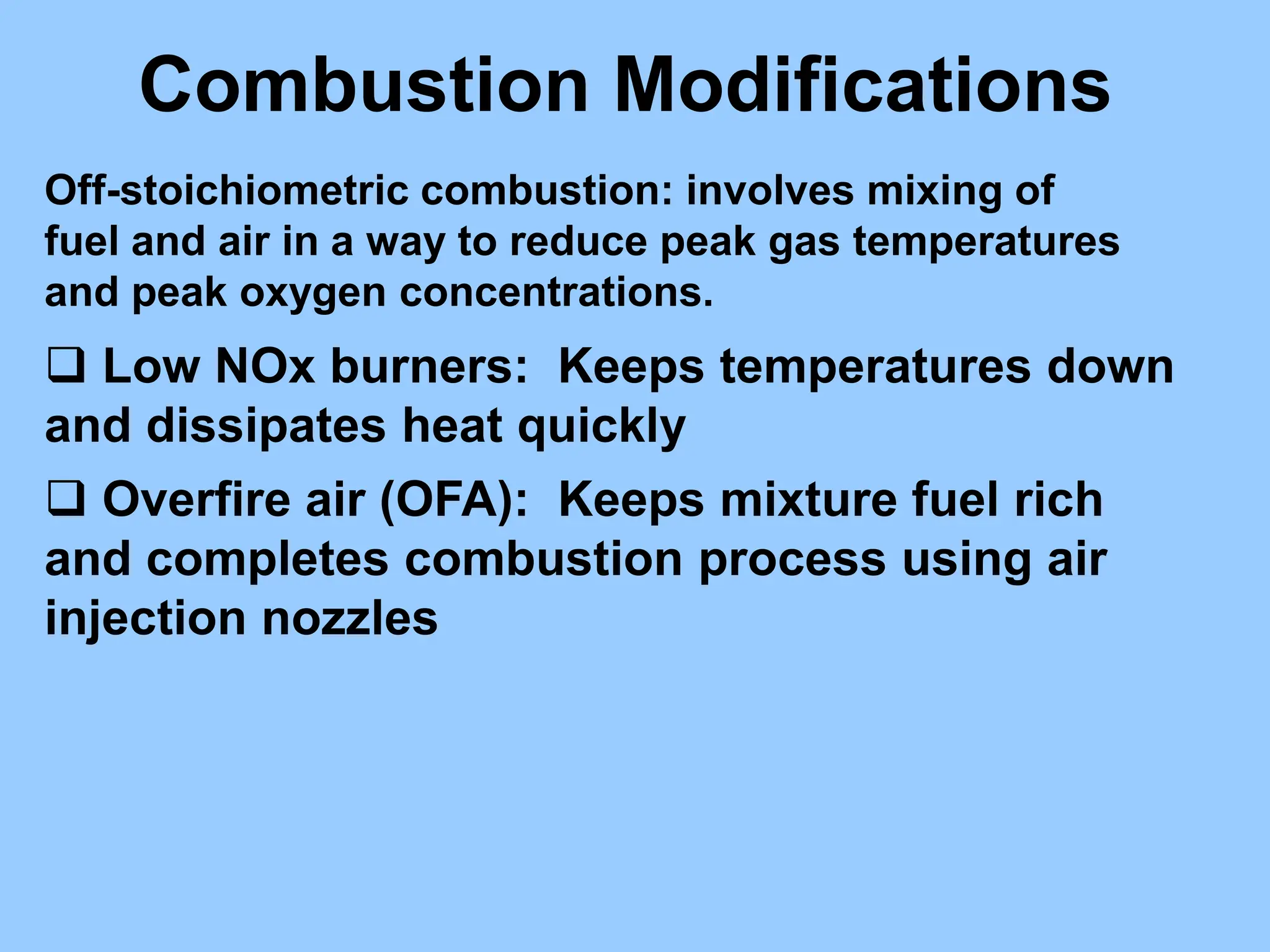
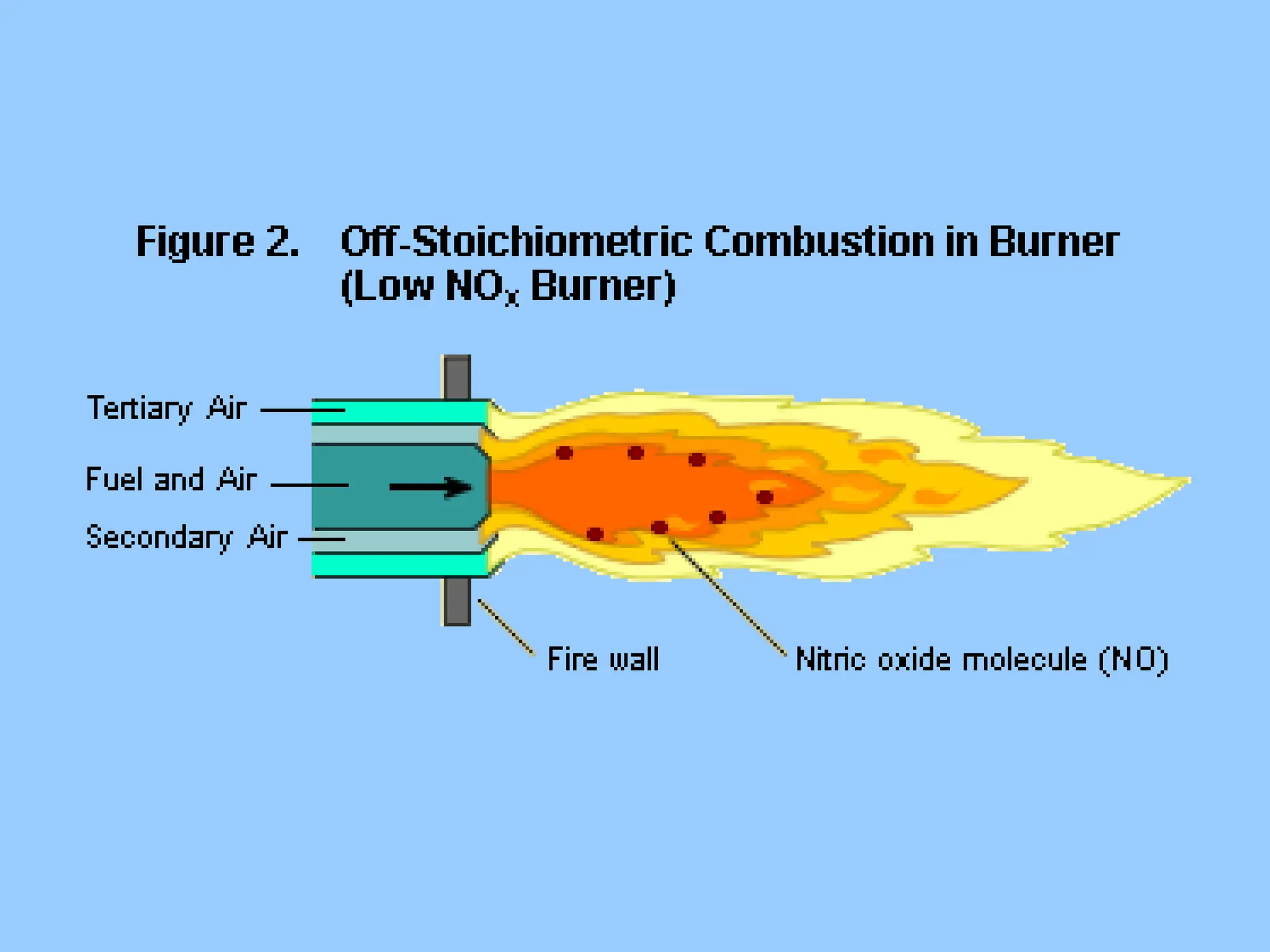
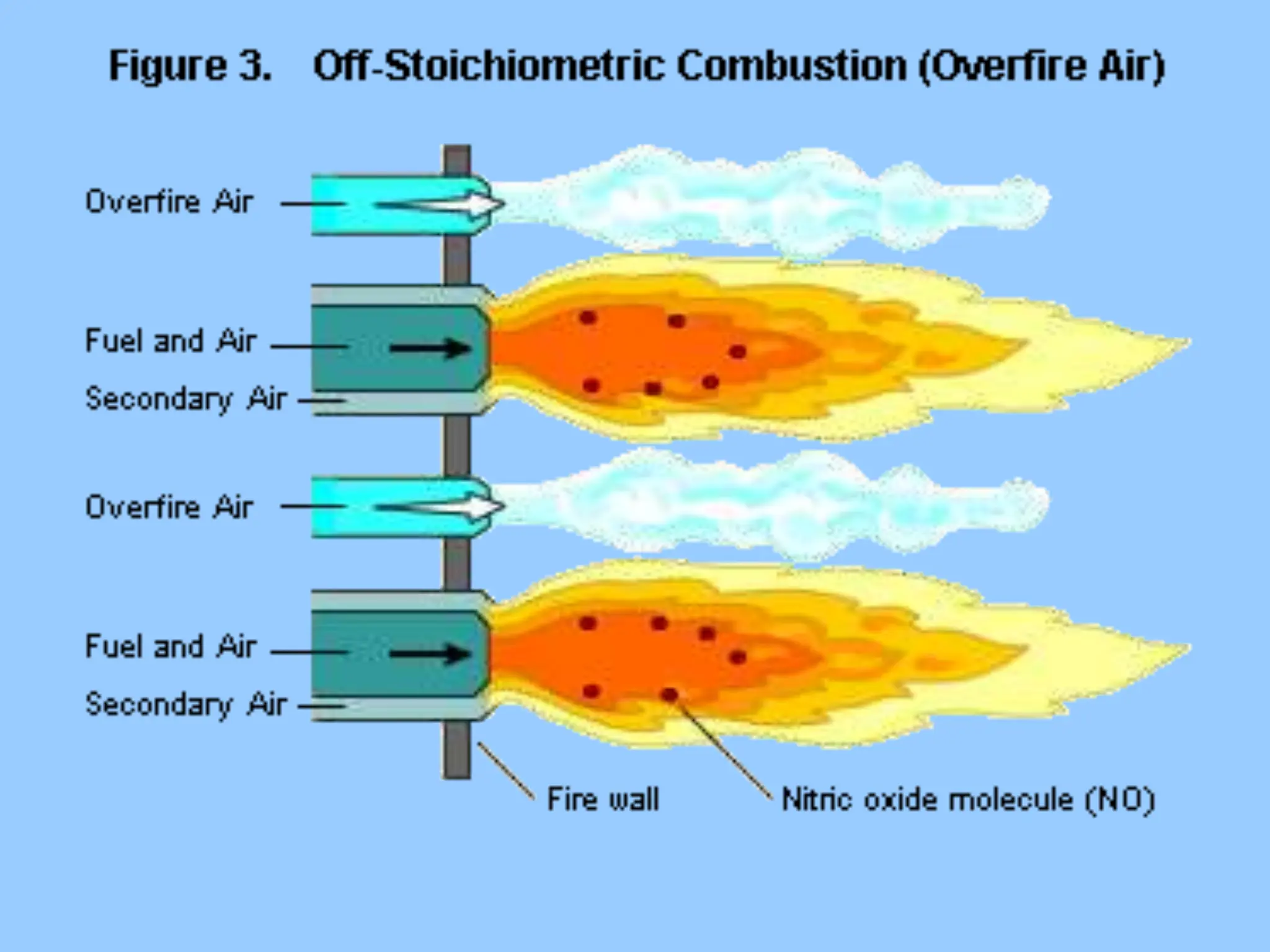
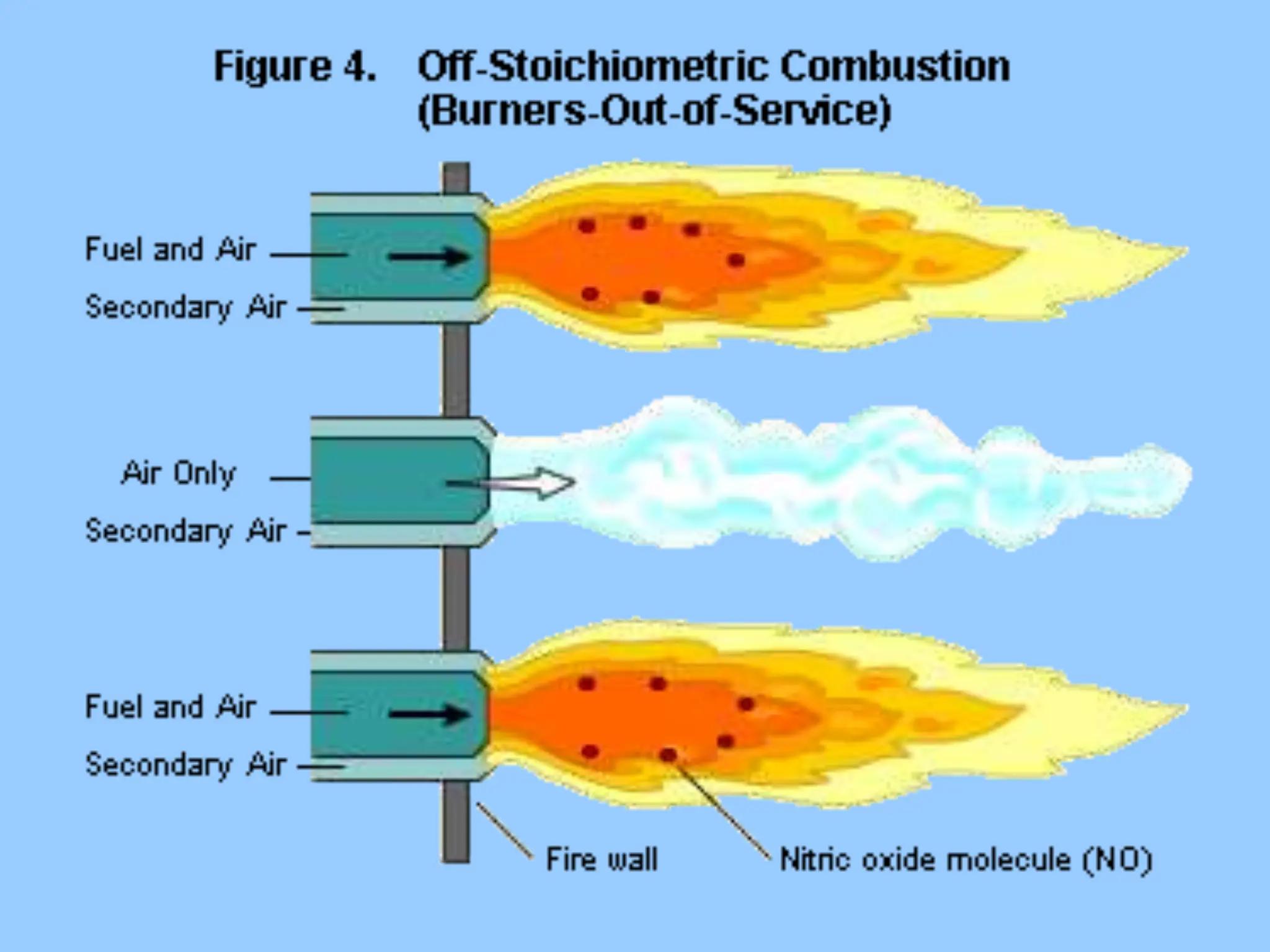
Off-stoichiometric combustion: involves mixing of
fuel and air in a way to reduce peak gas temperatures
and peak oxygen concentrations.
 Low NOx burners: Keeps temperatures down
and dissipates heat quickly
 Overfire air (OFA): Keeps mixture fuel rich
and completes combustion process using air
injection nozzles
Add-On Controls
(Flue Gas Treatment )
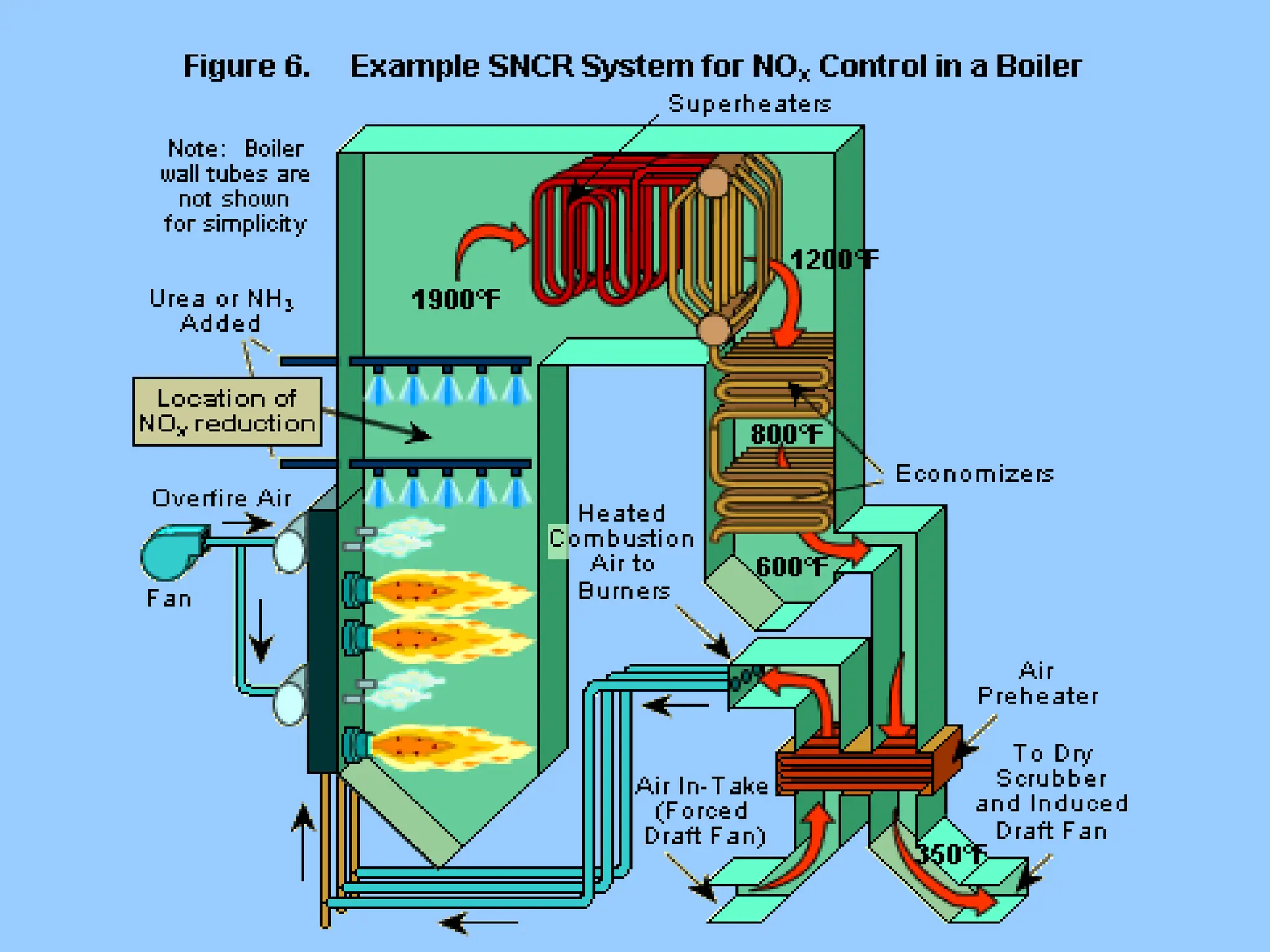
Selective non-catalytic reduction systems (SNCR)
Involves the injection of ammonia (NH3) or urea
into the hot gas zone where reactions leading to
reduction of nitrogen oxides can occur. The
reactions are completed within the boiler, and no
waste products are generated. There is a risk of
ammonia (NH3) being emitted into the atmosphere
if temperatures are too low, however. SCNR
systems are capable of reducing nitrogen oxides
from 20 to 60%.
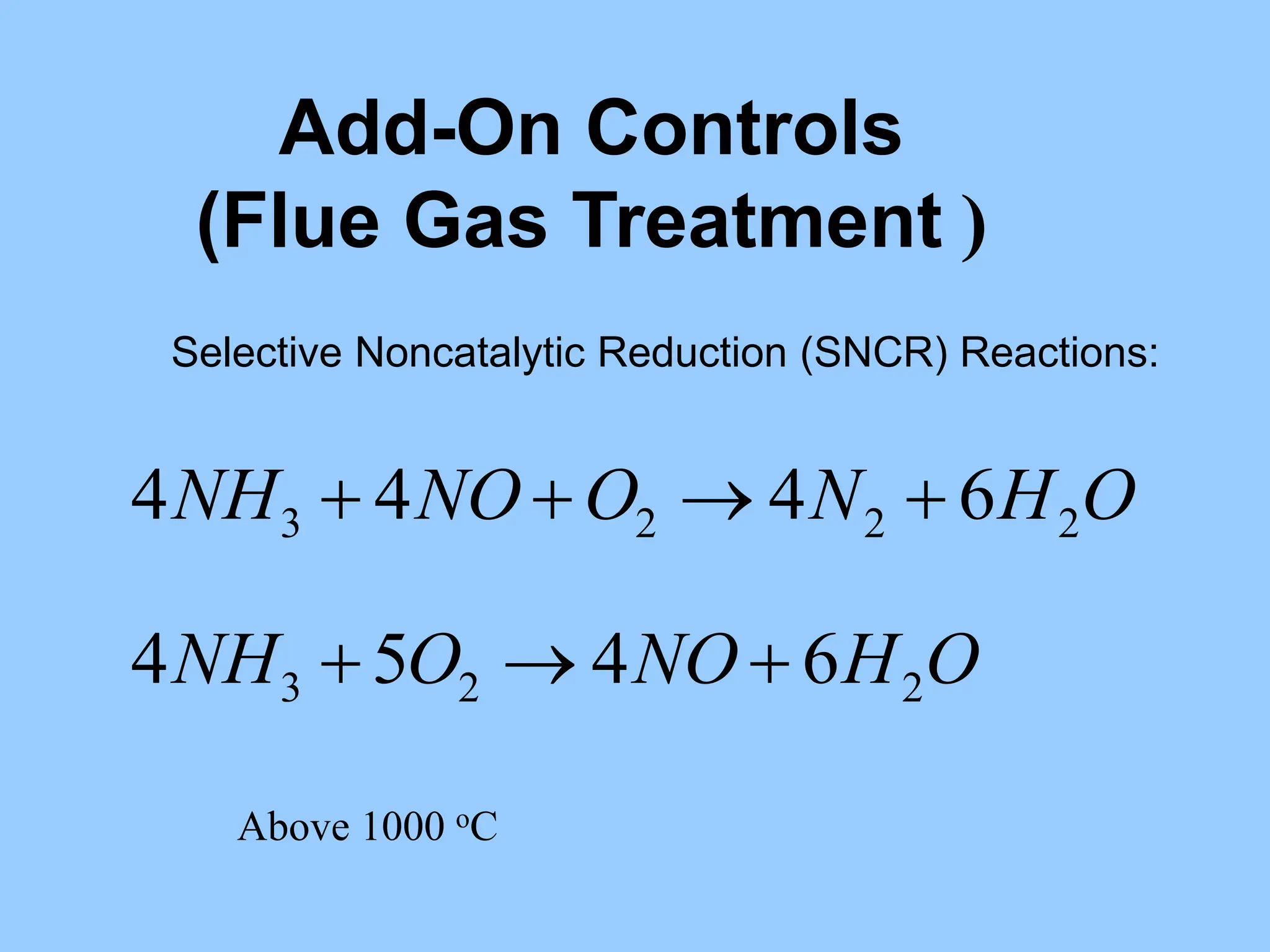
Selective Noncatalytic Reduction (SNCR) Reactions:
O
H
NO
O
NH
O
H
N
O
NO
NH
2
2
3
2
2
2
3
6
4
5
4
6
4
4
4







Add-On Controls
(Flue Gas Treatment )
Above 1000 oC
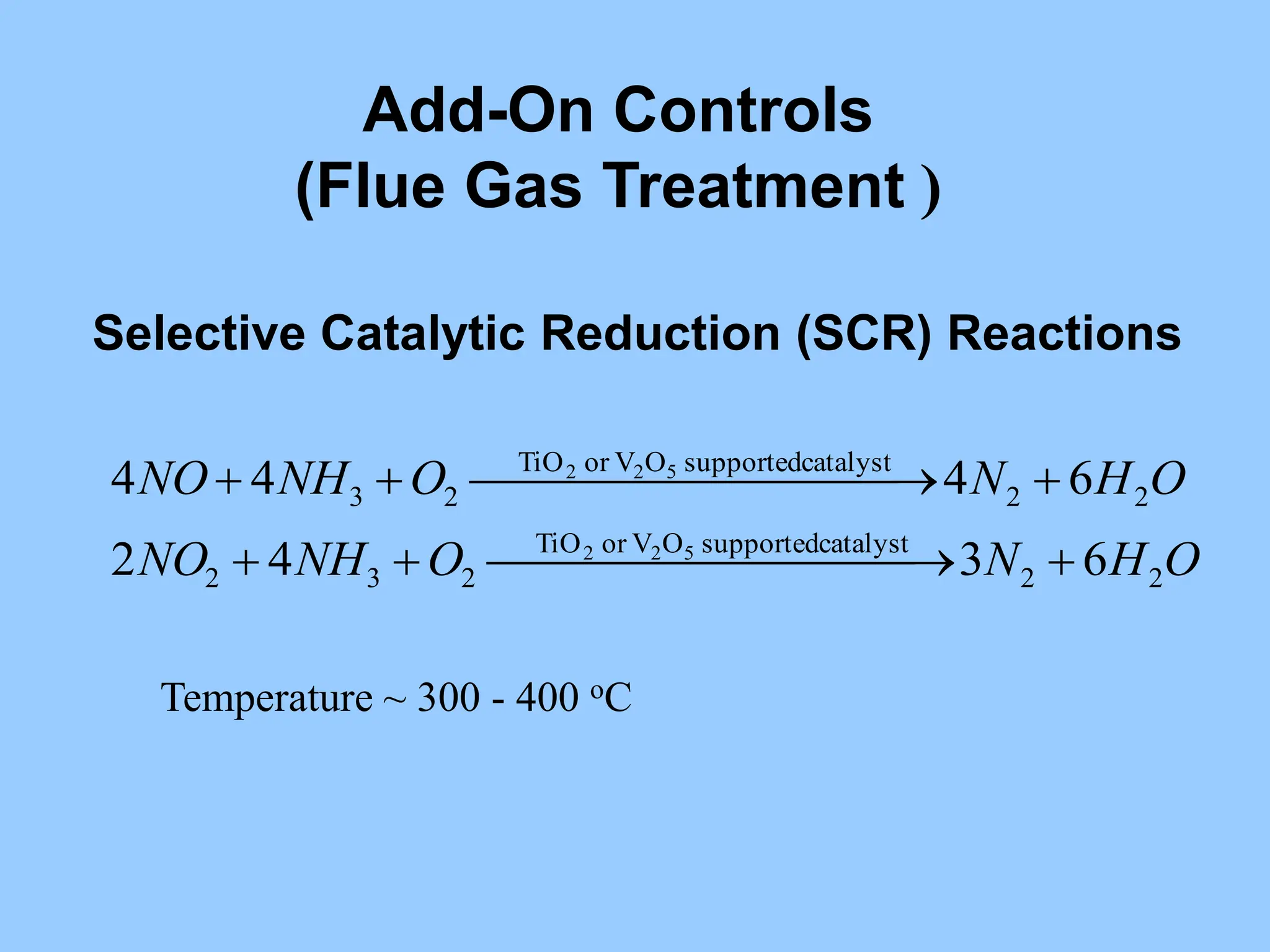
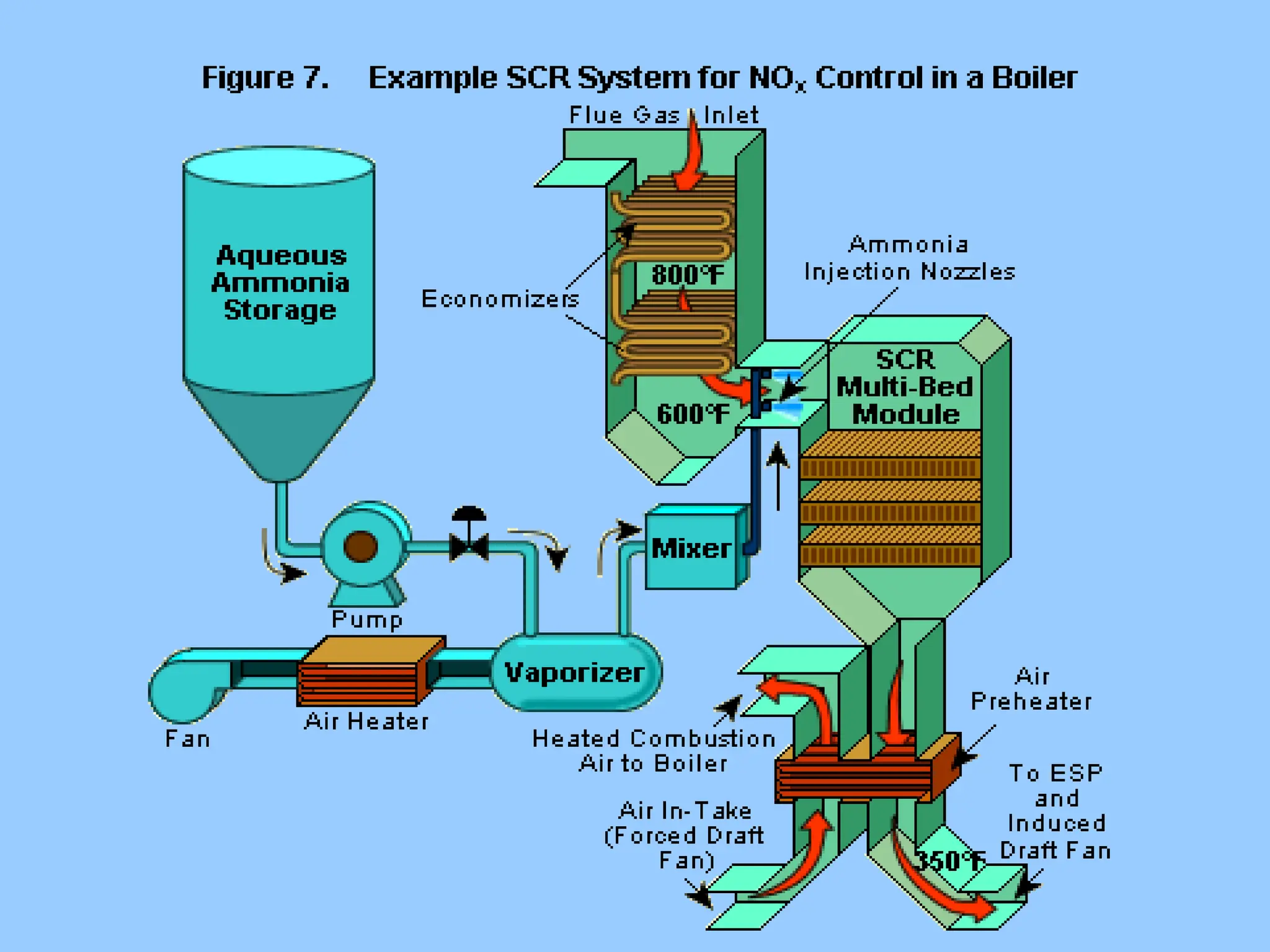
Selective catalytic reduction (SCR)
Involves using beds containing ammonia or urea to
reduce nitrogen oxides to molecular nitrogen and
water. Two or three catalysts (usually tungsten and
vanadium) are arranged in honeycomb shapes in
the beds so air can flow through. NOx reduction
efficiencies ranging from 75 to 90% are possible
when the amount of catalyst is sufficient, the
catalyst is in good condition, the ammonia reagent
flow is sufficient, and the ammonia is adequately
distributed across the gas stream.
Add-on Controls
(Flue gas treatment )
Add-On Controls
(Flue Gas Treatment )
Selective Catalytic Reduction (SCR) Reactions
O
H
N
O
NH
NO
O
H
N
O
NH
NO
2
2
catalyst
supported
O
V
or
TiO
2
3
2
2
2
catalyst
supported
O
V
or
TiO
2
3
6
3
4
2
6
4
4
4
5
2
2
5
2
2








 











 



Temperature ~ 300 - 400 oC
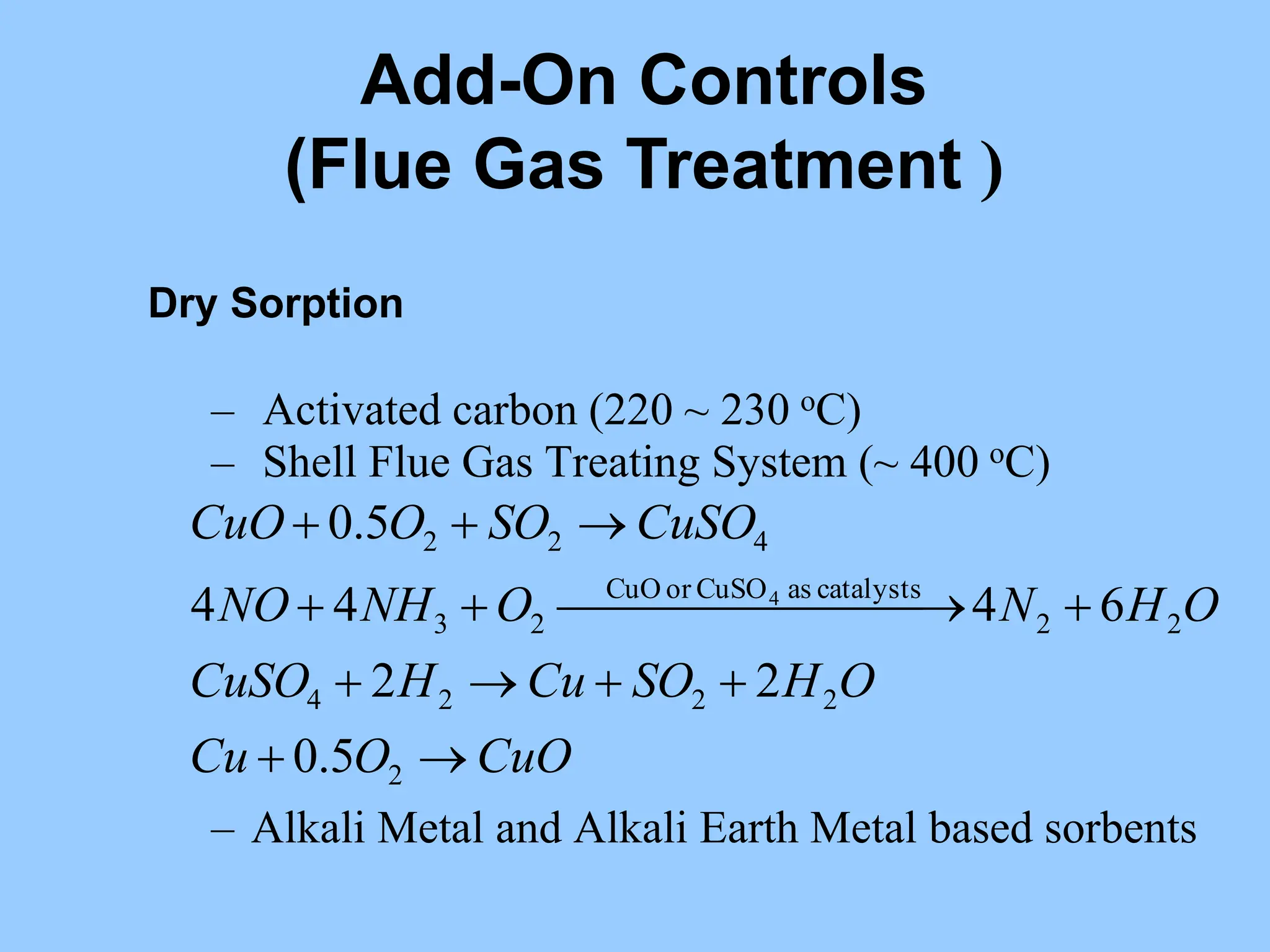
Dry Sorption
– Activated carbon (220 ~ 230 oC)
– Shell Flue Gas Treating System (~ 400 oC)
– Alkali Metal and Alkali Earth Metal based sorbents
CuO
O
Cu
O
H
SO
Cu
H
CuSO
O
H
N
O
NH
NO
CuSO
SO
O
CuO












 






2
2
2
2
4
2
2
catalysts
as
CuSO
or
CuO
2
3
4
2
2
5
.
0
2
2
6
4
4
4
5
.
0
4
Add-On Controls
(Flue Gas Treatment )

NOx basic and control technologies measures

  • 1.
    NOx characteristics NO –Nitric oxide • Colorless and odorless gas • Insoluble in water •Toxic NO2 – Nitrogen dioxide • Usually a dimer compound (N2O4) at low 0C • Distinct reddish-brown color • Moderately soluble in aqueous liquids • Toxic • Contributes to brown haze that occurs with smog
  • 2.
    NOx Formation • Formedat elevated temperatures during combustion of fuel in the presence of air. • Approximately 90 to 95% of the nitrogen oxides generated in combustion processes are in the form of nitric oxide (NO). • Once in the atmosphere, the NO reacts in a variety of photochemical and thermal reactions to form NO2.
  • 3.
    • Thermal NOx:formed by reaction between N2 and O2 in the air; sensitive to temperature • Fuel (or Prompt) NOx: formed from combustion of fuel containing organic nitrogen; dependent on local combustion conditions and nitrogen content in the fuel. • Not all of the fuel nitrogen compounds are released during combustion. Unlike sulfur, a significant fraction of the fuel nitrogen remains in the bottom ash or in the fly ash. NOx Formation
  • 5.
  • 6.
    Control Techniques 1. Modifycombustion to suppress NOx formation • Low excess air operation • Off-stoichiometric combustion • Flue gas recirculation • Natural gas reburning 2. Reduce Nox to molecular nitrogen through controls (also known as flue gas treatment) • Selective Non-Catalytic Reduction (SNCR) • Selective Catalytic Reduction (SCR) • Dry Sorption
  • 7.
    Strategies for CombustionModification • Reduce peak temperatures of the flame zone • Reduce gas residence time in the flame zone
  • 8.
    Combustion Modifications Low excessair operation: Involves a reduction in the total quantity of air used in the combustion process. By using less oxygen, the amount of NOx produced is not as great.
  • 9.
    Combustion Modifications Off-stoichiometric combustion:involves mixing of fuel and air in a way to reduce peak gas temperatures and peak oxygen concentrations.  Low NOx burners: Keeps temperatures down and dissipates heat quickly  Overfire air (OFA): Keeps mixture fuel rich and completes combustion process using air injection nozzles
  • 13.
    Add-On Controls (Flue GasTreatment ) Selective non-catalytic reduction systems (SNCR) Involves the injection of ammonia (NH3) or urea into the hot gas zone where reactions leading to reduction of nitrogen oxides can occur. The reactions are completed within the boiler, and no waste products are generated. There is a risk of ammonia (NH3) being emitted into the atmosphere if temperatures are too low, however. SCNR systems are capable of reducing nitrogen oxides from 20 to 60%.
  • 14.
    Selective Noncatalytic Reduction(SNCR) Reactions: O H NO O NH O H N O NO NH 2 2 3 2 2 2 3 6 4 5 4 6 4 4 4        Add-On Controls (Flue Gas Treatment ) Above 1000 oC
  • 16.
    Selective catalytic reduction(SCR) Involves using beds containing ammonia or urea to reduce nitrogen oxides to molecular nitrogen and water. Two or three catalysts (usually tungsten and vanadium) are arranged in honeycomb shapes in the beds so air can flow through. NOx reduction efficiencies ranging from 75 to 90% are possible when the amount of catalyst is sufficient, the catalyst is in good condition, the ammonia reagent flow is sufficient, and the ammonia is adequately distributed across the gas stream. Add-on Controls (Flue gas treatment )
  • 17.
    Add-On Controls (Flue GasTreatment ) Selective Catalytic Reduction (SCR) Reactions O H N O NH NO O H N O NH NO 2 2 catalyst supported O V or TiO 2 3 2 2 2 catalyst supported O V or TiO 2 3 6 3 4 2 6 4 4 4 5 2 2 5 2 2                           Temperature ~ 300 - 400 oC
  • 19.
    Dry Sorption – Activatedcarbon (220 ~ 230 oC) – Shell Flue Gas Treating System (~ 400 oC) – Alkali Metal and Alkali Earth Metal based sorbents CuO O Cu O H SO Cu H CuSO O H N O NH NO CuSO SO O CuO                     2 2 2 2 4 2 2 catalysts as CuSO or CuO 2 3 4 2 2 5 . 0 2 2 6 4 4 4 5 . 0 4 Add-On Controls (Flue Gas Treatment )